At every moment of everyday life, we receive visual information that we constantly encounter through countless forms of mass media. Because we live in an age in which images precede language, we are often compelled by media to make unconscious image selections, regardless of the subject’s voluntary and rational judgment.
Bokyung Kim begins her work by bringing into the picture plane her interest in the visual information of mass media, which overflows in the current digital environment, and by collecting images. For example, she selects design elements from sources filled with sensuous images, such as fashion magazines, and recombines them into works that contain her own gaze.
In addition, she places on the surface signs randomly selected from images produced by digital environments such as Googling, SNS, and Reels. Mainly expressed in acrylic or oil painting on canvas, her work maintains the traditional qualities inherent to painting while also seeking expansion into digital drawing, painting, and three-dimensional work.
Relating to Images, “Collage Drawing”
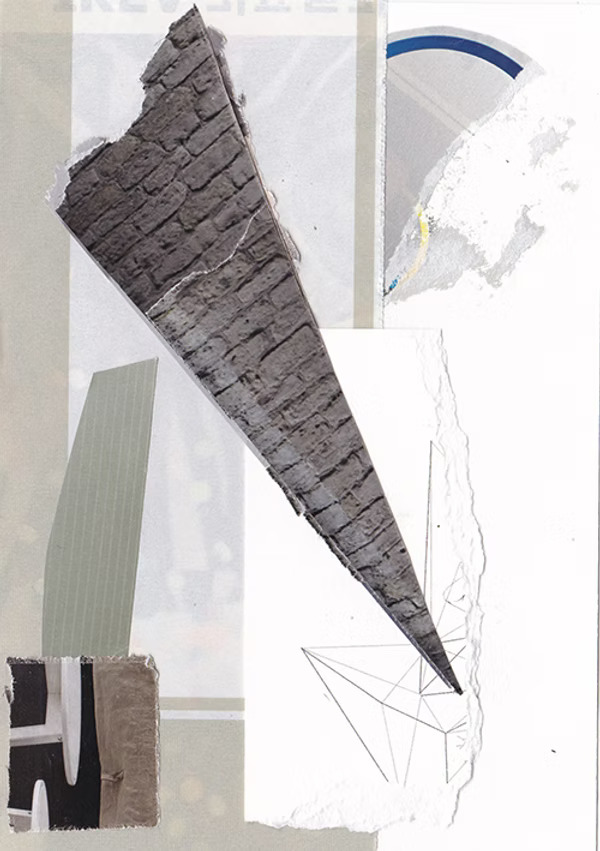
Drawing is important in understanding the flow of Bokyung Kim’s work. This is because her practice expands from drawing into painting, printmaking, and three-dimensional work. Through a method she calls “collage drawing,” the artist unfolds on the surface the patterns and colors of specific images collected from printed mass media.
She transforms inspiration drawn from refined and sensuous visual images, and from perfectly staged images such as those found in fashion, interior, and art magazines, into her own formal language, constructing them on the surface as if archiving them.
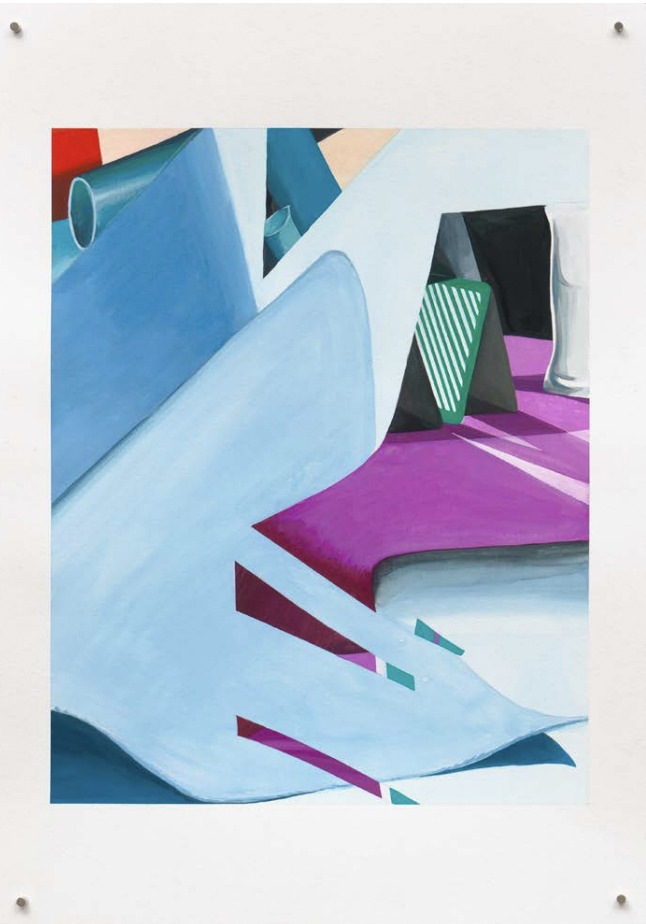
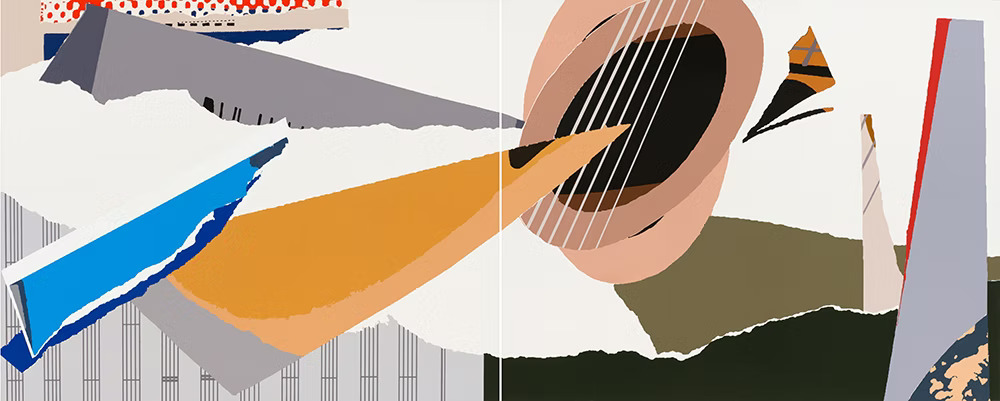
Works made before 2019 mainly adopted methods of enlarging or randomly combining images, placing emphasis on recording collected materials through painting, much like writing a diary. These works, which she refers to as “collage drawings,” focus on moments in which a particular part of an image is cut out and combined with another image, generating a different atmosphere that did not exist in the original.
In order to emphasize what could not be felt in the perfectly staged images of existing media, the artist highlights subtle changes in color and the aesthetic qualities of each element that composes the form itself.
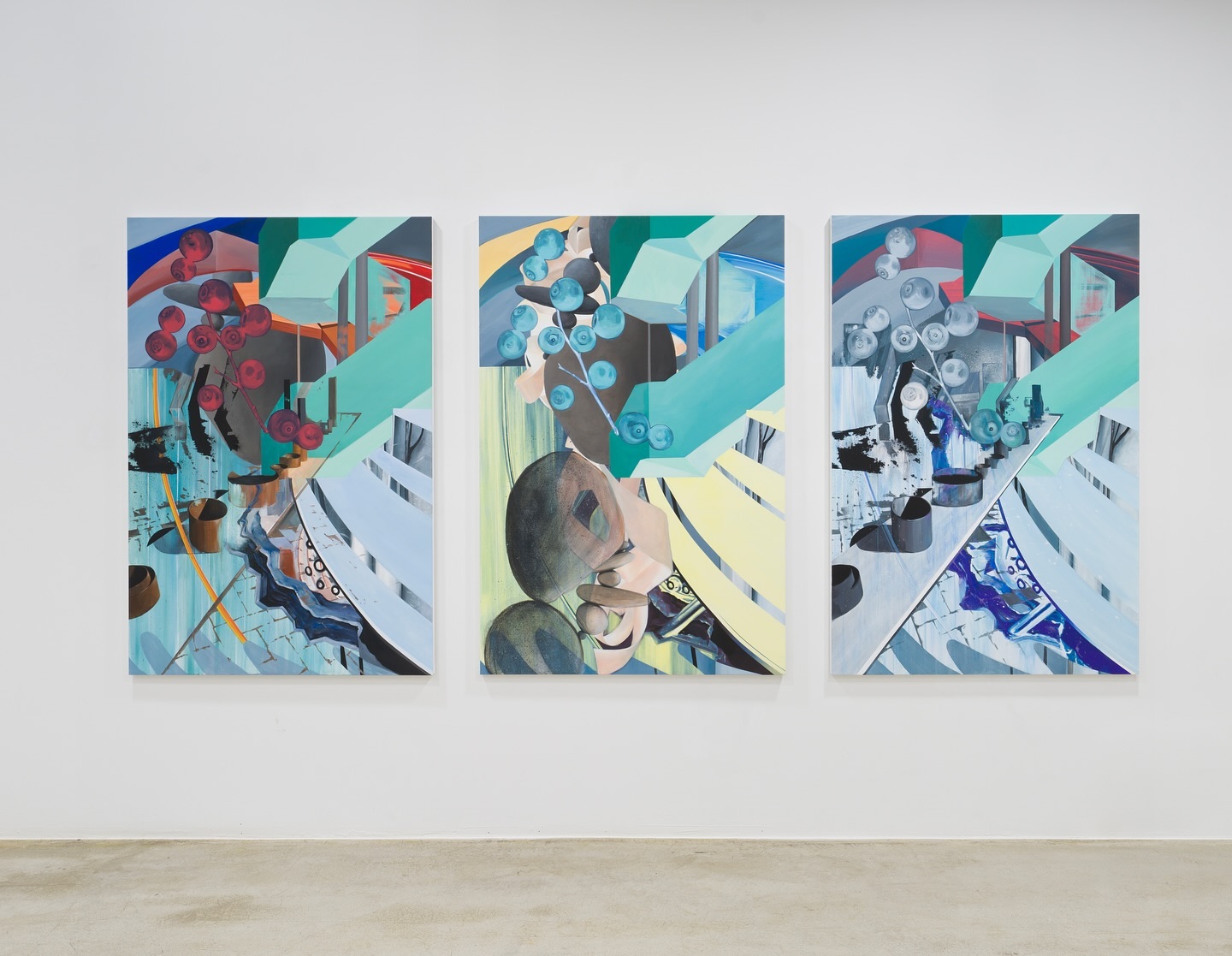
For instance, the dynamic composition of geometric forms and the variations of color seen in the ‘Layered color’ series, presented around 2017, may be said to condense not only the artist’s diligent process of collecting visual information, but also her refined eye for handling images.
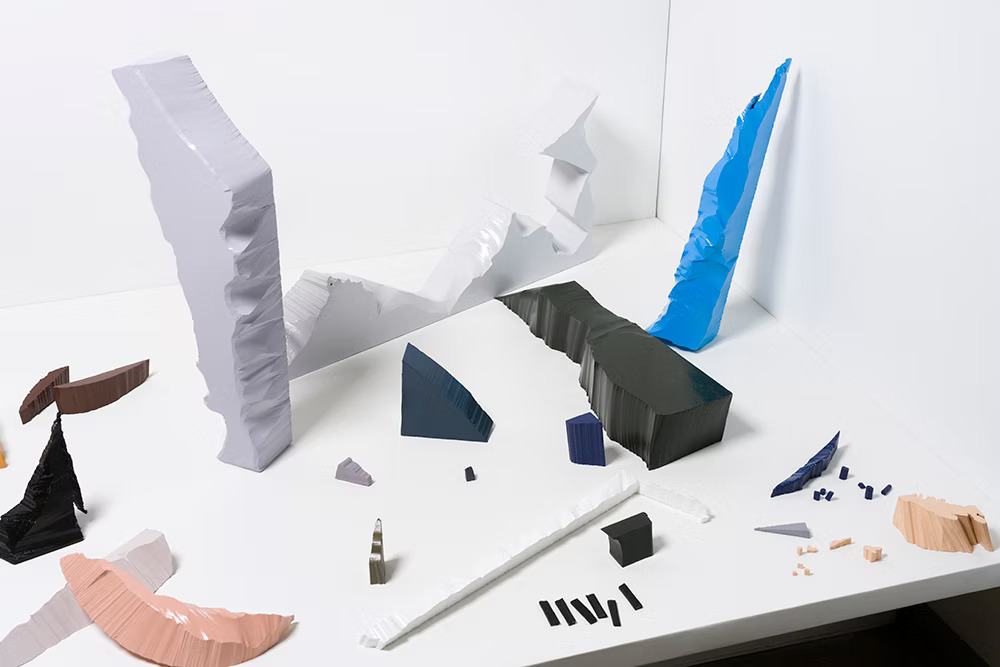
Meanwhile, collage drawings are made by tearing and combining collected magazines. Starting from these drawings, an image is transferred into a digital image and then painted again on canvas, creating an intriguing process in which a single image or work is transformed into another format. This series, called ‘Convert A to B’, shows the expandability from digital drawing to painting, and again from three-dimensional work to various drawing series.
Whenever the artist transfers a work from painting into another medium, she observes with interest the process by which the original image is newly generated, disappears, or is transformed into another dimension, and incorporates that process into her work. In this way, the process of “conversion,” beginning with a single image and moving into various forms, can be said to form the core of her practice.
At its base lie fundamental elements such as form, color, and pattern. Through countless acts of selection and exclusion, opposition and tension, and eventual harmony among these elements, her collage drawings come to broadly encompass the boundaries between painting, printmaking, and three-dimensional work.
The Moment When Unconscious Intuition and Sensation Operate
Her recent works focus less on collecting and recording image information, as in her earlier works, and more on the moment and situation in which images are combined. In addition, when selecting images, she projects onto the surface her own memories and narratives created by the unconscious activation of her senses, or by emotions that respond to specific situations and minor incidents.
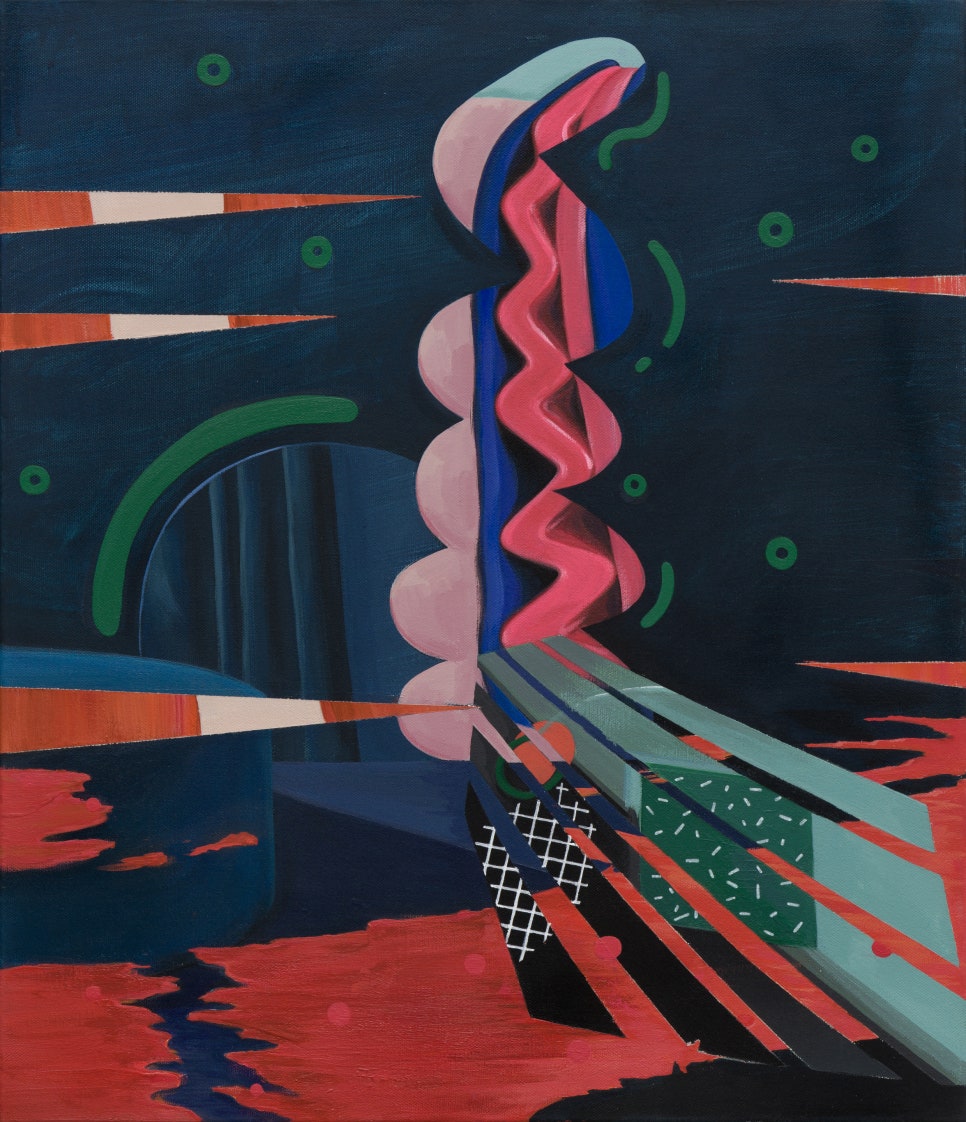
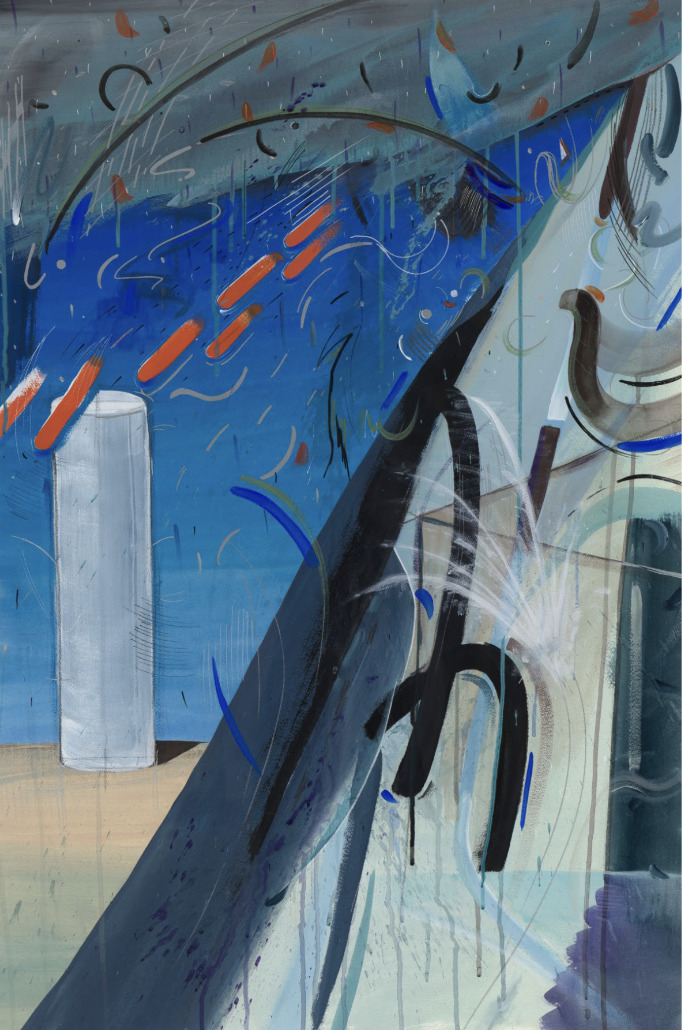
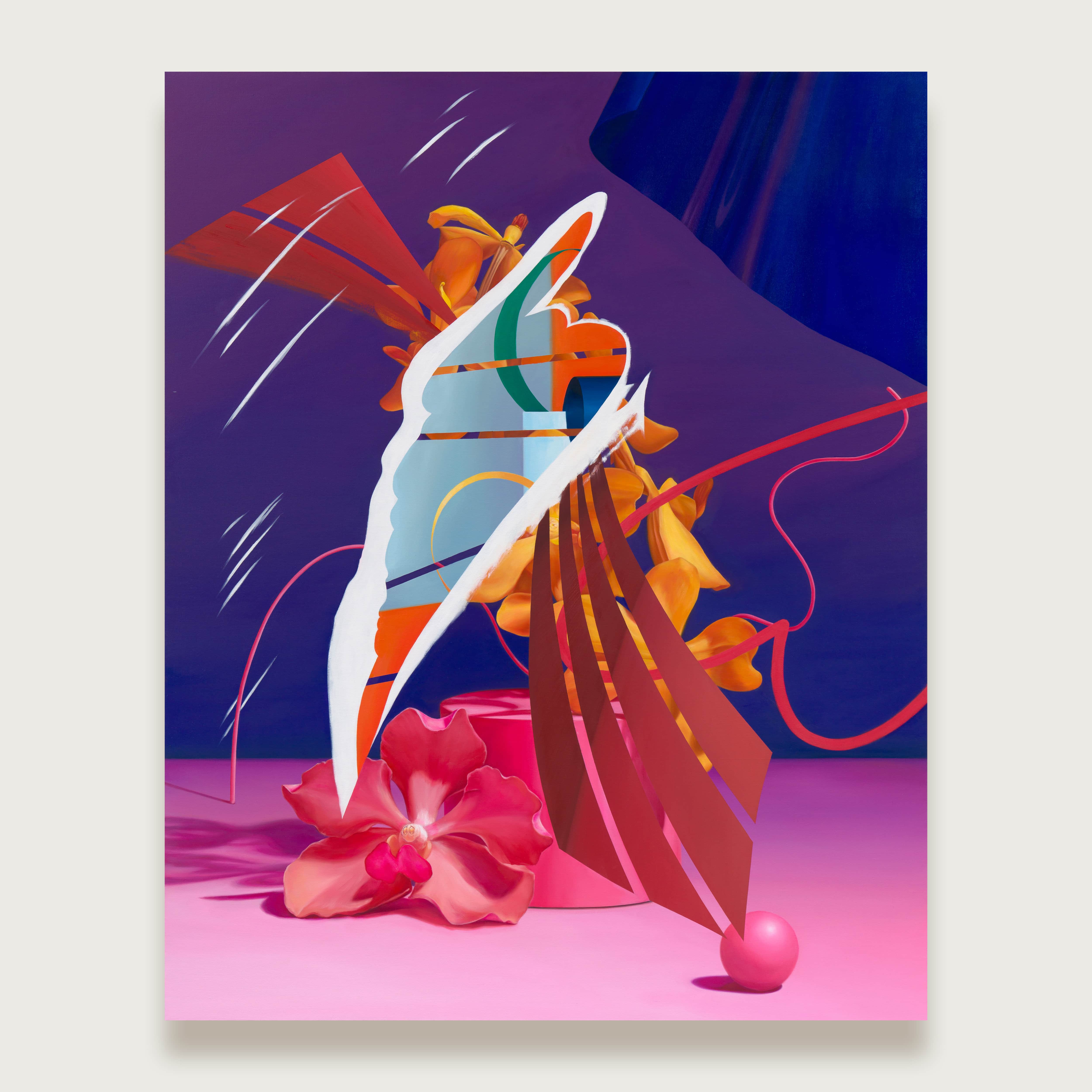
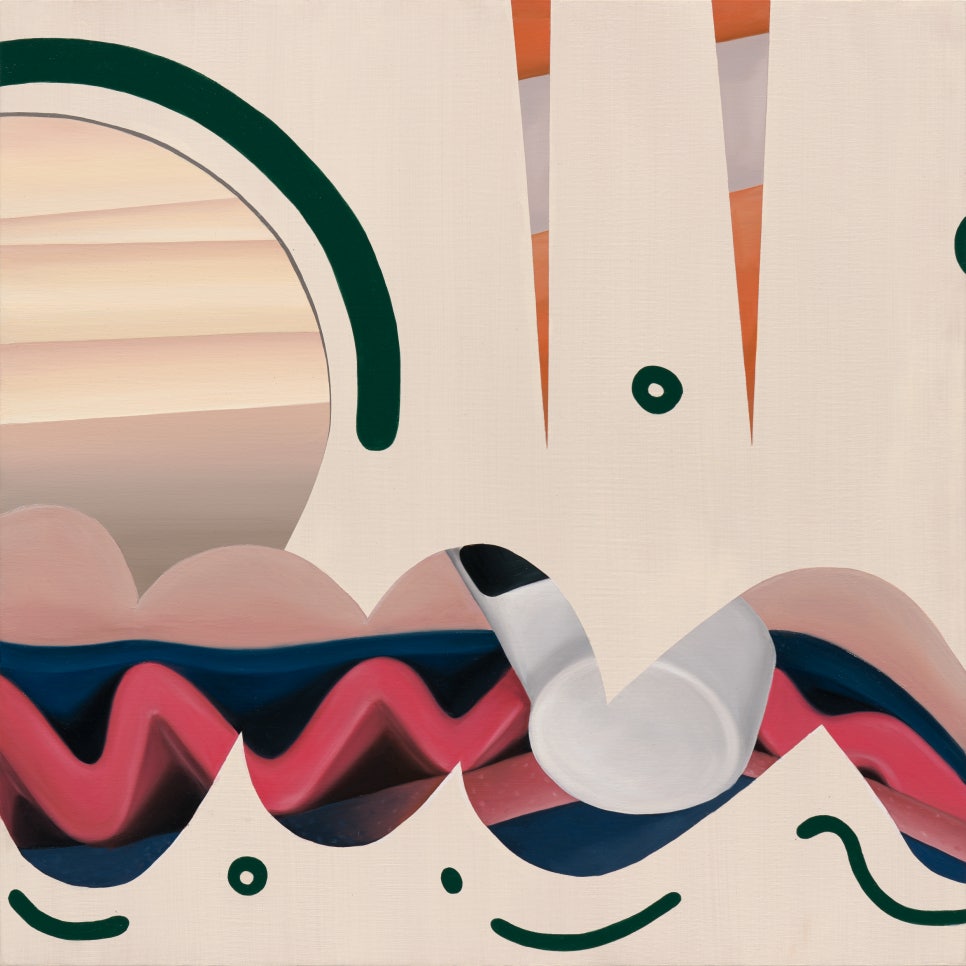
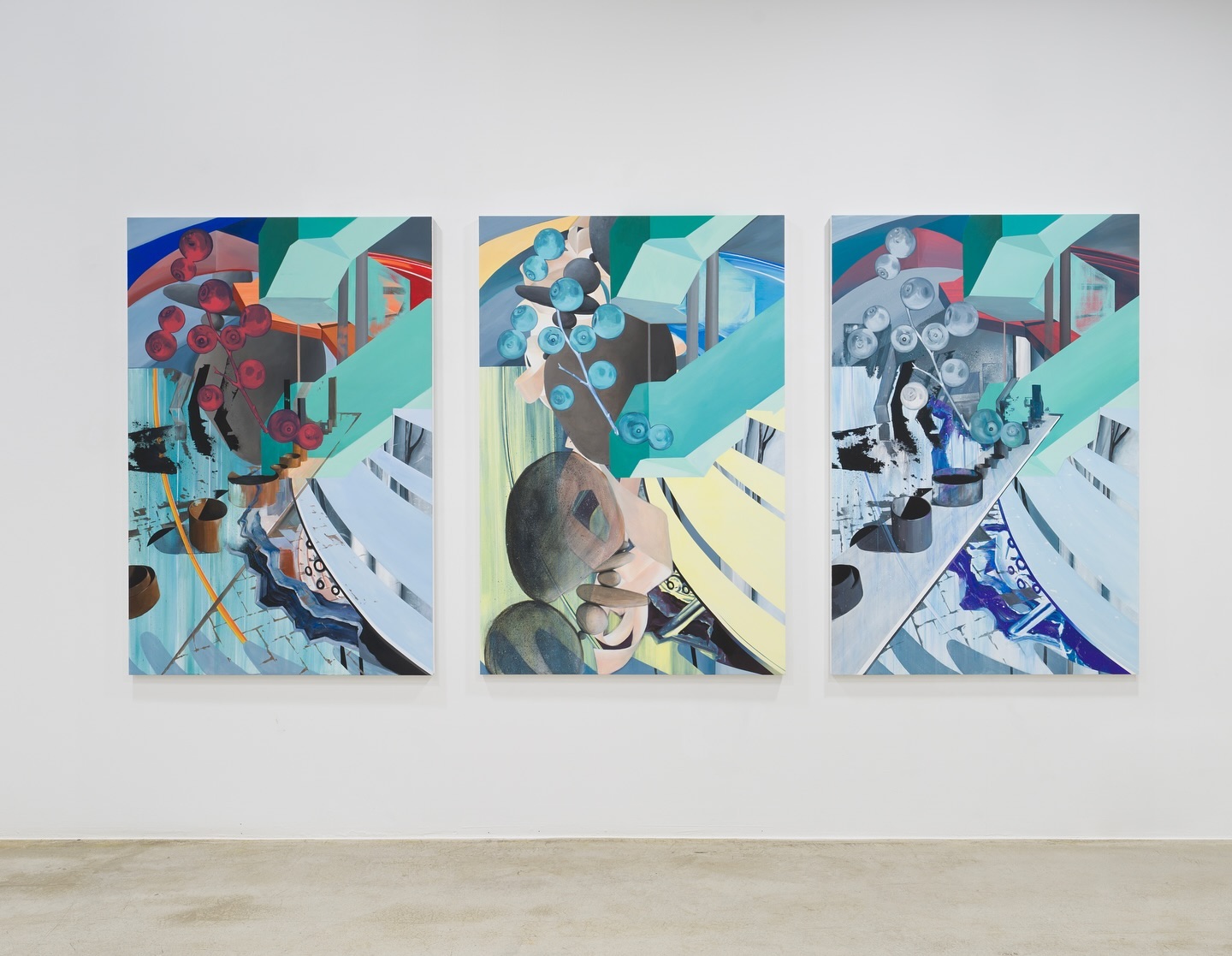
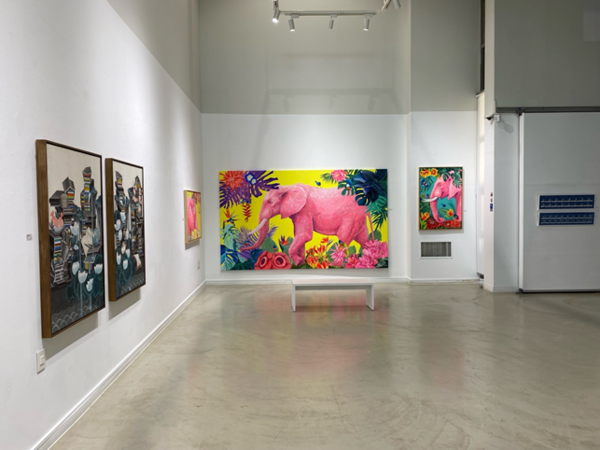
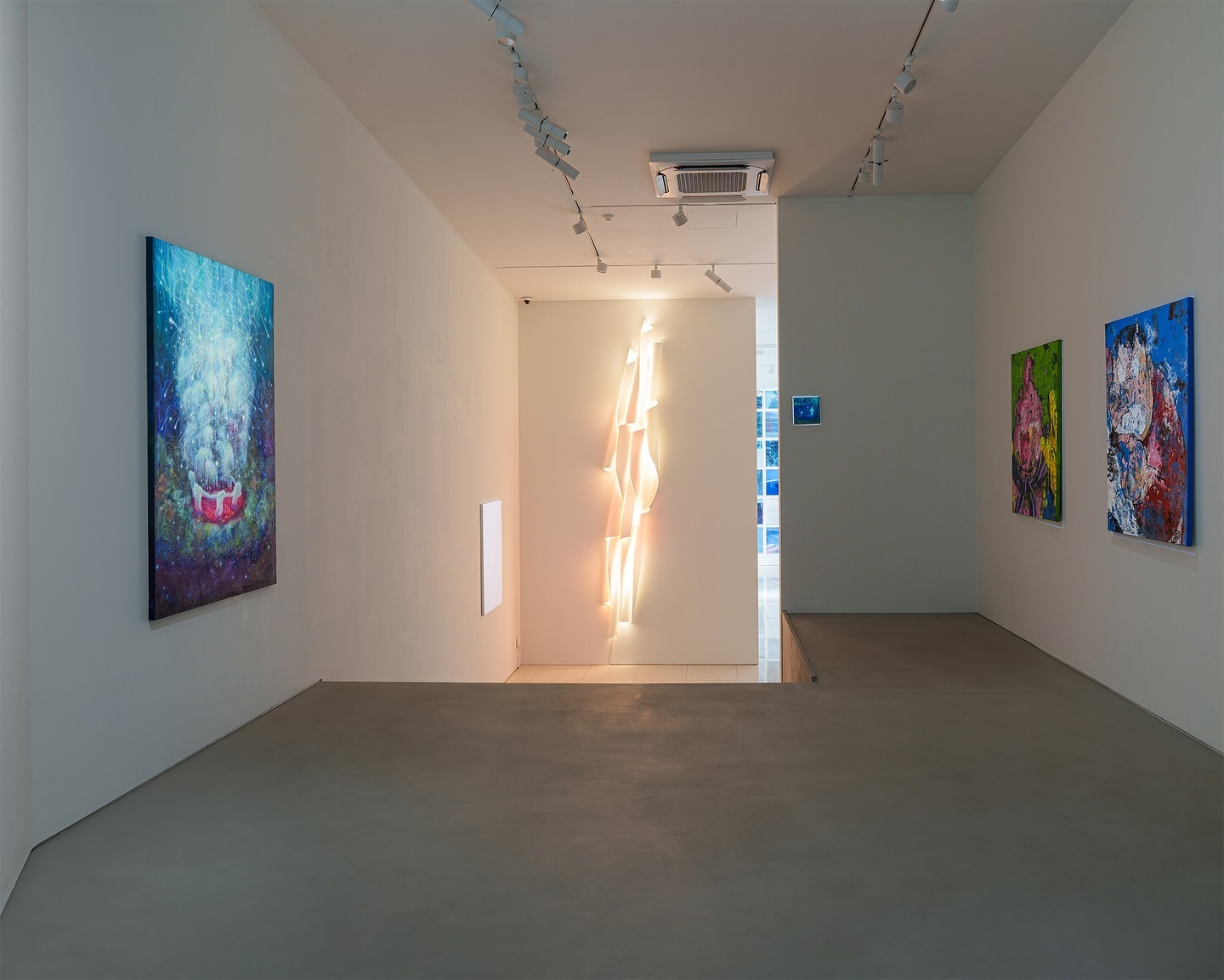
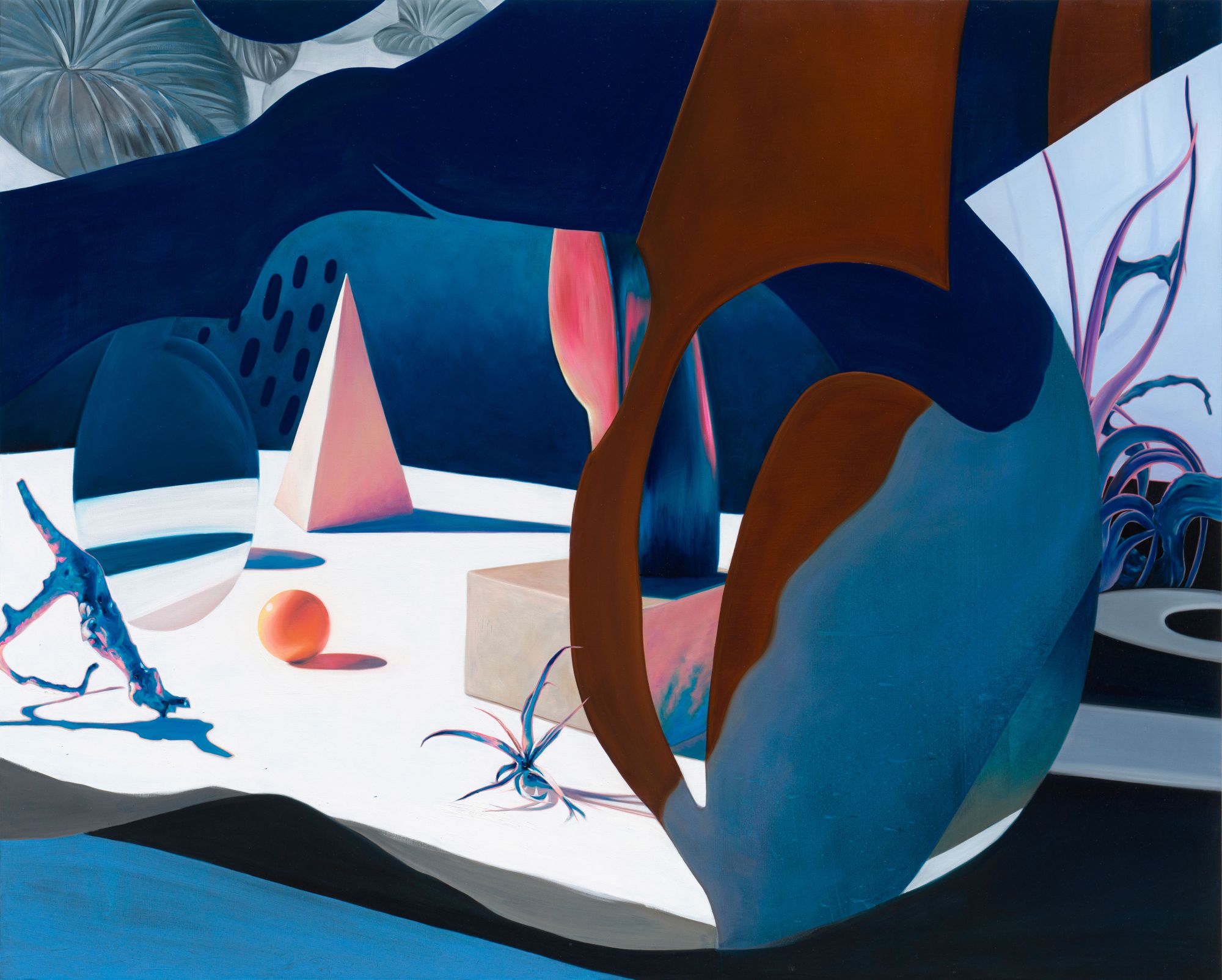
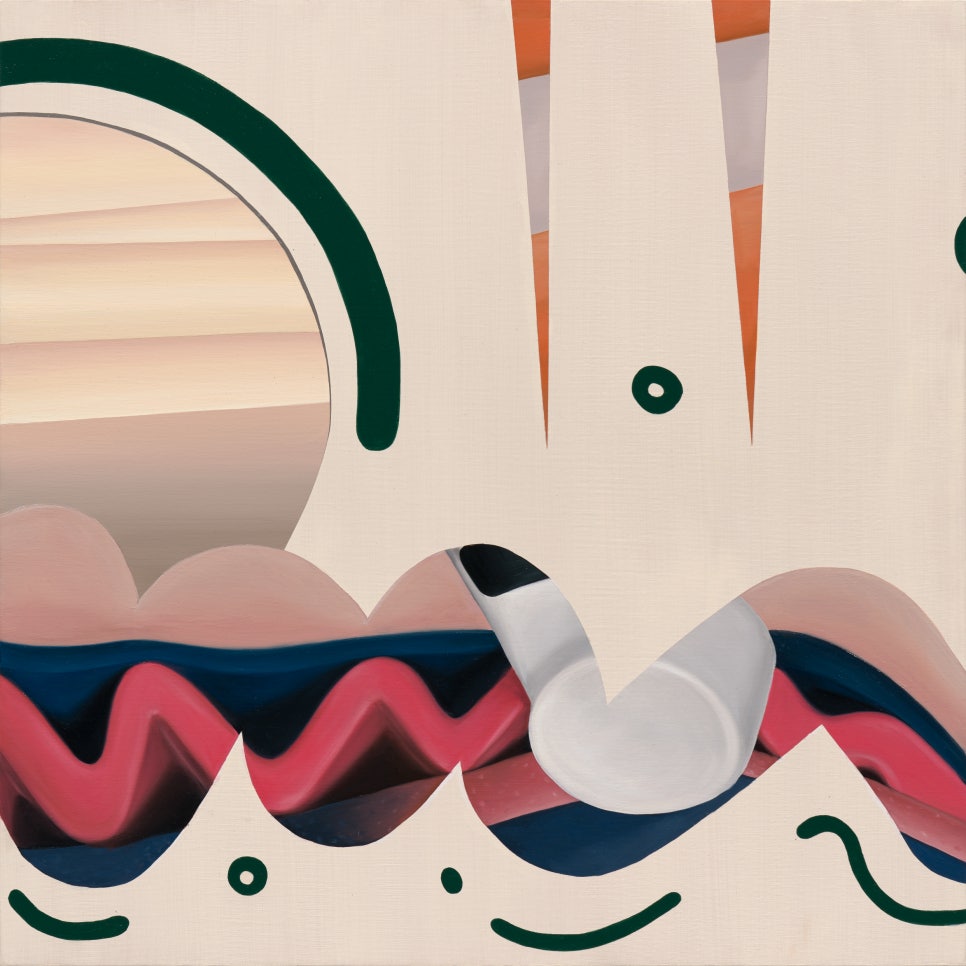
In this process, new painterly elements appear within the geometric and flat surfaces that had previously been dominant. The works presented in this exhibition, including Expansion in Weightlessness(2022), Speed of Sensation(2022), and Angel’s Wildflower(2023), show these new attempts. In other words, beyond the geometric elements of the painting, the artist adds shadow and volume, moves beyond compositions centered on horizontals and verticals, inserts semi-abstract images, and layers drawings on top of them, intentionally creating tension.
Meanwhile, in The dawn of the garden looking at the balance(2023), the artist appears to focus on capturing a small incident encountered in everyday life and expressing its psychological dimension and delicate sensibility. By describing the aura of an unspeakable, quiet weight felt while awake at dawn, as well as the subtle changes in light and color emitted before daybreak, through the lyrical phrase “a garden looking at balance,” she leaves room for the viewer’s imagination.
For titles that arouse curiosity like this work, the artist has said that she usually keeps a separate folder for making titles and continuously collects words. She then sensuously selects suitable words from this folder and combines them to create titles that correspond to the situation. Just as she recombines images, unexpected chance emerges from the random combination of words, encouraging free imagination.
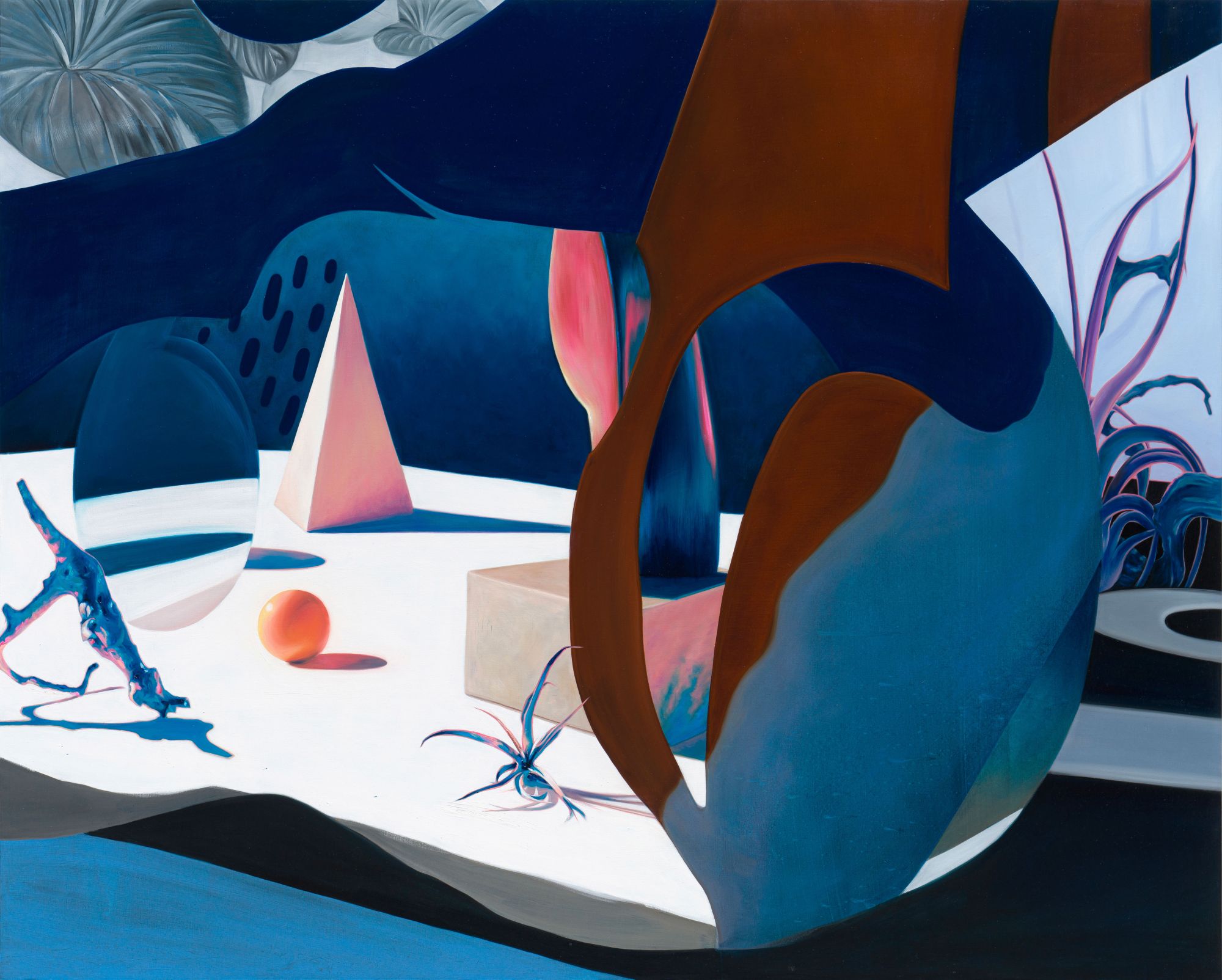
Recent works such as One-Table Island(2023) and Moon Flower Blooming Here(2024) may be considered a kind of still life. While they show a process similar to her earlier works, what stands out is the appearance of concrete images rather than the flat and abstract forms of the past.
If the earlier works focused on a continuous process of unconsciously selecting and recombining image information based on visuality, the artist now seems to have shifted her gaze toward internal factors and psychological changes observed within her routinized everyday life. This is because one can glimpse a psychological impulse to dismantle, break apart, and resolve within the work certain points of conflict that the artist senses as subtle psychological changes but cannot easily approach in daily life.
Perhaps it is precisely at such moments that the artist’s unconscious intuition operates at its fullest. As if she had been waiting for this moment, the artist seems to actively symbolize her inner image as a series of concrete images and draw them boldly onto the surface.
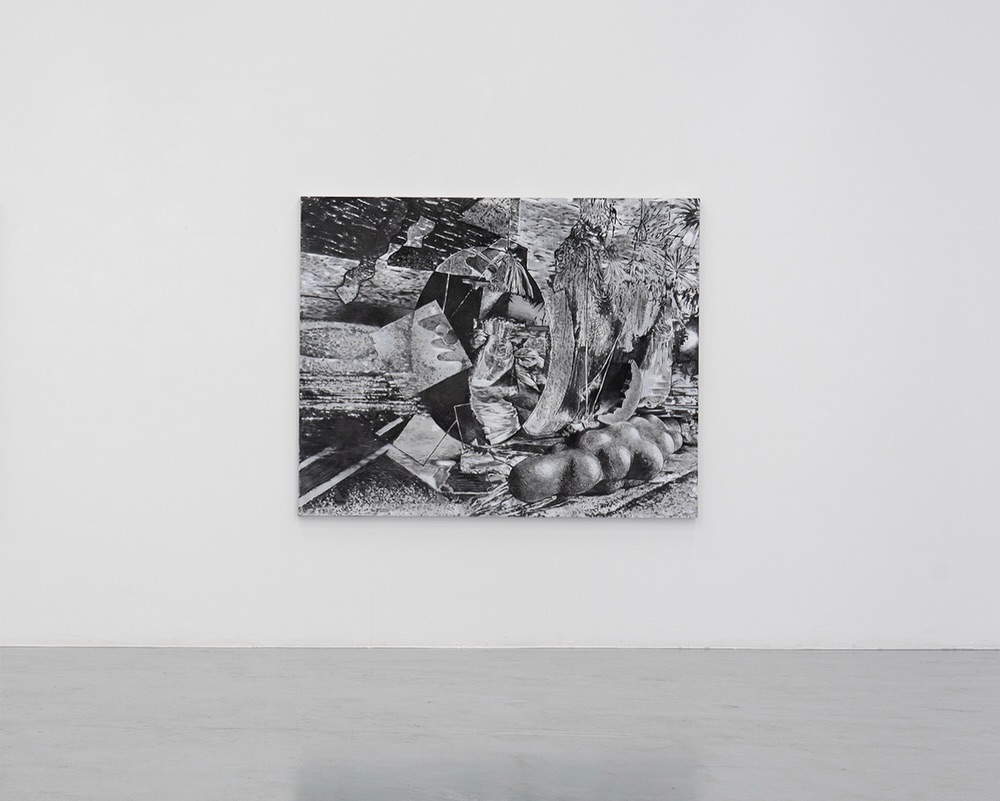
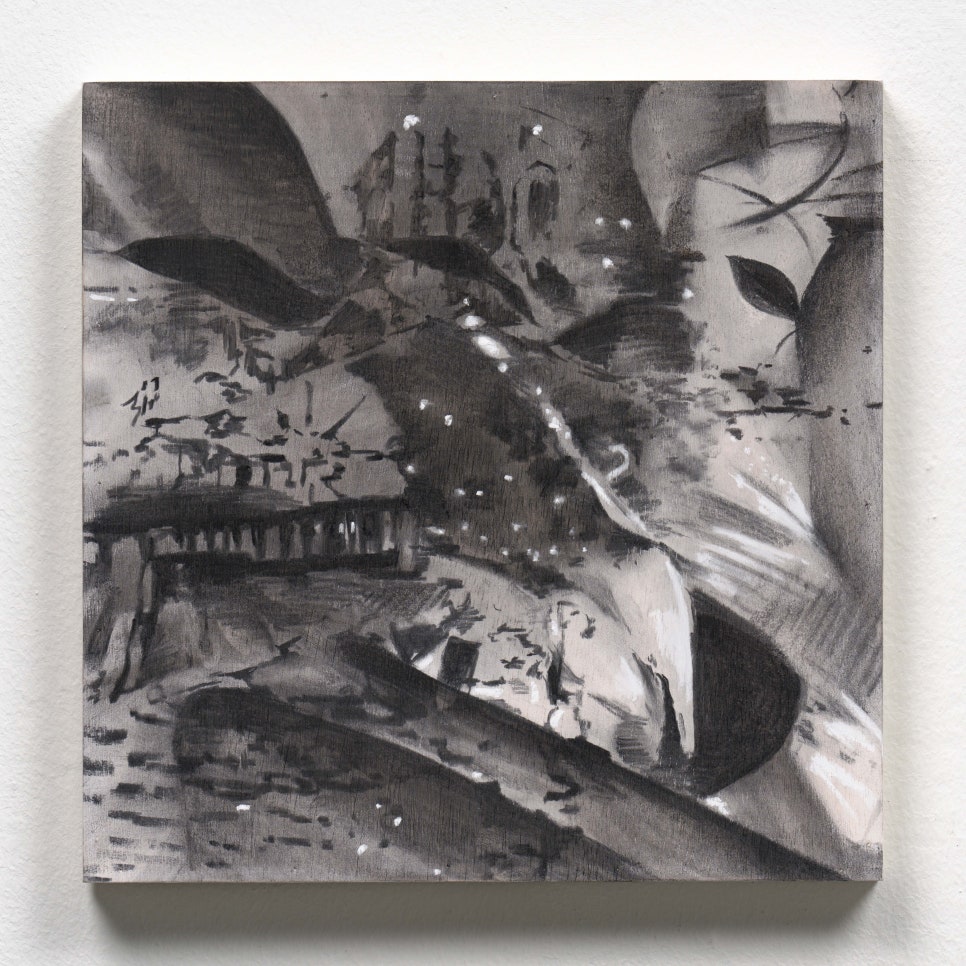
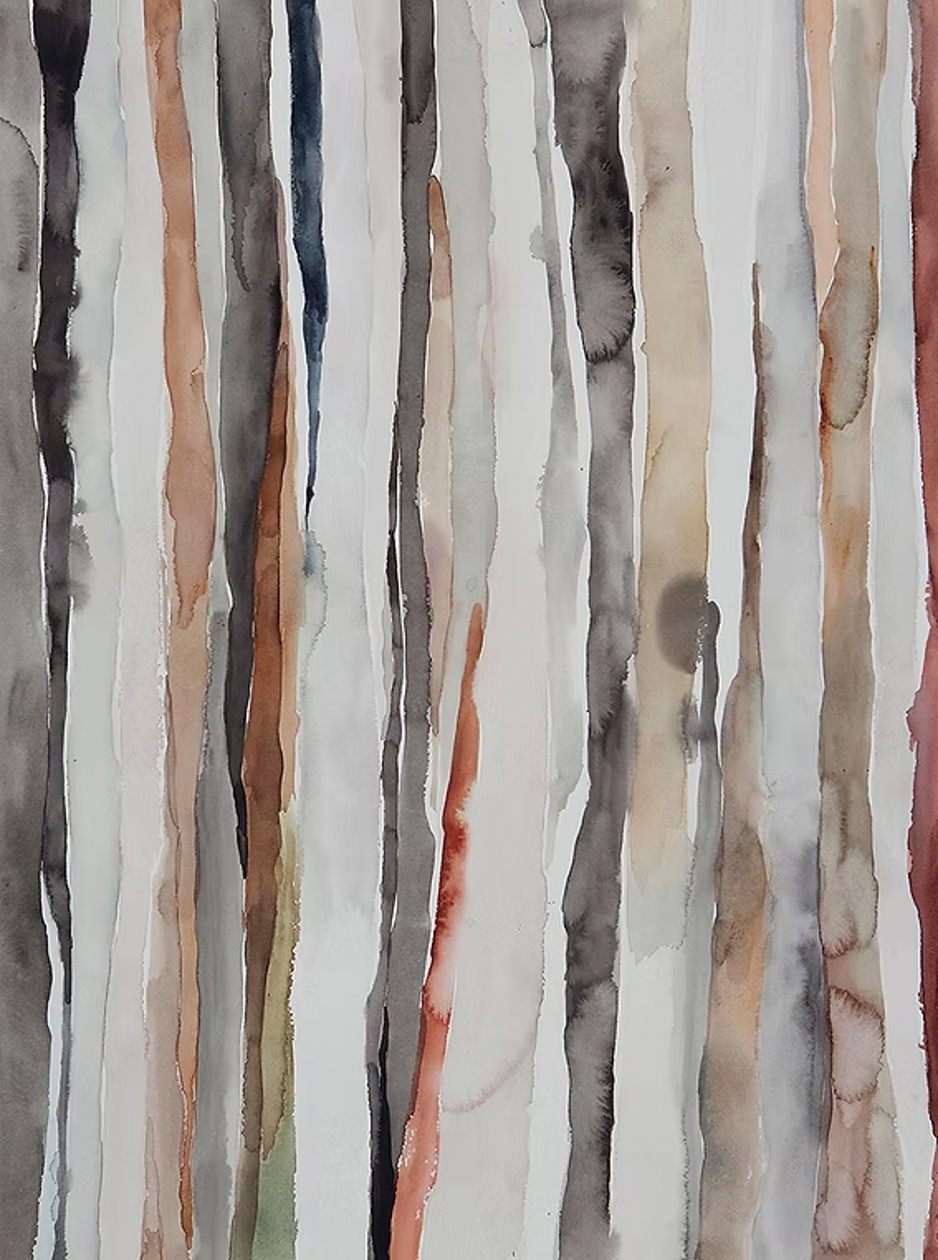
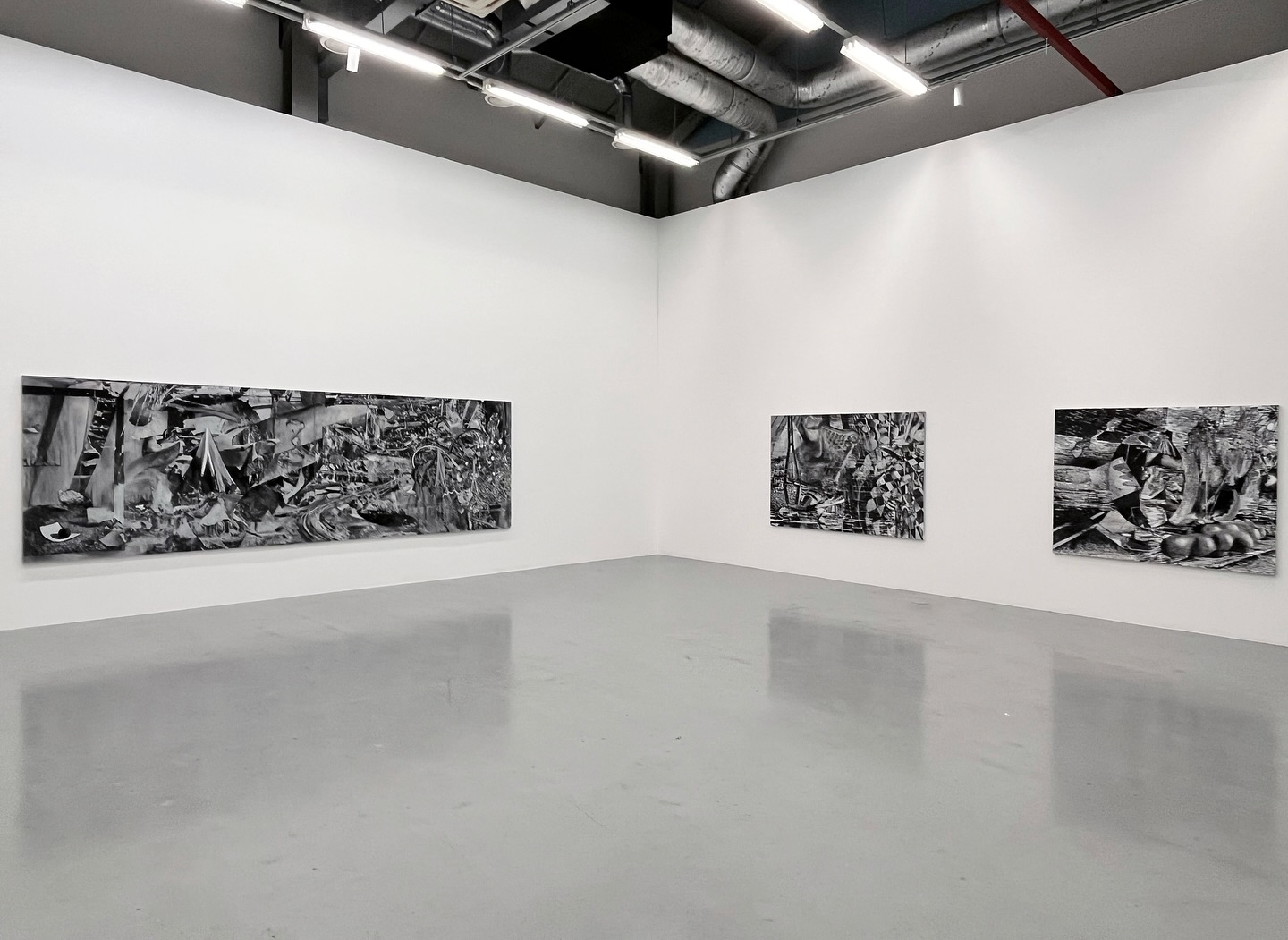
Among the works in this exhibition, the ‘Accidental Order-BLANK’(2024) series is a rare group of achromatic works. For an artist who has consistently emphasized combinations and boundaries of color as formal elements since her early works, and who has spoken about her sensitivity and responsiveness to color, the achromatic surface may appear somewhat unfamiliar.
According to the artist, by excluding color in ‘Accidental Order-BLANK’, she was able to focus on form, and to examine and reaffirm the formal experiments she had attempted on the surface so far. From this perspective, this small achromatic series may be understood as something akin to a director’s cut or a spin-off of the original film.
In other words, it seems to provide an opportunity to organize her work up to this point by revealing a refined language that could not be fully expressed in the original, or by condensing and expressing the artist’s refined perspective on images.
Here, however, it is necessary to pay attention to the symbolic meaning of the character “偶” in the title “Accidental Order.” Chance, or uyeon(偶然), originally means “something that happens unexpectedly and by itself without any causal relationship,” and taking chance as a theme includes the meaning of being expressed in an unplanned or improvisational manner.
This also corresponds with the artist’s methodology of “unconscious selection.” In Western art, the chance involved in creation has been represented by avant-garde artistic tendencies that reject the rule of reason and express the irrational, the abstract, and thoughts or actions free from aesthetic and moral preconceptions.
By contrast, in Eastern systems of thought, “chance” is said to become possible only after an essential process of training for the mastery of technique. In Bokyung Kim’s case, it is the latter. She has already carried through her own perspective with individuality and diligence in the techniques and development of handling painterly form and images. For that reason, the traces of randomness and the “accidental order” realized on the surface after a long process of training appear natural.
When an Experience Functions as Something Aesthetic
As discussed above, Bokyung Kim’s work begins not from particular aesthetic knowledge or discourse, but from a habit and experience of observing a kind of purposeless everyday life. She transforms various perspectives naturally derived from minor experiences into something with artistic value.
Although the artist advocates selection based on unconscious or intuitive sensation, the moments of selection that take place ceaselessly for her work cannot be easy. For this reason, she sometimes entrusts herself entirely to the flow in which the situation of selection occurs. As the artist has said, her own desire to obtain images that correspond to her senses also functions as a channel of expression for art.
At the moment of selecting from countless mass-media images that shift at high speed, the artist’s unconscious sensation and intuition operate without exception. Here, “accidental order” becomes involved, creating balance and moving toward the order of the surface.
There is a certain rhythm in every human experience. This is because we move within a kind of rhythm formed through our surroundings and our relationships with them. The artist perceives a certain rhythm within the situations created by the mass media and digital environments that surround us, sensuously reflects on it, and seeks to find their own order.
She also pays attention to the balance created as a kind of “aggregate of selections” collides and transforms on the surface she unfolds. Abstract images relying on irregular forms create their own uniqueness as they are reconstructed, and the results of random sensuous selection gradually move toward an aesthetic point while coexisting with the contrary order of impartial moderation, or the Mean(中庸).
Combining an individual’s minor experience with aesthetic perception is never easy. Because experience is concealed within one’s own emotions or sensations, it is difficult to gain the empathy of others and to communicate with the world. For this reason, the pragmatist philosopher John Dewey emphasized the complete “interpenetration” of the self with the world of everyday things and events.
The active act of forming a relationship with everyday events or phenomena—in other words, combining a gaze toward images with fragmented experiences—may be a fundamental element of Bokyung Kim’s work. Therefore, even though the way she takes up images is based on randomness, she focuses on the process of condensing her distracted and fragmented experiences and finding balance.
This process functions as the artist’s own positive gaze for relating to images and closely penetrating them. If this becomes a source of inspiration for the work, it will move along the rhythm embedded within it and develop into something with aesthetic value.
Every experience of a subject begins with a single choice. Even if that choice originates from unconscious sensation and chance, if it functions aesthetically, it will enrich the meaning of the work. Accordingly, when selecting images, the artist does not simply focus on external characteristics such as line, form, and color.
She projects onto the surface the intense moments in which she sees through and discovers the hidden order latent in the boundaries where line meets line and plane meets plane, and in the combinations of color and pattern. It is much like the way she strives to find her own balance[中] within everyday life. The image that appears phenomenally cannot fully convey the intention of the creative subject.
For this reason, artists must first acknowledge the image they have chosen and create a situation in which they express their worldview through the “imagized form.” Instead of pursuing concreteness, Bokyung Kim places on the surface forms that imply latent symbolism and unfolds her own narrative through them. She willingly accepts the laborious moments of relating to images so that she may contain her aesthetic experience and move toward an ultimate orientation.