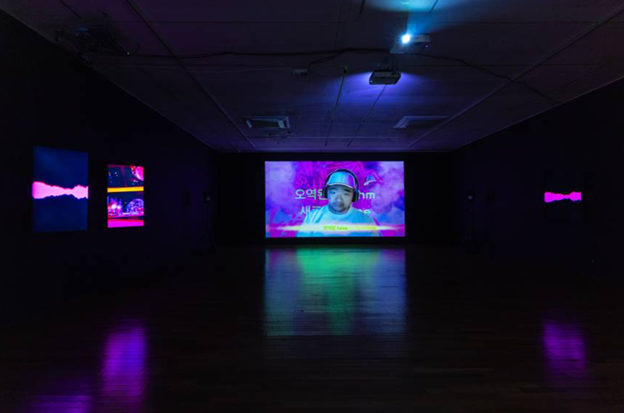
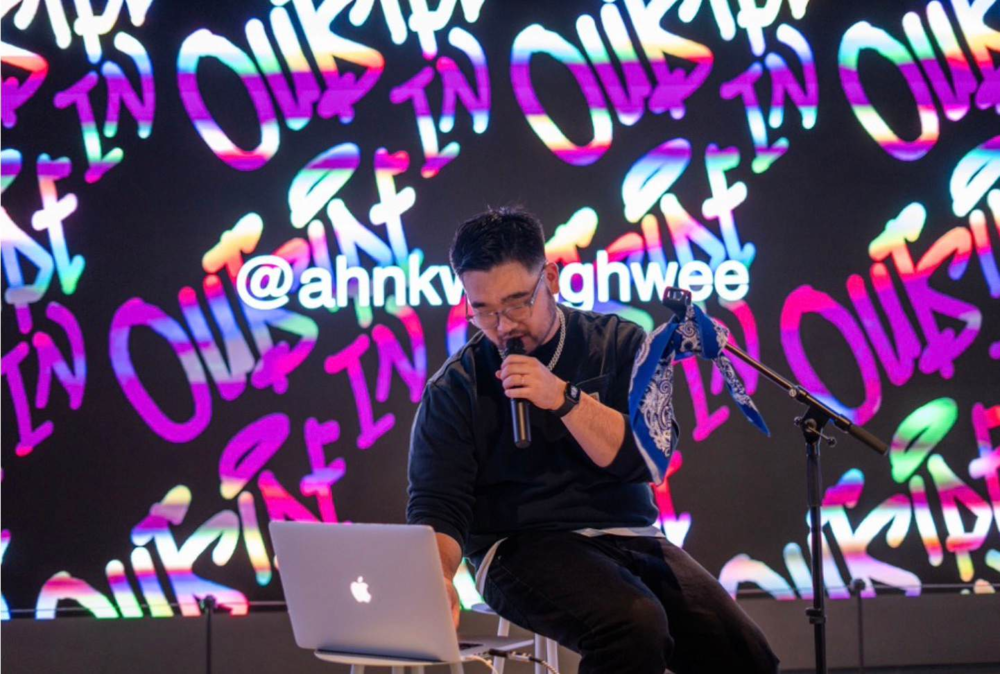
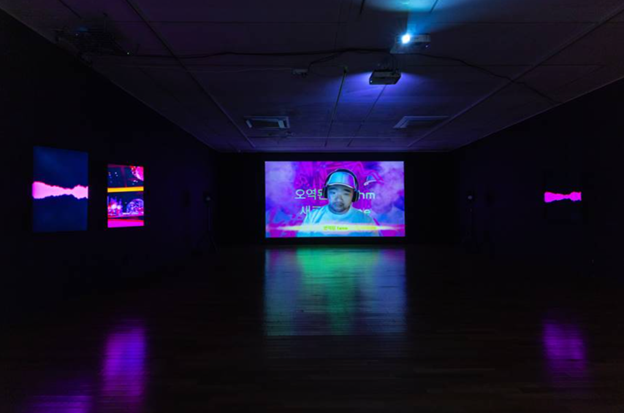
As noted almost unanimously in written introductions or discussions of Ahn Kwanghwee, it is difficult to appreciate or examine his work without mentioning hip-hop music. Although he has pursued a variety of simultaneous projects, including podcasts, curation, and translation, this characteristic truly came to the fore with 《The Pathetic Rhymes》 (2017) at Instant Roof, marking a watershed moment.
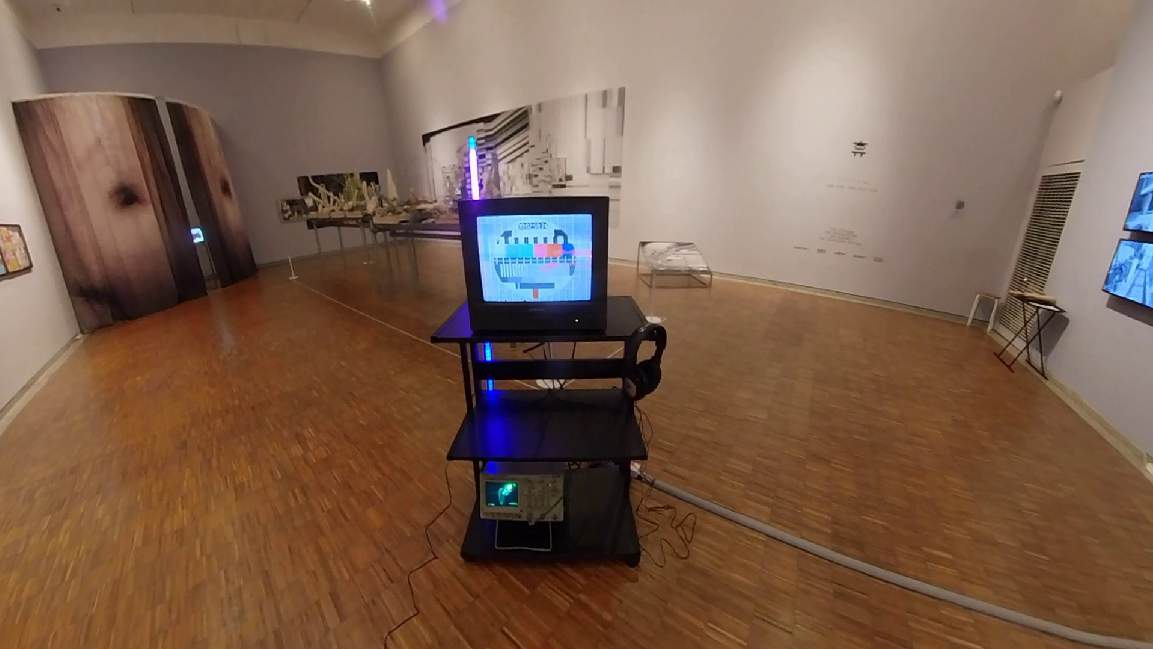
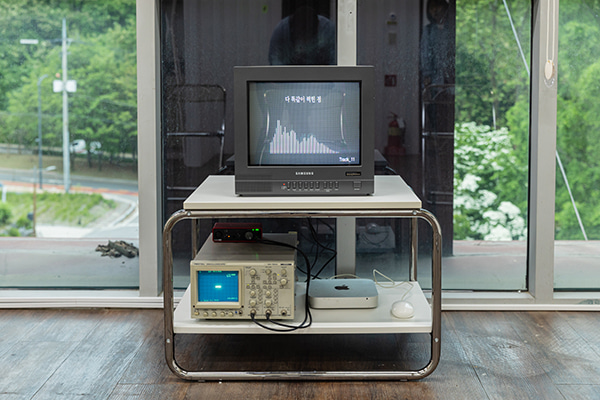
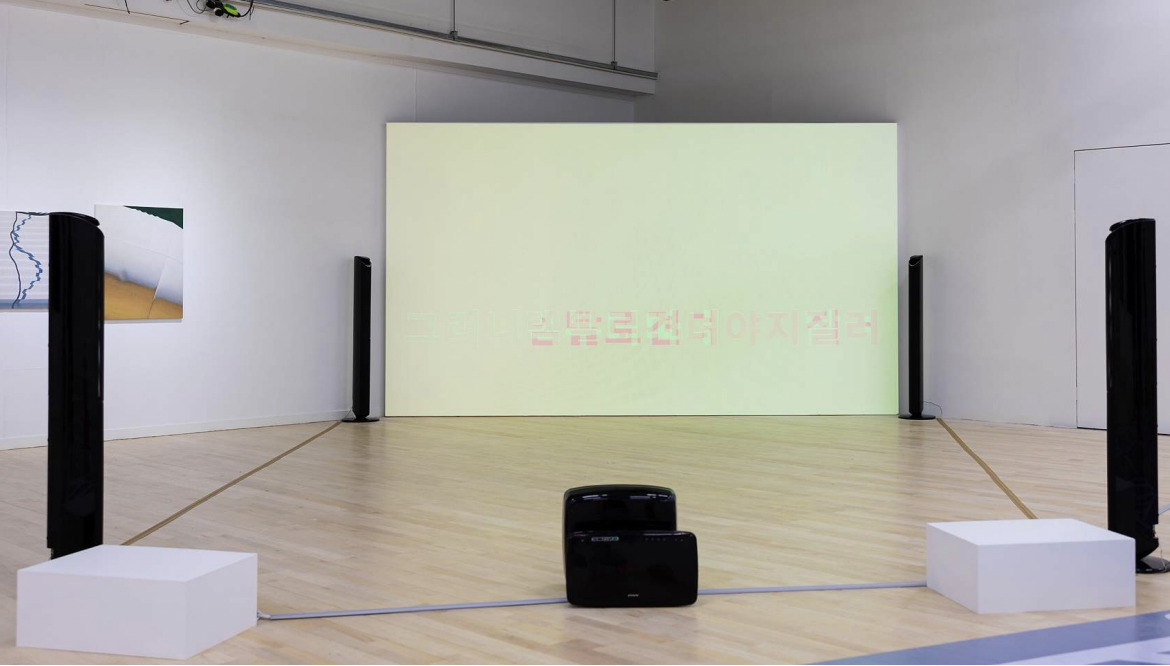
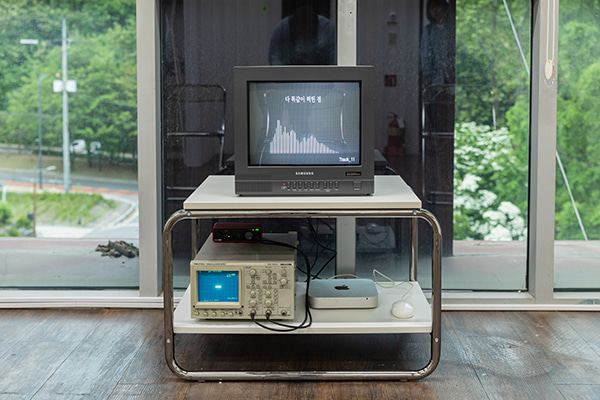
From his solo exhibition 《Noise Cancelling》 (2019) at Sarubia Dabang and 《The Pathetic Studio of the Pathetic Label》 (2022) at Geumcheon Art Factory, to the piece Untitled 13 Tracks – Nanji(2025) presented at SeMA Nanji Residency, hip-hop music has been cited from the outset as both his subject matter and medium—a kind of alpha and omega.
In a text summarizing his artistic trajectory, he emphasizes this status, stating that he “continuously questions my position within the contemporary media conditions and art ecosystem through the physical and affective sensibilities of the hip-hop genre.”¹
For those who have encountered his work or exhibitions at least once, this is hardly news; yet this self-evidence warrants closer examination. Consider, for instance, the approach that treats hip-hop music as either something endemic to, or a matter of taste for, the particular generation to which he belongs. This leads to the question “Do I belong to that community of taste or not?” and, depending on the answer, approaches diverge.
Those who position themselves as outsiders tend to frame their externality within the context of the author’s personal history and the social (or media) history of the time, or within art-historical knowledge, whereas those who identify themselves as insiders are often swept up in the desire to display specialist knowledge that remains opaque to the former group.
This distinction is as suspect as it seems plausible: Consider, for instance, the question: “Can we imagine an artist doing work equivalent to Ahn’s but with hip-hop music replaced by rock, trot, ballads, or classical (translator’s note: ‘trot’ is a Korean popular music genre traditionally associated with older generations characterized by repetitive rhythms and emotional vocal inflections)?”
This leads us to questions about the specificity and historical status of hip-hop (music), and at this juncture, 《Culture: Hip Hop and Contemporary Art in the 21st Century》 serves as an apt point of reference.
Launched in 2023 at the Baltimore Museum of Art, this exhibition comprehensively addressed how hip-hop’s innovations expanded beyond music into truly global culture traversing art, fashion, and community. After traveling through the Saint Louis Art Museum and the Schirn Kunsthalle in Frankfurt, it concluded in April 2025 at the Art Gallery of Ontario in Toronto, Canada.
Above all, this exhibition was an attempt to address the 50th anniversary of hip-hop through the format of a global touring exhibition. The breakbeat introduced at the historic party hosted by DJ Kool Herc (Clive Campbell)—who would come to be known as the father of hip-hop—and his sister Cindy Campbell on August 11, 1973, in the Bronx, New York, became the seed not only for the rapping, beatboxing, breakdancing, and graffiti culture that would subsequently flourish, but also for the figures of the B-boy and B-girl.
Among the dozens of artists featured in this exhibition, there are quite a few familiar names—for instance, artists such as Jean-Michel Basquiat, Mark Bradford, Julie Mehretu, and Arthur Jafa, as well as fashion designers like Virgil Abloh, who caused a sensation when he was appointed as artistic director of Louis Vuitton.
This raises an intriguing question about how, when taking hip-hop’s graffiti culture as an alternative point of reference for instance, the conventional ways in which these figures have been read in art (criticism) history may be recontextualized.
This question can be equally raised in discussions of Ahn’s work, which encompasses music, graffiti, and block parties; likewise, the six themes advanced by this exhibition are worth juxtaposing and reflecting upon.
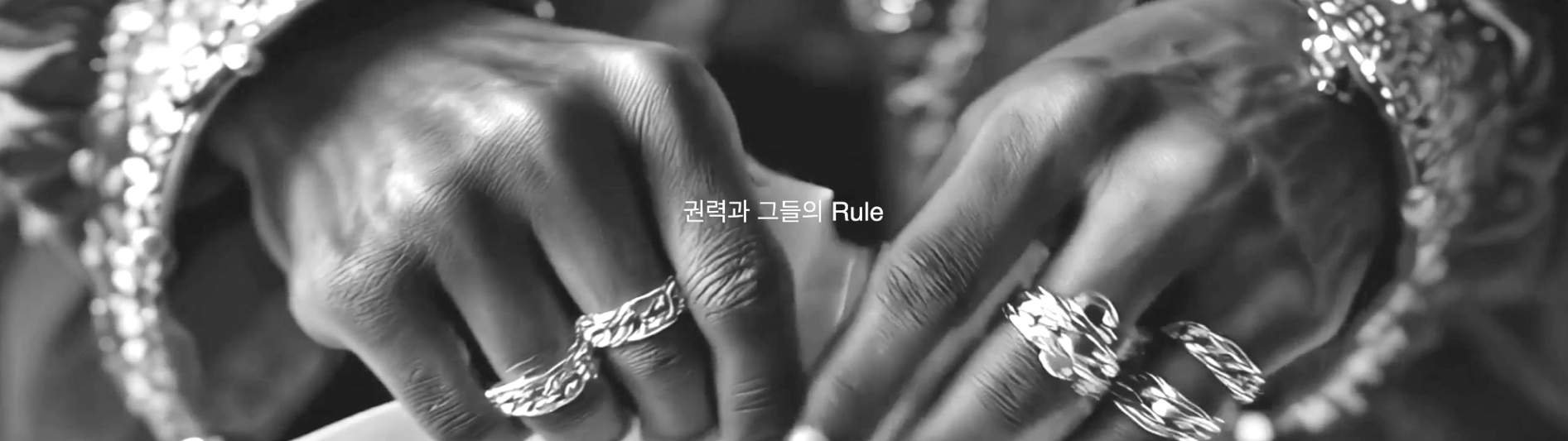
This is because these six vectors—Pose, Brand, Adornment, Tribute, Ascension, and Language—evoke not only issues of visuality and music in the narrow sense, but also the question of the body that hip-hop music has foregrounded, alternative meanings of success and aesthetic standards, the canon, and language itself.
Of course, this should be distinguished from the endless calling into question of the so-called origin of hip-hop, and where it stands in relation to hip-hop’s beginnings in mainland America.
Ahn is not, for instance, a rapper who skillfully deploys both English and Korean, like Tablo or Beenzino; nor does he foreground the intonation and vocabulary of the Chungcheong-do dialect, like Mushvenom; nor does he translate techno and ppong-jjak into a vernacular context like 250 or Epaksa (translator’s note: ppong-jjak is a Korean trot-influenced pop music genre characterized by its bouncy, repetitive rhythm).
Yet he is also far removed from Drake, the Canadian-born rapper who sparked controversy by using pastel-toned colors and images evocative of James Turrell’s trademark work without permission in his music videos.
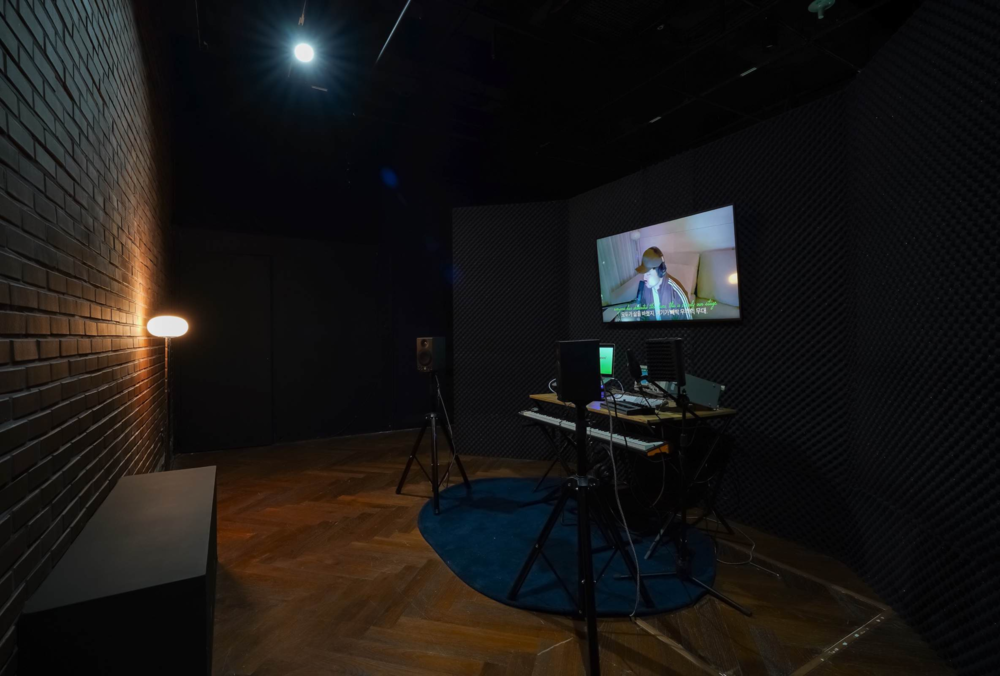
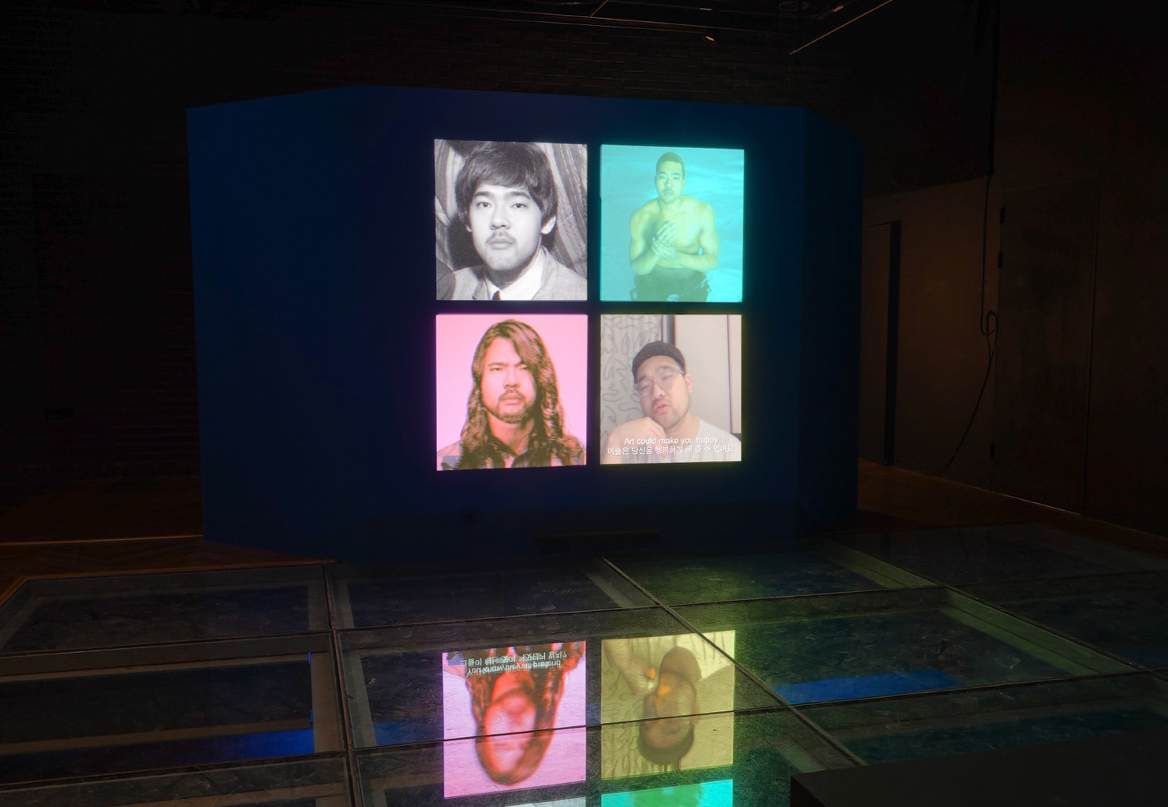
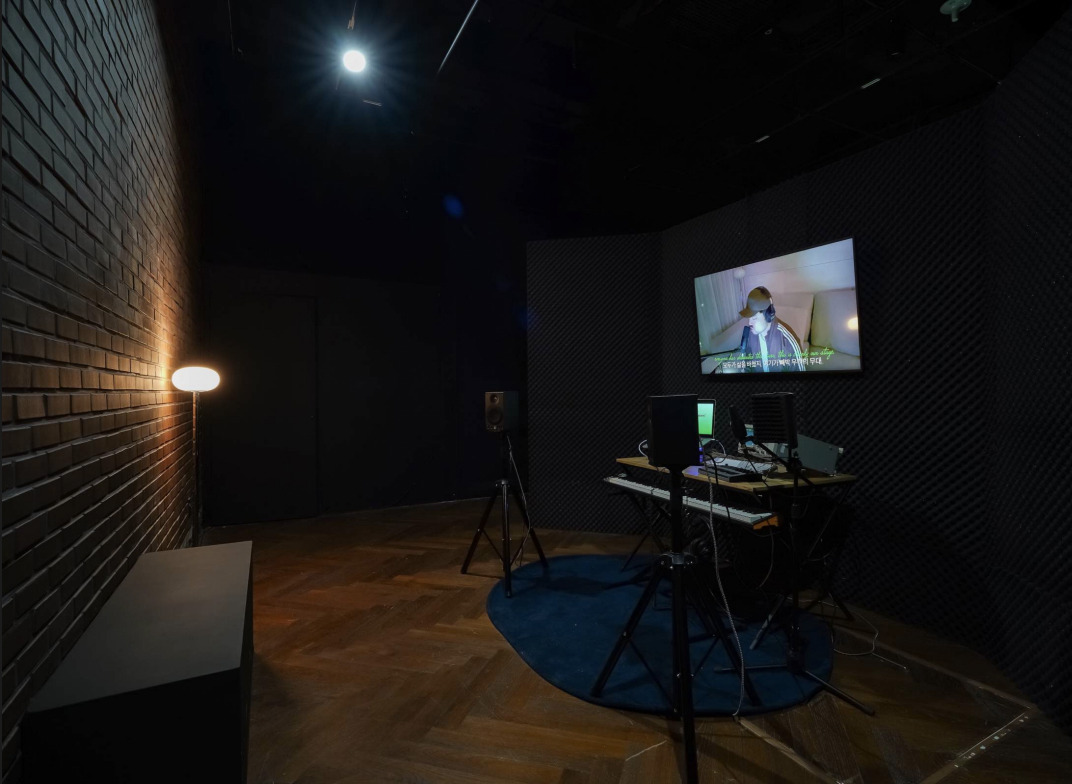
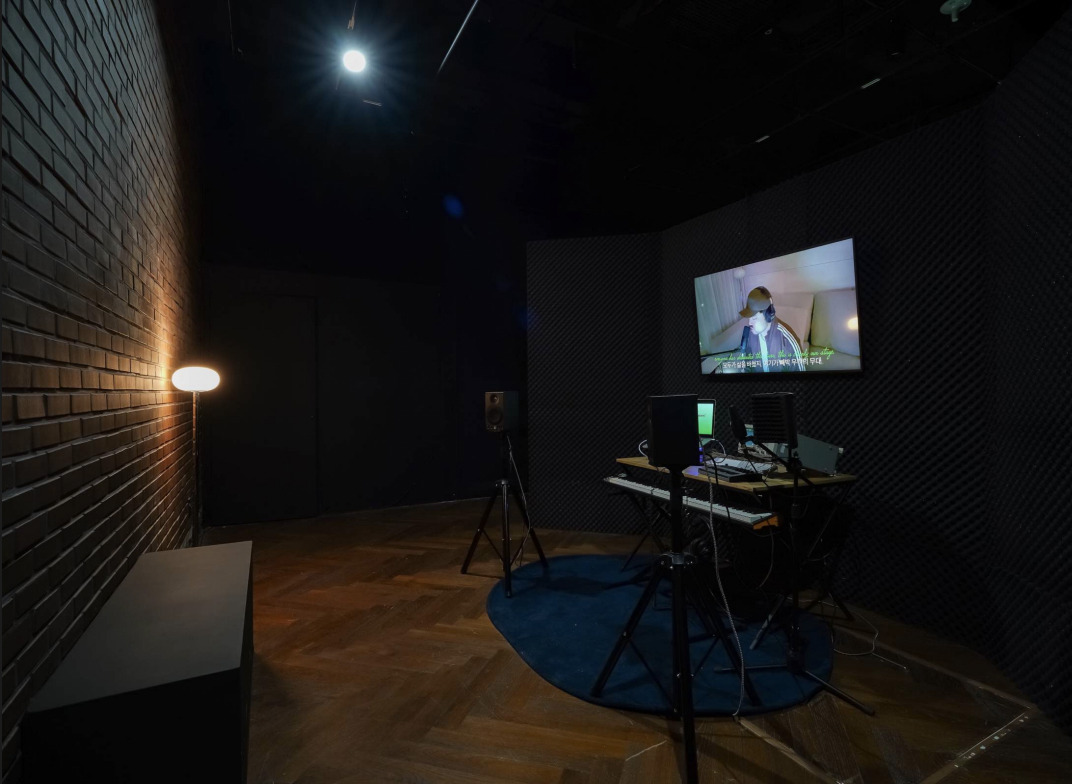
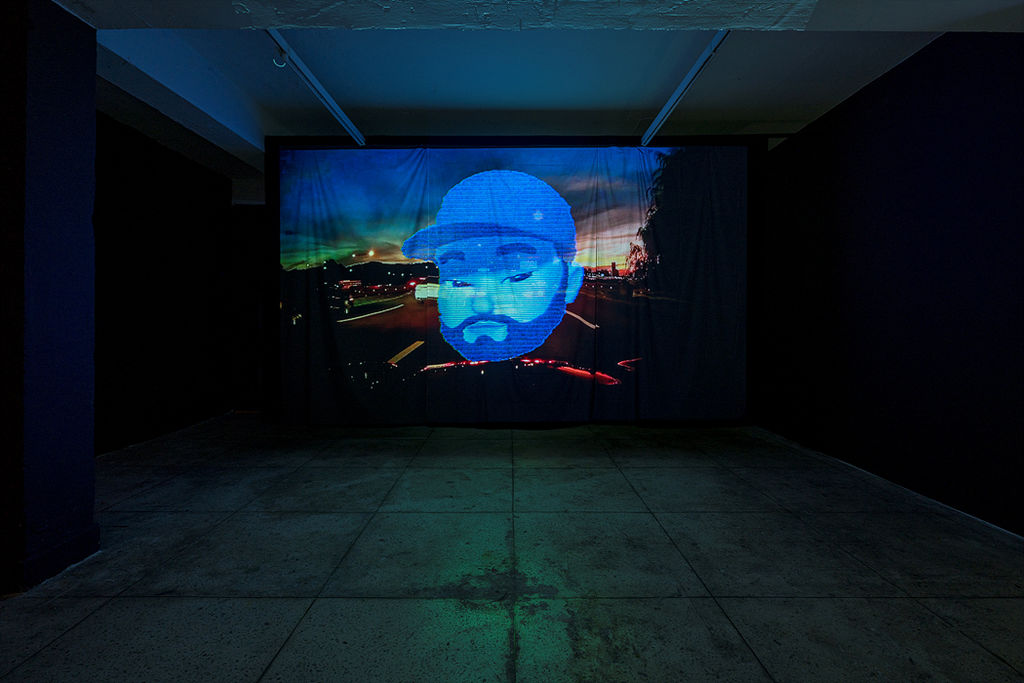
At this point, his most emblematic work is Desk Concert(2024). In this concert, taking place over approximately 25 minutes in his room or studio, he introduces and plays a series of tracks as if live broadcasting—yet there is, in fact, no audience listening to this work.
It operates (only) within the art institution as a recorded document, and eschews the format of Instagram and YouTube Live that has now become commonplace even among elementary school students. While his music and performances are exported to platforms in various formats, they do not penetrate music institutions in the general, popular sense.
This coexists comfortably with observations that the beats he works with lean more toward old-school rather than being particularly contemporary, and that he seems to attach little significance to refining and polishing his rapping into something more sophisticated (the dazzling rapping he presents in this concert is generated by AI.)
In this sense, saying that his work failed to gain popular appeal does not hold up. This succinctly encapsulates the distinctive sense of defeatism and self-enclosure that his work consistently maintains, and one could say that Ahn adopts the term “pathetic”—which could be rendered in Korean as bulssanghan (pitiful) or ttakhan (piteous) —as his self-conscious label and motto.
This cautiously leads us to a reading in which hip-hop music becomes, for Ahn, a grand allegory for contemporary art (and its world). That is to say, a declaration that (Korean) contemporary art, in some fundamental sense, is like his work—a kind of desk concert that is unpopular, “pathetic,” and self-enclosed. Whether this reading proves to be excessive hyperbole or a cutting diss track will be verifiable in light of his subsequent work.
“Even though the works and artistic output displayed in this exhibition are musical, there is no sign anywhere of substituting art practice with hip-hop or importing the hiphop genre into the exhibition space. This is because it neither attempts to fulfill all the main elements of hip-hop— rapping, DJing, graffiti, and breakdancing—by shoehorning in previously explored themes, nor is it commercial rap that tells personal yet universally relatable stories.
Moreover, it does not participate in the dissemination and circulation of hip-hop (specifically rap) culture that is currently a hot topic of discussion. Rather, Ahn’s working attitude of overcoming and negotiating the frustration and disconnection that comes from art practice resembles the identity of the hip-hop practitioners who emerged from the impoverished classes of New York in the mid-1970s.”²
1 “2025 Public Art New Hero,” Public Art, (May 2025). Quoted in Ahn Kwanghee’s 2025 Portfolio.
2 Jimin Lee, “The Paradox of Ahn Kwanghwee,” Quoted in Ahn Kwa