Gaze 視線
How should we see? The work notes contain
the standards and values through which we can glimpse the world in which Jinhee
lives. How does Jini perceive and understand this world?
- Jini spent four months in an animal
shelter and another four months with a rescue organization, remaining unadopted
for a long time for various reasons. Jini and I met last summer in Austin,
Texas, after she had passed through Uljin in Gyeongsangbuk-do, Namyangju in
Gyeonggi-do, Incheon, San Francisco and Los Angeles in California, and she now
lives in Brooklyn, New York. When looking into the reasons why Jini’s adoption
was delayed compared to the other Sapsaree dogs that were being cared for
together, the standards of preference and values applied to humans and objects
become clearly visible.
Older, large and overweight, having experienced
pregnancy and miscarriage, with sagging teats, sick, and without bloodline
certification, the Sapsaree Jini did not even receive adoption inquiries. As a
being with conditions that were not desired, the Sapsaree Jini encounters
scenes similar to the reality of immigrants in the land she migrated to after
passing through multiple places. An unfamiliar name that is hard to pronounce
and has never been heard before, a being from the outside. Through Jini, we
experience again the situations faced by beings that deviate from the standards
and expectations imposed by society.
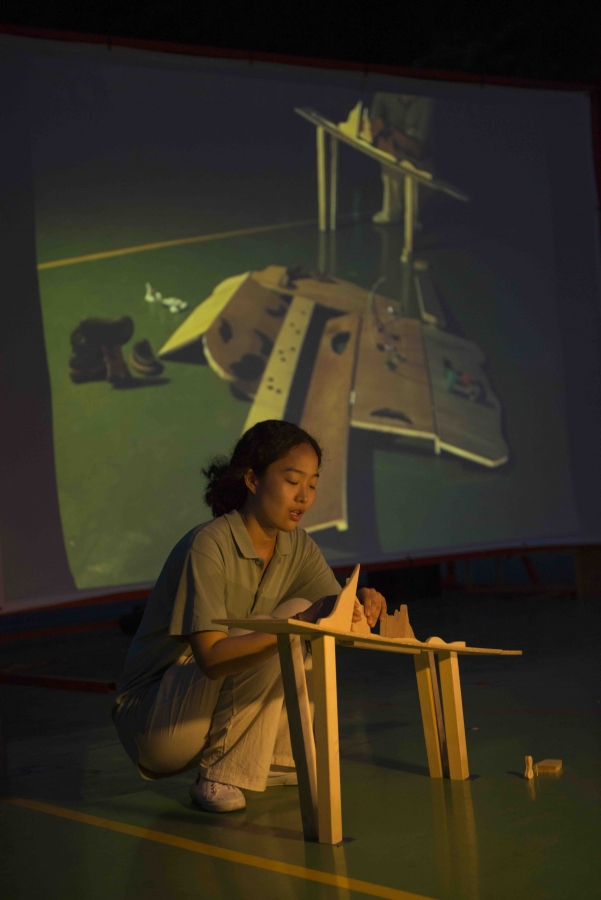
- In the studio, Jini passes very
carefully so as not to knock over certain objects (works), while stepping on or
sitting on objects that are not works. Is there a way in which objects operate
for both humans and animals? What are the criteria by which Jini makes
judgments? Do conventions of objects, conventions of the visual world, exist
that can be understood without language, logic, or explanation?
- The units of length used in the United
States—inch and foot—were created based on the human body. There are many units
based on the body, such as the joint of an adult man’s thumb (inch), the size
of a foot (foot), the length from the elbow to the tip of the fingers (cubit),
and the distance from the center of the body to the fingertips (yard). Human
bodies differ from one another, and even the body of a single person lengthens,
stretches, thins, widens, and shrinks over time. It may seem quite an artificial
unit to use as an unchanging standard, yet perhaps it is precisely because of
that quality that it becomes compelling. Is not a standard itself ultimately
something collectively decided, yet extremely artificial?
- When determining the height and length
of objects, the bodies of the maker and Jini were used as reference points. For
instance, the height up to the pocket, the height up to the chin when standing,
the length when both front and hind legs are fully stretched out, and the
height when standing with the head lifted were used as measured standards. In
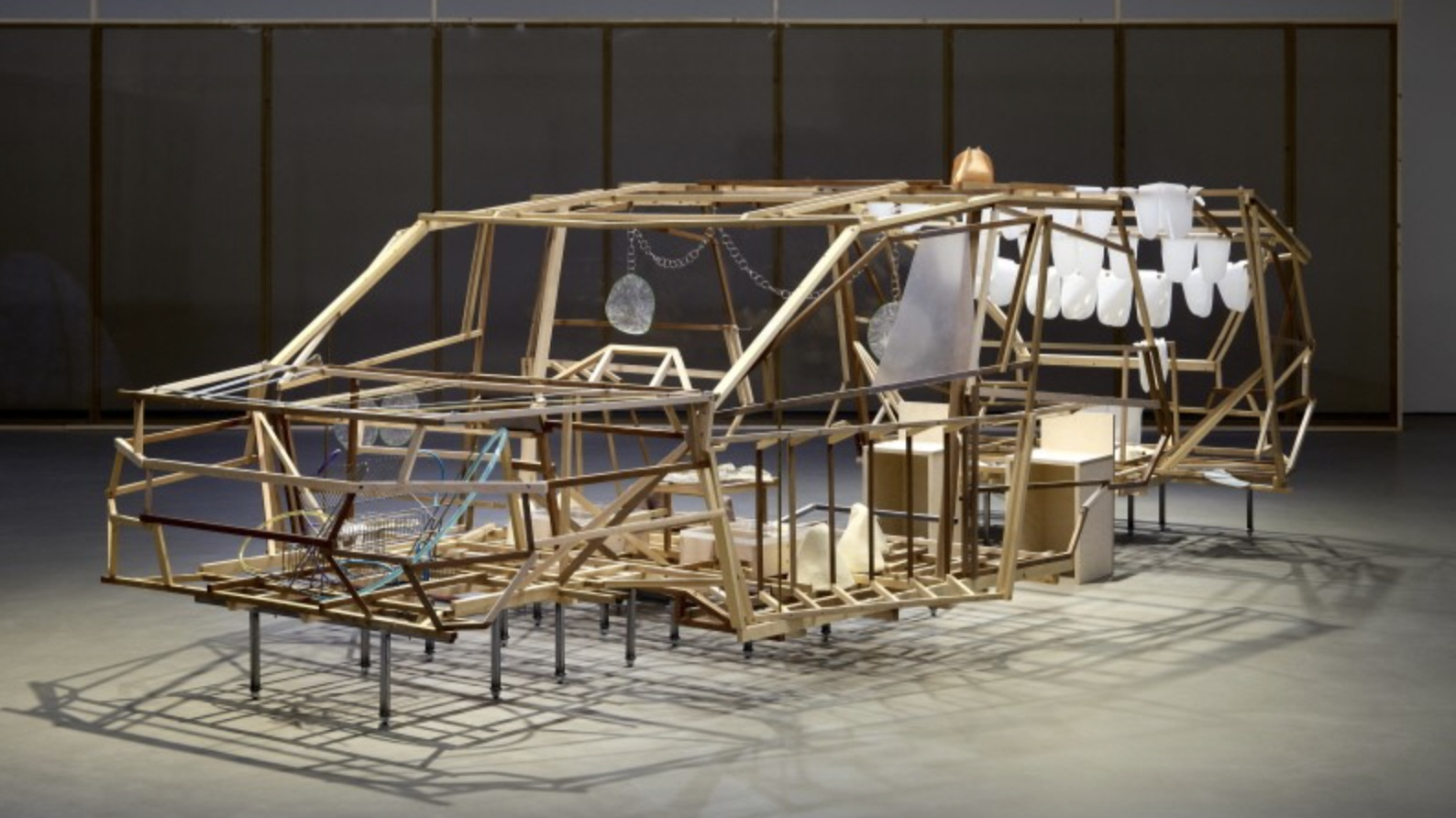
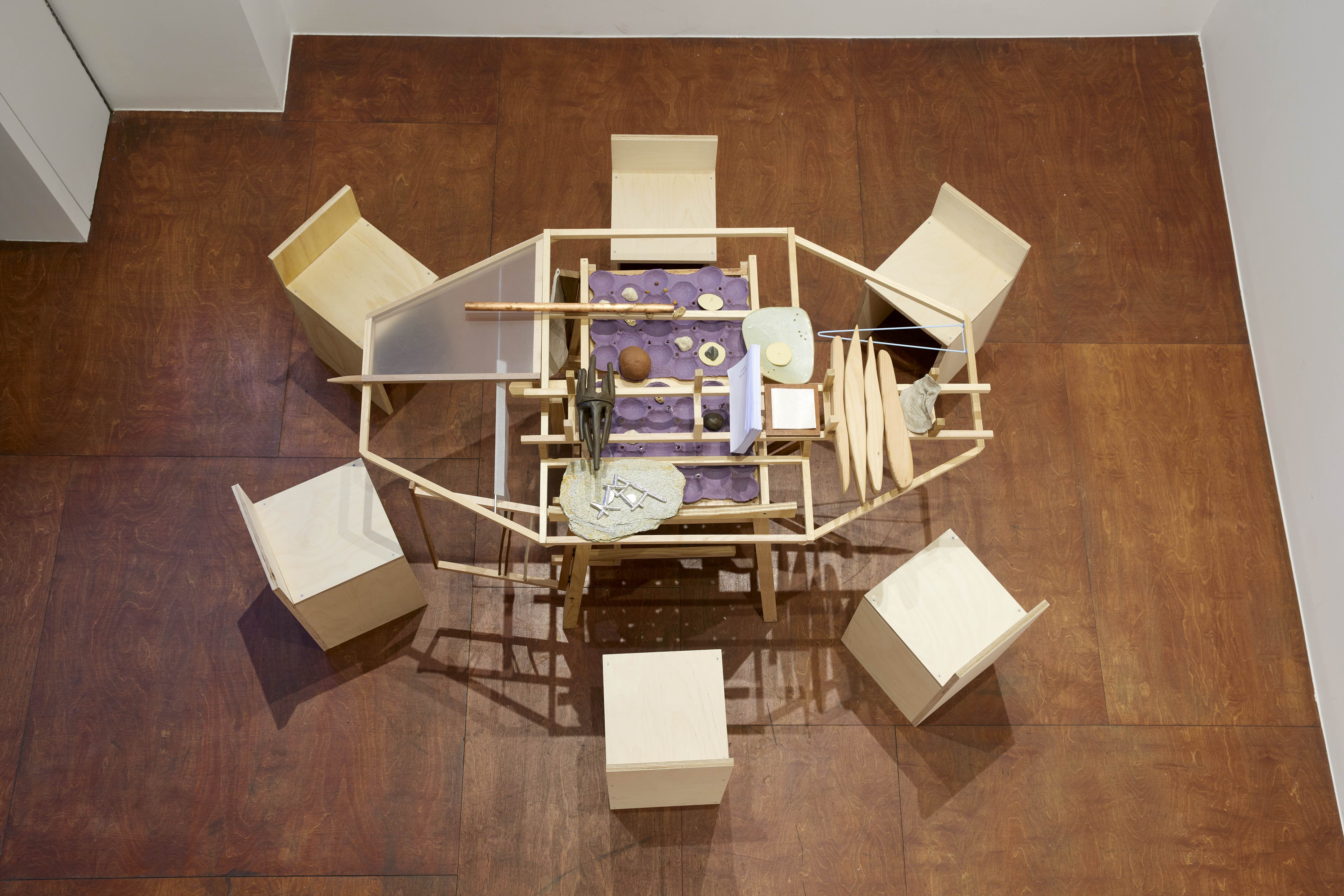
addition, all the objects displayed are based on the motif of a table, and the
structure of a table is named after body parts such as legs, knees, and feet.
Each object relates differently to the body: a refuge to protect the body, a
structure that blocks animals or people from passing through, or an area that
cannot be accessed by a body with limited height.
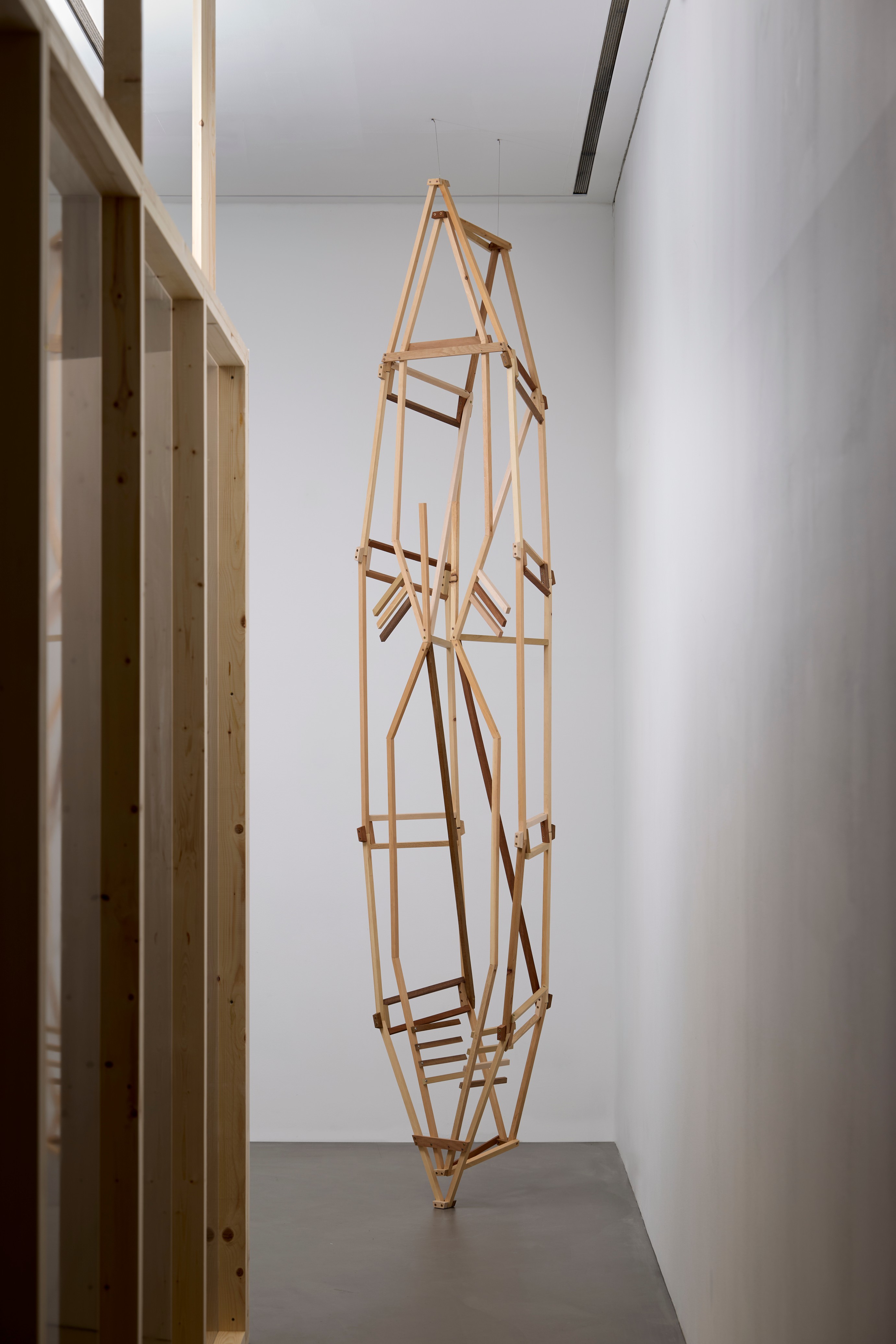
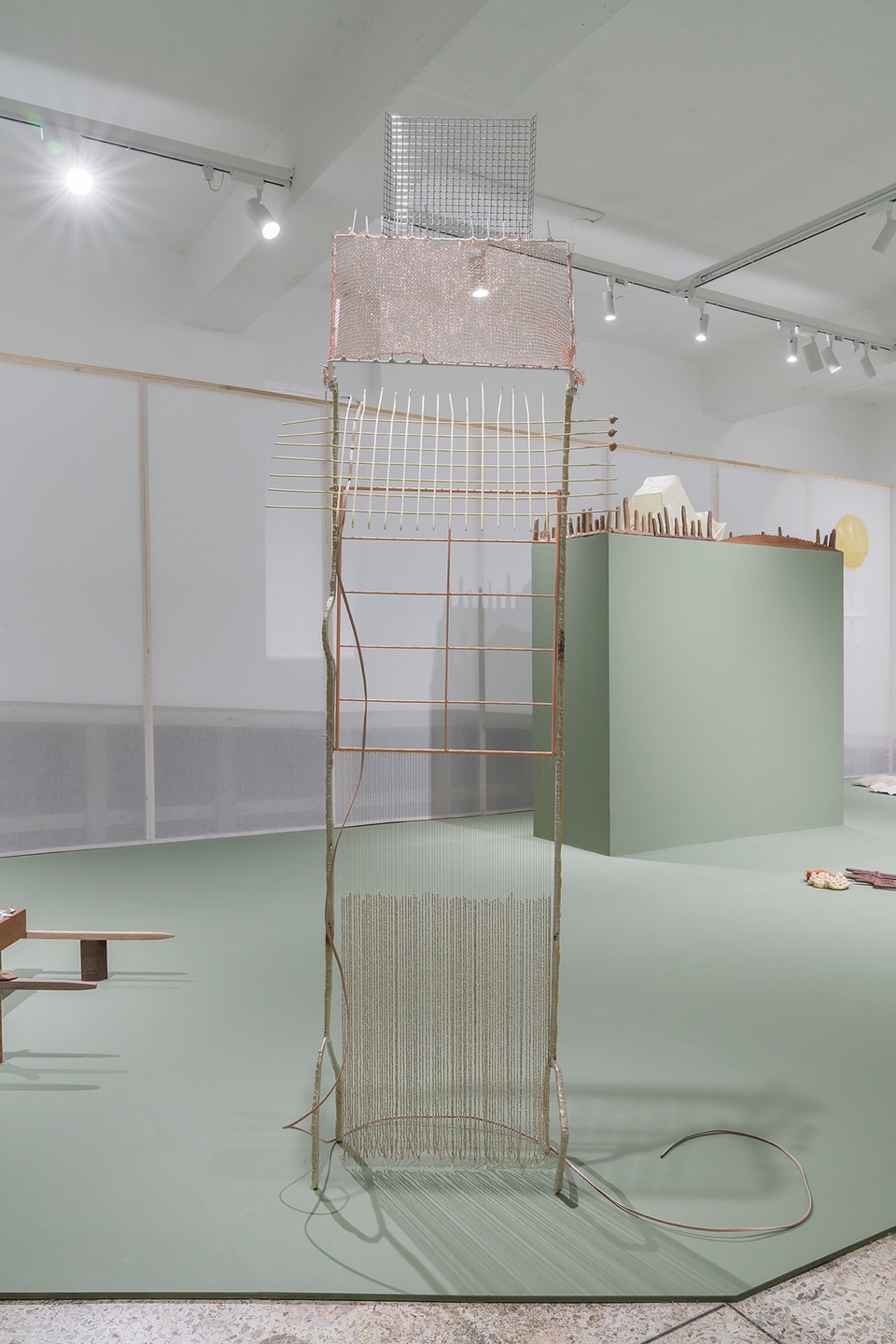
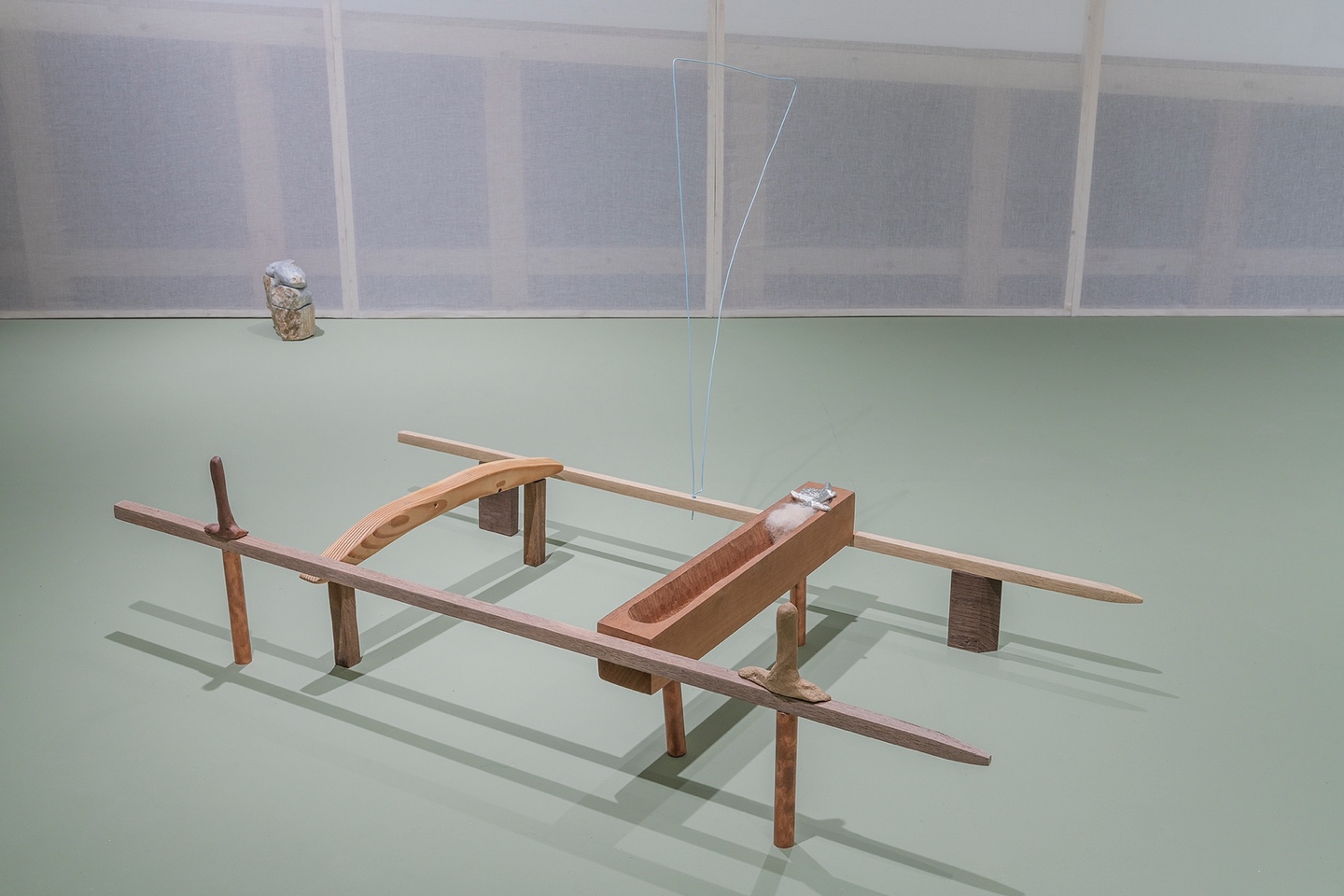
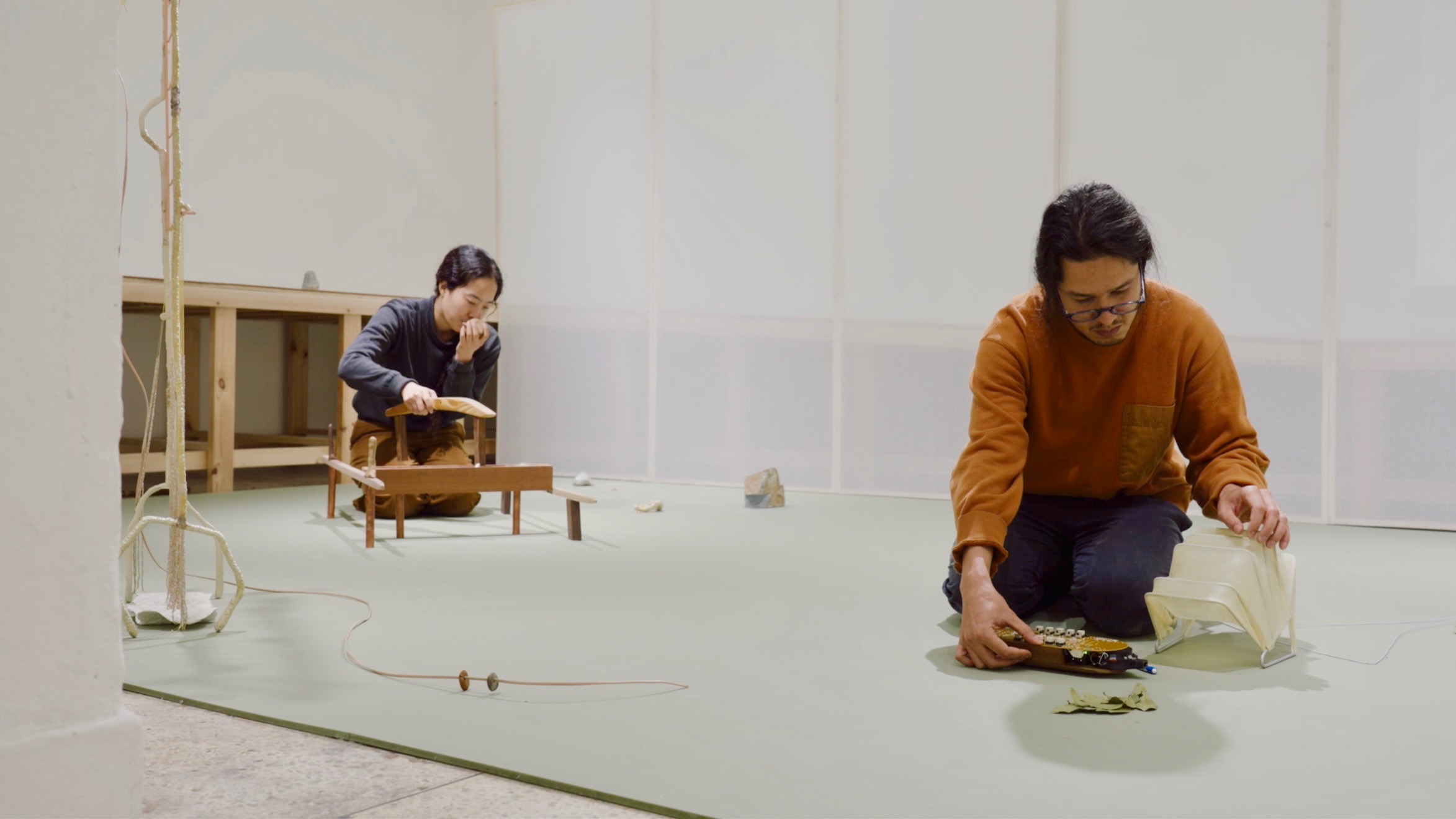
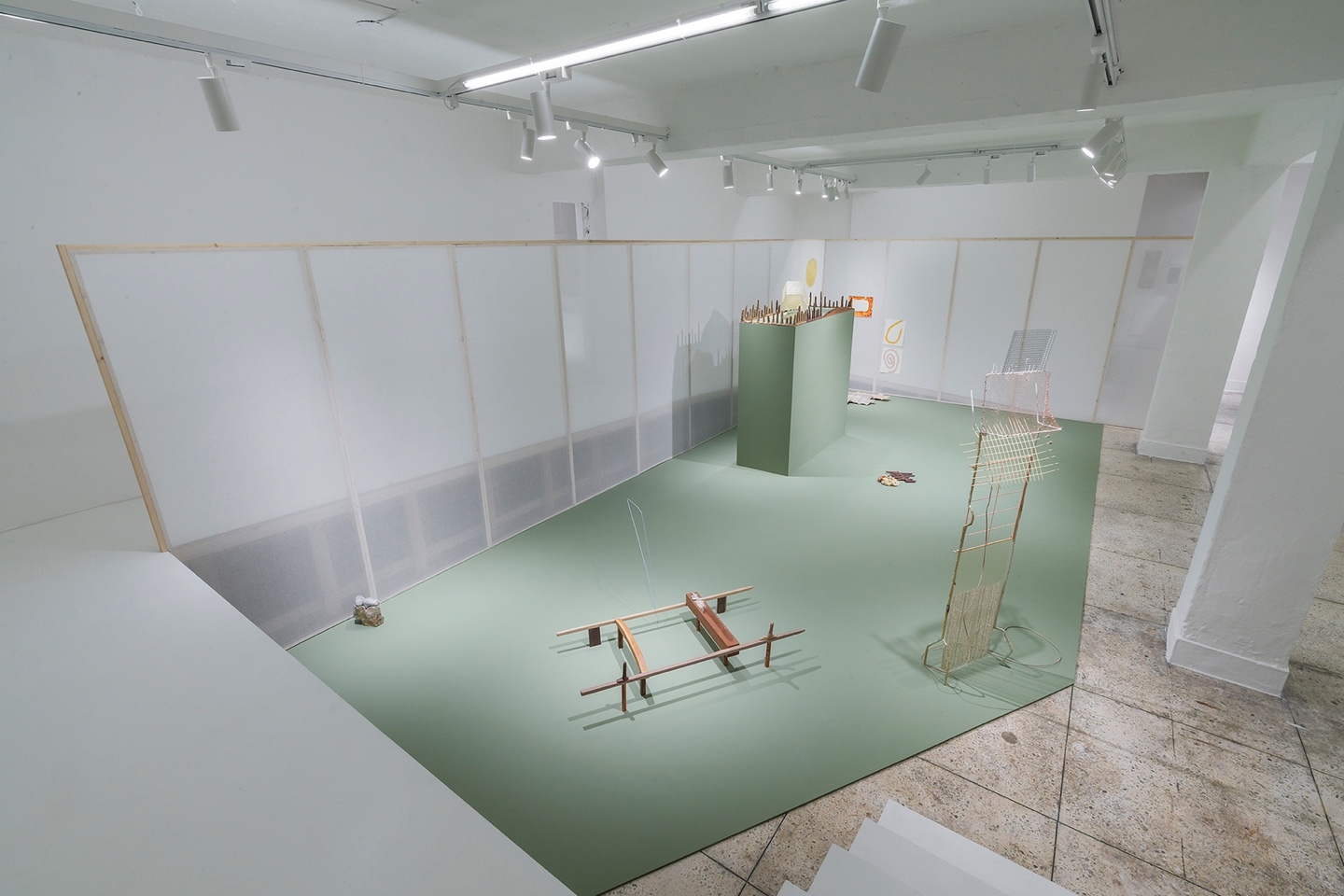
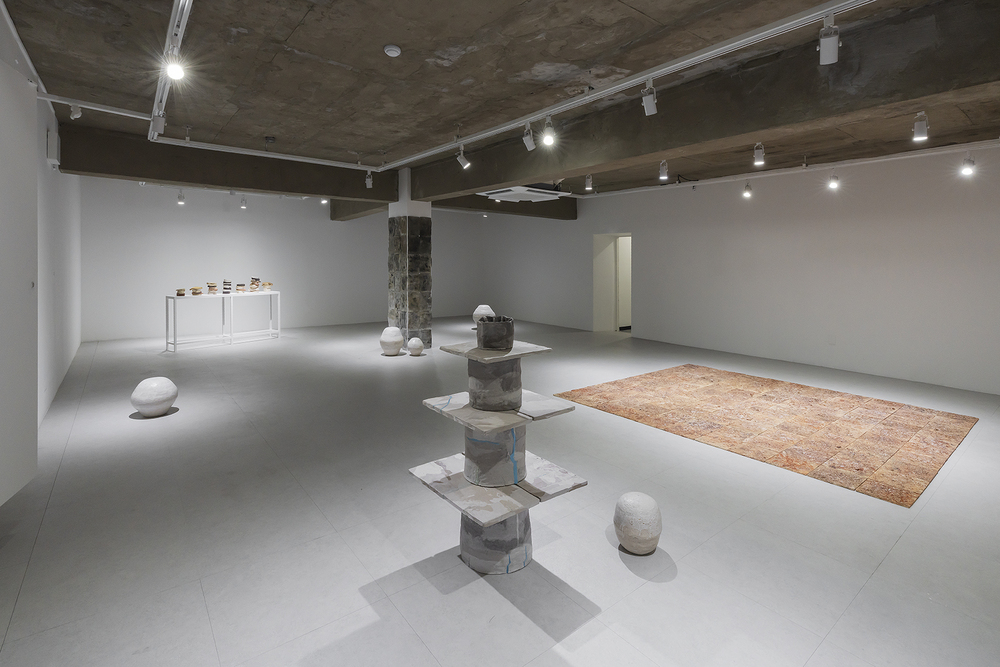
Leg,
Standing, and Garak possess different
sculptural qualities categorized as low–vertical–high, wood–metal–earth, and
carving–casting·assemblage–modeling. However, Leg actually
contains legs made of copper pipes and a sculpture made of ceramic. In
addition, on one of the elongated pieces of wood there rises an object not made
of wood but of dry, matte gray clay. This is the only part that rises and
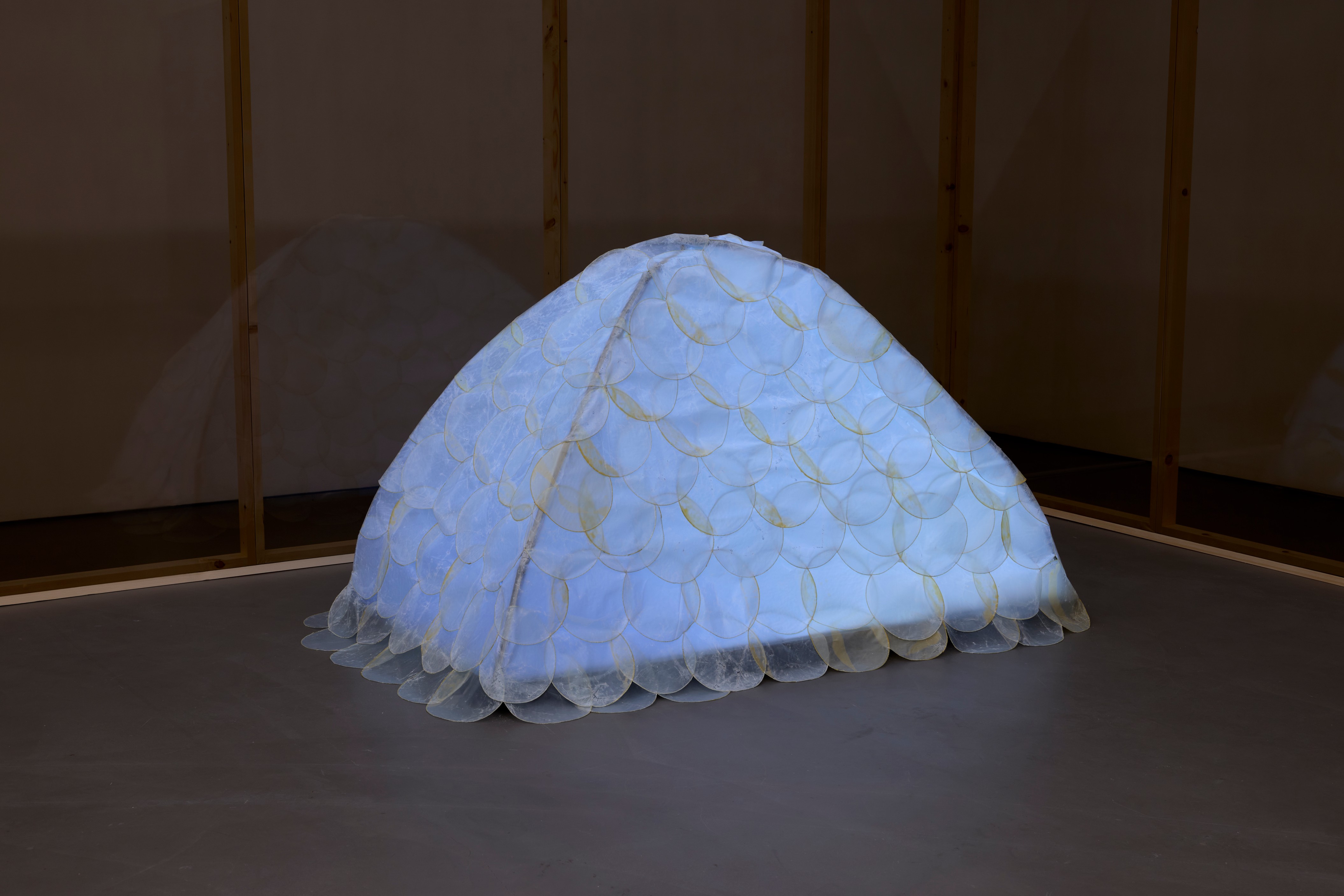
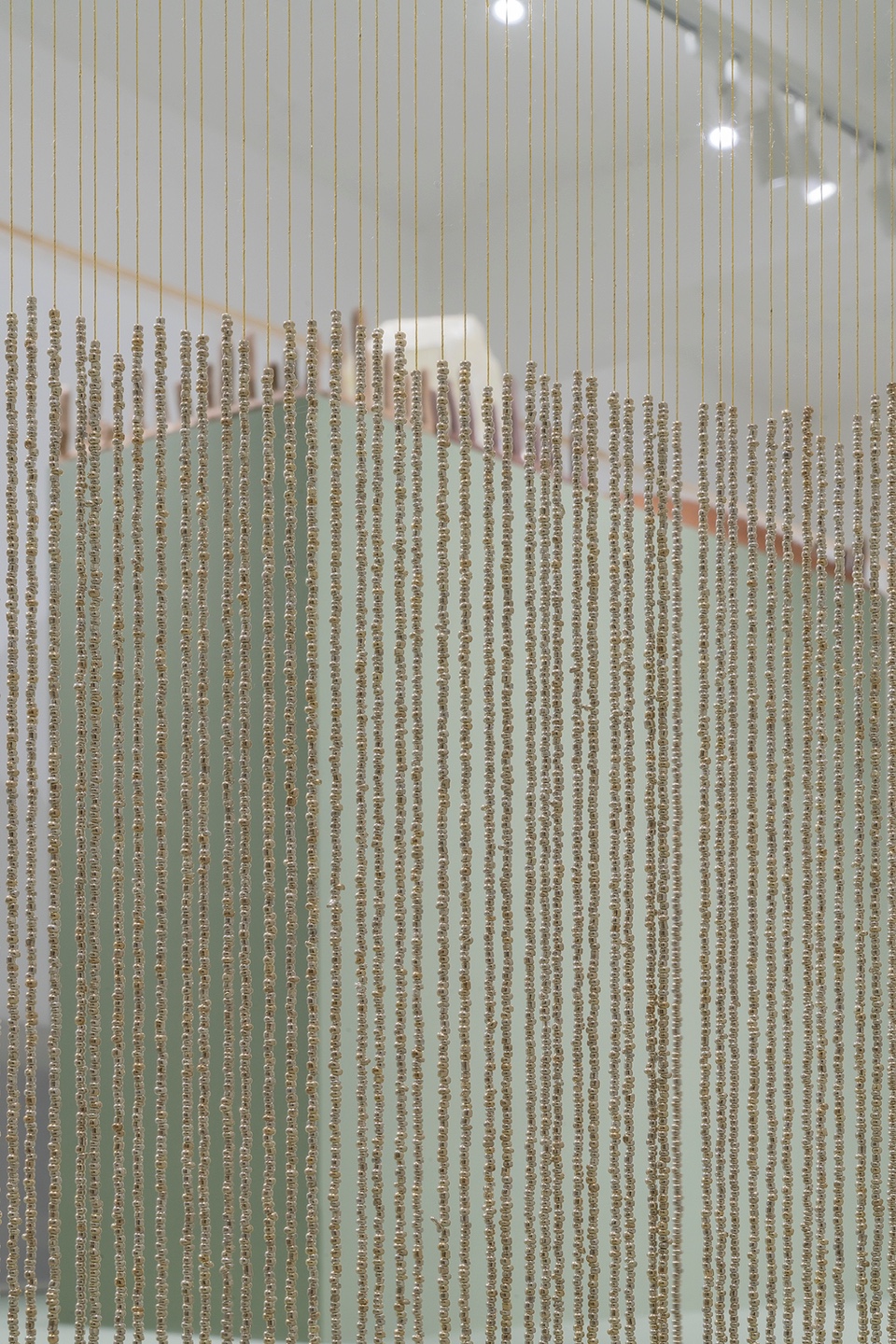
stands upright among the overall low objects. In Standing
there is a foot made not from a grid but from a net threaded with small beads.
Among the elements forming the rim of Garak, there is one
that is not ceramic. It is a very shallow crescent-shaped piece of wood whose
curved surface is sharply cut into triangular forms, making it resemble saw
teeth.
Living together, the artist began
observing the surrounding space from Jini’s gaze. From Jini’s position inside
the enclosure, how are the boundaries that distinguish inside from outside
perceived? This structure is both a refuge and shelter for protecting humans
and animals, while at the same time becoming an obstacle that restricts their
actions and blocks their movement. Fences that divide inside and outside
constrain and control behavior, psychology, and sensation in various forms and
ways.
From structures through which bodies can make contact and pass, to
curtains through which only gaze and conversation can pass, and even to massive
blocking devices that obscure sound and sight so that the distinction between
inside and outside becomes ambiguous, all relationships in the world are
divided and separated by such visible or invisible curtains. Like changing
bodies and thoughts, can the gaze between inside and outside not move freely
across them?
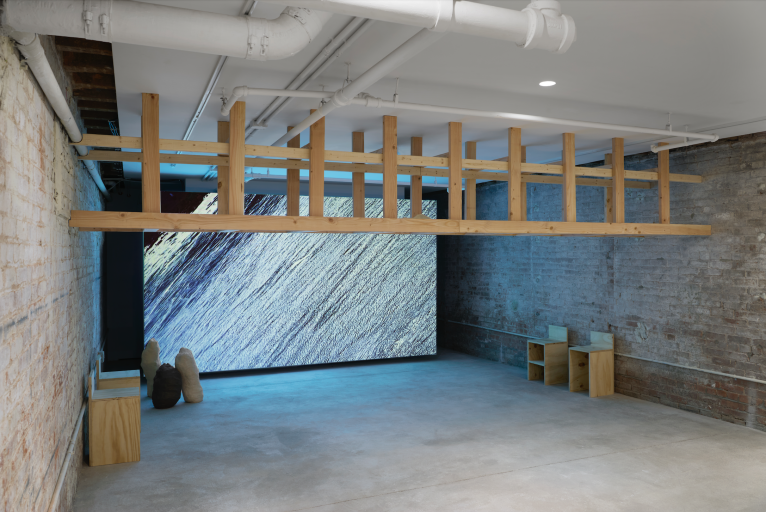
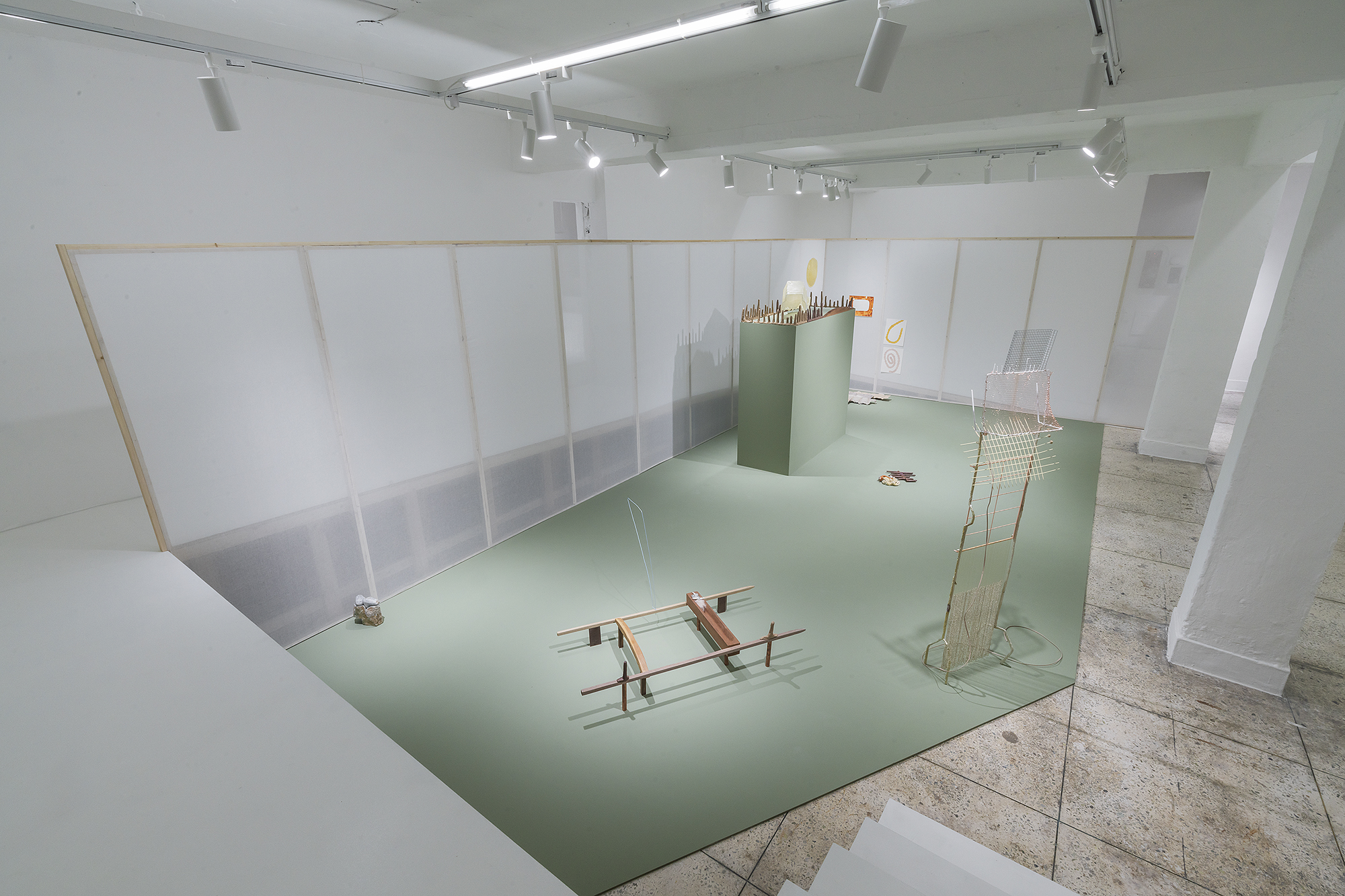
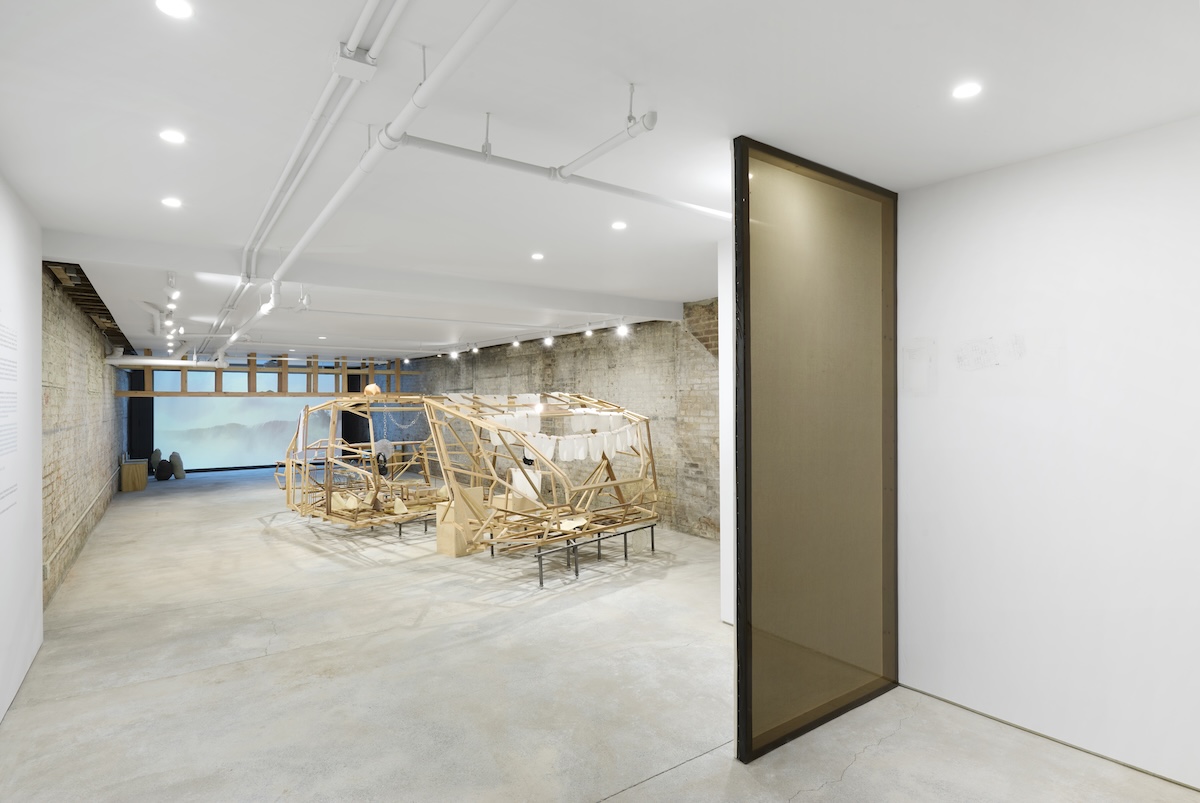
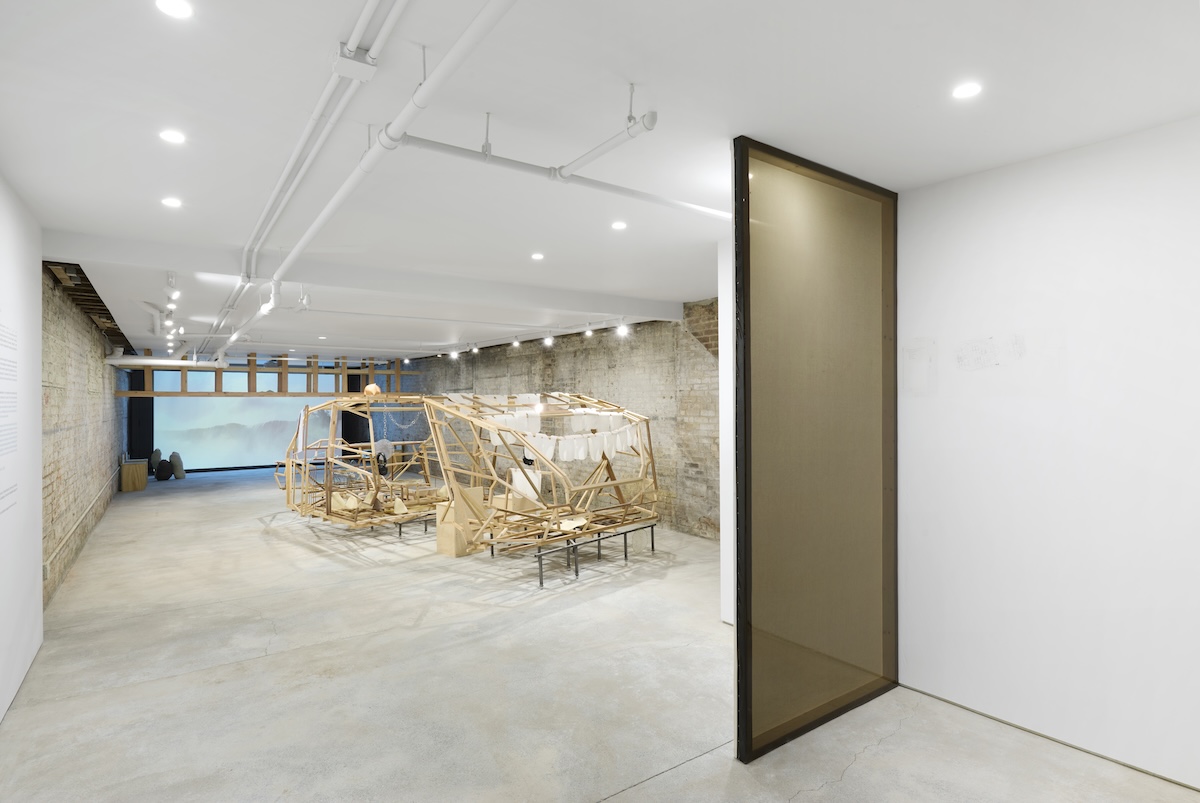
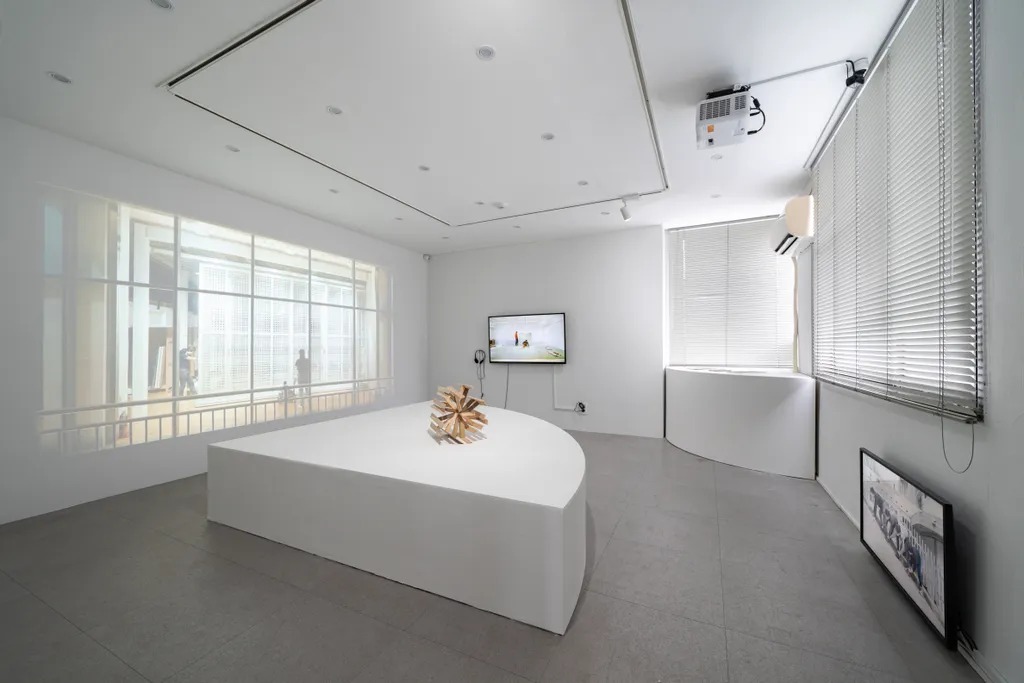
The exhibition’s circulation carefully
stages multiple layers of height and boundaries so that the measure of the gaze
can be physically recognized. As one ascends a gentle ramp while watching the
vague scenery beyond a hazy curtain—within an exhibition structure that cannot
be grasped at first glance—the oppressive feeling produced by the height of the
curtain softens, and the sense of the height reached becomes unsettled. From
the high platform to the moment of reaching the gallery floor, the viewer determines
various positions of viewing through their own movement: the third-person
observer’s perspective, the first-person observer’s perspective, and the
first-person protagonist’s perspective. Looking down, looking up, seeing from
inside to outside, peering from outside to inside—where am I standing now? Who
determines the inside and the outside? How do I look at the world and at
myself?