Fragments of Korean and English words and
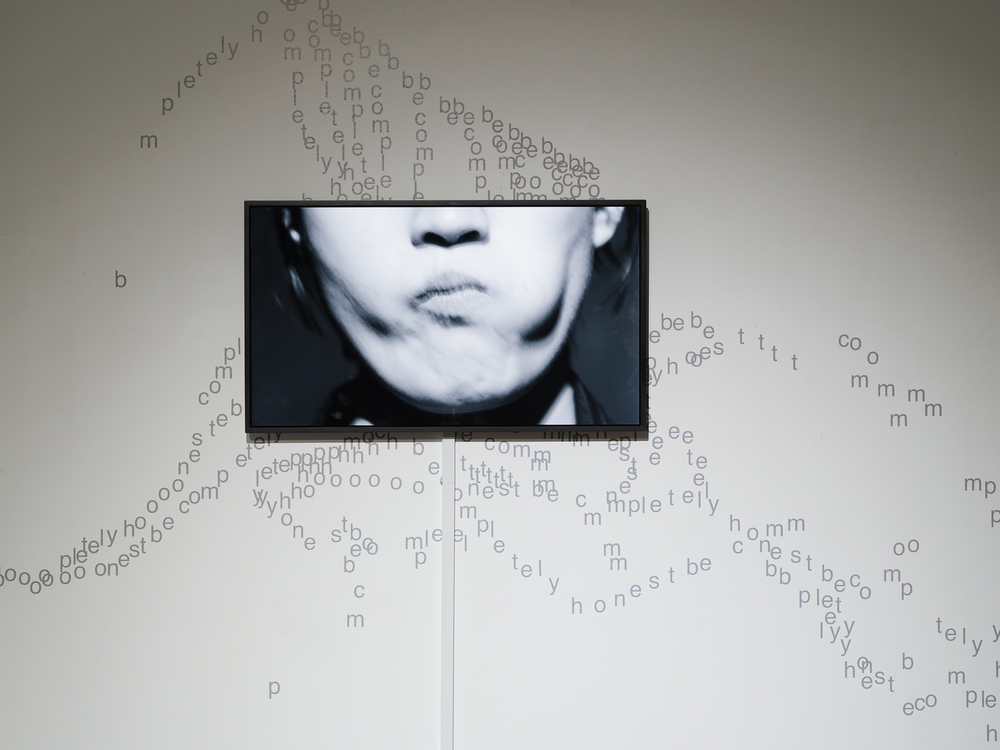
phrases fill the lower gallery of Canal Projects as artist Hyeree Ro begins her
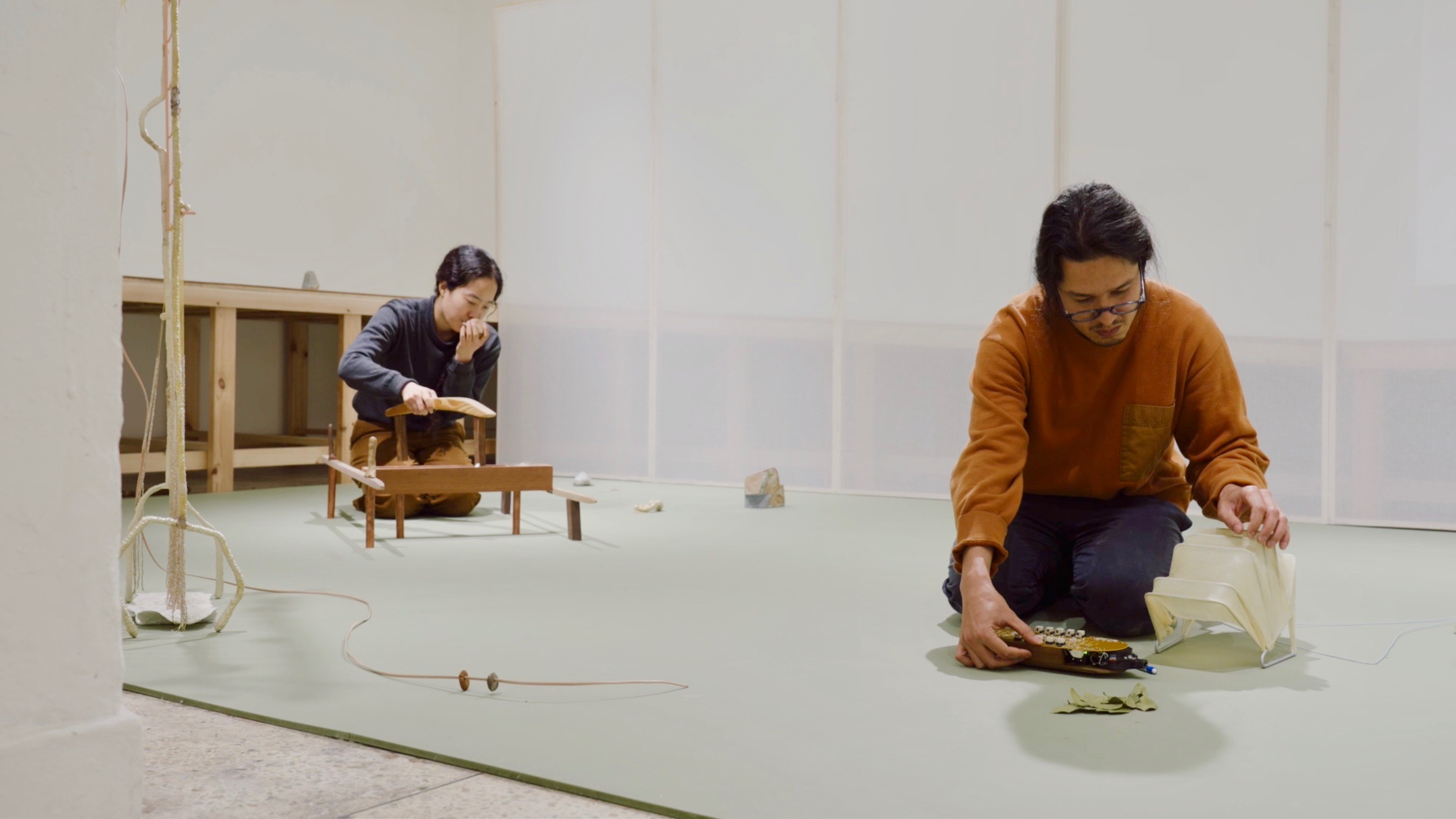
performance for her newly commissioned installation, Niro: 스바루 (Subaru), Niro, Eat Clean, Never run it cold, 샌프란시스코 (San Francisco)… In a steady, detached tone, Ro recites each phrase
with pauses in between, creating an unintentional rhythm. Each utterance
emerges as a fragment of memory from a cross-country road trip with the
artist’s late father and the aftermath of his passing—echoes of conversations
she shared with him, fleeting thoughts, observations, and encounters.
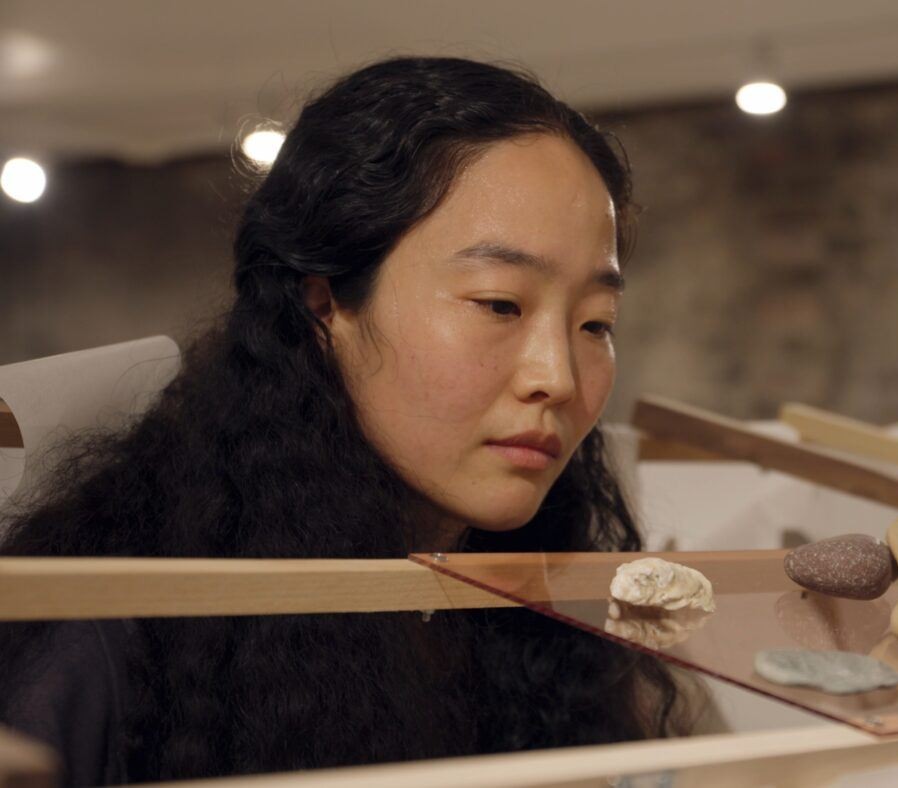
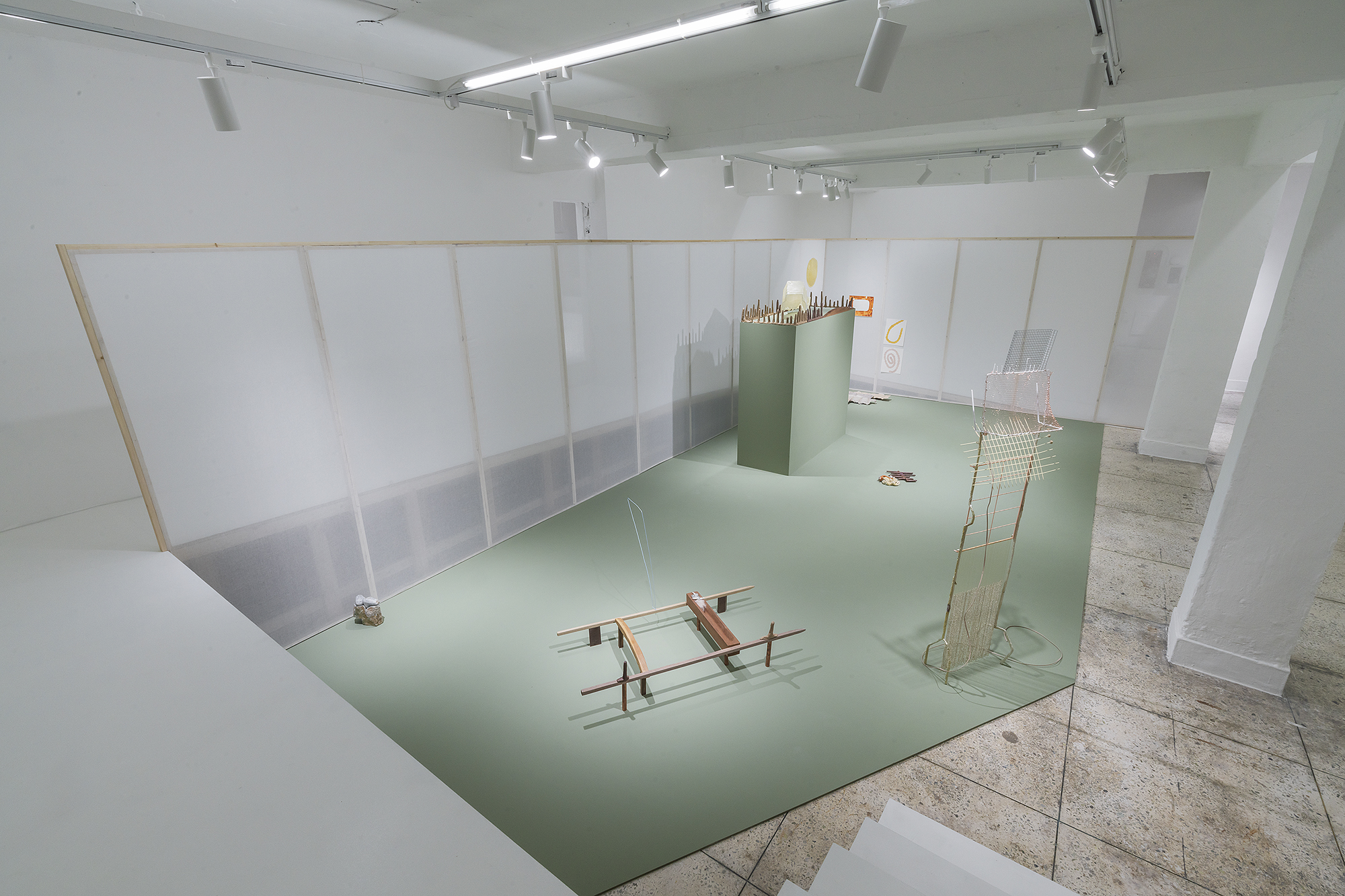
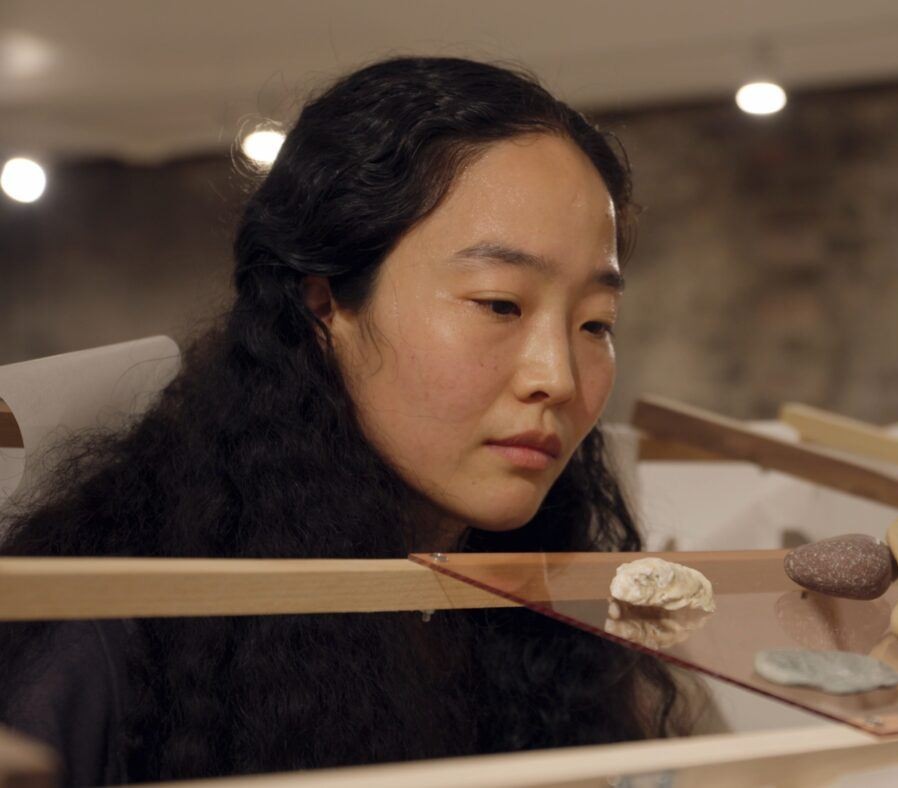
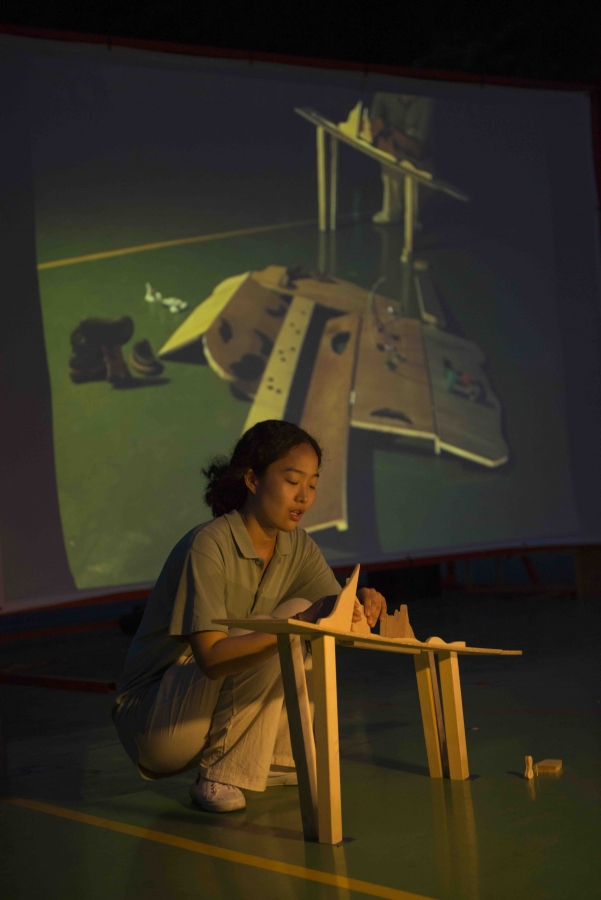
As her narration unfolds, Ro moves around
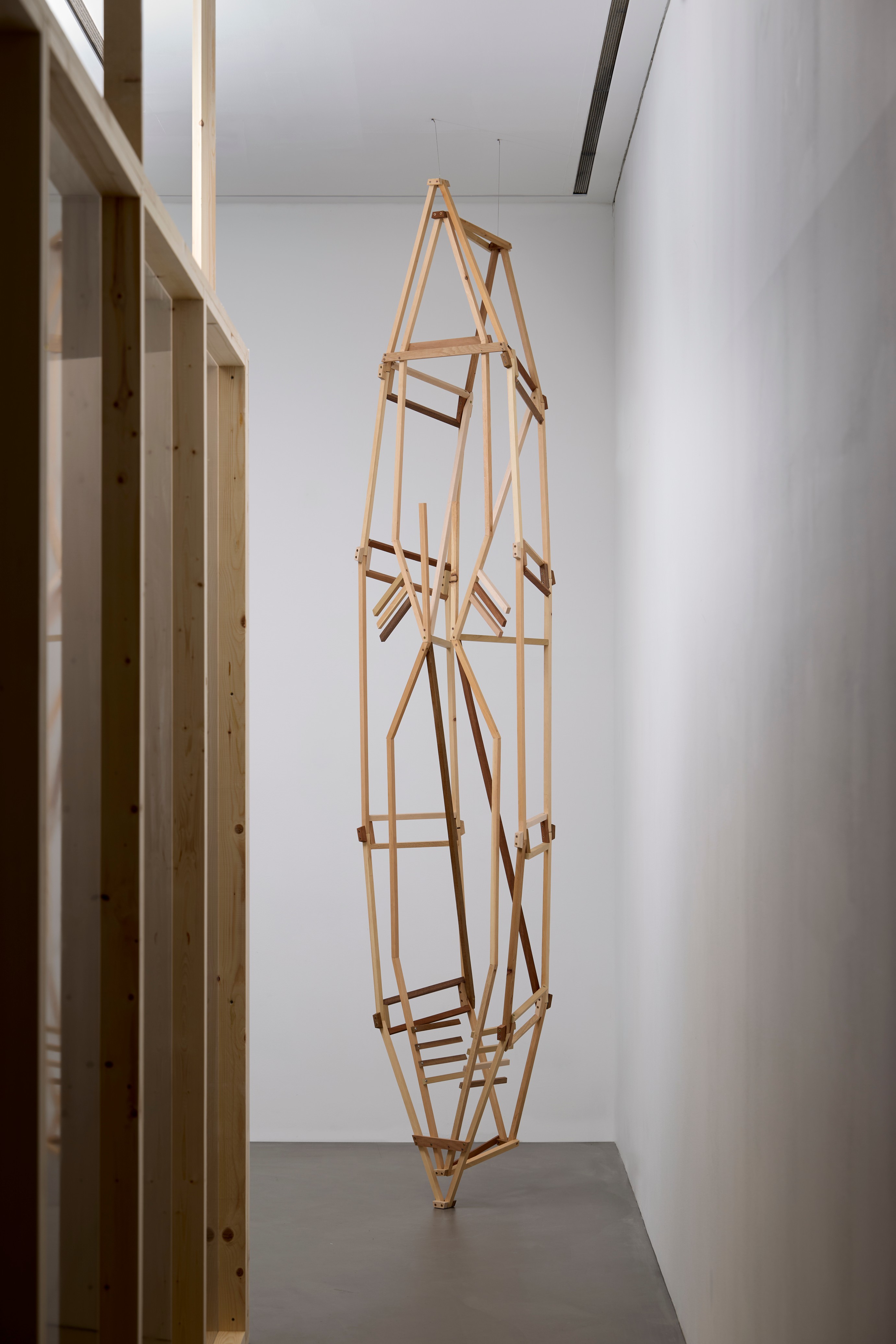
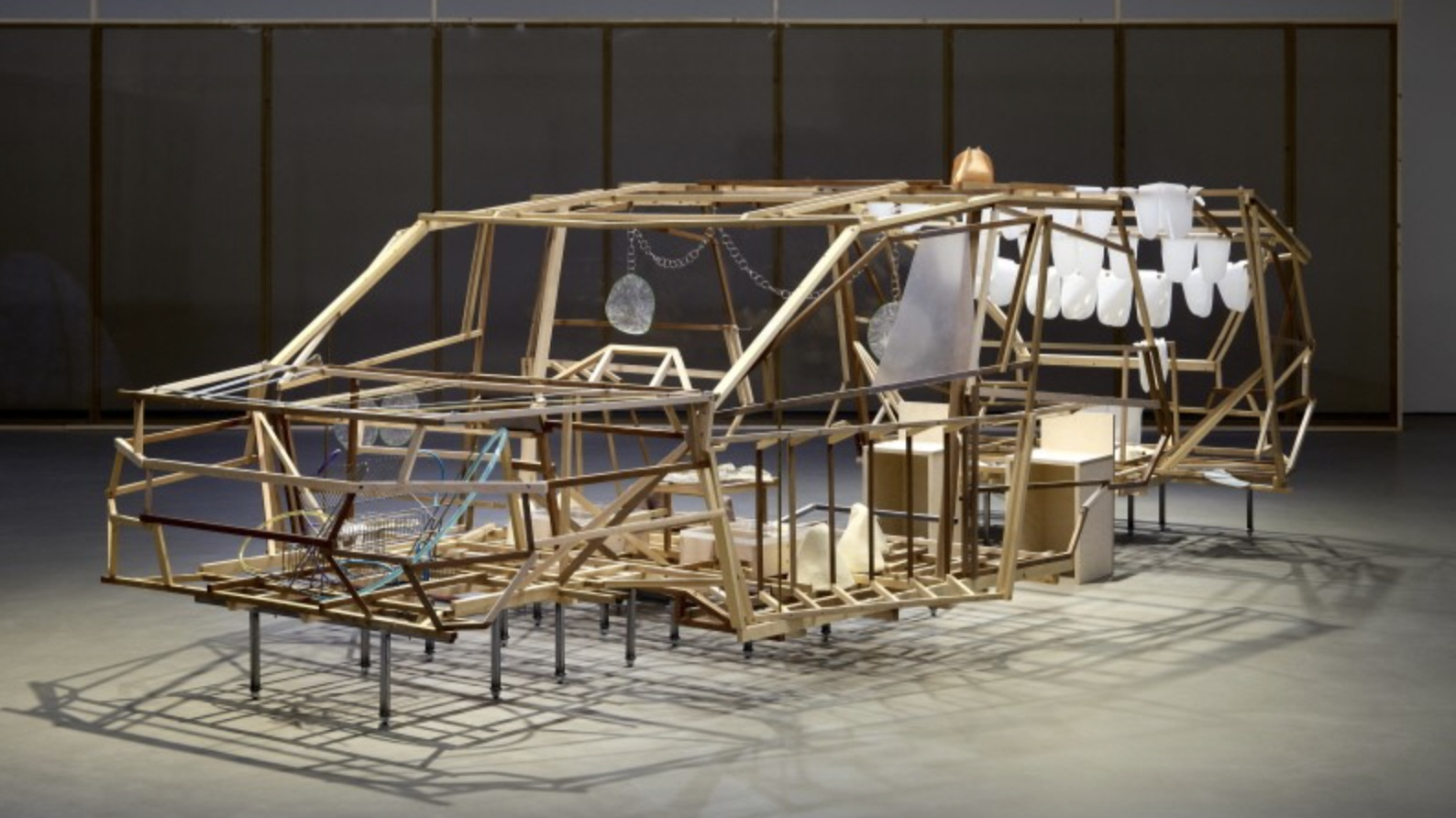
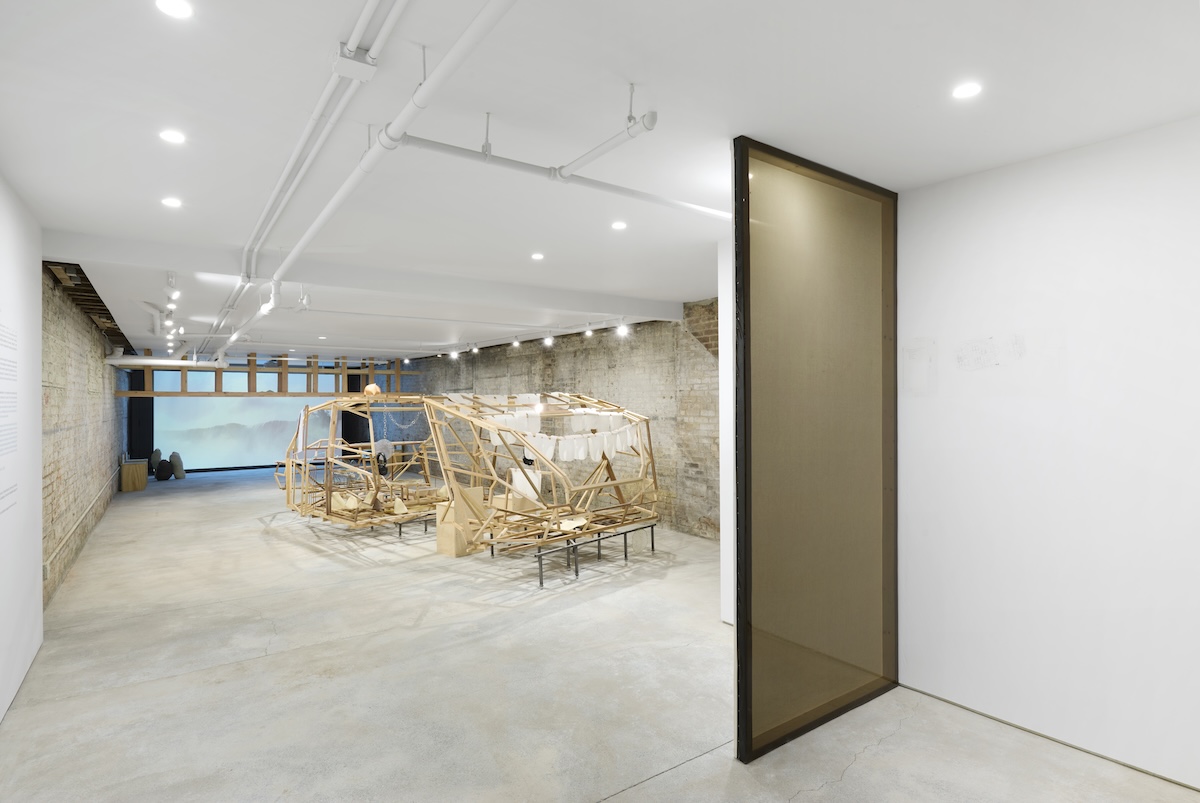
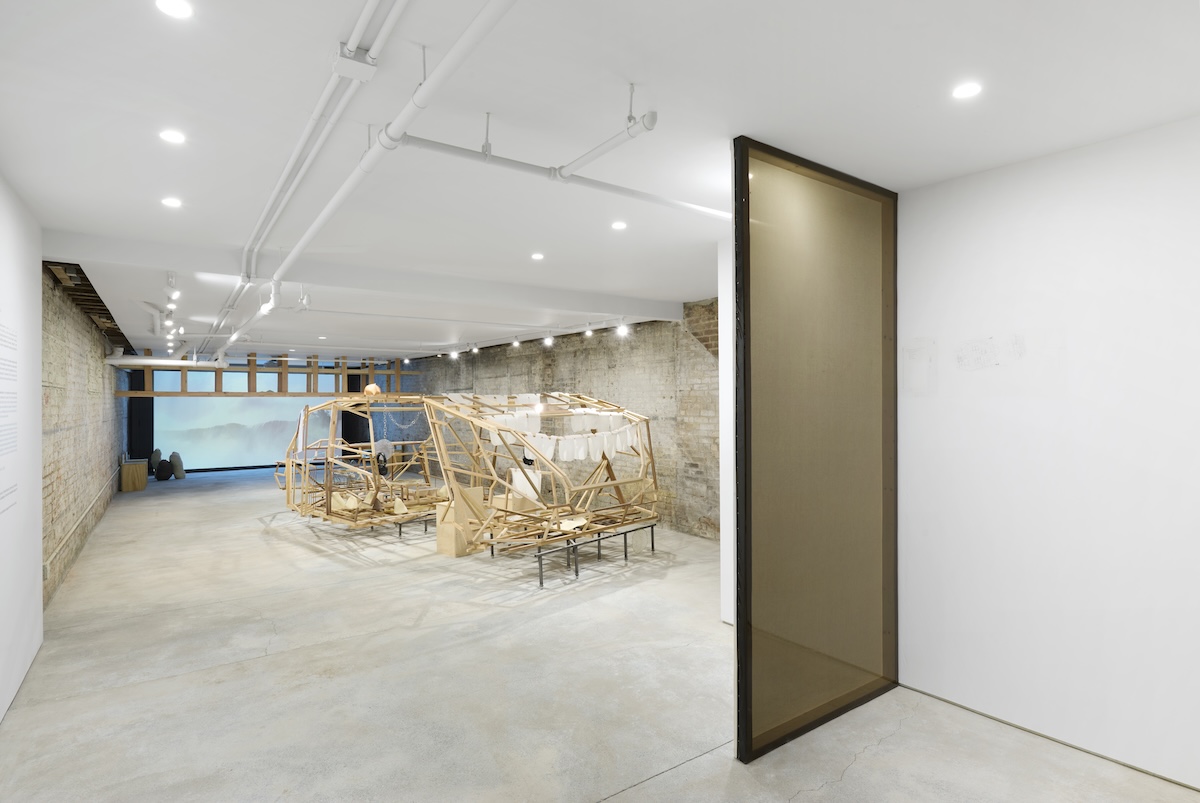
a life-size wooden chassis of a Kia Niro, the same model her father drove on
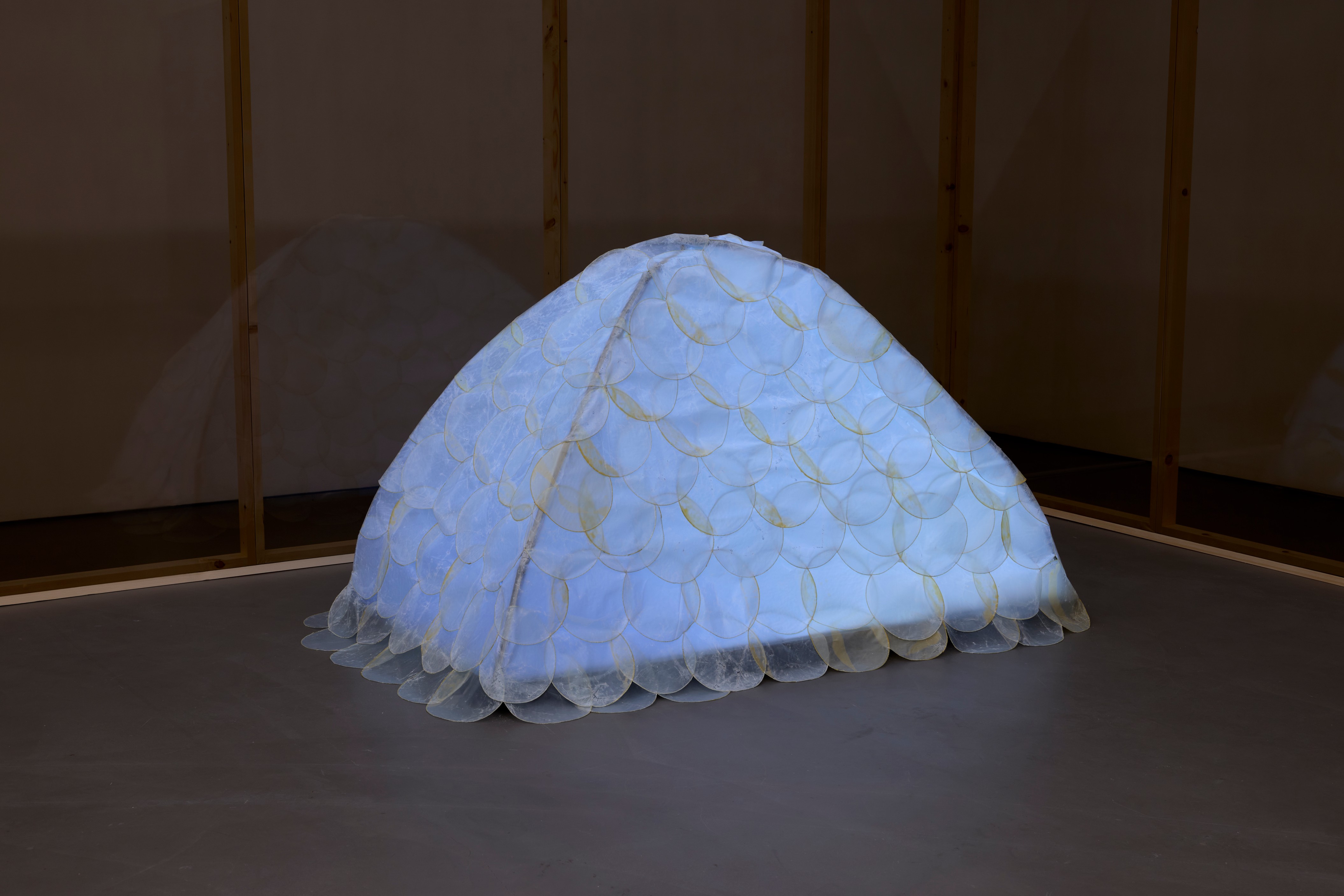
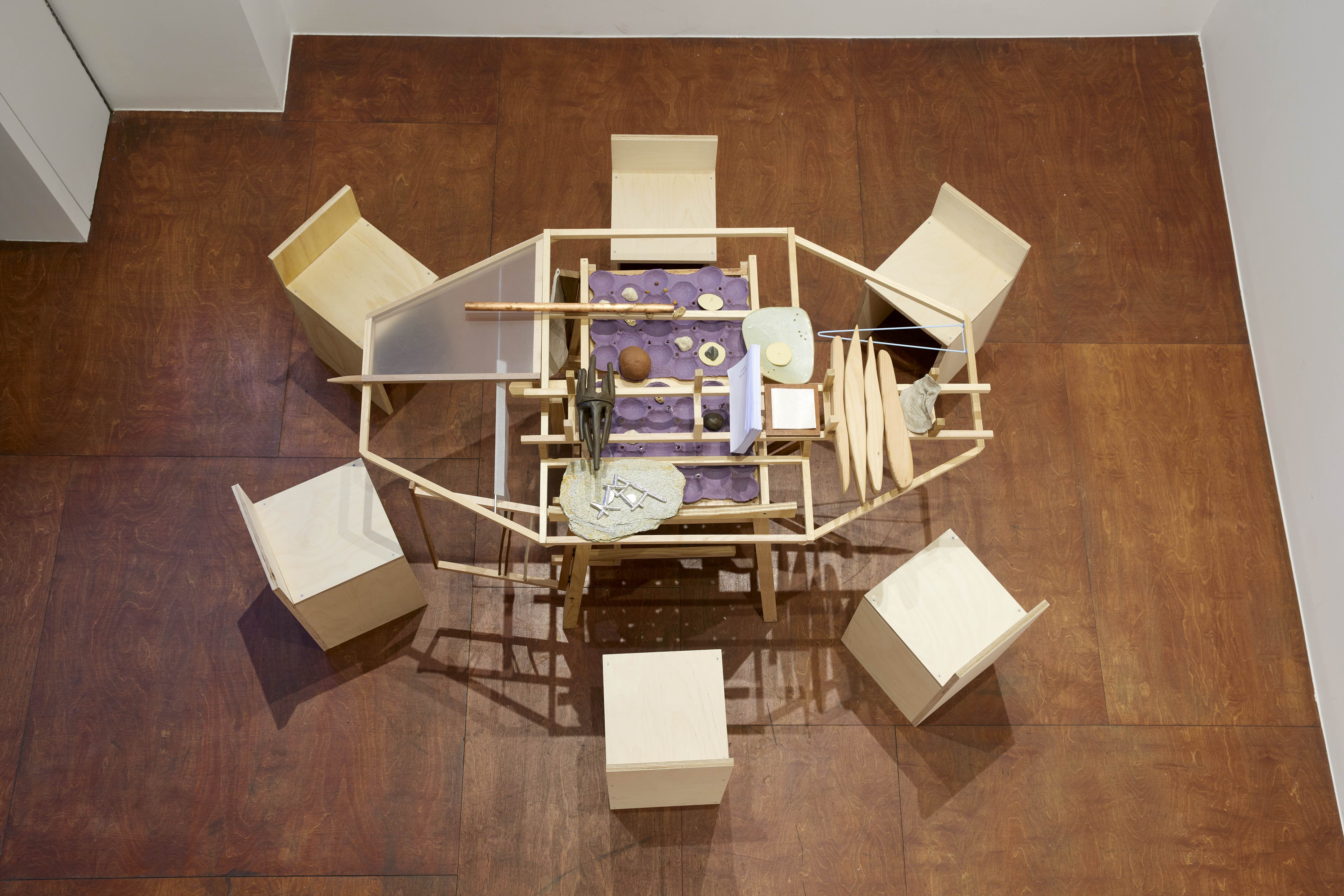
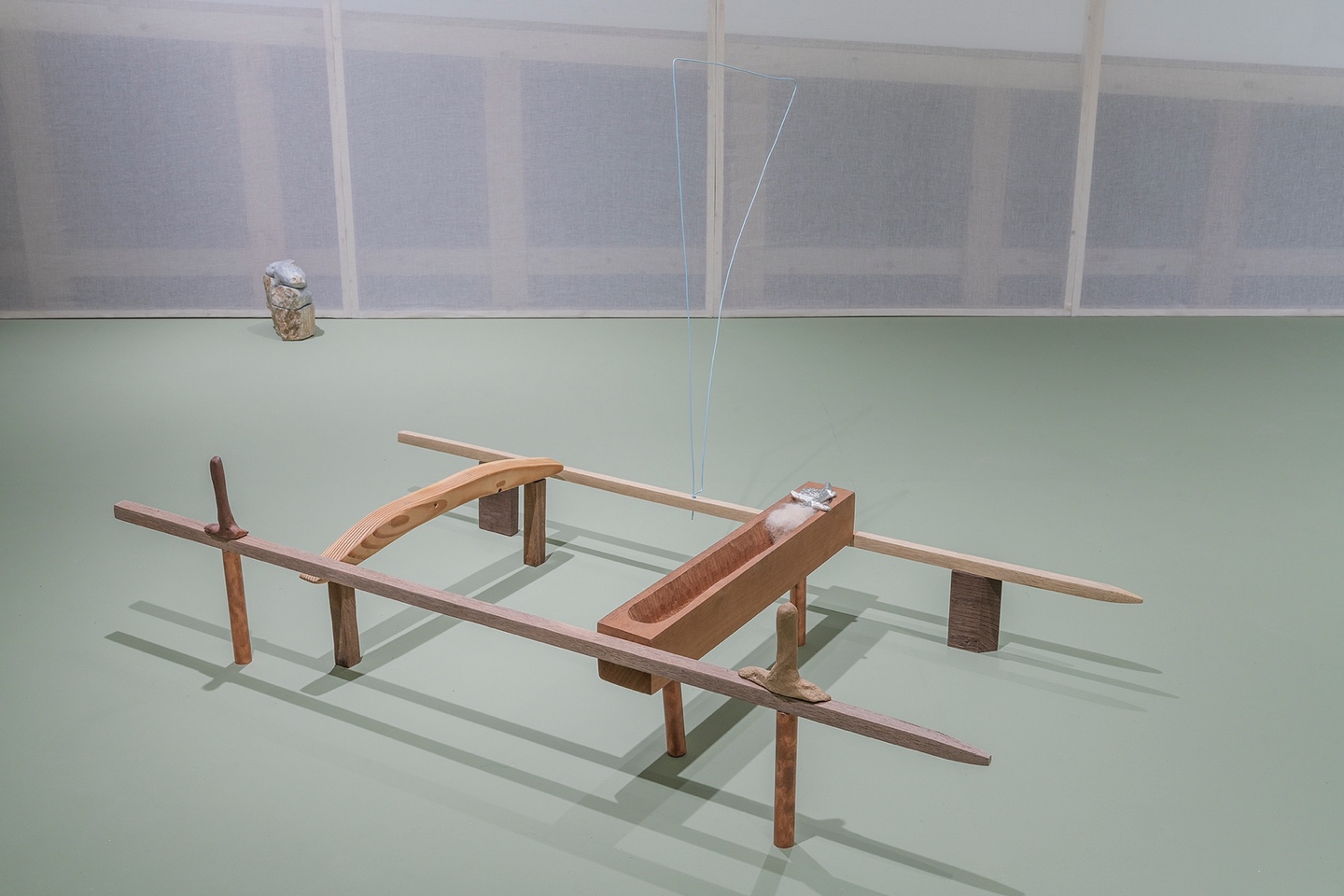
their road trip. Various objects made of steel, ceramic, chain, pewter, and
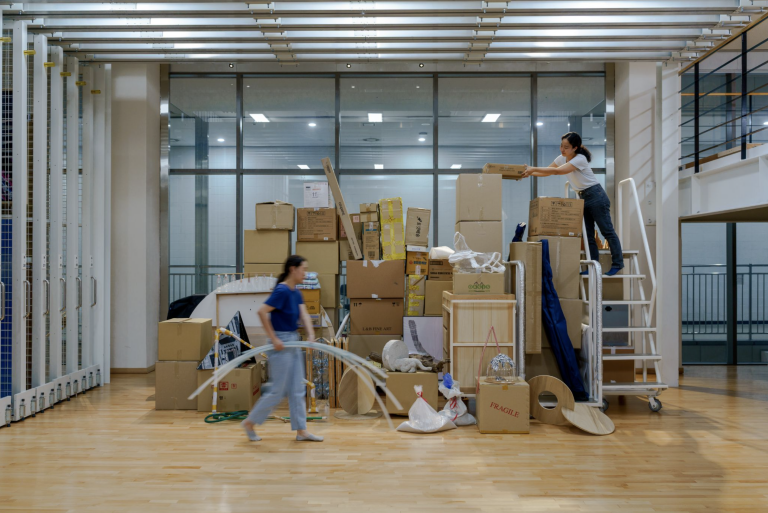
paper mache adorn the car from front to back. The unwieldy installation is soon
disassembled into three sections as she drags and pushes each piece across the
space. Her struggle to maneuver the towering structure subtly evokes the weight
and fragmented nature of her memory and the relationship with her father.
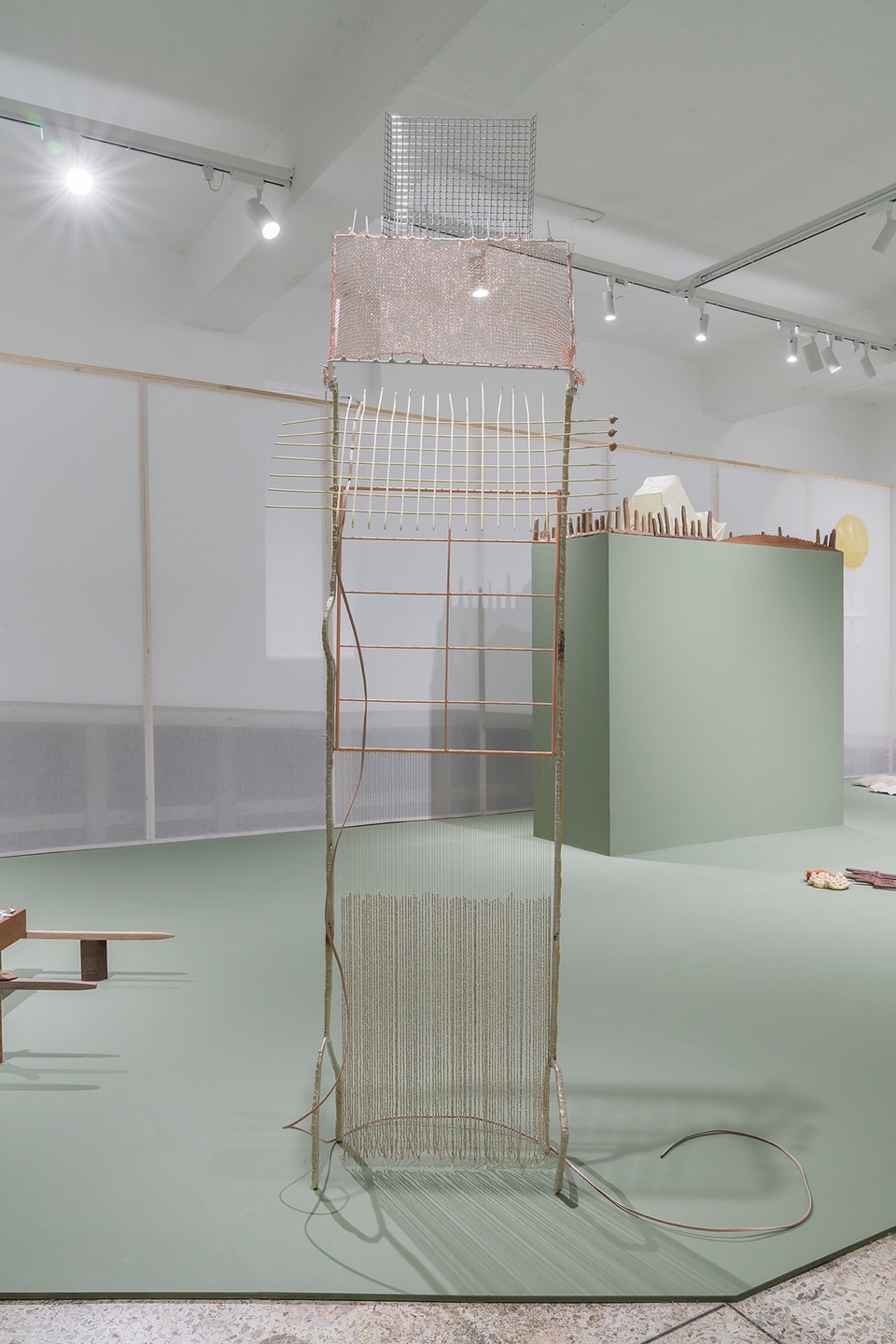
The exposed screws and rigid wooden strips
sharply contrast with the car’s mobile yet precarious assemblable form.
Described by the artist as a “bundled scrap,” the framework reflects a life
pieced together from disparate fragments—moments of intimacy and distance, the
bond between father and daughter, and the scattered remnants of immigrant life.
Growing up in California, returning to Korea as a teenager, and later returning
to the US, Ro embodies the continuous journey of a constant migrant, navigating
and bridging the emotional landscapes of belonging, cultural identity, and
memory throughout her practice.
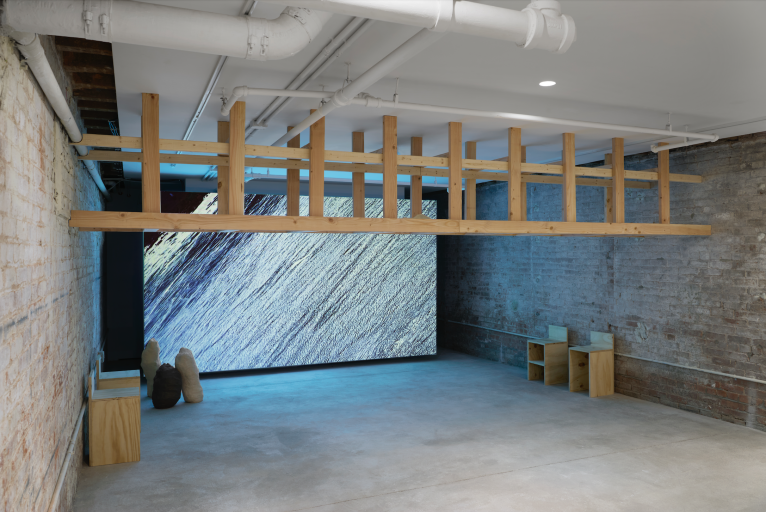
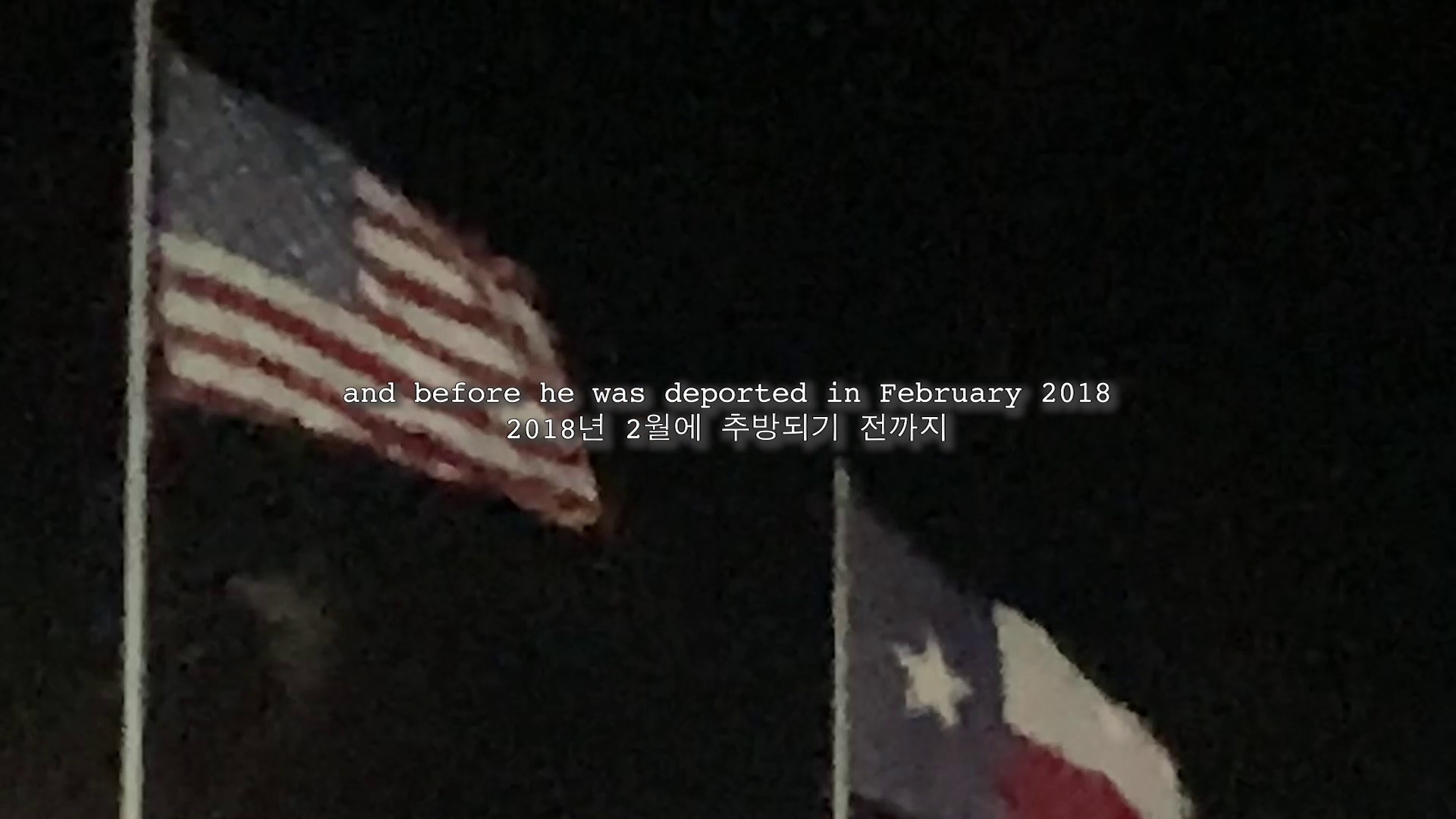
Facing the car, a large screen on the
innermost wall plays a 65-minute compilation of interviews with Asian
Americans, each sharing their experiences of crossing the Pacific Ocean. This
layered composition echoes Ro’s 2022 exhibition, 《Falls》, where she presented interviews with eight immigrants in the US,
weaving personal narratives into the broader socio-political histories of the
US and their home country, including events like the IMF crisis and the
presidential election of Donald Trump.
If 《Falls》 marks the beginning of Ro’s shift from her own story to a collective
narrative, Niro signals an ongoing evolution of her work.
Here, she brings together diverse voices and stories of Asian Americans within
a shared space, creating an open-ended work that invites viewers to contemplate
connections and possibilities beyond any fixed interpretation.
In Niro, space itself
emerges as a powerful metaphor for the immigrant experience, embodying both
physical and emotional dimensions. Just as Ro’s wheeling home traverses the
exhibition space and the Kia Niro that once carried her and her father across
the US, migration is often seen as a linear journey from one place to another.
However, by intertwining the voices of those straddling the two homes and
placing her own story alongside theirs, Ro aptly portrays the fluid,
multidimensional nature of such movement.
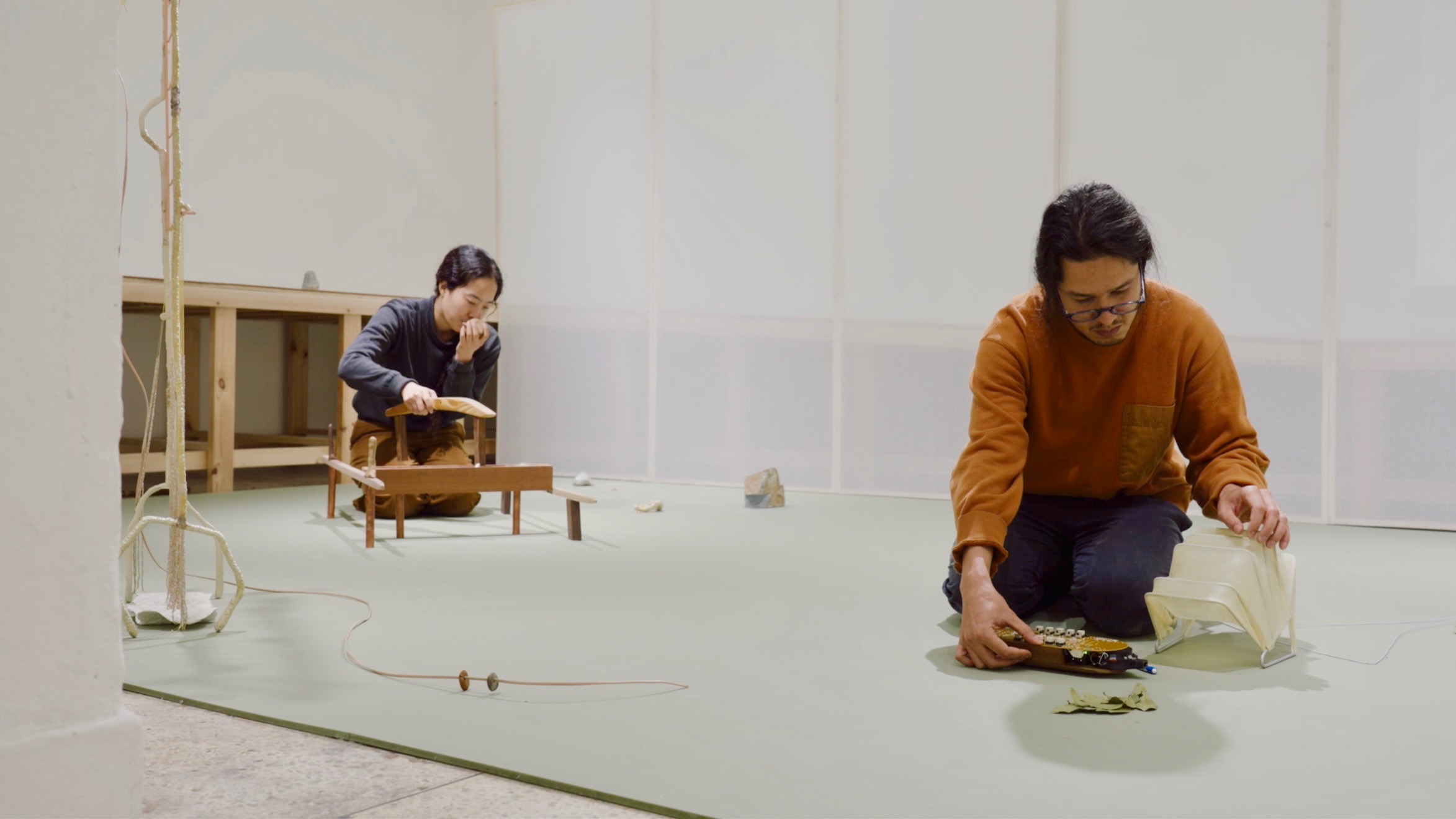
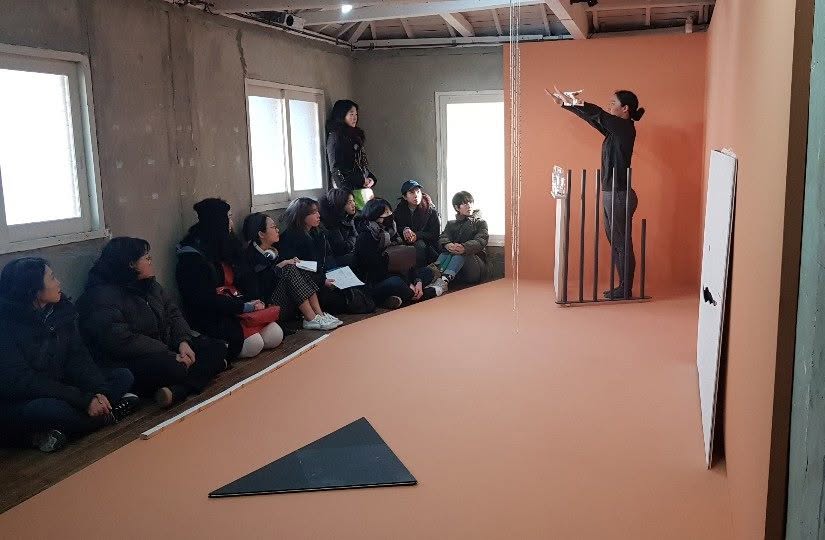
Exhibition view: Hyeree Ro, Canal
Projects, New York (27 September–7 December 2024). Courtesy the artist and
Canal Projects. Photo: Izzy Leung.
“In Niro, space itself
emerges as a powerful metaphor for the immigrant experience, embodying both
physical and emotional dimensions.”
The space in Niro is
layered, complex, and, at times, uncomfortable. It exists in visible gaps
between wooden strips, in the pauses between her jumbled words—a rhythm
mirroring the speech patterns shaped by multilingual lives—, and in the
re-lived present moment and the memories. Rather than a void, these gaps become
a site that resists categorization, evolving into what Henri Lefebvre calls
“representational space”—a place charged with personal meaning, memories,
absences, and the resilience of cultural survival.
Ro invites viewers to step
into the immigrant experience, asking them to bridge the incomprehensible
through observation, gesture, and imagination. In this way,
Niro becomes an active space where her memories and the audience’s
perceptions converge, reflecting the ongoing negotiation Asian American
immigrants face to reconcile parts of past identity with the need to adapt to a
new cultural landscape.
As the performance concludes, Ro softly
recites, “Did he arrive yesterday?” Holding a leather object in a soft, dusky
orange hue as if capturing her father’s remnants, she murmurs, “He arrived
safely.” Through this final gesture, Ro completes the cyclical nature of her
trip, from departure to arrival that never fully settles, embodying the
perpetual state of transition that defines migration.