Antinomy - K-ARTIST

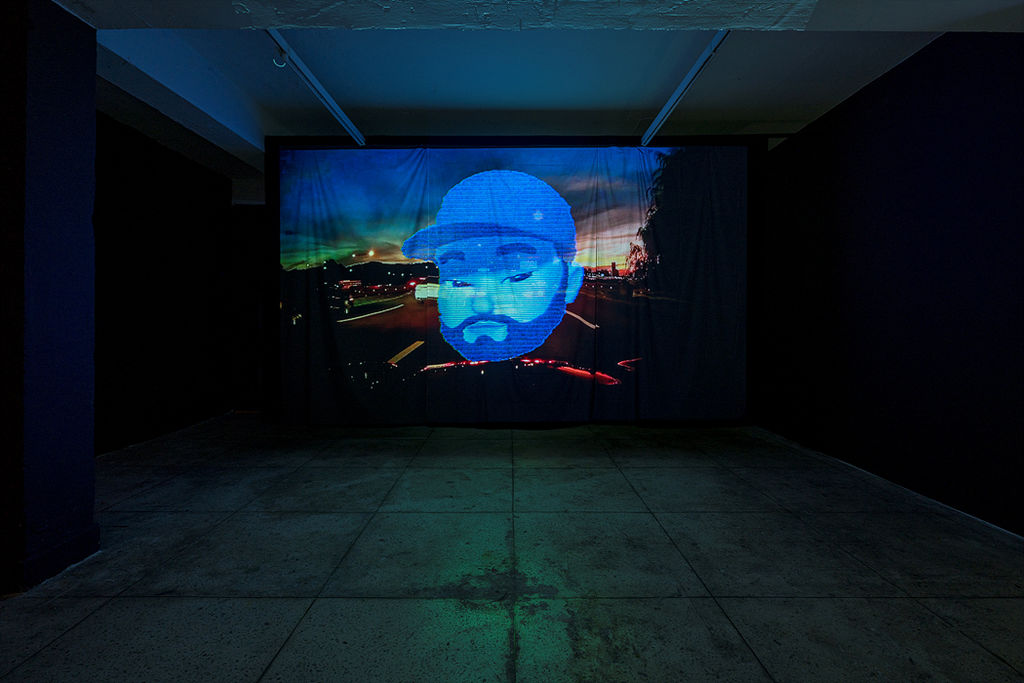
Antinomy

2025
Single-channel video (color), sound (stereo)
1min 54sec
About The Work

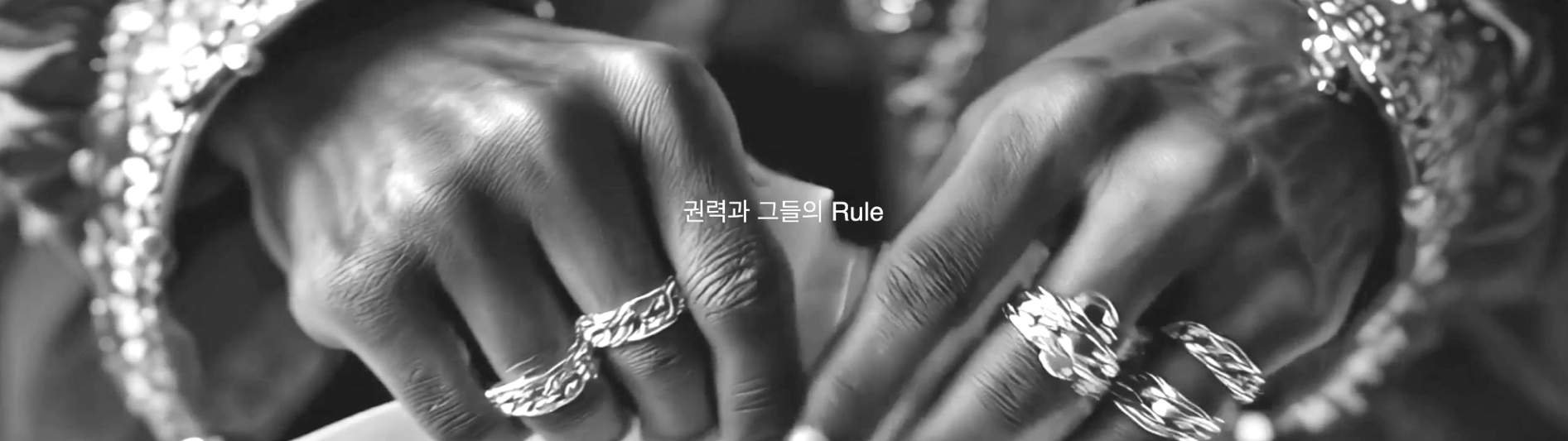
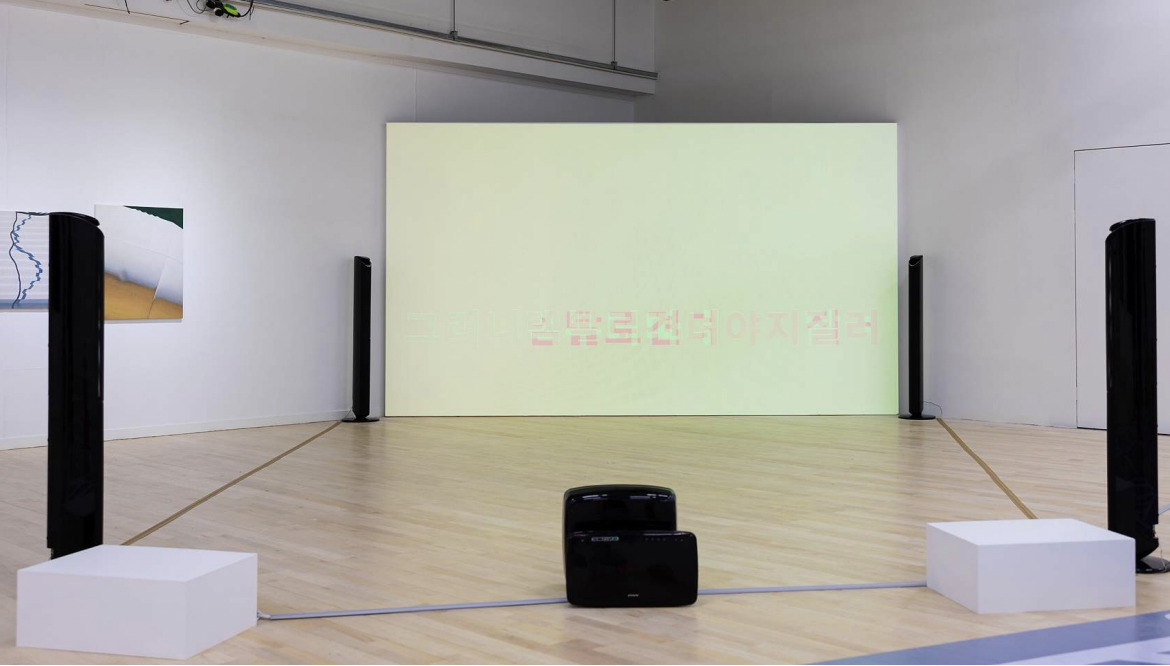
Ahn Kwanghwee appropriates and recontextualizes hip-hop music as part of his everyday life as an artist and as a critical object, repositioning it within the context of exhibitions. Through lyrics, rap, beats, and video, he visualizes the processes through which hip-hop music as a medium becomes decontextualized and recontextualized within the art world, while conducting research and producing works that examine how the value and role of art and artists shift according to institutional and media environments.

In Ahn Kwanghwee’s practice, hip-hop — a central motif throughout his work — originates from rebellious and socially critical attitudes toward established power structures, yet it also openly reveals a desire to enter and participate in mainstream culture without necessarily resisting capitalism. Drawing parallels between the dual nature of hip-hop culture and his own responses to life as an artist and to the countless images circulating online, Ahn has continued to develop works grounded in this ambivalence.

The artist also uses hip-hop music as a medium through which to test the boundaries of the art institution. For him, the “art institution” extends beyond exhibition venues or museums to encompass the broader systems that define what counts as “art.” By exhibiting hip-hop music, his works attempt both to materialize and expand the boundaries of that system, exposing its internal structures as well as its loopholes. Accordingly, in Ahn Kwanghwee’s practice, hip-hop is treated not merely as a genre but as a medium that activates the exhibition itself.

Meanwhile, in recent years, Ahn Kwanghwee has also begun employing artificial intelligence (AI), which has become increasingly embedded in everyday life, as a critical device for examining contemporary media environments. In his work, algorithmic generation is compared to sampling, revealing the dispersal of authorship, while technological limitations such as data bias and repetition are actively embraced and incorporated into narratives that articulate a critical stance.

In this way, within Ahn Kwanghwee’s practice, the administrative procedures of art and the languages and forms that have sustained institutional systems collide with and are transformed by the rhythms of hip-hop. By inviting viewers into those rhythms, the artist encourages them to ask, in an active and self-reflective manner, what the meaning and value of art truly are.

Solo Exhibitions (Brief)

Ahn has held solo exhibitions including 《BE KIND, REWIND, DOUBLE BIND》 (Coreana Museum of Art, Seoul, 2026), 《Palimpsest》 (Wooseok Gallery, Seoul, 2024), 《Show Down》 (ThisWeekendRoom, Seoul, 2020), and 《Noise Cancelling》 (Project Space Sarubia, Seoul, 2019).

Group Exhibitions (Brief)

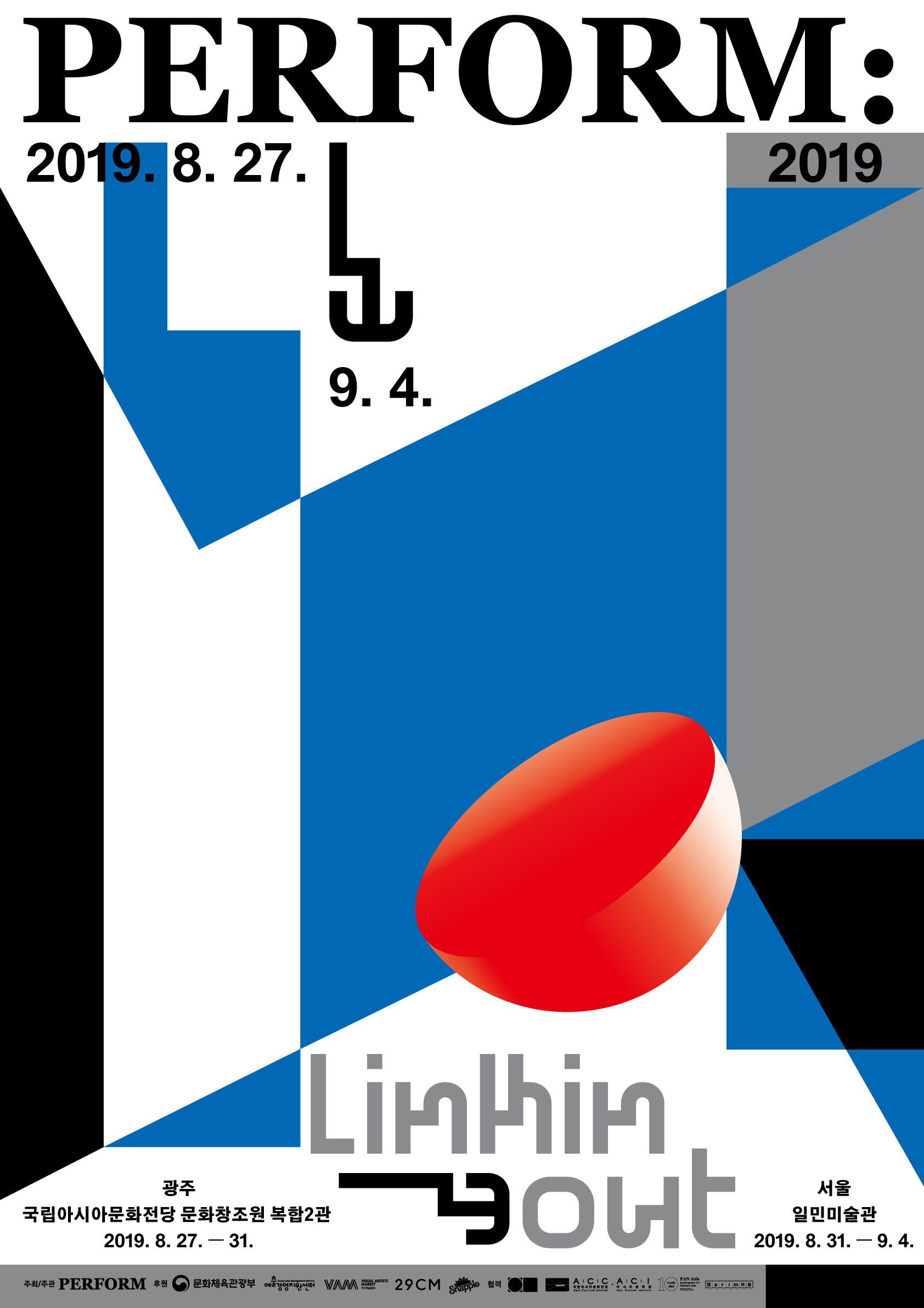
Ahn has also participated in numerous group exhibitions, screenings, and performances, including 《Where Writing Breathes》 (Buk-Seoul Museum of Art, Seoul, 2026), 《Hwww》 (Whanki Museum, Seoul, 2025), 《Breathing Breaks, Breaking Breaths》 (Artspace Boan, Seoul, 2024), 《What Might Happen》 (Kyungpook National University Museum, Daegu, 2022), 《Joy of Singing》 (Alternative Space LOOP, Seoul, 2021), 《PERFORM 2019: Linking Out》 (Ilmin Museum of Art, 2019), and 《Reversible Reaction》 (SeMA Bunker, Seoul, 2018).

Residencies (Selected)

Ahn has participated in various residency programs, including SeMA Nanji Residency (2025), CAN Foundation Myeongnyun-dong Studio (2023–2024), Seoul Art Space Geumcheon (2022–2023), and MMCA Residency Changdong (2017).

Collections (Selected)

Ahn’s works are held in the collections of Yangju City Chang Ucchin Museum of Art, CAN Foundation, and Seoul Museum of Art.

Works of Art

Recontextualizing Art Through Hip-Hop

Originality & Identity

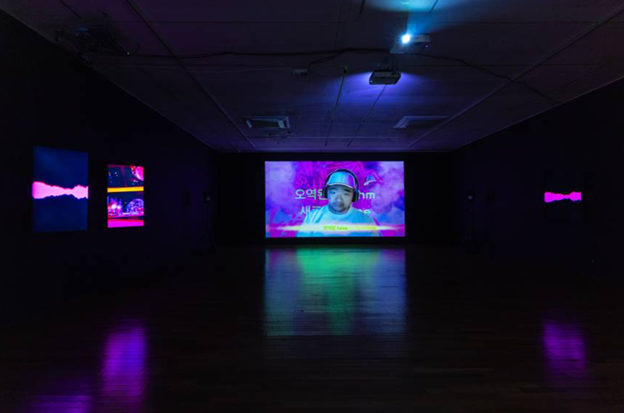
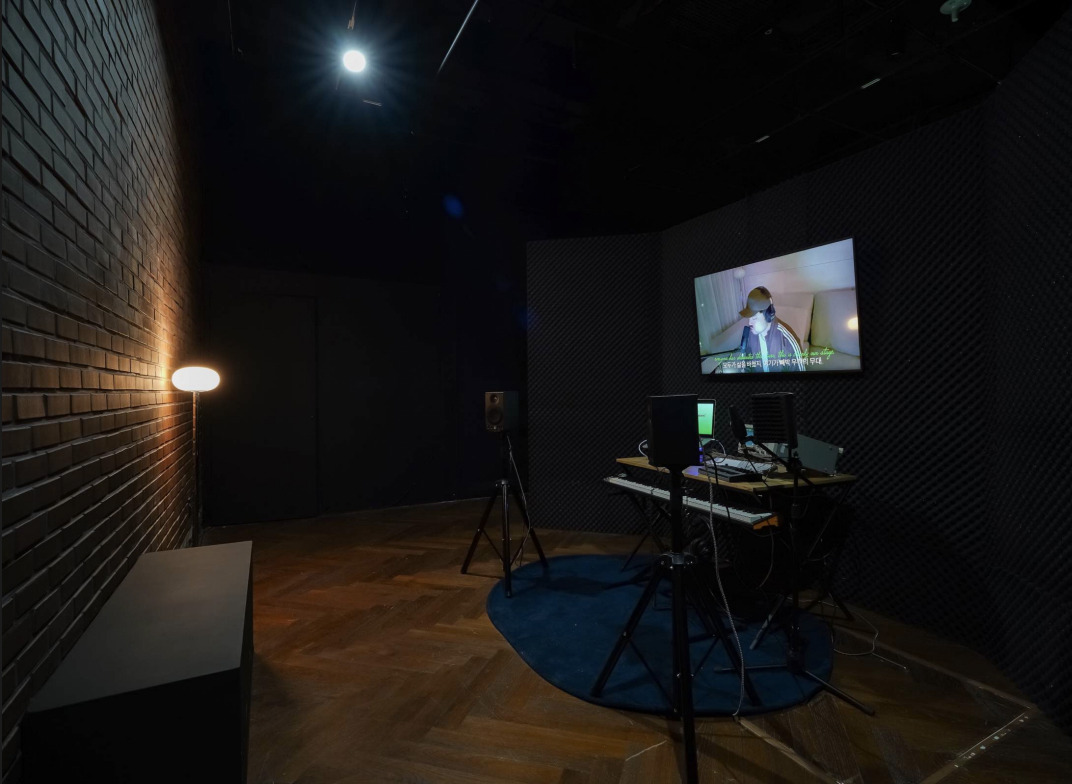
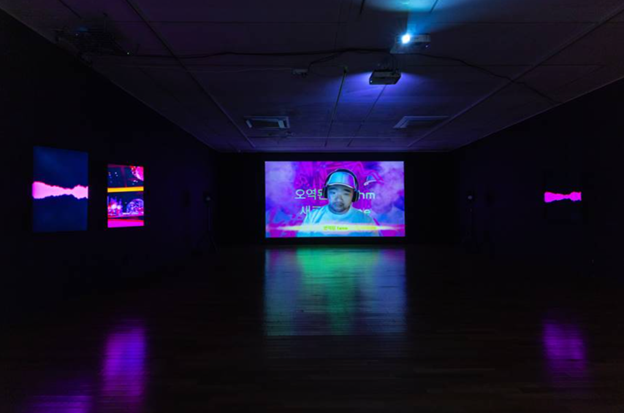
Ahn Kwanghwee’s work begins by calling the external language of “hip-hop” into the art institution, asking what defines art and what position the artist occupies. For him, hip-hop is not simply a musical genre, but a critical device that reveals the institution, media environments, the artist’s livelihood and identity, and the relationship between center and periphery. By placing rap, beats, lyrics, video, and subtitles within the exhibition space, Ahn shows the process through which hip-hop music is decontextualized and recontextualized within the art institution. 《Noise Cancelling》(Project Space Sarubia, Seoul, 2019) is a solo exhibition in which this line of inquiry fully emerged, with the artist using the methodology of hip-hop to compose internet images, memes, autobiographical narrative, and the conditions of the art institution into a single exhibition experience.
 
Ahn Kwanghwee’s focus on hip-hop is also connected to the generational and media environment he experienced. The early to mid-2000s, when the artist spent his childhood, was a period when cable television, the internet, and personal music-sharing platforms expanded, making underground and independent music scenes visible to a broader public. Ahn encountered hip-hop within this environment, becoming familiar with arbitrarily interpreting and recombining images and sounds circulating online, as well as cultural fragments stripped of context. This experience leads to works such as 《The Pathetic Rhymes》(Instant Roof, Seoul, 2017), 《Show Down》(ThisWeekendRoom, Seoul, 2020), and Remix: Greatest Hits of The Pathetic Rhymes(2021), becoming the basis for transforming the frustration, self-deprecation, pressure of livelihood, and distance from the institution that he feels as an artist into the language of hip-hop.
 
What matters in his work is not the fact of translating hip-hop into art itself, but the cracks and mistranslations that occur in that process of translation. Ahn does not regard the fact that he does not belong to the generation or region that directly experienced block parties, nor to the mainstream hip-hop scene, simply as a lack. Rather, he takes the disjunctions that arise from indirect experience, misunderstanding, and arbitrary interpretation as the driving force of his work. In 《The Pathetic Studio of The Pathetic Label》(Seoul Art Space Geumcheon, Seoul, 2022), following the block party, he establishes a fictional institution called the “label studio,” calling relatively homogeneous members of the art world together as a kind of “minority group.” Here, the exhibition space becomes not so much a public sphere open to everyone, but a closed yet fluid stage for a community operating within specific institutions, tastes, and networks of relationships.
 
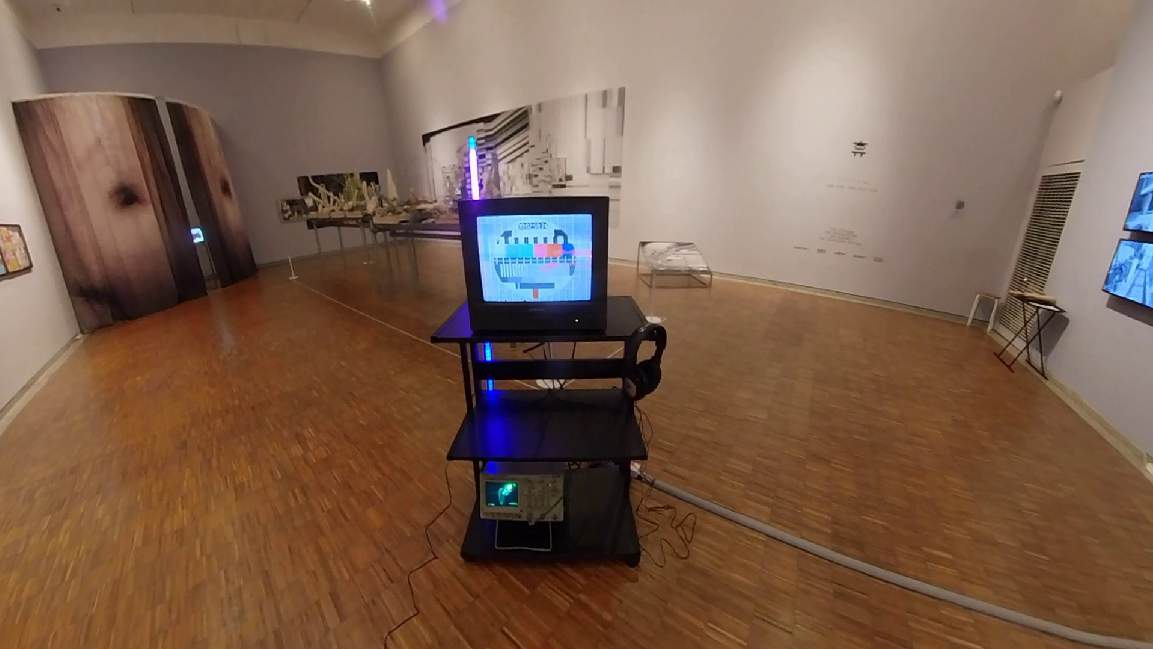
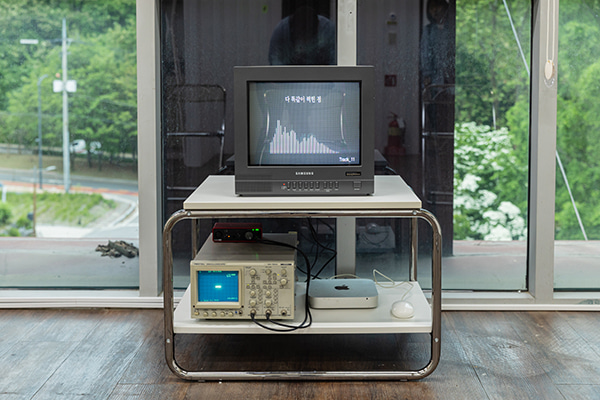
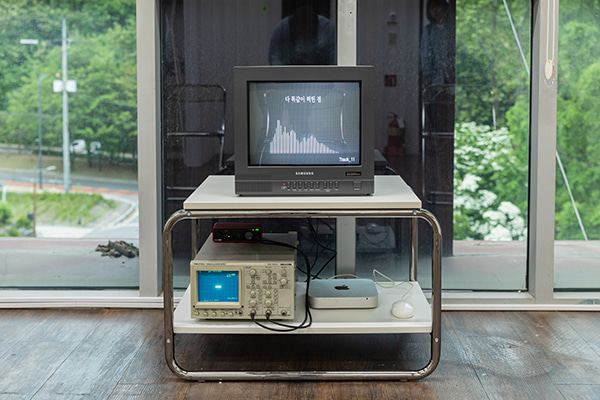
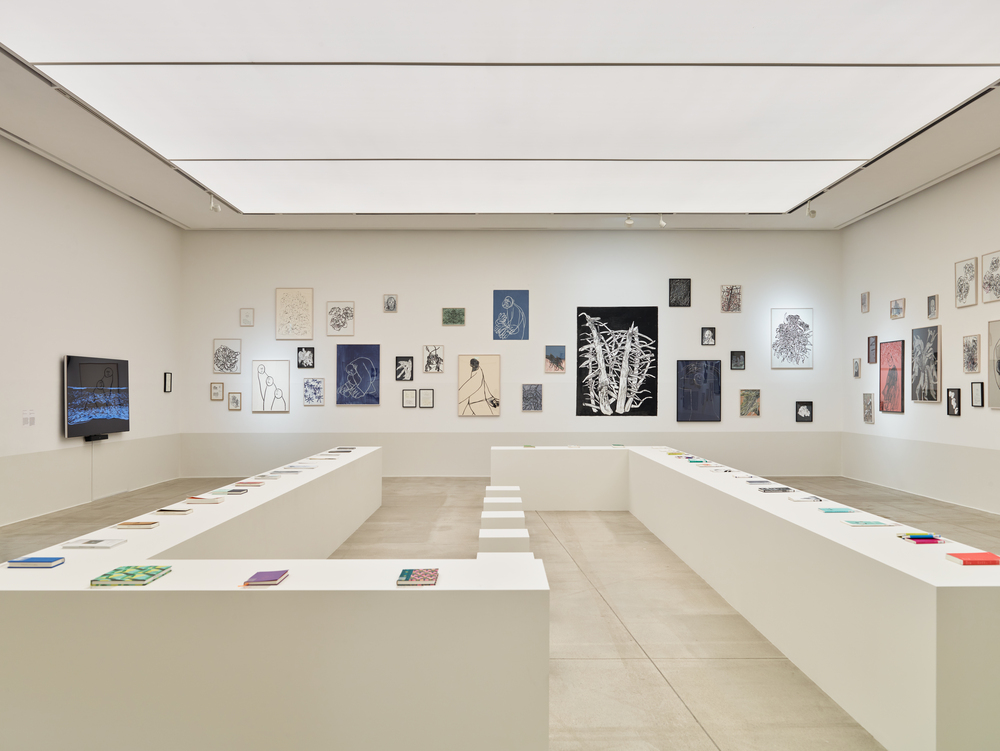
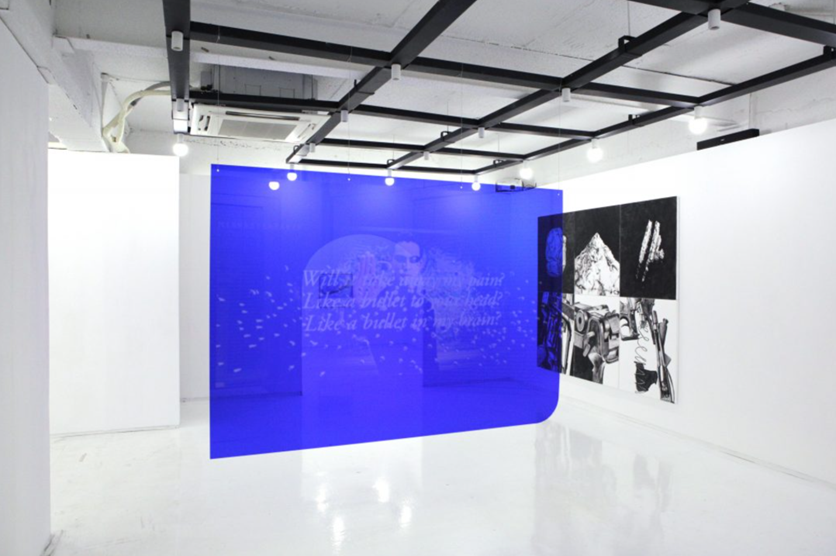
In recent works, Ahn Kwanghwee more directly unsettles the language of the art institution itself. The single ASFS(2024) transforms the artist biography, an essential institutional document, into the form of rap, fragmenting the structure that demands clear and logical artist statements through beats, rhythm, and leaps in meaning. Untitled 13 Tracks – Nanji(2025) further expands this strategy, creating a state in which meaning does not settle among documents, music, video, and the exhibition environment. In 《BE KIND, REWIND, DOUBLE BIND》(Coreana Museum of Art, Seoul, 2026), he overlaps the ways Western art history and hip-hop culture have been received in Korea, accepting the double-bind situation that arises between the “fake” and the “rootless” as a condition of artistic practice. Rather than resolving this dilemma, Ahn shows how the inside and outside of the institution unsettle one another within it.

Style & Contents

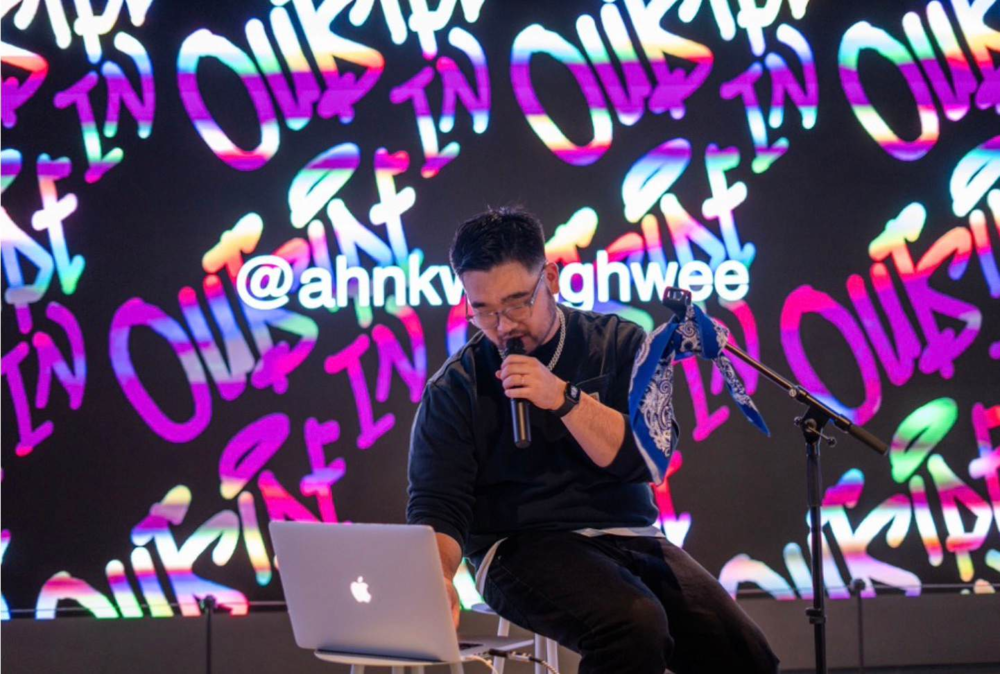
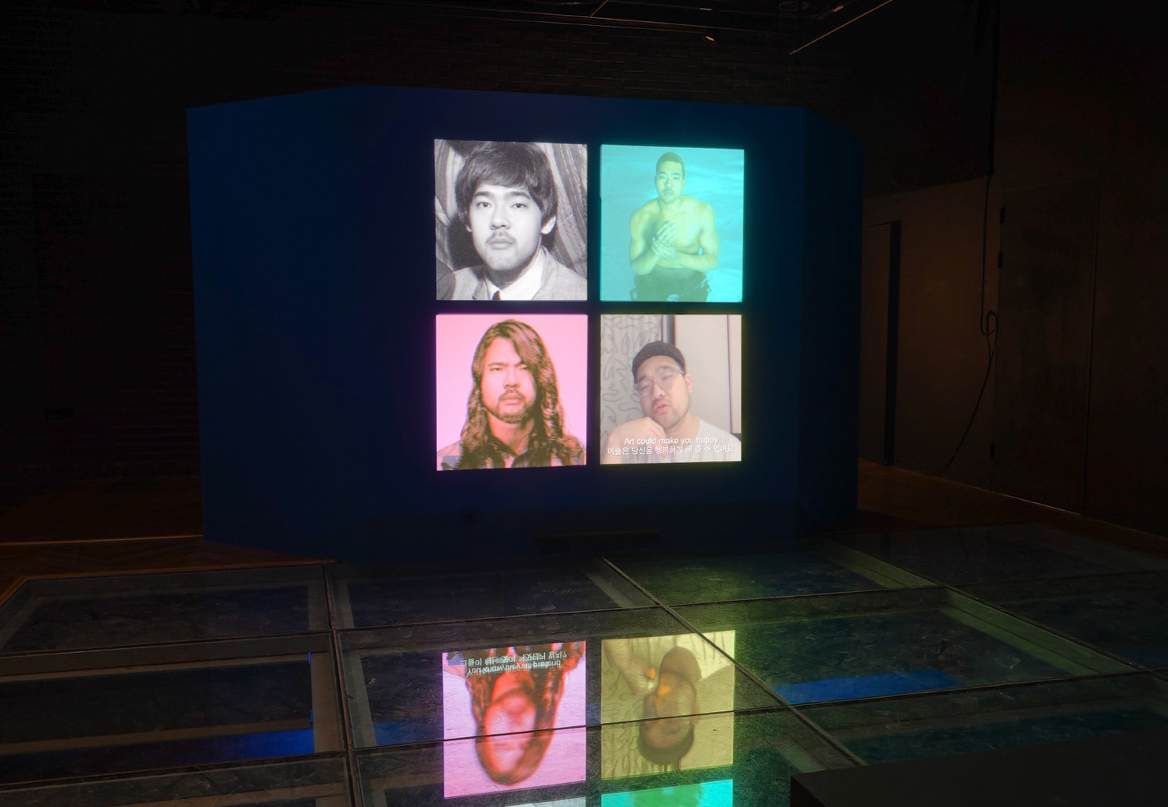
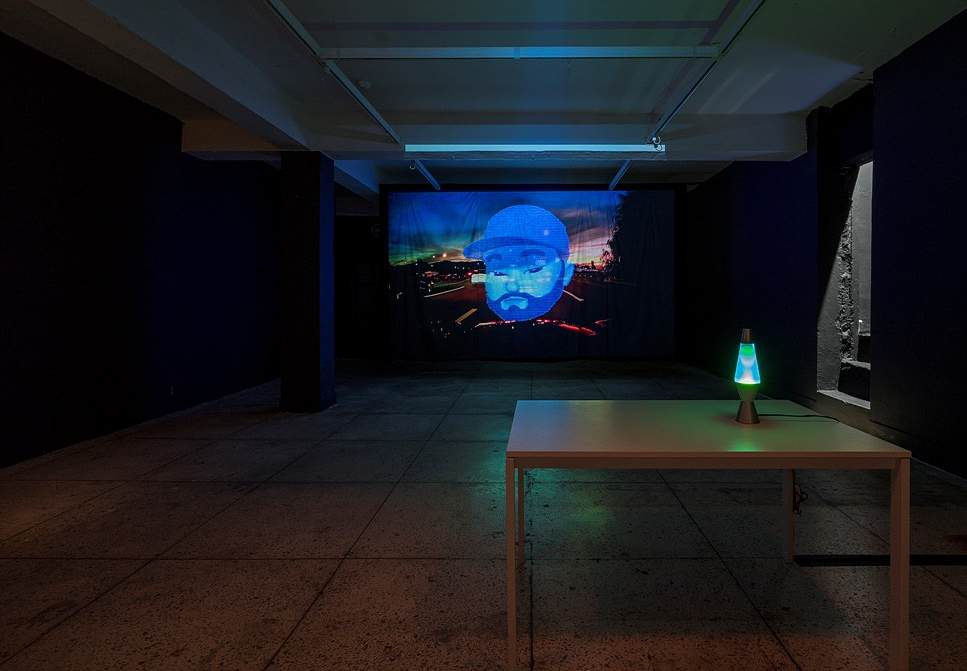
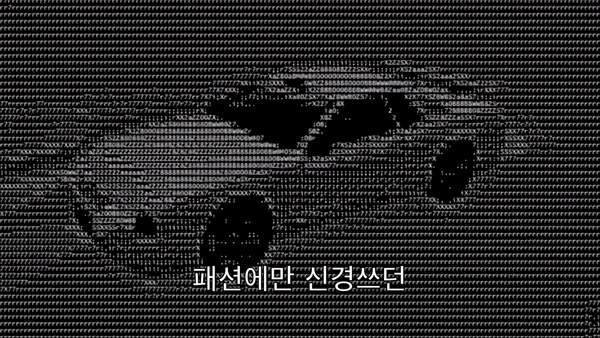
Ahn Kwanghwee works across music, video, lyrics, subtitles, performance, installation, online platforms, records, lectures, and roundtables. In his work, hip-hop is music to be heard, text to be read, video to be watched, and also the air that fills the exhibition space. The artist directly conveys his narrative through rap and beats, while the images on screen are composed of everyday, floating visual materials such as internet memes, GIFs, ASCII art, game images, selfies, and footage shot inside cars. Rather than offering clear explanations, these images overlap and misalign with the lyrics, revealing how images are produced and consumed within the digital environment.
 
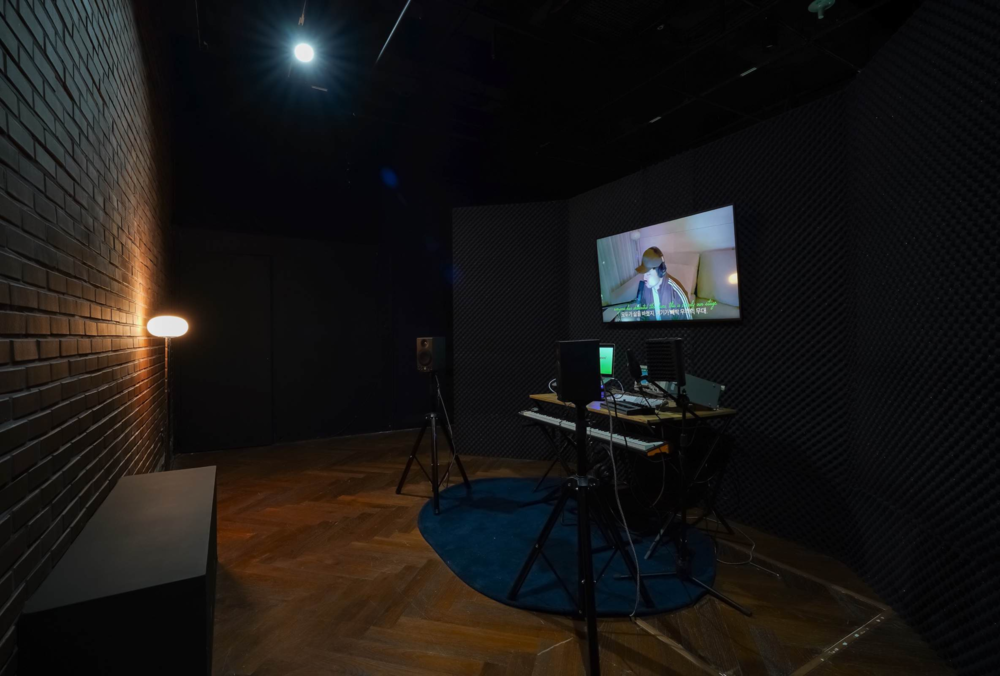
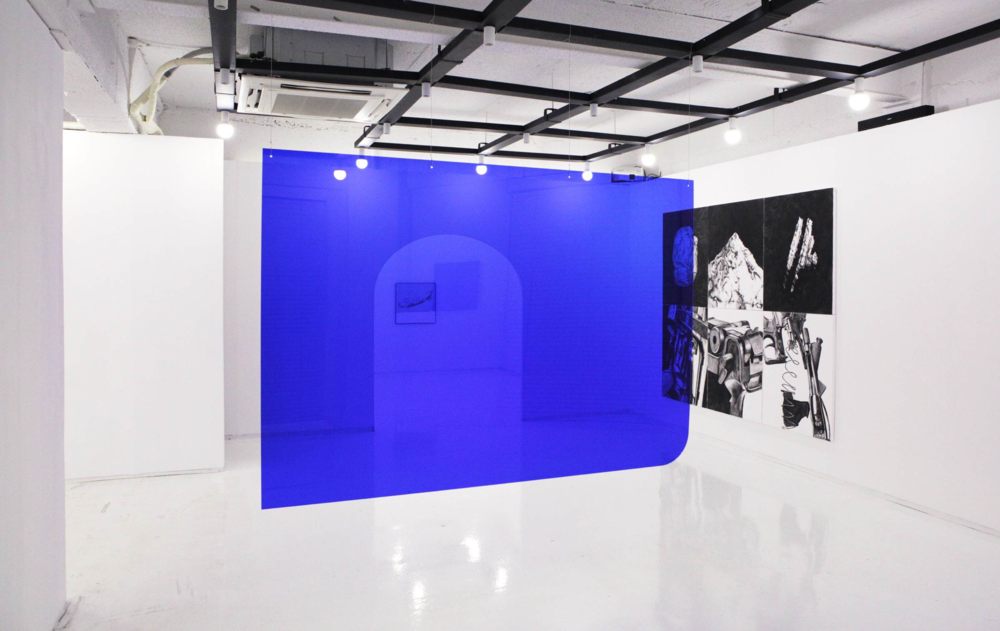
In 《Noise Cancelling》, the artist appropriates the exhibition space as a block party, an originating site of hip-hop. A block party was a place where local communities gathered after blocking roads or buildings, generating music, dance, and conversation, and for Ahn, it becomes a model for transforming the exhibition space into a field of collective sensation. In Noise Cancelling Video Remix(2019) and Black Sheep Wall(2019), music, video, text, and sound do not leave viewers as passive spectators, but turn them into an audience that shares a particular critical awareness and catharsis within the same space. Here, noise cancelling functions not simply as a technology that removes noise, but as the artist’s attitude of creating another wave in response to the bends of life and institutional noise.
 
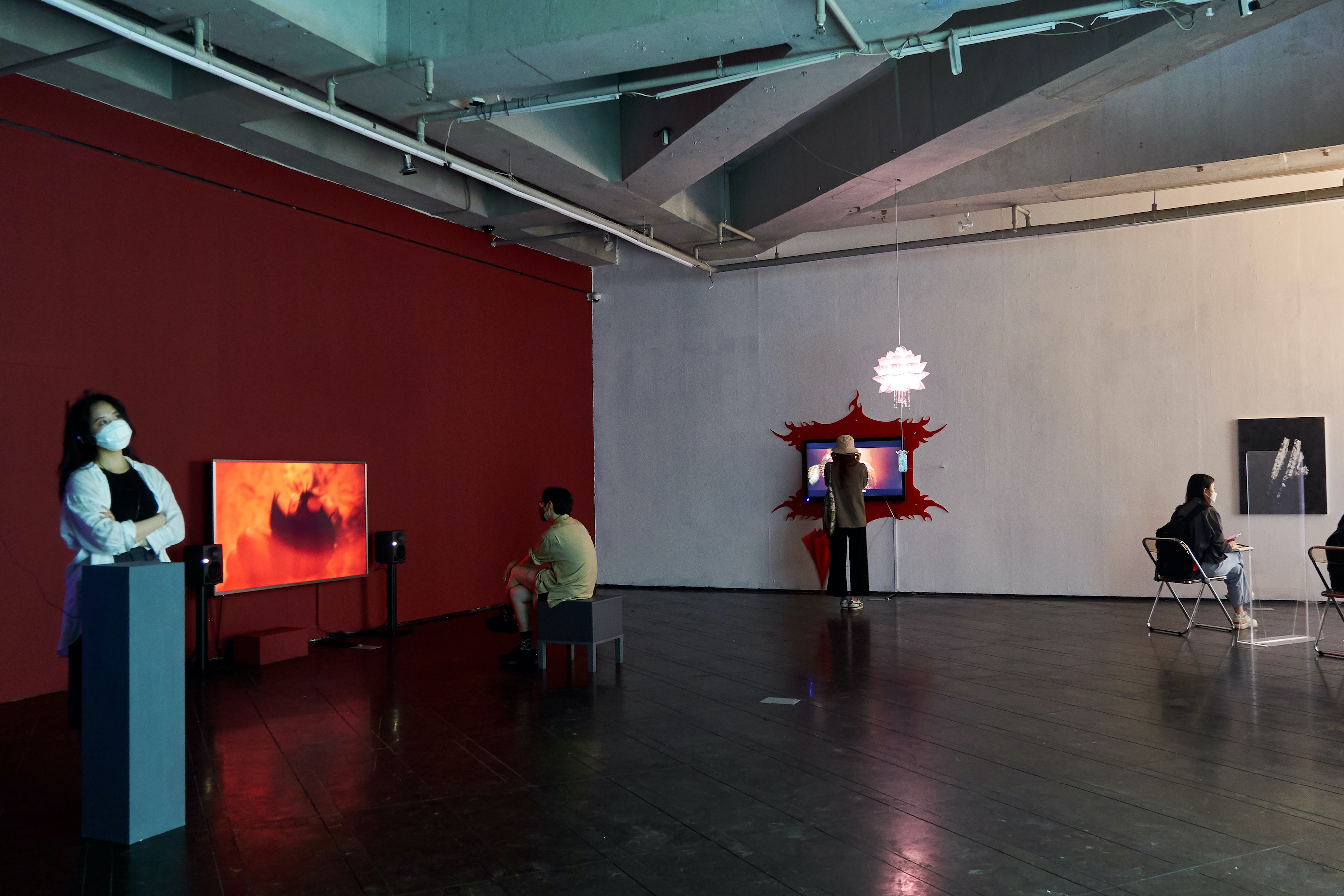
Remix: Greatest Hits of The Pathetic Rhymes is a mix-set-format work composed of hip-hop tracks produced by Ahn himself. The tracks, produced between 2017 and 2021, carry different attitudes and tones depending on their time of production, revealing the reality and fatigue he experiences as a millennial-generation artist. In 《Joy of Singing》(Alternative Space LOOP, Seoul, 2021), this work was presented in a form combining music, text, and video, and viewers approached the work by comparing how hip-hop music and contemporary art operate. During the pandemic, viewers watched the video and listened to the music through their own smartphones, which made them sense the difference between music heard inside the exhibition space and music heard outside it.
 
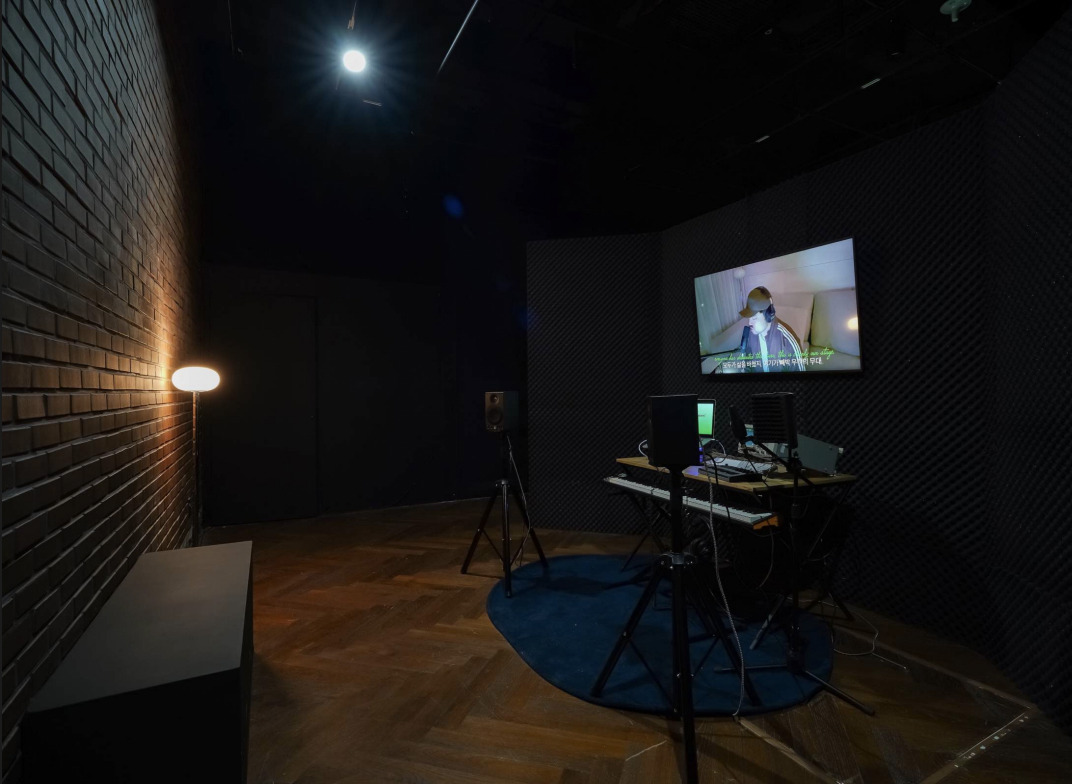
In later works, his experiments with institutional forms become more concrete. Lenticular(2022), Infinite Tagging(2022), and 《The Pathetic Studio of The Pathetic Label》 use the setting of a label studio, a narrower and more clearly defined community than the block party. In this space, a computer station, graffiti, lenticular goods printed with lyrics, and portraits of fictional label members are installed, allowing the exhibition to overlap the structure of the actual music industry with the open-studio culture of the art world. Desk Concert(2024) takes the form of a concert held in the artist’s room or studio, but exists only as a recorded document without an actual audience. Here, AI-generated rap, the imitation of live broadcast formats, and the attitude of avoiding popular platforms reveal the paradox of a “desk concert” that operates only within the art institution.

Topography & Continuity

Ahn Kwanghwee uses the methodologies of sampling, remixing, DJing, and block parties in hip-hop to make us look again at the way the art institution itself operates. Hip-hop began as a language of the margins originating from the street, but over time became a central genre in the popular music industry and an important circuit of capital. Contemporary art, by contrast, appears to be a non-commercial and pure field of creation, but in reality it operates within grants, exhibitions, auctions, art fairs, and institutional approval. Ahn brings the contradictions of these two fields into contact, making the tension between center and periphery, between a profitable genre and an institution that pretends not to be profitable, a core structure of his work.
 
Looking at the trajectory of his practice, 《Noise Cancelling》 was a point of departure that transformed the exhibition space into a block party through hip-hop and revealed the artist’s sense of reality through remixes of music, video, and images. 《Show Down》 showed the tension between the artist’s identity as an artist and as the head of a household, as well as an attempt to bind viewers into a political audience through music that could be experienced only in the exhibition space. Remix: Greatest Hits of The Pathetic Rhymes and 《The Pathetic Studio of The Pathetic Label》 brought the communal form of hip-hop and the structure of a label into the exhibition space, asking again how the art world operates internally and how belonging is formed within it. ASFS, Desk Concert, and Untitled 13 Tracks – Nanji unsettle institutional forms such as the artist biography, concert, portfolio, and the sound environment of the exhibition space, revealing how the language of art functions and fails.
 
While many similar sound-based works or media works focus on the sensory experience of music, the liveness of performance, or audiovisual immersion, Ahn Kwanghwee deals more persistently with the conditions of the institution and media themselves. In his work, music is less an object of appreciation than a tool for testing the institution, and rap is both self-expression and a device that disrupts the grammar of artist biographies, portfolios, and exhibition narratives. In addition, AI-generated rap, internet images, memes, and remix culture are not consumed as technological trends or visual decoration, but are used to reveal the dispersion of authorship, data bias, repetition, and the gap between popular platforms and the art institution. For this reason, although Ahn’s work borrows the form of hip-hop, it is ultimately closer to a practice that asks how art is valorized within the institution and what kind of language divides inside from outside. Ahn Kwanghwee continues to unsettle the interior of the art institution through the external language of hip-hop, creating a distinctive critical stage between music and video, writing and exhibition form.

Works of Art

Recontextualizing Art Through Hip-Hop

Exhibitions

Activities