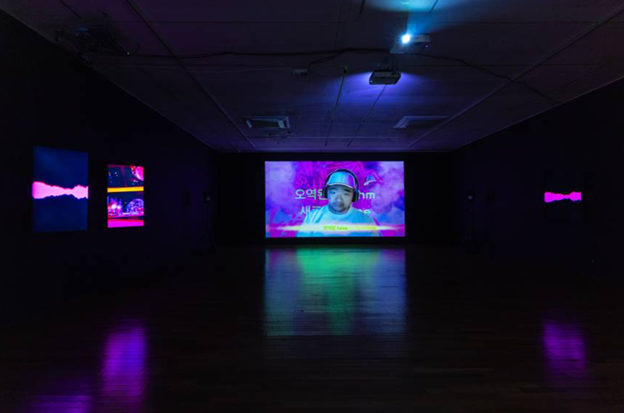
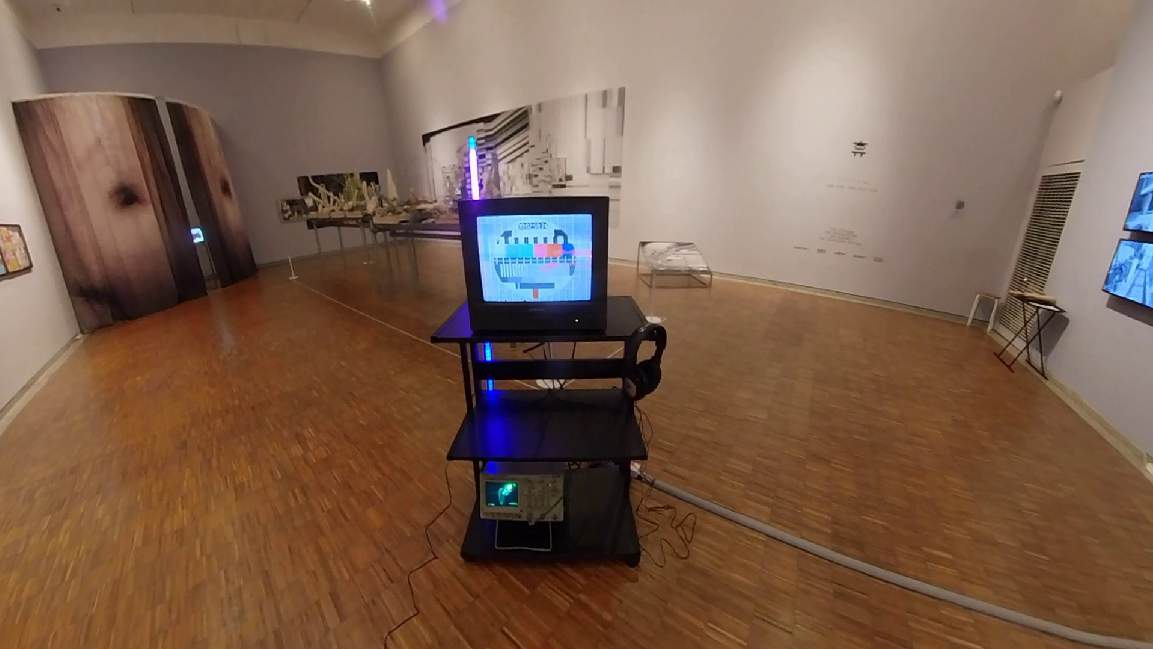
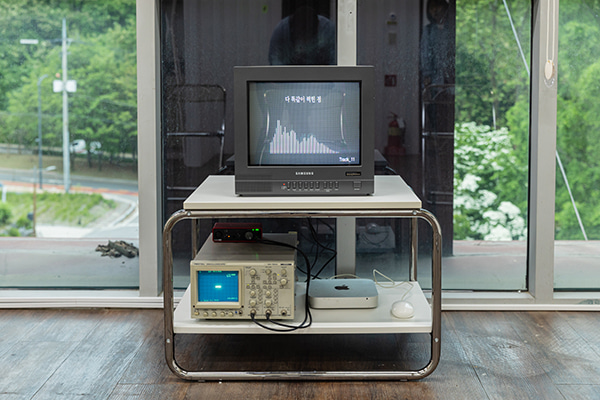
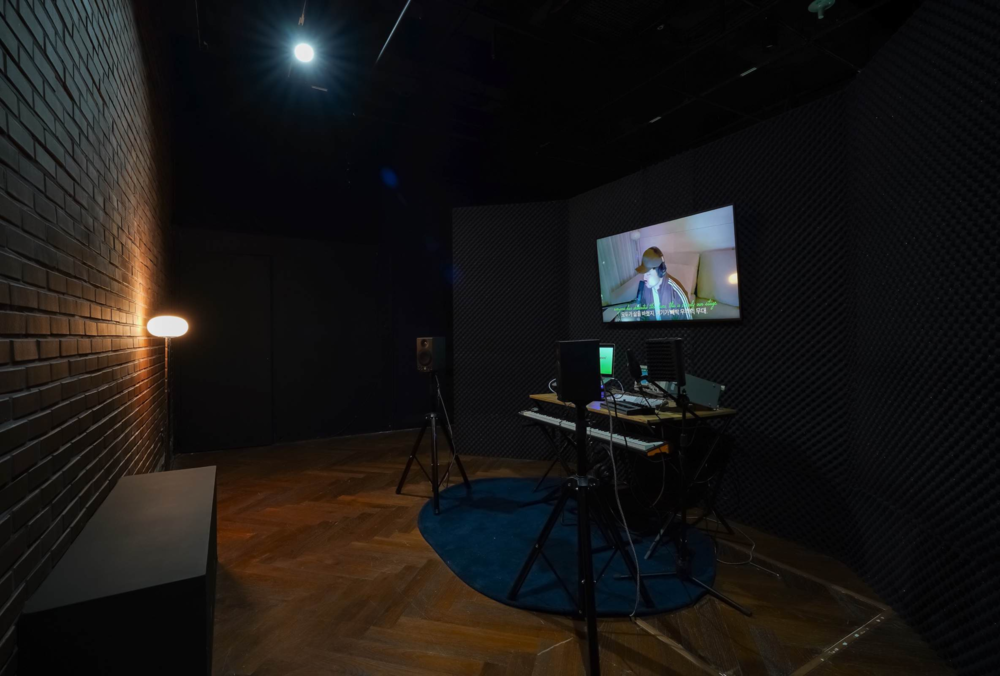
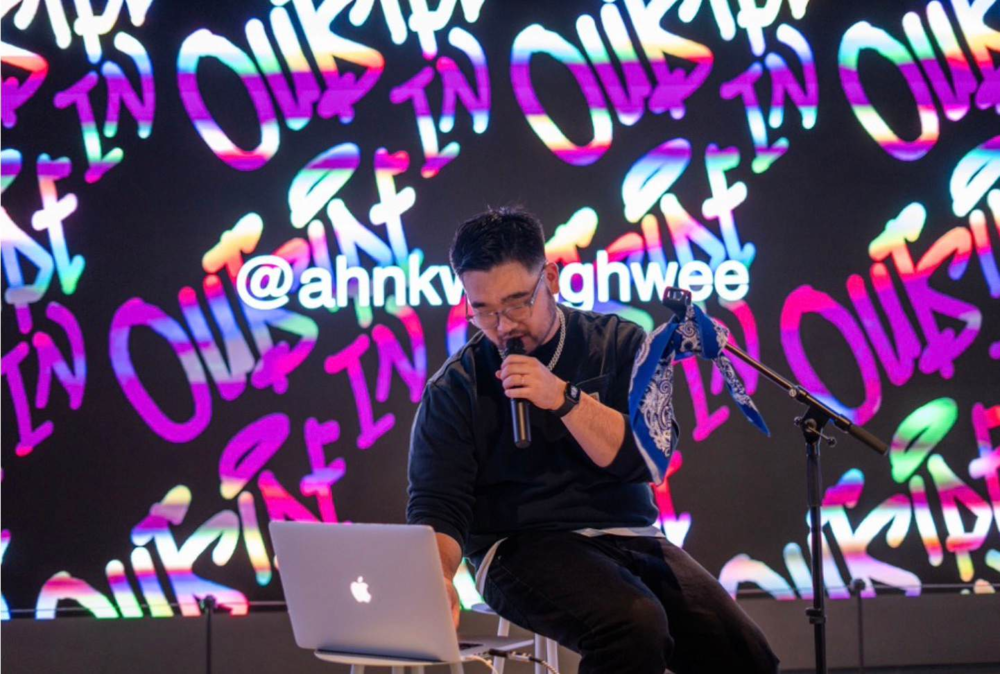
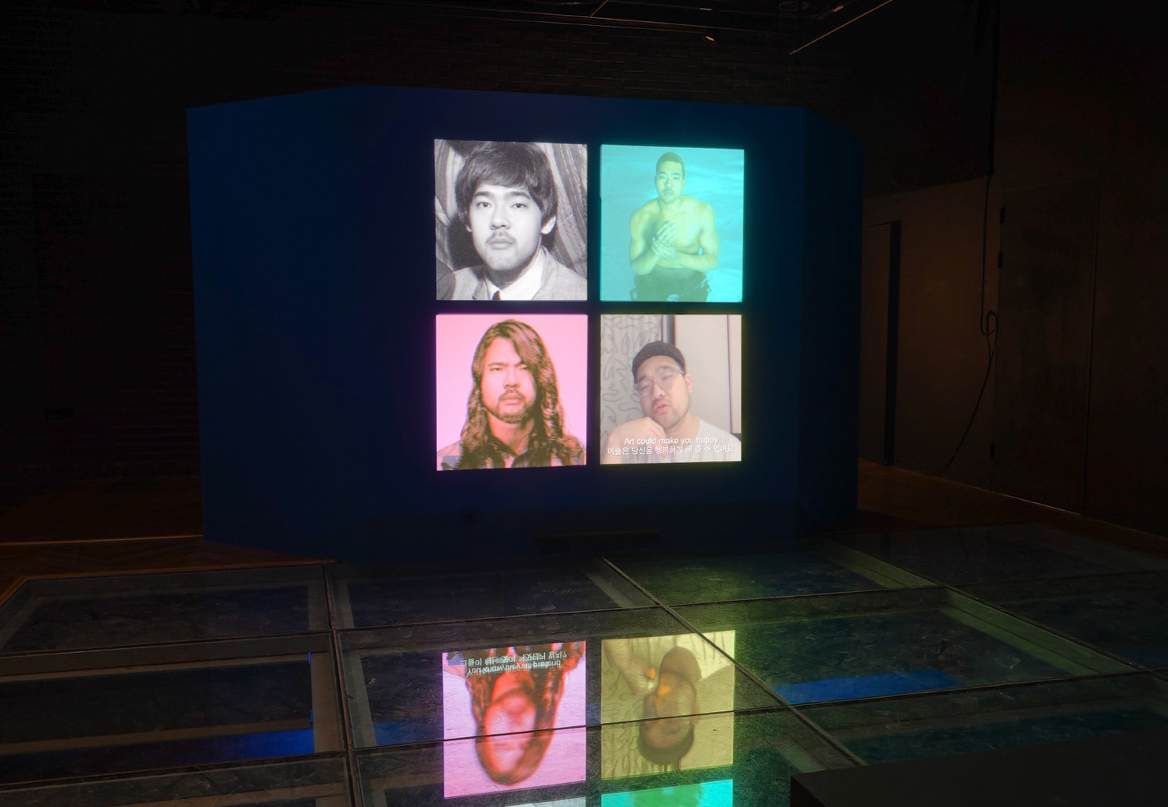
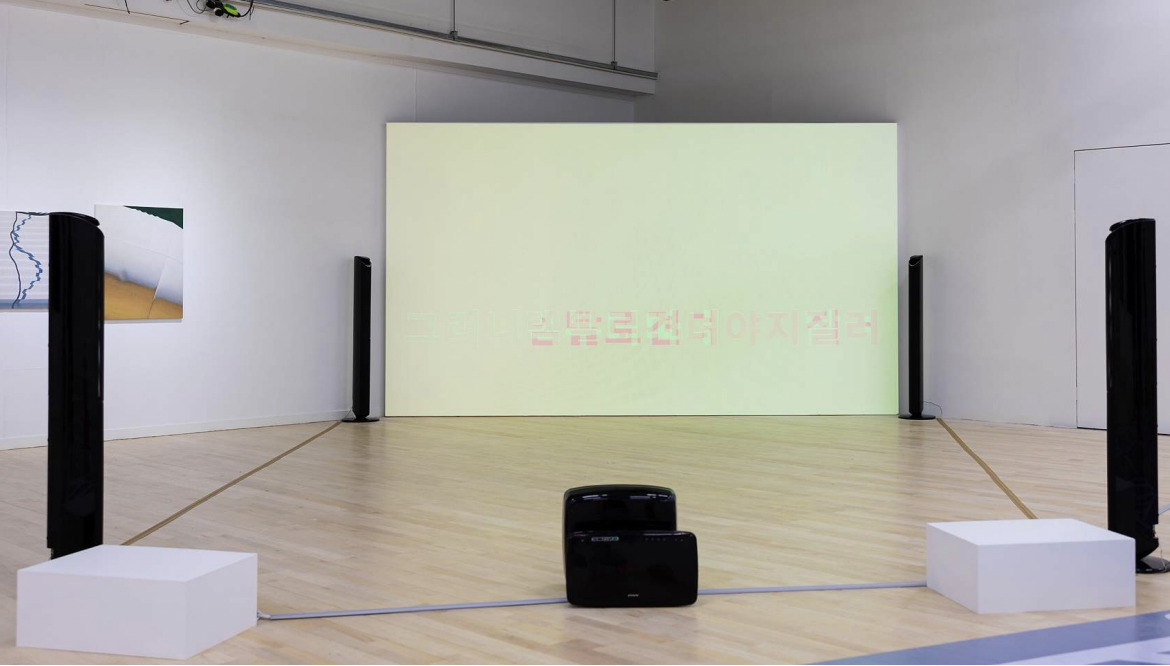
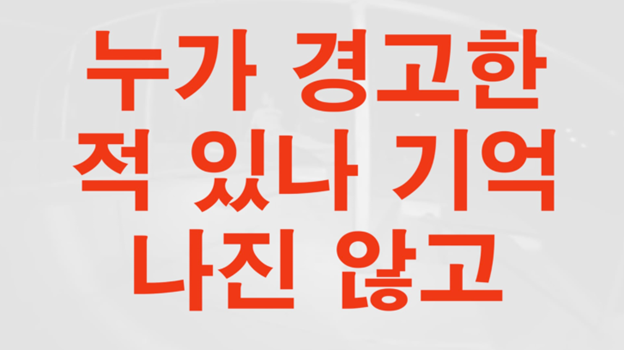
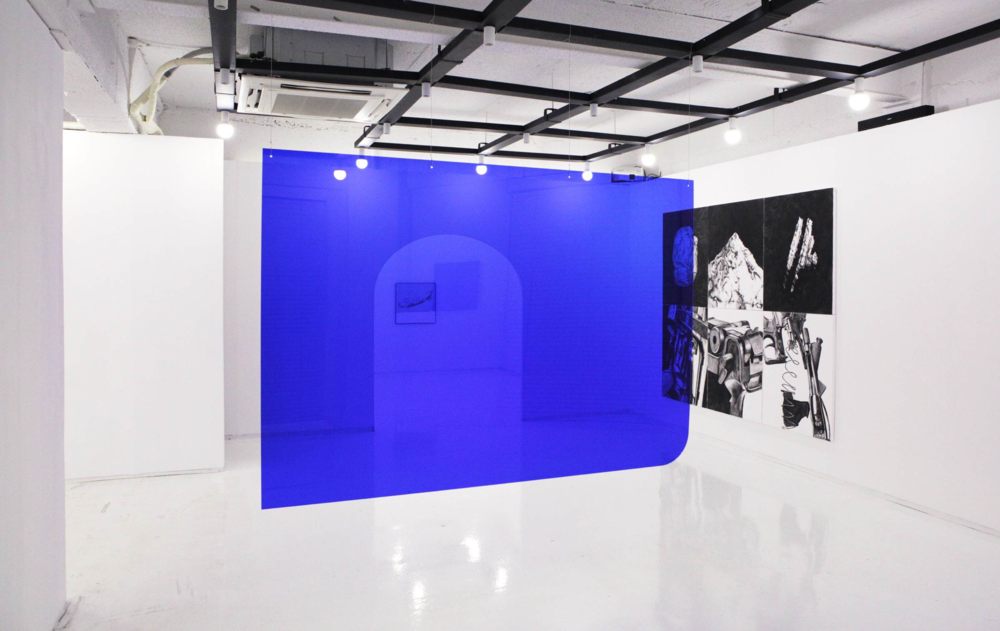
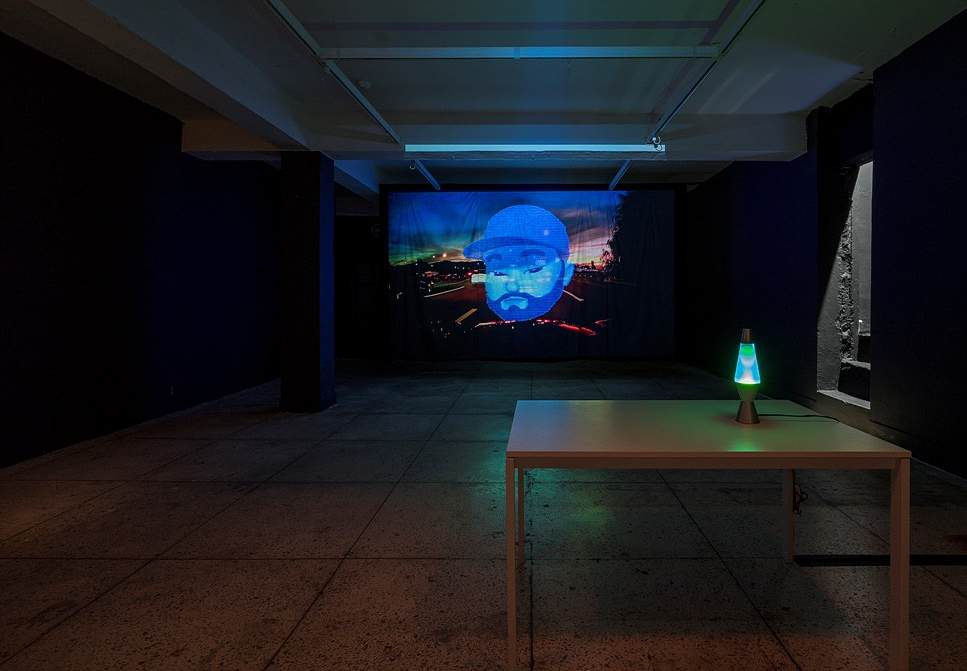
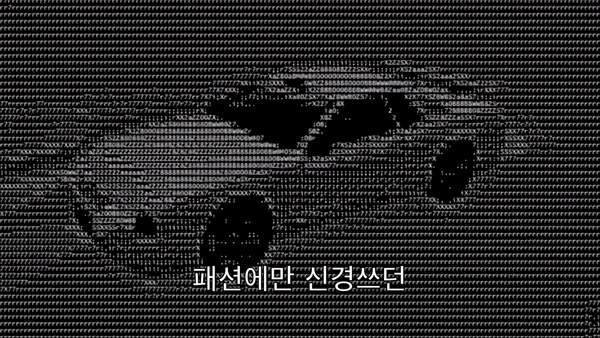
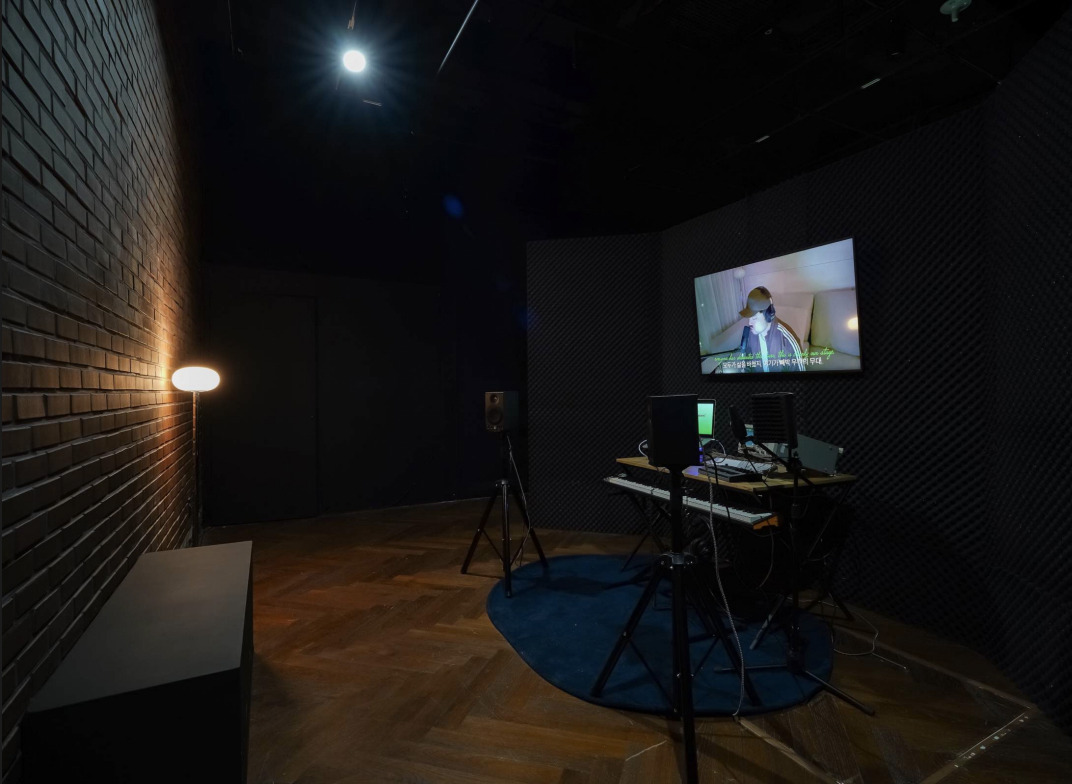
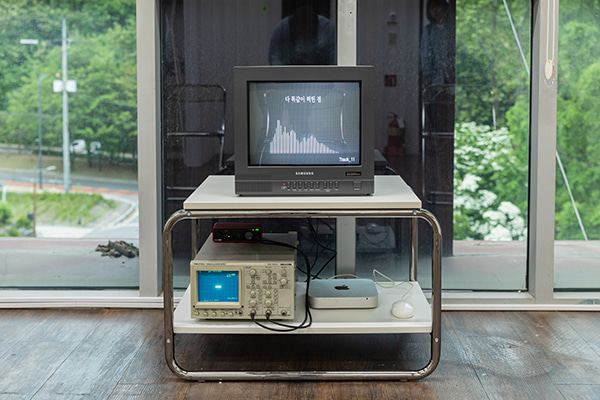
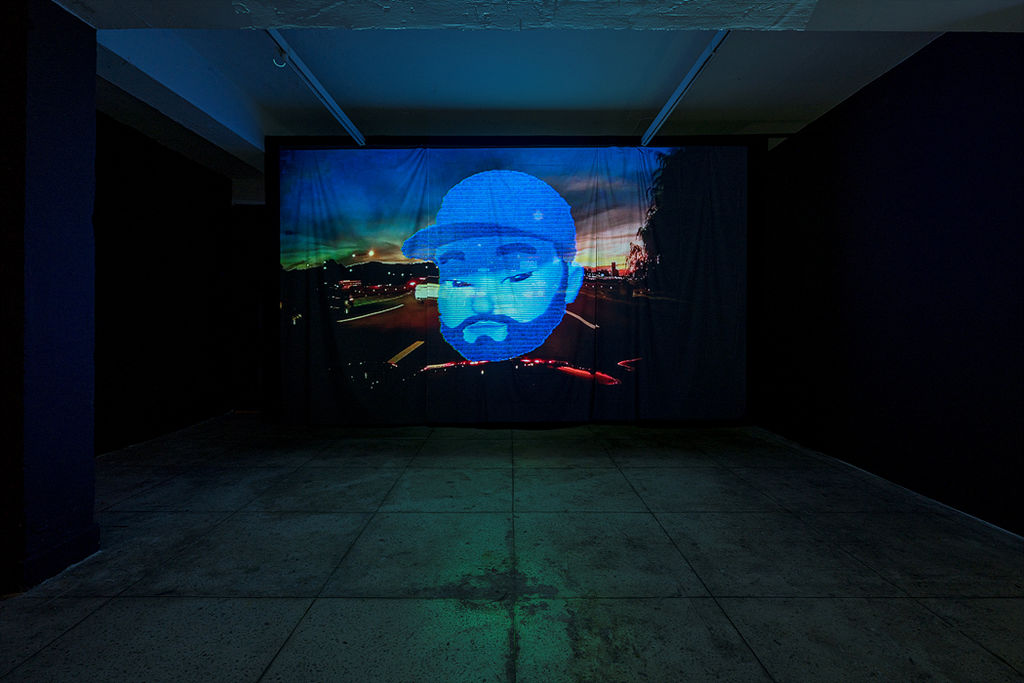
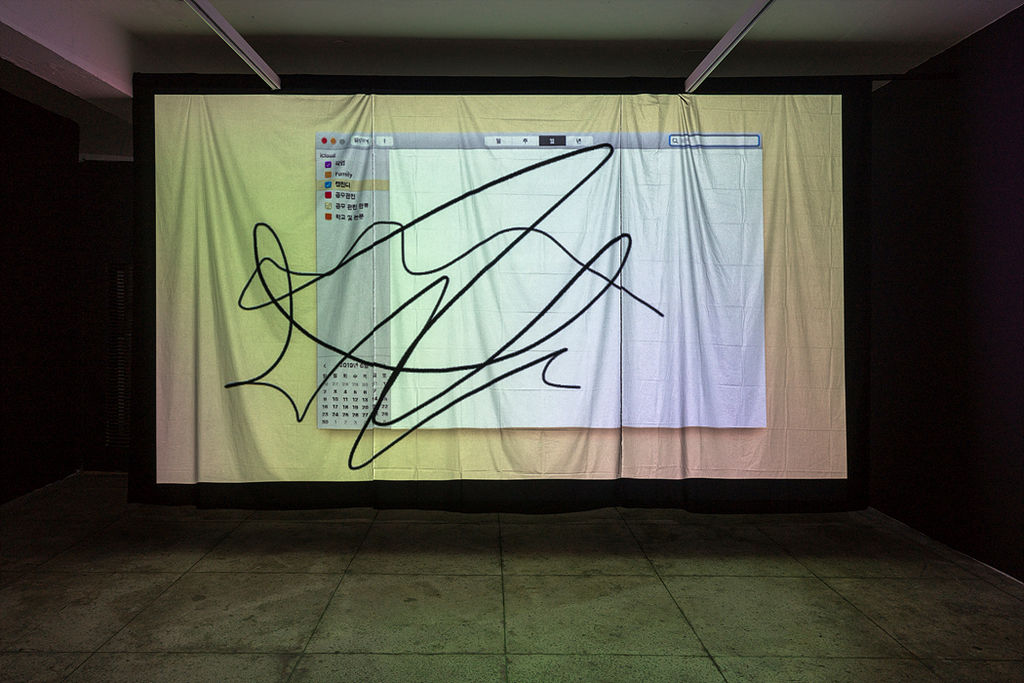
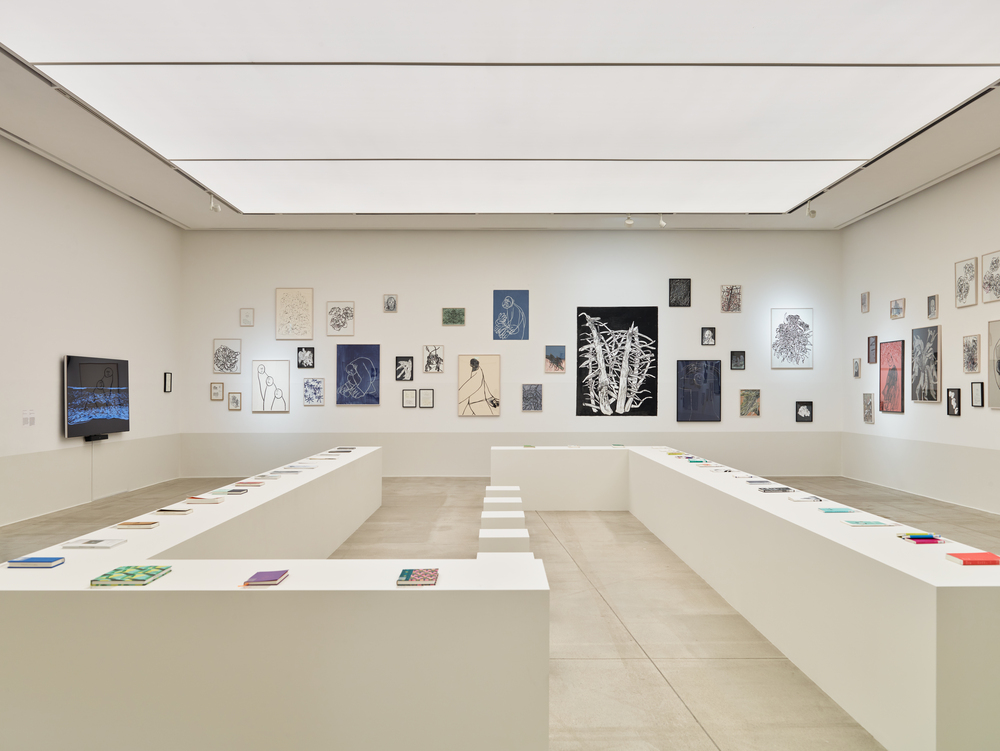
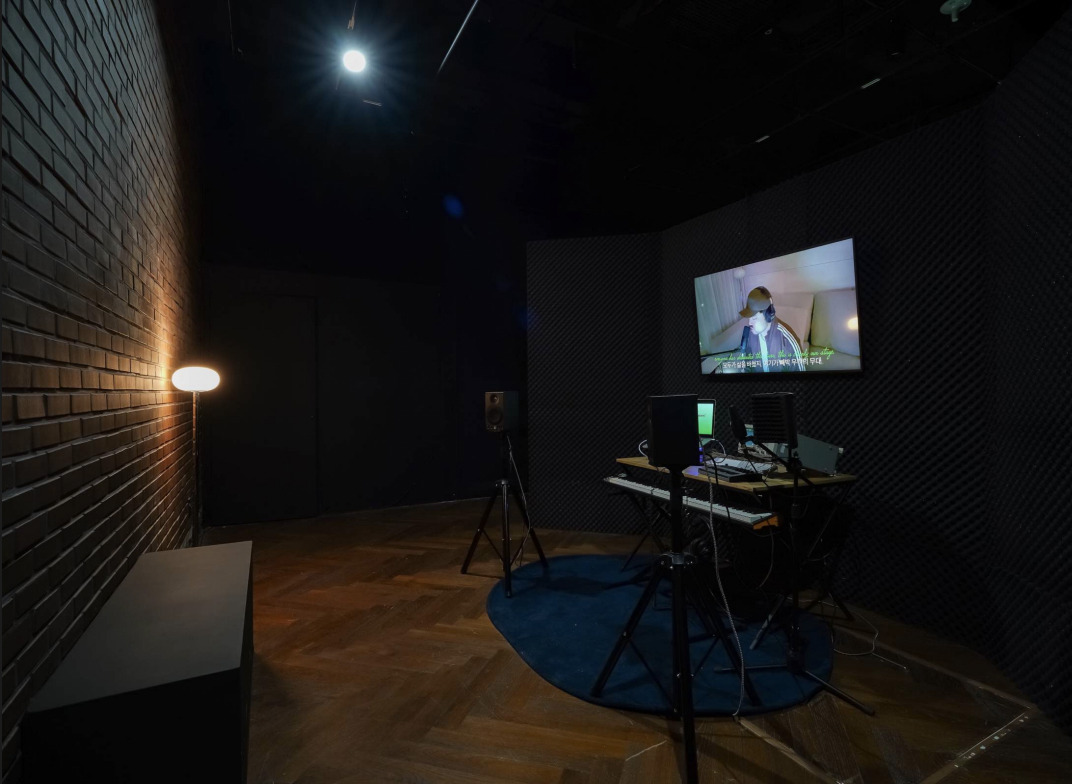
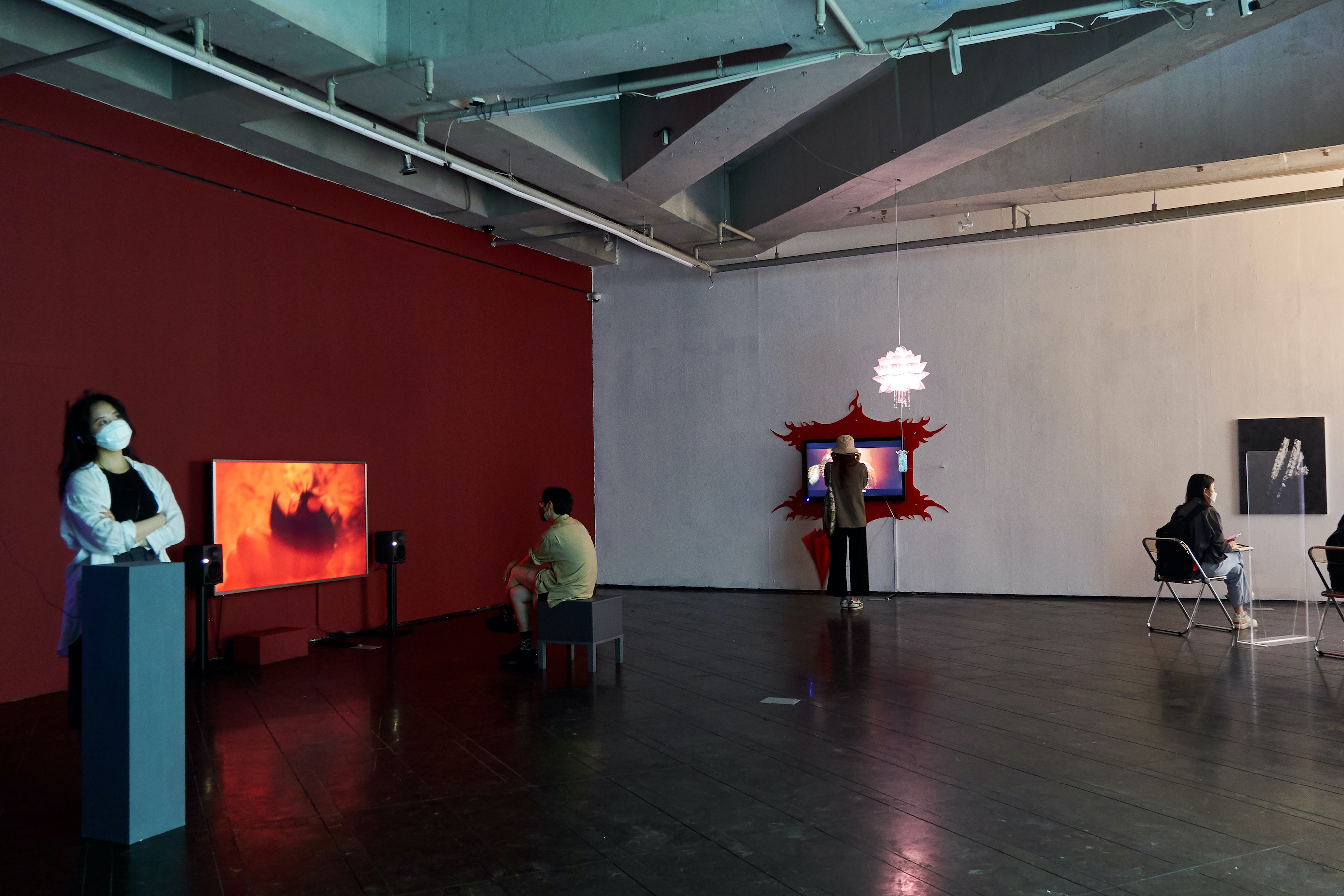
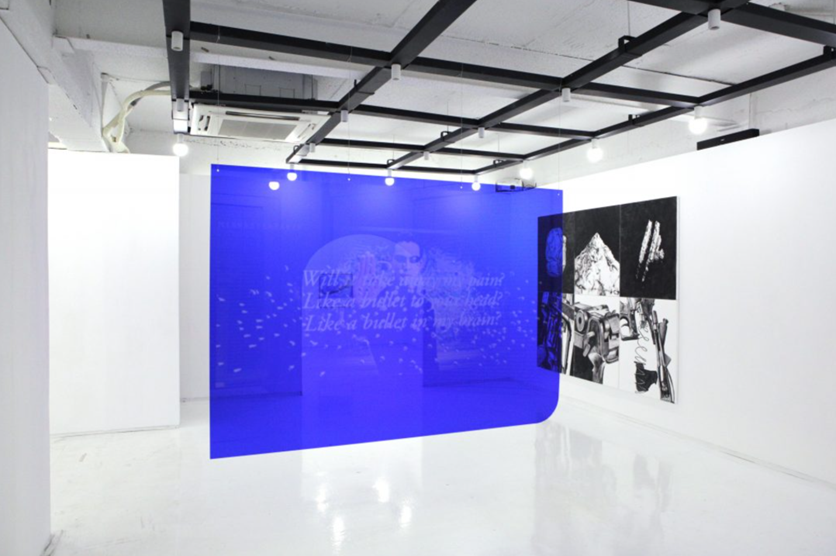
Installation view of 《Noise Cancelling》 (Project Space Sarubia, 2019) © Project Space Sarubia

Poetry meets other artistic genres such as painting in that it represents things that have no form but clearly exist through the arrangement and description of matter(text).

The reason this preface opens with a discussion of poetry is that the artist uses hip-hop music, which deals with rhyme and poetics1, as his primary medium, and because the artist’s attitude toward observing images and phenomena, and the process of giving them form, recalled the methodology of poetry.

The artist has presented works that metaphorically reveal narratives by subtly overturning the uses of objects commonly found in everyday life. In this exhibition, the artist borrows the technical concept of noise cancelling, which creates sound waves that cancel external noise in order to eliminate it.
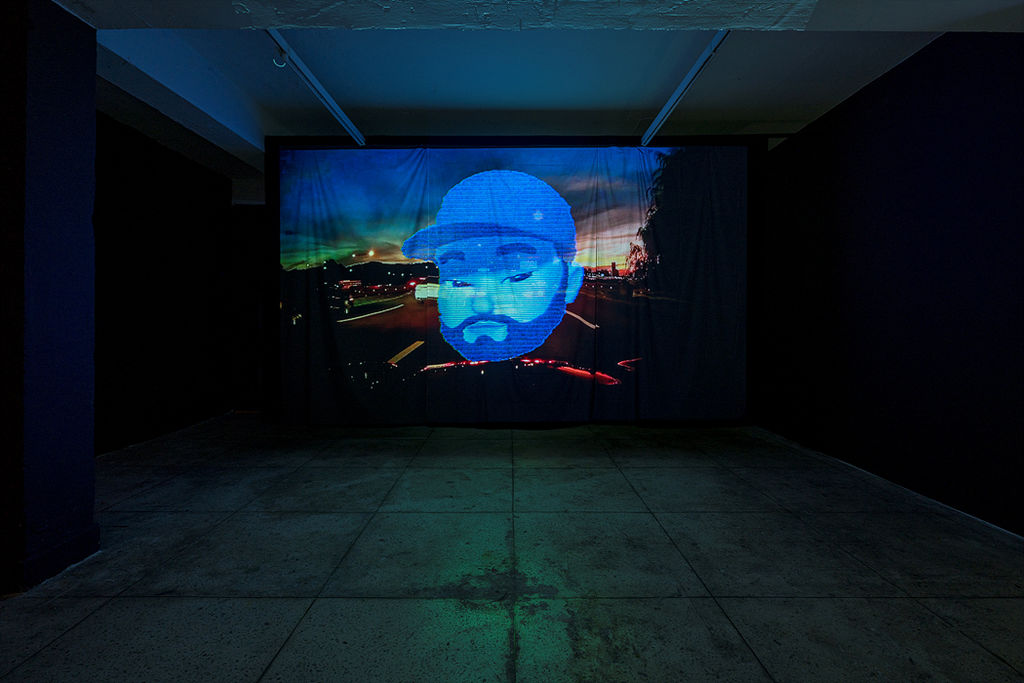
This concept, which is also the title of the exhibition, symbolically reveals the artist’s declaration that he will actively respond to the bends and turns of life, like the sound waves that are paradoxically generated in order to silence noise, rather than simply adapting to the situation he faces.


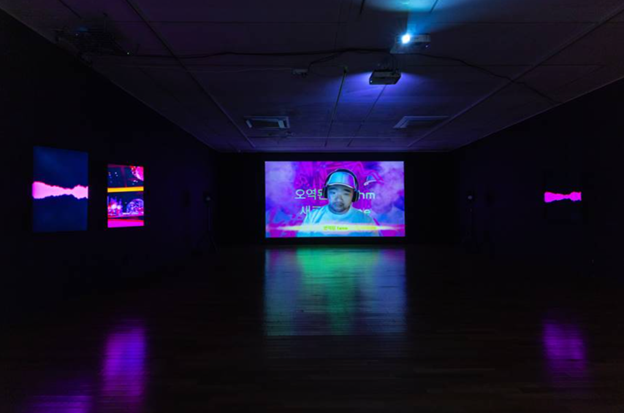
Ahn Kwanghwee, Noise Cancelling Video Remix, 2019, Single-channel video, sound, 17min. Installation view of 《Noise Cancelling》 (Project Space Sarubia, 2019) © Project Space Sarubia

The most prominent element in Ahn Kwanghwee’s work is hip-hop. The early to mid-2000s, when the artist spent his childhood, was a period when cable television began operating and various kinds of content started to be exposed through media, while the rapid rise of the internet and computer technology freed the conditions of information exchange from physical and temporal limitations and made such exchange highly active.

Platforms where individuals could exchange music they owned or produced themselves appeared one after another. Alongside this flow, the underground and independent music scenes began to surface, and the barrier to entry for hip-hop, which had been relatively difficult to access unless one was a Korean American or an overseas student, became comparatively lower.

The artist once founded a hip-hop club with friends of his age and also produced hip-hop music himself for a long time. In this way, hip-hop is the artist’s oldest and most familiar material. What the artist uses is not only the musical form of hip-hop. Ahn Kwanghwee has researched the flow of images and media that float without substance on the internet and are endlessly produced, and he borrows the methodology of hip-hop in order to digest this into his work.

Hip-hop began from one facet of Black American society and developed into its own form while absorbing various cultures. Hip-hop began with rebelliousness toward the established classes and a socially critical sentiment, but it does not exactly go against capitalism, nor does it hide its desire to be incorporated into mainstream culture.

Ahn Kwanghwee compares his life as an artist and his reactions and thoughts toward various images circulating and floating online to the ambivalent attitude of hip-hop culture.


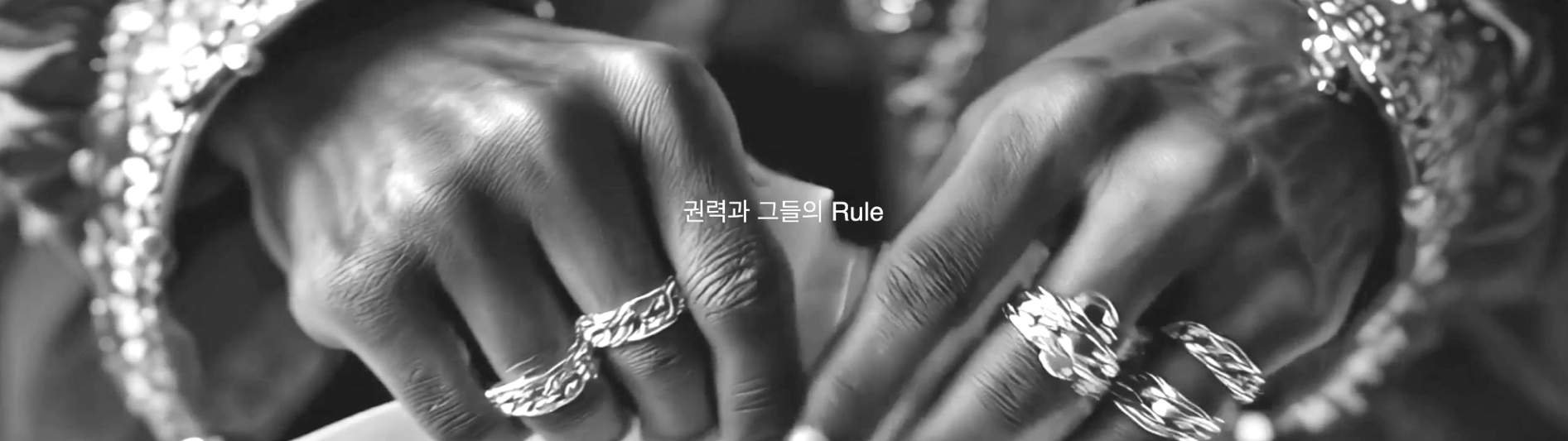
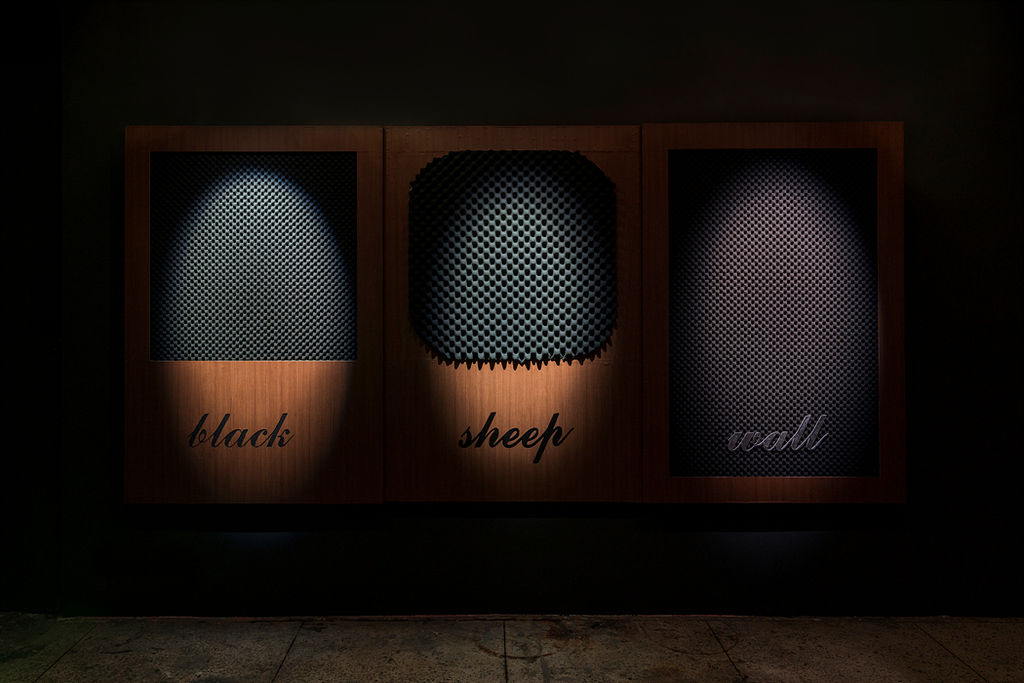
Ahn Kwanghwee, Black Sheep Wall, 2019, Mixed media, each 162x112cm (3 pieces). Installation view of 《Noise Cancelling》 (Project Space Sarubia, 2019) © Project Space Sarubia

The development of printing technology expanded the range of information, and the development of computers and the internet shortened the process through which images circulate. Whether or not we recognize it, the process of image circulation has become clearly lighter and easier than before. Even in the moments when we think we are not looking, humans are exposed to images and constantly give and receive influence.

In a world where anyone can become an expert, and where countless images and information pour out with nothing more than moving one’s fingers while sitting down, what should we look at, and for what should we make work? Ahn Kwanghwee’s work actively uses digital media, but the process of unfolding and giving form to a narrative is not greatly different from the process by which an image is transferred onto a canvas.

On the screen presented by the artist, multiple layers move back and forth between one another as if choreographed. Hip-hop music that directly delivers the narrative unfolds, and the video that fills the screen along with the lyrics has an ambiguous existence on its own, yet faithfully performs the role of a background that adds movement to the text.

Unlike lyrics(text), whose intentions are clear, the images spread across the screen are things one has unknowingly recognized because they once passed by at some point. Even unrelated landscapes encountered while walking down the street enter my life and become mental images simply because I saw them.

The scenes unfolding in the artist’s video—except for sketches that appear provocatively—are entangled with memes2 derived from popular culture such as internet games, or with improvised scenes such as selfies and videos taken inside a car constantly heading somewhere.

Familiar pictures and scenes flow calmly across the screen as if they had always been that way, despite having been transformed and processed somewhere, and the artist calmly unfolds his own narrative between such intersecting scenes. As if resisting time that flows regardless of his will.

Noise Cancelling occupies Sarubia Dabang as the site of a Block Party3. The block party is the starting point of hip-hop, and it is also a culture that clearly reveals the genre’s inherent collective sensibility, in which creation arises naturally from what is given in one’s environment rather than by conforming to a fixed format.

As discussed earlier, hip-hop has a strong communal character and attributes credit for the outcome to one another, while an exhibition is also made through the participation of many people, though their labor is rarely fully revealed.

The artist proposes hip-hop as a cheerful alternative that highlights the parts that have remained unseen and overturns the existing system, and by unfolding a block party, a community party, within the art exhibition space, he attempts to create a space that can be enjoyed by both the people who made the exhibition and the viewers who complete its finale.

Moon Soyoung|Assistant Curator, Sarubia Dabang


1.Poetics(詩論) and current affairs commentary(時論)
2.Meme: A cultural element acquired or revealed through the imitation of famous figures, mass media, ideas, and so on. It also refers to content that becomes popular on the internet. It is often produced to satirize a specific person or event, or becomes an image with its own vitality after leaving the context of the original.
3.Block Party: Usually refers to an event held by local residents who gather together. The term “block” originated from the format of an event held by blocking roads or buildings.
↳The block parties of the South Bronx: In 1970, the South Bronx in New York was a deteriorated, high-crime area where drugs, gangs, and arson frequently occurred due to the failure of urban redevelopment plans. Frequent arson devastated the area, and people lost places to go and were left wandering. Those who stayed in the Bronx were mainly migrants from Africa and South America, and they tried to forget the pain of life by dancing to Funk, disco, and music from their homelands, which were mainstream at the time. The block parties of the South Bronx became the foundation of hip-hop. The first hip-hop party is known as the “Back to School Jam,” held by siblings Cindy Campbell and Clive Campbell, a.k.a. DJ Kool Herc. At his younger sister’s birthday party, Kool Herc demonstrated a technique of using two turntables alternately so that the music would not stop. The reason he used two turntables was to continuously play the break section, which was good for dancing. From this, break dance and b-boys emerged, and MCs, whose role was to energize the atmosphere, appeared, becoming the origin of rap.

References