Hana Yoo (b. 1987) has developed a practice grounded in video and installation, focusing on othered subjects, their entangled political contexts, and states of psychological fragmentation. She visually investigates the instability arising from contemporary polarization and processes it through experimental narratives that parody reality, thereby probing and subverting the psycho-political landscape.


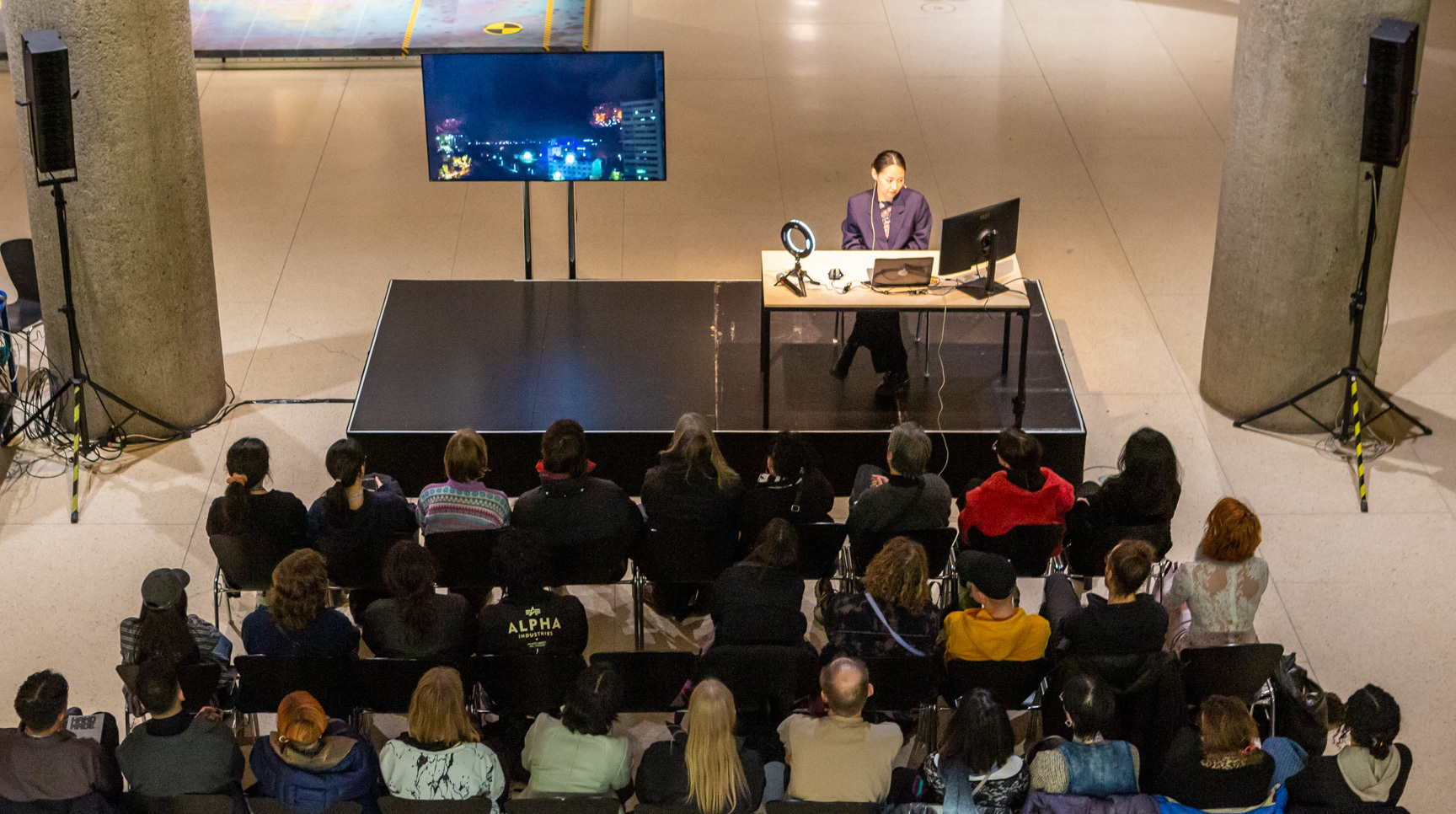
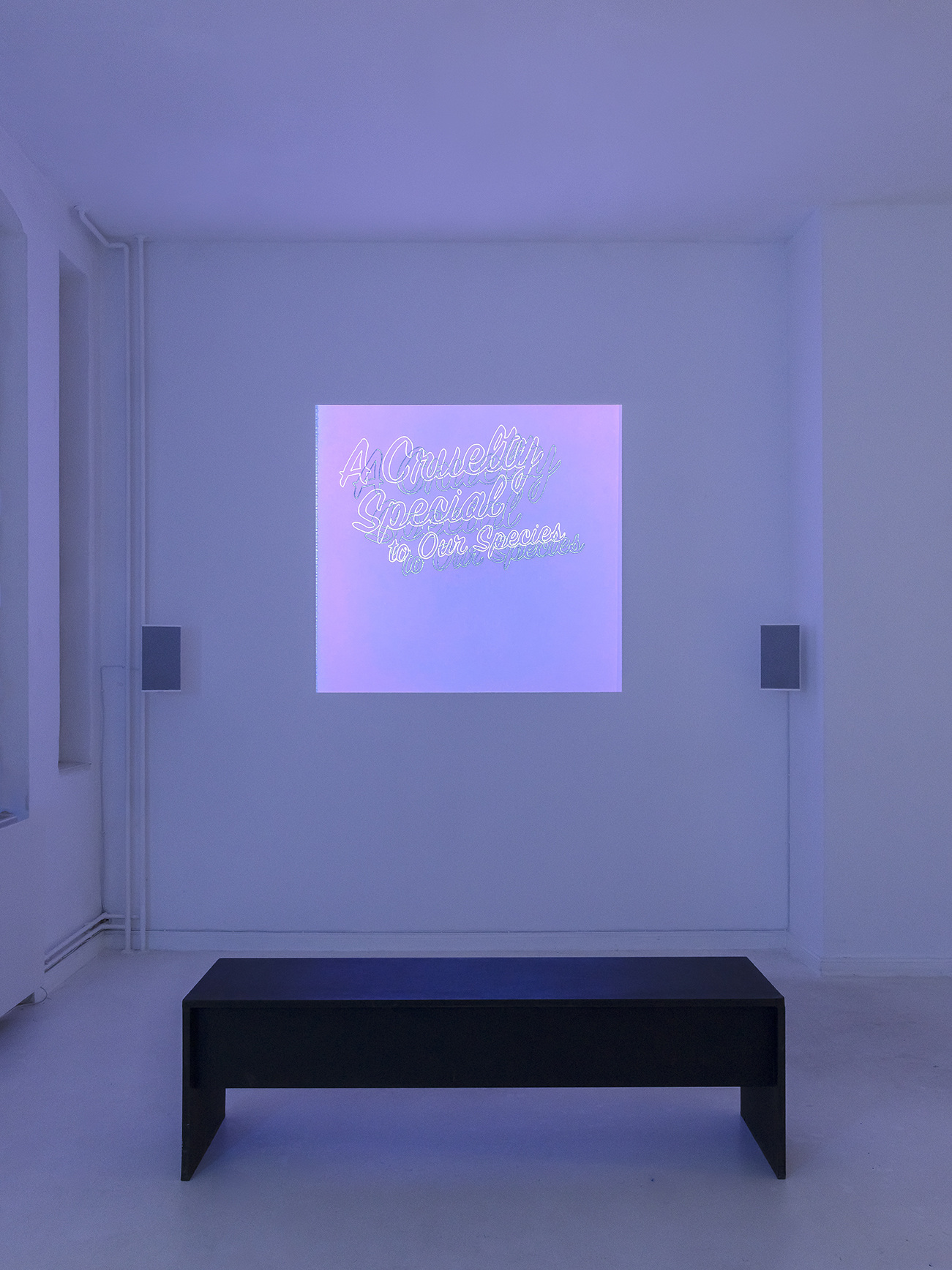
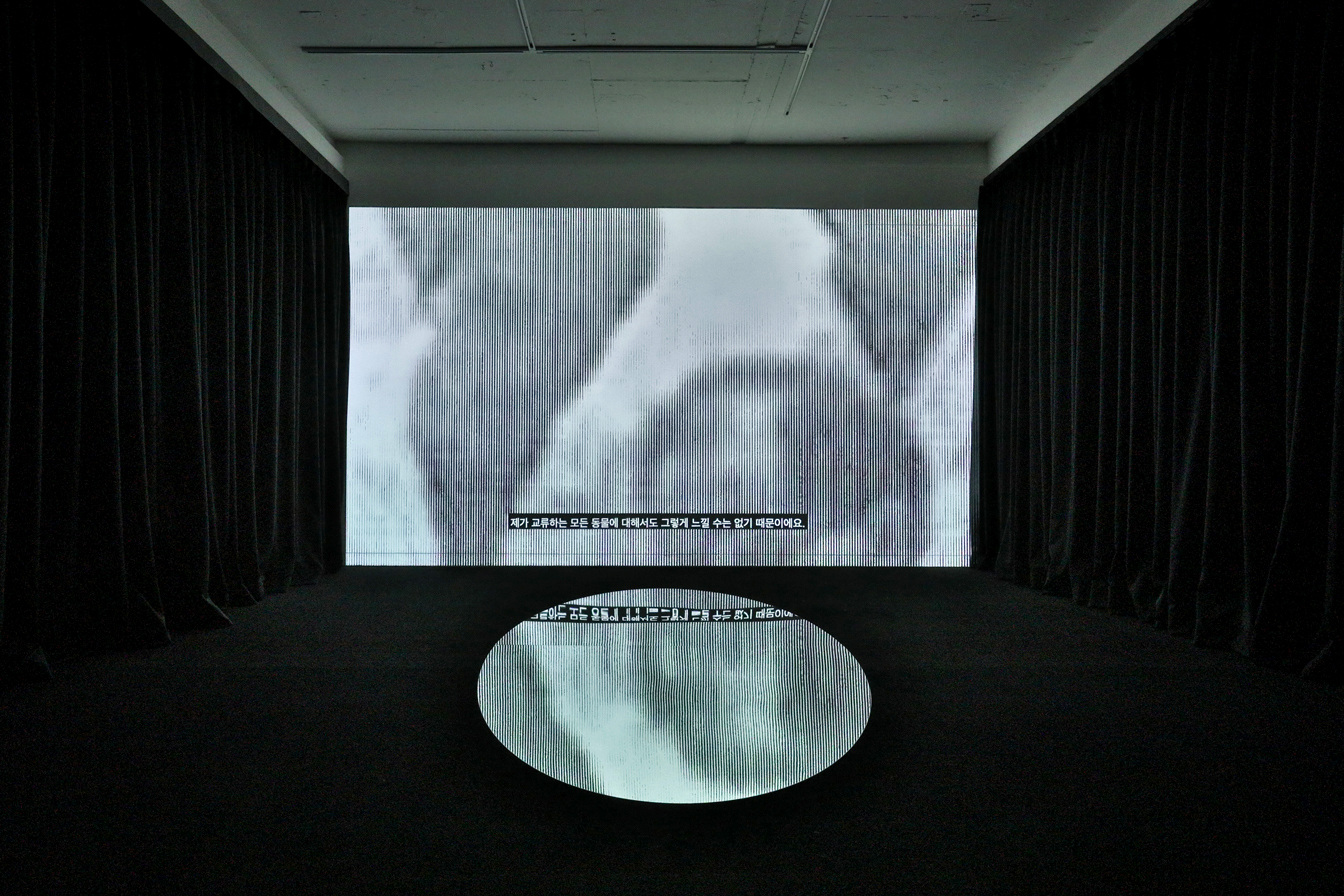
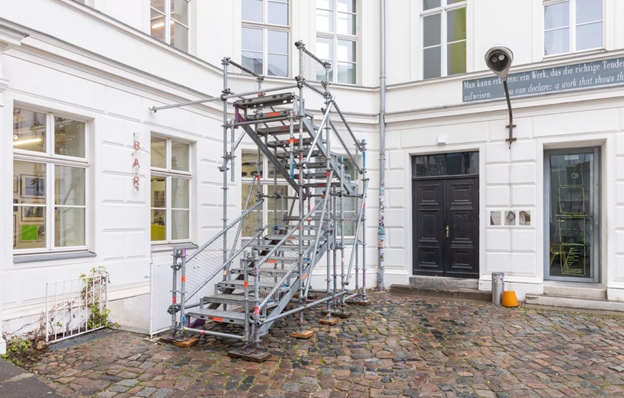
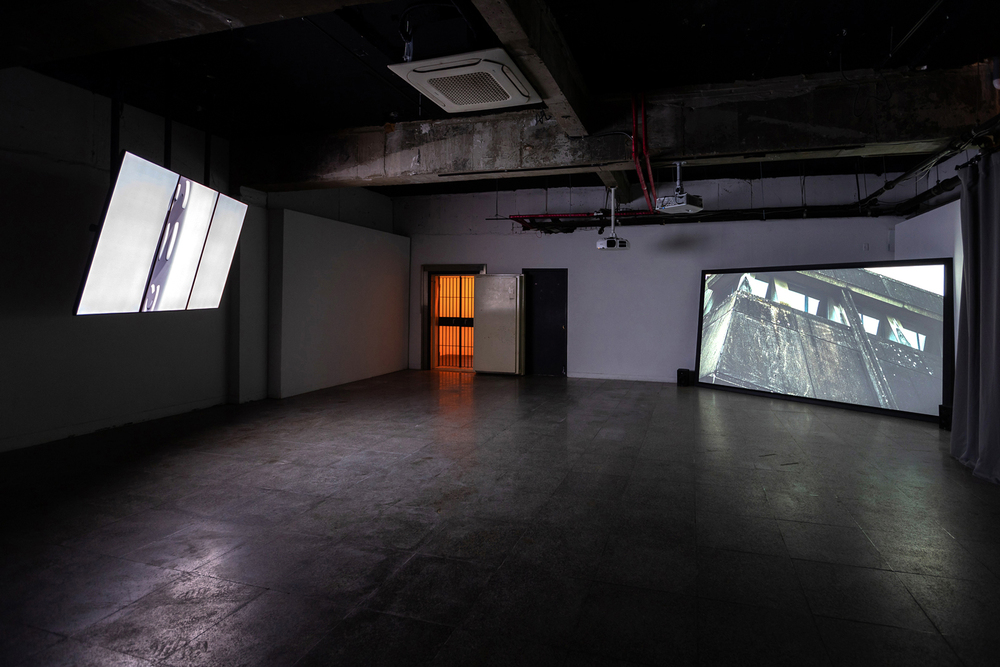
Installation view of 《Strange Things》 (Silent Green, 2020) © Hana Yoo

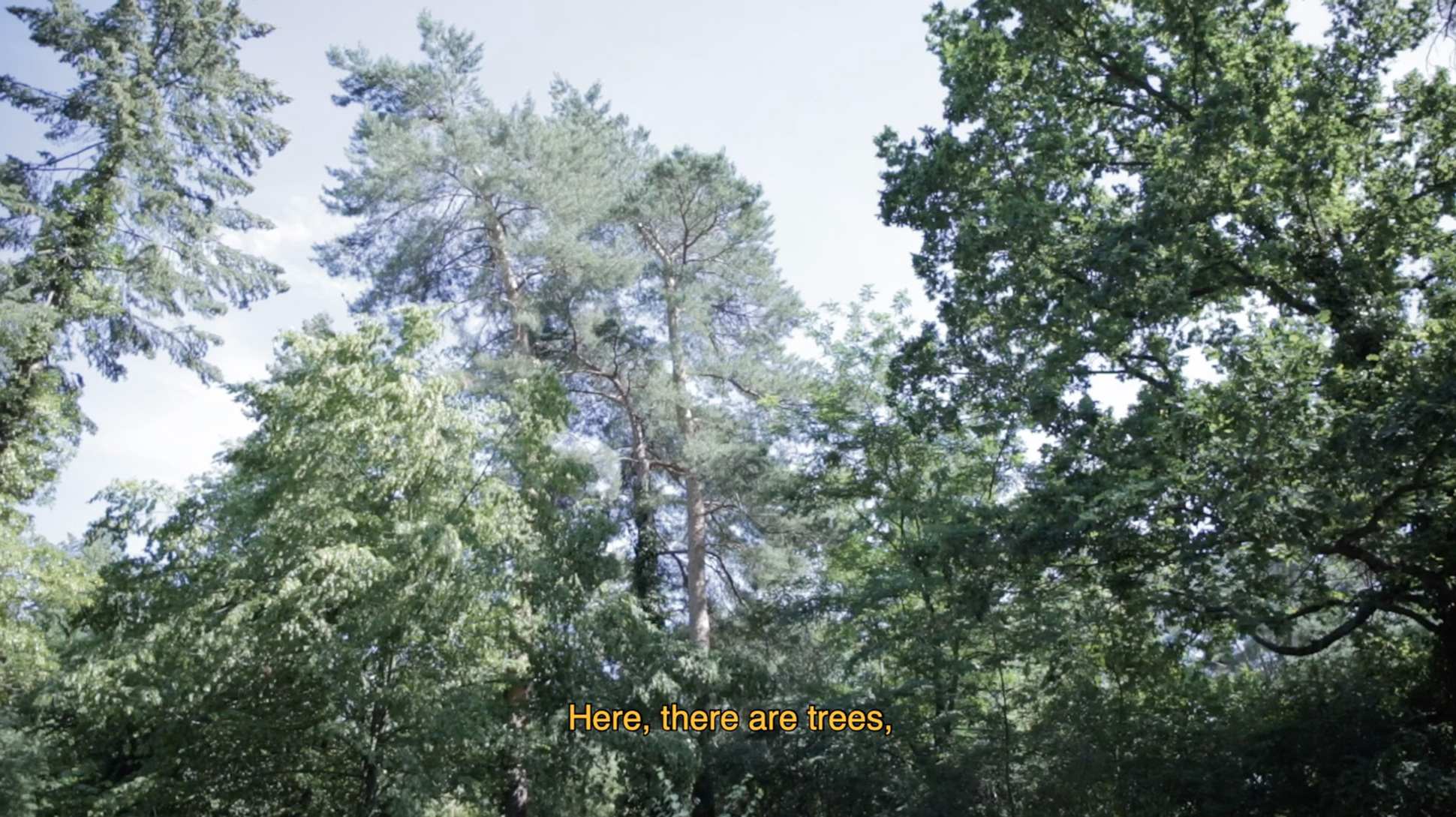
Hana Yoo’s work begins with a critical reflection on how humans perceive and make sense of the world. She focuses on the constructed nature and inherent dualities of human-made symbols, concepts, and anthropocentric systems of classification, paying particular attention to the points at which these boundaries collapse or are subverted.

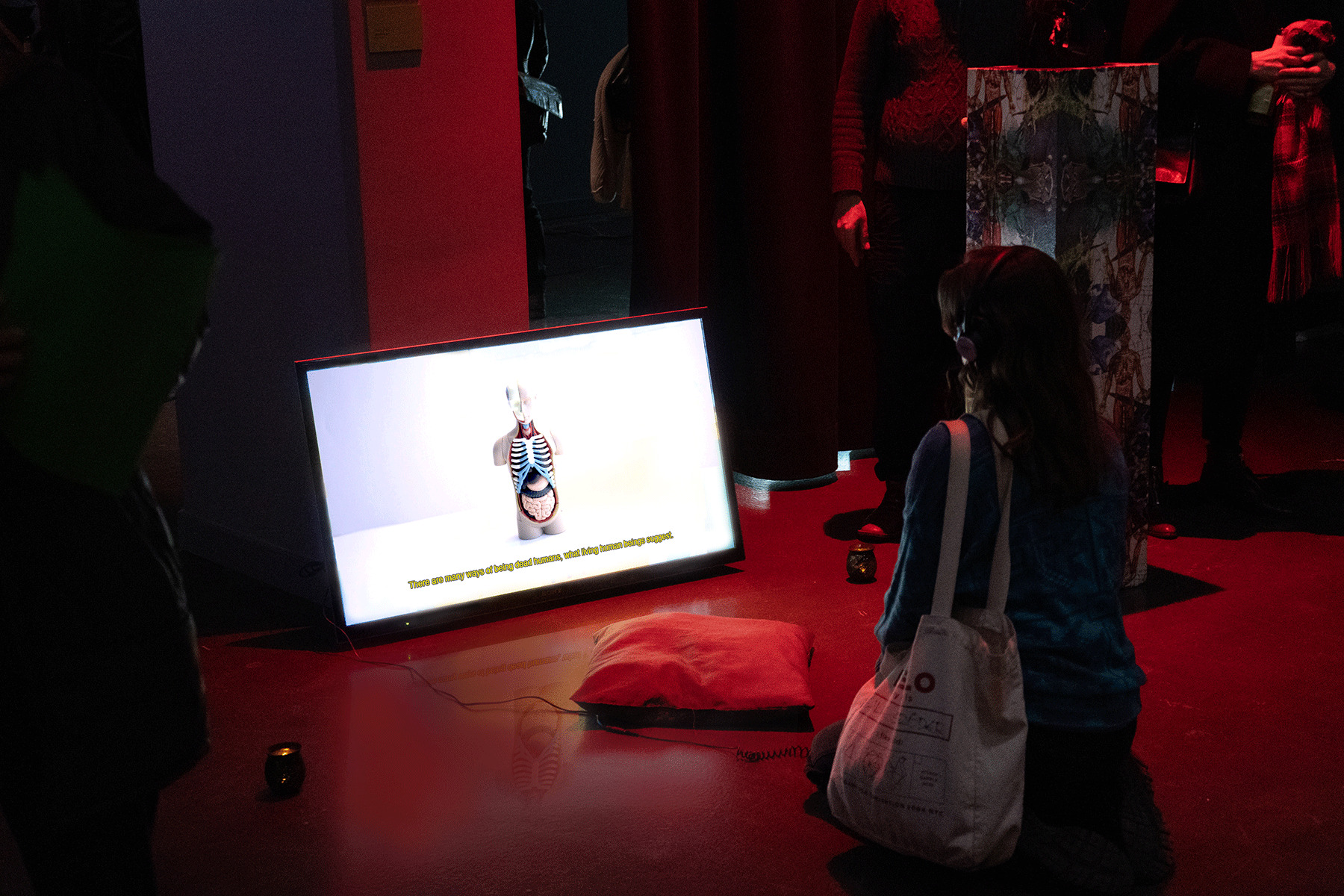
Hana Yoo, Anthropology of Dead Body, Single-channel HD video, color, stereo, 10min 30sec. © Hana Yoo

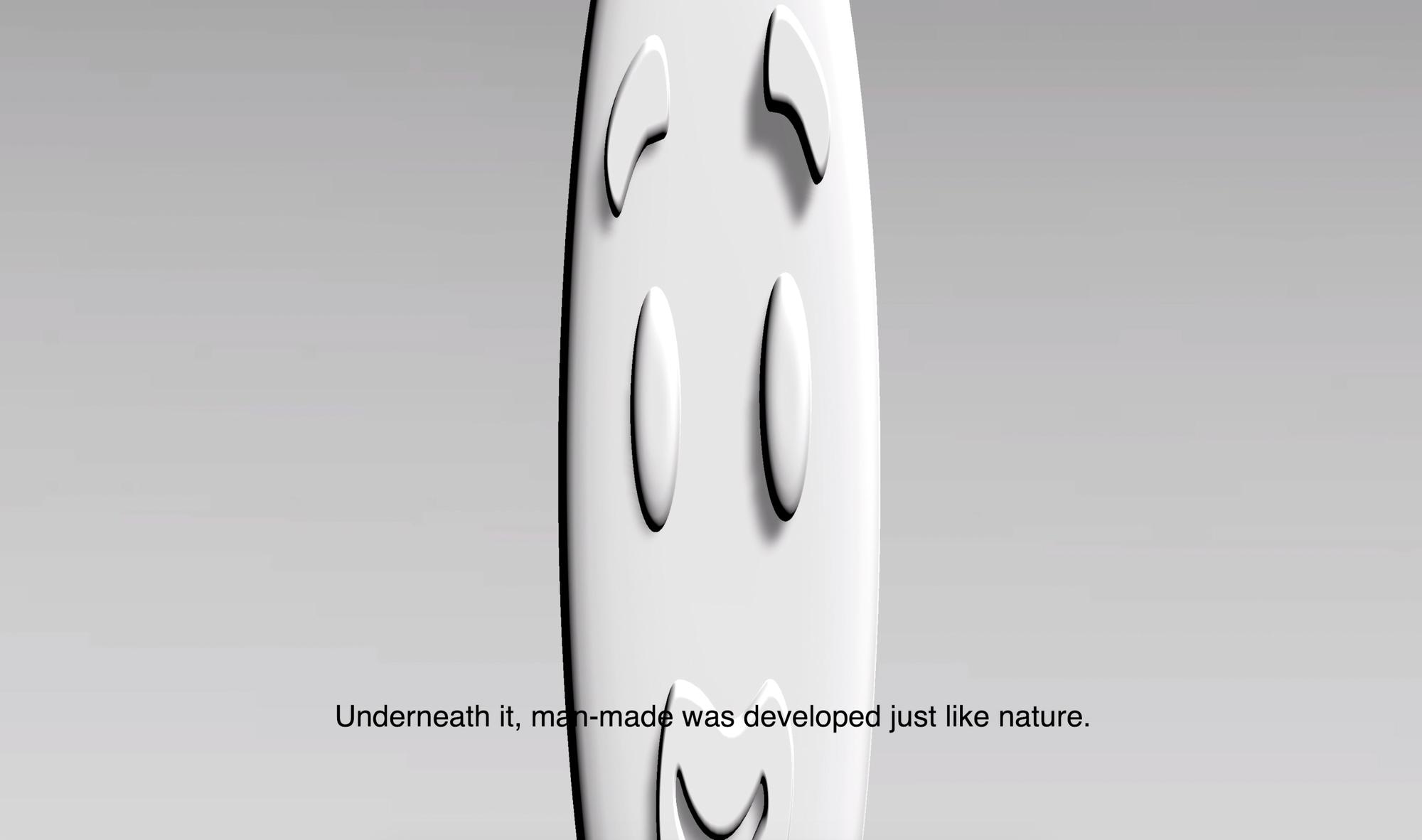
For instance, her 2019 video work Anthropology of Dead Body employs the symbolic concept of the “corpse”—positioned between human and non-human, material and immaterial, the valued and the discarded—to examine the hierarchies and forms of discrimination embedded within rigidly classified boundaries and polarized categories.
 
While the video addresses a rather serious subject, its narration adopts an extreme simplicity and naivety, carrying out a ruthless categorization that paradoxically foregrounds the need to expose and reconsider the relationships that lie in between.


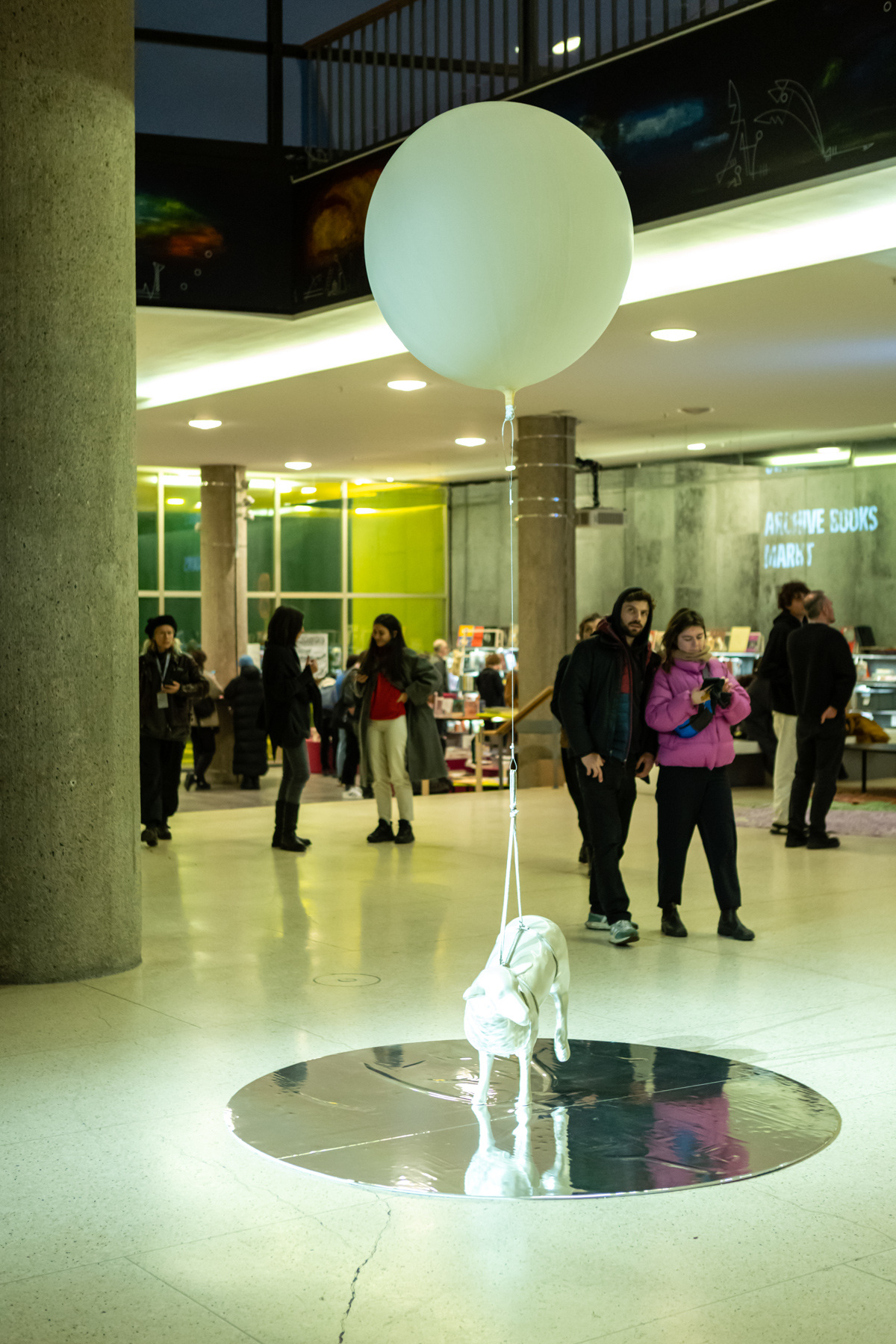
Installation view of 《Hysteric C》 (Diskurs Berlin, 2020) © Hana Yoo

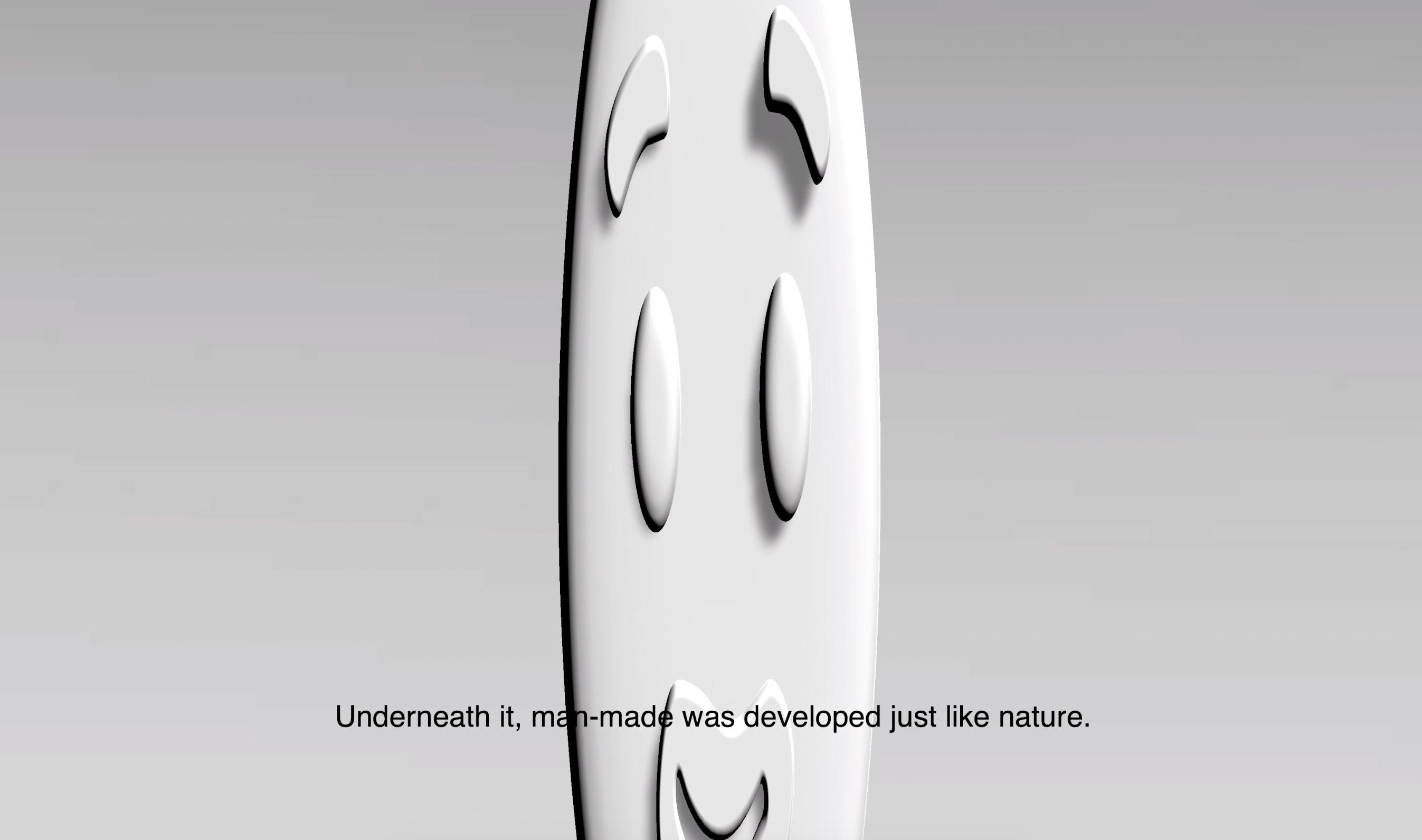
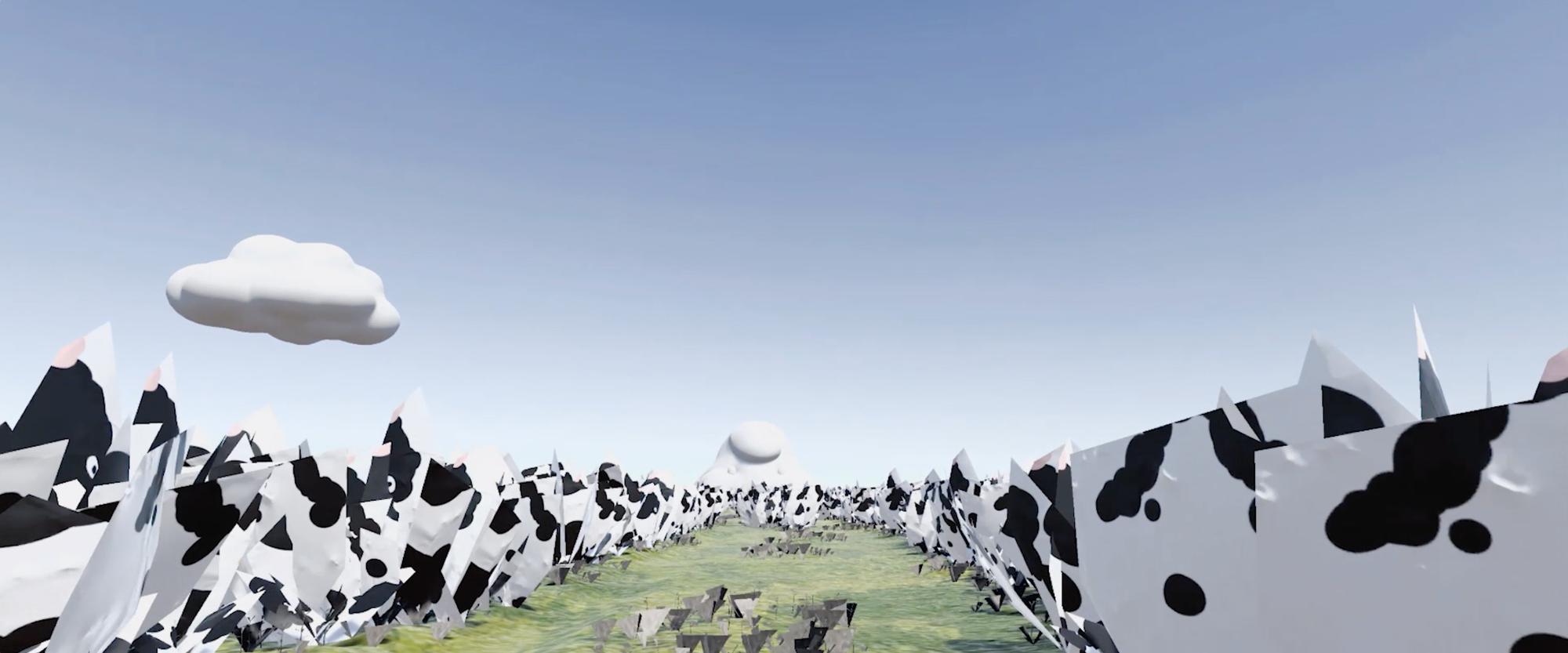
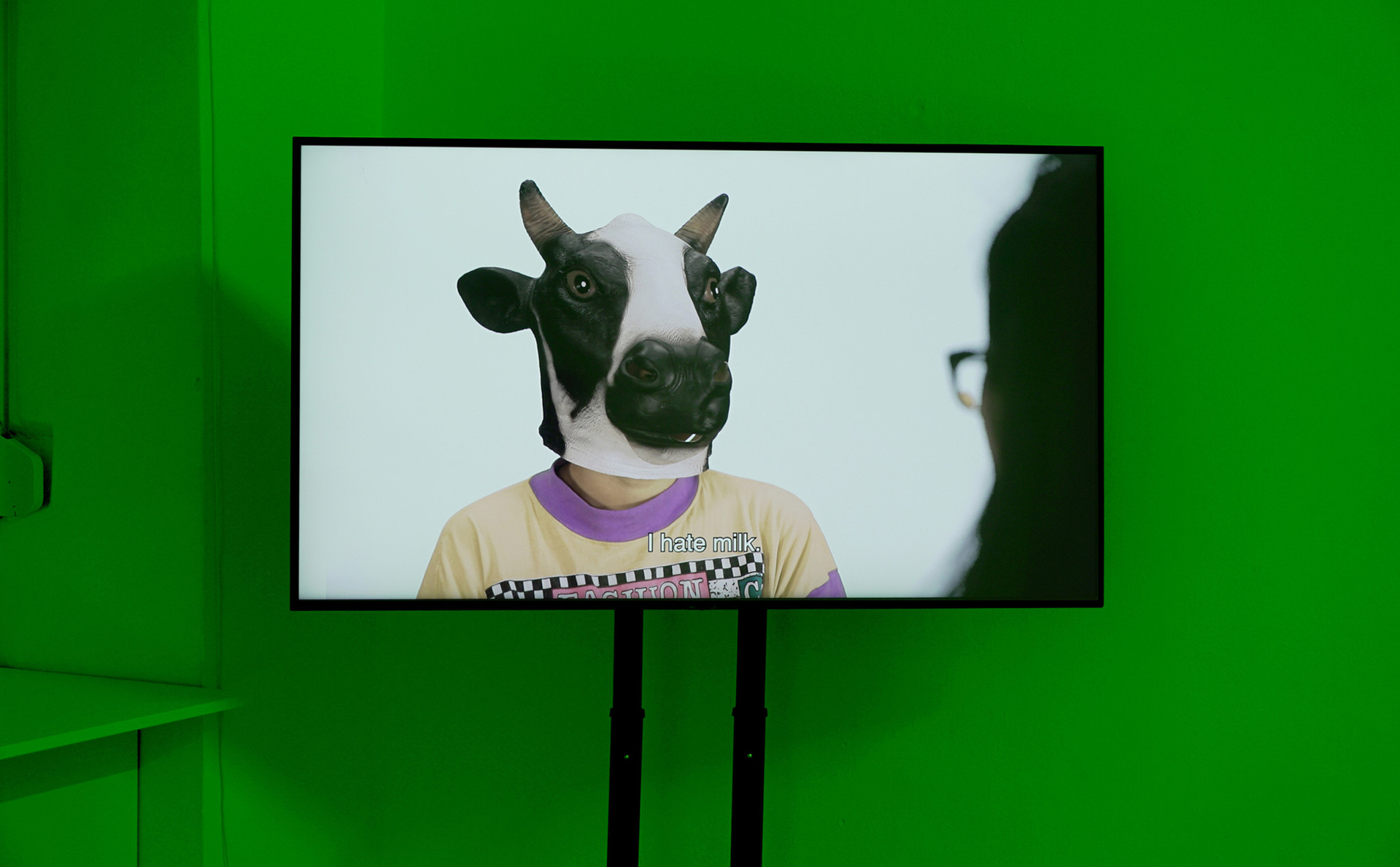
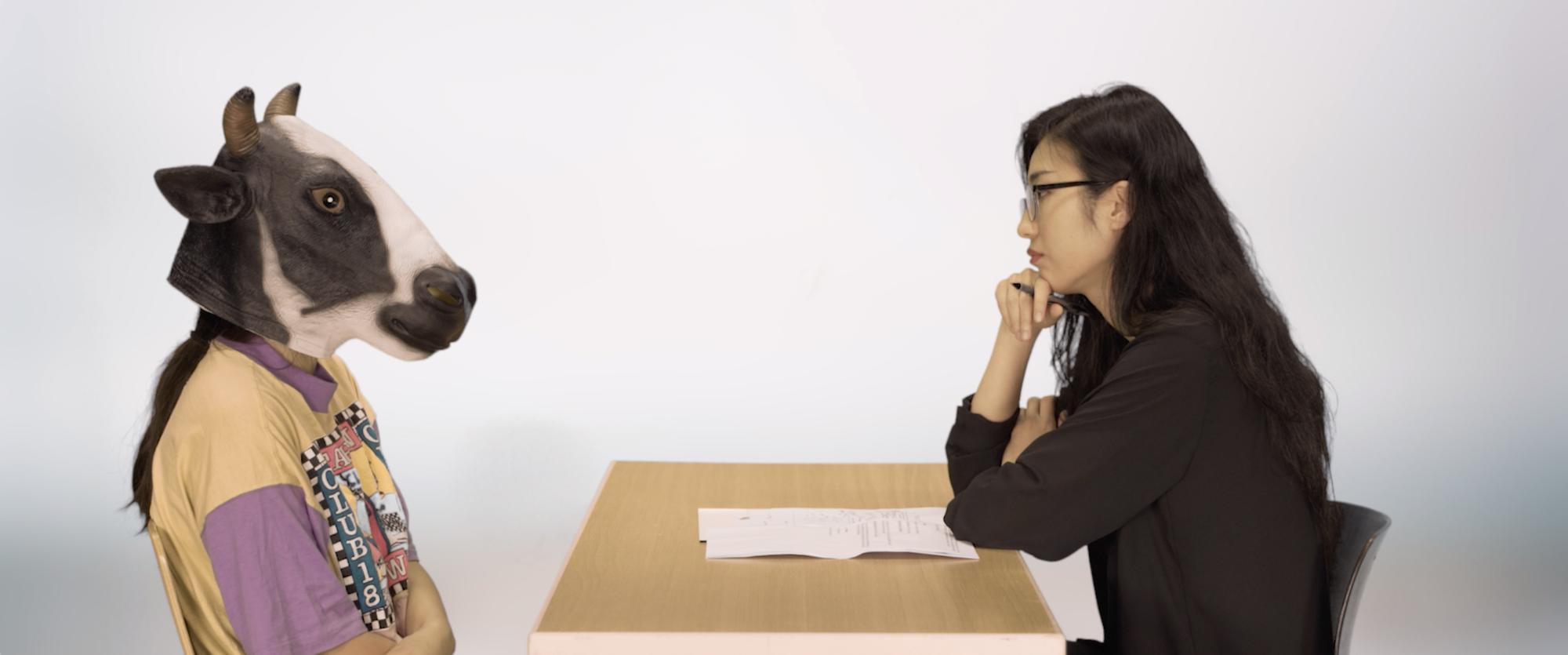
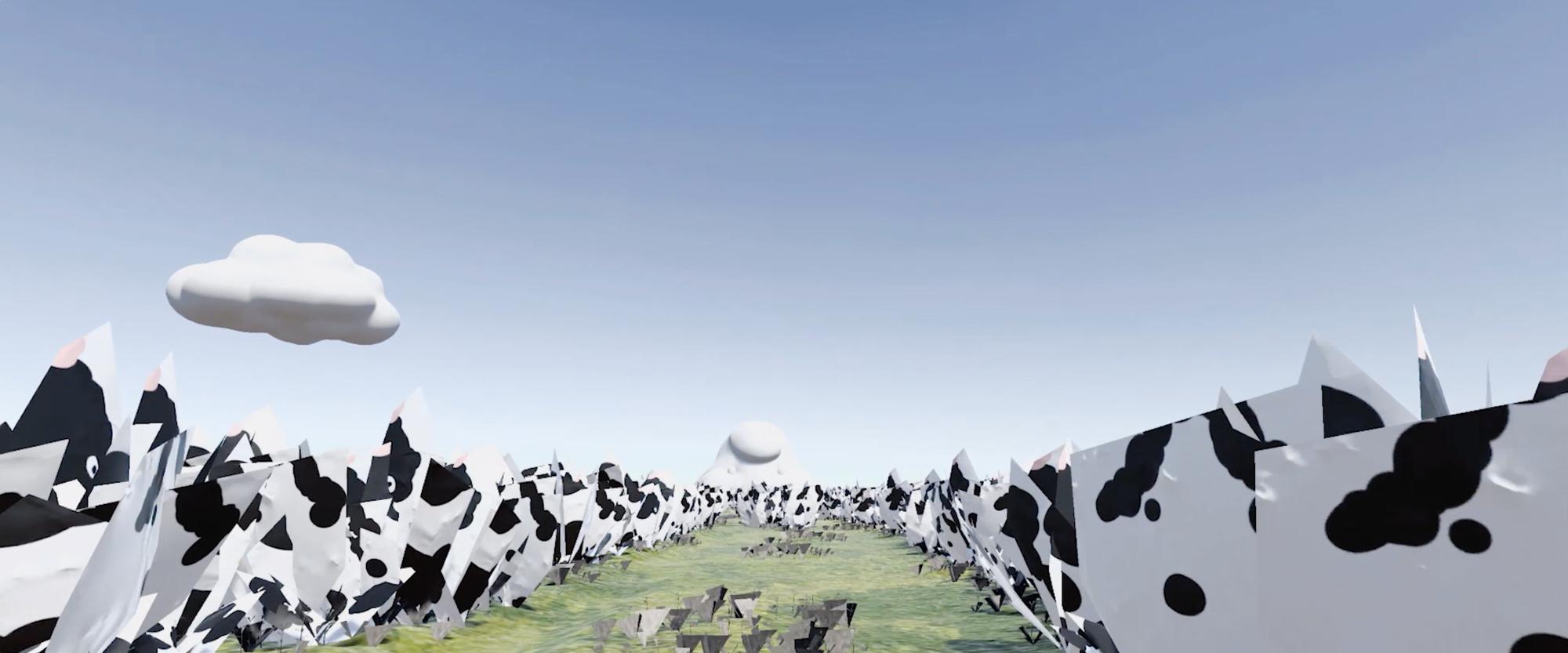
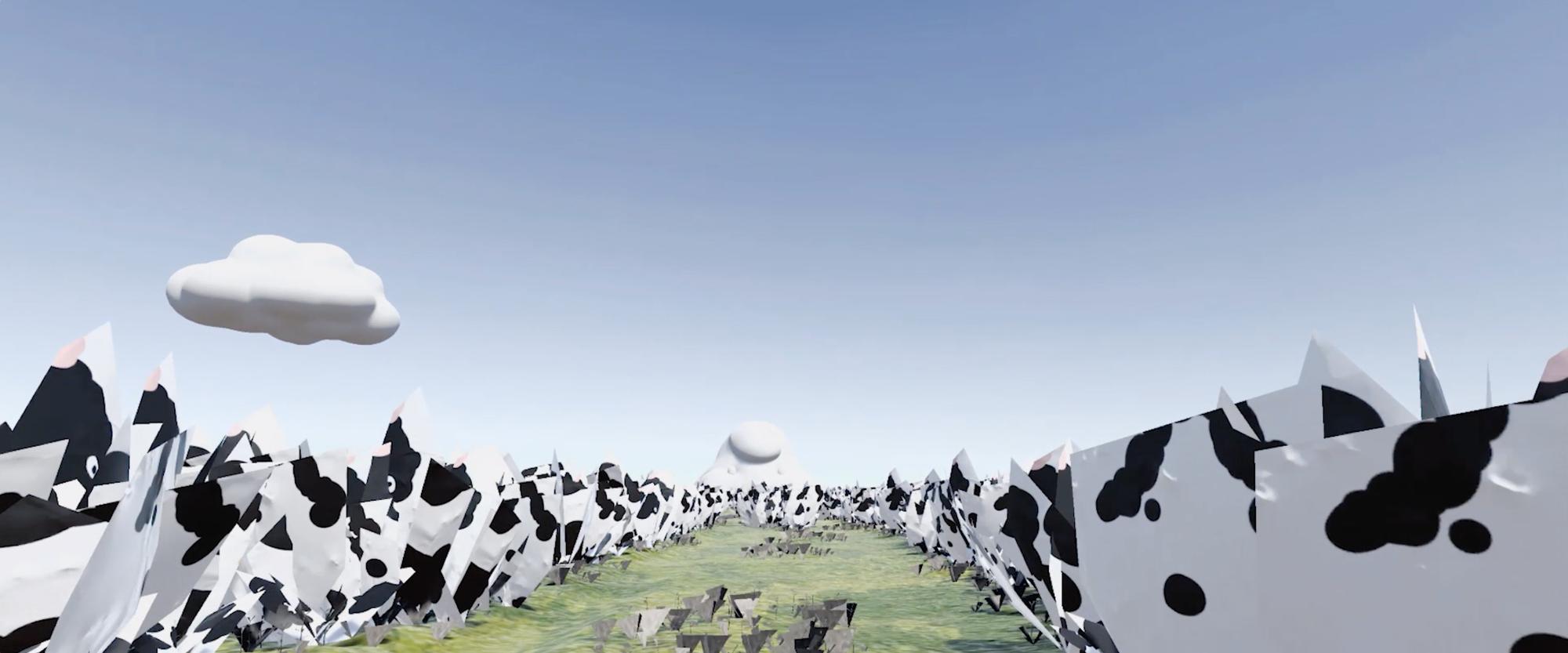
Meanwhile, her 2020 video work Splendour in the Grass begins with a news article from the Ministry of Agriculture and Food of Russia describing a scientific experiment in which customized virtual reality (VR) headsets were developed for dairy cows to display images of lush green pastures.
 
The article suggests that presenting such virtual imagery reduces the cows’ anxiety and ultimately leads to increased milk production. Building on this premise, Hana Yoo reconstructs the relationship between the cows and the scientists within the experiment as a speculative narrative.


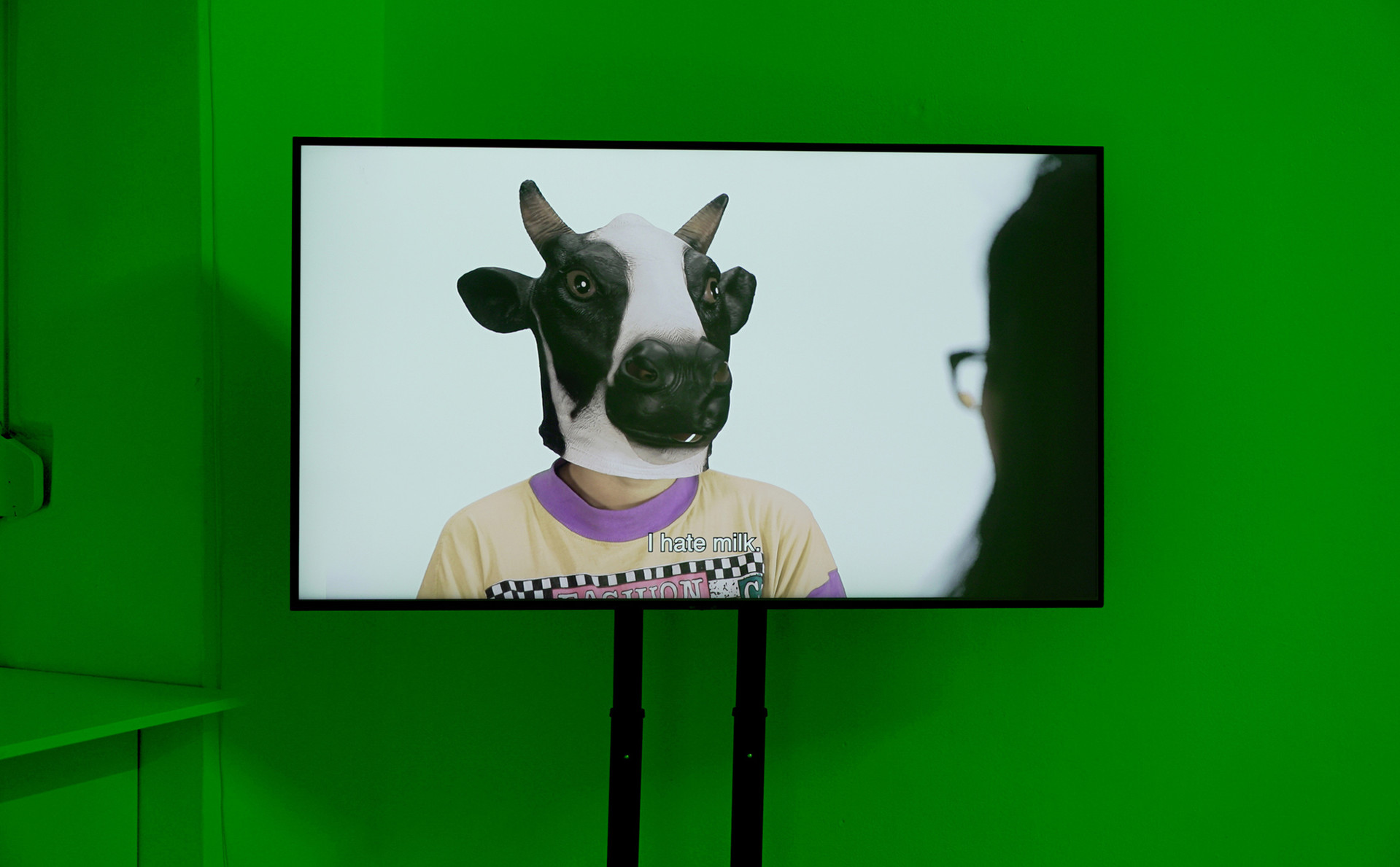
Hana Yoo, Splendour in the Grass, 2020, Single-channel video, 4K, color, stereo, 17min 17sec. © Hana Yoo

Cow takes experimental psychotherapy with Mary, assumably the psychiatrist, who gave a prescription to cow the virtual reality treatment. During the session, the cow goes through her memory trip and illusive experience, which at the end, blur the identity of the cow herself, whether she is an animal or human, subject or object in the treatment.
 
The figure of the cow positioned at this threshold, in turn, invites us to project ourselves onto it. As climate change, food systems, pandemics, conflict, migration, and technological issues intensify our interconnectivity, all humans are increasingly becoming subject to the same nature–culture system.


Hana Yoo, Splendour in the Grass, 2020, Single-channel video, 4K, color, stereo, 17min 17sec. © Hana Yoo

Art critic and New York University professor Martha Schwendener writes in her essay on this work that “subject-object relations between humans and cows – using technology as an interface or apparatus of control – is mirrored in the way other humans treat other humans.”
 
She further notes that “the images presented to Russian cows to assuage their anxiety and coax them to produce milk is analogous to Vilém Flusser’s “universe of technical images” in which mass media turn consumers into laborers who produce increasingly more data.”
 
In this sense, Hana Yoo’s work points to how systems designed under contemporary anthropocentrism operate not only as mechanisms of exploitation directed at nonhuman entities, but also as structures that turn inward upon humans themselves.


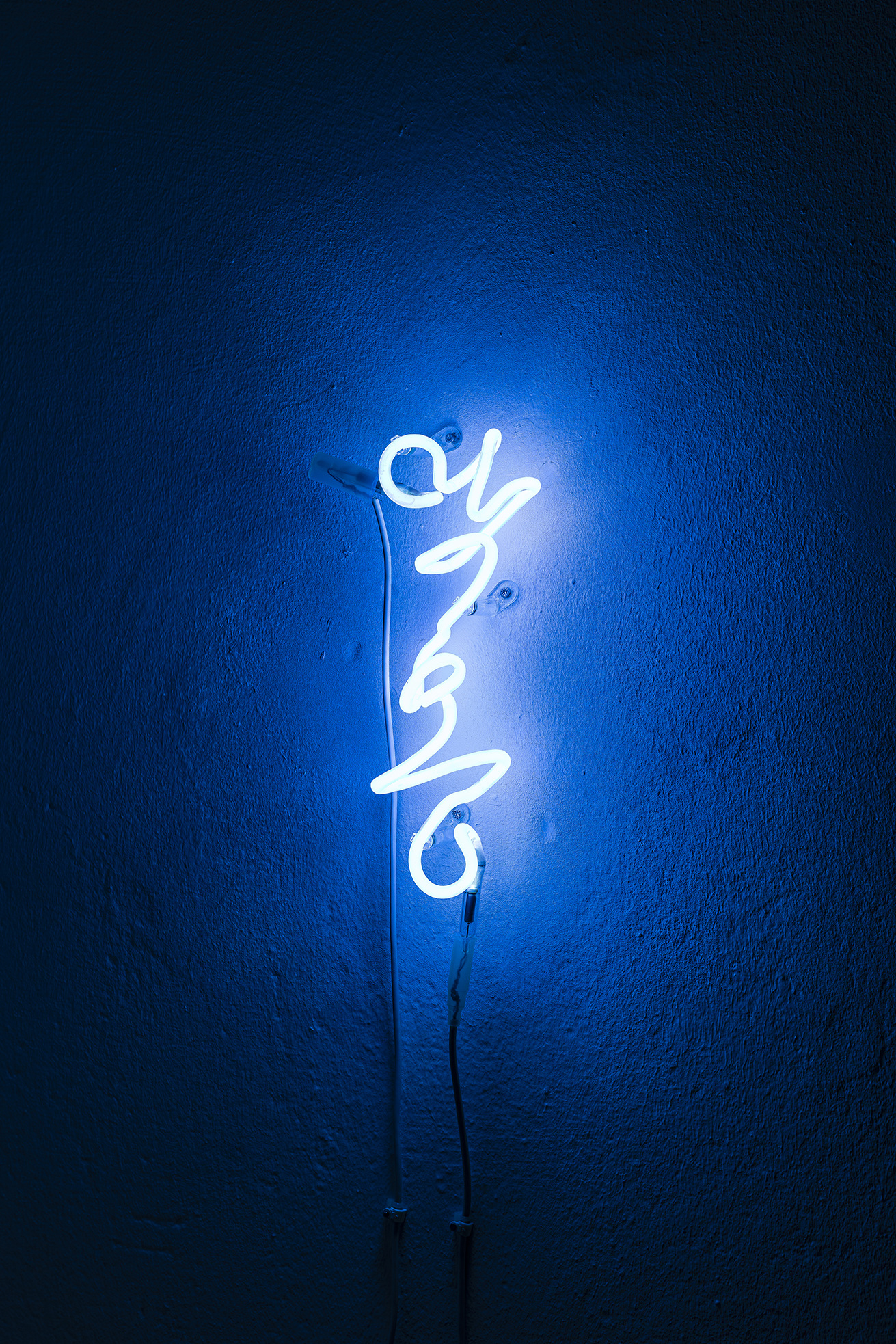
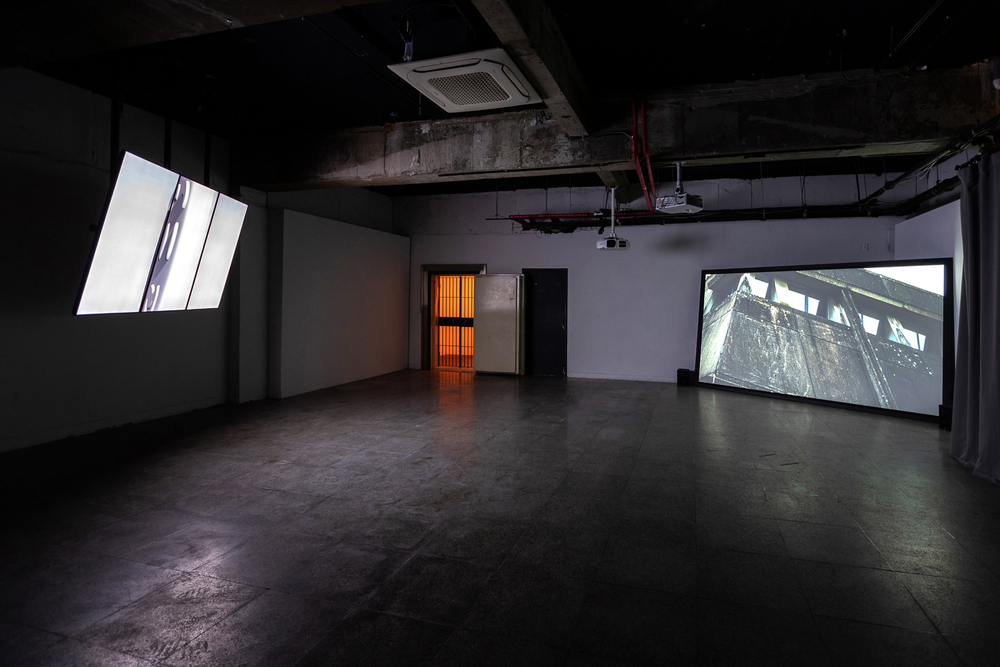
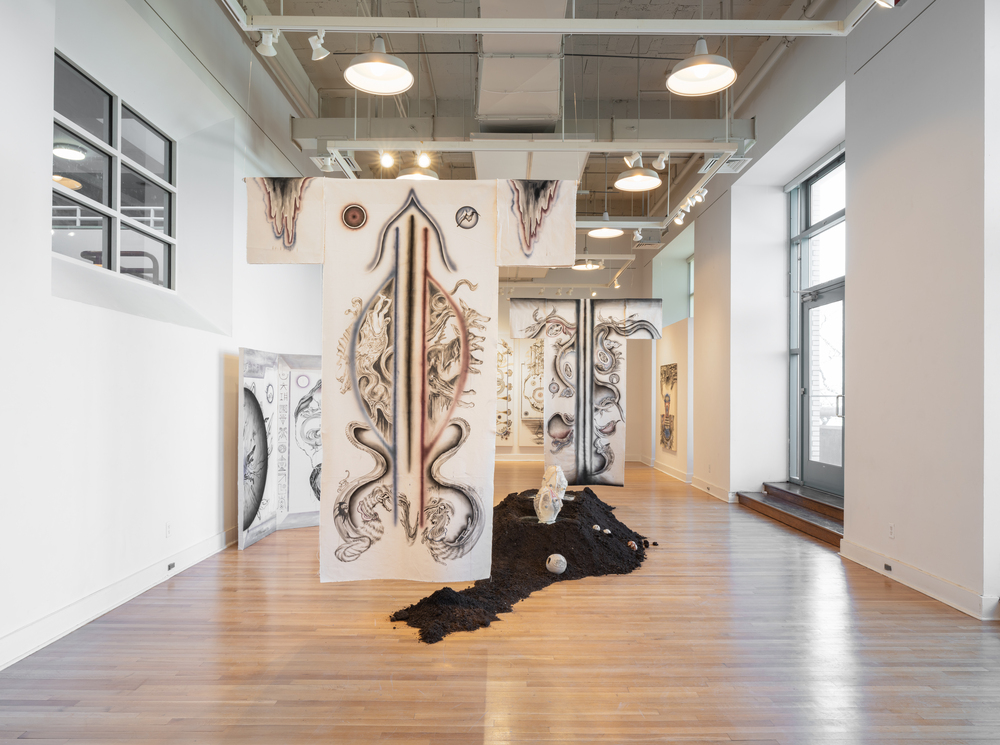
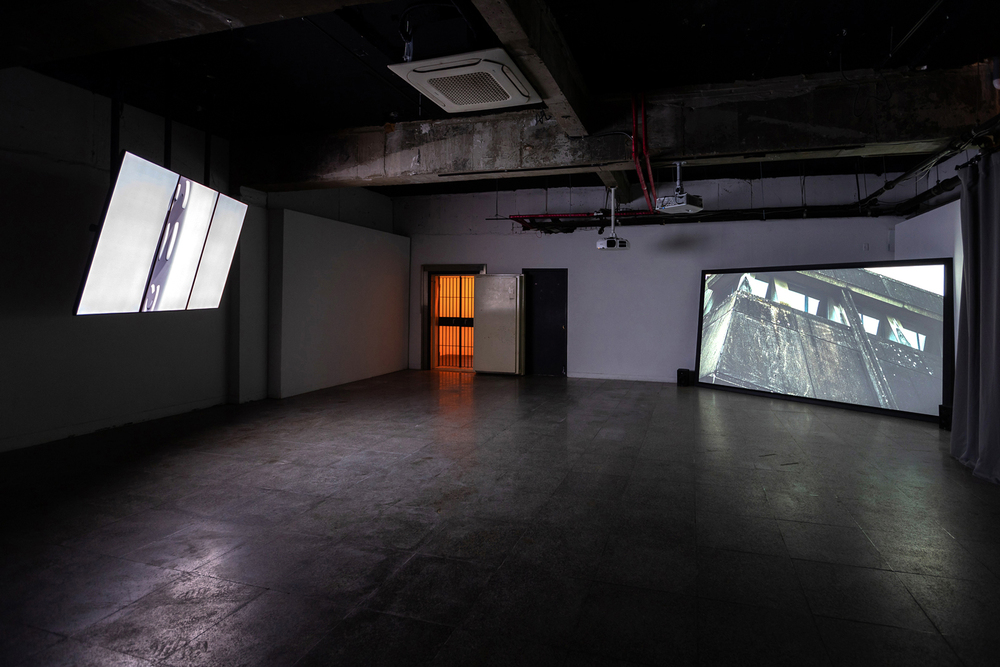
Installation view of 《Chambers》 (Post Territory Ujeongguk, 2021). Photo: Byeonggon Shin. © Hana Yoo

In her solo exhibition 《Chambers》 (Post Territory Ujeongguk, 2021), which extends this line of inquiry, Hana Yoo presented a series of works that visualize points of rupture where the boundaries between human and nonhuman life, and broader ecological systems, begin to fracture. The exhibition unfolded as an exploration of the semantic expansiveness of the term “chambers,” a word that inherently implies dualities and thresholds—of inside and outside.


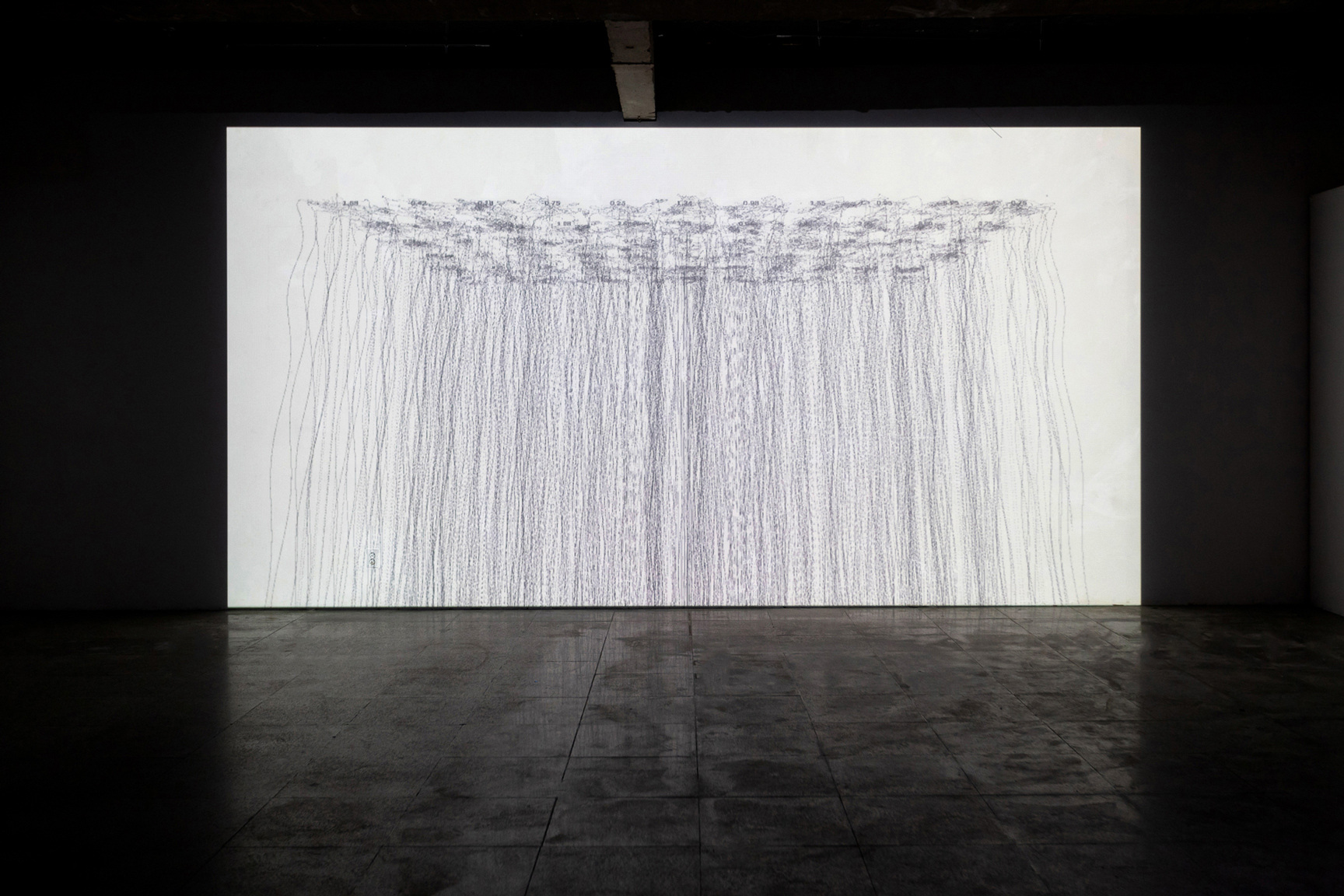
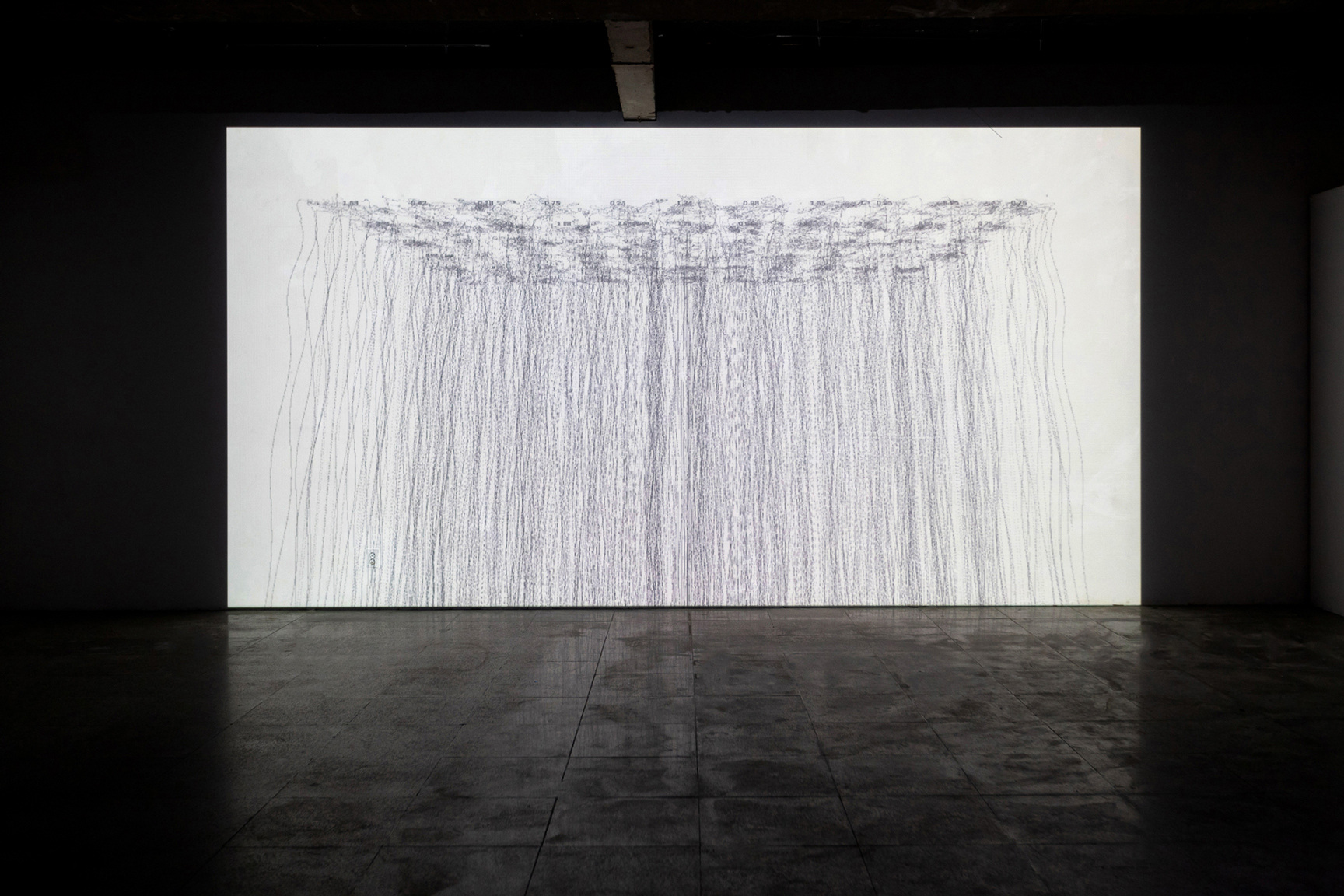
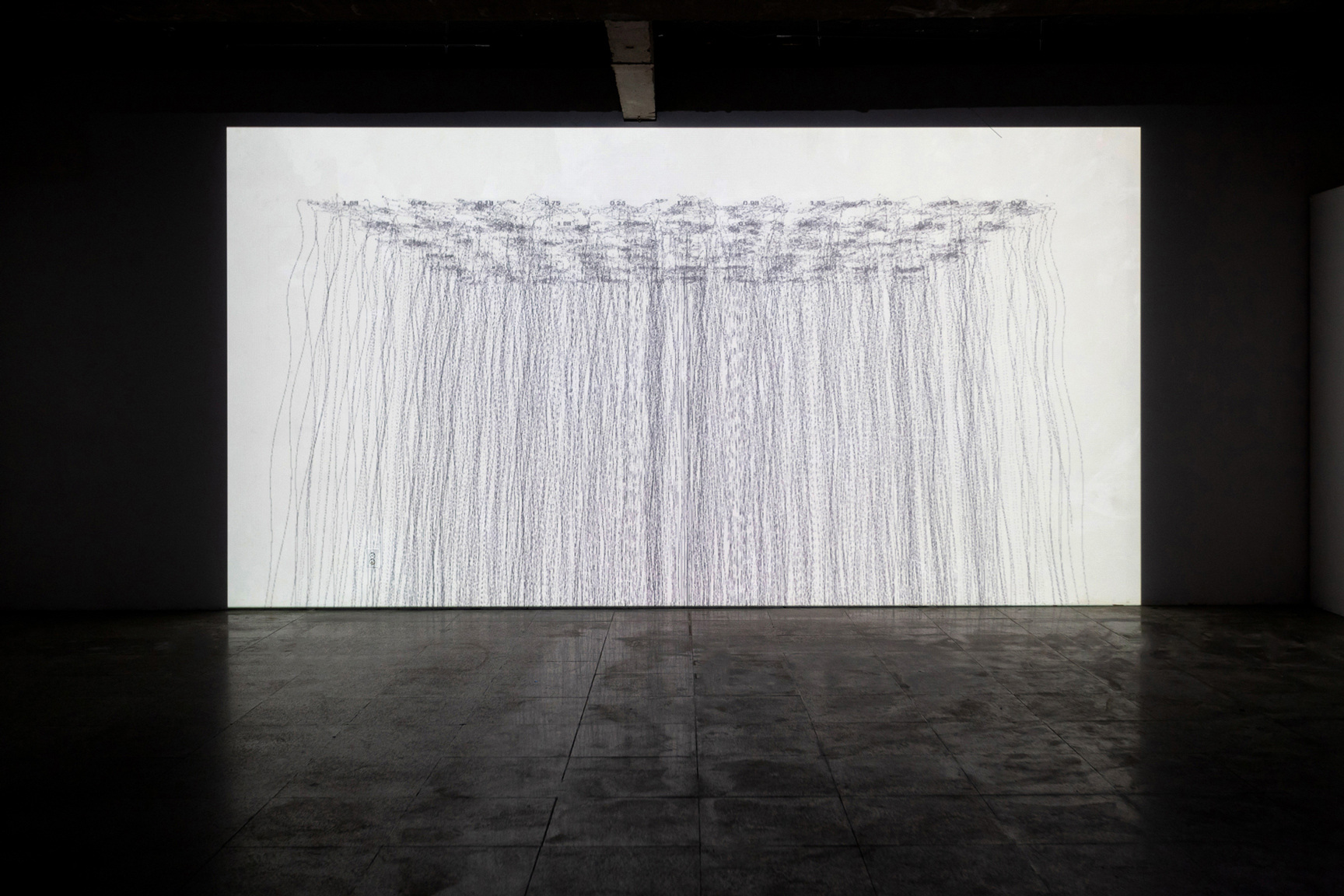
Hana Yoo, The Fall, 2021, Machine learning generated moving image, unity, non-stop playing. Installation view of 《Chambers》 (Post Territory Ujeongguk, 2021). Photo: Byeonggon Shin. © Hana Yoo

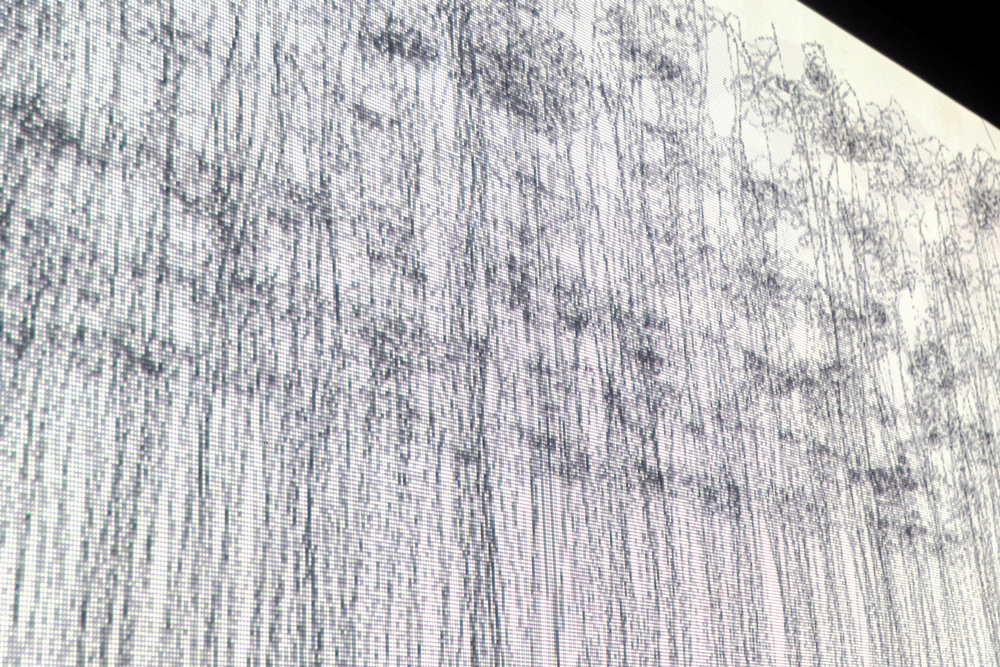
First, the video work The Fall (2021) presents an overhead view of 3D game rats trained through machine learning algorithms as they perform a specific task. Hana Yoo places 132 rats into 66 chambers, two in each, and assigns the trained experimental subjects the task of finding a cookie and delivering it to another rat.
 
Not all of the rats successfully complete the task. Some wander in search of the cookie and end up leaving the designated chamber. However, this departure is not merely a failure; exiting the assigned area leads to a critical condition tied directly to survival, where a fall from an immense height awaits.


Hana Yoo, The Fall (detail), 2021, Machine learning generated moving image, unity, non-stop playing. Installation view of 《Chambers》 (Post Territory Ujeongguk, 2021). Photo: Byeonggon Shin. © Hana Yoo

The fallen rats are summoned back to their original area after a certain period of time, and this process continues to repeat for as long as the program runs. The situation in which these virtual experimental animals are repeatedly placed at the threshold between life and death is projected onto one wall of the exhibition space, unfolding as a kind of digital spectacle.
 
Here, the black lines that dominate the screen are generated by the movements of the algorithmic agents—the rats—and visualize their behavioral patterns.


Hana Yoo, Arbitrary Radius Circle, 2021, 3-channel video, HD, color, stereo, 9min. © Hana Yoo

The rat—an animal that has coexisted with humanity for a long time—emerges as a central motif running through most of the works in the exhibition, including The Fall.
 
For instance, Arbitrary Radius Circle (2021), whose title is drawn from Yi Sang’s novel Abnormal Reversible Reaction (1931), references a passage from a Korean folktale about a rat’s transformation, in which a rat consumes a person’s carelessly discarded fingernails and toenails and transforms into that individual. Meanwhile, Bare Life (2021) features images of urban rats—regarded as unclean and subject to eradication—alongside white and black laboratory mice commonly used in animal testing.


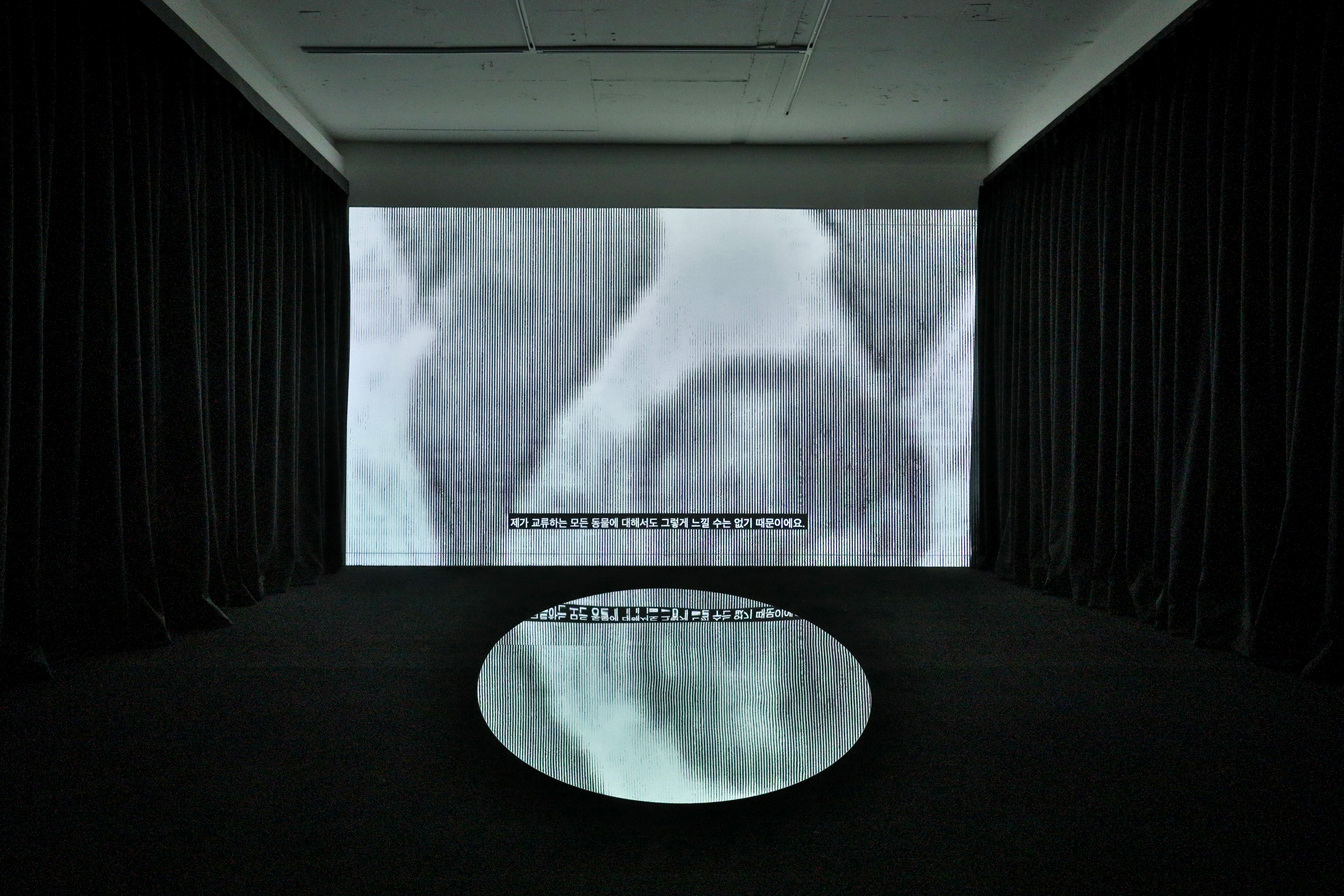
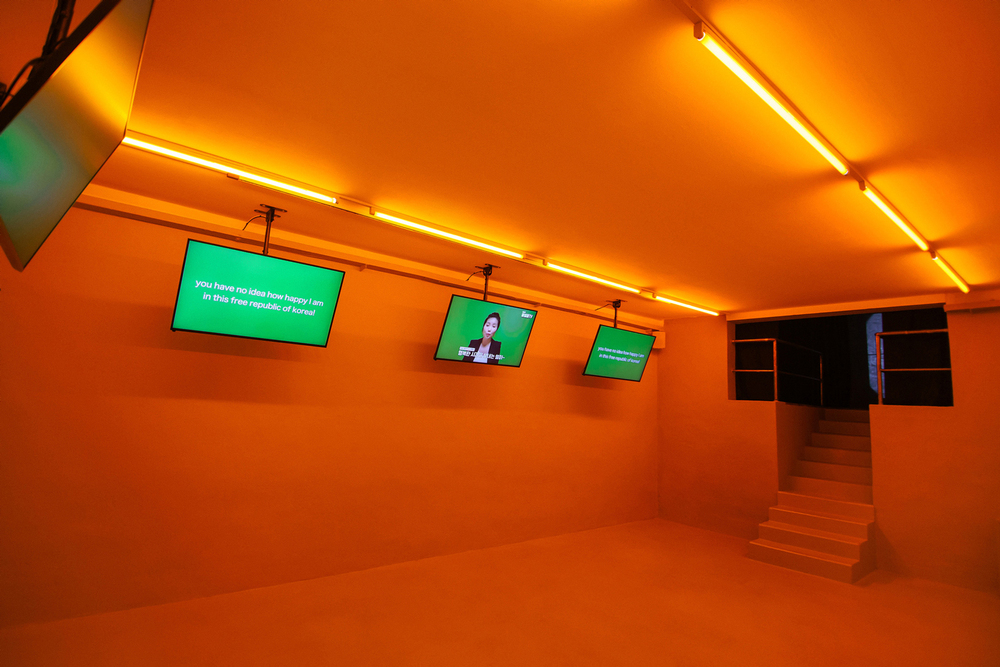
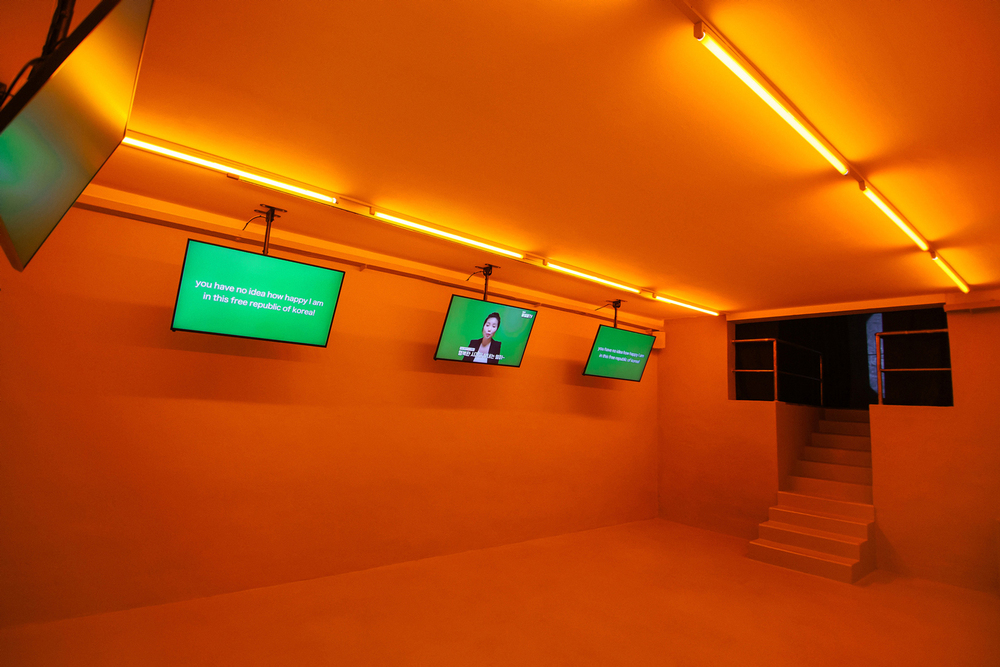
Hana Yoo, Bare Life, 2021, Short film, HD, color, stereo, 16min 28sec. © Hana Yoo

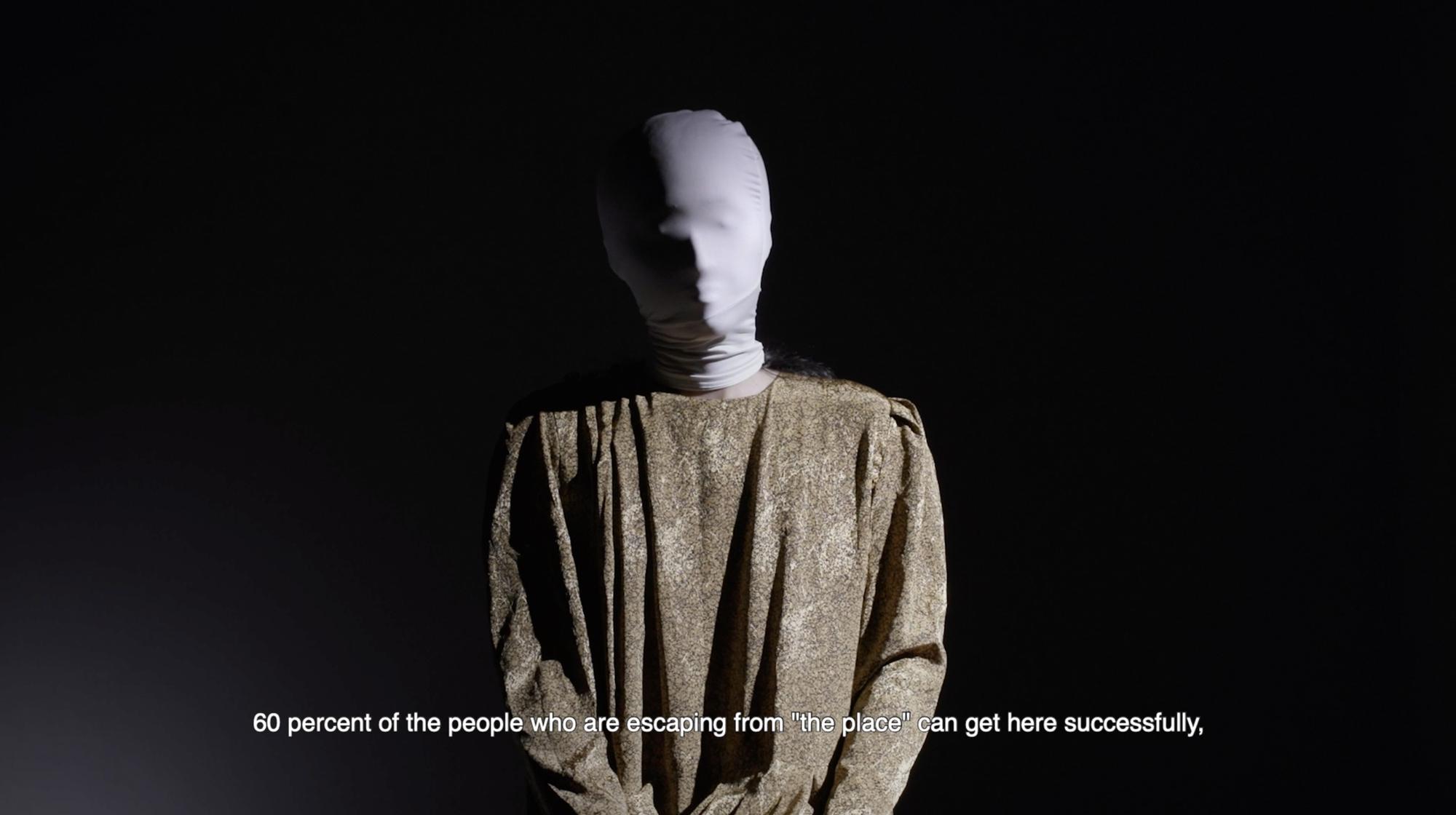
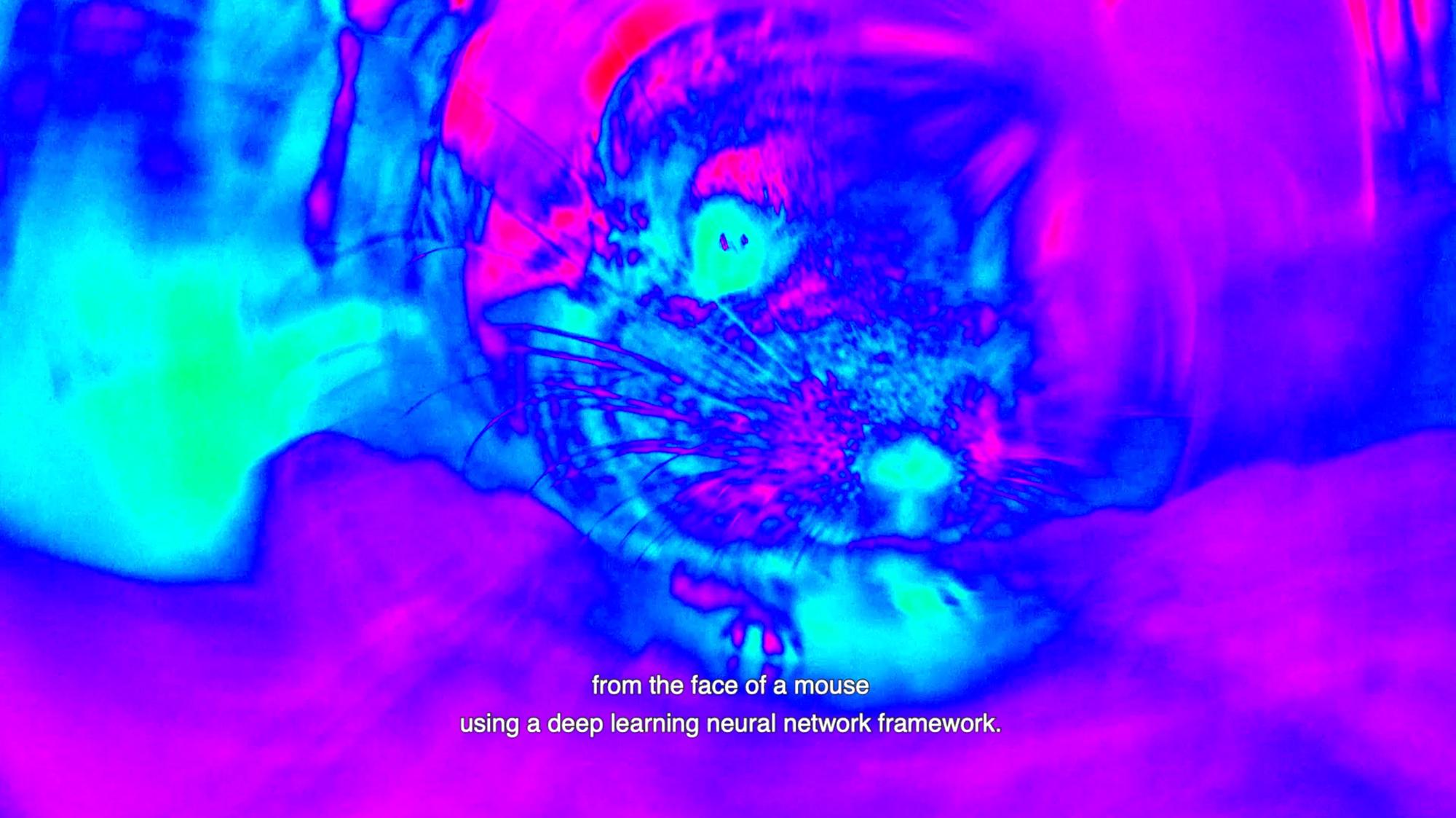
In Bare Life (2021), Hana Yoo employs artificial intelligence to detect signs of pain in the faces of laboratory rats during experimentation. The machine perceives what humans have been unable to register—the suffering of the rats.
 
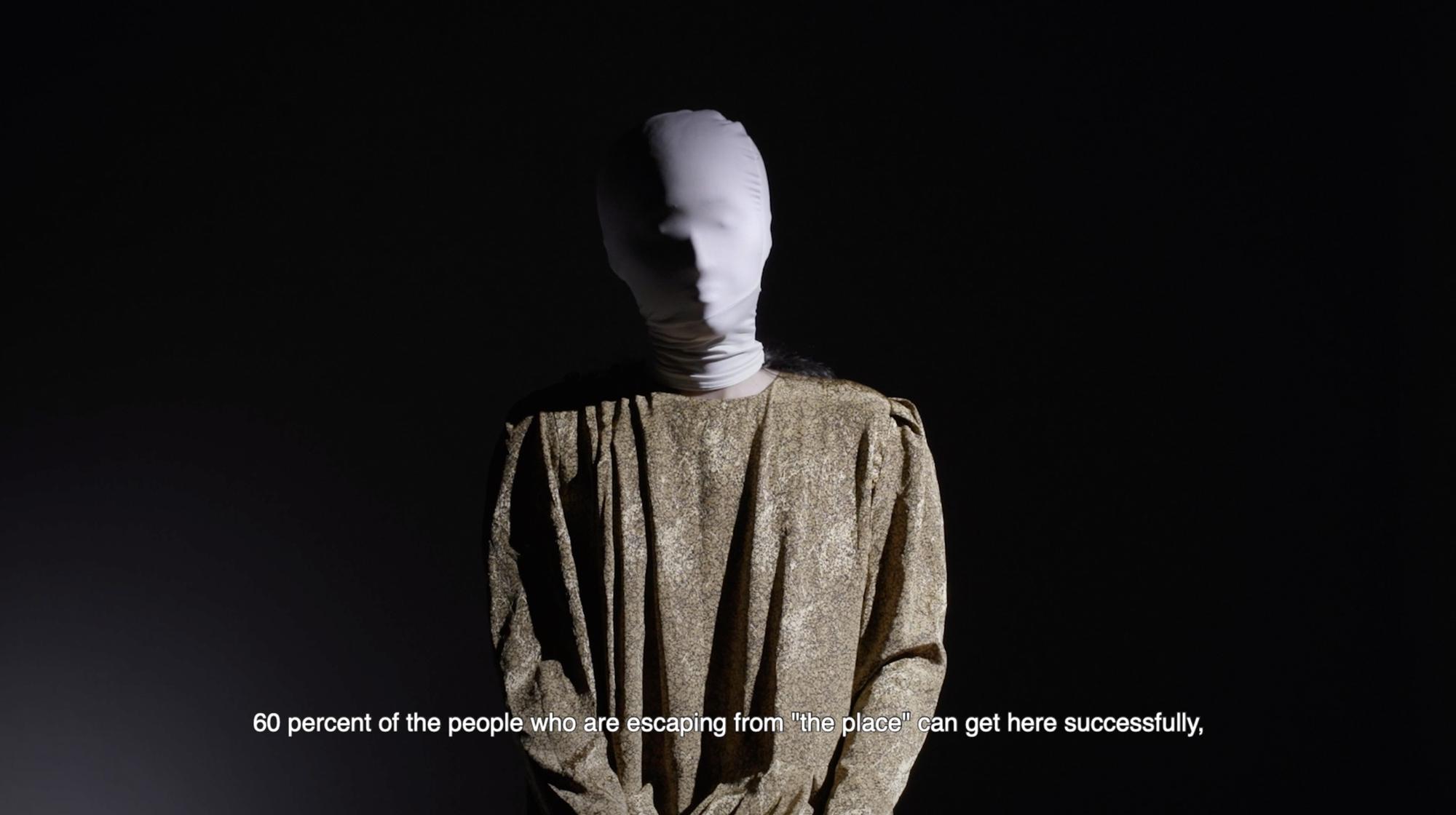
Alongside these images, the video introduces a North Korean-born citizen whose face is concealed. She reflects on her understanding of “freedom” and speaks about the conditions of being “inside” and “outside,” sharing her personal perspective shaped by her experience as a North Korean-born citizen.
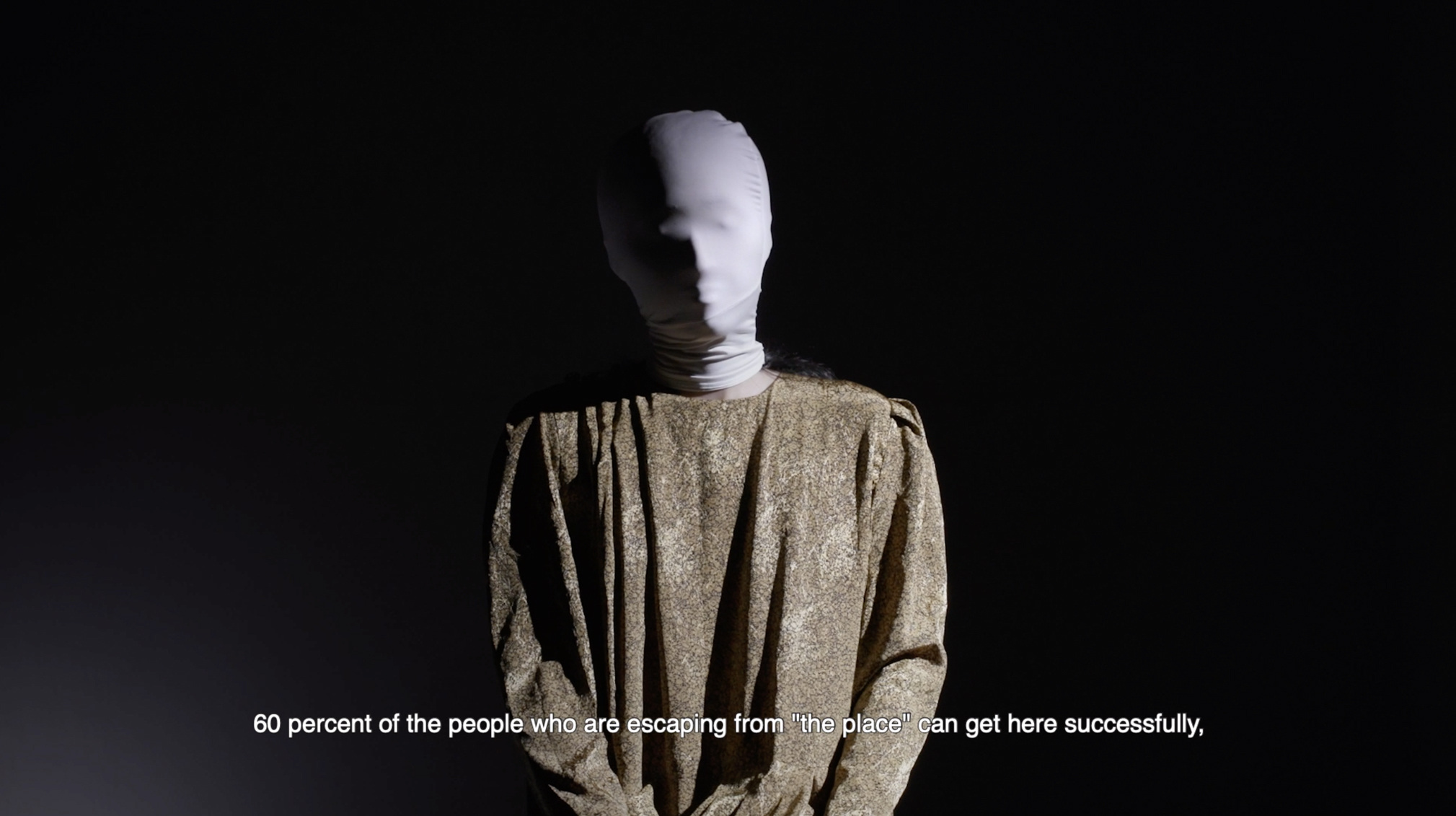

Hana Yoo, Bare Life, 2021, Short film, HD, color, stereo, 16min 28sec. © Hana Yoo

In her videos, both the rats and the woman function as “faceless beings,” symbolizing others concealed behind a veil. By engaging with such obscured subjects, Hana Yoo renders visible the suffering of those without faces.
 
In the exhibition 《Chambers》, which brings together this body of work, she focuses on forms of life that deviate from or escape imposed boundaries, foregrounding a contemporary condition in which political tensions, deepening wealth polarization, and class conflict intensify processes of demarcation and differentiation.


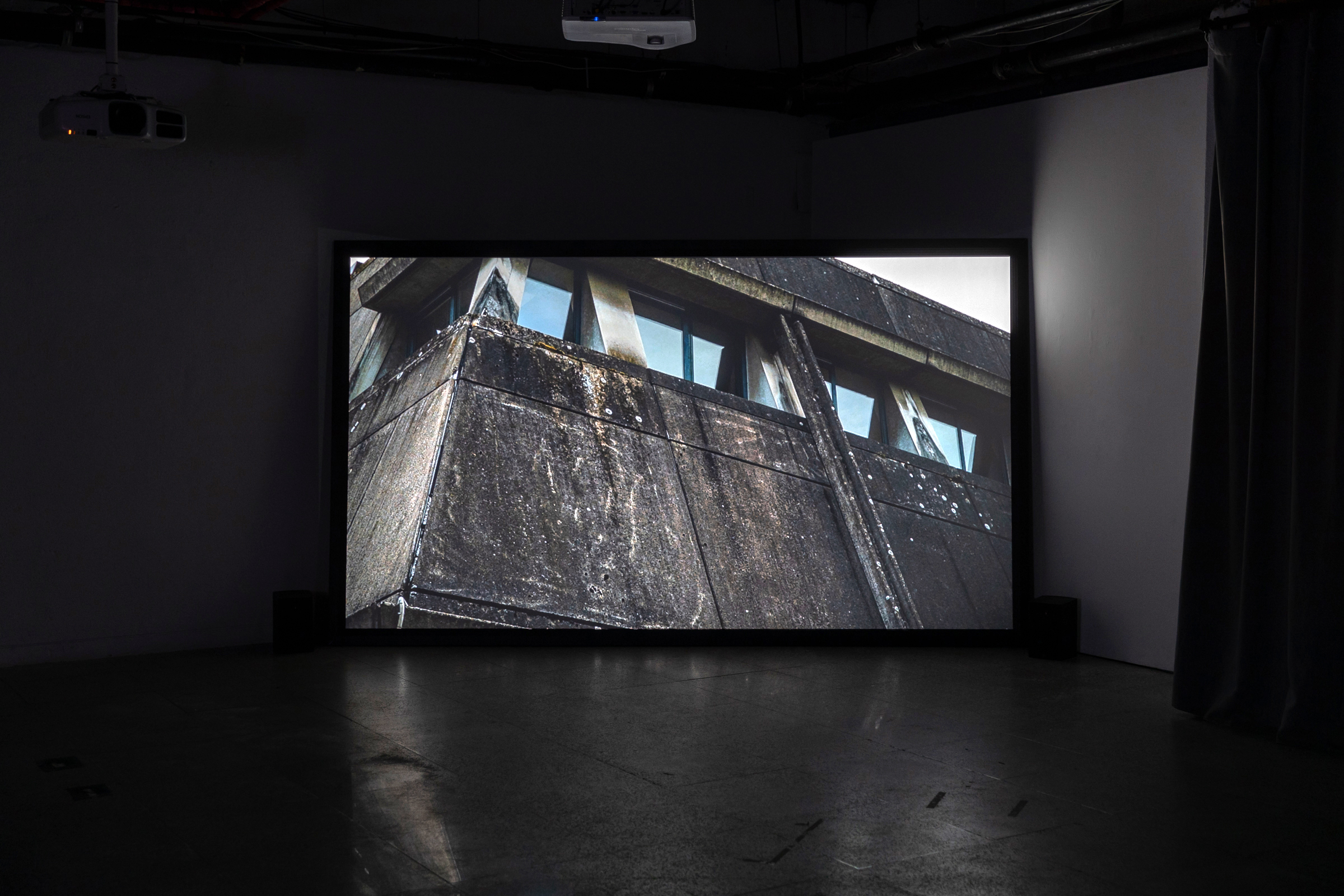
Hana Yoo, Anatomy Class (Chap.2), 2023, Single-channel video, HD, color, B&W, surround 5.1, 18min. Installation view of 《Vision and Perspective 2025》 (Sungkok Art Museum, 2025). Photo: Cho Youngha. © Hana Yoo

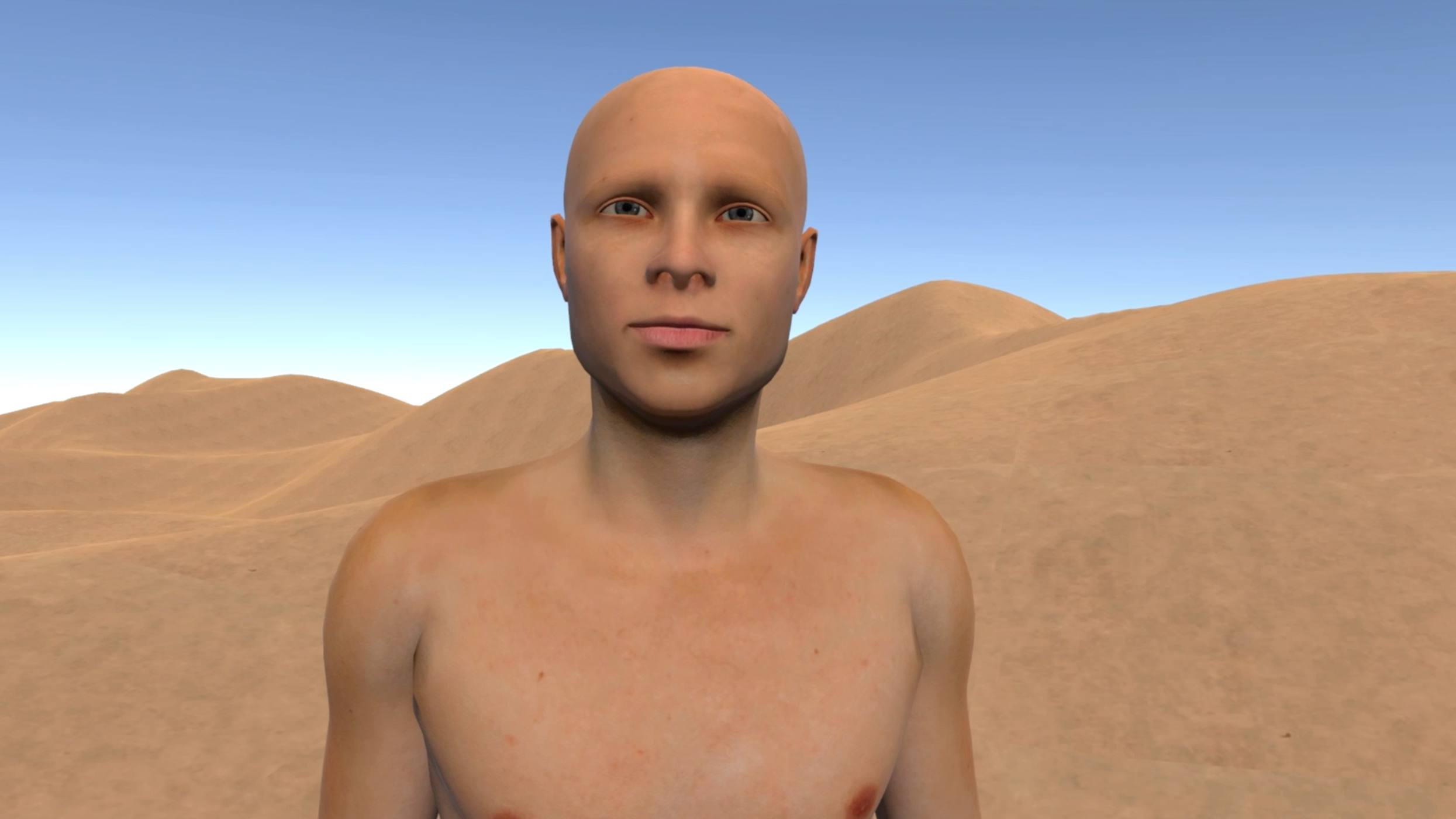
Furthermore, in Anatomy Class (Chap. 2) (2023–2025), Hana Yoo examines the dissonance and violence that arise when disparate contexts collide. The video interweaves the memories and perspectives of three individuals from different cultural backgrounds—Korea, the United States, and the United Kingdom—each recalling their childhood experiences of dissecting frogs in science class.
 
At the same time, the artist employs archival materials related to Unit 731—known for conducting biological experiments on humans—through a deliberate “dissection of images.” In doing so, she invites viewers to reconsider acts of violence, or behaviors not recognized as such, as they occur across differing contexts, scales, and even species.


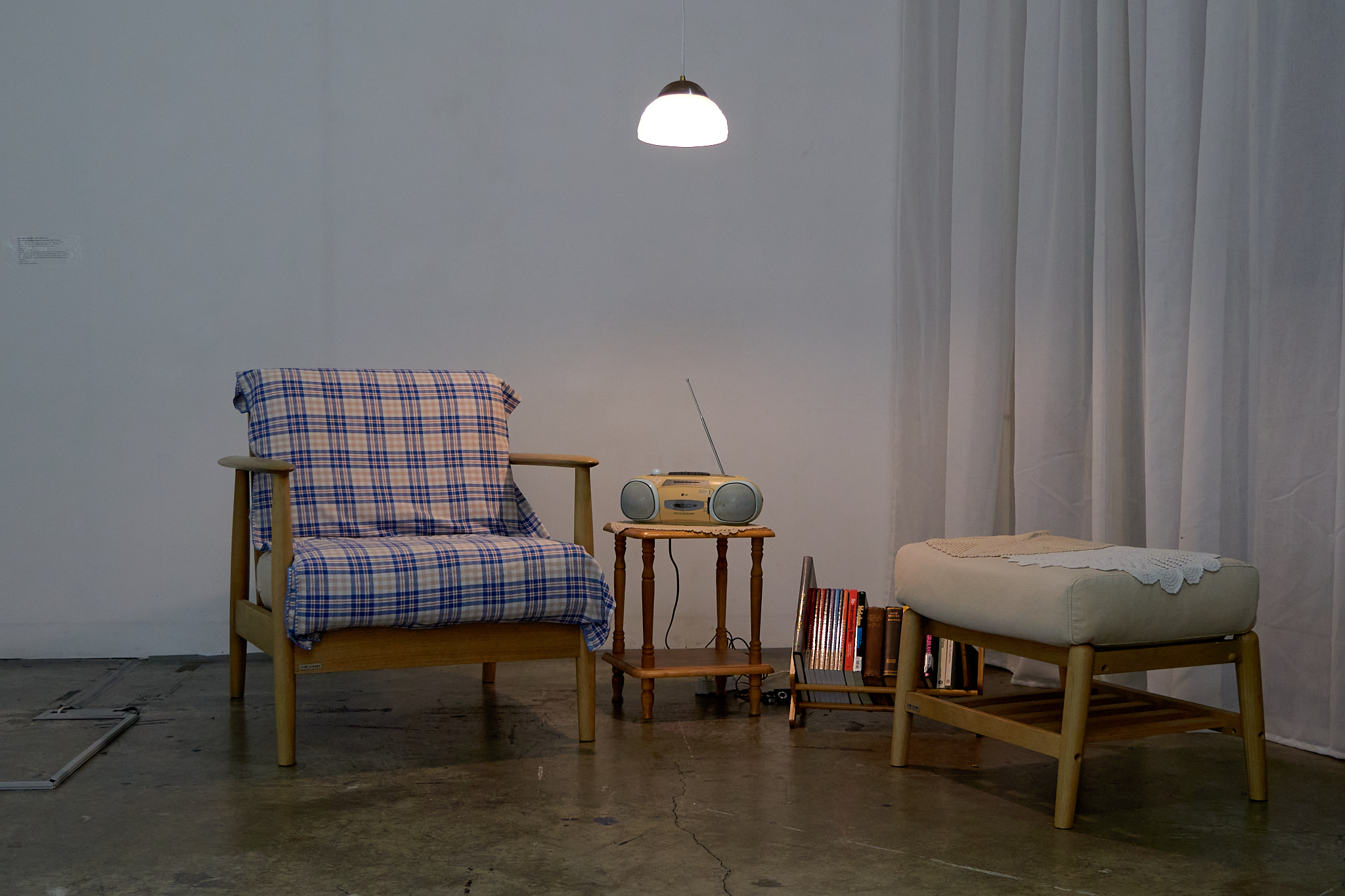
Installation view of 《Elbow Room》 (Acud Galerie, 2022) © Hana Yoo

These experimental video works by Hana Yoo render visible the presence of obscured others and prompt a reconsideration of the contemporary moment—one shaped by multiple, complex boundaries—from within their interstices. Furthermore, by tracing the trajectories of those who deviate from or move beyond such boundaries, her work ultimately leads us to question where we stand and where we are headed.
"Is it not because we really detest and fear a certain matter, but because we know that the matter and the person we despise are, in fact, parts of ourselves and that they will always come back to us?" (Hana Yoo, Artist’s Note)


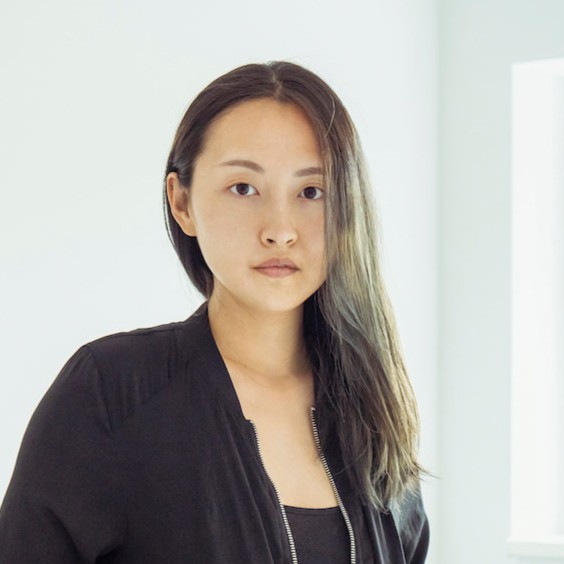
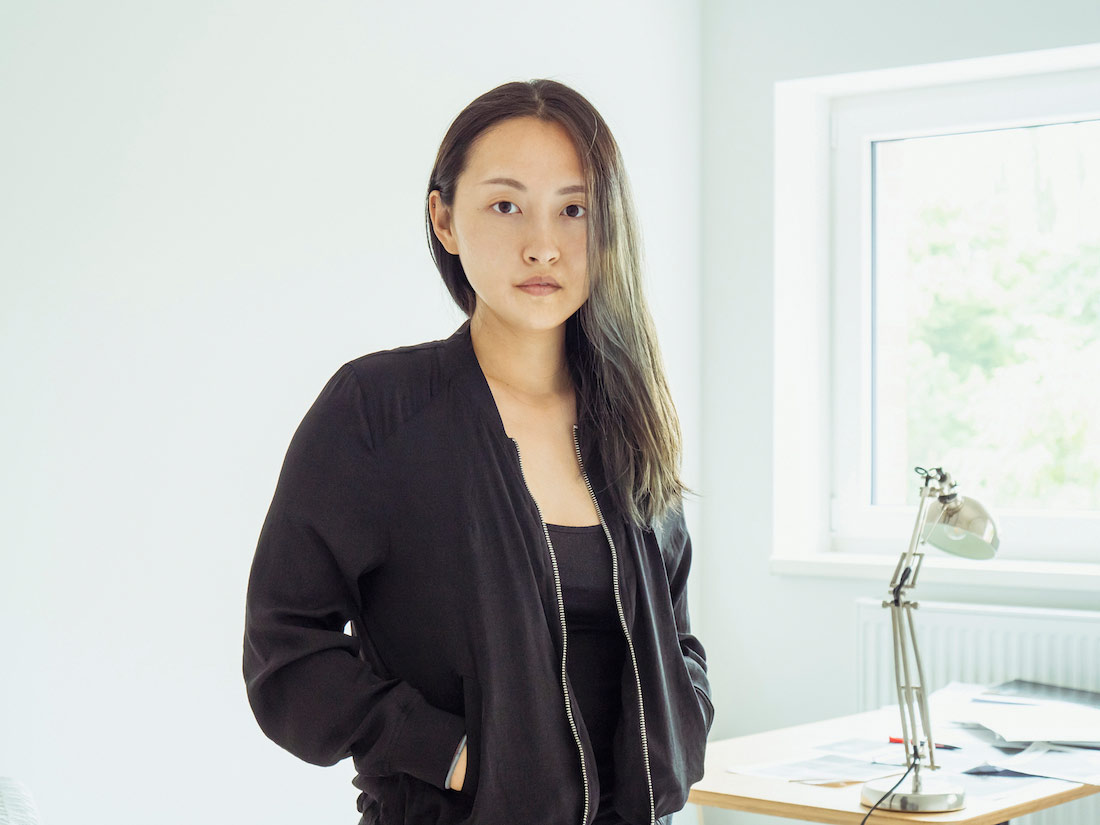
Artist Hana Yoo © Goldrausch Künstlerinnenprojekt

Hana Yoo studied Visual Communication at Ewha Womans University and Media Art at Berlin University of the Arts. She holds fellowships at the Junge Akademie, Akademie der Künste and BPA//Berlin Program for Artists.

 
Her solo exhibitions include 《Elbow Room》 (Acud Galerie, Berlin, 2022), 《Chambers》 (Post Territory Ujeongguk, Seoul, 2021), and 《Hysteric C》 (Diskurs, Berlin, 2020).
 
She has also participated in numerous group exhibitions, including 《A Place Never Fully Held》 (KW Institute for Contemporary Art, 2025), 《Vision and Perspective 2025》 (Sungkok Art Museum, 2025), the 38th transmediale (near) 《(near) but – far》 (Haus der Kulturen der Welt, Berlin, 2025), 《Elsie and Marshall》 (Alternative Space LOOP, 2024), and 《Becoming Machine》 (Artsect DAO Gallery, London, 2023).
 
Yoo was awarded the Berlin Art Prize in 2022, and her works are included in the Collection of Contemporary Art of the Federal Republic of Germany.

References