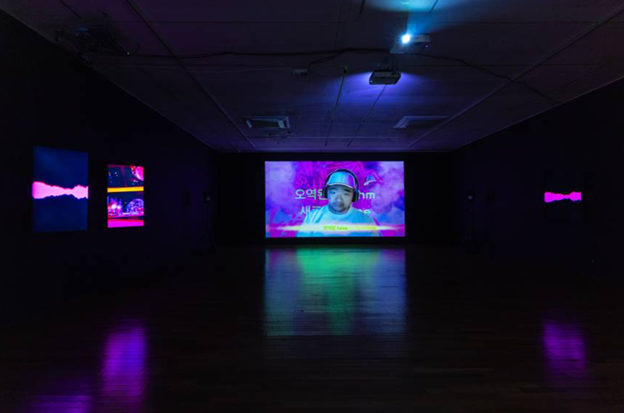
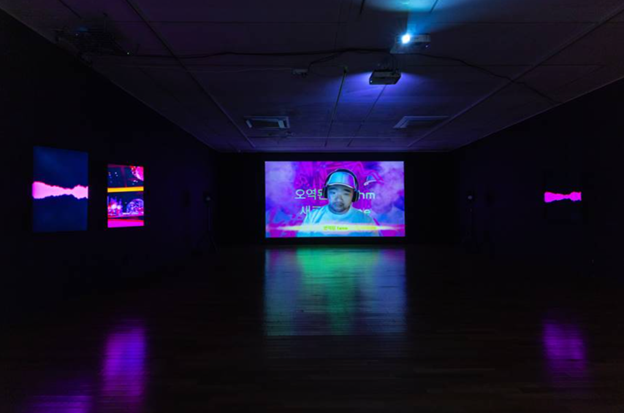
The discipline of rap may seem less meticulous than the discipline of aesthetics, but in reality, it is far more ruthless. Aesthetics constructs a language that verifies the validity of a concept, while rap must immediately prove the validity of an emotion within just a few lines of a song. If aesthetics requires a long duration of argumentation to secure its legitimacy, rap pushes its sensation through in a single bar.
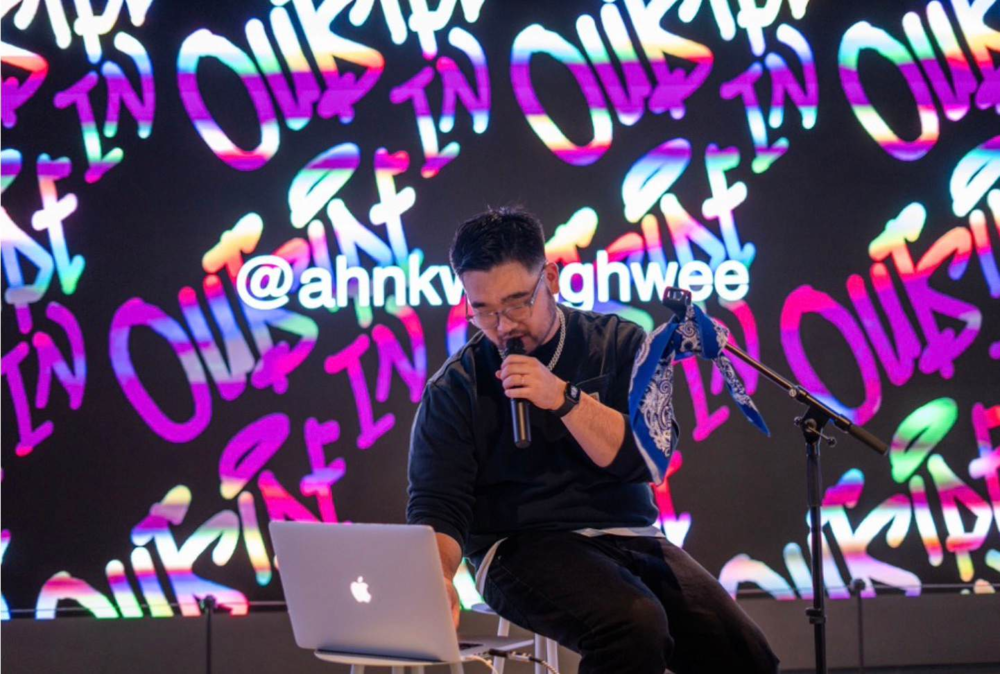
This difference is, in other words, a difference in the time through which the two systems operate. Ahn Kwanghee deliberately features and disrupts this gap in time. Through this disruption, he makes the speeds that the two institutions do not share collide, pushing the viewer into an unstable state.
On the surface, his work presents a hybrid of art and rap, but beneath it lies a device through which two disciplinary systems sample and remix one another. Sampling recontextualizes the original and allows the discipline of another genre to infiltrate. Remix, in turn, rearranges the result of that infiltration into a new order.
Through these two processes, Ahn confines the language of institutional aesthetics within the beat of rap, and holds the immediacy of rap within the slow thinking of aesthetics. In doing so, his work becomes a sensory device that transforms the orders of the two institutions from within each other.
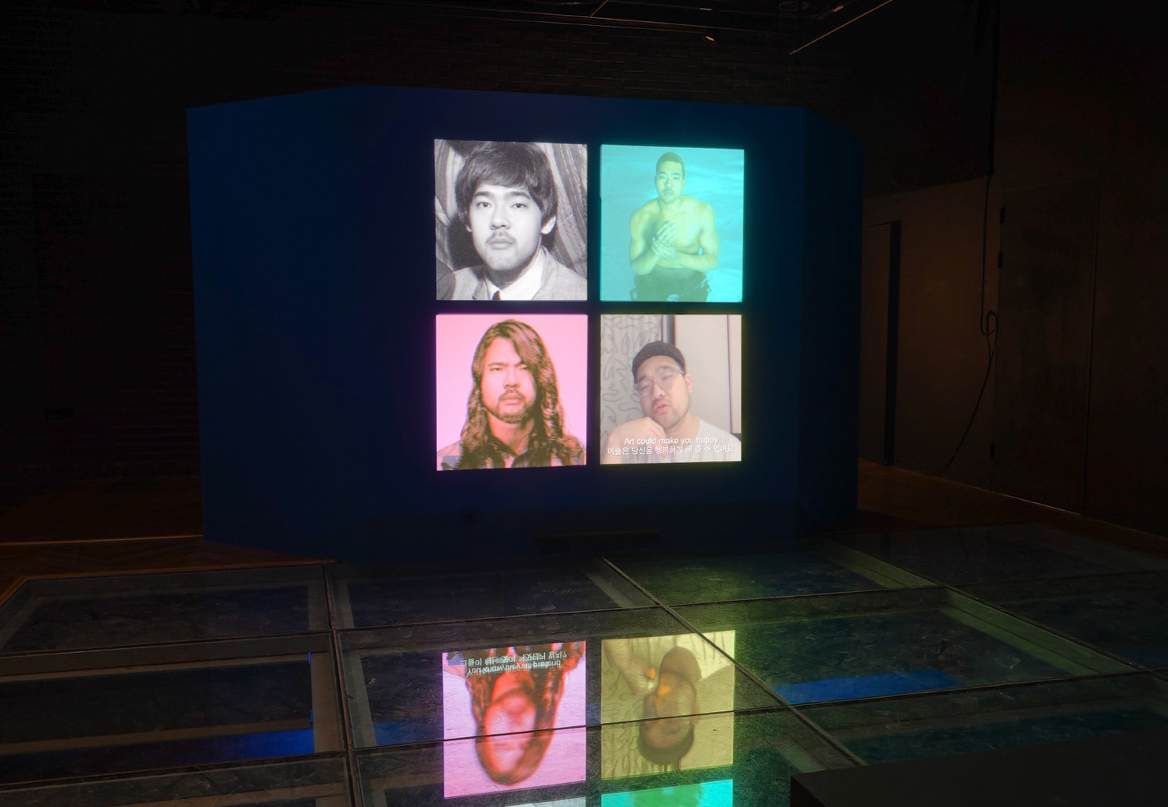
Ahn Kwanghee’s institutional critique is neither a typical counterattack from the outside nor a self-accusation from within. Rather, it is an immanent erosion that fully absorbs the language of the institution and then twists its rhythmic structure, leading it toward self-dissolution. The surface of the institution that he presented to me—his CV and portfolio—also appears, on the surface, to faithfully fulfill institutional demands.
The listing of exhibition history, the notation of educational background. Every form is organized to be suitable for reference. Yet the imitation of that surface is also the most covert method of undermining the essence of the institution.
If one looks closely at the details of the artist’s CV and portfolio, one finds twists in grammar, subtle discontinuities in spacing, and residues of typos. These cracks appear to be soft noise mixed into the sentences of the institution, or errors that could easily be erased in the name of correction.
Yet considering that the power sustaining the institution he seeks to critique begins precisely from that flawless surface, this becomes a fatal insertion. As a result, the materials he submitted remain acceptable, yet leave behind a latent anxiety that makes the reader doubt their completeness.
This soon generates a sensory distrust toward the surface called the institution. The viewer recognizes that this document still maintains an official and referential form, yet somewhere along the way loses their certainty. The anxiety that arises at this moment is not a simple discomfort, but a finely tuned disturbance of sensation.
When the spelling of a word slips within a single sentence, the reader loses the continuity of meaning in that gap. The delay created by that gap is different from a temporary suspension in aesthetic argumentation. It is an instinctive rupture of rhythm before judgment. Therefore, the cracks within his documents are already musical.
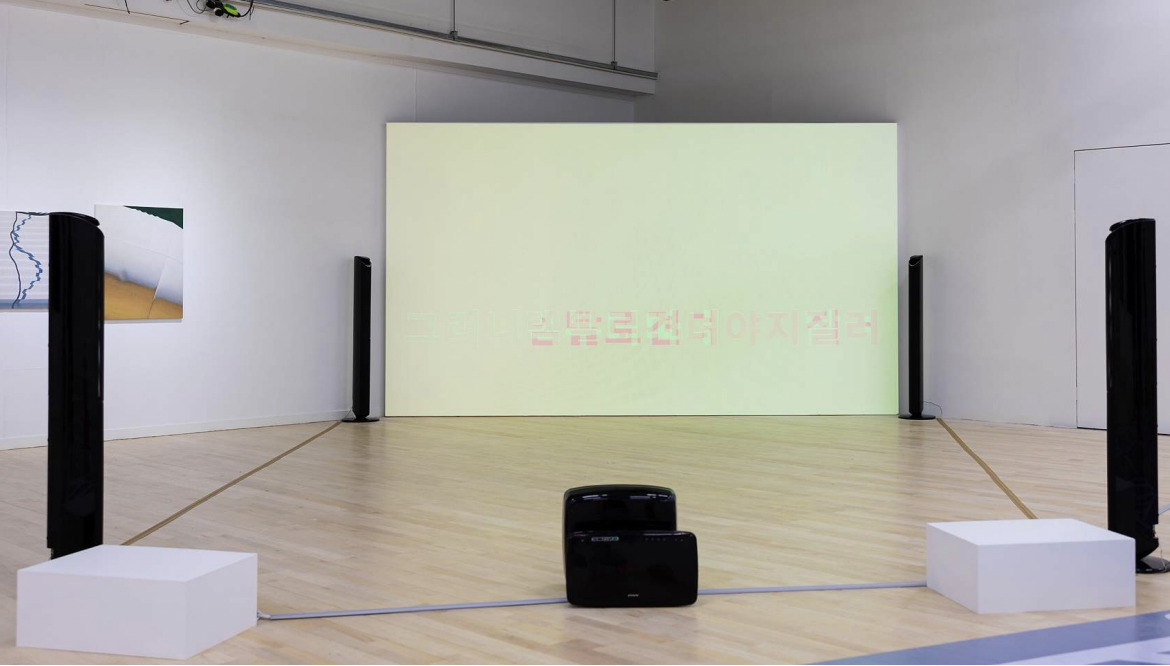
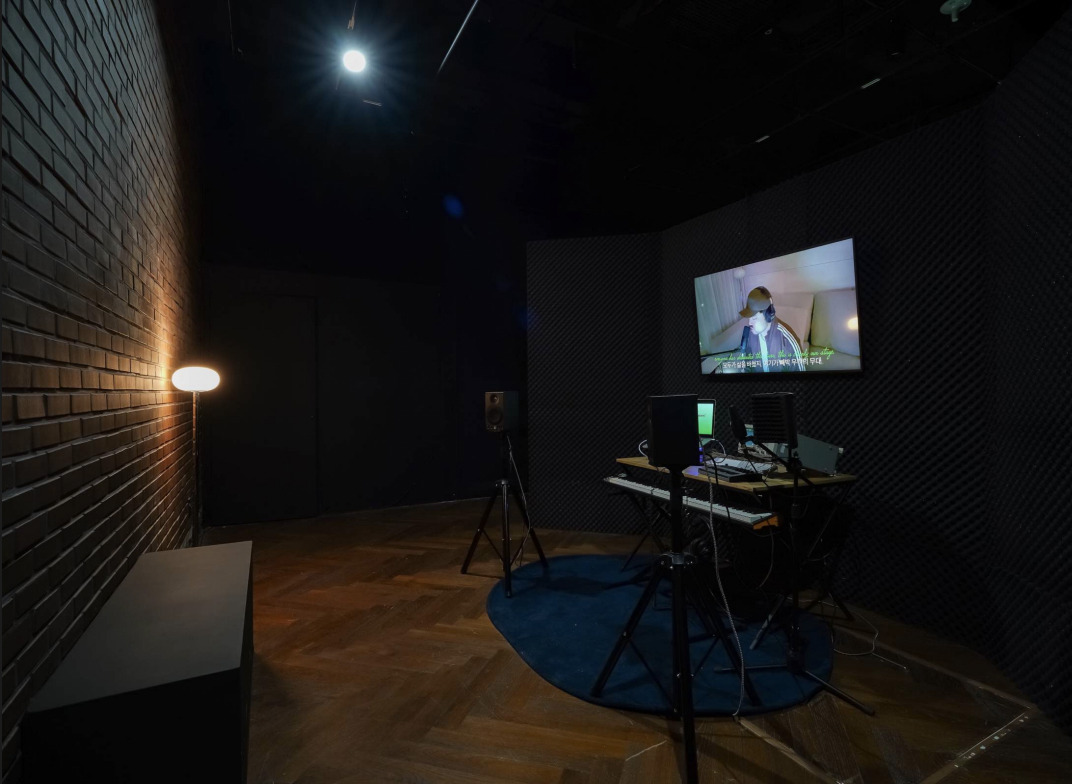
His single ASFS(2024) is a representative example that realizes this strategy on the level of hearing. As its title suggests, this single replaces the artist statement, an essential institutional document, with the form of rap. What an artist statement demands is clear and persuasive sentences, an exhibition history, and a logical overview of the artist’s practice.
However, Ahn fragments this narrative within beat and rhythm, inserting intentional leaps of meaning between phrases. As a result, the sentence maintains the form of an institutional document, while already becoming music rather than a document.
This discipline takes direct aim at the heart of the institution he seeks to critique. The institution is a system that controls language, stabilizes narrative, and makes meaning predictable.
Yet Ahn borrows the very forms and vocabulary demanded by that system, then tilts the rhythm from within and lets meaning fall away, gradually collapsing its stability. He leaves the sentence intact, but prevents the sentence from fully performing its function. It is like leaving the exterior wall of a building untouched while removing the internal structure one piece at a time, ultimately causing it to collapse.
His work does not perform institutional critique as simple rebellion or negation. Rather, it operates by occupying the form of the institution from within, maintaining its surface while blocking its function. The cultural apparatus of capitalism places genres that generate money at the center and those that do not at the margins. But Ahn does not simply reverse this hierarchy.
He deliberately traps the central genre within the conditions of the margin, and transplants the marginal genre into the forms and frameworks of the center. In doing so, he does not leave the structure of center and periphery as fixed axes, but turns it into a flow that continuously moves and is disrupted.
Rap was originally a language of the margins. Its rhythms and lyrics began in the streets and grew outside institutions, but over time, it became a core revenue model of the popular music industry. Now rap has become the very model of a profitable genre, and its discipline operates in close alignment with the demands of the market.
Contemporary art, on the other hand, is outwardly packaged as a non-commercial and pure field of creation. In reality, however, it is a capital apparatus operating within elaborate investment structures such as grants, auctions, and art fairs. In this way, the two genres have different faces, yet both survive by reorganizing their modes of existence within the circuit of capital.
Ahn Kwanghee confronts the strange contradiction of these two genres head-on. He places profitable rap within an unprofitable framework, and combines the art institution, which pretends not to be profitable, with the ruthless immediacy of rap. As someone raising a child, he cannot possibly turn away from the need for actual income such as streaming revenue, yet ironically, his work unfolds in a direction that neutralizes precisely that necessity.
This is the point where the personal condition of needing to make a living and the artistic condition of resisting the logic of capital collide head-on, and Ahn does not resolve this contradiction but makes it the core driving force of his work.
Ahn Kwanghee’s strategy goes beyond the superficial hybridity of simply joining rap and art. He transforms the differences in time and discipline through which the two systems operate into resources. Aesthetics slowly constructs its legitimacy through concepts, narratives, and historical contexts, while rap detonates emotion and conviction within a few seconds or a few lines.
By forcibly overlapping these two timeframes, Ahn simultaneously exposes the strengths and deficiencies of each system. This is not so much a mixture between genres as an art of temporal strategy that disrupts each other’s time structures.
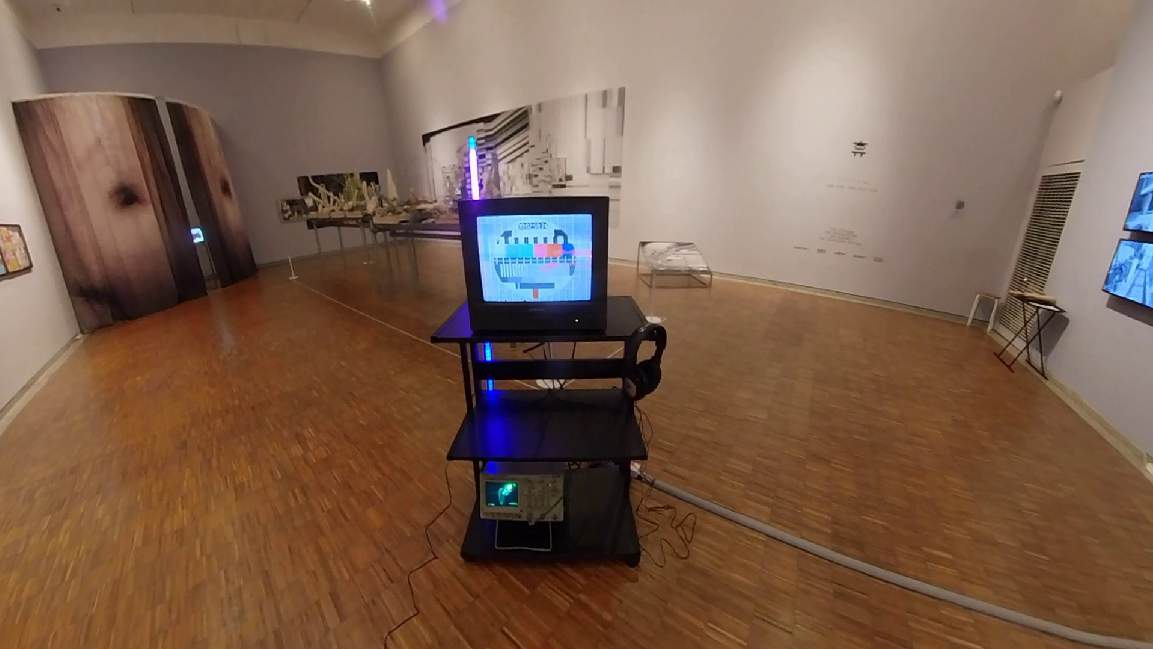
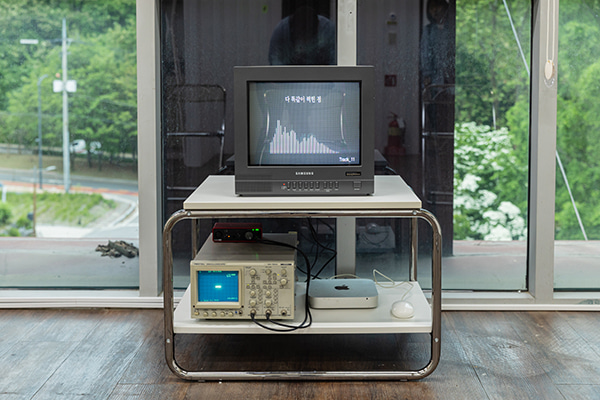
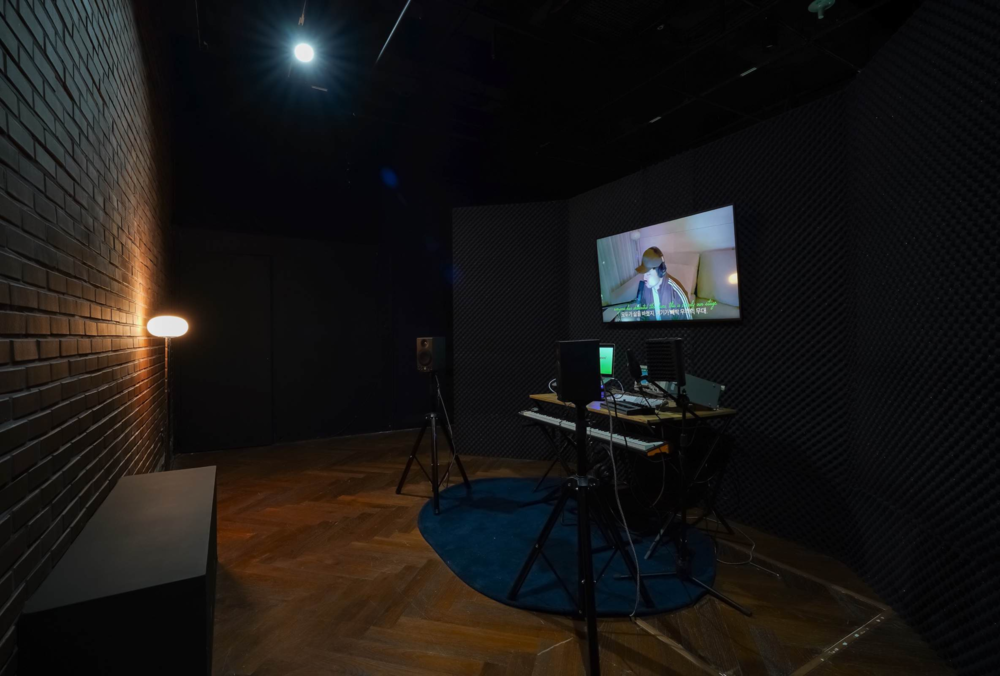
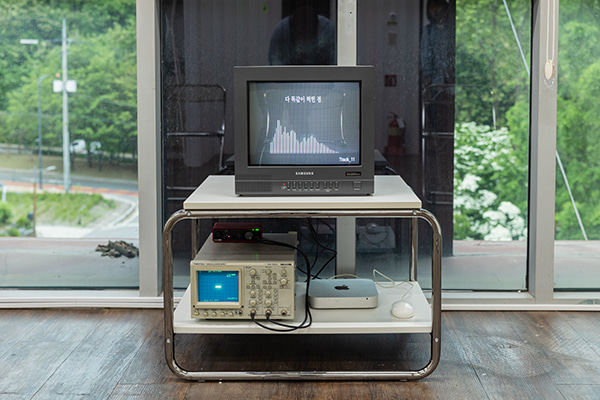
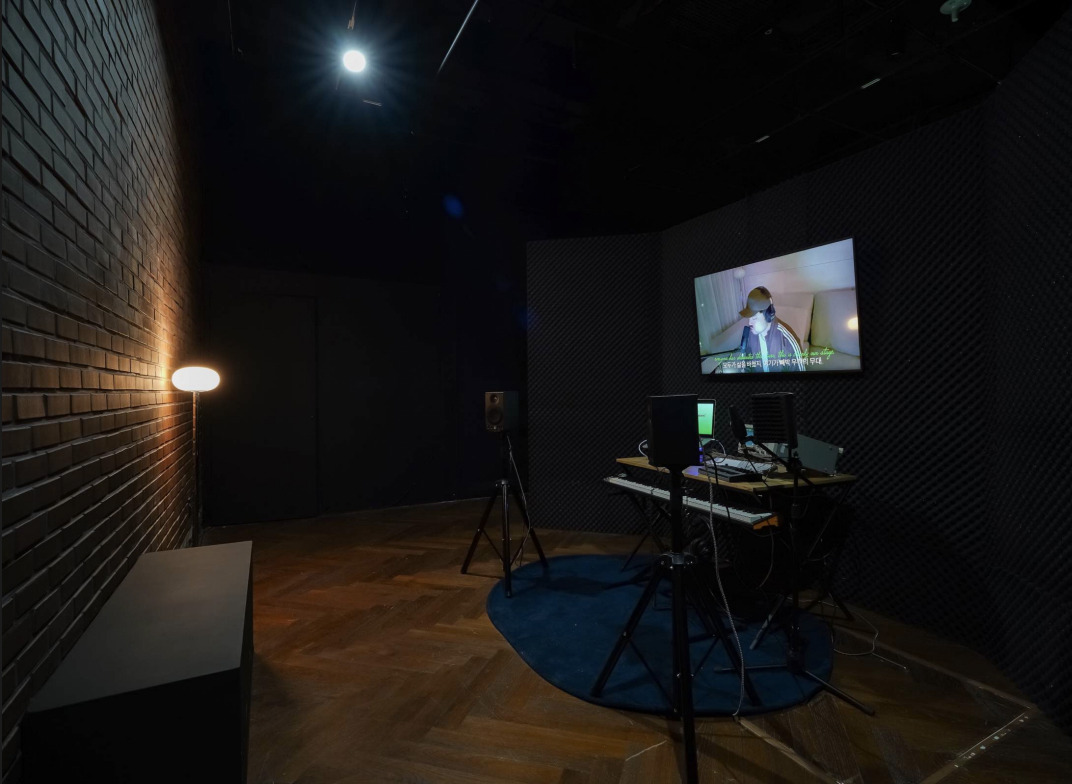
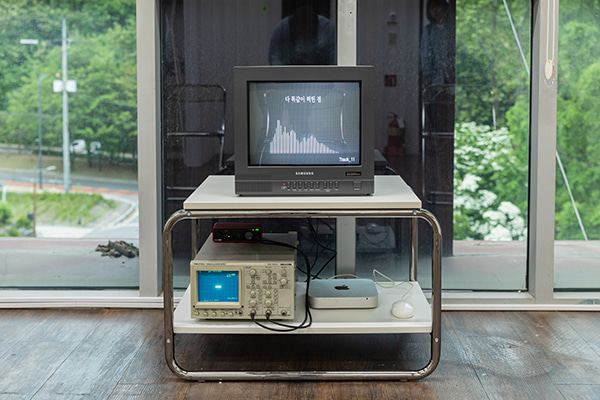
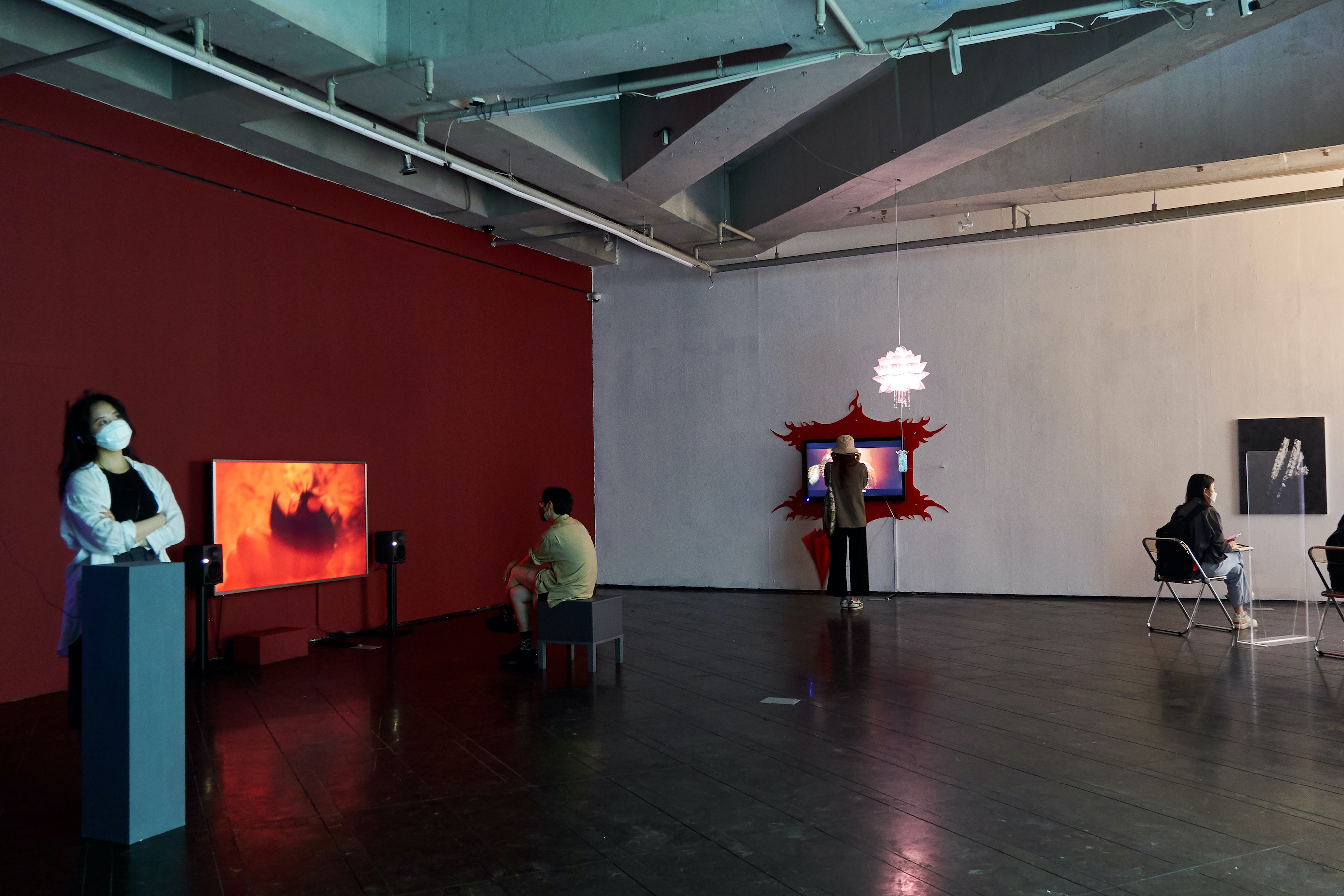
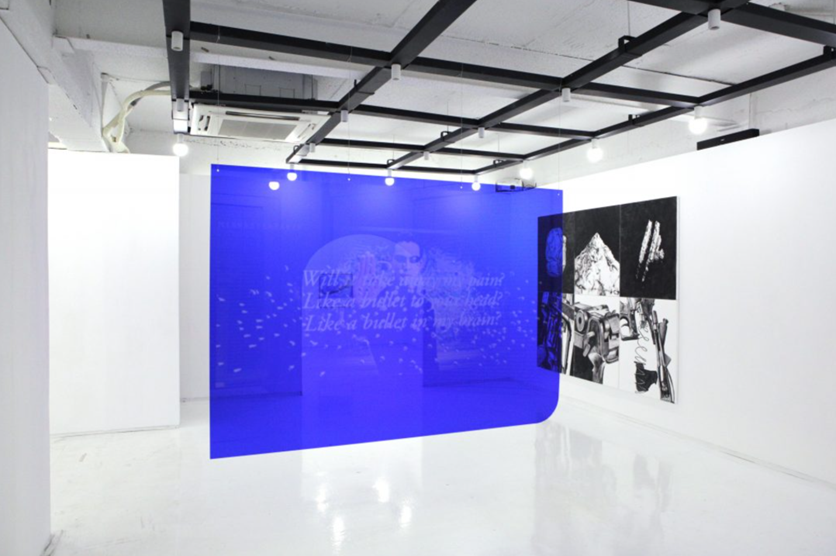
In this way, his work does not stage one genre absorbing another, but stages a kind of battle in which the times of each collide on a single stage. In his work, cracks are no longer metaphors but concrete formal devices. The subtle errors of phrasing in documents, leaps and profanity in rap, and the unsuitable acoustic environment of the exhibition space all compose a single rupturing sound.
This rupture is not simply a transformation of form, but causes the simultaneous collapse of rhythm and meaning within the viewer’s perception. Through this, Ahn makes us fundamentally question the way both institutions and genres construct trust: the smooth surface.