Sculpture and installation often make me
think about the ways in which time can be contained. Sculpture or installation
itself is generally perceived as something that remains still in place. Yet
even without producing direct physical movement, as in kinetic sculpture,
movement may arise around the sculpture, or the work itself may operate as a
performative sign, allowing an immobile sculpture or installation to be
experienced as an event. When a sculpture carries a narrative or becomes a
state onto which shifting signs are projected—and when events occur through the
gestures and speech surrounding it—the stillness of sculpture extends into
time.
Performance often intervenes as a device that activates the state of a
visual work within time. It also functions when one wishes to superimpose a
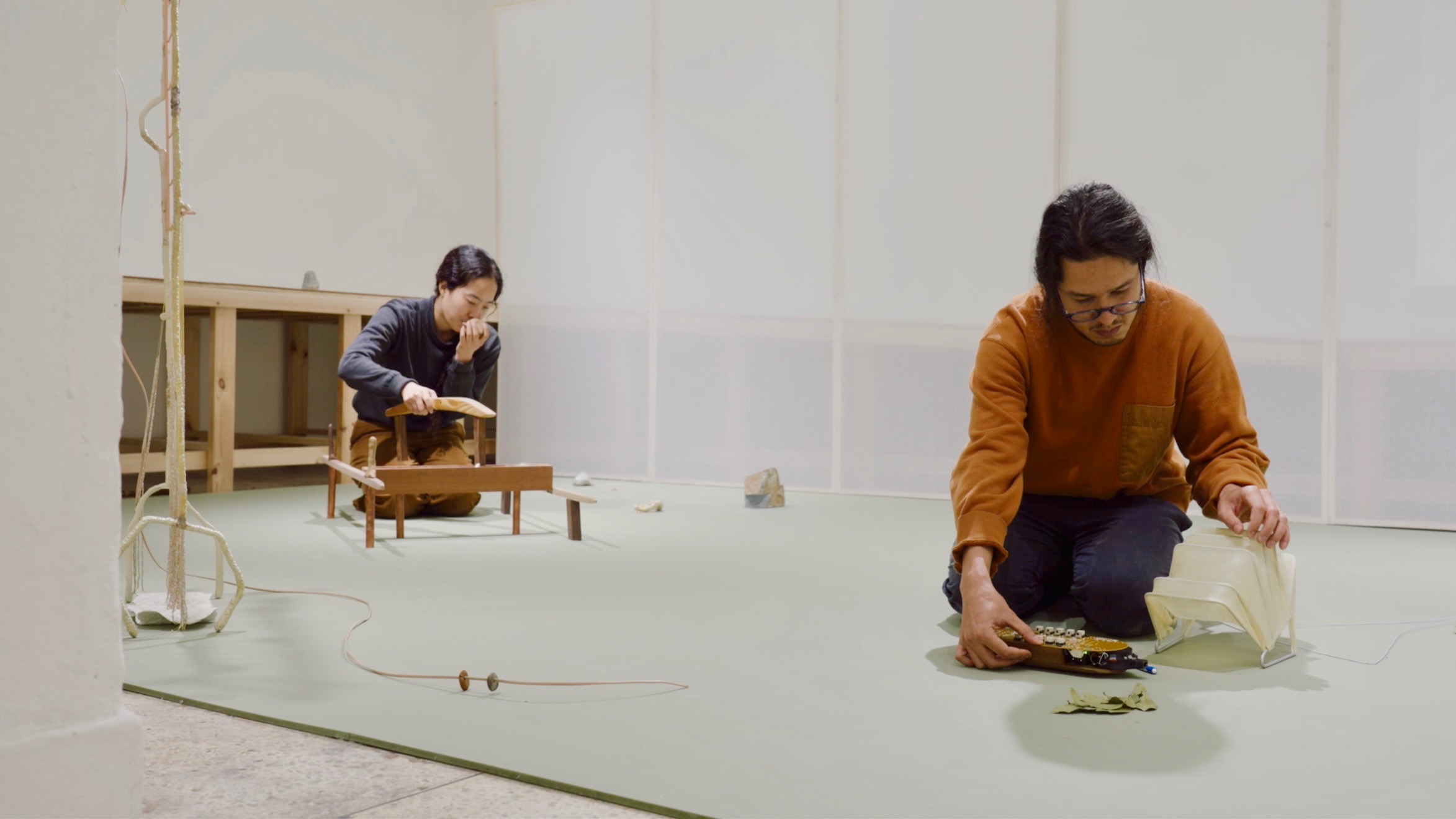
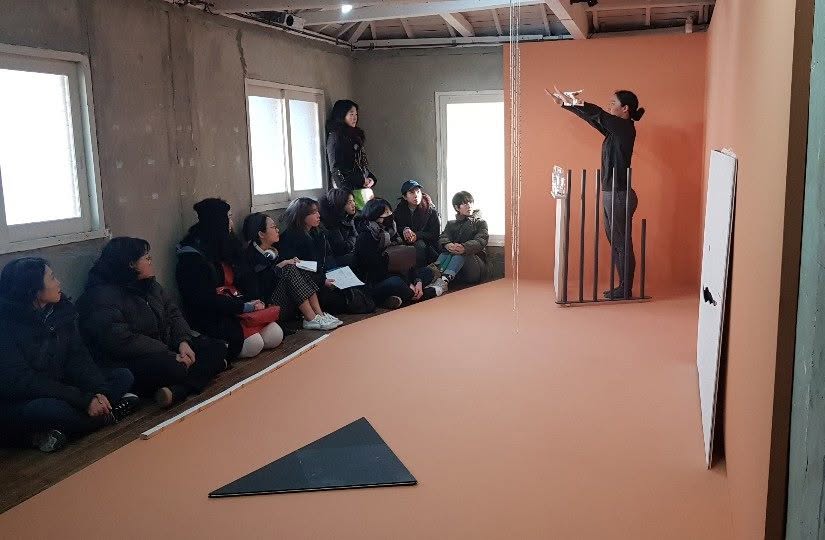
story or condition onto objects. Hyeree Ro likewise takes sculpture or
installation as a foundation and, by adding gesture and speech, transforms a
static scene into the time of an event. If we break down what fills that time,
it can largely be filtered into objects, body, and language. By examining these
elements one by one, and then observing how they meet, collide, and pass by one
another, we may attempt to approach the artist’s work.
Objects
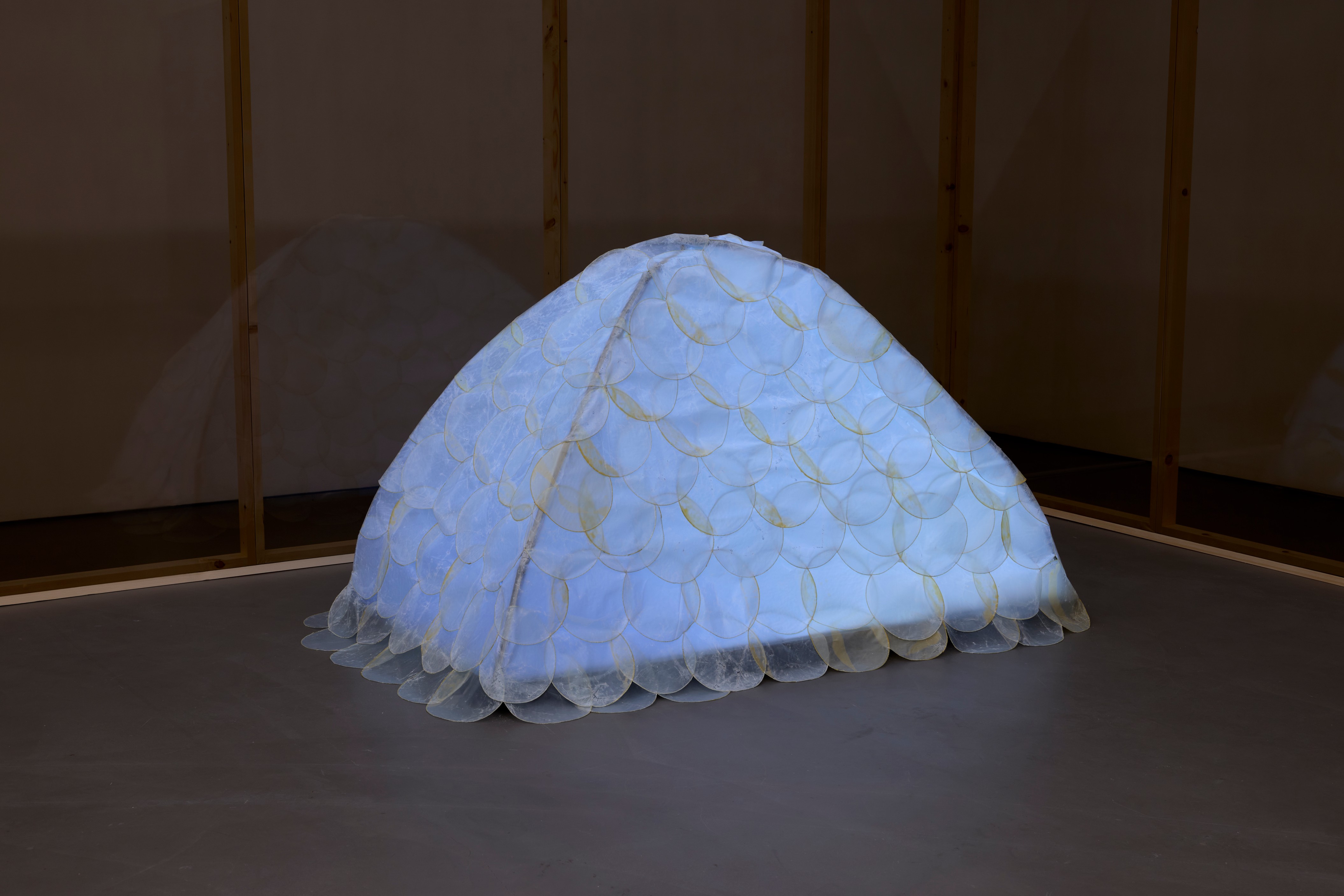
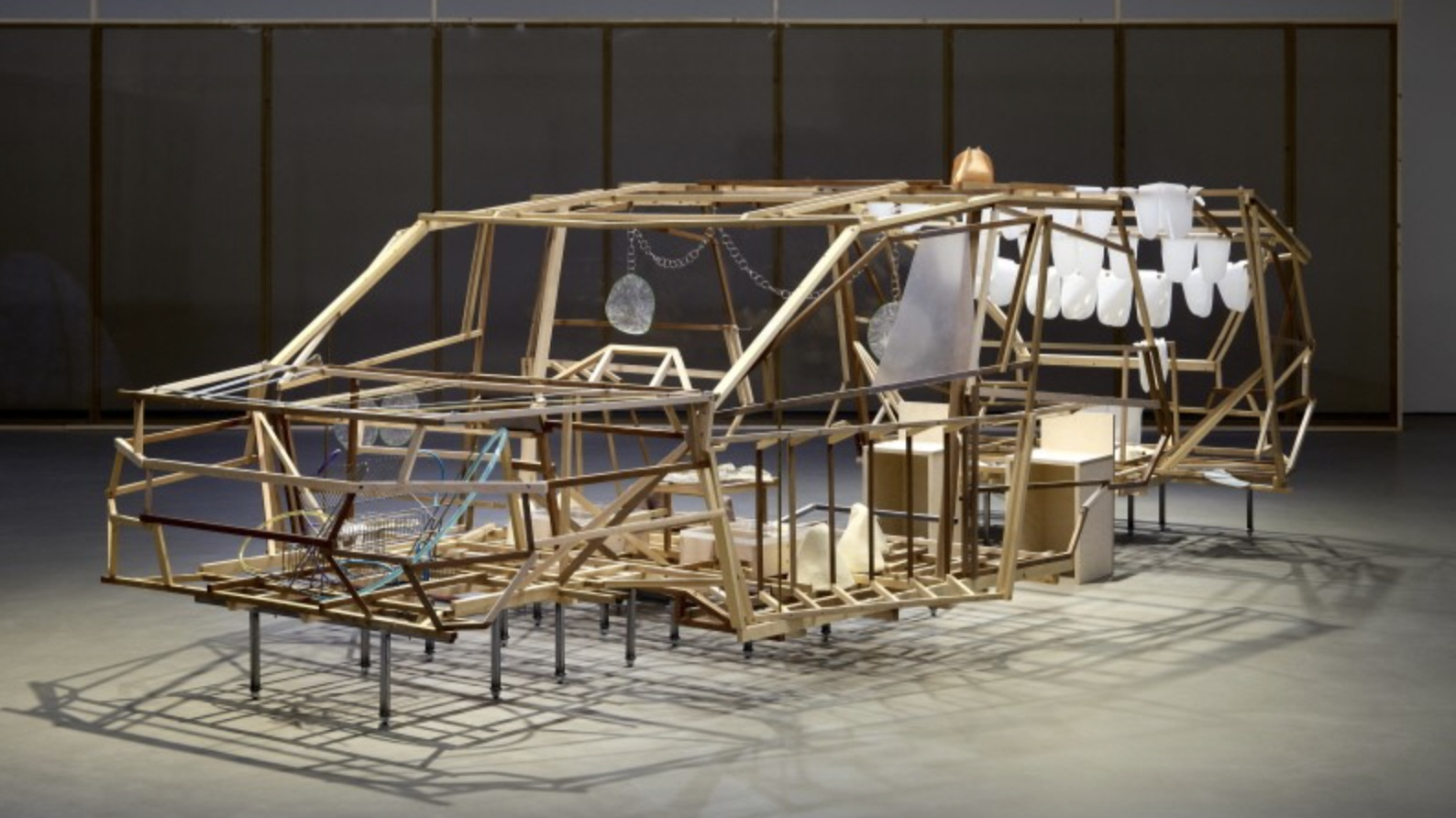
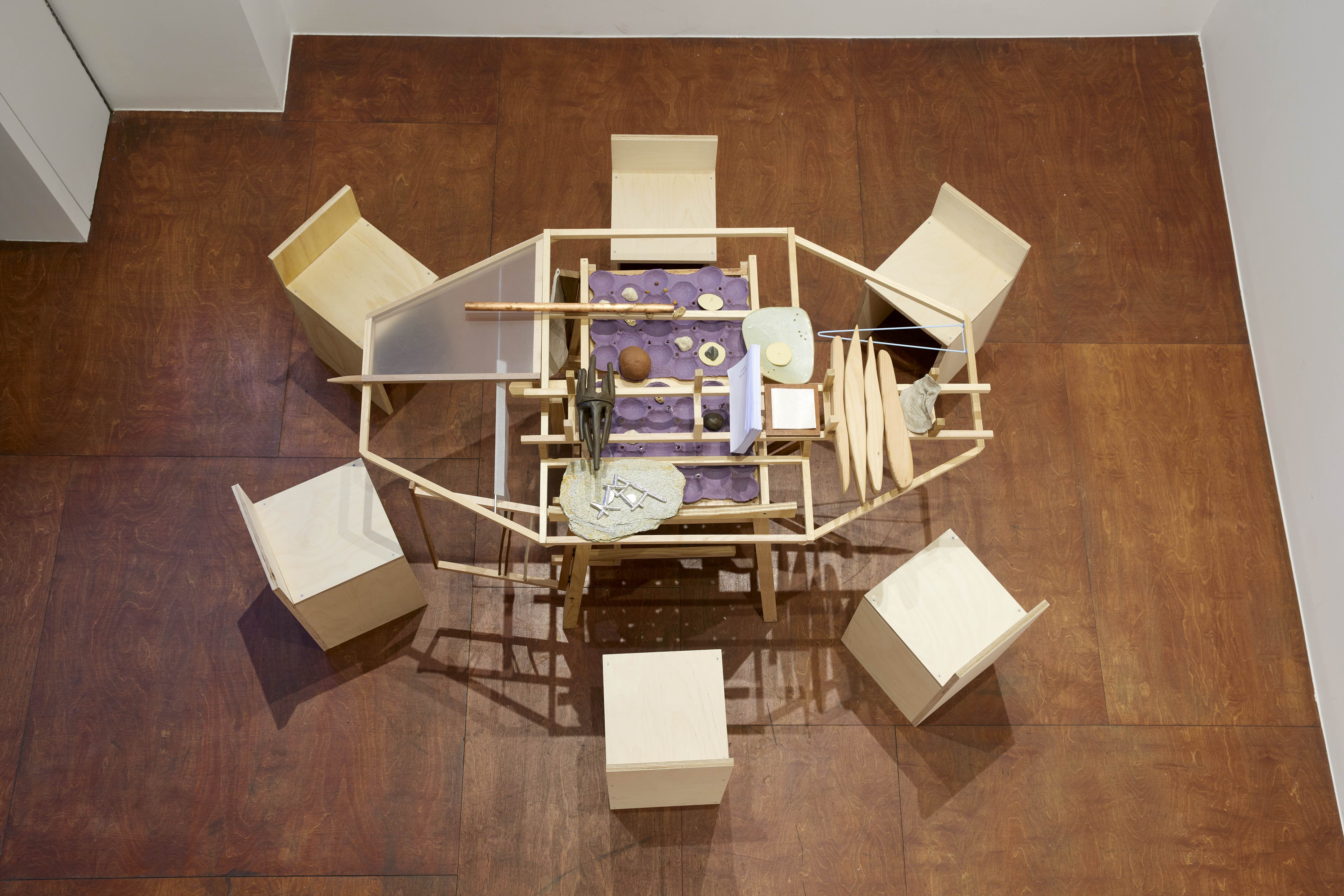
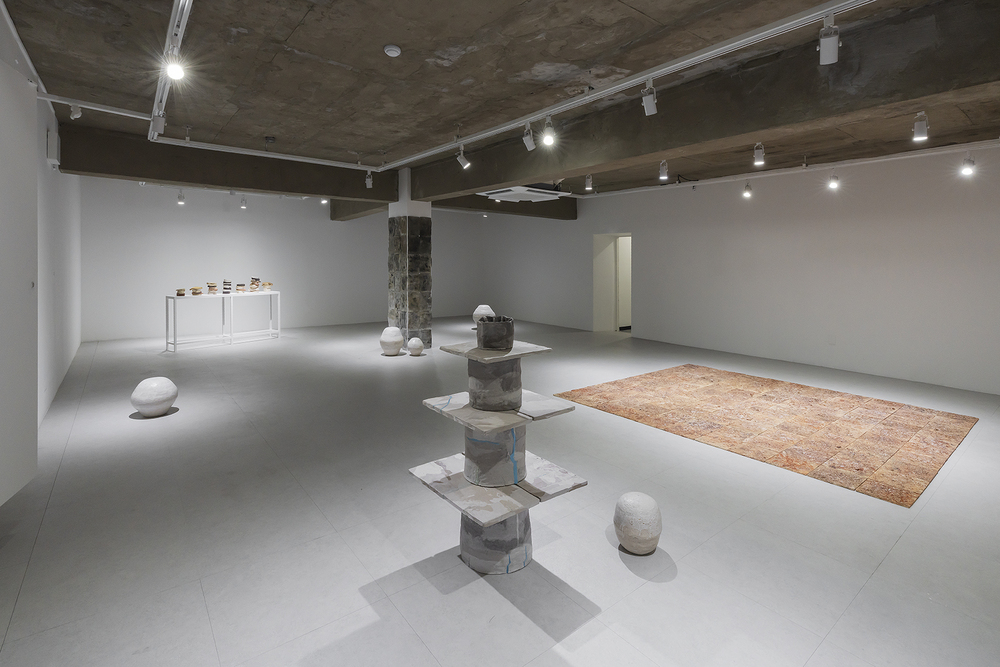
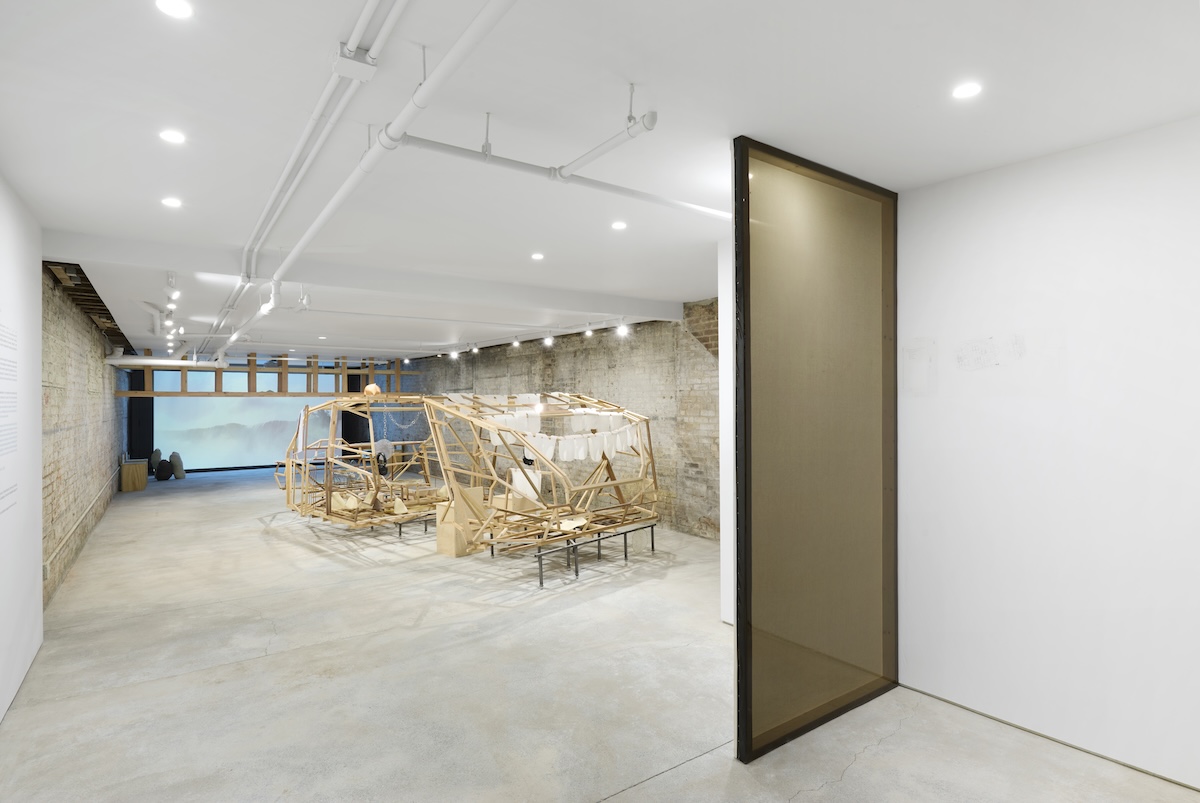
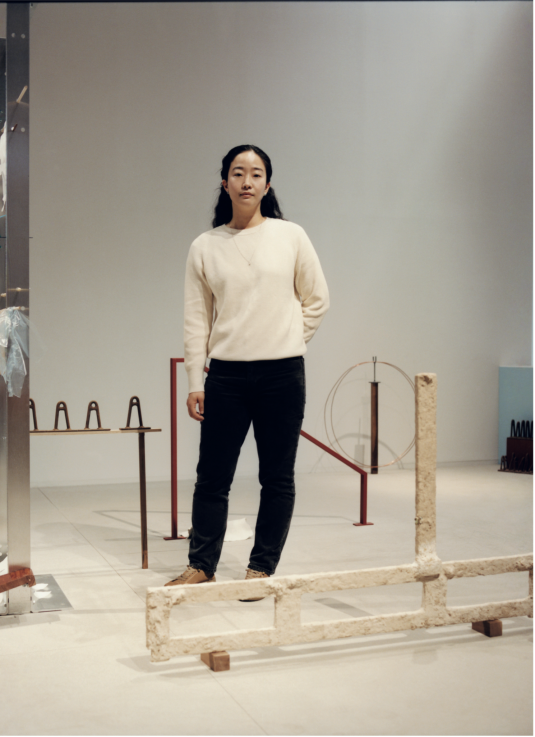
Objects are the starting point of Hyeree
Ro’s practice. (The artist seems to prefer the term “objet.”) From these
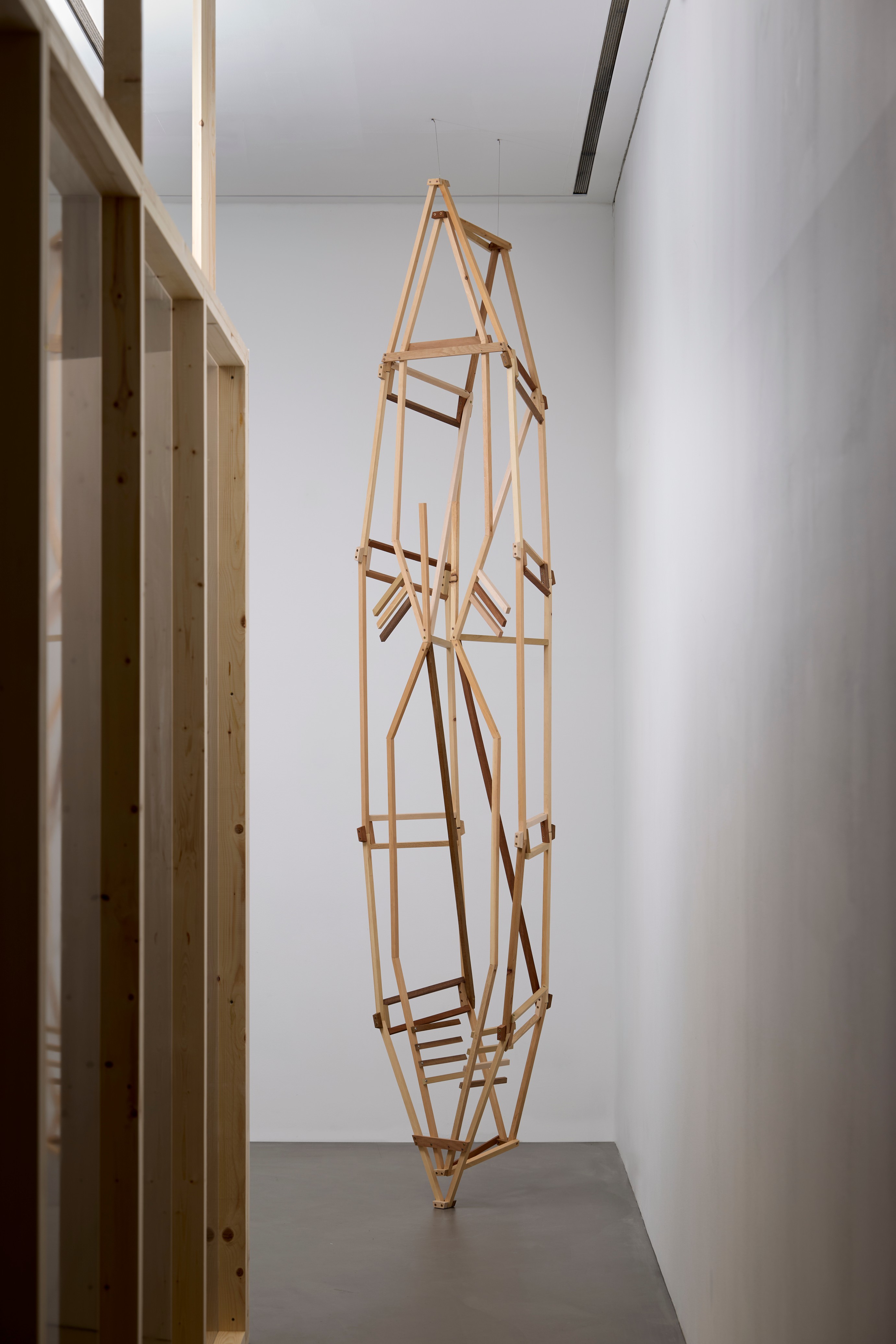
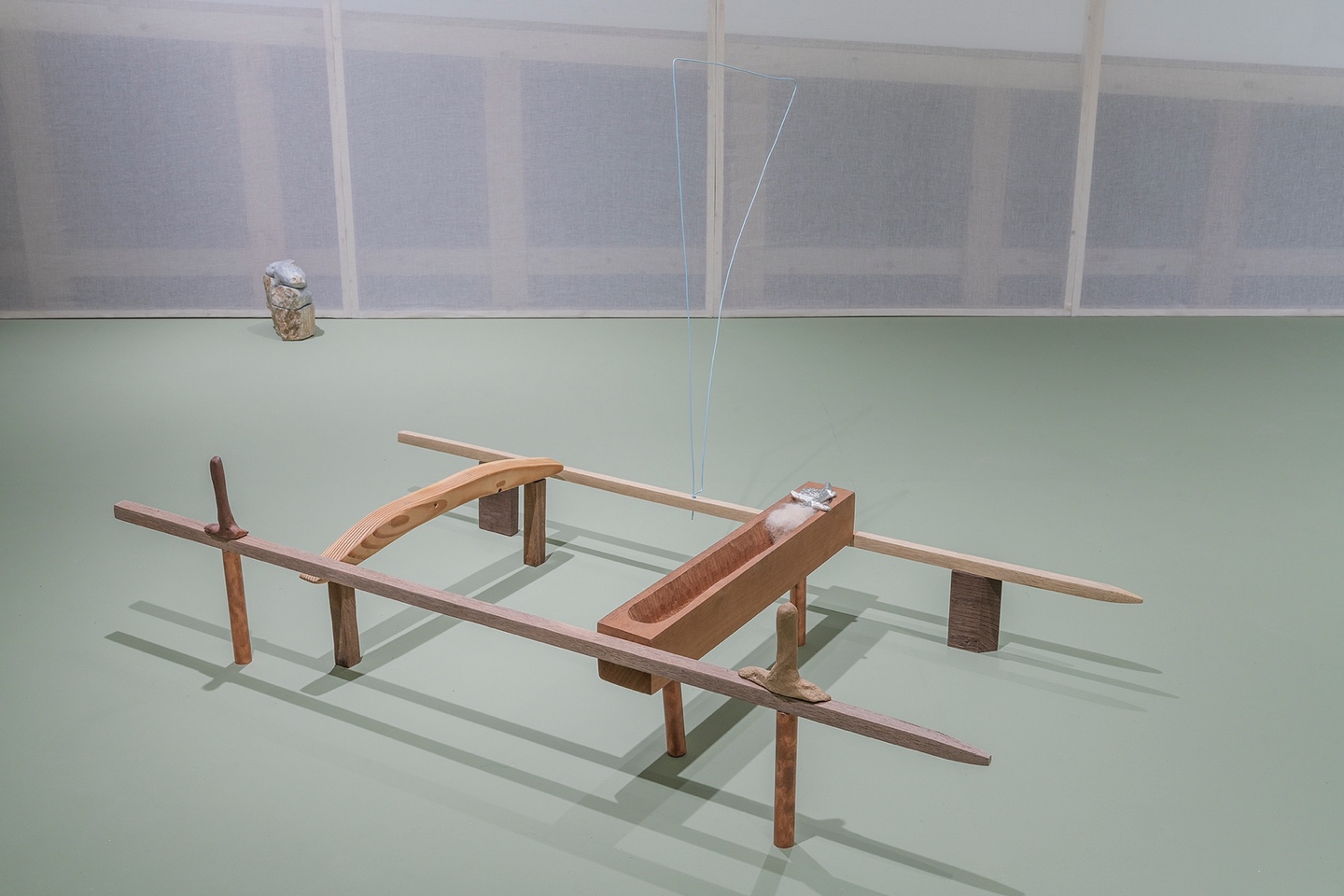
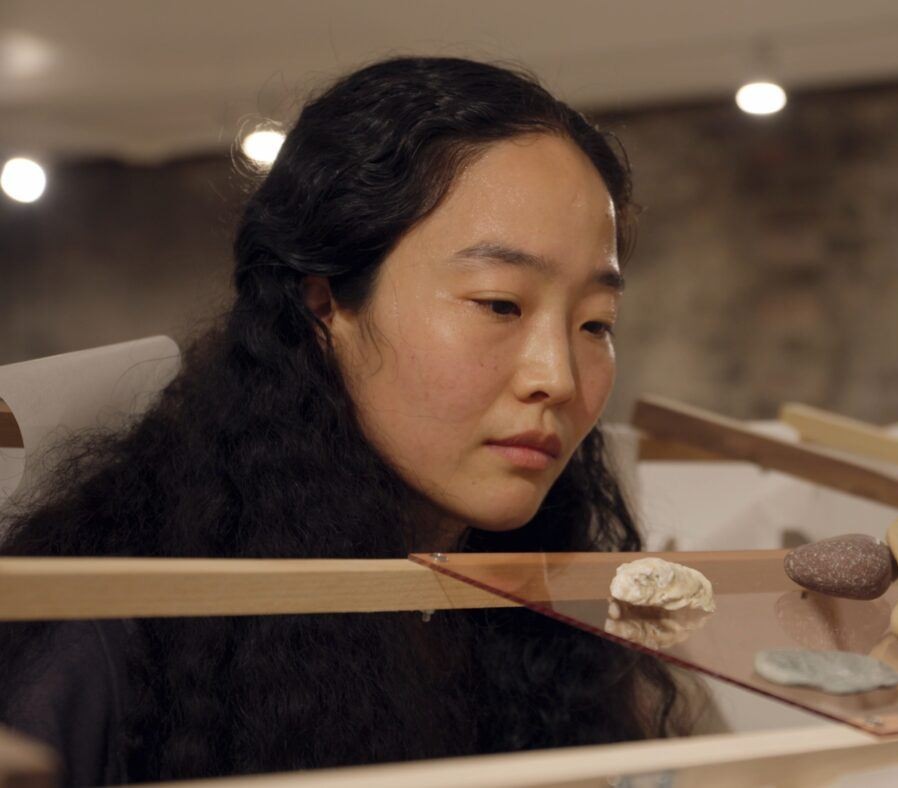
points, a web of speech and movement is woven. The objects range from readily
available mass-produced materials—plywood, timber, tubes, plastic—to things
that are discarded or found, such as stones, shells, or food peels. These
materials acquire form through cutting and joining while retaining their
original properties and colors, without major alterations such as painting.
Although raw materials are shaped into forms, they do not evoke specific
objects or symbols, and therefore do not generate a specific narrative. In
other words, there may be a hole, but it does not point to a cup. Remaining
largely abstract, these objects, when arranged or layered in space, compose a
scene of lines and planes much like a drawing made with a pen. Such abstraction
also guarantees the possibility that the objects may later connect freely with
many different stories. The objects also tend to have forms that a person can
easily move.
Rather than possessing heavy weight or precariously stacked
structures, they are composed of materials and sizes that allow light movement
and suggest a certain elasticity. Some objects consist of large and small
plywood surfaces connected by hinges; when folded down they are flat, but when
erected they become three-dimensional. Like Lygia Clark’s
Bichos, these objects possess a slight animal-like quality
in that their form can autonomously change in response to the hands that hold
them. It is the artist herself who manipulates them; the audience is not
allowed to touch the objects.
Body
The body moves objects while at the same
time traveling among them according to its own narrative agency and decisions.
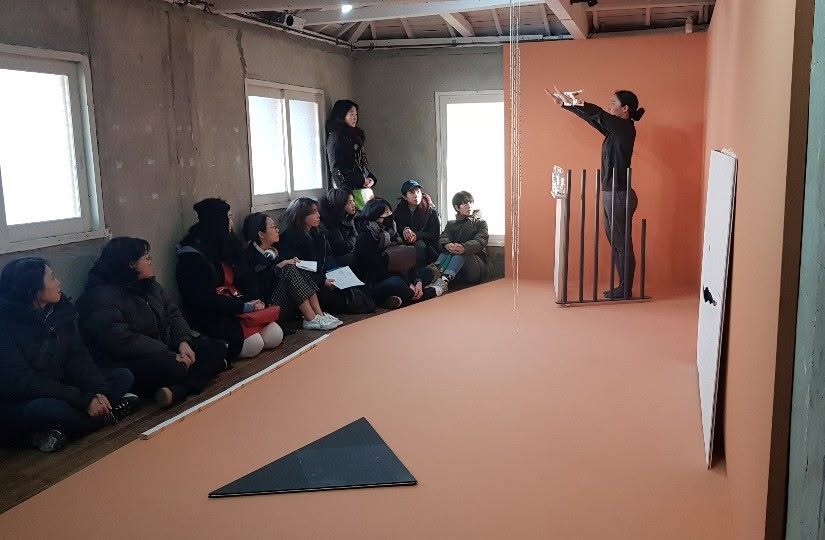
The space in which this body moves is usually limited. Rather than using a wide
stage, the body moves within a close radius centered on the arranged objects.
Because Ro’s objects are generally a series of small elements, the area through
which the body moves is also relatively confined. In the performance
documentation video Meeting the Ceiling (2013), for example,
the space used is the narrow gap between the mattress of a bunk bed and the
ceiling—so low that one cannot raise the body upright.
Maintaining contact
between the ceiling and the body, the performance unfolds almost like contact
improvisation in dance. With the rule that once a part of the body touches the
ceiling it cannot touch it again, the performance continues only for as long as
the performer can maintain this condition. It is a work that responds with
one’s own irregular body to the fixed plane of the ceiling while concentrating
on the sensation of bodily movement. A noticeable feature of the body in Ro’s
performances is the frequent appearance of bending. The artist’s body, which
moves objects, often appears in folded positions—bending, crouching, kneeling.
This emerges partly because the body moves within the constraints of a
restricted space, and partly because these are the specific postures required
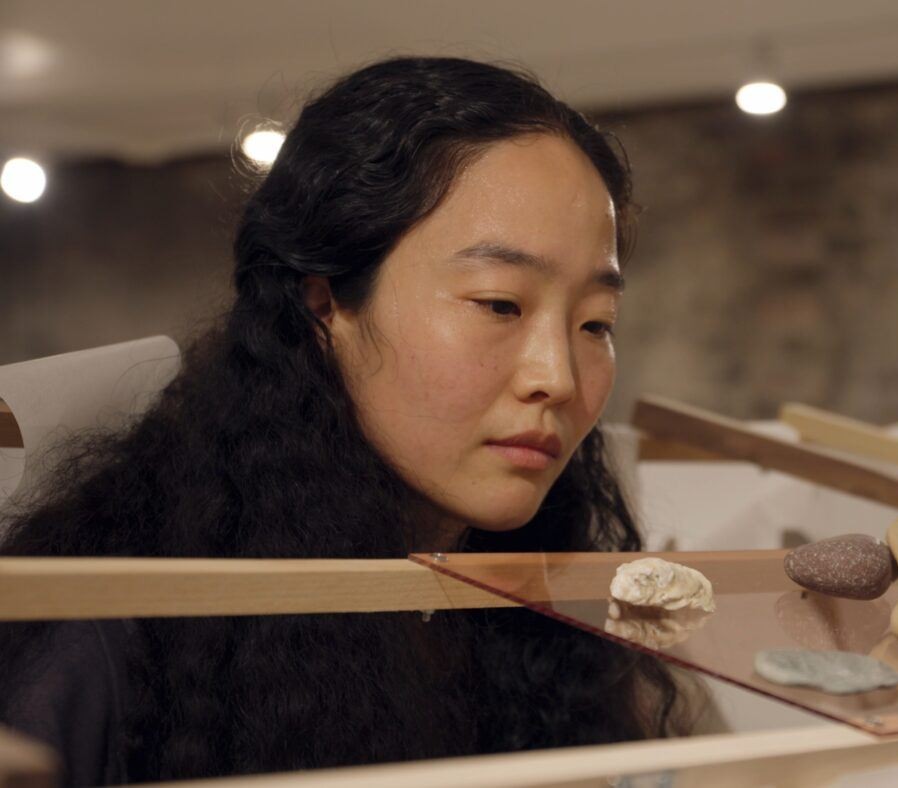
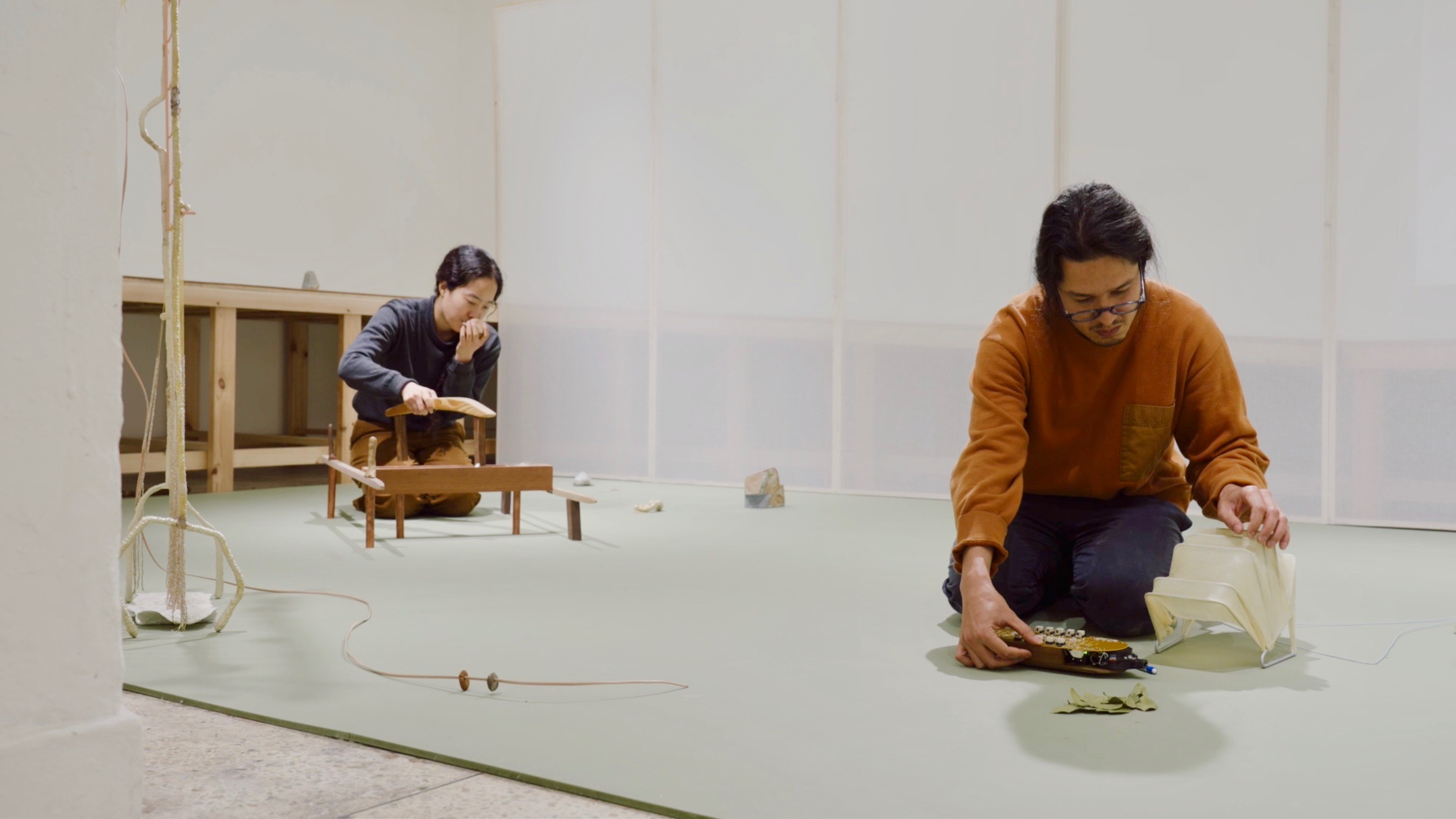
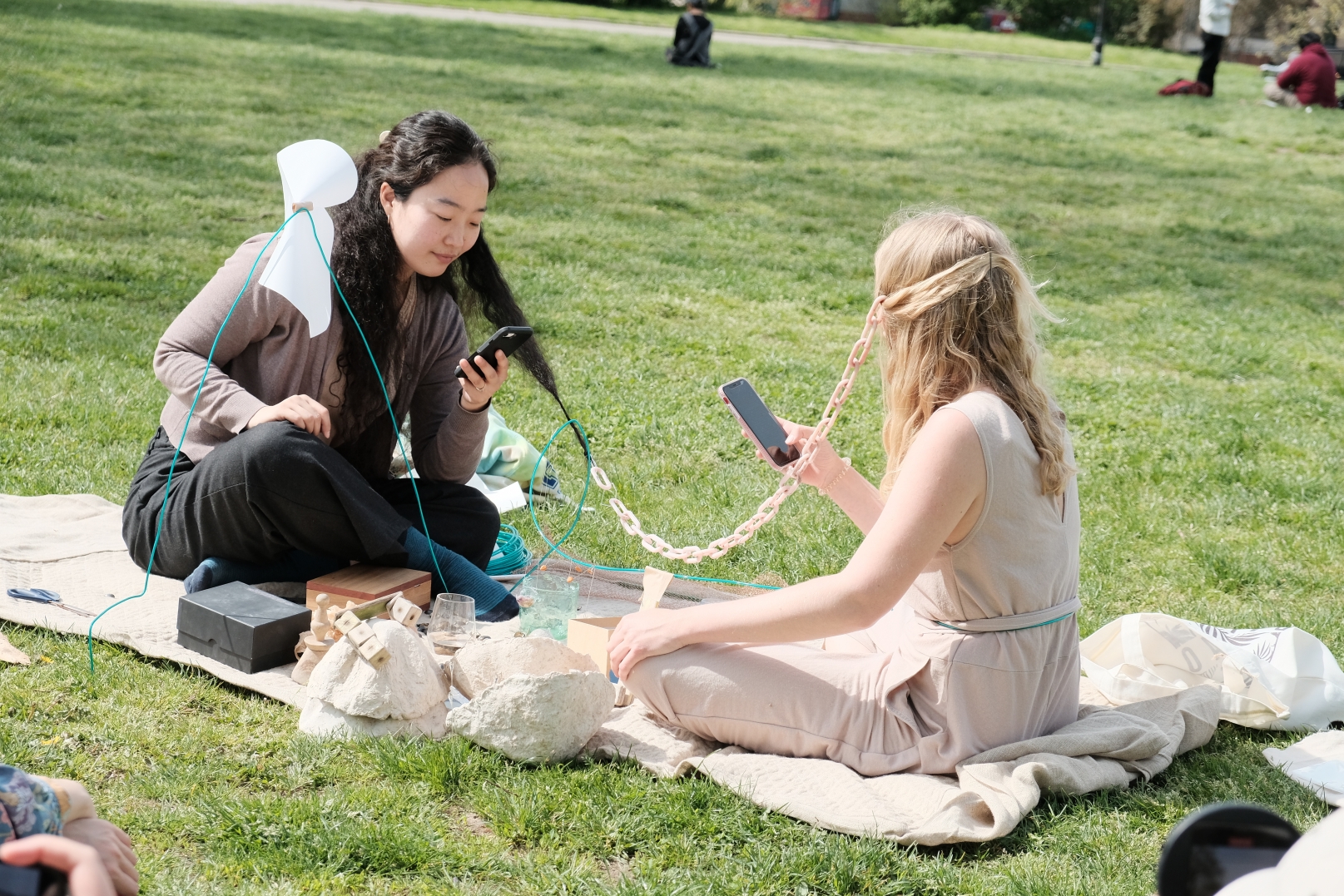
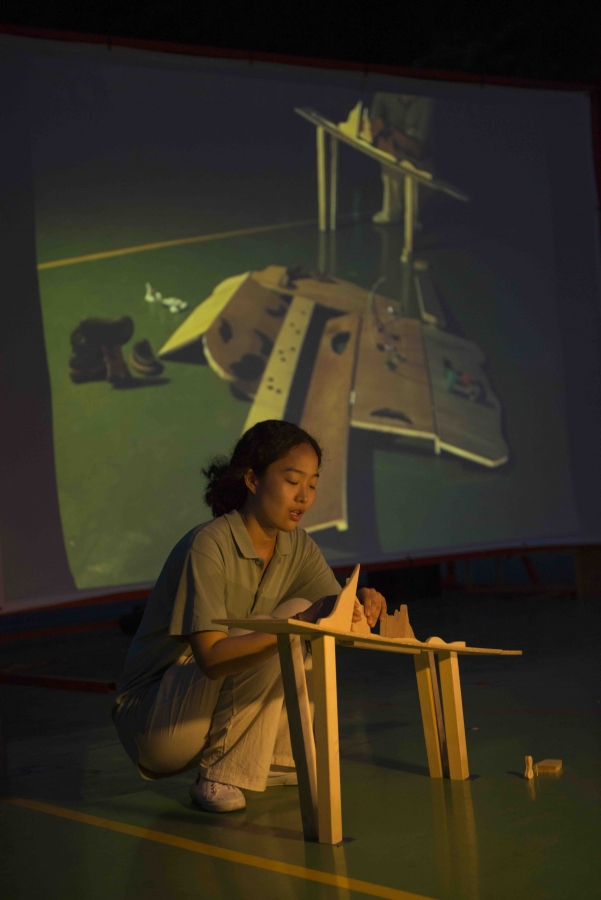
to activate objects. Particularly in the performance LA-sung
(2016–2017), when the artist looks at and moves objects, it gives the
impression of observing a diorama or a miniature landscape. Like a child
building a town with blocks and murmuring through role-play, when the artist
moves the objets while recounting fragmented stories from the past, the objects
become both tools that assist narration and evidence of memory.
Body and Objects
A performance begins by searching for ways
to connect the arranged objects with the body. When the movement of the body is
combined with the rigid materials of objects—such as wood or plastic—the
performer reads the points of connection between them and seeks out the points
where they resist one another. The body plays the role of moving objects, yet
at times it also extends the movement of objects. Rather than imitating the
physical properties of objects, however, the body finds points of connection with
them through the artist’s own distinctive rhythm and mode of bodily movement.
Instead of employing trained, technical gestures, the body reveals the inherent
qualities of its own movement.
The choreography emerges through the alternating
use of two approaches: preserving the form and manner of the artist’s own
movement, and adding functional gestures that operate objects. In the
relationship between body and objects, William Forsythe proposed the concept of
the “choreographic object,” describing installations of objects as devices that
encourage viewers to move their own bodies and generate choreography
themselves. In that context, the emphasis lies on objects assisting bodily
movement. In Hyeree Ro’s performances, however, body and objects move back and
forth between the positions of subject and object.
Language
As language is gradually added to
performances that negotiate between body and space through connection and
resistance, the work unfolds more centrally around narrative. The words within
the performances have uneven contours. Sentences are often left incomplete, and
various words whose relationships before and after remain ambiguous appear and
are replaced within a single scene. The speech, largely monologic, moves
between dialogue and explanation. The tone of voice, devoid of emotional
inflection, is dry, almost like reading a book. Just as the artist uses
materials in their raw state when working with objects, she uses the qualities
of language without processing them.
In particular, she frequently utilizes the
different textures of different languages. By mixing English and Korean, or
Japanese and Korean, she conveys the collision of linguistic textures while
simultaneously alternating between revealing and concealing meaning. As if
adjusting the volume of music, clearer meanings and those that are more deliberately
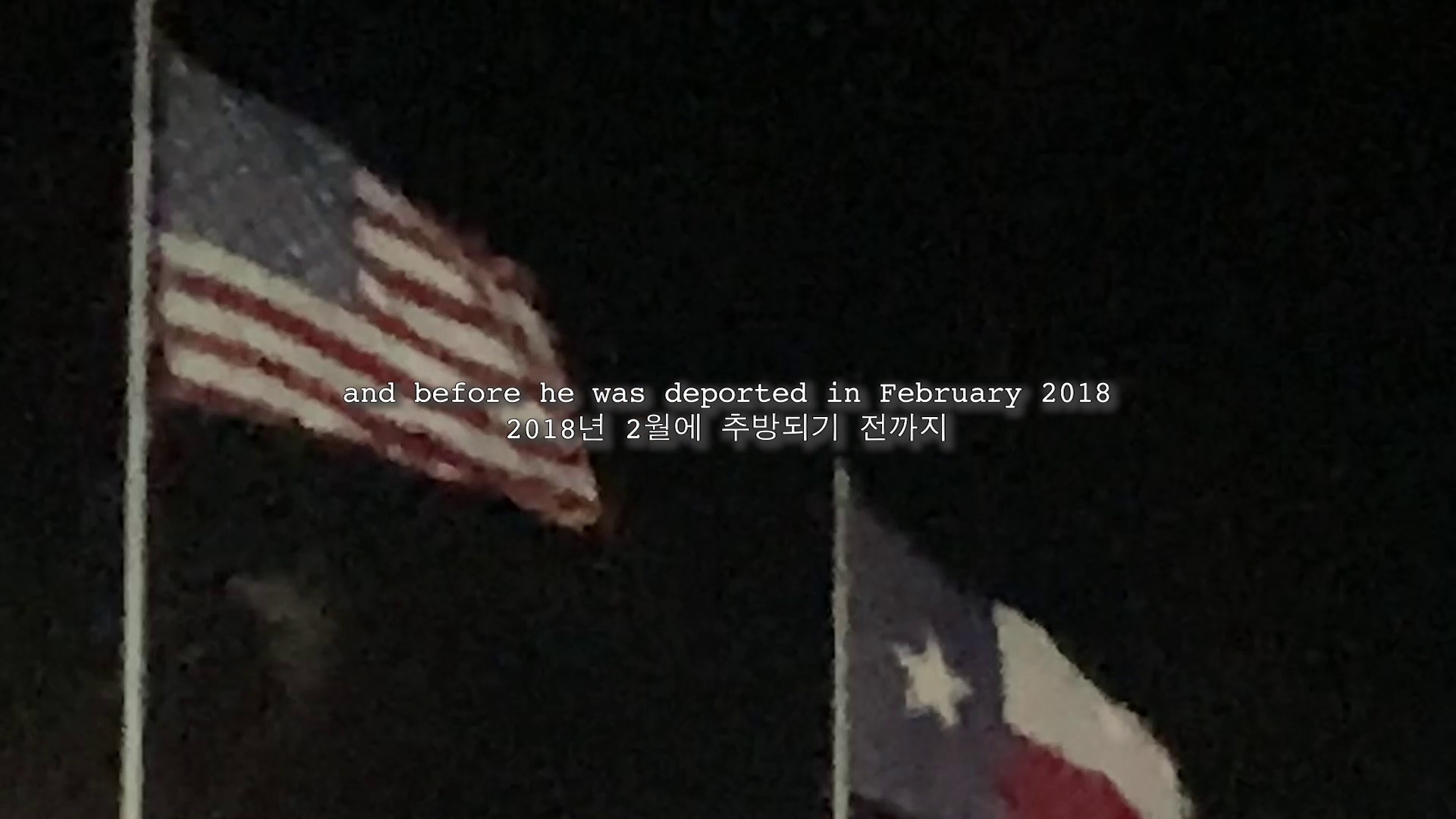
obscured diverge according to the choice of language. In recent works,
autobiographical narratives have appeared. The familial relationship between
father and daughter emerges, along with words referring to specific places such
as LA and particular events.
Yet the story is never fully unfolded. At the
point where the sentence trails off, one can only imagine the complex emotions
surrounding the event. If in LA-sung the father and daughter
appeared as opposing figures, then in the performance
Sandosi (2017), produced during a residency in Japan, the
two participants (the artist and a local resident) appear as a series of
oppositional pairings: someone in their seventies and someone in their
thirties, man and woman, Japanese and Korean, audience member and artist,
retired pensioner and precarious laborer. This, too, remains a sequence of
incomplete dialogues. Kneeling across from one another almost as if performing
a ritual, their movements partially convey the story through the form of
objects, while language carries another portion of it.
The Body, Objects, and
Language
“The body circles around the objets, and
movements linking body and object meet the script, where they are selected and
revised once again.”
“Not this or that, but the possibility of
a body and a place that are this and that at the same time.”
Objects Before and After
Performance
Unfortunately, I have never seen the
artist’s performances in person. Everything I say about these performances is
based on what I have seen on screen. The artist’s posture of sitting bent over,
as it appears on screen, may simply seem more pronounced because it fills the
camera frame. The objects arranged on the floor may appear close in the lens,
yet in reality it is impossible to know how large the surrounding empty space
outside the artist’s body and objects might be, or how that open outdoor space may
have prepared the viewer’s senses.
One cannot know the parts omitted from the
performance documentation—for instance, how the artist entered or exited the
scene, what temperature the midday air held on that day, or how the words
spoken in the performance dispersed through the air. This connects to the
question of how an artist who works simultaneously with objects and events, and
who presents both performance and exhibition, negotiates the differing
temporalities of these two forms. What meaning do objects hold before and after
performance?
To what extent are the objects left in the exhibition connected to
the performance, and do they acquire independent meaning once the performance
has ended? Or do they remain strongly entangled with gestures and speech as
signs that recall the performance? So far, when the artist performs within an
exhibition, she has often chosen to record the performance and present it
alongside the sculptures as a form of documentation. Is this merely a secondary
option, and if so, what might be the primary method still waiting to be
explored?
New Work — Seseri
The title of the artist’s new work
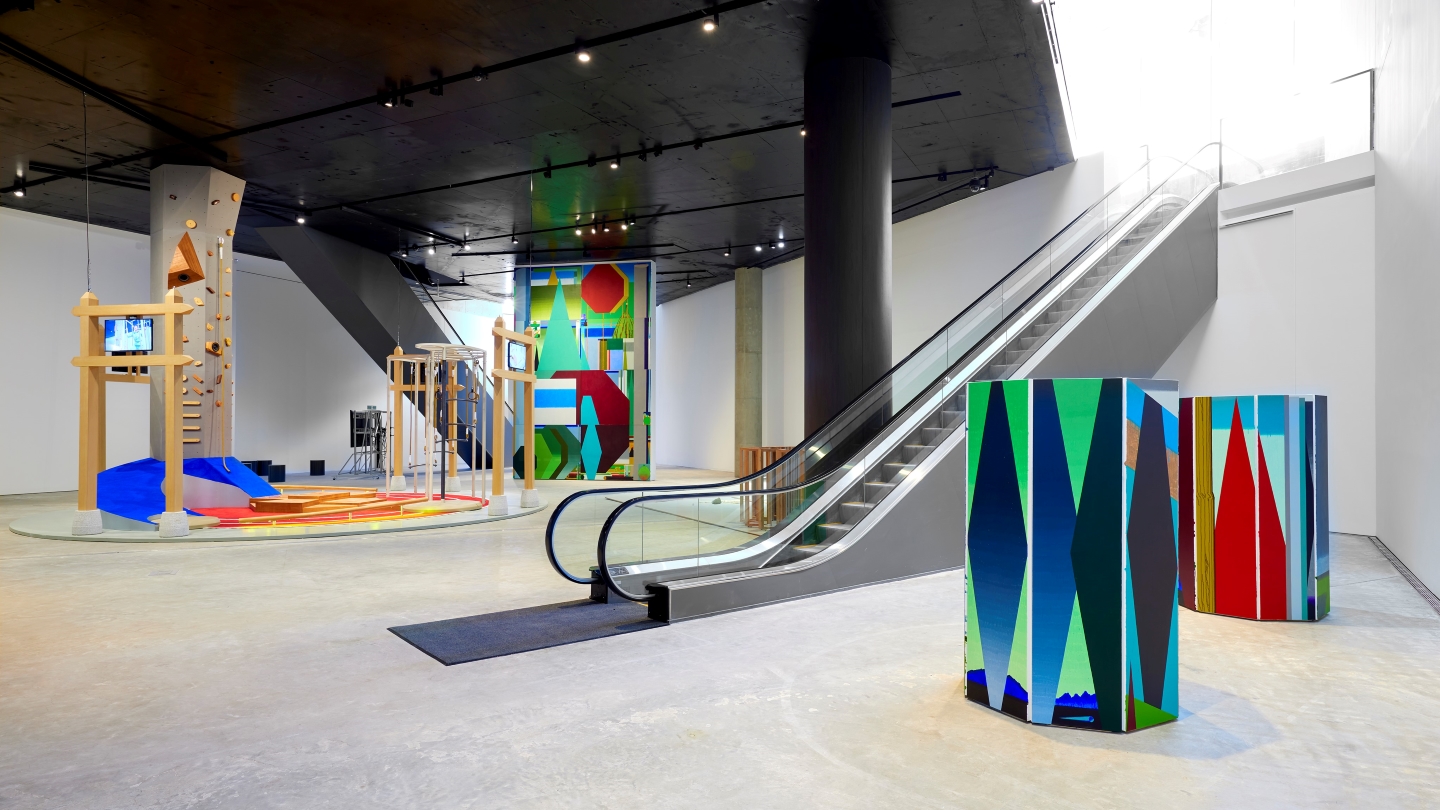
introduced in the Pool Lab exhibition 《Jungle Gym》 is Seseri. “Seseri” refers to chicken neck meat,
one among the many finely distinguished names used for different parts of a
chicken. Like Sandosi (2017), this work reflects the
artist’s recent personal experiences and thoughts formed through traveling
between Japan and Korea. Just as the word “neck meat” unexpectedly evokes a
chilling sensation, the artist contemplates the connection between everyday
acts such as eating and the idea of death.
In particular, she recalls the
differences in historical understanding that she newly discovered with surprise
in the everyday contexts of Japan and Korea, as well as the shadows of violence
or threat embedded within daily life. Whether these reflections will yet be
articulated as a concrete narrative within the work remains uncertain. As in
Sandosi, where two markedly different individuals were
placed face to face, she once again attempts to confront things that seem
unable to meet: inside and outside, piece and whole, plane and volume,
individual and history, life and death, front and back, and so on.
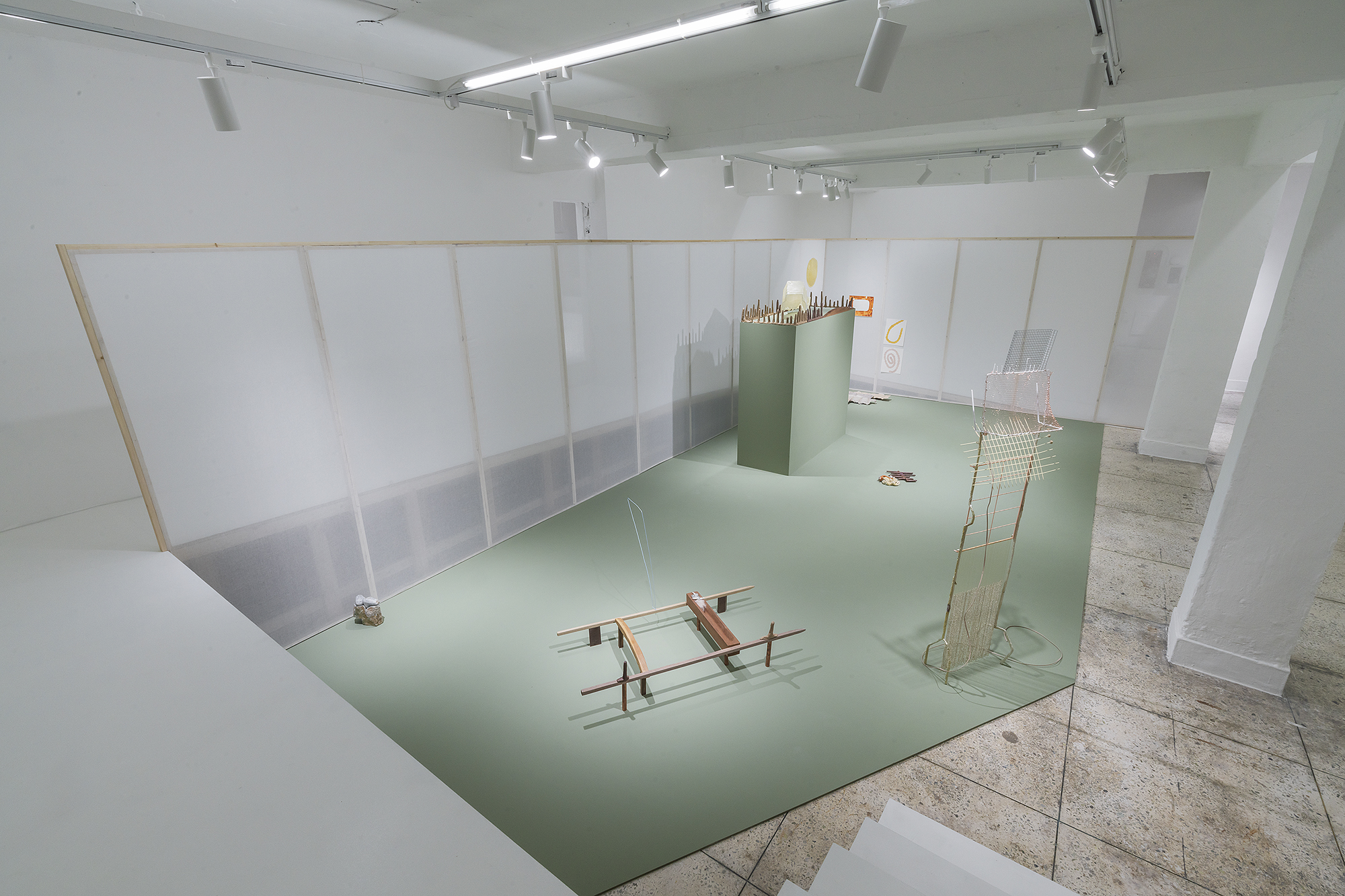
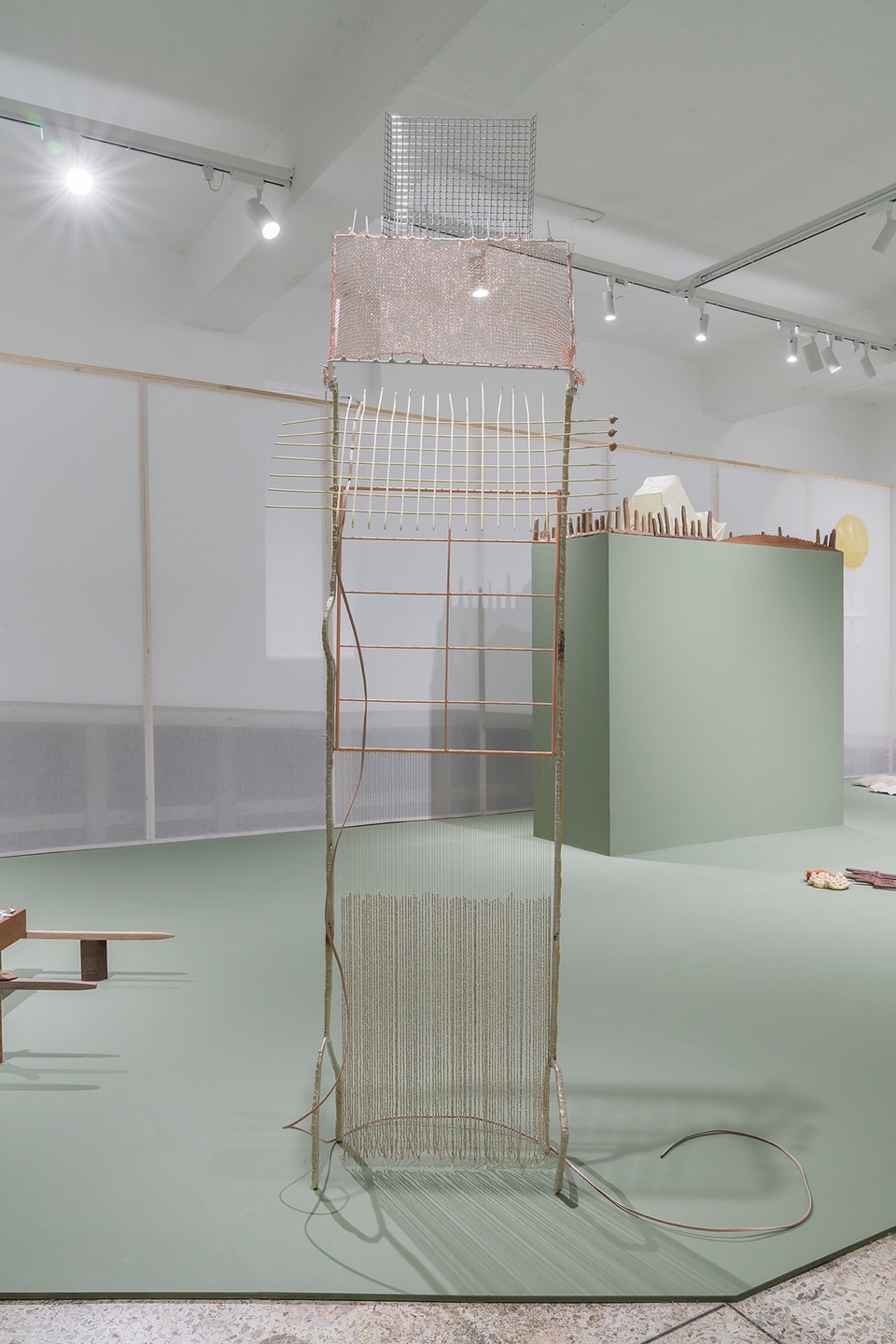
A list of
such oppositions is presented and followed within objects, installation
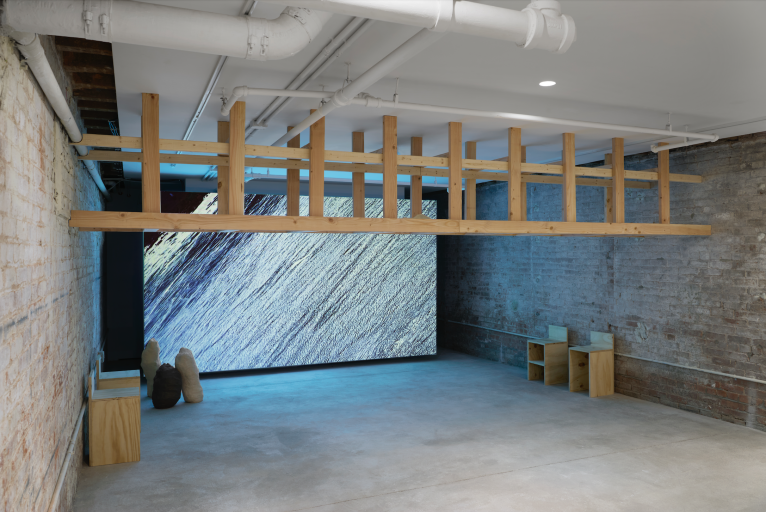
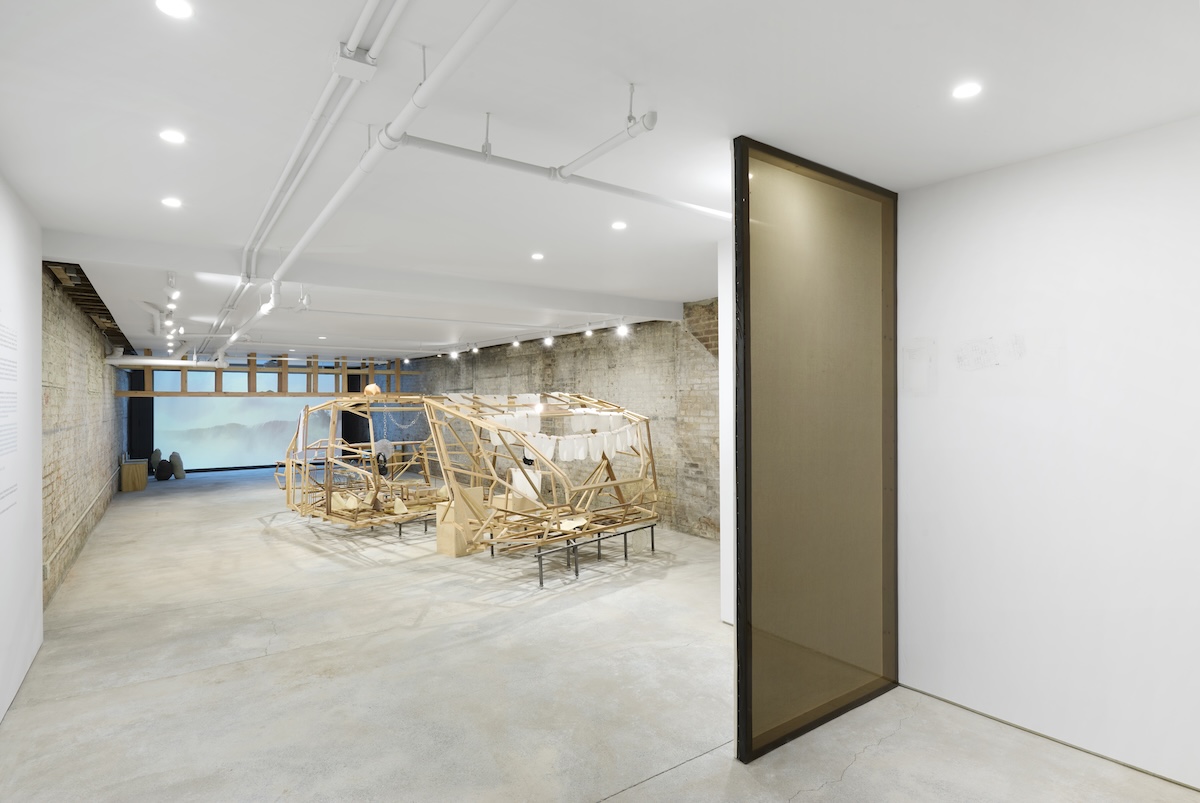
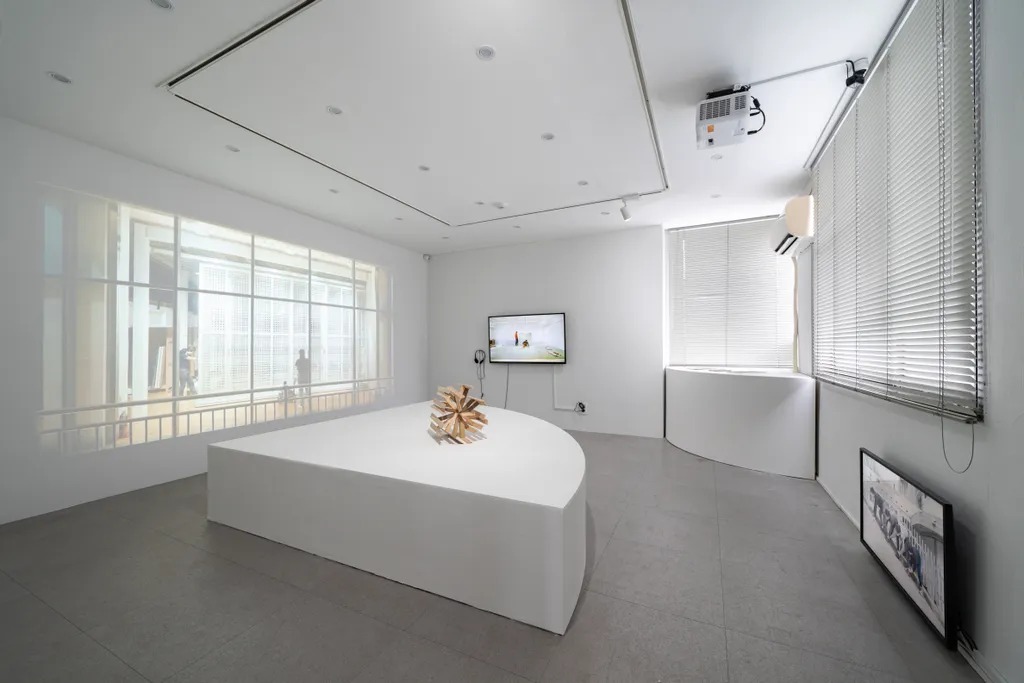
performance, and video. This work introduces several new attempts compared to
the artist’s previous works. First, the background of the place where objects
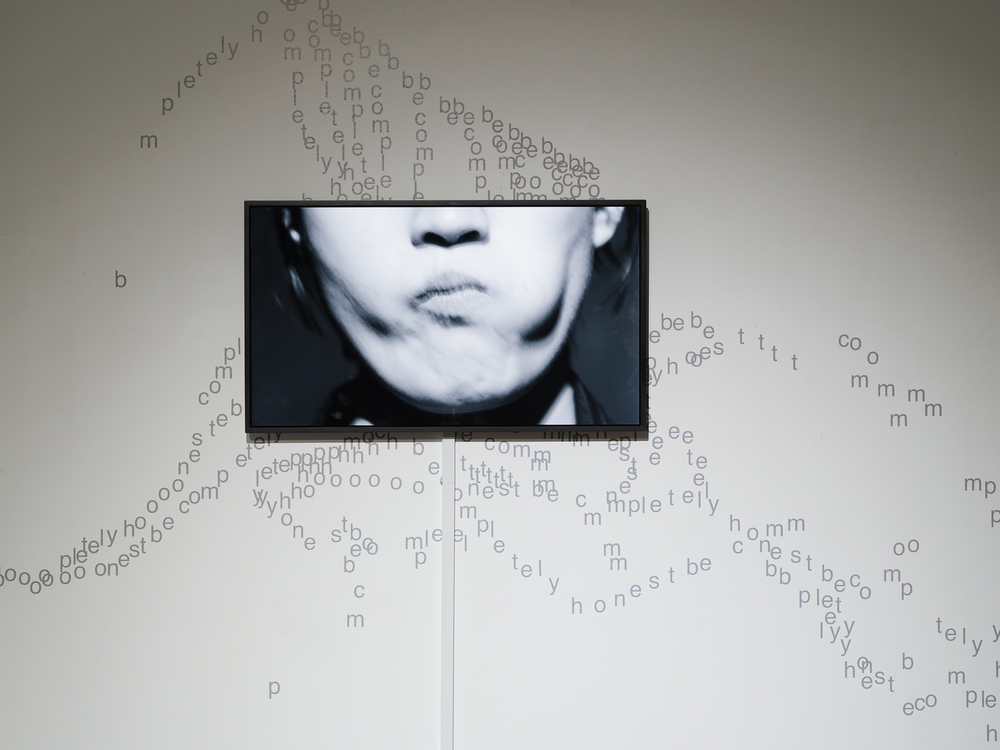
are installed is defined as a clear plane. Second, a voice is continuously
placed in the space as sound, installed separately from the video. The sound is
not subordinate to the video but exists as one element of the installation. The
materiality of sound may highlight the sense of event and temporality within
the fixed landscape of arranged objects.
At the opening of the exhibition, the
artist will perform. It will be an opportunity to look more closely at the
experience that became the starting point of Seseri. Instead
of leaving a record of the performance in the exhibition space, she has chosen
to install separate sound and video elements within the installation itself as
a new attempt and modification of her practice. In doing so, she may be
experimenting with a way for objects to exist both in conjunction with
performance and as independent entities. One can anticipate and hope for such a
possibility.