Hyeree Ro’s portfolio contains
performances that are in the process of transformation and expansion, taking
the ongoing series ‘LA-sung’ as a point of departure. The reason for taking
‘LA-sung’ (2016) as a starting point is that there is a clear moment of change
between the works she produced before and after this series. The nature of the
objects she creates, as well as the way she handles objects or intervenes in
their world, shifts noticeably. In addition, the method by which she uses her
own body as a performer and unfolds a dramatic situation appears to have
developed into a more distinctive approach.
It is useful to briefly review the
performances that preceded the ‘LA-sung’ series. As the titles already suggest,
earlier performances such as Object That Cannot Go Outside
(2015), Object That Cannot Go Outside Drawing (2015),
Meeting the Ceiling (2013), and Samsa
(2015) primarily revolved around the condition or form of objects. In the world
of objects, which moves according to its own logic, the performer is
incorporated into that world according to the same logic of objects, using her
own body to form a counterforce with the objects.
The performer attempts to
alter the organization or structure of the objects and to erect or sustain
them, but often becomes entangled in the condition of the objects—twisted,
tangled, collapsing—ending the performance in a state of awkward difficulty
without resolving their structure. Like a struggle destined to fail, the
performer displays gestures of endurance and persistence—holding on,
stretching, writhing—within a world of objects determined by materiality and
gravity.
The artist’s intention to lower herself to
the status of an object while elevating objects to subjects with their own
logic is also revealed in the way she explains her works. For example, in the
description of Object That Cannot Go Outside Drawing, she
writes: “The body that appears circles around a square frame while trying to
maintain an object made of thin, long materials in the form of a triangular
frame. The shape of the body is formed in response to the conditions of the two
frames, the triangle and the square.” In phrases such as “the appearing body”
or “the shape of the body is formed in response,” the performer—herself—is
described in passive terms, implying that her actions follow the will of the
objects rather than her own.
In Meeting the Ceiling,
the artist writes, “The body meets the surface of the ceiling according to a
certain rule.” Here the “rule” gives the impression of existing as an absolute
term beyond the artist’s intention. What happens occurs because of the rule,
not because of the artist’s intention.
In Object That Cannot Go
Outside, the performer’s body takes on sequential forms possible
within the square frame of a doorway. The artist’s seemingly superficial
explanation—“Within the given frame the positions of hands and feet change
sequentially, yet it is difficult to clarify the meaning of the sequence. The
body simply forms shapes that continuously change according to each
position”—reveals an attitude of treating her own body as an object.
At first glance, these earlier works seem
disconnected from the ‘LA-sung’ series. In later works, however, she prepares a
stage space and unfolds autobiographical storytelling while handling objects
according to her will. This narrative structure and deliberate handling of
objects were difficult to find in her earlier works. The clue to this shift can
be found in two performances titled Samsa. The first
Samsa (2015) follows the context of earlier works: a kind of
brawl between the artist lying down and an amorphous object covering her body.
The artist attempts to distance herself from the object and separate from it,
but repeatedly fails, ultimately becoming further entangled with it.
In contrast, the second
Samsa (2016) appears to take place in a space designated as
a stage. This time a person enters the object so that it appears as though the
object itself moves. As in the earlier performance, the performer struggles to
create distance between the object and her body before finally stopping while
lying down. The final scene shows two people entering from both sides to rescue
the performer from the object.
With slight artificial touches, the unfolding of
the drama becomes more structured. By establishing the forest as a stage space
that separates stage and audience, and by presenting three narrative
elements—the object changing size, the struggle between the person inside the
object and the object itself, and the rescue of the performer by an external
force—the second Samsa becomes closer to theatrical form.
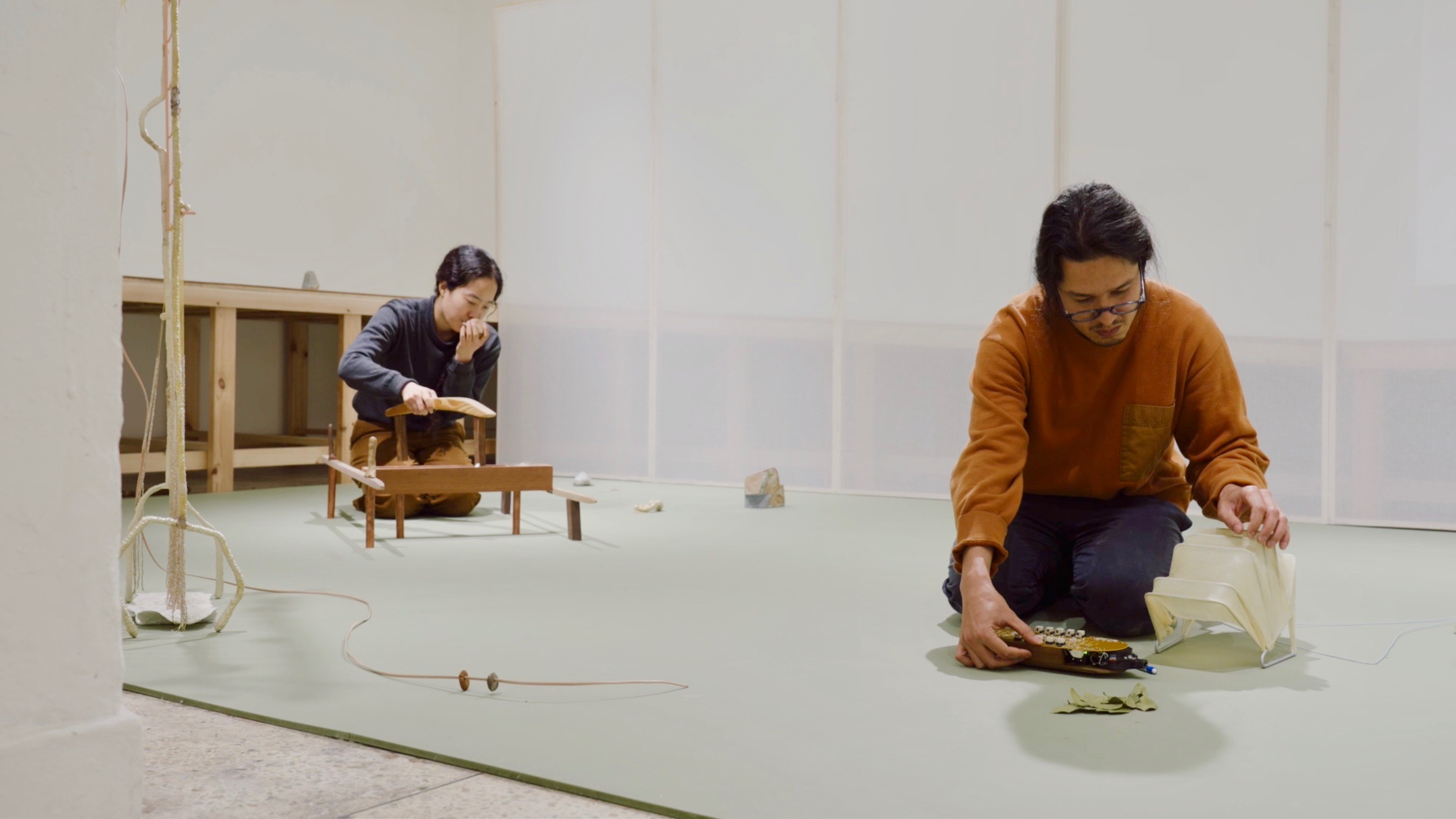
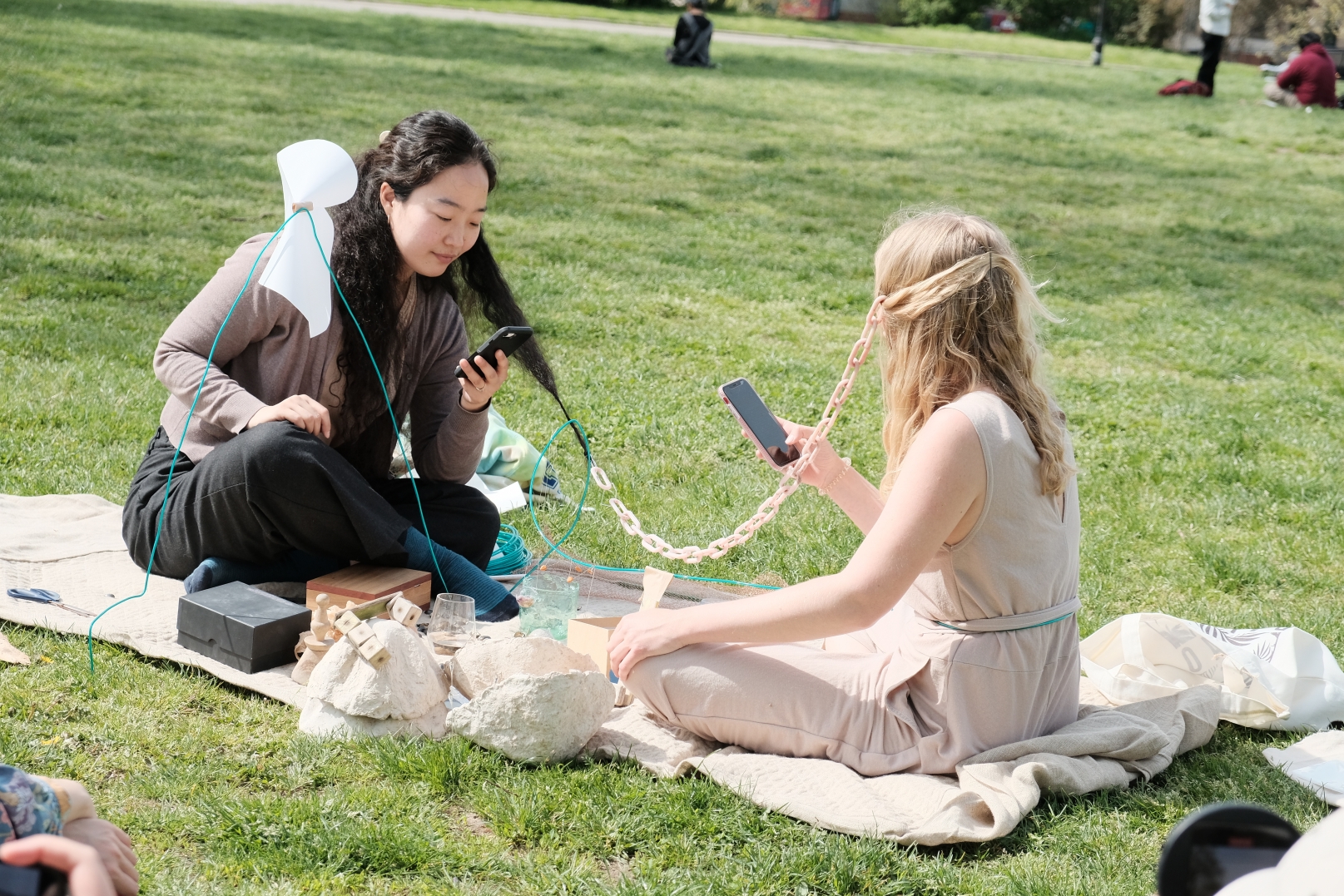
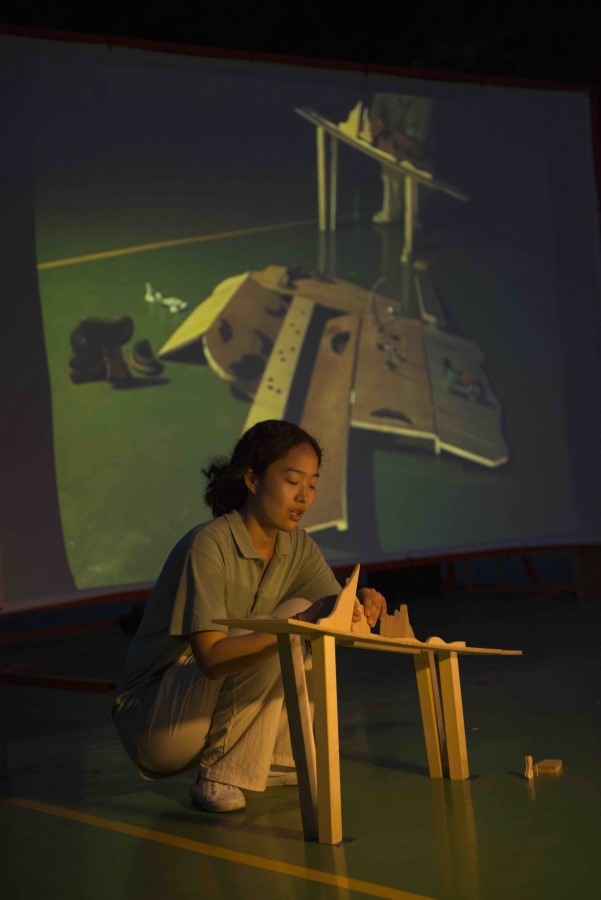
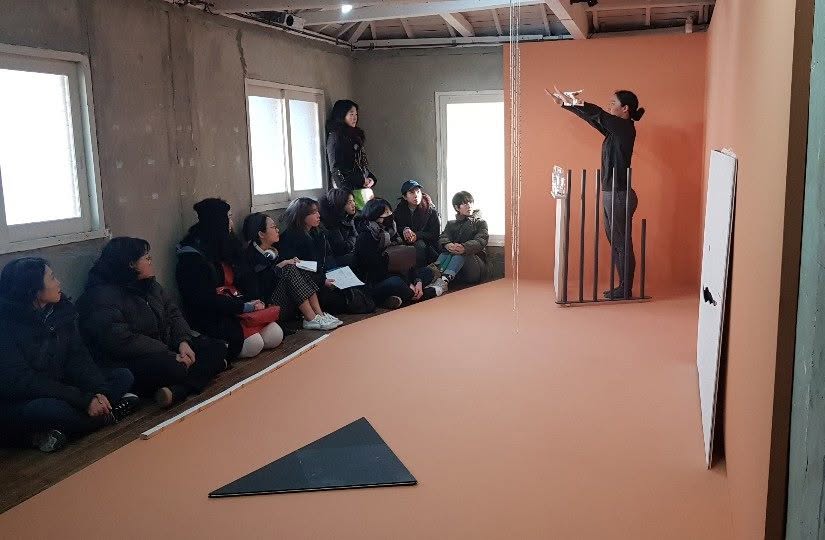
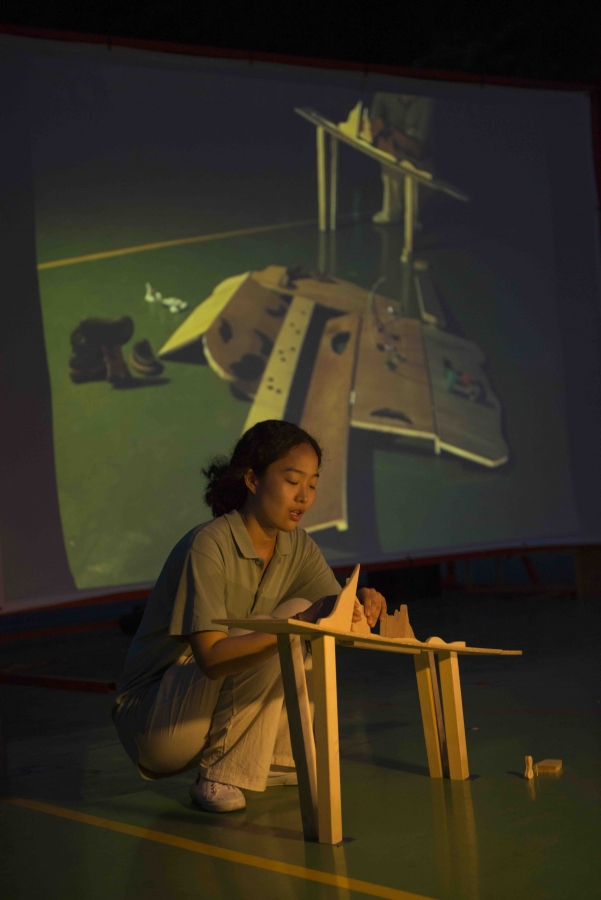
Beginning with the ‘LA-sung’ series, the
artist prepares stage sets and appears as a narrator who manipulates objects
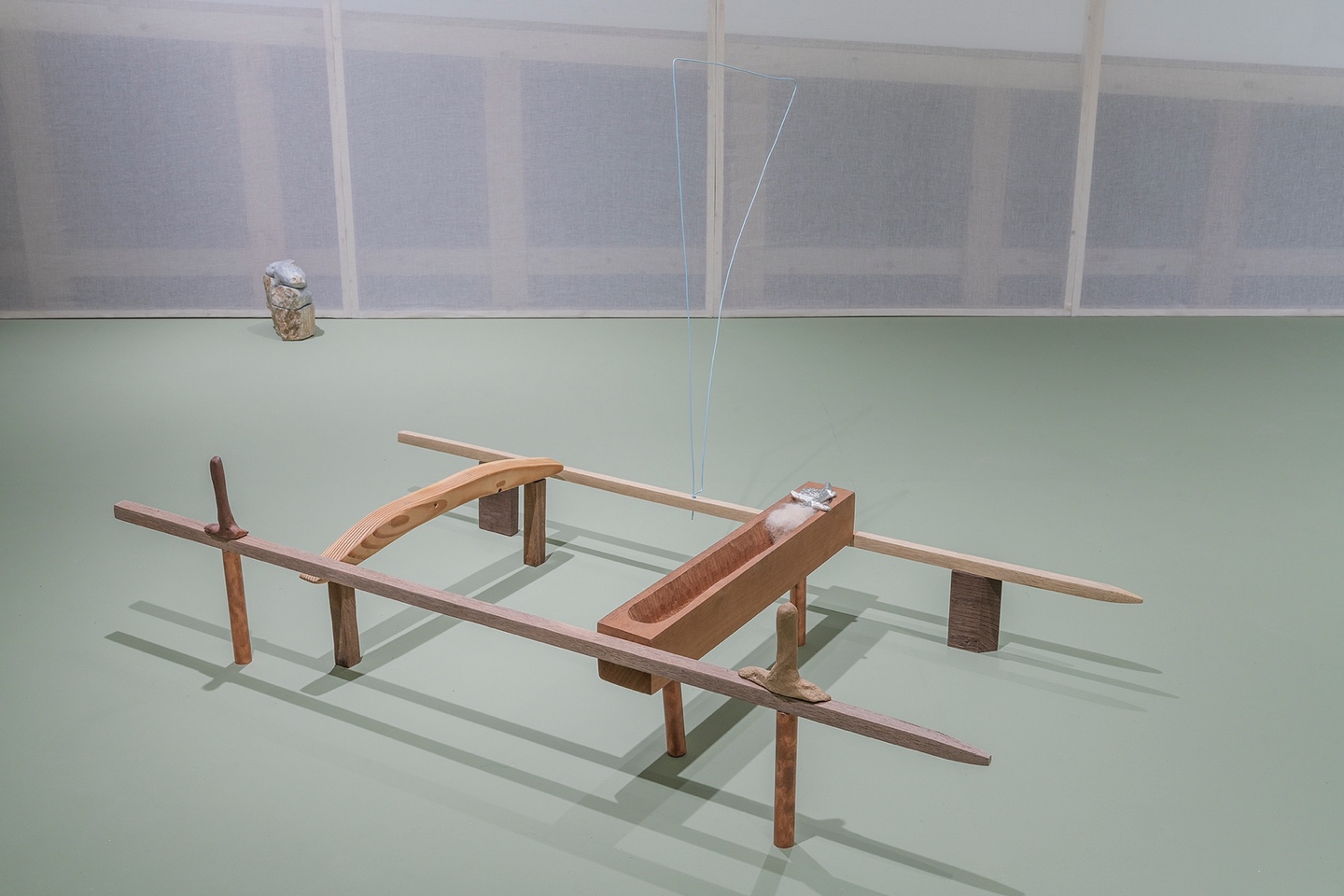
within the performance. The first work in this series, ‘LA-sung’ (2016),
features a stage composed of wooden boards of varying heights roughly the size
of the artist’s body. While handling small objects the size of bottle caps or
pebbles, the artist recounts autobiographical stories about Los Angeles and her
family. The wooden boards appear to symbolize the ground and also a specific
place—Los Angeles—while the performer’s movement across them evokes shifts
between places such as Seoul and Los Angeles, or between figures such as mother
and father.
Following works in the
series—Piano (2016), Thirty-Thousand
Dollars (2017), and Romance (2017)—show further
changes in the relationship between objects (stage devices) and narrative.
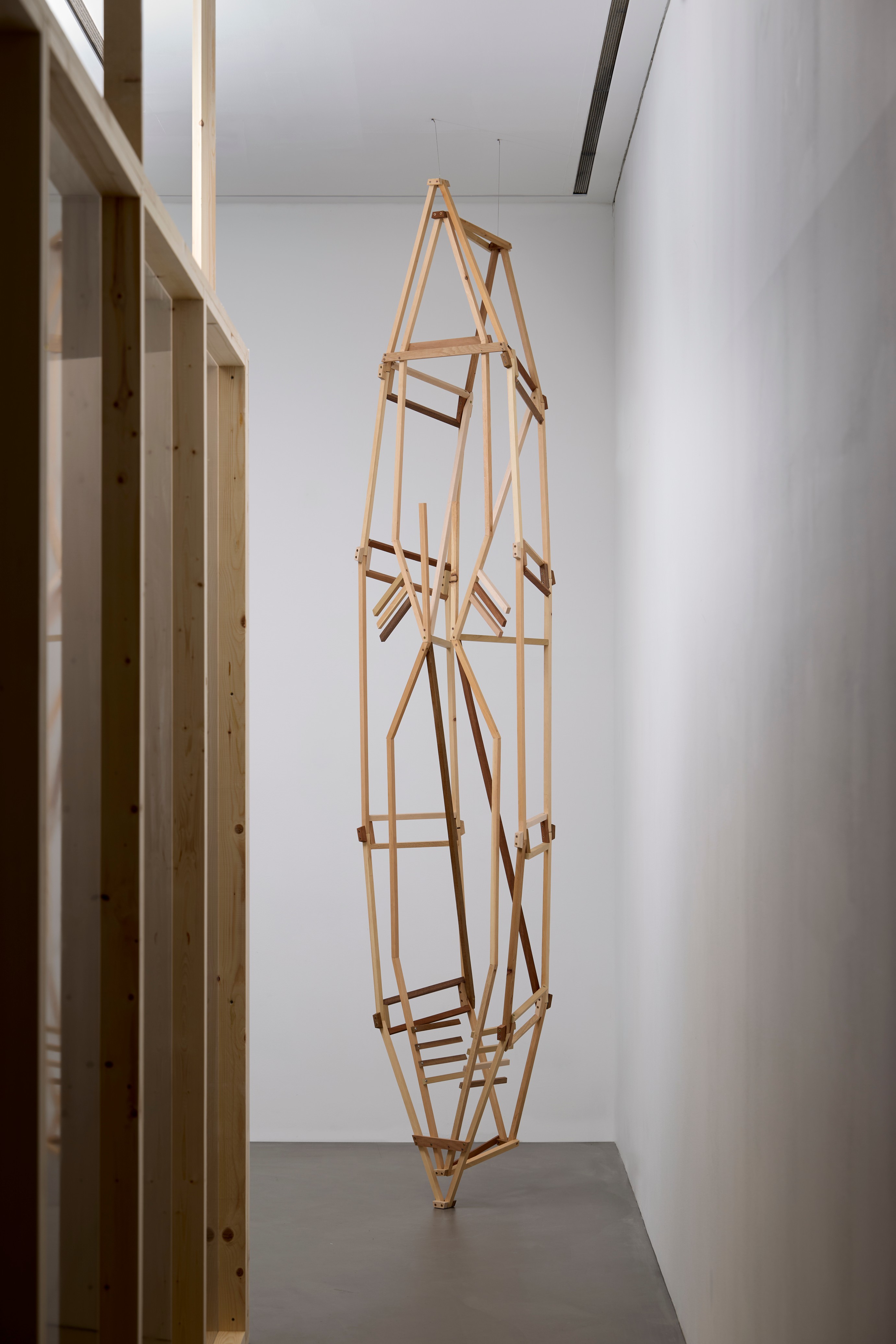
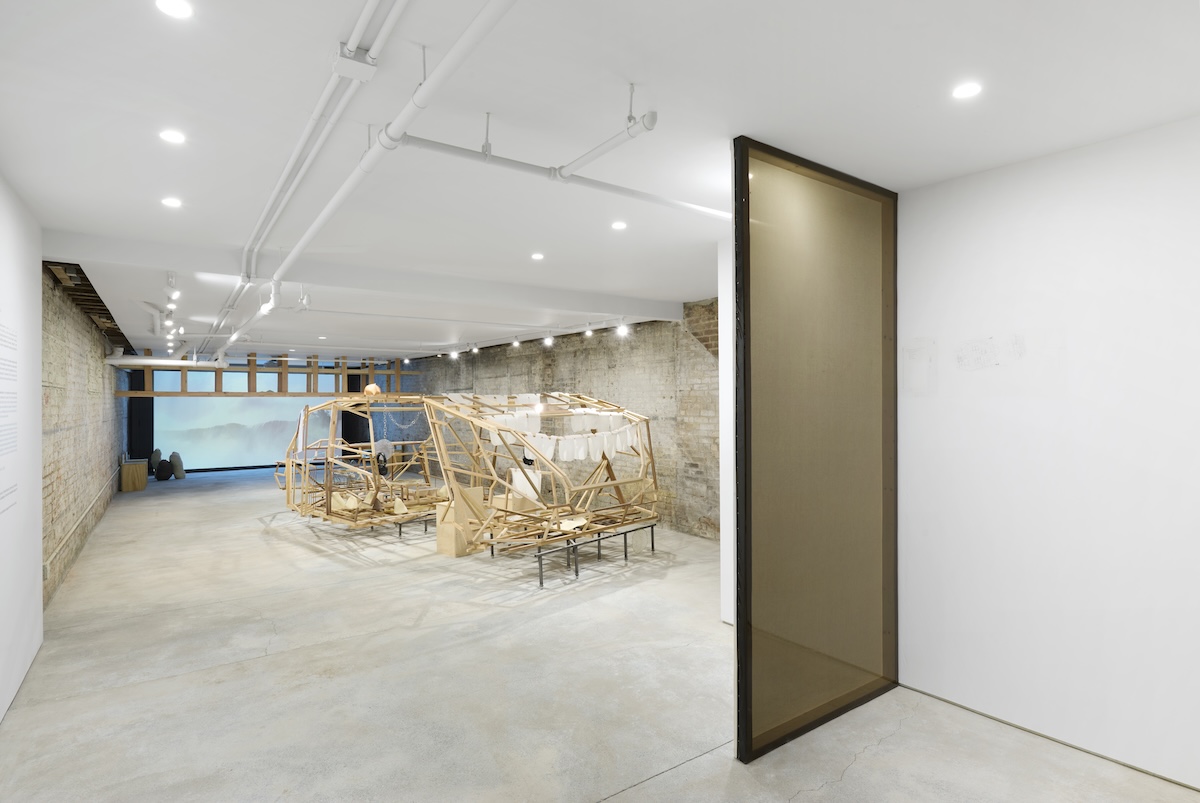
Piano circles around a wooden structure while weaving
fragments of childhood memories. The structure resembles both a house and a
piano. The space “under the piano” appears twice in the story: once as the
place where shards of a broken cup flew deep inside, and again as the hiding
place of a child frightened by a nightmare. It is a space that offers both fear
and comfort.
In the final scene of the performance, a performer lies beneath
the wooden structure, a theatrical transformation that makes the structure
appear as a piano rather than a house. Other gestures—such as shaking a wooden
object with a string when describing a monster from a frightening dream, or
covering one’s face with a hollow object in vague moments—evoke concrete
objects or emotions, making this work more specific than many of her others.
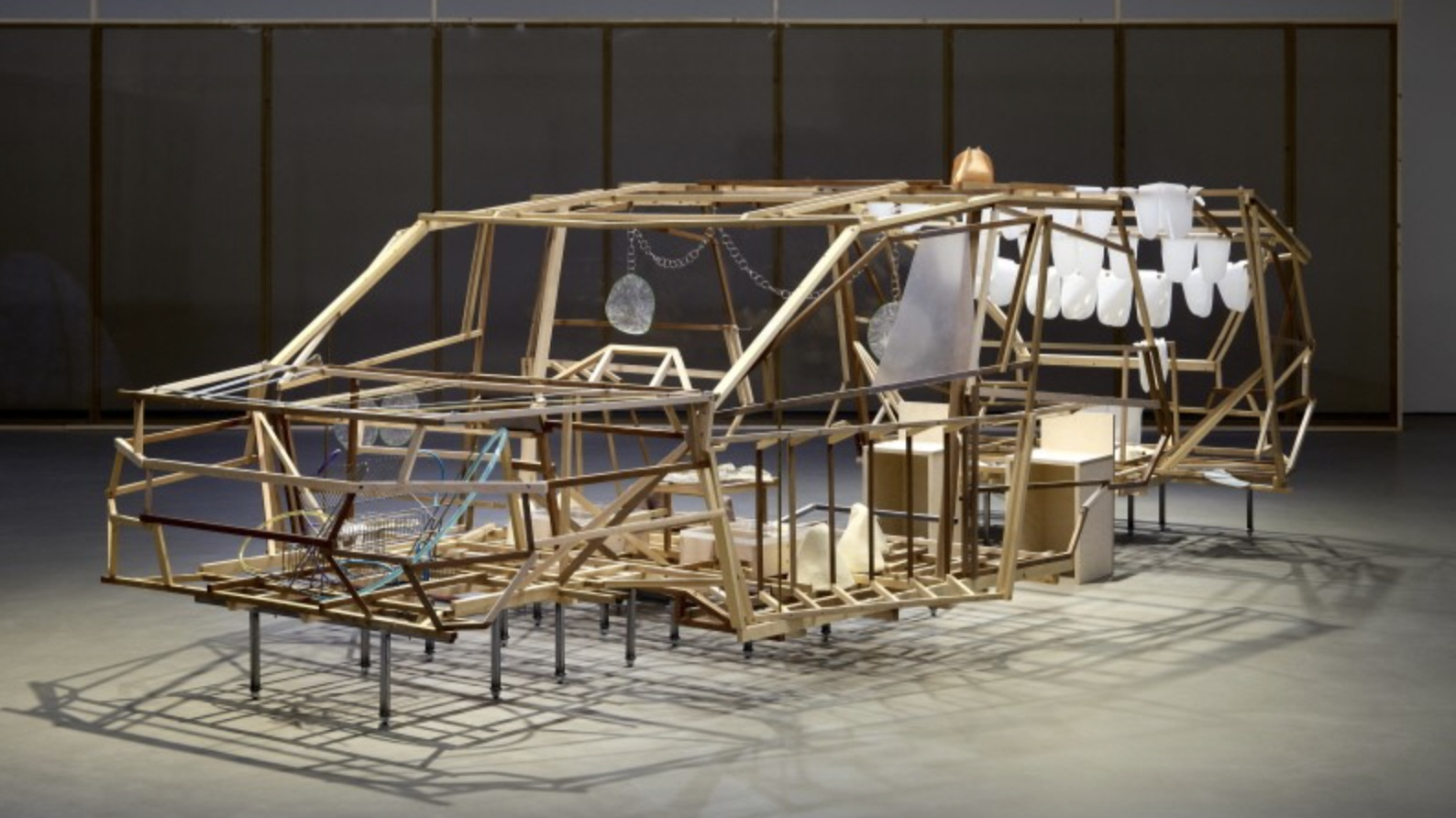
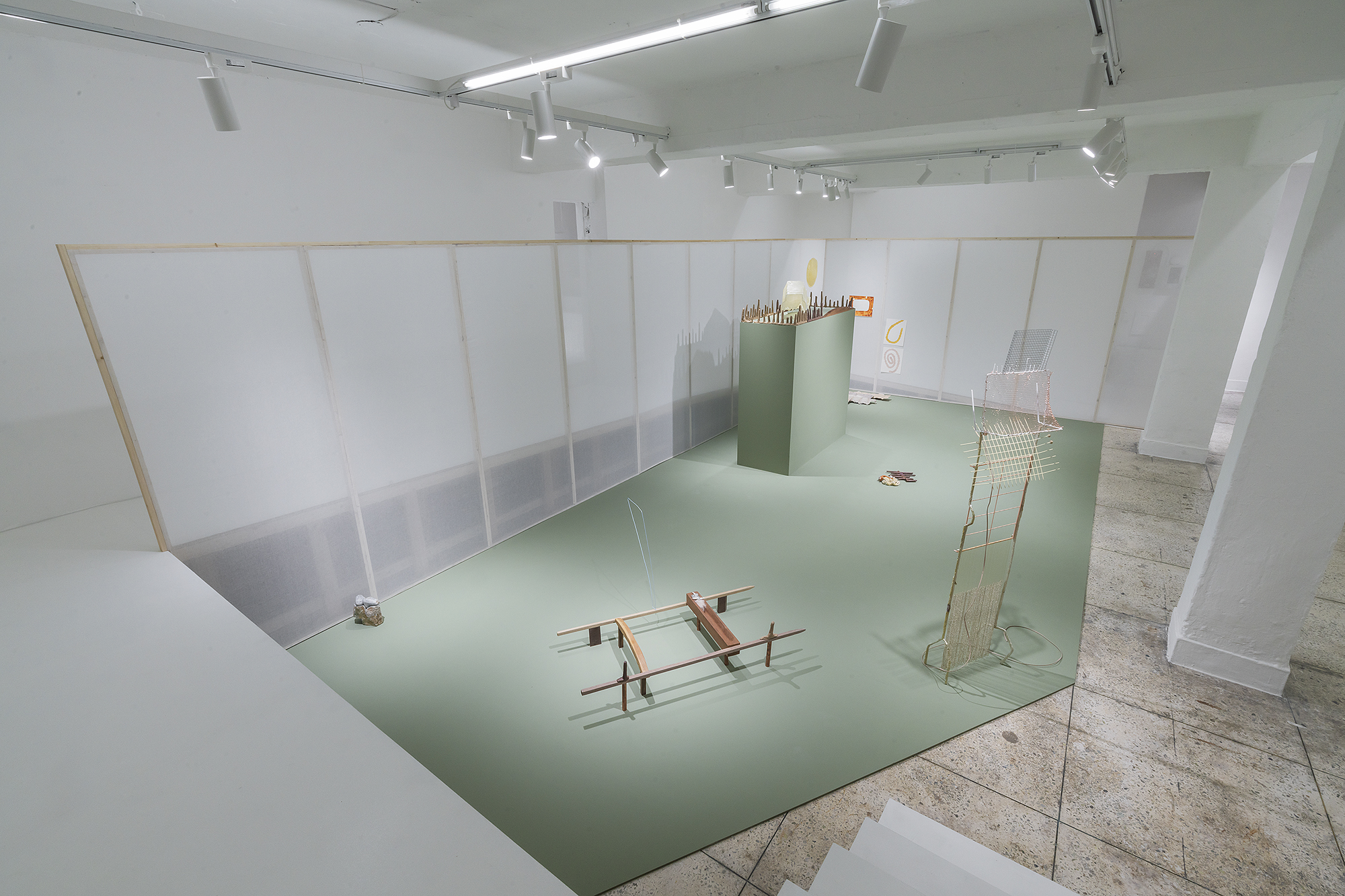
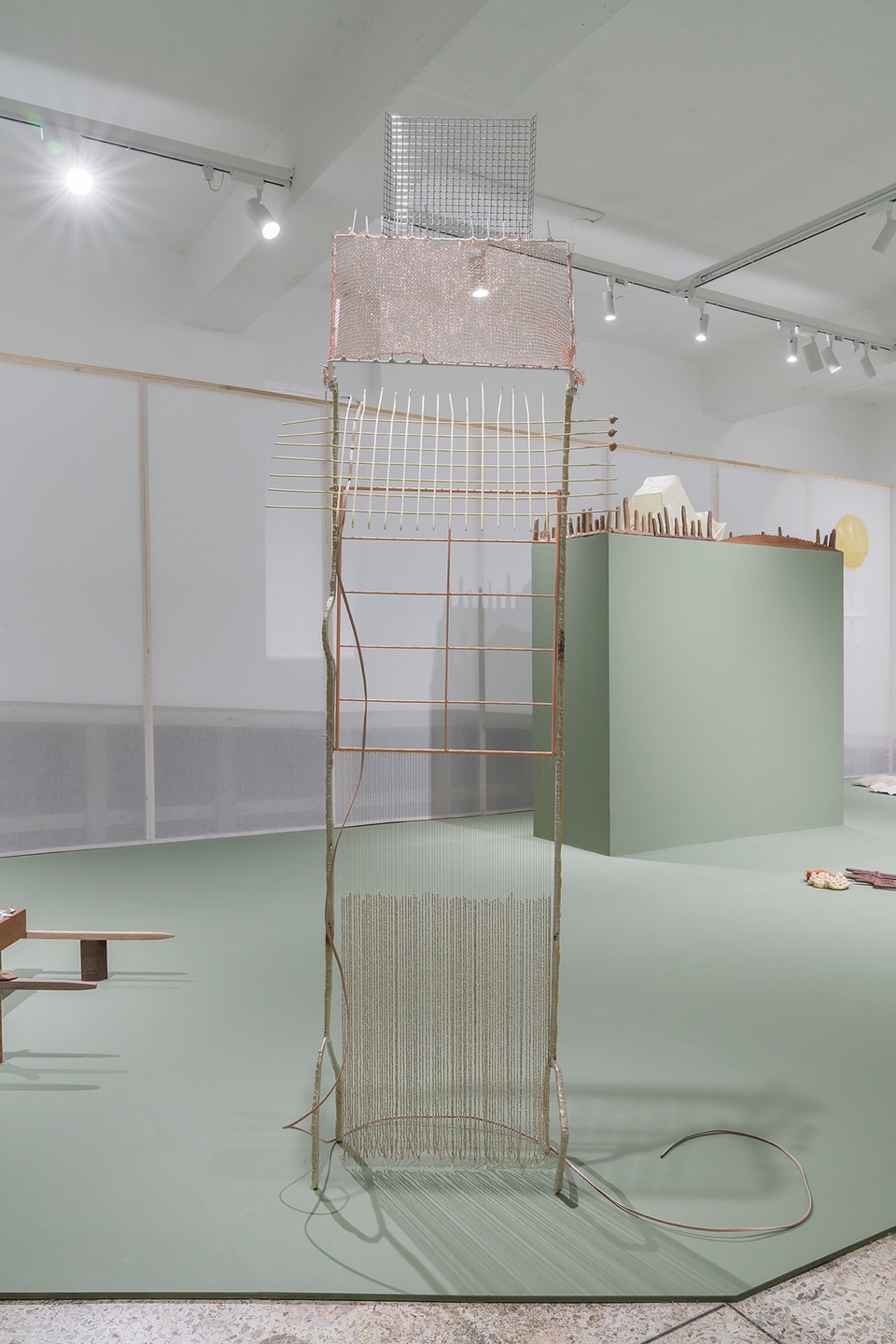
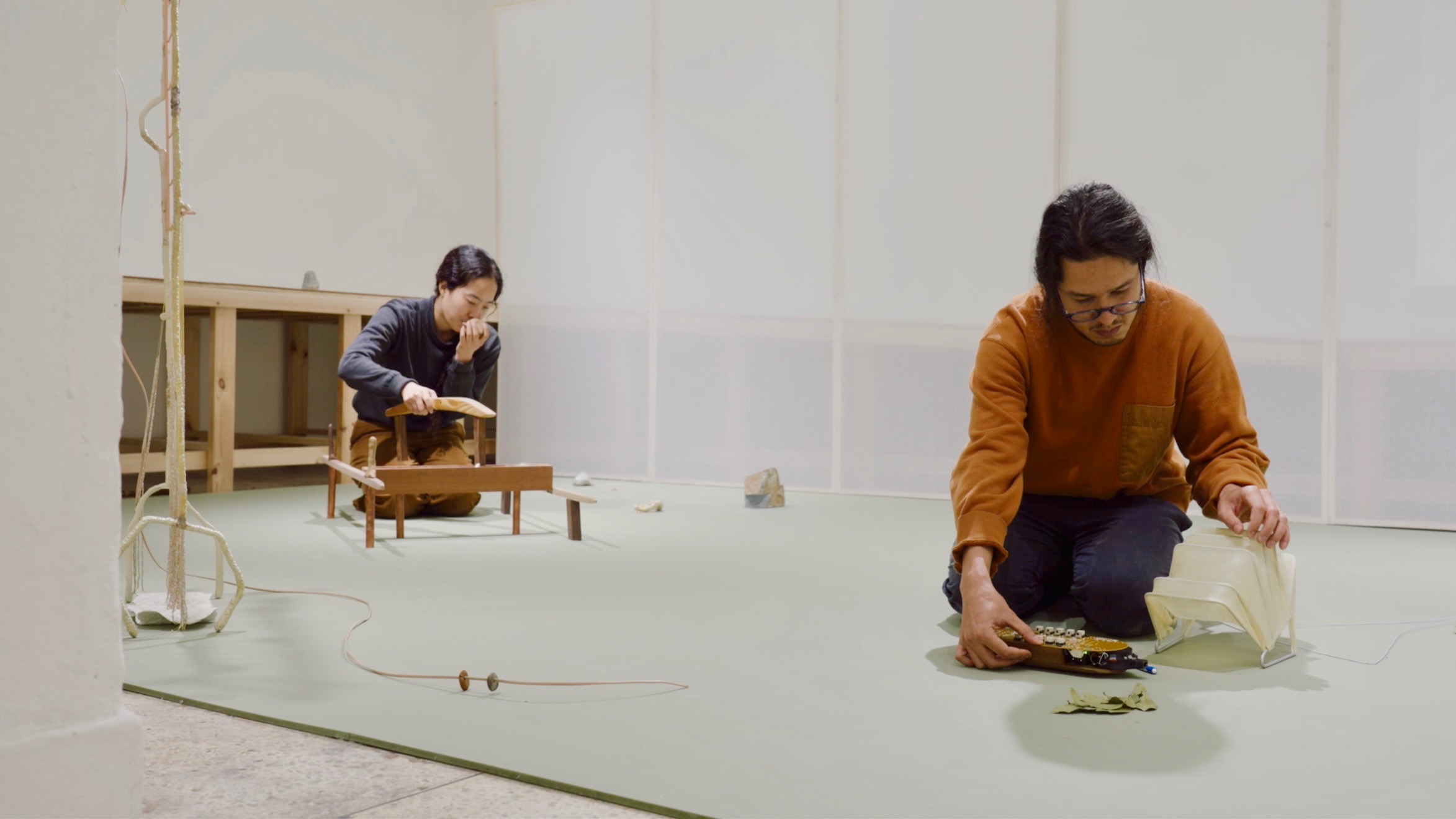
Thirty Thousand Dollars
presents the most expanded stage configuration. The objects on stage appear in
a pre-object state—that is, as materials or physical matter. Small lumps of
clay no larger than a palm are set upright with wires or twigs, while the
performer balances a plank fixed on one side to a steel support against her
forehead while bending forward. Another performer attempts to prop up hinged
wooden boards against the wall. These gestures accompany autobiographical
stories involving numbers—three hundred, three thousand, thirty
thousand—related to debt, reflecting on the meaning of failure within the
interplay between attempts at standing upright and the collapse dictated by
material forces.
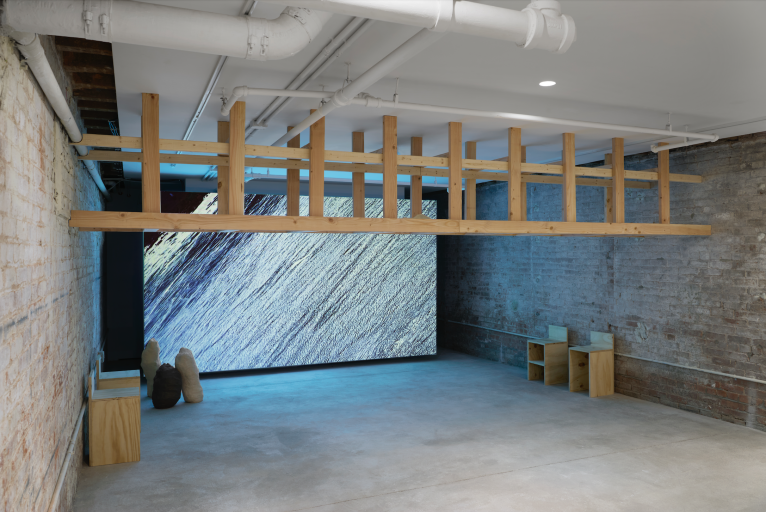
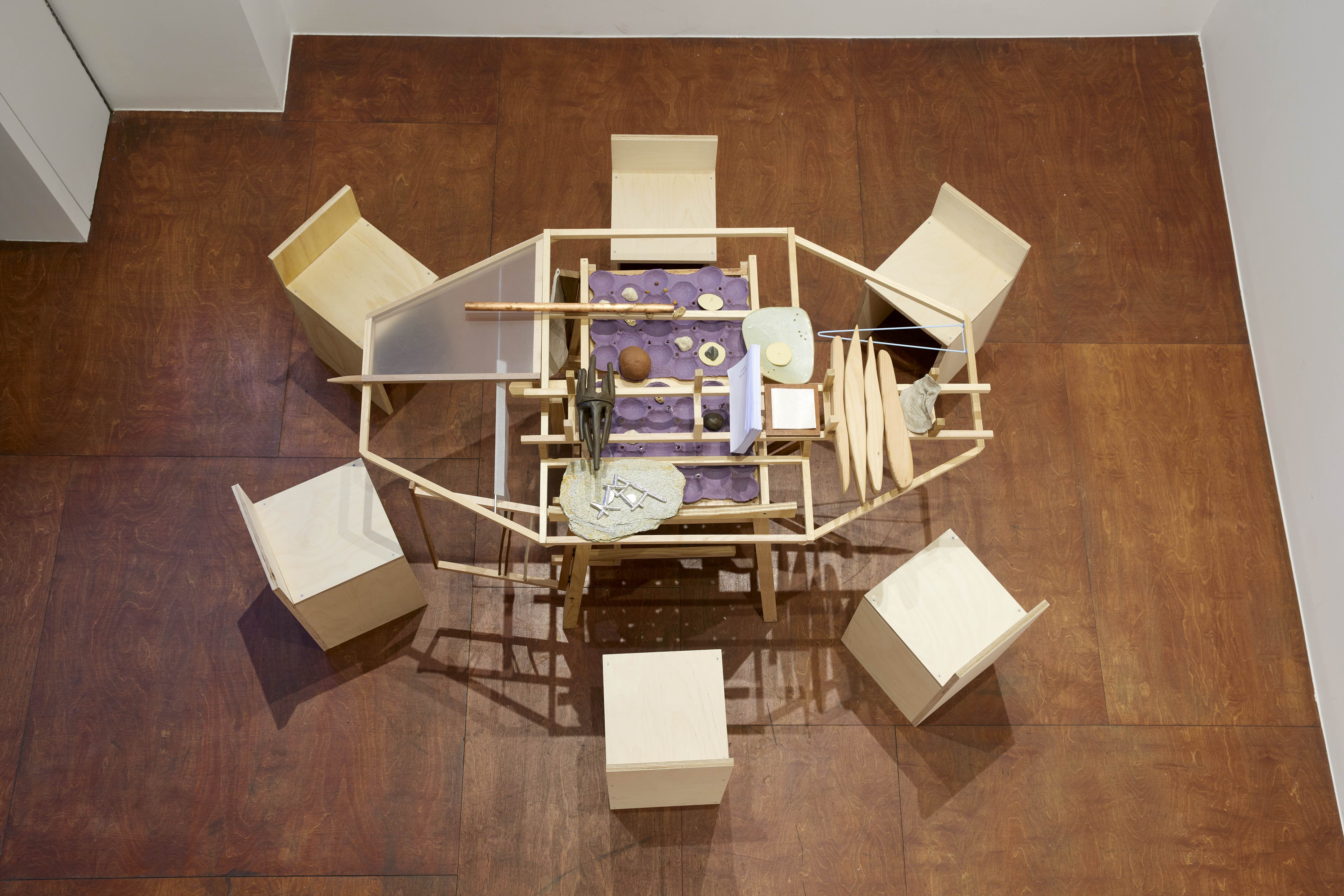
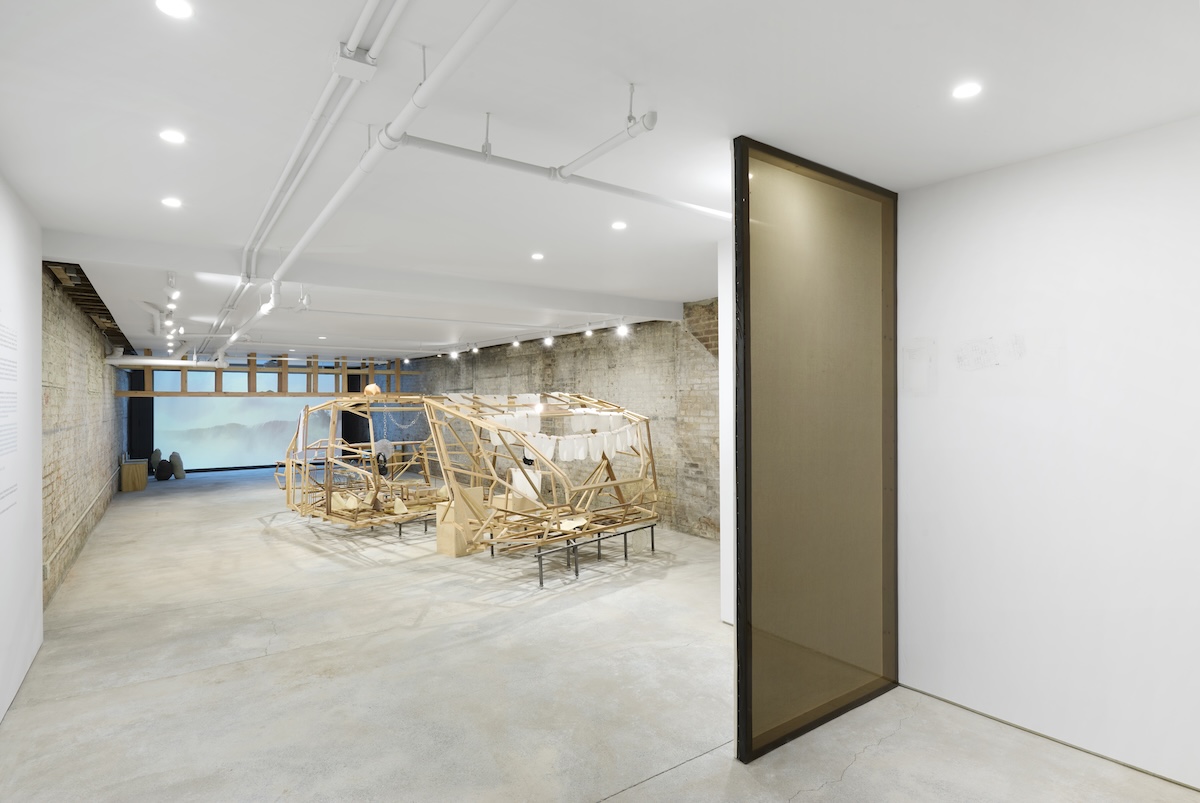
Romance is the most
recent work. Barely upright wooden structures stand in a row. Five stage
settings are arranged in a line: three wooden spaces of varying sizes and two
spaces composed only of blue hoses on the floor. The performer moves between
these stages or boundaries with more restrained, almost choreographic gestures.
The story seems to focus on descriptions of individual scenes from memory, yet
often breaks apart into fragmented words. Actions such as lowering the body to
pick up an object from the floor, fitting one’s body into the wooden structure,
or lying down show that the body’s movements now relate more closely to the
objects themselves.
As the artist herself suggests, the
‘LA-sung’ series is a performance in which objects, body, and narrative
interlock, with the narrative often emerging from autobiographical experience.
Autobiographical experience is the most honest and natural starting point for
constructing a story. If, after building the framework of a narrative from
one’s growth, experiences, and circumstances, it becomes possible to construct
other stories, richer possibilities will open up.
If Hyeree Ro’s performance
can be called a kind of theater, it is a theater generated through the
collisions among three characters: body, object, and narrative. Just as the
body and objects gradually increase their interconnection, the narrative too
may find ways to deepen its relation to them. If her work continues in this
direction, audiences watching the performances on site may participate in a
kind of game—discovering how body, object, and narrative construct one another.