
Red House I_036 - K-ARTIST

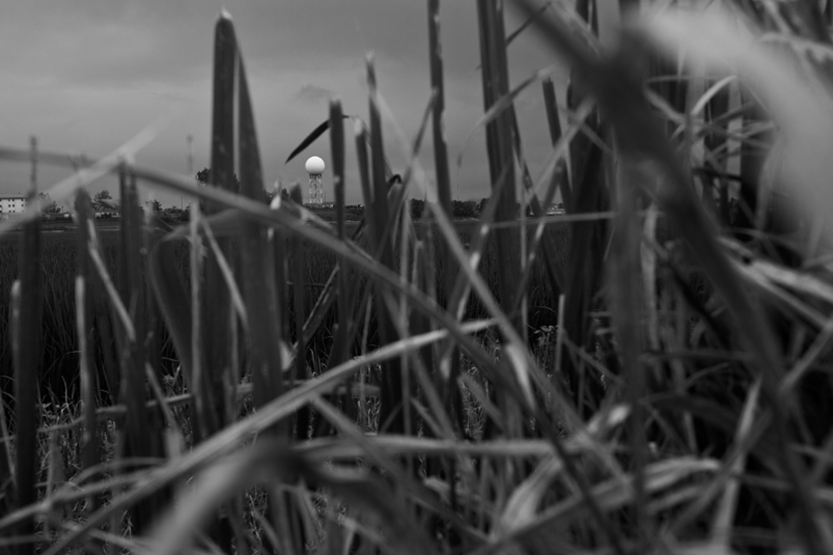
Red House I_036

2005
About The Work

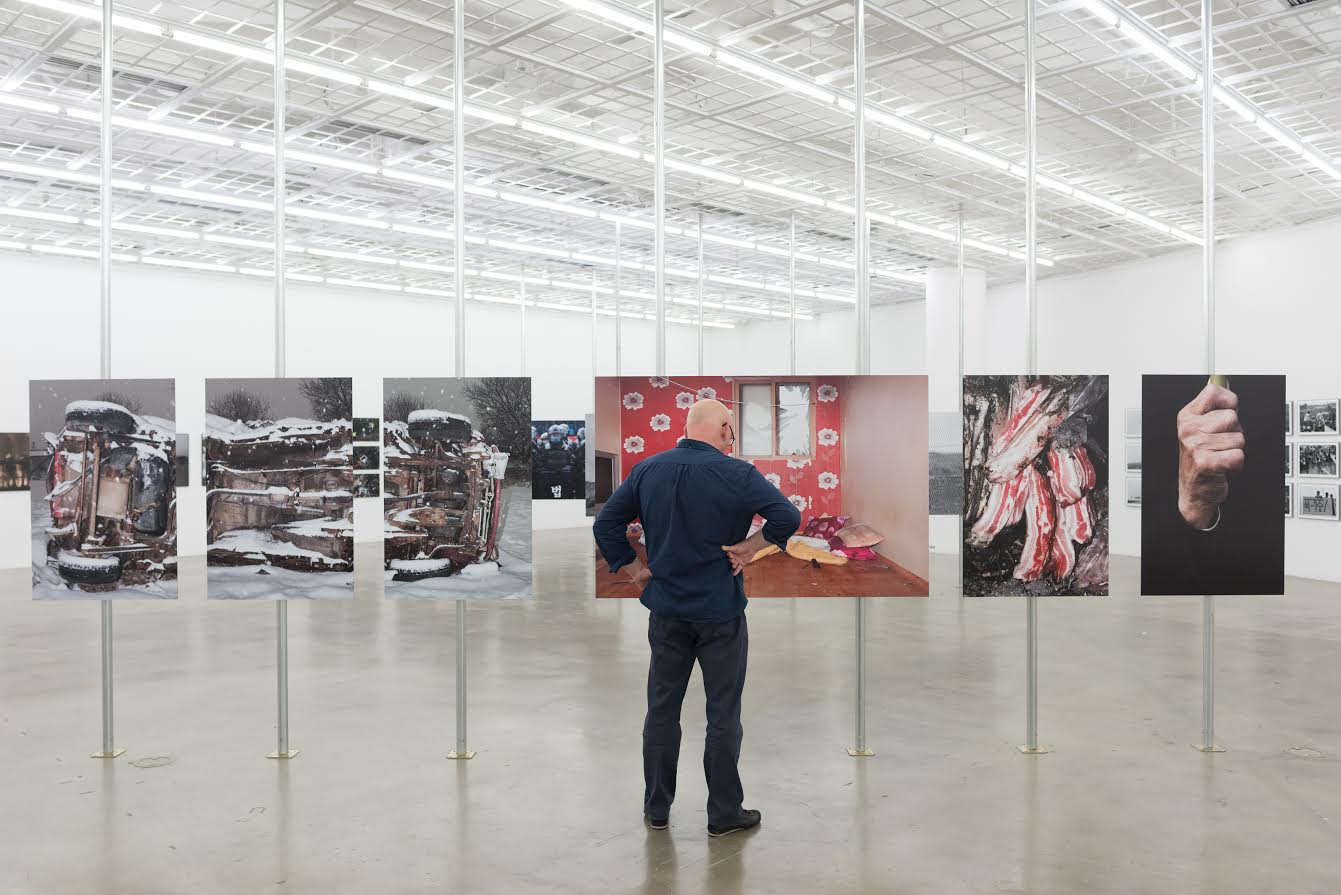
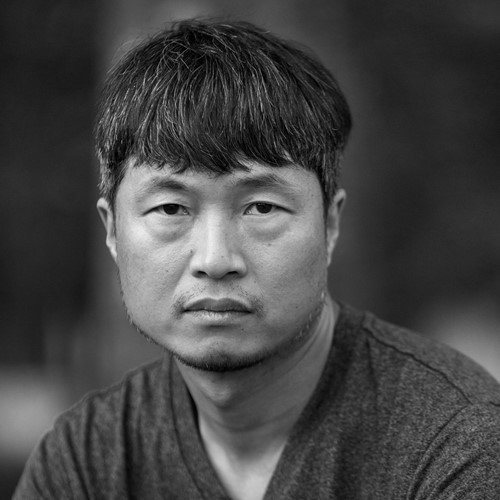
Noh Suntag has been exploring the meaning of Korea's division and the political violence it generates through his photography and writing. While addressing socio-political themes, Noh reflects on the nature and mechanics of the camera, as well as the significance of his own existence as a photographer. His works capture the intensity of real-life scenes while maintaining an aesthetic sensibility that elicits empathy through humor, subtly distorting our perceptions.
 
The central theme that runs through Noh Suntag's photography is how the ideology of division operates within South Korean society. Instead of approaching societal issues through ideological conflicts, he addresses them as universal human problems, continually posing questions to the audience about our society and ourselves as individuals within it.
 
Through the enduring apparatus of photography, he deconstructs the landscapes of power that continue to operate in society. He is visualizing issues of ethics and memory that transcend national borders, and experimenting with the social potential of “documentation” as art.

Solo Exhibitions (Brief)

Starting as a photojournalist, Noh Suntag has held solo exhibitions at major domestic institutions, including the Art Sonje Center, the Goeun Museum of Photography, the Donggang Photo Museum, the Gwangju Museum of Art, and Hakgojae, as well as international venues in the UK, Spain, and Japan. He also has held a large-scale solo exhibition titled “State of Emergency” at the Württembergischer Kunstverein in Germany in 2008.

Group Exhibitions (Brief)

Noh has participated in group exhibitions at the National Museum of Modern and Contemporary Art, the Seoul Museum of Art, the Gyeonggi Museum of Modern Art, Atelier Hermes, the Museum of Contemporary Art in Canada, and the Kaohsiung Museum of Fine Arts.

Awards (Selected)

In 2014, he became the first photographer to receive the Korea Artist Prize award from the MMCA. In 2009, his photo book published by Hatje Cantz received the Silver Award for German Photo Book Prize in Germany. In 2012, he was awarded the 11th Dong Gang Photography Award.

Collections (Selected)

Noh Suntag’s works are included in the collections of the National Museum of Modern and Contemporary Art(Gwacheon, Korea), Seoul Museum of Art(Seoul), Daejeon Museum of Art(Daejeon, Korea), Gwangju Museum of Art(Gwangju, Korea), Daelim Museum(Seoul), The Museum of Photography(Seoul), Coreana Museum of Art(Seoul), Dong Gang Museum of Photography(Yeongwol, Korea), The May 18 Memorial Foundation(Gwangju, Korea), and the F.C. Gundlach Collection(Germany).
Works of Art

The Intensity of Real-Life Scenes and Aesthetic Sensibility

Originality & Identity

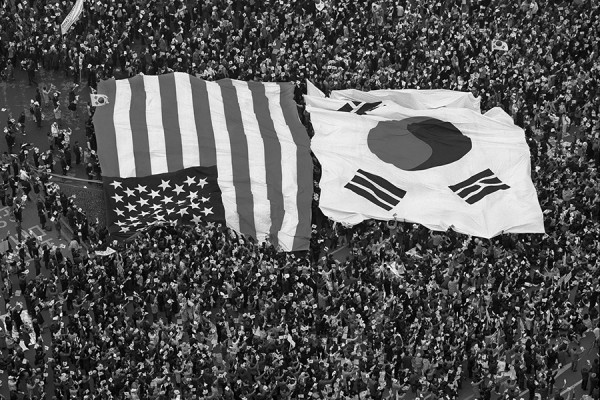
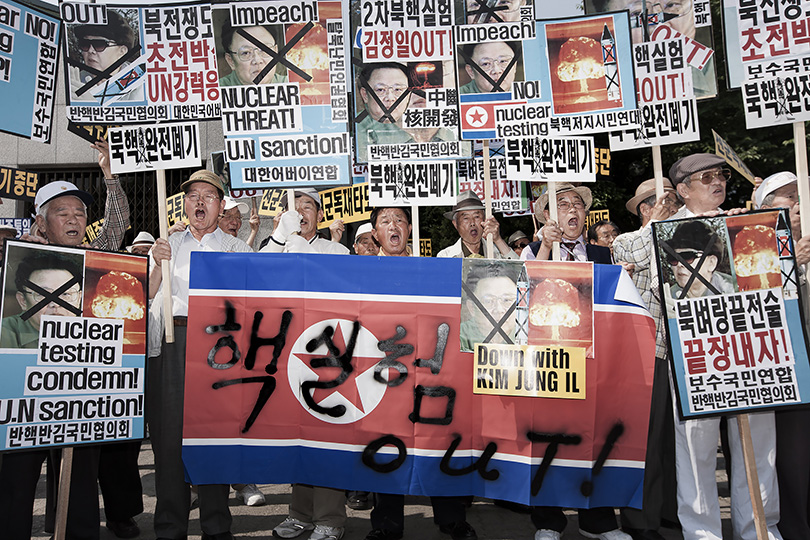
Noh Suntag’s photographic practice begins with an exploration of the landscapes of function and malfunction generated by Korea’s divided political system and its contemporary realities. His early series ‘Smells like the Division of the Korean Peninsula’(2003–2010) captures the strange reality of division ideology that continues to operate in everyday life even after the Cold War. The artist documents incidents such as the deaths of two schoolgirls crushed by a U.S. military armored vehicle, anti-war protests, and South Korea’s social dependence on the United States, revealing that division is not merely a political boundary but a systemic contradiction embedded in human perception. Rather than emphasizing ideological confrontation, he focuses on the human condition, questioning how society consumes tragic realities as “beautiful scenes.”

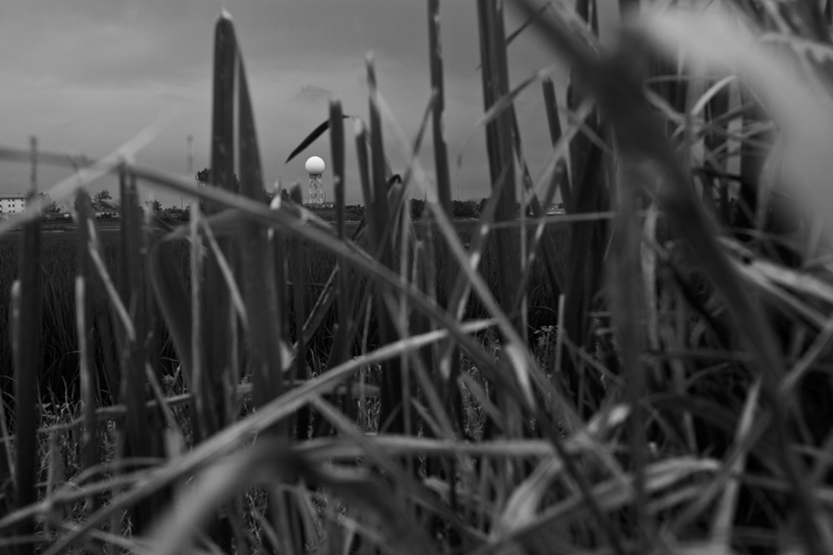
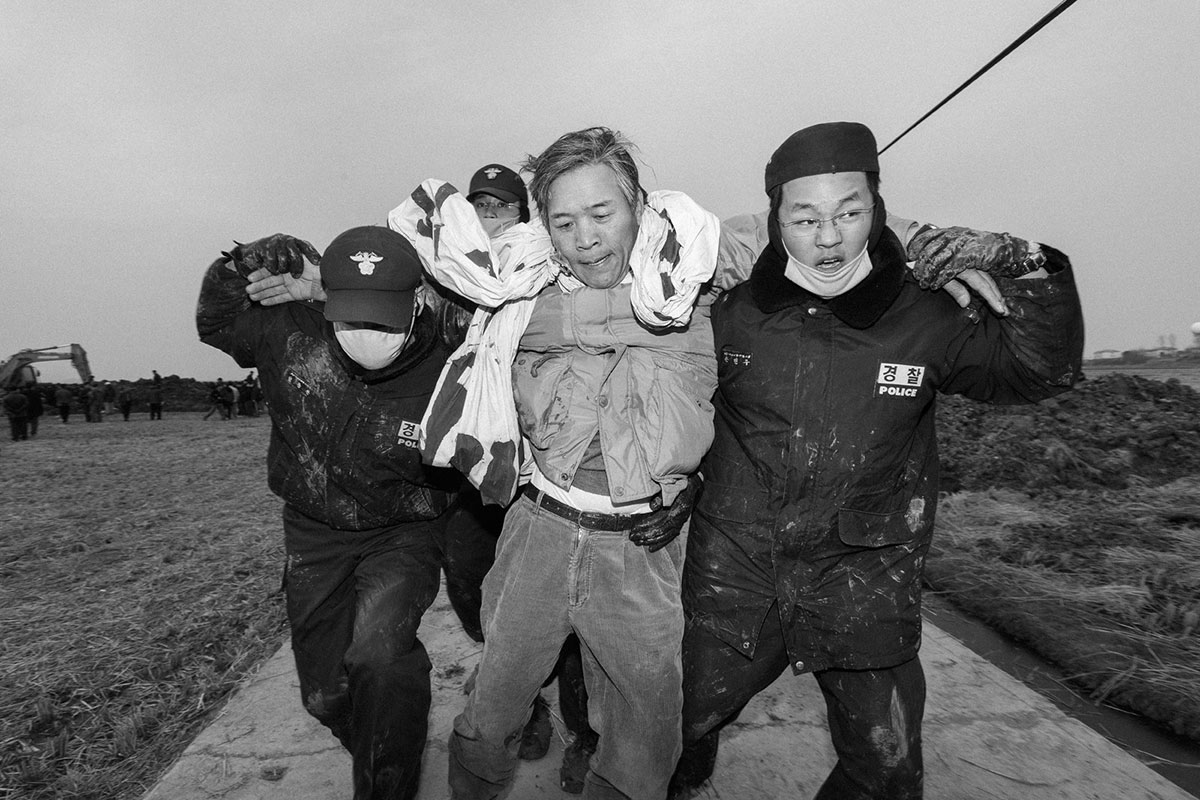
In the series ‘the strAngeball’(2006), Noh extends this inquiry into the physical landscape. The radome structure installed in the fields of Daechu-ri, Pyeongtaek, functions as both a surveillance device over the Korean Peninsula and a metaphor for the presence of the United States. Noh traces the disintegration of the farming community surrounding this enormous sphere, revealing the space where state violence and personal survival intersect. For him, division is not a fixed ideology but a systemic apparatus that continuously operates, infiltrating people’s daily lives.

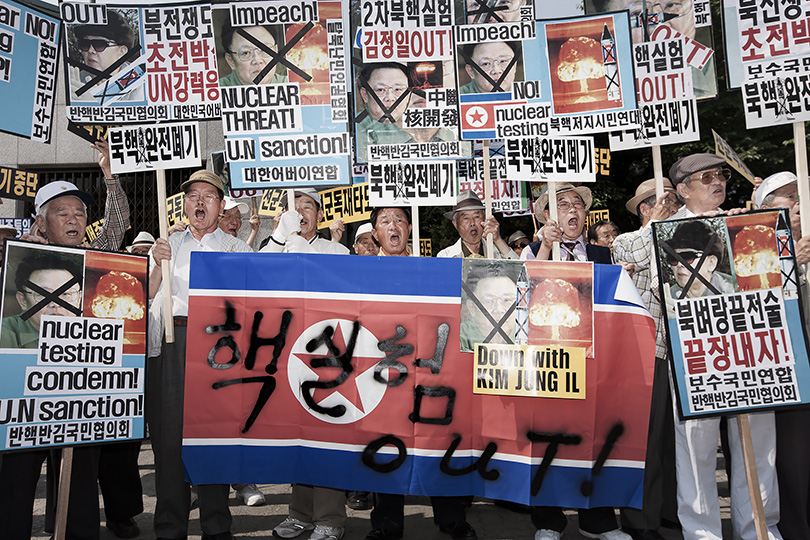
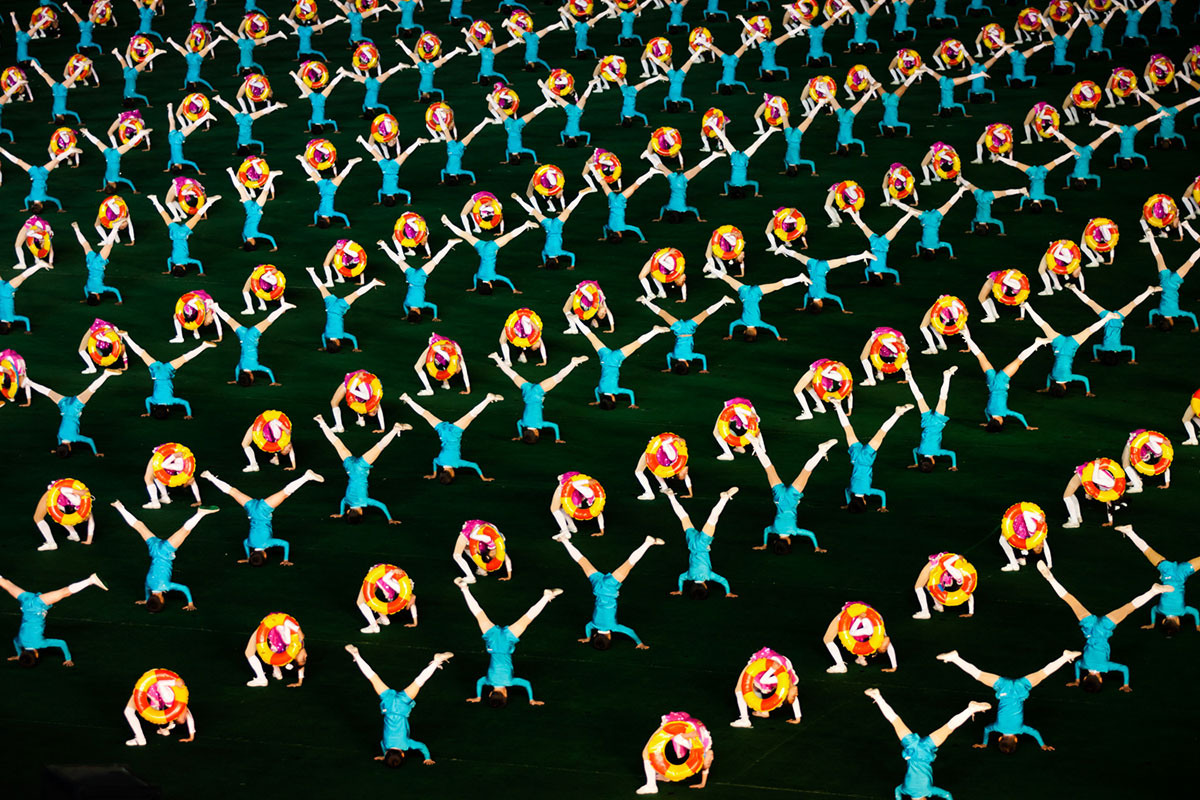
In his ongoing ‘Red House’(2005–) series, Noh multilayeredly analyzes South Korea’s gaze toward North Korea. From Red House I, which captures the Mass Games that embody North Korea’s image of order, to Red House III, which focuses on South Korea’s reproduction of North Korean symbols, the artist declares the mutual projection between the two through the phrase, “You are my mirror, and I do not deny that I am also your mirror.” By visualizing this mirroring structure of the division system, he suggests that the act of “looking” itself can become the starting point for social reflection.

In the series ‘Forgetting Machines’(2008–2012), Noh examines how the memory of division transforms into collective oblivion. Documenting the sites of the Gwangju Democratization Movement, he presents damaged portraits, ruined graves, and the landscapes of survivors to question the boundary between remembering and forgetting. For the artist, Gwangju is an extension of the history of division—a symbolic site revealing how institutionalized memory in society erases uncomfortable truths.

Style & Contents

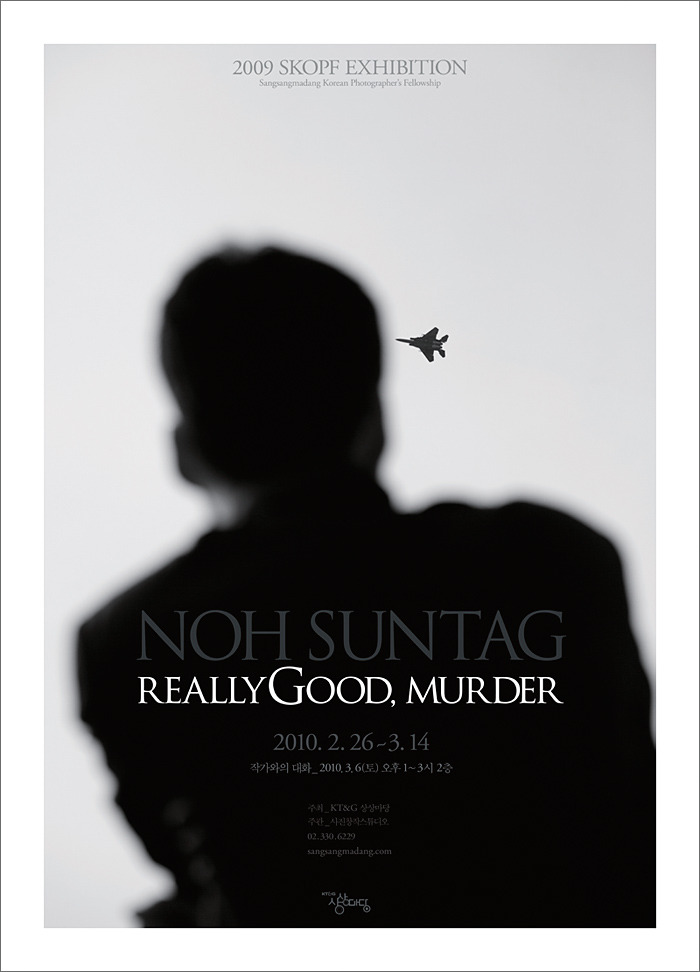
Noh Suntag’s photography fundamentally addresses the ethics of documentation and the problem of gaze. Drawing on his background as a photojournalist, he questions the very way photography reproduces reality. The series ‘really Good, murder’(2008–2009) visualizes the paradox of a “good machine that is also a killing weapon” through social landscapes surrounding military equipment. Scenes of air shows, children handling replica guns, and defense industry exhibitions reveal how photography constructs the “aesthetics of violence.” This is not mere exposure but an act of revealing how the camera reproduces and simultaneously conceals structures of violence.

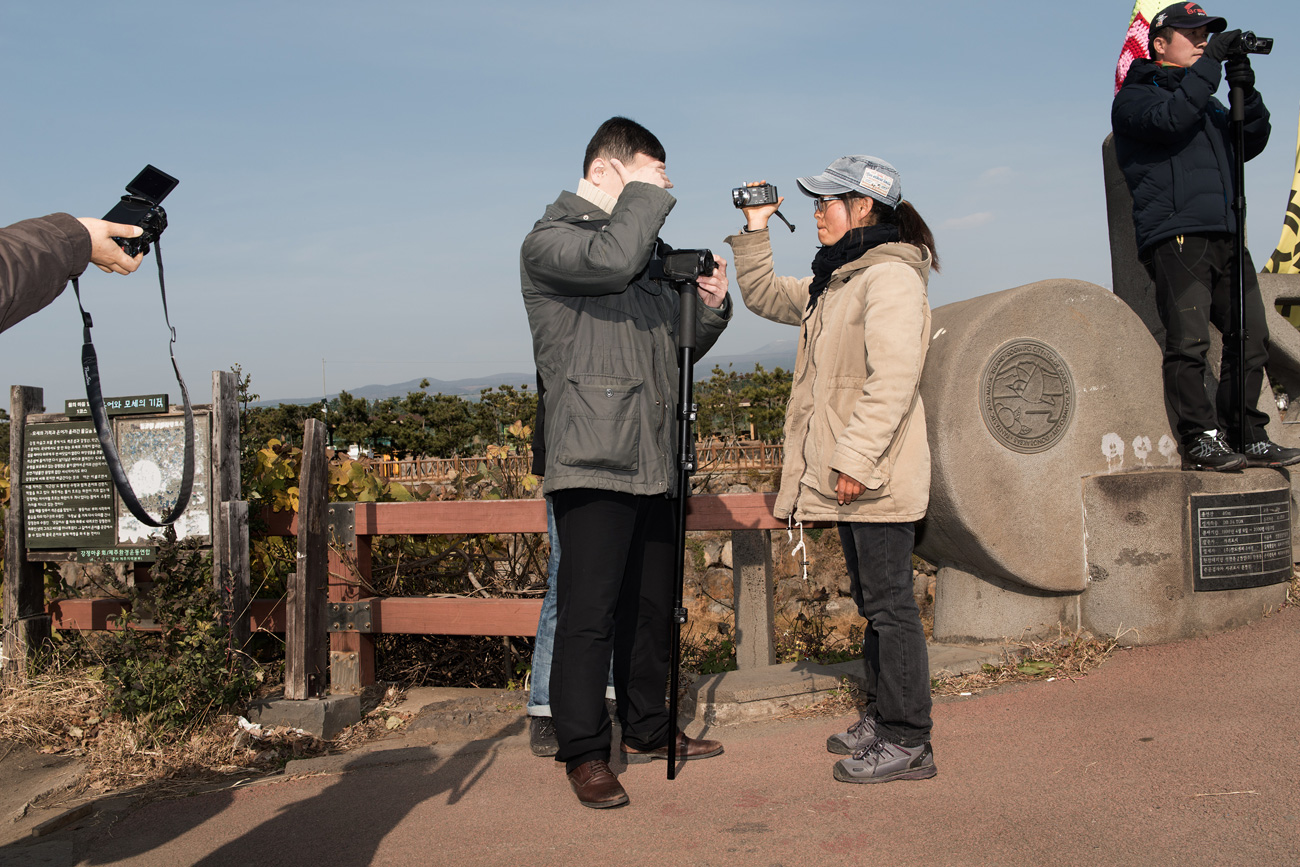
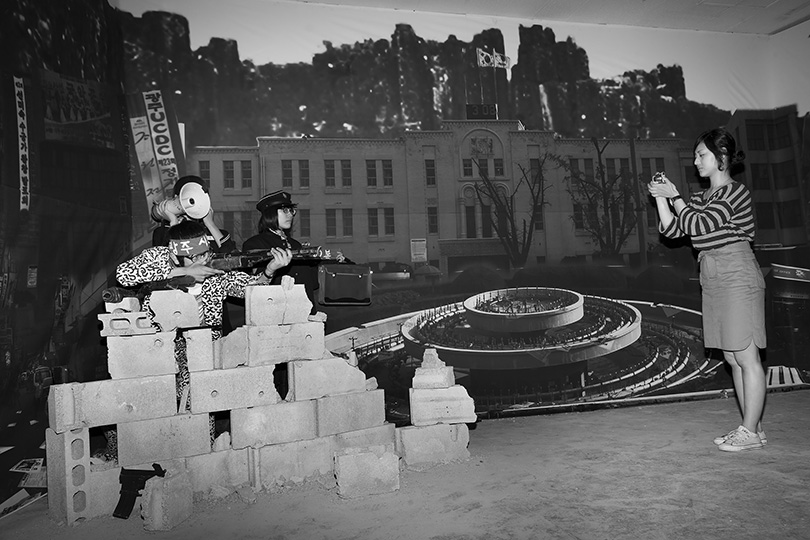
‘Sneaky Snakes in Scenes of Incompetence’(2008–2014) expands into a self-reflective investigation of photography’s mechanism. Capturing people photographing one another at protest sites, Noh demonstrates that the camera can serve as both a tool of testimony and a weapon of aggression. “Scenes of Incompetence” refers to brutally real yet unchangeable situations, while “Sneaky Snakes” points to the cunning, rapidly adapting nature of photography. The series shows that although photography appears to capture truth, it often conveys a superficial gaze stripped of context, symbolizing the artist’s deep awareness of his own medium.

Rather than confronting the scene head-on, Noh uses symbolic objects—such as radomes, military parades, and deserted cemeteries—to imply systemic violence. He avoids direct exposure, instead visualizing social anxiety through a strategy of tension between order and aesthetics.

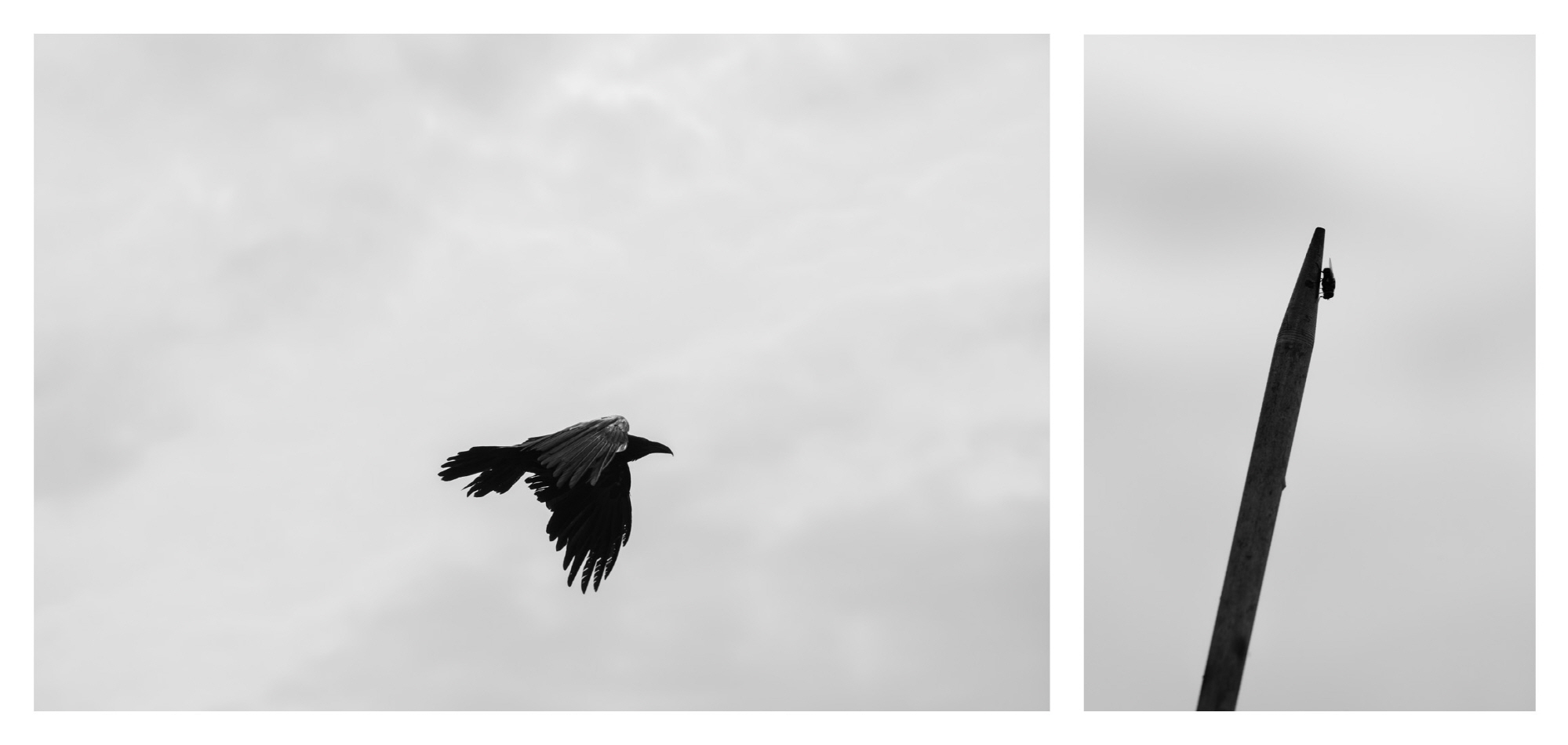
In his work, form functions not as simple documentation but as a narrative device. Through repetition, juxtaposition, and shifts in framing, Noh condenses a continuum of real moments into static landscapes. His photography thus occupies a space where the immediacy of photojournalism intersects with the formal aesthetics of art photography. His accompanying textual writings also play a critical role, paralleling the authority of language with that of imagery, revealing the limits of photographic representation.

Topography & Continuity

Since the 2000s, Noh Suntag has been recognized as one of the most consistent political documentarians in contemporary Korean photography—an artist who continually renews the ethics of the photographic medium. While Smells like the Division of the Korean Peninsula and Red House focused on dismantling symbolic landscapes of division, works such as really Good, murder and Sneaky Snakes in Scenes of Incompetence shifted toward a self-critical examination of the power of gaze and the violence inherent in images. He records the core of social events while simultaneously revealing how photography reproduces and distorts those same events.

By probing the intertwined relationships among division, state violence, media systems, surveillance, and documentation, Noh’s gaze dissects the internal structure of Korean society while questioning the ethics of image production itself. Through this process, he has played a crucial role in expanding Korean contemporary photography from a journalistic perception of reality into a domain of artistic reflection.

Through the enduring apparatus of photography, he deconstructs the landscapes of power that continue to operate in society. By visualizing issues of ethics and memory that transcend national borders, he positions himself as an artist experimenting with the social potential of “documentation” as art.

Continuing to engage with the politics of memory and representation, Noh Suntag is now extending his practice beyond Korea, exploring how images function within the global landscape of surveillance and digital mediation. By persistently unveiling the mechanisms of control and visibility, his work establishes him as a critical voice that embodies both the ethical and aesthetic tensions of our contemporary world.

Works of Art

The Intensity of Real-Life Scenes and Aesthetic Sensibility

Articles

Exhibitions