Kim Sulki observes with curiosity
the present state of objects that traverse time and the narratives they carry.
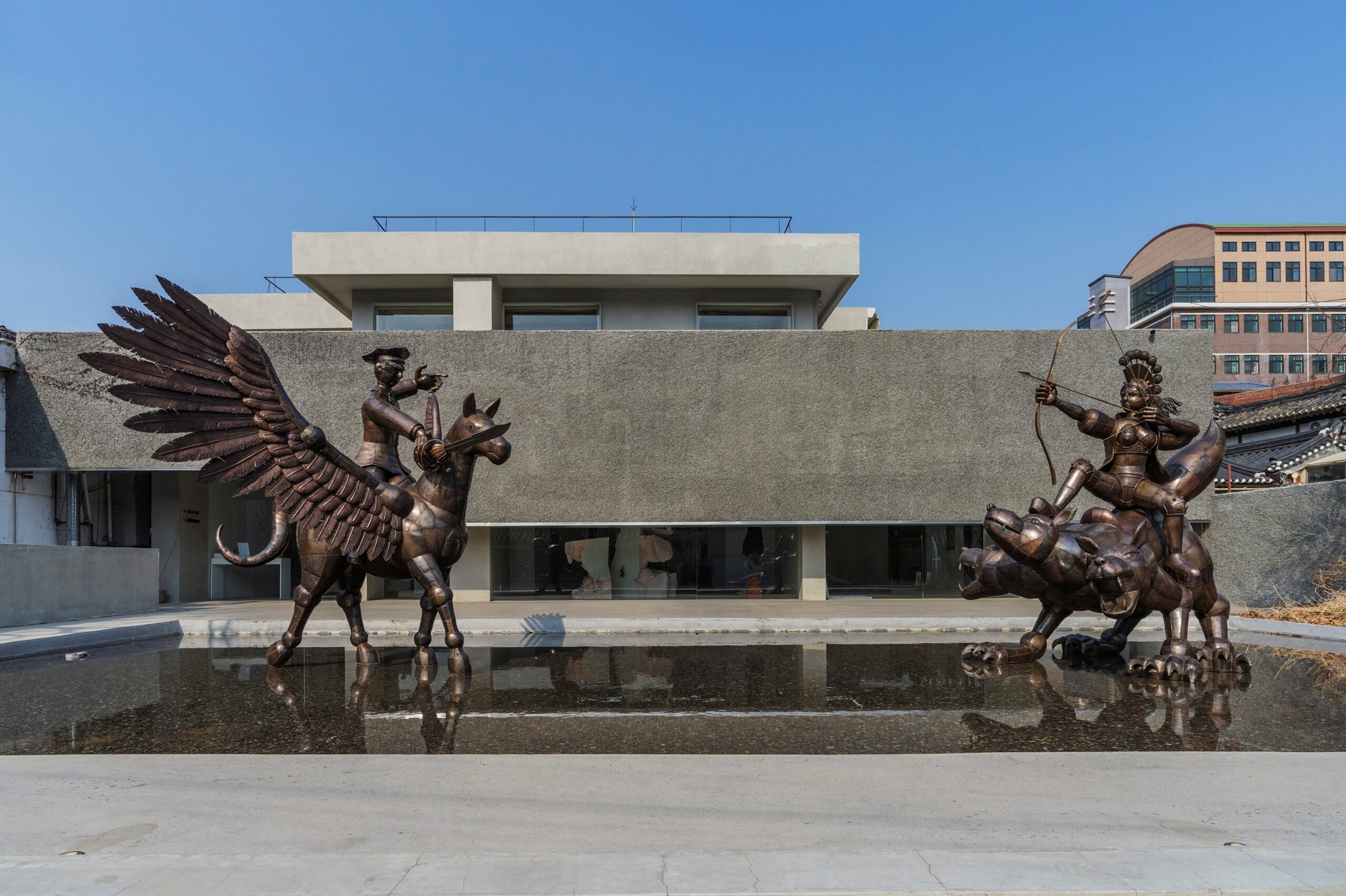
Using acrylic, MDF, plaster, and other materials, she creates dragons—animals
from East Asian mythology—and refigures familiar fountain motifs commonly found
in public squares, as well as ancient reliefs. In doing so, she intersects
different temporalities of culture and narrative.
Although the contemporary
objects she constructs appear to be elevated like spiritual totems, they
simultaneously reveal distinct stories and layers, representing the volatility
and relentless pace of image-producing urban civilization. The forms and
materials shaped by the artist’s hand and body evoke eternity and
transcendence, transporting old narratives and beliefs into the present while
also recalling the fetishized status and function of commodities in
contemporary consumer society.
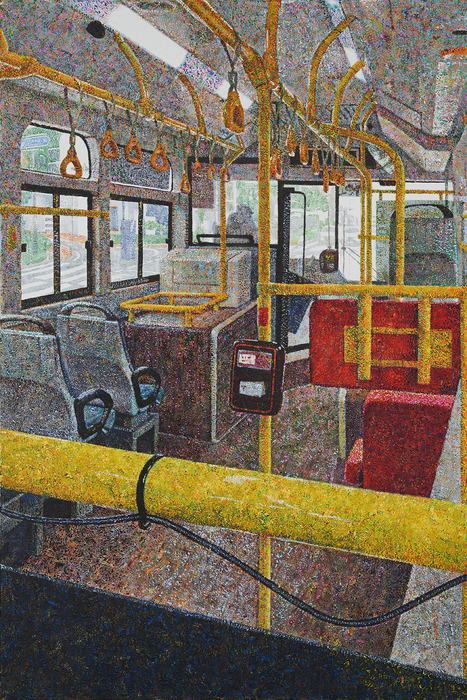
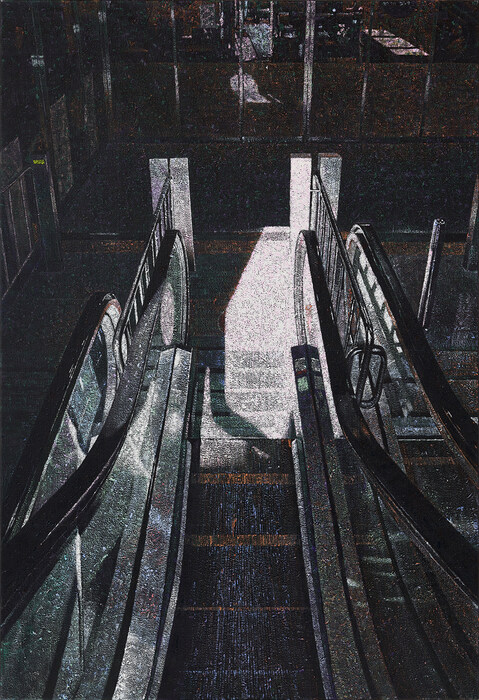
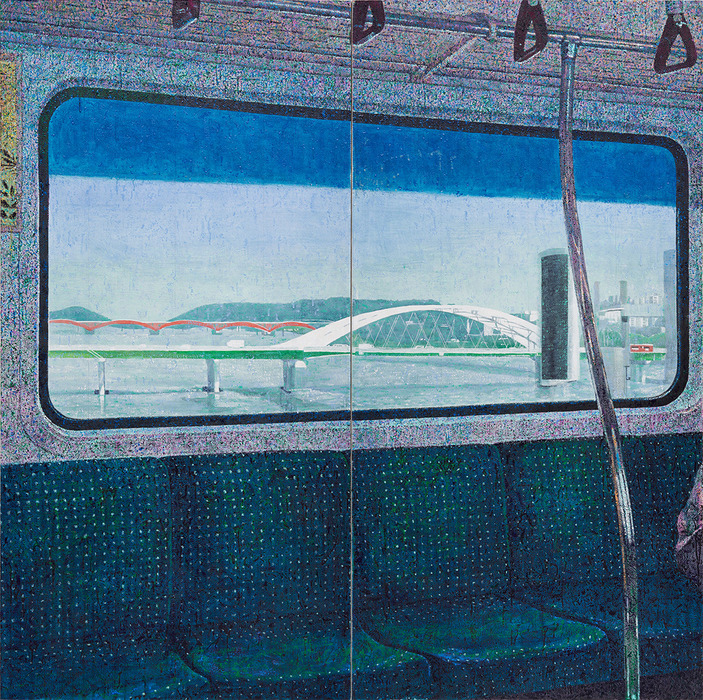
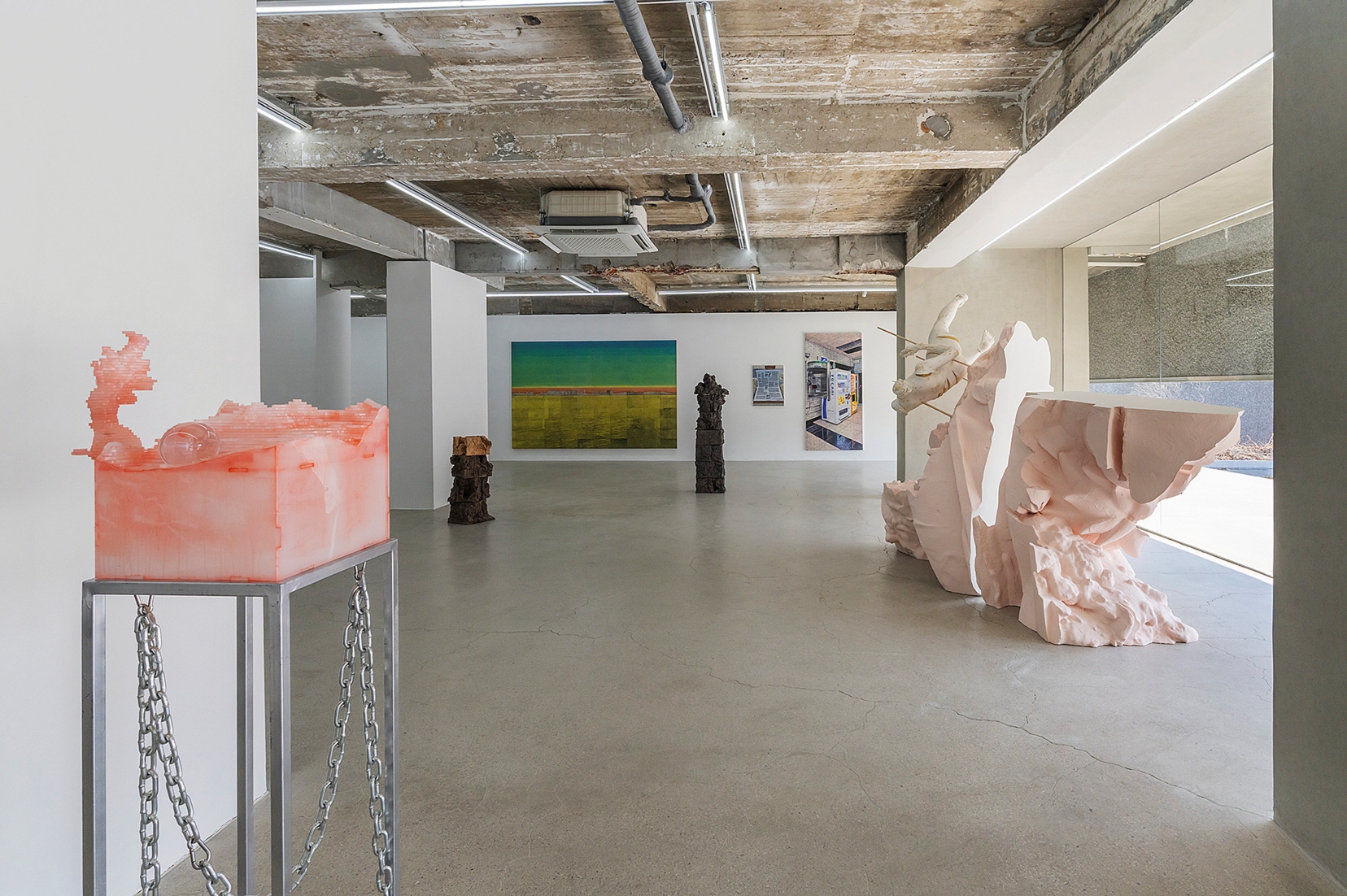
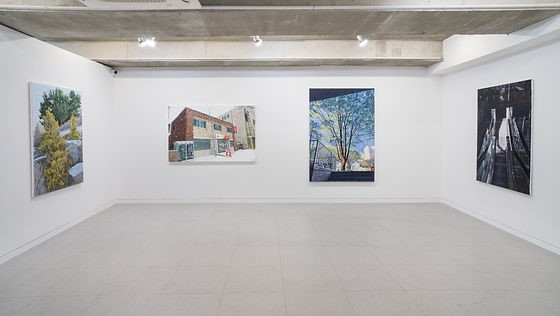
Hyewon Kim’s paintings appear at
first to be engrossed in the reproduction of digital images. Working from
photographs taken on her smartphone, she sets up a manual and process that
minimizes dramatic brushstrokes or personal emotional expression. Her motifs—public
telephones and vending machines in subway stations, the interior of city
buses—are scenes too ordinary and faint to seem worthy of being framed.
Yet her
works reveal the surface, materiality, and even the events of
painting, differentiating themselves from the pixels and resolution of digital
photographs. Beginning with a watercolor base and layering gouache mixed with
gum arabic onto the surface, she produces painterly (and even craft-like) forms
and strata that release the work from strict representation. This detachment
draws attention to the processes and experiences of painting—color and
materiality, viewpoint and distance, the movements of the hand and body.
Yoon Jeong-e experiments within
sculpture by combining two modes of sculptural operation: carving, which
removes material to create form, and modeling, which adds and builds up
material. Her sculptures, where masses of material intertwine with traces of cutting,
slicing, and kneading, disturb the legibility of both subject and process,
gathering peripheral afterimages and spatial gaps.
Moving between parts and
wholes of the body, between plane and volume, between small pieces and large
ones—and through the firing of clay in the kiln—her work focuses on the very
process of temporal shifts and transformation, incorporating them directly into
sculptural practice. The sculptures that stand upright in the exhibition do not
present fixed forms or content; instead, they traverse the boundaries between
inside and outside, skeleton and flesh, self and object, materializing the
intervals where form melts, displaces, and resists completion.
Lee ByungHo, drawing on Rodin’s
methodology, has long presented human figures assembled from parts—bodies that
cannot become a singular whole. Rather than treating existing works as
definitive originals, he has cut, duplicated, and recombined them into new
works, extending this methodology beyond the body into his entire practice.
This has expanded further through digital replication and 3D printing.
Since
2020, for Eccentric Abattis, he has scanned his
previous works in 3D, adjusted their scale, detached certain parts into
abstract forms, or merged them into assembled masses. In Eccentric
Scene (2023), shown in this exhibition, he reverses the process
by bringing back the original body—the one already duplicated and
recombined—and again merges it with scanned and modified components,
reaffirming a perpetual cycle within his own methodology.
Lee Sojung’s paintings intersect
different worlds—sometimes even contradictory ones. Over time, she has
experimented with ways of using ink that exclude its accidental effects, and
has layered automatic, chance-generated images over familiar symbols. Her
recent works translate situations in which pigment bleeds and seeps
uncontrollably into inevitable images, likening these uncontrollable situations
to personal experiences.
She wets previously used paper with ink and presses it
onto the surface to reproduce chance; she organizes forms using acrylic paint
alongside traditional East Asian pigments. She also utilizes wax so that
patterned structures on the back of the canvas and accidental forms on the
front appear simultaneously. Moving across different painting methods,
materials, and concepts, her works coordinate the proliferation of images that
transcend fixed media and spacetime—an expanded condition of the pictorial
plane.
Jun Hyerim adopts the iconography
and compositional methods of her earlier paintings as a kind of open-source
material. From Chinese landscape paintings depicting idealized spaces, to
Arcadian scenes from Greek painting, to brightly colored ukiyo-e, barbershop
paintings, and even the Japanese manga One Piece, Jun’s
work invokes painting styles and techniques from various cultures and eras.
Yet
rather than faithfully following the brushwork or ideas embedded in each
source, she focuses on appropriating them as-is, ultimately producing paintings
that seem awkward, unrefined, or intentionally “unskilled.” The reinterpreted
Guo Xi, Koo Young, and Tiepolo are dismantled and revived within her chosen
frameworks of excess temporality. In doing so, Jeon simultaneously signals the
historical nature of each source while betraying established hierarchies and
positions, allowing a multidimensional temporality to surface.
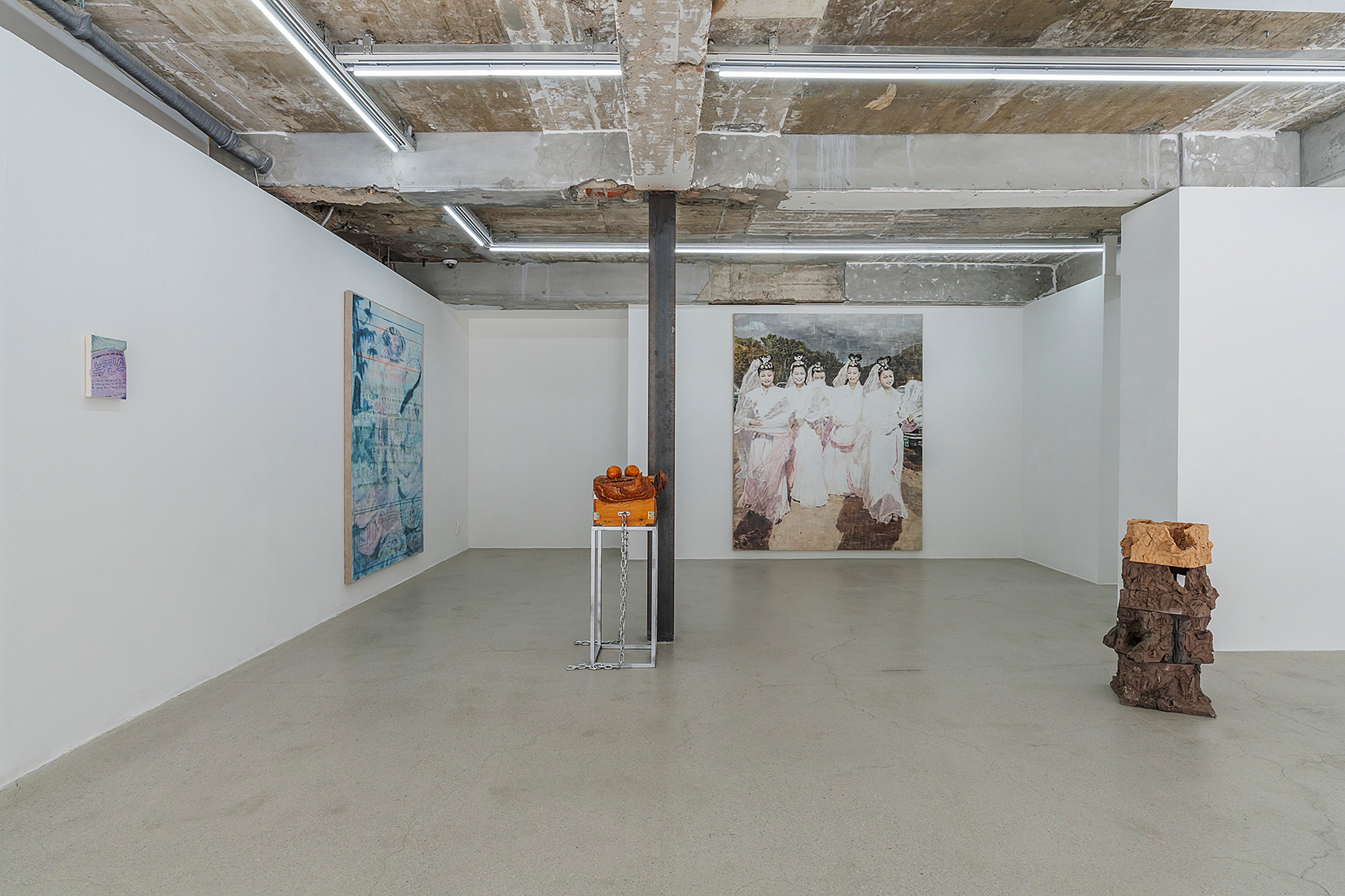
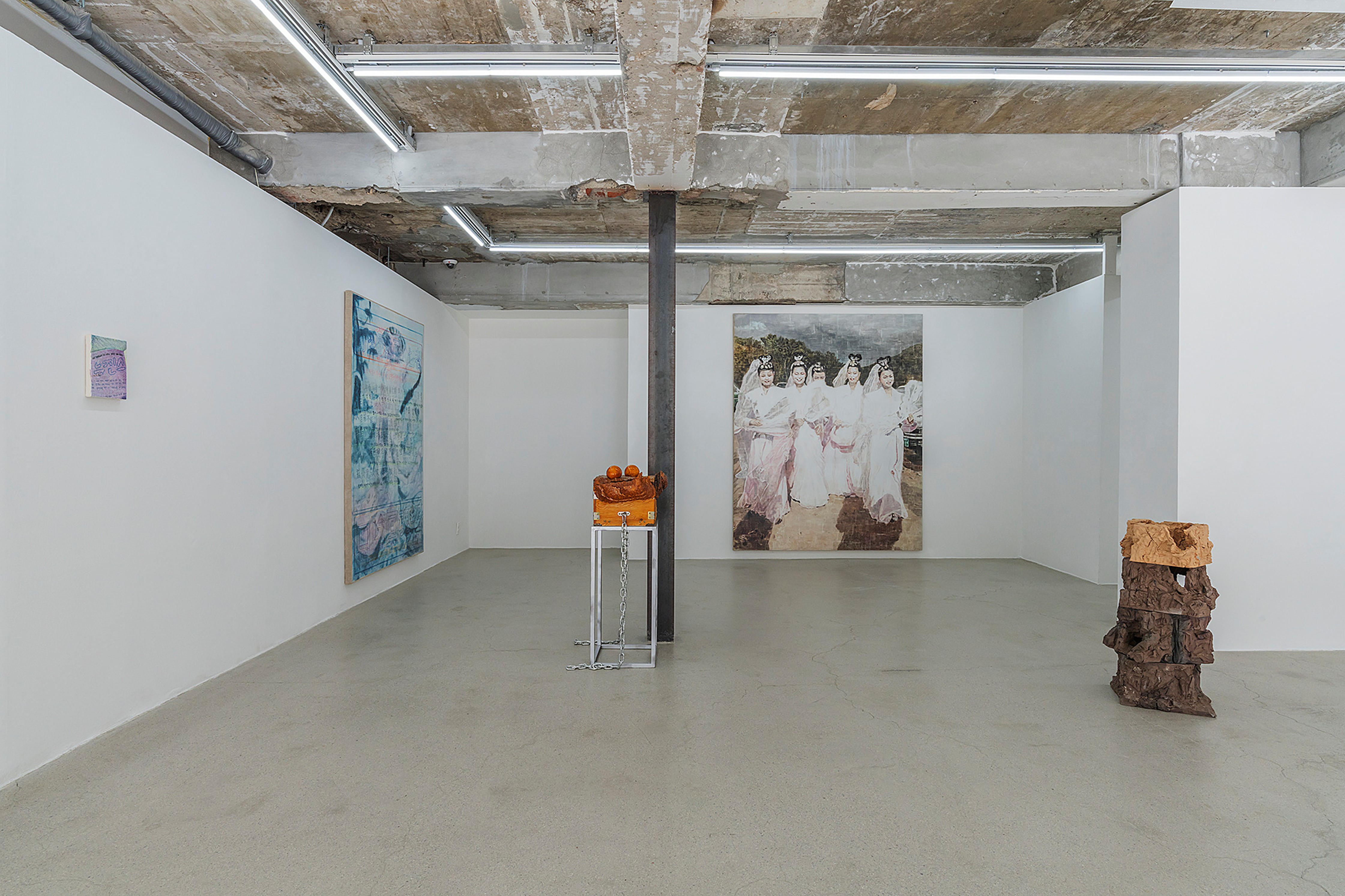
Choe Sooryeon presents subjects
commonly regarded as classical or traditional in strange and uncanny forms. The
celestial maiden from East Asian folklore does not appear in her work as a
graceful and virtuous woman, but rather as a haunting, sometimes sorrowful figure.
Beyond this, Choe faithfully studies and manually transcribes fantastical folk
tales—even the absurd ones—and also recreates scenes and lines from the (mostly
Sinophone) dramas and films she has enjoyed.
Through this, she lays bare the
structures of traditional images and narratives from Korea and East Asia, as
well as the rigid preconceptions that support them. Although her practice seems
to learn and imitate inaccessible subjects—Chinese characters, classical
imagery, myth—the work simultaneously reveals the atemporality and absurdity
embedded in what is considered universal or self-evident, ultimately summoning
the not-so-distant faces of the present like ghosts.
Curating/Writing: Kwon Hyukgyu
[1] 《Unmonumental》 was co-curated by Richard
Flood, Laura Hoptman, and Massimiliano Gioni.
[2] The
four-part exhibition unfolded as follows:
– 1. Unmonumental: The Object in the 21st
Century (2007.12.01–2008.03.30)
– 2. Collage: The Unmonumental Picture (2008.01.16–03.30)
– 3. The Sound of Things: Unmonumental Audio (2008.02.13–03.30)
– 4. Montage: Unmonumental Online (2008.02.15–03.30)
[3] Richard
Flood, Laura Hoptman, Massimiliano Gioni, Unmonumental: The Object in the
21st Century (London; New York: Phaidon in association with New Museum,
2007).
[4] In
relation to this, critic Roberta Smith noted that 《Unmonumental》 could evoke anti-art movements
such as Dada and Surrealism insofar as it rejects completed form and
marketability. She also observed that the rough finishes and deliberate
“un-skill” found in the works—rather than polished surfaces and spectacle—could
be linked to Arte Povera, and that the use of found images for reproduction and
recombination could be associated with Pop Art.
Roberta Smith, “[Art Review: ‘UNMONUMENTAL’] In Galleries, a Nervy Opening
Volley,” The New York Times (Nov. 30, 2007), https://www.nytimes.com/2007/11/30/arts/design/30newm.html
[5] Laura
Hoptman, one of the curators of 《Unmonumental》, also described the exhibition
as following the genealogical line of MoMA’s The Art of
Assemblage (1961), curated by William Seitz, which presented assemblage as
a defining trend of contemporary art of its time. Interestingly, Hoptman later
curated Forever Now: Contemporary Painting in an Atemporal
World (2014.12.14–2015.04.05) at MoMA, a show that revisited the tradition
of twentieth-century painting to present the state of contemporary painting.