

Eusung Lee (b. 1989) has presented three-dimensional works that evoke a sense of bodily presence and spark narrative possibilities. In a world where the boundaries between the virtual and the real are increasingly blurred and rapidly digitized, Lee devotes herself to the richness of sculpture and physical space, as well as the tactile experience of materials shaped by hand.


Eusung Lee, Woman Kettle, 2024, paint on FRP, 171 × 65 × 35 cm ©Eusung Lee

Eusung Lee combines diverse yet disparate materials—such as wood, clay, metal, paper, readymade objects, textiles, and thread—in ways that make them collide and intermingle according to her own distinct approach, emphasizing the tactile qualities inherent in the act of making. While drawing from the lineage of classical sculpture, she simultaneously inserts an abrupt, contemporary sensibility, constructing a compelling and unexpected visual language.


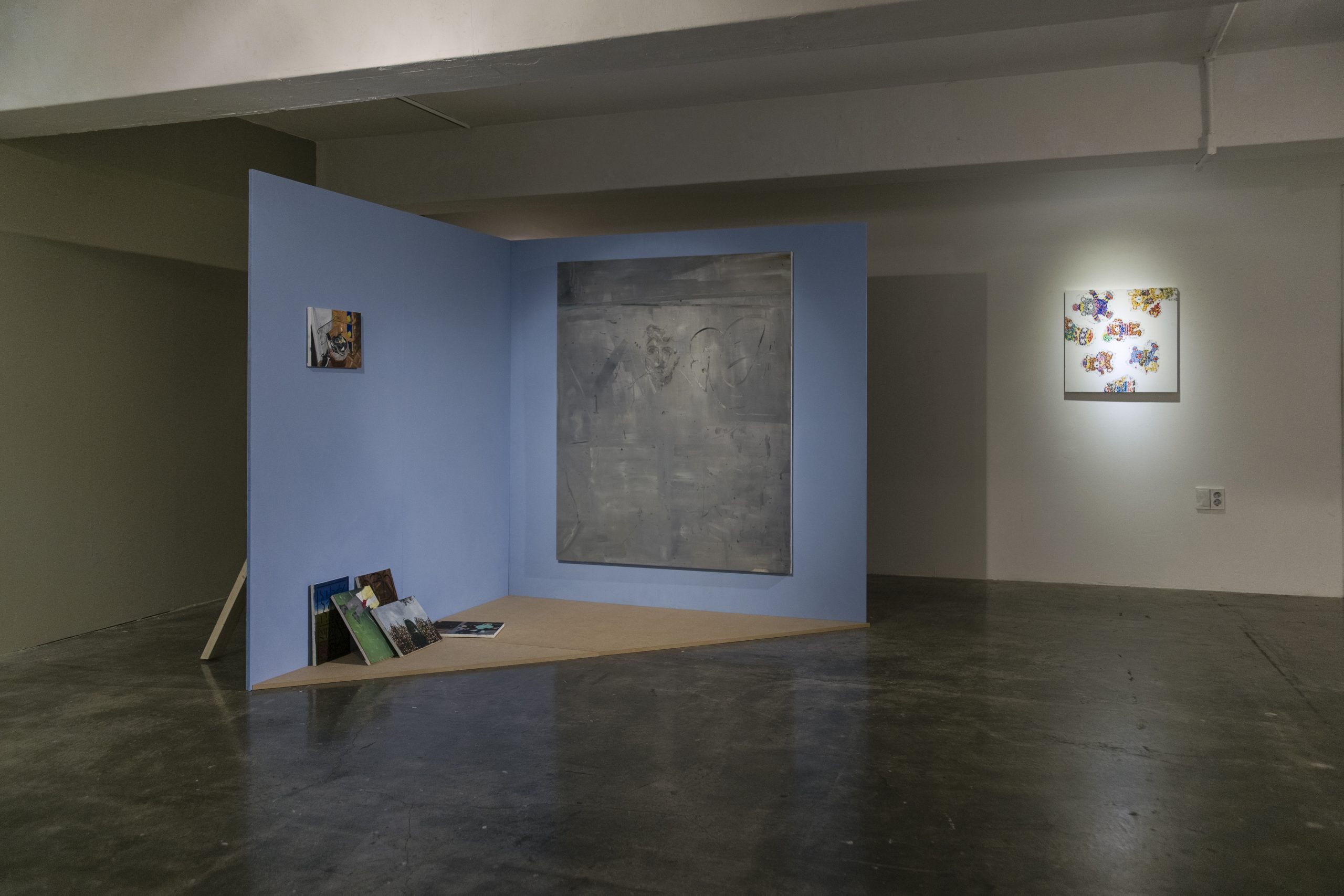
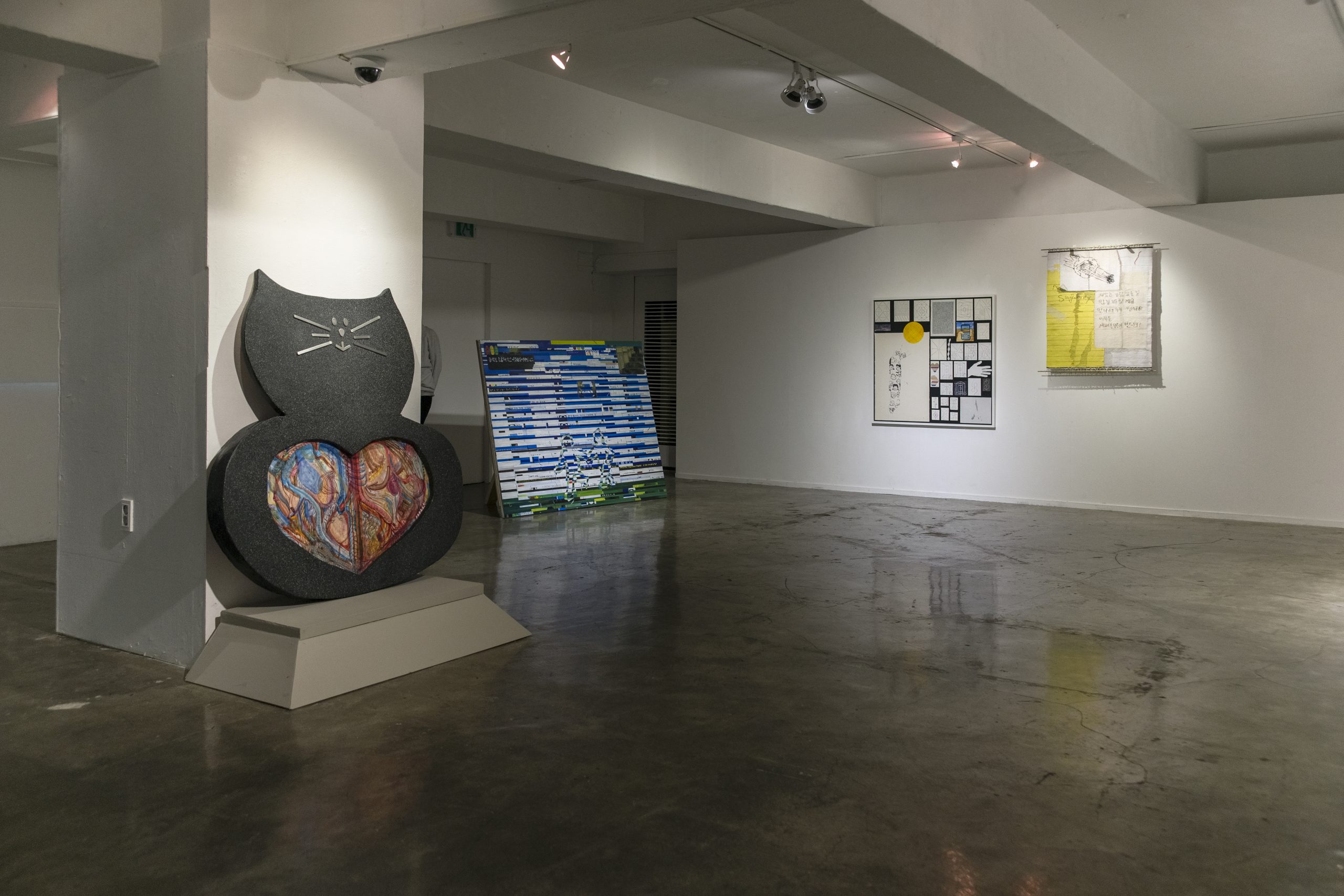
Installation view of 《Floppy Hard Compact》 (Gallery175, 2016) ©Eusung Lee

In her first solo exhibition, 《Floppy Hard Compact》 (Gallery175, 2016), she translated the memories and impressions stored in devices such as floppy disks and hard drives into paintings and wooden sculptures.
 
She recalls that while sifting through the data inside her own memory devices, she began to see fragments of people playing, remembering, getting angry, believing, grieving, and creating—appearing to her like broken pieces. This process naturally led to an inquiry into the methods and mechanisms of recording, collecting, listing, condensing, or omitting the accumulated memories and impressions.

Installation view of 《Floppy Hard Compact》 (Gallery175, 2016) ©Eusung Lee

Eusung Lee willingly incorporates her private obsessions into her working process as a way to heighten the resolution of memory. Rather than adopting today’s mode of memory—compressing information and storing virtual data—she chooses to record fragments of memory slowly, one by one, through the tactile sense of her hands, giving them physical form over time.
 
This approach prompts a reconsideration of the relationship between the material and the immaterial, revealing how one might imagine and sense the contours of abstract memories—of moments or presences that no longer exist in the present.

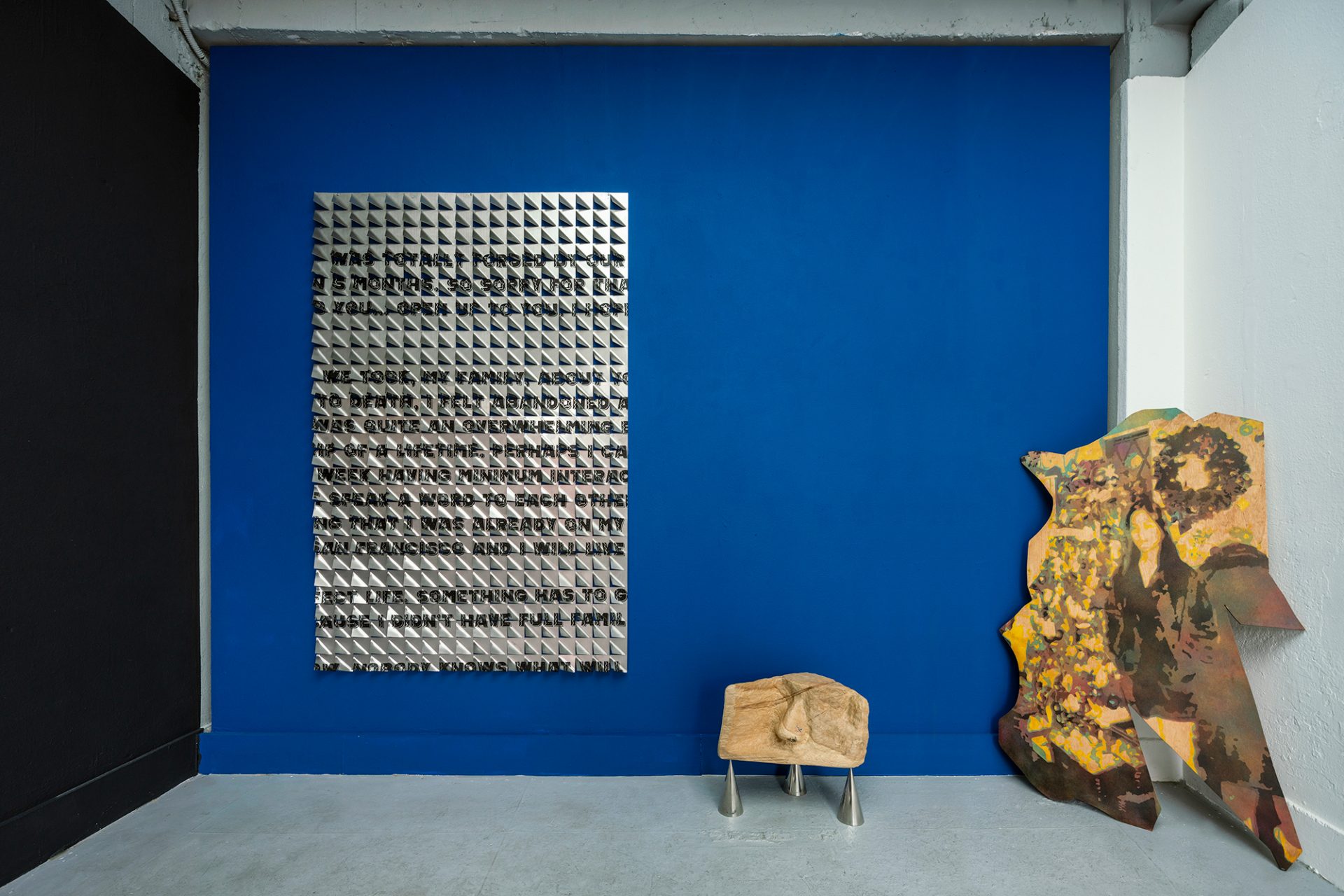
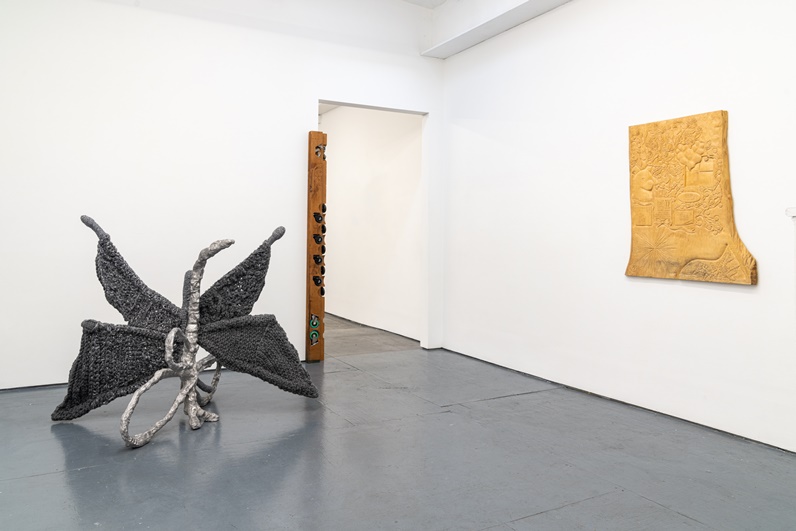
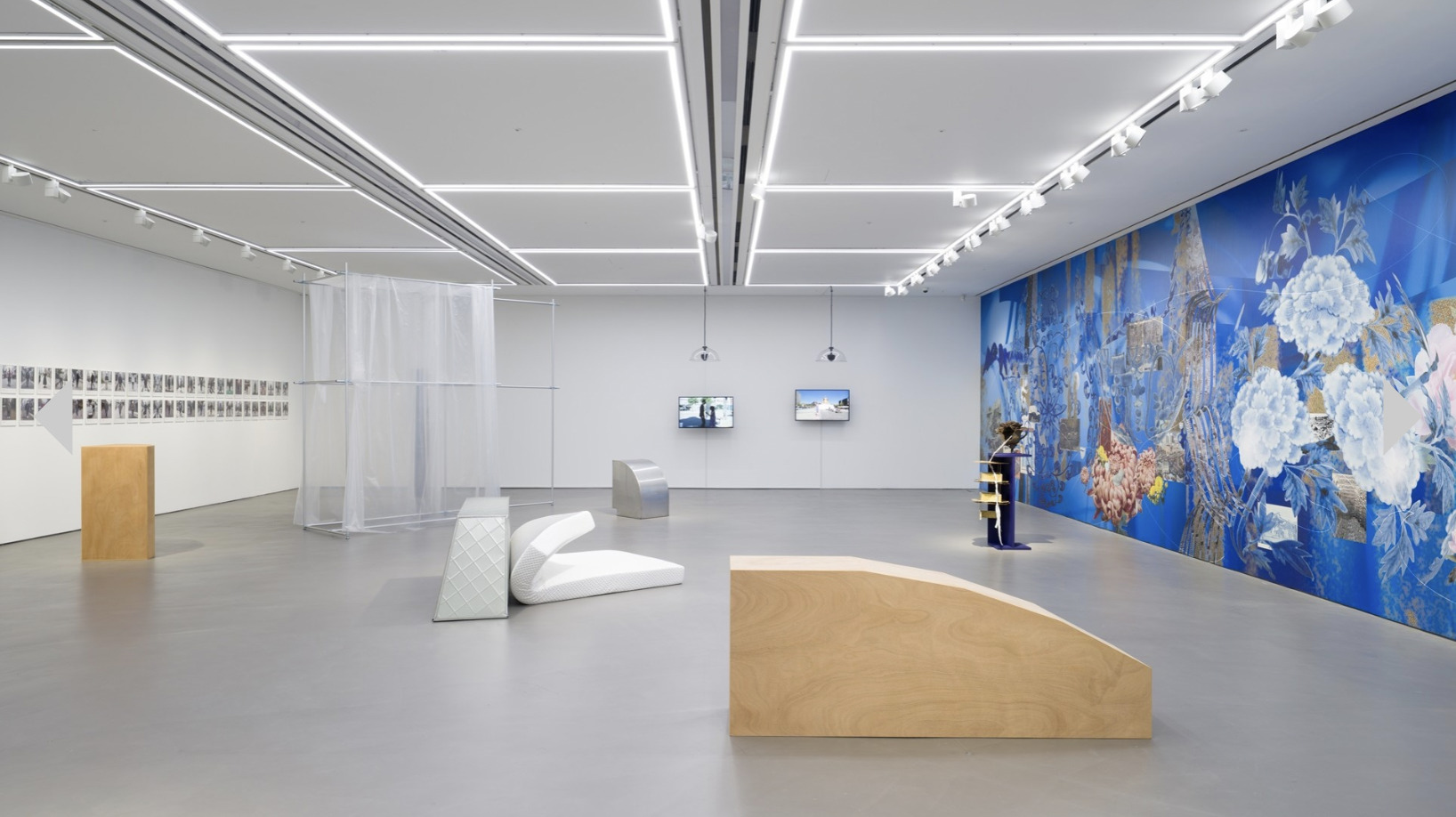
Installation view of 《Jane》 (Weekend/2W, 2019) ©Eusung Lee

Eusung Lee’s exploration of “memory” continued in her 2019 solo exhibition 《Jane》 at Weekend/2W. Having long examined the structures and influences of images that stem from the past and reach into the present, she extended this inquiry by bringing visibility to those dynamics. In this exhibition, Lee gathered the fluid and tangled images associated with the name “Jane,” shaping them into a single abstract bundle and giving them form.
 
If her first solo exhibition addressed the theme of “memory” and its abstract properties, her second exhibition 《Jane》 grounded that inquiry in the “life and body of an actual person,” marking a shift toward greater concreteness.


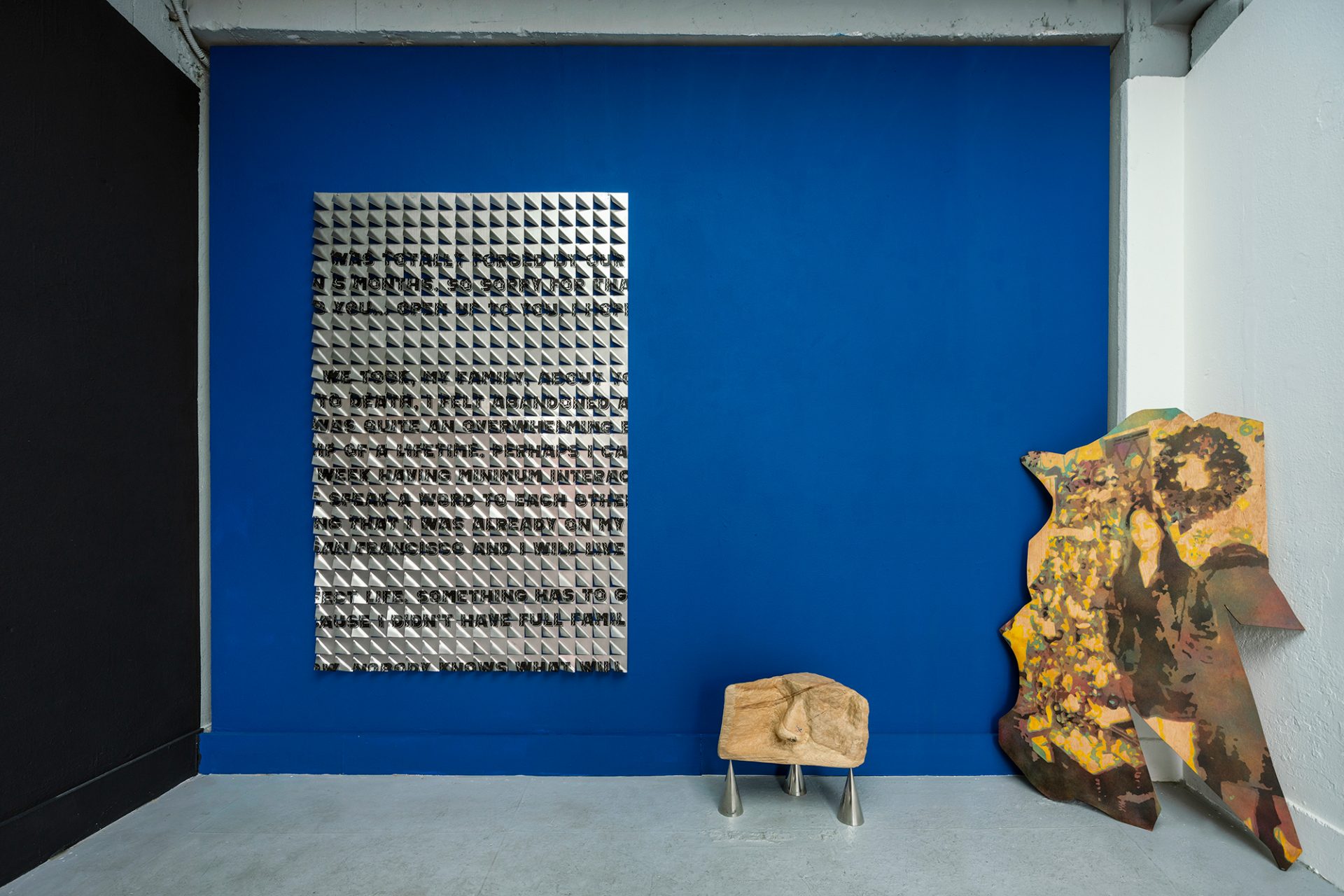
Installation view of 《Jane》 (Weekend/2W, 2019) ©Eusung Lee

The images that composed the exhibition began with concrete objects—piercings, postcards depicting palm trees or deserts, wildflowers, hats printed with the American flag, and thick English typefaces that evoke a sense of optimism. These elements appeared overtly as images on objects or were quietly implied throughout the show. Lee describes these concrete references as “images from millennial-era America that were indirectly imprinted by ‘Jane’ and continue to influence me.”
 
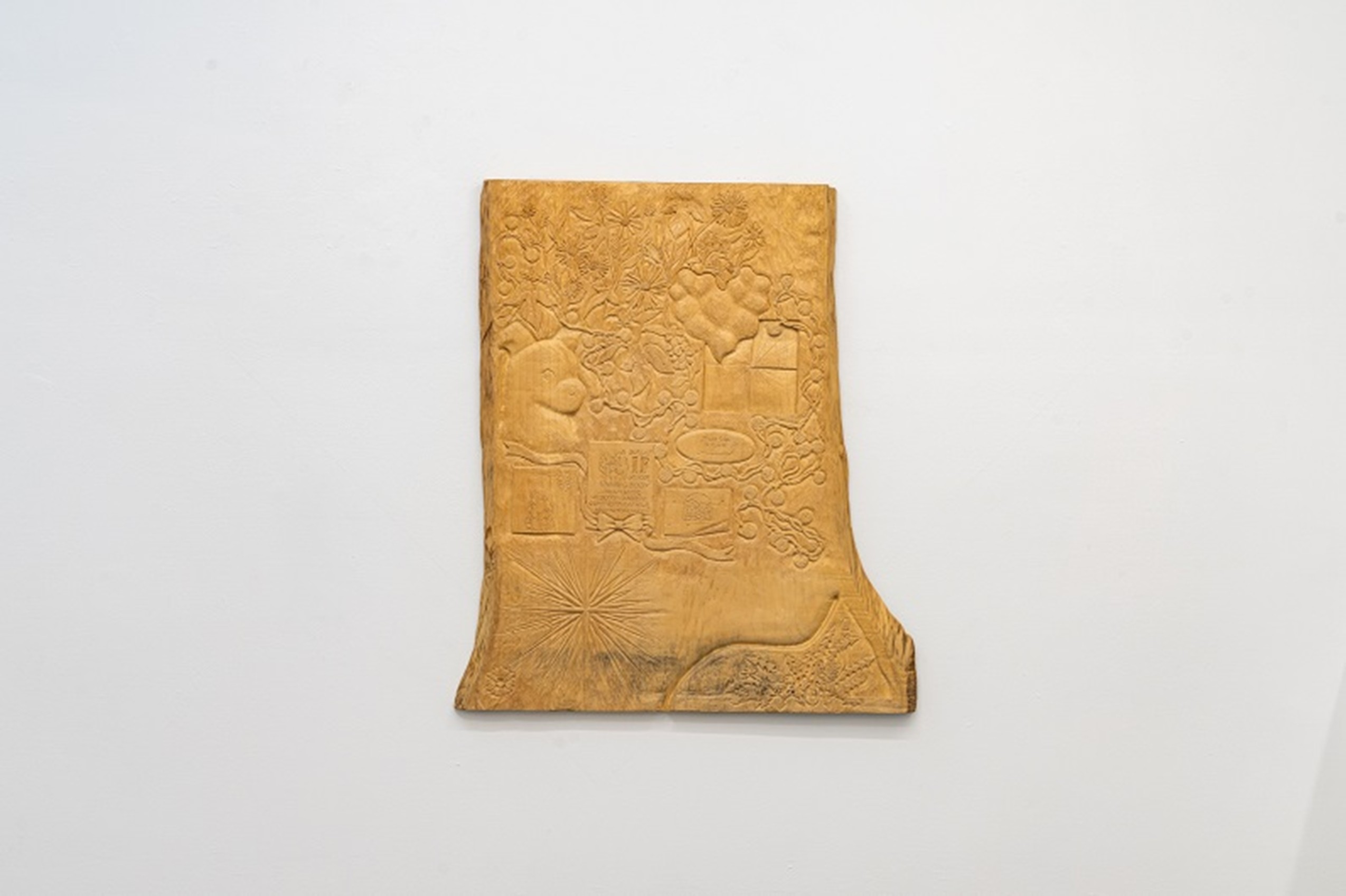
Although the objects are “cut, scattered, lifted, or nearly folded,” creating visually tangled compositions, they register with tactile clarity. The thickness suggested by woodcraft and English fonts, as well as the sharpness invoked by acrylic and stainless steel, encourage an experience that extends beyond visual representation into the tactile realm.


Eusung Lee, Pierce, 2019, Wood, stainless steel, earrings, 30 × 25 × 39 cm ©Eusung Lee

《Jane》 was a transitional exhibition in which Eusung Lee began shifting her practice from painting to sculpture. At the time, she referred to relief works as “paintings hung on the wall,” adapting familiar painterly methods by carving letters and symbols into the wooden frames of canvases and panels.
 
Meanwhile, the freestanding sculptures presented alongside these works combined manufactured objects with fragments of the human body. This approach reflected the artist’s view of the fragmented lives of modern individuals within consumer society, metaphorically rendered as “hybrid bodies.” In this way, Lee—who has long reflected on human life and existence within contemporary systems—gradually began to focus her attention more directly on the human body.


Eusung Lee, Doodled Kouros, 2021, Wood, aluminum, steel, 180 × 65 × 7.5 cm ©Eusung Lee

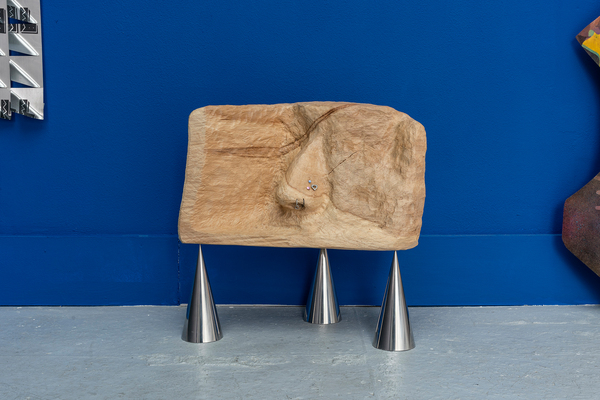
This growing interest soon led her to sculpt bodily movements and explore the corporeality of objects. For example, in her series ‘Trunk’ (2021), presented in the group exhibition 《Transposition》 at Art Sonje Center, she experimented with perceiving three thick wooden boards—cut to a scale intended for actual use by the body (what might otherwise have become a table)—as bodies themselves.


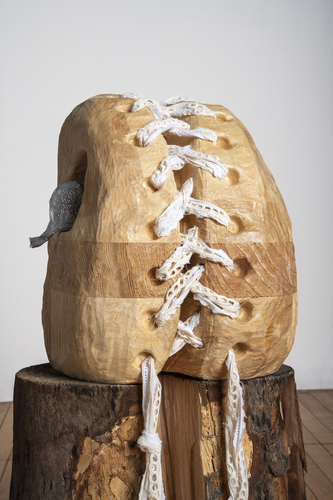
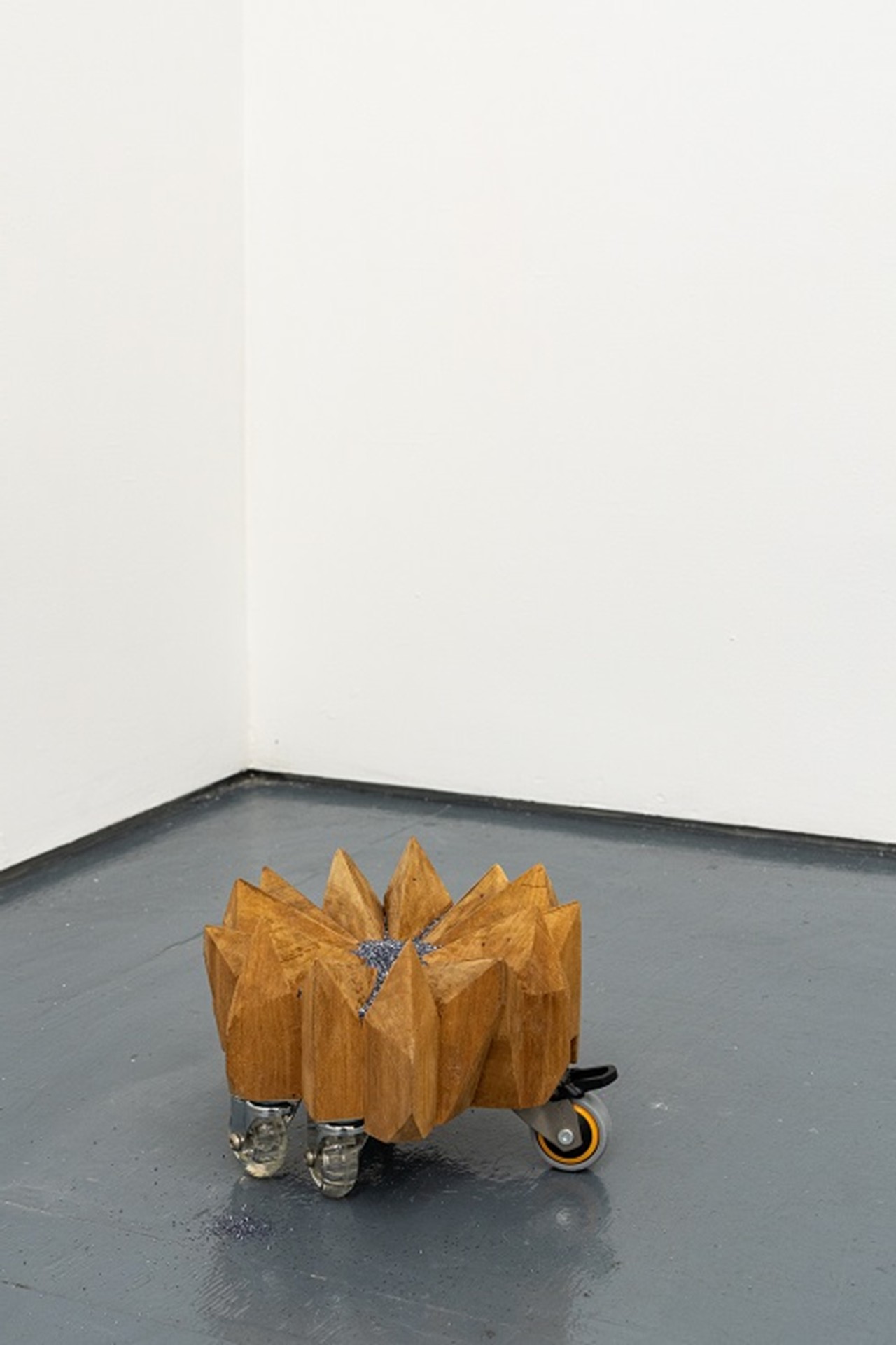
Eusung Lee, Speedonna (with clear sutures), 2021, Wood, aluminum, fabric, 30 × 36 × 33 cm ©Eusung Lee

She perceived the body as consisting of three unseen inner spaces: the outside of the outline, the structure, and naked eye. Respecting the limits of her material’s existing movement, contours, and density, she “scattered in” everything from the subtlest volumes to high reliefs. She then reimagined these forms in terms of bone, skin, and the structures lying beneath the skin’s surface, fusing the inherent material qualities of wood with the imagined body and nerves of the sculpture.


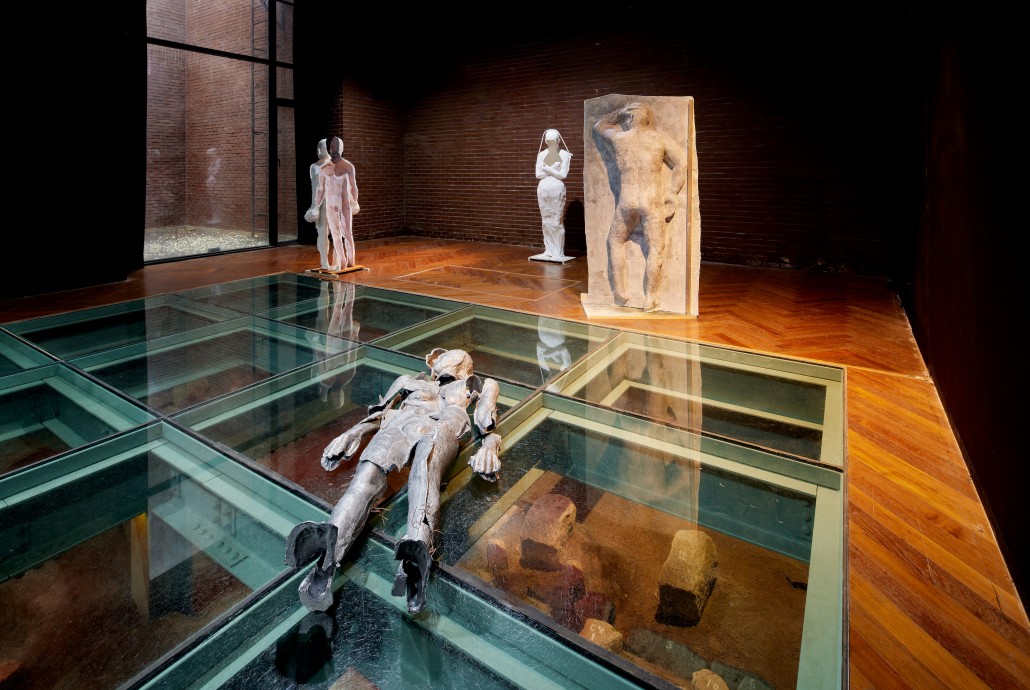
Installation view of 《Cowboy》 (Artspace Boan, 2023) ©Artspace Boan

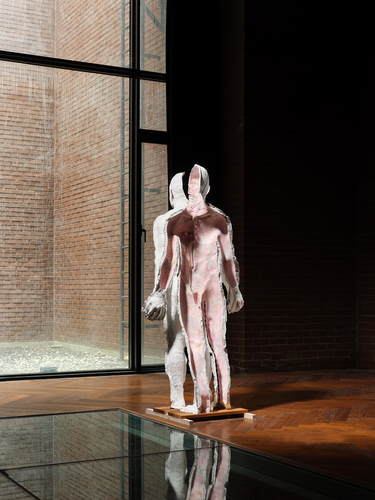
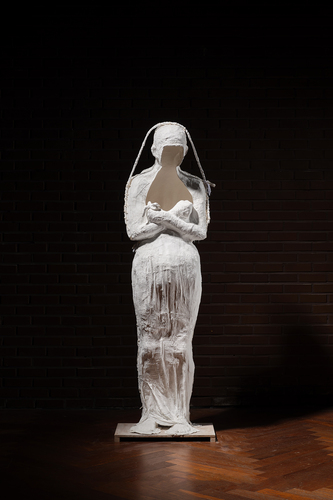
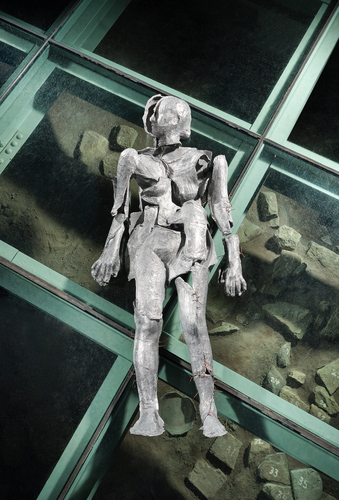
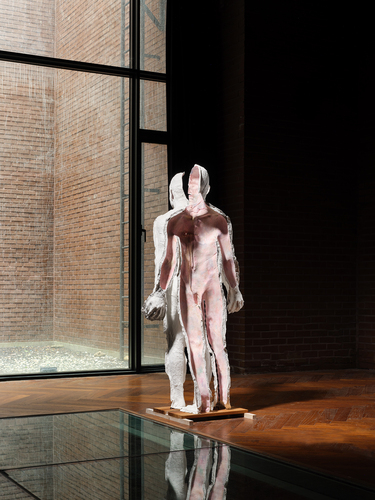
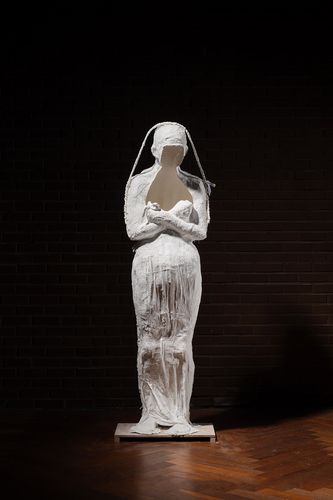
Furthermore, her 2023 solo exhibition 《Cowboy》 at Artspace Boan expanded her practice into a deeper exploration of the symbols and forms of the human body. For this exhibition, Lee created five standing sculptures made by casting the bodies of real people using plaster bandages, which she then cut, sutured, and reassembled. She also presented one sculptural installation composed of fragmented aluminum casts taken directly from parts of her own body, recombined in an intentionally imperfect, reclined form.
 
While traces of bodily characteristics—such as volume, skeletal structure, or movement—had appeared in her previous works as a sculptural inquiry into corporeality, this was the first exhibition in which the literal forms of the human body were revealed and the full figure was materially realized.


Eusung Lee, Valley, 2023, Watercolors on plaster bandage, threads, copper wire, wood, 165 × 50 ×40 cm ©Eusung Lee

Eusung Lee approached the human body as an assemblage of objects, introducing a methodology of “shells” and “suturing.” While her earlier works involved attaching objects to create “objectified humans,” in this exhibition she overlapped and interwove fragments of the body, divided into multiple planes, to construct complete figures as if assembling a sculptural object.
 
For this process, she employed plaster bandages—the same material typically used for preliminary casts—as her primary medium. By repeatedly pressing, rubbing, and layering the thin bandages over the flesh of another person, she created delicate, fragile “shells” in which the contours of skin and muscle were intricately captured.


Eusung Lee, Bride, 2023, Plaster bandage, wood, copper wire, fabrics, 180 × 45 ×40 cm ©Eusung Lee

The shells thus created serve as traces of an absent body, evoking reflections on the body as a “ghostly” image. The human forms Lee explored for this work, however, carry archetypal qualities from entirely different times and spaces, contrasting with the temporariness of plaster bandages. The ghostly prototypes of these shells drew inspiration from Donatello’s David, Beyoncé’s performances and costumes, the angels of the Vatican, the Medicine Buddha in Buddhist tradition, Henri Matisse’s Back relief, and the coffins of mummies.
 
These human forms, as sculptural norms, overlap with the bodies of living individuals and are reflected or erased in enigmatic ways during the process of casting into “shells.”


Eusung Lee, Eggshell, 2023, Aluminum, copper wire, 55 × 170 ×28 cm ©Eusung Lee

In this way, Lee’s work engages with the body that emerges after existence has been erased—that is, the posthumous body or the body as an object. Historically, corpses were regarded as sacred precisely because they were objects, and living bodies were similarly sanctified when rendered as sculpture.
 
Meanwhile, the concept of the “shell” originated from a “minor ritual” in which the artist lightly cast the hands, feet, and faces of close friends who visited her studio. In this exhibition, this notion of the shell evolved into a sculptural language for dissecting the body’s image based on a single individual’s bodily structure and conditions of action.
 
The fragmented body, compared to the whole, encourages viewers to perceive the body as an object rather than as an intact, living form. When personal identity is lost, the body, as a “hollow shell” thus created, prompts reflection on the essence of humanity beneath the surface and invites contemplation of human value.


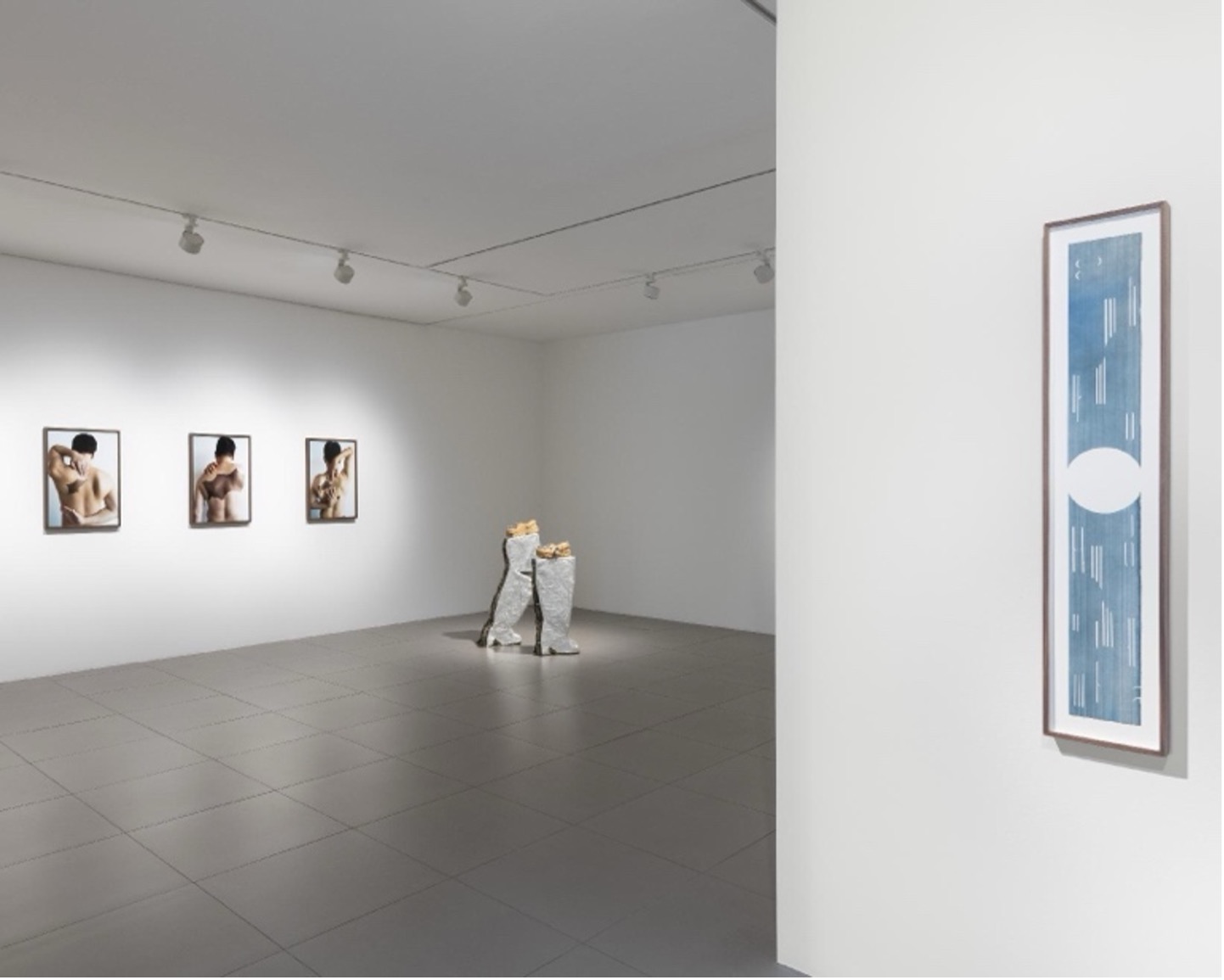
Installation view of 《Epitaphs》 (TSA NY, 2023) ©DOOSAN Art Center

Meanwhile, in the same year, at her solo exhibition 《Epitaphs》 at DOOSAN Gallery New York, Lee’s sculptures appeared as a kind of “epitaph”—condensed and inscribed reflections on bodies and memories that are inevitably destined to vanish.
 
These “epitaphs” are strikingly concise, like a single sigh, yet they evoke a range of memories that hint at the relationships left behind by those who are gone, bringing sudden, vivid awareness to the experience of living with a body.


Installation view of 《Epitaphs》 (TSA NY, 2023) ©DOOSAN Art Center

Eusung Lee’s sculptures, created by leaving marks on solid materials or colliding disparate symbols and substances, serve to summon both her personal narrative and the collective bodily memories and sensations of people navigating the accelerated pace of contemporary life, bringing them erratically into the present.
 
In this way, Lee has approached elements that trigger the impulses of memory through the medium of sculpture, moving across past and present. She perceives the “body” as a signifier imprinted with individual experience, emotion, or sensation, using it as a conduit to evoke contemporary sensibilities and prompt reflection on our embodied existence within rapidly changing social systems.

 “I always want a perceptible sense of material estrangement in my sculptures. Just as in society, where diverse forms of otherness coexist to form a whole.”    (Eusung Lee, interview with Harper’s Bazaar)


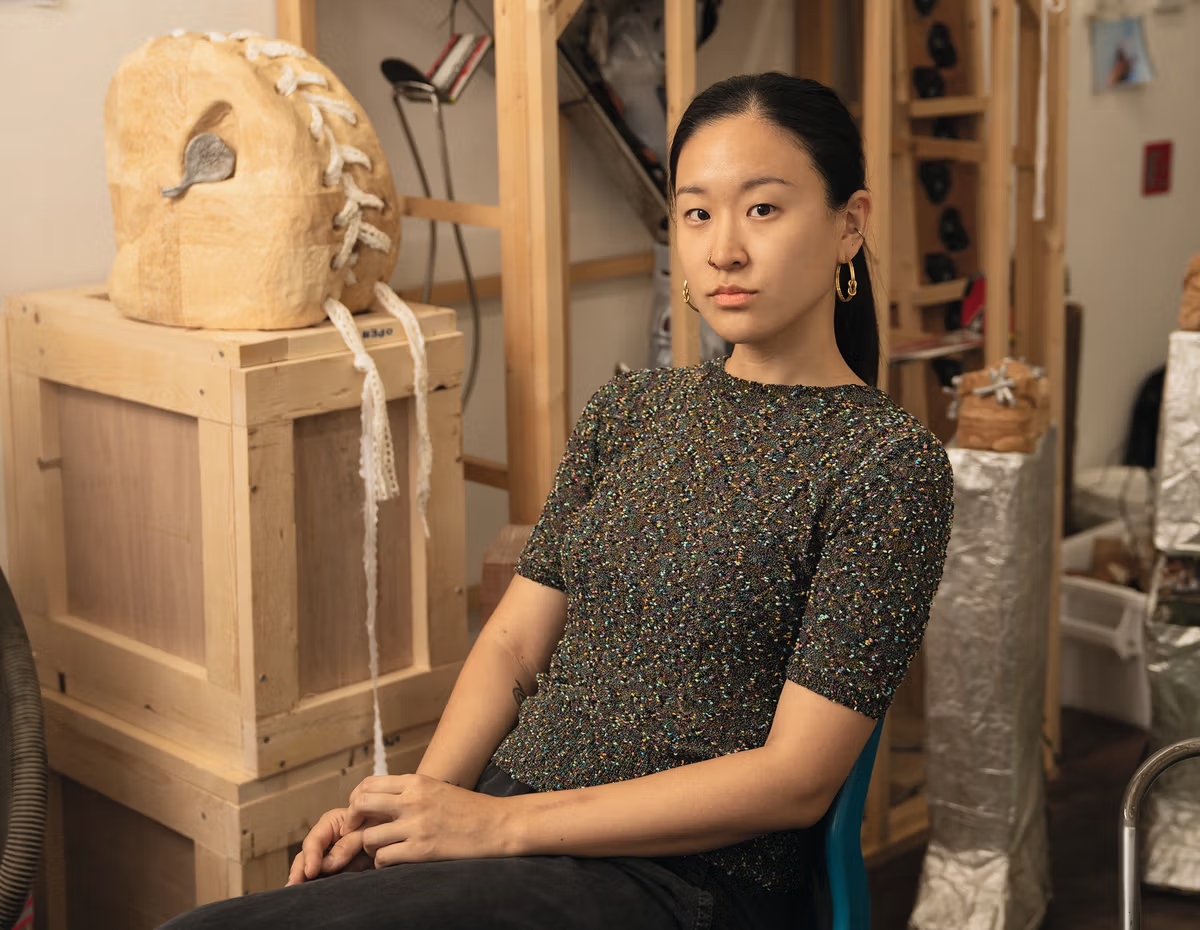
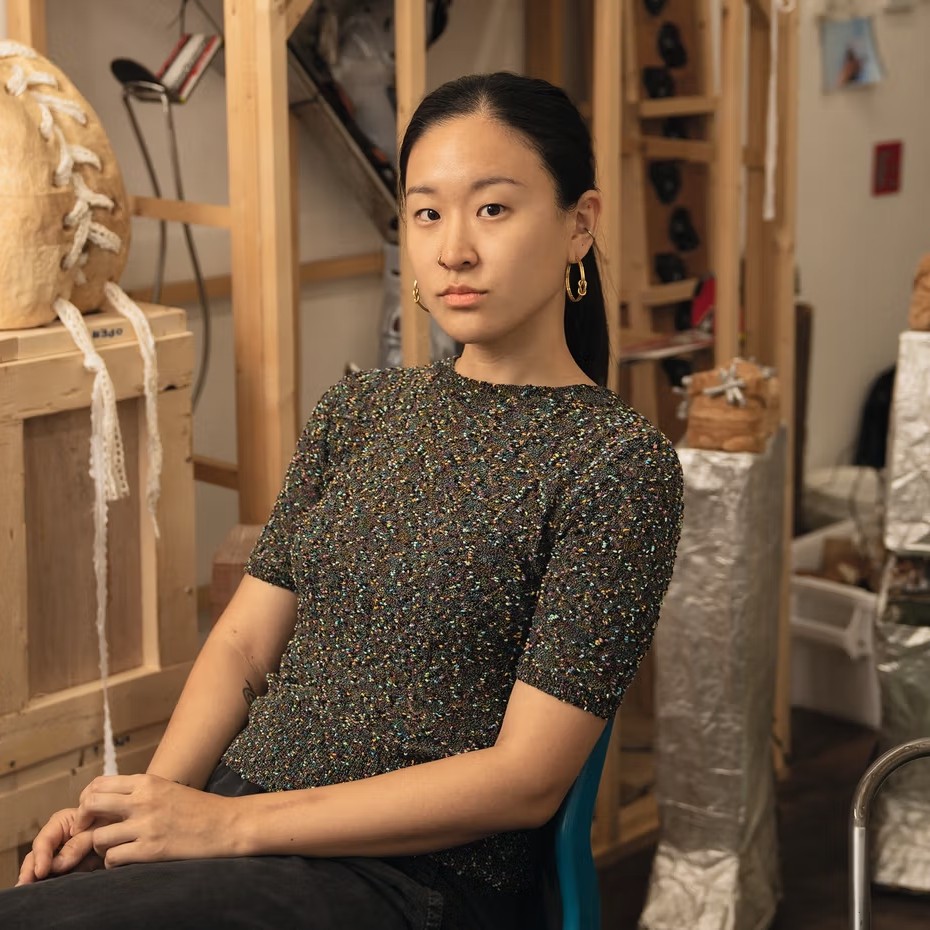
Artist Eusung Lee ©Woojae

Eusung Lee holds a BFA from Hongik University and an MFA from Korea National University of Arts. Her solo exhibitions include 《Epitaphs》 (TSA NY, New York, USA, 2023), 《Cowboy》 (Artspace Boan3, Seoul, 2023), 《Jane》 (Weekend/2W, Seoul, 2019), and 《Floppy Hard Compact》 (Gallery175, Seoul, 2016).
 
She has also participated in numerous group exhibitions, including 《Ringing Saga》 (DOOSAN Gallery, Seoul, 2025), 《Talking Heads》 (Seoul Museum of Art, Seoul, 2025), the 7th Changwon Sculpture Biennale 《Silent Apple》 (Changwon, 2024), 《Open-Hands》 (Gallery Hyundai x Commonwealth and Council, Seoul, 2024), 《Foreverism: Endless Horizons》 (Ilmin Museum of Art, Seoul, 2024), 《Sometimes it sticks to my body》 (WESS, Seoul, 2023), 《Memory of Rib》 (N/A, Seoul, 2022), 《Transposition》 (Art Sonje Center, Seoul, 2021), and more.
 
Eusung Lee participated as a resident artist at the Nanji Residency, Seoul Museum of Art in 2022, and in 2023, she was selected as a SeMA Emerging Artist by the Seoul Museum of Art.

References