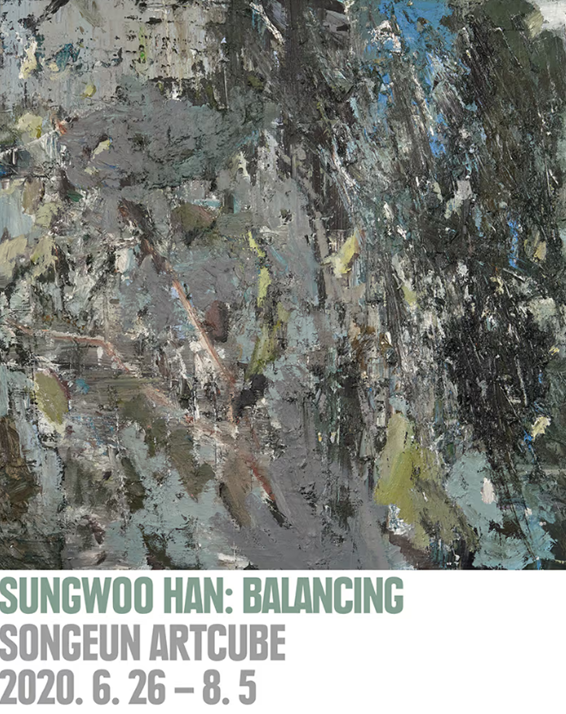
Han Sungwoo (b. 1987) has been working with everyday landscapes and places encountered in daily life as the subjects of his practice. However, rather than focusing on the subjects themselves, he turns his attention to what lies beneath the visible surface — deserted spaces, worn walls and floors, or traces left upon the body — the hidden underside obscured by the foreground.


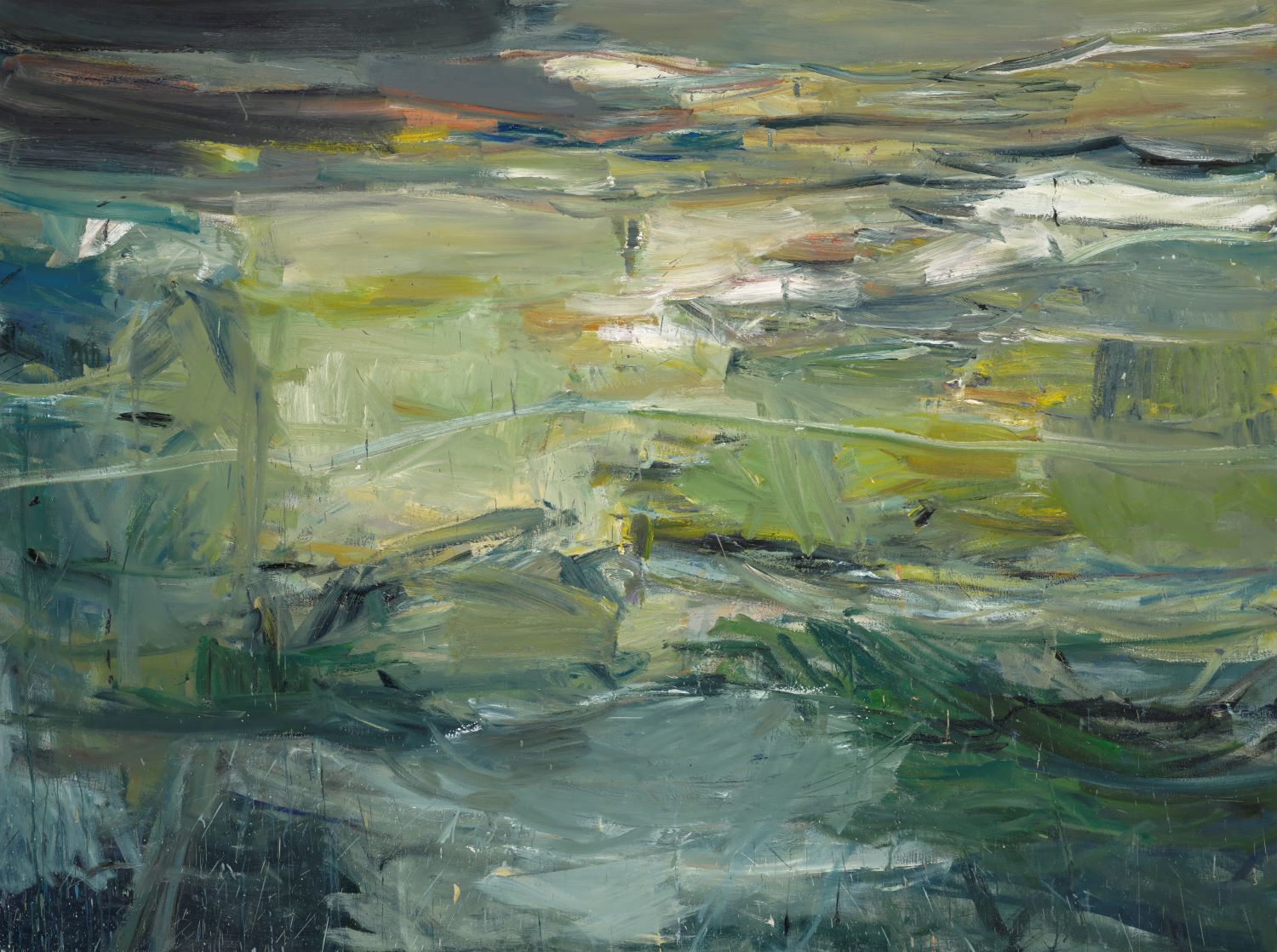
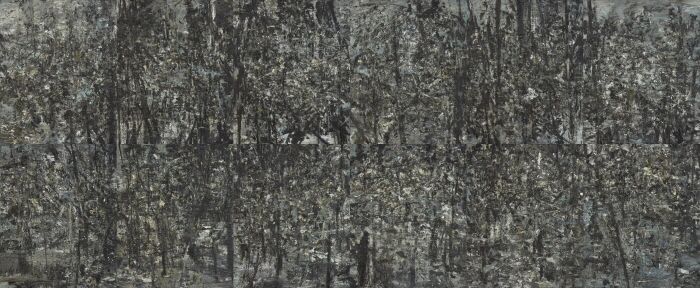
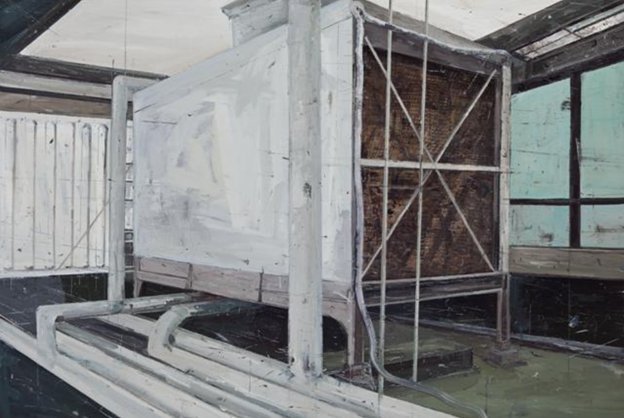
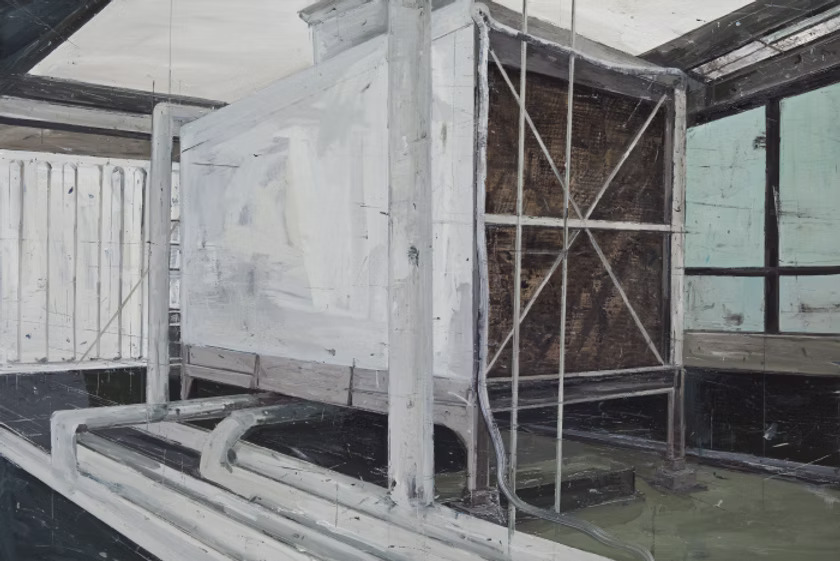
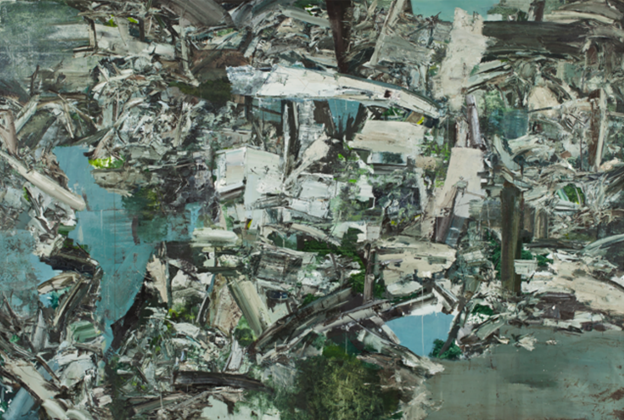
Han Sungwoo, cooling tower, 2013, Oil on canvas, 130.3x193.9cm © Han Sungwoo

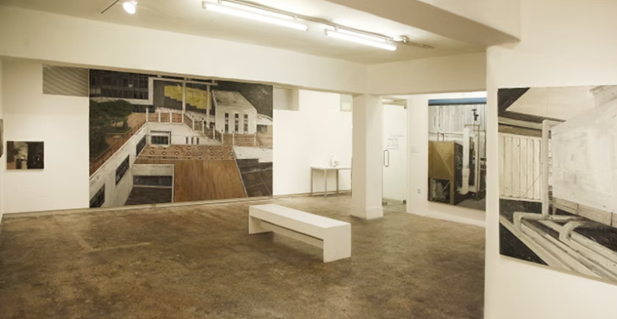
Han Sungwoo has long depicted things that easily escape people’s attention or are quickly forgotten. Rooftops of buildings or cooling units placed behind buildings, for instance, have frequently appeared as subjects in his work.
 
The artist also turned his attention to the scenery of woodworking studios — communal spaces used by many people. In these constantly changing environments, Han became interested in the traces of time that remain after people have left.
 
These traces are the results of temporary and accidental events, things never granted proper names or fixed places. To Han Sungwoo, such remnants resembled the scenery behind a stage, and he sought to hold these anonymous subjects within the frame of the canvas.
 
Over time, the artist gradually moved away from depicting concrete landscapes and objects toward painting imagined spaces shaped by the idea of the backstage or the reverse side of a stage.

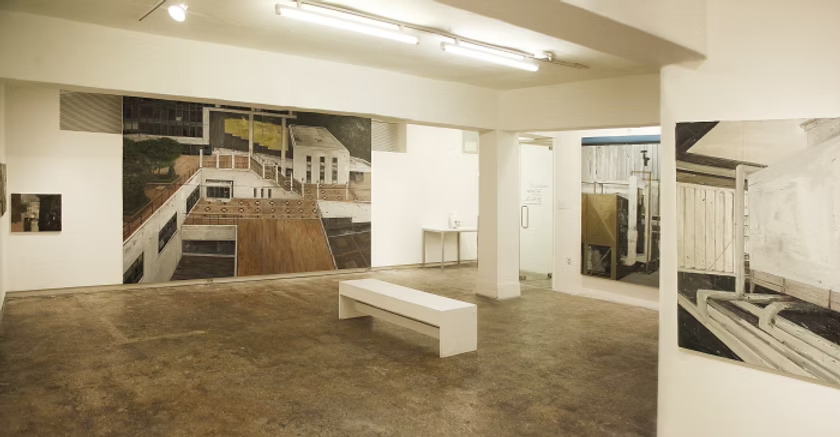
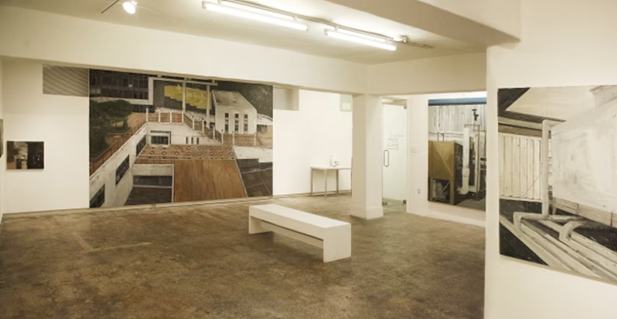
Installation view of 《from Scenery》 (Space Willing N Dealing, 2013) © Space Willing N Dealing

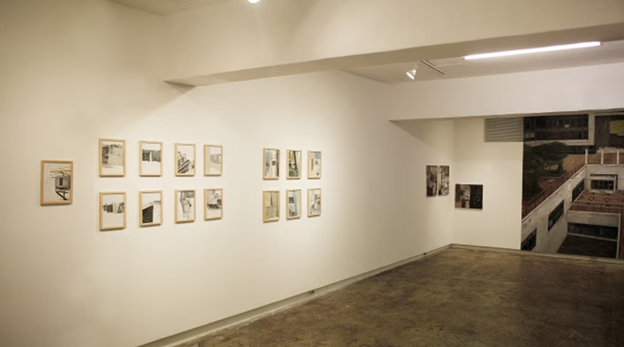
Reflecting this artistic world, his first solo exhibition, 《from Scenery》 (Space Willing N Dealing, 2013), presented an ongoing process of questioning and exploring painting and the act of painting through the motif of landscape.
 
Han Sungwoo has remarked that when he encountered the dictionary definition of “scenery” as “a certain scene or situation,” he became particularly intrigued by the word “certain.” Although the term ordinarily refers to unspecified scenes or situations, for the artist it also encompasses questions about what he sees within those “scenes or situations,” what thoughts arise there, and what emotions they evoke.


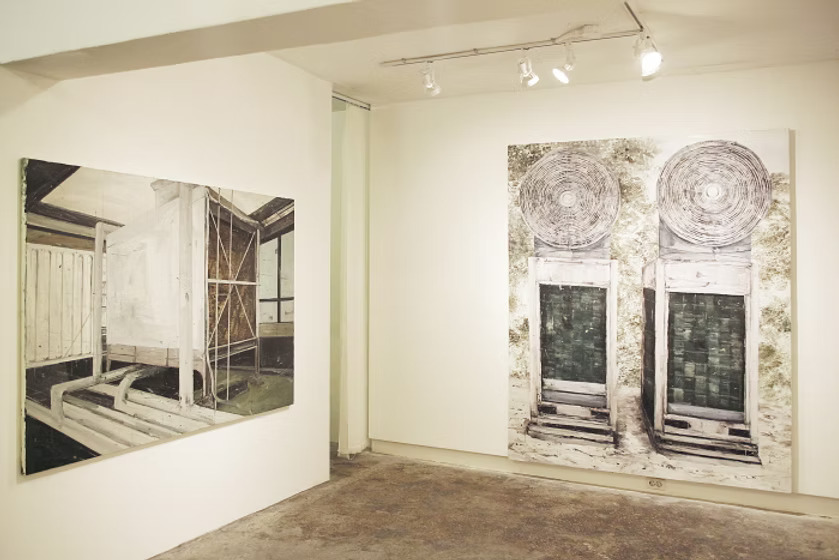
Installation view of 《from Scenery》 (Space Willing N Dealing, 2013) © Space Willing N Dealing

The artist also began to reflect on the act of “painting” itself as a means of holding onto that elusive “certain something” that exists between these landscapes and paintings of landscapes.
 
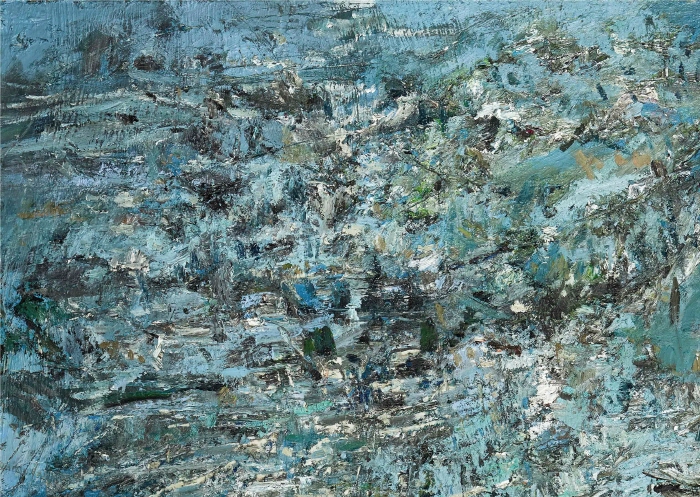
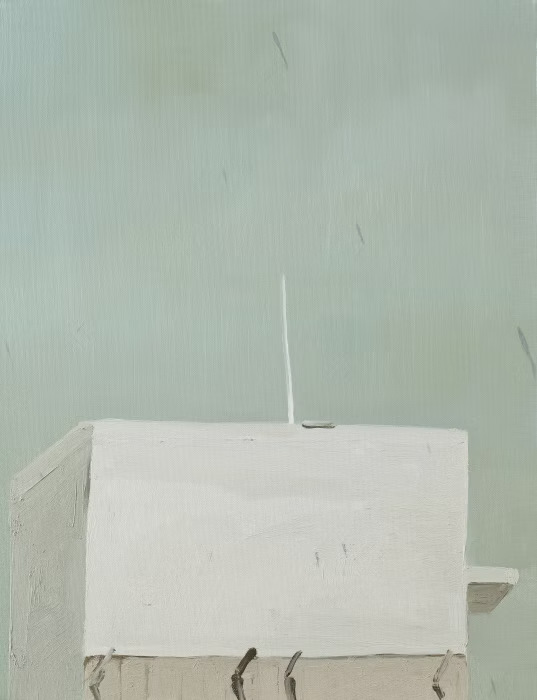
The straight lines that frequently appear in Han Sungwoo’s works, along with their somewhat cold tones and sharp contrasts in value, are intensified expressions of the tension he senses from his subjects. Rather than using tape to create perfectly straight, right-angled lines, the artist instead places a ruler against the surface and applies paint thickly along its edge.


Han Sungwoo, dissonance, 2013, Oil on canvas, 40.9x53cm © Han Sungwoo

The paint, not yet fully dried, collides in ways that evade the artist’s intended effects, producing unexpected traces across the surface. For Han Sungwoo, these traces are not merely marks or residues, but a language of emotion and a language of painting that both evoke the elusive atmosphere he seeks and convey a tactile, physical sensation.


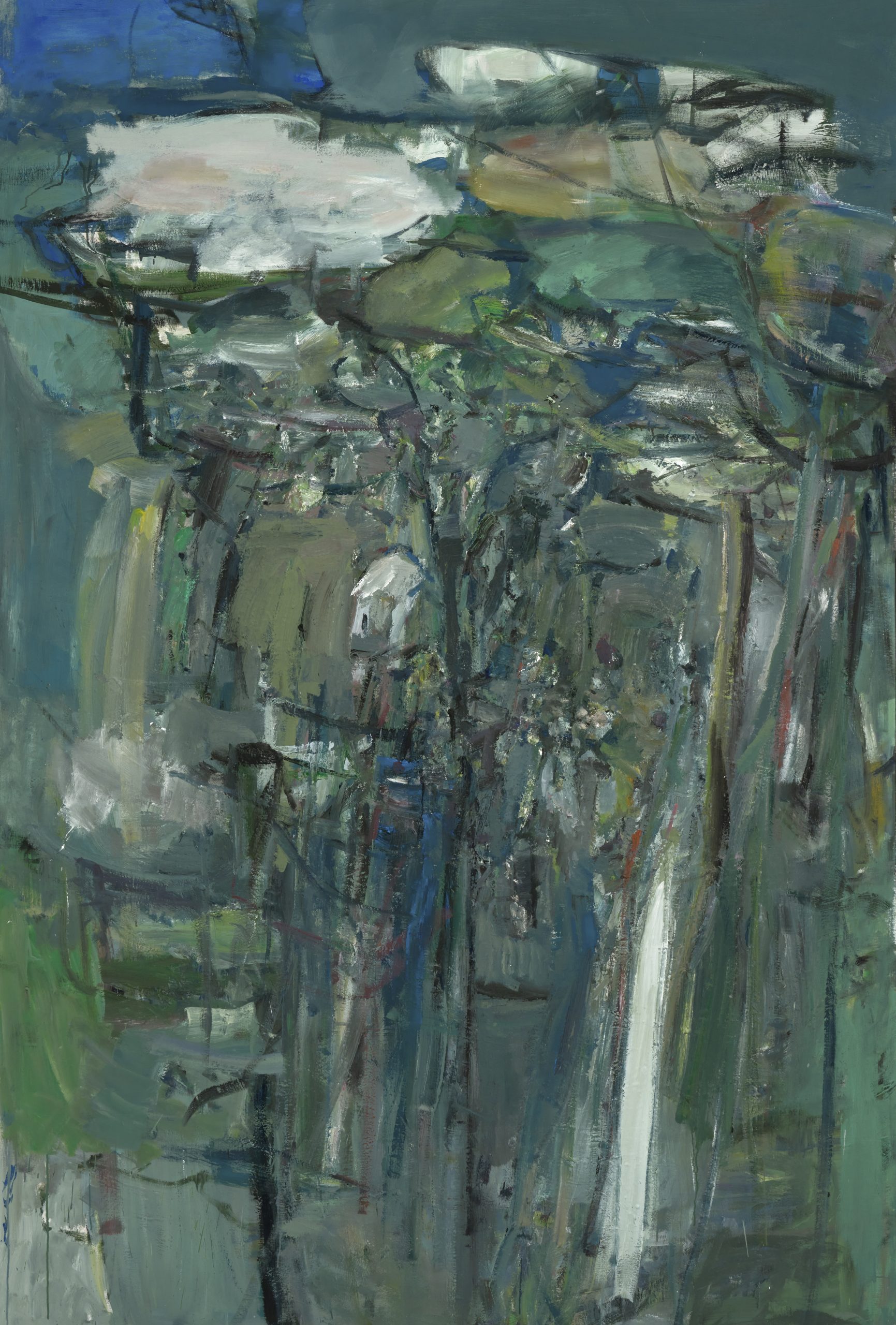
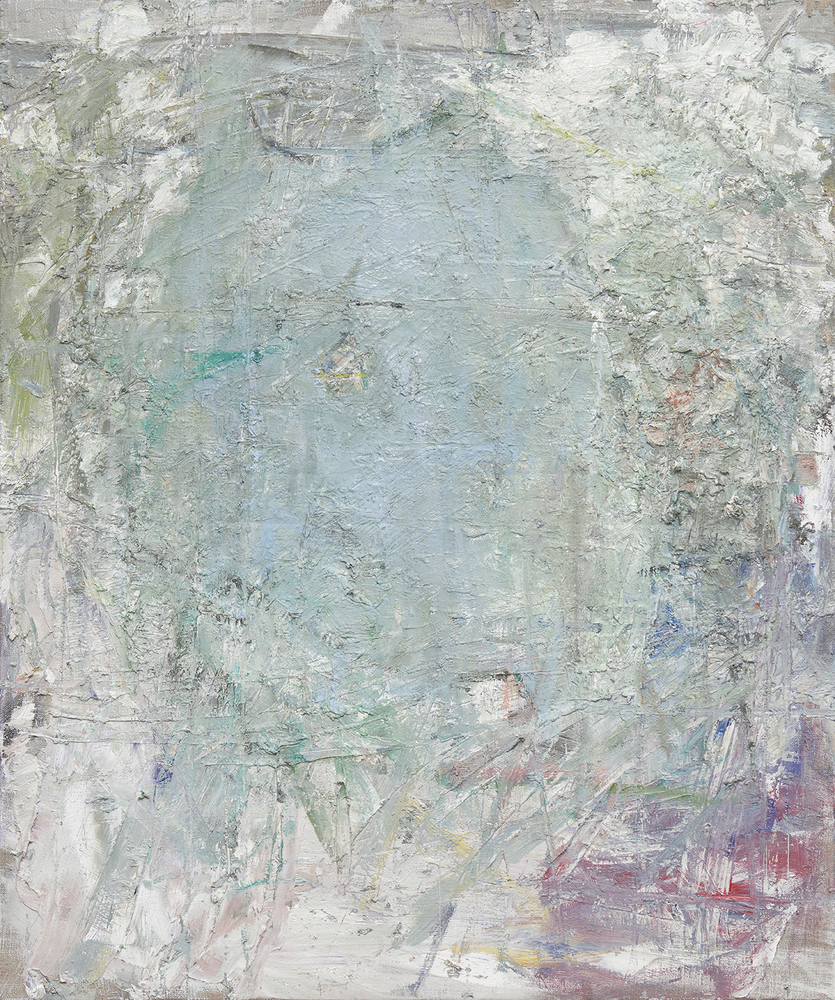
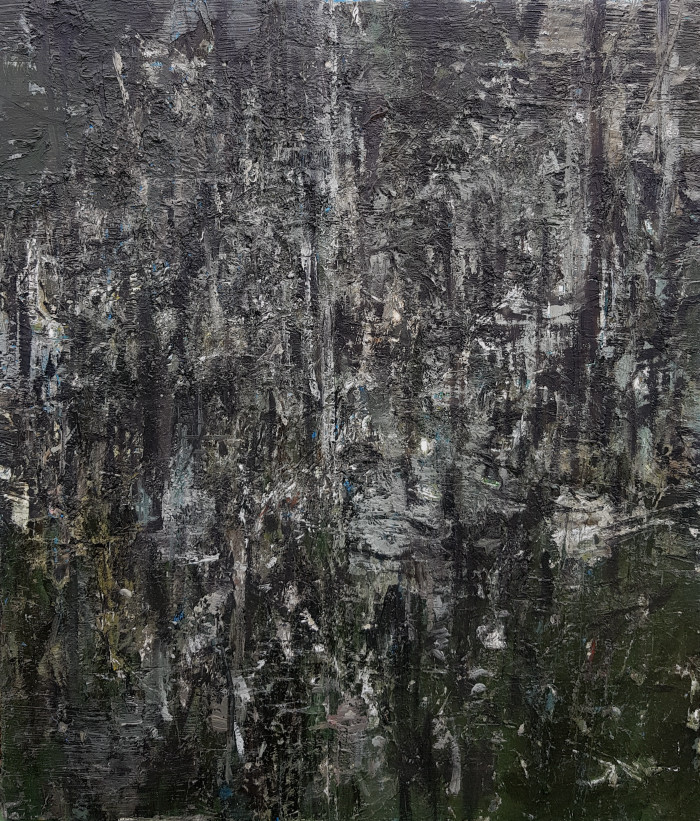
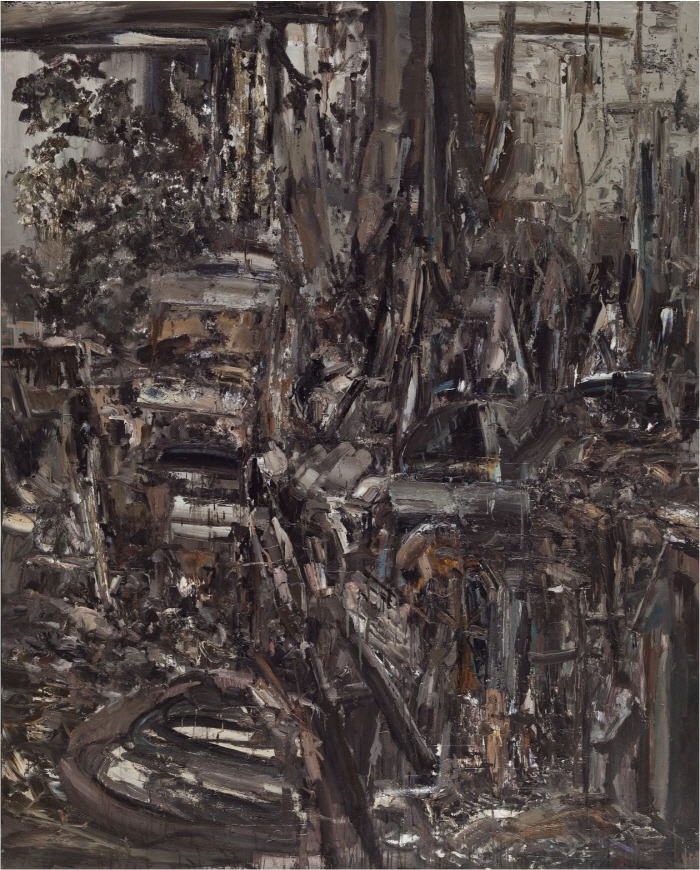
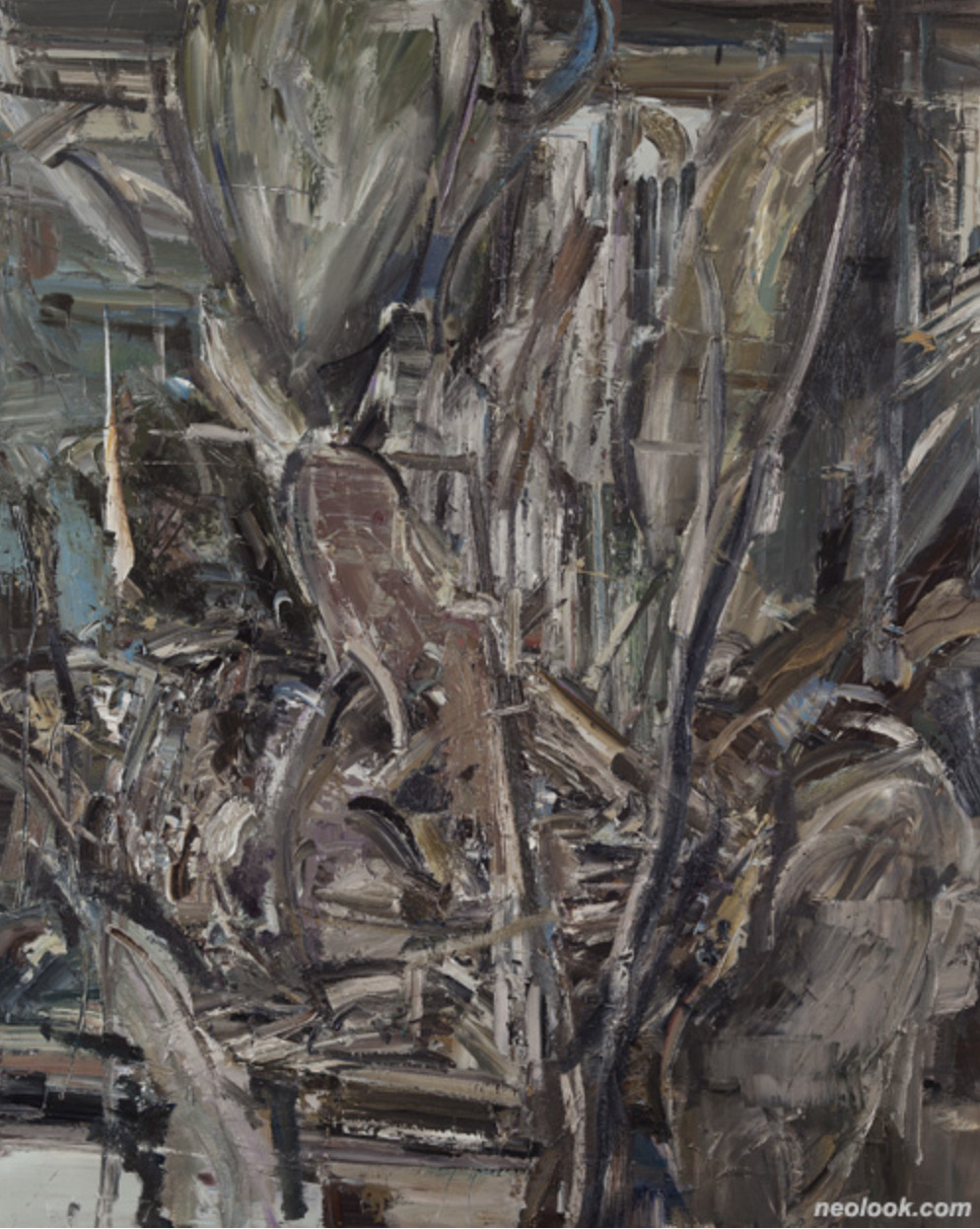
Han Sungwoo, untitled, 2016, Oil on canvas, 162.2x130.3cm © Han Sungwoo

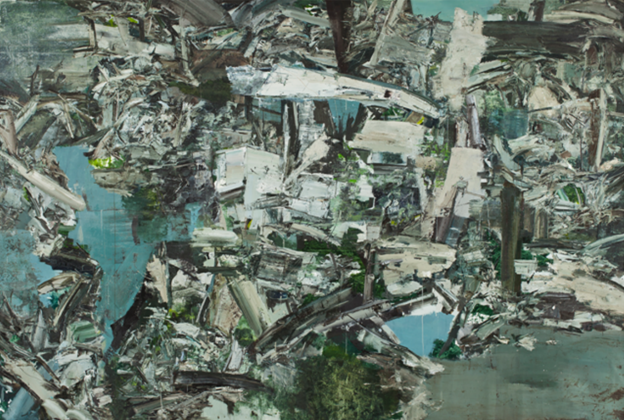
The exploration of “painting” as a means of capturing a certain atmosphere became even more intensified in 《Scene of Possibility》, a solo exhibition held at Cheongju Art Studio in 2017. “Nameless” subjects drawn from the artist’s studio, empty and aged interior and exterior spaces, and faded surrounding landscapes remained on his canvases as thick layers of paint and abstract images.
 
In these works, the traces of the artist’s bodily gestures in the act of painting are conveyed more powerfully than the outward appearance of the subjects themselves, directly revealing the layers of perception and vision he seeks to sense.
 
Whereas earlier works overlaid subtly perceived surface sensations onto the exterior of spaces, the paintings presented in this exhibition became deeply immersive and subjective toward their subjects, as though the artist had physically pressed his body into the canvas itself.


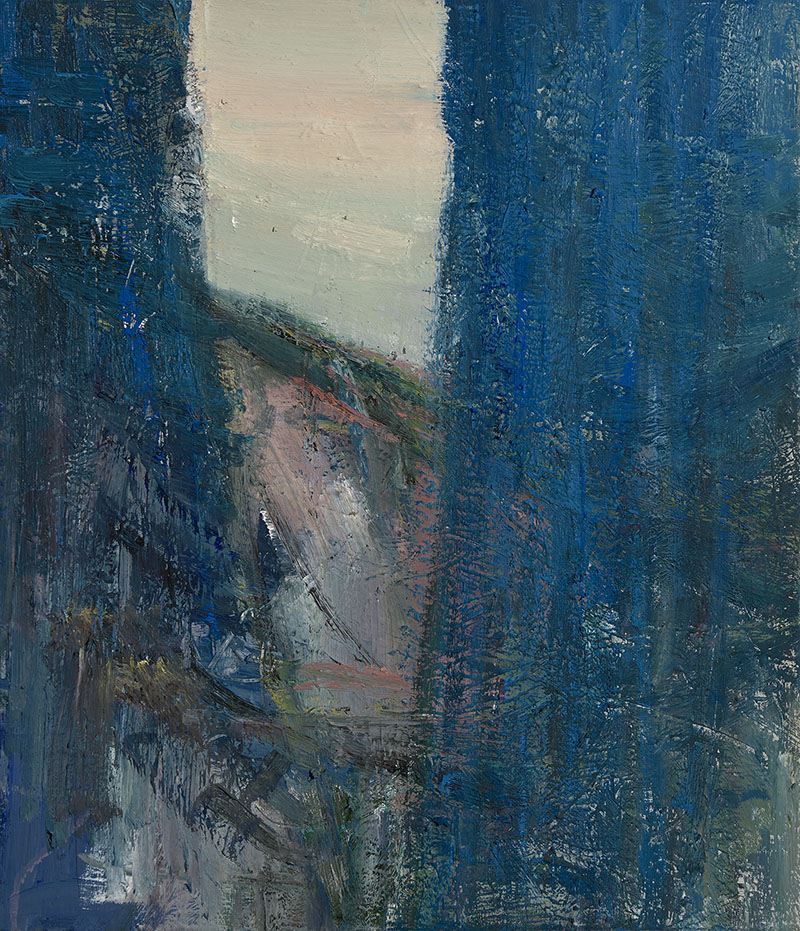
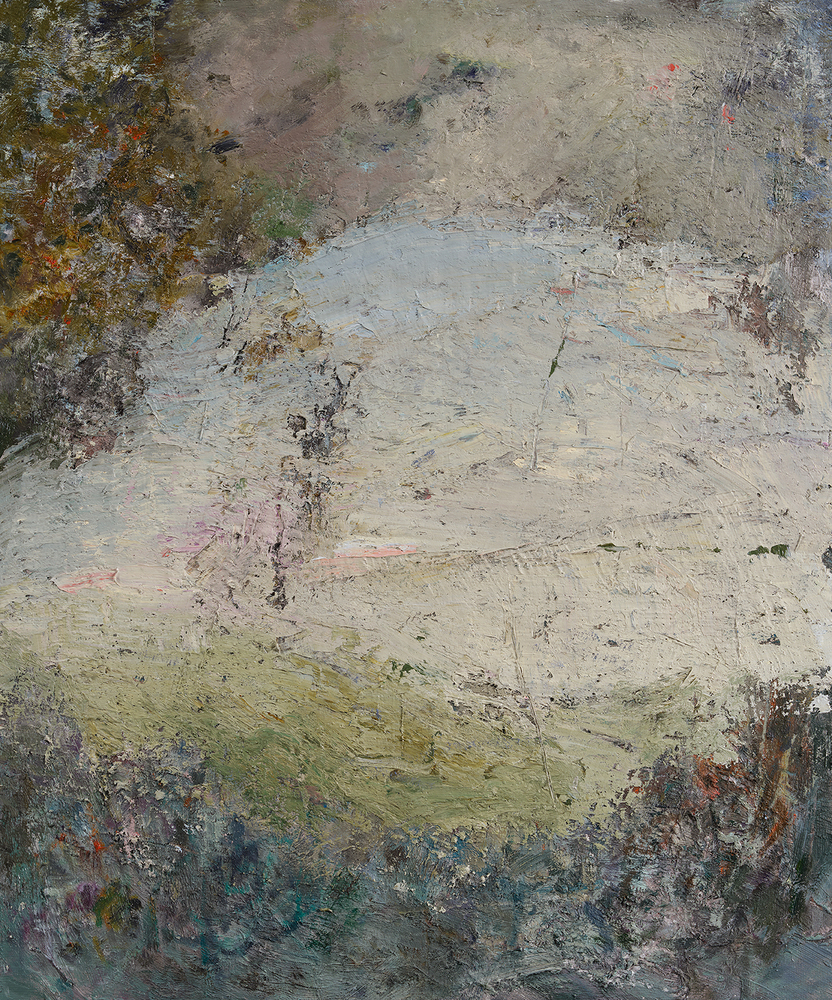
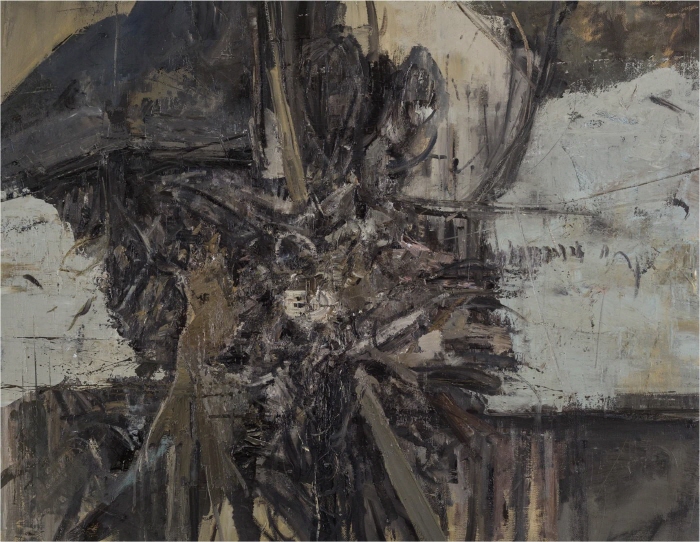
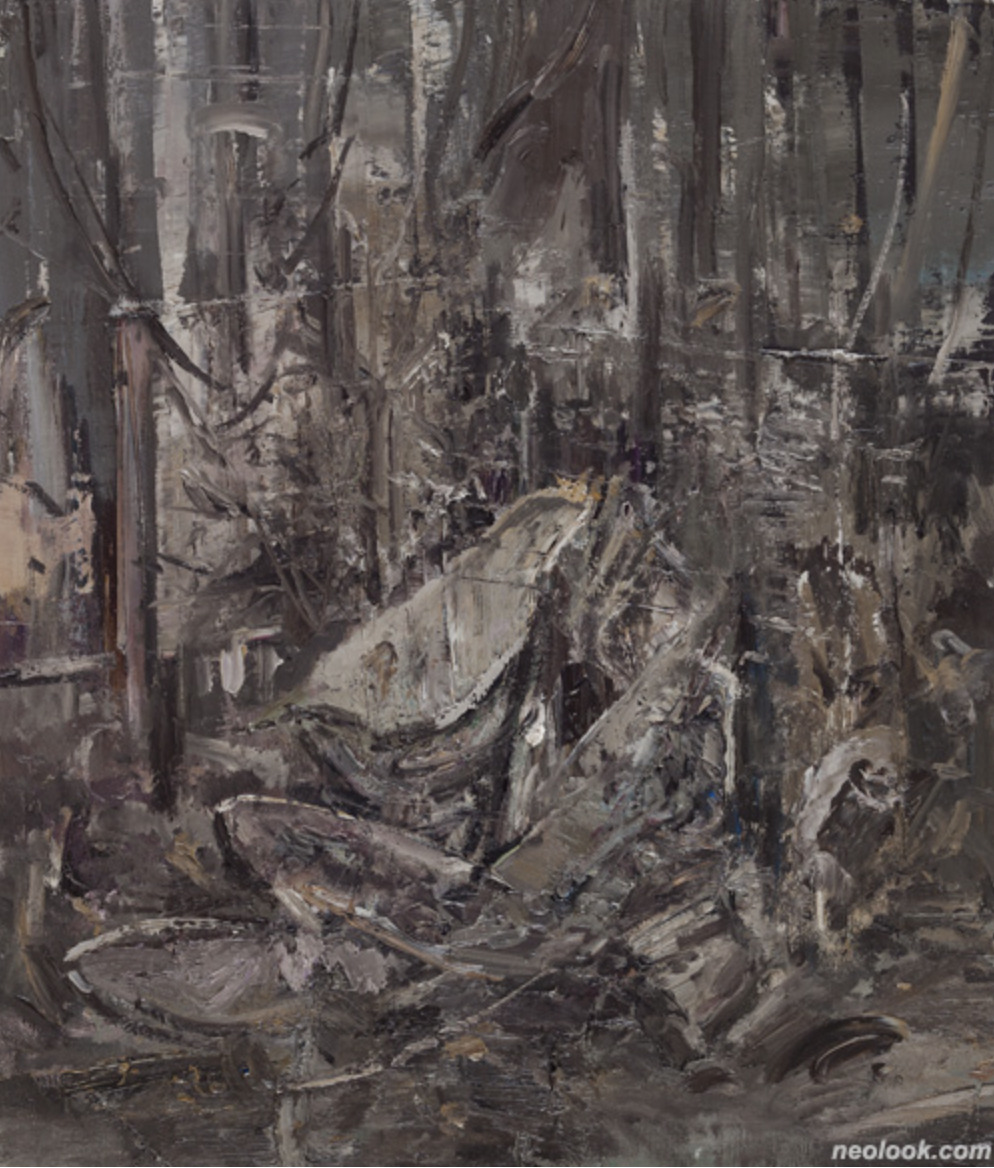
Han Sungwoo, untitled, 2016, Oil on canvas, 53x45.5cm © Han Sungwoo

Looking closely at the paintings, one finds that Han paints less with delicate brushwork than with the flat surface of a knife, and less with the original colors of objects and subjects than with colors rubbed across the canvas to erase boundaries. Rather than revealing the outward contours of his subjects, he brings forth the unseen temporal sensations that lie beneath them.
 
According to the artist, this process is intended to hold onto subjects that continuously emerge, transform, and fade within memory, capturing them on the canvas within a context of simultaneity and arriving at a kind of non-representational form.
 
As the traces on the painting become causes for one another, forms grow ambiguous, repeatedly directing themselves toward different trajectories while simultaneously searching for concrete shapes.


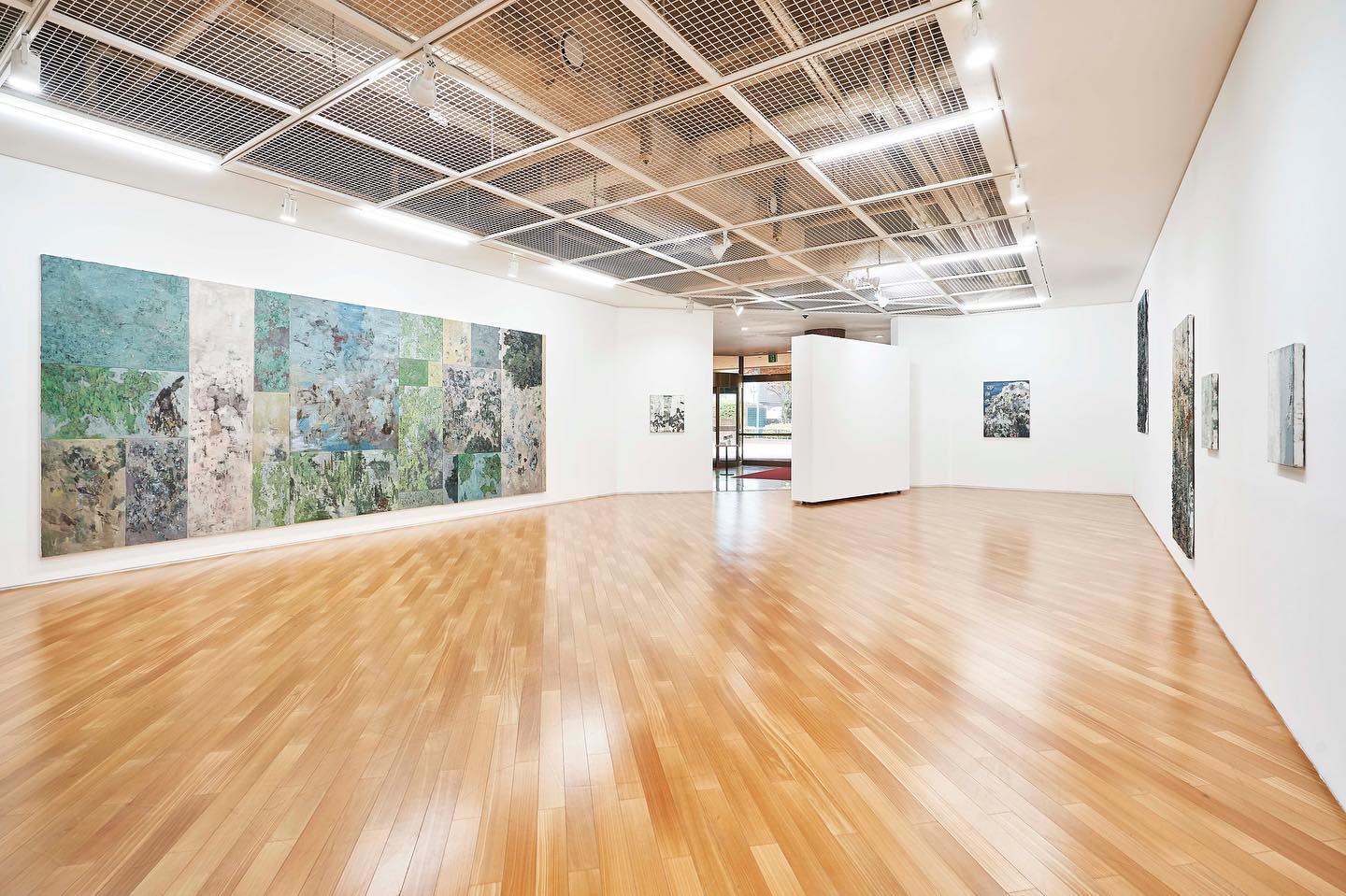
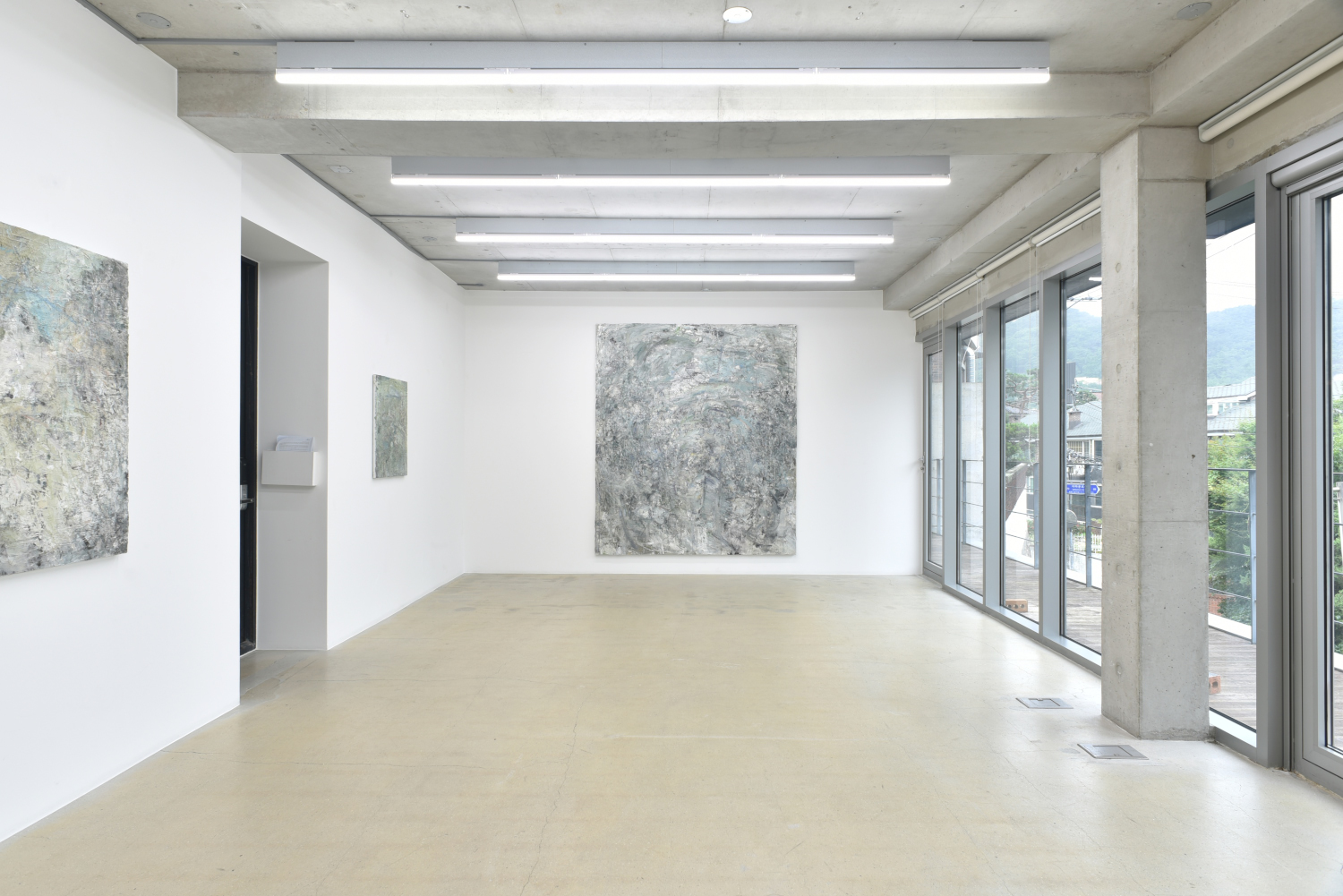
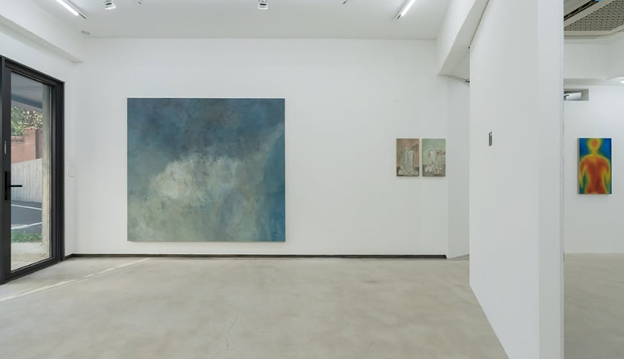
Installation view of 《Balancing》 (SONGEUN Art Cube, 2020) © Han Sungwoo

Han Sungwoo has explored, through this painterly method, how latent subjects that have not yet fully revealed themselves might emerge in tangible and realistic forms.
 
In 《Balancing》, a solo exhibition held at SONGEUN Art Cube in 2020, the artist presented two series of works that reflect the process of sensing and calibrating distance in the act of seeing and painting his subjects.


Installation view of 《Balancing》 (SONGEUN Art Cube, 2020) © Han Sungwoo

First, the ‘In Between Seasons’ series — which clustered and dispersed across the gallery walls — rendered the language of traces through images of transitional seasons, a time suspended between one season and another and resistant to being fixed in language. The artist’s gestures of repeatedly painting and erasing imagined landscapes accumulate layer upon layer as evidence of events.
 
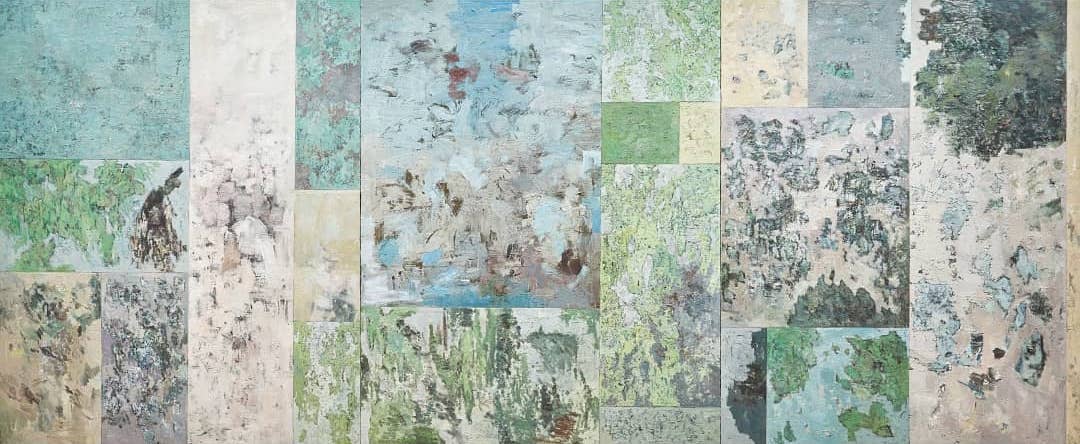
The ‘Balancing’ series, composed of three panels aligned side by side to form a large-scale surface, more directly depicts images of the surface itself, taking as its point of departure the traces of work divided by the boundary of a studio wall.
 
Images of walls — whether imagined, remembered, or actually seen — intersect within a single composition through differing textures, repeatedly drawing the viewer’s gaze into the surface before releasing it back out again.


Han Sungwoo, Balancing (no.3, no.5, no.4), 2020, Oil on canvas, each 227x182cm © Han Sungwoo

His mode of painting can be understood as a process of embodying the atmosphere of landscapes sensed through the act of seeing. Whether imagined or real, Han Sungwoo persistently revises and repeats his brushstrokes so that the places before him are not fully subsumed into fixed meaning.
 
In doing so, his paintings invite the imagination of another space situated between the conventional divisions of figuration and abstraction.
 
In later works, Han expanded his practice across various media, experimenting with shallower expressions of his distinctive matière and producing multiple canvases of the same subject that range from figuration to abstraction, thereby exploring shifts in modes of representation.


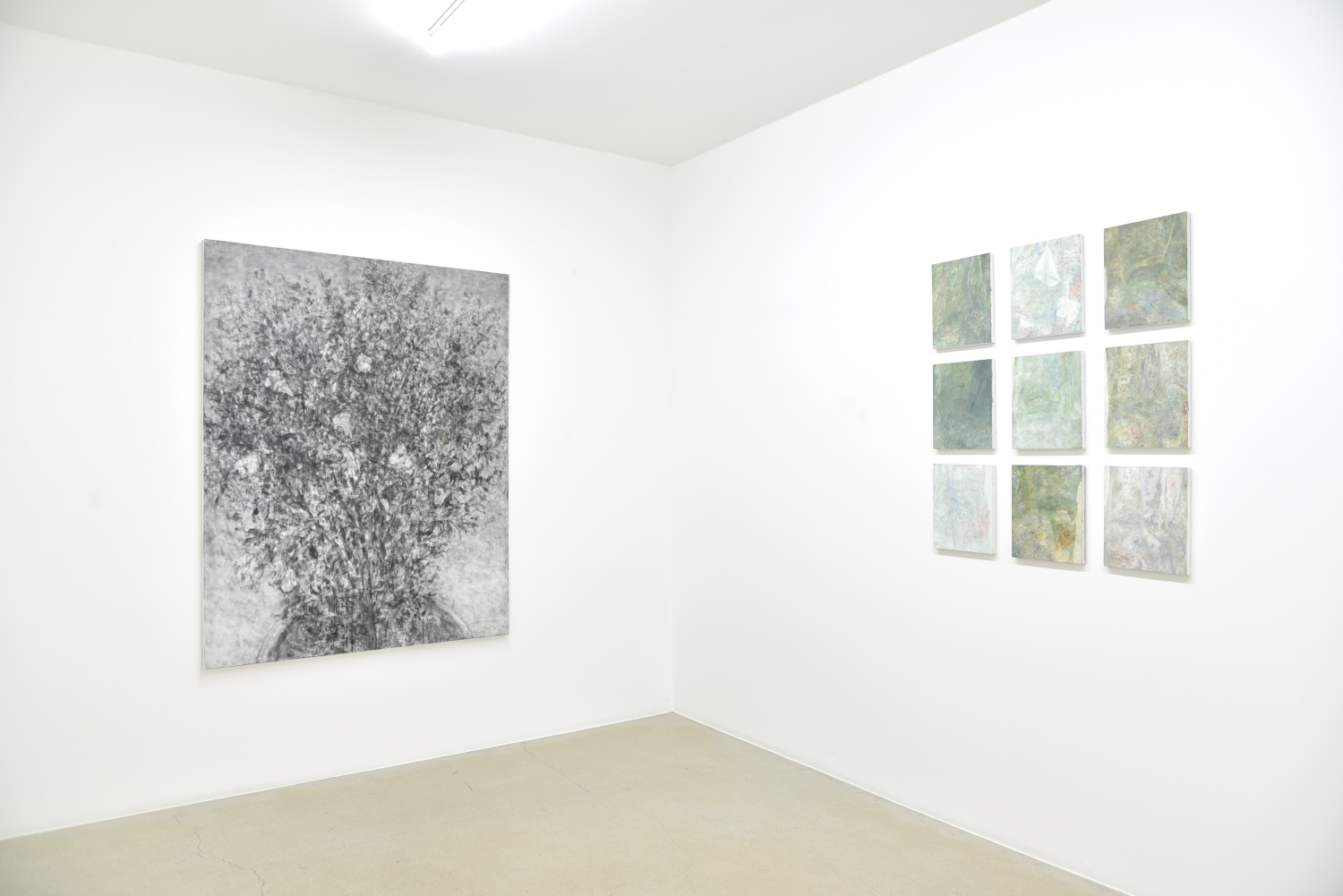
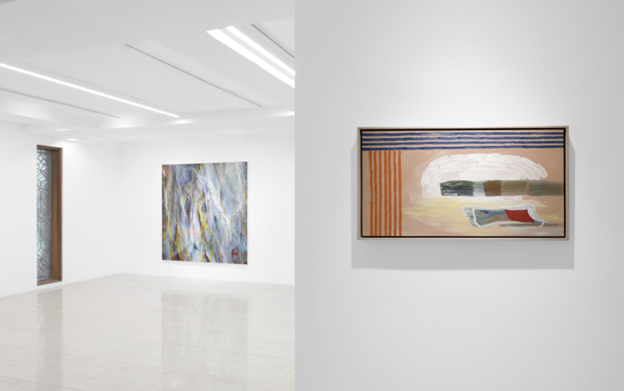
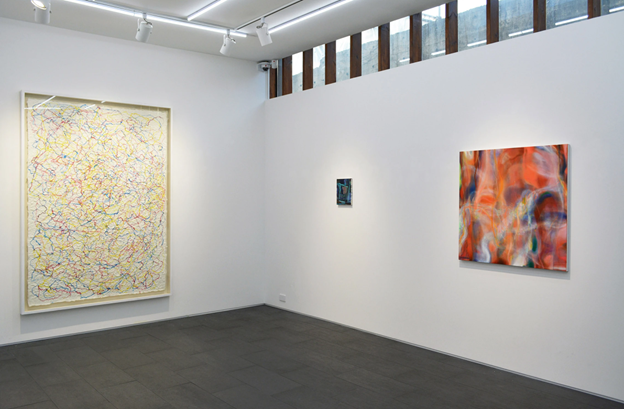
Installation view of 《, Somewhere Between》 (A-Lounge Contemporary, 2022) © A-Lounge Contemporary

In 《, Somewhere Between》, a solo exhibition held at A-Lounge Contemporary in 2022, Han explored the gap between language and image, seeking to present the process in an open-ended state akin to the demonstrative pronoun “over there.”
 
The exhibition originated from the artist’s experience of going out to buy flowers after moving from the Studio White Block in Cheonan to the K-Arts Creative Studio in Seoul, where flowers had become difficult to encounter within the urban environment.
 
For a long time, flowers had represented for the artist the ultimate destination of a desire to paint something. Yet flowers remained like mirages — images that could be imagined but never rendered with clarity. At the end of each attempt to paint them, the artist found themself repeatedly confronting failure.


Installation view of 《, Somewhere Between》 (A-Lounge Contemporary, 2022) © A-Lounge Contemporary

Then, one day, the artist arrived at an unexpected realization while visiting a flower shop in search of flowers. When asking the name of a flower received as an extra gift, the response returned was simply the demonstrative pronoun “over there.” In that vague indication, Han Sungwoo discovered the possibility of expressing something indefinable, as well as his own desire to materialize it within the canvas.
 
If the thick oil paintings he had presented over recent years can be understood as part of an artistic attempt to formally articulate an unseen world through imagination, then the works in which he continually transferred fragments of work clothes and flowers placed in vases onto small canvases reveal a new approach — one that waits for the subject to disclose itself from beyond the boundaries of cognition.


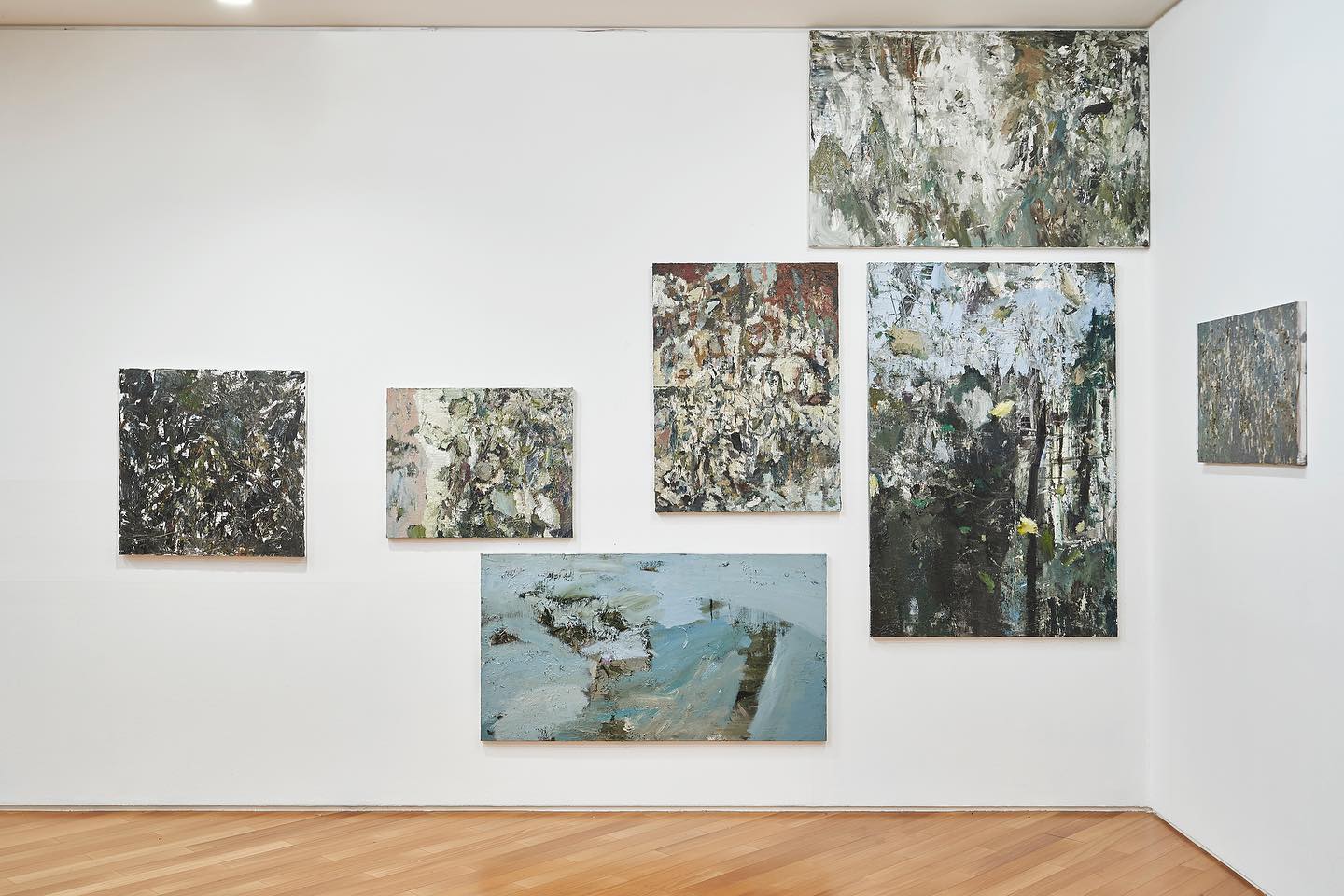
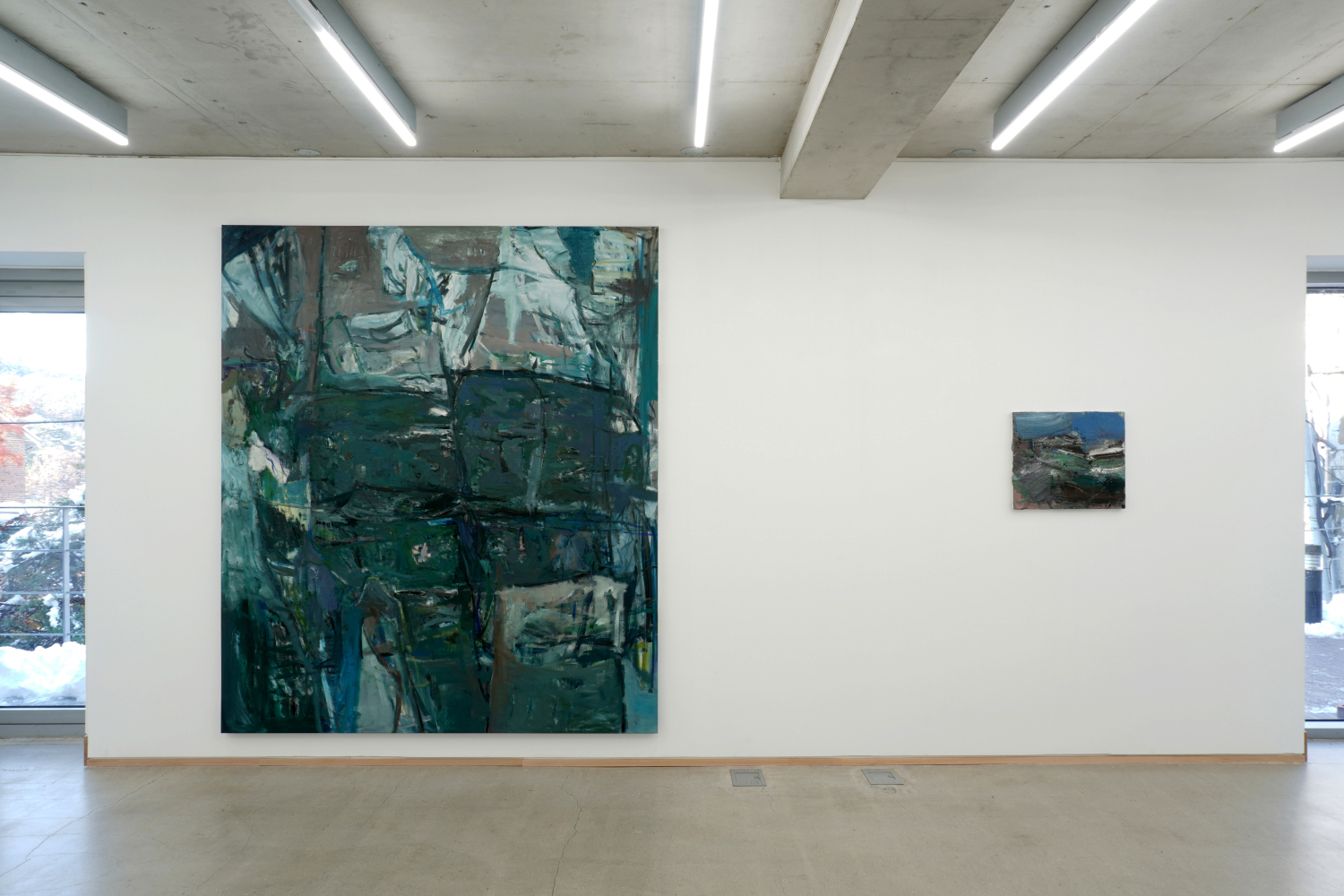
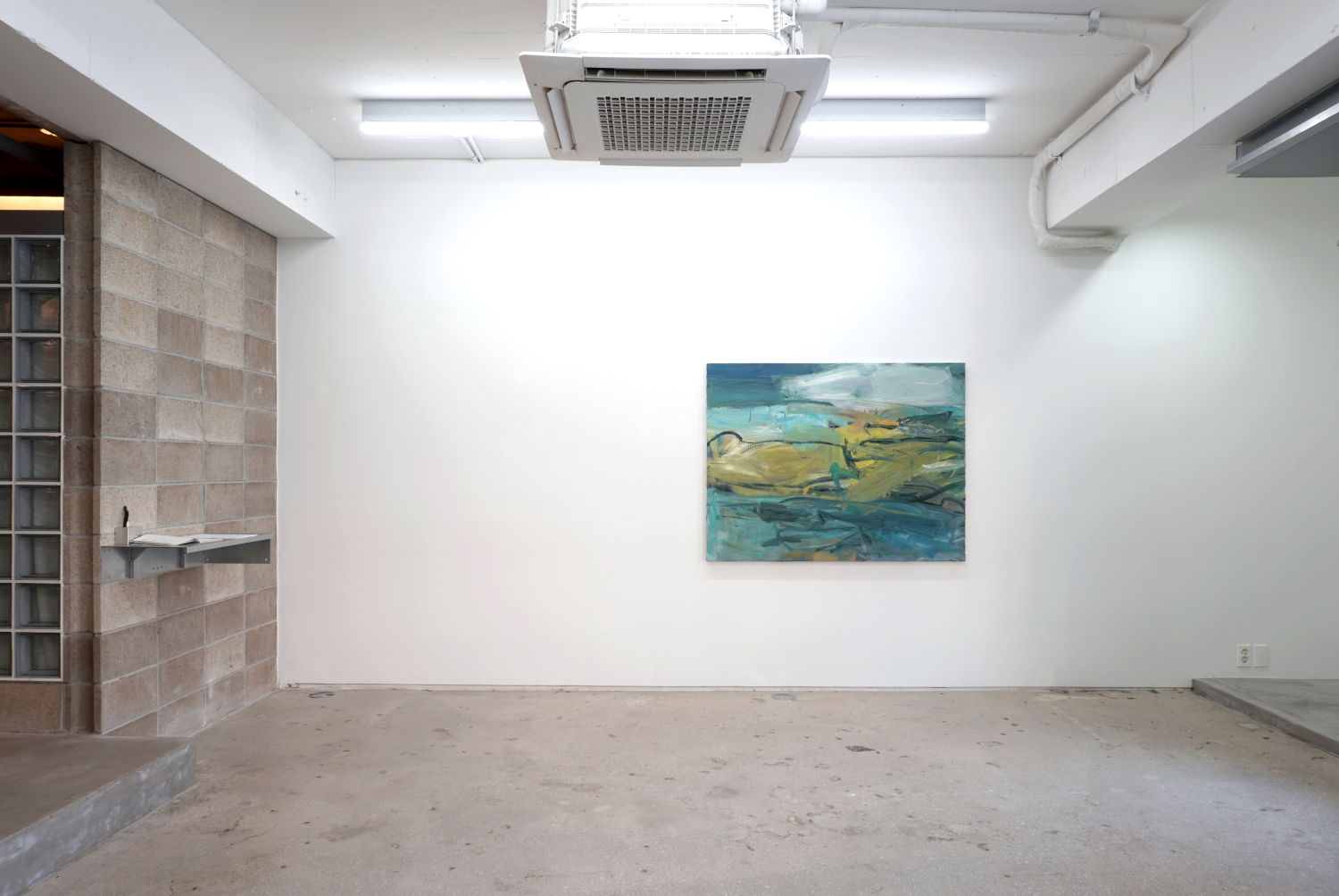
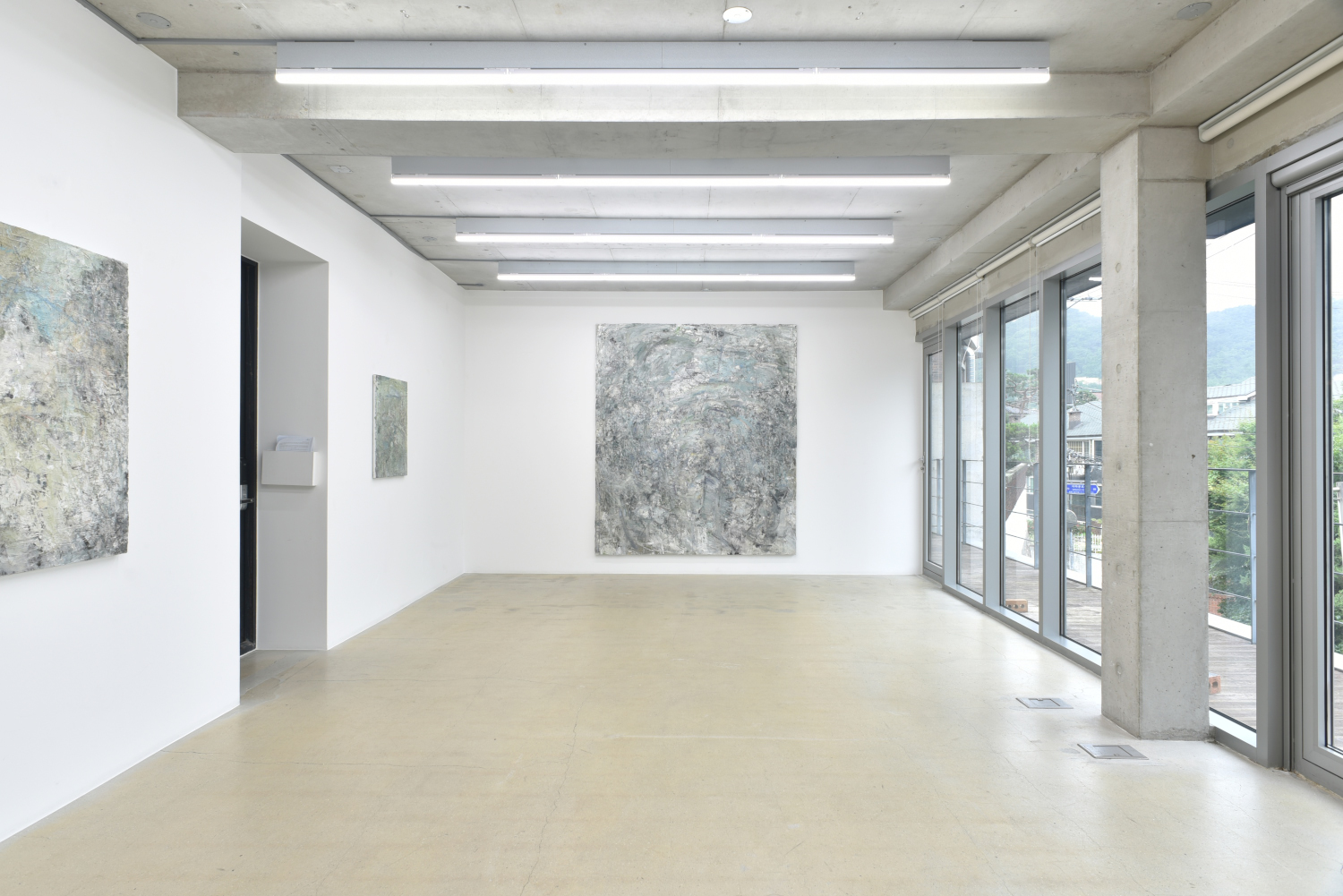
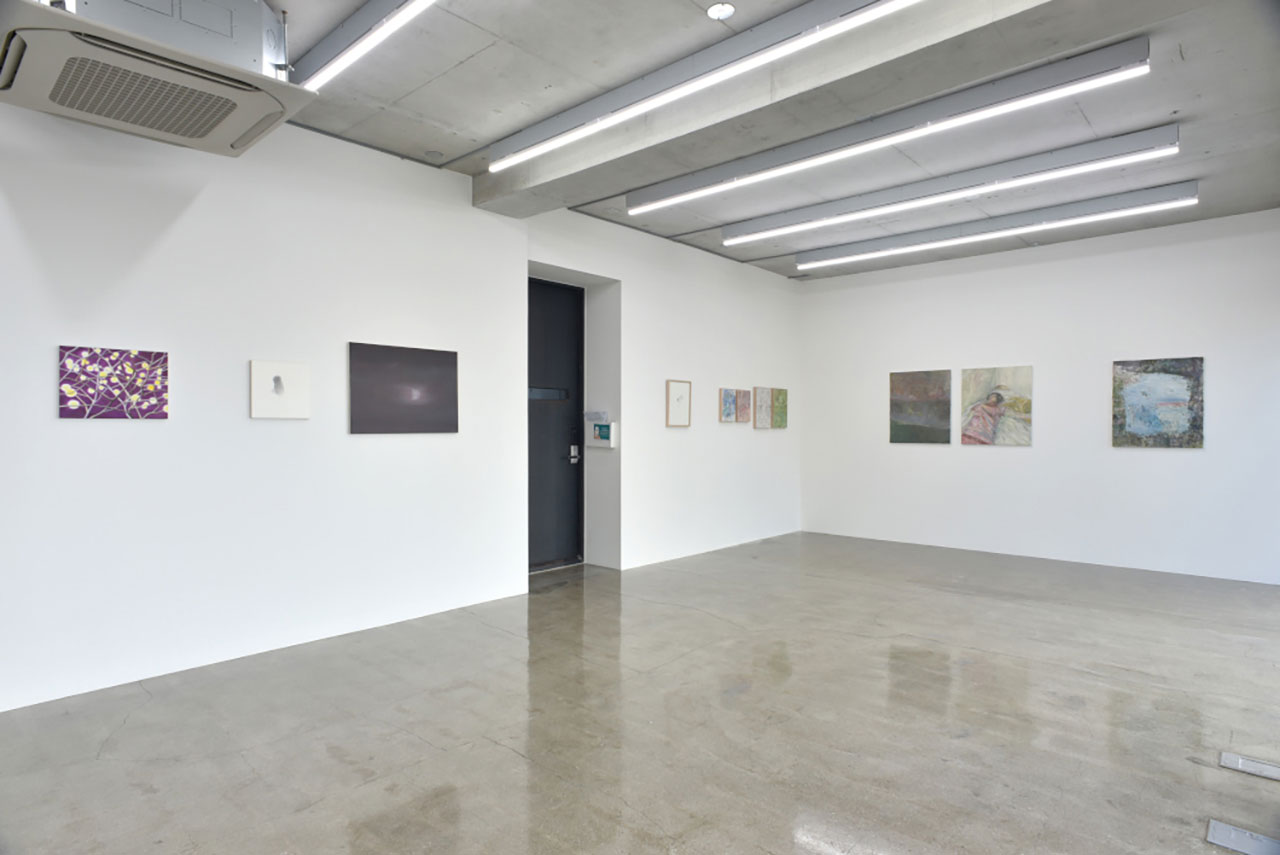
Installation view of 《Elusive Horizons》 (A-Lounge Contemporary, 2024) © A-Lounge Contemporary

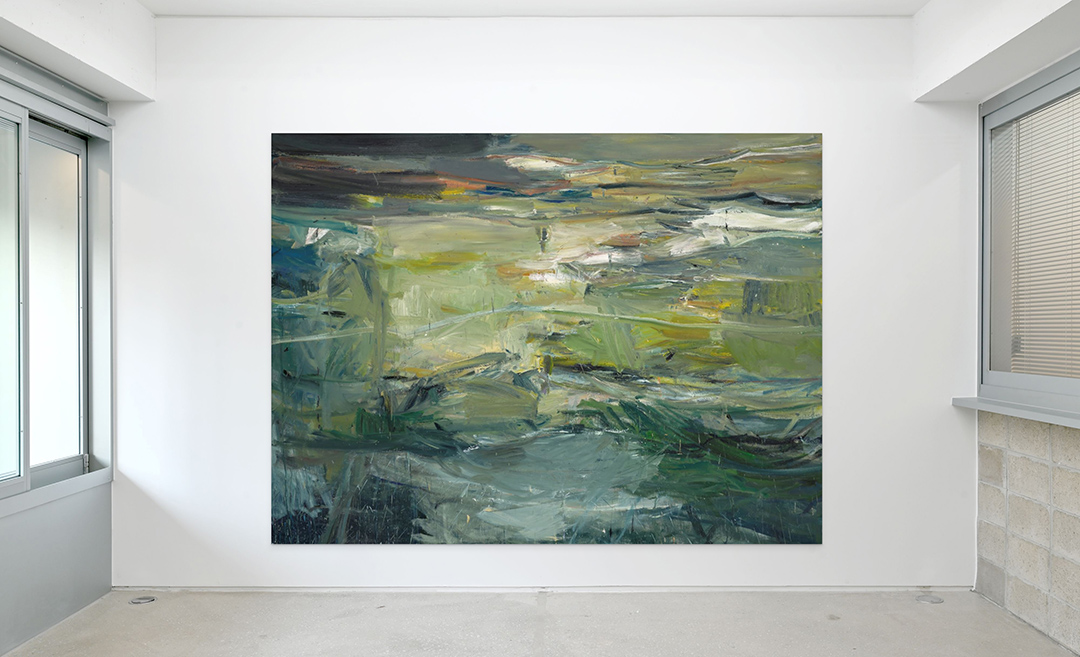
In 《Elusive Horizons》, a solo exhibition held in the same space in 2024, Han Sungwoo sought to move beyond the traditional concept of landscape and explore new possibilities for landscapes formed through the act and process of painting itself.
 
In this exhibition, the works were divided into two categories: “Landscape” and “Scene.” Compared to the “Scene” works, the “Landscape” paintings reveal more recognizable forms and compositional structures, while the “Scene” works foreground the physicality of brushstrokes and paint. Yet these two categories are not entirely separate; each contains the potential to shift into the other at any moment.
 
Some works create subtle connections between reality and imagination through fragments of memory and sensation. These are not simple representations of specific places or moments in time, but landscapes formed through the process of painting itself, inviting viewers to recall their own inner landscapes.


Installation view of 《Elusive Horizons》 (A-Lounge Contemporary, 2024) © A-Lounge Contemporary

In this way, the subjects that have consistently remained at the center of Han Sungwoo’s practice are never fixed, but instead linger in peripheral and secondary positions. Whether they are actual objects or imagined visions of unseen reverse sides, the artist has continually sought to capture the emotions, textures, and atmospheres sensed from them through the act of “painting” upon the canvas.
 
The ongoing journey of painting that defines Han Sungwoo’s practice ultimately opens up possibilities for endlessly expanding ways of seeing, offering viewers pathways toward new perceptual horizons.

“I cannot believe that these things were created by any particular intention. They seemed closer to byproducts detached from processes driven by reason and purpose. There are nameless things. There are faceless things. Or there are things whose names have been forgotten and whose faces have been forgotten. Or perhaps even the fact that they were forgotten has itself been forgotten.” (Han Sungwoo, Artist’s Note)


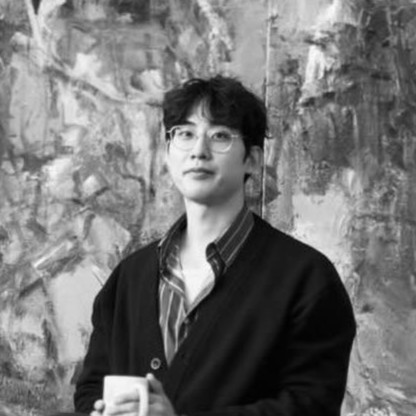
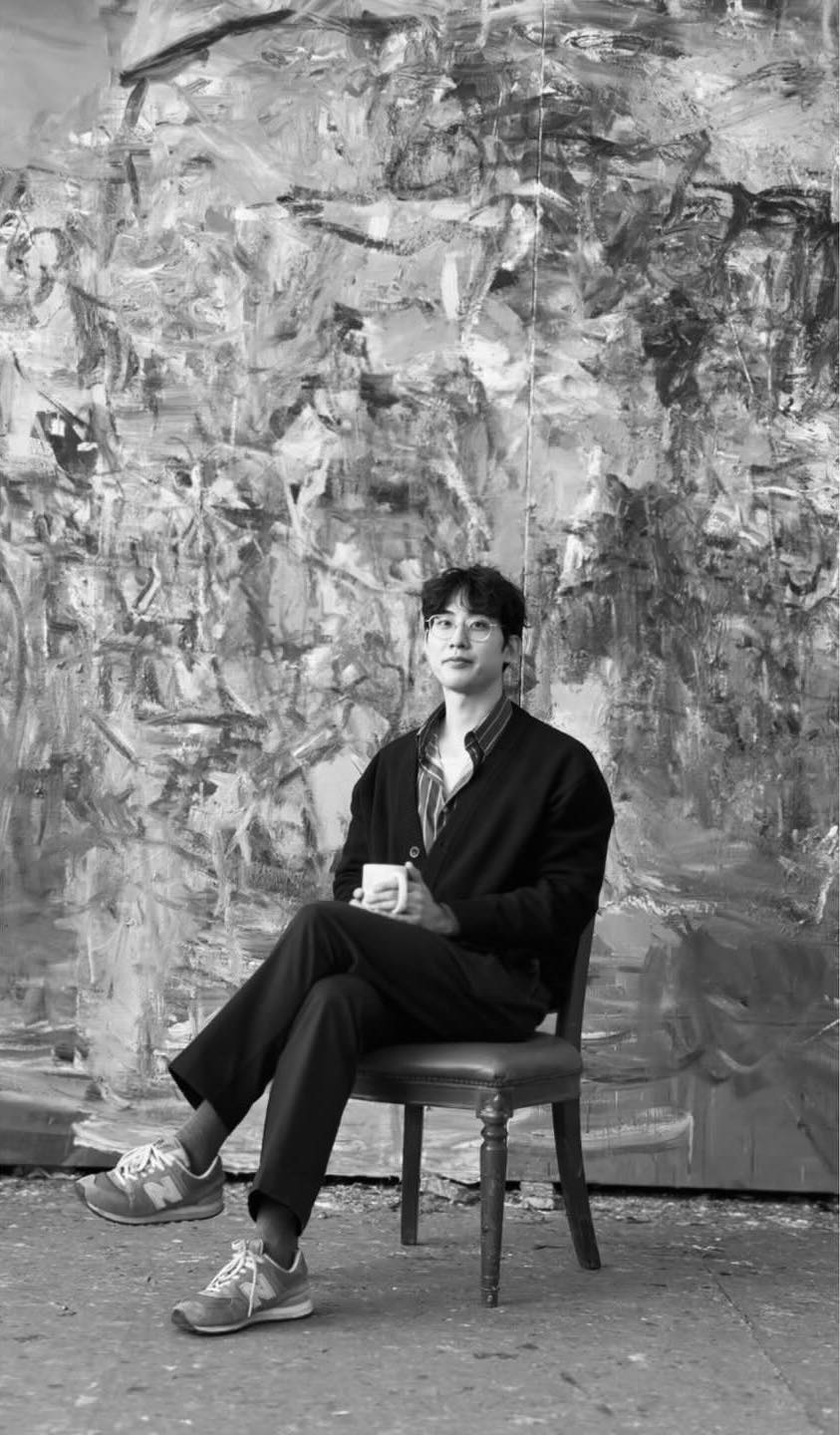
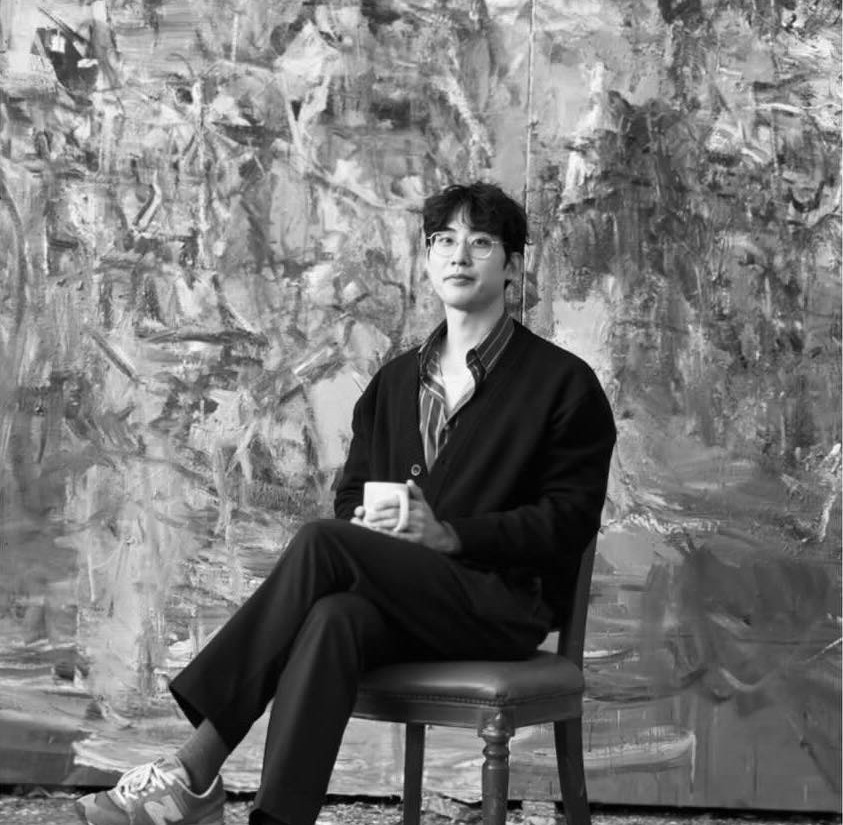
Artist Han Sungwoo. Photo: Anbuh © Han Sungwoo

Han Sungwoo received a BFA in Fine Arts from the Korea University and an MFA in Fine Arts from the Korea National University of Arts. His solo exhibitions include 《Elusive Horizons》 (A-Lounge Contemporary, Seoul, 2024), 《, Somewhere Between》 (A-Lounge Contemporary, Seoul, 2022), 《Balancing》 (SONGEUN Art Cube, Seoul, 2020), 《Port 08》 (Outhouse, Seoul, 2019), and 《Scene of Possibility》 (Cheongju Art Studio, Cheongju, 2017).
 
The artist has also participated in numerous group exhibitions, including 《KEEP GOING #5》 (Space Willing N Dealing, Seoul, 2026), 《Painting Painting》 (Lee Eugean Gallery, Seoul, 2025), 《Back Side》 (Primary Practice, Seoul, 2024), 《Tentative Romanticism》 (Nook Gallery, Seoul, 2023), 《Summer Love 2022》 (SONGEUN, Seoul, 2022), 《What If!》 (A-Lounge Contemporary, Seoul, 2021), and 《Tracing, Detouring, Piercing》 (Hakgojae Cheongdam, Seoul, 2020).
 
Han Sungwoo has participated in residency programs at the MMCA Residency Goyang (2024), the SeMA Nanji Residency (2023), Studio White Block (2020), and Cheongju Art Studio (2016). His works are held in the collections of the Gyeonggi Museum of Modern Art, the Busan Museum of Art, and the Cheongju Museum of Art.

References