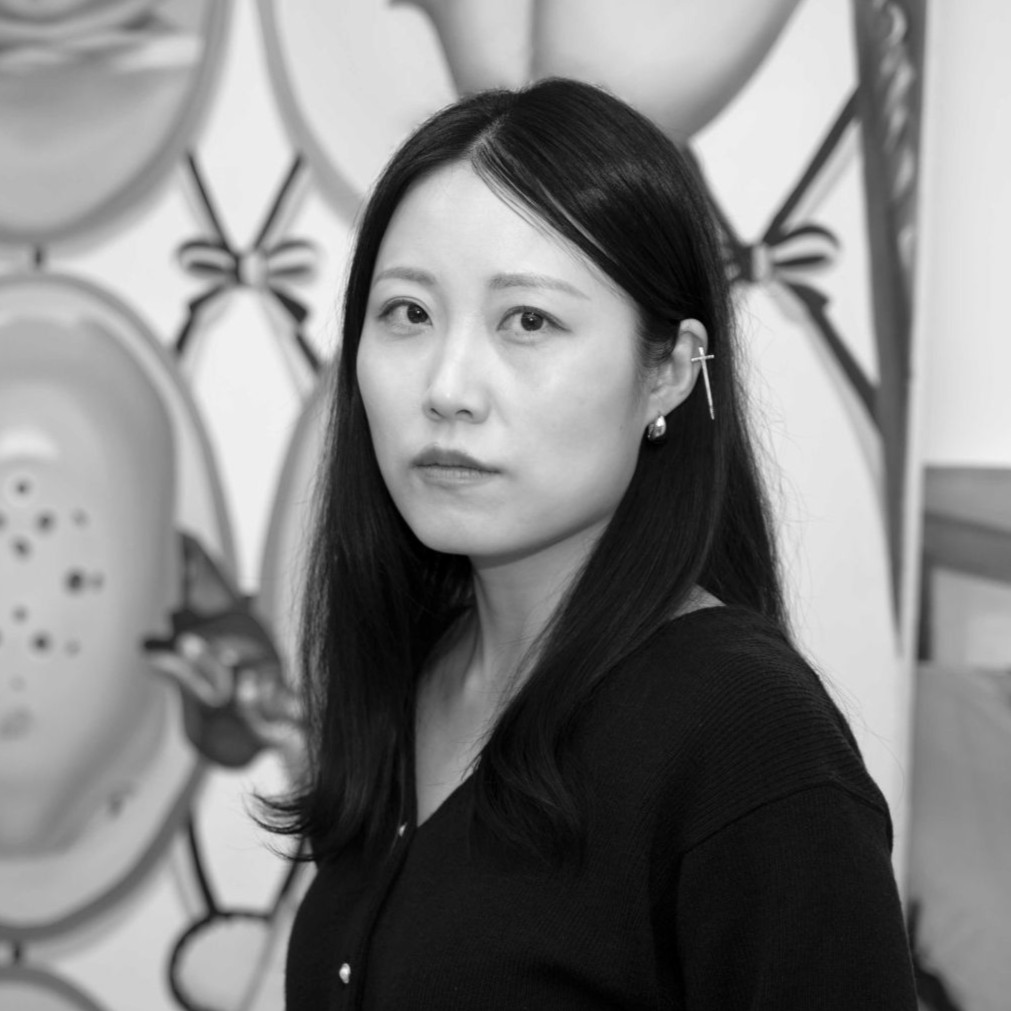
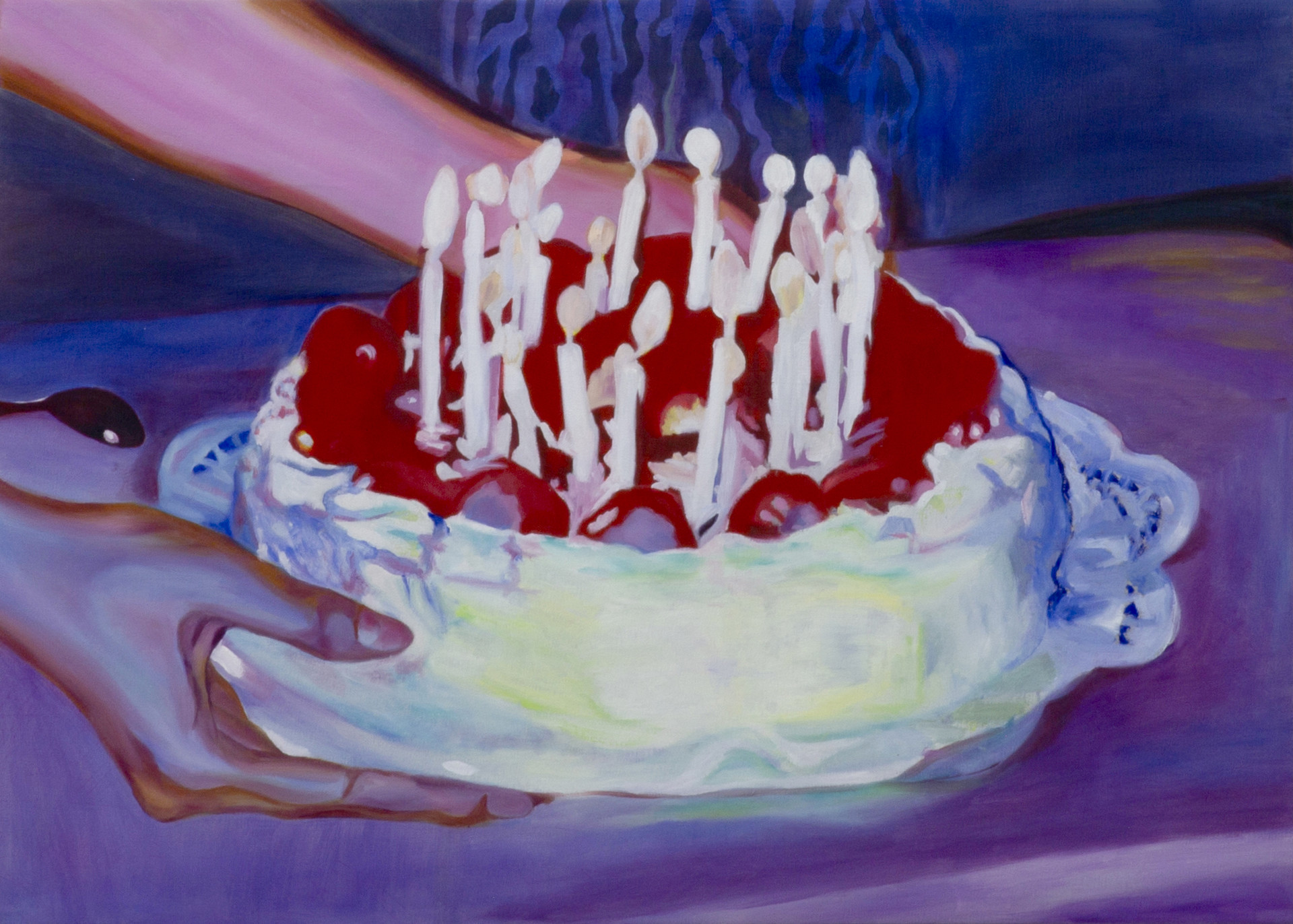
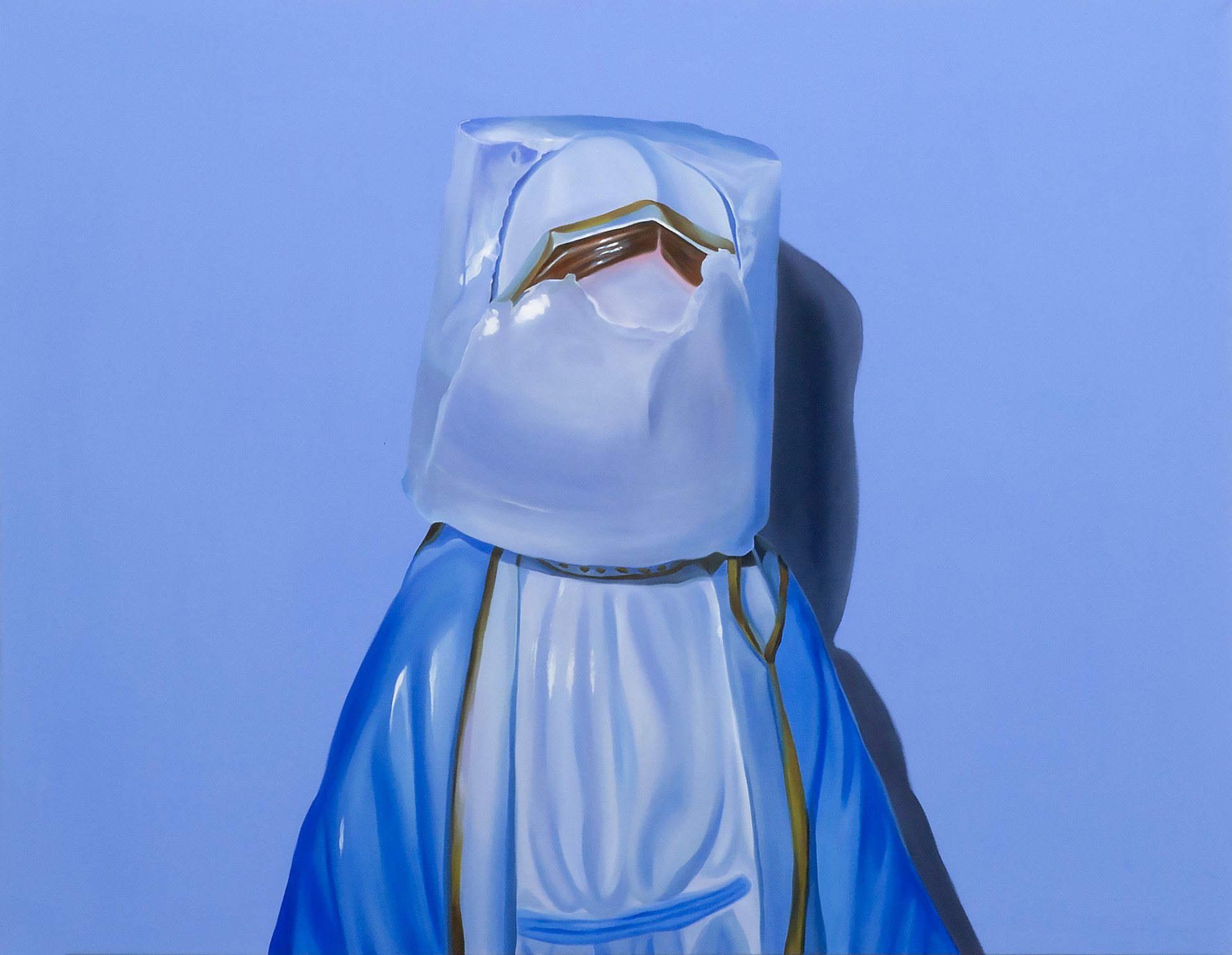
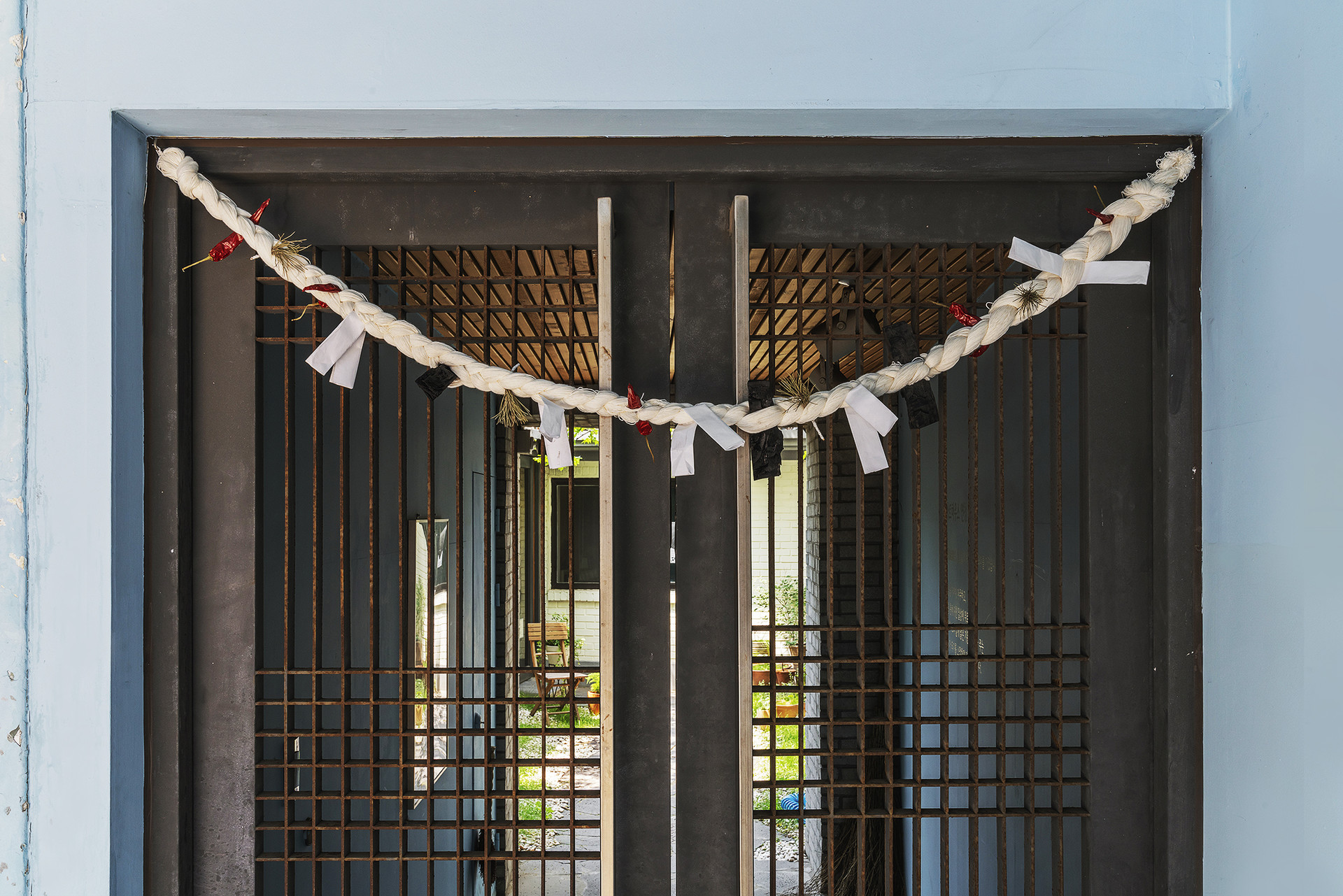
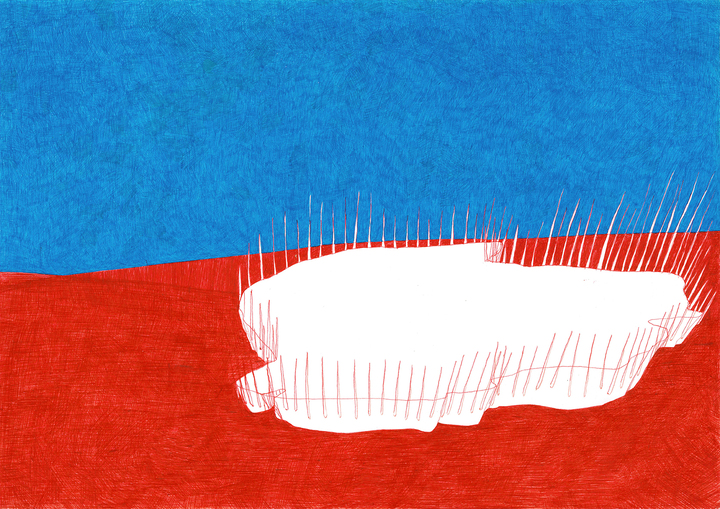
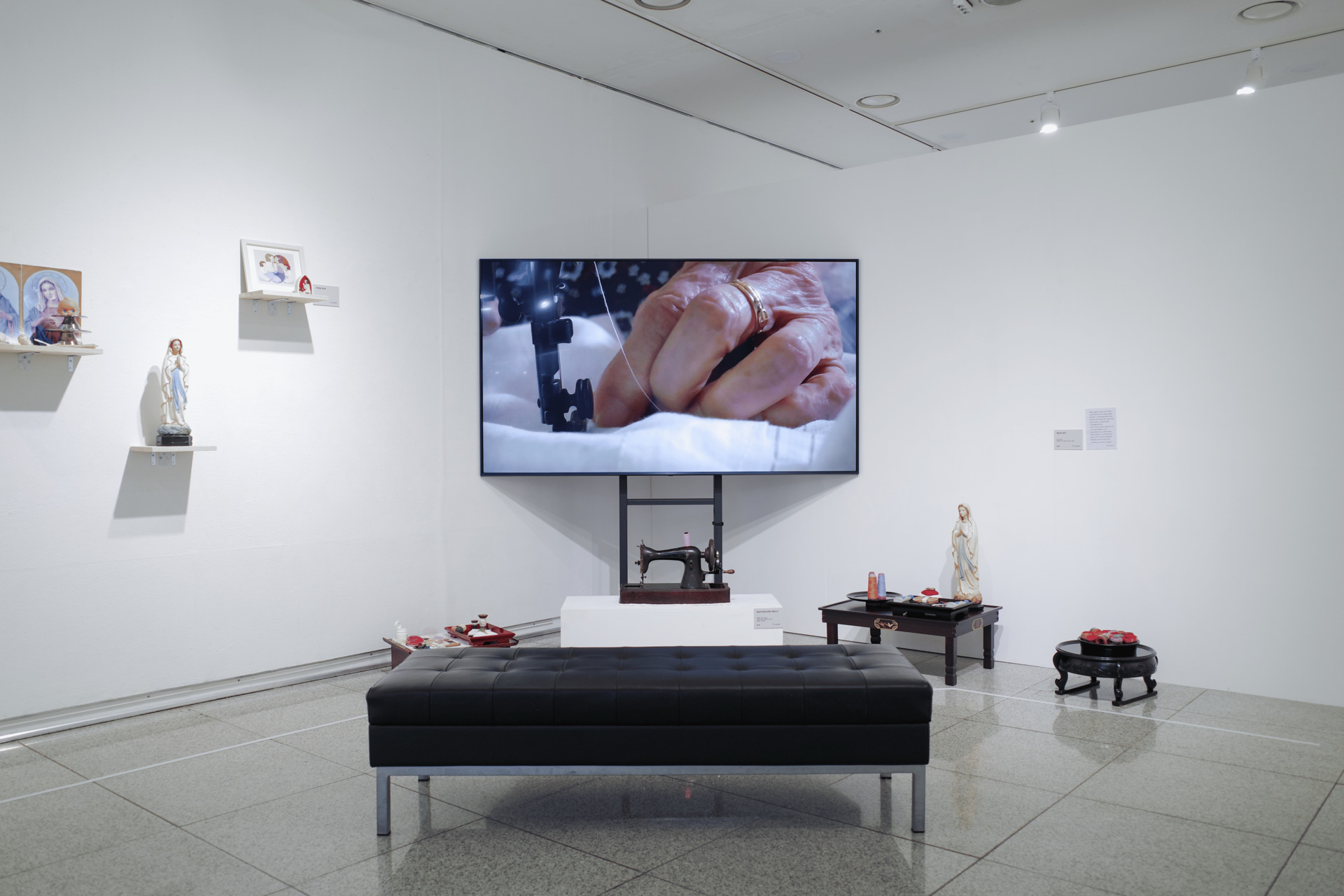
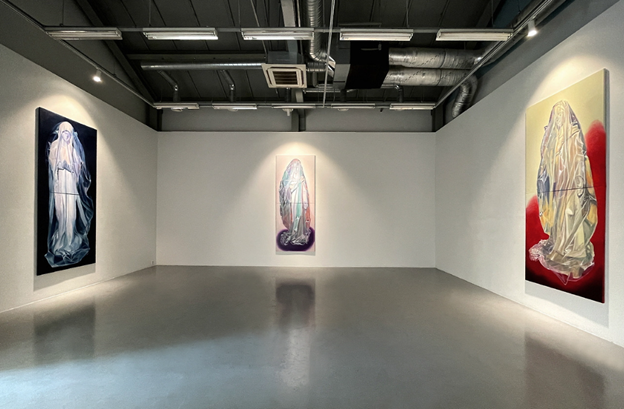
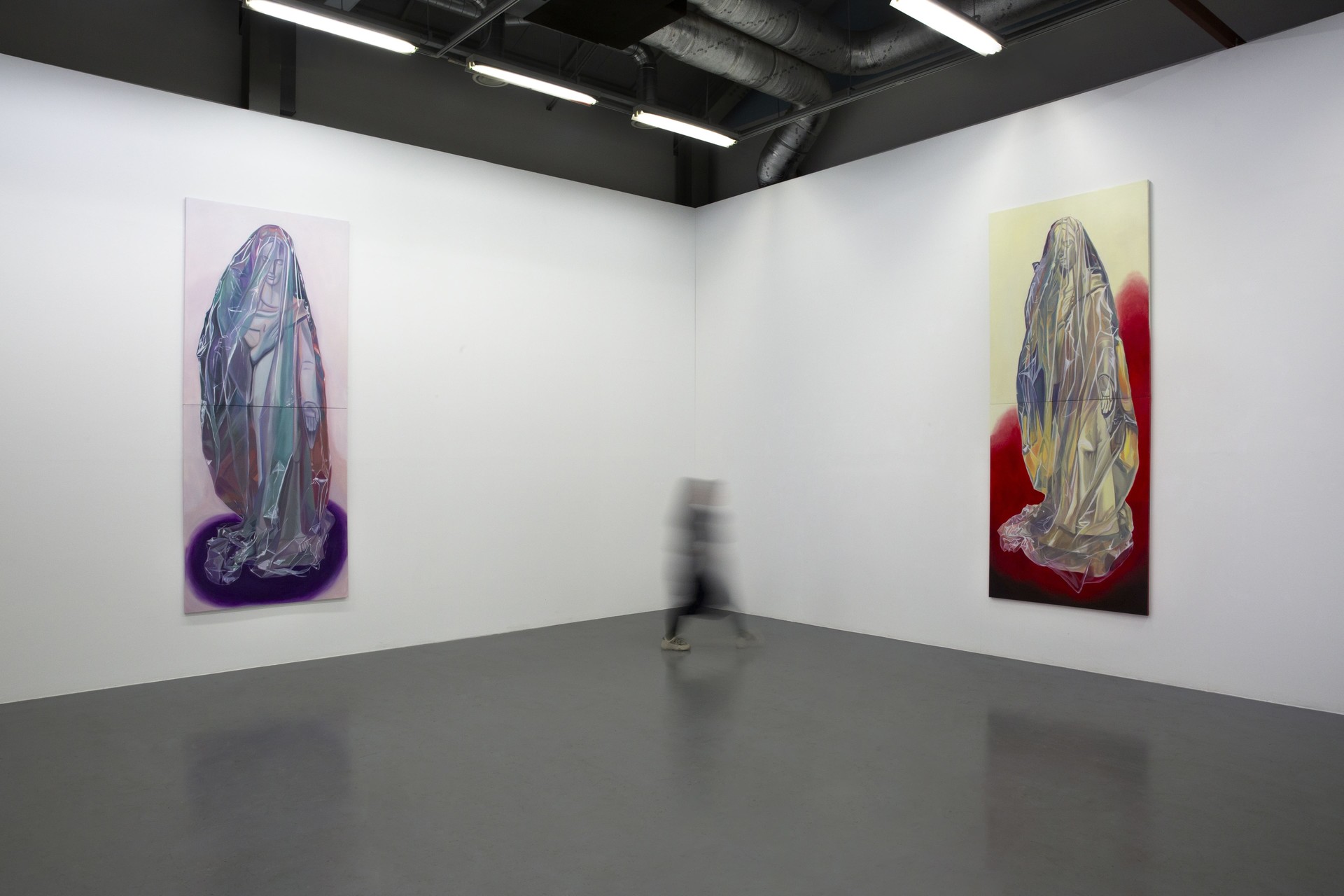
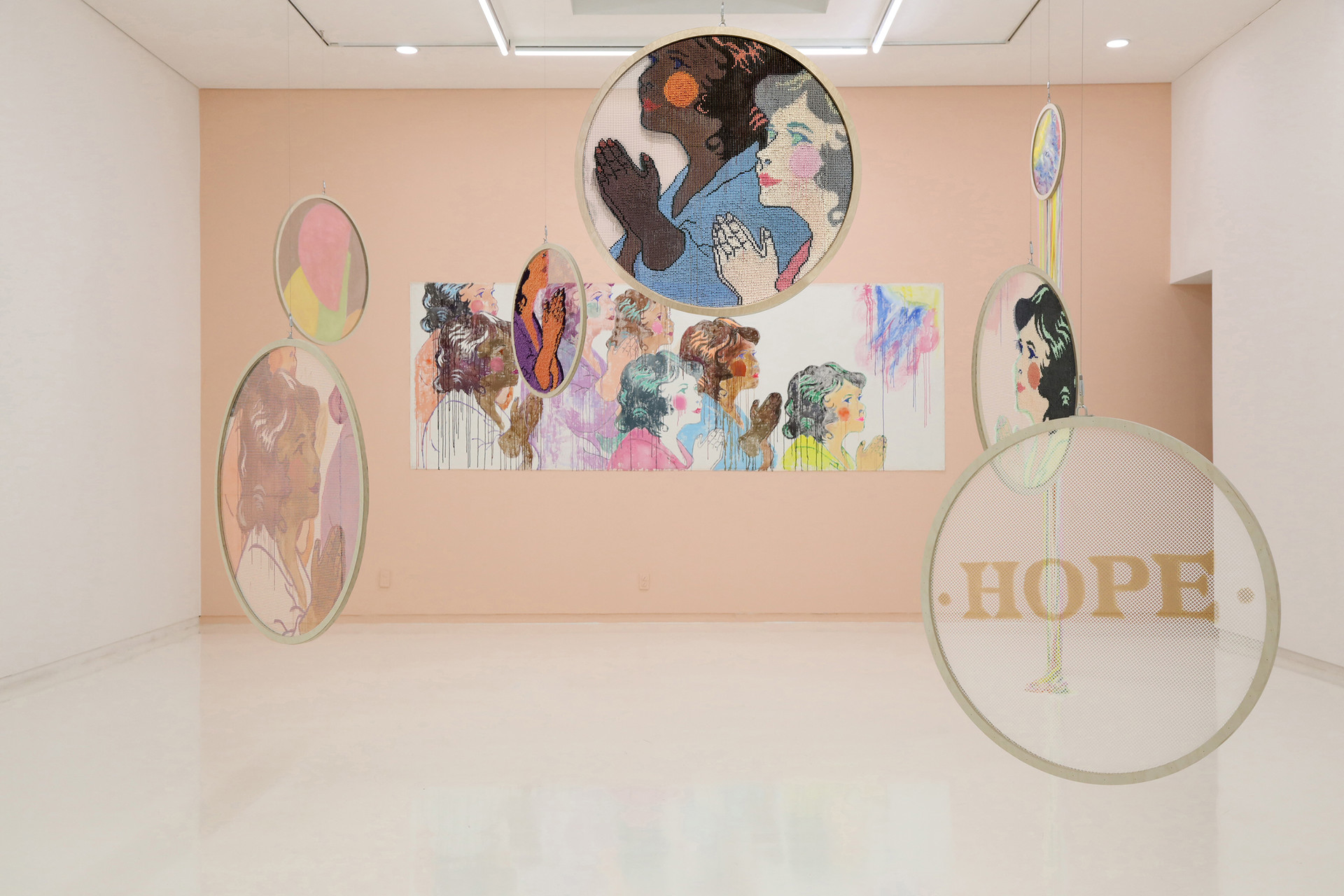
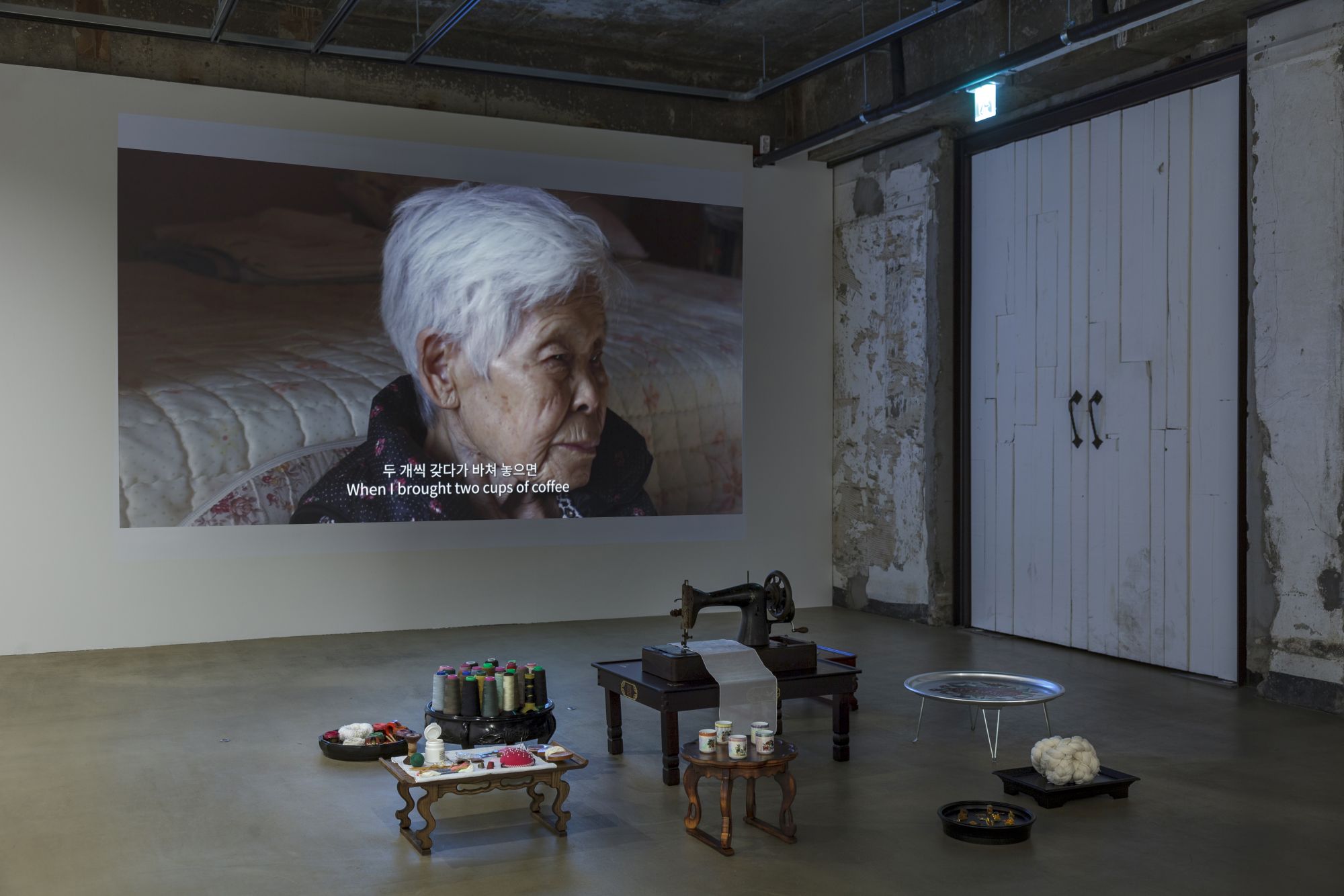
Installation view of 《Hoping for a Safe Day》 (Cheongju Art Studio, 2022) © Hee Vaak

1. Religion Here and Now

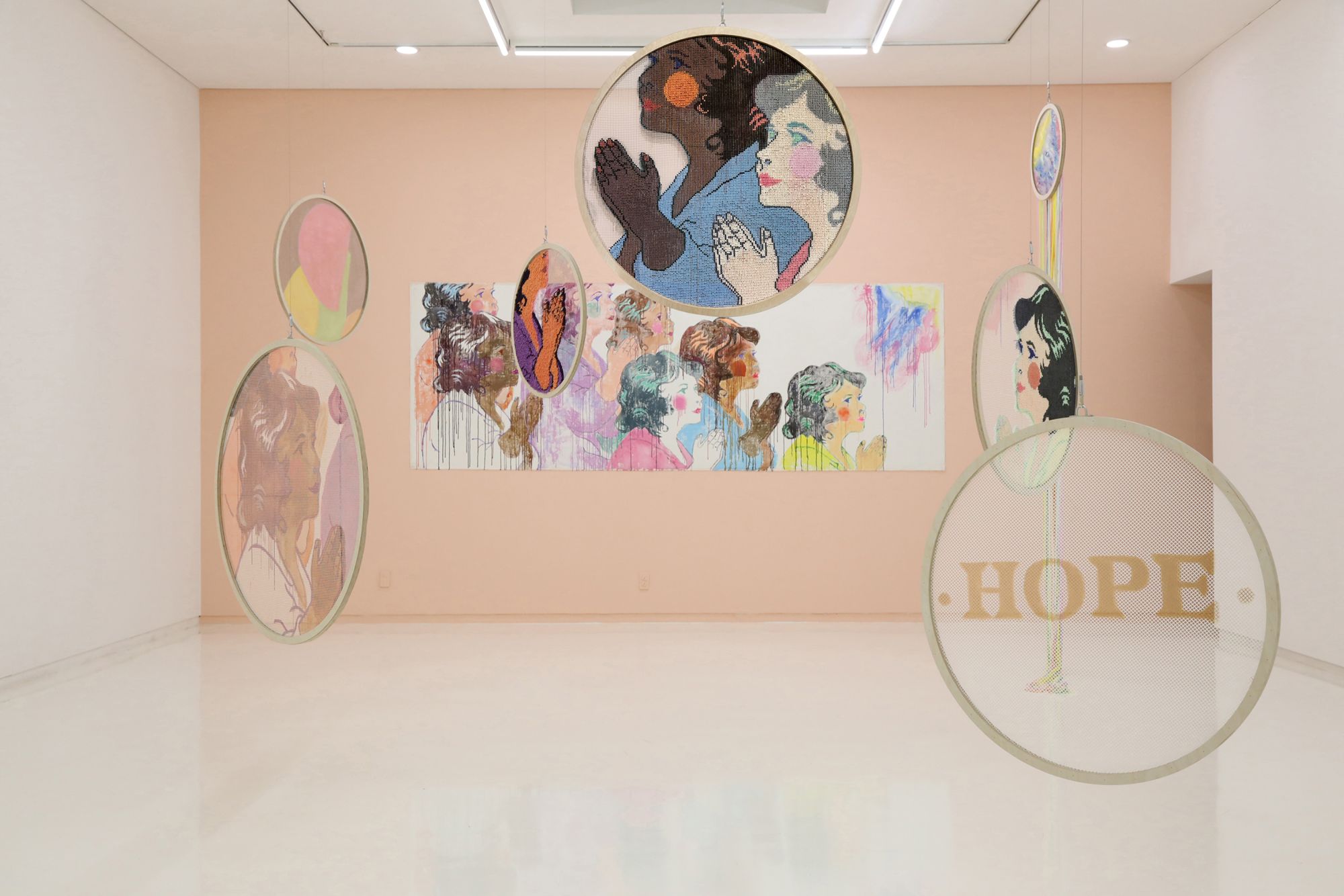
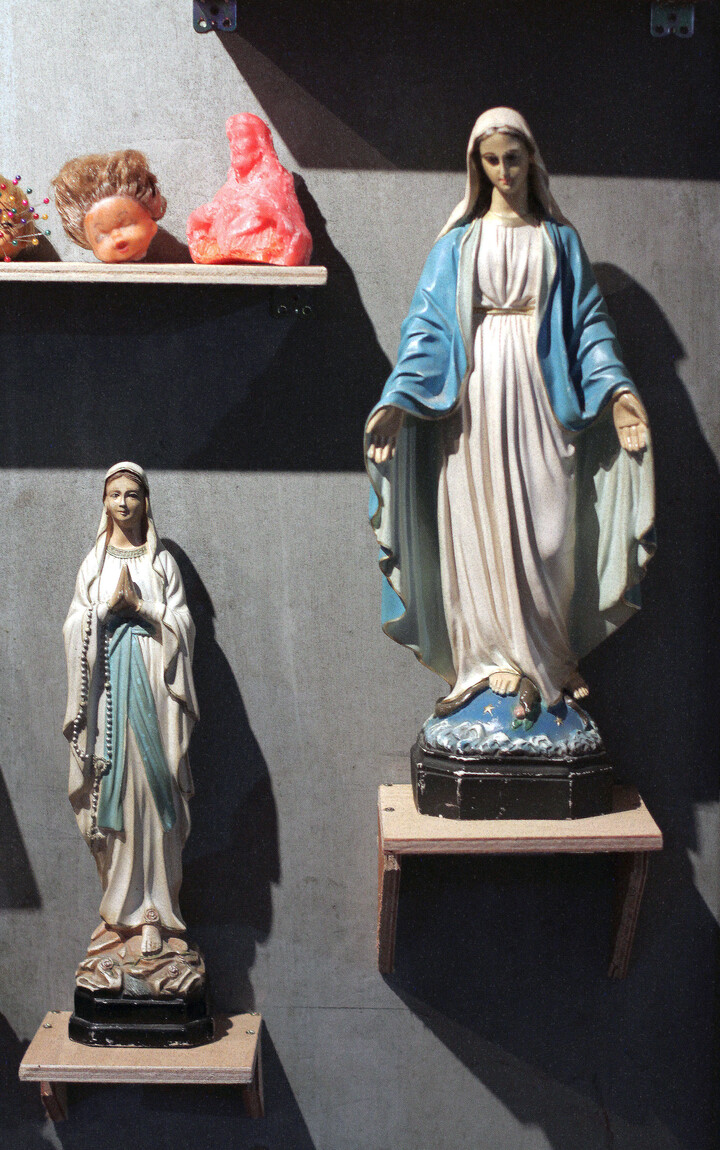
Exaggerated signs are lined up in the exhibition space. A statue of the Virgin Mary disappearing into the background, praying hands, large letters spelling “HOPE” hanging above, and so on…. Although these signs appear in a range of media/forms so varied that it may be difficult at first glance to see them as works by a single artist, they convey a consistent mental image.

This is due to motifs derived from localized Christian customs, and the artist has interestingly observed icons borrowed directly from sacred images, or visible images related to religious acts of praying for blessings and safety.

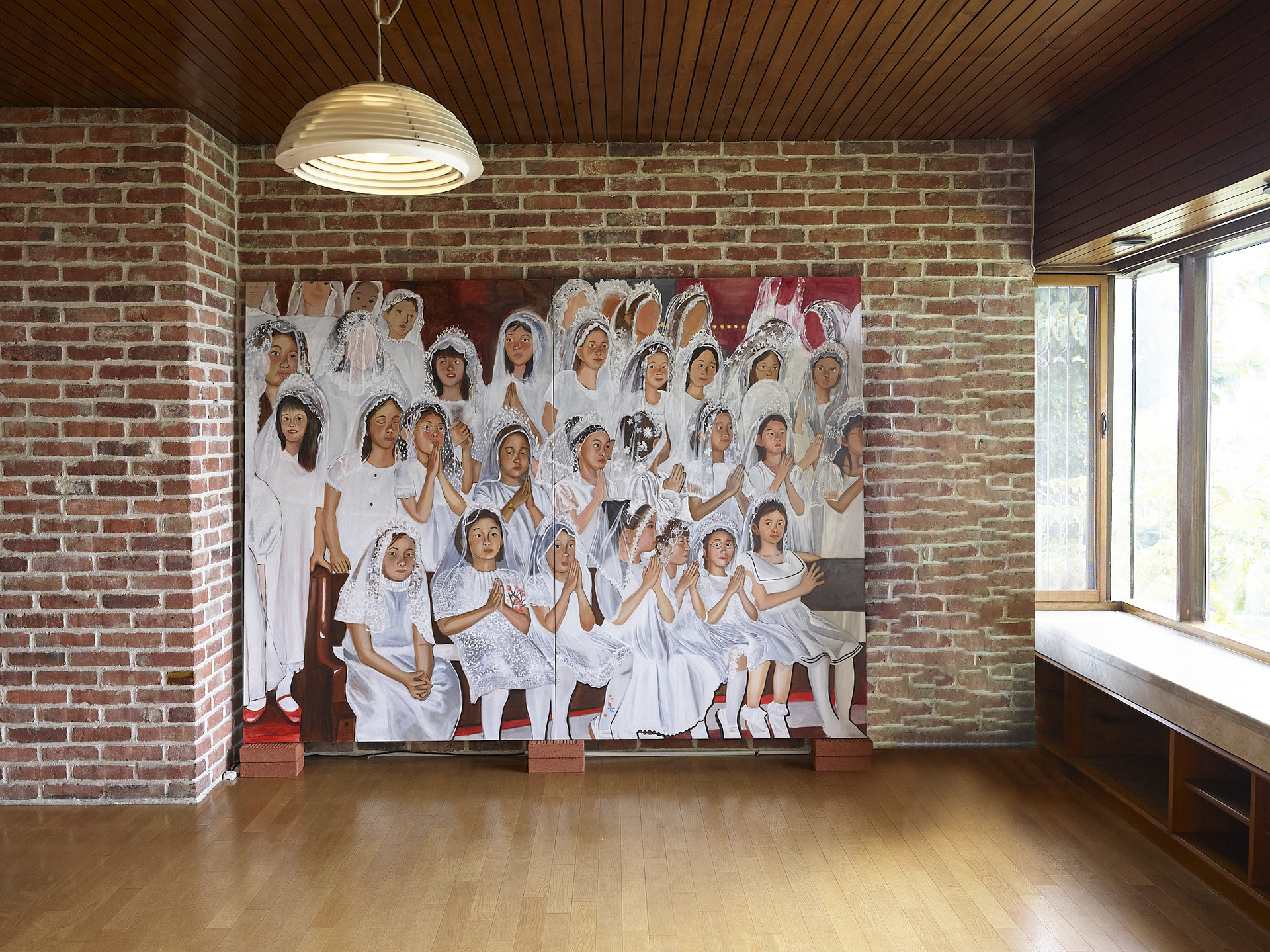
In the 2023 painting 1996, a repainting of the oil painting 1996 from 2009, a figure stands before a flash wearing a veil. Behind her, in the darkness, a statue of the Virgin Mary can be seen. Judging from the situation, this young girl is being photographed to commemorate her baptism. 

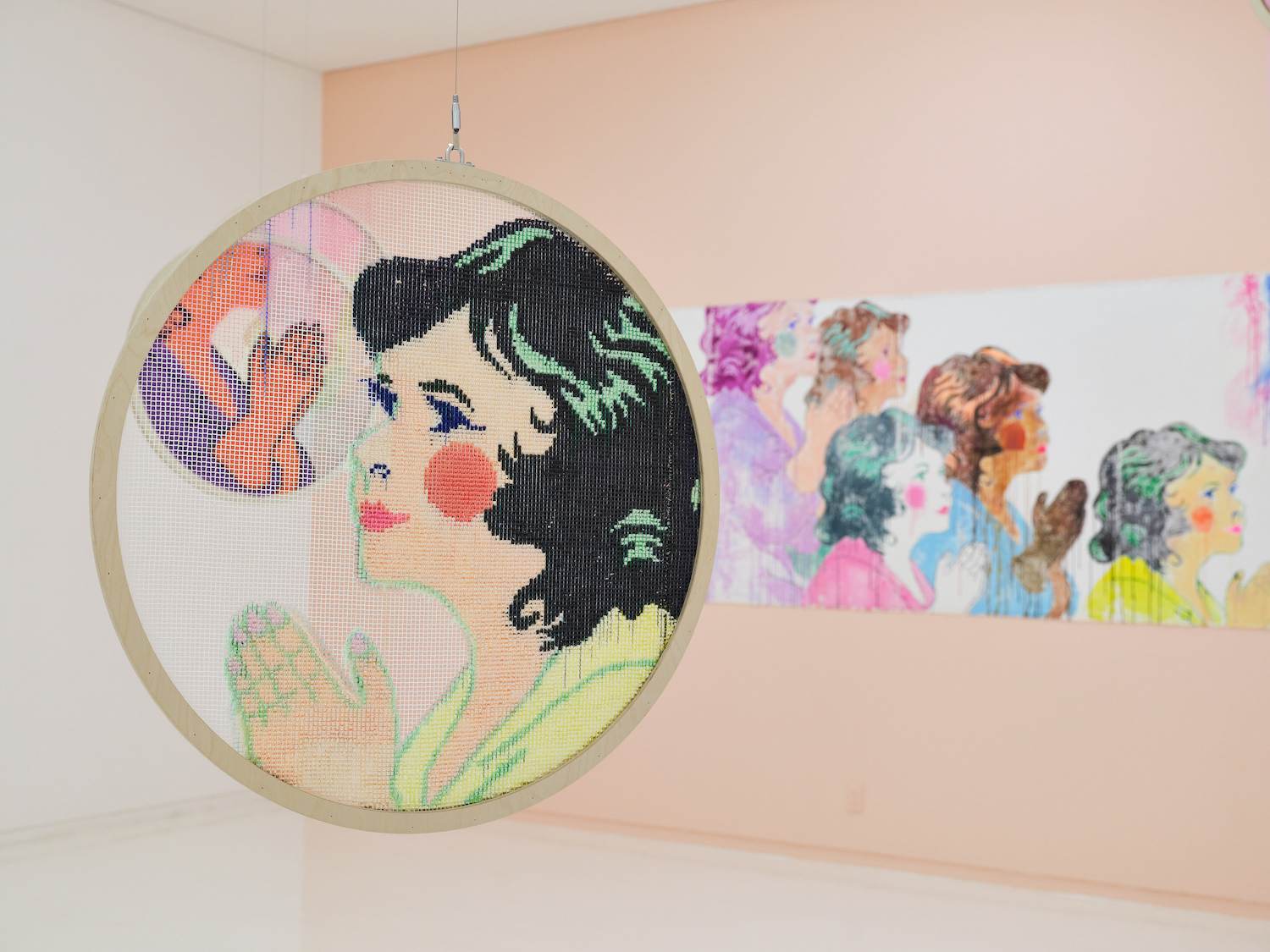
Hoping for a Safe Day is an installation work composed of frames woven with netting, embroidered or painted upon, repeatedly showing the icon of a young child with curly hair, seen in profile, eyes slightly turned upward, hands clasped in prayer. Above it floats a large circle from which thin threads hang downward like rays of light.

Guseulsari, in which salt is piled in a white circle on the floor, evokes the familiar symbol of “light and salt,” while the small beads rolling over the mound of salt give the impression of condensing something sacred.

However, the religious motifs that appear in Hee Vaak’s work are clearly distant from “religious art,” which induces an attitude of worship and sublimity in the viewer. The artist reorganizes symbols that are interpreted and used in everyday and popular ways within space.

At the same time, Hee Vaak’s work is distinct from iconoclastic attempts close to blasphemy, and also from pop-art attempts that consume sacred images as readymades at the level of simple imagery. The religious motifs she brings into her work maintain, without completely bleaching out, the character of wishes for blessings or salvation, while being digested in a more localized way and thereby revealing kitsch aspects.

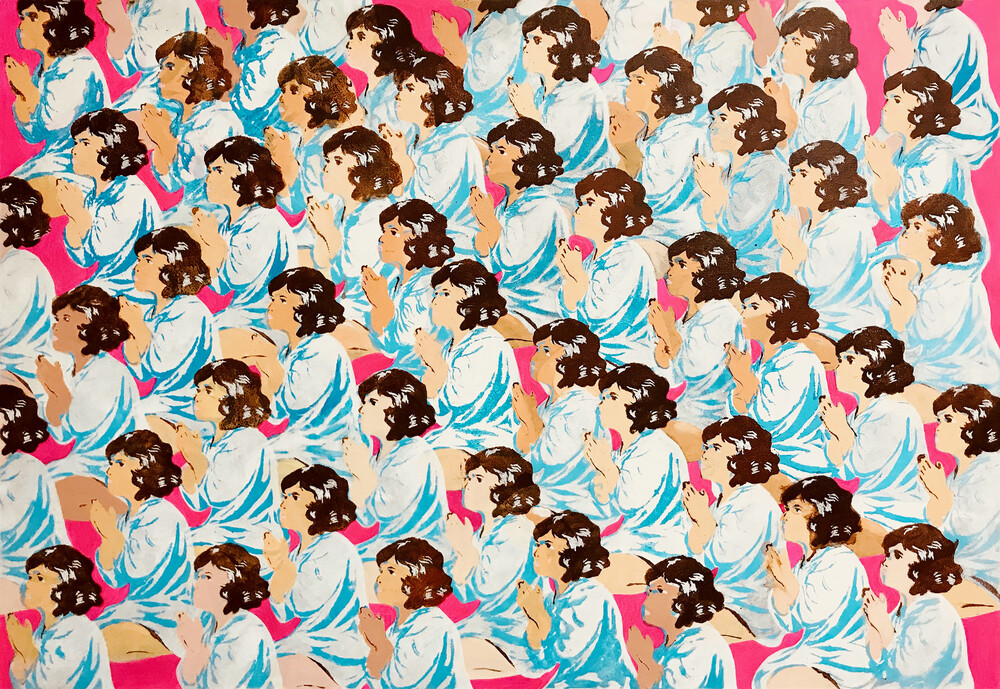
For example, let us look at the icon of the “praying girl,” which Hee Vaak has repeated from her early paintings to her current three-dimensional works. The artist came to focus on a specific icon that had been adapted/copied in Korean Christian art¹. It is the image of a white-skinned girl with black curly hair praying(Hee Vaak assumes that this may have begun from the motif of a naked angel).

While the specific method by which the original was produced remains unclear, this particular icon, as an image reminding viewers of the habit and importance of a life of prayer and as an image of a young lamb receiving God’s grace, is said to have been widely circulated in Korea through photographs and paintings.

The artist brings this into her work and presents highly saturated paintings and punch-needle embroidery. Here, she also refers to the stylized kitsch paintings commonly called “barbershop paintings” after the 1970s, which could easily be found in small shops or homes.

The popularly circulated icon of the “praying girl” contains several problematic implications. One is that the ultimate religious act of “praying” has been gendered as a “woman” kneeling before the “Father,” and another is that this personified icon has “white” skin. This is problematic in the same way that God usually appears with the appearance of a Westerner and rarely appears in the form of a localized indigenous person — a Korean.²

The image of a white-skinned young girl carries a strange wish. This reveals the contradiction of religious visibility that the artist explores, and the ideological dimension operating even at a very microscopic level. Perhaps Hee Vaak’s early works, in which she filled the pictorial surface with dolls shaped as white girls/boys, also share this context.

In fact, modern Korean Christianity has reproduced religious images refracted through the process of localization in various ways. The artist seems to have experienced this process more closely in her own life.

Family customs that served the Virgin Mary and the Lord Jesus while also serving ancestral spirits and performing Confucian ancestral rites, or the discovery of Buddhist objects gifted by a Buddhist among the belongings of her maternal grandmother, who was a devout Catholic believer. This is an extremely private story belonging to the artist, while also becoming a story of us all.

In virtually every aspect, Korean society has maintained a special antagonistic relationship with tradition, and this was naturally reflected in the acceptance and modernization of religion. Christianity entered life by finding points of compromise with Confucianism, Buddhism, Taoism, and various folk beliefs, or by offering incentives comparable to them.

The combination of folk belief in praying for blessings as an old popular custom and the spirit of modern capitalism, as well as narratives of grace and blessing centered on the nuclear family, lay at the foundation that led Korea into a highly developed society. In addition, the combination of Confucian patriarchal order and monotheistic worship still supports Korean society, which emphasizes “roots.”
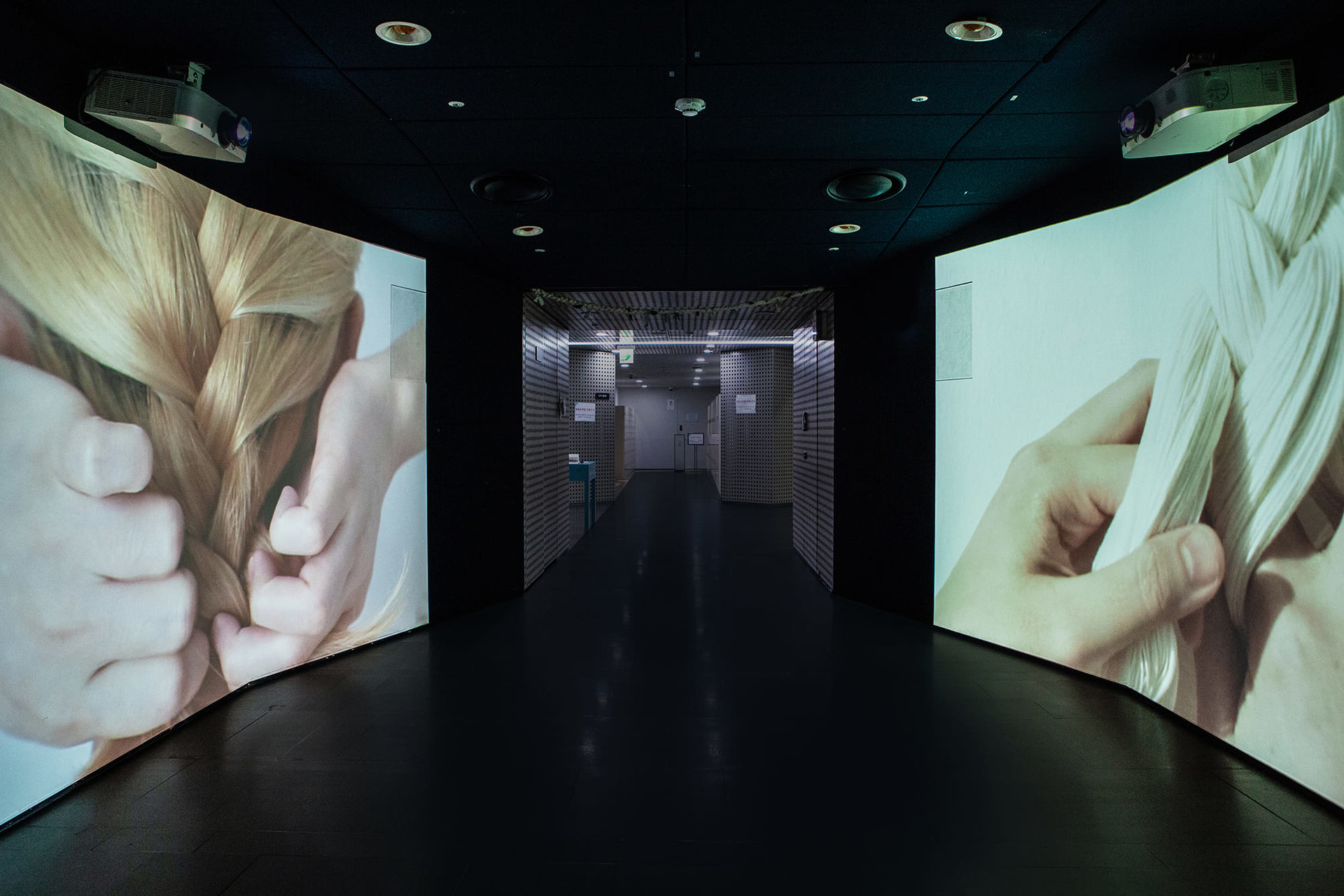
Once again, the story returns to the artist’s personal life. The artist grew up in a matrilineal family structure defined by the absence of her father and both paternal and maternal grandfathers. She says that she once believed she would become a nun, recalling her school years when she lived in compliance with a predetermined occupational identity.

She also says she was deeply influenced by her grandmother, who regarded raising a child to become clergy as an honor, and by her maternal grandmother, who grew up under priests and nuns. Considering earlier generations whose lives were inseparable from religion, and many modern Koreans who are more radical yet still maintain a close attachment to religion, Hee Vaak’s childhood recollection is not very unfamiliar.

The problem emerged when she attempted a kind of awakening, and when she dramatized it through her work. The artist began to question the patriarchal, blessing-seeking Christian climate, and has attempted to overcome certain contradictions by actively observing fragments of life she herself did not fully understand and drawing them into her work. (Let us keep in mind that Hee Vaak had already revealed religious motifs, including the statue of the Virgin Mary, from her first solo exhibition 《Guwol Jugong》(2011).)

A matrilineal family defined by the absence of a patriarch would have shown an aspect of establishing religion(Father Jesus) as a substitute for that absence. And it seems clear that the oppressive order thus established was the primary object the artist sought to overcome.


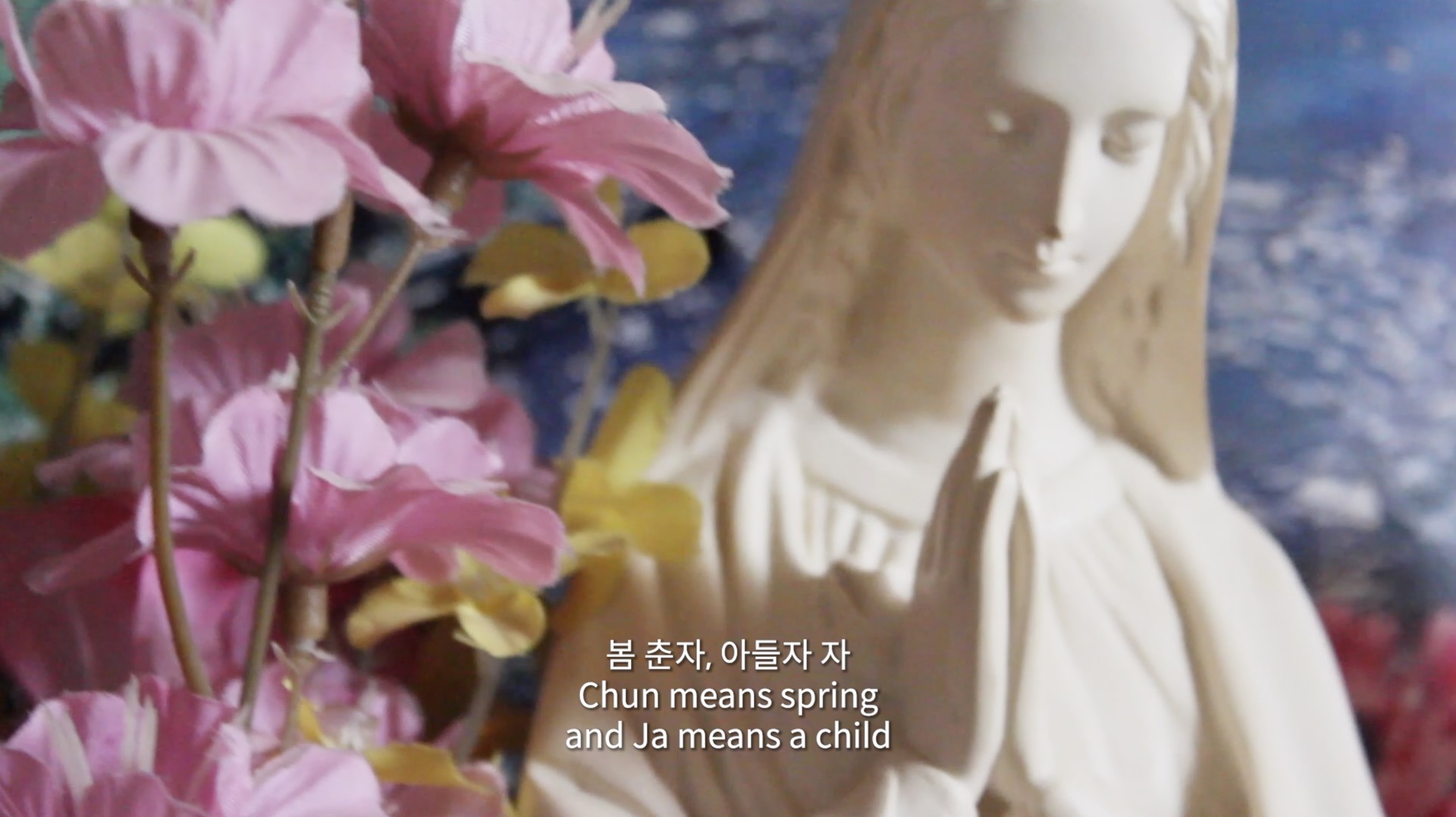
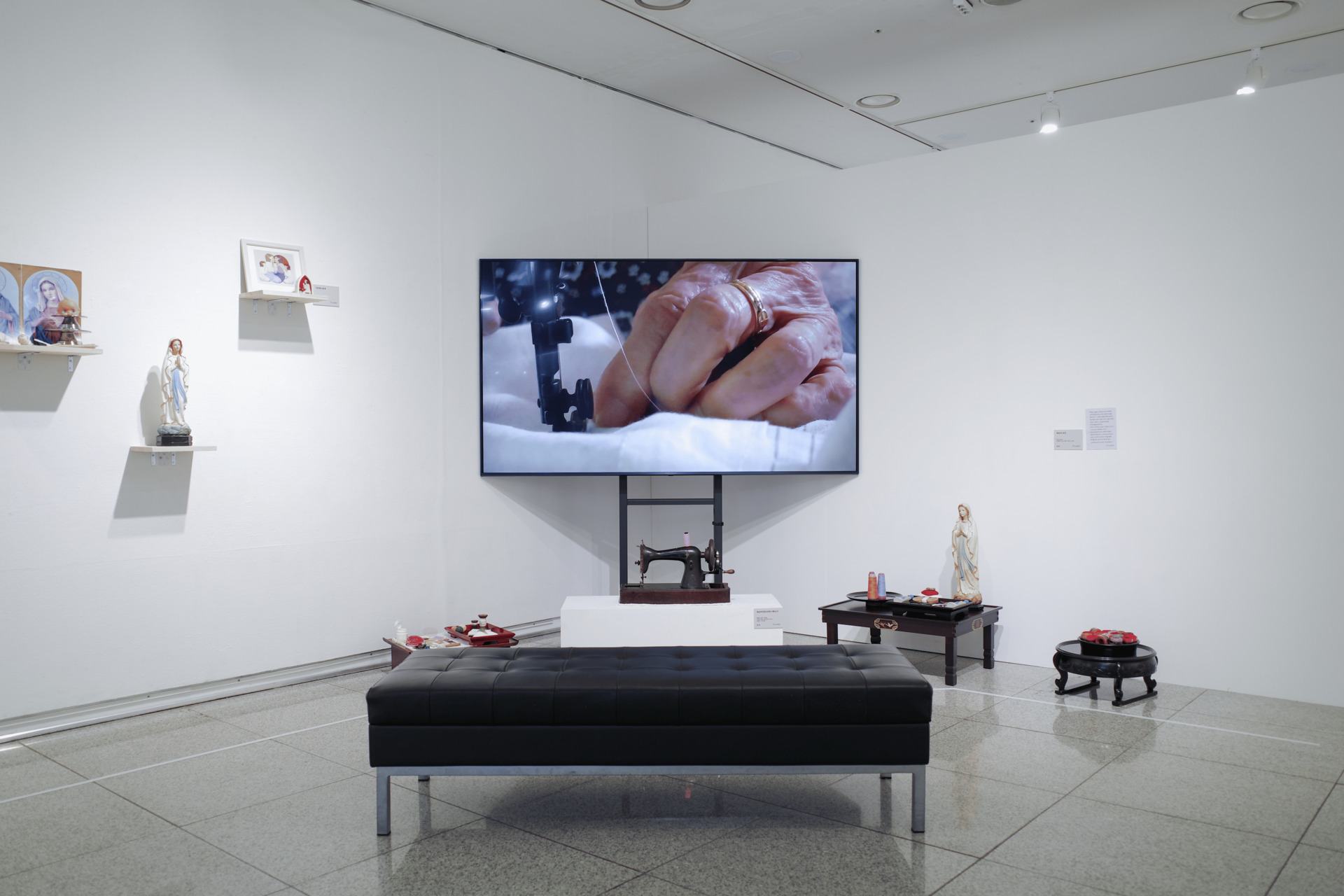
Hee Vaak, Pieces of Oksoon, 2023, Single-channel video, FHD, color, sound, 21min. © Hee Vaak

2. The One Who Cannot Speak, in the Name of Wishes

However, apart from these efforts at overcoming, whether large or small, it is difficult to say that Hee Vaak’s work displays an analytical attitude that could be called meta-level social critique. The artist does not try to secularize the religion surrounding herself and her family, nor lives closely attached to religion.

Instead, while closely observing various ironies that arise between life and religion, she formalizes them as “kitsch religious images” or “fragile and insufficient rituals,” and cherishes deeply the subjects who exist/existed as religious people or as those who pray, along with their small actions.

In this process, elderly women who identify themselves(or had to identify themselves) as asexual beings and mere individuals maintaining political neutrality are warmly illuminated.

The 'Oksoon’s Room'(2015~) series, which can be called Hee Vaak’s representative work, contains the image and voice of her maternal grandmother, who was over ninety. Oksoon crossed over to Japan in search of work.

Having been separated from her parents early on and raised at a church doing errands for nuns and priests, Oksoon thought she too would become a nun when she grew up, but without parents as guardians, she could not become one. With no other choice, she had to find other work, and she went around earning money in Japan during the period when industrialization was beginning.

After passing through a time when she would be slapped if she did not speak Japanese, liberation came just as Japanese had become more familiar to her than Korean. She had been living reasonably well while earning money, but Koreans were told to leave Japan. Her ground of life kept being overturned. What was taken from her was not Joseon, but everyday life.

After coming to liberated Joseon, while recovering the Korean language she had forgotten, she kept losing words. Because Japanese was more familiar to her, if it slipped out, she lost her job and was even driven out of the subway. People called her “Nihonjin.” She said she nodded or shook her head in place of saying “yes” and “no,” and refrained from speaking.

Oksoon’s life plainly shows the condition of the one who cannot speak(the subaltern). Even when she reveals her clear face before the camera, and even when she contains her life in a few brief words, she remains the one who cannot speak. This is because she does not reveal(or express) herself as a certain subject, nor does she try to testify to situations and events, or even recognize such a possibility.

The inability to speak is not the same as powerlessness. Through a series of documentary works that conclude with Pieces of Oksoon(2023), Hee Vaak illuminated the life of her maternal grandmother, who was called “Oksoon” or “Chunja.” The artist was simply gathering, with care, the condition of a certain inability to speak that Oksoon came to represent, including the artist’s own life.

Even as Hee Vaak calls the one who cannot speak before the camera and captures the traces she left behind in various forms of work, she does not take visibility as a strategy. Regarding Spivak’s conclusion that “the subaltern cannot speak,” attempts at “visualization” that would make the one who cannot speak able to speak, or reveal some truth that had been hidden until now, only summon misplaced moralism.

For the subaltern, the problem of(self-)representation does not depend on whether or not one can take up the tools of representation. Just as representation — speaking — is not even within the realm of the imaginable for the subaltern in the first place(as there was no room for any representational intention to intervene whether Oksoon called herself Oksoon or Chunja, lived as Korean or Japanese), Hee Vaak does not use her work as a tool for acquiring meaning.

The signifiers that float about in Hee Vaak’s work in an excessive state instead leave the meanings that seem as if they ought to be spoken in a transparent and ambiguous state.

The artist places to one side stories of life in which colonization and liberation, patriarchal order and independence, ignorance and realization, silence and prayer, death and mourning are entangled, and rather than pursuing a grand truth, she lets them converge, as they break into pieces, into a modest heart that prays for a peaceful day.

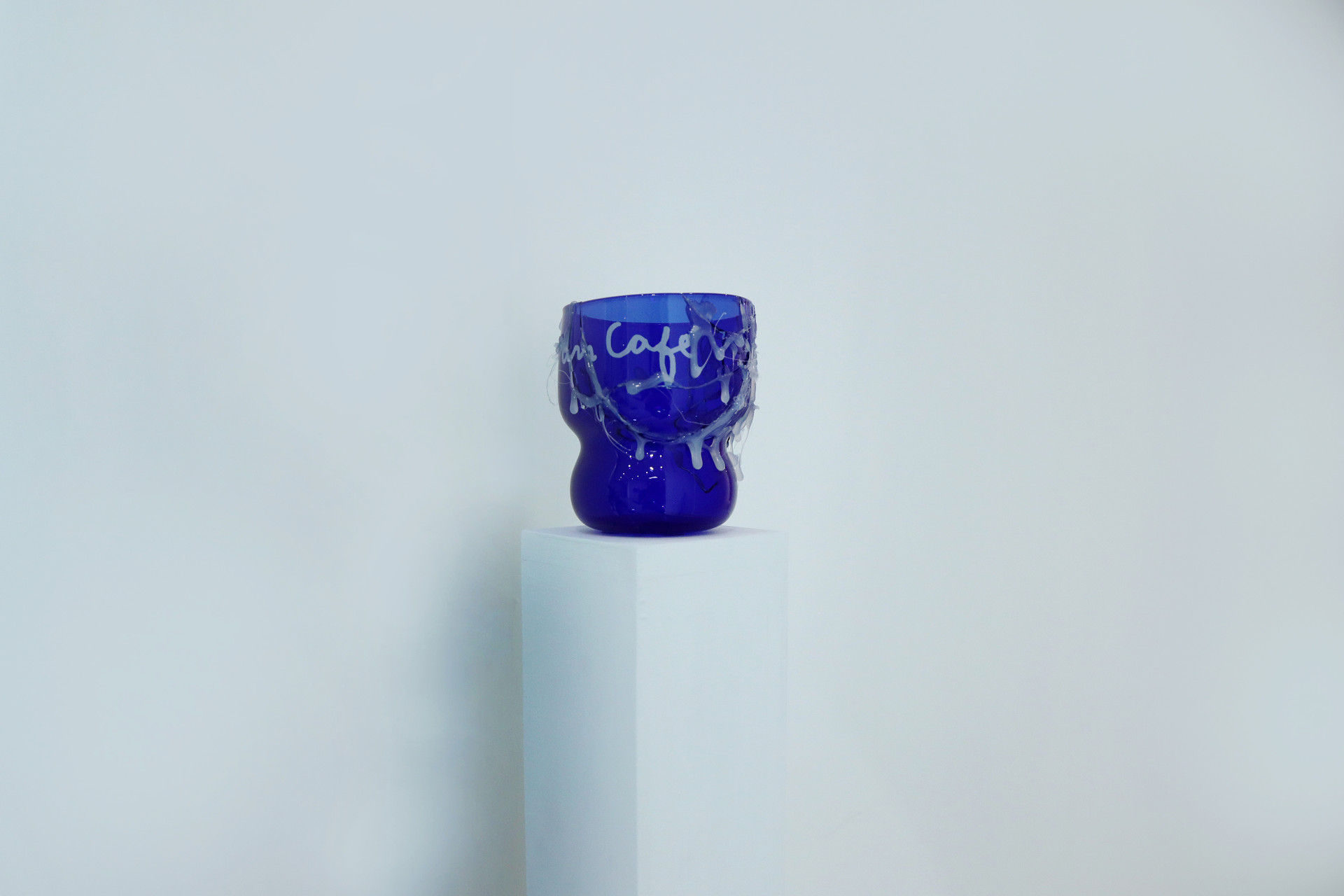
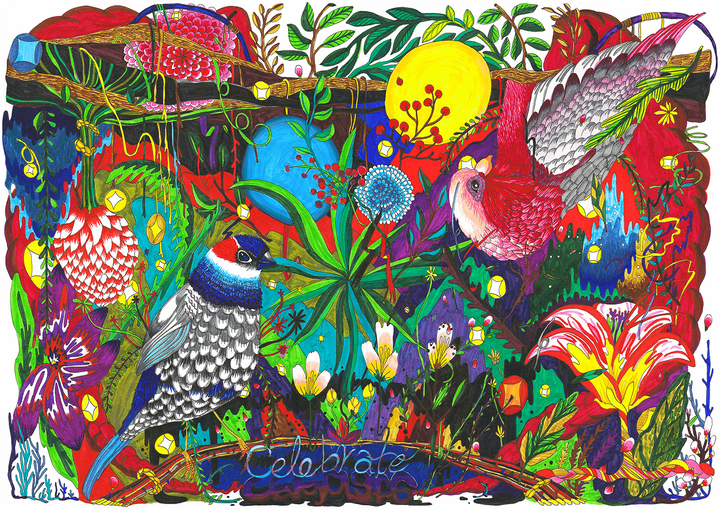
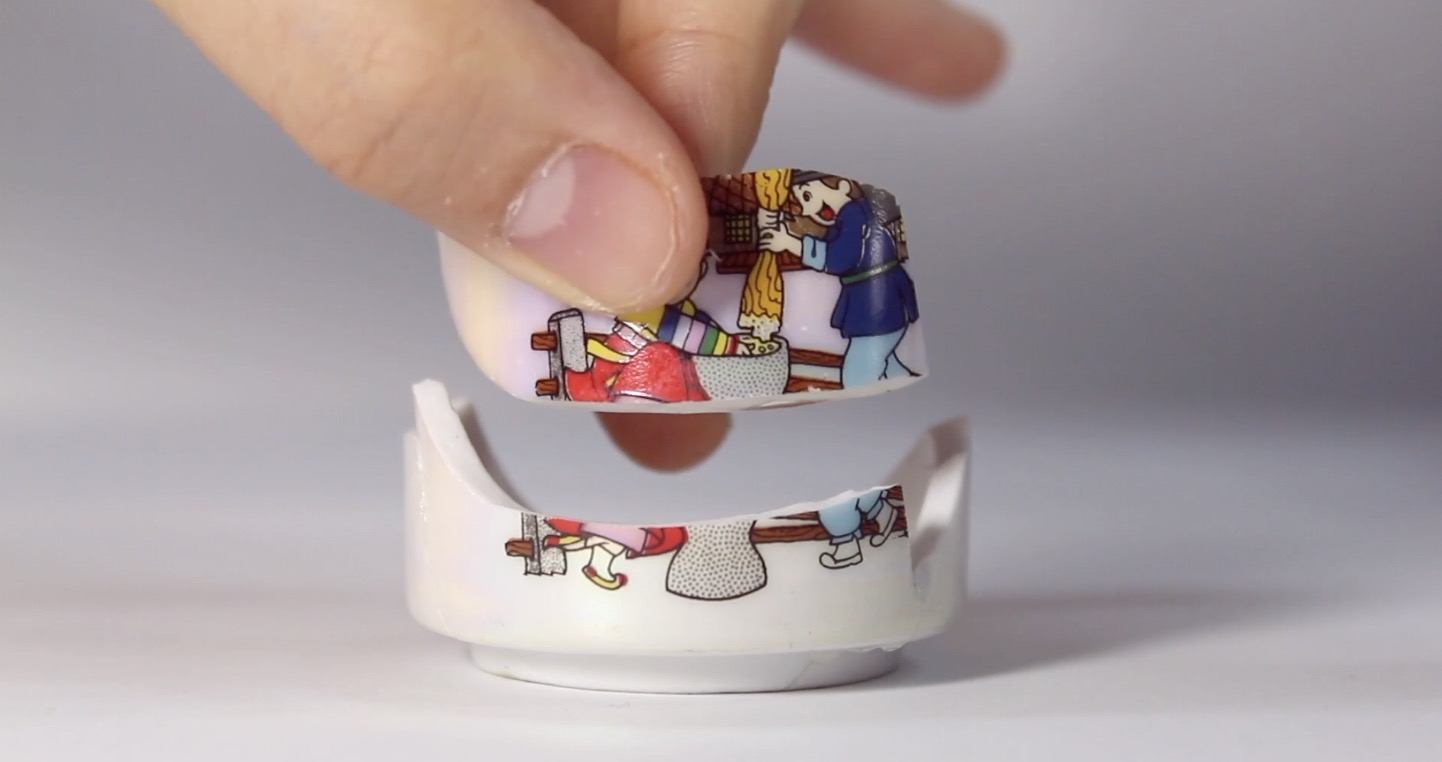
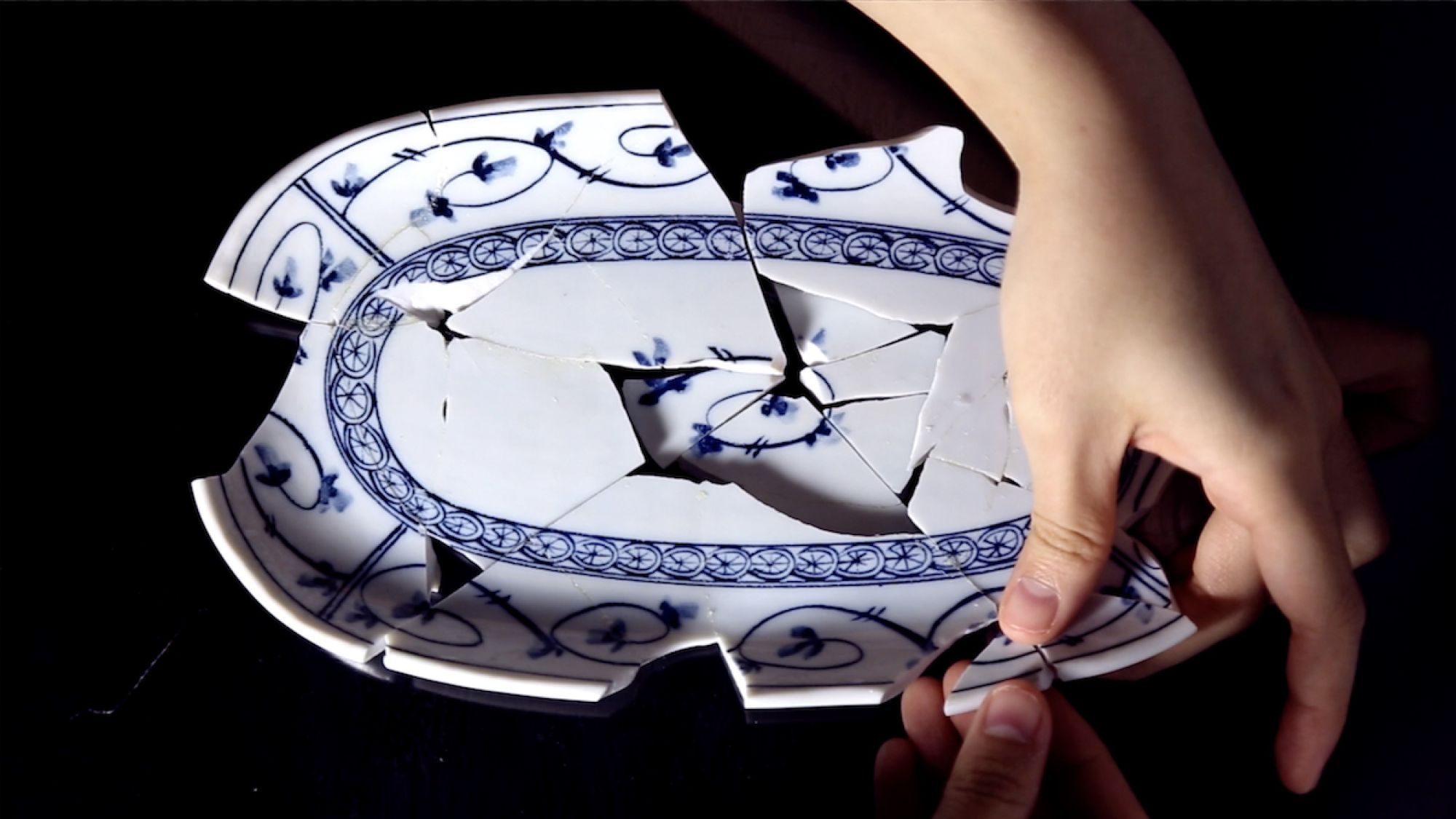
By joining broken vessels together or filling gaps with the silk thread left behind by her grandmother, the artist looks back on a certain diligent life, and by repeatedly painting the kitsch icons of brightly colored flowers, grasses, and birds drawn on her mother’s scarf, she confirms the small desires to fill lost happiness. Leaving both their limitations and possibilities aside.


¹ In this text, “Christianity” refers to both Protestantism and Catholicism.
² During the Japanese colonial period, not long after Christianity had been introduced, in the budding stage of Christian art, paintings were also produced in which an East Asian Jesus wearing a durumagi appeared against the mountains and rivers of Joseon. For more on this, see: Seo Seongrok, “The Development and Tasks of Korean Christian Art,” 『Faith and Scholarship』, 21(3), 2016.

References