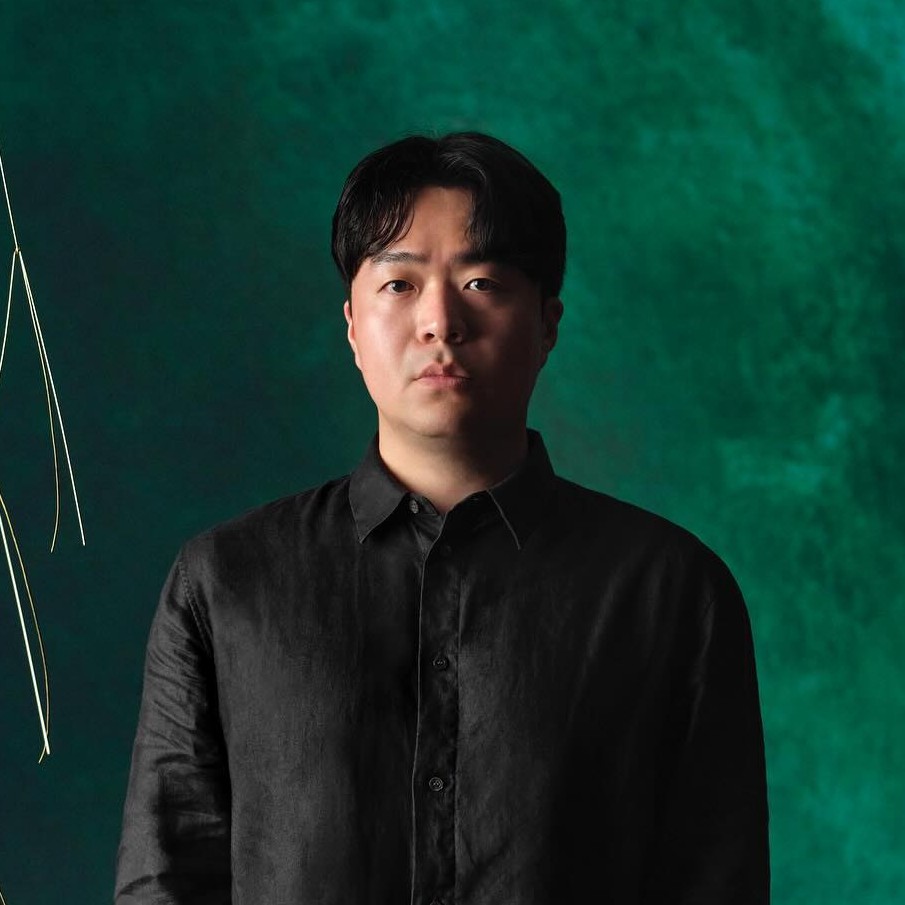
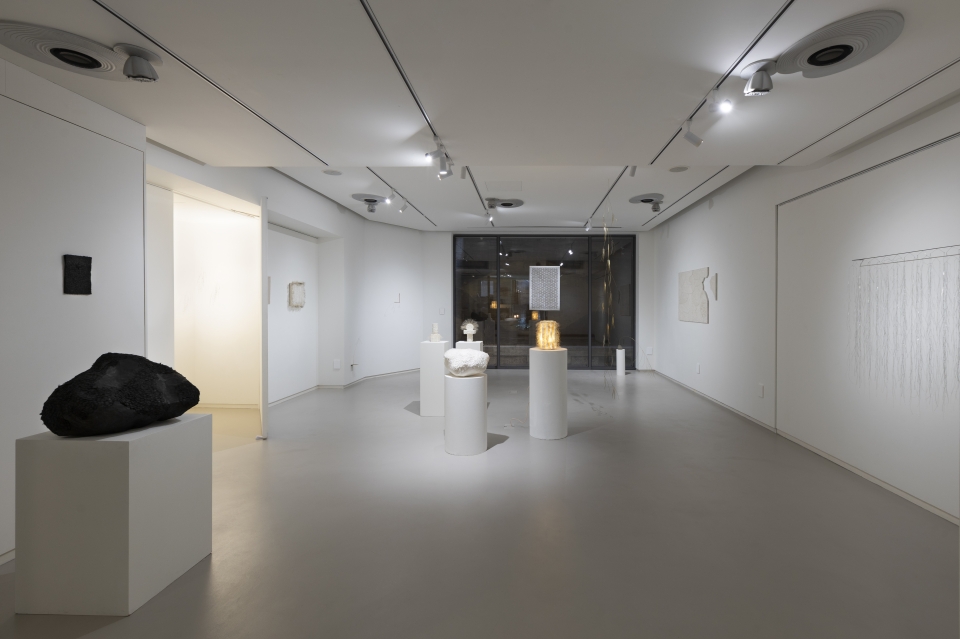
Silent Entanglement. This is the title of the exhibition that Donghae Kim carefully chose after much consideration. I discussed more than twenty possible titles together with the artist and even suggested several fresh alternatives, but he ultimately selected the simplest one, much like his own work. The meaning I have come to understand in “Silent Entanglement” is as follows. Let us begin with stillness.
Although the dictionary definitions may not differ greatly, stillness, to me, is not the same as quietness. Quietness is a state in which sound and movement have ceased, completely still. Stillness, on the other hand, is a condition in which events are so subtle that sound and movement are extremely minimal. There is vitality and liveliness, but it is so small and delicate that it requires attention to perceive. In other words, it is a state very close to zero, but not entirely absent.
Stillness is not only a state but also a moment of openness—to others and to oneself—that allows one to notice small changes and differences. It is the process of recognizing the breath of the air, recognizing one’s own breath, and becoming aware of the gradual calmness that approaches a state of near absence. As an example of stillness, one might consider tea meditation. One pays attention to the sound of water being poured into a teacup, feels the temperature of the tea held in the hands, and brings one’s ear close to the cup, which seems to contain no sound at all. Then, one can sense the steam rising from the warm tea and hear the resonance created by the concave form of the small cup. It is still, yet not silent; static, yet not motionless.
Meanwhile, “entanglement” is a term that originates from the artist’s philosophy that all beings in the world are interconnected. As suggested by its dictionary meanings—“to be related” or “to become entangled”—it evokes not only the relationships between different entities but also the inevitability of being connected to others beyond one’s own will. Donghae Kim once recommended to me Kyle Chayka’s ‘The Longing for Less: Living with Minimalism’. In this book, Chayka explains that contemporary minimalism often appears as a desire to create a simple life by disposing of one’s possessions.
However, the true spirit of minimalism is not about achieving simplicity or convenience through reduction, nor about filling emptiness with another form of desire. According to Chayka, the essence of minimalism lies in discovering complexity, subtlety, and the forces and beings intertwined within simplicity. Kim’s work resonates with this understanding of minimalism, as it speaks of intricate and delicate emotions through simple forms and invites us to imagine the broader world entangled with them.
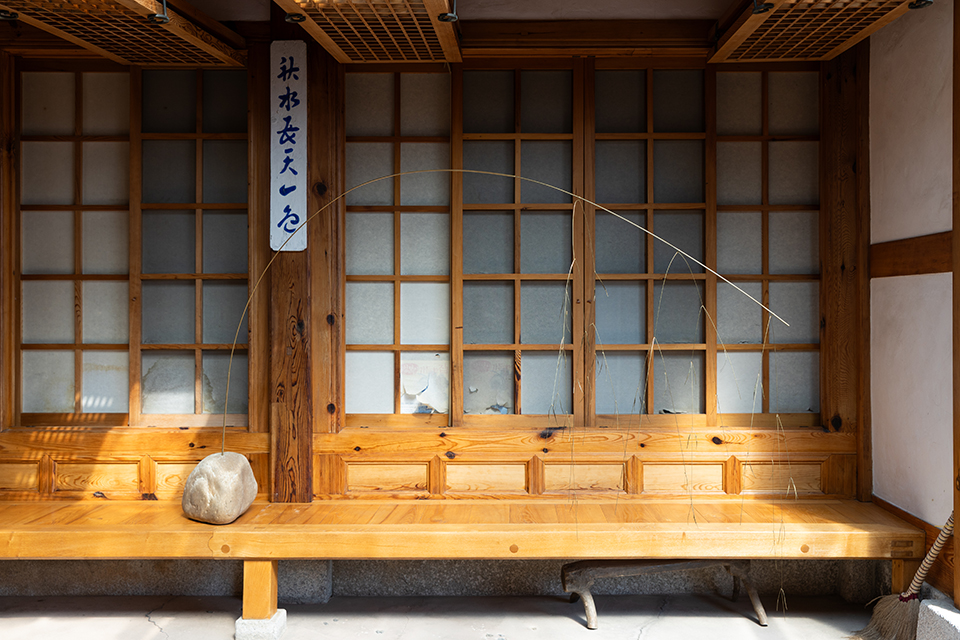
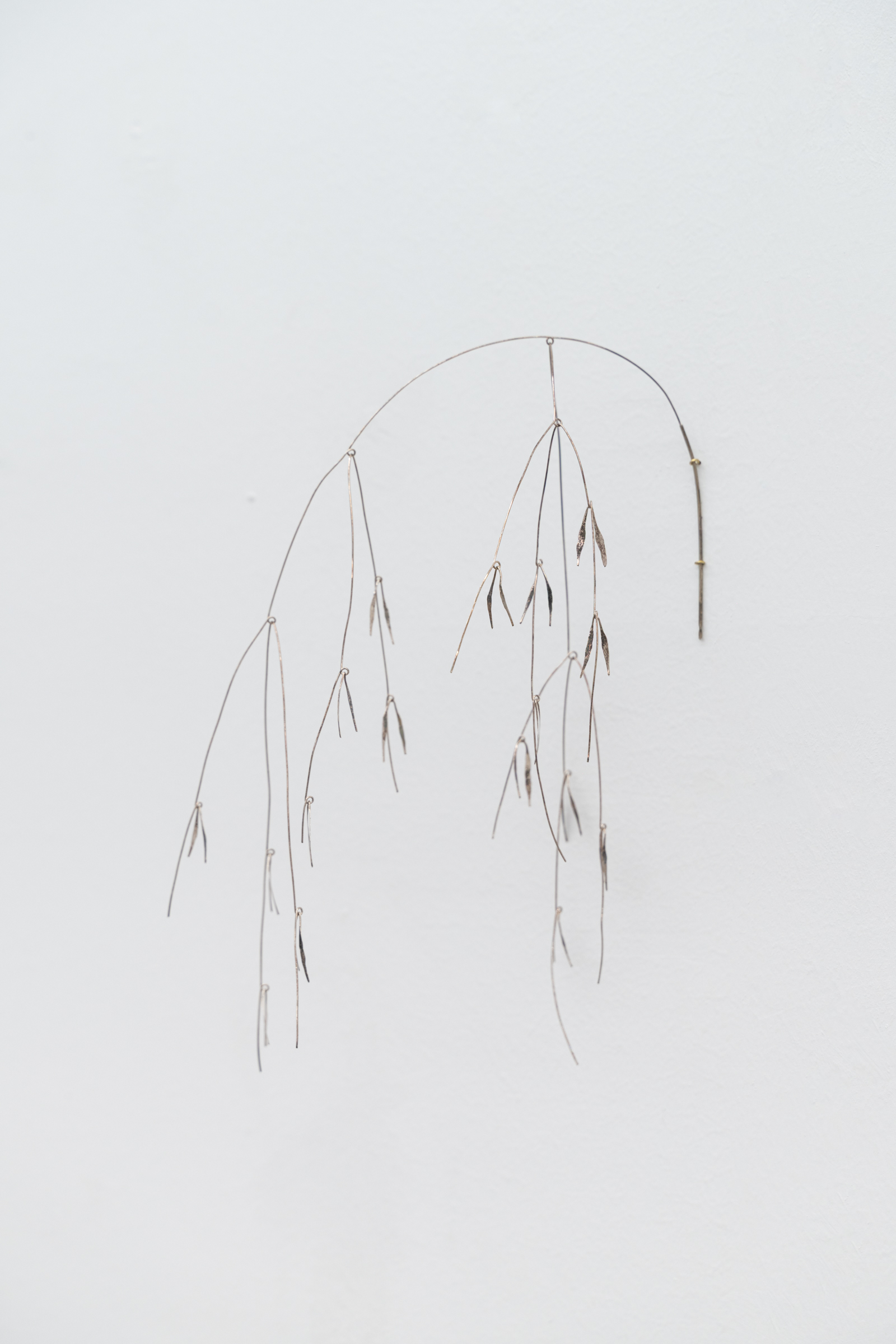
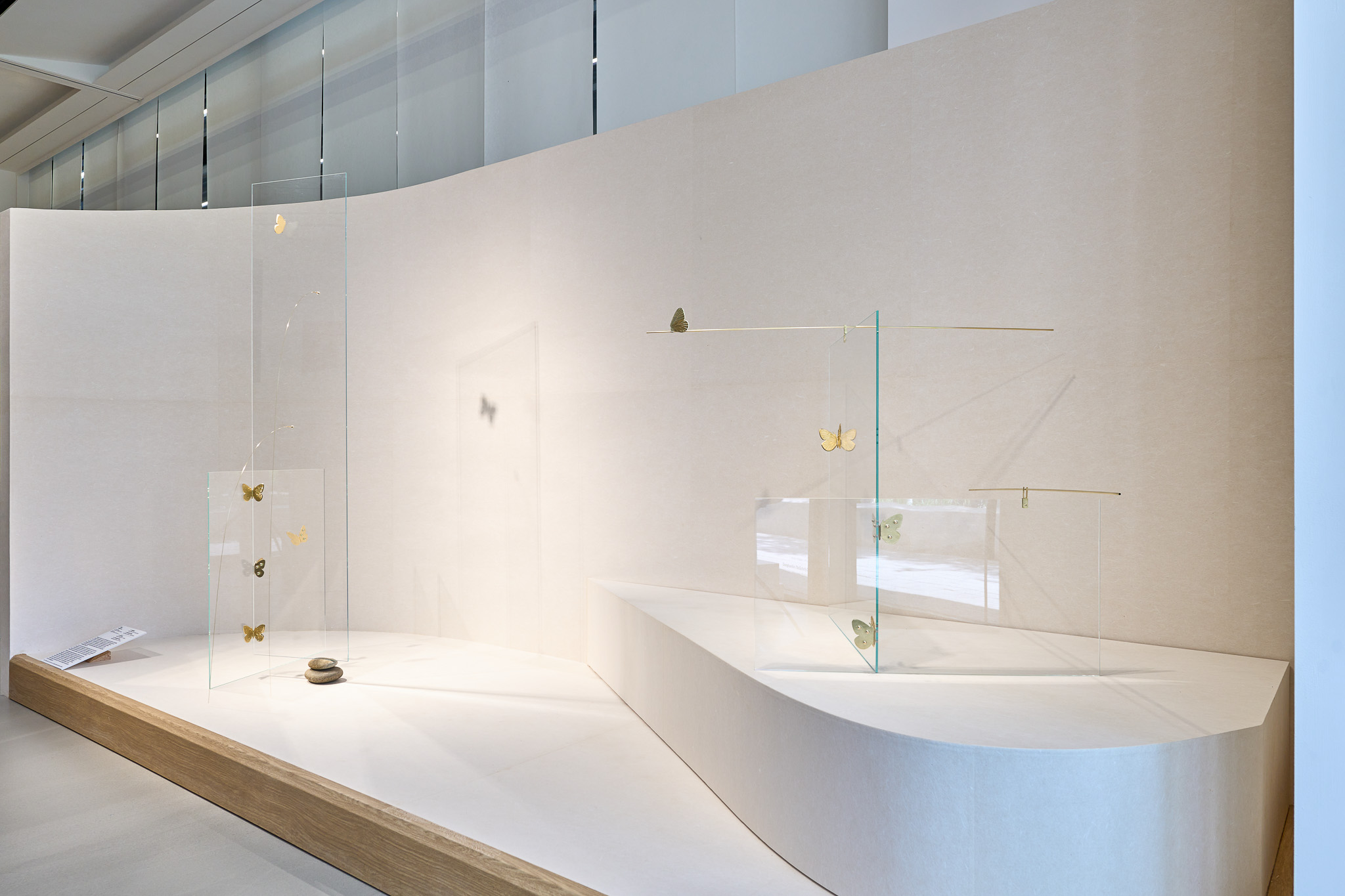
Observing Donghae Kim’s studio reveals how his practice is entangled with the world. In the space are grasses and fallen leaves he has collected during walks along nearby paths. These grasses and leaves sway in response to the footsteps and breath of visitors. Beside them, a metal sculpture made by the artist—resembling the spikelets of barnyard grass—moves quietly in tandem. In placing what he has gathered alongside his own work within the flow of time, his approach differs from that of collecting specimens detached from nature.
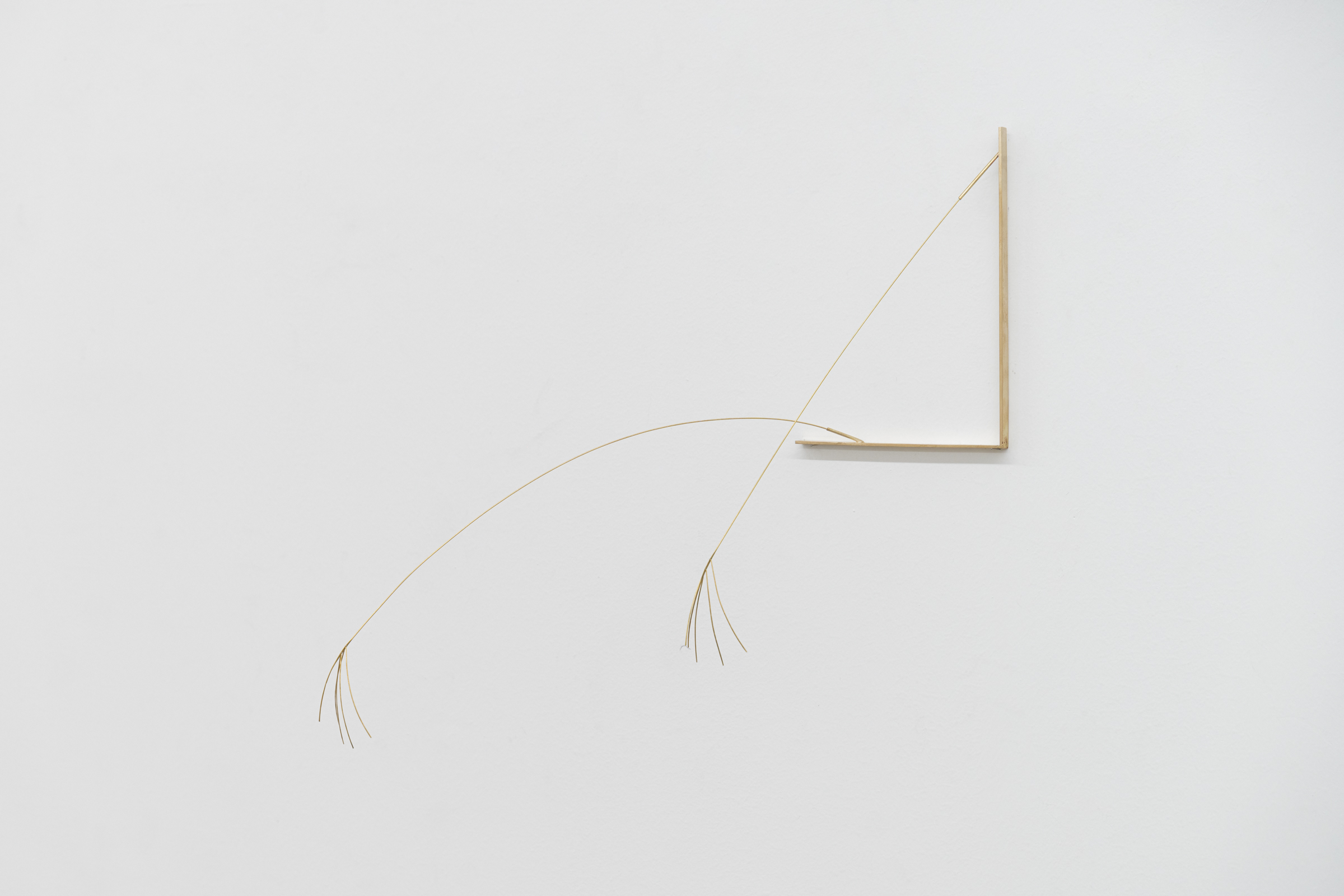
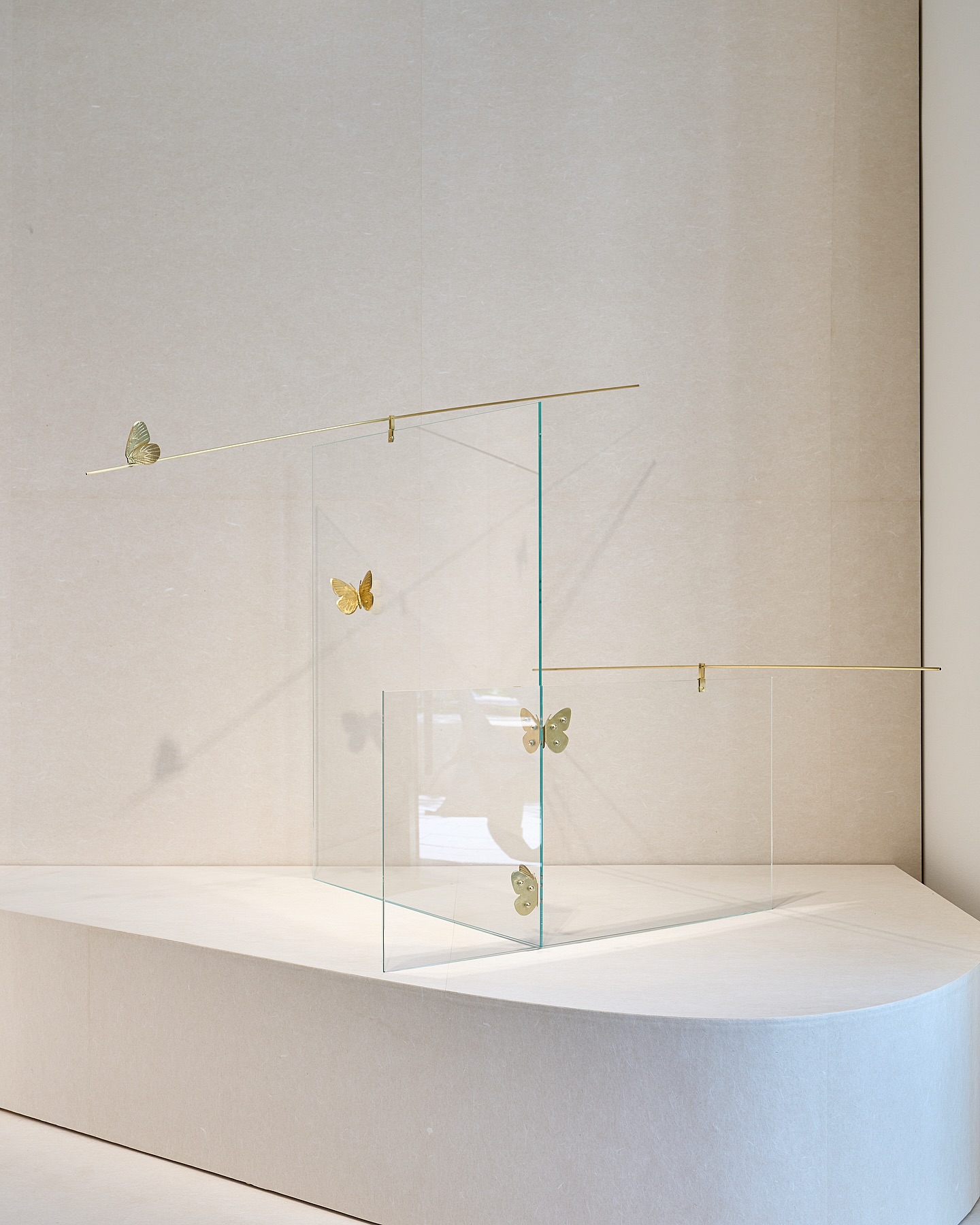
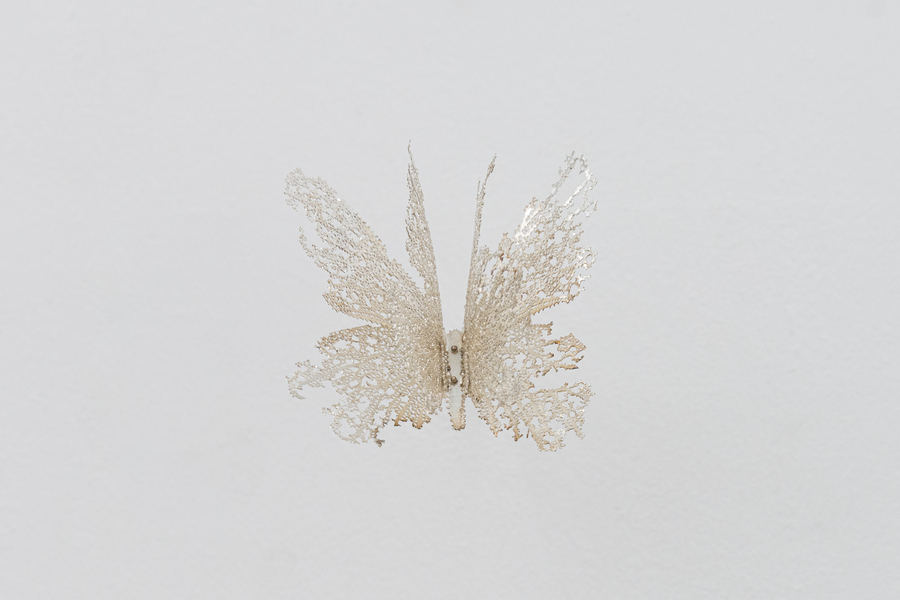
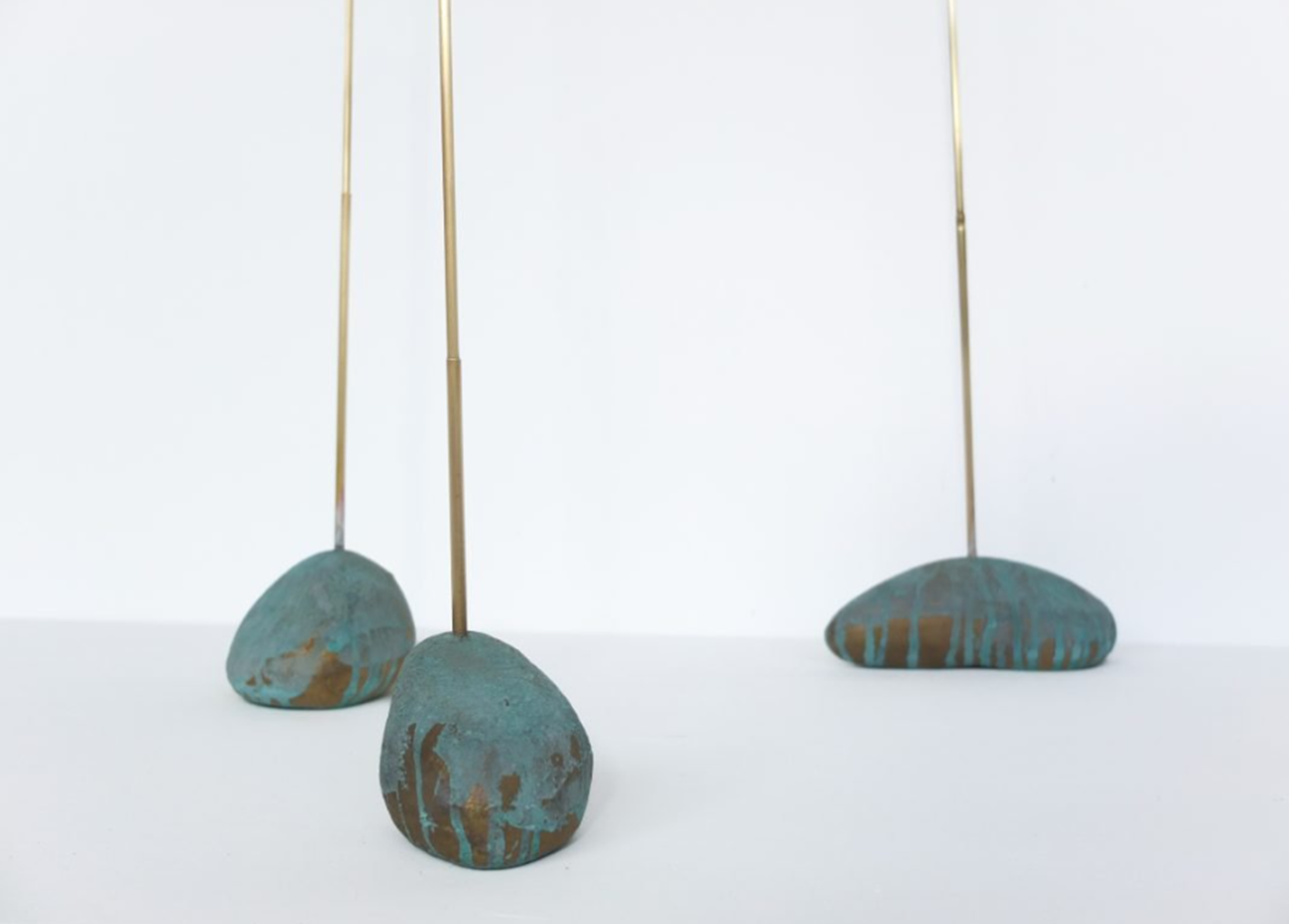
At this point, it is worth briefly considering Wabi-Sabi, a book by Leonard Koren that the artist also recommended. Koren celebrates “the beauty of things imperfect, impermanent, and incomplete.” The decaying leaves in the studio and the artist’s works, which slowly oxidize in response to the air, exist within the flow of time. Koren writes, “The changing color and texture of metal that has rusted and lost its shine—such phenomena represent the physical forces and order that underlie our daily lives.” Contrary to the notion that metal is unchanging, Kim allows the material itself to speak—as it crumples, rusts, or bends under its own weight. The work does not end at the artist’s touch but continues to respond and transform in relation to its surroundings. The movement of the surrounding air both temporarily completes the work and leads it toward dissolution.
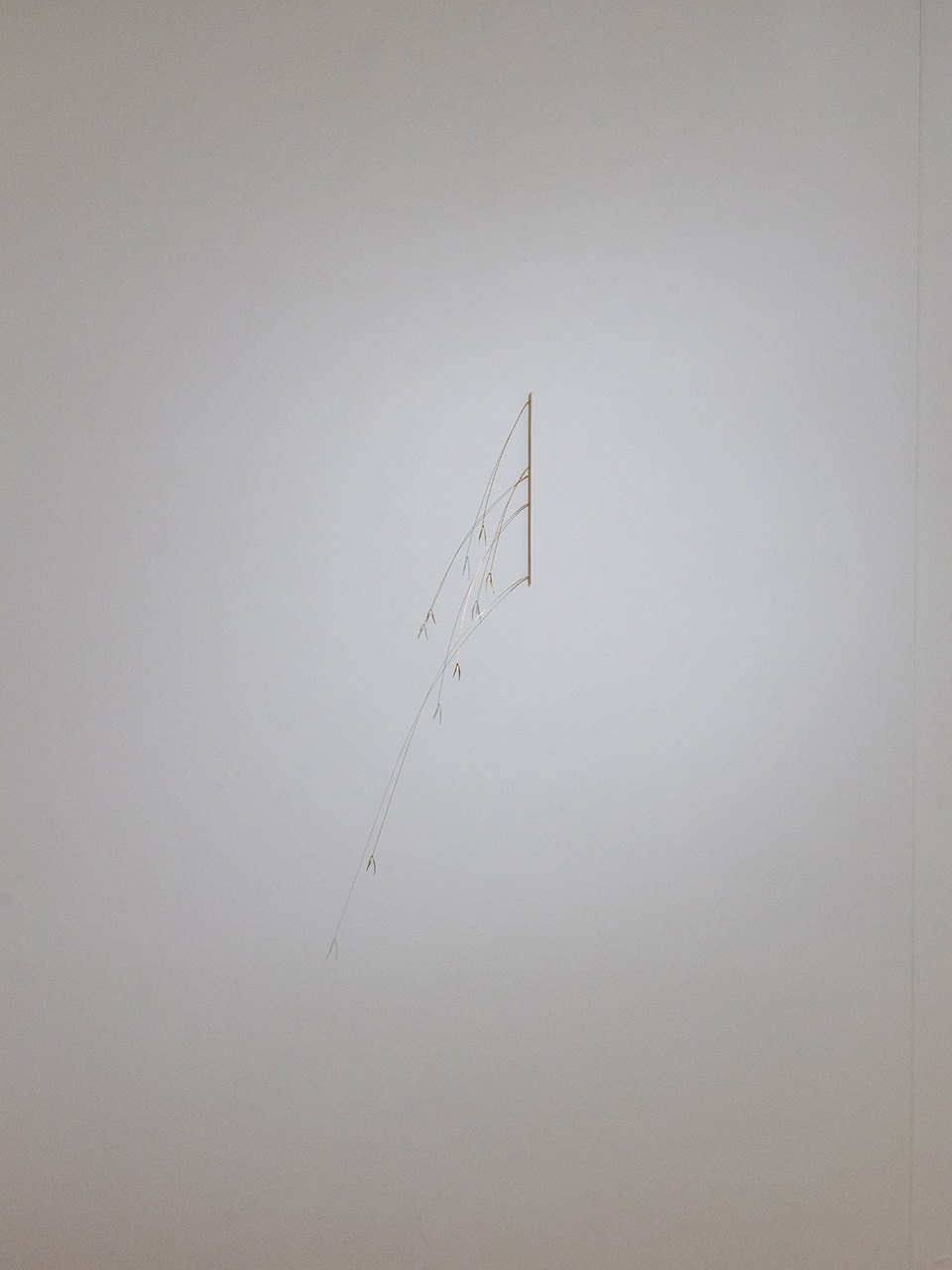
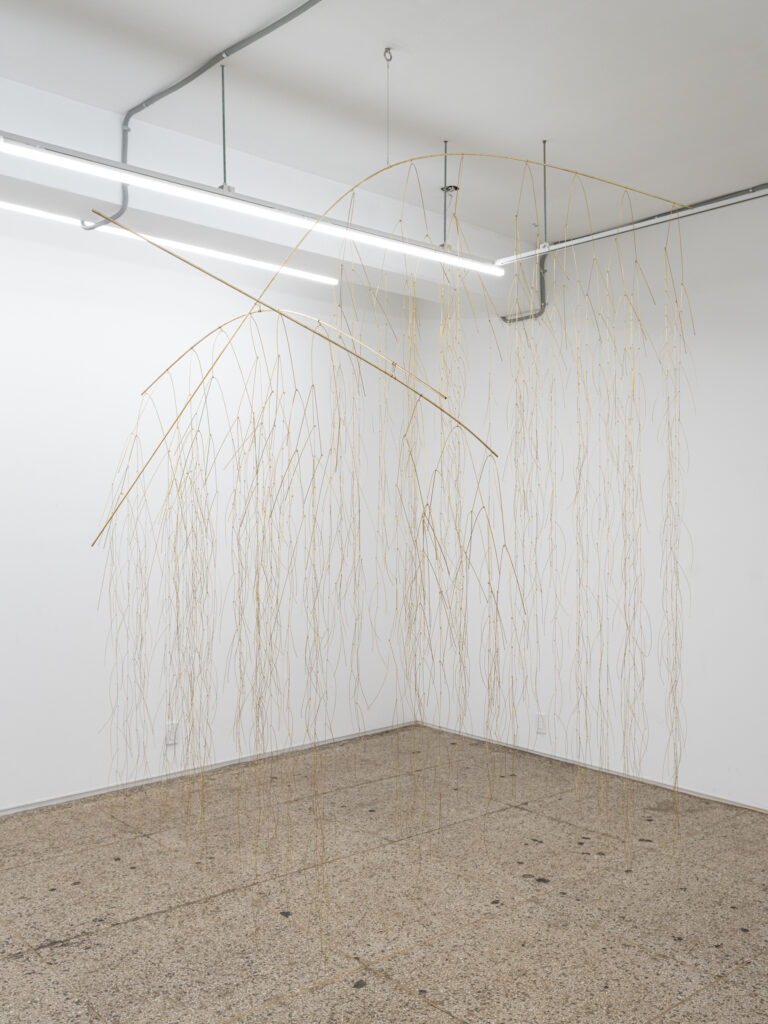
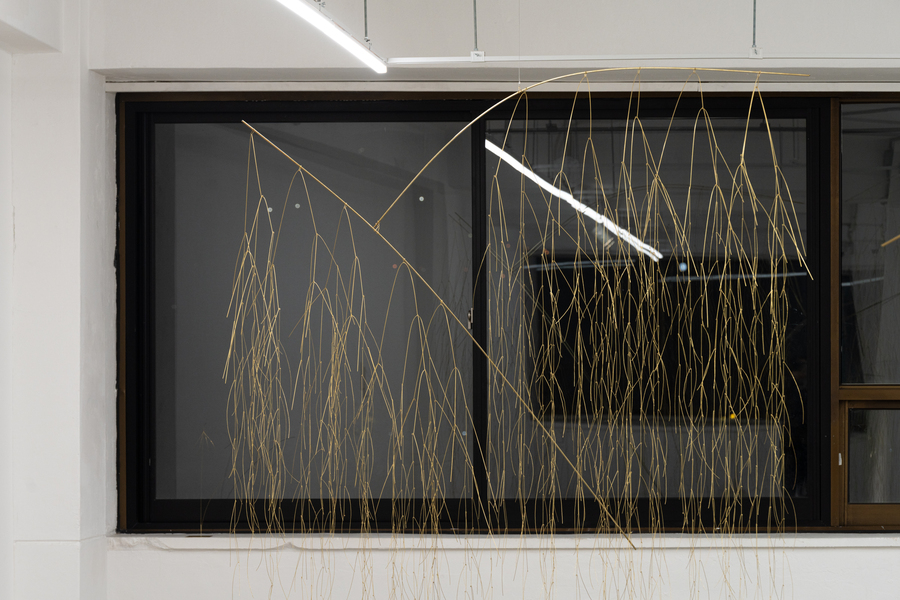
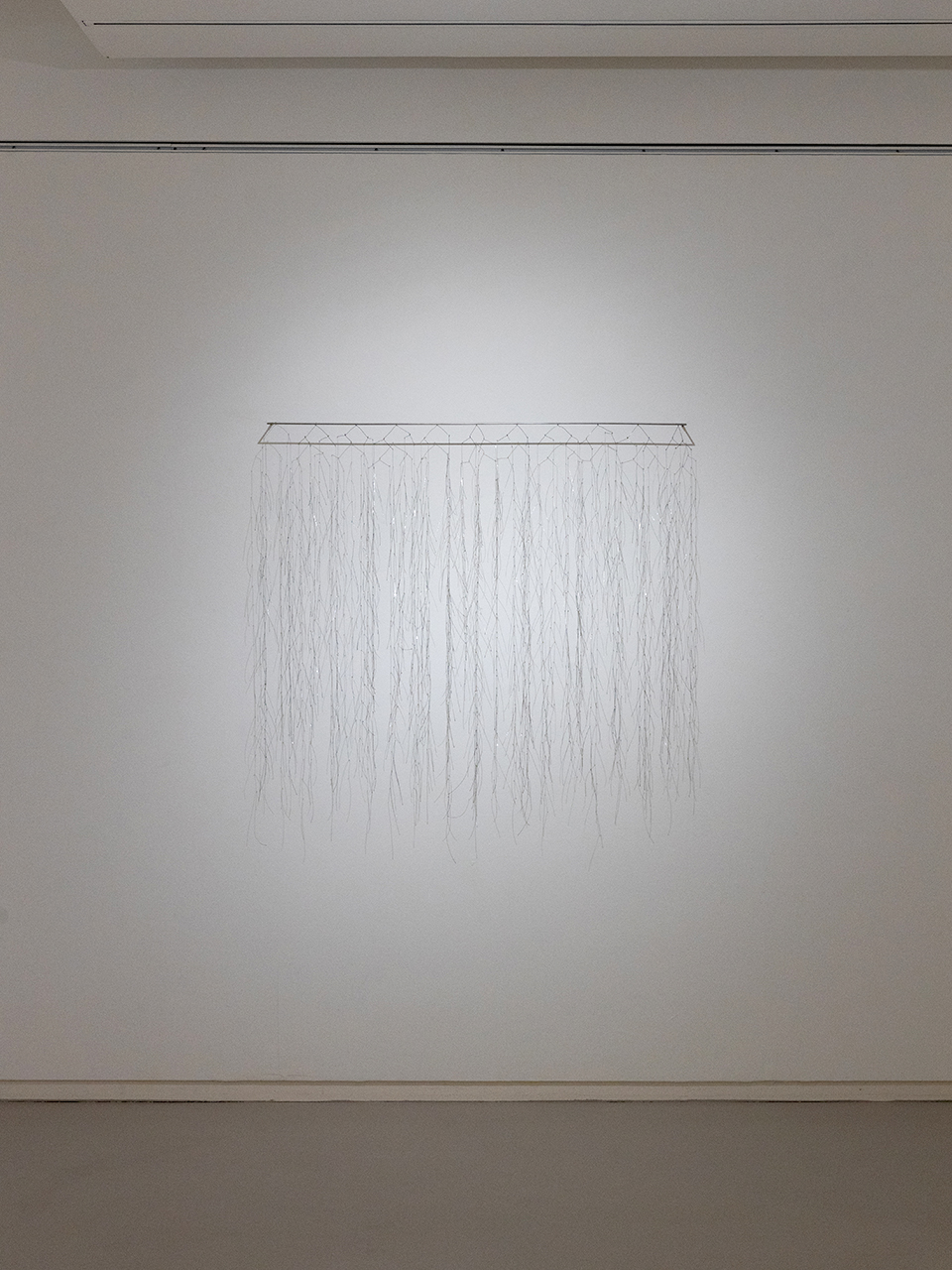
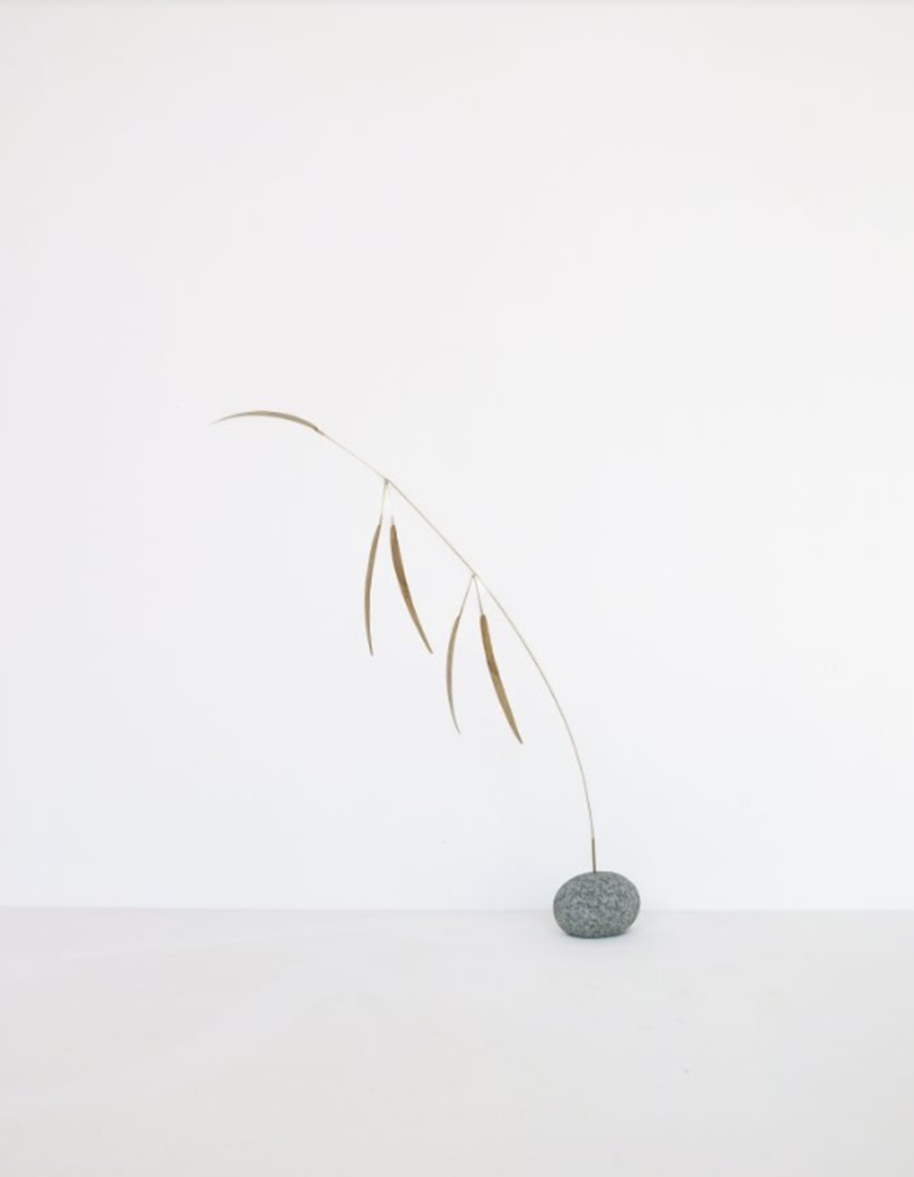
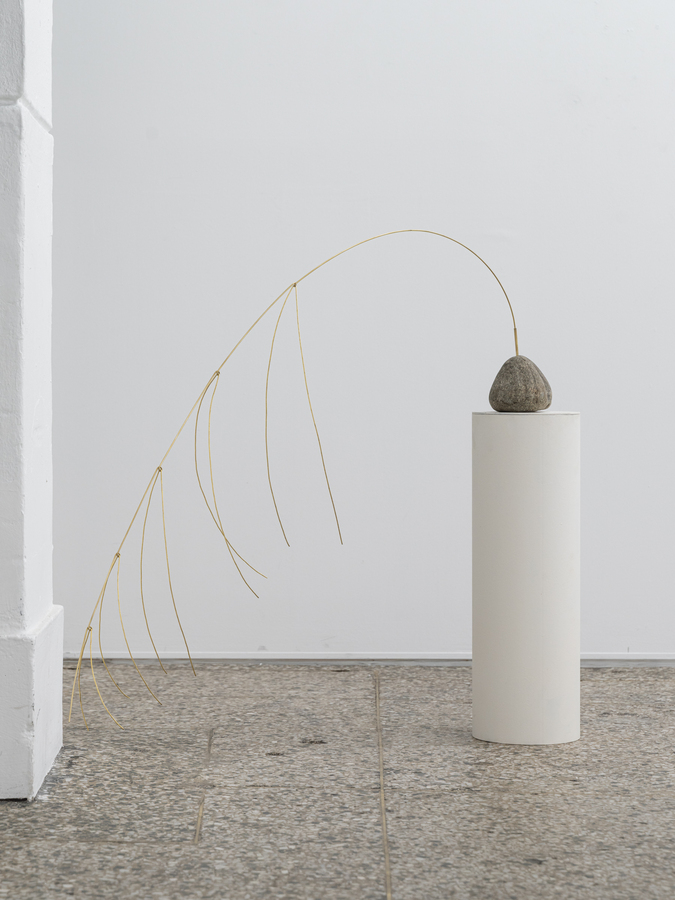
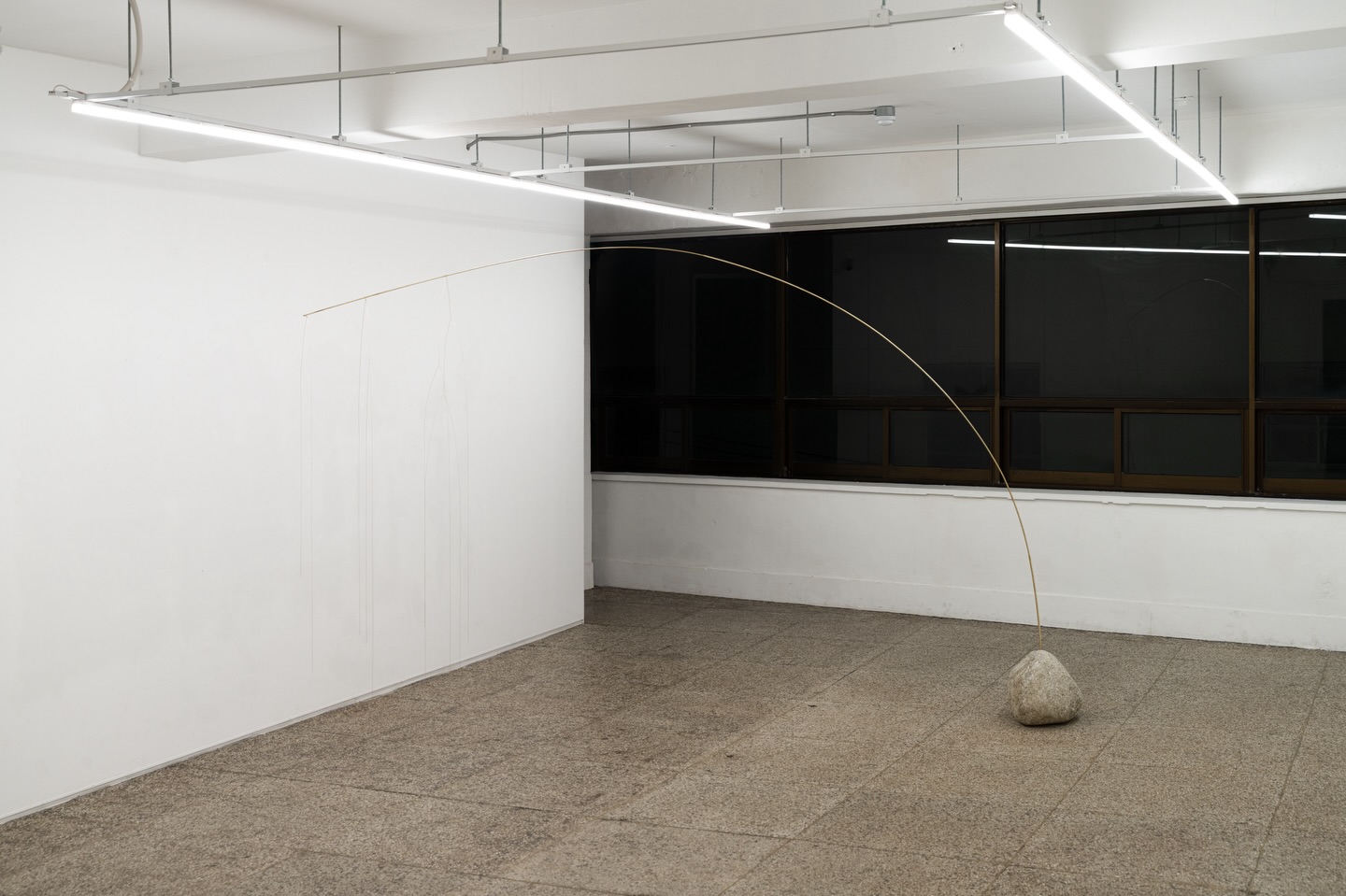
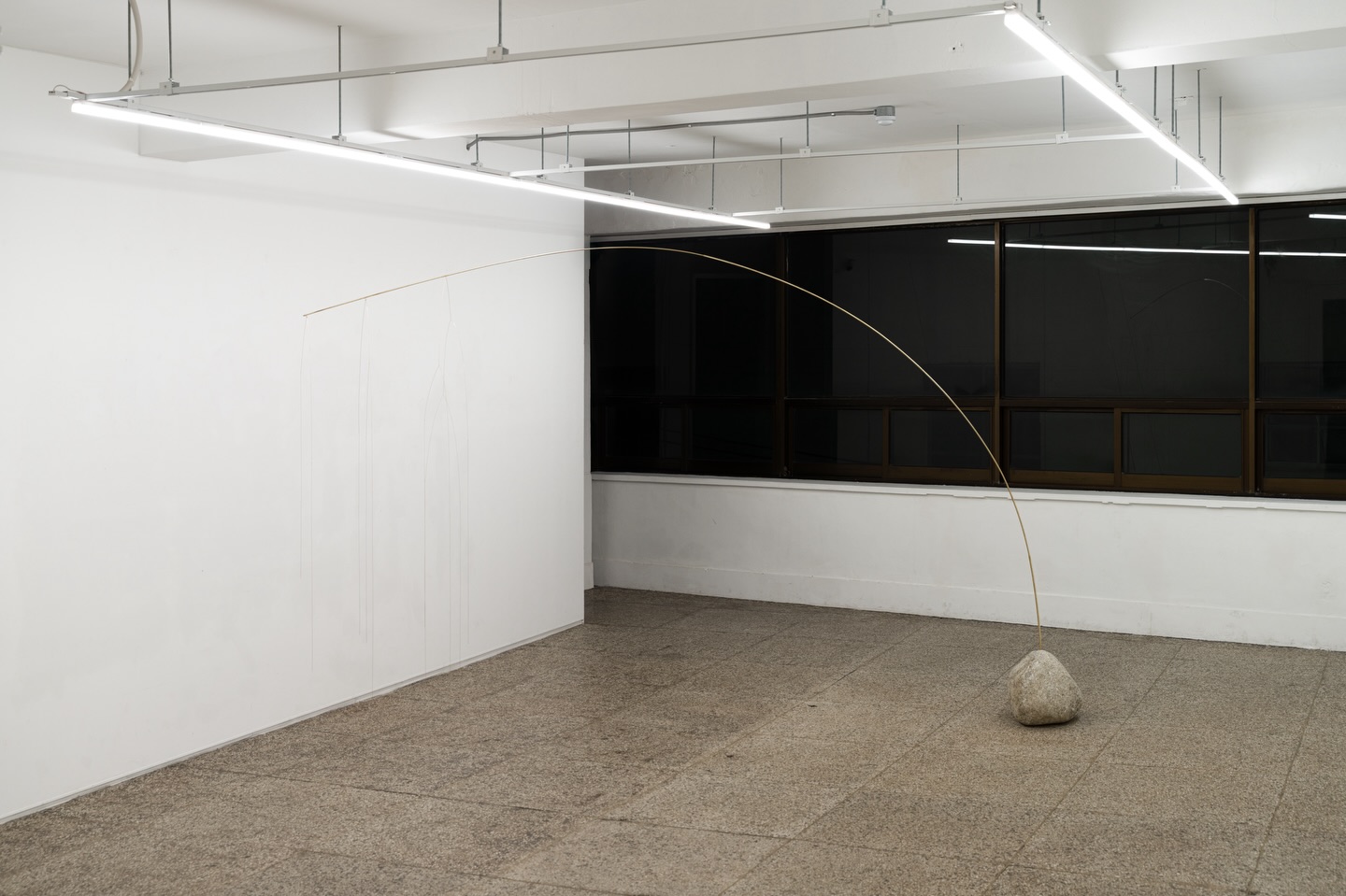
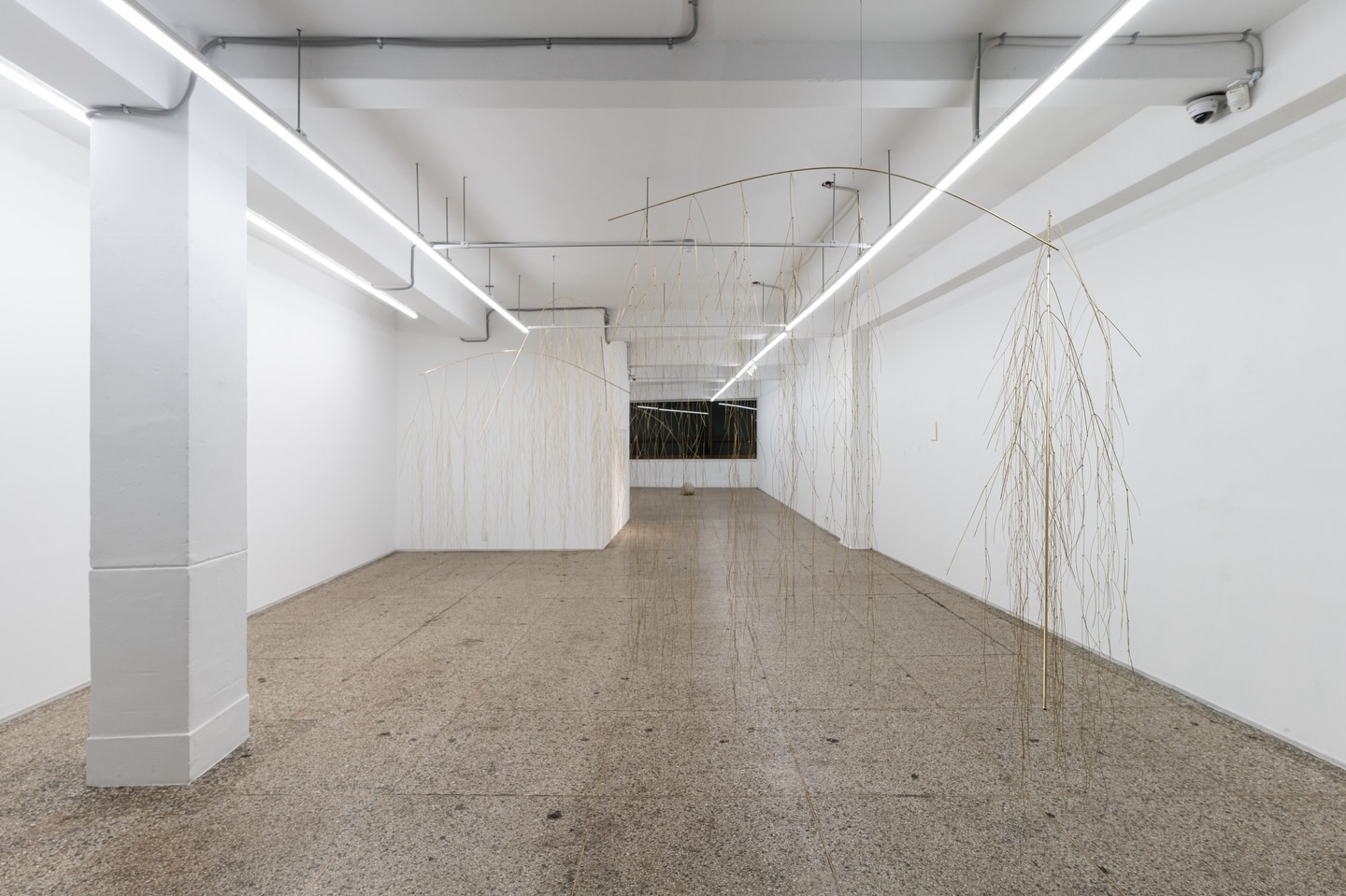
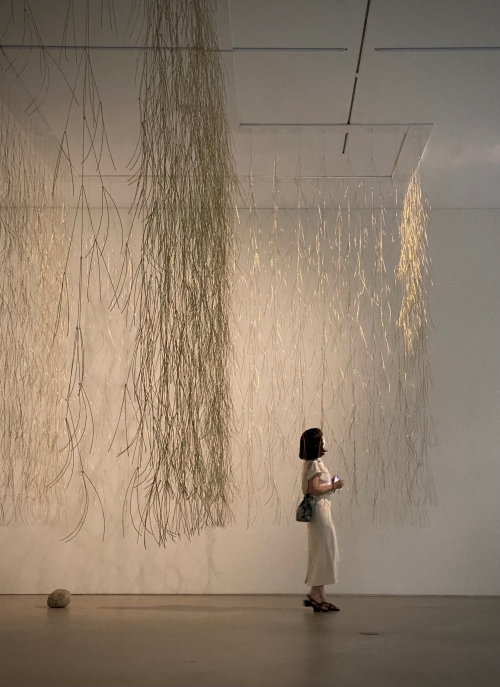
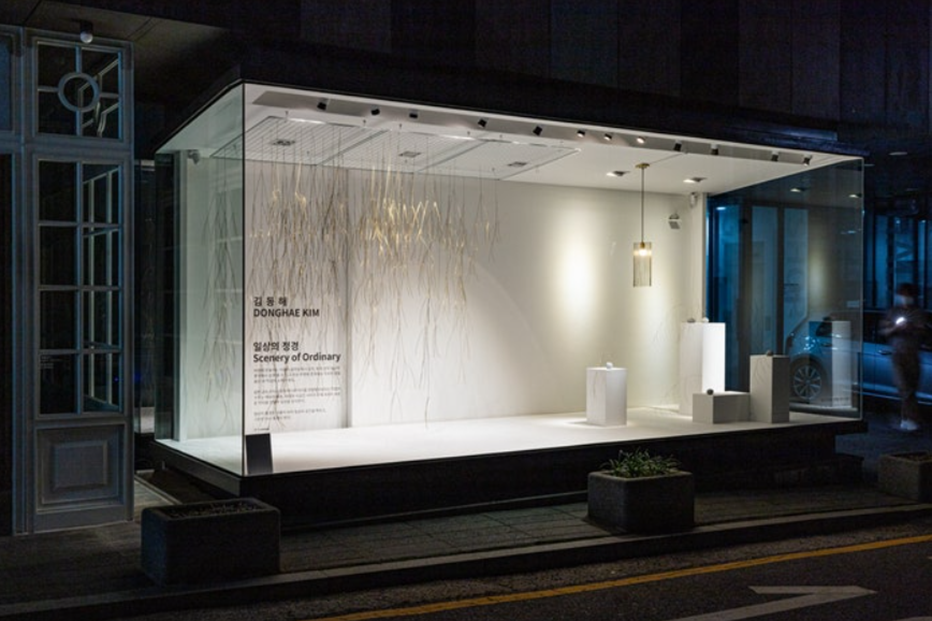
Donghae Kim bends and hammers metal wire to create simple structures, then connects and suspends them to form an overall composition. The forms that hang throughout the studio, resembling willow branches, begin from the morphological qualities of plants. However, rather than merely imitating the form of a willow, the artist focuses on an open structure that accommodates others, as well as the wind and light that pass through it.
He noted that the Korean word for landscape (풍경) is composed of “wind” (풍) and “light” (경), and that through his work he wishes to speak of a landscape where immaterial elements are intertwined. Here, his notion of landscape is not a generalized organism nor something opposed to humanity. Instead, he reflects on the impossibility of existing as an isolated entity—drawing from the image of a blade of grass swaying in the wind or a fallen leaf detached from a tree. From material, he evokes immaterial elements such as time, light, and wind.
At first glance, Donghae Kim’s work may seem distant from the complexity of the contemporary world, but what kind of resonance can it offer today? Here, it is worth returning to Koren’s perspective. According to him, wabi-sabi is not limited to the idea that beauty resides in objects themselves; rather, it is a mode of perceiving the world that expands toward the beings and forces associated with those objects. Beauty does not exist solely as a property of the object but requires a perceiving subject who relates to it. Koren writes, “Beauty is a dynamic event that occurs between oneself and that which is not oneself.” The act of perceiving a modest existence as beautiful depends greatly on the gaze of the viewer.
In this sense, both stillness and entanglement converge with the aspirations of tea meditation: to sense the world connected to even the smallest elements of nature, and to become aware of one’s own presence as it is. While not essential for survival, such practices allow us to feel ourselves and the world more fully. Tea meditation resembles the experience of encountering an artwork.
One perceives the tea before oneself and becomes aware of one’s own presence. One notices the flavors and aromas that arise at the beginning and those that linger at the end. Gradually, one moves from the moment of contact between tea and self to a state in which the distinction between them dissolves. This is one way of experiencing tea. Another way is to wonder how the water was heated and where the tea leaves originated. It is to imagine the process through which the leaves became a cup of tea.
From the here and now, by imagining what is connected to this moment, it becomes possible to experience beauty through even the smallest artwork and to evoke the world beyond it. One might imagine that Donghae Kim’s leaves were formed through movements between Euljiro and the studio. One recognizes that the suspended leaves are connected by metal wires to a stone. One becomes aware of one’s own two feet standing in the exhibition space. One senses the concrete building supporting those feet and the landscape of Euljiro in which the building stands.
Donghae Kim’s work invites us to cultivate a sensibility that begins from the present moment and extends outward to reflect upon a broader world. Yet sensibility and ethics do not reside within the work itself; they are formed through the relationship between the work and the viewer. In this sense, his work calls upon us to engage with it ethically.