
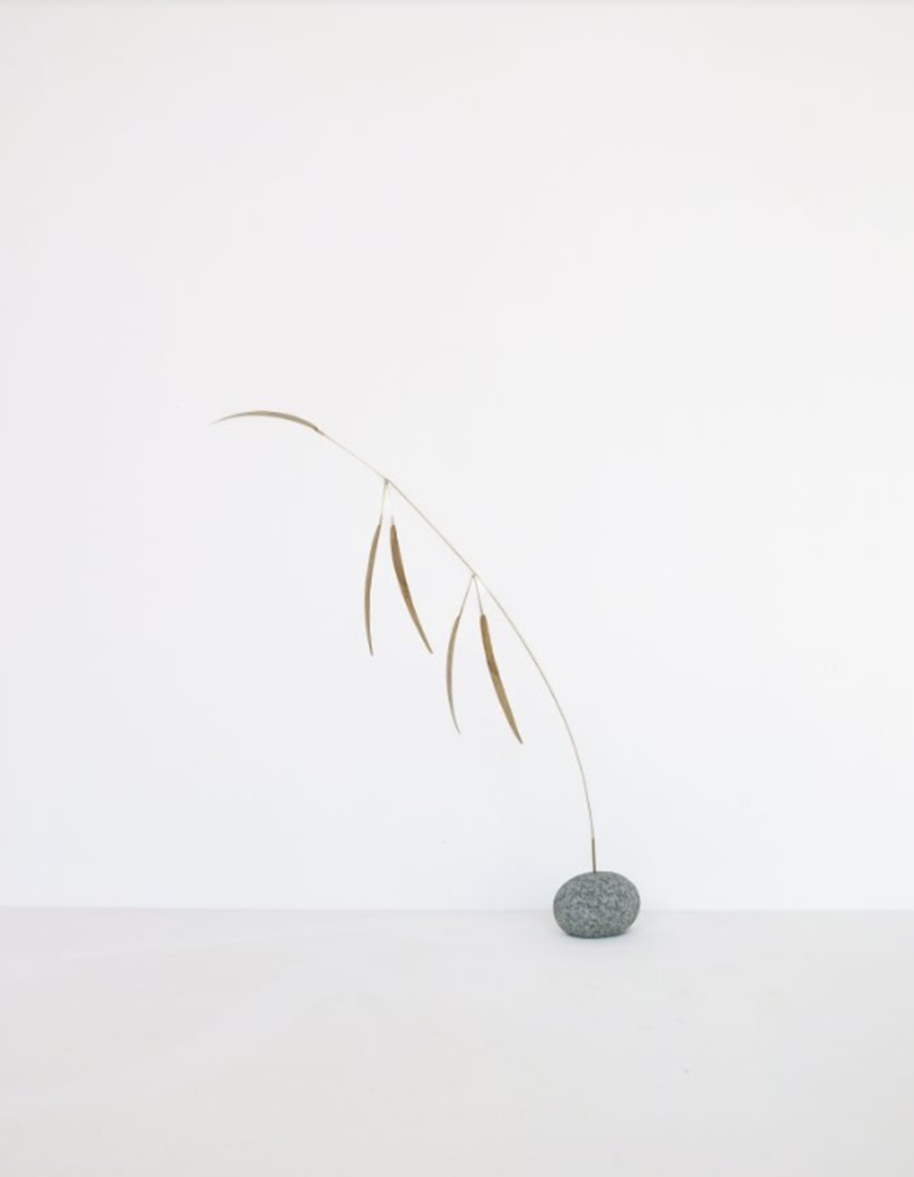
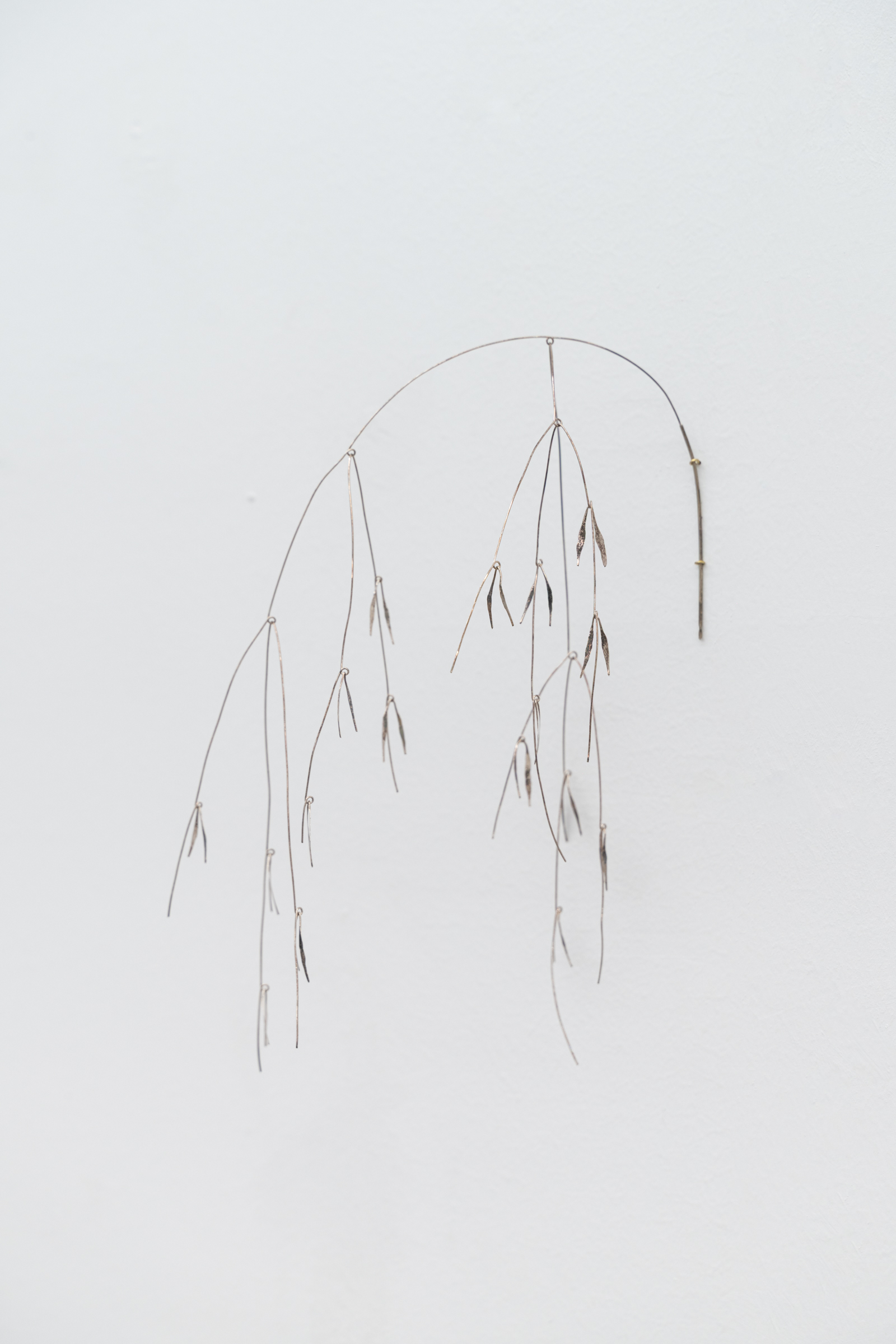
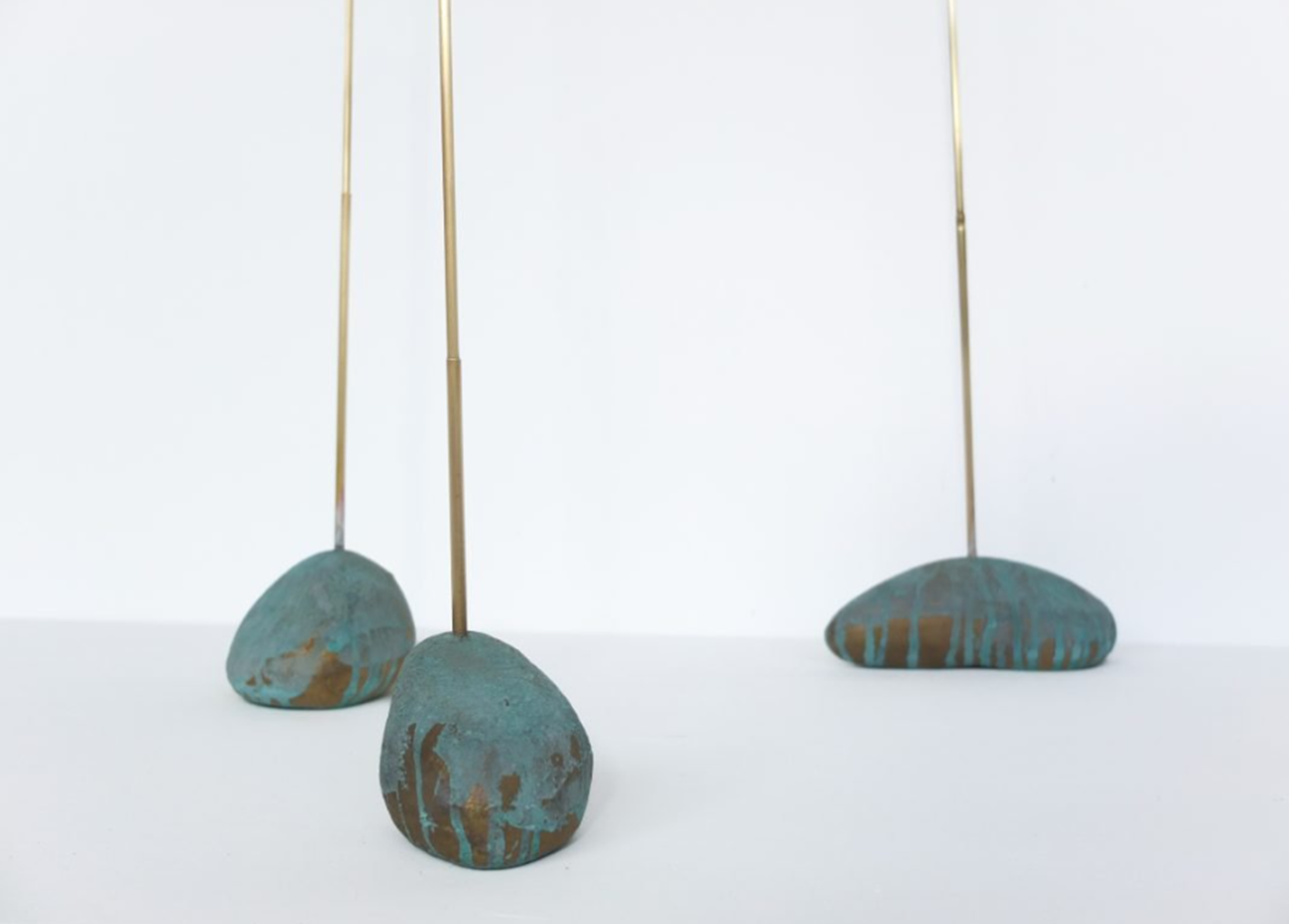
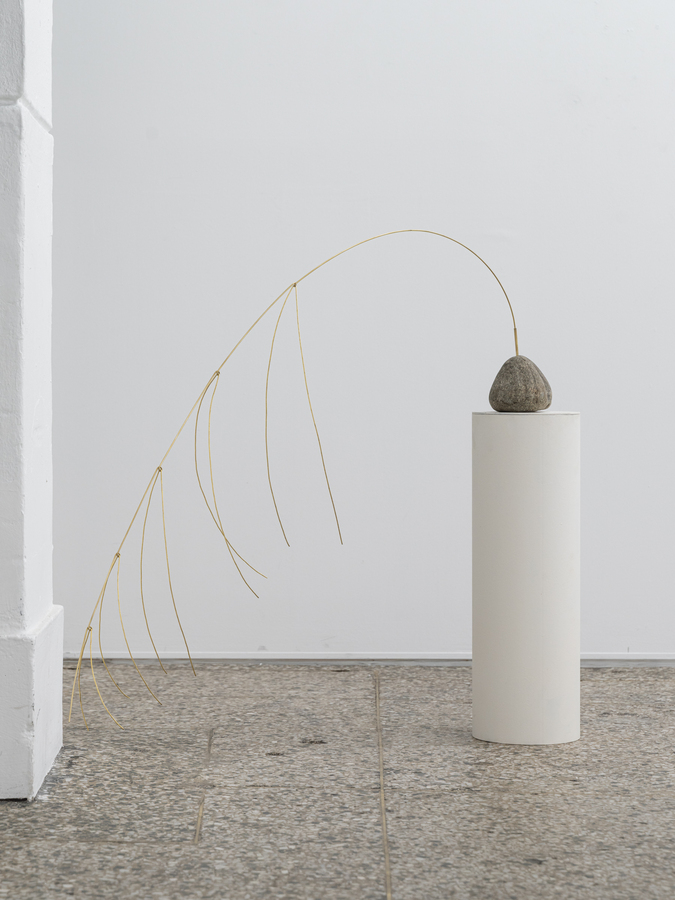
Donghae Kim (b. 1987) primarily works with metal materials such as brass, silver, and iron, creating works that visualize the rhythms and structures he perceives from nature—grass, trees, and wind. Beginning with close observation of both the material and immaterial elements that constitute the natural world, the artist translates these into his own sculptural language.


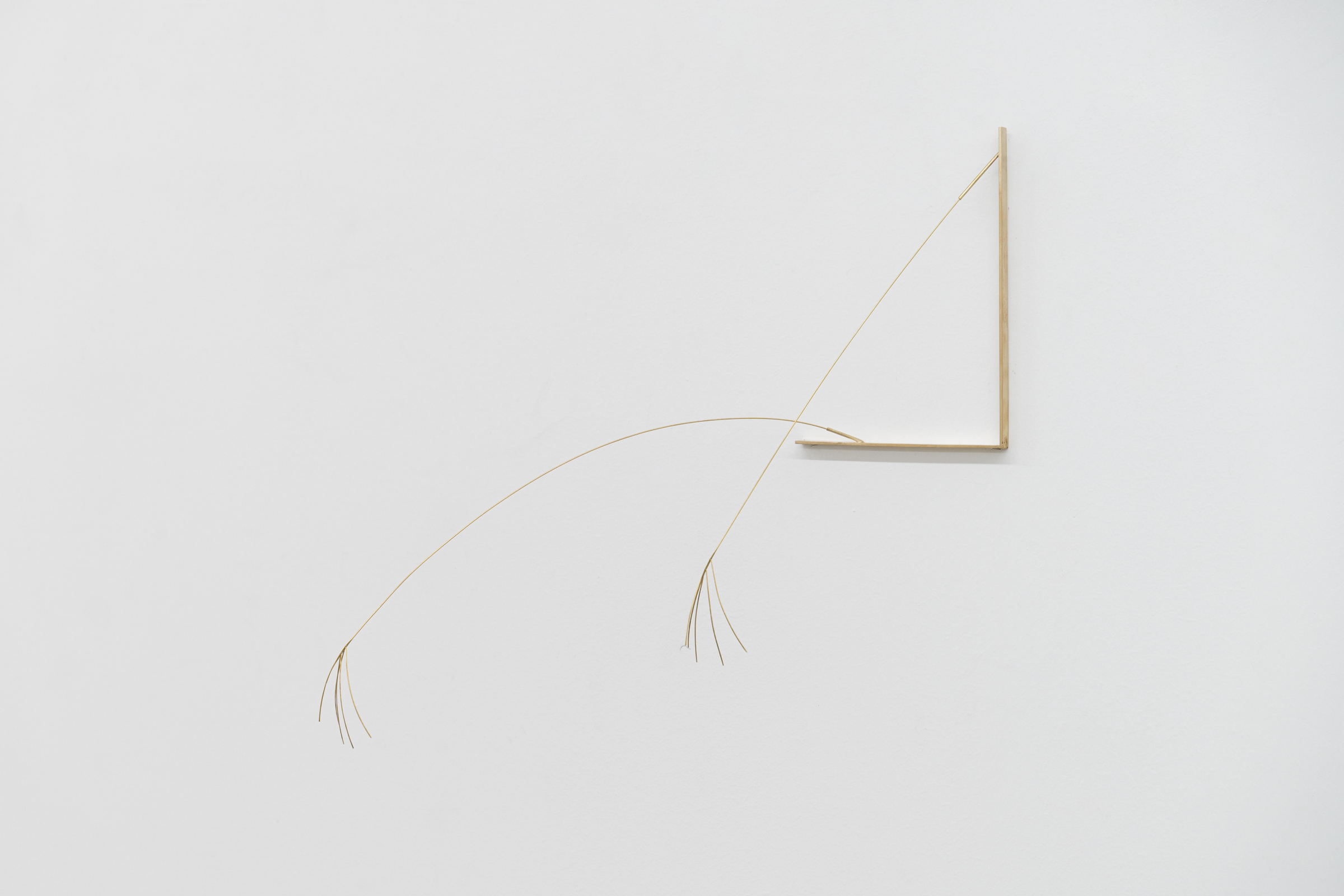
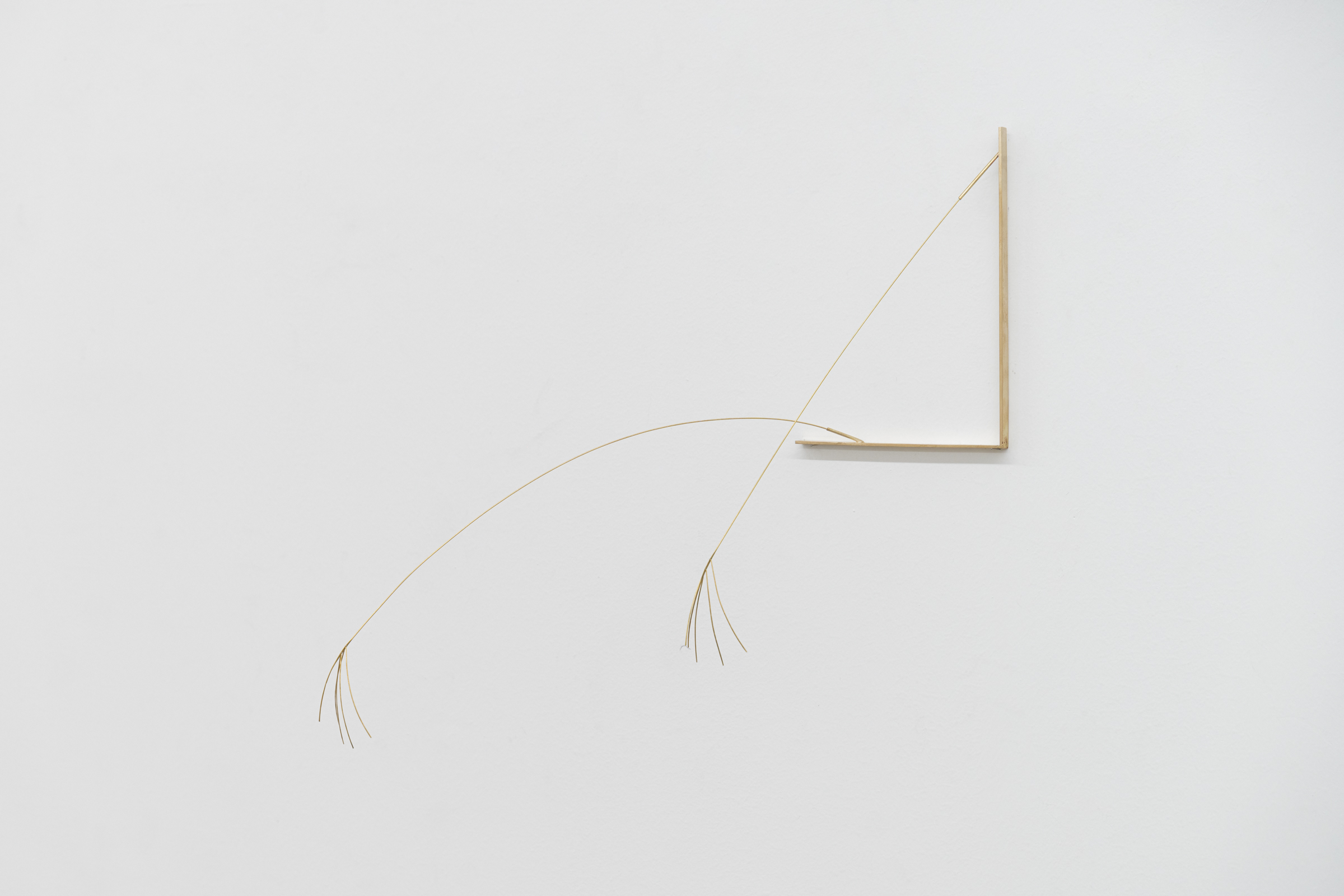
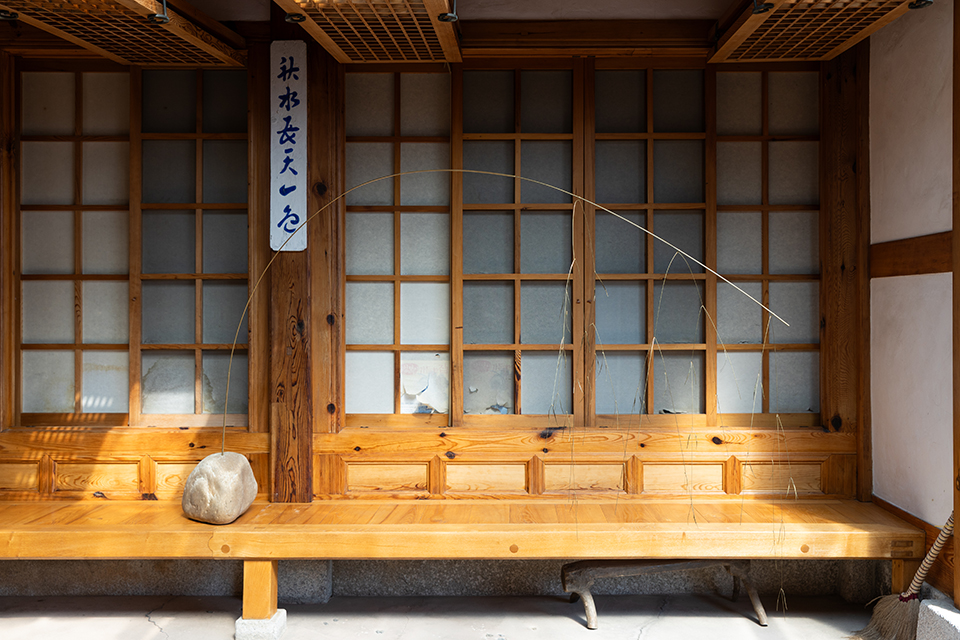
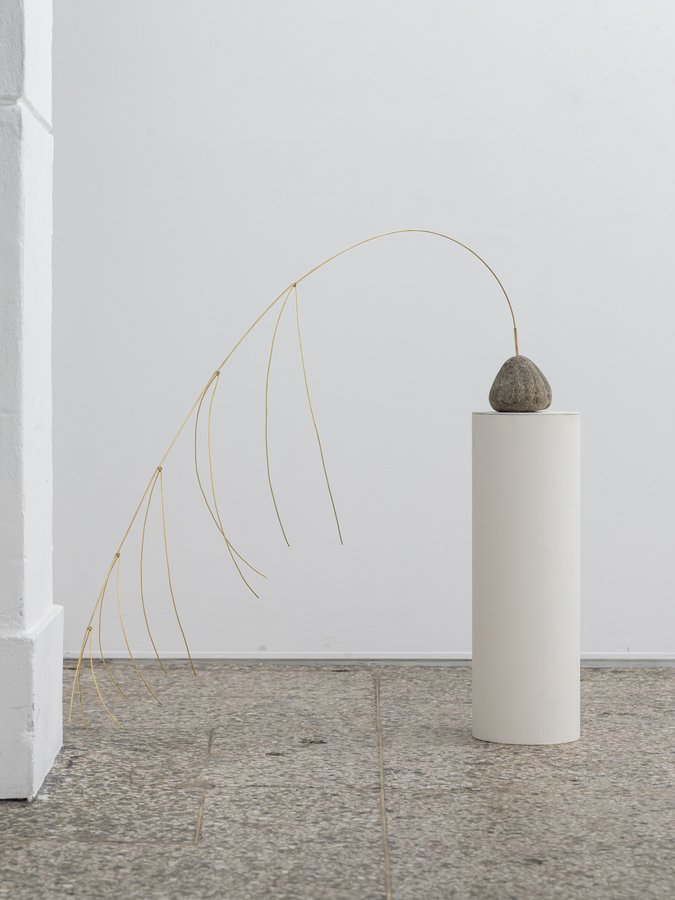
Donghae Kim, Landscape (quiet) #1, 2020, Brass, stone, 65x100x13cm © ThisWeekendRoom

Everyday scenes—such as the movement of plants swaying in the wind, or the presence of sound and light—familiar experiences that are easily observed and always around us, serve as key motifs in his work. Kim observes how diverse elements in nature intertwine and transform over time, attuning himself to their rhythms, and reinterprets the sensations he derives from them through a handcrafted process.


Donghae Kim, Fragment of memory, 2025, Brass, 35x30x14cm © ThisWeekendRoom

According to the artist, what gives rise to sculptural inspiration is a poetic moment in which, breathing in tandem with the external world and sensing the connection between his own body and mind and nature, he encounters an unfamiliar “self” as part of a vast cycle and rhythm. These moments of experience remain vivid in his memory and are transformed into new landscapes through sculptural form.
 
Moreover, the fleeting moments encountered within an ever-changing environment allow Kim to sense an unknown world even within the familiar rhythms of daily life, shifting his focus away from objects themselves toward the relationships and interactions among the many elements surrounding them—in other words, toward events.


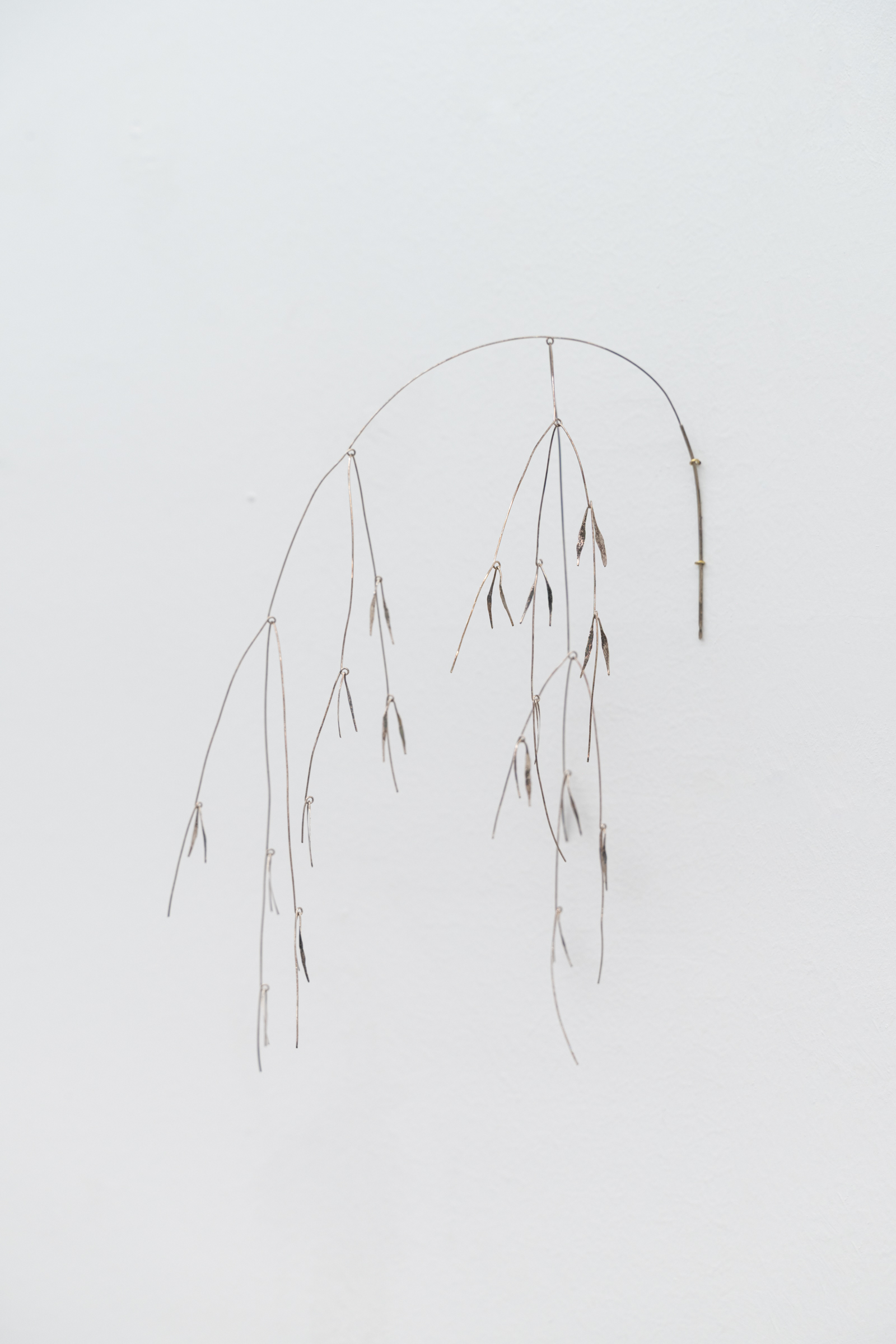
Donghae Kim, Weep #1, 2024, Fine silver, 25x15x10cm © ThisWeekendRoom

According to the artist’s note, these experiences “have led him to a perspective in which, by connecting and observing the hidden relationships that lie beneath what is visible, nothing exists in isolation; rather, everything forms complementary relationships with countless surrounding elements, achieving balance and coexistence within an ever-changing flow.”
 
For this reason, what he seeks to convey in his work is not so much the form of plants themselves, but something closer to “a scene or landscape imbued with narrative.”


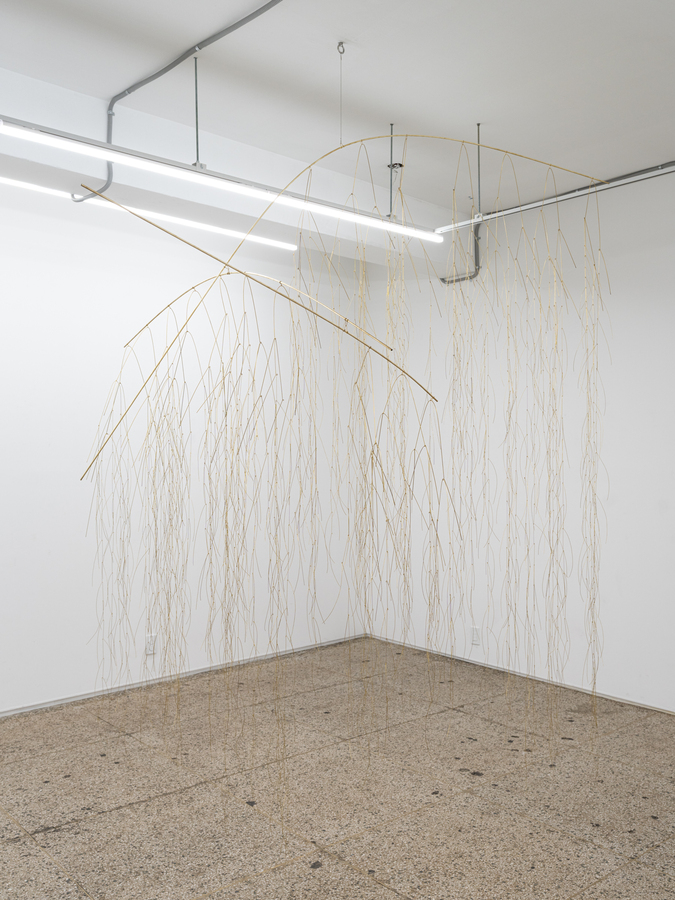
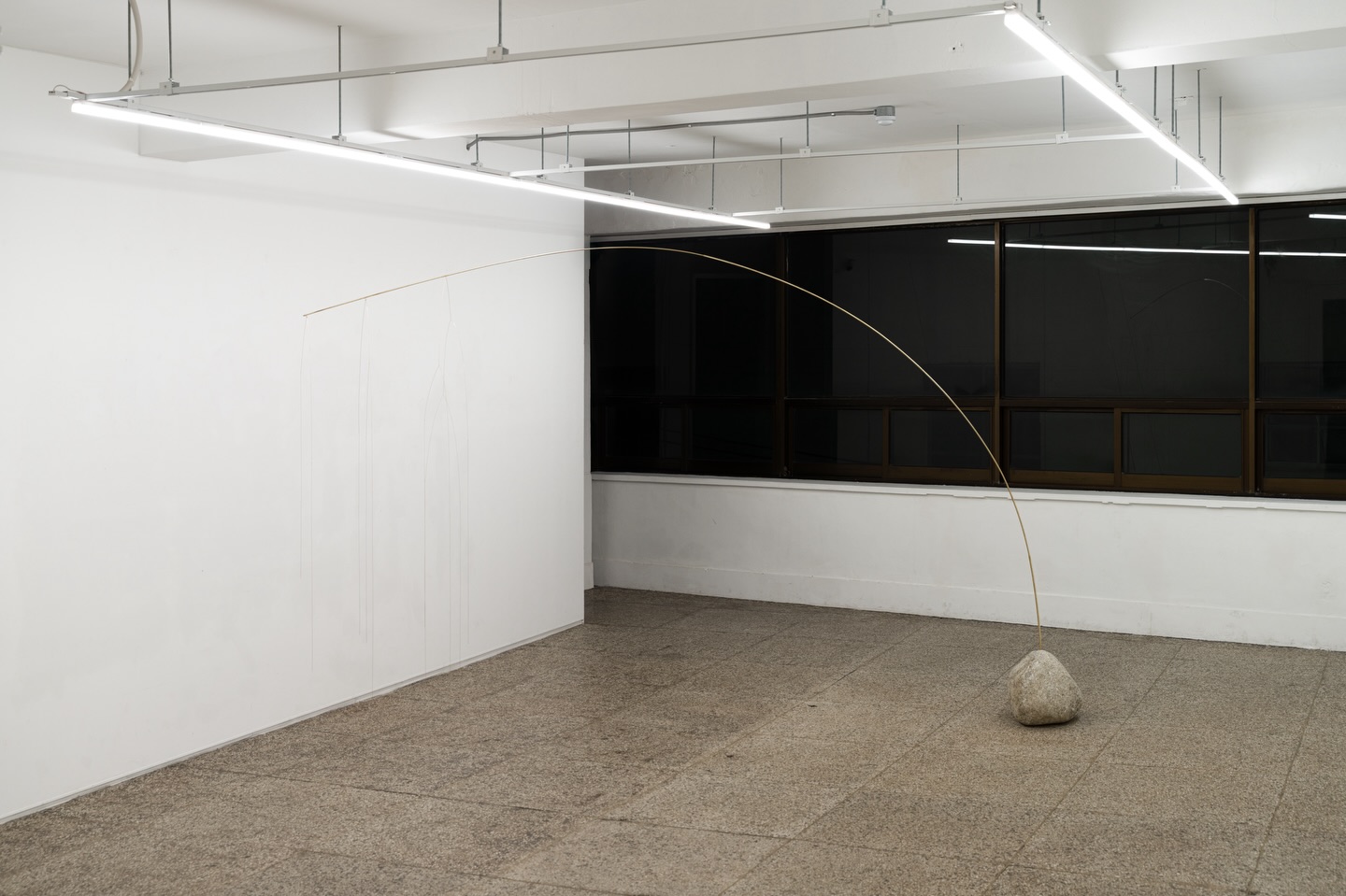
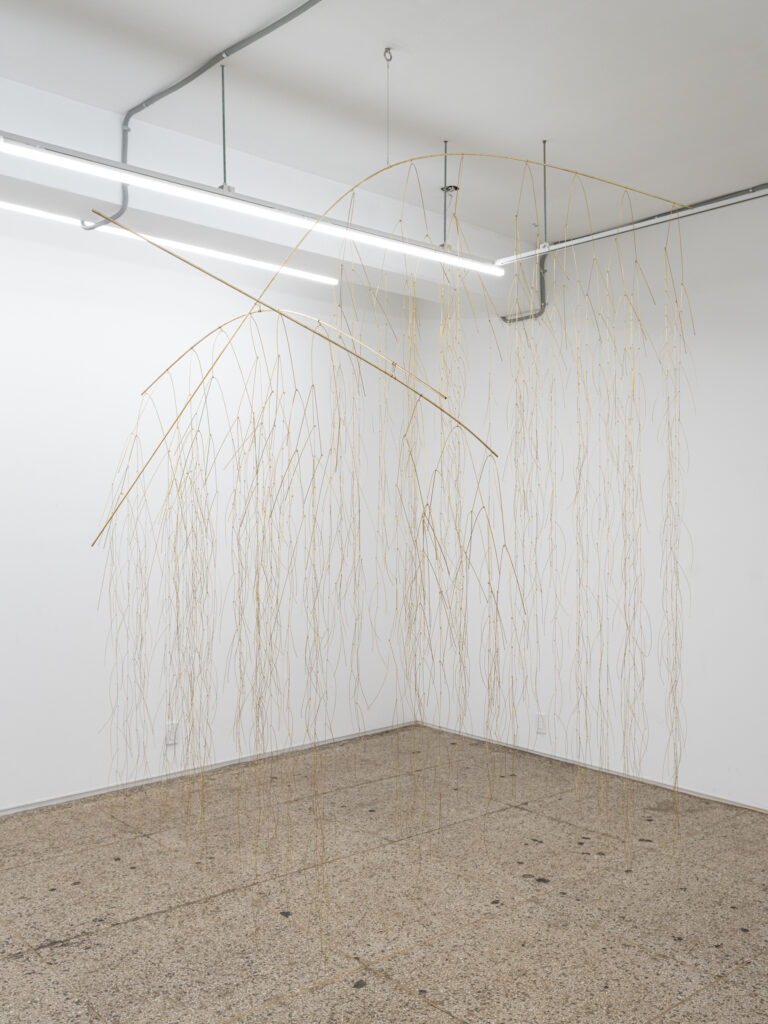
Donghae Kim, Curves in quite flow #1, 2025, Brass, 300x210x240cm © ThisWeekendRoom

Donghae Kim’s work unfolds through his actions of connecting various elements—including the invisible factors surrounding him. Grounded in subjective experiences and impressions of nature retained in memory, he explores and links the correlations and interactions among the many elements that surround him.
 
From this process emerge broader inquiries: how the overall forms and structures—constructed by bending and hammering slender metal wires and sheets into connected segments—relate to time and space, and how fragments of memory created through his actions resonate and breathe with the viewer, opening up a range of possibilities.


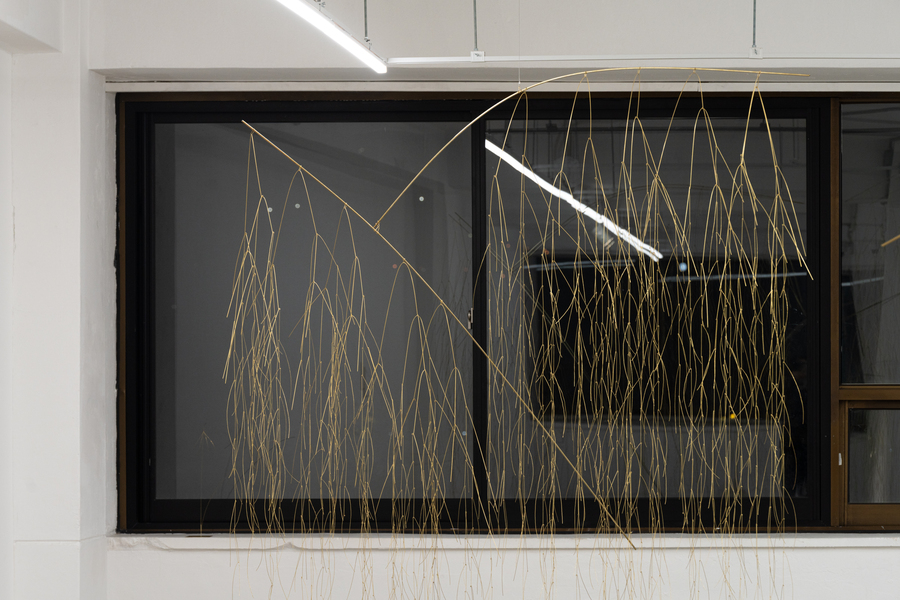
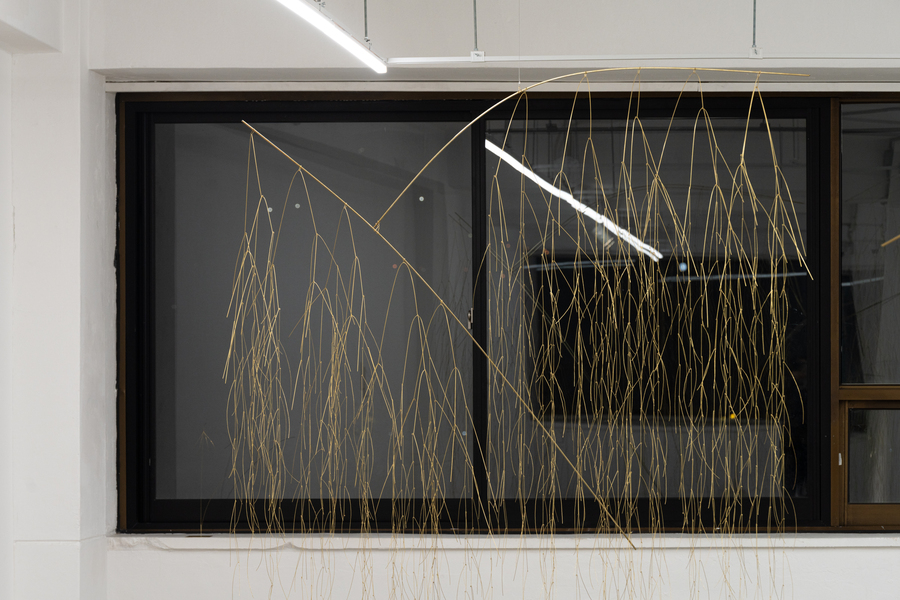
Donghae Kim, Curves in quite flow #2, 2025, Brass, 260x190x180cm © ThisWeekendRoom

This process resembles the order of nature, in which different beings come into harmony and create balance. Moreover, the resulting works generate new meanings within the relationships between materials and objects, people and space-time, subtly inhabiting and shaping everyday life. In this way, the scenes captured from daily life are transformed into new objects as artworks that fill lived spaces—spaces that, in turn, become landscapes once again.


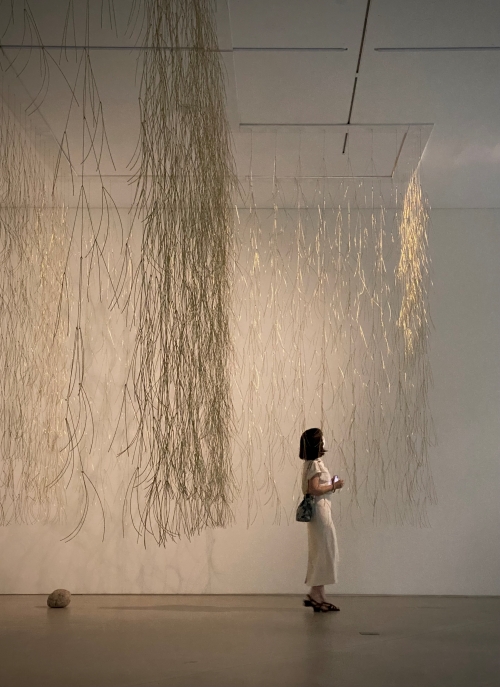
Installation view of 《Hidden Connection》 (Sikmulkwan PH, 2022) © Donghae Kim

For instance, Donghae Kim’s 2022 solo exhibition 《Hidden Connection》 consisted of installation works that visualized natural landscapes by focusing on the interactions among the numerous visible and invisible relationships that surround us.
 
Inspired by plants swaying in the wind, the artist regarded the ever-moving flow of air as a reciprocal cycle. Based on this idea, the metal installations—made of thin, lightweight wires—evoke leaves that gently move in response to the surrounding currents of air.
 
In turn, these works invite viewers to consider the correlations between the overall form and structure of the piece, while reflecting on the invisible relationships that surround them.


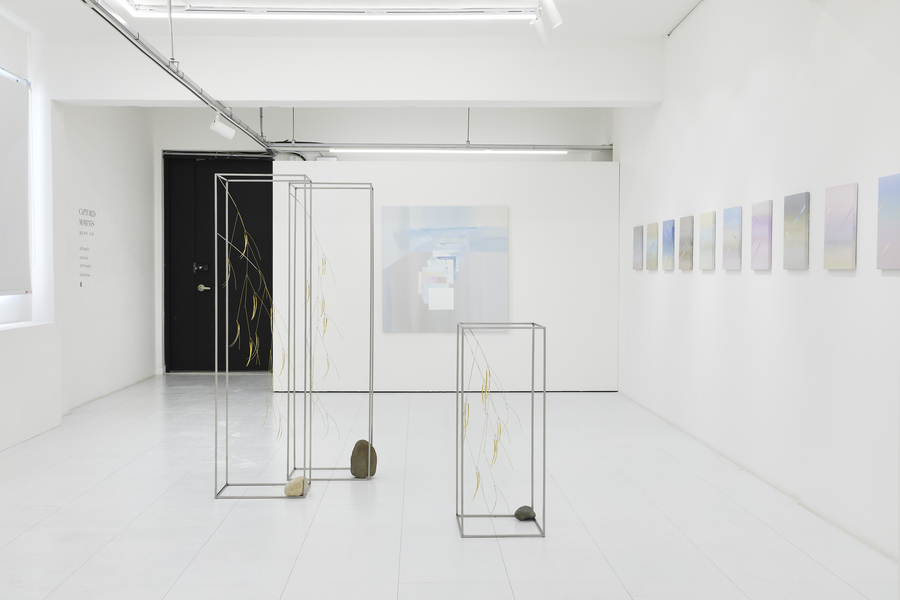
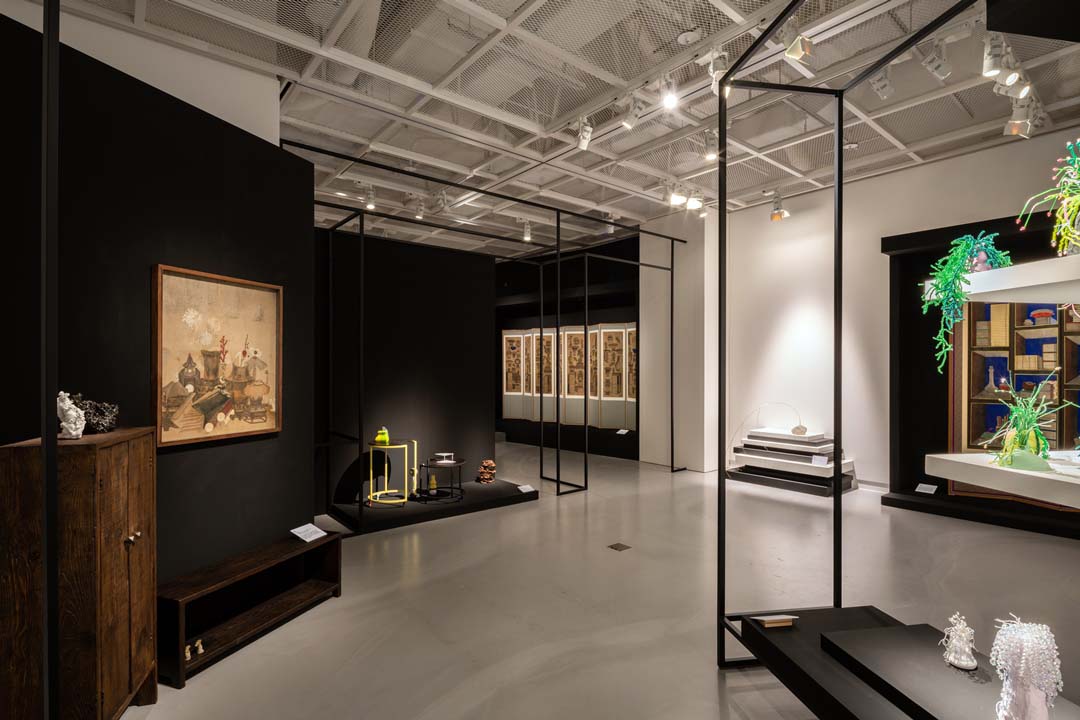
Installation view of 《Captured Moments》 (Gallery Kabinett, 2022) © Gallery Kabinett

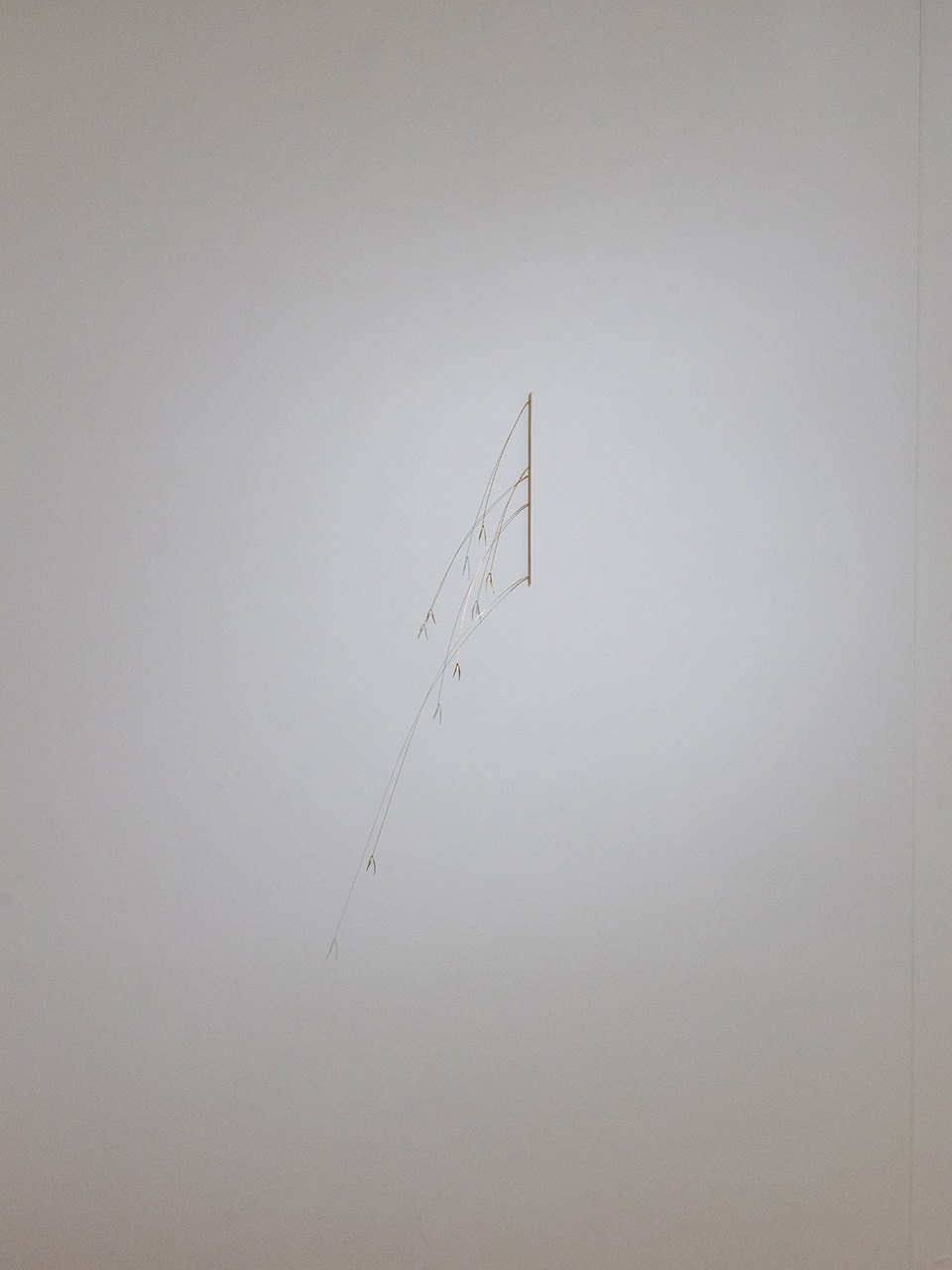
In the same year, in the group exhibition 《Captured Moments》 held at Gallery Kabinett, the artist encapsulated the flow of nature within a rectilinear frame structure.
 
From branches extending out of the frame, sculptural elements composed of slender wires and planar materials sway and glimmer in response to the movement of air, producing effects that are both visual and musical. Here, the frame signifies a domain of memory—capturing a fragment of a natural landscape.


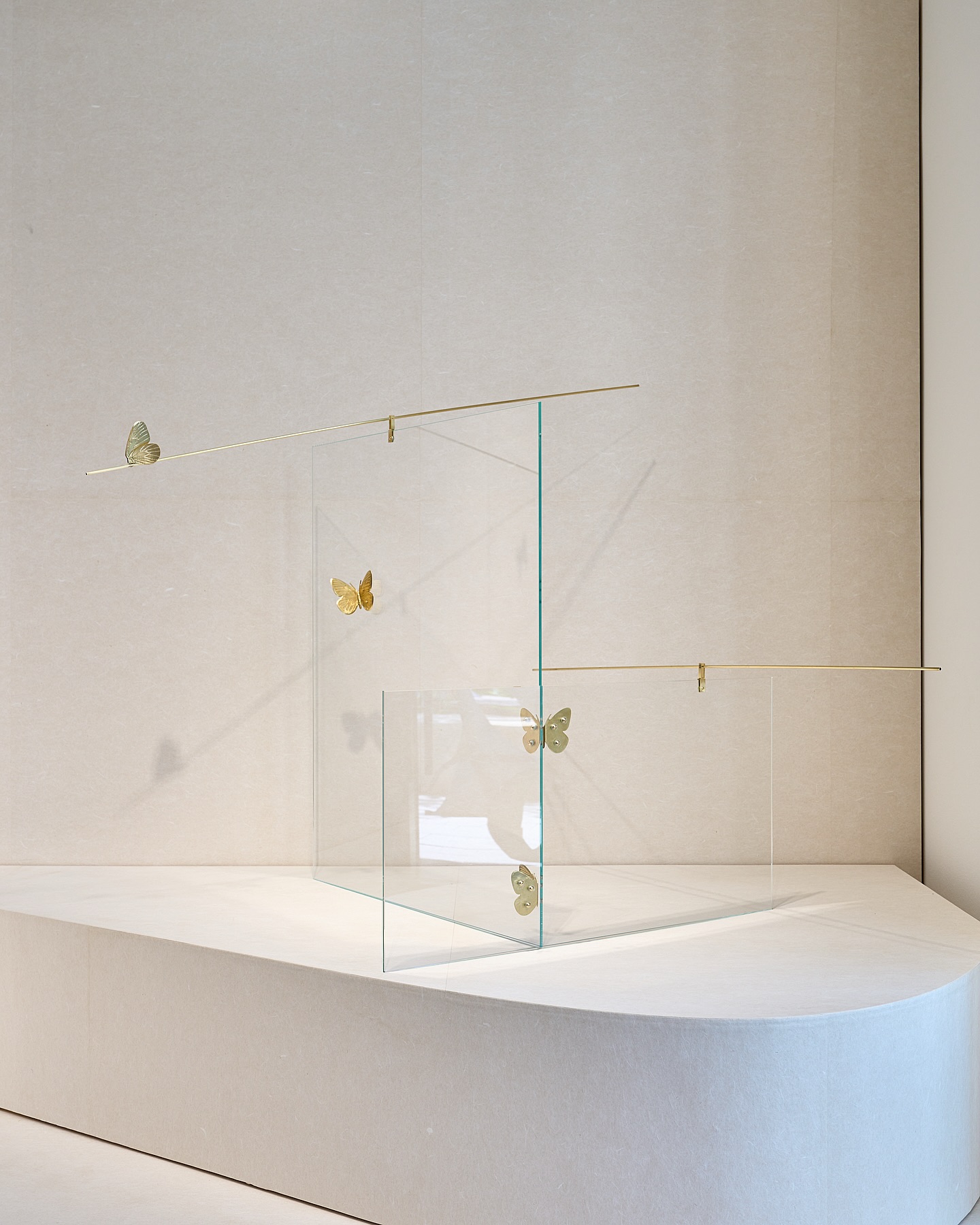
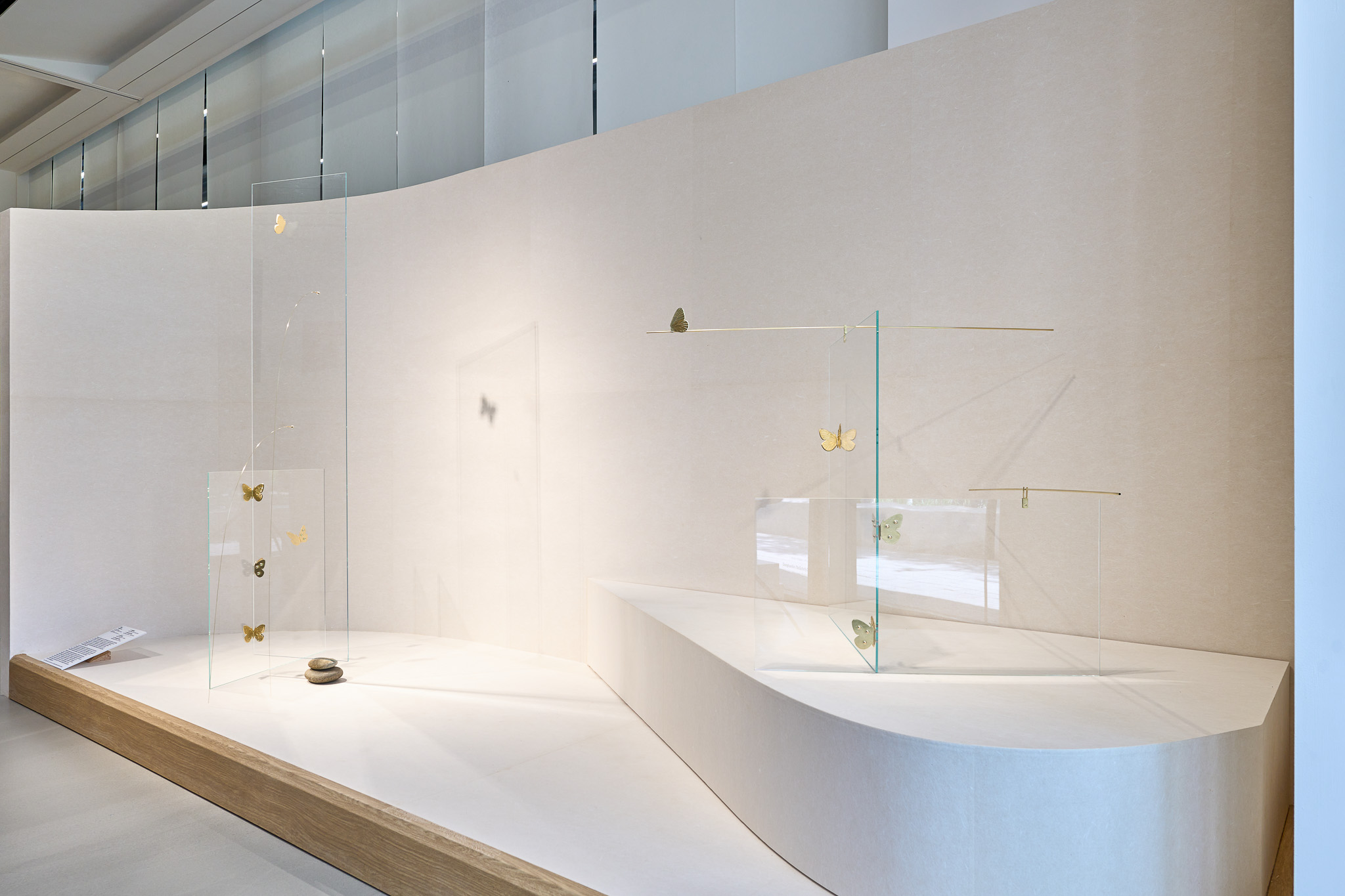
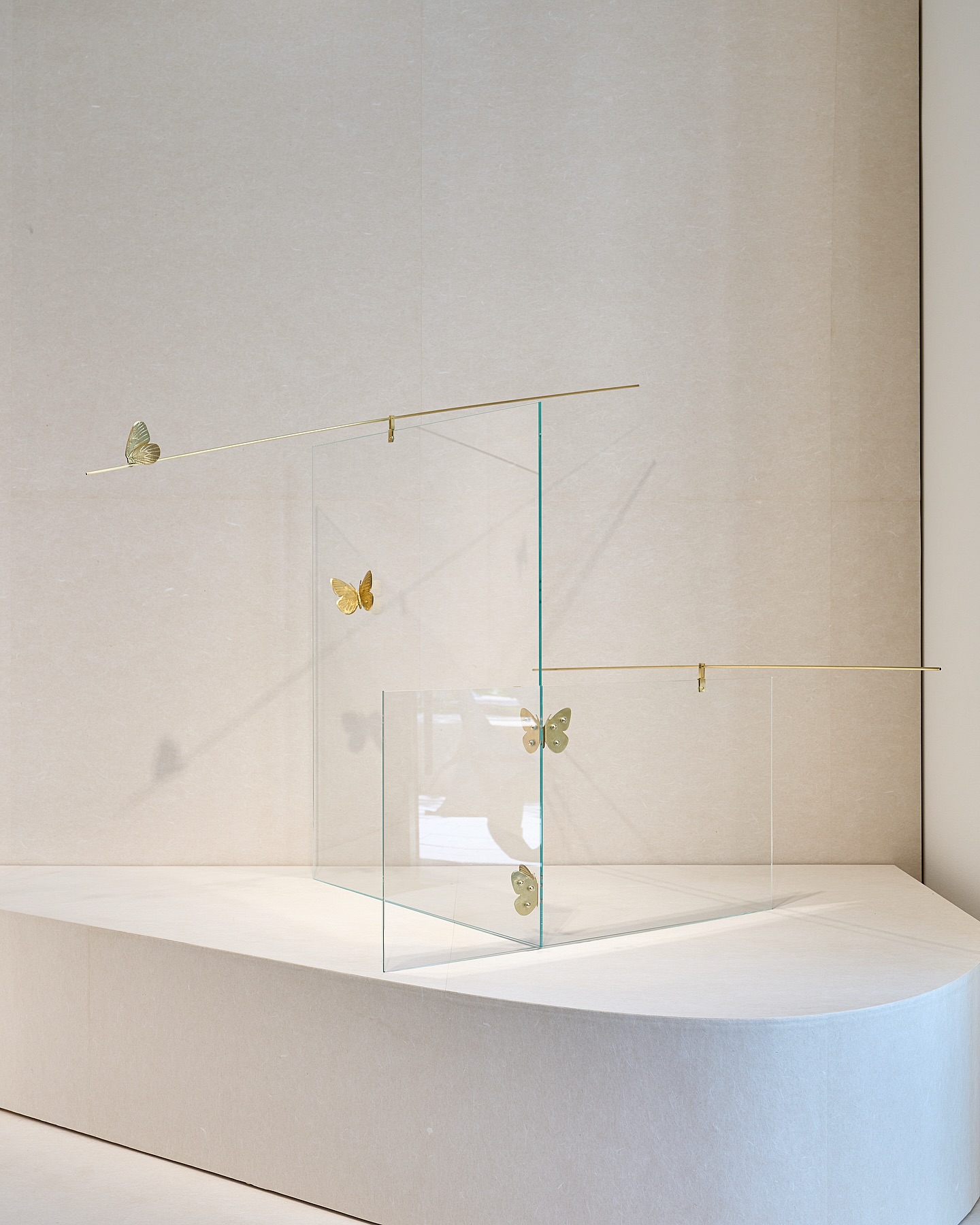
Donghae Kim, The Butterfly Dream (胡蝶之夢), 2025, Installation view of 《Bridging the Unseen》 (Wooran Foundation, 2025) © Wooran Foundation

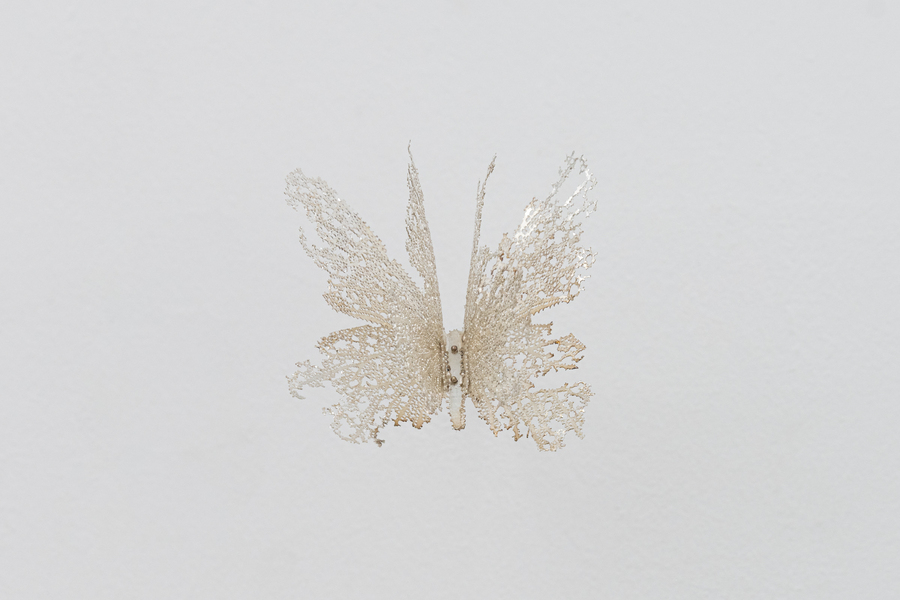
Meanwhile, The Butterfly Dream (胡蝶之夢) (2025), presented in the group exhibition 《Bridging the Unseen》 at the Wooran Foundation in 2025, takes its motif from Zhuangzi’s “butterfly dream.” This well-known parable reflects on a state in which, after dreaming of becoming a butterfly and awakening with the memory still vividly intact, the boundaries between dream and reality, and between self and other, become blurred—evoking a condition of oneness between things.
 
While his work begins from the idea that the self, nature, and the universe are not disparate entities but are interconnected as one, here the artist regards the “butterfly” as an object of longing and loss.
 
Materials such as glass and brass—seemingly heterogeneous yet fundamentally derived from nature—are organically connected with butterfly-shaped ornaments, seeking to restore a lost sense of balance while raising questions about how we confront disappearance and connection.


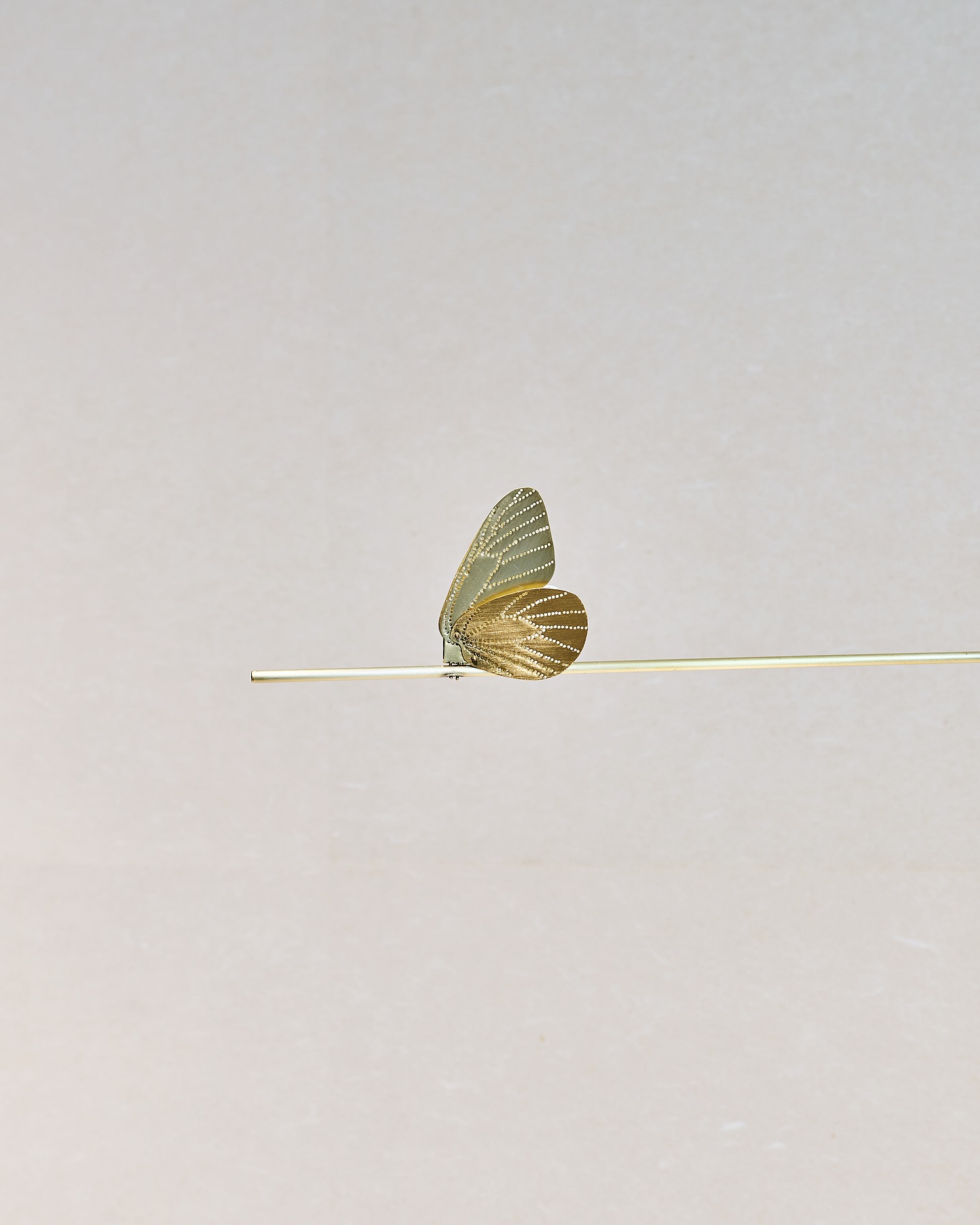
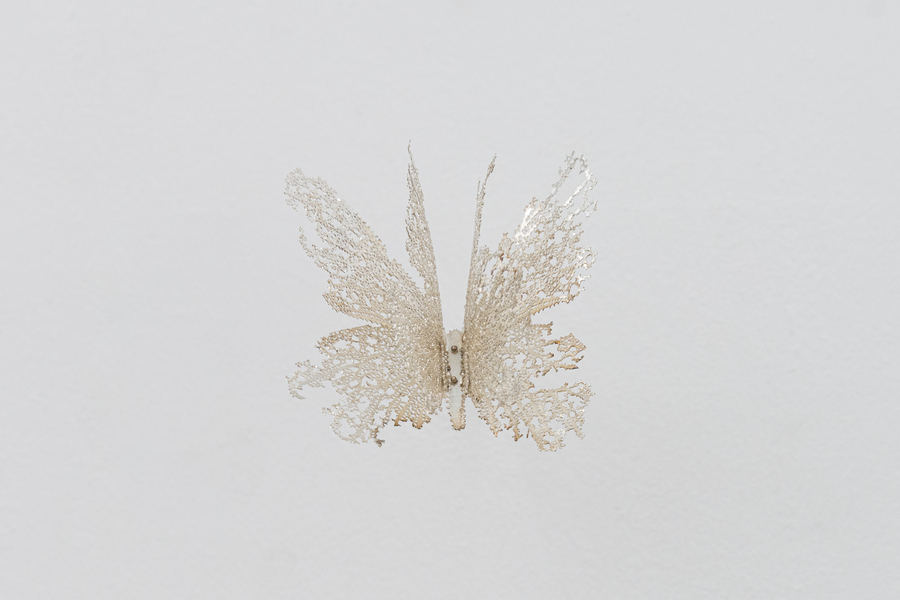
Donghae Kim, The Butterfly Dream (胡蝶之夢) (detail), 2025, Installation view of 《Bridging the Unseen》 (Wooran Foundation, 2025) © Wooran Foundation

According to the artist, the “butterfly” in this narrative refers not only to the butterfly before our eyes, but also to those on the brink of extinction. For him, endangered butterflies symbolize small beings that are neglected and marginalized due to human indifference. In this sense, in The Butterfly Dream (胡蝶之夢), the butterfly embodies a sense of longing, loss, and affection for that which can no longer be seen.


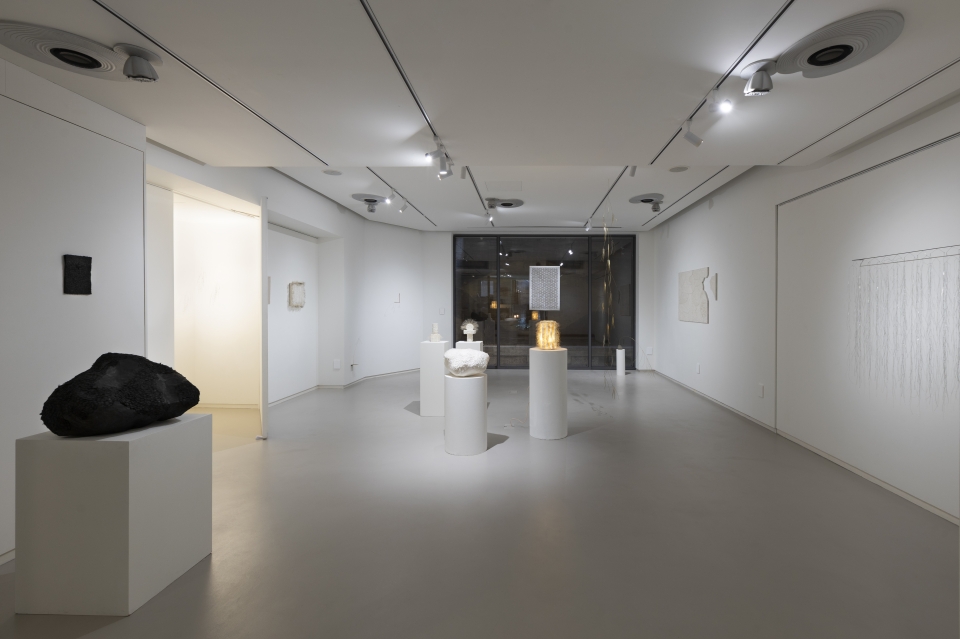
Installation view of 《Silent Entanglement》 (Gallery SoSo, 2025). Photo: Jungwoo Lee. © Donghae Kim

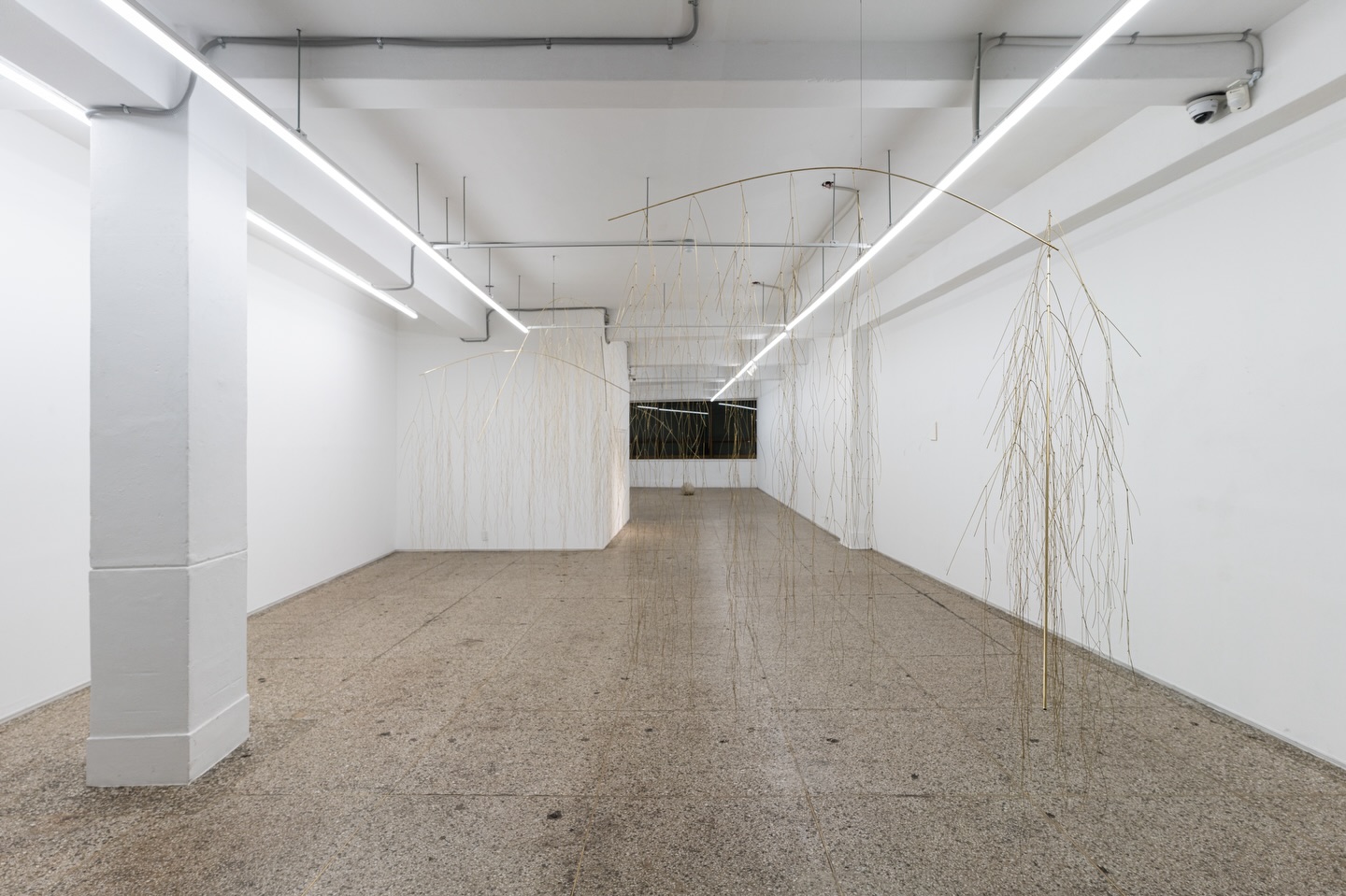
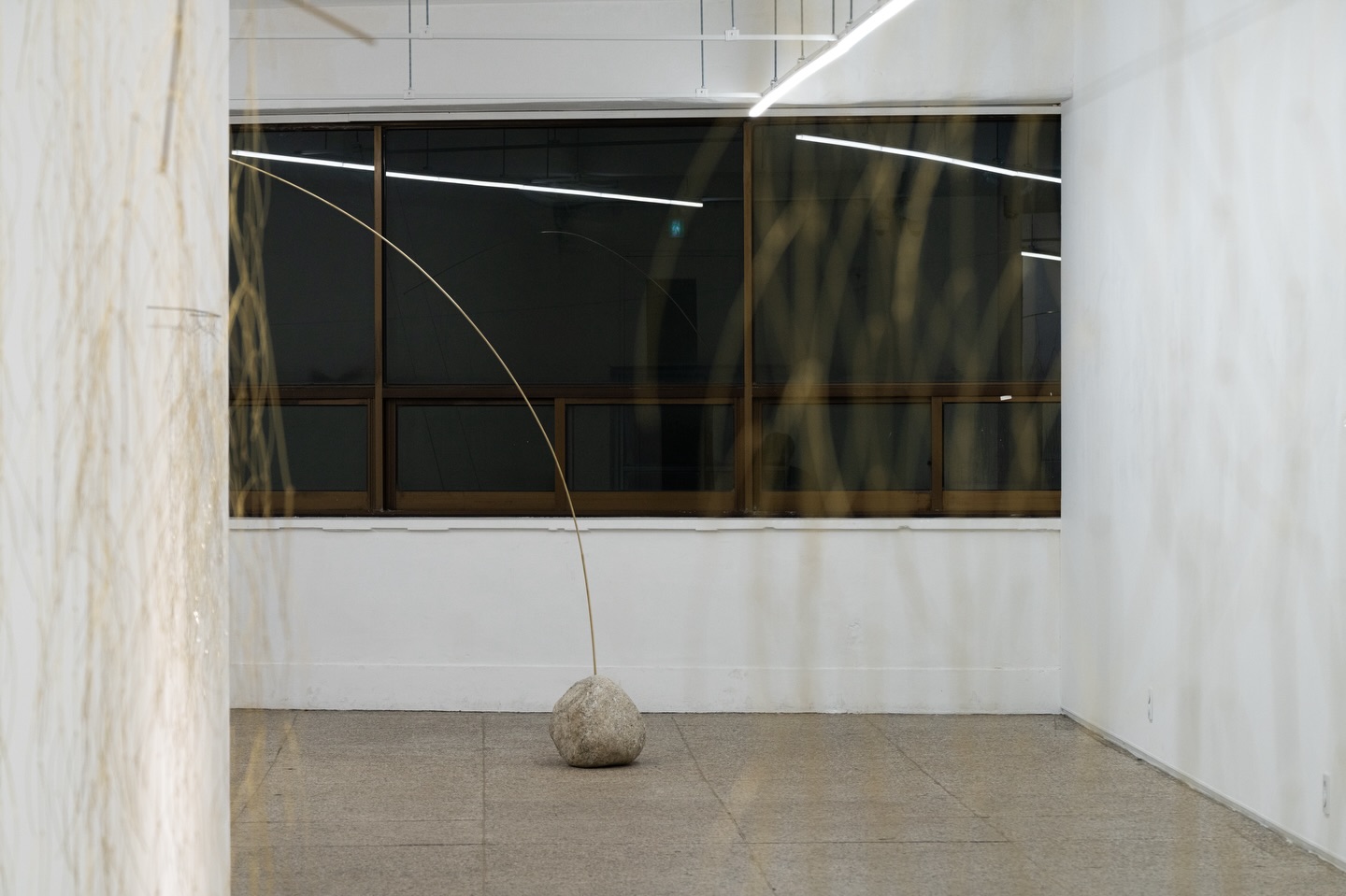
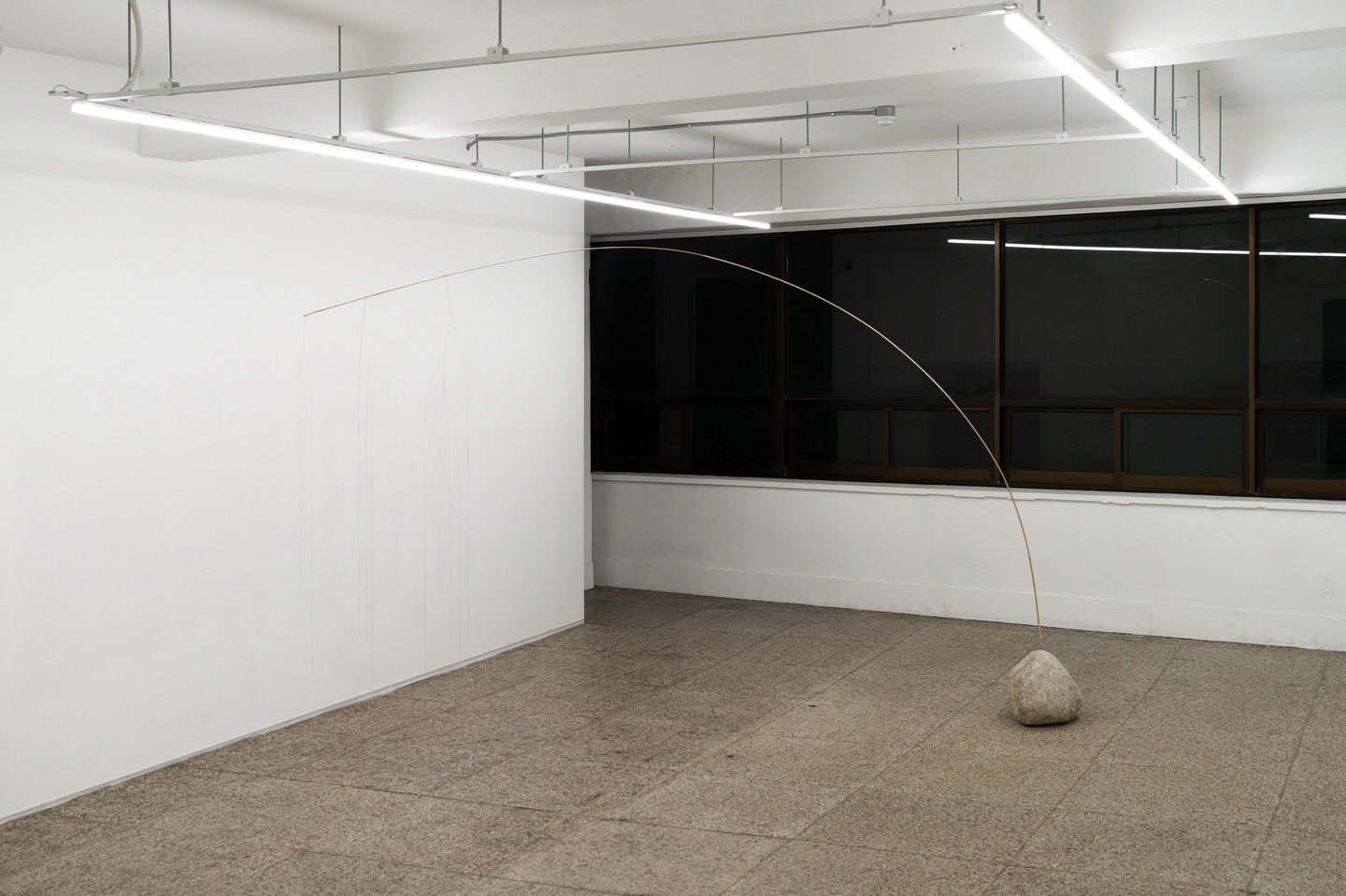
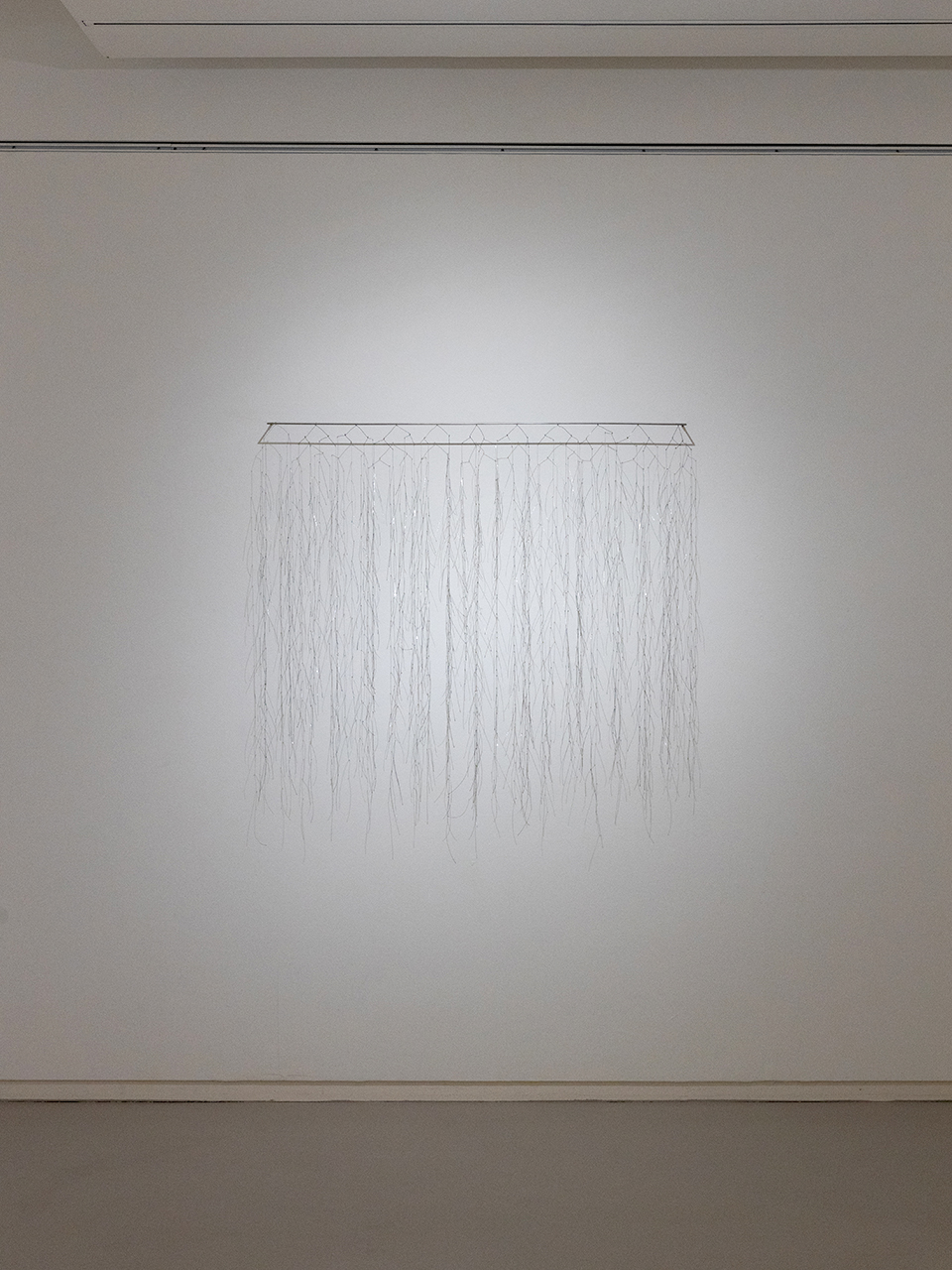
Meanwhile, his 2025 solo exhibition 《Silent Entanglement》, held at Gallery SoSo, offered an overview of Kim’s practice, which has explored the complementary relationships among numerous elements by drawing immaterial forces—such as time, space, light, wind, and the latent weight within objects—into his work through the medium of metal.
 
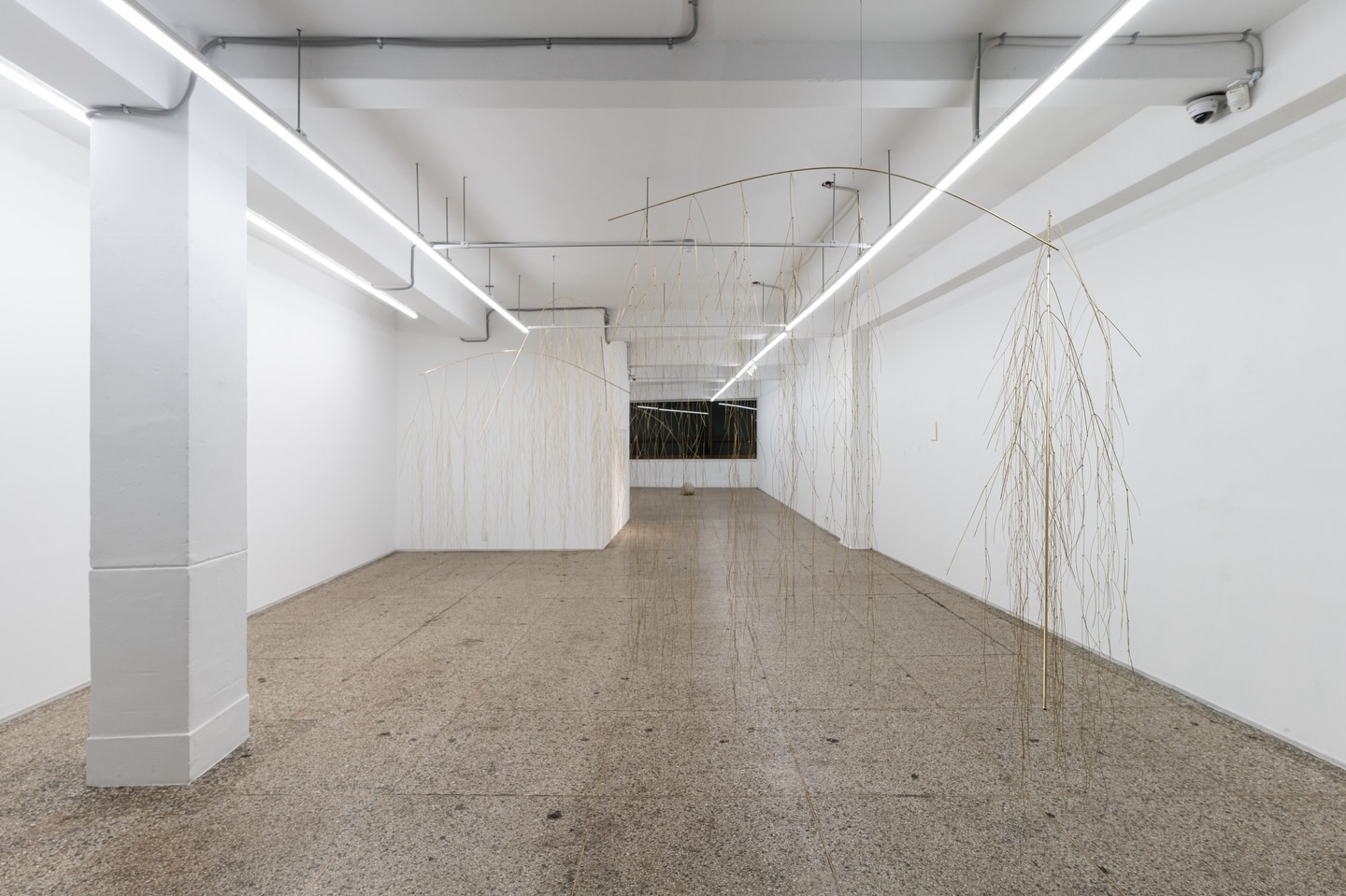
The installation, extending its branches from the center of the exhibition space, may evoke the image of a willow tree. However, it goes beyond merely imitating its form, focusing instead on an open structure that embraces the external world—elements such as wind and light, in other words, the “other.”


Installation view of 《Silent Entanglement》 (Gallery SoSo, 2025). Photo: Jungwoo Lee. © Donghae Kim

The artist notes that the word “punggyeong” (風景; landscape) is composed of the characters for wind (風) and light (景), and expresses his desire to evoke landscapes shaped by the entanglement of immaterial elements through his work. Accordingly, although he works with metal, his practice challenges the conventional notion of the material as rigid and unchanging, instead revealing its capacity for transformation—crumpling, rusting, or bending under its own weight—as it interacts with various natural forces.


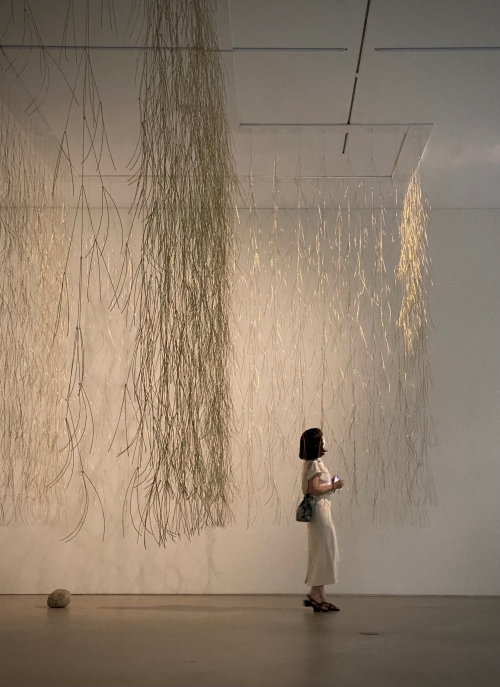
Installation view of 《Silent Entanglement》 (Gallery SoSo, 2025). Photo: Jungwoo Lee. © Donghae Kim

Thus, his works are not completed solely at the artist’s fingertips; rather, they continue to respond to and transform with their surroundings. Such scenes resemble natural landscapes that constantly move, breathe with their environment, and permeate one another.
 
Each material becomes a tangible metaphor for an unseen web of relations, while the subtle vibrations formed between light and shadow generate a field where disappearance and persistence, movement and stillness coexist. Furthermore, the empty spaces that emerge through the process of filling and clearing the space are not voids devoid of meaning, but living zones into which the unknown permeates.


Donghae Kim, Lines in Descent (detail), 2025, Iron, stainless steel, 95x100x10cm © ThisWeekendRoom

In this way, Donghae Kim’s work is not completed as a self-contained object; rather, its meaning emerges through the complex interplay of various material and immaterial elements—such as surrounding air, wind, light, and the presence of the viewer.
 
This approach stems from the artist’s subjective experiences and impressions of the ever-shifting flow of nature and the cycle of life and death. By connecting these to his sculptural actions, he explores how fragments of memory created through the act of making breathe between the viewer and the space, and what kinds of flows they generate.
 
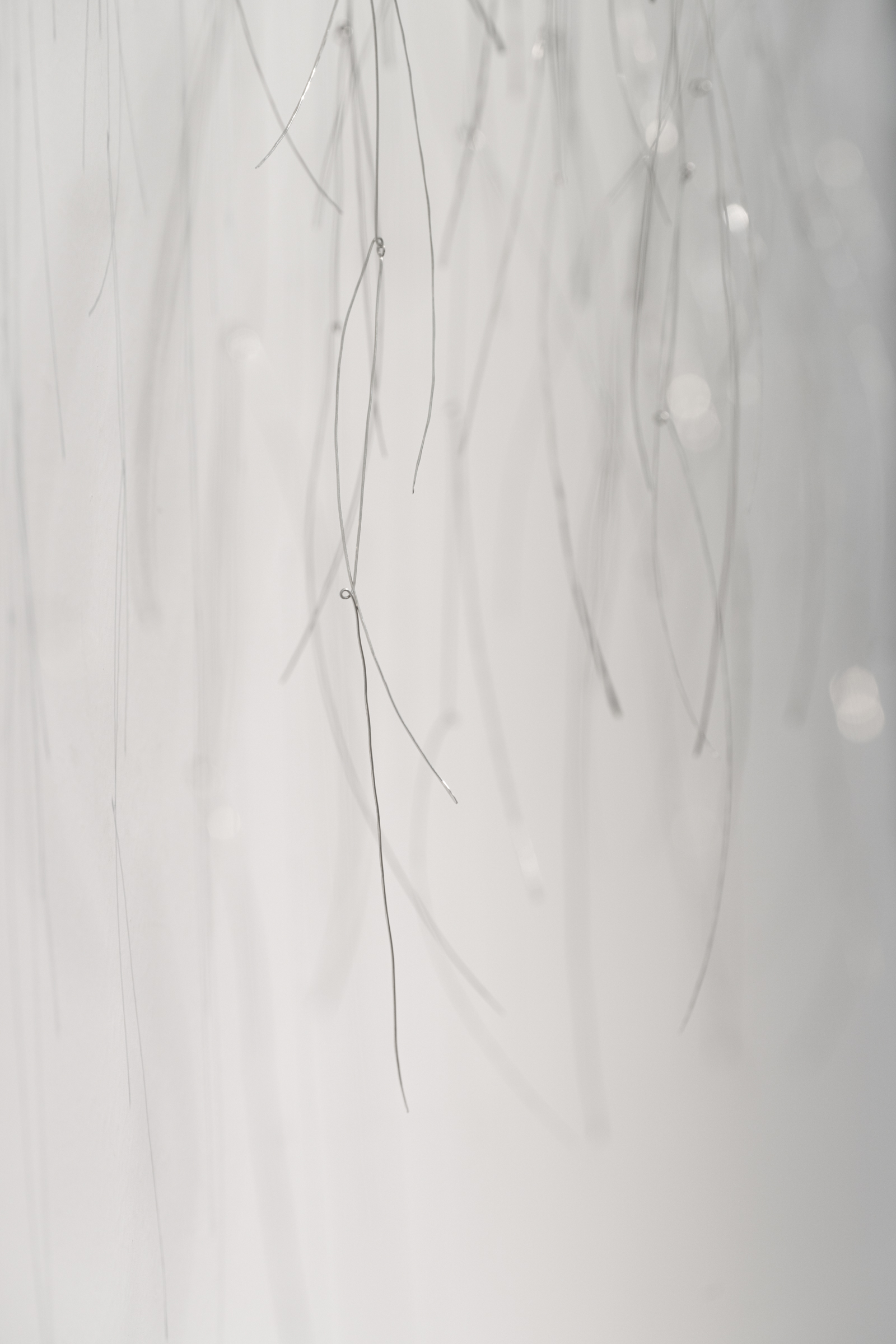
His work renders perceptible the often-invisible connections among the many elements that surround us. Through gently swaying metal leaves, one senses the movement of air; through light reflected on metal surfaces, the warmth of midday; and through metal strands hanging downward, the grounded sensation of one’s feet in contact with the floor.


Donghae Kim, Where presence fades, 2025, Sterling silver(925), 7x8x5cm © ThisWeekendRoom

"While wandering through nature, there are moments when both the eye and the body come to rest upon a scene that feels at once familiar and unfamiliar. A moment that may be nothing more than a fleeting illusion—when I breathe in tandem with the external world and sense that my own perceptions and consciousness are connected to nature.
 
A poetic moment in which I encounter an unfamiliar self as part of a vast cycle and rhythm. Capturing such moments of experience remains vividly in my memory and gives rise to sculptural inspiration.” (Donghae Kim, Artist’s Note)


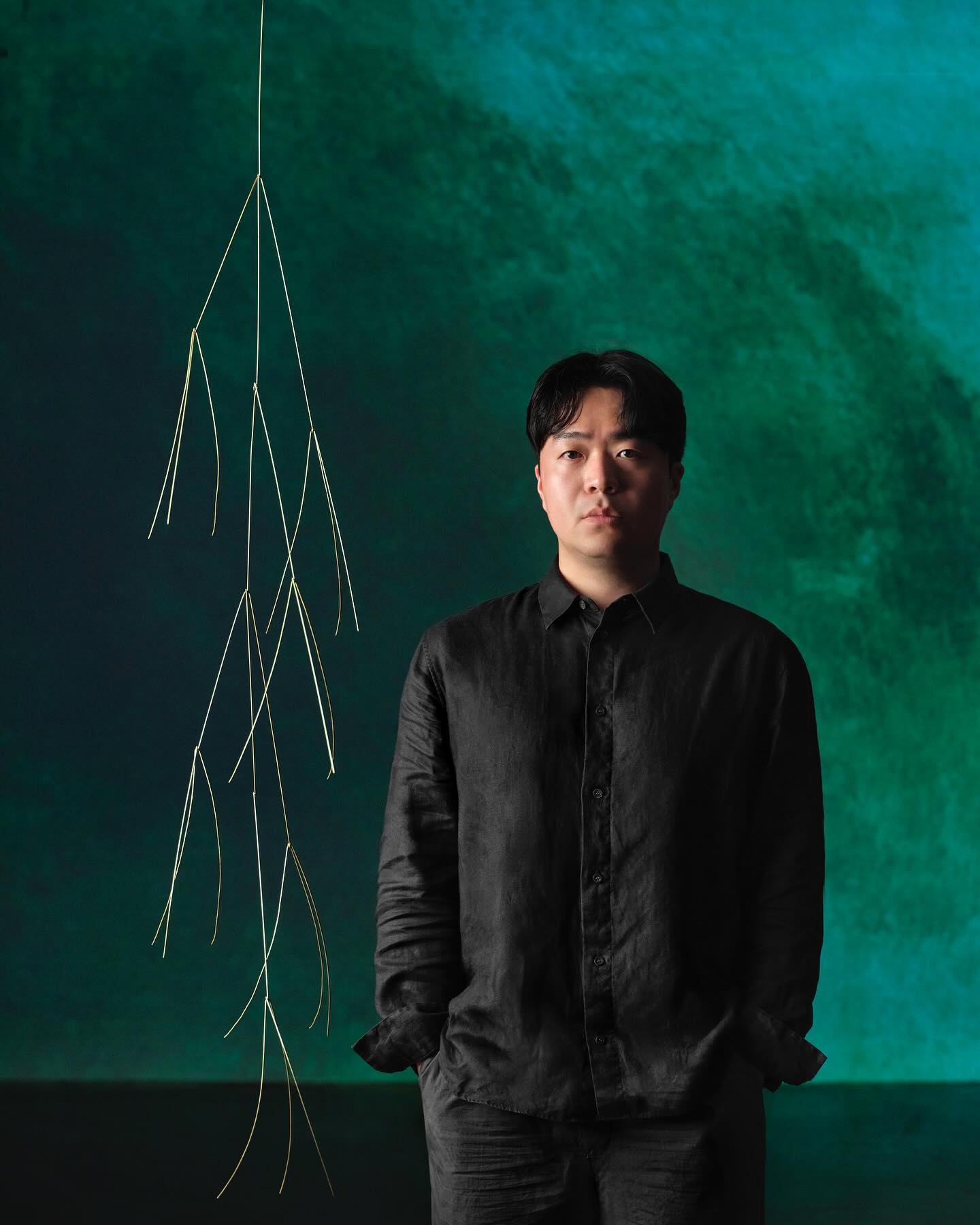
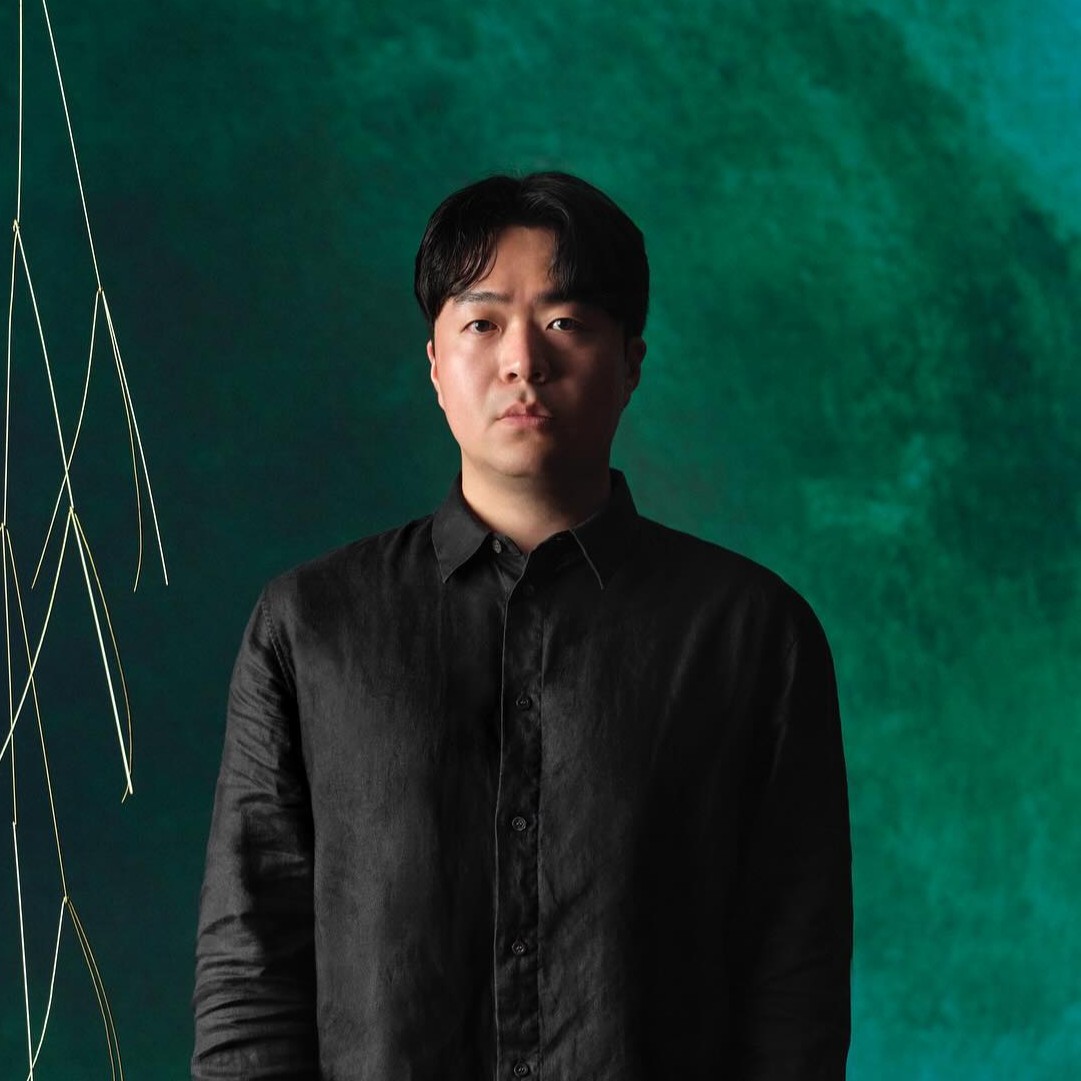
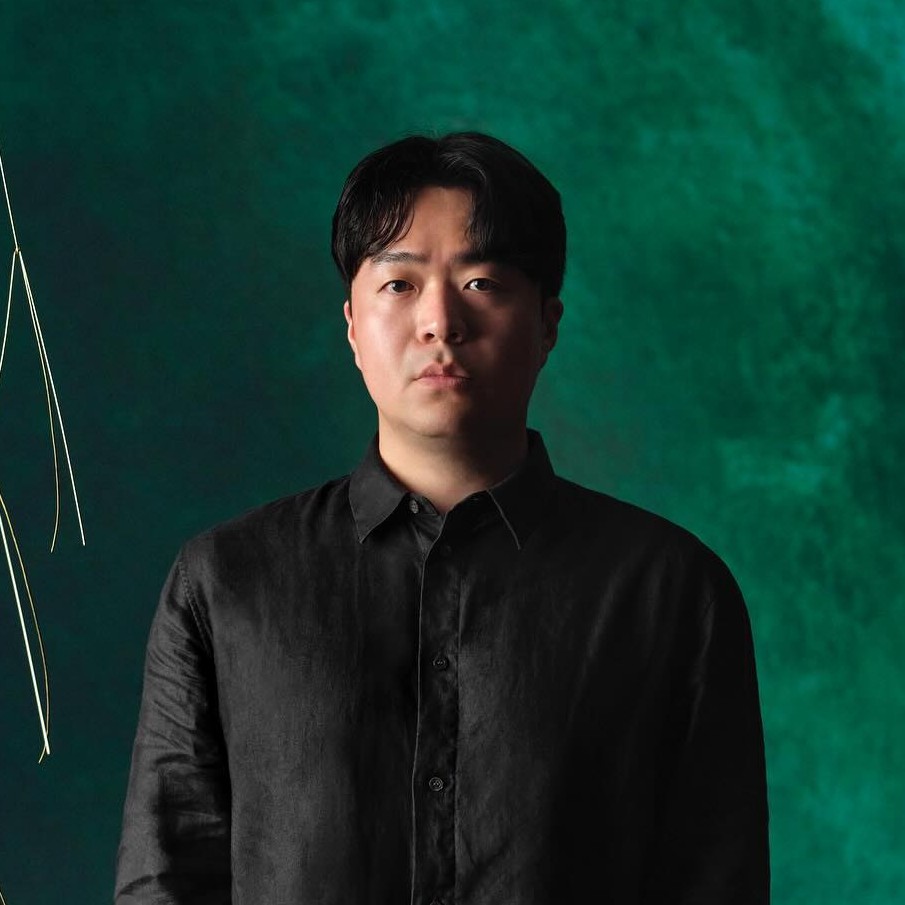
Artist Donghae Kim © Donghae Kim

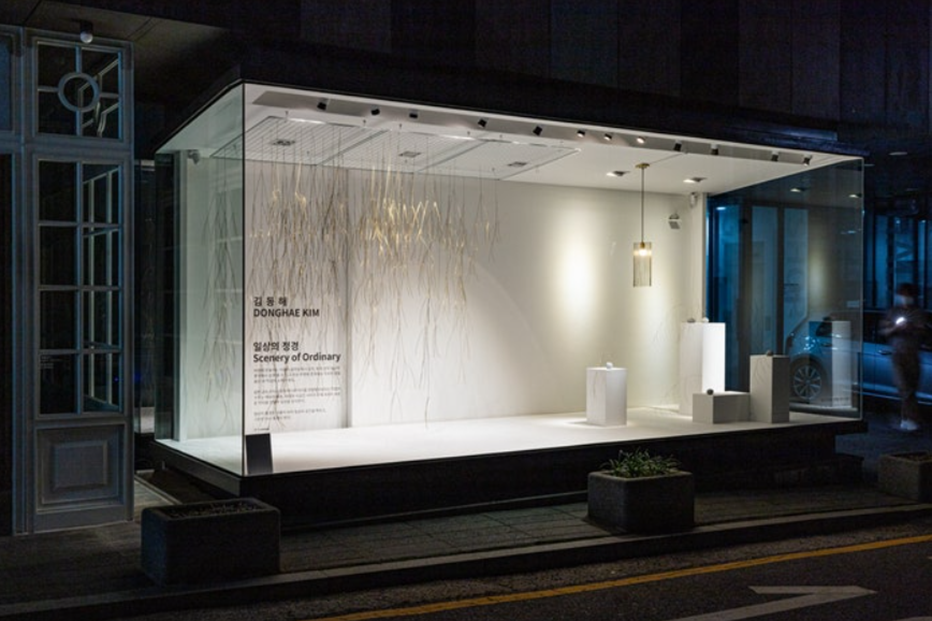
Donghae Kim received his BFA in Metalwork and Jewelry from Kookmin University and his MFA from the same institution. His solo exhibitions include 《Silent Entanglement》 (Gallery SoSo, Seoul, 2025), 《Hidden Connection》 (Sikmulkwan PH, Seoul, 2022), and 《Scenery of Ordinary Life》 (KCDF Window Gallery, Seoul, 2021).
 
He has also participated in numerous group exhibitions, including 《Night, and Then》 (Gallery Jiwooheon, Seoul, 2026), 《MICRO HISTORY》 (Space-so, Seoul, 2025), 《Bridging the Unseen》 (Wooran Foundation, Seoul, 2025), 《Meets: A Timeless Harmony》 (Changdeokgung Palace Complex, Seoul, 2024), 《Parallax》 (Caption Seoul, Seoul, 2024), 《Rabbit Hole》 (Boan1942, Seoul, 2023), and 《Captured Moments》 (Gallery Kabinett, Seoul, 2022).
 
In 2013, Kim was selected for the award program of the Cheongju International Craft Biennale, 《Something Old Something New》.
References