Kim
Eunseol’s practice begins with a fundamental question about the sense of
“listening.” Although she uses a hearing aid, her experience of perceiving the
world through vision and other senses rather than relying on hearing leads her
to understand sound and language not as fixed systems but as sensory
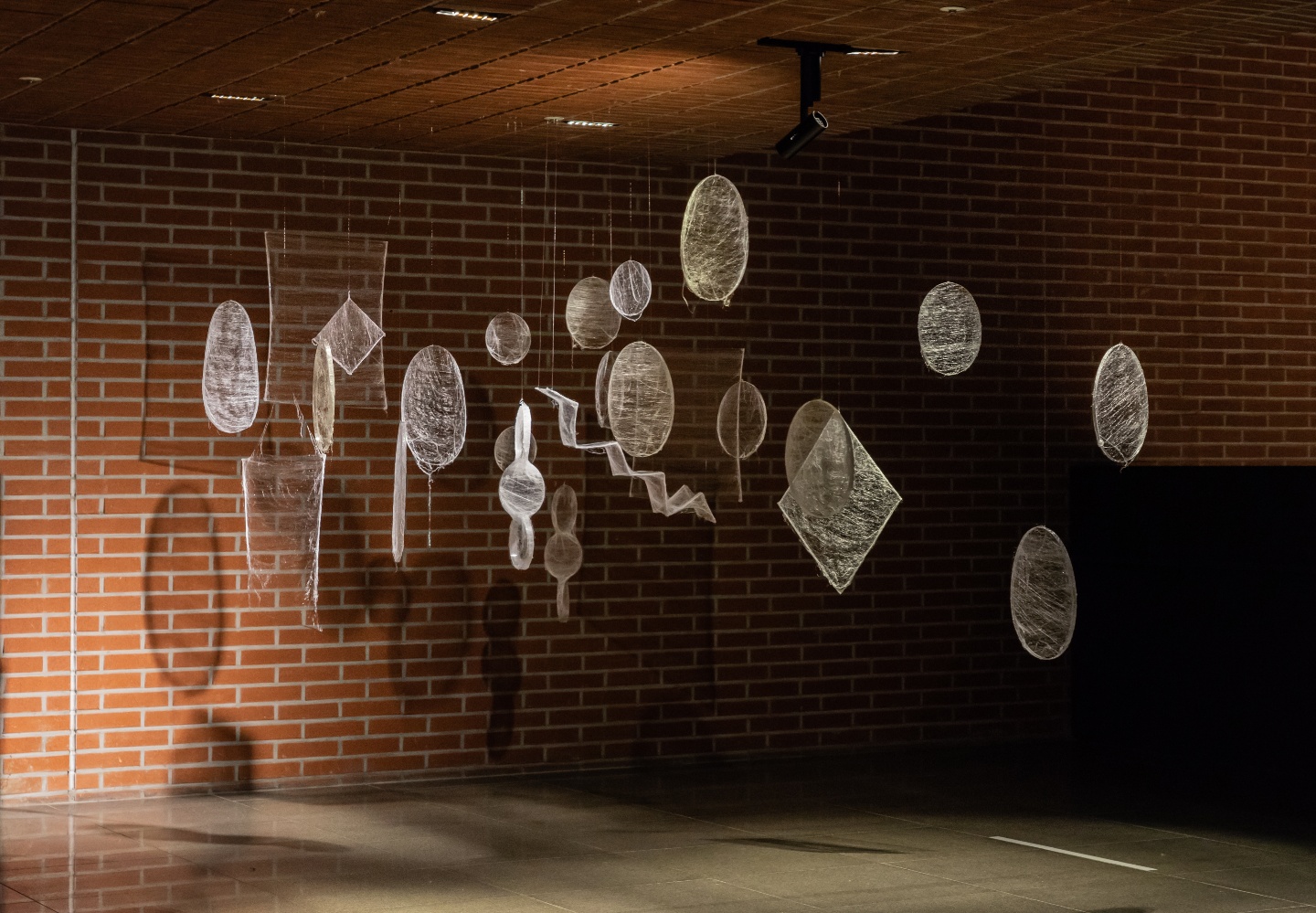
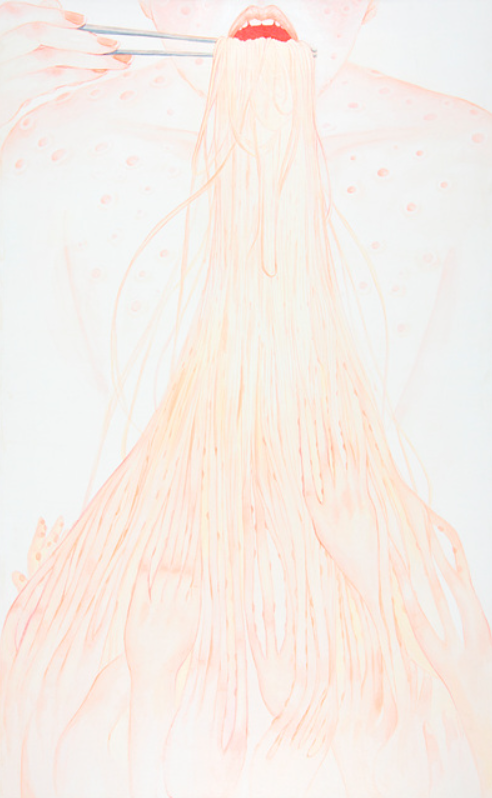
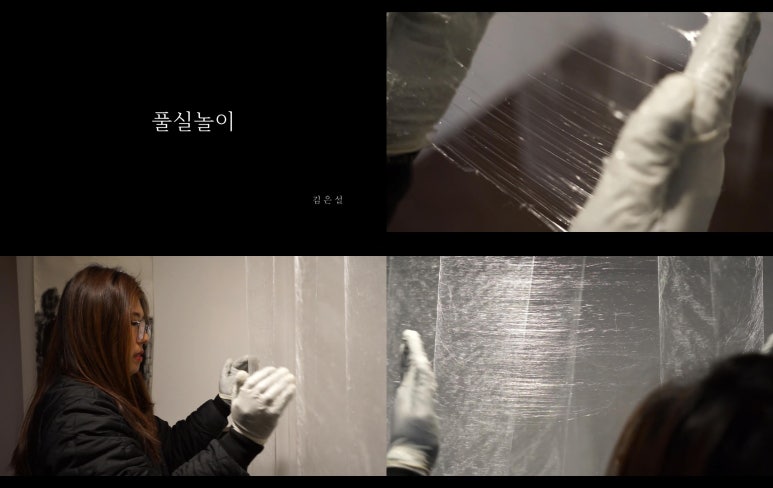
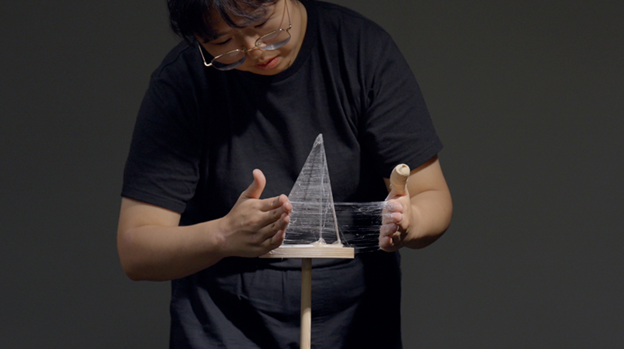
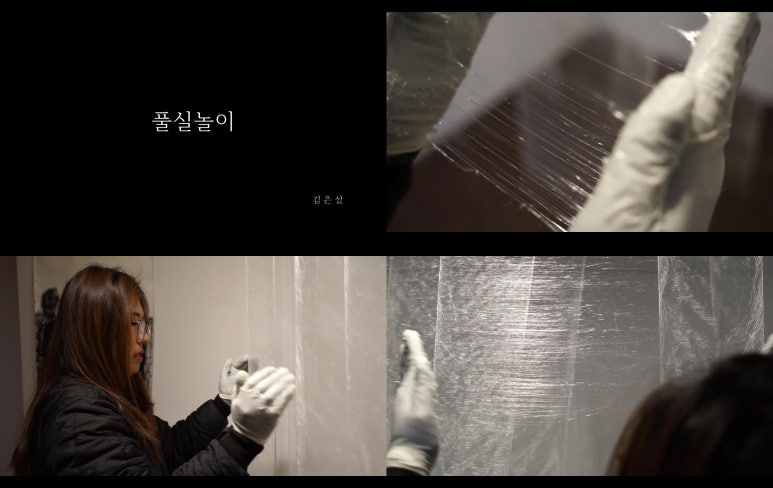
relationships. As seen in her early ‘Glue Play’(2016~) series and the solo
exhibition 《Glue Play》(Rund Gallery, Seoul, 2019), she translates the invisible exchanges
between people into the form of sticky threads, exploring the instability and
repetition of forming relationships. Here, the act of “attaching and detaching”
functions not merely as a physical condition but as a device that reveals the
subtle tensions and emotional flows within human relationships.
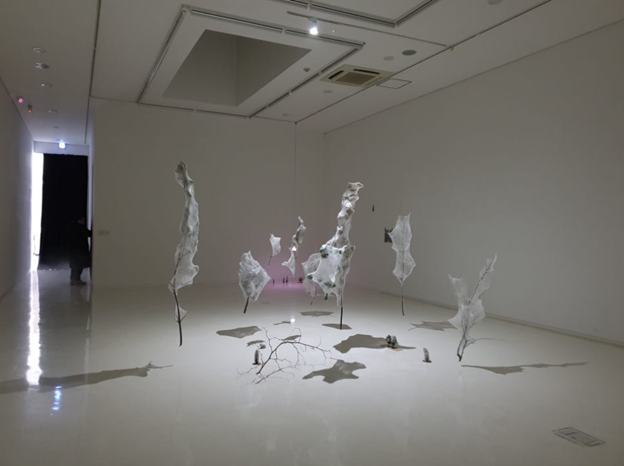
In her
second solo exhibition 《Thicket》(Cheongju Art Studio, Cheongju, 2020), this exploration of
relationships expands into a more internal dimension. Through the imagery of
tangled vines and dense forests, the artist reveals an ambiguous state between
self and other, isolation and connection. Unrevealed inner thoughts, concealed
emotions, and self-chosen isolation along with the anxiety it produces are
visualized through the metaphor of the “thicket.” This suggests that identity
is not a fixed entity but a condition that is constantly shifting and being
reconfigured.
In her
recent work, this line of inquiry shifts toward the issues of “language” and
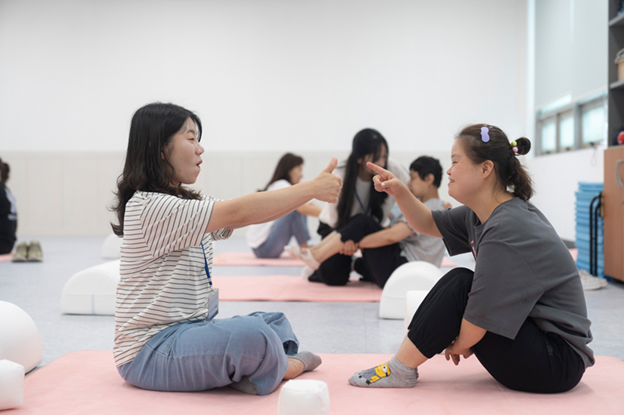
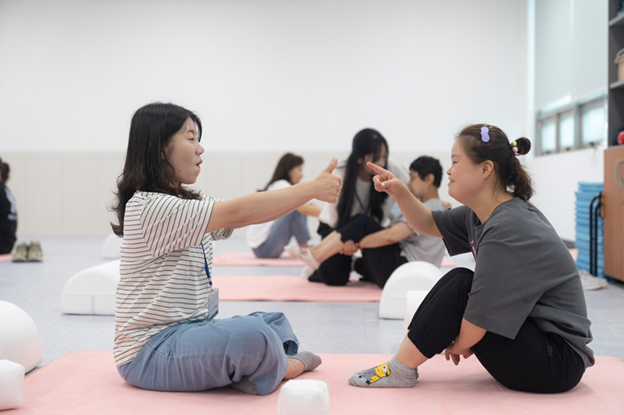
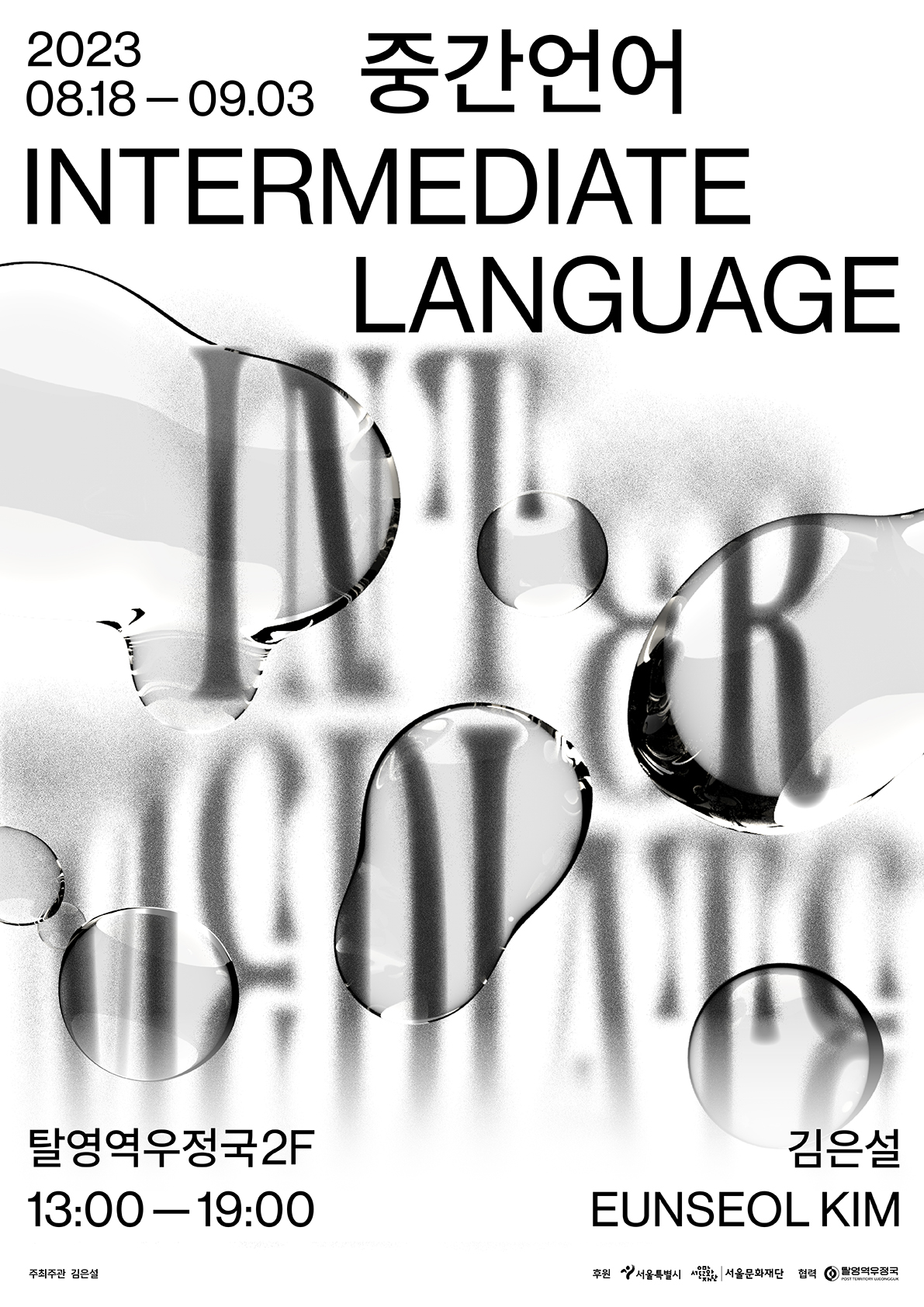
“communication.” In her third solo exhibition 《Intermediate Language》(Post Territory
Ujeongguk, Seoul, 2023), the artist presents the possibility of a new language
that connects the “world of hearing” and the “world of not hearing,” based on
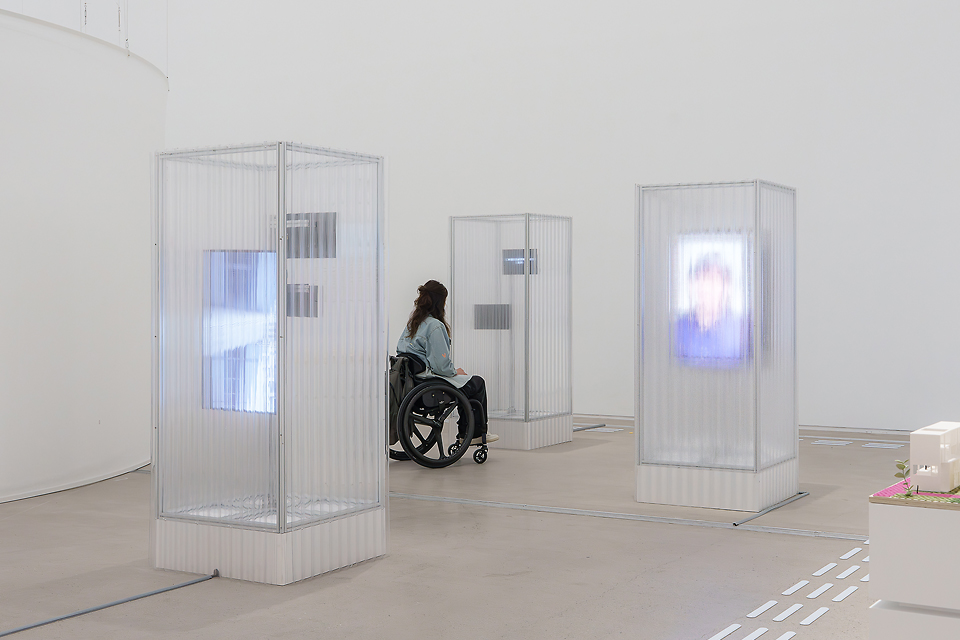
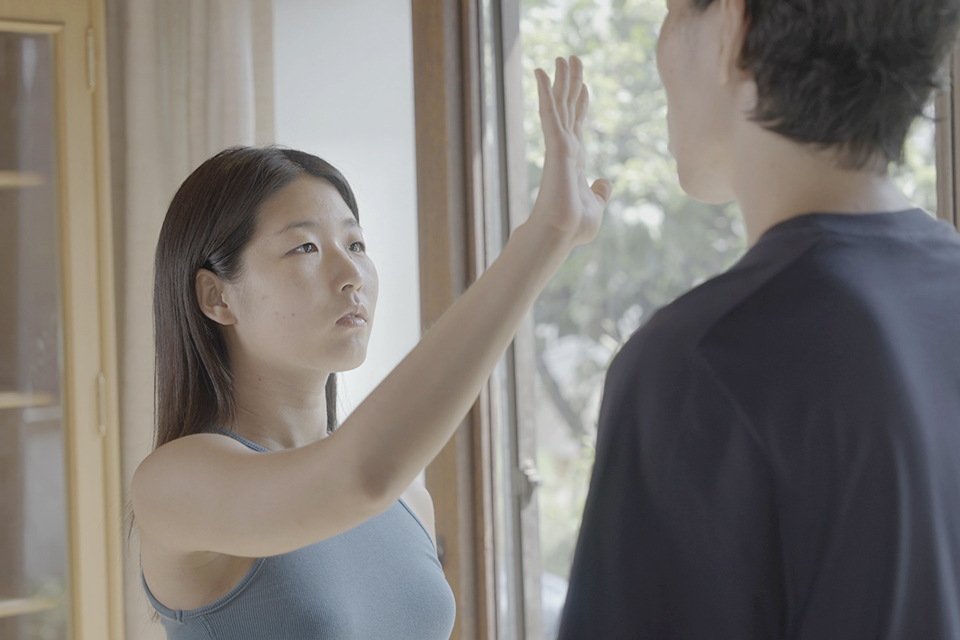
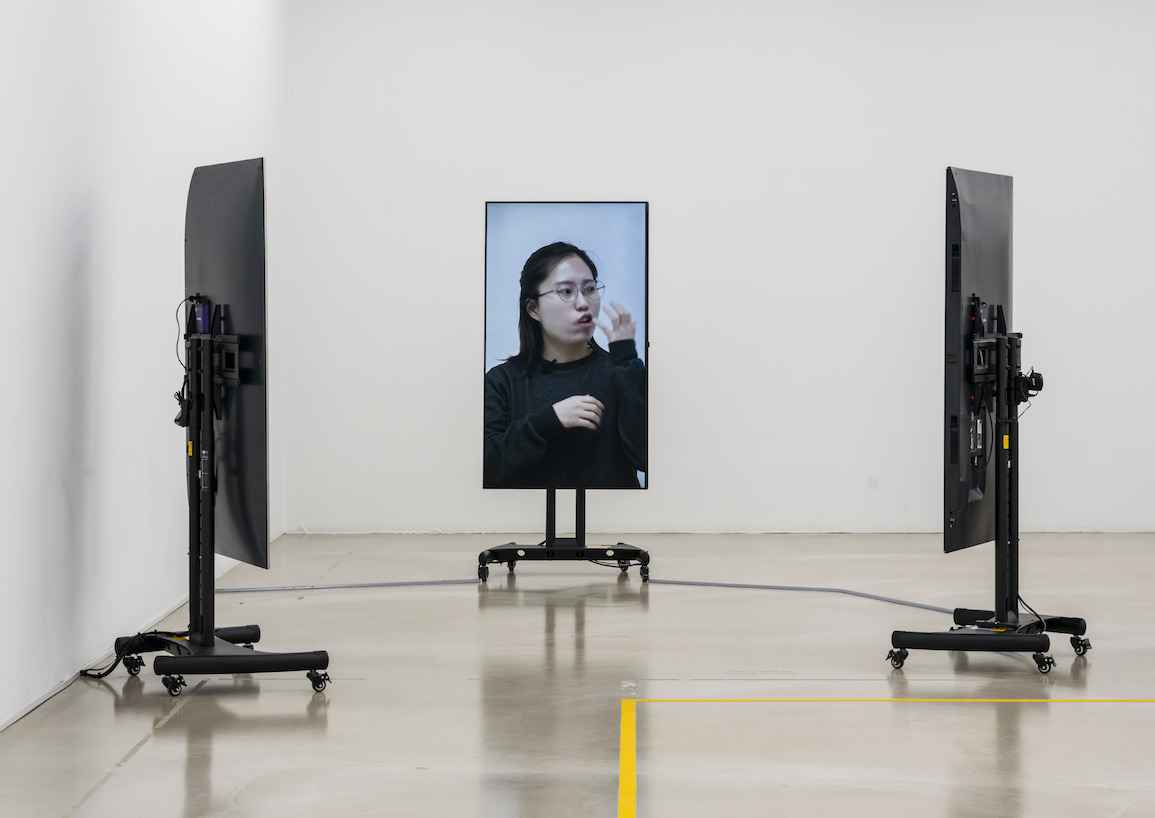
her own sensory experience of moving between the two. In works such
as Conversations with Vibrating
Bodies(2023), Seeing, Yet Unseen
Language(2021), and The Silent Sound(2022),
language is no longer confined to voice or text, but expands into bodily
vibrations, visual afterimages, and tactile experiences.
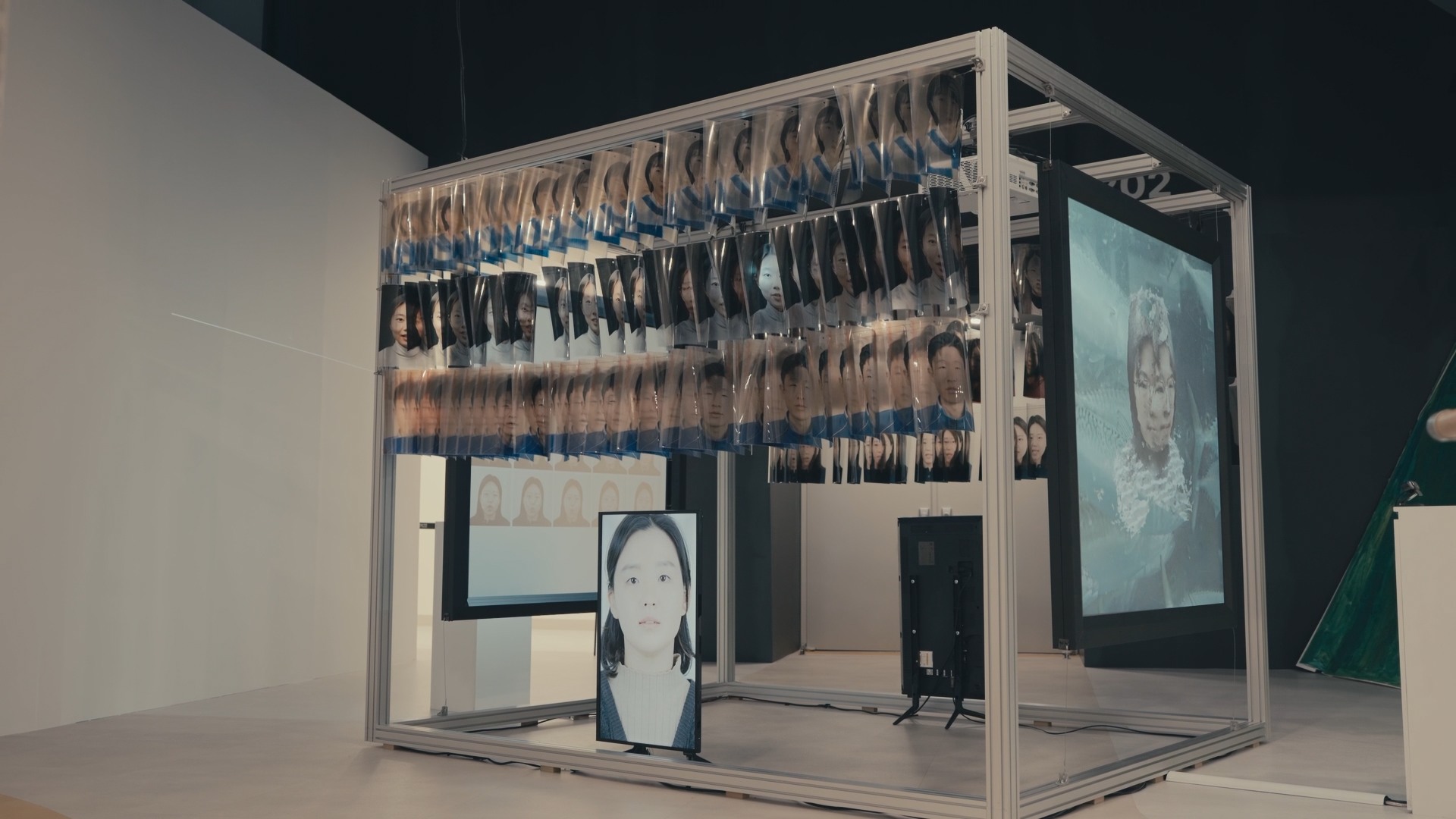
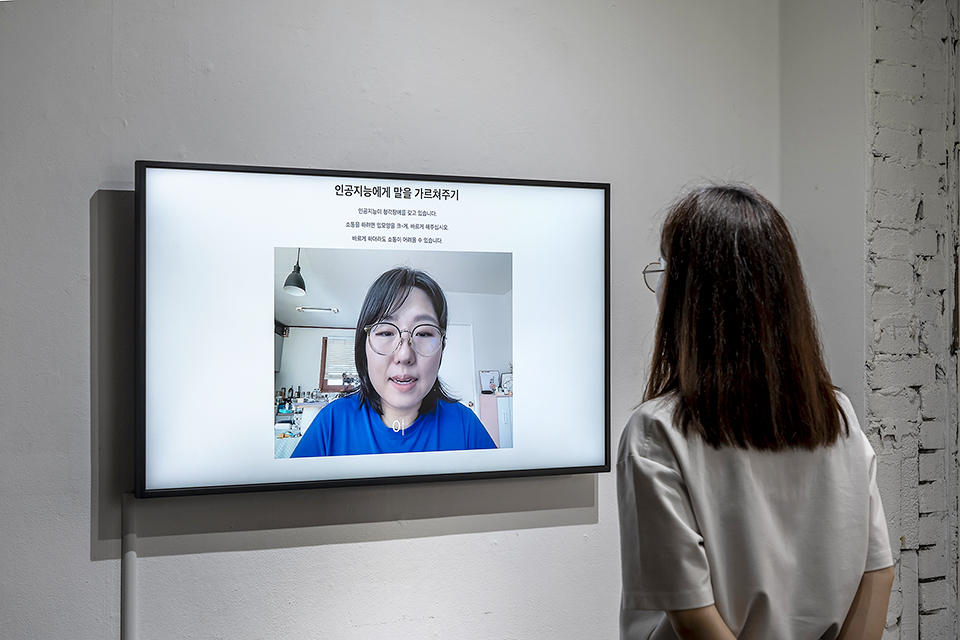
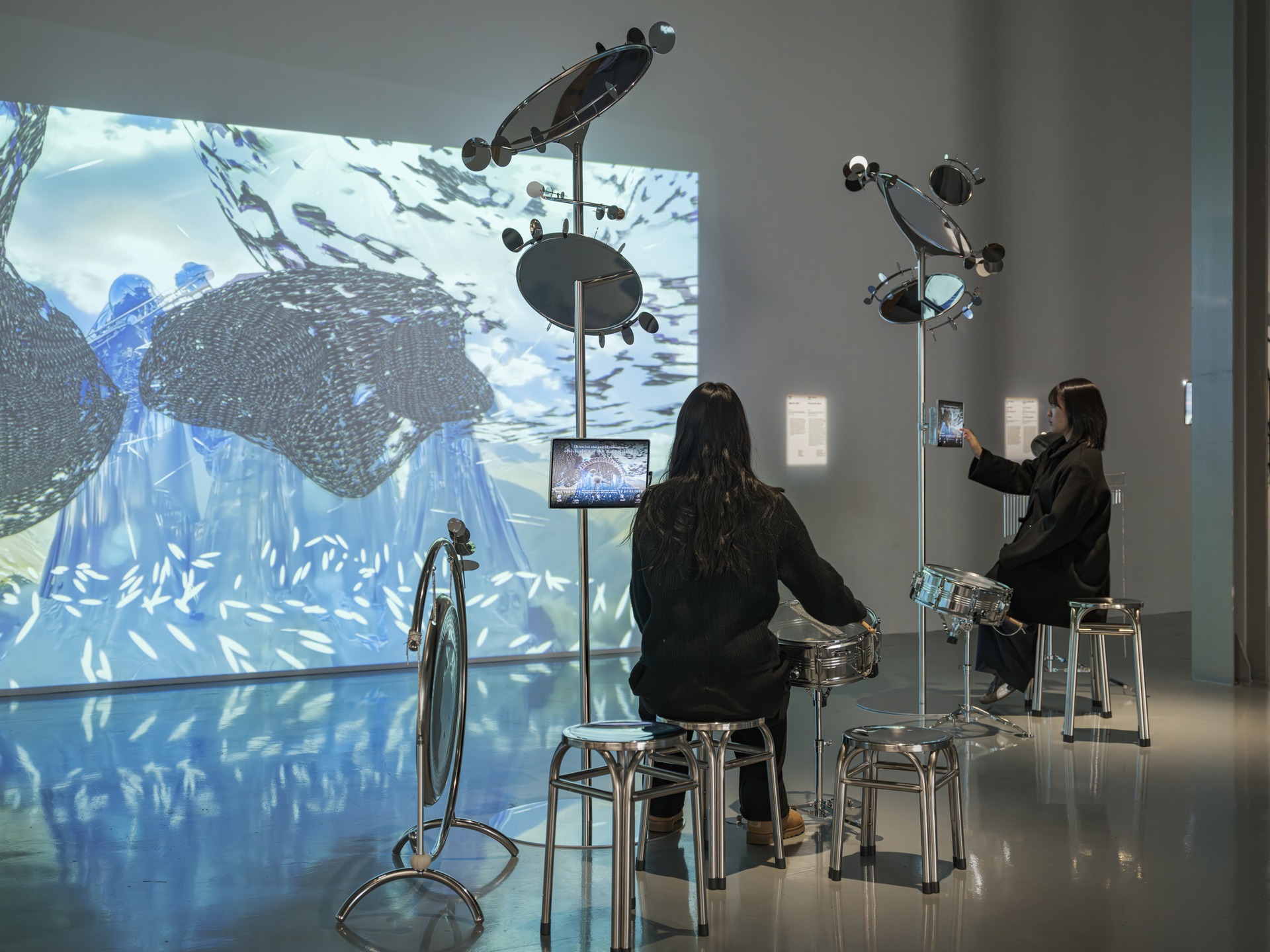
This
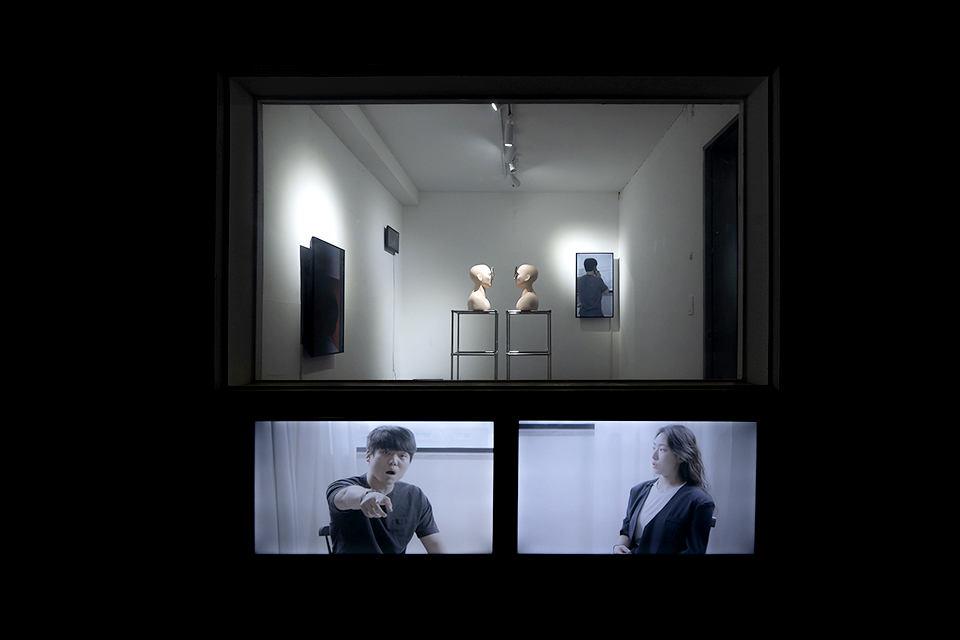
trajectory continues in AI Language Learning with Auditory
Impairment(2022) and AI Language Learning with Auditory
Impairment #2(2024–2025), extending into questions about how both
humans and non-humans learn language. The artist overlaps her own experience of
learning communication through lip movements and linguistic habits with the way
artificial intelligence infers language based on data, revealing the
misalignments and incompleteness inherent in communication. In this way, Kim
Eunseol’s work addresses sensation, relationships, and language as a continuous
set of questions, rethinking the conditions of existence through what cannot be
seen or heard.