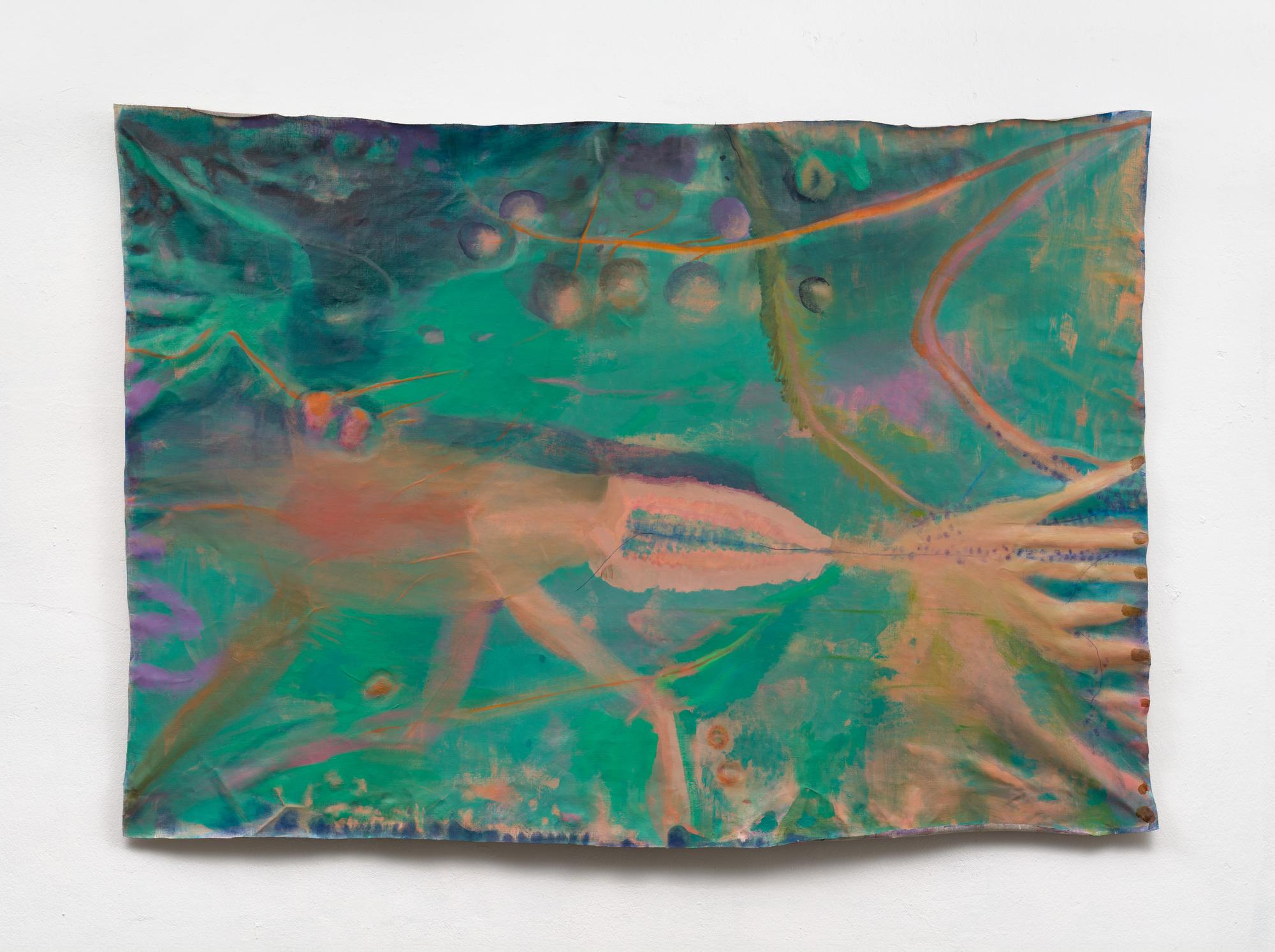
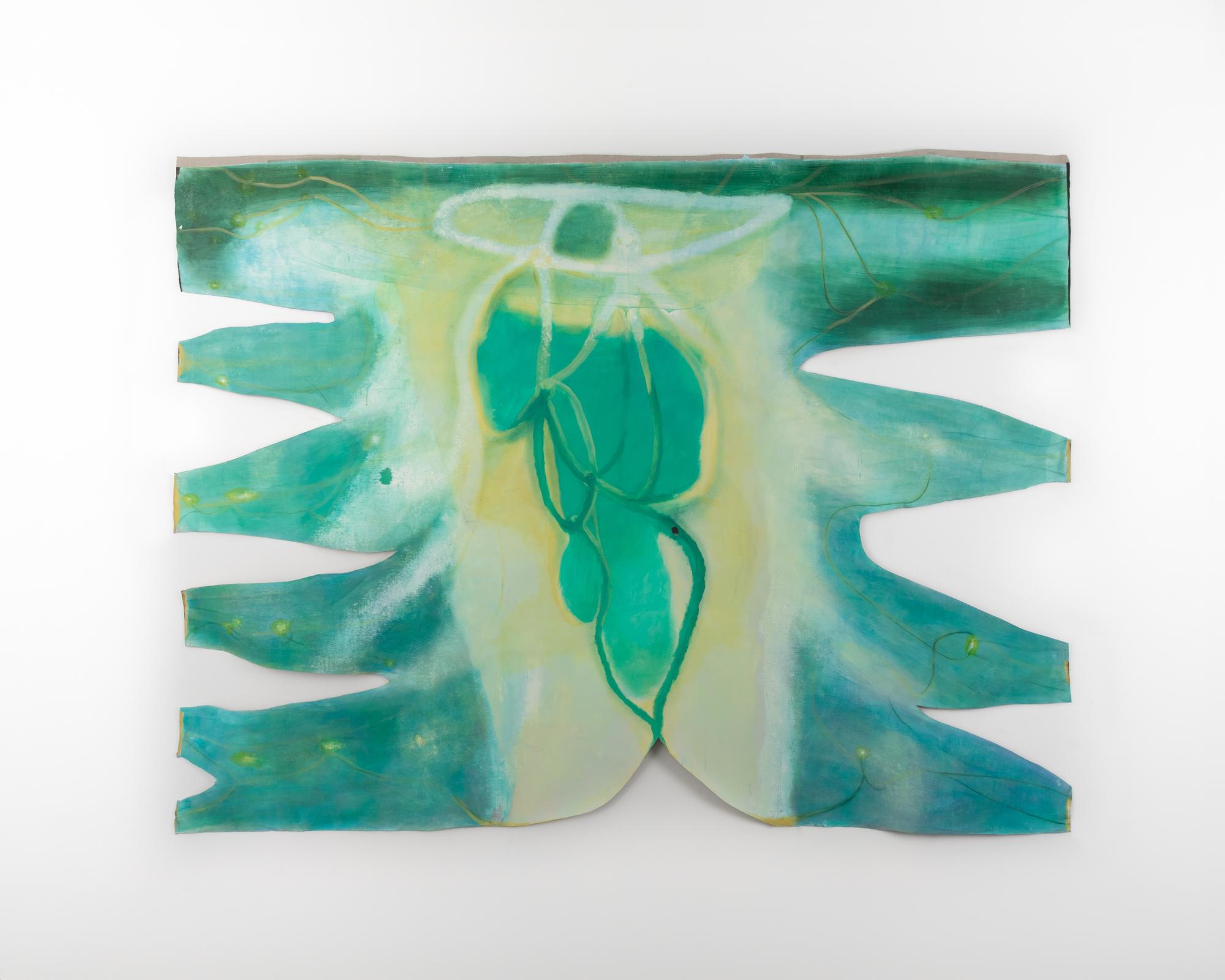
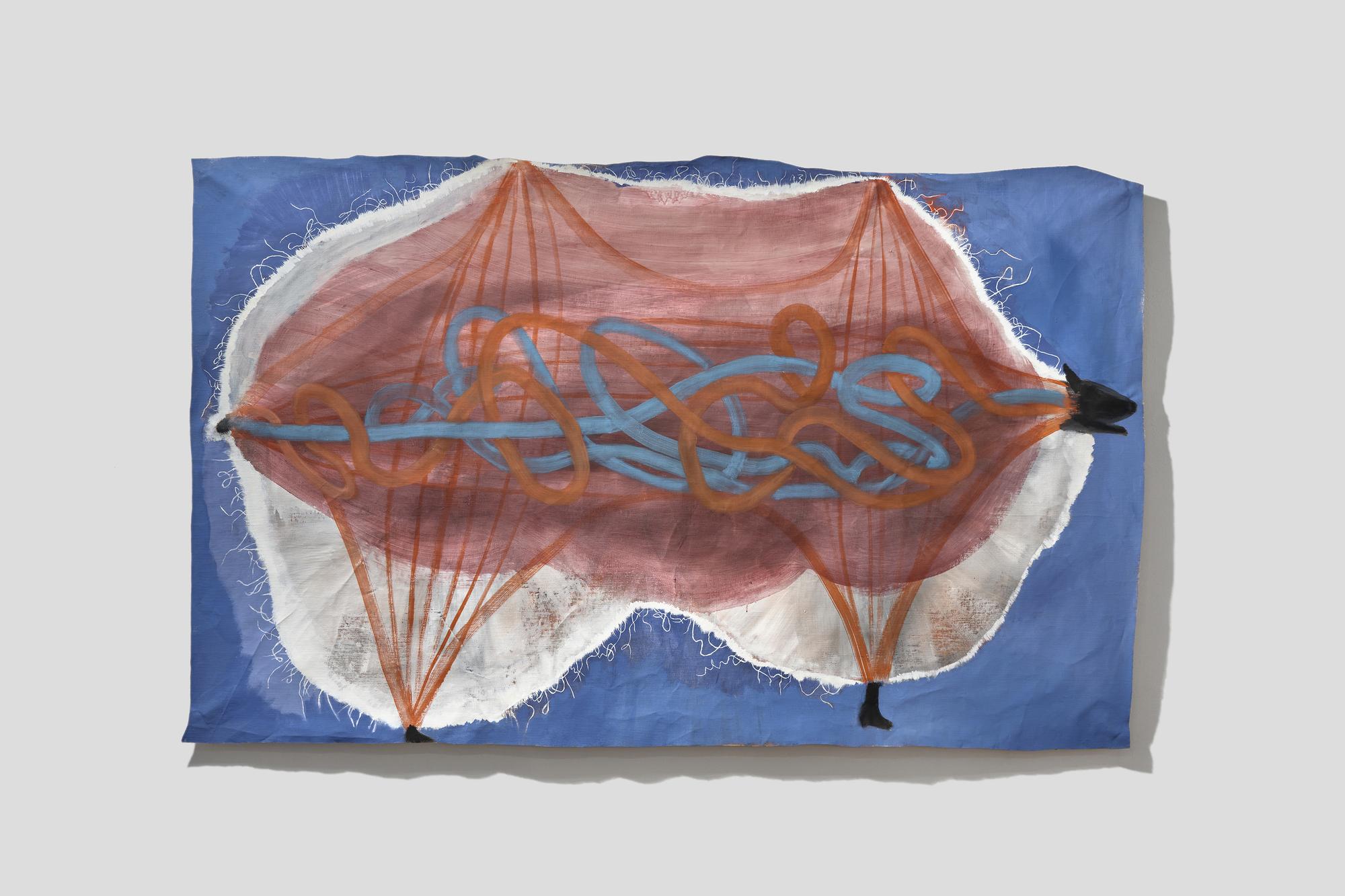
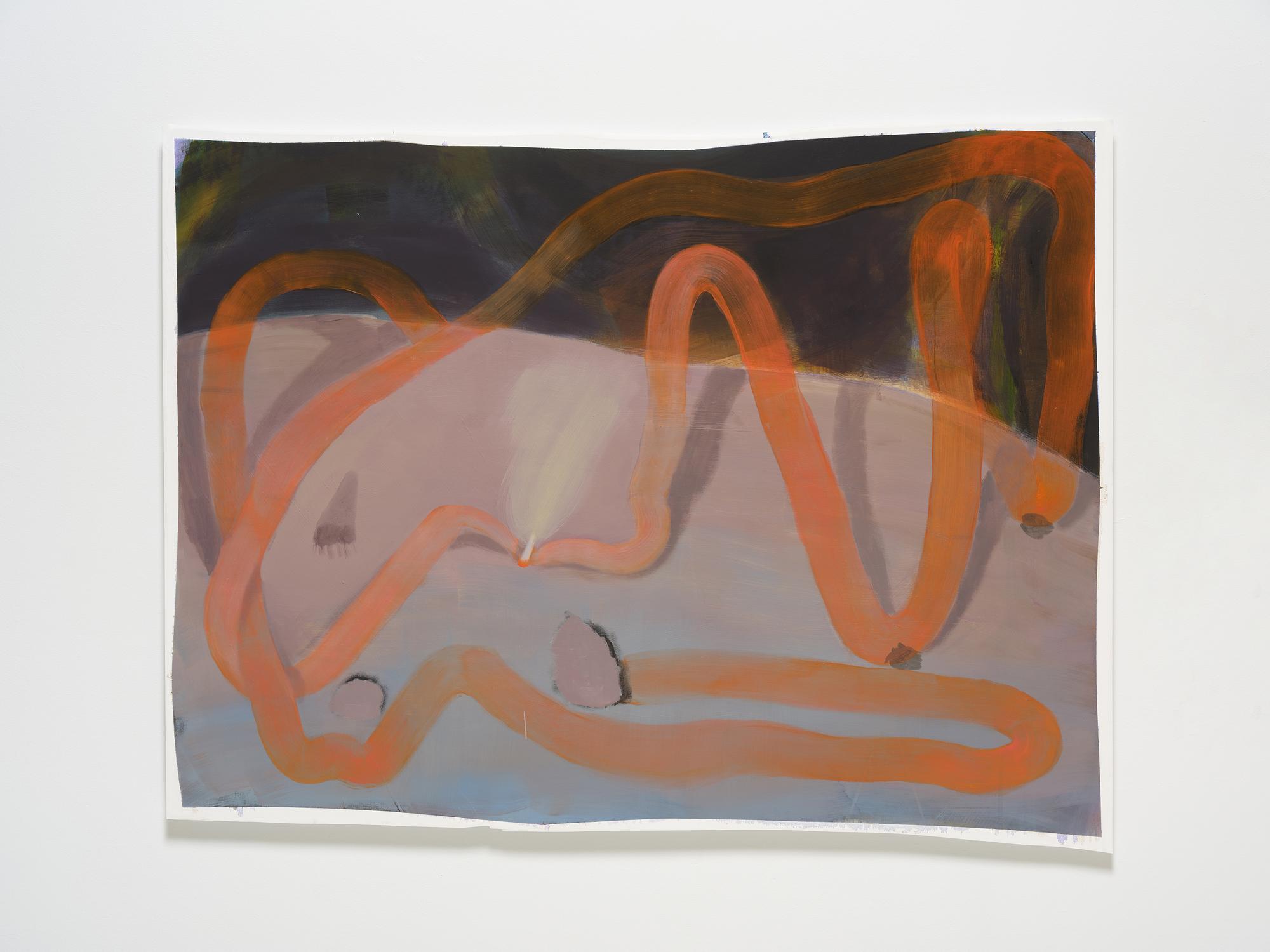
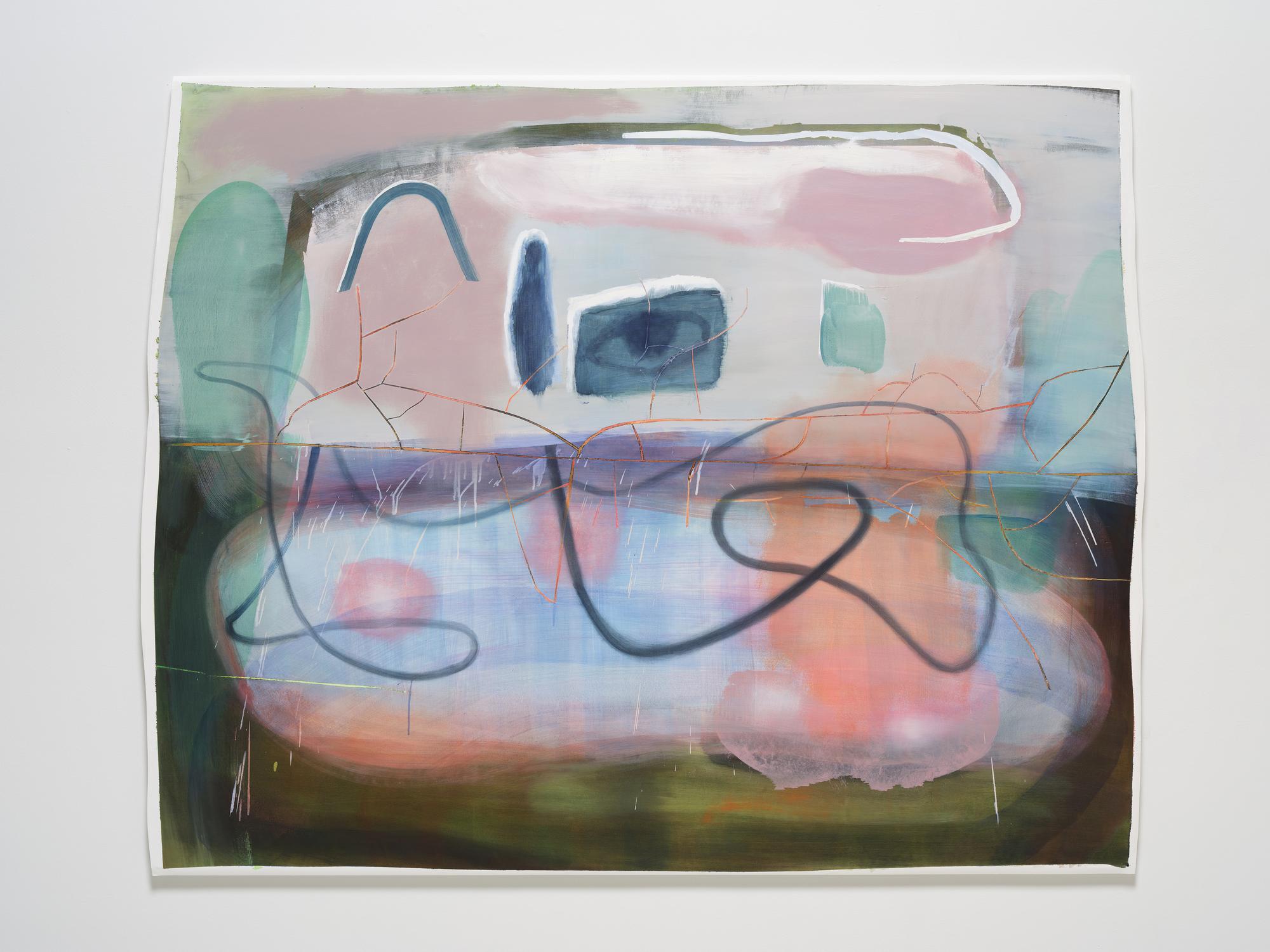
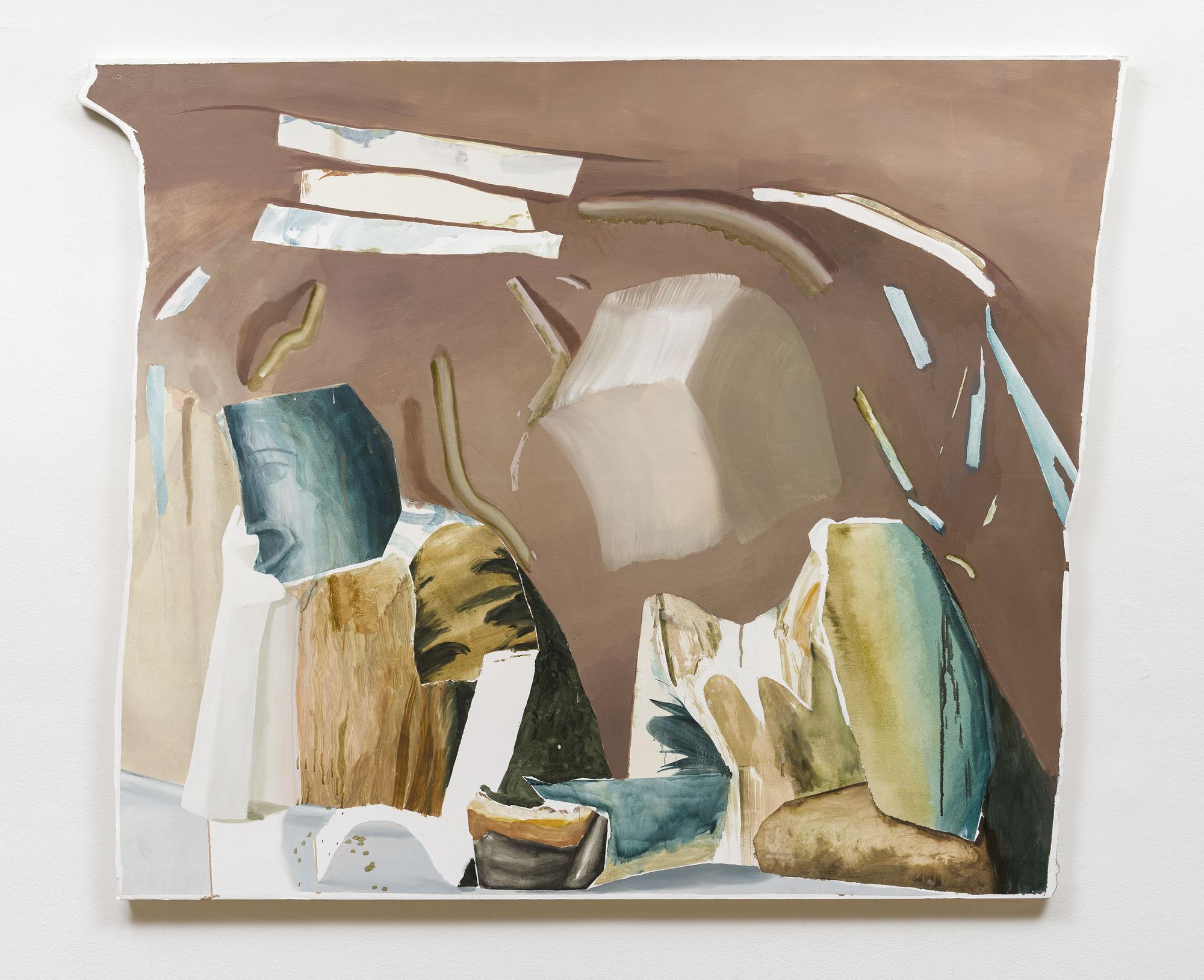
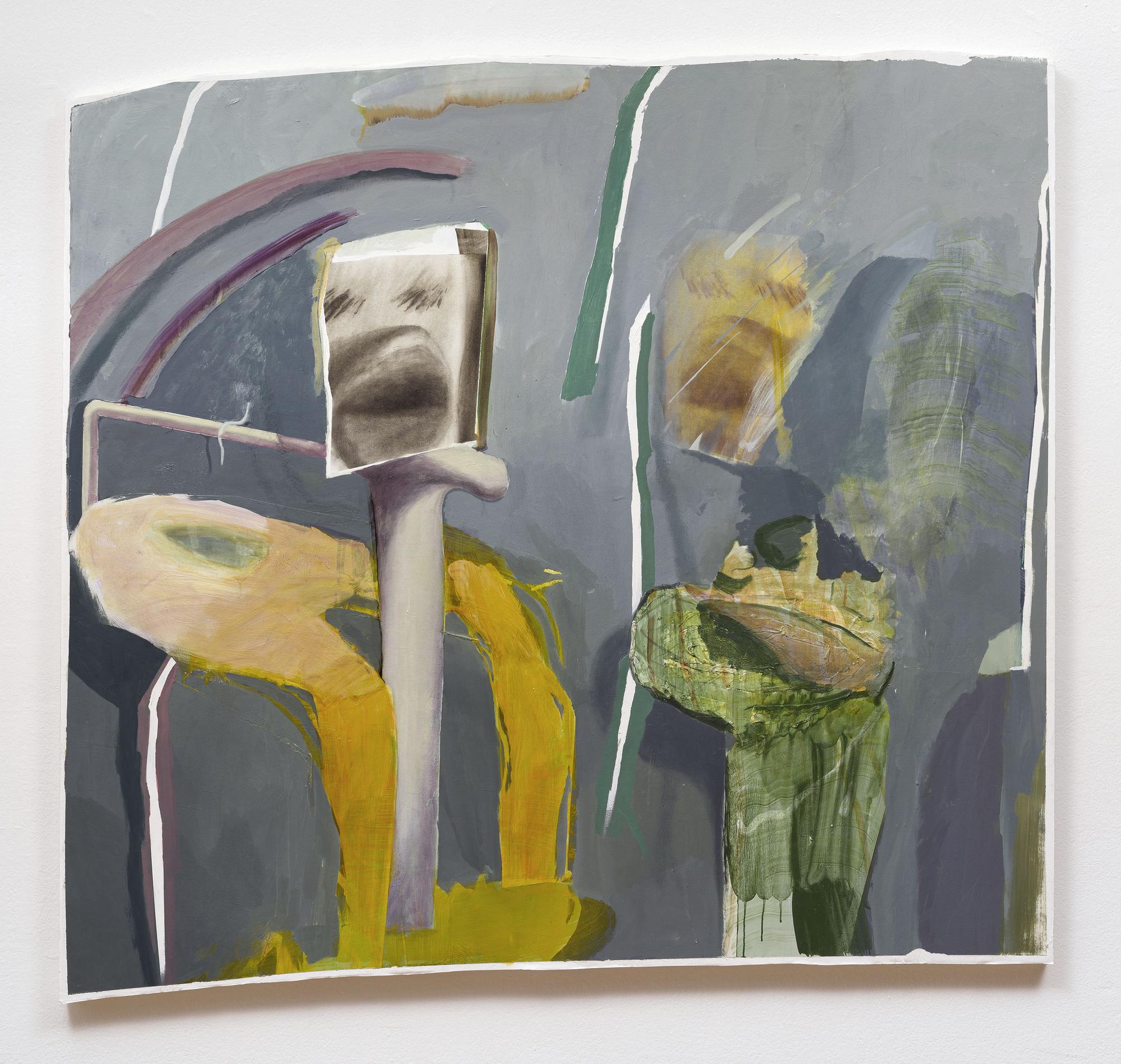
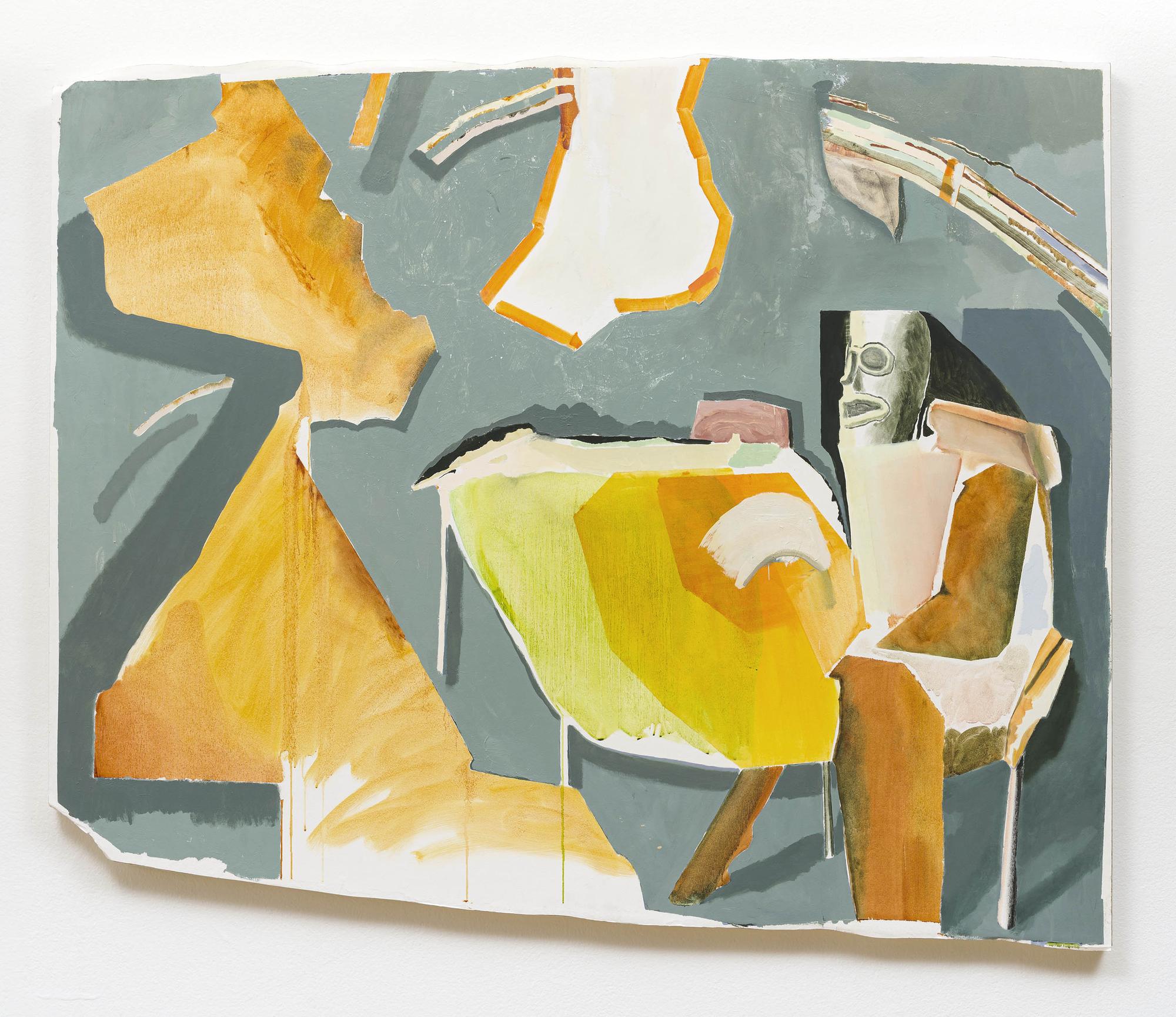
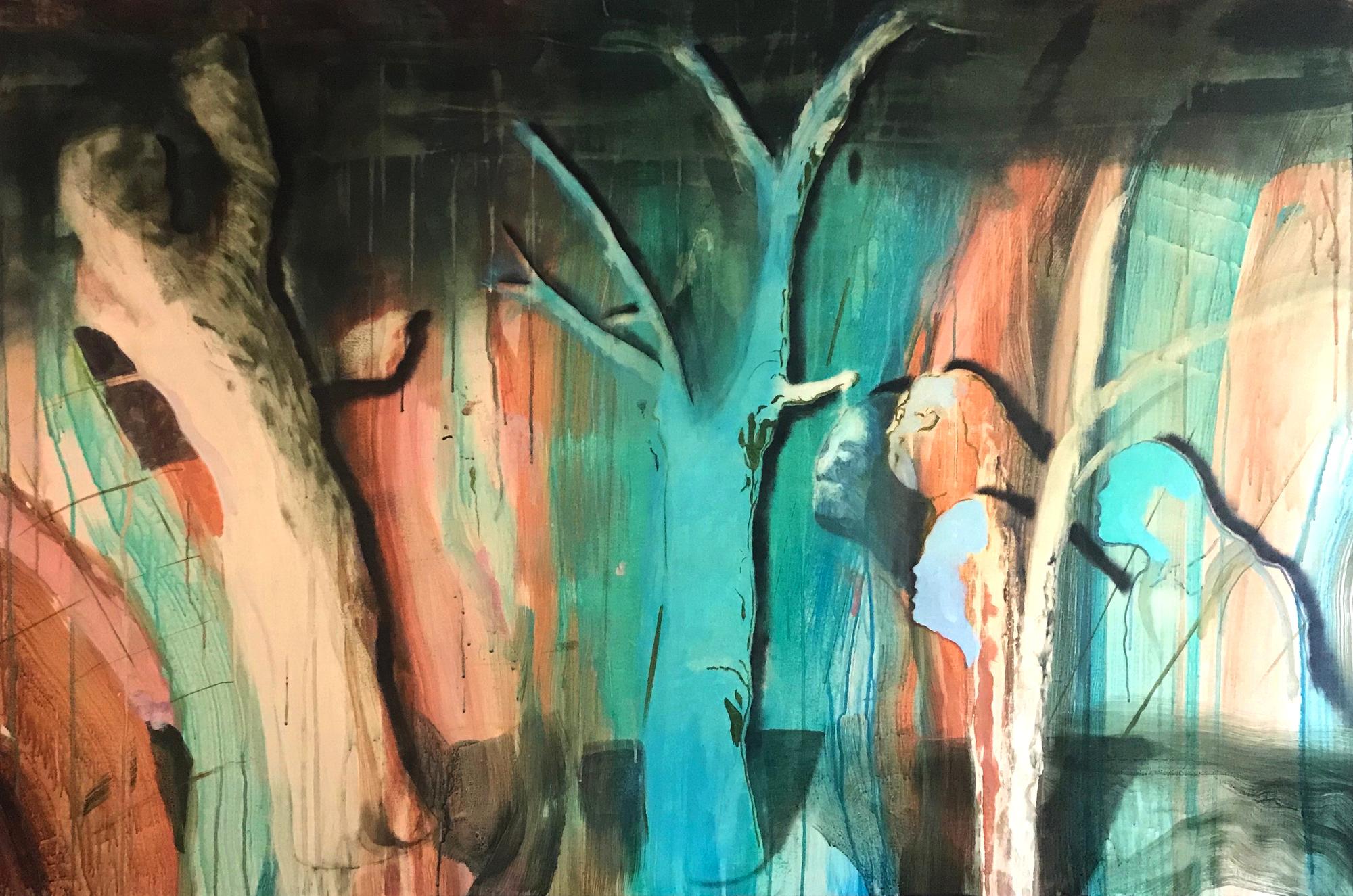
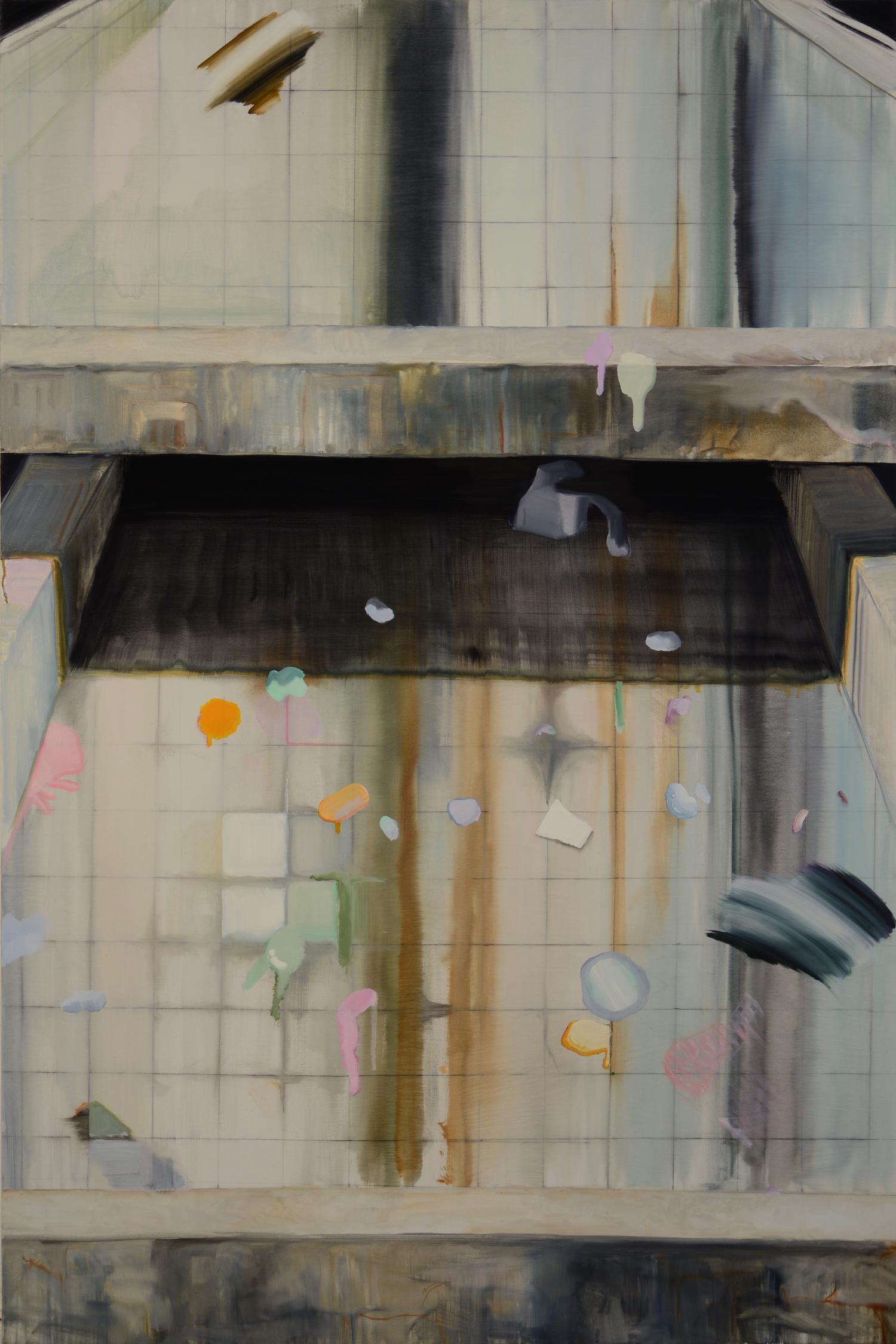
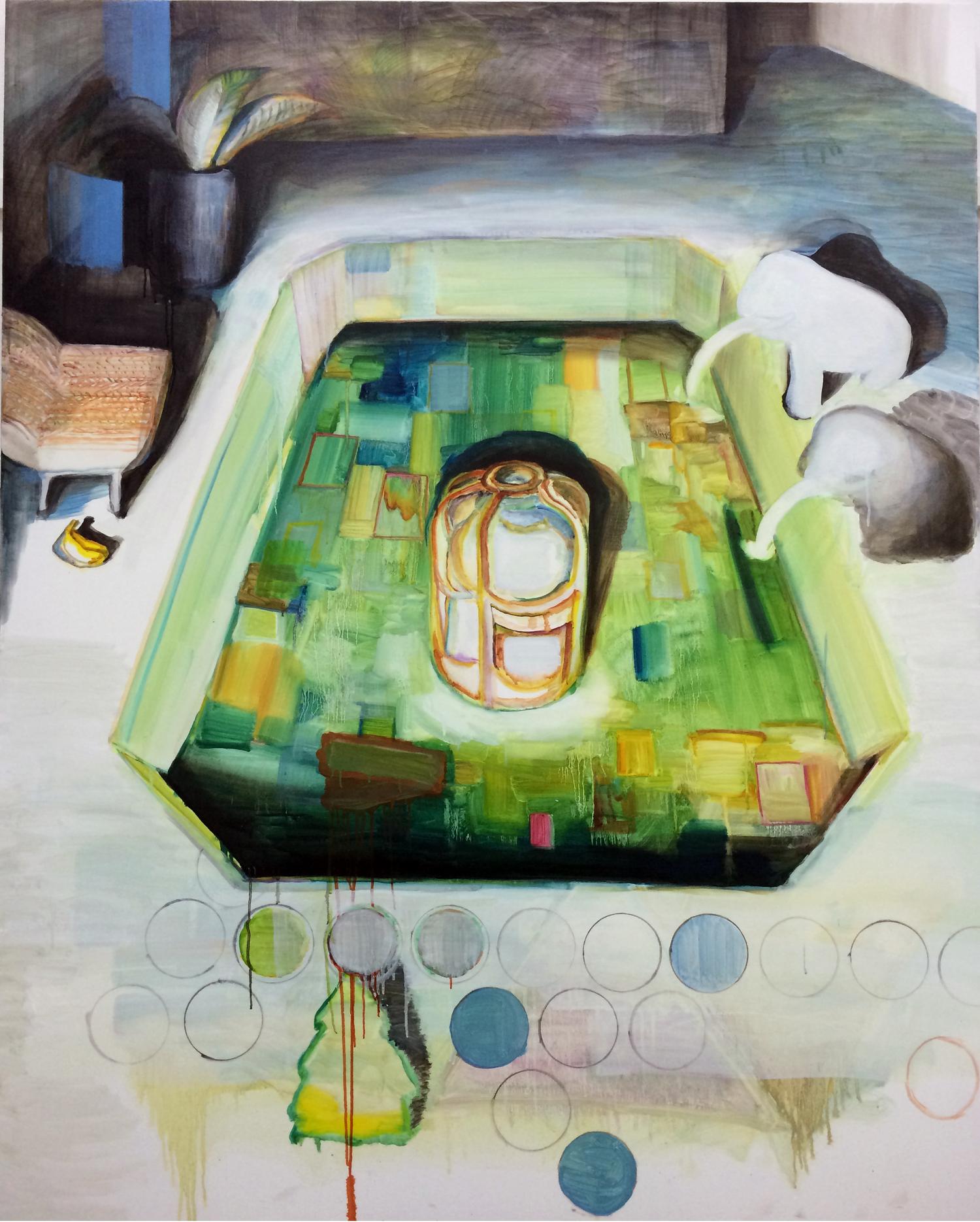
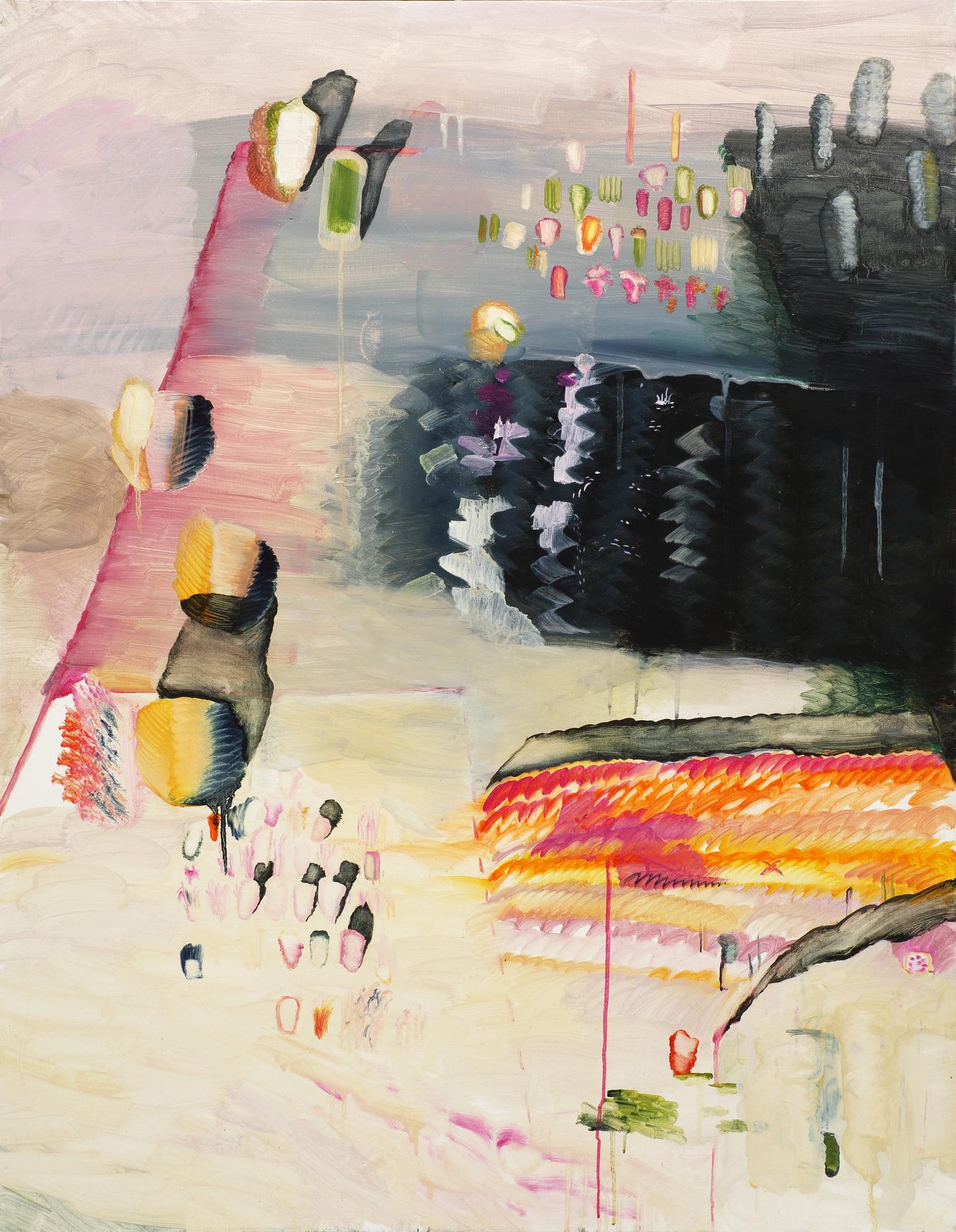
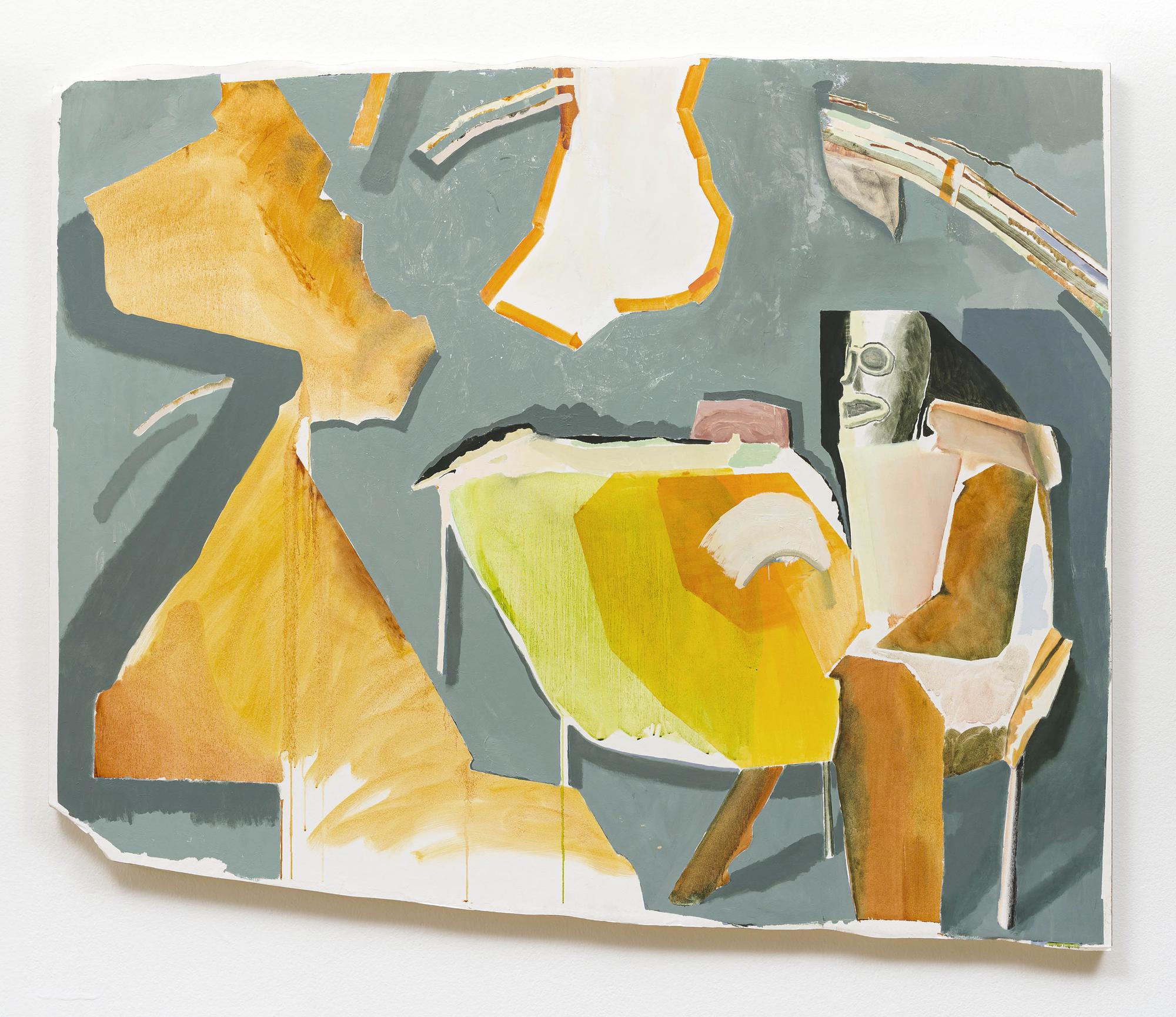
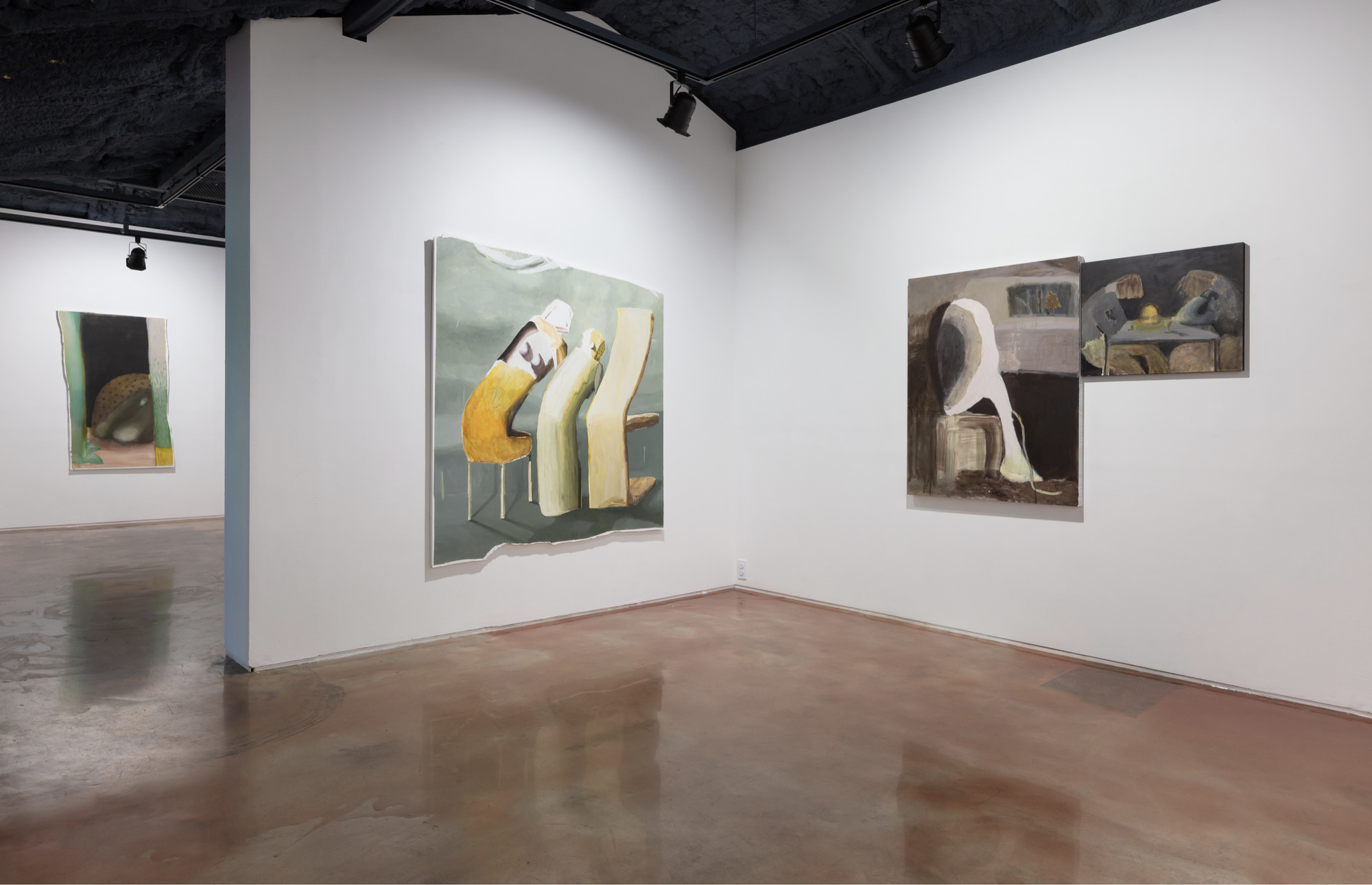
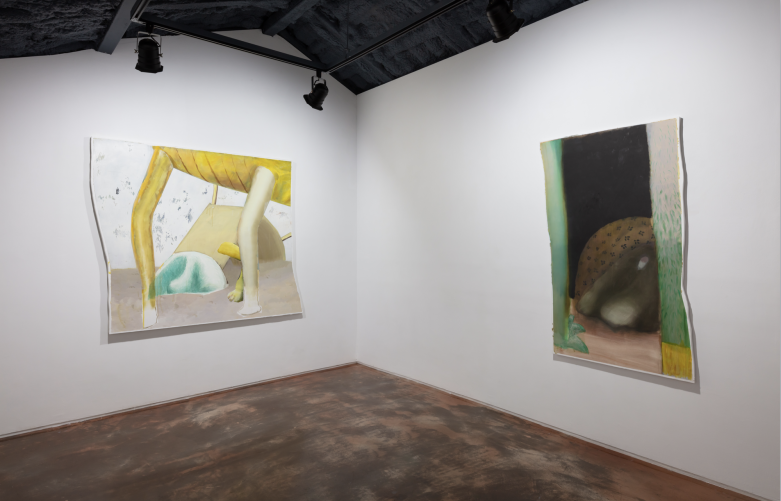
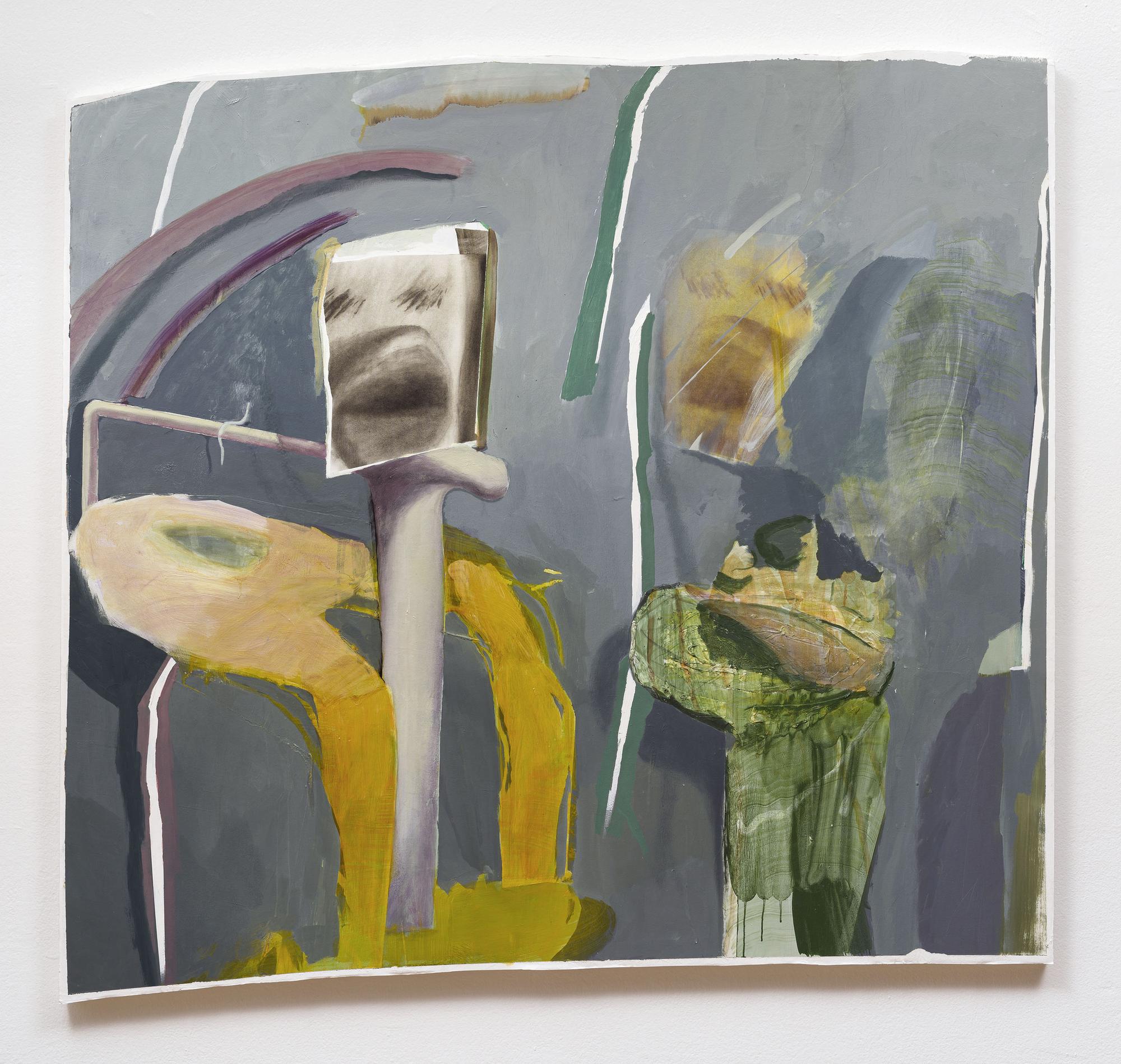
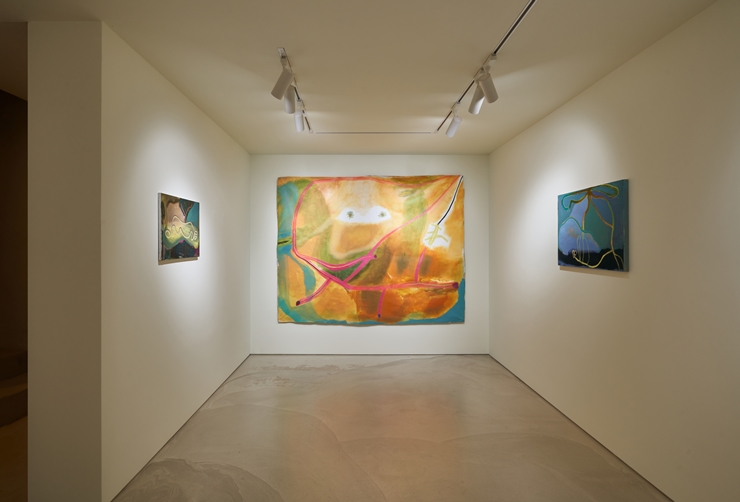
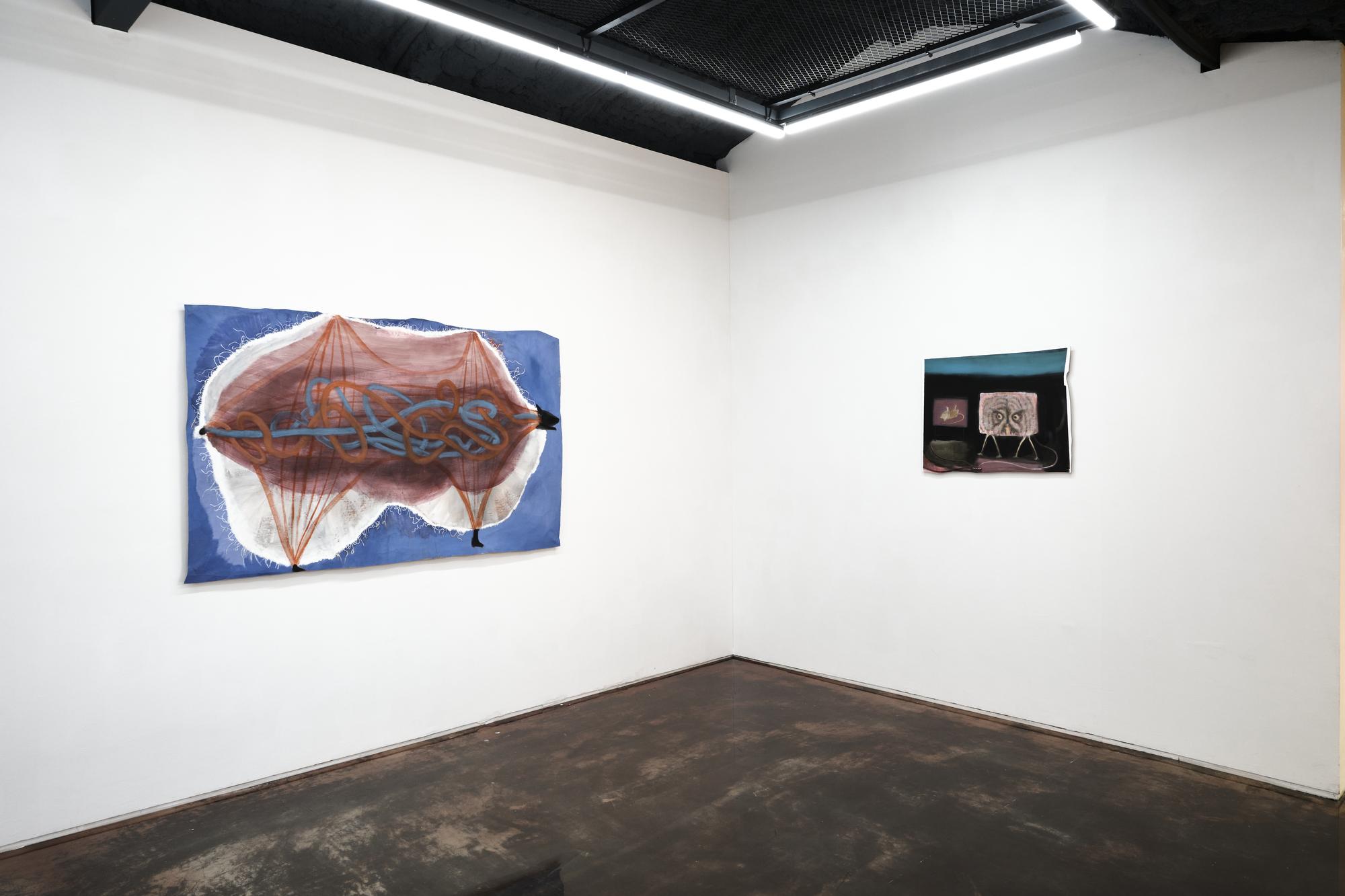
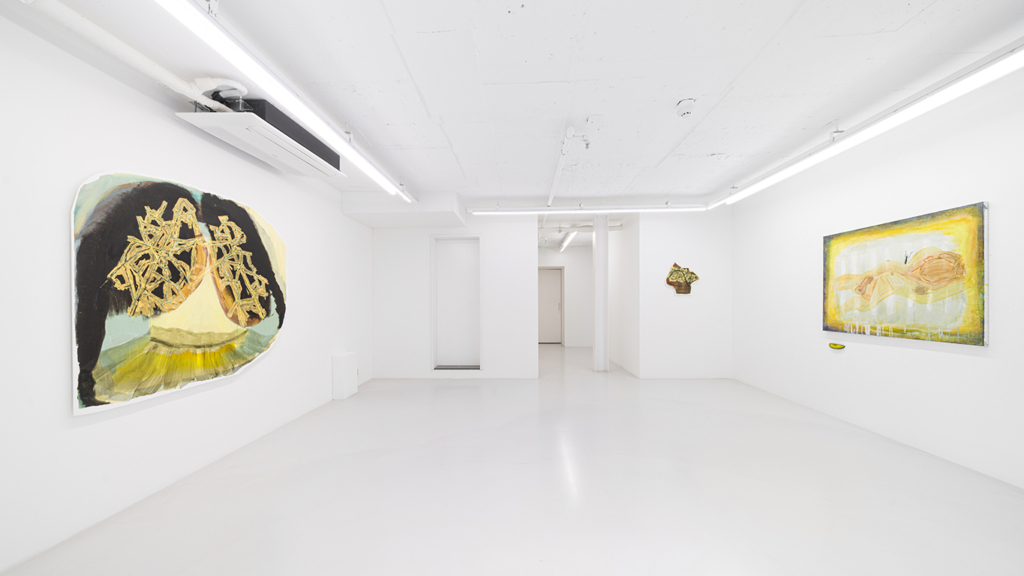
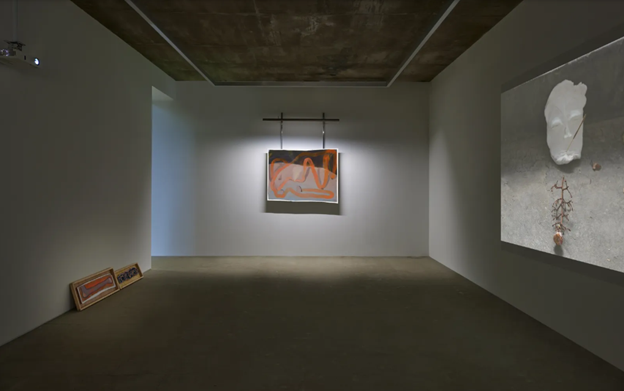
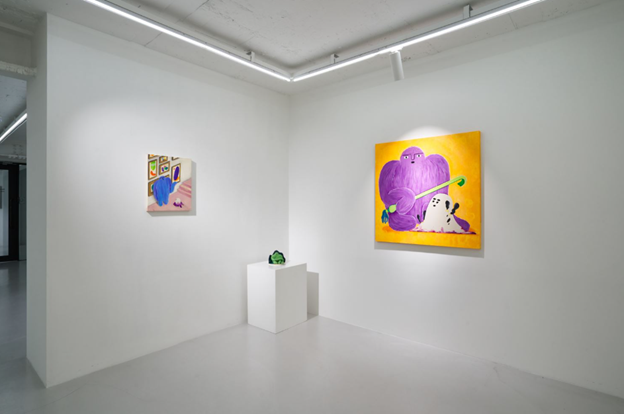
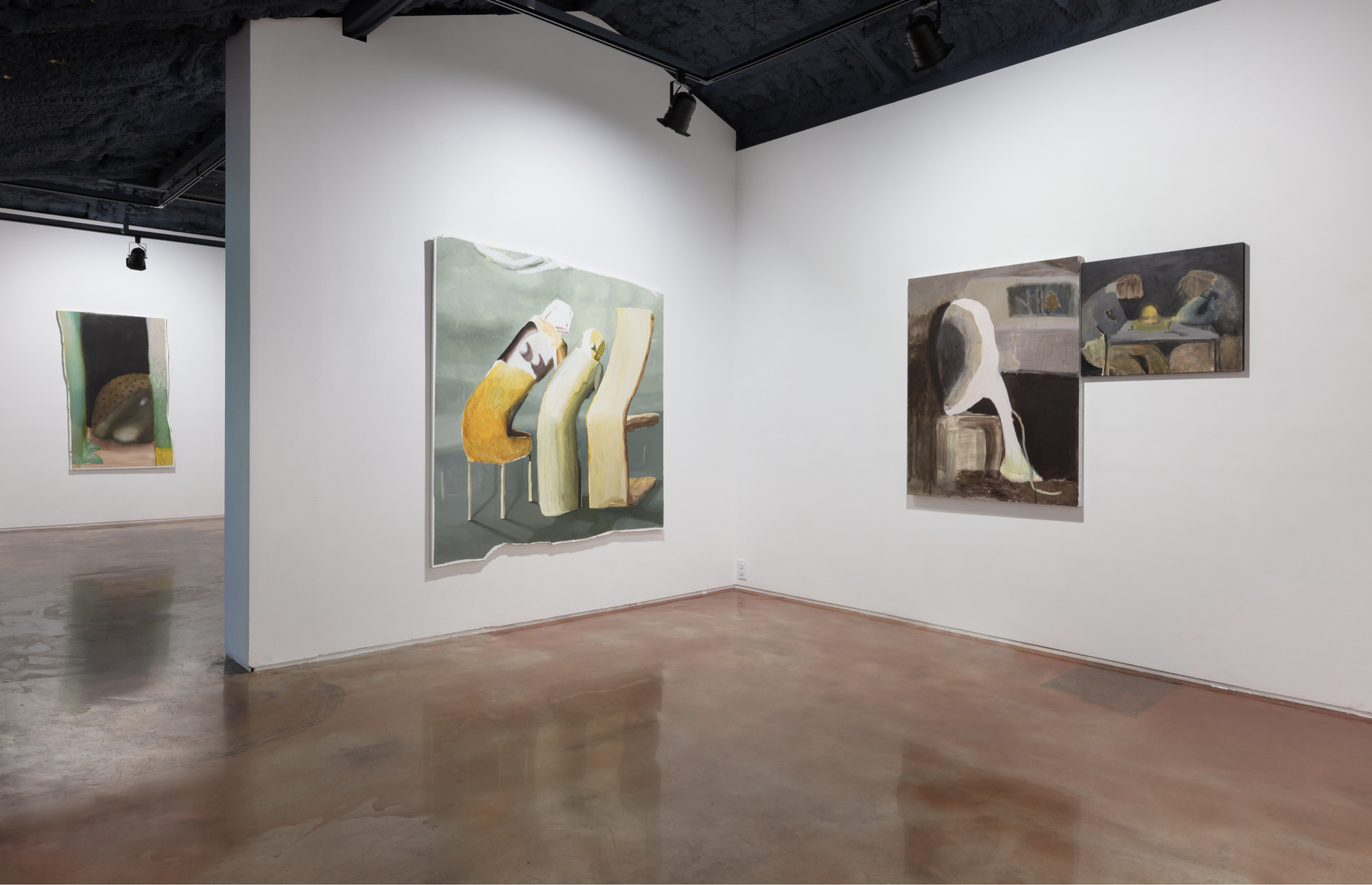
In fact, the world presented in her canvases is something possible
only in dreams or Science Fiction. Scenes where dimensions mix, floors rise,
people float in midair, or are transformed into grotesque forms or reduced to
bent shapes. The fact that the dream world connects with SF—science fiction—is
a highly interesting point. Science is realizing in reality the unreal images
of the unconscious. The transcendental imaginary world once possible only in
dreams is now literally becoming reality. Did we foresee an era in which all
would agree that the development of science and technology would become the
foremost messenger transporting the immaterial world of imagination and dreams
into the material world?
Not merely a civilization of technology maximizing convenience
and efficiency, but a world that completely relocates a land-based world into
an underwater one. We witness the paradox that the ultimate origin of the world
produced by advanced science is irrational and unscientific. Before being
realized through technology and entering our sensory world, dreams and
imagination were treated as absurd delusions or the beliefs of the weak; yet
the history of most scientific inventions is one of repeated reversals of such
perceptions.
An object that cannot be neatly defined is likely the arrival of
something entirely new. The Metaverse—a new virtual world and new real world
combining online and reality, another universe. The Avatar, a character
representing oneself in online space, existed already more than twenty years
ago but remained at the level of doll play confined within the premise of
illusion. However, in the hyper-connected metaverse intertwined with reality,
avatars engage in actual shopping, attend performances, learn new choreography,
receive autographs at celebrity signings—living out nearly everything of
reality.
A world that could not previously be defined by anything is being
constructed upon science and technology. Thus, the non-linguistic,
non-rational, indefinable world is reborn not as falsehood but as truth,
another version of reality. If something possessing specific structures,
philosophies, and detailed elements can be called a world, then Dasom Park’s
world of “inclination” also exists as a new universe. Emerging from the dark
tunnel of the unconscious and confronting the realities of fear and sorrow
head-on, the artist’s alternative—“inclination”—becomes her universe, a kind of
metaverse that coexists in hyper-intimate proximity with reality.
Dasom Park’s “inclination” can also carry the following meanings.
First, whether the subject is human or object, is inclination itself truly a
useful theme? This is an intriguing point to note, as it reveals the artist’s
unique perspective and new value arising from fundamental compassion and pity
toward human existence. Second, through the frame of compassion called
inclination, both humans and objects enter into equal relations. The act of
substituting everything with inclination becomes a spell that removes
hierarchy. When all are converted into inclination, they become equal. Third,
this may also be the most artistic attempt.
Following the idea that art is
essentially surplus, one realizes that Dasom Park’s art lies at the extreme
edge of surplus among surplus worlds. A world of inclination based on
uselessness, irrationality, the unconscious, discontinuity, disappearance, and
dismantling. Its artistic value is great. Freud elevated dreams in
psychoanalysis as important clues for interpreting reality and consciousness,
but we have now moved into an entirely different dimension. Physicists,
mathematicians, engineers, and scientists assume the world to be largely
non-linear and chaotic, and upon that foundation pursue diverse research
problems and solutions. Who can declare dreams or fantasies obscene? Who can
call Dasom Park’s “heated inclination,” derived from gazing at loved ones, and
the metaverse created by that frame and structure, useless obscenity?
Text by Kim So-won