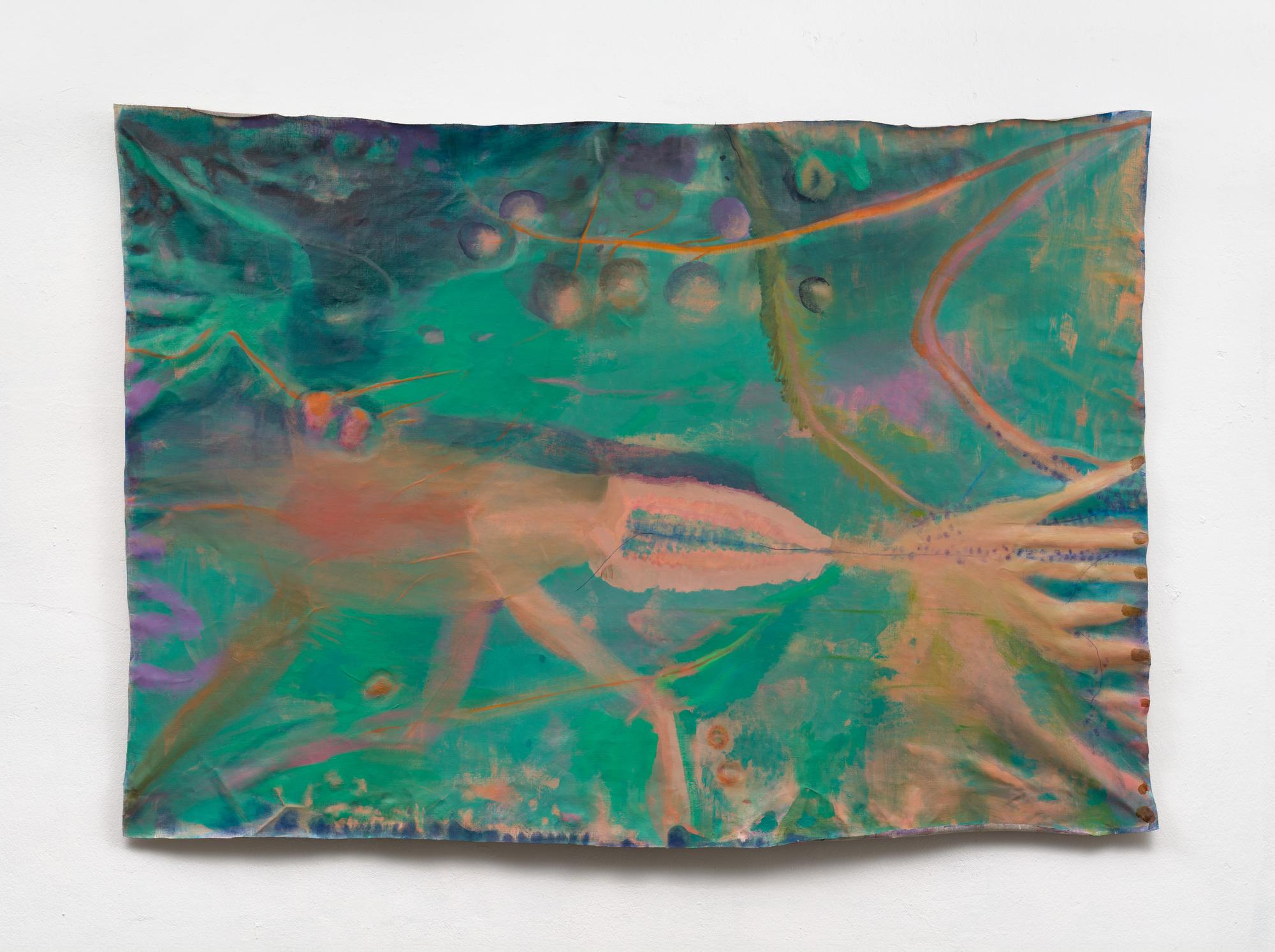
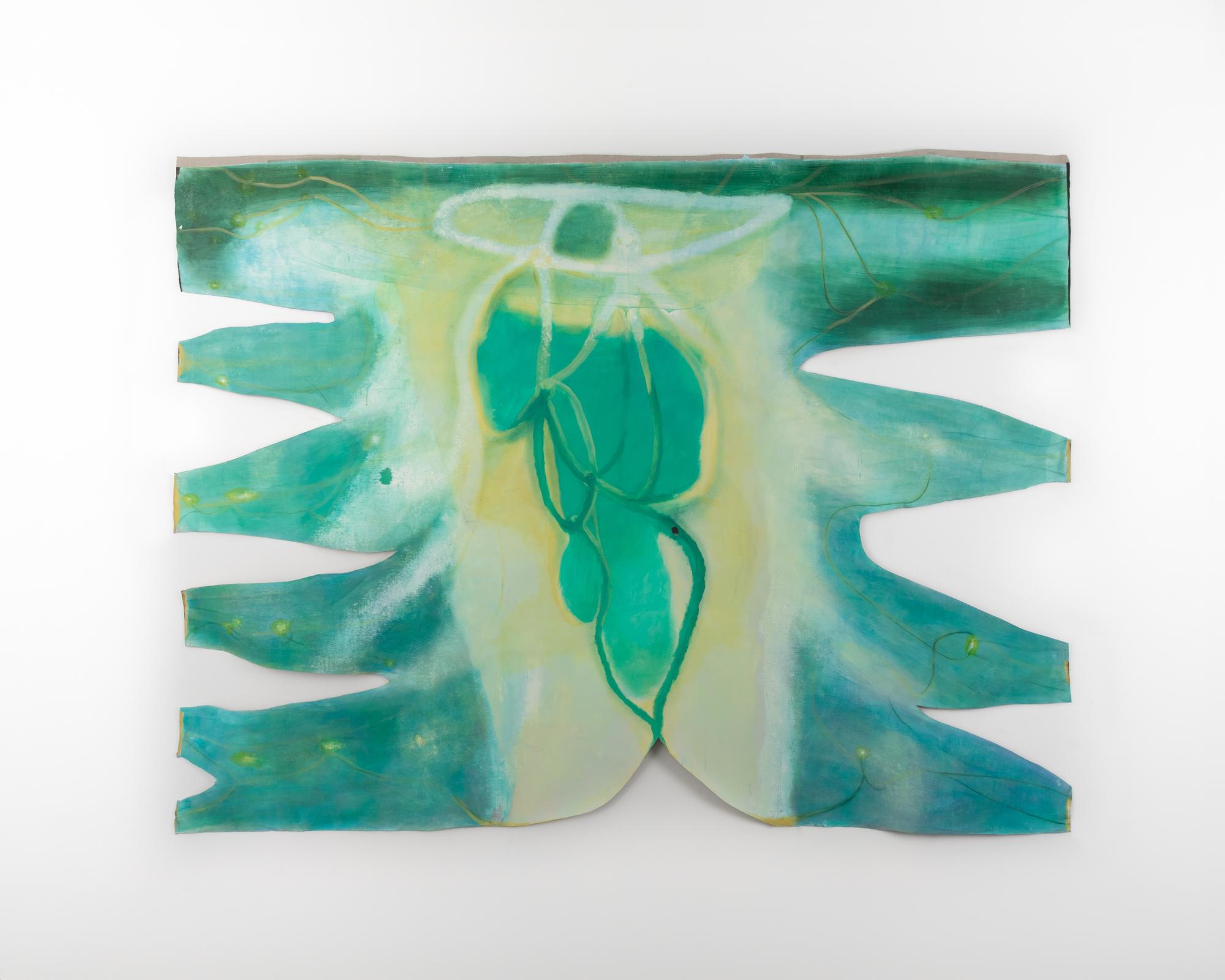
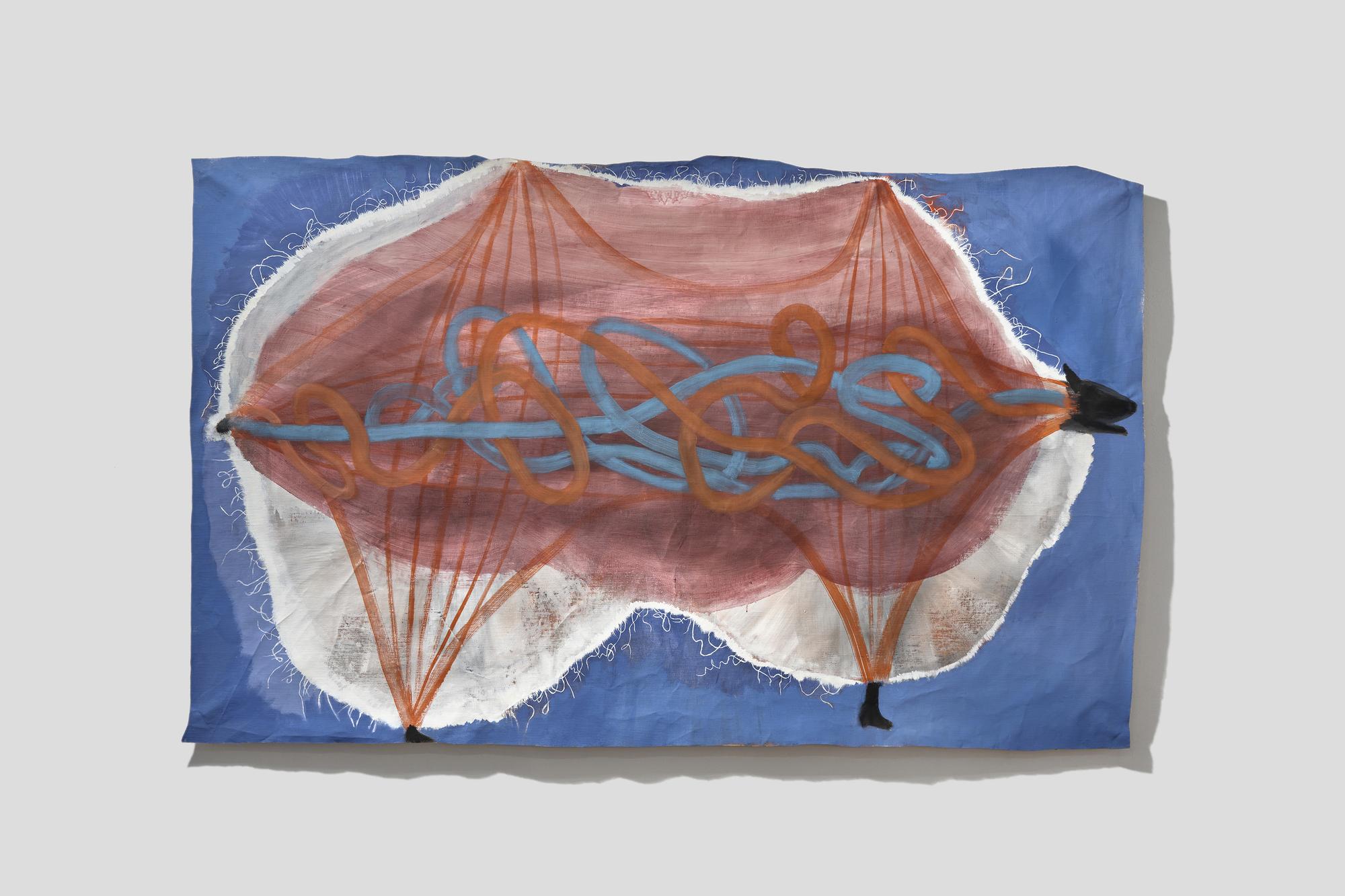
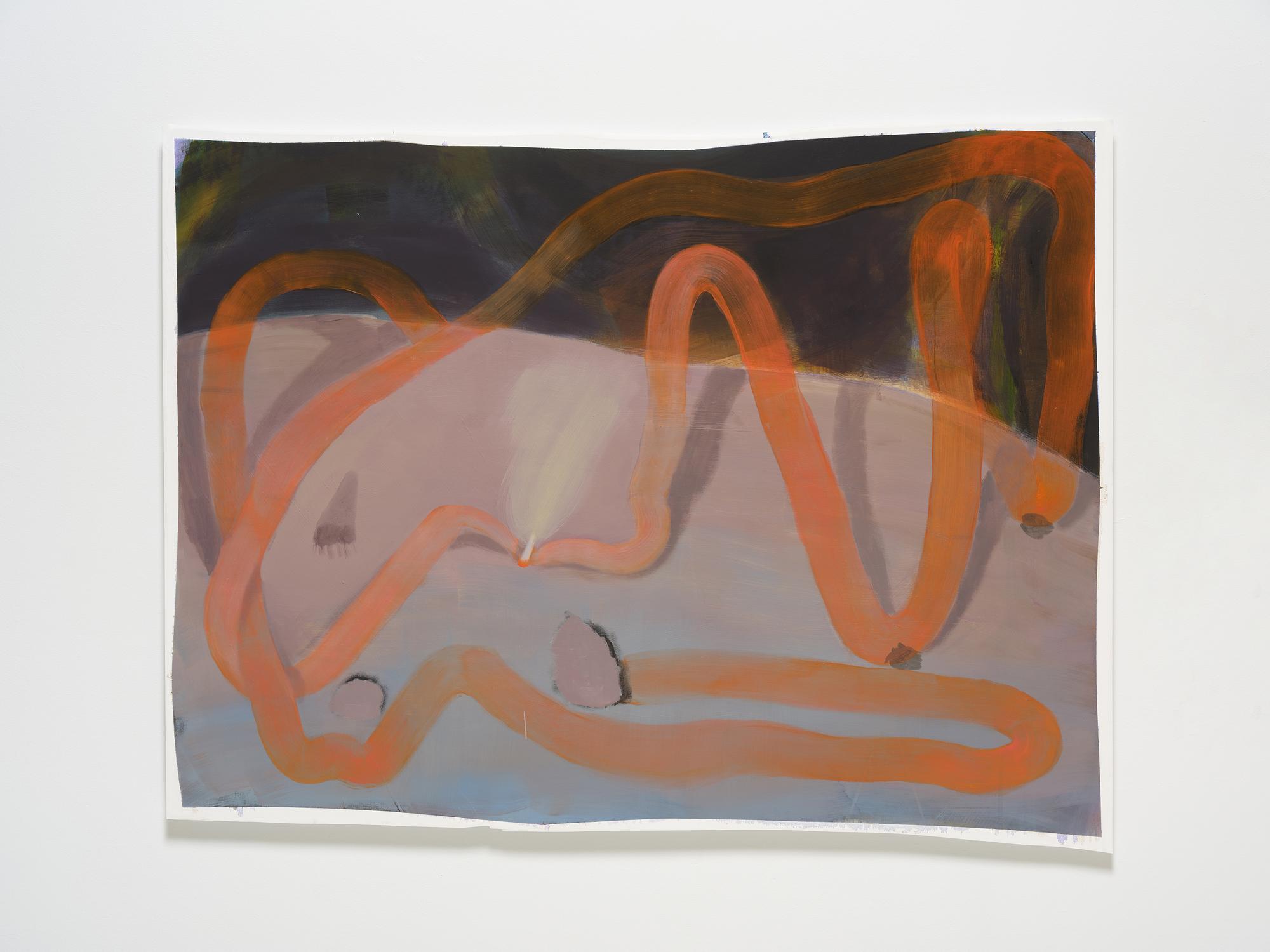
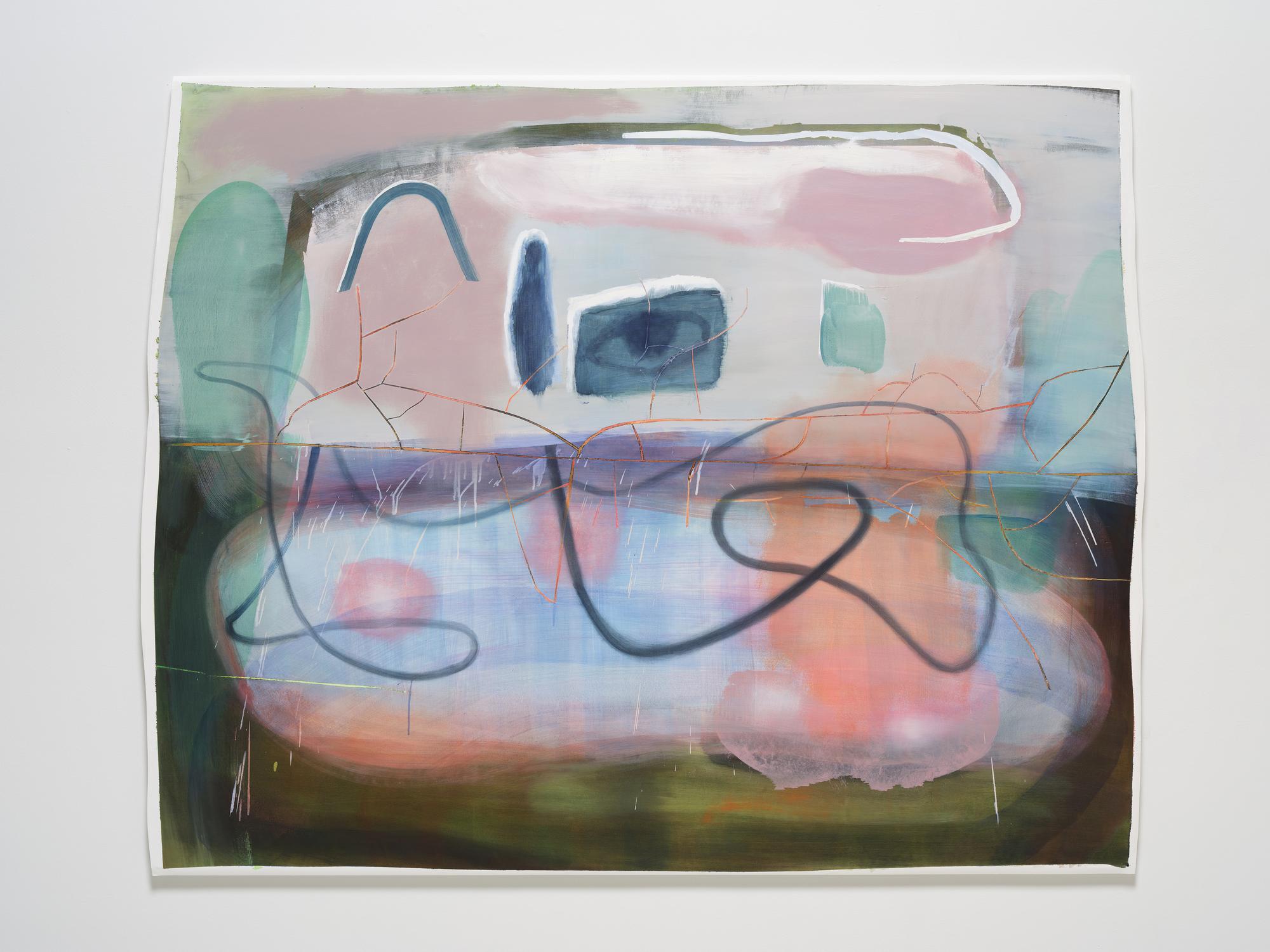
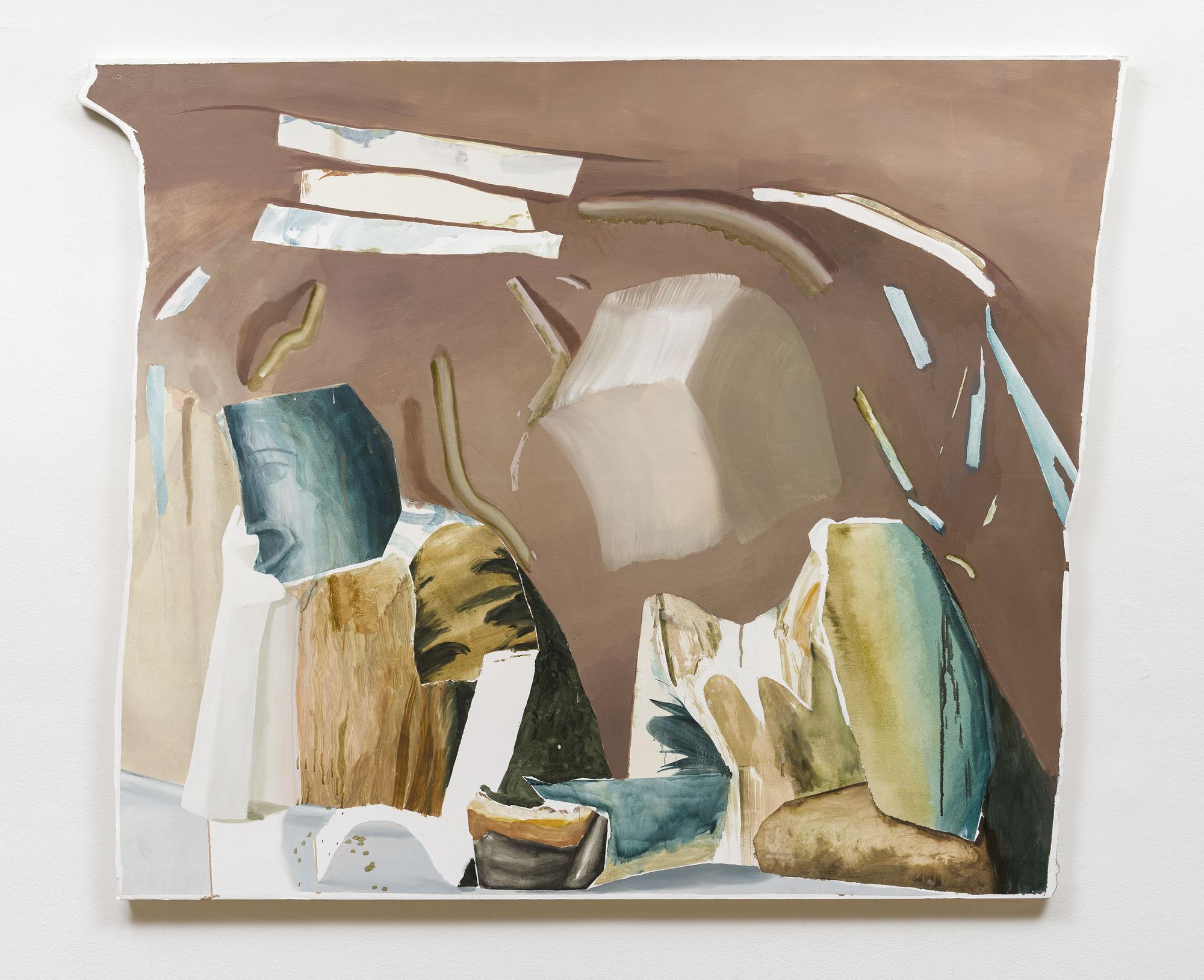
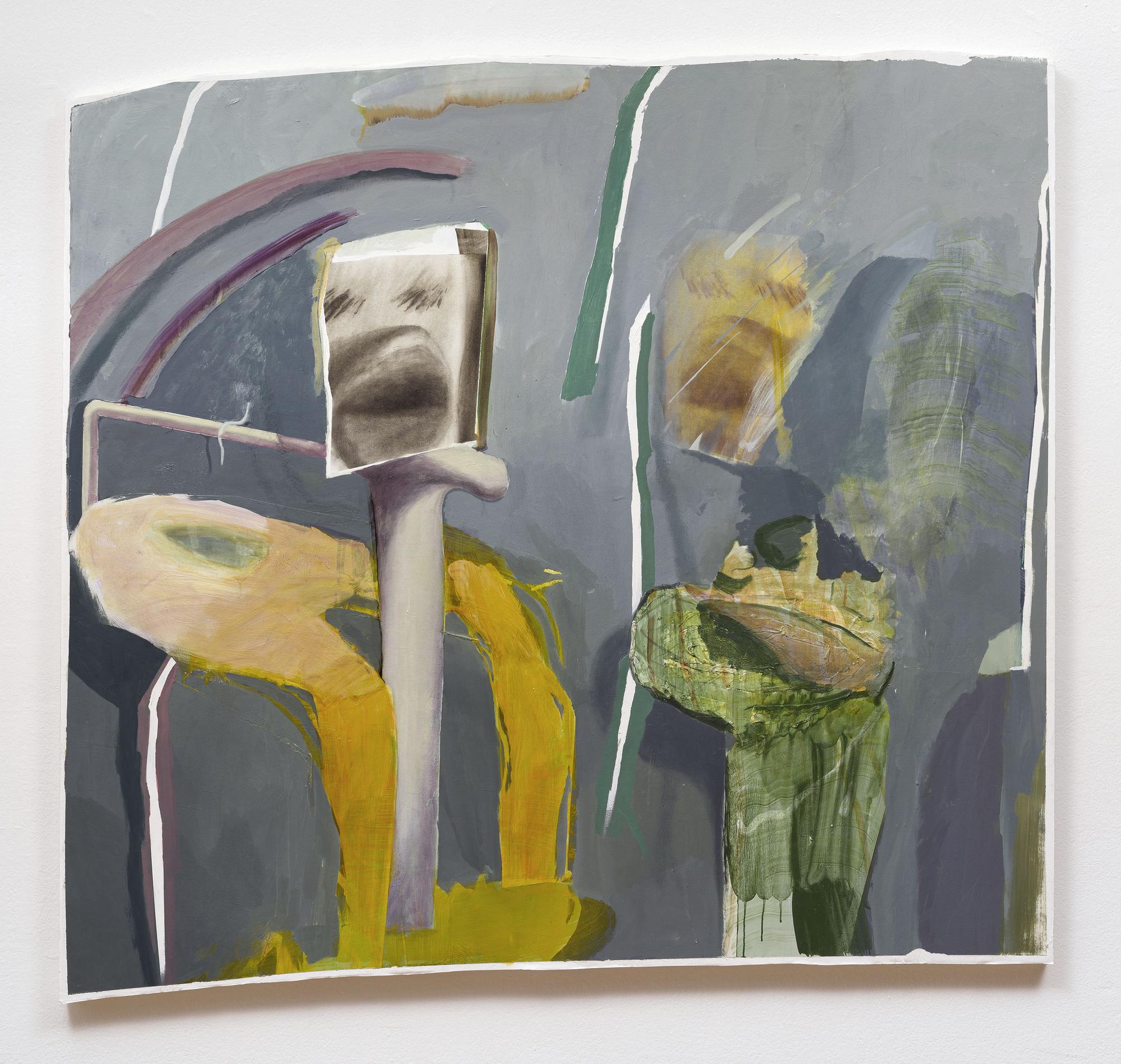
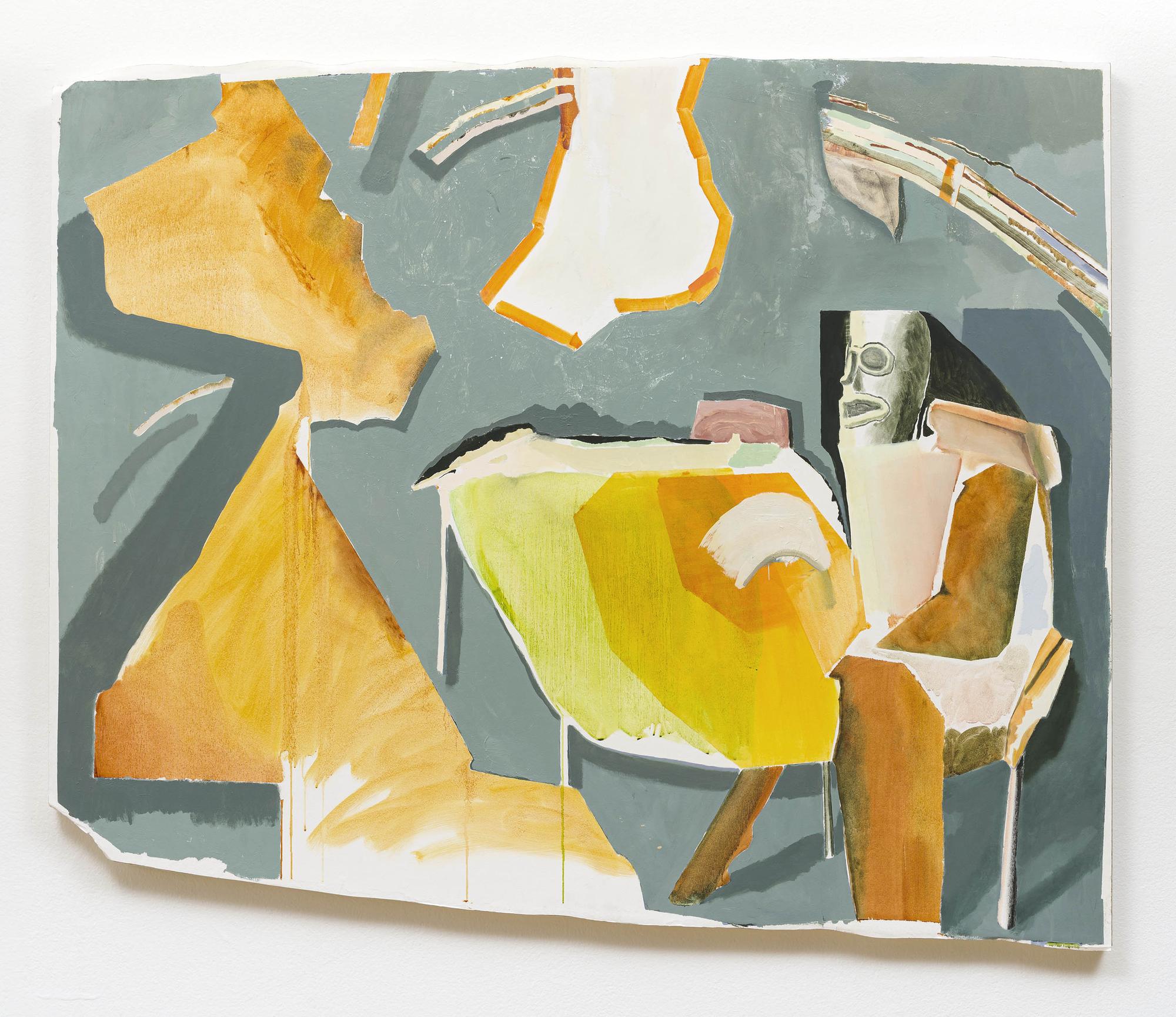
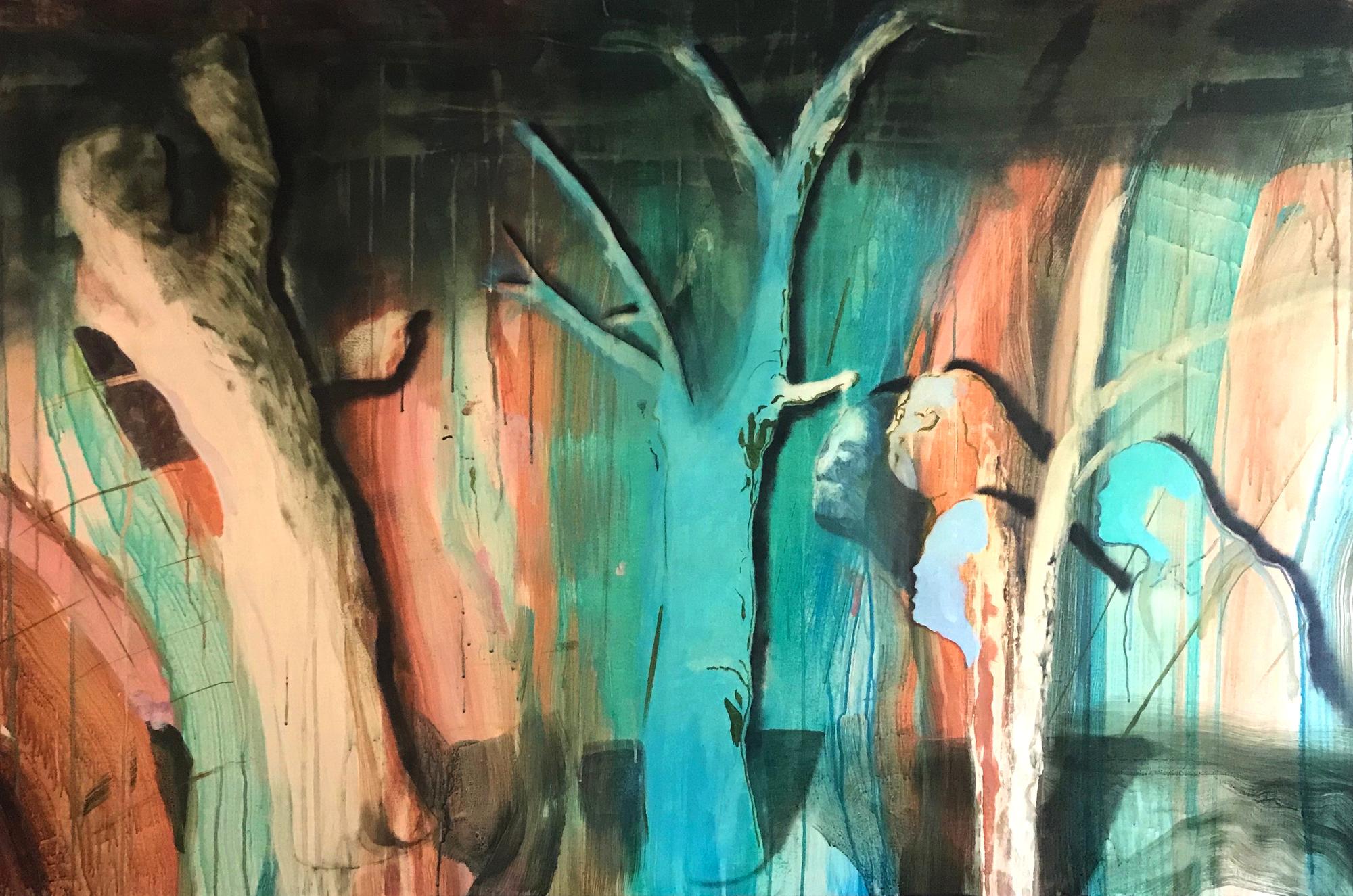
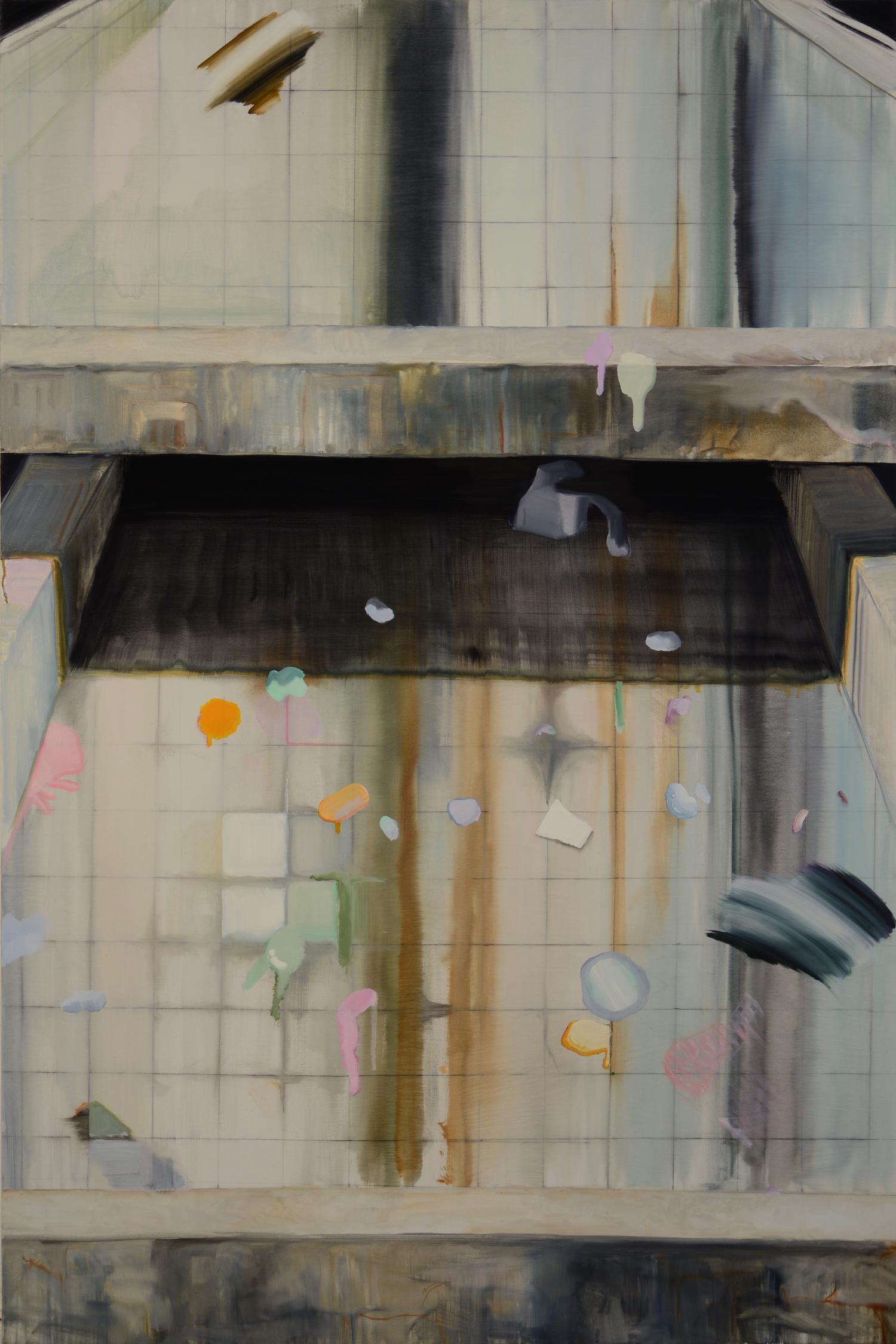
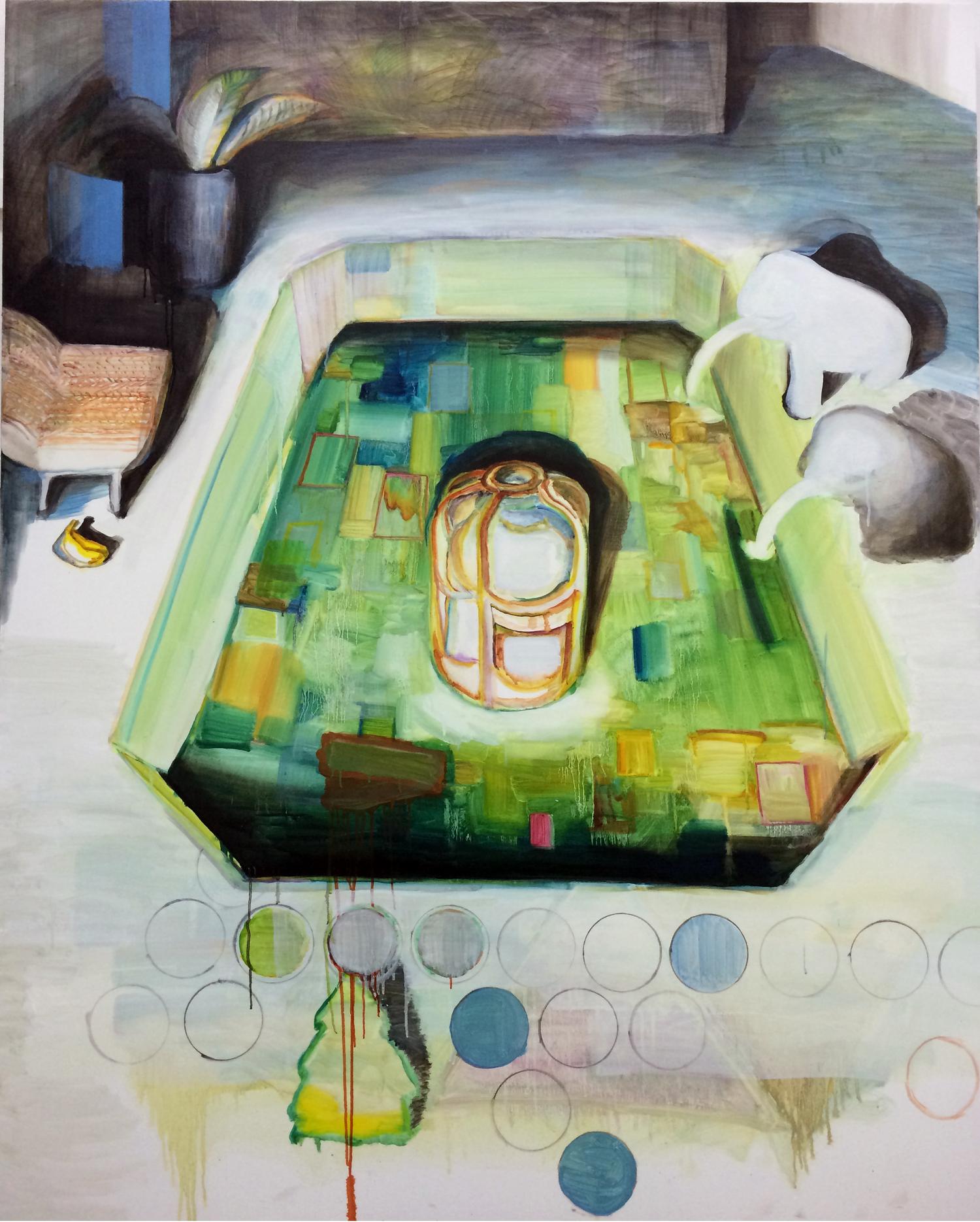
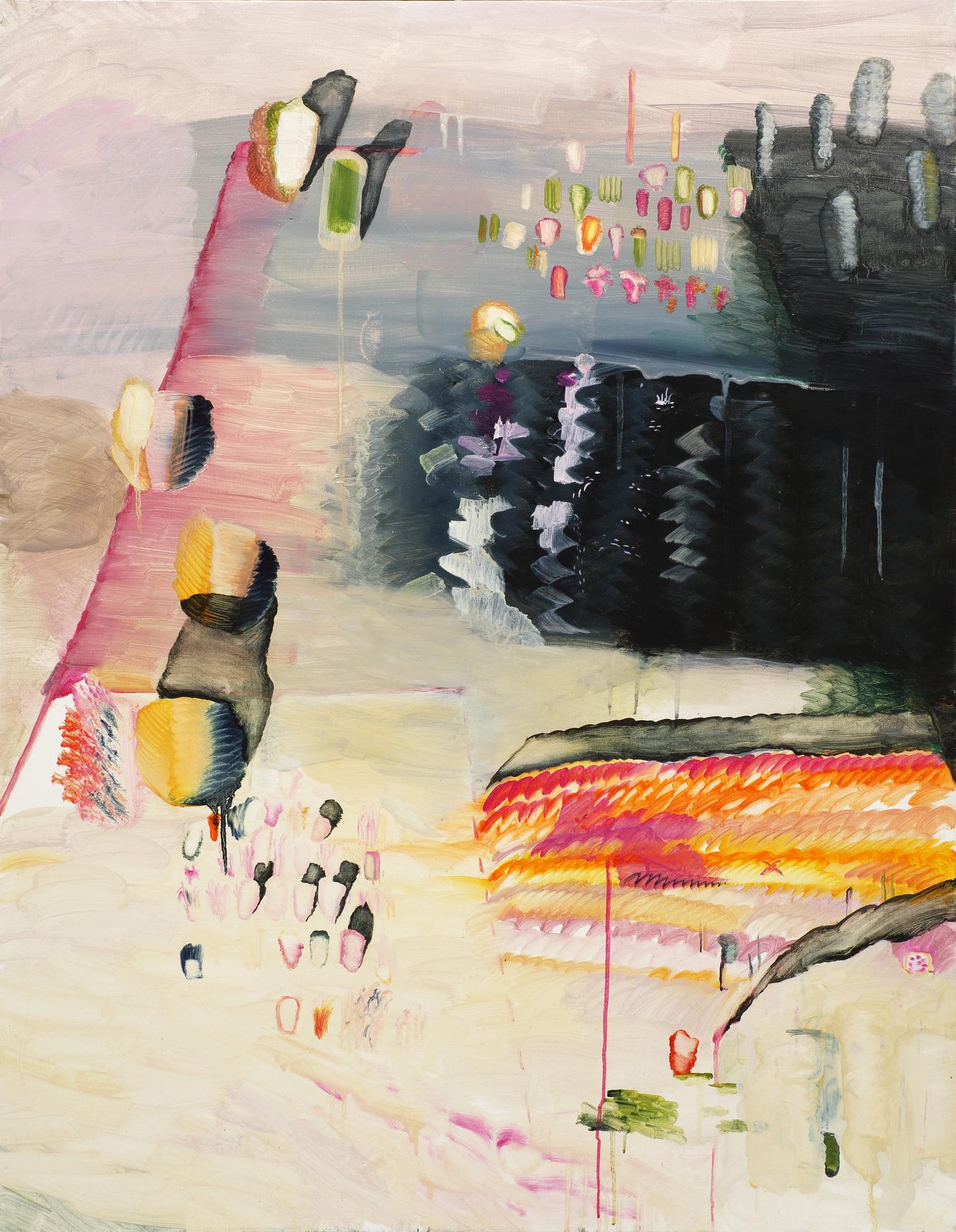
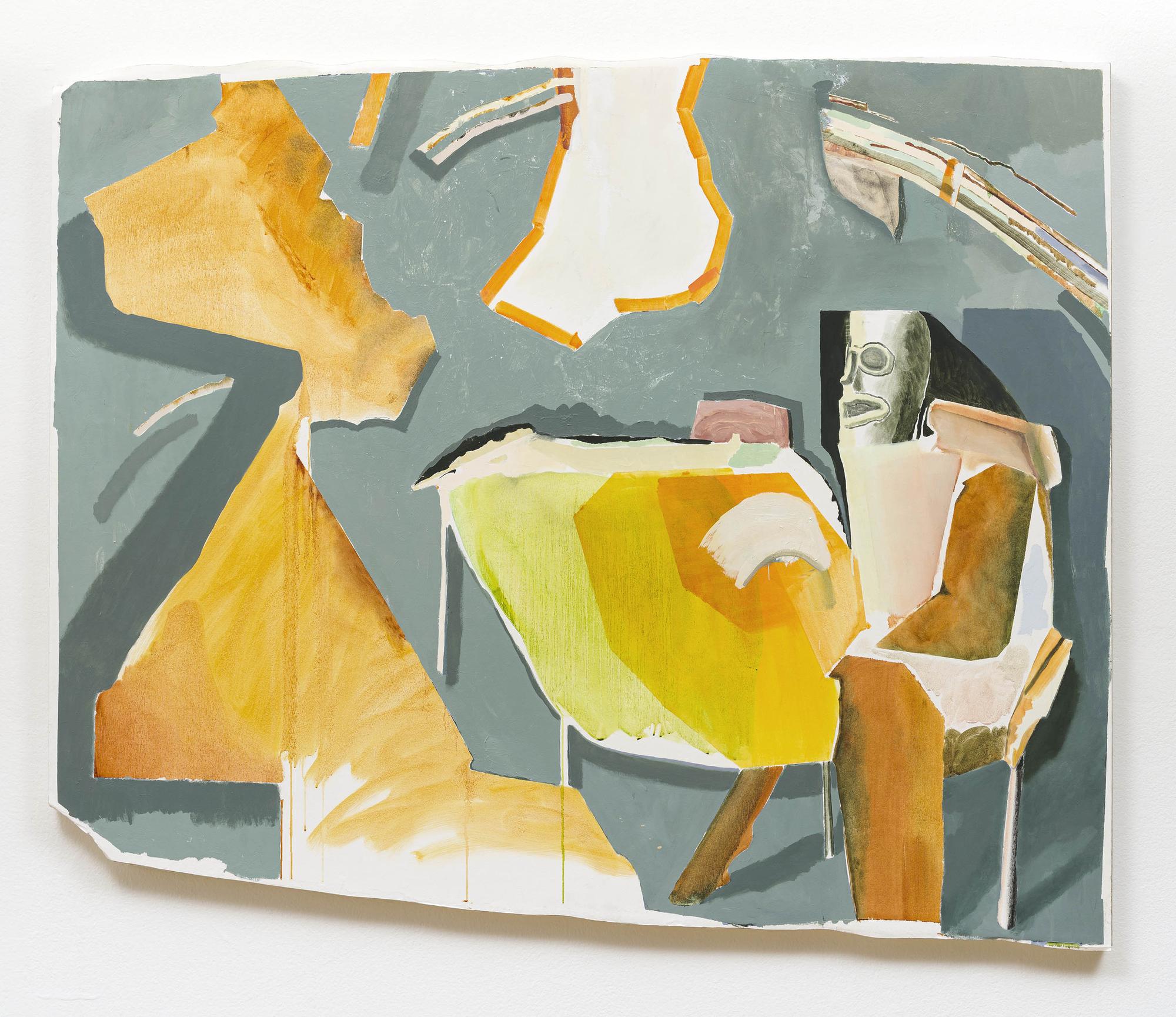
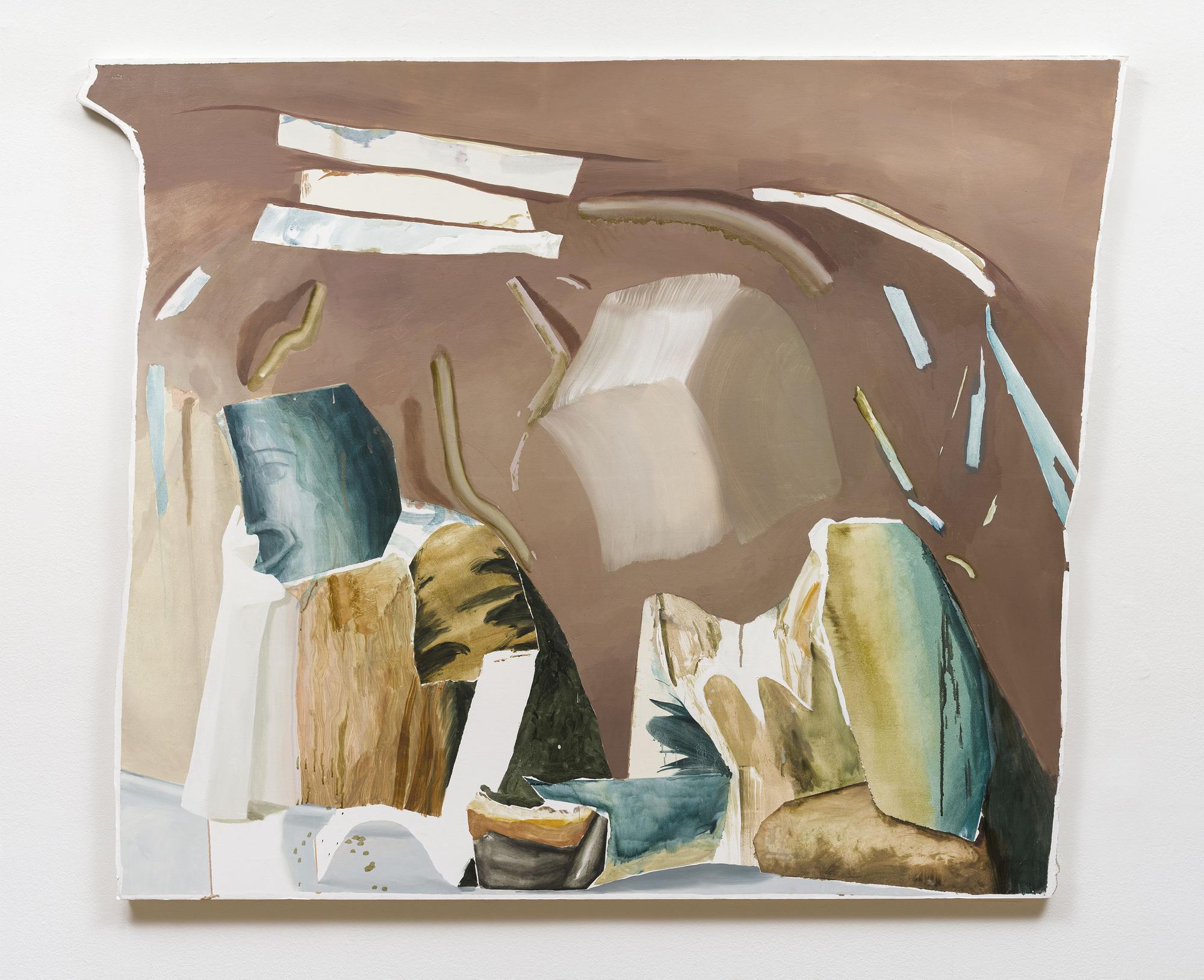
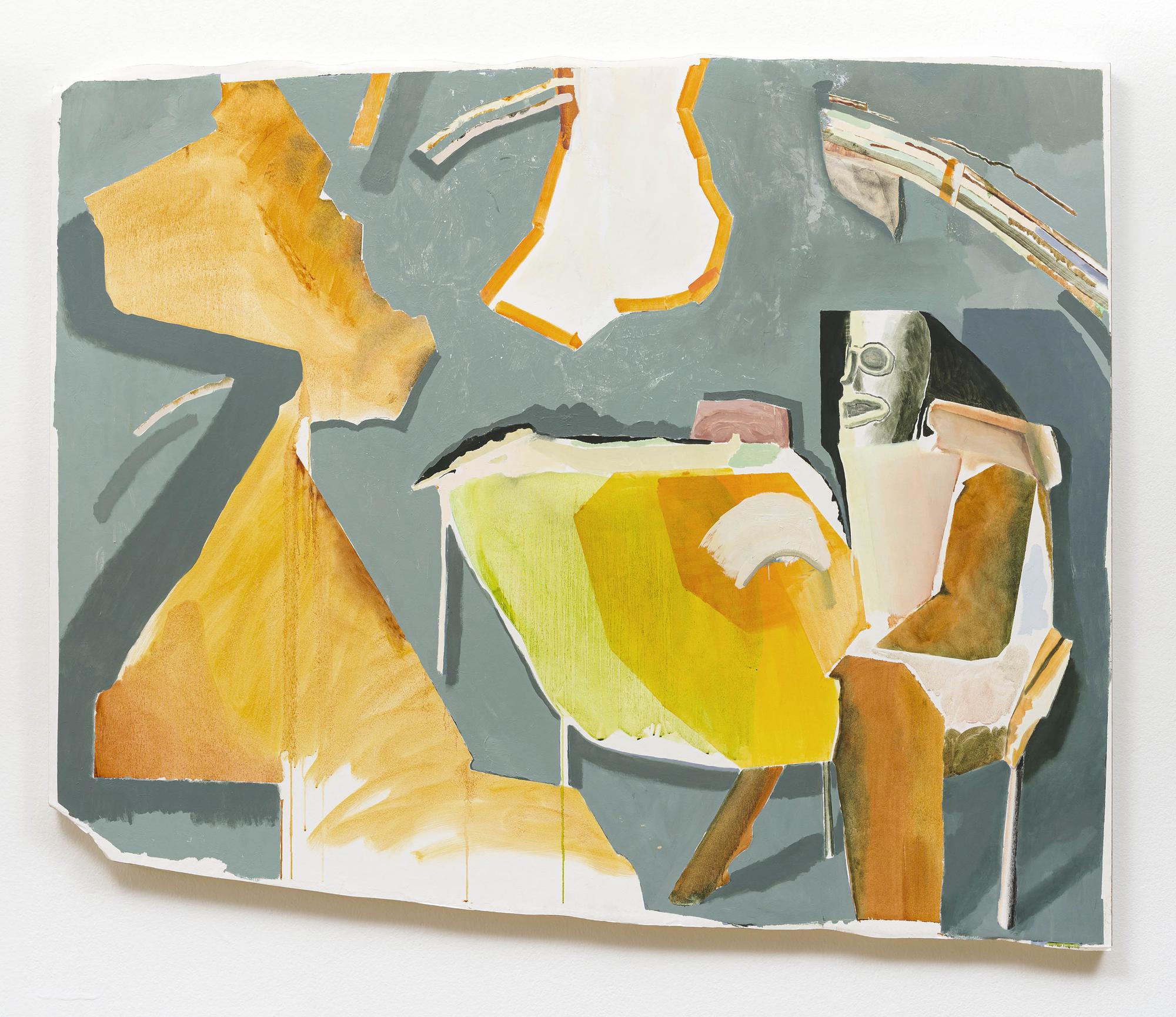
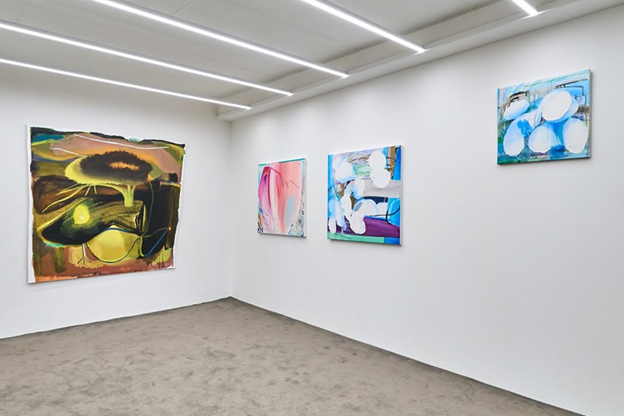
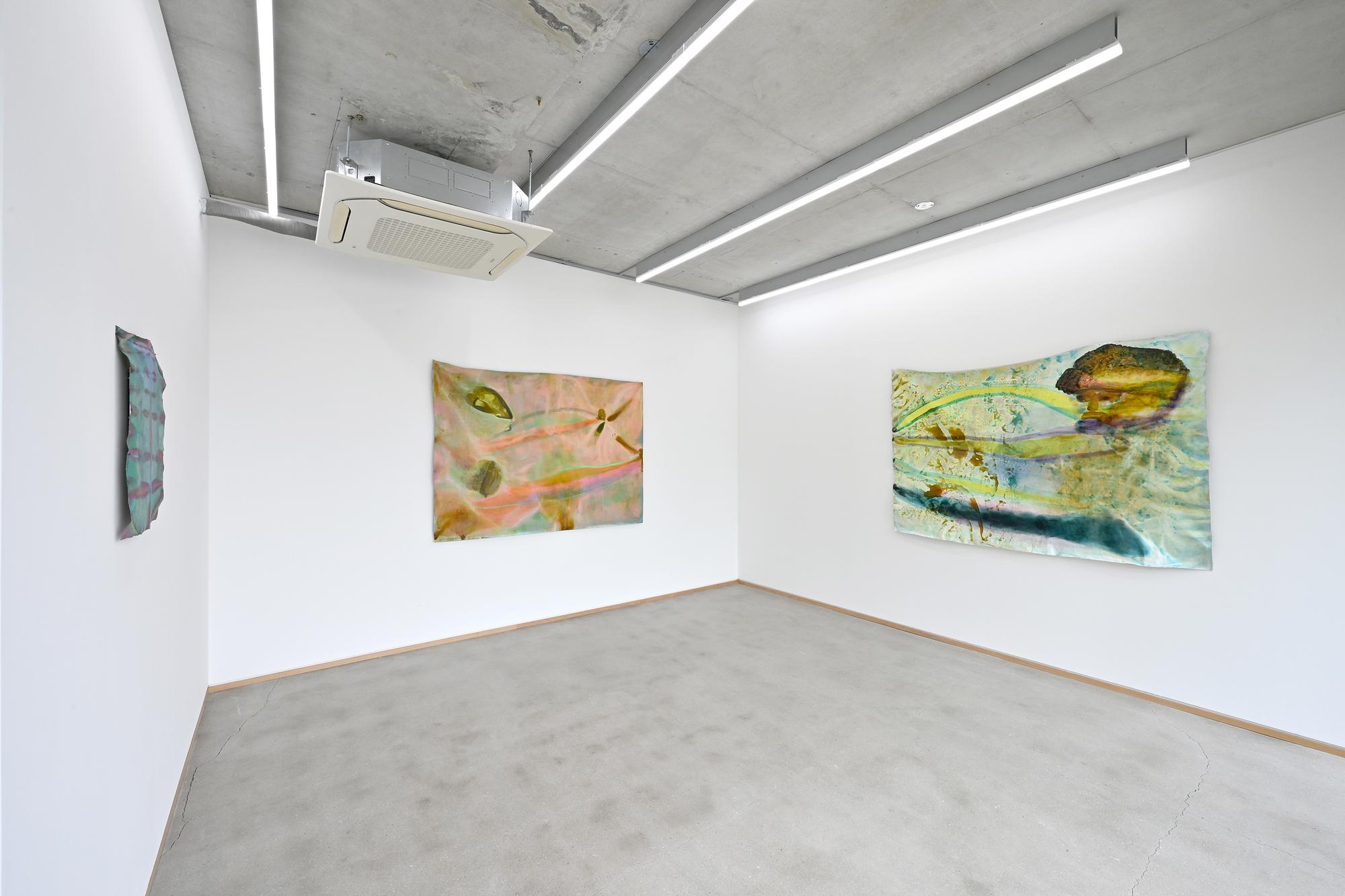
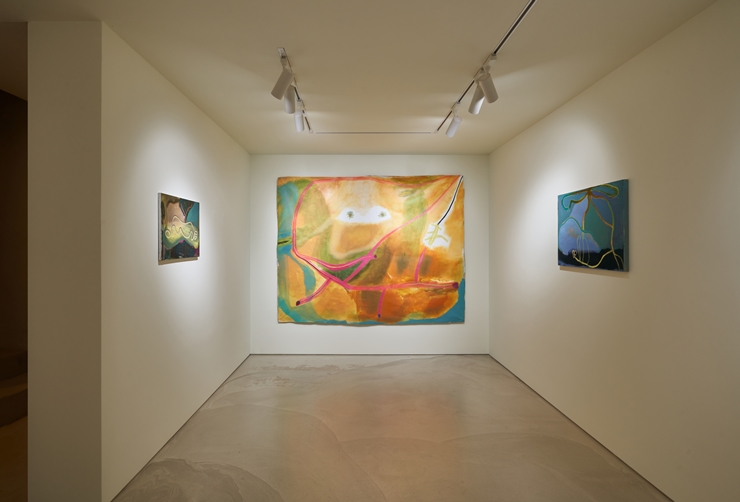
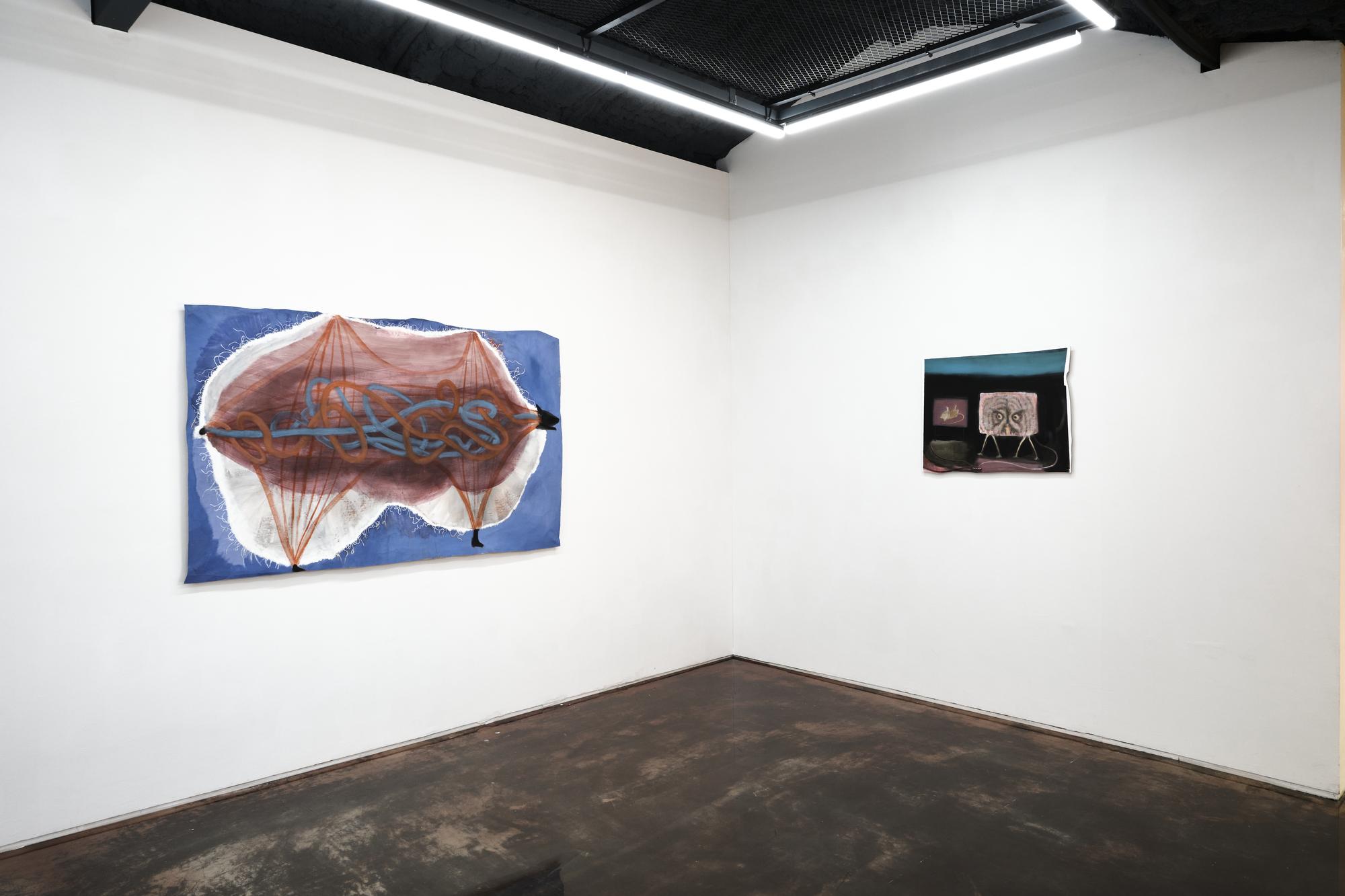
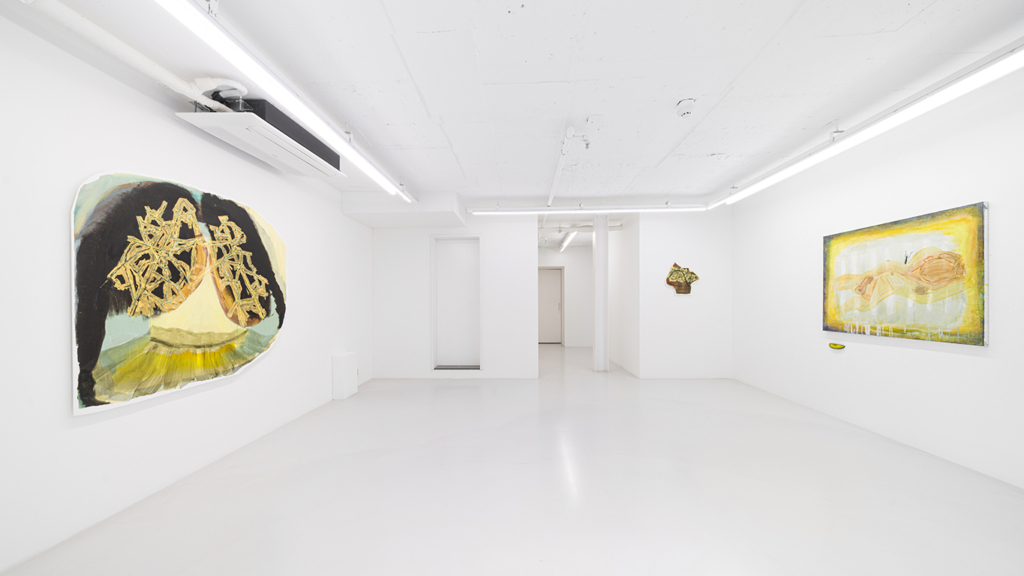
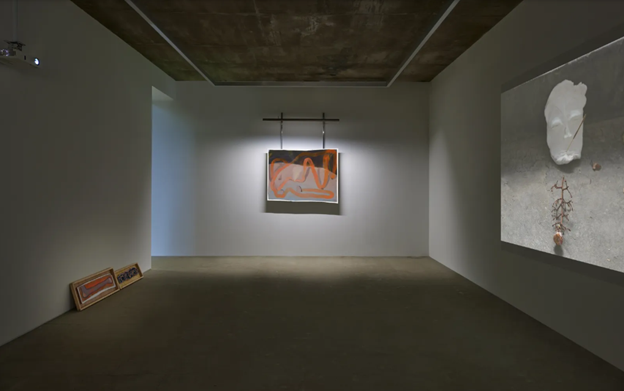
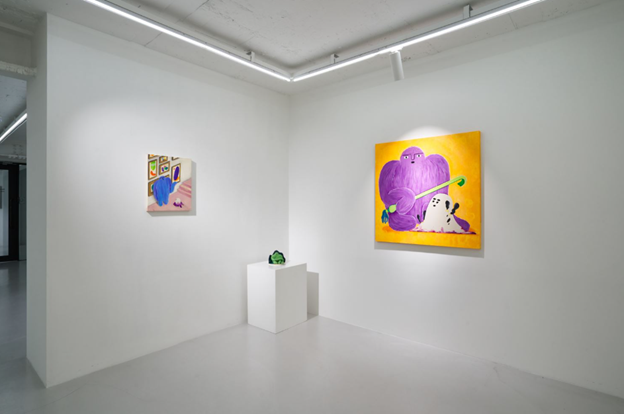
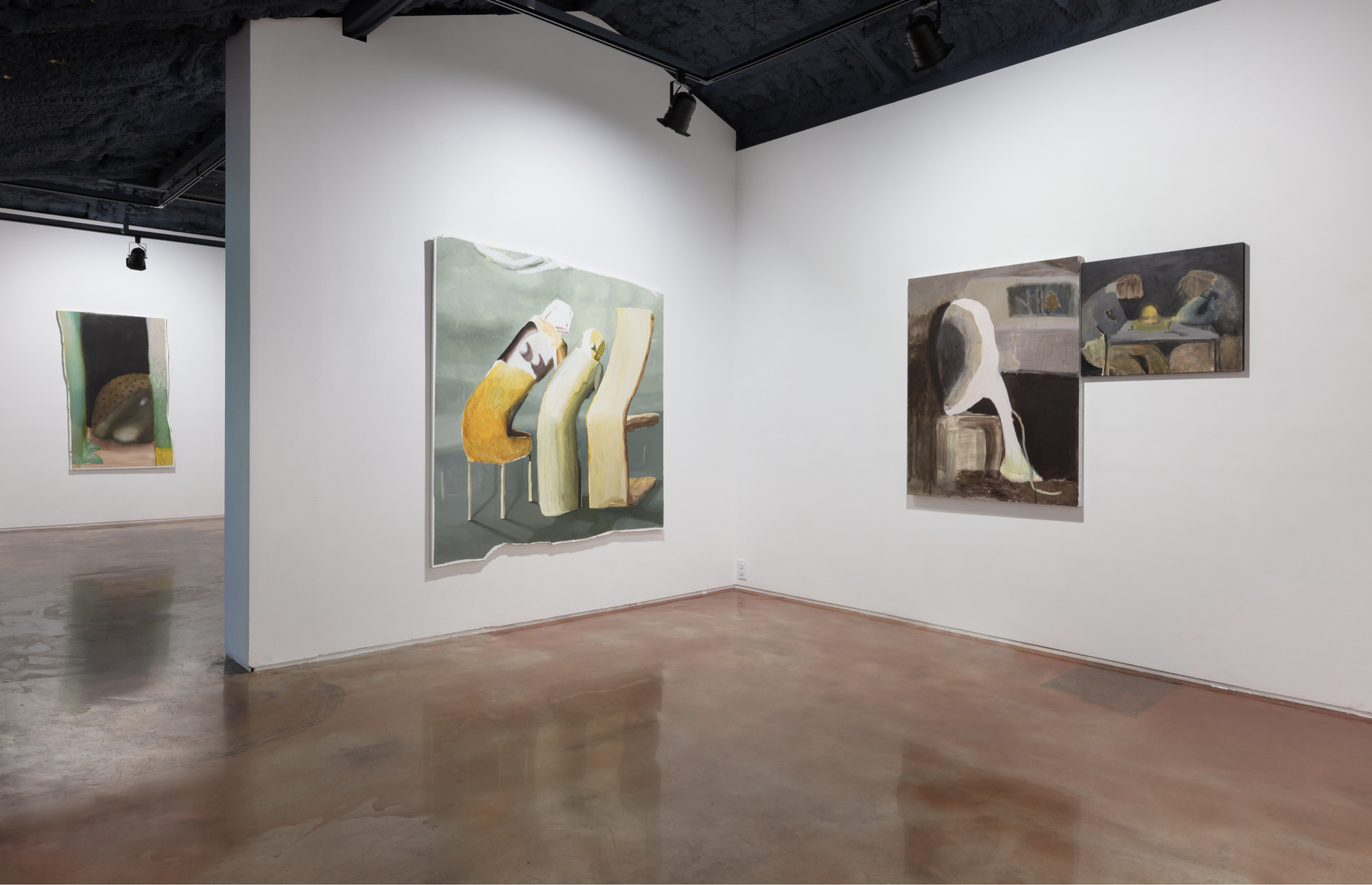
Paper has the property of being crumpled and torn. Having chosen
paper as the ground of her composition, the artist begins her work by first
tearing her pseudo-canvas. The rectangular sheet is torn in different ways
depending on the artist’s state of mind or condition, and with an intention to
limit contingency, a certain state of irreversibility loses its qualification
as a complete stage upon which composition may be placed.
Because it rejects
the premise that a ground ought to carry, because the ground itself becomes a
contingent performance, because what most draws the viewer’s gaze is the uneven
edge of the torn paper, we must already here consider the specificity of Dasom
Park’s practice. We must consider the character of a work in which the
properties of paper enter the eye first, or in which those properties are fully
exposed. Ordinarily, torn paper signifies a mistake, a post-paper situation, or
the end of paper.
Torn paper is no longer paper. The back or the end of paper
precedes the paper itself. It shows the end of paper prior to paper. The
pseudo-canvas is broken, damaged, or twisted. The notion of a square frame is
replaced by paper of all kinds of shapes, by paper already ruined. The back
comes before the front; the conclusion precedes the beginning. The order of
time and the logical sequence of before and after are twisted. Because it is
paper, the sheet barely set against the wall will endure the artist’s delusion
or confusion, or arbitrary staging, as it is. Such a working method was often
possible and will remain possible even with canvas, yet the artist’s method is
more extreme.
Since she does not permit her figures, forms, or images a solid
ground, a firm support, or a safe background, such visualization insists upon a
dizzying and jagged ground. This strategy—of confessing first a ground that is
deliberately torn, closer to barely hanging on the wall than standing against
it, of admitting defeat before even beginning—this incompetence may well be an
appropriate and good way of turning one’s back on the world. Life is at once
dying; a beginning is already seized by its end; recognition is no different
from self-negation. One who continues to see this becomes attached not to
nothingness but to death, result, and negation. Some have called this inversion
of temporal order advance purchase or preemption.
A foreordained ending, a
constantly forgotten yet guarded ending—rather than finally being helplessly
struck by defeat and death, one calls it in oneself; one welcomes it with clear
and bright eyes/mind before being struck down; one stages in advance the scene
of one’s own absence, and thus enjoys it. The artist already knows such
inversion. She seeks to deploy a strategy of “transformation that contains
loss,” of continually confronting “death as ending,” and thereby of “not
turning the moment of transformation into loss, of not being submerged in
loss.” Continuous change and difference will ultimately stop at loss and death.
One who knows this does not humbly kneel before mortal truth nor place parentheses
around it, but instead begins to play with it. In order not to be submerged in
loss, one installs a stage adequate to submergence and enjoys the act there.
The artist borrows a “methodology of dreams” to install a stage of imagination
where “what she once believed joyfully collapses.” Through such a dream method,
in which trivial dreams, flat images, and flattened signs combine and
substitute for one another infinitely according to their internal logic, the
artist endures and enjoys this world between a logic of reality cleared of
death and loss and the truth of death and loss. It is not tragedy. The artist
summons a stage where solid things “joyfully collapse.”
Even the color she
favors is yellow. Yellow is a color of cheerfulness and affirmation. Yellow
devoted to a joyful downfall. Though helplessly torn and clumsily hanging, it
is nevertheless not tragic, nor melancholic, nor shabby—it suggests the
possibility of a world. The method of dreams expels a reality protected by firm
and solid things, subordinated to the order of ideas. Within structures of
logic, order, or concepts, sensation malfunctions and seizes its own life.
One
cannot read, see, or understand the “interior” of such a groping from the
outset premised on failure, that refuses to make a ground to protect and
sustain its images, figures, and forms. Our own “premises,” such as emotion,
tragedy, moral lesson, prudence, or sentiment, will also be torn; and we must
look at this “oil on paper,” in which important parts have all been ripped away
from a single tattered sheet, in which forms resembling scraps found in a trash
can seem to have been pasted together.