
Team TRIAD, formed in 2018, is a collective of three artists—Gwangmin Hong, Minje Jeon, and Honam Kim—who engage in ongoing experiments across media.
 
They read and interpret data from contemporary society, including urban environments, through both objective and subjective lenses, and continue to create works that translate hidden narratives into new visual and sonic forms.


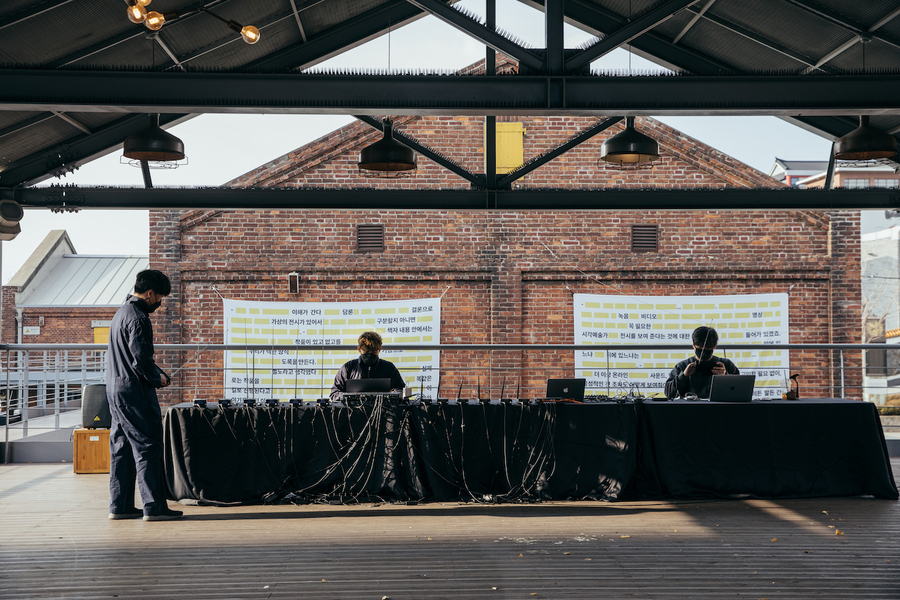
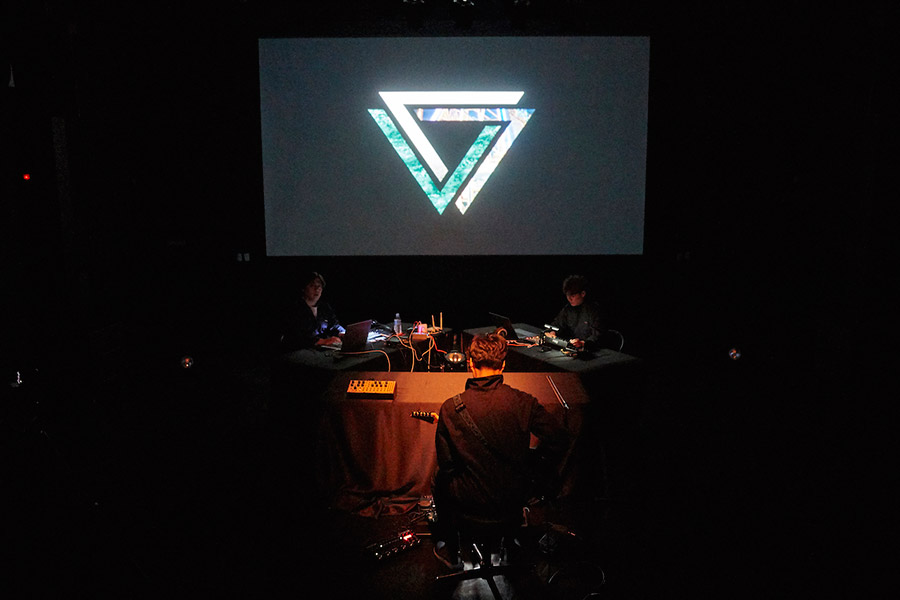
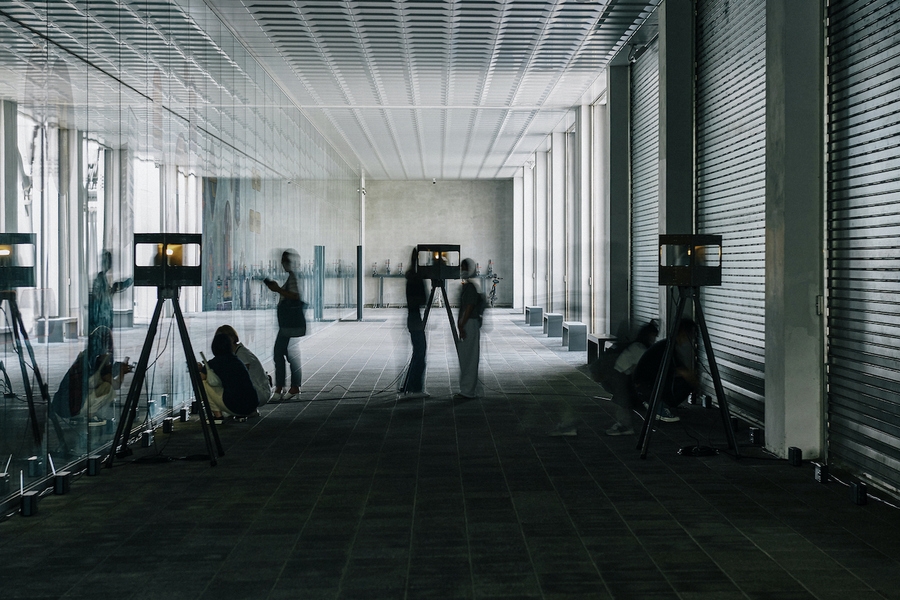
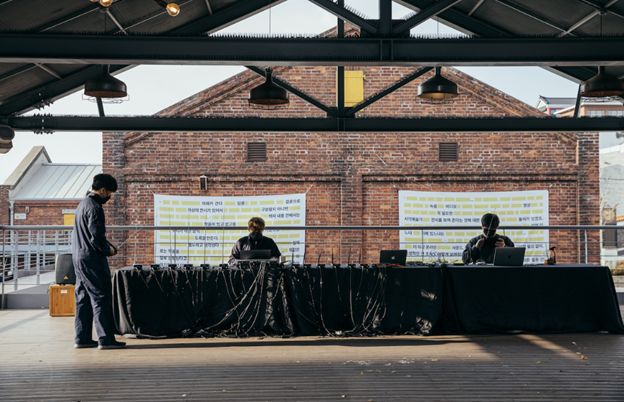
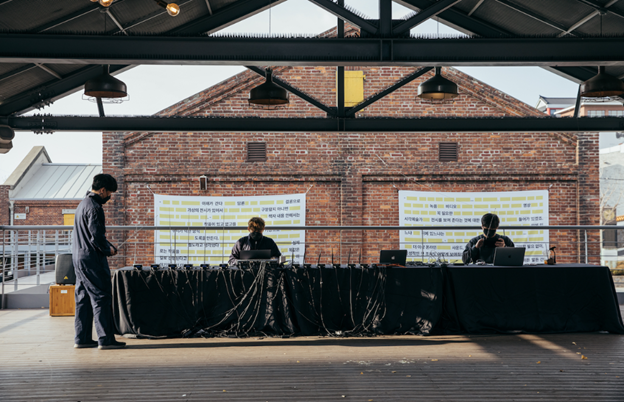
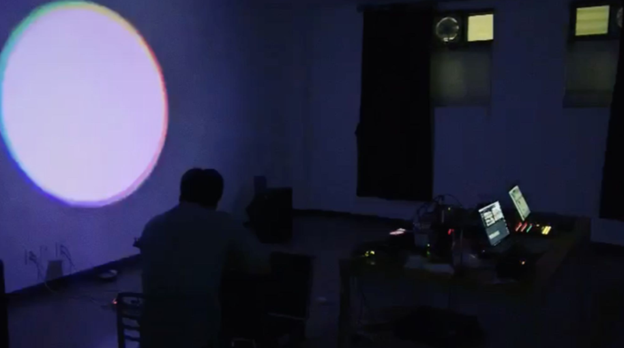
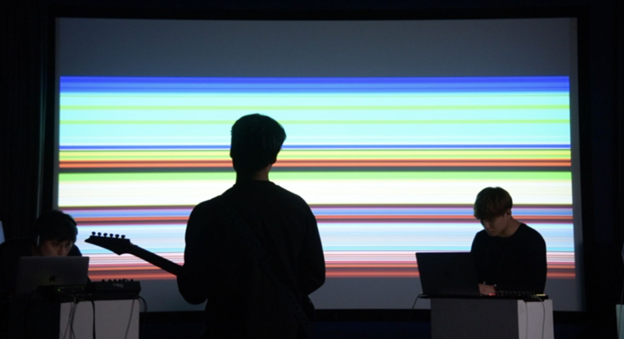
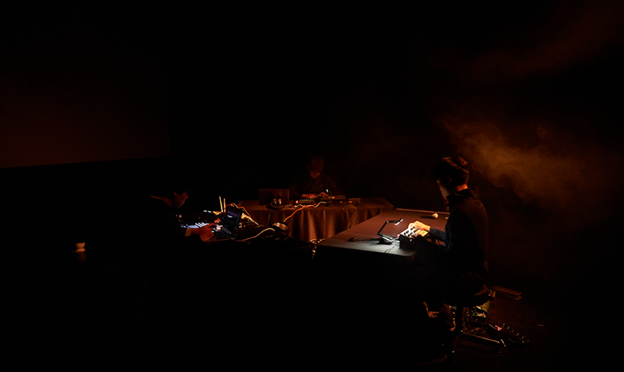
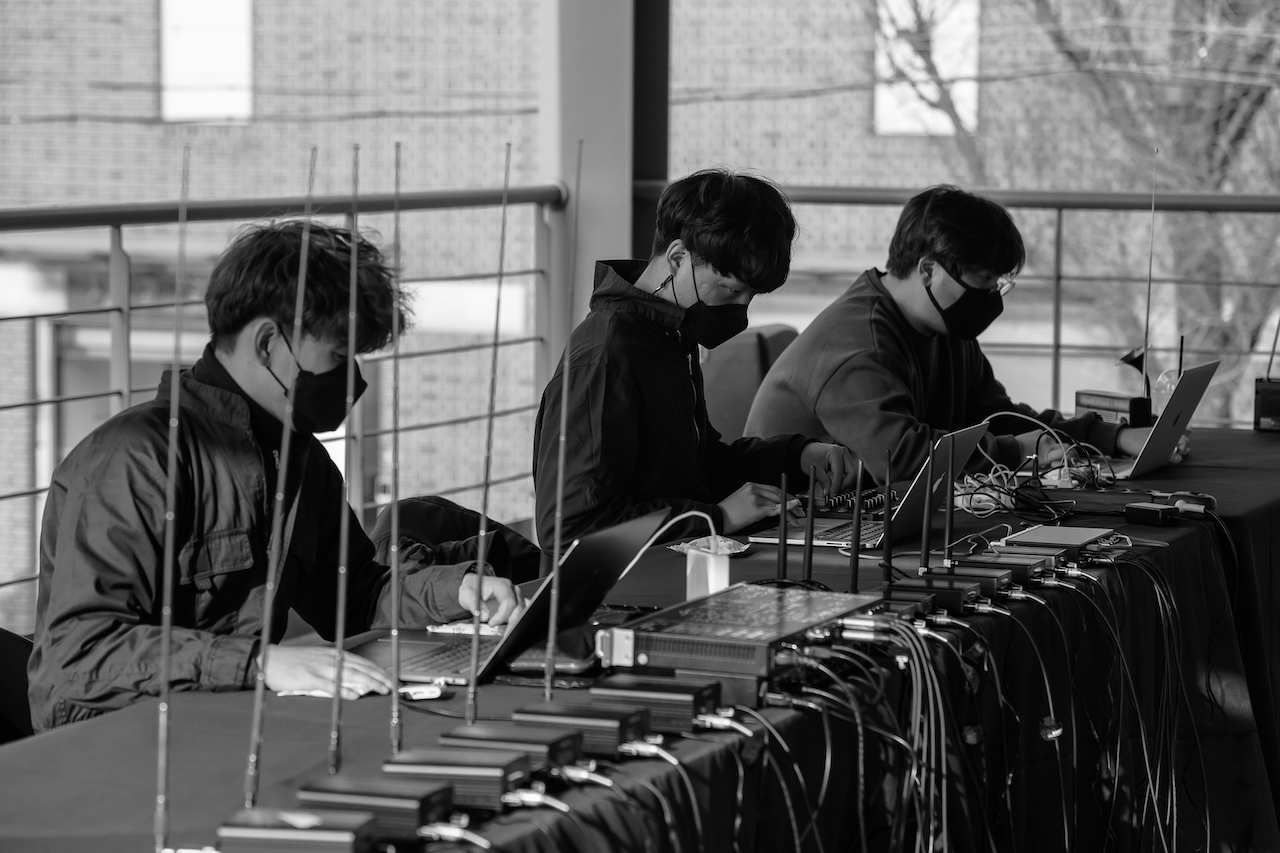
Team TRIAD, Urban Jaesaeng Device#2: Radiophonic Orchestration, 2020, Sound performance. ©Team TRIAD

The name Team TRIAD derives from the musical term triad, referring to a three-note chord composed of different pitches. As the name suggests, Gwangmin Hong, Minje Jeon, and Honam Kim have collaborated in an ensemble-like format centered on the shared medium of sound, offering new auditory experiences through soundscapes.
 
Gwangmin Hong, who has long explored the diverse possibilities of media and sound, focuses on composition and spatial sound design within Team TRIAD. Drawing on musique concrète techniques that involve collecting sounds from various environments, he works with electroacoustic elements, ambient sounds, and technology as materials to create new forms of sound and music.


Team TRIAD, Urban Jaesaeng Device#2: Radiophonic Orchestration, 2020, Sound performance. ©Team TRIAD

Minje Jeon concentrates on expanding messages through appropriate media. He analyzes related subjects or phenomena as data, translates the insights he discovers into algorithms, and develops works from there. These algorithms materialize as systems that take the form of programming, sound, or media. In sound-centered works, he employs multiple media to construct intense and immersive soundscapes.
 
Lastly, Honam Kim is interested in transforming diverse forms of information into instruments and interfaces, through which he has presented a wide range of exhibitions and performances. Within the team, he focuses on building devices that create a coherent context between music and non-music. Beyond device-making itself, he explores ways of engaging with various audiences to propose new modes of use and interaction.

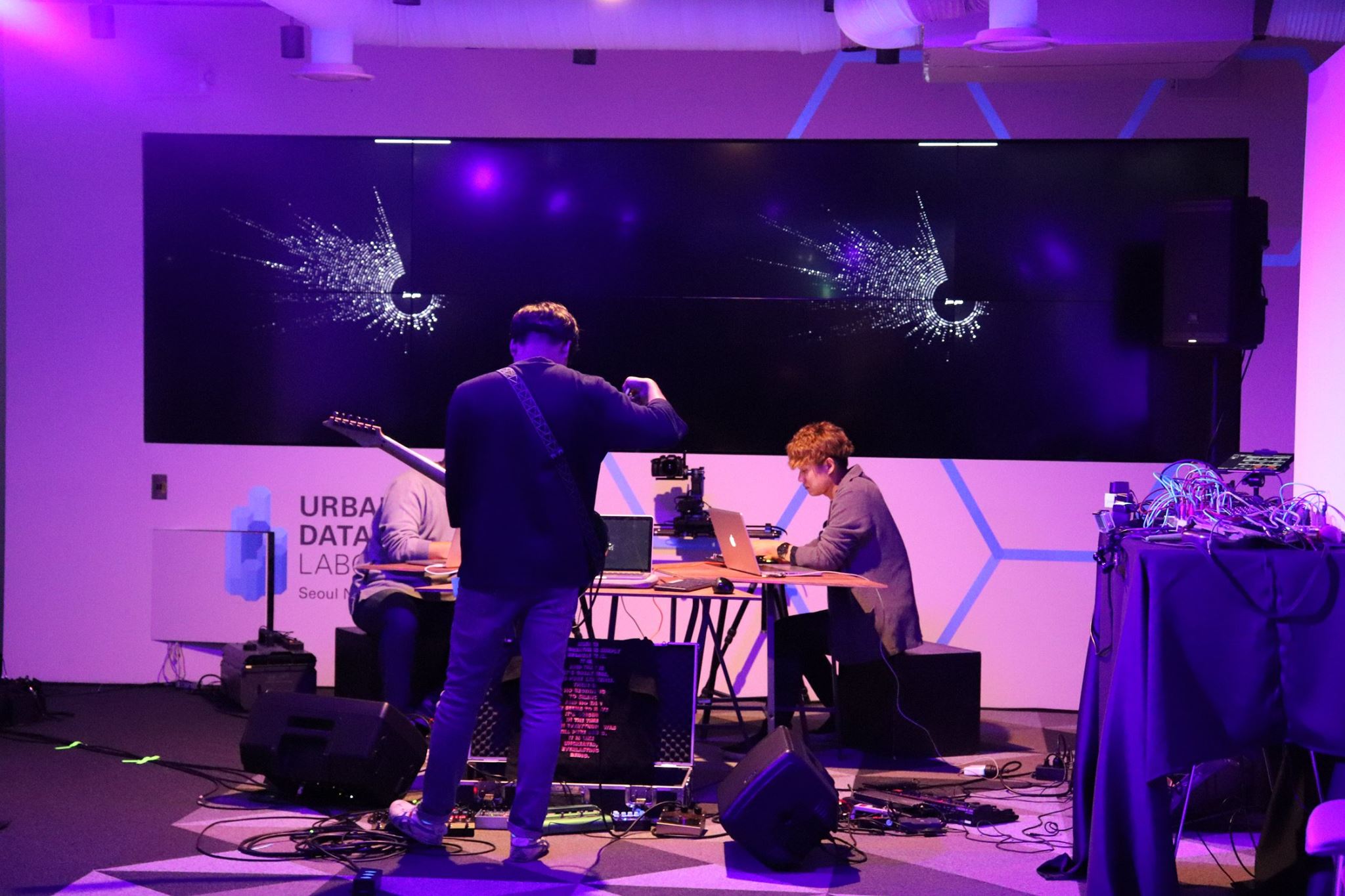
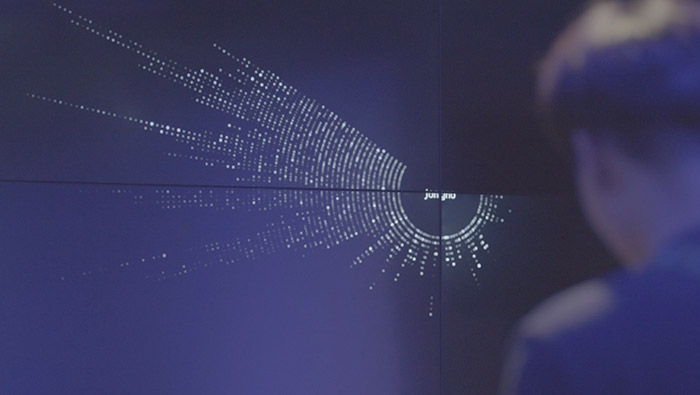
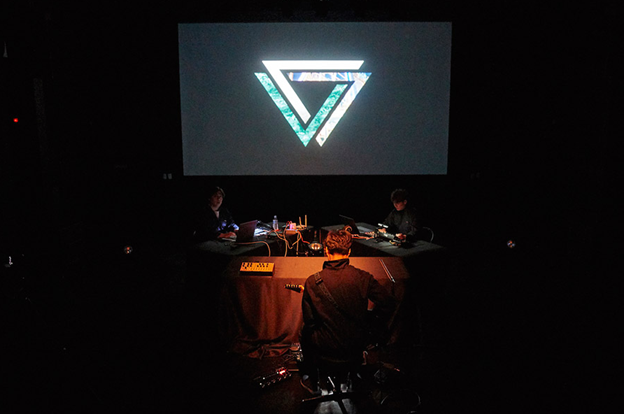
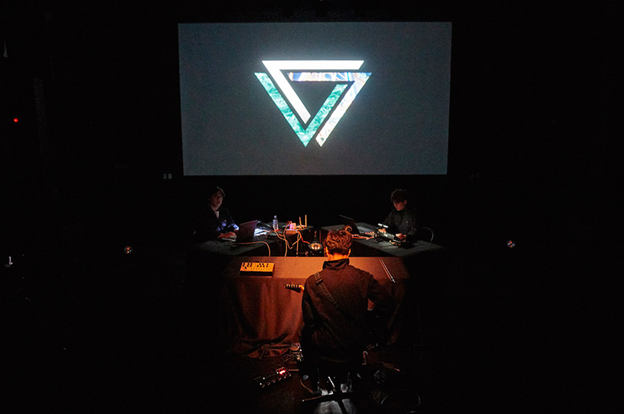
Team TRIAD, The Musical Score of City: Jongno, 2018, Data sonification, sound performance. ©Team TRIAD

Their practice begins with sharing the questions and concerns each member brings to the table. The collective believes that issues permeating people are also inscribed in the places they inhabit, and they seek to read such traces within the urban environments we encounter, translating them into artistic expression.
 
The Musical Score of the City: Jongno (2018) marks their first attempt to weave together each member’s individual approach to sound into a single work. The project takes its point of departure from The Musical Score of the City (2017), a work by Minje Jeon, and develops into a musical and sound performance based on data and visual materials collected from Jongno District.

Team TRIAD, The Musical Score of City: Jongno, 2018, Data sonification, sound performance. ©Team TRIAD

The Musical Score of the City: Jongno is grounded in objective visuals and sounds generated through a building data–based algorithm, drawing on thirty years of architectural data from Jongno District. Upon this foundation, subjective sounds—each interpreted and performed by the three artists—are layered to complete the work.
 
These subjective sound elements often took shape through experimental structures and improvisational passages during the performance process, incorporating a wide range of variable and fluid components.


Team TRIAD, Data Pulse: Incheon, 2019, Data sonification, sound performance. ©Incheon Art Platform

In their subsequent work, Data Pulse: Incheon (2019), Team TRIAD reinterpreted the distinctive characteristics of the city of Incheon by expanding them into an audiovisual medium. For this project, the artists collected and analyzed a wide range of data from Incheon, using it as the material foundation of the work.
 
The data included video and sound recordings from the city; air quality data from 2018 covering fine dust (PM10), ultrafine dust (PM2.5), sulfur dioxide, carbon monoxide, ozone, and nitrogen dioxide across Incheon’s 17 districts; as well as urban data such as above- and below-ground building levels, building coverage ratios, floor area ratios, road information, and the volume and types of import and export cargo handled by the city in 2018.
 
From the constant inflow and outflow of goods and people through this port city—spreading across the nation and converging again in Incheon—Team TRIAD identified a rhythm akin to that of a circulatory system.
 
Cargo moves like blood, transportation routes resemble veins, the city functions as an organ, and buildings act as cells, all pulsing in time with the heartbeat of Incheon. Data Pulse: Incheon evokes this rhythm of urban data as it shifts along logistical flows, activating multiple senses to render the city’s dynamic metabolism perceptible.


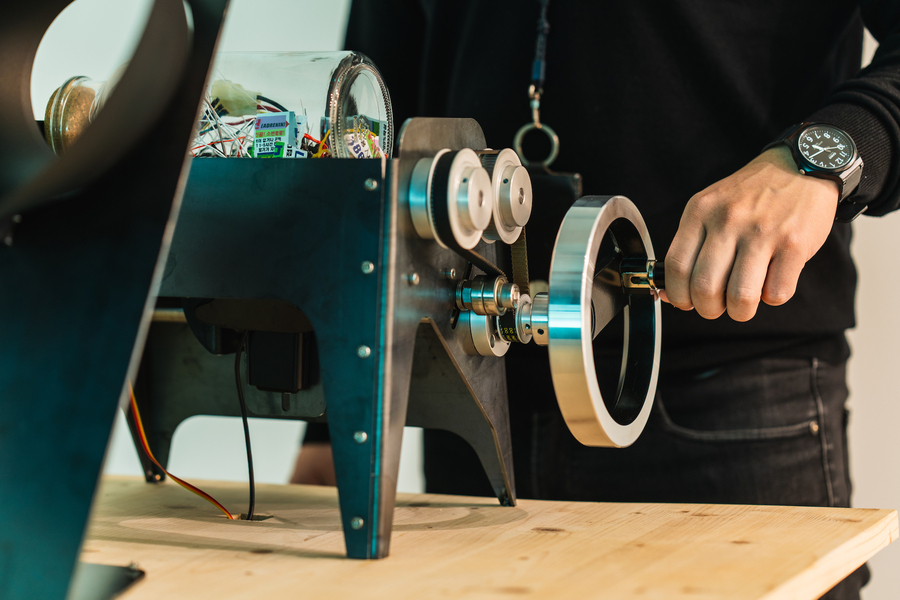
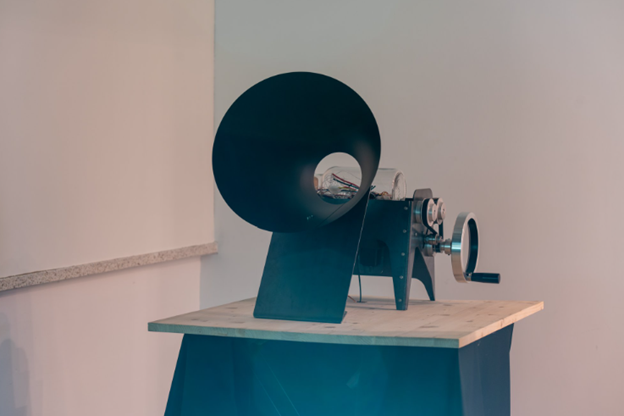
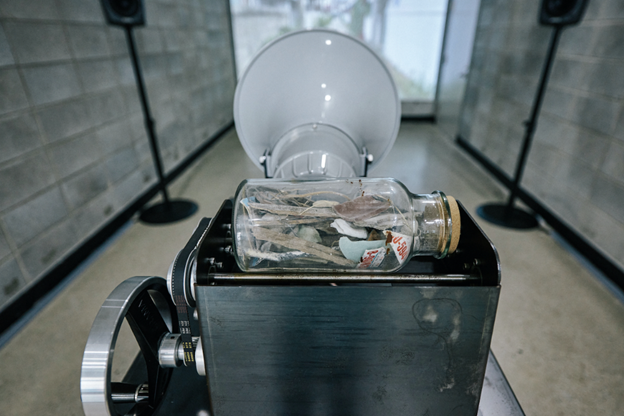
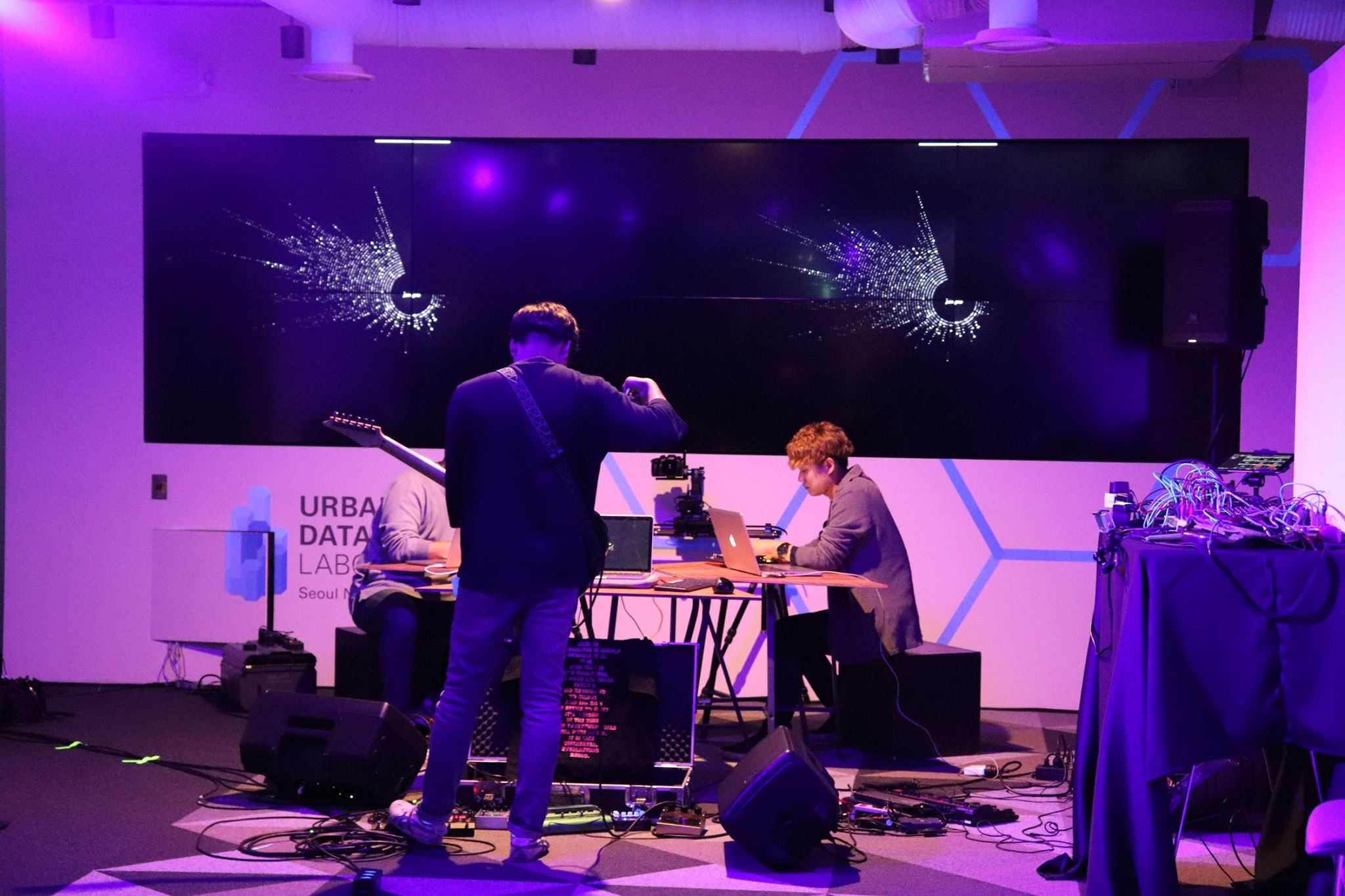
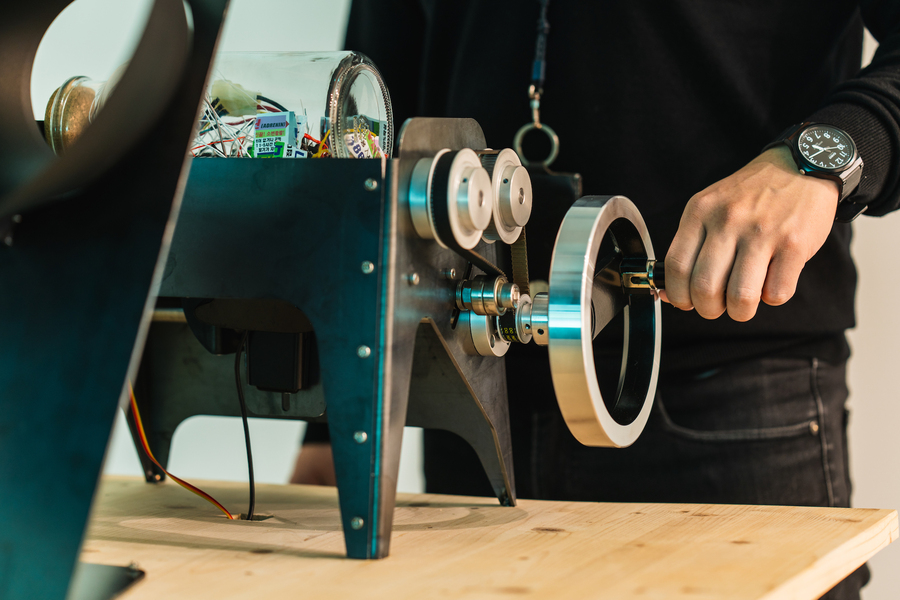
Team TRIAD, Urban Jaesaeng Device, 2018, Data sculpture ©Team TRIAD

Meanwhile, in the exhibition 《A.I.MAGINE》 held at the Urban Data Science Lab in 2018, Team TRIAD created Urban Jaesaeng Device, an instrument that plays back and recycles disappearing sites in Seoul.
 
Paradoxically, this work originated from an imagination of the future yet to come. Team TRIAD speculated that what we may long to create in a more technologically advanced future could in fact be the past—something no longer accessible or visible. This contemplation became the starting point of the work.


Team TRIAD, Urban Jaesaeng Device, 2018, Data sculpture ©Team TRIAD

Team TRIAD drew inspiration from the phonautograph, known as the earliest device for recording sound, in developing Urban Jaesaeng Device. The phonautograph disappeared from history due to its critical limitation—it could not play back the sounds it recorded. However, with contemporary technology, sounds originally recorded in 1860 were eventually recovered and made audible.
 
Echoing the revival of 19th-century sounds preserved by the phonautograph, Urban Jaesaeng Device emerged from the artists’ imagination that highly advanced machine learning technologies might one day resurrect the past—or a present on the verge of disappearance. By regenerating the context and form of the phonautograph into a new instrument, Team TRIAD sought to design an experience in which places in Seoul that are becoming part of the past are played back and recycled through sound.
 
Through performances that “play” quantitative and qualitative place-based data—compiled from diverse records—using the Urban Jaesaeng Device, the work connects and expands an imaginative axis spanning past, present, and future. In doing so, it evokes alternative sensory perceptions and memories of the time-space in which we live.


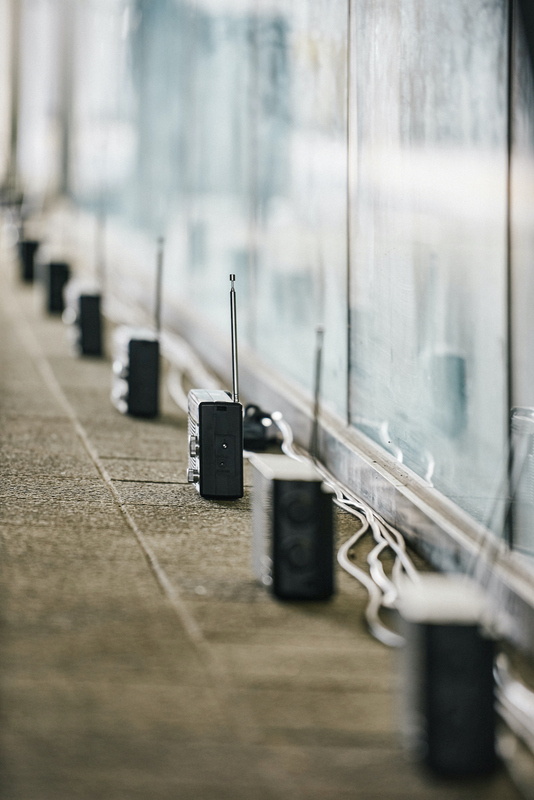
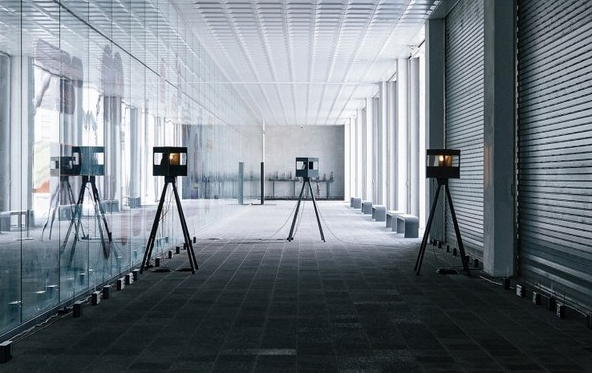
Team TRIAD, Urban Jaesaeng Device #2 Sound Walk, 2022, Multi-channel radio sound system, Dimensions variable ©Team TRIAD

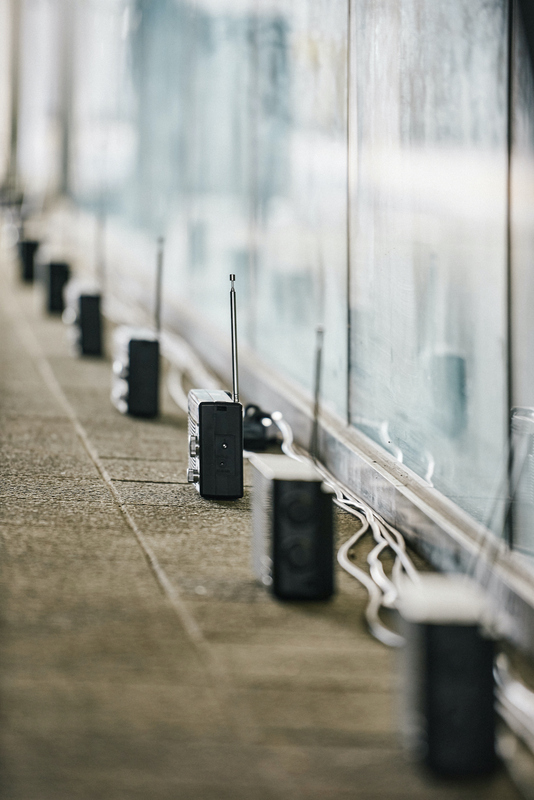
Subsequently, Urban Jaesaeng Device expanded into a device that replays traces of various cities and evolved into a spatial sound environment. For instance, Urban Jaesaeng Device #2: Sound Walk (2022) invites participants to sense the city by walking among dozens of radios, much as one perceives the urban environment while moving through it.
 
The analogue radios deliver the experience of using tiny hand sensations to pick up transmitted signals and listen with our ears. In the process of exploring the river of noise between each channel, users gain the capacity to listen independently to the sound itself.


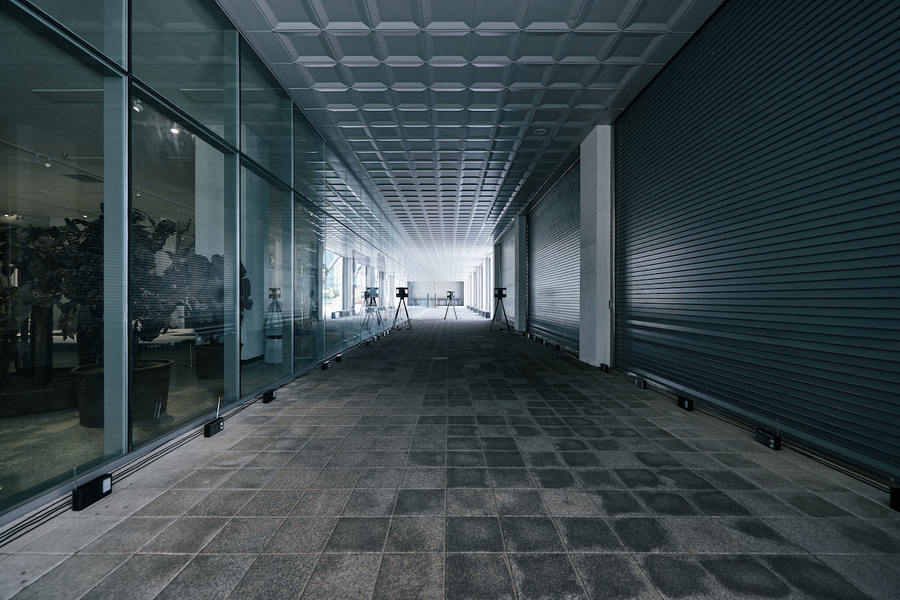
Team TRIAD, Urban Jaesaeng Device #2 Sound Walk, 2022, Multi-channel radio sound system, Dimensions variable ©Team TRIAD

This work transfers how to use analog radios and listening experience of them into outdoor space and simulates experiences of listening in the city. The three artists divide the entire space into three sections and present urban sounds that each of them has created. These sounds are simultaneously heard individually and combined as a single rumble, creating a new auditory experience.
 
As though wandering through a city, viewers hear different sounds according to their different positions. In this process, they become able to perceive space newly not as a single big acoustic mass but as a gathering of small individual sounds.


Team TRIAD, Urban Jaesaeng Device #3 Rotary, 2022, Mixed media, 170x80x80cm ©Team TRIAD

While Urban Jaesaeng Device #2: Sound Walk focuses on linear movement and the experiences of viewers approaching sound, Urban Jaesaeng Device #3 Rotary (2022) uses traffic volume data from Cheongju intersections to concentrate on the movement of curved, revolving and cyclical sound coming to us.
 
This work uses the principle of rotary speakers, in which a motor on a central axis turns the speakers in real time. The Doppler effect created through various changes in speed creates unique tones. Viewers can autonomously hear the different tones converging as the revolution speed increases and decreases according to transit data from Cheongju intersections.


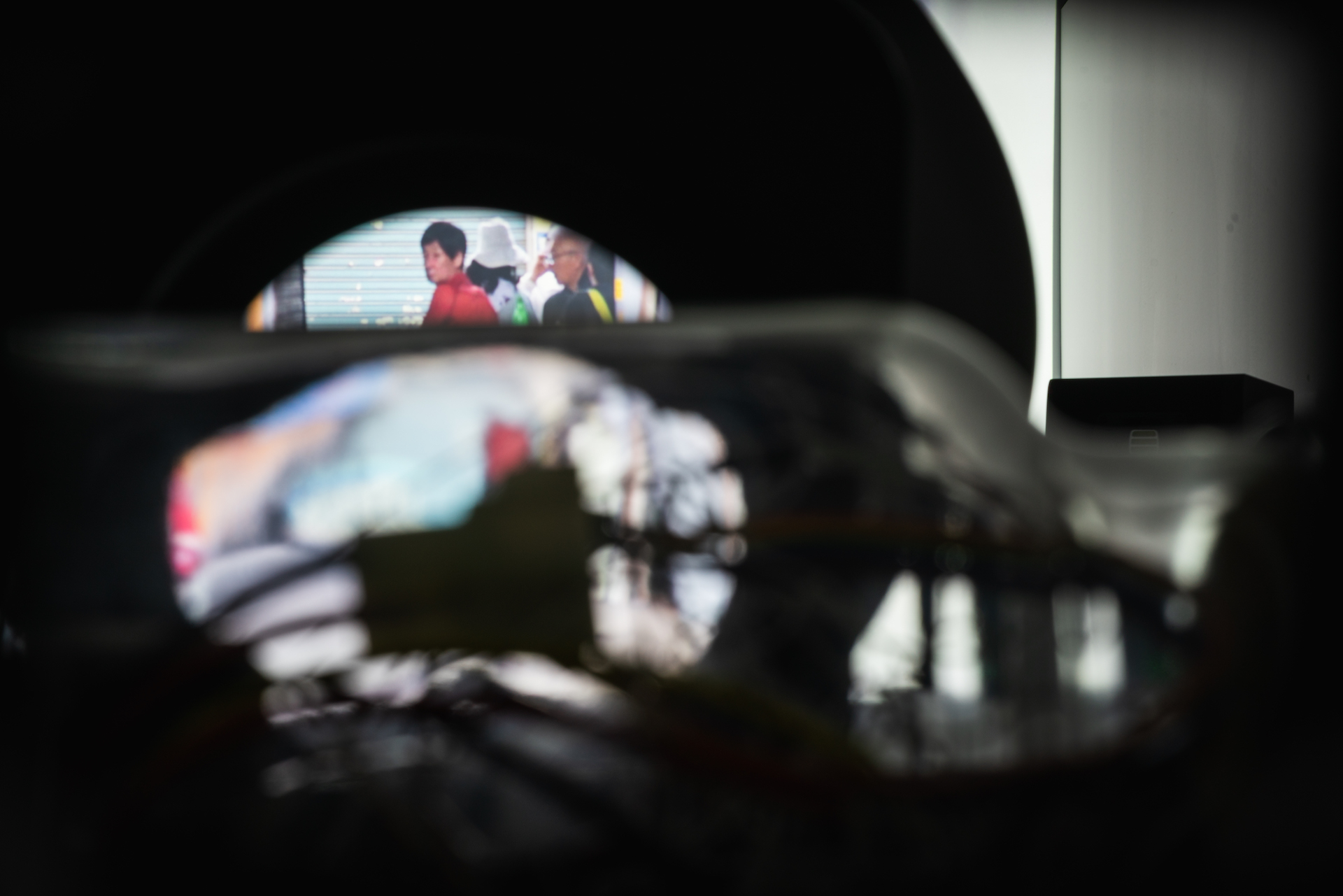
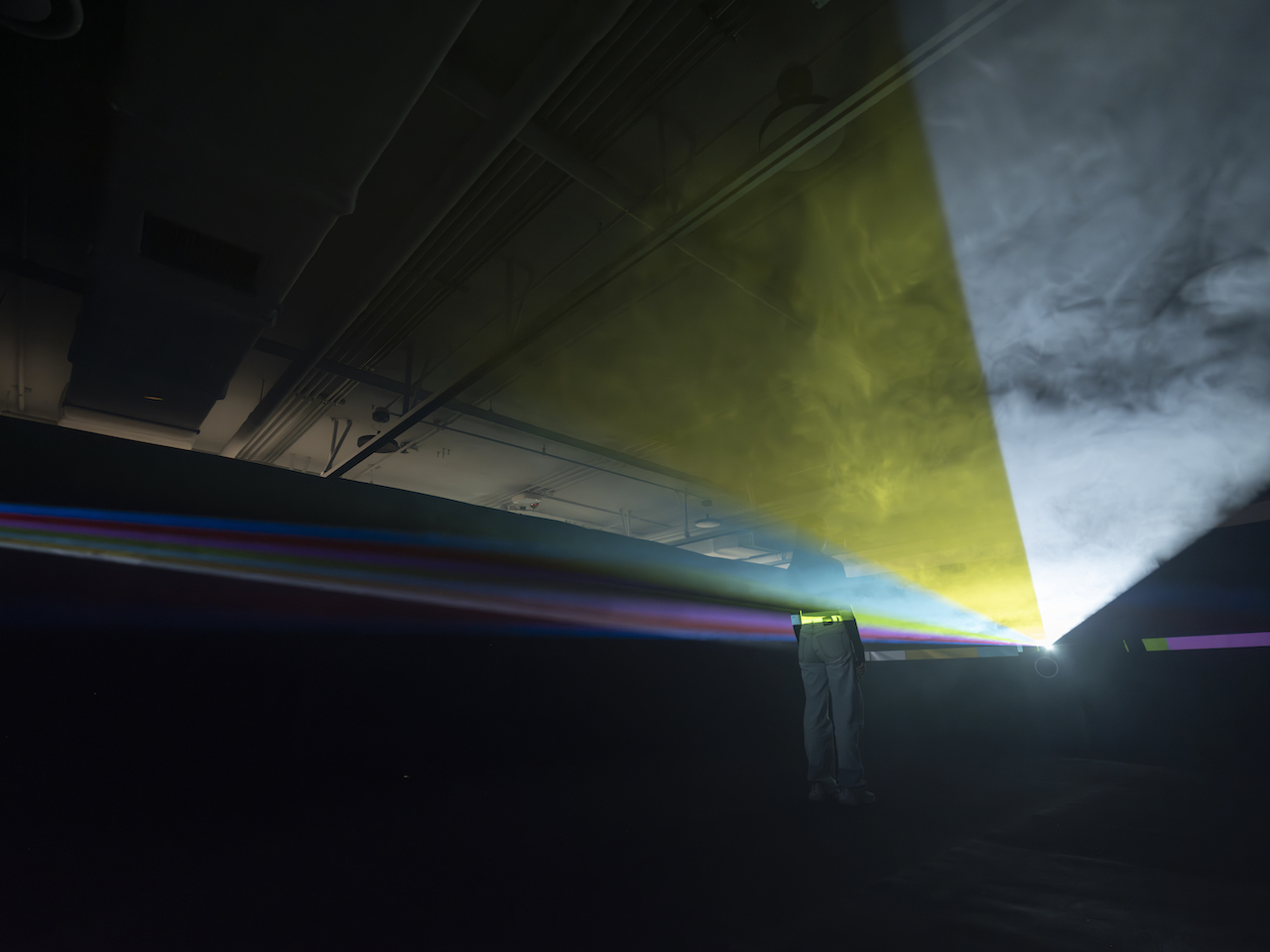
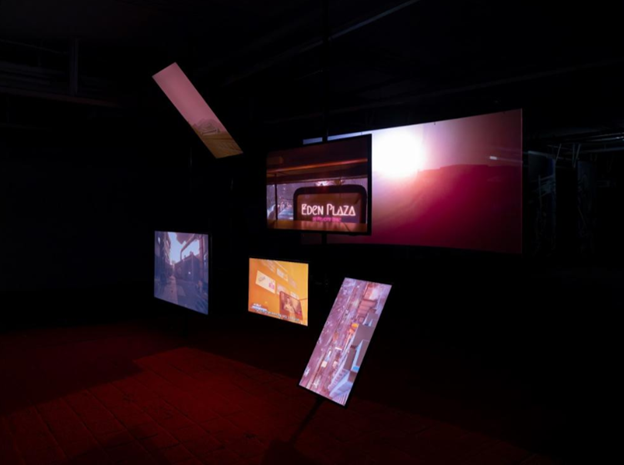
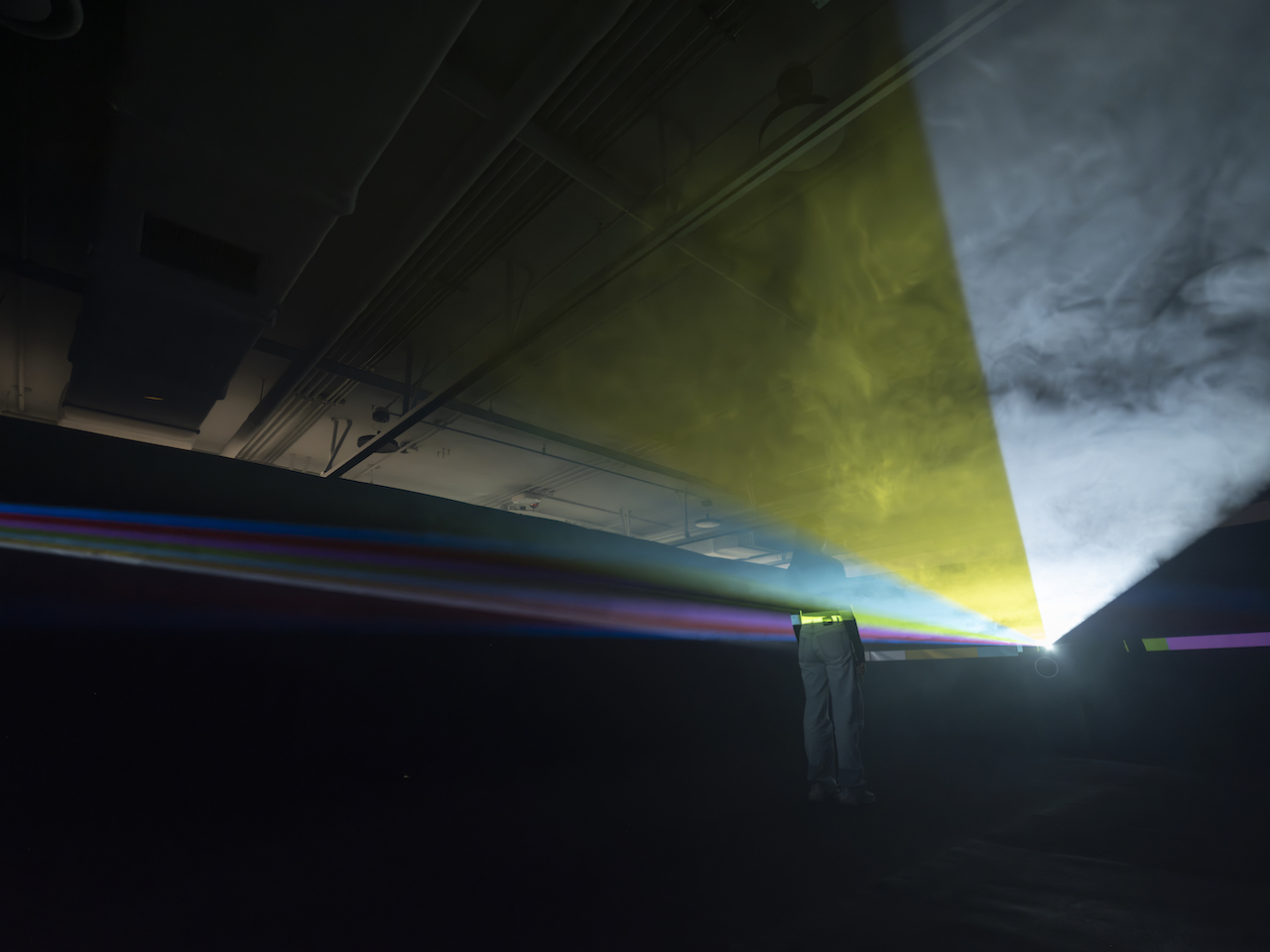
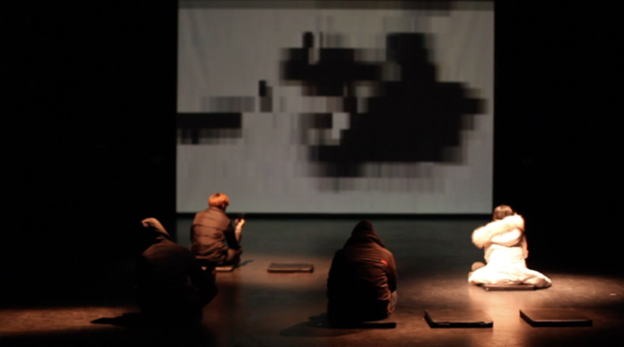
Team TRIAD, Urban Jaeseng Device #4: Phantom Pain, 2024, 2-channel video, sound, wood structure, variable dimensions, 8 min. ©Seoul Museum of Art

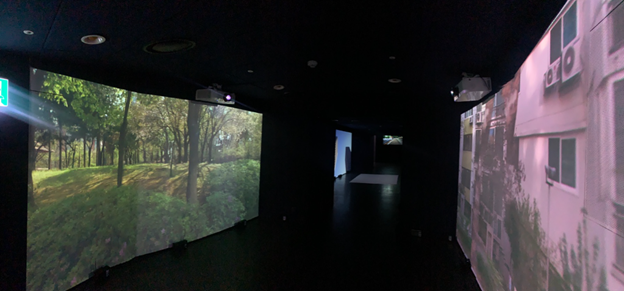
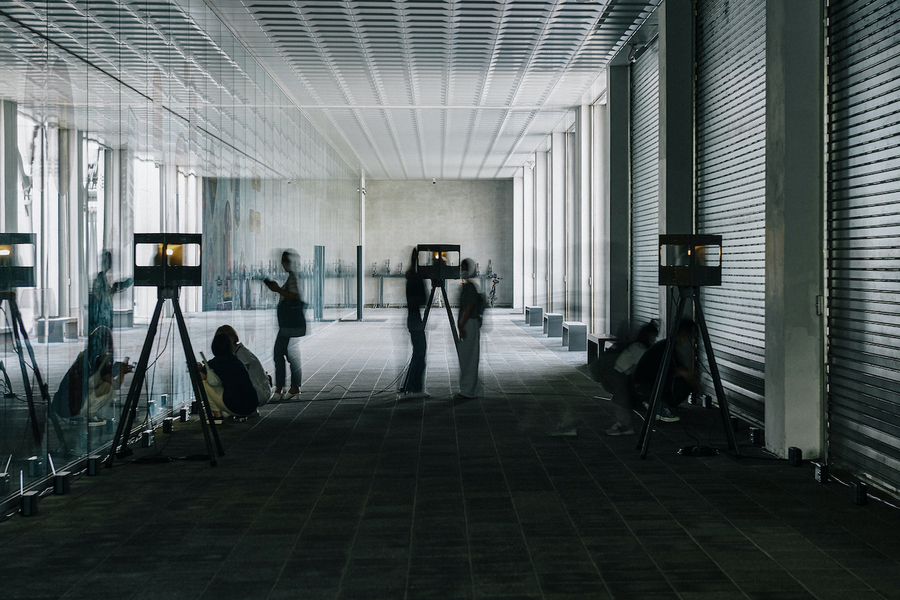
Furthermore, in their 2024 work Urban Jaeseng Device #4: Phantom Pain, Team TRIAD examines the perception of dystopian representation by processing the urban data of Seoul and Pyongyang into light and sound.
 
For this project, the artists compressed video and sound extracted from media sources in the two cities to generate color spectra. Although the images drawn from each system reveal differing political and social contexts around similar themes, they are intersected and collide through the artists’ intervention, ultimately being reduced into a single pixel.


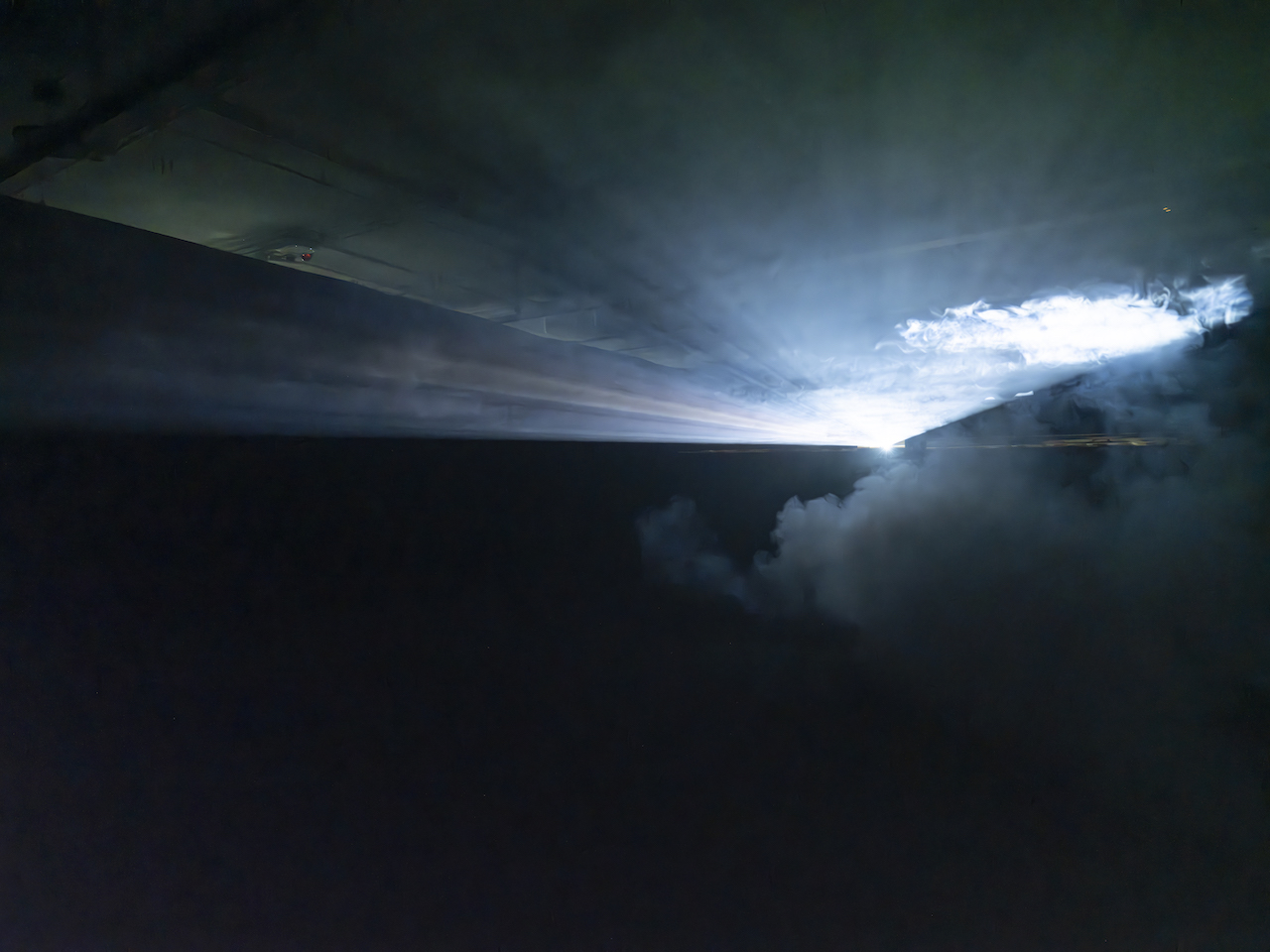
Team TRIAD, Urban Jaeseng Device #4: Phantom Pain, 2024, 2-channel video, sound, wood structure, variable dimensions, 8 min. ©Seoul Museum of Art

The data from both cities is transformed into a color spectrum, with two projectors facing each other in a parallel configuration and illuminating each other. Through this configuration, the artists interpret representation as a process of projection. In other words, they propose that representation involves projecting an image onto an object.  
 
In this context, the viewer’s body becomes another medium, functioning as a screen upon which images appear in fragmented and dispersed forms. As viewers walk between the installations, their bodies interrupt the paths of light, altering the positions and spectra of color. At the same time, the projector beams are cast directly onto their bodies without the mediation of a screen, producing an experience in which space itself seems sliced and segmented by light.
 
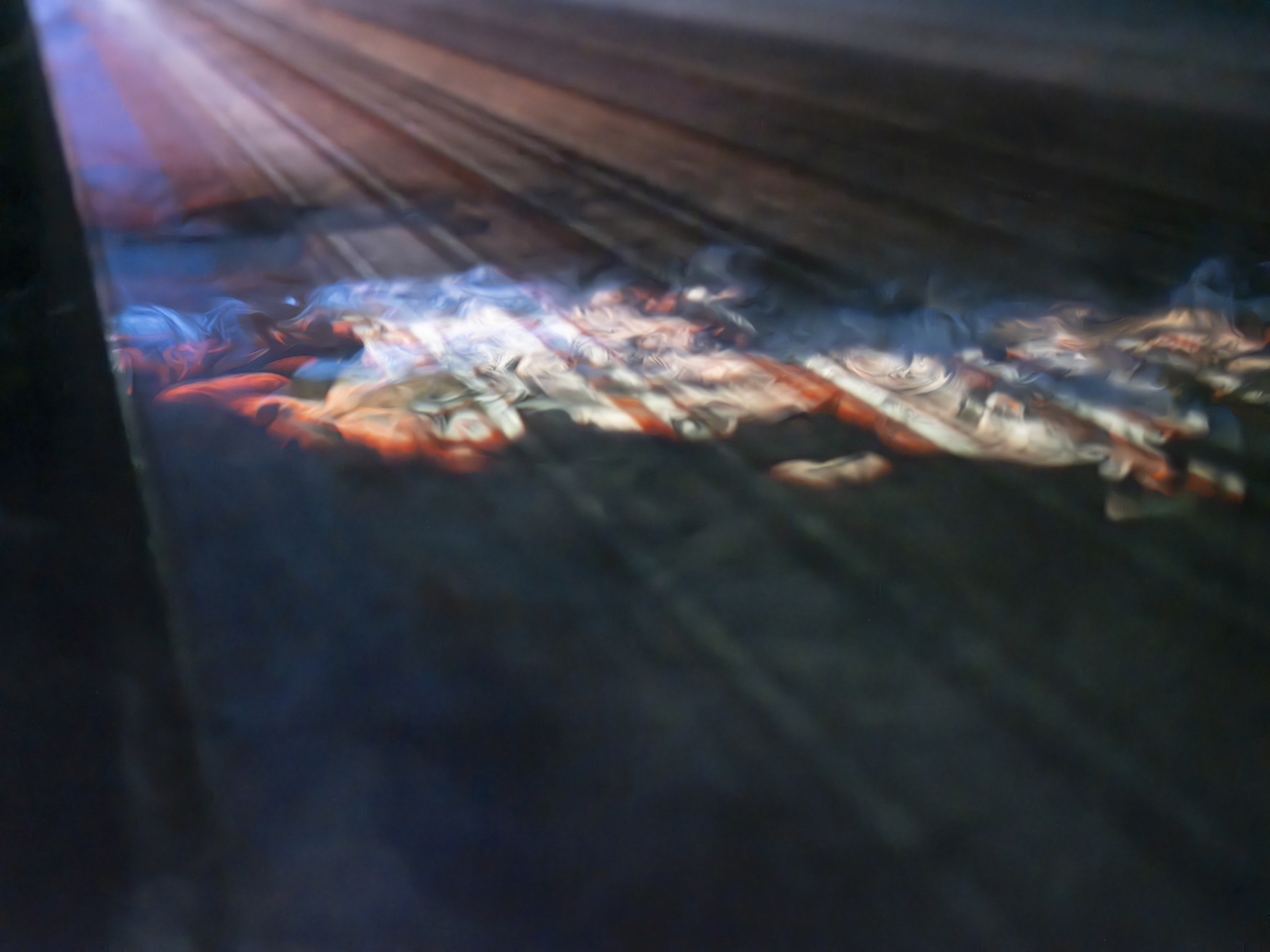
The soundscape, like the spectral imagery, is composed through a process of compression, transforming urban sound data into a newly constructed auditory form. These sounds, which fragment urban auditory experiences, are organized around specific themes, with thematic elements and images synchronized to the duration of the sounds. 


Team TRIAD, Urban Jaeseng Device #4: Phantom Pain, 2024, 2-channel video, sound, wood structure, variable dimensions, 8 min. ©Seoul Museum of Art

Through these practices, Team TRIAD translates and reconstructs urban data into light and sound through diverse media experiments, activating senses dulled by an overload of information and revealing overlooked narratives hidden within it.
 
Structured as multilayered sound environments, their works position the audience’s movement and body as central elements, leading viewers toward an active auditory experience—one that invites them to walk through and perceive everyday space and time with renewed sensibilities.

 “If sound-based work calls attention to auditory experience and perception, data-driven work calls attention to the very concepts through which we view the world. In an information society, we are buried under vast amounts of data. As a result, our sensitivity to data itself has grown numb. (…)
 
That is why we reveal, as they are and even violently, the raw weight carried by data and numbers. At the same time, we discover overlooked stories hidden within their continuity. Encouraging people to see the world anew through data—that is the context we hope to convey through our data-driven works.” 
 
(Team TRIAD, interview with IFACNEWS 3.0)


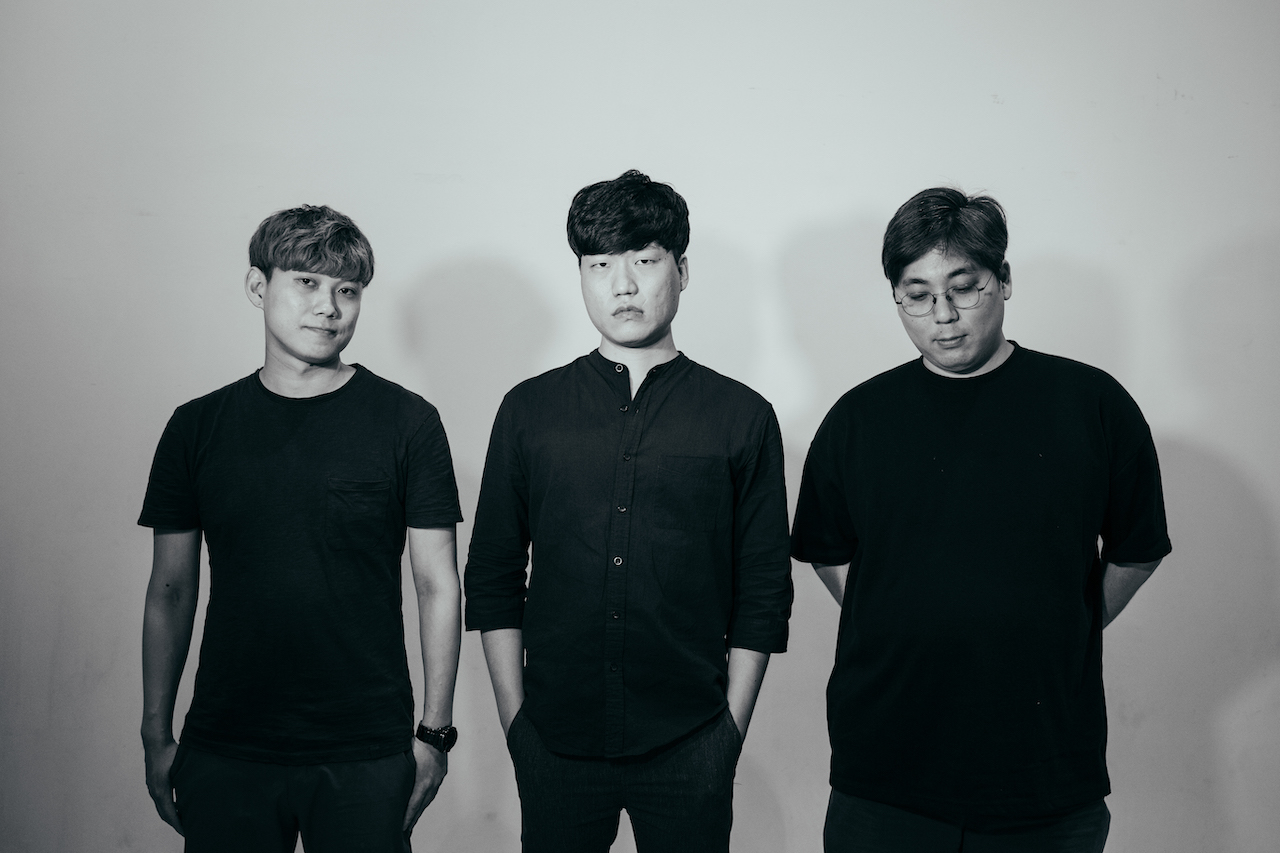
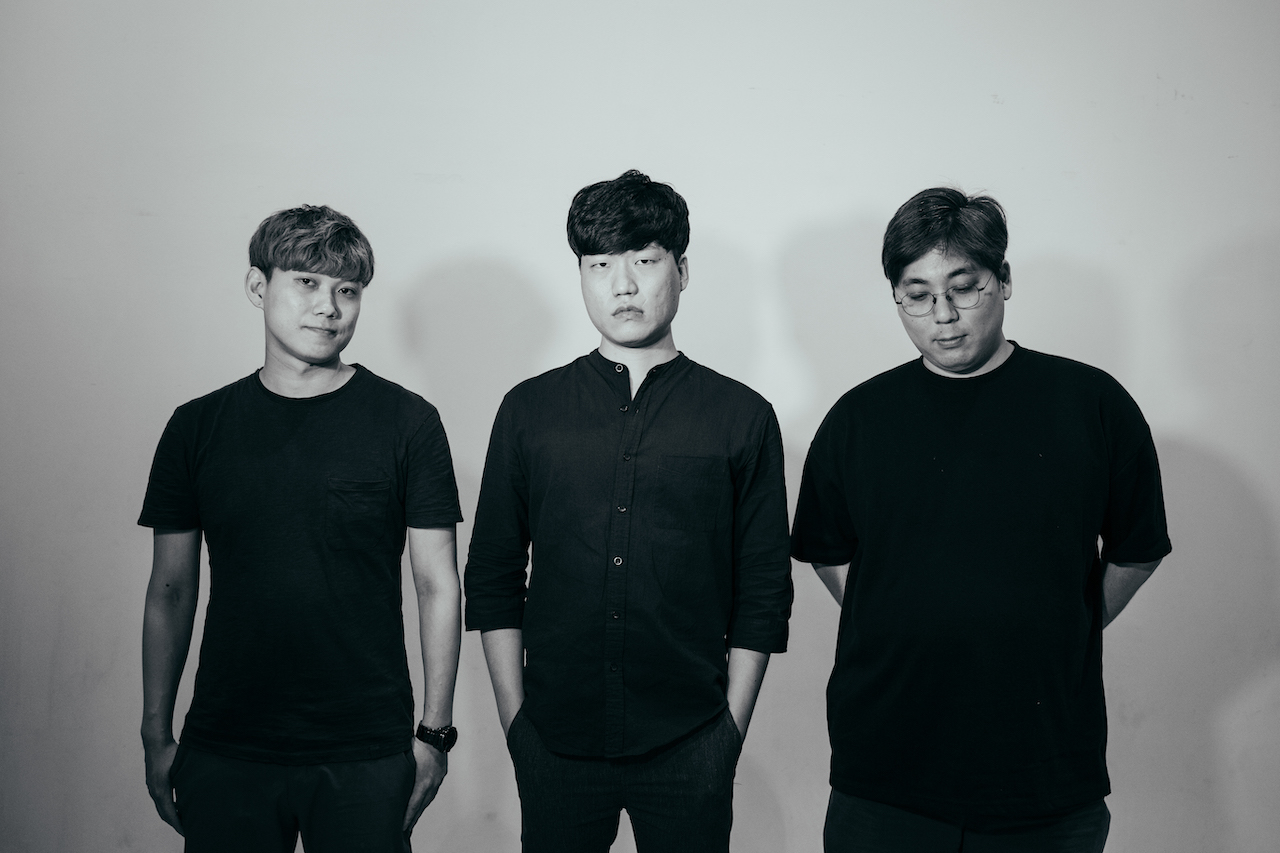
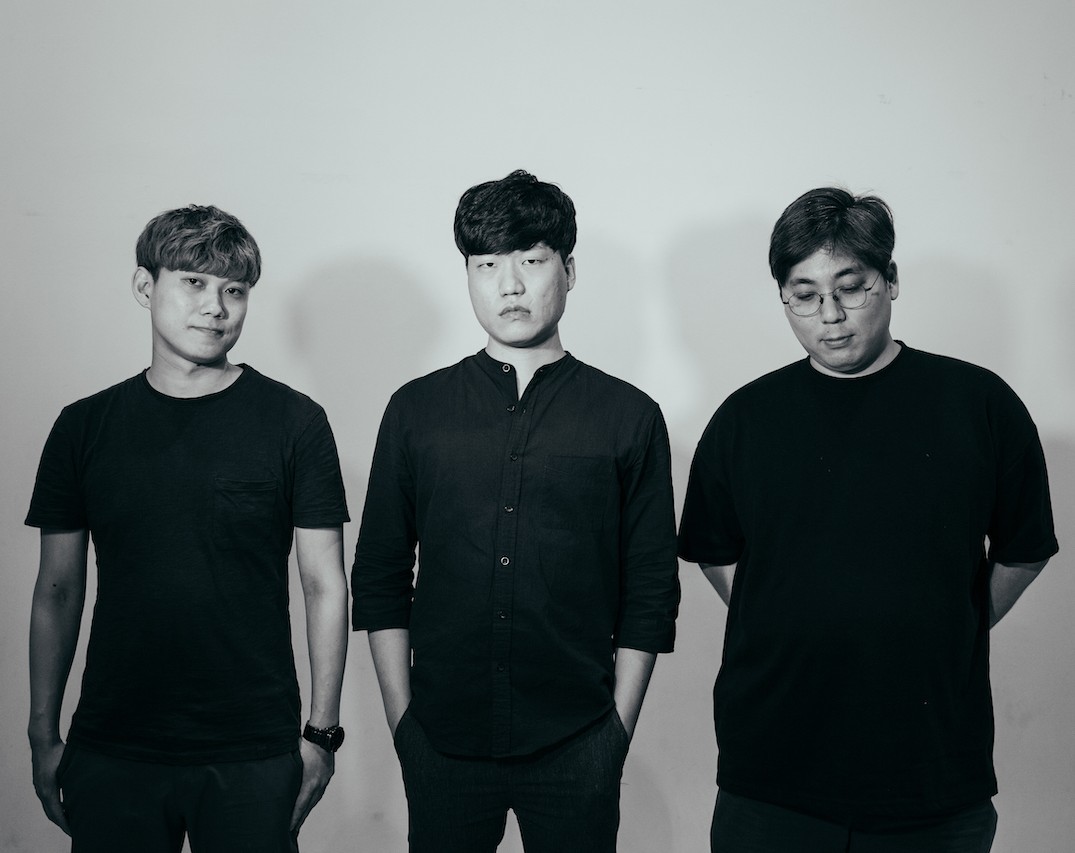
Team TRIAD (from the left Gwangmin Hong, Minje Jeon, Honam Kim) ©Team TRIAD

Team TRIAD, formed in 2018, consists of three artists—Gwangmin Hong, Minje Jeon, and Honam Kim. Their solo exhibitions and performances include 《Noise Walk》 (Citizens’ Hall [Sound Gallery], Seoul, 2022), 《Urban Jaesaeng Device #2: Radiophonic Orchestration》 (Space Type, Seoul, 2020), and 《Data Pulse: Incheon》 (Incheon Art Platform, Incheon, 2019).
 
The team has also participated in numerous group exhibitions, including 《The Radiant City, Dark Rapture - Dystopian Images of the Modern City》 (SeMA Bunker, Seoul, 2024), 《MMCA Cheongju Project: Urban Resonance》 (National Museum of Modern and Contemporary Art, Cheongju, 2022), 《A.I.MAGINE》 (Urban Data Science Lab, Seoul, 2018), and 《Neotopia: Data and Humanity》 (Art Center Nabi, Seoul, 2017).
References