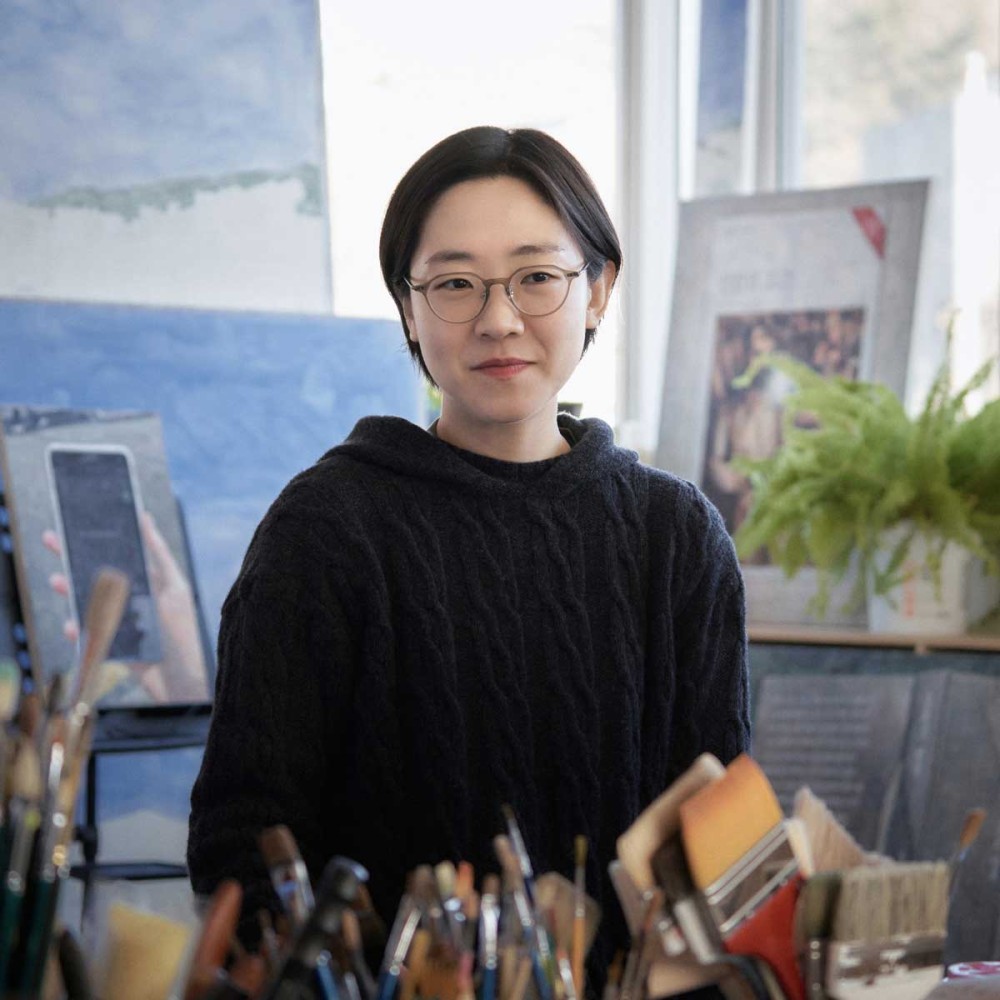
Hyewon
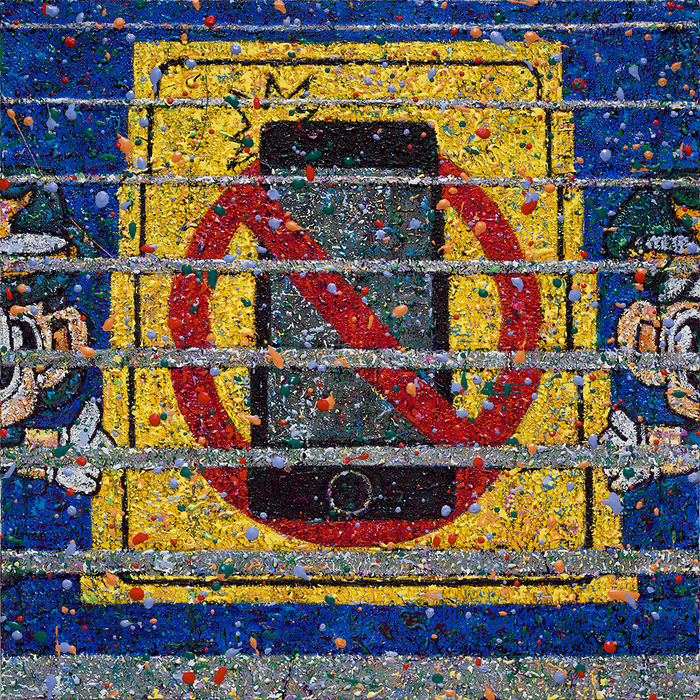
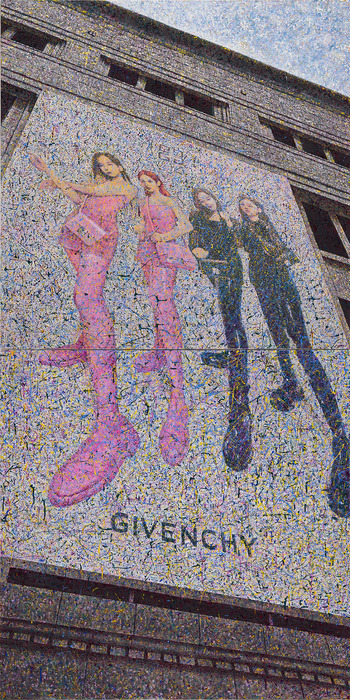
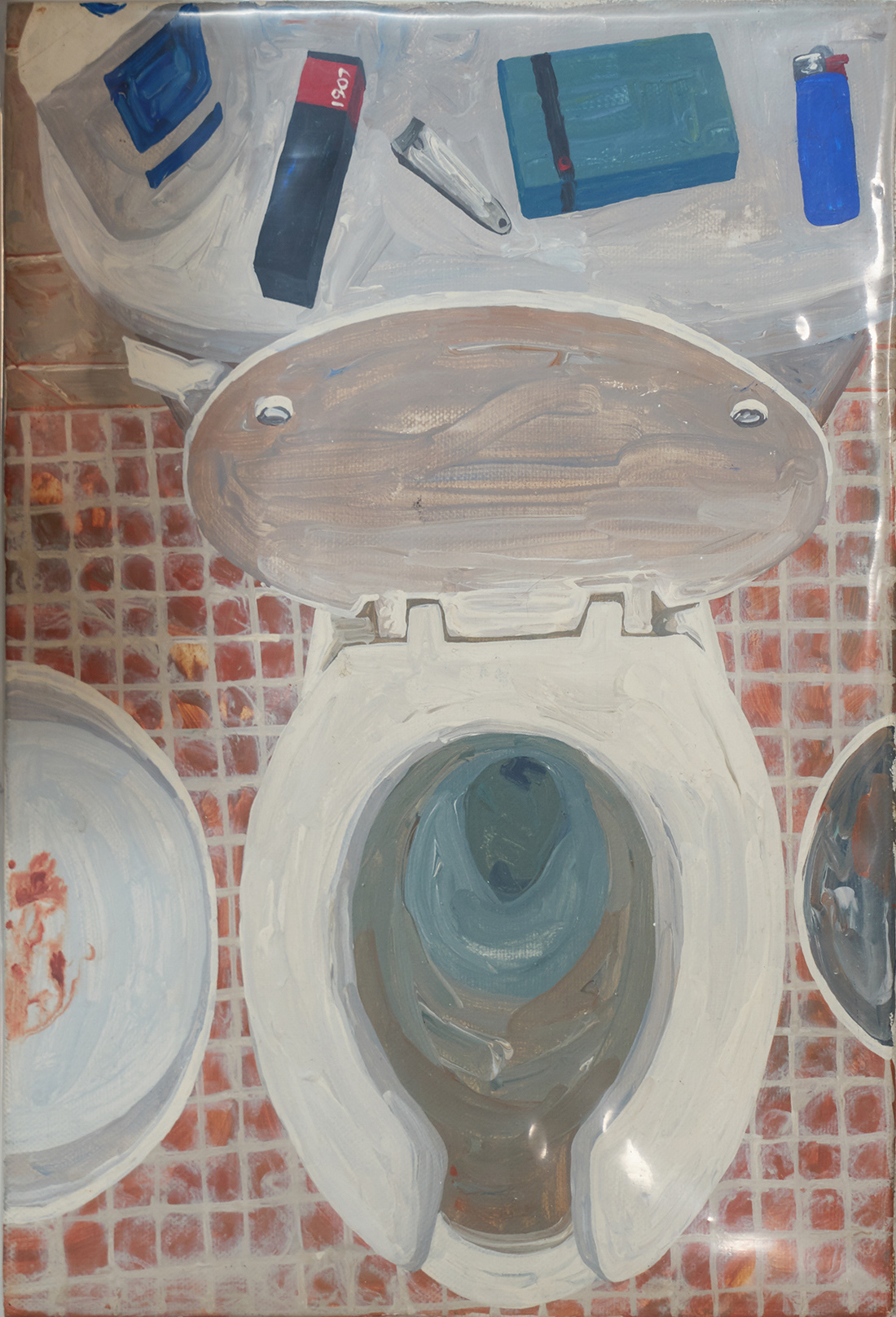
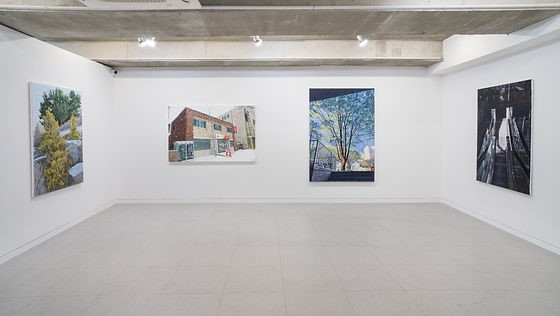
Kim’s practice begins with photographing the everyday landscapes she repeatedly
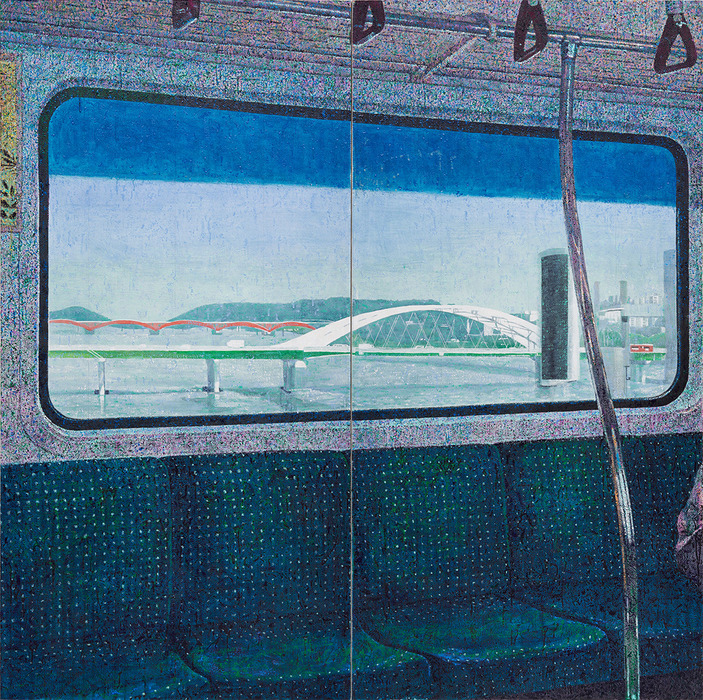
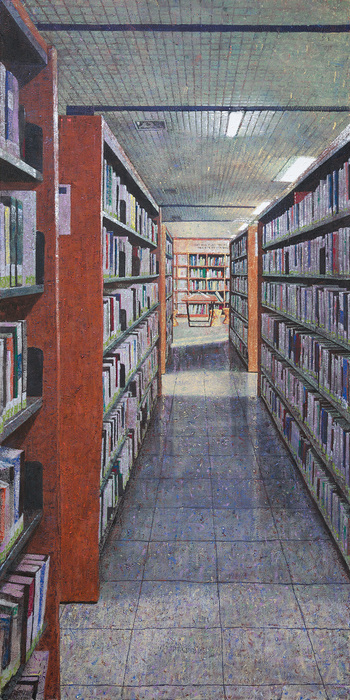
encounters and translating them into painting. Works such as Ginkgo
Tree Soaring High(2020), Mapo Central Library(2021),
and Inside The Subway Line 2 Train Crossing The Dangsancheolgyo (Rail
Bridge) (2022) originate from her close observations of places she
passes through and from re-examining scenes captured through the photographic
lens. The artist questions how photography flattens the world into a kind of
shallow “relief,” fixing depth, atmosphere, and temporal flow into a uniform
surface. By restoring these omitted layers through painting, she reconfigures
everyday spaces not as simple records but as complex environments shaped by
memory and perception.
Her
interest lies in reconstructing what exists beyond the visible surface. Kim
recalls residual spaces that photographs cannot contain—backgrounds hidden
behind foreground objects or peripheral details that fall outside the frame—and
reassembles them like a design blueprint to form new sensory landscapes. Rather
than straightforward representation, her work reveals how our perception of
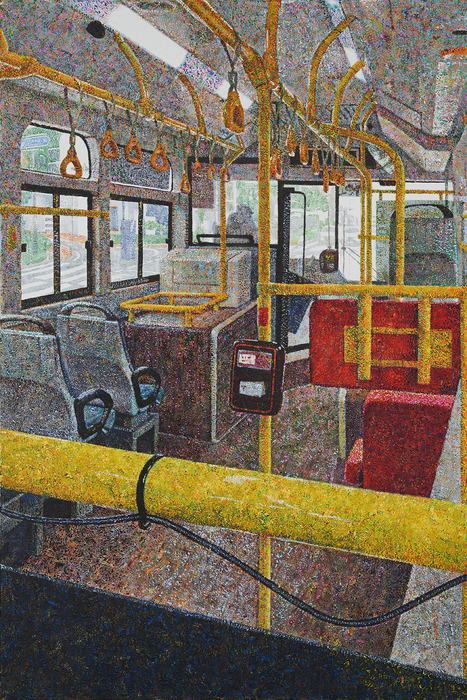
everyday life is constructed and what tends to be overlooked. In her first solo
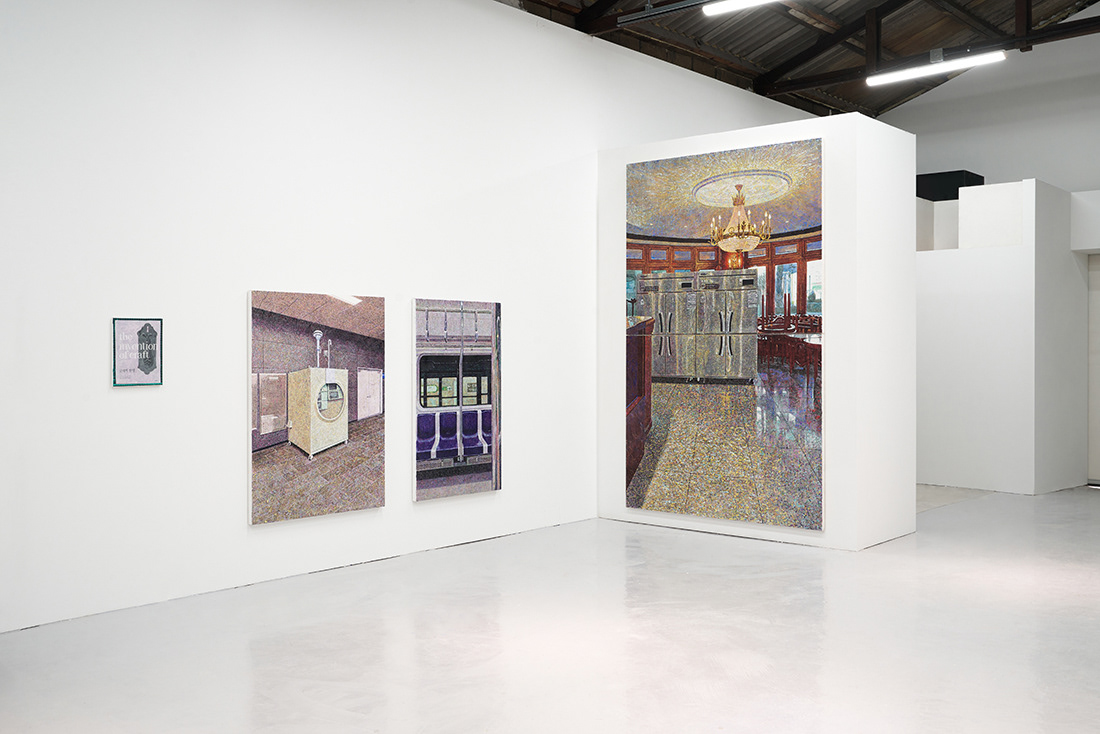
exhibition, 《Thickness of Pictures》(Hall1, 2022), she depicted familiar spaces such as subway and bus
interiors with the human presence intentionally removed, creating a heightened
spatial tension and a stronger sense of structure within this emptiness.
Her
thematic focus later expanded from space to time. In her second solo
exhibition, 《Day and Night》(Space Willing N Dealing, 2023), temporality—shifts in light,
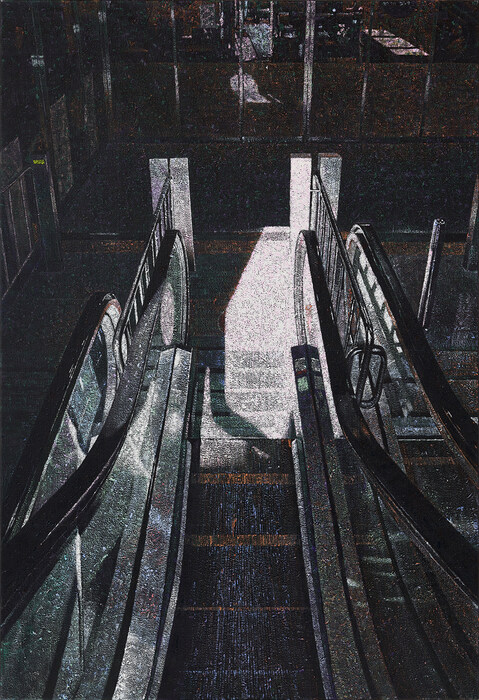
seasonal change, and the daily cycle—became central. Works such as Hongik
University Station Escalator Exit1(2023) highlight subtle “temporal
layers” that photography fails to capture: the color tone of a specific hour,
the direction of light, and the air that fills a space. Her paintings capture
moments in which particles of light and color are perceived before the identity
of the depicted subject, suggesting that the world is composed not of stable
“background–figure” structures but of shifting units of luminosity and hue.
In her
recent solo exhibition 《A Picturesque
Tour》(PCO, 2025), her conceptual direction moves even
further—from everyday observation toward the history of images, the tradition
of landscape painting, and the act of seeing itself. Works such as In
the Forest(2025) and A Cat Under the Car(2025)
invite viewers to reconsider what it means to “look at a landscape” by
employing mediating devices such as smartphone reflections, panoramic
viewpoints, and the historic “black mirror.” By placing contemporary smartphone
vision alongside classical ways of viewing nature, Kim examines how habitual
image consumption can be transformed back into painterly perception.
Ultimately, she explores time, light, and memory embedded within daily scenes,
making the mechanism by which images operate a central conceptual axis of her
work.