Hyewon Kim (b. 1993) has continued a practice of photographing scenes she frequently encounters in her daily life and using these images as templates for her paintings. Her subjects include places such as library bookshelves, the bus she regularly rides, and the scenery outside a car window.
 
Through a process reminiscent of handcraft, the artist applies multiple layers of paint, revealing vivid and intricate strata of the world that were not apparent on the surface of these everyday photographic scenes.


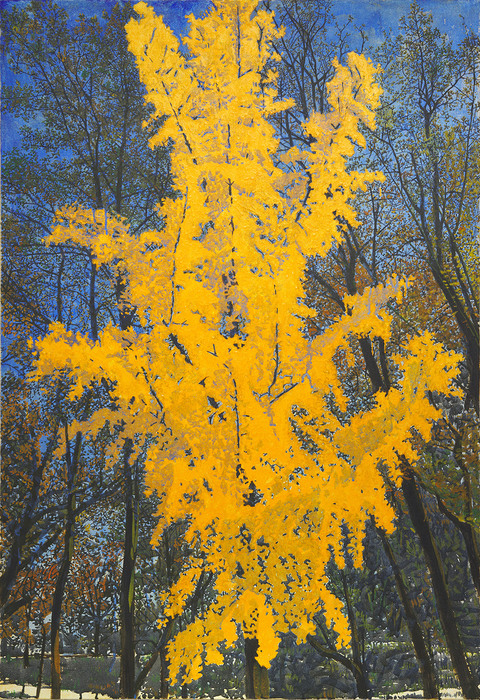
Hyewon Kim, Ginkgo Tree Soaring High, 2020, Watercolor and gouache, acrylic medium on canvas, 130.3x89.4cm ©Hyewon Kim

Hyewon Kim begins her work by choosing the everyday scenes she constantly observes and photographs as her material, and by carefully contemplating the selected images. Unlike the way one perceives an actual landscape, the artist views the photographic image—with its perspective fixed only toward the front of objects—as something that “flattens the world above the ground into a relief with a flat back.”


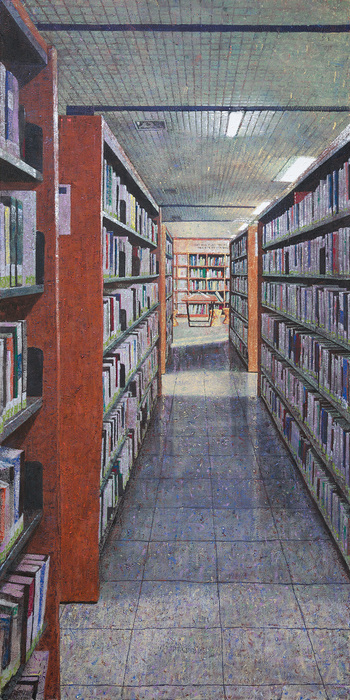
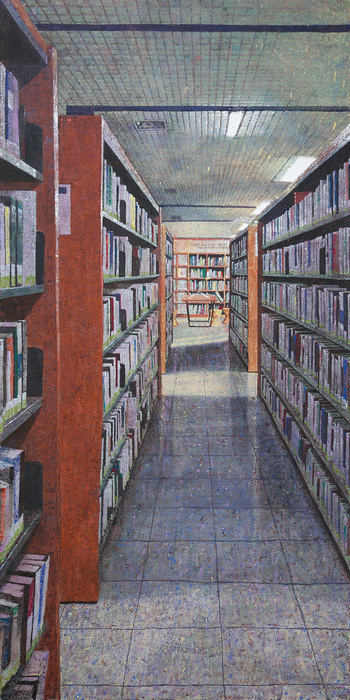
Hyewon Kim, Mapo Central Library, 2021, Watercolor and gouache, acrylic medium on canvas, 193.9x97cm ©Hyewon Kim

In this way, while the three-dimensional reality in a photograph inevitably becomes flattened and fixed onto the two-dimensional surface of paper, the everyday images Kim chooses to translate into painting all depict spaces that feel familiar—places anyone might have visited at least once. This familiarity allows viewers to partially imagine the obscured backgrounds hidden behind the objects in the foreground.
 
Through this process, Kim retrieves from memory the subtle layers of the world that the camera failed to capture, reconstructing each of these layers in her mind as a new kind of design.

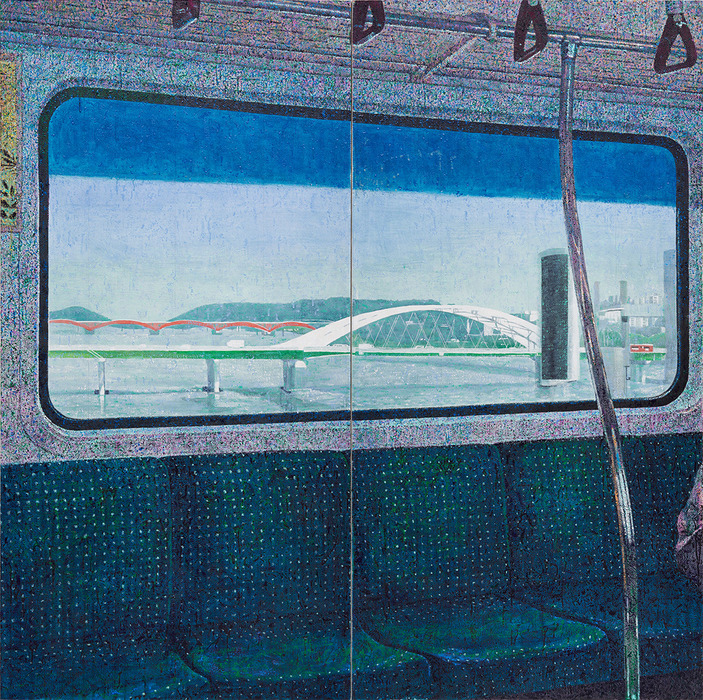
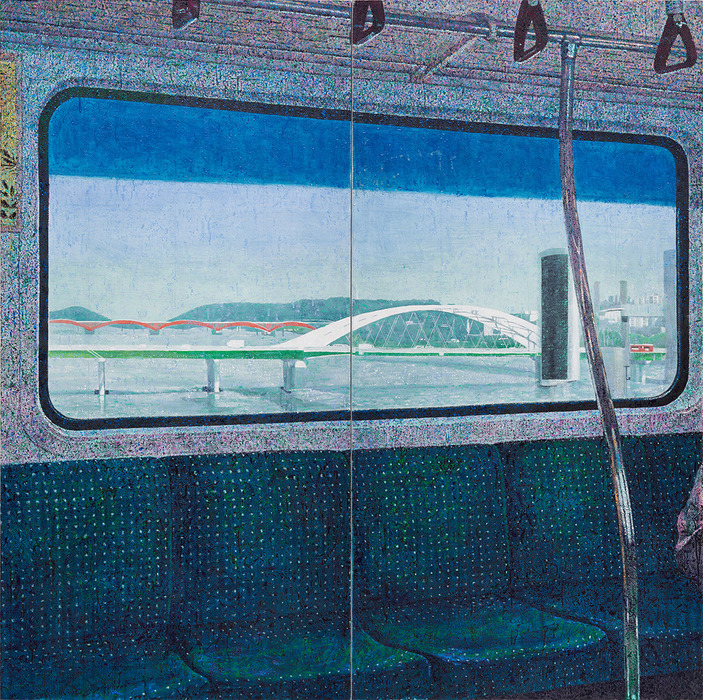
Hyewon Kim, Inside The Subway Line 2 Train Crossing The Dangsancheolgyo (Rail Brigde), 2022, Watercolor and gouache, acrylic medium on canvas, 194x194cm ©Hyewon Kim

Only after selecting the subject of a painting and devising its design does the act of painting itself begin. In the process of translating a photograph into a painting, the artist minimizes dramatic brushstrokes or personal emotional expression, instead devoting herself solely to the repetitive motion of the brush.
 
In her artist’s note, she writes, “The act of squeezing paint, mixing calculated colors, choosing brushes of suitable shape and size, and applying paint to the surface eventually makes me forget that I am depicting any specific object at all.”

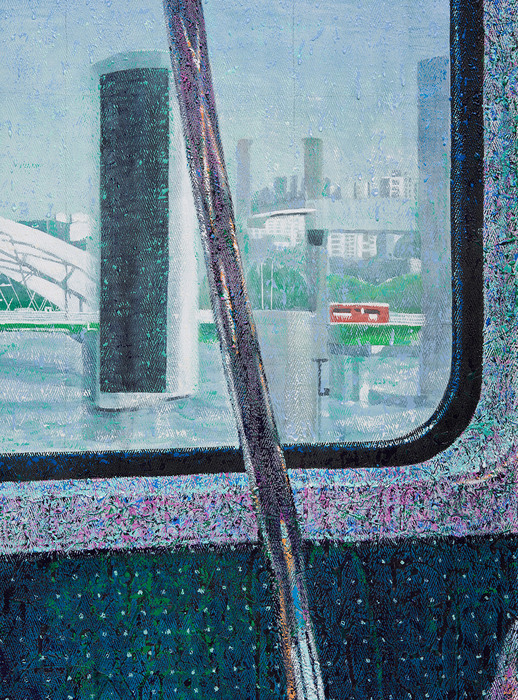
Hyewon Kim, Inside The Subway Line 2 Train Crossing The Dangsancheolgyo (Rail Bridge) (detail), 2022, Watercolor and gouache, acrylic medium on canvas, 194x194cm ©Hyewon Kim

Through this mechanical repetition of building up layers, the artist finds that the thought of depicting a subject gradually approaches zero. In that state—where time flows independently of any conscious act of creation—only the movement of her hand continues to stimulate her vision.
 
Thus, Hyewon Kim’s work arises not from a “painterly” attitude marked by the artist’s subjective intervention, but from the performative labor and meditative motion of painting itself.


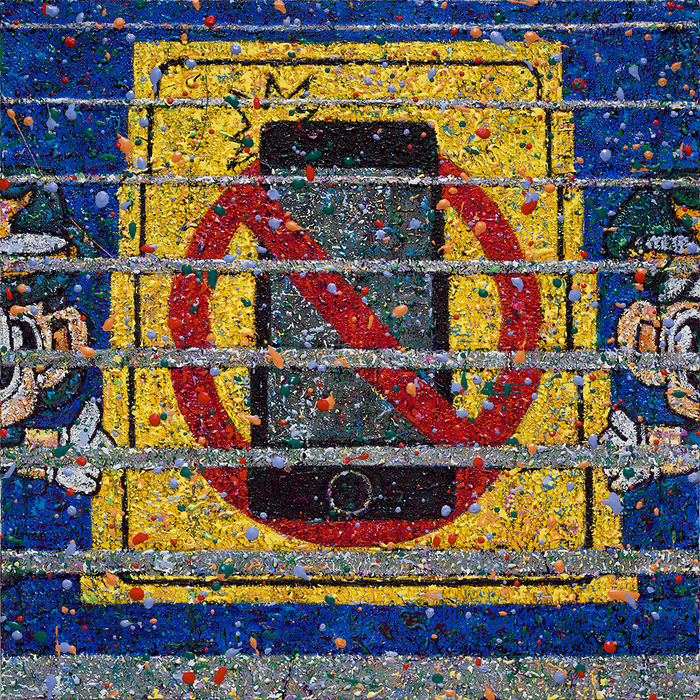
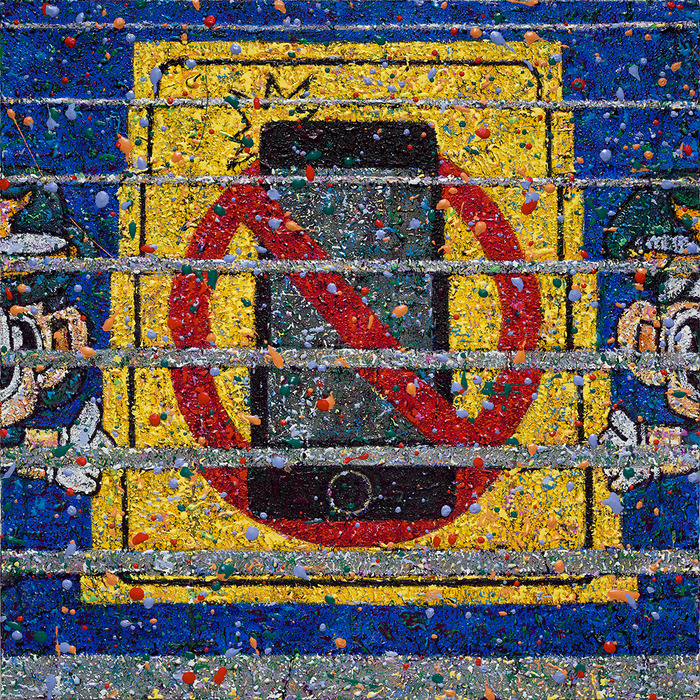
Hyewon Kim, NO PHOTOS, 2022, Watercolor and gouache, acrylic medium on canvas, 45.5x45.5cm ©Hyewon Kim

Using watercolor to establish the foundation of an image, Kim mixes gouache with gum arabic to build her own painterly—perhaps even artisanal—forms and layers upon the surface. The paintings, completed through the repeated motions of the artist’s wrists and finger joints, appear less as something that guarantees “artistic authorship” and more like handcrafted objects.


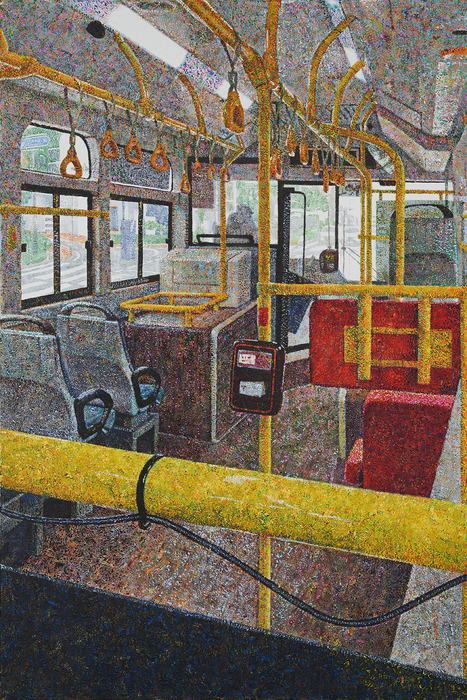
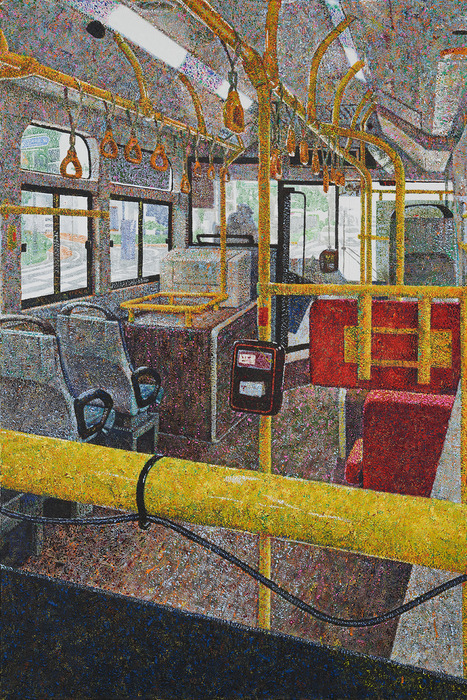
Hyewon Kim, Interior of a Mysterious Bus, 2023, Watercolor and gouache, acrylic medium on canvas, 145.5x97cm ©Hyewon Kim

In the process of layering paint, the images within the painting are gradually covered—never completely concealed, but softly veiled. On the surface, the accumulated layers of pigment hold a multitude of colors and delicate textures.
 
Art critic Jaemin Hwang observes that as the physical layers of paint build up and obscure the image, “a paradoxical movement unfolds on the canvas, in which the familiar senses through which we once viewed everyday life are stripped away, revealing a new landscape.”
 
Through Kim’s labor-intensive process, the textures and clusters of color that settle on the canvas capture fleeting impressions and atmospheres that cannot be fully conveyed through photography, creating painterly strata that go beyond simple “representation.”


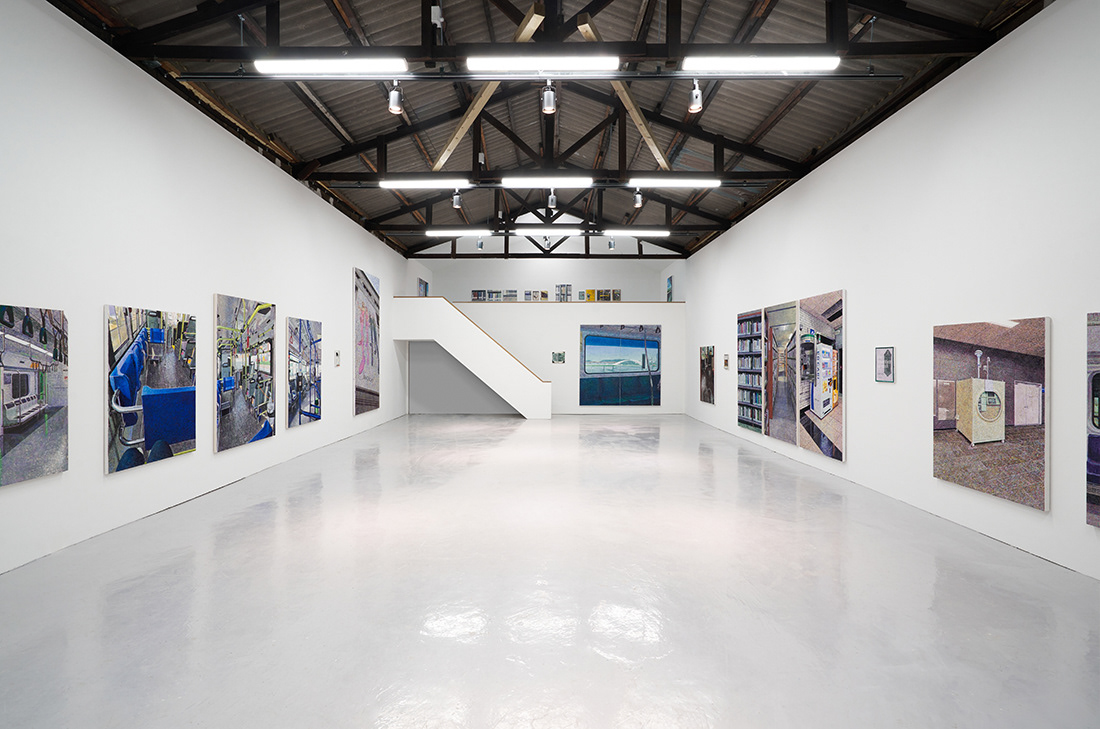
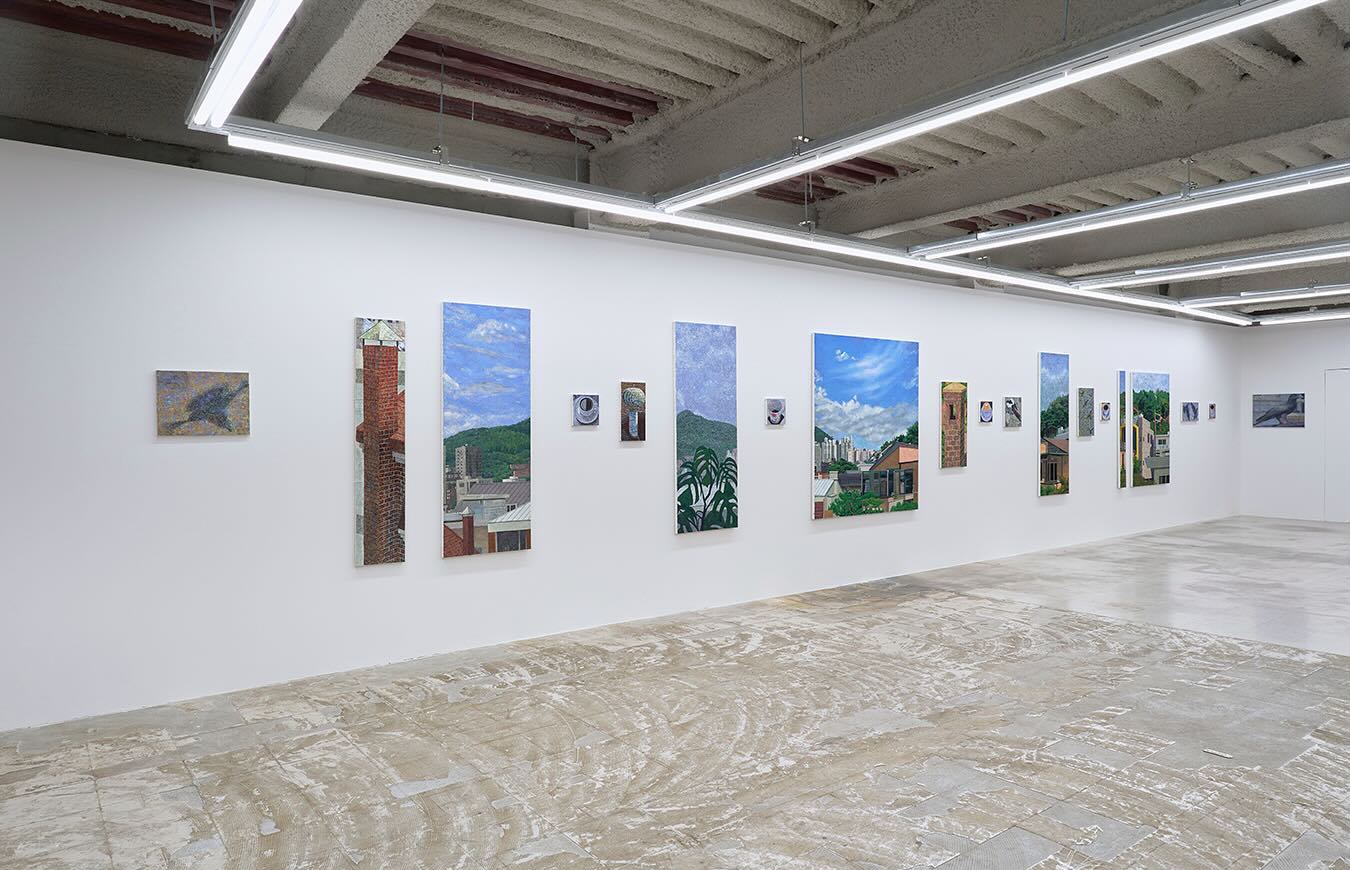
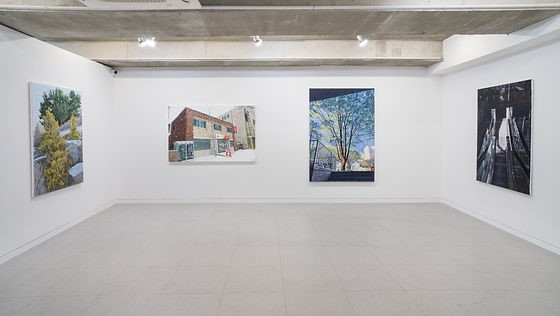
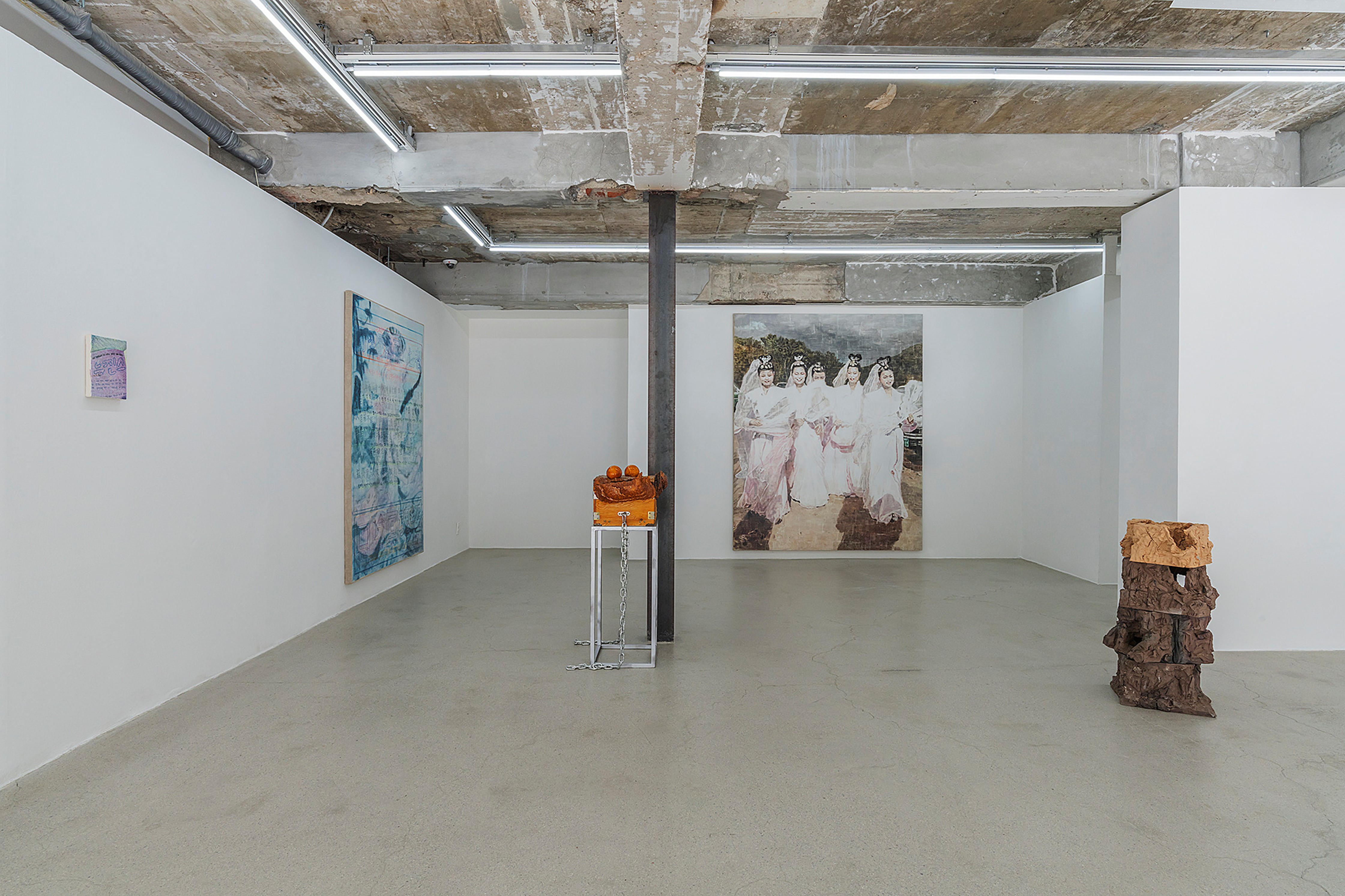
Installation view of 《Thickness of Pictures》(Hall1, 2022) ©Hyewon Kim

Hyewon Kim’s first solo exhibition in 2022, 《Thickness of Pictures》, introduced her methodology of painting while addressing the theme of the “movement of place” embedded within images. The artist collected scenes of everyday life while traveling between various locations on public transportation such as subways and buses, using these photographic images as templates to translate into painting.


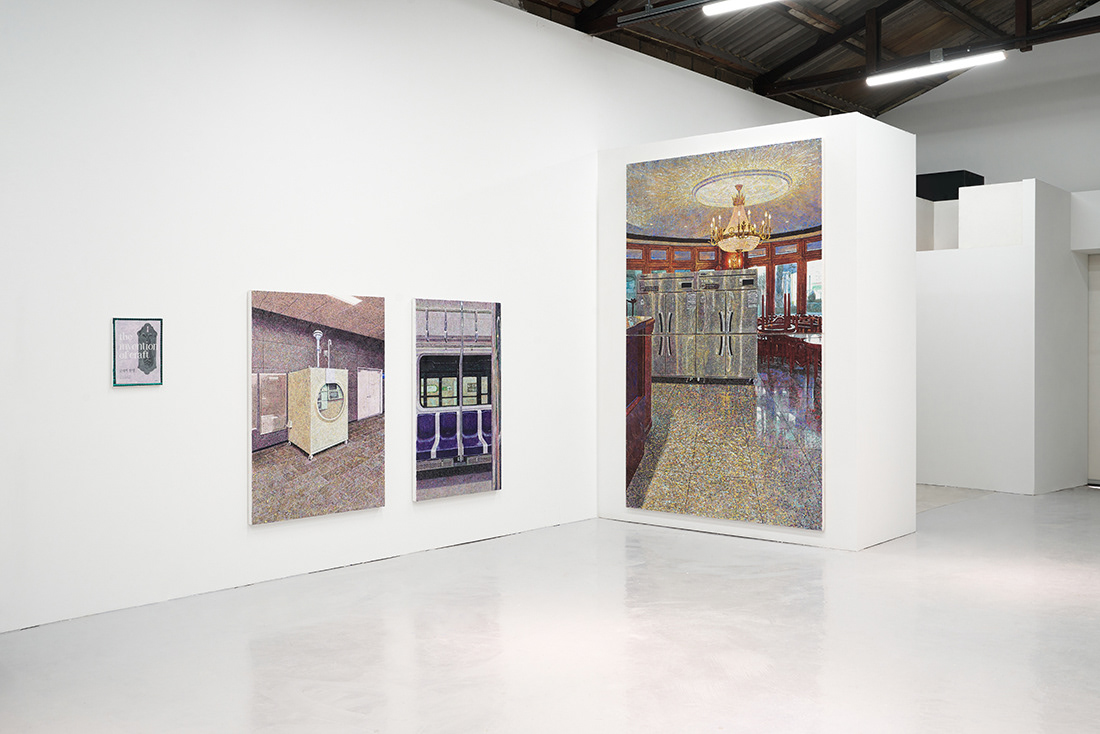
Installation view of 《Thickness of Pictures》(Hall1, 2022) ©Hyewon Kim

The landscapes Kim collected are places frequented by countless people, yet in her paintings, human figures are removed, leaving only the various structures that once defined the identity of those places. As a result, the formal qualities and color sensibilities inherent in different types of everyday scenery come to the forefront, emphasizing depth and revealing a heightened sense of spatiality that is rarely perceived in daily life.
 
Furthermore, the seemingly ordinary and faint scenes depicted in her works—such as payphones and vending machines in subway stations or the interiors of city buses—acquire a distinct painterly surface and materiality that differ from the pixels or resolution of digital photographs.


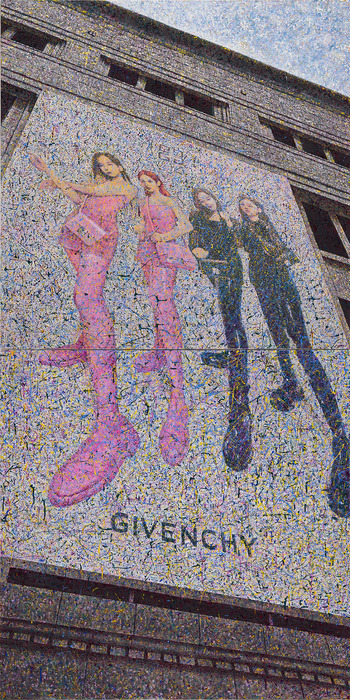
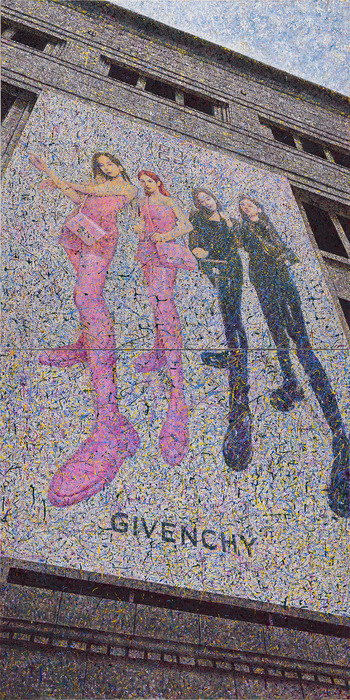
Hyewon Kim, Myeongdong, Shinsegae Department Store Exterior Wall, 2022, Watercolor and gouache, acrylic medium on canvas, 260.6x130.3cm ©Hyewon Kim

For instance, Myeongdong, Shinsegae Department Store Exterior Wall (2022) was created through a process of filling in, with paint and brushstrokes, the missing details that appear when an image from a smartphone’s small screen is enlarged to the size of a canvas and its pixels begin to break down.
 
In the spatial realm that the image fails to capture—that is, the world more microscopic than the pixel—the processes and experiences of painting are inscribed: color and materiality, perspective and distance, the movement of the hand and the body.


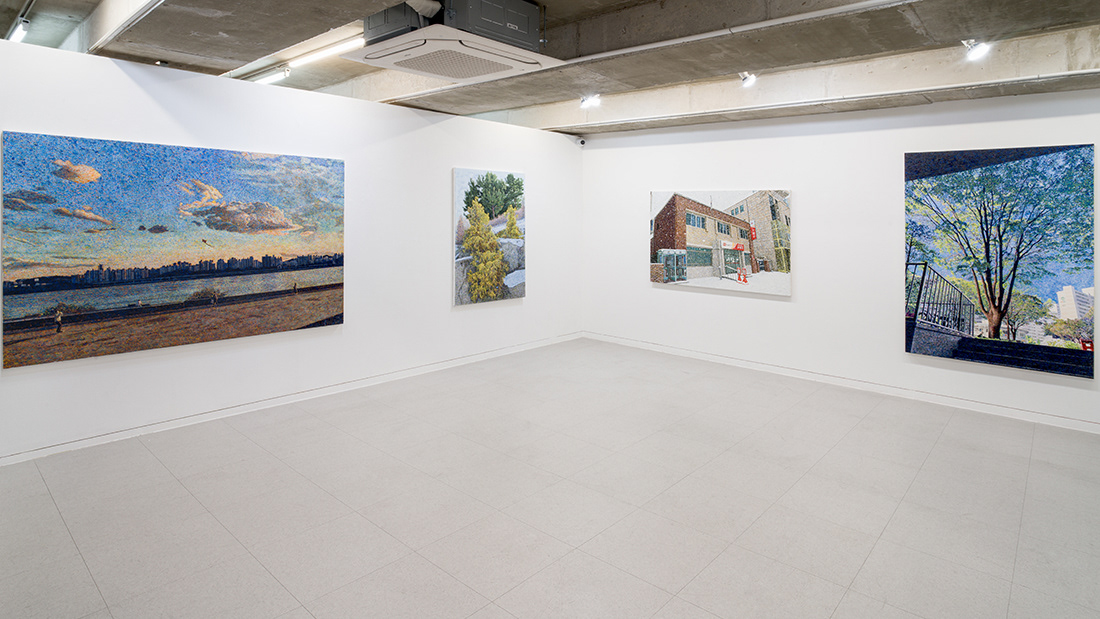
Installation view of 《Day and Night》 (Space Willing N Dealing, 2023) ©Hyewon Kim

Meanwhile, in her 2023 solo exhibition 《Day and Night》 at Space Willing N Dealing, Hyewon Kim presented images that express the “movement of temporality.” In this exhibition, the concept of 'time' set by Kim especially refers to capturing changes in the landscape based on the movement of light, revealing the time encapsulated in the length of the day and the seasons, influenced by the rotation and revolution.
 
This approach draws attention to the presence of sunlight, which has a more significant impact on perception, as a material capable of various color expressions, stemming from the artist's established sense of space.


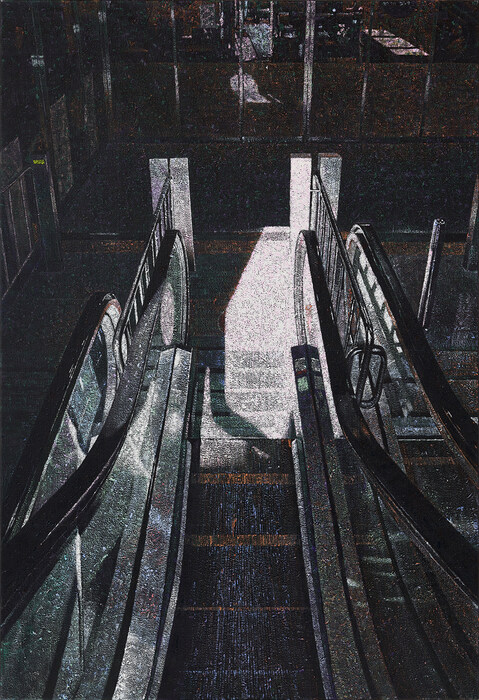
Hyewon Kim, Hongik University Station Escalator Exit1, 2023, Watercolor and gouache, acrylic medium on canvas, 130.3x189.4cm ©Hyewon Kim

Accordingly, Kim selected photographs that suggest specific times of day as the foundation for her work. As a result, most of the images she chose were outdoor scenes—particularly those in which visual hints about the passage of time were most clearly revealed.
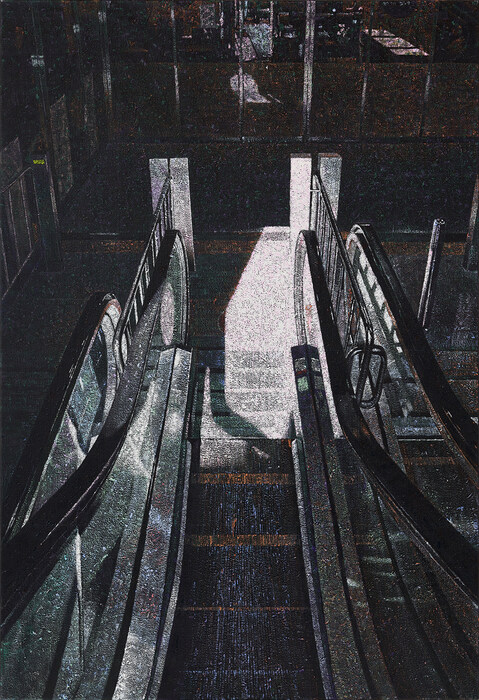

 
In her working process, the uneven surface texture created by solidifying paint mixed with gum arabic produces a distinctive matière effect. Layering thin applications of paint on top of it, she skillfully expresses the delicate realistic representation, density, and depth of color, emphasizing the 'temporality' inherent in the images.


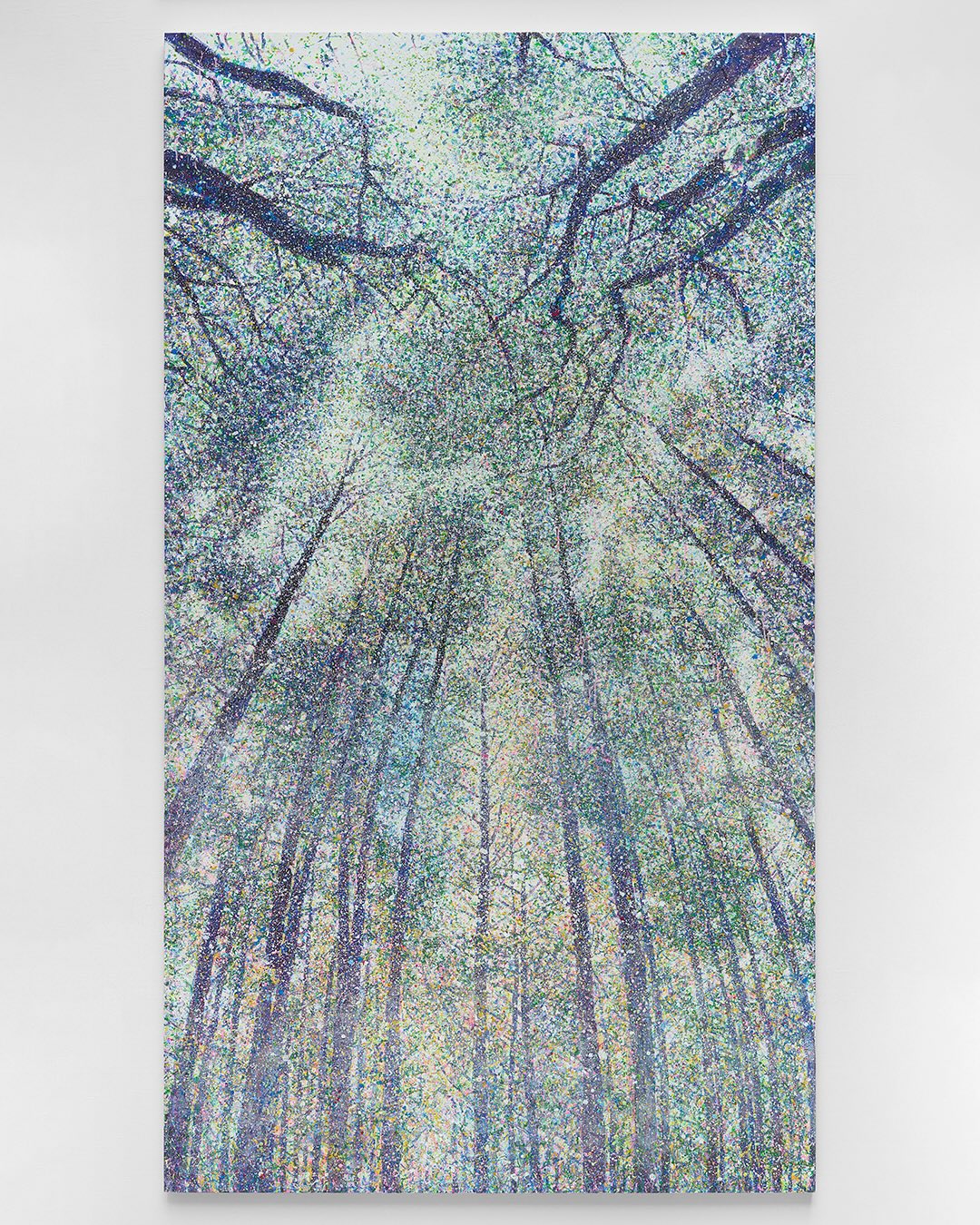
Hyewon Kim, In the Forest, 2025, Acrylic paint, water-mixable oil paint, and oil stick on canvas, 260×144cm ©Hyewon Kim

Her recent third solo exhibition, 《A Picturesque Tour》, held at PCO, began with her visit to an urban metasequoia grove, where she photographed the towering trees in panoramic view.
 
She later worked in a studio whose wide horizontal window looked out onto the grove’s facade, and—recalling Claude Lorrain’s seventeenth‑century “black mirror”—she began to paint the outdoor view as it appeared reflected on the iPad’s unlit black screen.


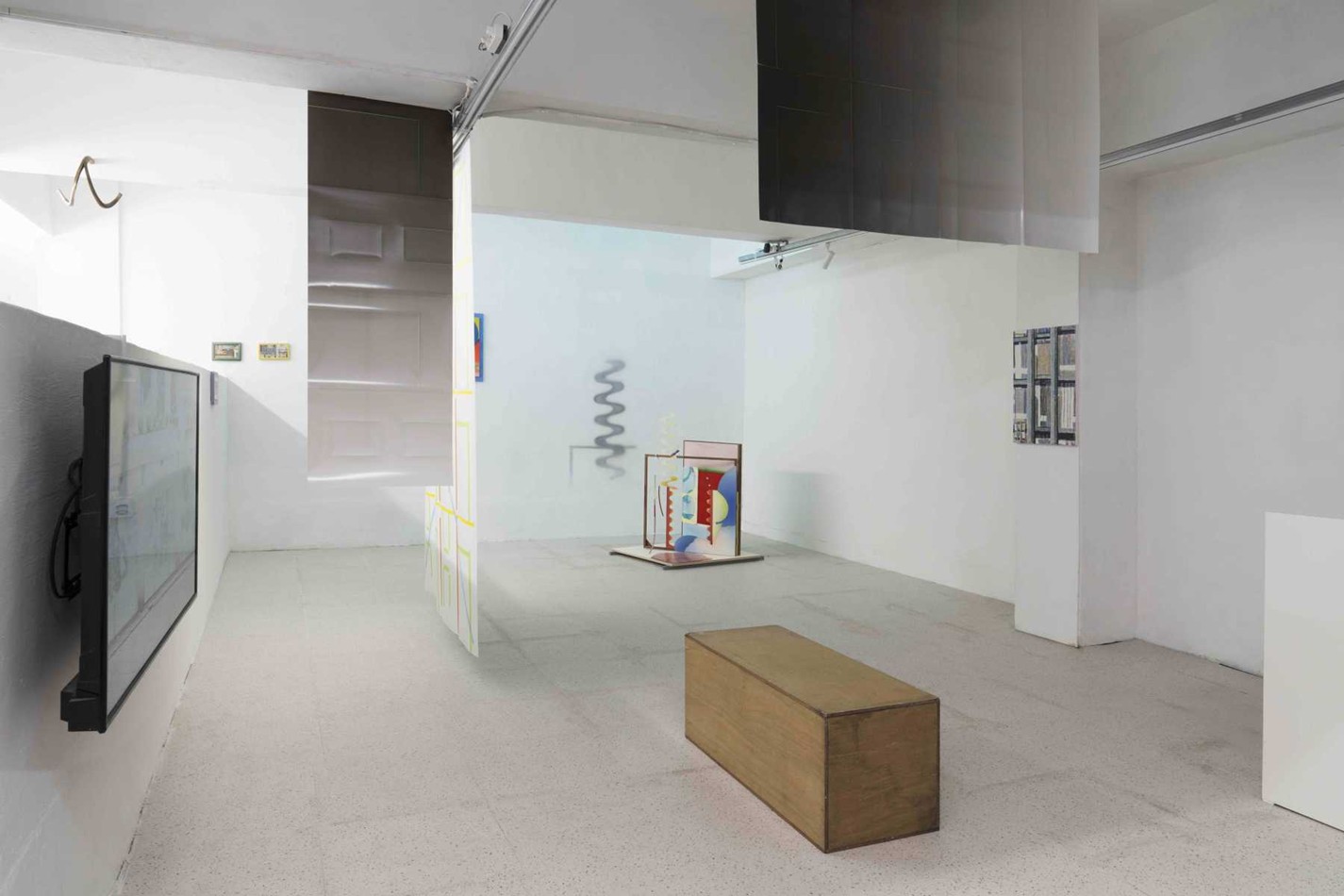
Installation view of 《A Picturesque Tour》 (PCO, 2025) ©PCO

The term “picturesque” in the exhibition’s title refers to landscapes that are “beautiful like a picture.” In the 17th and 18th centuries, landscape painters captured such picturesque scenes by directly observing nature, depicting views that delighted the human eye. Among the general public, picturesque tours—journeys in search of scenic natural vistas away from the city—also became popular.
 
The black mirror or Claude mirror used at the time was a coated, convex, black-tinted mirror that softened and reduced the range of colors and tones in a landscape, allowing it to appear more like a painting.
 
If the eighteenth‑century “picturesque tour” as a tourist practice led nature to imitate Claude Lorrain’s classicizing Arcadia, Kim proposes a path of mind that begins in the everyday imitation of the smartphone’s capture and leads back to the painter’s studio.


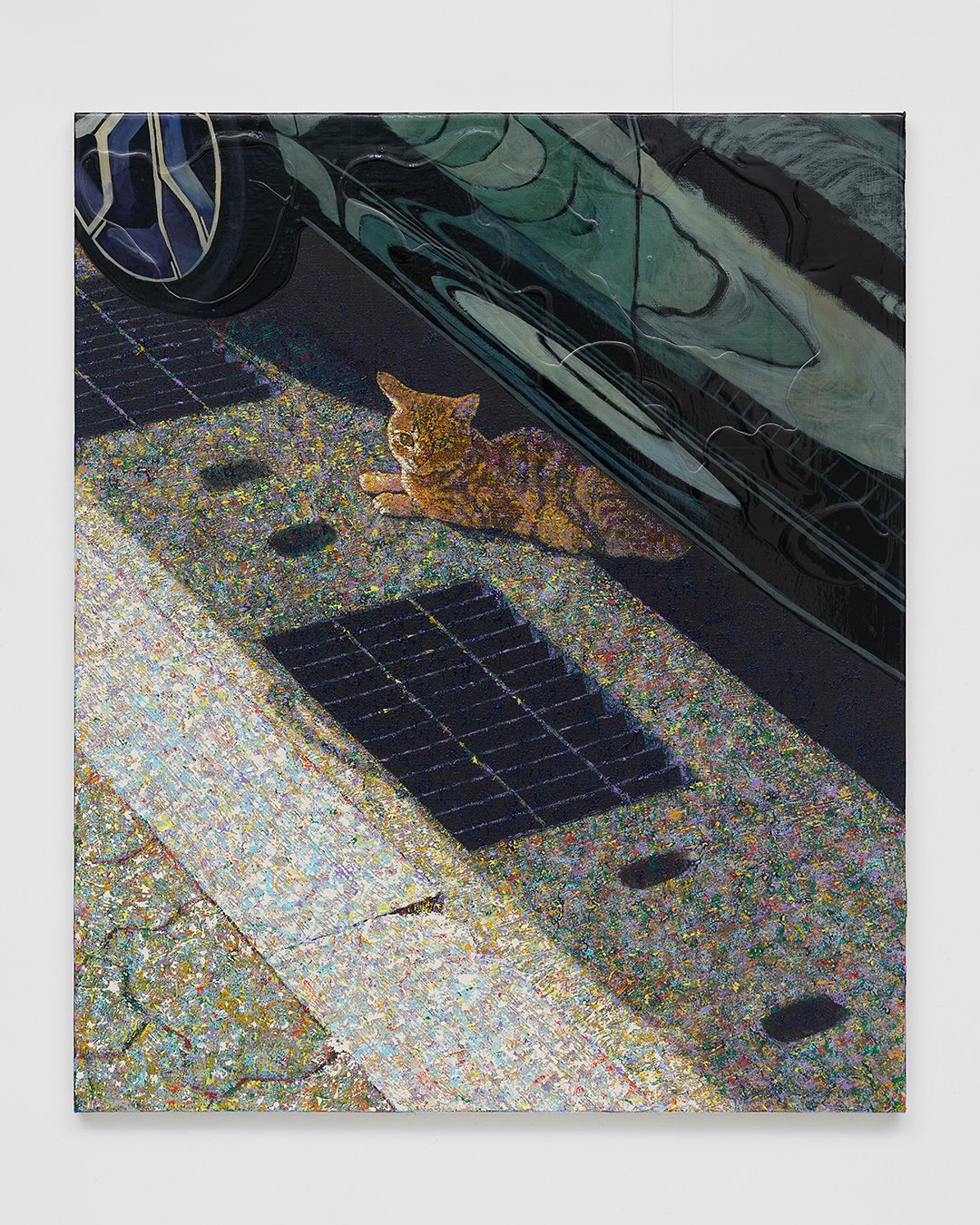
Hyewon Kim, A Cat Under the Car, 2025, Acrylic paint, acrylic medium on canvas, 72.7×60.6cm ©Hyewon Kim

In this way, Hyewon Kim understands and decomposes everyday images stored in a photo album into patterns and draws them through a labor-intensive reproduction process on a pictorial basis. So this artist's painting looks like a photograph at first glance, but when you get closer, it reveals the immediate nature of the painting and gives you a sense of the time the painting was painted.
 
Kim describes the “image” as an optical phenomenon of visual perception. Accordingly, she perceives the world not through the spatial structure of background and form, but through the particles of light and color. Through her handcrafted method of painting, she translates these fleeting impressions—composed of light and color—into material form upon the canvas.

 “If there is someone who values only the act of layering and painting itself, rather than the subject matter of an image, can we truly say that person is engaging in a creative or artistic act at every moment? If the time during which creative action occurs in the process of painting is brief, and the rest flows independently of artistic invention, then what should we call the sum of those moments spent painting?”    (Hyewon Kim, Artist’s Note)


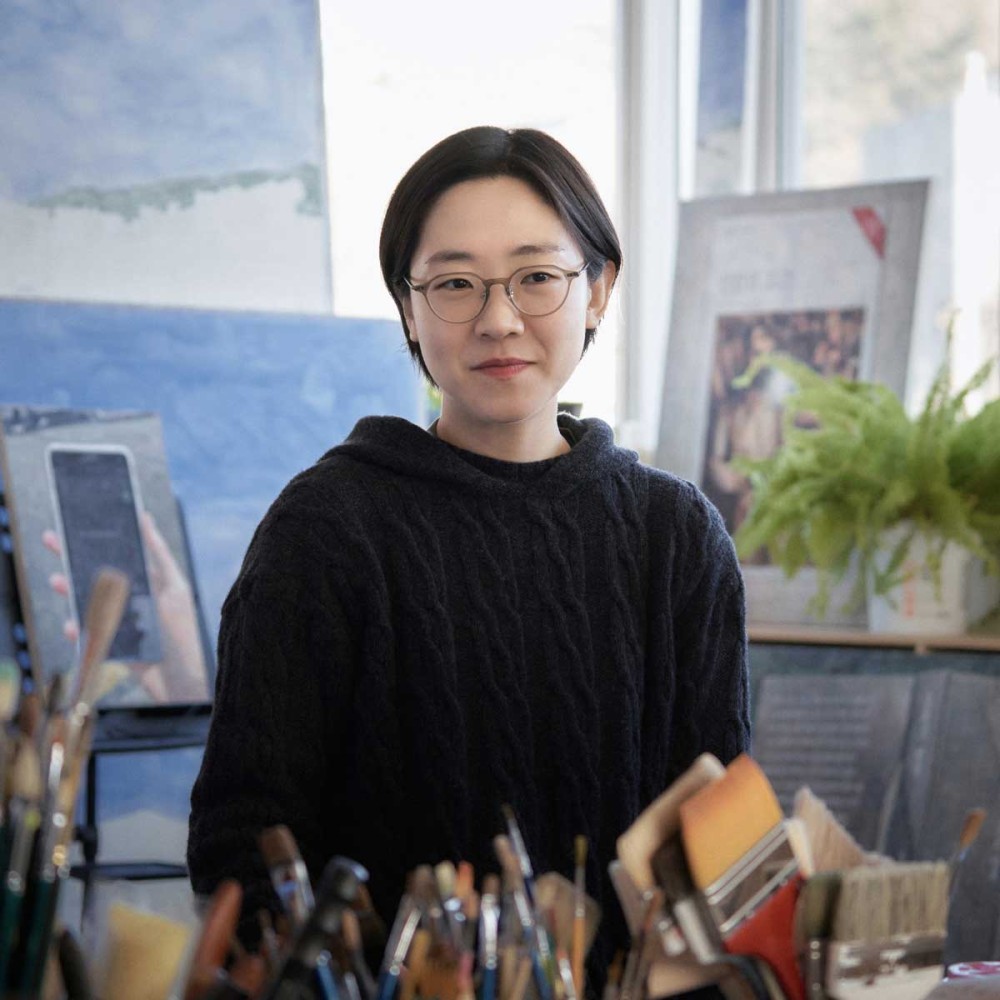
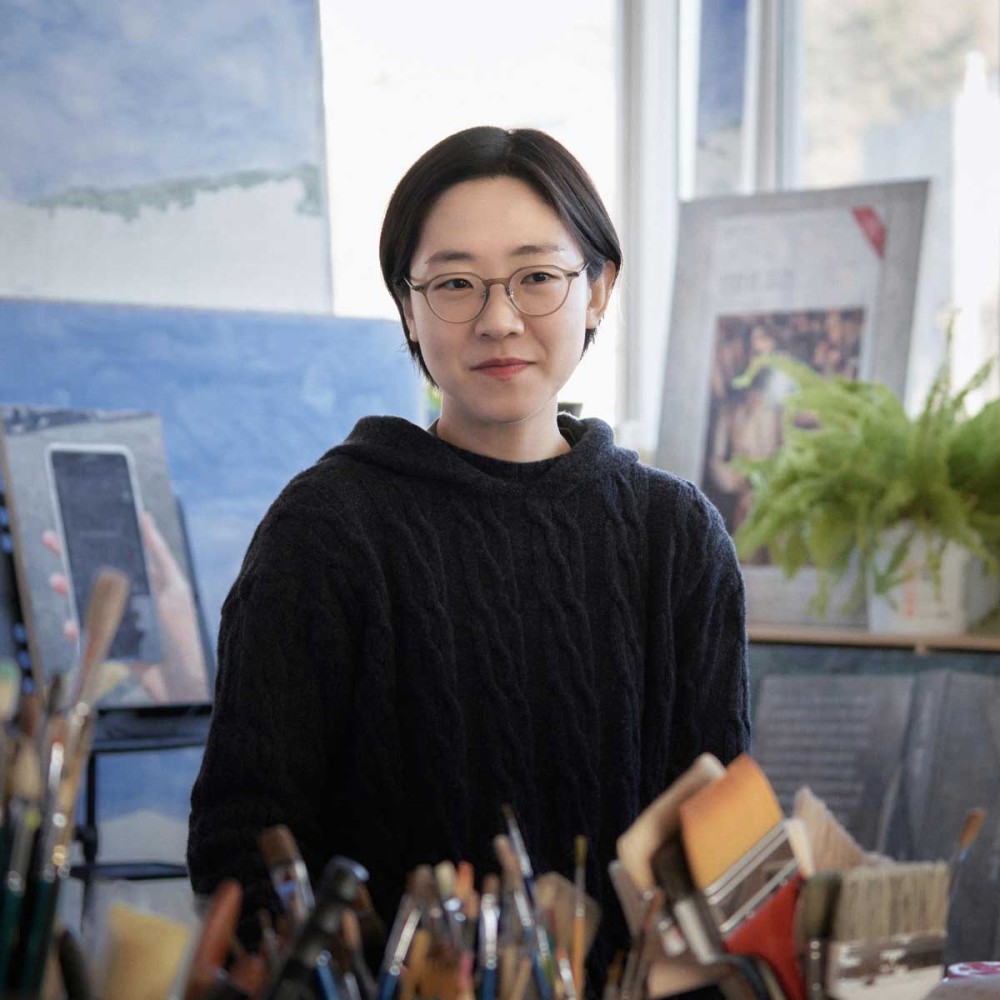
Artist Hyewon Kim ©PIE

Hyewon Kim received her BFA in Painting from Hongik University and her MFA in Fine Arts from Seoul National University of Science and Technology. Her solo exhibitions include 《A Picturesque Tour》 (PCO, Seoul, 2025), 《Day and Night》 (Space Willing N Dealing, Seoul, 2023), and 《Thickness of Pictures》 (Hall1, Seoul, 2022).
 
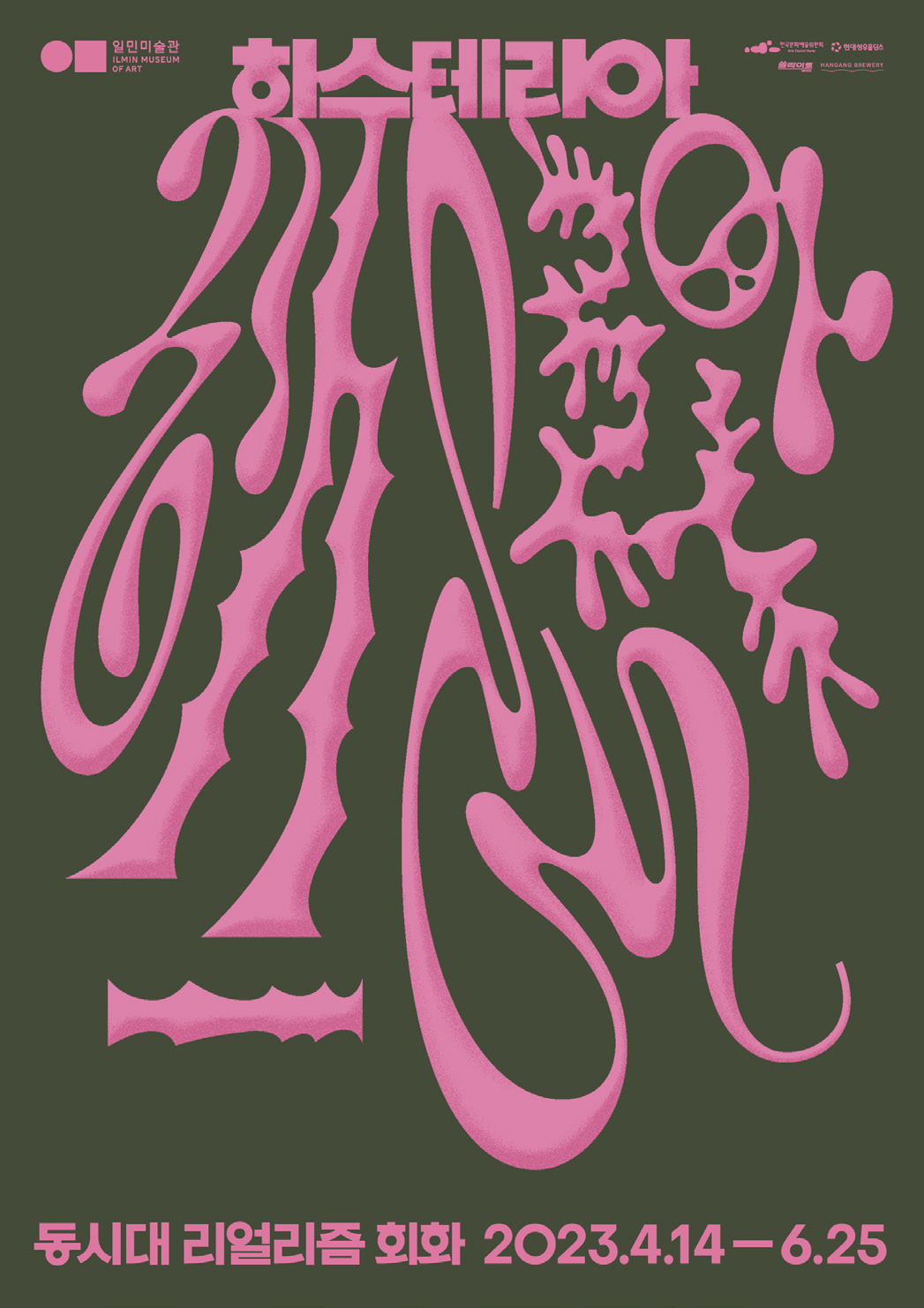
She has also participated in numerous group exhibitions, including 《Rainbow Shadow Chaser》 (Faction, Seoul, 2025), 《Perigee Winter Show 2024》 (Perigee Gallery, Seoul, 2024), 《Even the Erased Memories Leave a Rhythm》 (Woosuk Gallery, Seoul, 2023), 《Hysteria: Contemporary Realism Painting》 (Ilmin Museum of Art, Seoul, 2023), 《Monumental》 (Museumhead, Seoul, 2023), 《Unfamiliar Expedition》 (DrawingRoom, Seoul, 2021), and 《Manners of Representation: A Piece of Cake》 (ONE AND J. Gallery, Seoul, 2020).

References