Note: This lexicon is based on the author’s
subjective interpretation and may not be suitable for scholarly citation.
1. Ornament
In the early 2000s, floral motifs appeared on Korea’s latest home
appliances—huge, gleaming, high-gloss flowers. DIY interior design became
fashionable among newlyweds and the young. Typically renting on yearly or
two-year leases, young people created aesthetically pleasing environments at a
cost that would not feel wasteful when they moved out a year or two later; thus
began the brave new world of easy-to-apply vinyls, wallpapers, tiles—in short,
of overlays. Graphic adhesive sheets proliferated everywhere—not only in
domestic interiors but also in commercial spaces like cafés and even in subway
restrooms—usually displaying fantastical, expansive nature or landscape
photographs. Choi transported such images into the gallery. From red rose wall
stickers sold at Daiso to sunflower vistas, they reveal a peculiarly Korean,
quasi-magical hope and affect; but this is not a question of “taste.”
Decorative interior sheets are infinitely
reproducible digital images and, at the same time, mass-produced ornament
purchasable by the meter. In concrete-blocked realities, images that bestow the
fantasy of nature soon fall to the status of clichéd, counterfeit imagery. Choi
observes the mechanism of this “banality’s fantasy.” As with Art Nouveau—a
style developed by Europeans in the early twentieth century who could not abide
the exposure of raw materials like iron—these interior sheets constitute a stylistic
regime of the era that produces a sense of cultural homogeneity among Koreans.
The adhesive images that Choi treats are ancillary, ornamental, and yet a mode
and a structure. They infiltrate everyday life as windows that surround us—a
vast medium. In their sheen clings a specifically Korean, premodern
sensibility.
2. Reproduction
In the 2015 exhibition 《Good-z》, Choi produced and displayed fifty
frames featuring the fictional persona Hanaco 50,
broadcasting in-gallery advertisements to sell them. In 2017, at Art Sonje
Project Space, she presented 《Hanaco, Yunyunchoi, Choi
Yun Solo Exhibition》. These names, which sound like
three distinct figures, constitute Choi’s multiple identities. Yet the real
person “Choi Yun” does not sit at their gravitational center. As protagonists
of a namesake’s novel, as a website domain, as roughly 1,300 women living in
Japan, as a restroom ghost, as a “selfie,” Hanaco/Yunyunchoi/Choi Yun assumes
the status of the image itself—self-replicating, self-mutating—or of a
cyborg-like entity stamped with serial numbers. At times Choi acts merely as their
agent, staging exhibitions and promotions to find them new families.
The identity of Hanaco/Yunyunchoi/Choi Yun
manifests as branches or nodes proliferating from a “great root,” inviting an
imagination of East Asia as a transhistorical quasi-familialism. Not a strictly
geographic East Asia alone, they evolve into a hybrid “pattern” and “mass” that
traverses regimes of domination and aspiration, colonization and contamination
across times and spaces. In names found across different eras and places—“Mr.
Kimchi,” “Hong Kong Grandma,” “Goryeo Bongja”—one encounters shadows of Hanaco
that are alternately soothed or trampled. Through linking, leaping, and
resetting these relations, Choi swaps and toys with names and images to
proliferate mutant identities that connect Japan, Hong Kong, Taiwan, China, and
North Korea—a strategy of disorientation that renders it difficult to
distinguish enemy from neighbor, pure from impure, genuine from fake.
3. Renewal
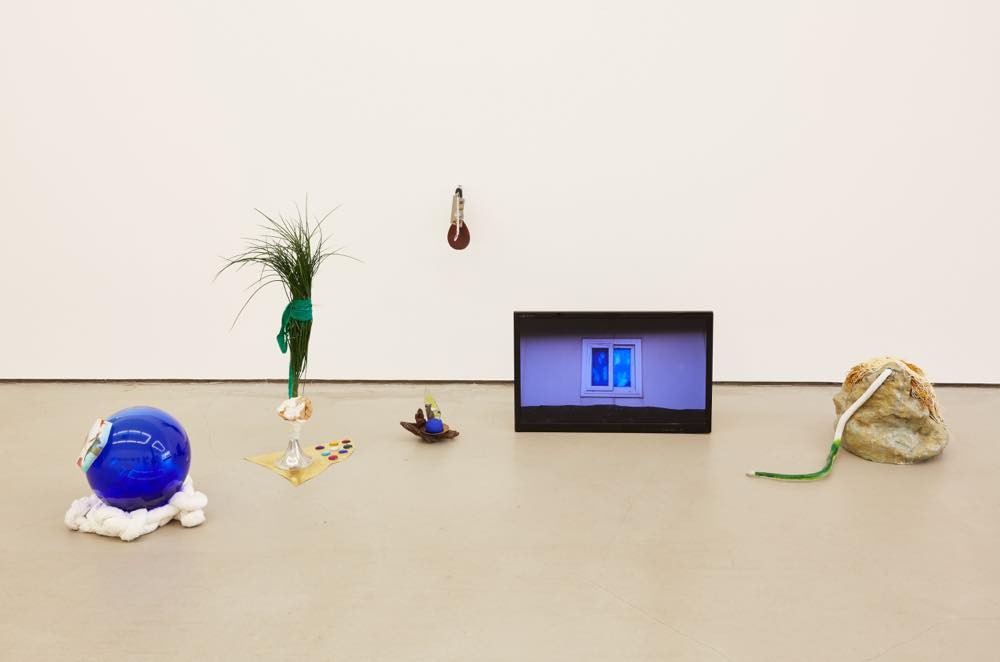
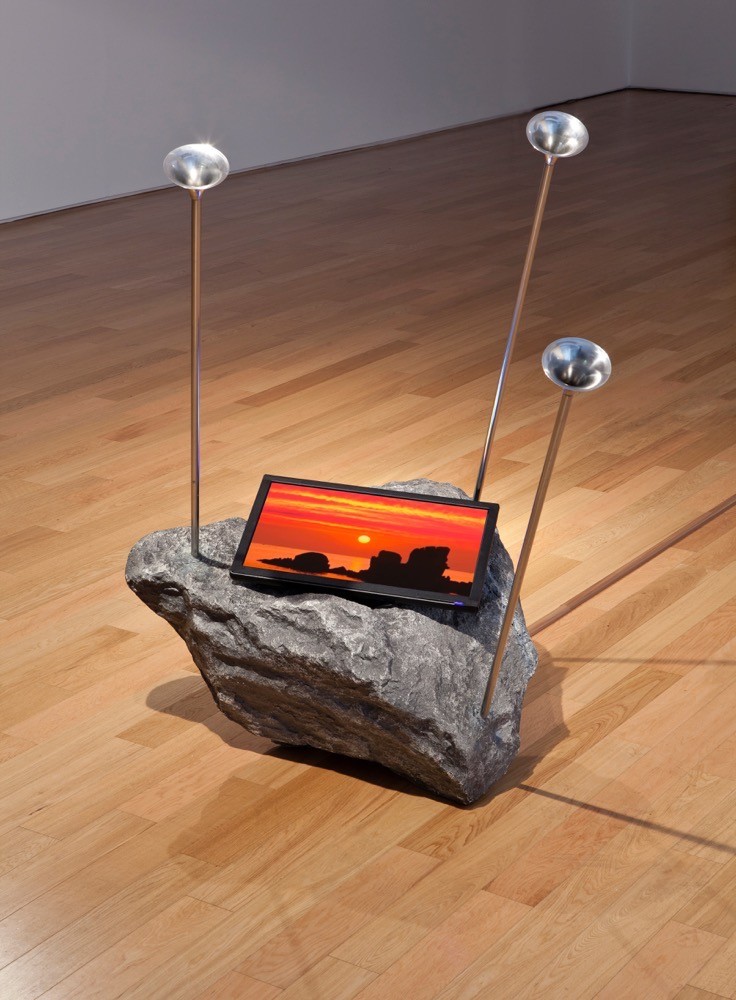
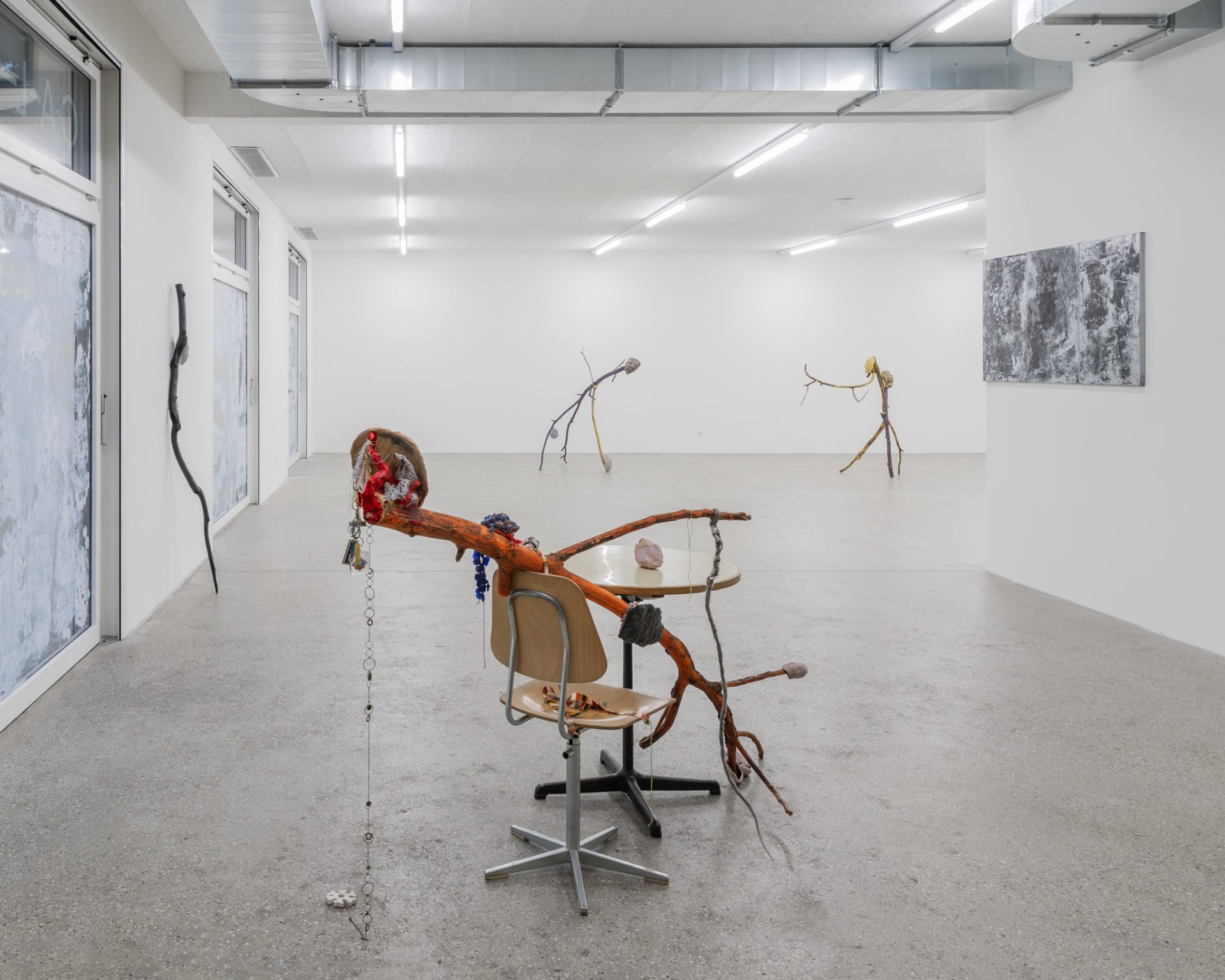
Renewal is the act of making anew what already exists—things whose reason for
being, vitality, or usefulness has dwindled or nearly run out. Choi calls her
lumpy sculptural forms—onto which fragments of past performance tools and
residues are stuck in grotesque shapes—“plastic fossils” or “renewals.” “Even
when thrown away, they remain; even when sent off, they return. They slowly
permeate and adhere to the body, swelling its mass. These hybrid bodies gather
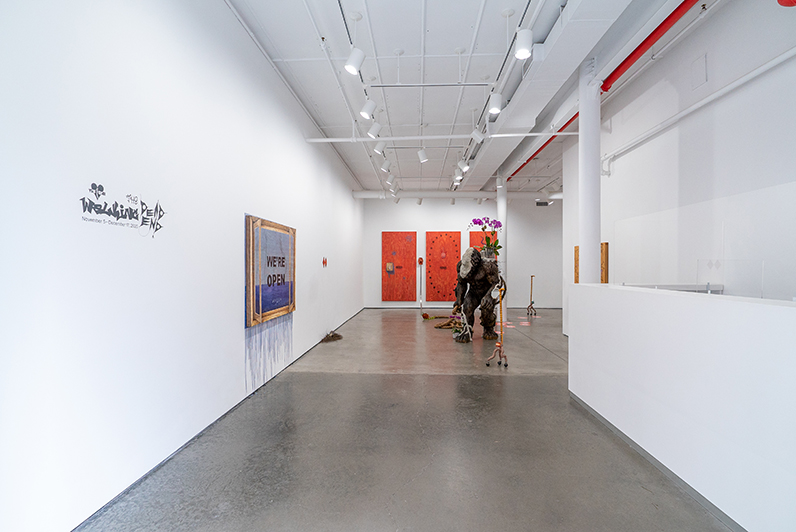
into clusters, composing landscapes toward which the heart gravitates.” In her
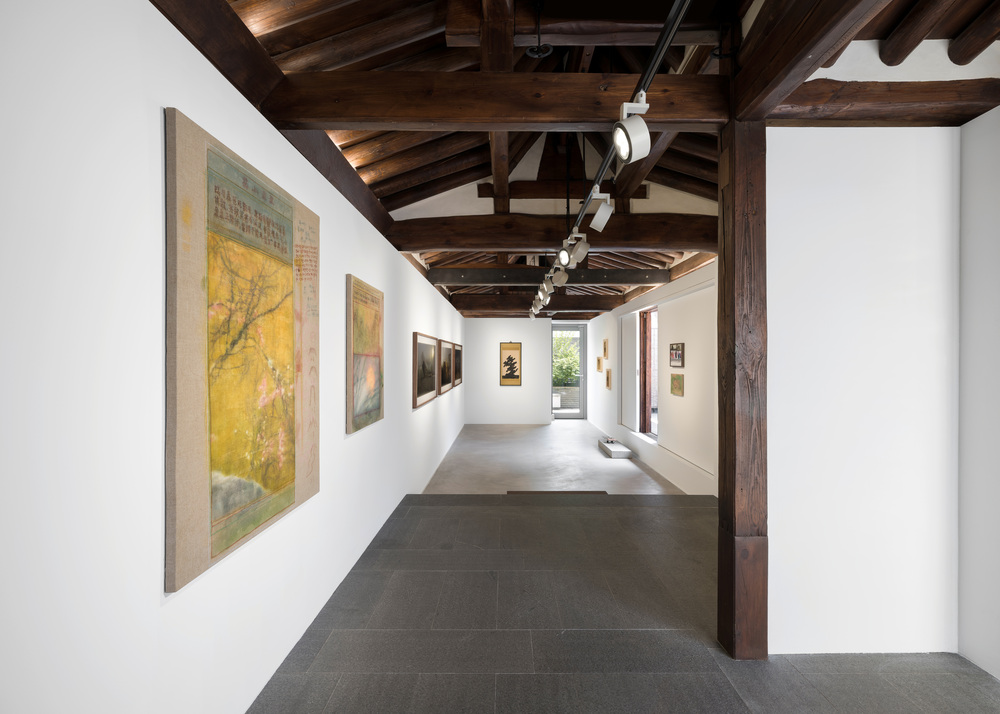
2020 solo exhibition 《Where the Heart Goes》 at DOOSAN Gallery,
these “renewals” indeed took the form of massive clusters, staging a Minotaur’s
labyrinth or a polychrome apocalypse.
Judging by these forms, “renewal” for Choi is
closer to “resurrection,” the recombination of residues on the verge of rot.
Yet rather than “renewal,” she prefers to say “update,” as if presuming that
these things will never decay.
These residues are strewn all across the city;
to Choi’s eye, they resemble cache files on a computer—awaiting recall by
someone, otherwise buried and forgotten somewhere in the network. Where do
their usefulness and vitality reside? Faceless monsters of Styrofoam, urethane,
epoxy, latex, rubber, PVC—conjoined—refuse the fate of being discarded as
trash. According to Horror Eros Vulgar Spell, their
goal is to become vertebrates. Why vertebrates? As if their aim were less
movement than the formation of figure, the becoming-erect, the swelling of
mass. The “stage of renewal” suggests less the salvation of discarded things
than the jerking, misstepping, self-ruinous passions of humans, the crowding of
language. It is a present parallel world—funny, cute, pitiful, and terrifying.
4. Korean Horror
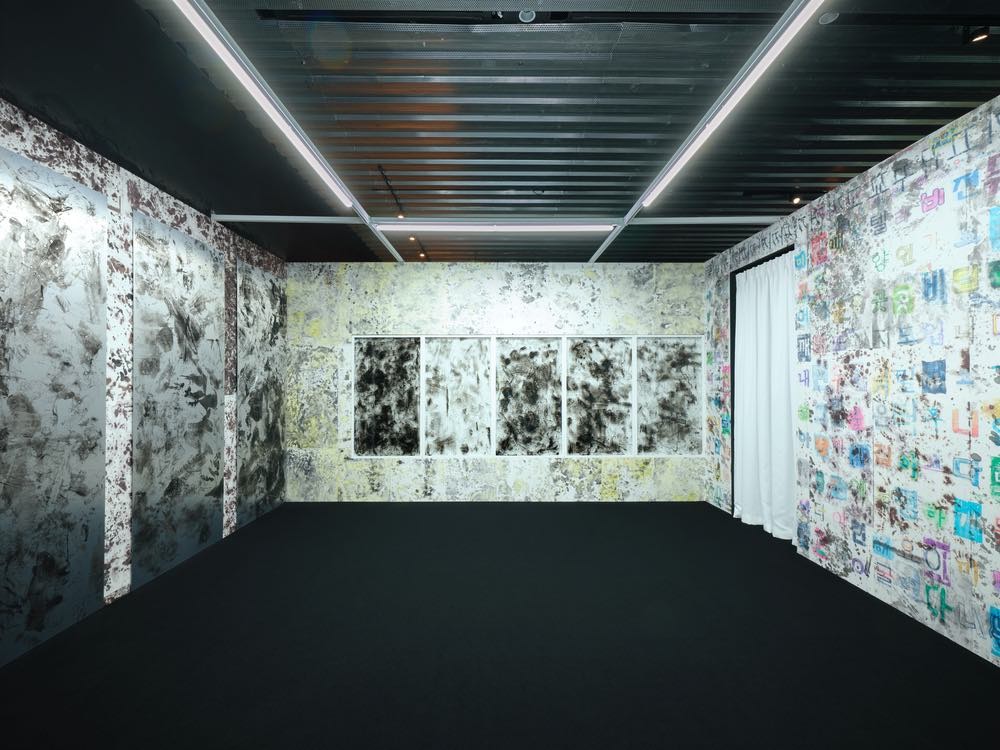
The element of “horror” first emerges in Choi’s work with Wall
Stickers—Self-Adhesive Wall Decoration (2014). Red floral wall
stickers that purport to animate spaces, rendering them bright and cheerful, in
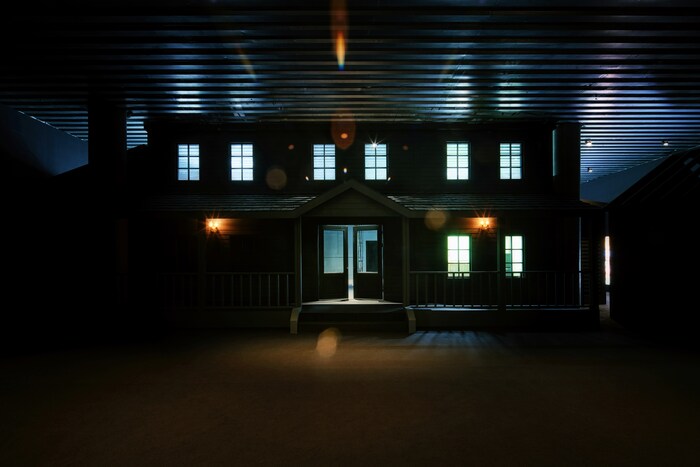
fact produced an atmosphere of horror. In 2018, Choi’s Horror
Series presented Korean interior elements that signify cheap
tackiness—cherry-colored moldings, floral wallpapers—through mise-en-abîme
structures. Things labeled “horror” on the internet—like “glow-in-the-dark
ceiling stars of horror”—point to a collective loathing and self-mockery that
finds terrifying the outmoded and the stopgap ways of living. Choi toys with
this signifier “horror,” asking about the identity of the true horror hidden
beneath the carpet. “What is truly horrific is the group that mocks itself under
the sign of ‘horror.’ And the psychology that trivializes and exploits
‘horror.’ Conversely, a society that makes people feel ‘horror’ at small
things.”
The fear of “stale” things manifests also in
the signifier “grandmother.” Chan-kyung Park once tethered the keywords “ghost,
spy, grandmother” in the SeMA Biennale “Mediacity Seoul 2014” exhibition 《Ghost, Spy, Grandmother》 to Korea’s “weird modernity.” If an earlier generation’s
“grandmother” figured those excluded from modernization, objectified through
distrust, then Choi’s “grandmothers” are the boisterous ghosts who appeared at
night in the exhibition 《Where the Heart Goes》. In an era when the digital world blankets the real, the least
visible beings in the digital realm may well be grandmothers. In Choi’s work,
“grandmother” is less an aged female figure than “grandmother-ness.” The
residues Choi gathers from reality constitute the territories of grandmotherliness—places
like Dongmyo and Gwangjang Markets. At once the most premodern beings and the
most tenacious and flexible entities wedged into the crevices of reality,
“grandmothers” are also an unwanted designation for any woman. They are the
mirror image that K-beauty—boasting the world’s most advanced cosmetic surgery
and promising eternal youth—most desires to conceal.
5. Posting
“To have one’s heart go out” (maeumi kanda) is very close to “one’s eyes going
out” (nunkiri kanda). Choi attends to the visual elements of contemporary
society less from the side of seeing than of showing. That is, she attaches
herself to what is shown (view) rather than to the active act of looking.
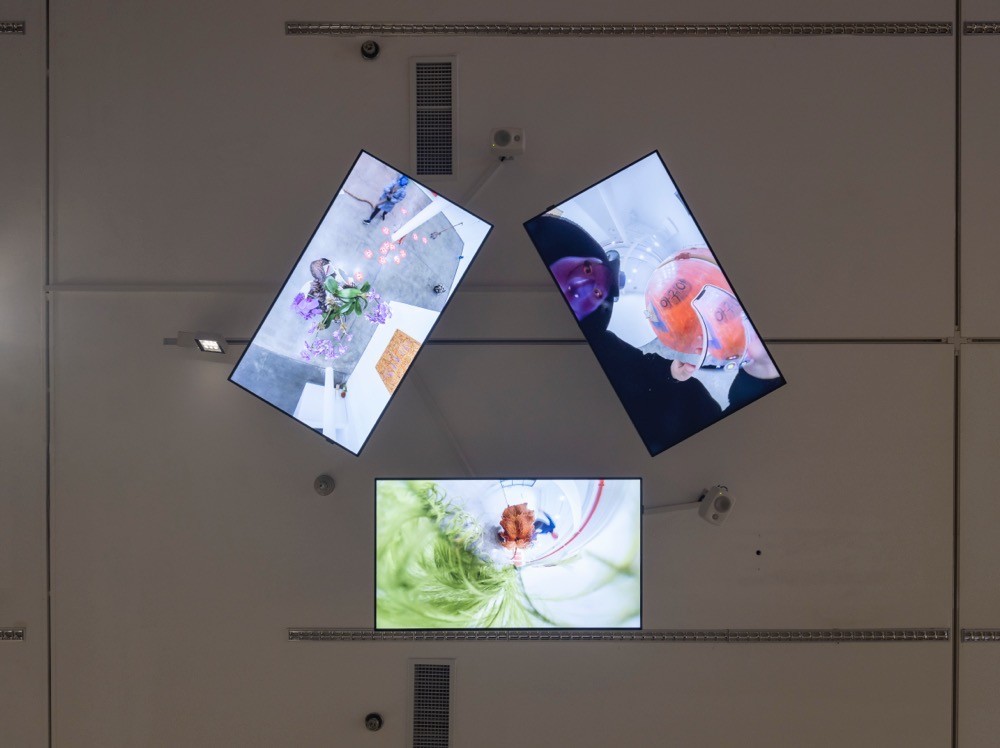
Bulletin boards, electronic displays, flyers, shop-window decorations—on the
street and in the subway—are trash to some in the era of the Internet of Things
and 5G networks; to others they remain messages of influence. In an age when
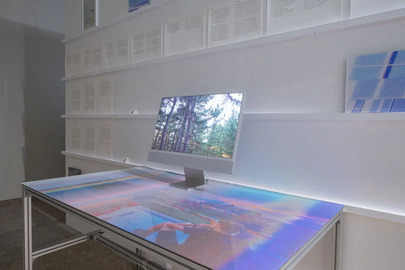
the sign of the screen apparatus—Full HD flat displays—is updated daily, Choi
watches the materiality of media and the dynamics of messages that adhere to
that sign. Like the term “screen door,” it is a window to the outside that
closes transparently—a barrier that opens and shuts. Before this, timing is
crucial.
Modern media displays adhere their physical
supports and materiality to images so as to render themselves maximally
transparent; the medium thereby becomes invisible. Choi, conversely, bubbles or
swells that transparency into opacity. This is both an exposure of the media
ideology that colludes with infinite consumption and accelerated growth, and a
ragpicker’s gathering-up of the things swiftly discarded in the wake of such
speed. Footer text, mock smartphones, greeting-bots—the bodies of messages that
beckoned luck and promise in the 2000s and then declined. Looking down as she
walks, or walking backwards, Choi collects the fragments of the materialized
“voices” of the promotional society of the 2000s. There, the sediment of
time—rapidly boiled and cooled by Seoul’s digital modernity—stirs and survives.
—Excerpted from the Geumcheon Art Factory
final report, 2021