In the territory of contemporary folk culture
explored by Yun Choi, ordinary reality seems to be directly connected to a
dream world. For this reason, it seems familiar but at the same time is not
easy to describe in words. Most of the elements making up her works can be
described as popular, but that does not mean that they have the popularity to
be widely appreciated by the public. They provide neither vivid traces of life
that can be monumentalized as symbolic images of the people nor mementos of a
past that has been redeveloped as a tourist destination. They have a certain
vulgarity in the sense that they belong to the insignificant masses. The
elements are so much like a cliché that no one wishes to hold their gaze for
long, but they also resemble an epidemic in that we eventually contribute to
their reproduction by keeping our eyes averted.
Choi persistently brings uncharacteristic
components of the flesh of the world into exhibitions, where they remain
neglected, consumed, and ceaselessly supplied at a superficial level.
Therefore, what we find in the exhibition is mostly things we have already seen
elsewhere, but no one can clearly recall where they were or whom they belonged
to since they have been seen too often and only briefly. In the meantime, names
that are not found on genealogical records, images that do not reflect their
originals, and voices that belong to no souls are entangling and growing into a
mass.
It is not impossible to regard this scene as
a contemporary ‘true-view’ landscape painting if you so wish. However, this
landscape is not submissively arrayed before you or the other viewers who
contemplate it. In this landscape, symbols that are not otherwise worth
collecting are collected, reproduced, and agglomerated and come to dominate the
exhibition space. It feels like a theater in which there is no distinction
being made between the stage and the seating. Choi sells her name, face, and
other derivative data to this theater where the set, props, actors, and barkers
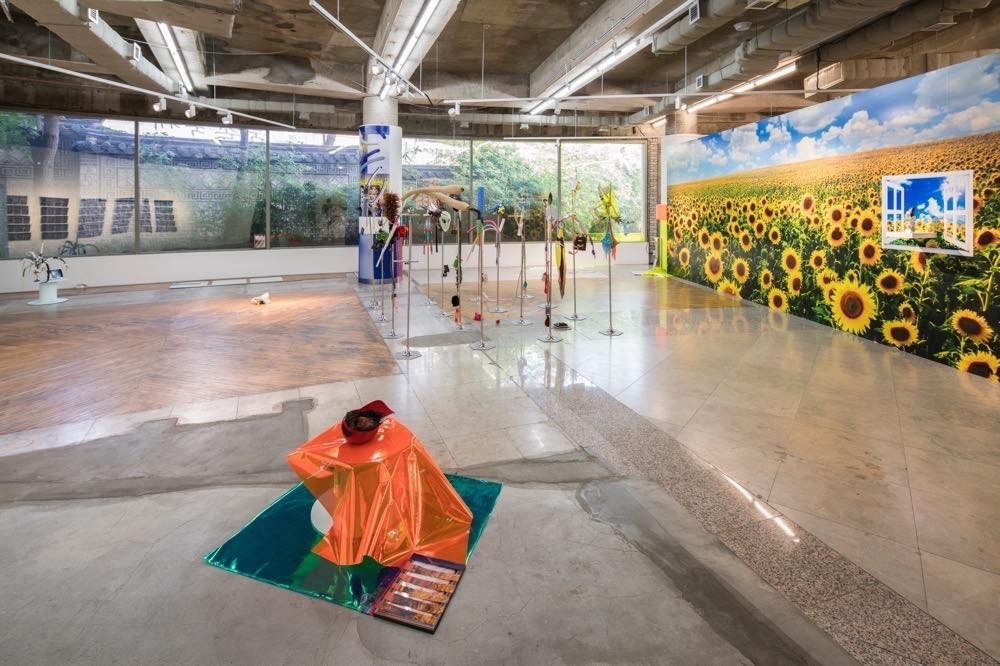
cannot easily be distinguished. At 《Hanaco, Yunyunchoi, Choi Yun Solo
Exhibition》 (2017), the artist seemed to attempt an
experiment with her own name to determine the extent to which a common name
like ‘Choi Yun’ can embrace all sorts of miscellanea rolling around in the
street, making frequent appearances on screens, or circulating as rumors.
She
explored how many pieces she can break herself into and throw them among this
debris when the name is stretched to the point of breaking. This might be
regarded as art performed by a shaman, but it was also a peculiar form of
escape magic. Being dismantled into parts and distributed, Choi then
disappeared after having left traces of herself everywhere. All that was left
was the artist’s byproducts or a grotto built from the debris of the world into
which she had thrown herself. What could go in and out of this space? Viewers
could, of course. They consider everything inside an exhibition space to be art
and try to find clues connecting it to a creator. However, searching for a
creator or the person responsible for a work may be an act of invoking an
existence that a mere viewer cannot manage. This is because the folk culture
that Choi materializes is attributed to those that break down the exclusiveness
of a proper noun by repurposing good-for-nothing names or something
unremembered, and not to particular substantial names or to something nameless.
Choi’s work summons these unfortunate ominous
existences and embodies their destinies. Today, different kinds of objects set
within an exhibition space are no longer entitled to the claim of being
perceived as special objects. They are temporarily installed according to the
exhibition plan and dismantled as soon as the exhibition is finished. Choi
vigorously went at this project, a sort of recycling operation, in which the
debris from a dismantled exhibition is transformed into another work or
functions as a gallery attendant at the exhibition space.
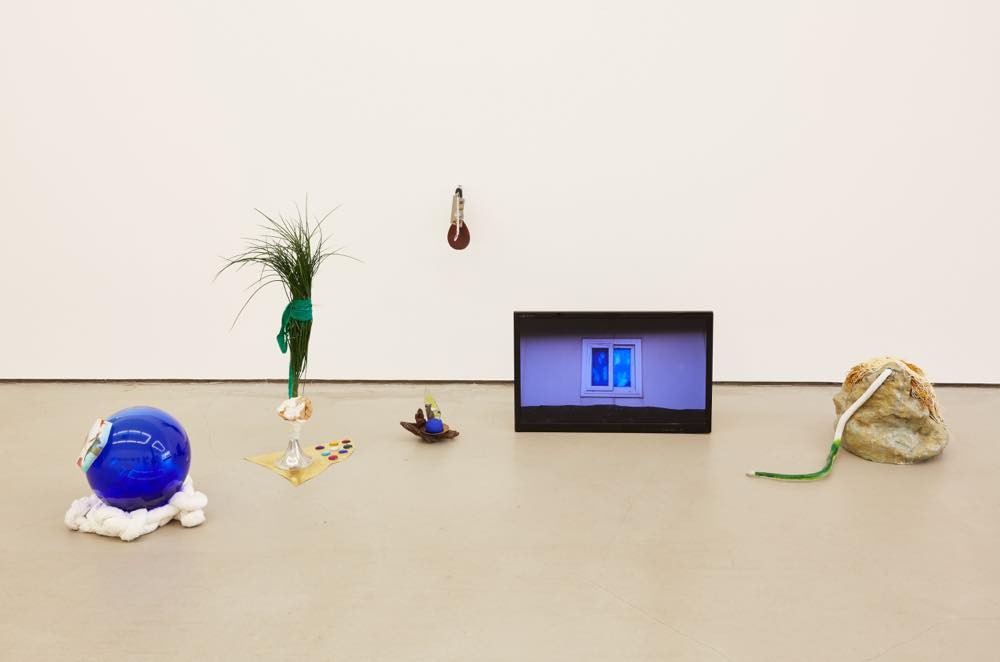
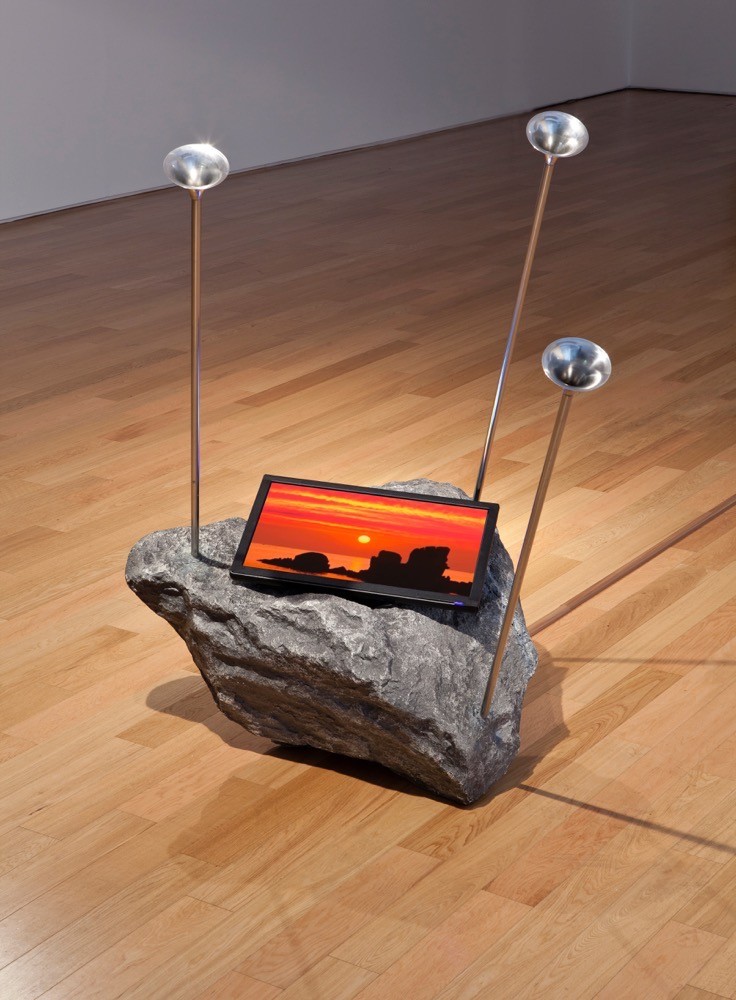
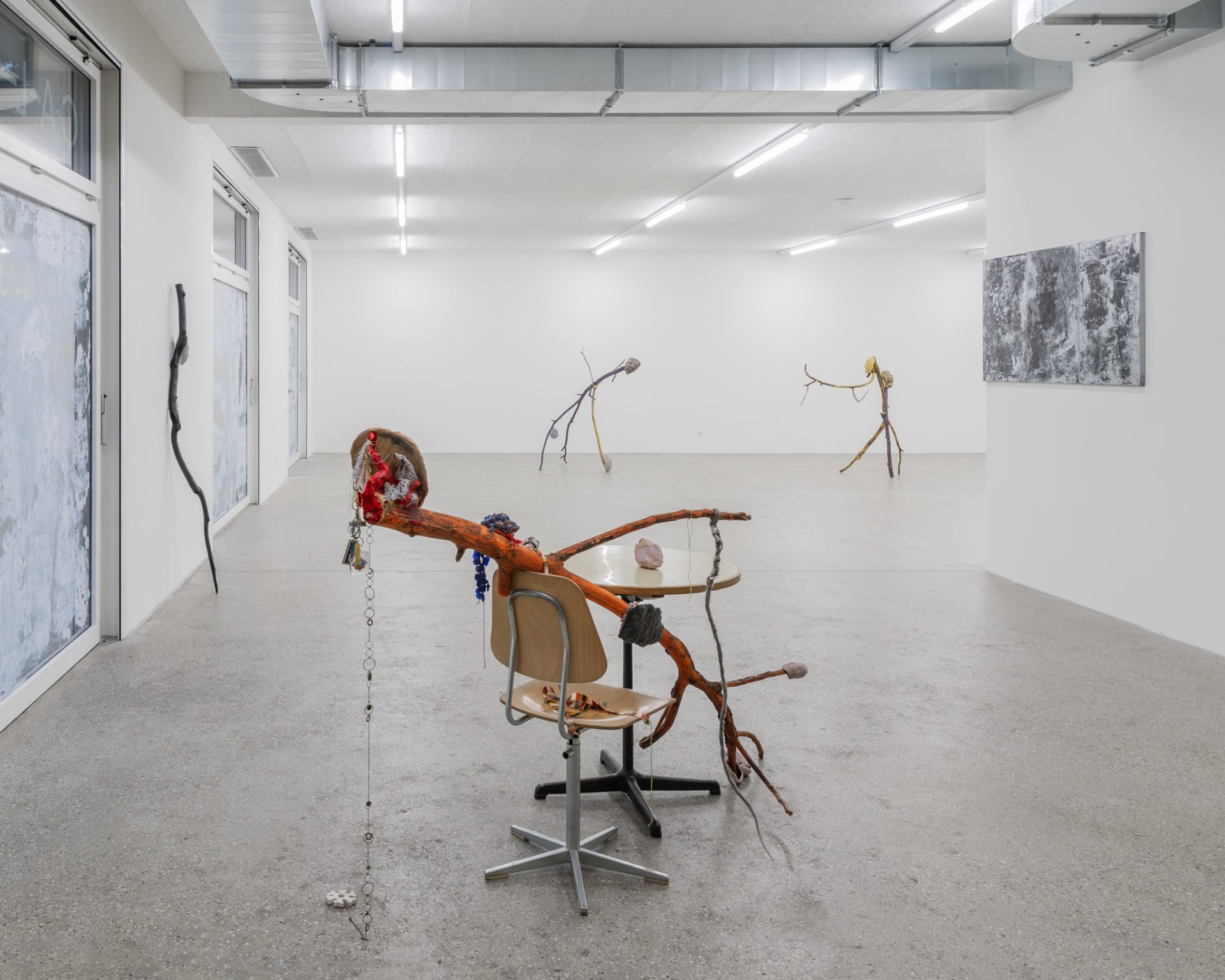
This series of debris sculptures, called
‘vertebrates,’ is presented in 《Where the Hearts Goes》 (2020). Here, each
sculpture is indifferently begging for help with a signboard around its neck
stating “There is no place left for the vertebrates to go.” As malignant stock
that can neither break from nor complete the course of commodity circulation, these
objects, animals, or mere materialized symbols transform the exhibition space
into a natural history museum in the future (Division of Humanity, Section of the
21st Century). In that way, they predict their ironic immortality. Choi’s
interest in the role of an exhibition space as a place of assembly for objects
that can neither live a full life nor simply die is clearly seen in her recent
works. This is probably because the existing operating system of an exhibition
space and the reason of its existence has been questioned at a fundamental
level since the outbreak of the pandemic, but before everything else it is
because the artist has had more opportunities for observing and participating
in the art system that she considers a part of contemporary folk culture.
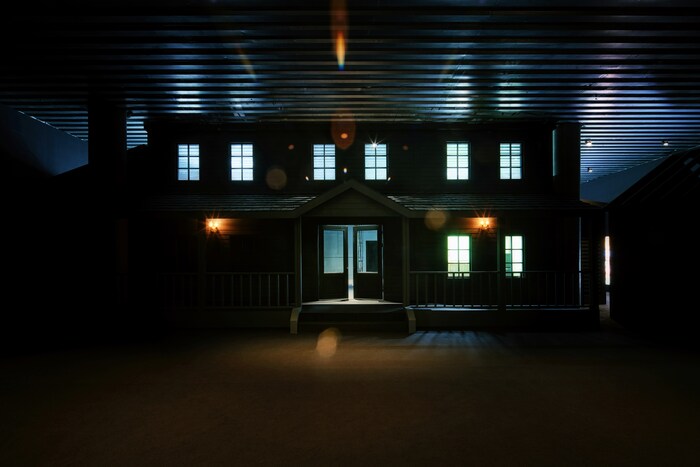
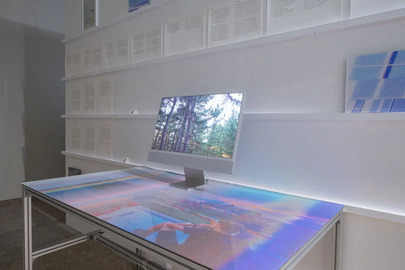
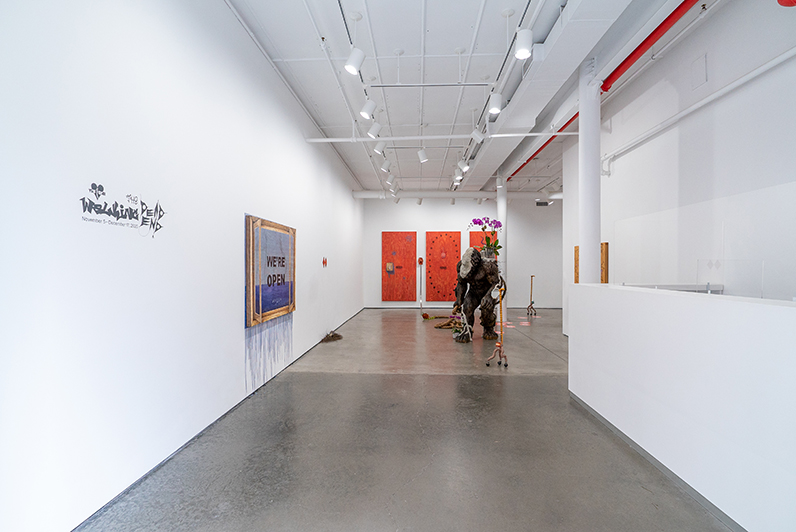
Situated between the current difficulties of
operating an exhibition and the institutional policy to keep the exhibition
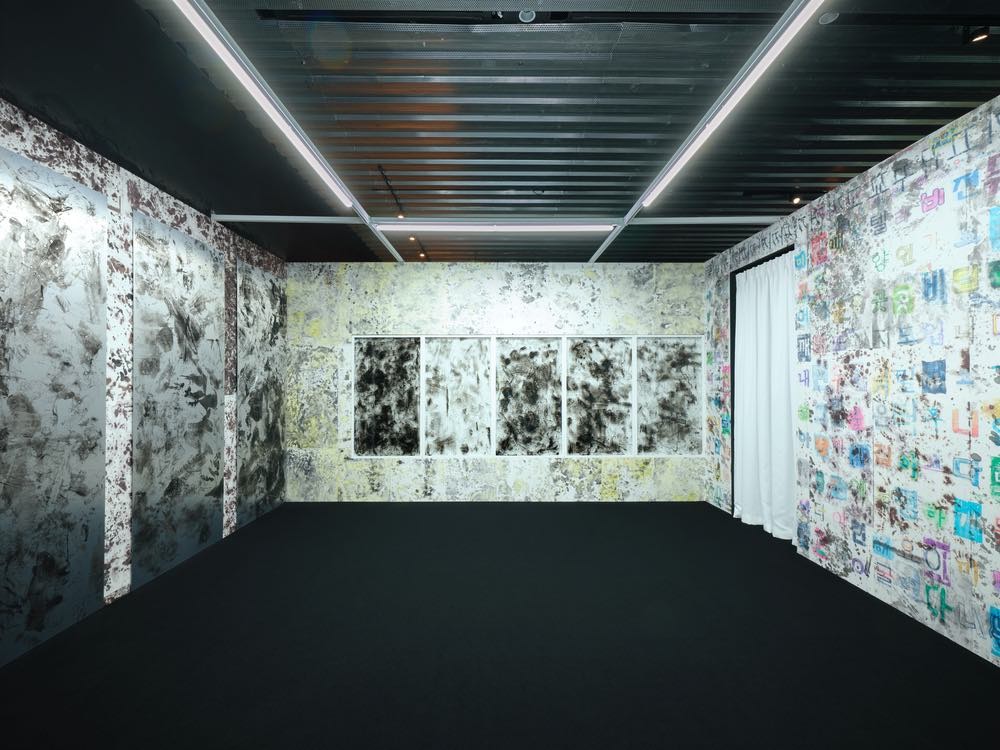
space running, 《Walking the Dead End》 (2020) transforms the
space into a synthetic post-apocalyptic stage in which 3D graphics of animals
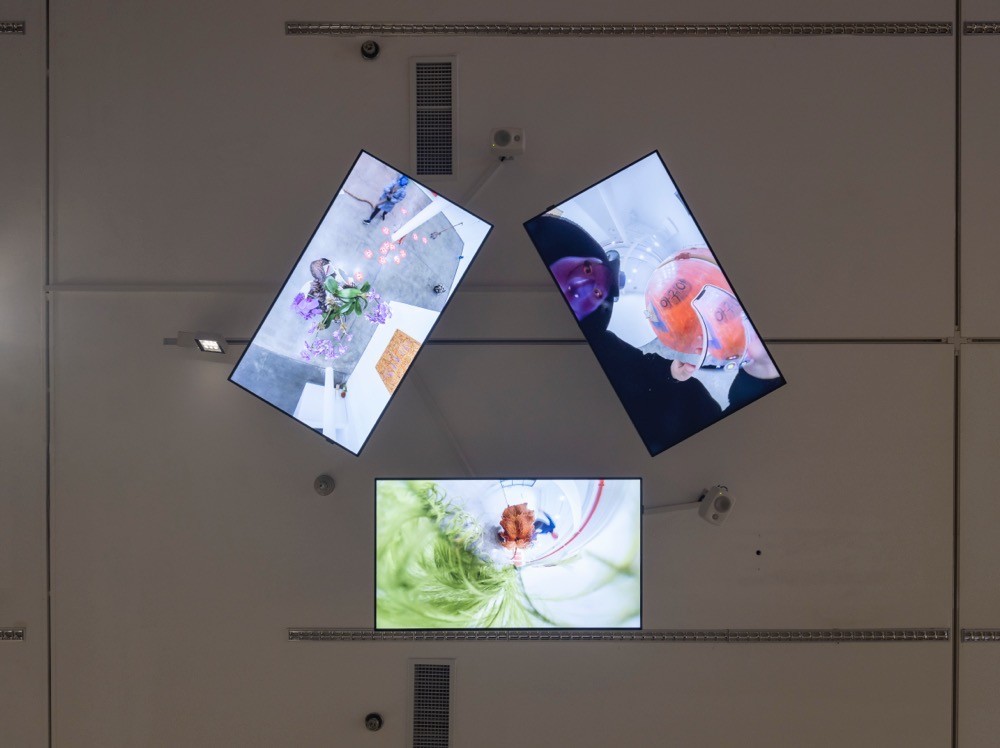
are contemplating the exhibits with curious eyes. What is there to see here? Doomsday
Video (2020) answers this question with an audiovisual vortex that
attracts beings isolated in their separate places and then disperses them once
again.
Here, we will observe ourselves. The
invisibles whom we can never see even when they are right before our eyes, are
searching for each other while occupying the exhibition space after the closing
hour. When this hide-and-seek in the dark is finished, what will you be left
with in your hand? Further, who will the hand be attached to?
/From MMCA Young Korean Artists