Exhibitions
《The 4th Wall: The State of Emergency ll》, 2017.06.02 – 2017.08.06, Art Sonje Center
June 01, 2017
Art Sonje Center
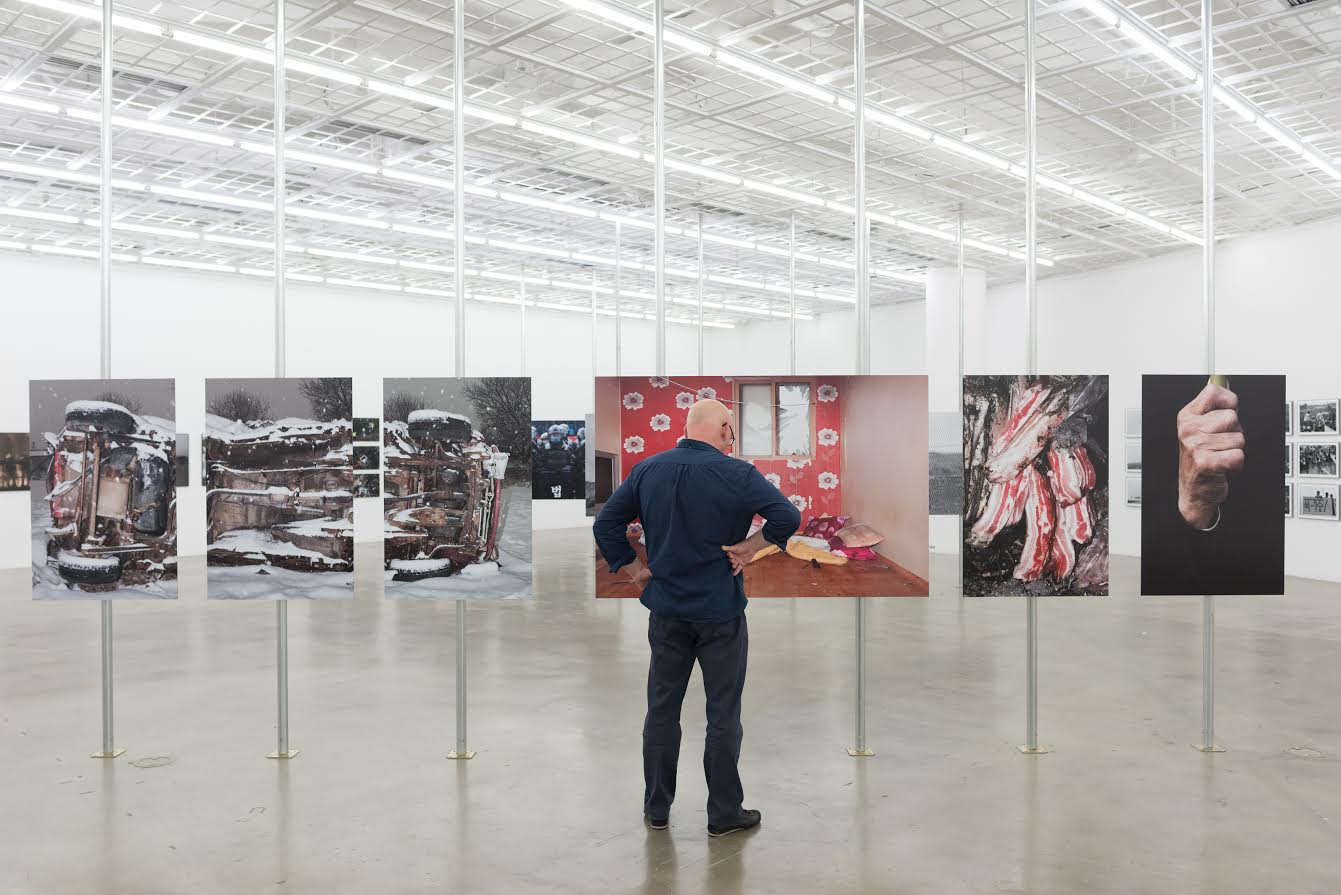
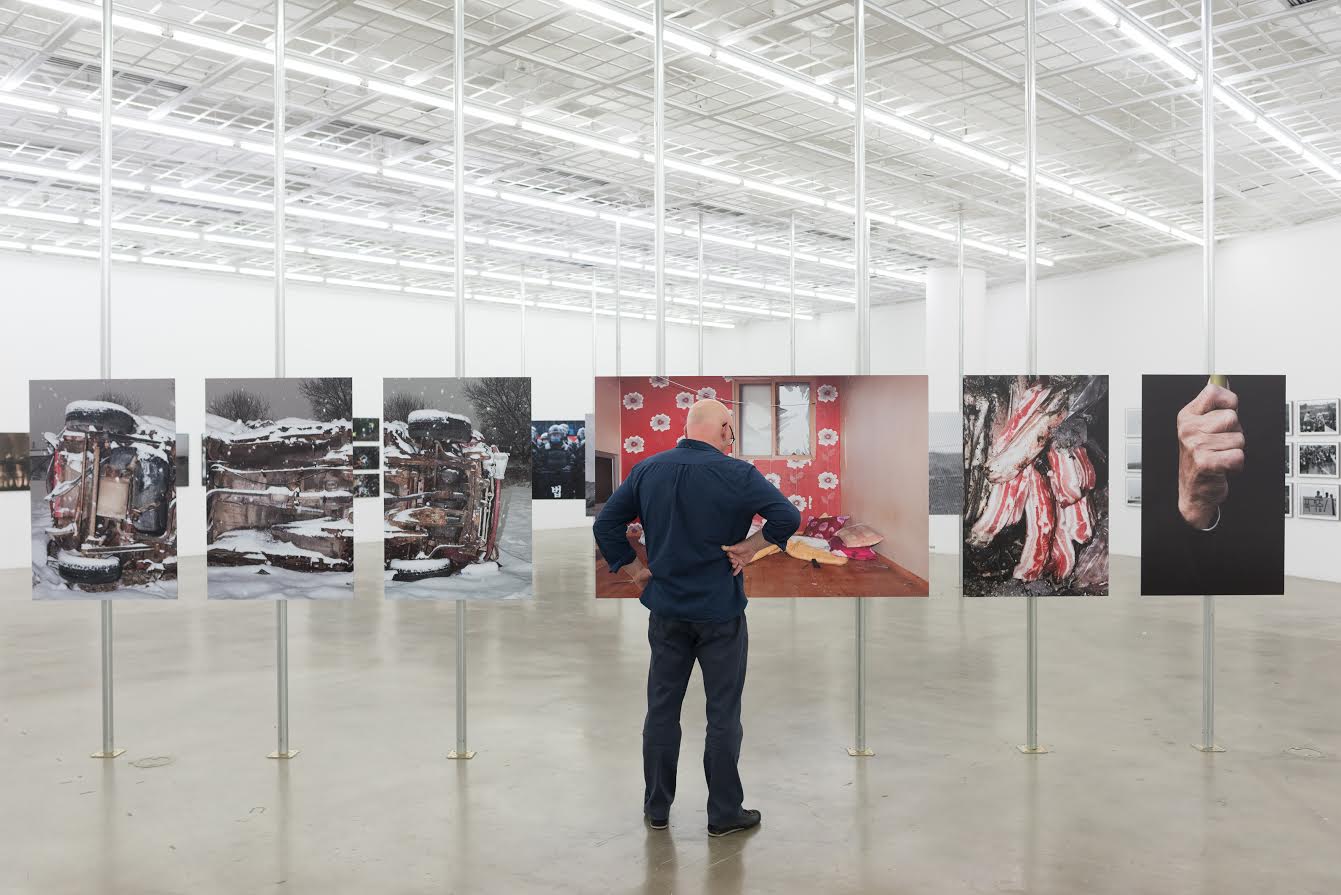 Installation view ©Art Sonje
Center
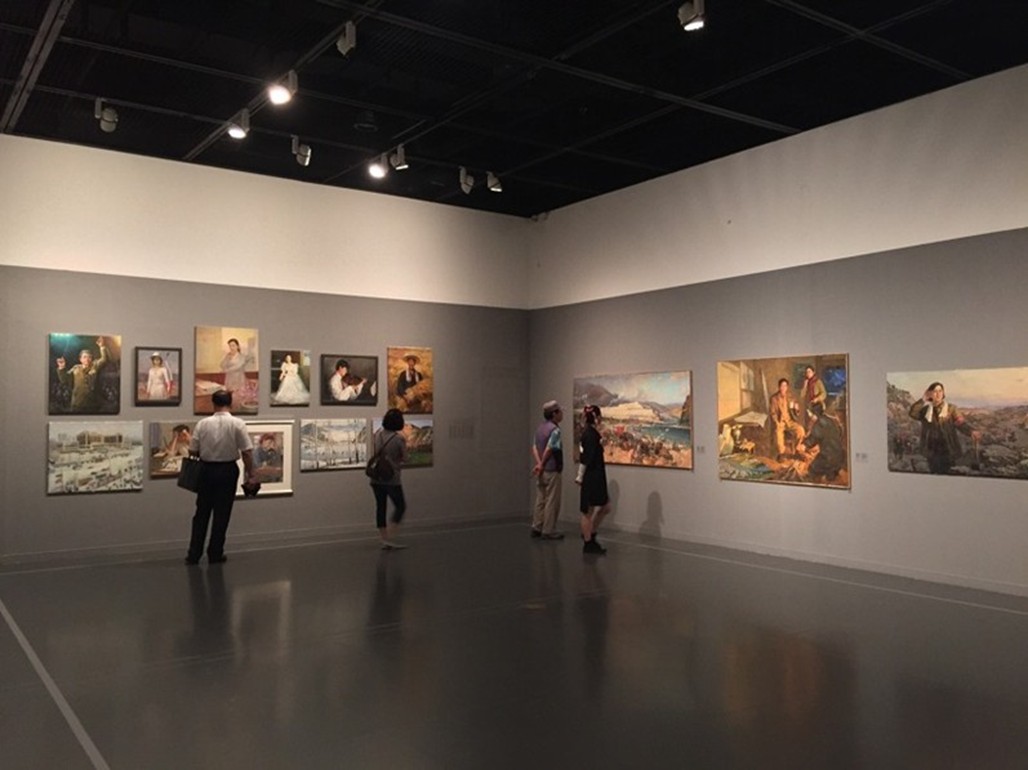
Installation view ©Art Sonje
Center
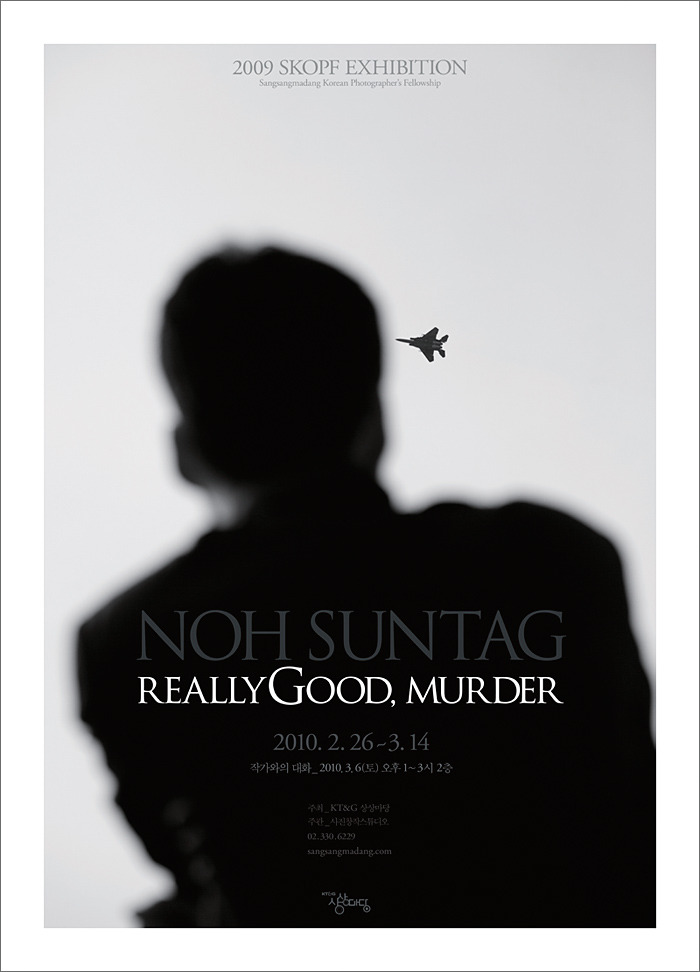
Art Sonje Center will presents 《The 4th Wall: The State of
Emergency ll》, an exhibition of the work of artist NOH
Suntag, from June 2 to August 6, 2017.
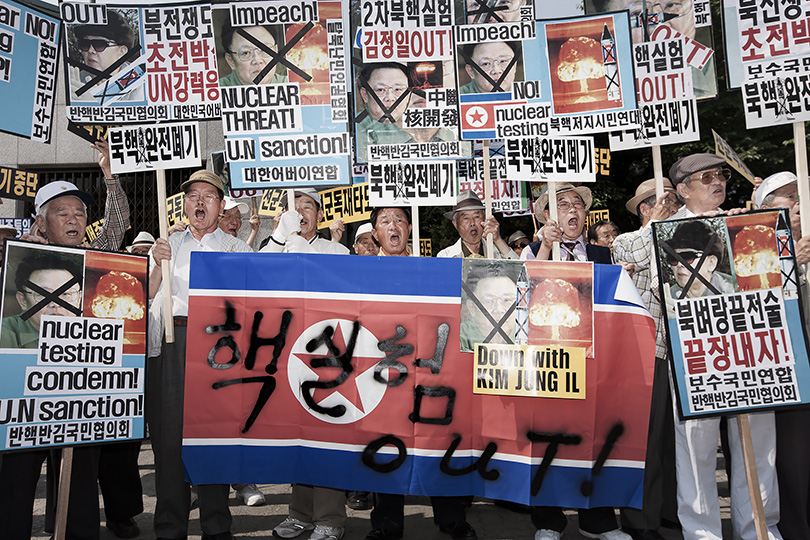
NOH Suntag’s previous solo exhibition, 《The State of Emergency I》, held at the
Kunstverein in Stuttgart in 2008, used the language of photography to show the
skewed environment of tension and conflict generated by the division between
South and North Korea. He continued this with another solo exhibition the
following year at the municipal art center in Virreina Palace, Barcelona. 《The 4th Wall: The State of Emergency ll》 adopts
the same critical approach with 《The State of
Emergency I》, spotlighting the darkness of incidents
that had taken place over the past ten years.
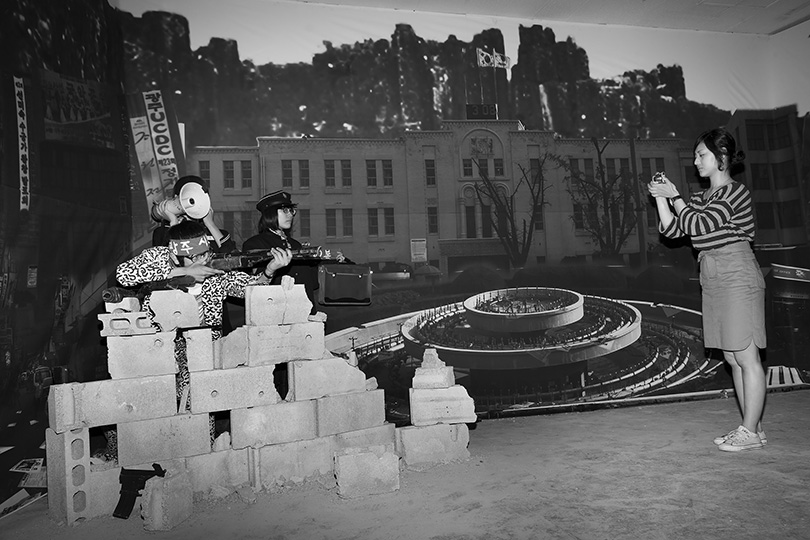
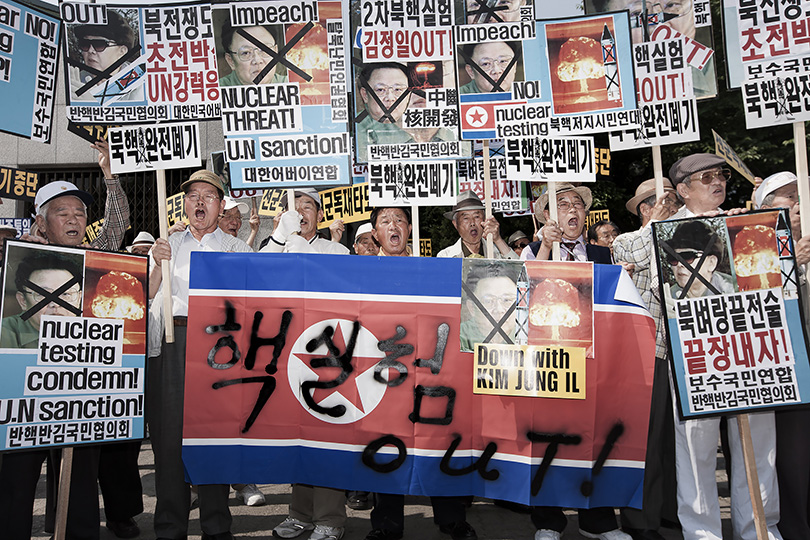
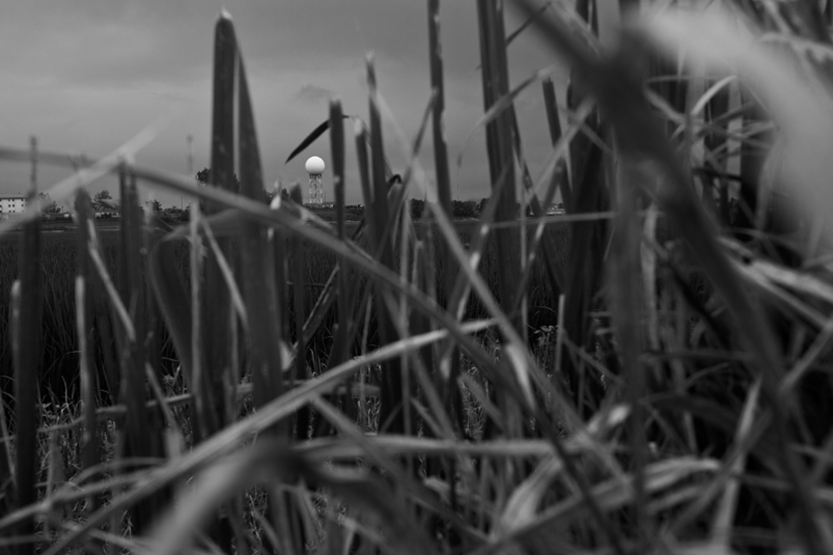
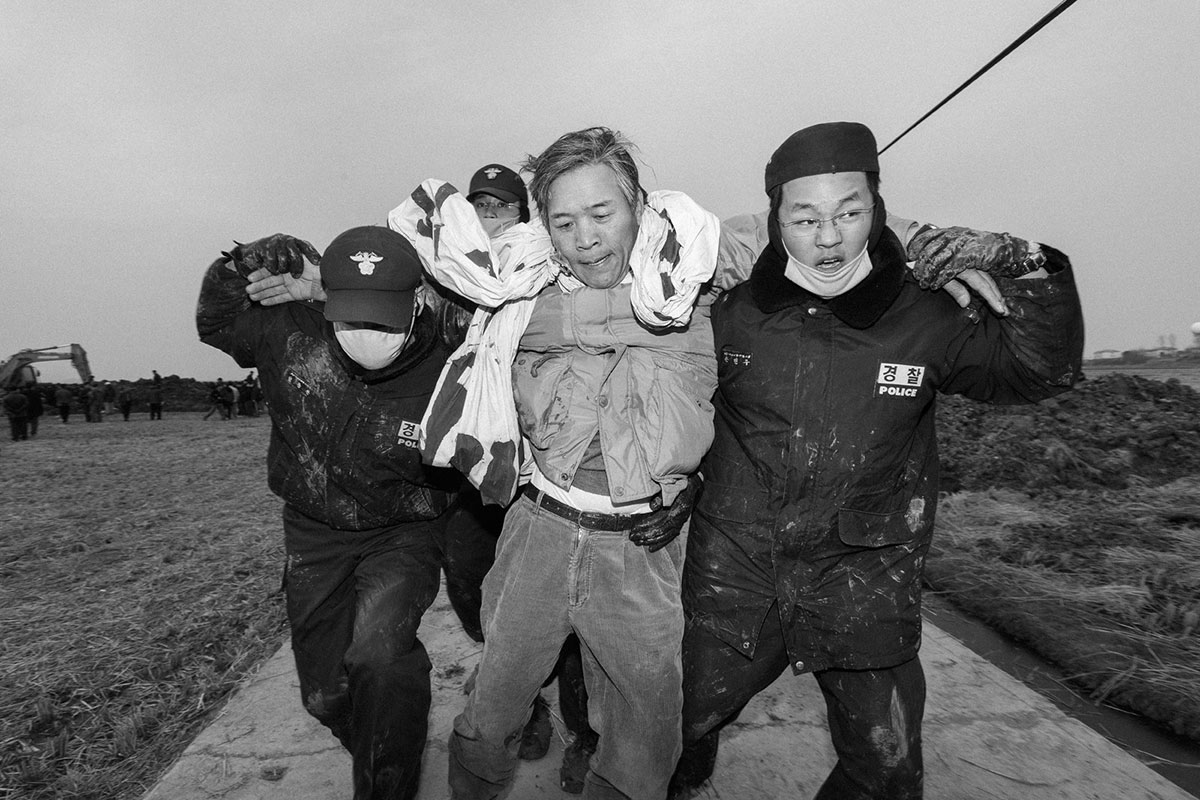
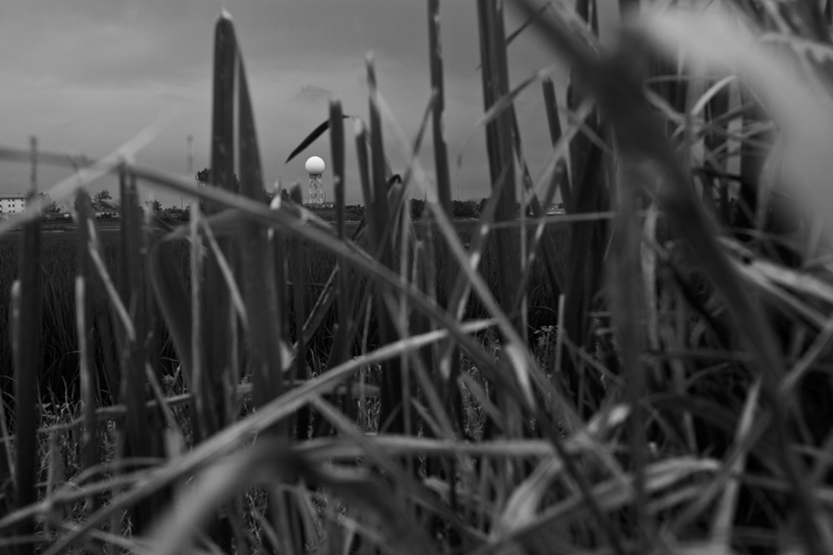
Consisting of around 200 works of
photographs, 《The 4th Wall: The State of Emergency ll》 will
be shown at Art Sonje Center on the second and third floors. An exhibition
catalog of the same title is to be published alongside the event, while curator’s talk, artist’s talk, and other programs
will offer opportunities to approach NOH’s artistic
vision in a multifaceted way.
The “state of emergency” concept referenced in the exhibition title is taken from the German
constitutional law expert Carl Schmitt. Schmitt was the figure who established
the judicial trappings for the Nazi administration in Germany, furnishing a
crucial theoretical foundation for the Enabling Act, or the so-called “state of emergency law.” His creation has
had an influence on many intellectuals on both the left and right in their
efforts to understand and analyze the functioning of the modern state. NOH Suntag
has viewed the “state of emergency” concept as a key to understanding South Korean society, which has
been situated in a never-ending state of emergency through war and division
since its liberation from the colonial rule.
According to NOH, Schmitt’s famous argument that a sovereign “must be
he who is capable of making decisions in exceptional circumstances, while he
who seeks to protect constitutional government must be able to do so outside
the Constitution” is one that compels a re-examination
of South Korean modern history: the black marks of its Yushin Constitution,
Emergency Measures, and military coup d’état. What
about the proposition that “the essence of politics
lies in distinguishing enemies from comrades”? Does
this not recall the politics of betrayal and the monopoly on constitutional
government that have generated such heated passions in South Korean society
over the past several years?
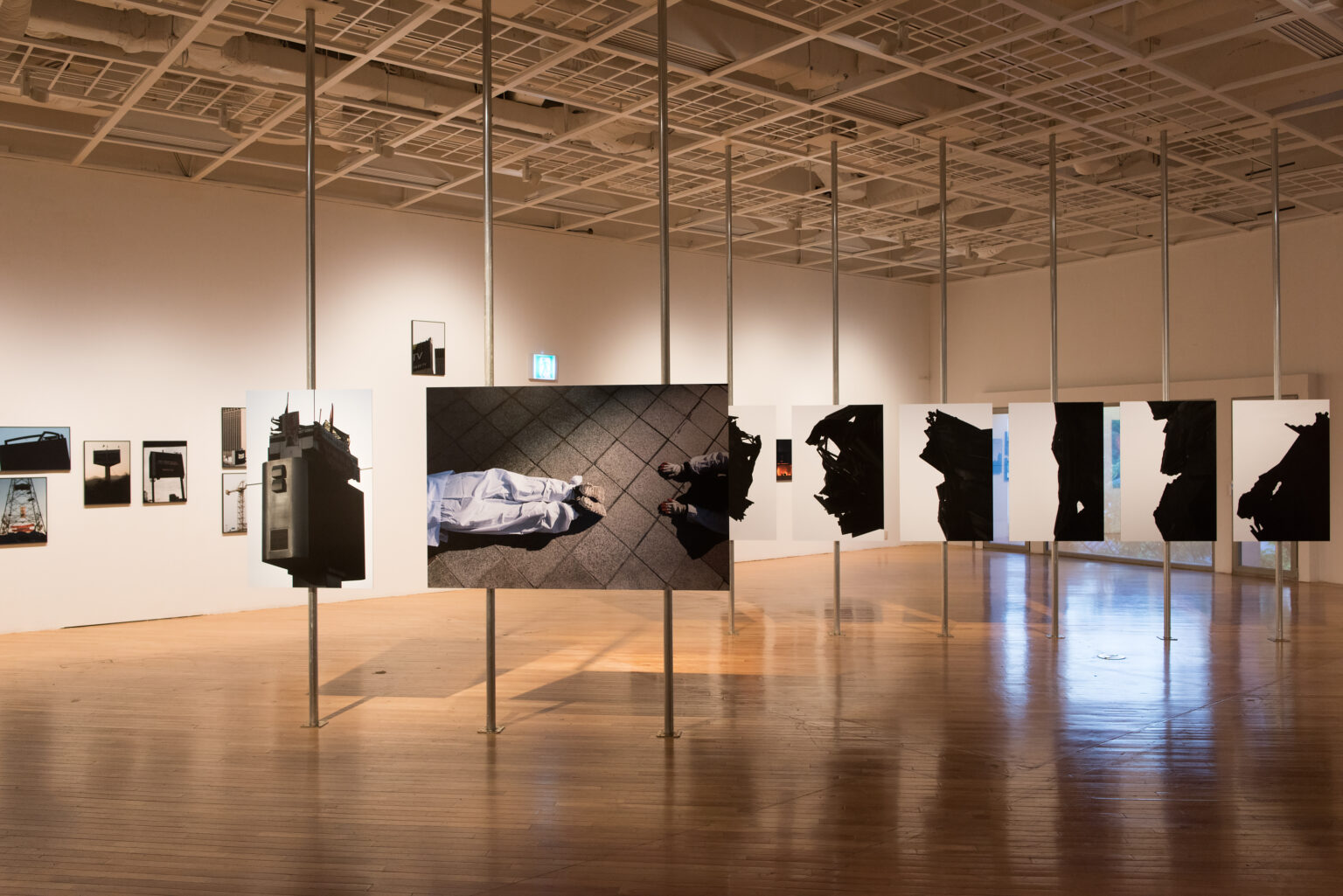 Installation view ©Art Sonje
Center
Installation view ©Art Sonje
Center
《The 4th Wall: The State of
Emergency ll》, which is being staged in South Korea,
goes deeper than the European-staged 《The State of
Emergency I》 in spotlighting the society’s inner workings. The fact that the period in between the two
exhibitions saw Lee Myung-bak and Park Geun-hye governing as the presidents of
South Korea has significant implications. The new work in the ‘State of
Emergency’ series, which shows the landscape of police authority developed
by the modern state to achieve its will to power, will be accompanied by new
series such as Namildang Design Olympic, Arrest,
Vertigo, Drought, Deadpan of Cheonanham, Gangjeong
Gangjeom, Wrong Island, A Chignon Mountain Raised by Lies.
The term “fourth wall” refers
to the invisible wall that separates actors from the audience when the
theatrical stage is conceived to be analogous to a room. Perhaps the boundary
between South and North Korea is its own fourth wall, showing the extreme
theater on either side. It is also a wall that points inward toward South Korea’s own society. The reality of South Korea today, while undoubtedly
real, is also so incredibly theatrical that it becomes surrealistic or
unrealistic. Where do you stand on this unrealistic stage—the inside or the outside?