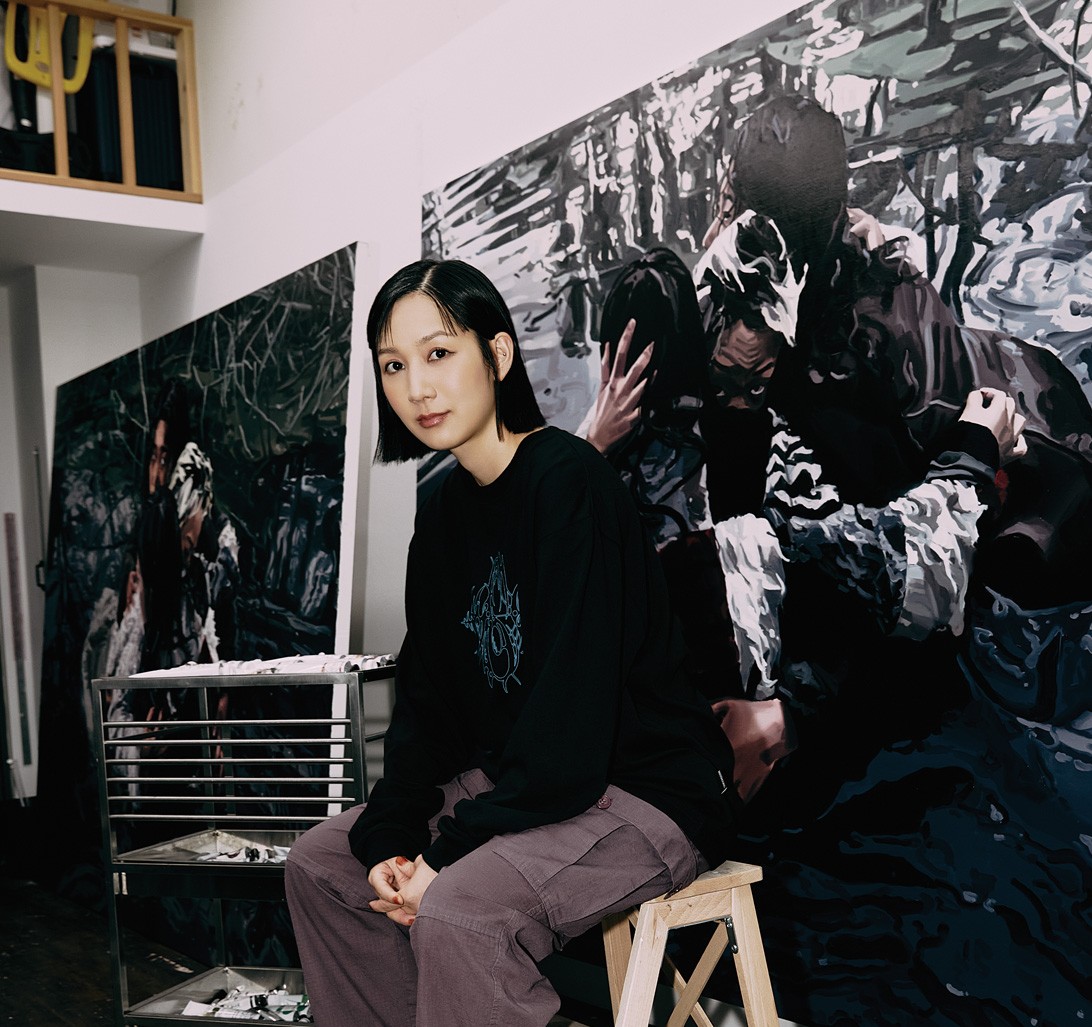
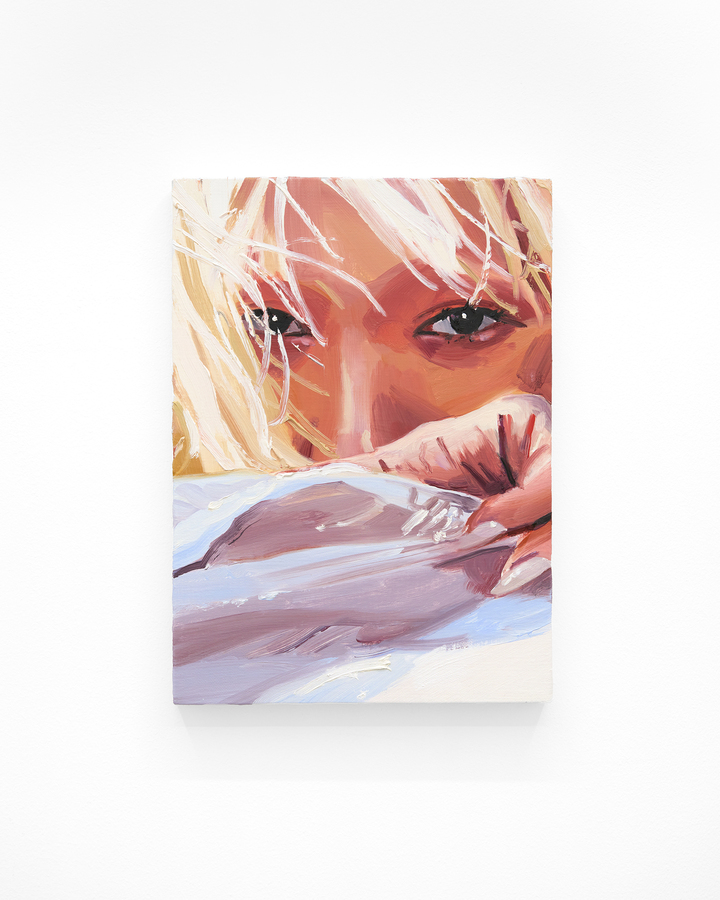
Miryu Yoon, who has been actively showcasing her work through solo and group exhibitions for about three years, is a rare female artist who creates large-scale figurative paintings centered on human subjects. Since there were already several well written critiques about Yoon, I initially intended to write this piece in an interview format. This was because I neither felt confident in developing a different perspective or interpretation that would be useful to her, nor did it seem necessary to do so now.
For these reasons, I decided to conduct an interview, but for some reason, towards the end of the interview, I found myself repeatedly applying the term universe to the artist’s work. Although I may not advance much beyond existing critiques, I decided to use this opportunity to examine how Yoon, as part of a generation shaped by the digital transformation that has internalized visual codes and (re)production processes of subcultures like comics and animation, as well as popular culture like K-pop, performs the role of a quasi-curator building a certain universe through her work. If this is the case, the emphasis in her work should be placed as much on the viewers as on the artist herself—specifically, on the viewer(’s role) as players within this universe.
Existing criticism has generally developed its discussion by focusing on how she implements and performs painting’s unique temporality and materiality, referencing the relationship her paintings have with adjacent mediums like photography and film. In these discussions, the human figures that would normally be expected to be the main subject of paintings are considered as “tools” for her “painterly experiments”, or as “alibis” or “bait” largely because she shows relative indifference to the specific contexts and histories of these figures.
In her work, the human figure serves merely as a “small spark” for the non-painterly expansion of painting. This is why conventional reading methods that attempt to interpret typical figure-centered figurative paintings consistently fail when confronted with her work. However, just as figures in her work are merely used as “mediators” for painting, in a sense, painting itself appears to be required not in service of Art, with a capital A, but simply as a material/physical support where the “performativity” of “the act of painting” can be projected and “compressed.” In other words, it exists as a result to translate the process into the language of painting.
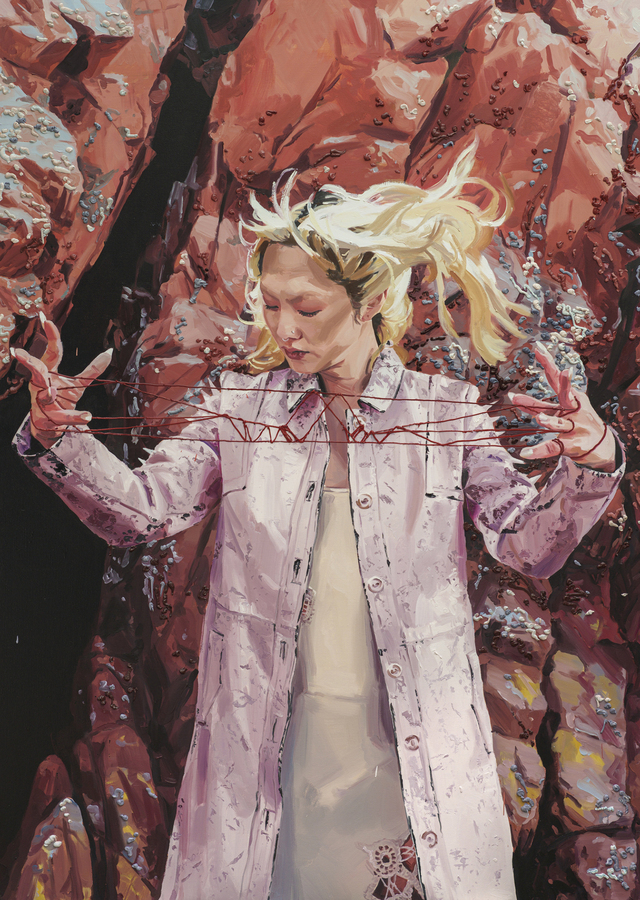
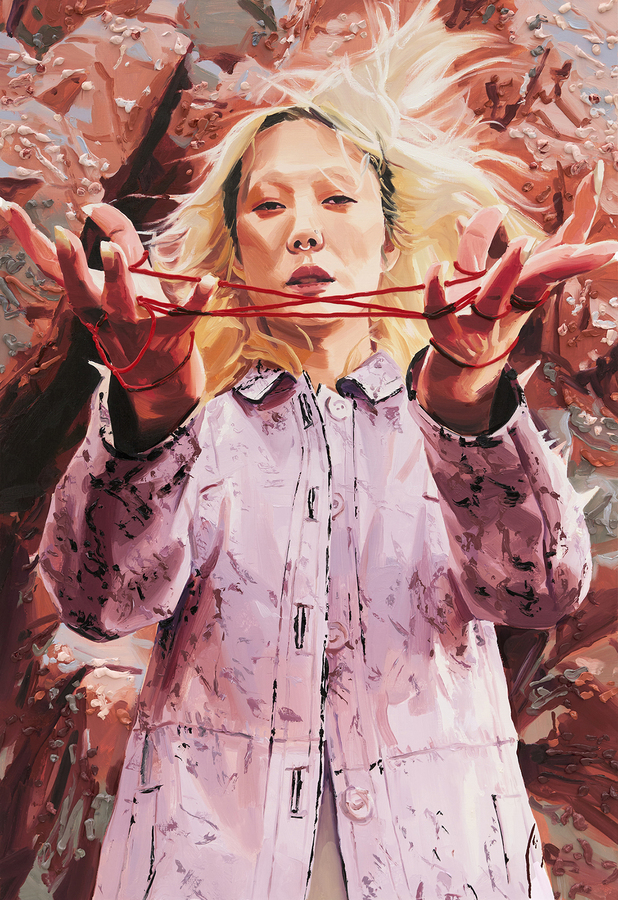
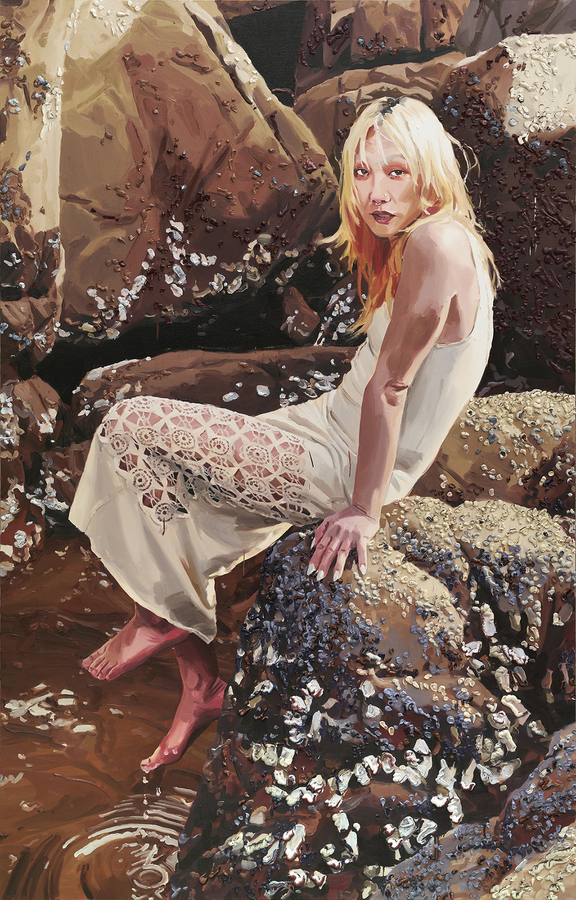
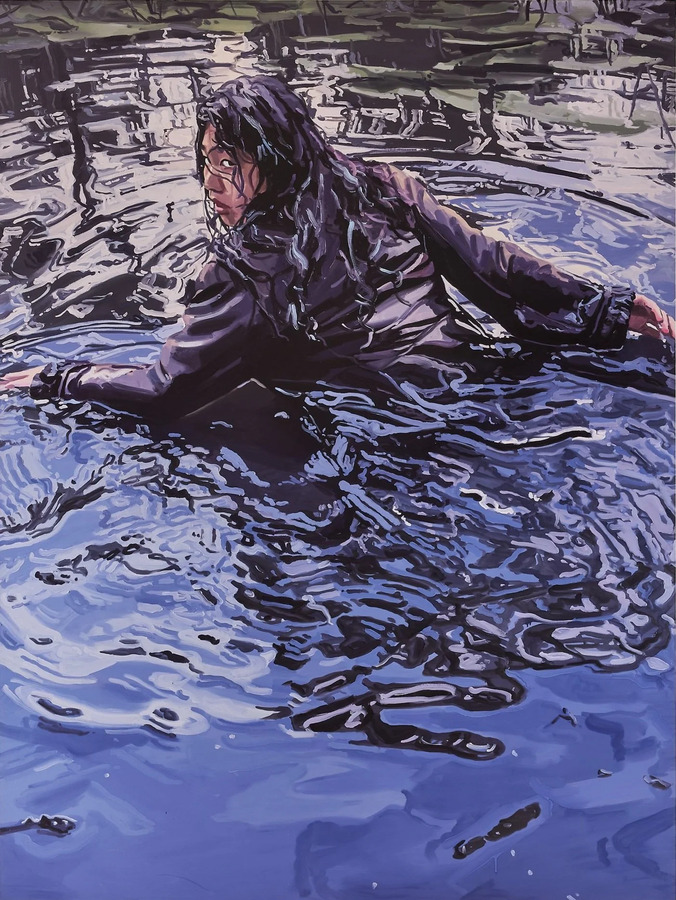
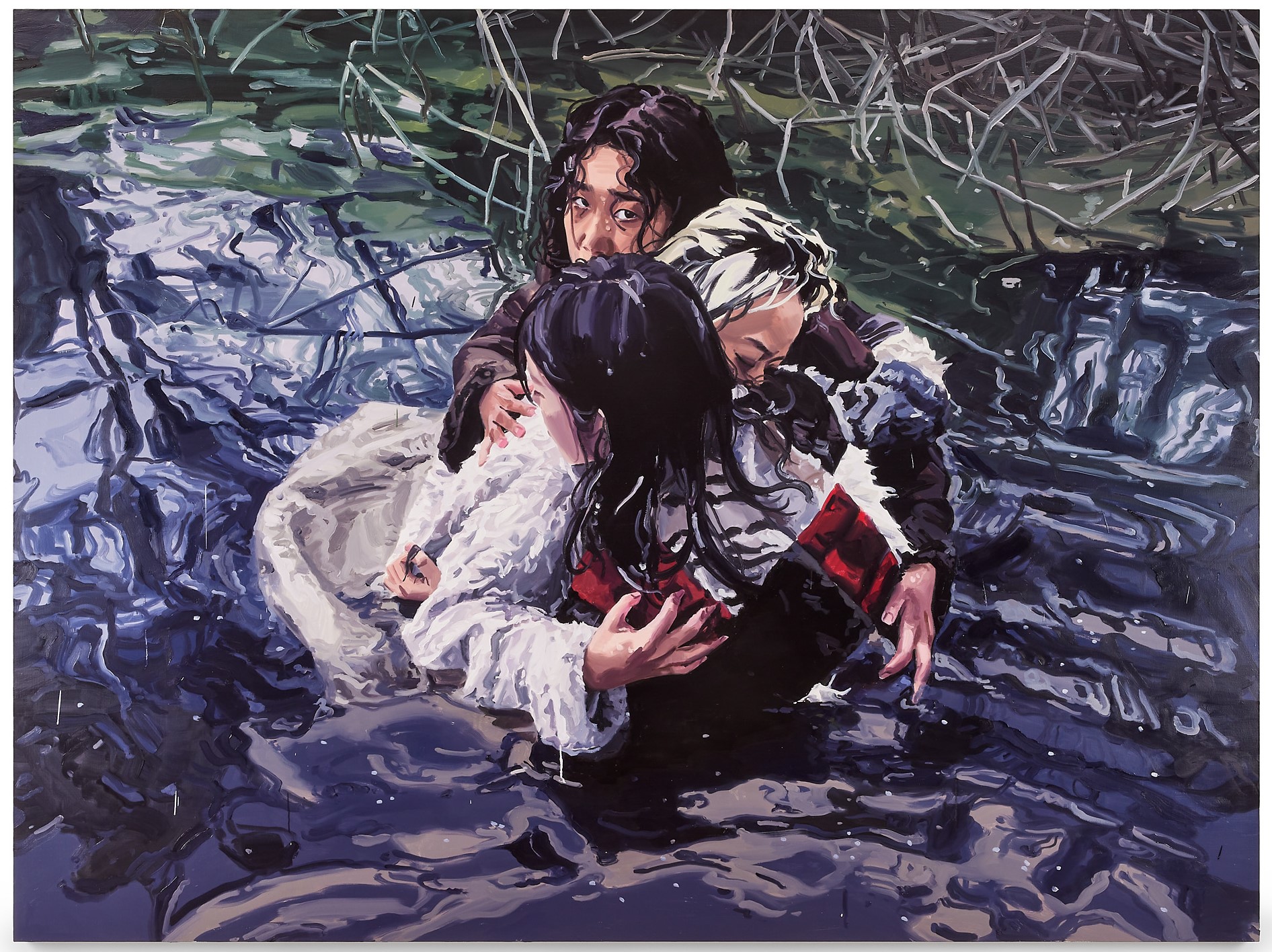
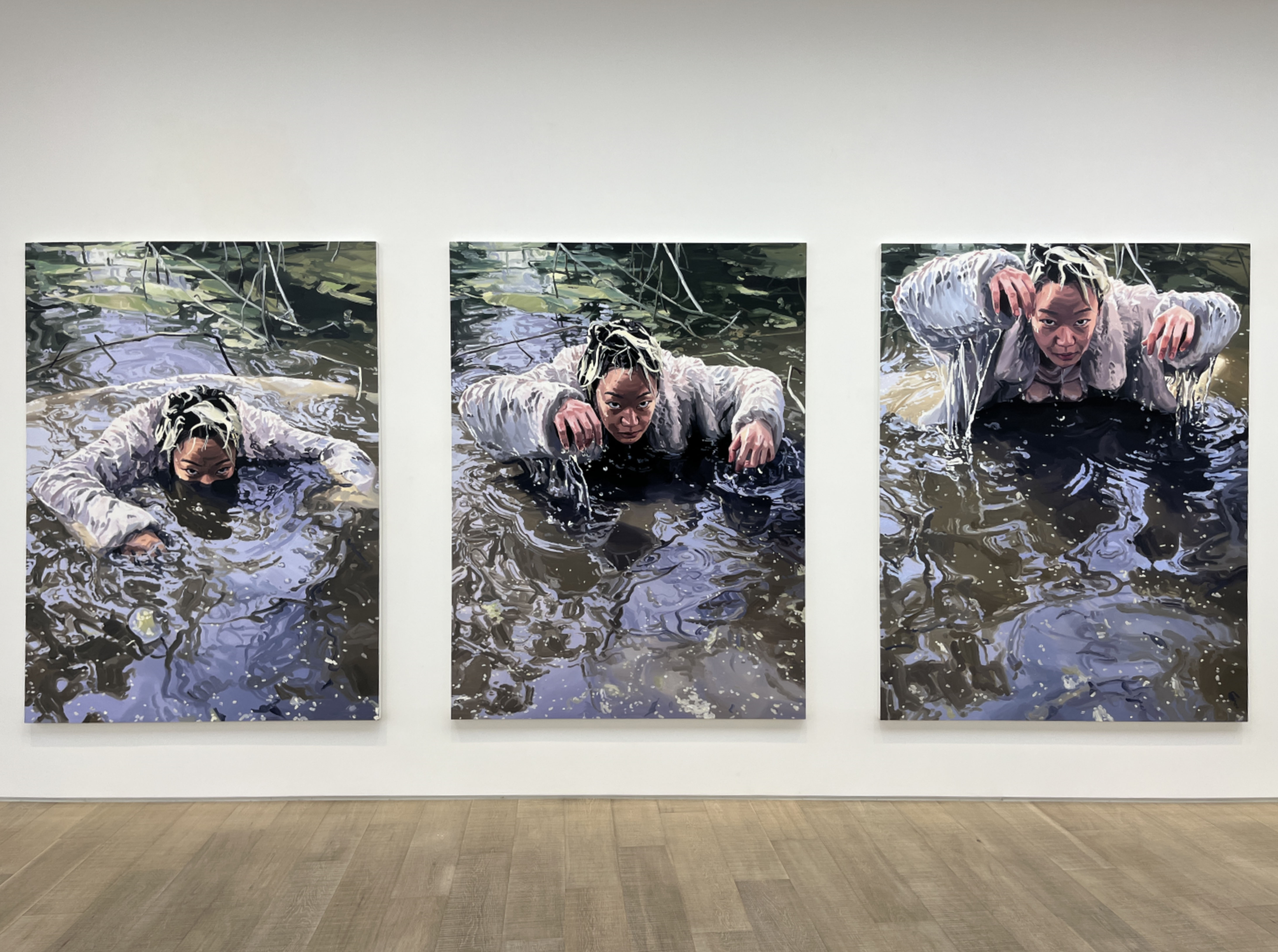
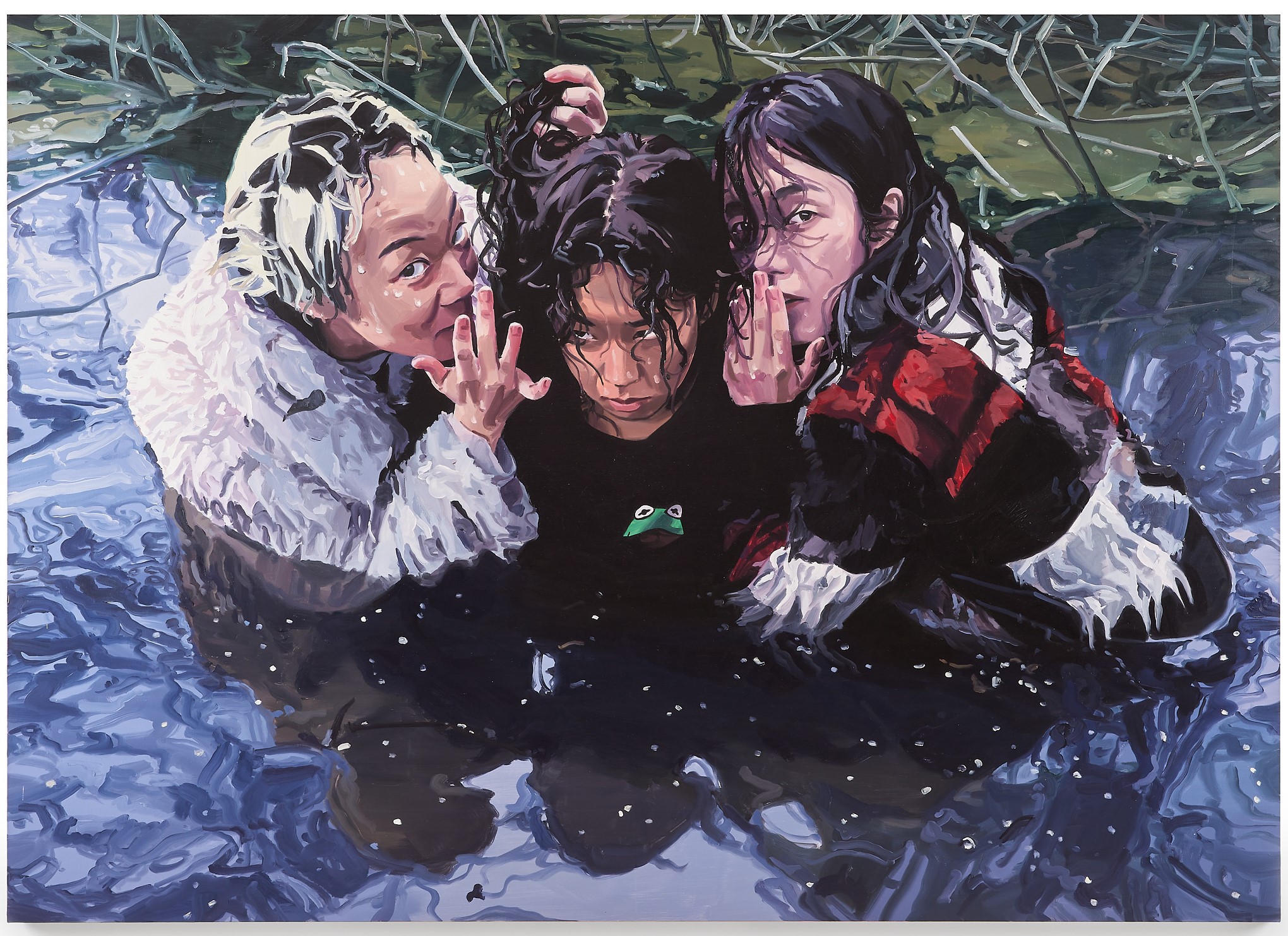
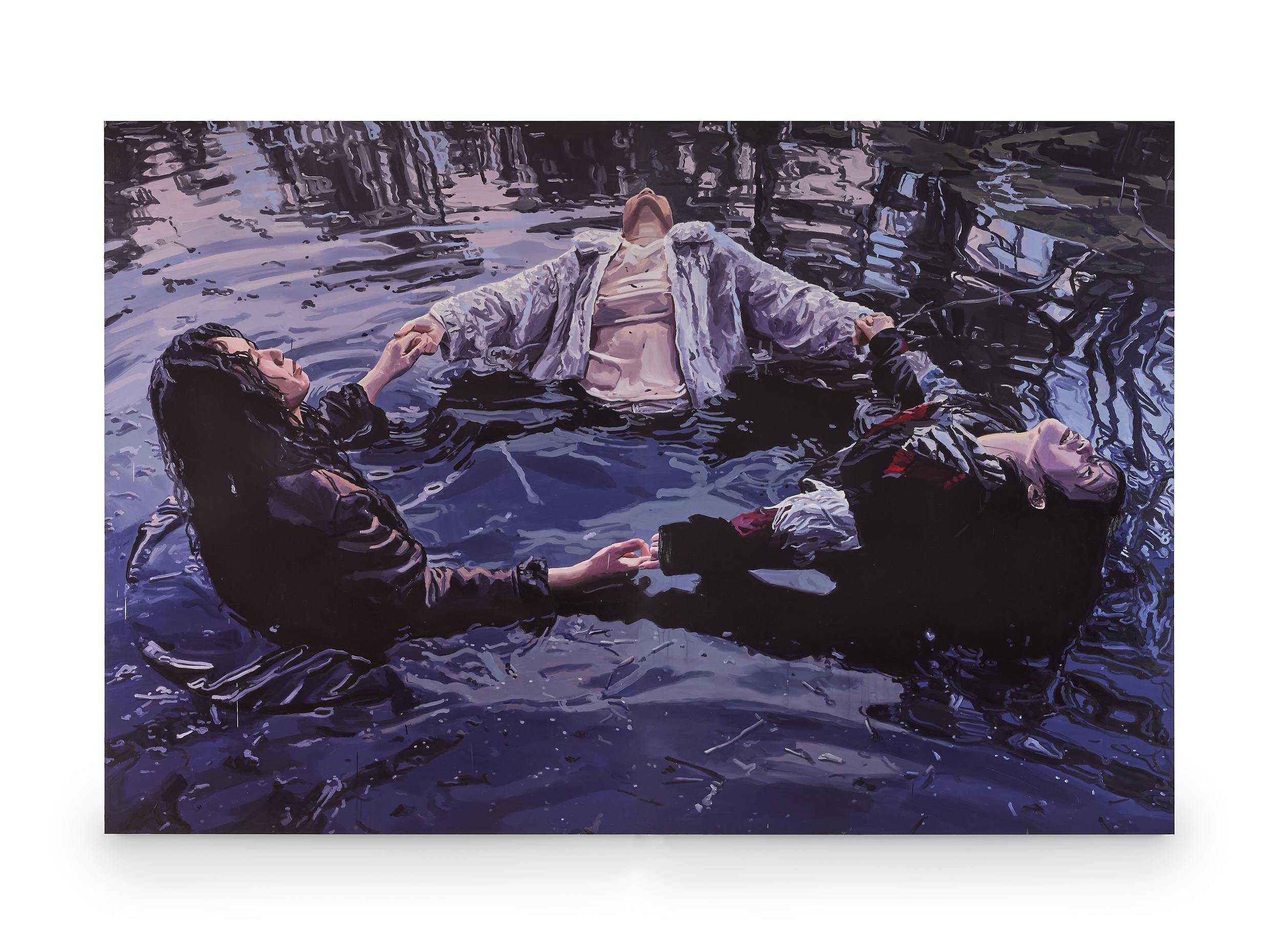
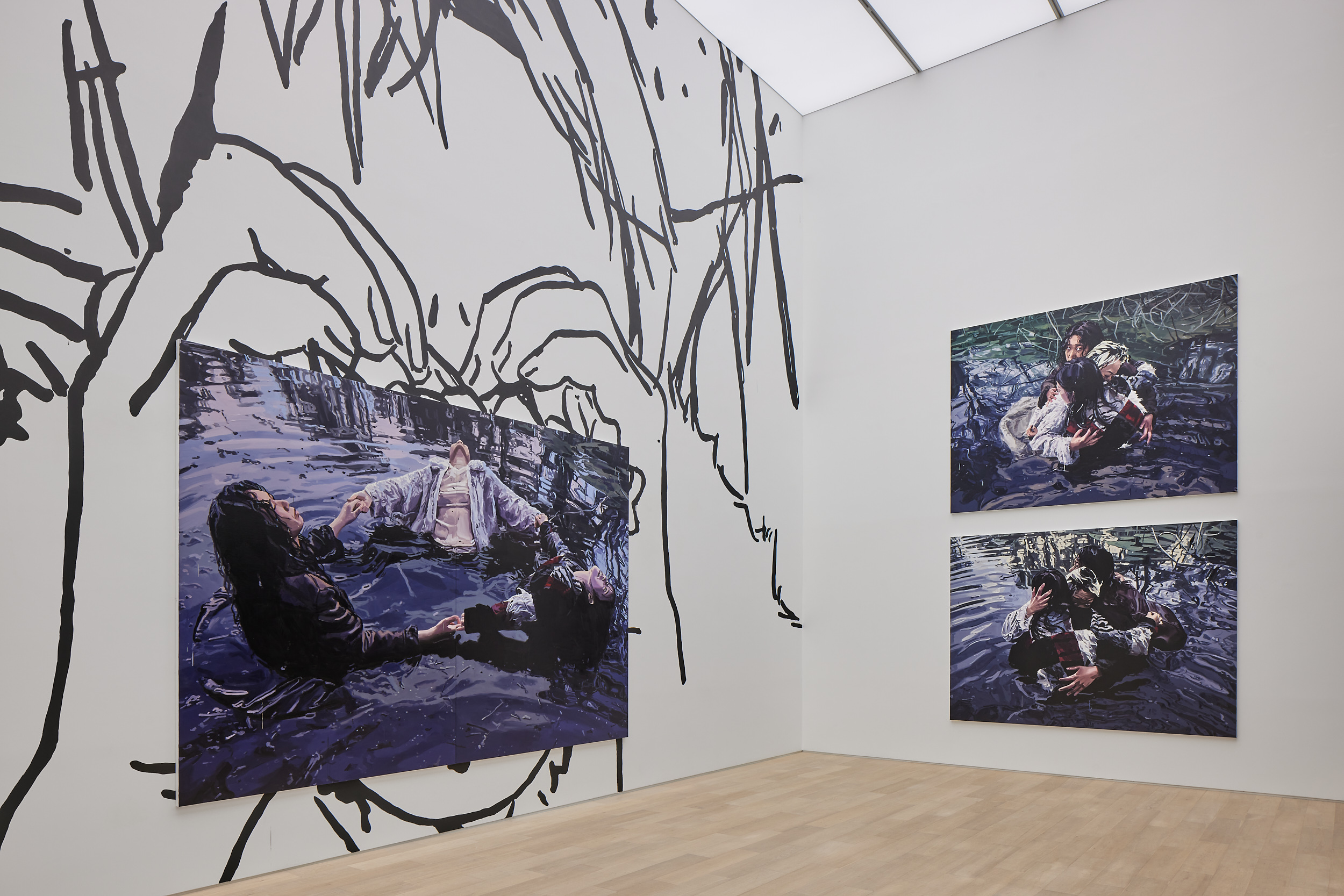
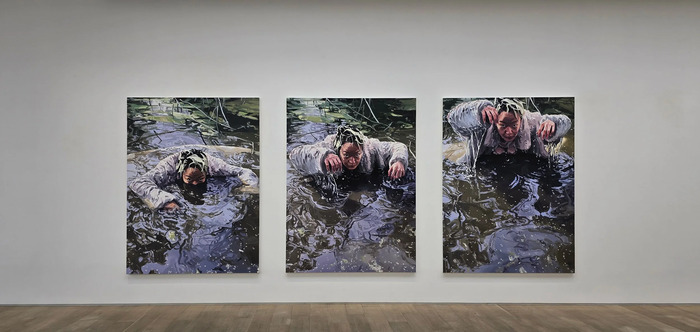
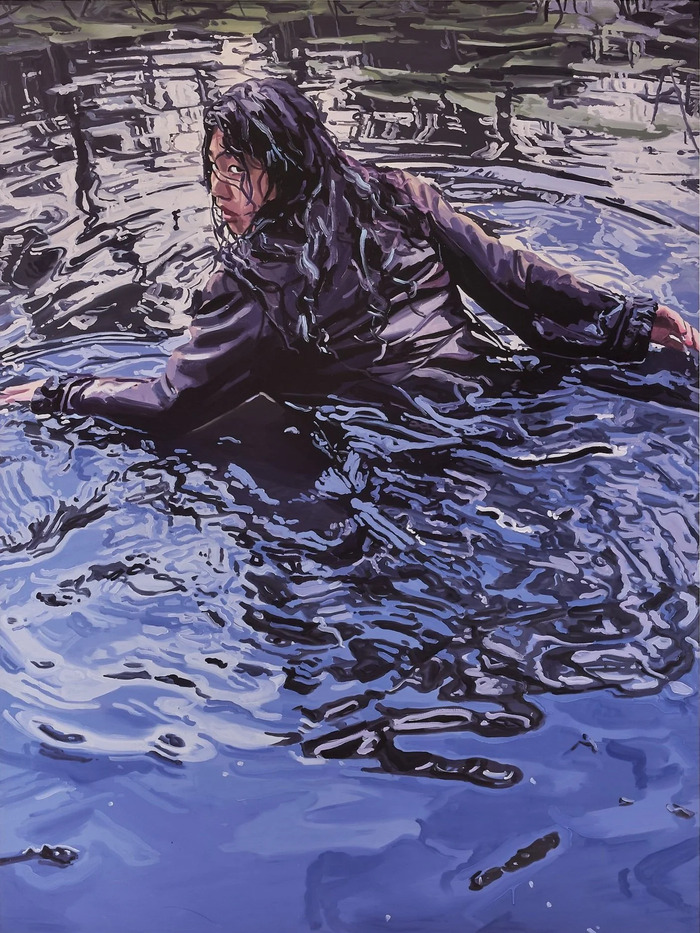
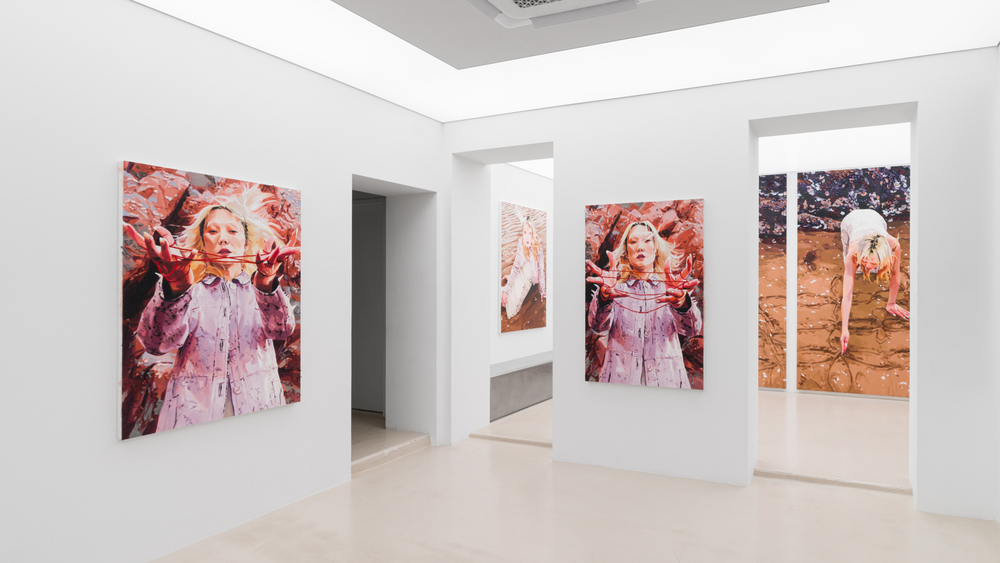
For Yoon, the process of painting is closer to that of producing “imaginary/fictional images” for specific types of cognitive experiences and visual/tactile encounters. She develops and completes the overall project’s concept using subjective impressions received from female figures as motifs. For her solo exhibition 《Do Wetlands Scare You?》 (2024), the project was conceived with the intention of transplanting and reviving the image of female monsters living in swamps—symbols of fear and fascination in Western myths and legends—into contemporary Korea.
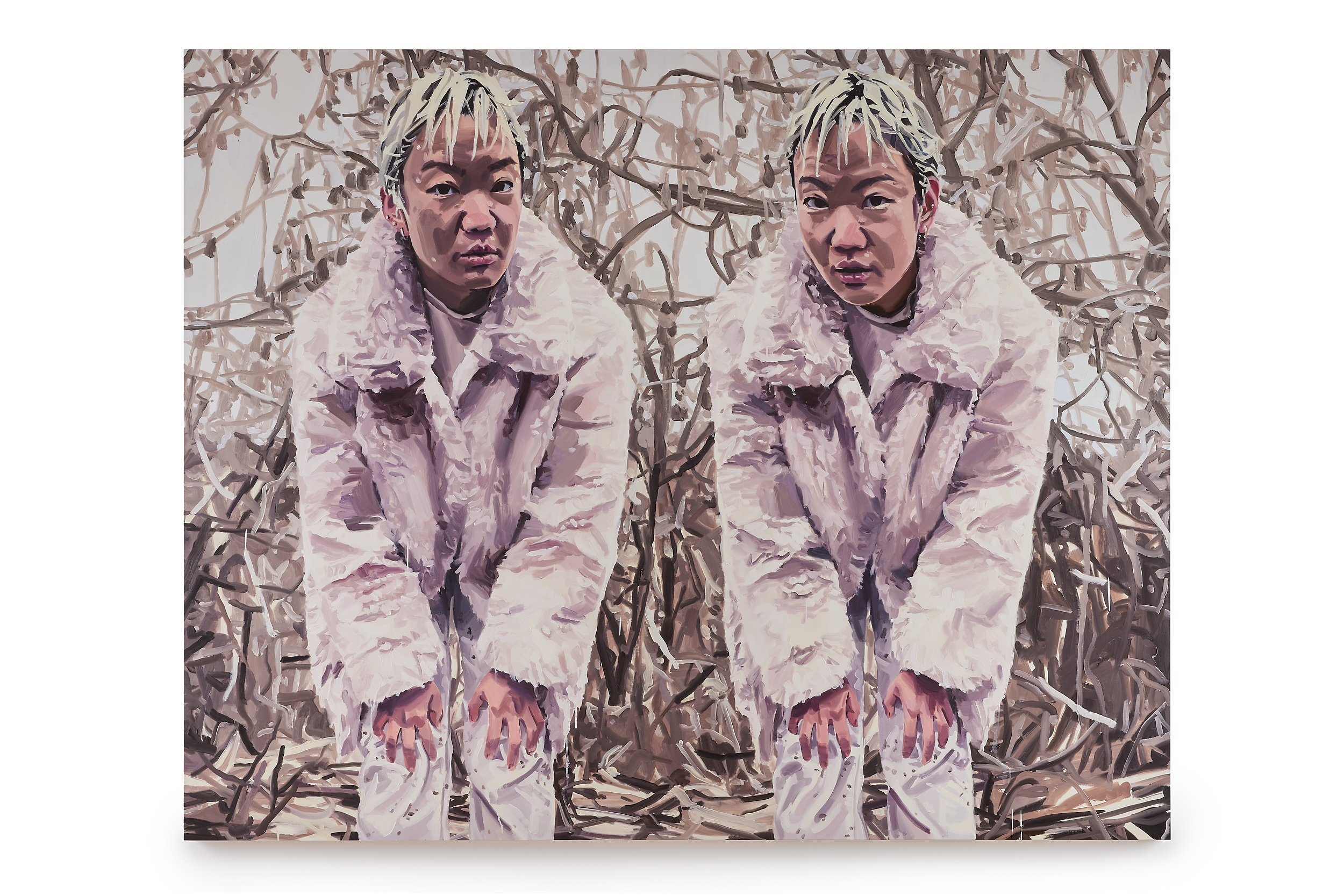
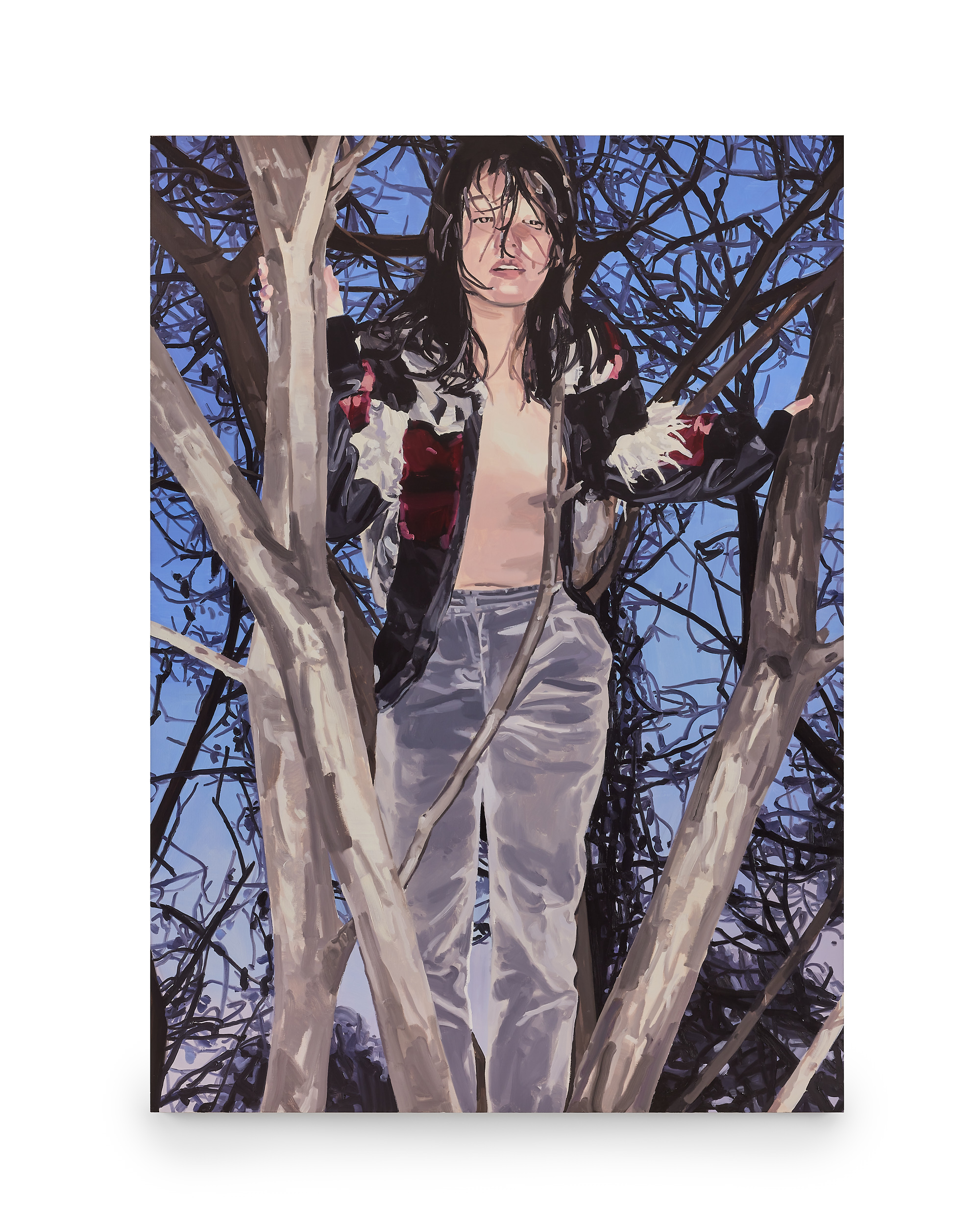
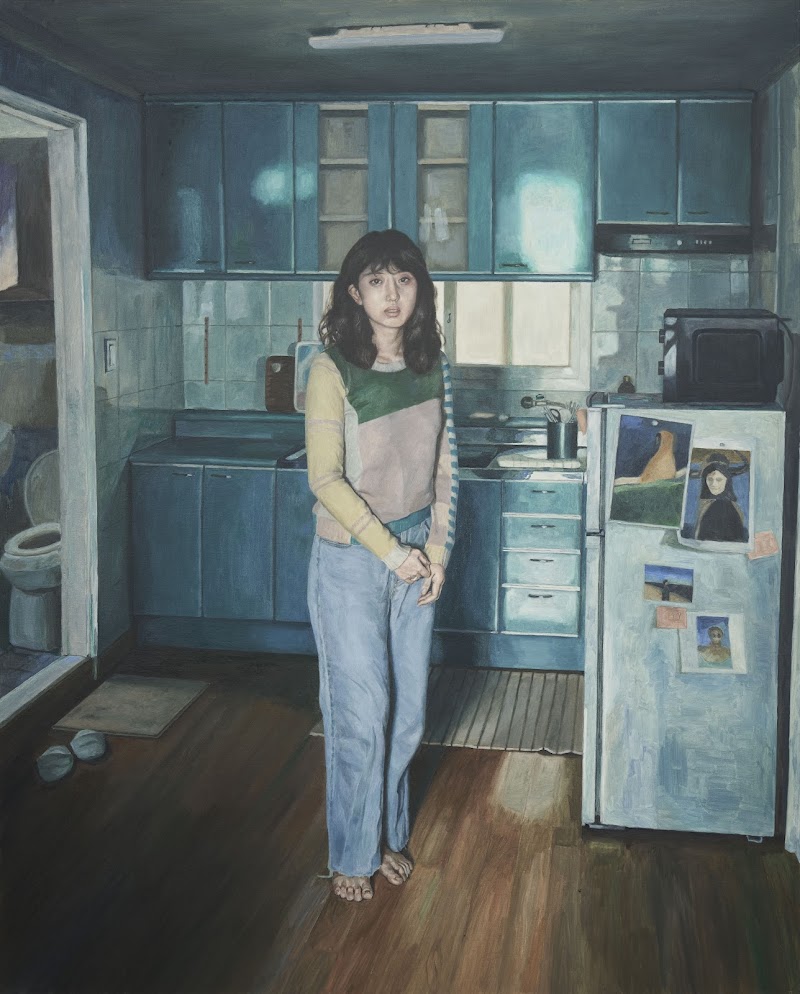
As an artist/director, she gives loose directorial instructions regarding roles and situations to female subjects/actors in locations selected to match the concept. Subsequently, scenes that are either spontaneously directed or captured are photographed using the iPhone’s Live Photo feature and transferred onto canvas in sequence units. In this process, particular emphasis is placed on details that can accentuate the unique impression of each female figure. However, these details are actually only important to the artist because viewers don’t possess any specific information about the original that would allow them to make connections through such precisely captured details.
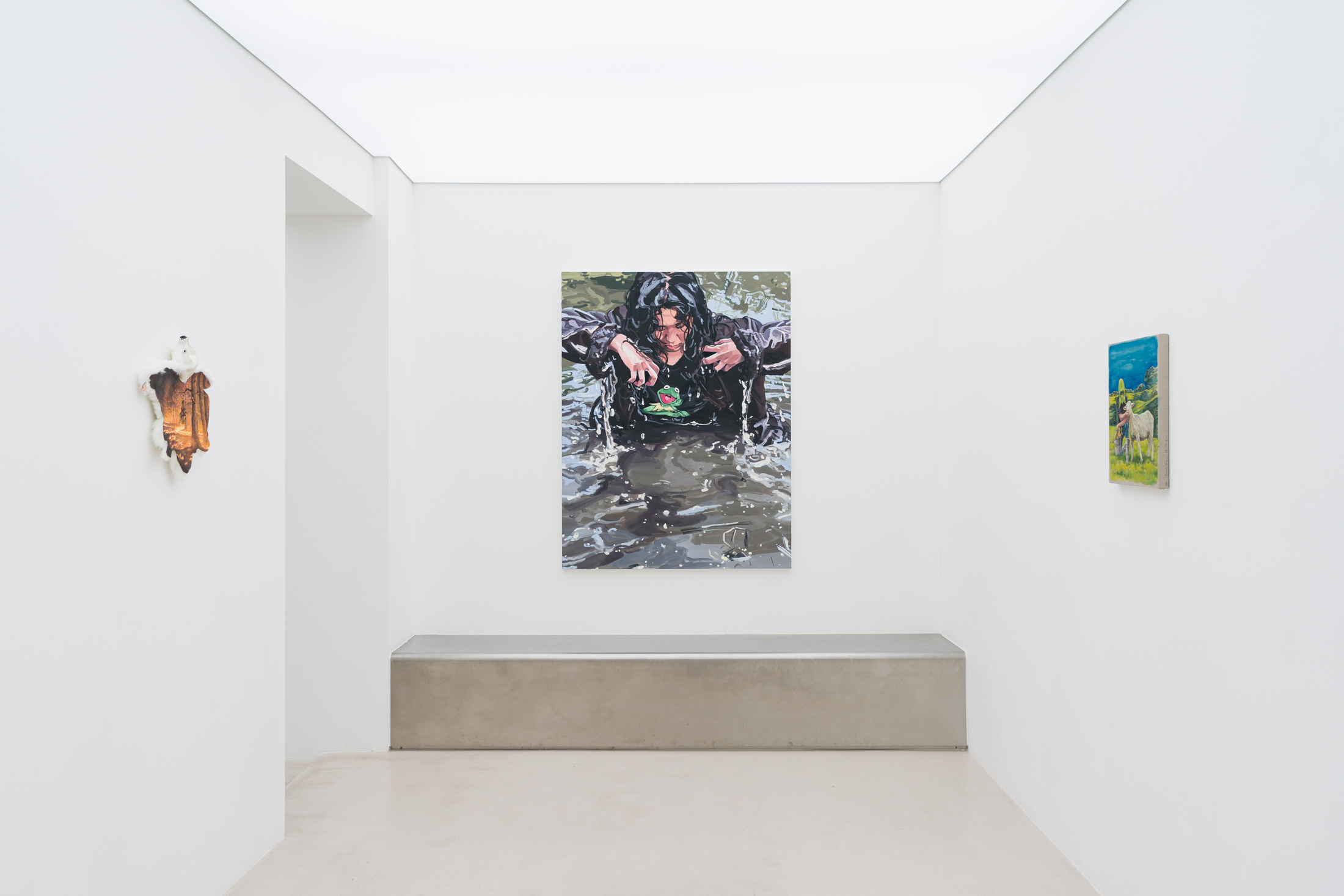
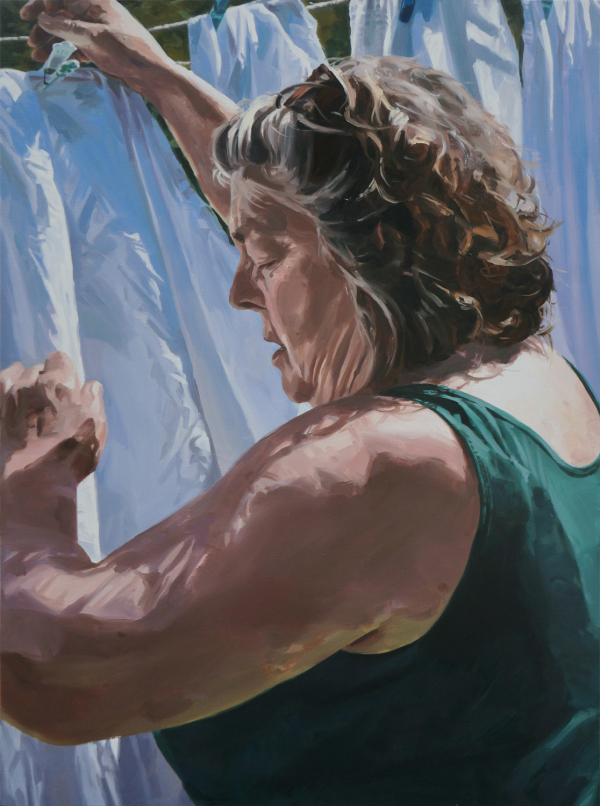
What remains for the viewer, therefore, is an imagination of the artist’s absent body mediated through “women gazing outside the canvas” and narratives “beyond the image,” along with a sensibility of the “mood” full of immediacy and presence emanating from the canvas. Of course, the intensely painterly pleasure of Yoon’s paintings—the rough and rapid brushstrokes that feel almost violent as if striking the canvas, and the intense, viscous colors that seem as if the black swamp water might drip at any moment—is actually an attractive appearance and trick that draws the viewer’s gaze more directly than any other element.
Moreover, the large size of the works, rarely seen in contemporary figure-centered figurative painting, in itself expresses and symbolizes the monstrous “power and mystery” of the female figures, overwhelming the viewer. In other words, obviously, her work is not merely an interface-like medium designed for the purpose of viewers’ imagination/sensation. Nevertheless, I largely agree without particular objection to the viewing/reading method of her work, which emphasizes the viewer’s agency, like that of a “detective.”
This conclusion takes as its clue the fact that there is no fixed narrative or meaning in her work, nor is there a fixed hierarchy between individual pieces. In other words, it is indiscriminately open to the possibility or possibilities of viewers’ imagination and sensation.
This freedom of possibilities might be perplexing for critical viewers who are compelled by the hermeneutic urge to fumble for meaning and messages in the work. However, it also opens up a perspective to understand the entire body of work as a universe—a fictional commons—and enables us to imagine the position of active player-viewers who can regard the female figures in the paintings as a kind of empty skin and the exhibition space as a screen projecting captured teasers of a film or game still in production.
Here, universe doesn’t mean a perspective on viewing the world but rather refers to a “fictional universe made up of events and elements different from the real world, along with its foundational worldbuilding”—a term originally used in subculture genres like science fiction, but which has been rapidly adopted over the past decade by major entertainment industries like K-pop and the Marvel Cinematic Universe.
While a universe can function with just the minimal essential elements of specific characters and events based on worldbuilding, it has the characteristic of only being able to be completed and maintained when the viewer (or consuming/viewing/enjoying subject?) injects the remainder to fill the empty spaces in the universe. Therefore, we could say that the hidden essential element constituting a universe is the viewer as players of that universe.
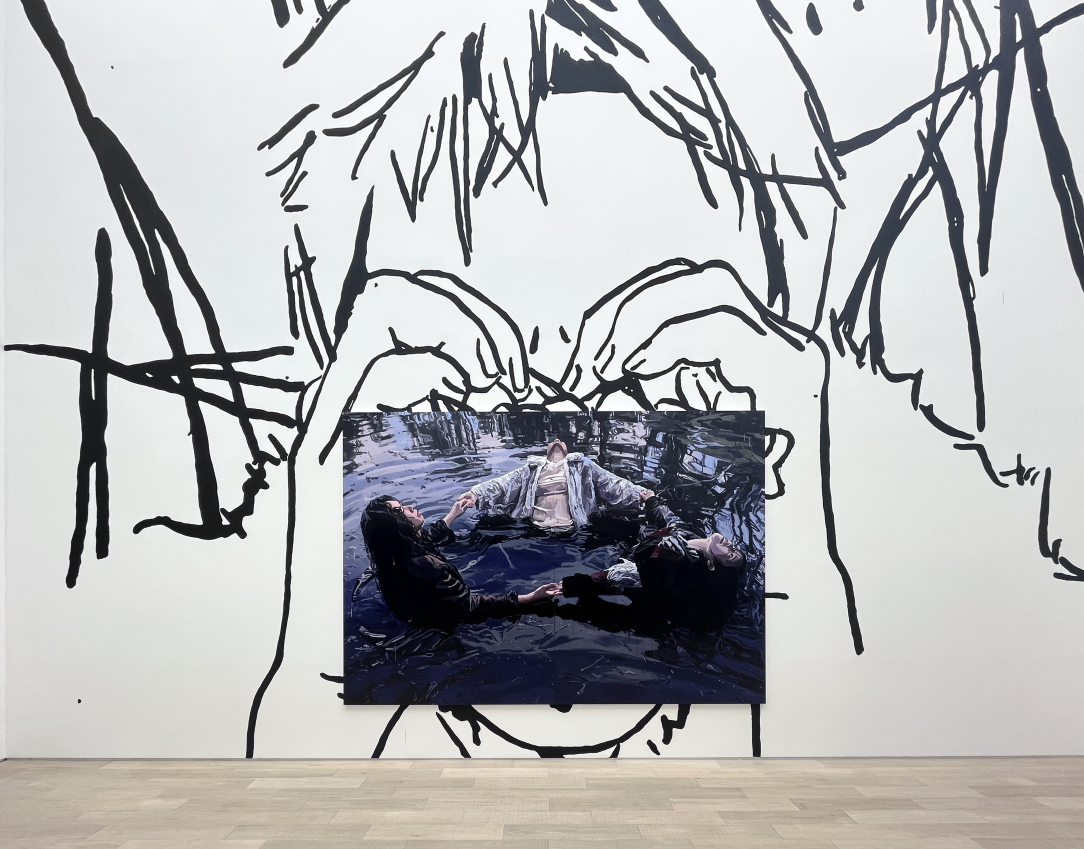
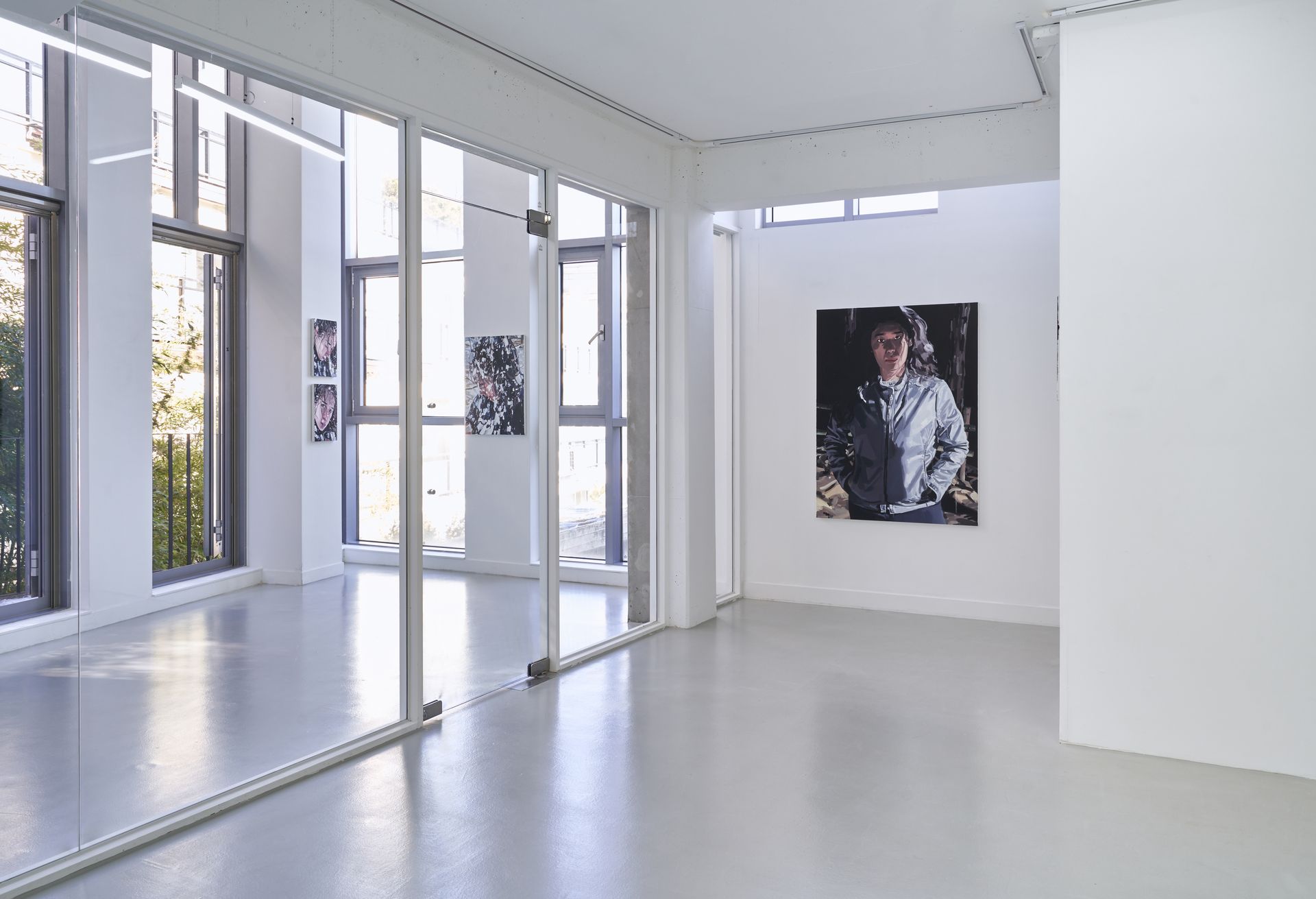
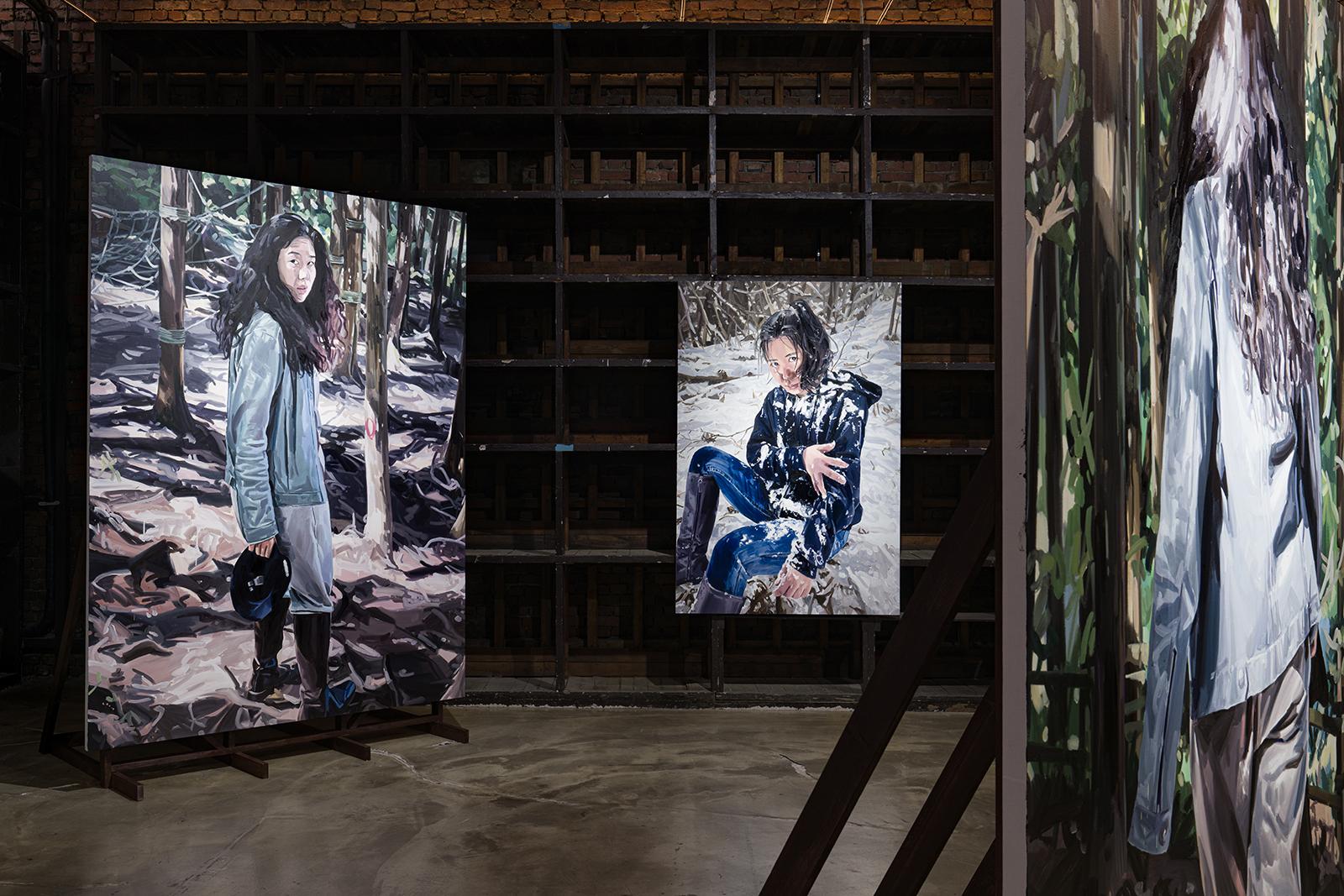
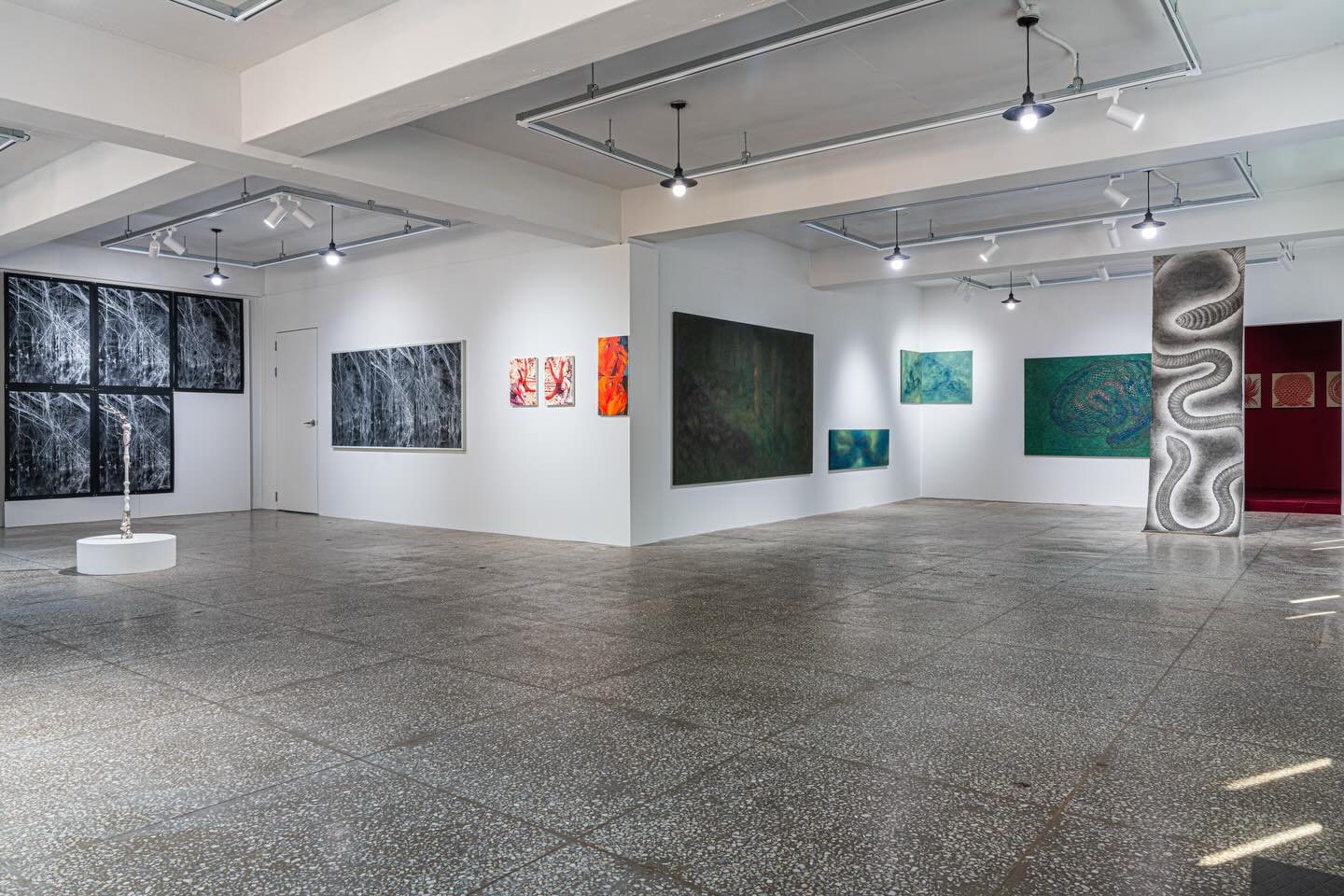
The earlier explanation of universe and players seems directly applicable to Yoon’s work. Her solo exhibition 《Do Wetlands Scare You?》 was composed of a first floor that created a dark and humid atmosphere as if submerged in a swamp using props like carpets and curtains, a second floor that maintained a more traditional white cube space, and a wall extending to a high ceiling connecting the first and second floors decorated with murals with line drawings. Between the series of sequential images, which don’t necessarily follow a chronological or causal order, there were gaps maintained at regular intervals to preserve each work’s independence, as is typical in painting exhibitions.
At some point, I began to re-examine the entire exhibition space with these gaps at the center. Just as films have shots, comics have minimum units called panels or frames. What fills the visual/narrative logic between two panels, and furthermore between dozens or hundreds of panels, is the viewer’s process of association that occurs in the empty spaces, the gaps regularly maintained between them. If there is a direction toward which Yoon’s paintings as process—deliberately emptied of both clear narrative and meaning—are heading, perhaps it is precisely this subjective experience of the viewer.
The exhibition space becomes filled with each viewer’s imagination and sensations catalyzed by the gaps between works. Something is already being played out and performed in each of their minds. This something points to an experience that cannot be easily reduced to concepts like painterliness—an experience possible only under the distinctive genre of Miryu Yoon.