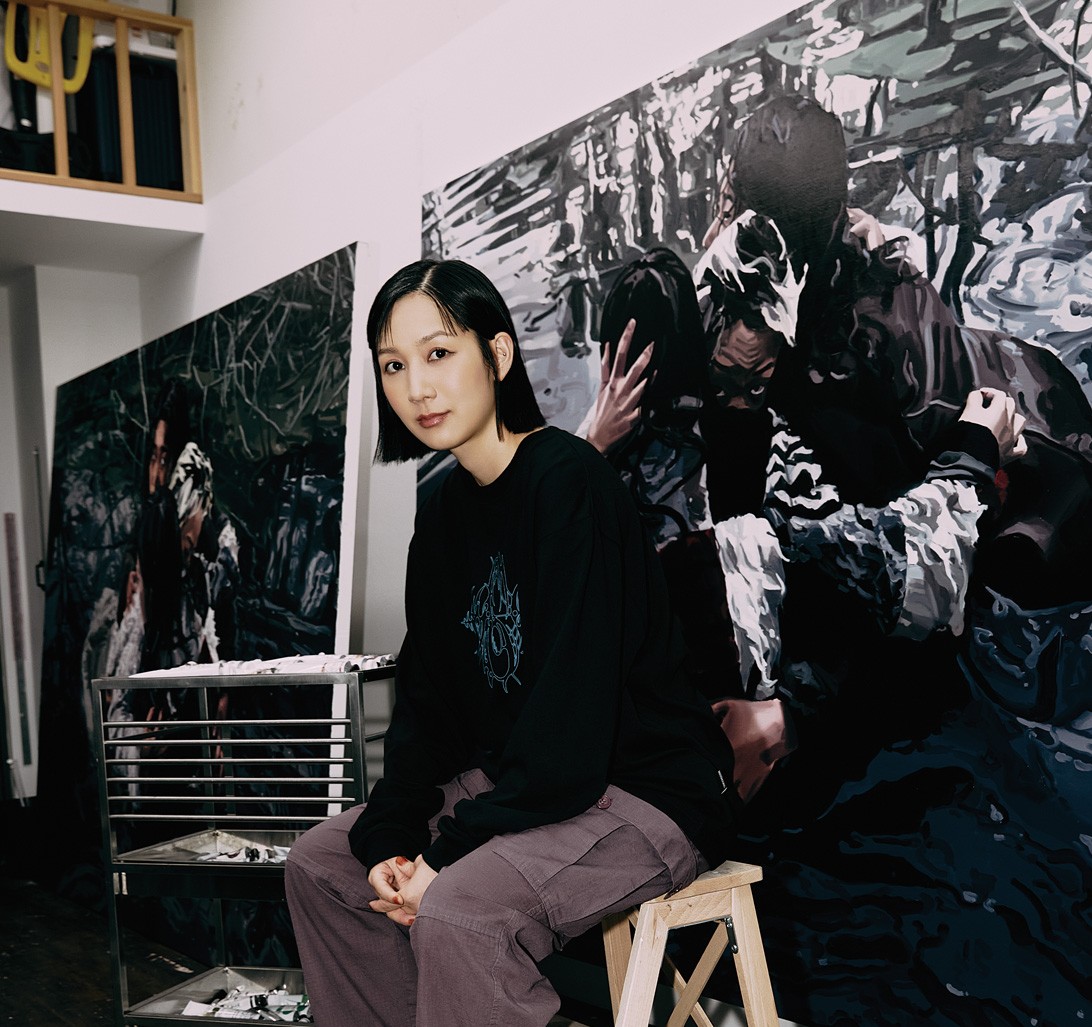
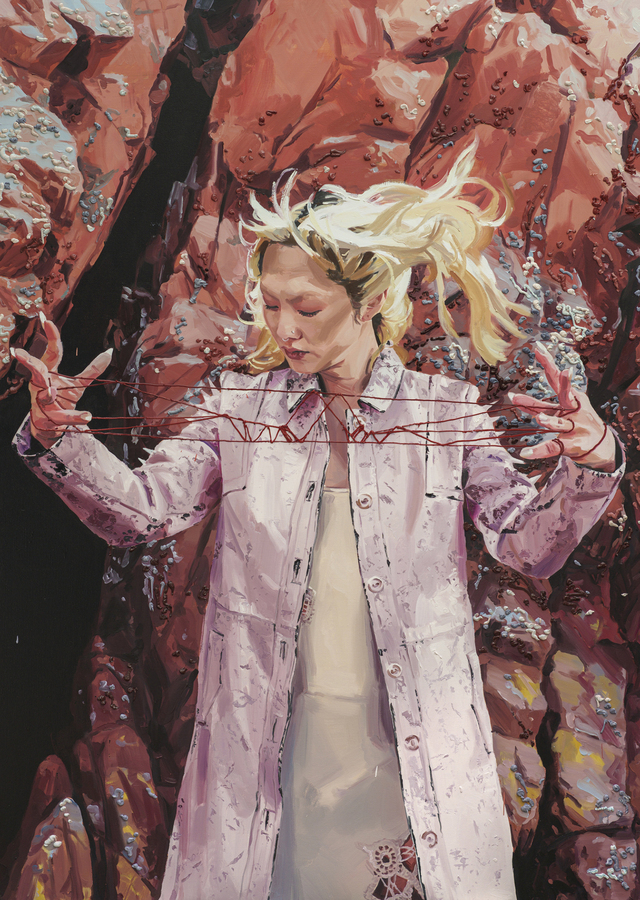
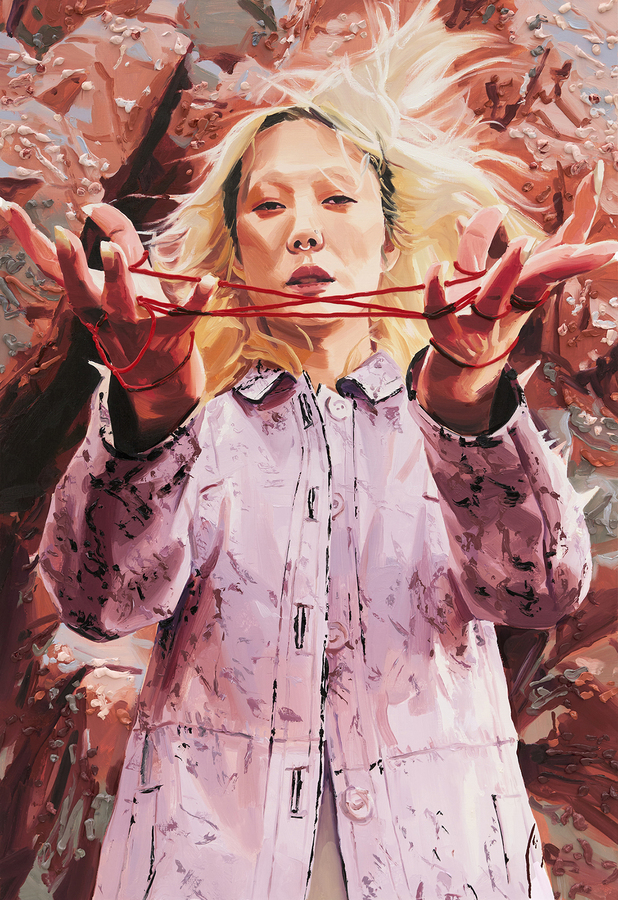
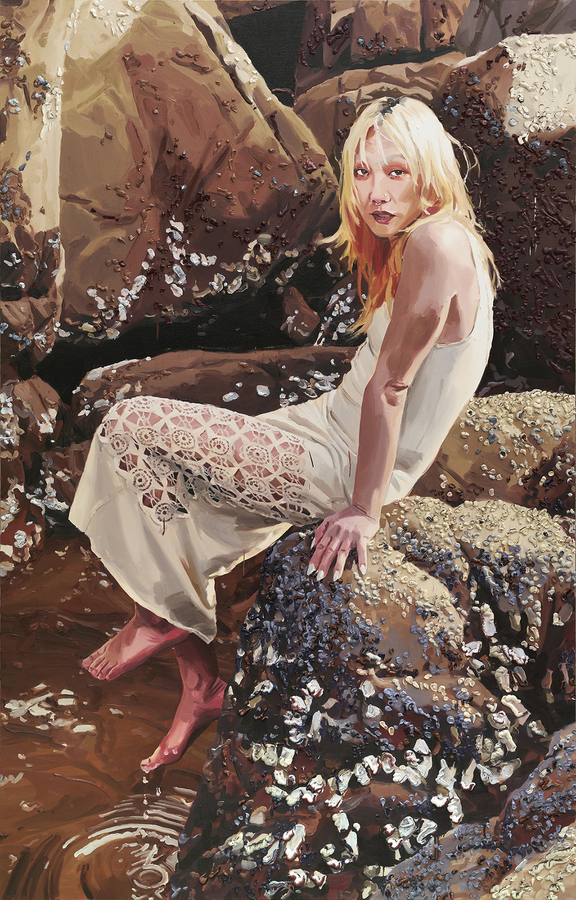
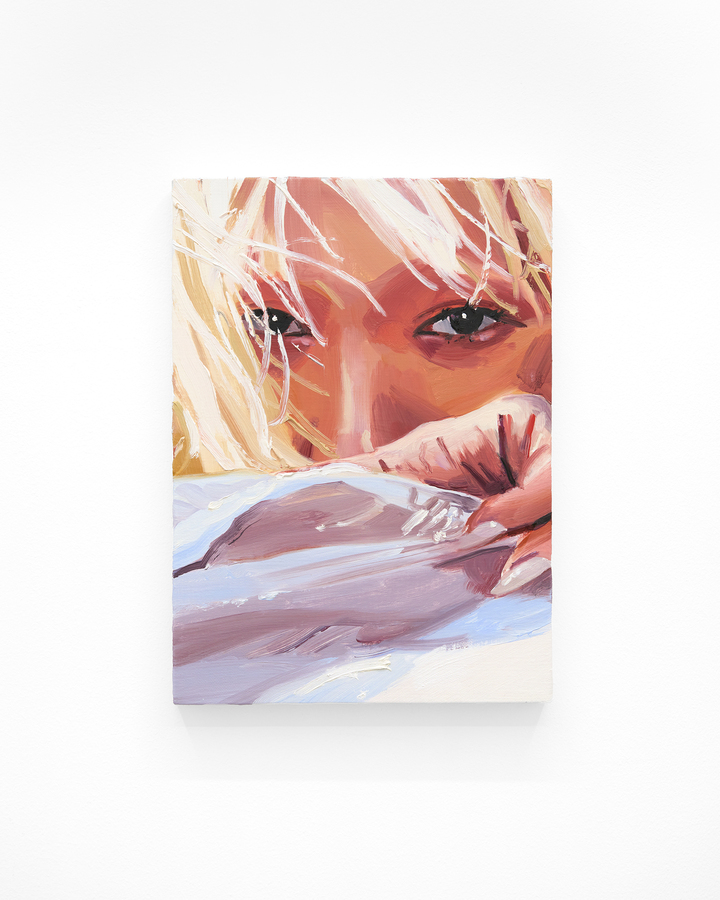
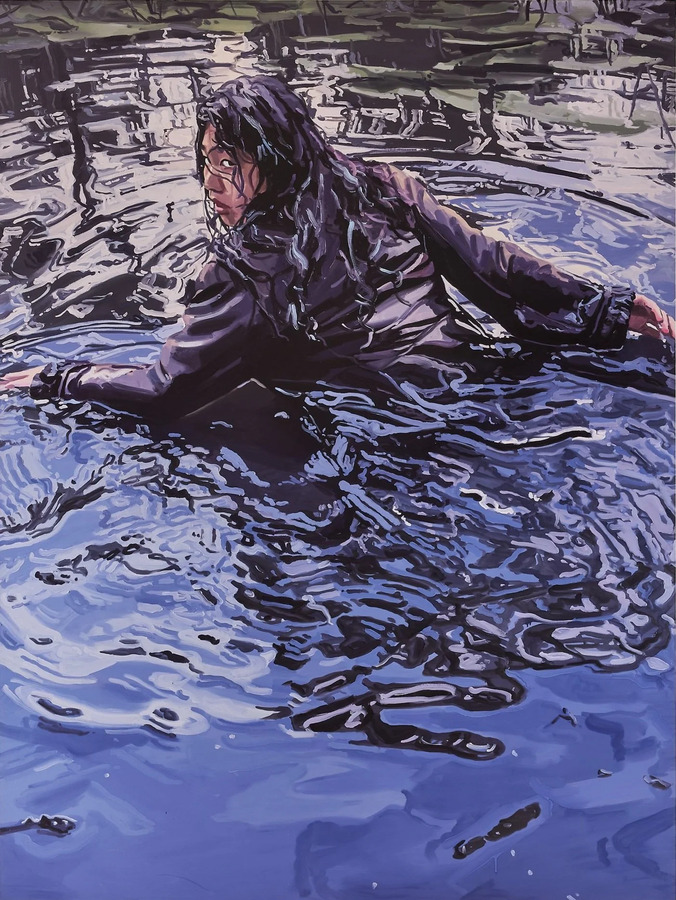
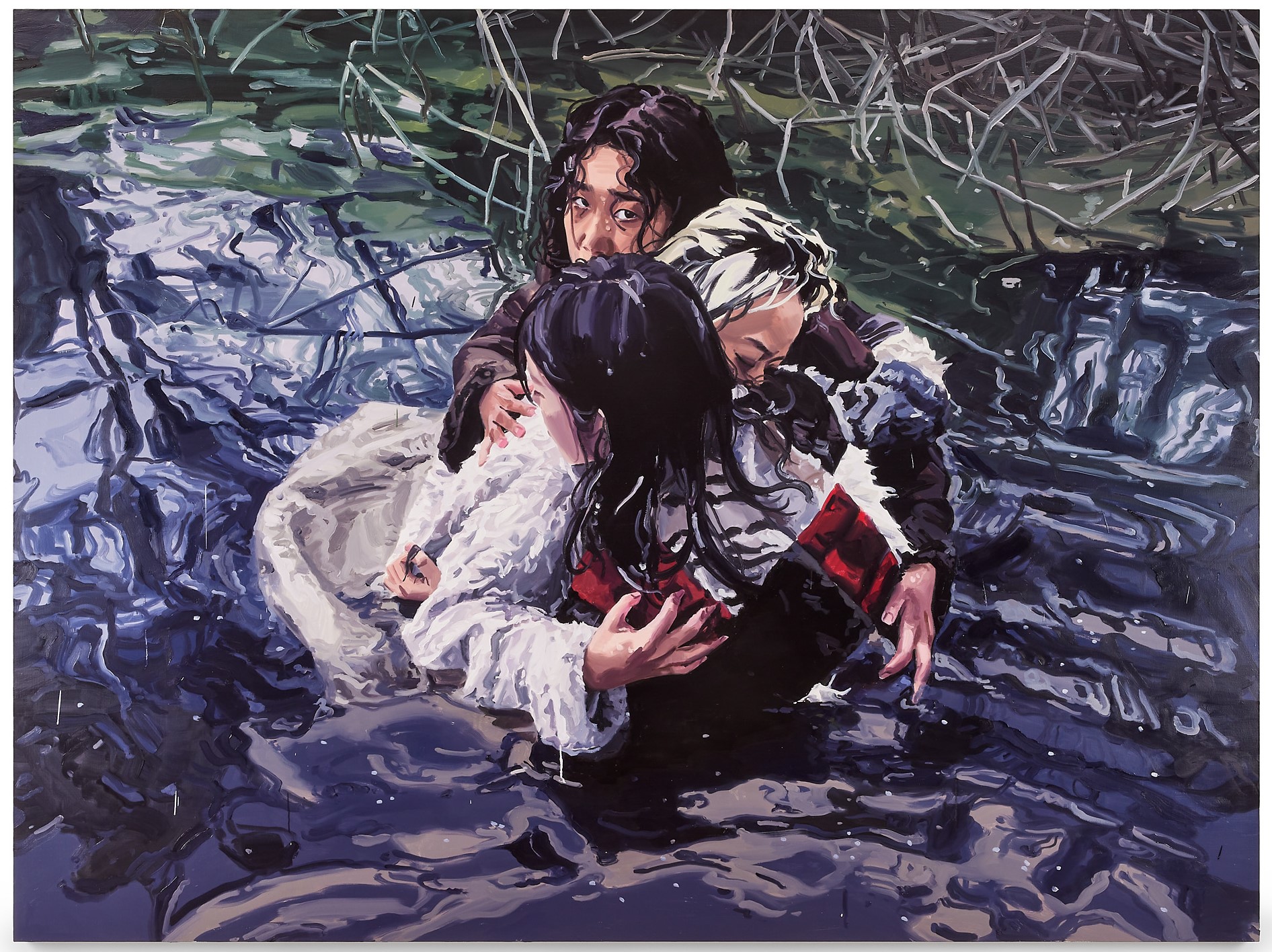
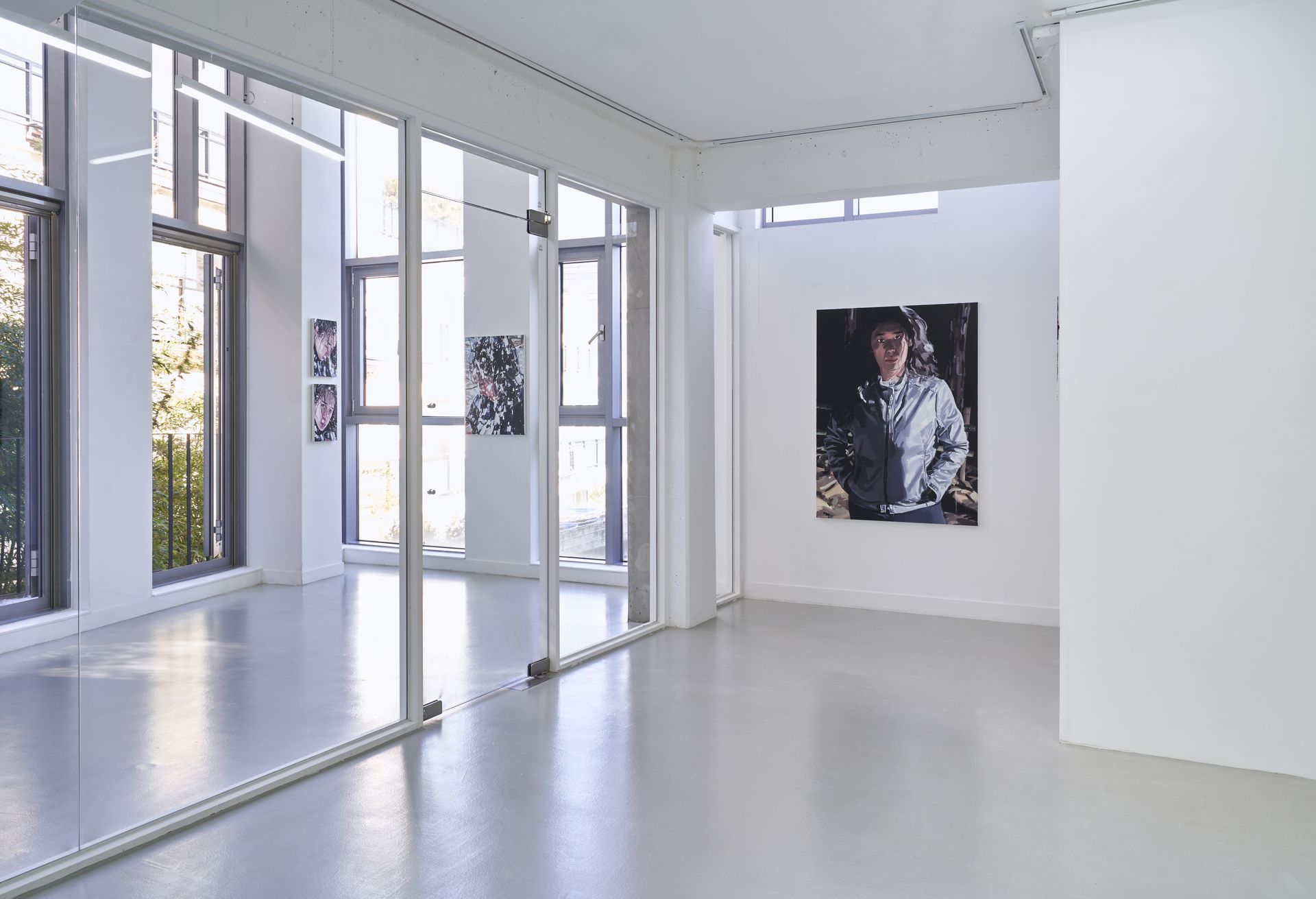
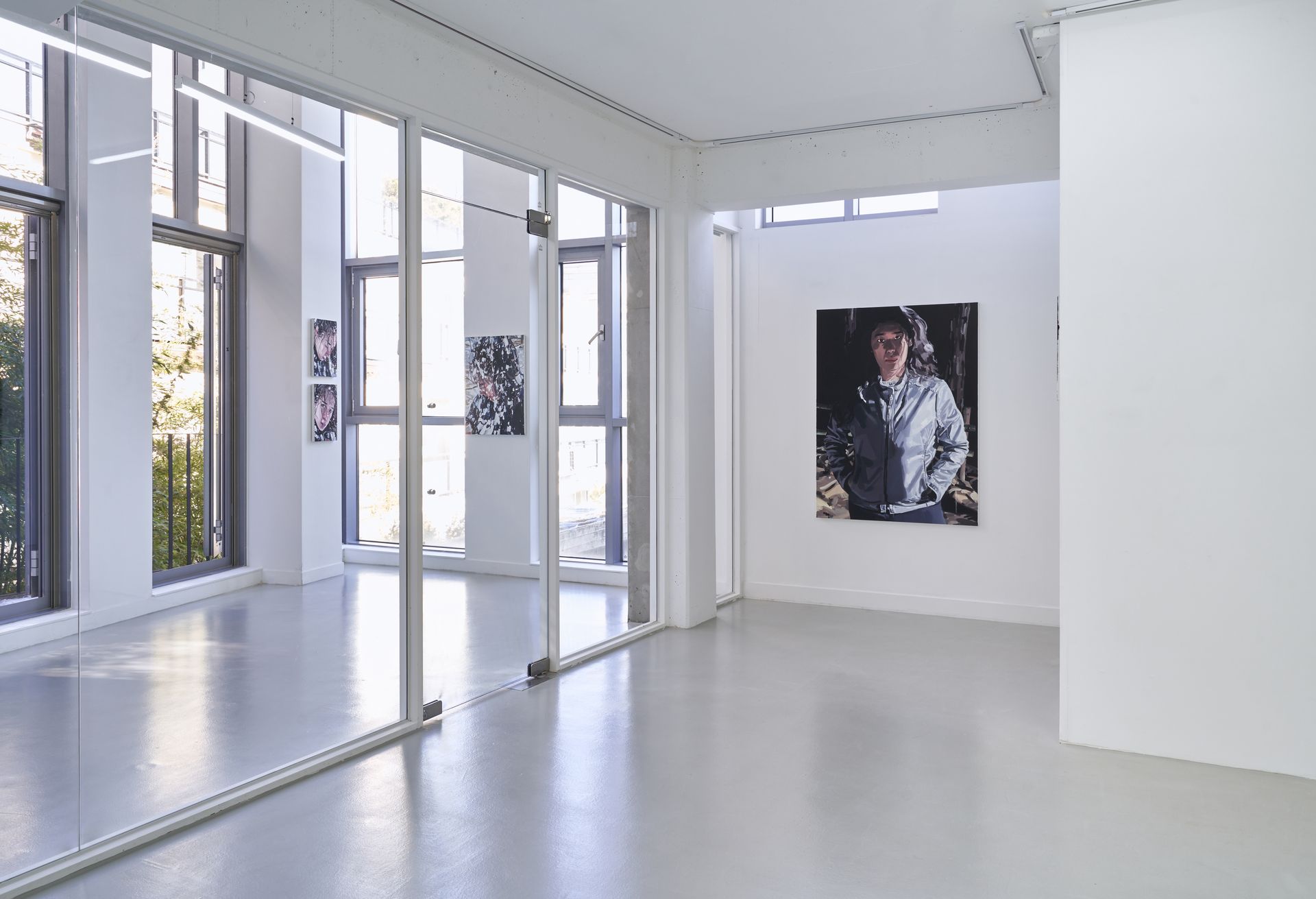
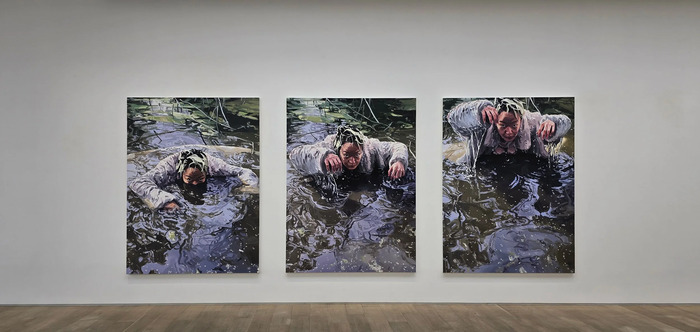
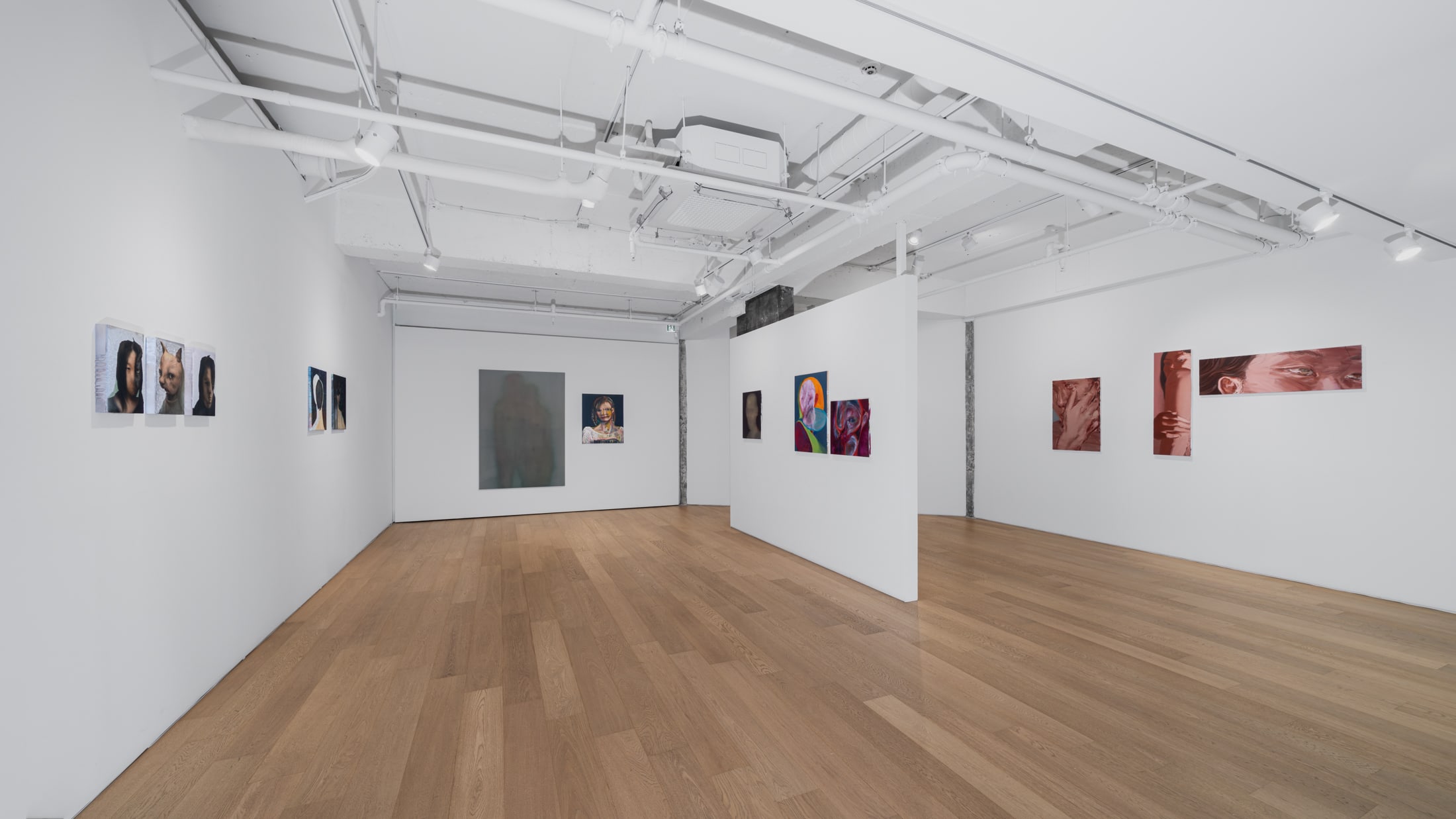
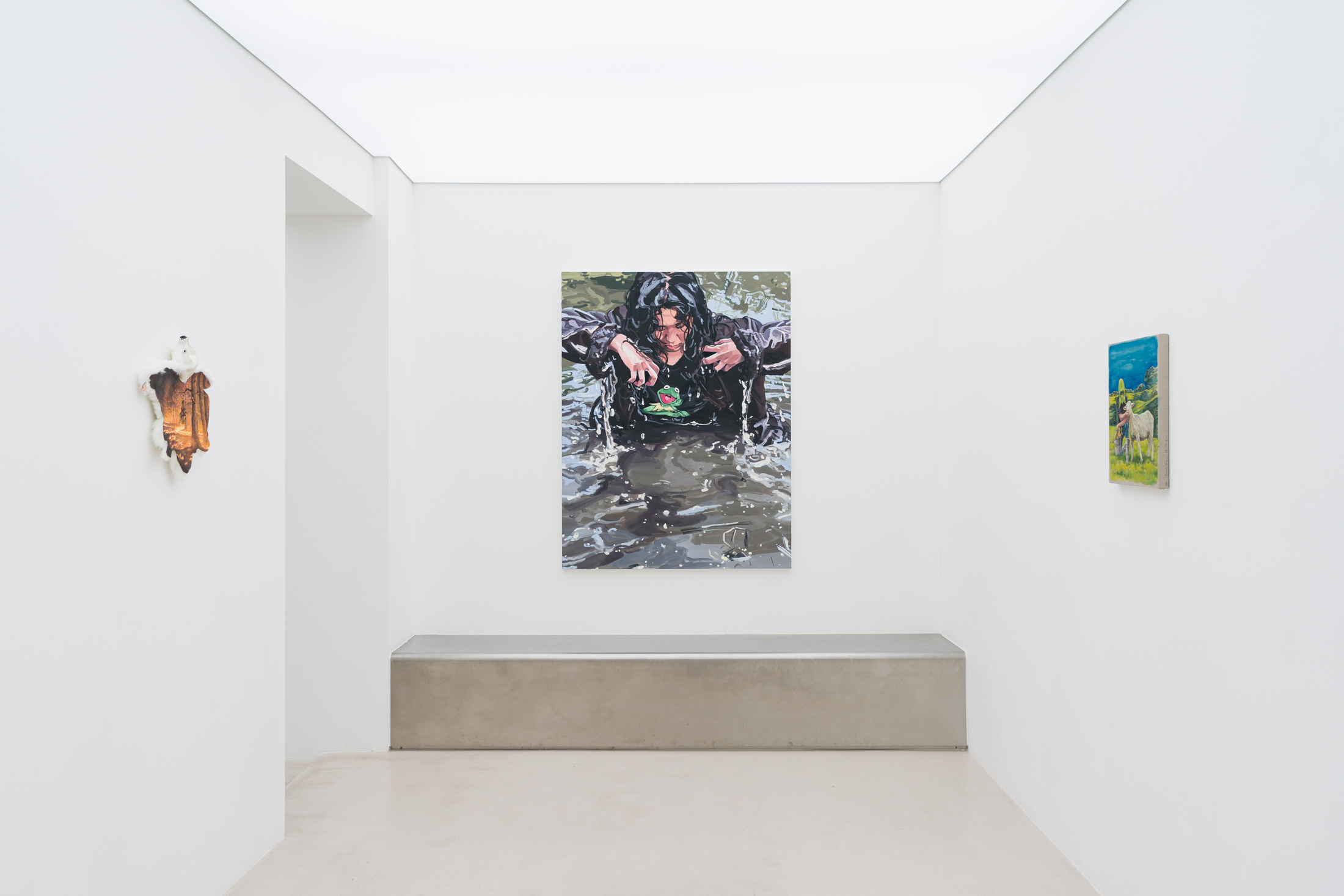
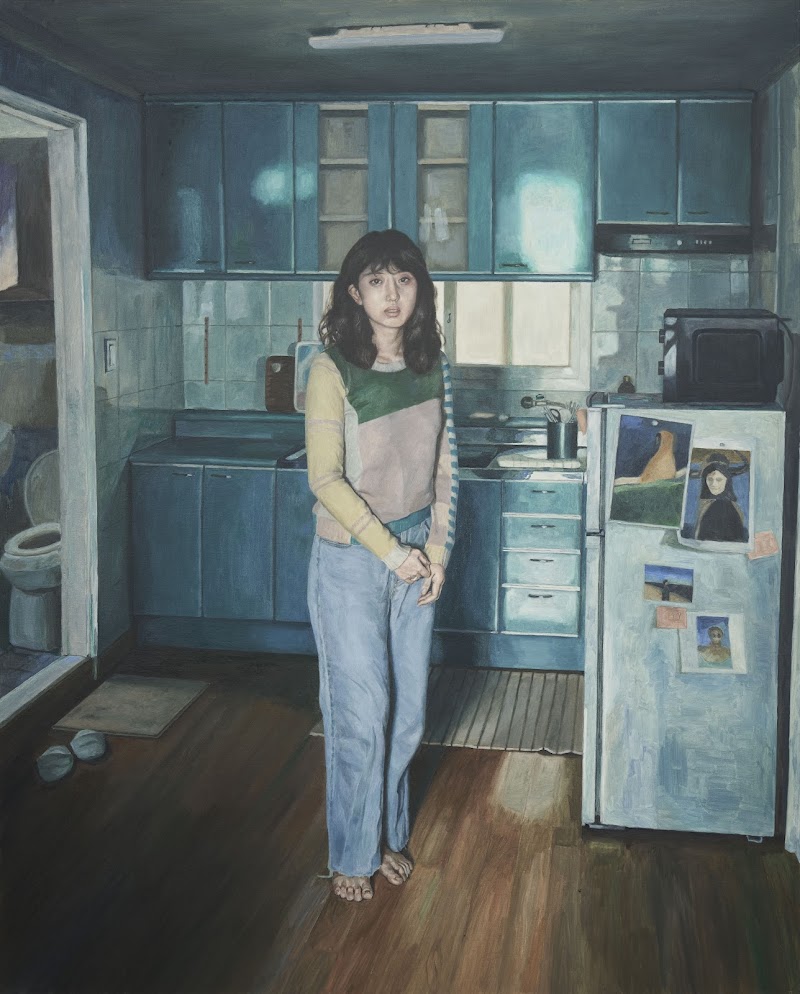
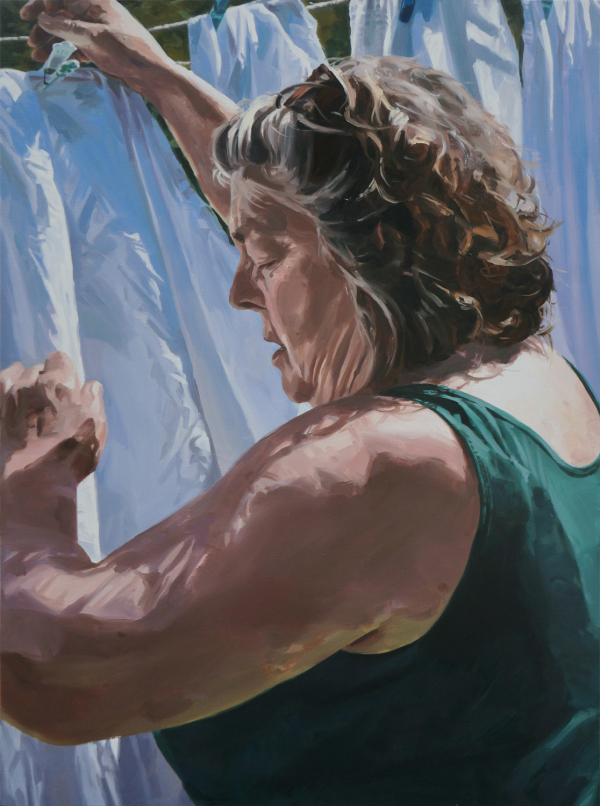
The exhibition is filled with large and small figures. It has been a long time since I've seen a work that 'only' paints figures like this. There was a time when the figure (portrait) and representation were considered taboo in painting. Looking at Miryu Yoon's realistically reproduced portraits, it feels quite courageous.
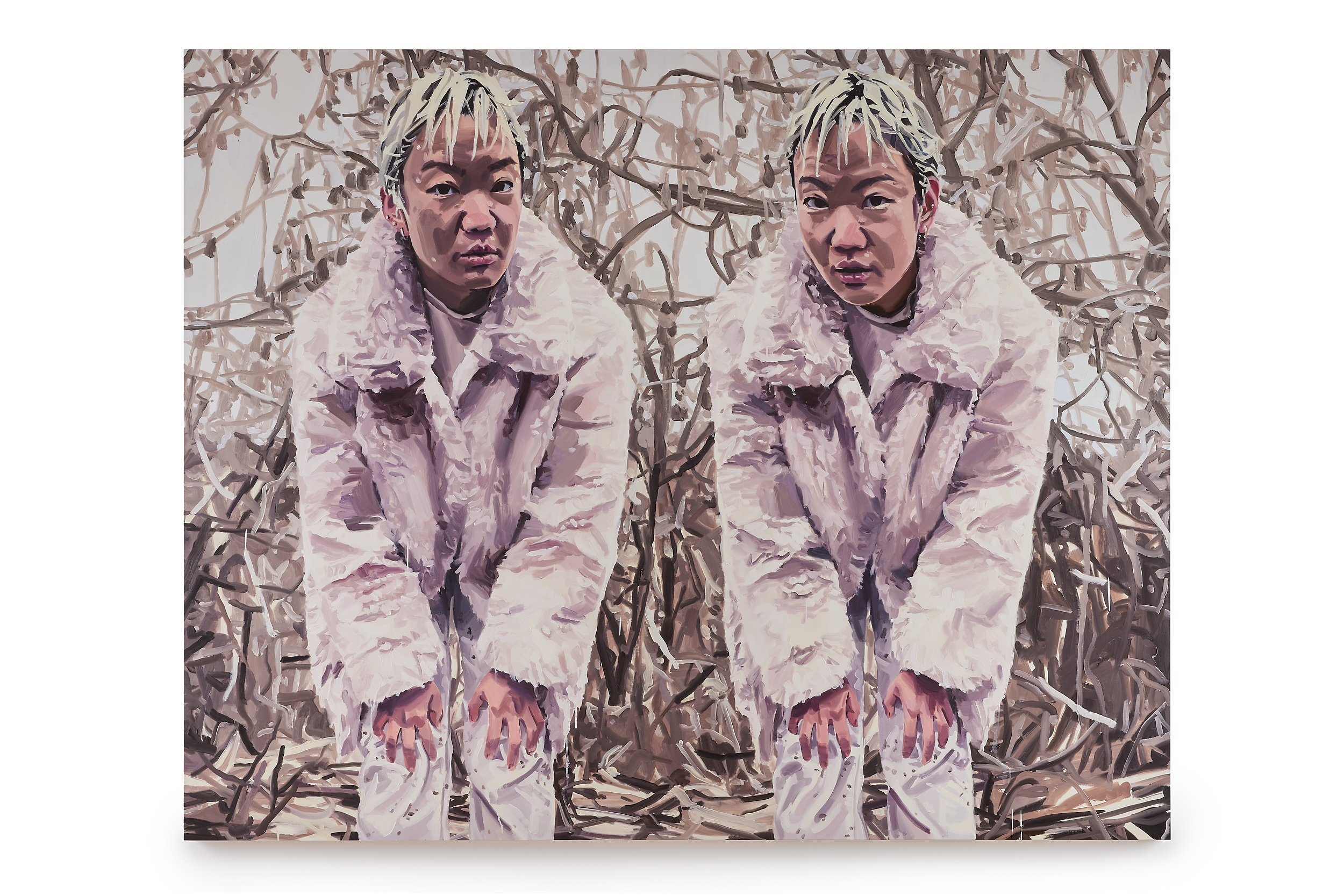
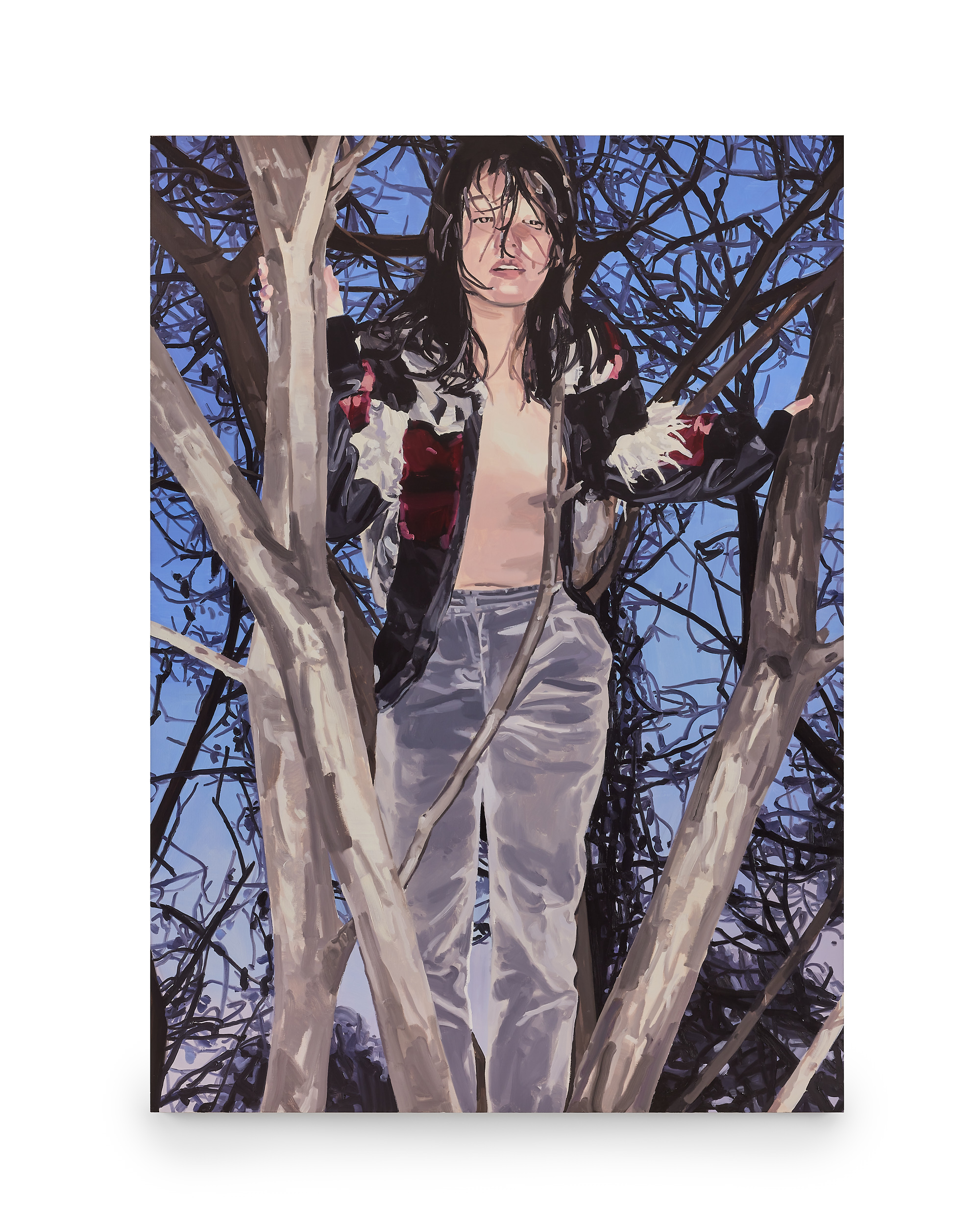
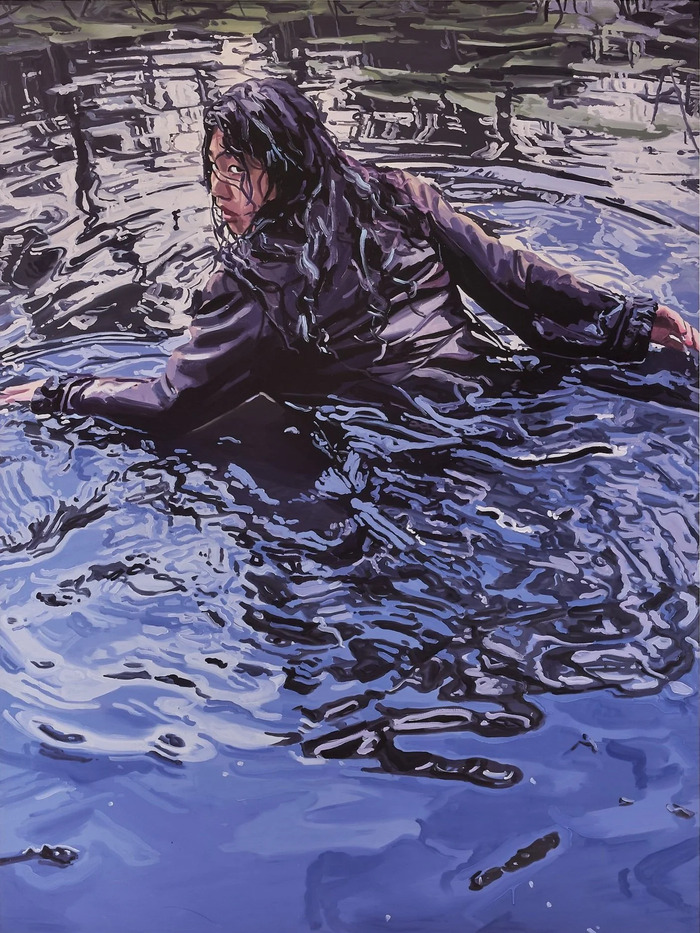
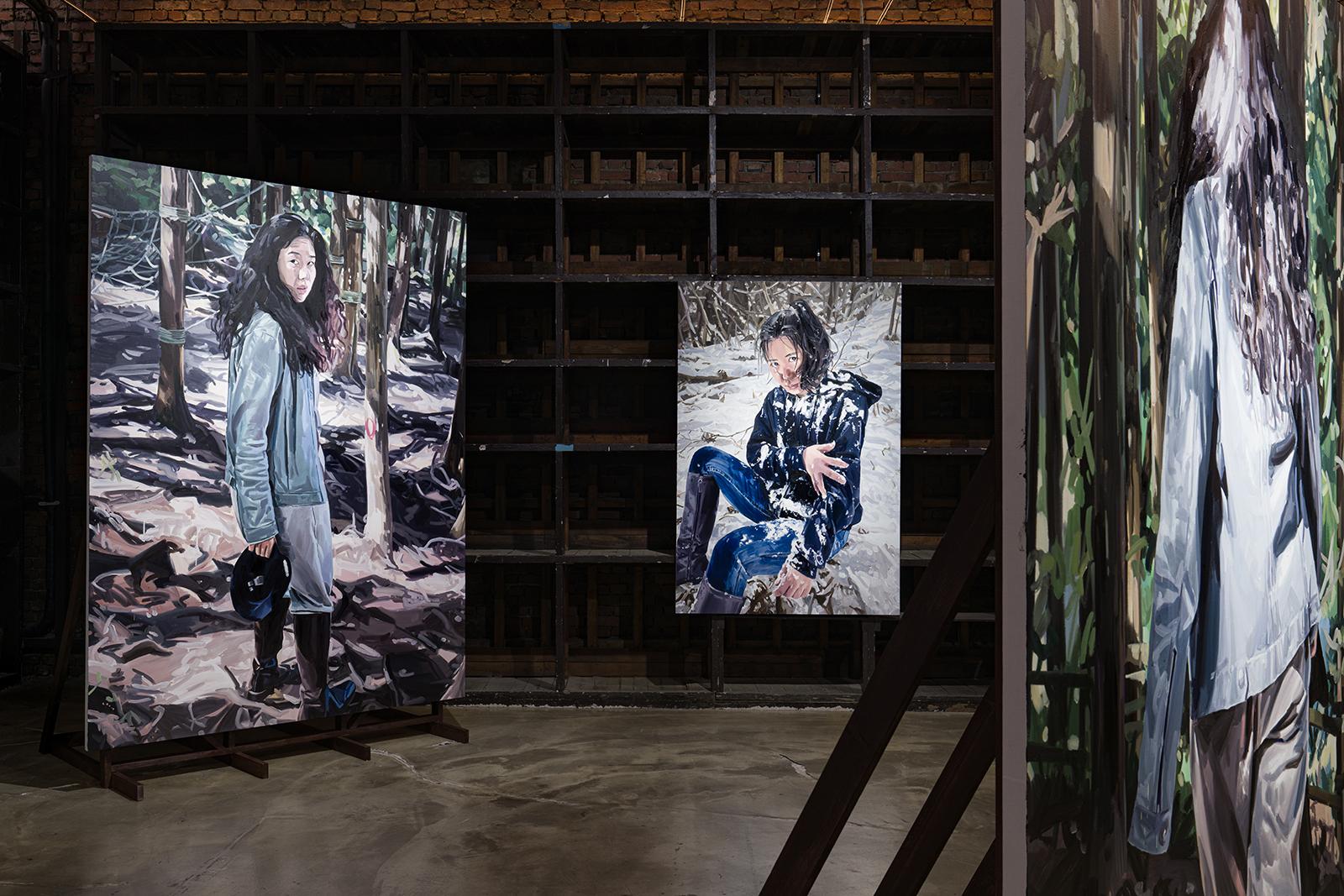
The expressions in the paintings are very specific, such as a person handling wood as usual in a carpentry workshop, a person staring or walking somewhere, or a person shaking off snow piled on their head, but since the narrative or role of the painted figures is unclear, the identity of the figures and the meaning of the painting that contains them are also vague. However, if they have one thing in common, it's that they capture a moment of movement.
When we encounter Miryu Yoon's paintings, we will easily try to read the person or the situation they are in. We will try to figure out who the person in the painting is, what they are doing, and what emotions they hold. The person in the painting easily becomes the subject of conventional reading. Furthermore, the expressions of the people he paints are vivid and clear, and the background and the cut-off landscape make us wonder what situation unfolds before and after the moment captured in the painting.
They are attractive enough to catch your eye. So you will be trying very hard to read about the person in the painting and the situation they are in. I confess, I did too. Like Gustav Deutsch, who took thirteen paintings by Edward Hopper and made the feature film Shirley: Visions of Reality (2013). Just as Deutsch gave a life named Shirley to the person trapped on the flat surface of Hopper's painting, Miryu Yoon's paintings also sufficiently evoke that impulse.
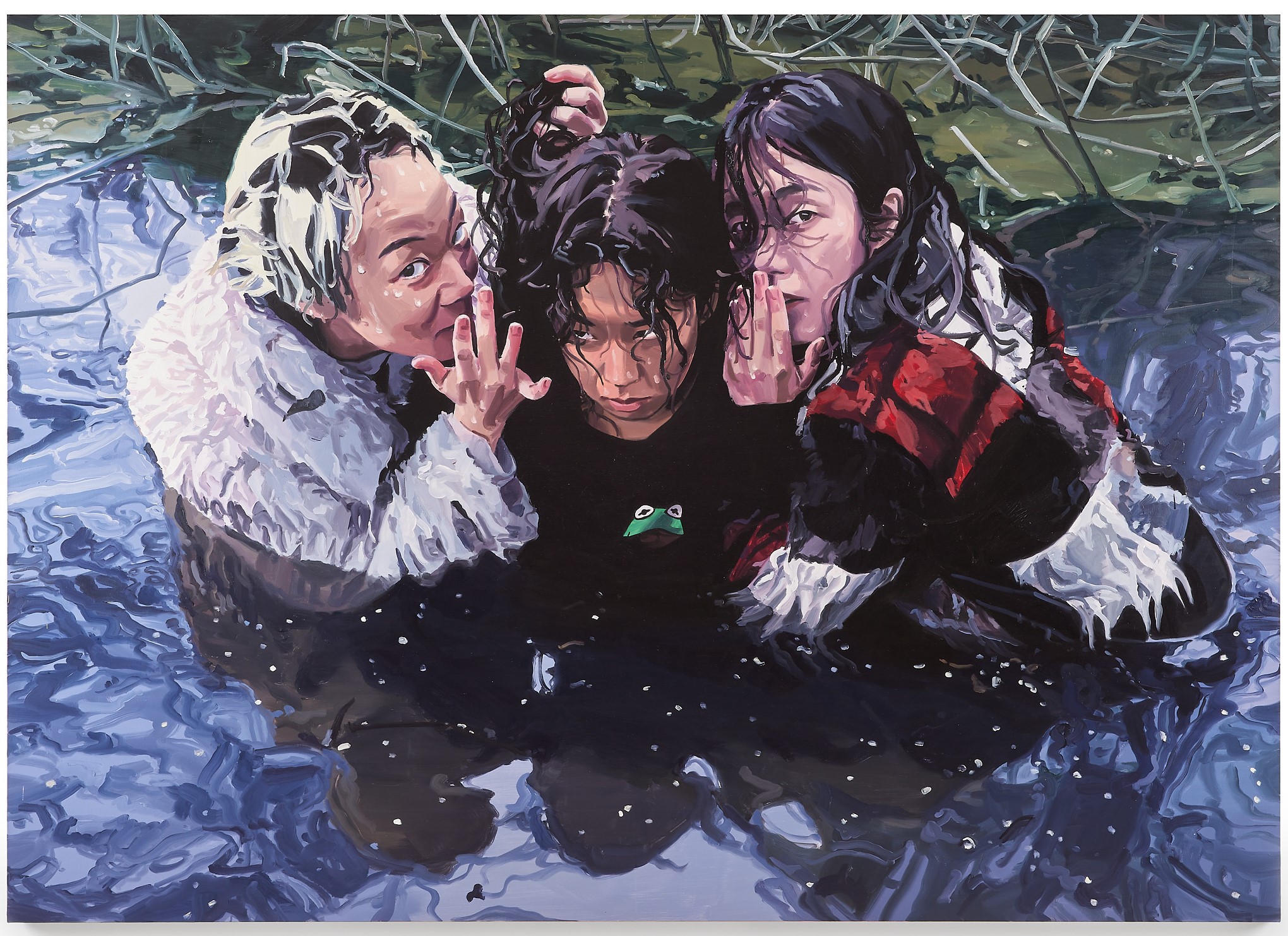
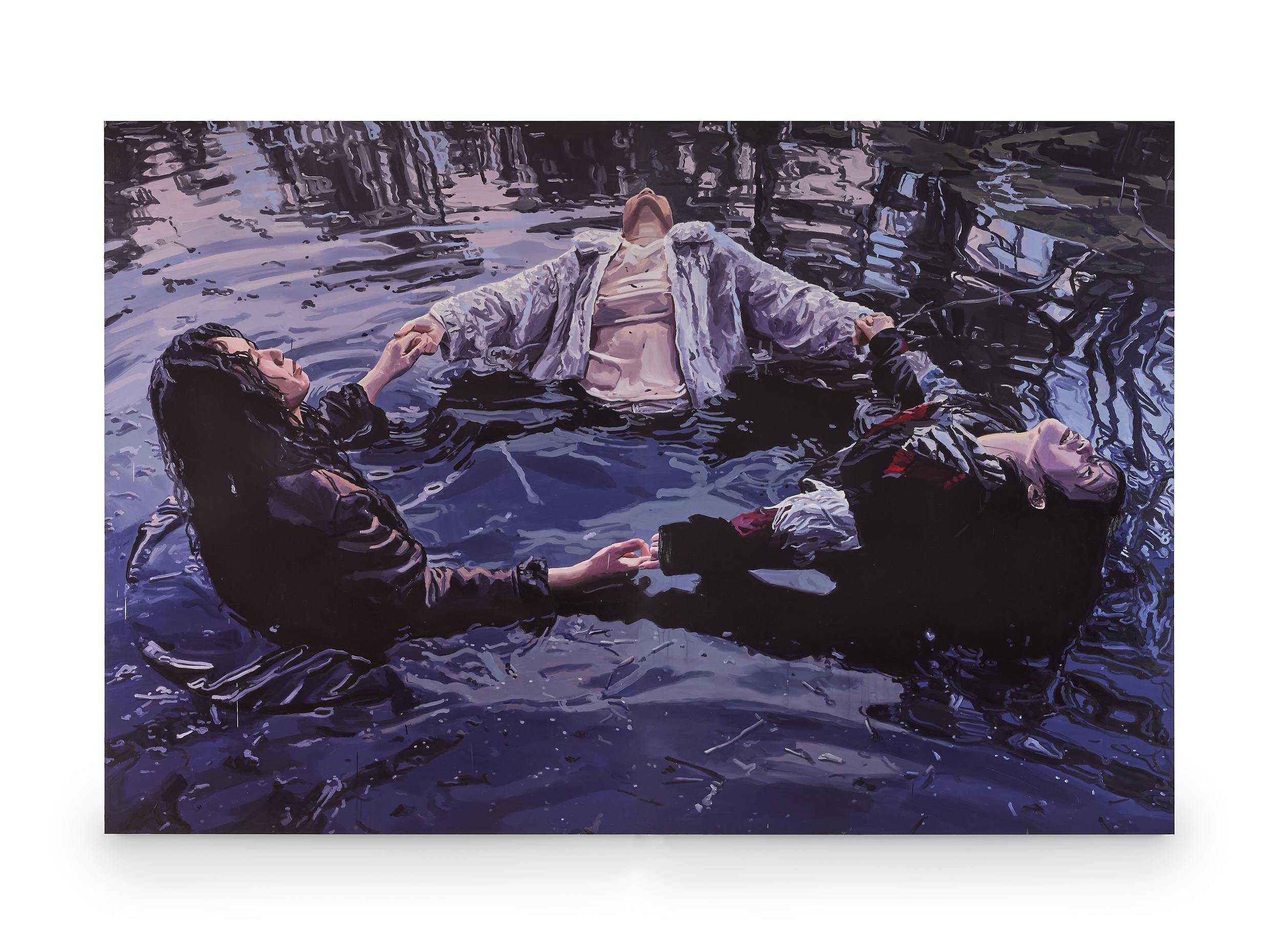
Just as the person in Hopper's painting was born as a specific person through the imagination of director Deutsch, the people in Miryu Yoon's paintings also transform into shamans, hunters, and walkers by the artist. But their identities are not easily revealed to us. They just look like people who are wet with water or wandering in the mountains. It is not easy to deduce the settings that the artist's imagination has put on them. In fact, these people are family and friends who are willing to respond to the artist's strange requests and settings.
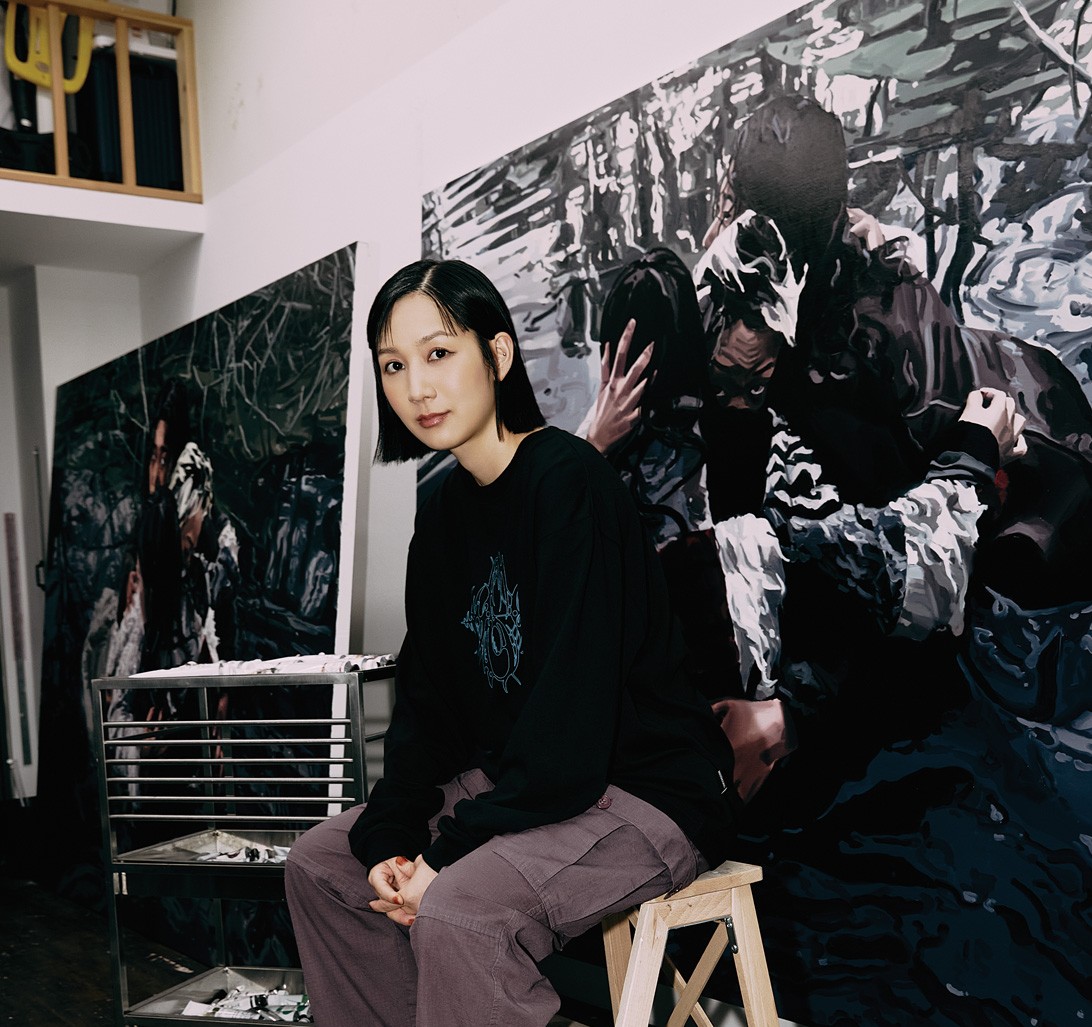
Why did the artist suddenly summon them as imaginary characters? Relying on the title, the clues point not to the person but to the place where the person was painted (The Studio) or time (The Moment, Waiting), or the pictorial expression or condition (The Play of Light on the Surface). So what the artist painted may be something other than a person. The artist calls the people in her paintings "mediums," and critic Hyosil Yang also describes the people in her paintings as "shells," revealing that her paintings are "a practice on painterliness rather than on people." Critic Hyejin Moon says it is an expression of "the sensations the artist felt when encountering the subject." So, let's look at her figures one by one again.
In the ‘The Studio’ series (2020-2021), where she began to paint portraits, the artist painted people working in a carpenter couple's workshop. This series, not only reveals the figures but also specific locational elements. These places that contain time with the figures also become a major subject of reading. From the ‘Dripping Wet’ series (2021), the figures officially become mediums. Unlike the ‘The Studio’ series, the artist brings the figures outdoors (to a valley) instead of indoors. And by composing the direction and setting, she tries to produce an image that is independent of the original person, as if she is looking for an unfamiliar sensation from a familiar subject.
At this time, it is not only the place, costume, props, and gestures that are attached to the familiar person for the artist's imagination. The language such as nouns, adjectives, and verbs that the artist associates with a person in a new situation, such as 'preparation, determination, expectation, irritability, motion sickness, escape / cool, clear, shaded, reflective, heavy / calm, firm, embarrassed, dark / fumbling, enduring, closing, charging,' is attached to the person. The artist experiments with moving away from the person she knows and newly projecting emotions and personalities as qualities that modify the person, revealing them as translated forms in the painting.
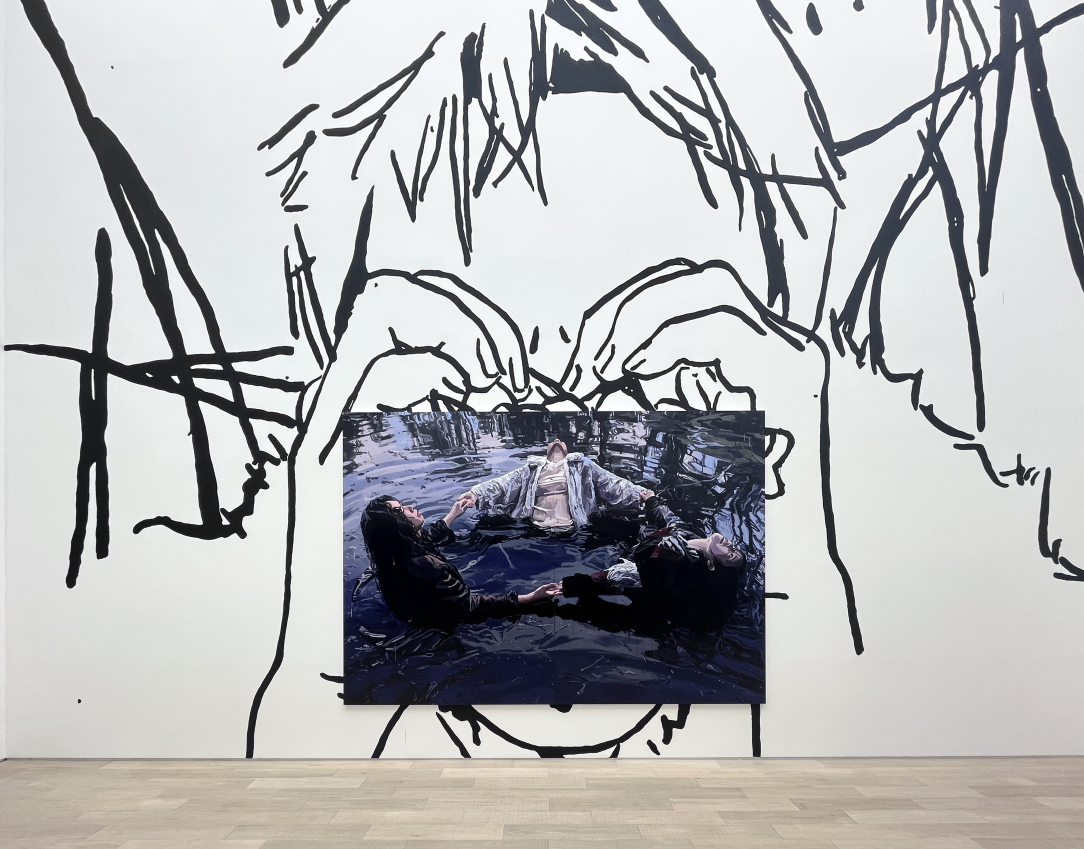
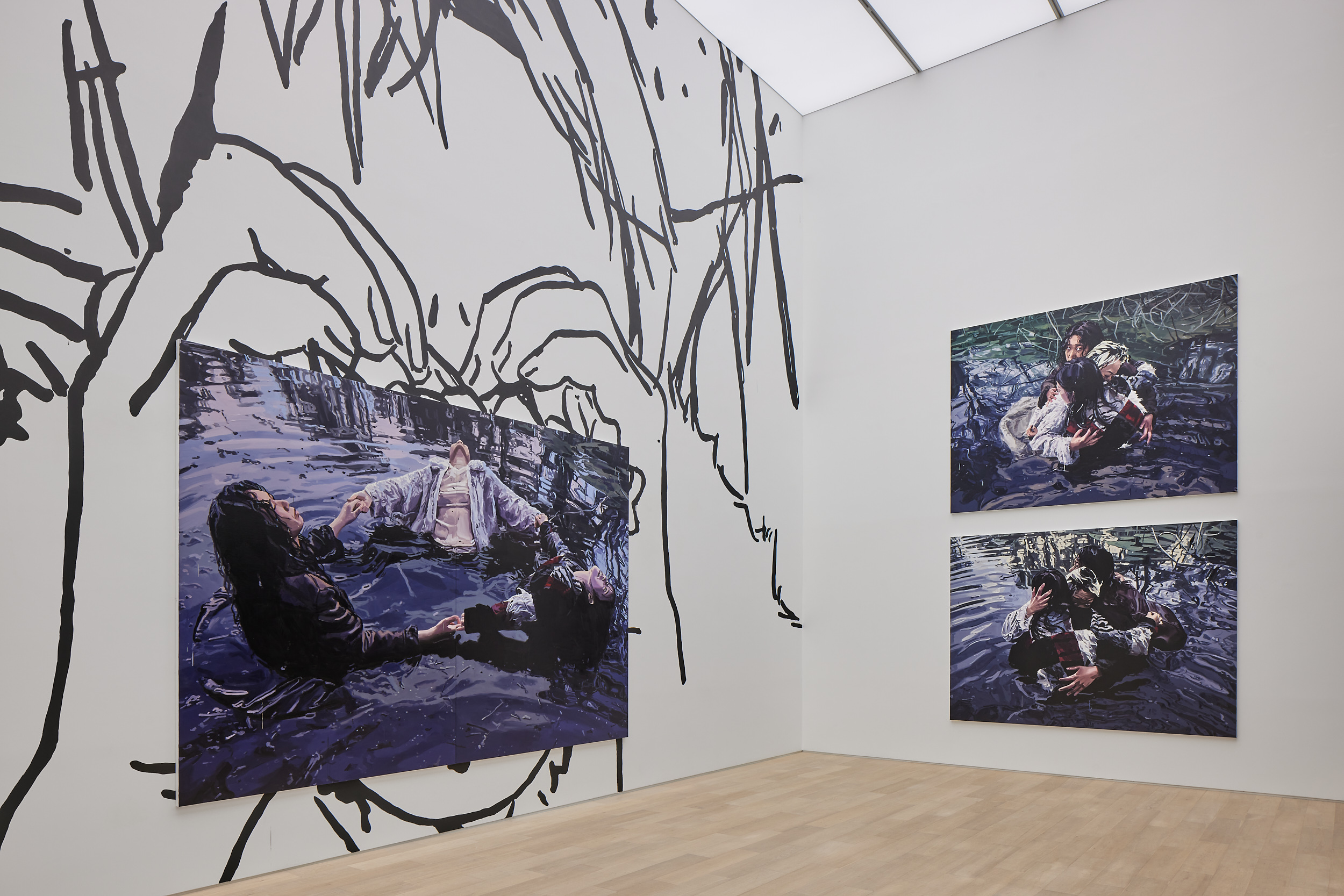
In her recent solo exhibition, 《Pyromaniac》, she pushed this experiment to a more extreme level, imagining stories that would unfold through specific scenes and characters using the figures as a medium. The artist gives various instructions to the figures to capture the characters she has set. The figures respond to the requests and create movements and expressions, and the requests soon become a spark where fiction and reality intersect, giving birth to other figures.
Miryu Yoon attempts to translate the changing personality of the figures and the momentary sensation where reality and fiction intersect into painting. In this way, the artist has consistently continued to attempt to translate objects, places, language, sensations, and situations through painting, using figures as a medium for about three years.
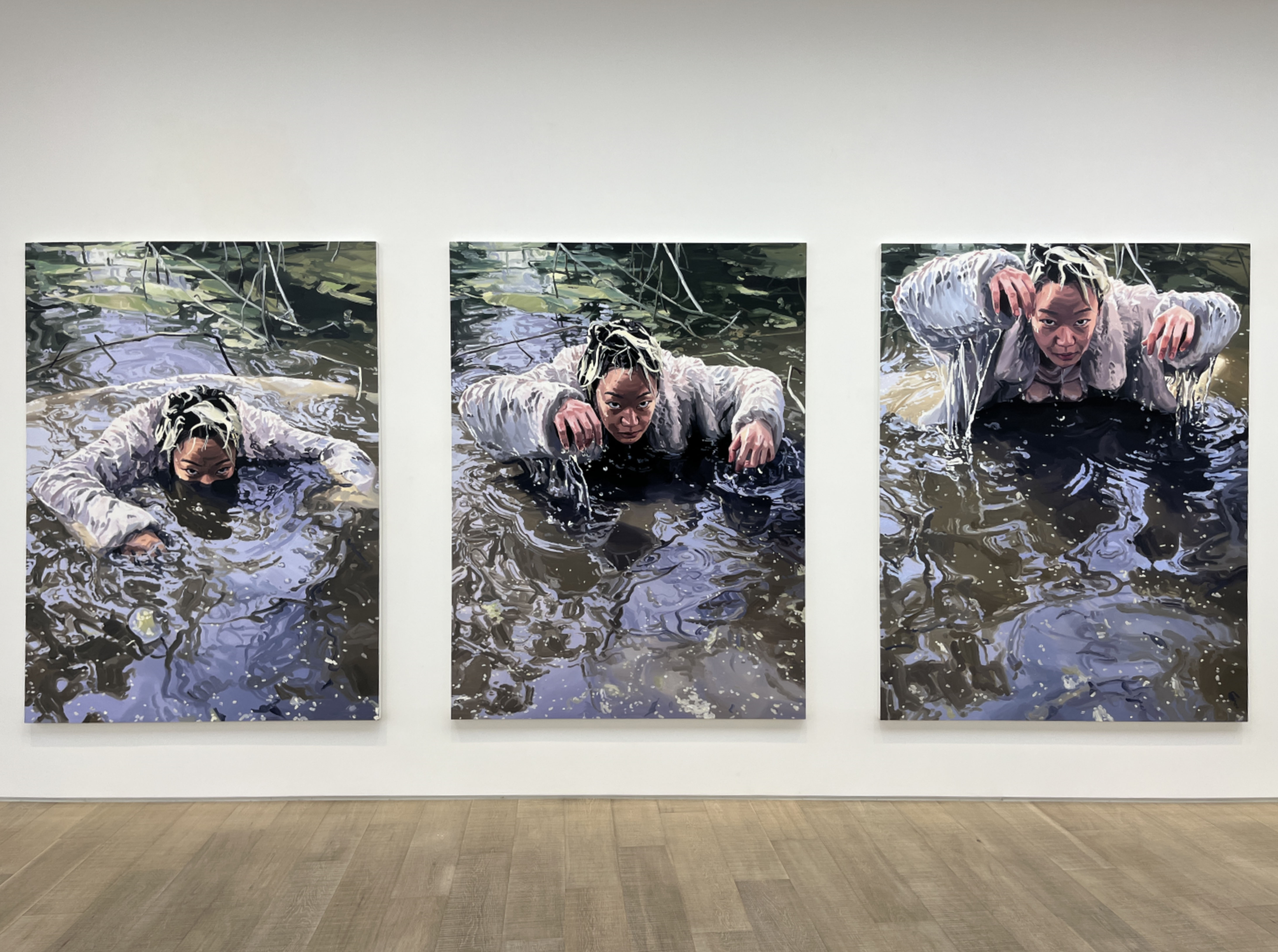
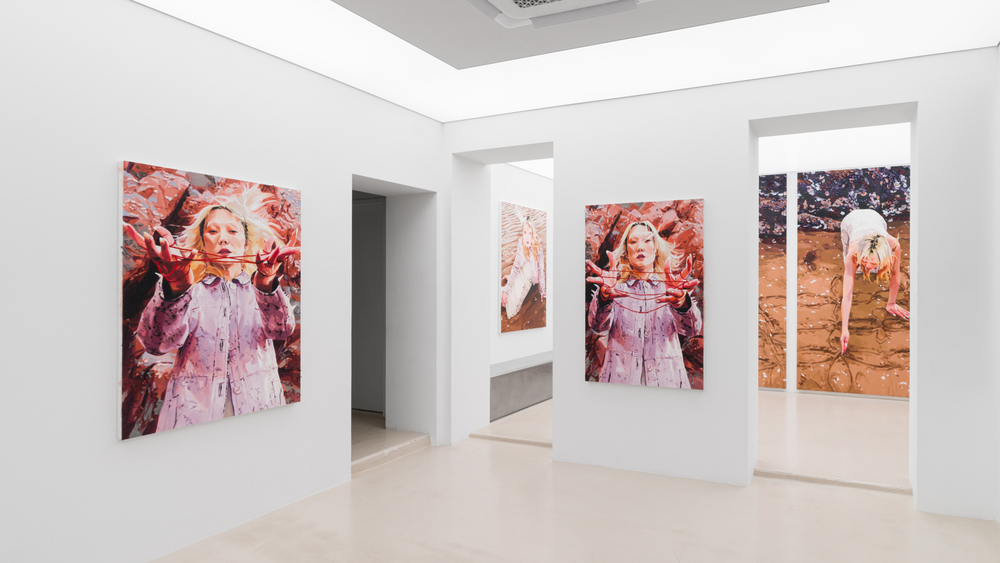
The artist takes the small spark she found in the figures as a clue, creates various scenes like a fantasy created by the spark, and suggests the situation just before the fire breaks out to you as well. Therefore, Miryu Yoon's paintings, in many moments, refuse to be neatly placed on a wall and constantly kindle sparks to create situations in the exhibition hall as well. Her paintings are installed to be supported by two wooden sticks according to the figures' movements and sizes, or the traces of their movements are installed in a row as if showing a series of continuous photos stretched out in a live photo frame.
What about the images that are partially carved out from the entire screen and installed like clues placed at a crime scene? Her paintings are installed to imply the void of the situations before and after, allowing you to imagine various situations. So what is the artist experimenting with in painting? What is the 'quality' that she is trying to capture in the painting through the "shell" of the figure, and where is the experiment headed?
If Shirley: Visions of Reality was about connecting independent individual works to create a single narrative, Miryu Yoon's paintings also dream of a certain narrative through figures, but imagining the figures soon becomes unimportant. If you were to think of a specific person like Shirley, it would be even more difficult to read the artist's pictorial experiments. The figures in Miryu Yoon's paintings do not exist as subjects to be read and understood, but rather have meaning as a medium for the artist's experiment to introduce a certain state into the painting.
Miryu Yoon's portraits present places and time as translated nouns, sensations and affects as adjectives, and scenes as verbs. The object of reading is not the person themselves, but the nouns, adjectives, and verbs created by the person translated into a painting. And the person will evolve into another form at any time. When I asked the artist about her next work, she said she was thinking of a portrait with a swamp in the background.
Myths and stories surrounding the person will be added to the swamp. And she worried about the performance of her iPhone, which cannot capture the light and shapes she sees in the dark as they are. The dark swamp surrounding the person makes us look forward to what kind of story it will tell us and how far the person the artist translates can evolve within the painting.