Characters like tattoos
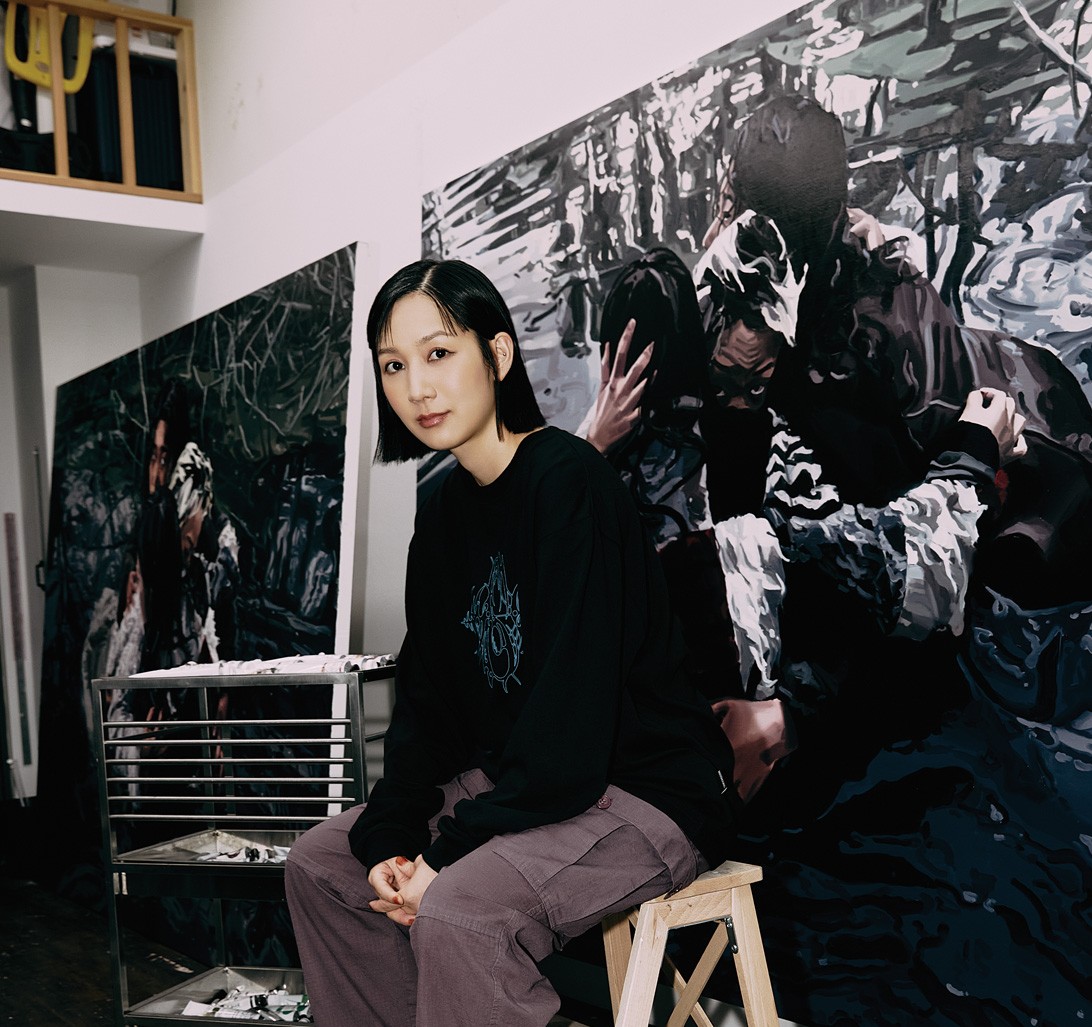
During her time in graduate
school, Miryu Yoon developed an interest in subcultures such as biker gangs and
pseudo-religions. According to the artist, there was a phase when she delved
into what she refers to as “dark paintings.” She mentioned her curiosity about
why humans become immersed in violence, lawlessness, irrationality, and
abnormal states. In my view, the darkness in Miryu Yoon's paintings is a
distinctive feature that captures attention on her canvas and appears to be a
significant and recurring element in her work to date. This is evident in
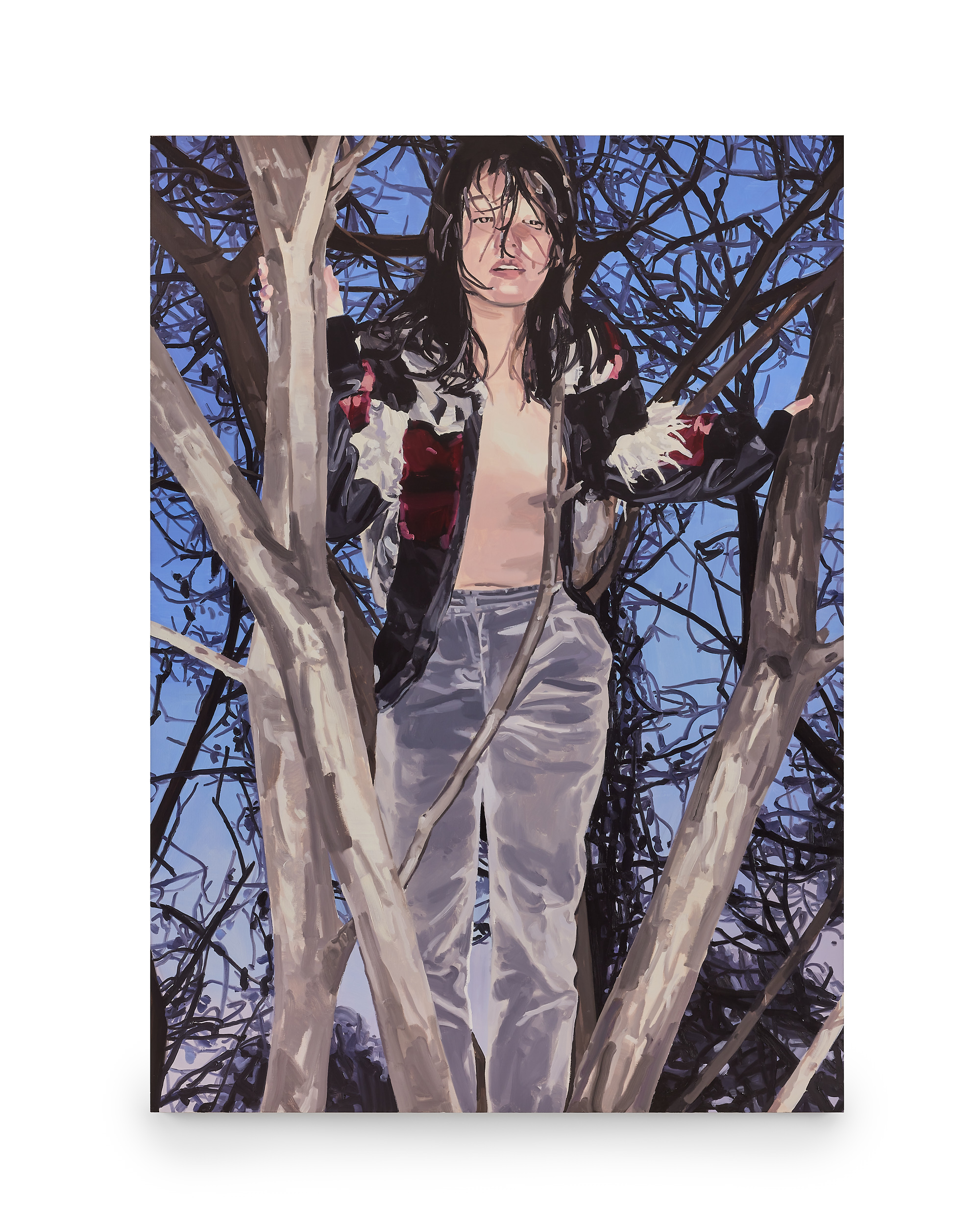
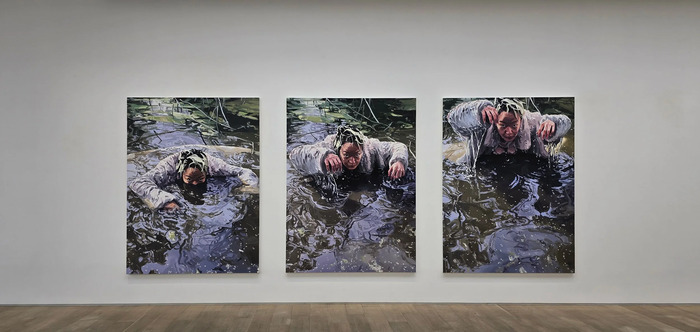
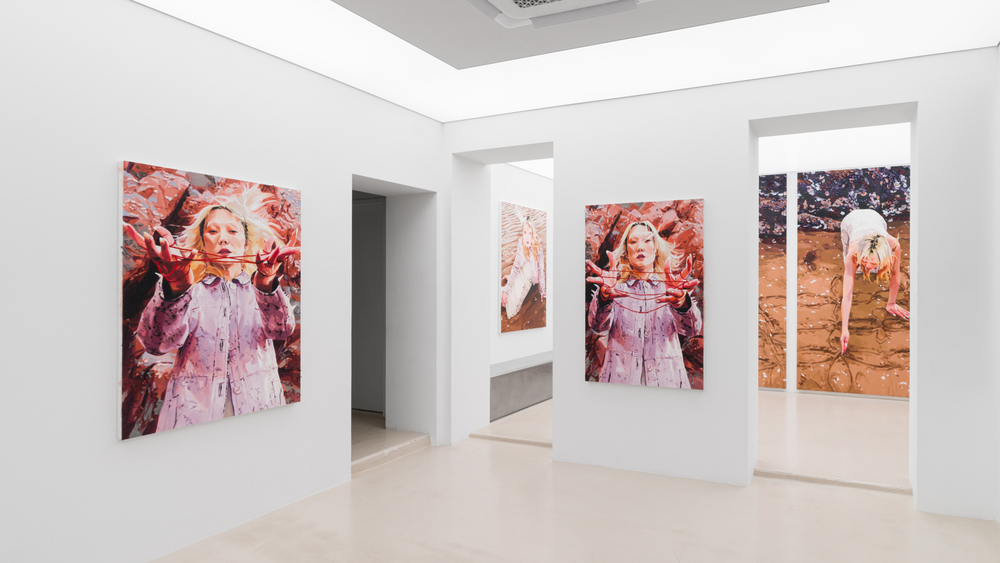
pieces, such as a woman holding an ordinary branch of appropriate length like
material for shamanistic rituals, a person sitting on a pile of fallen leaves
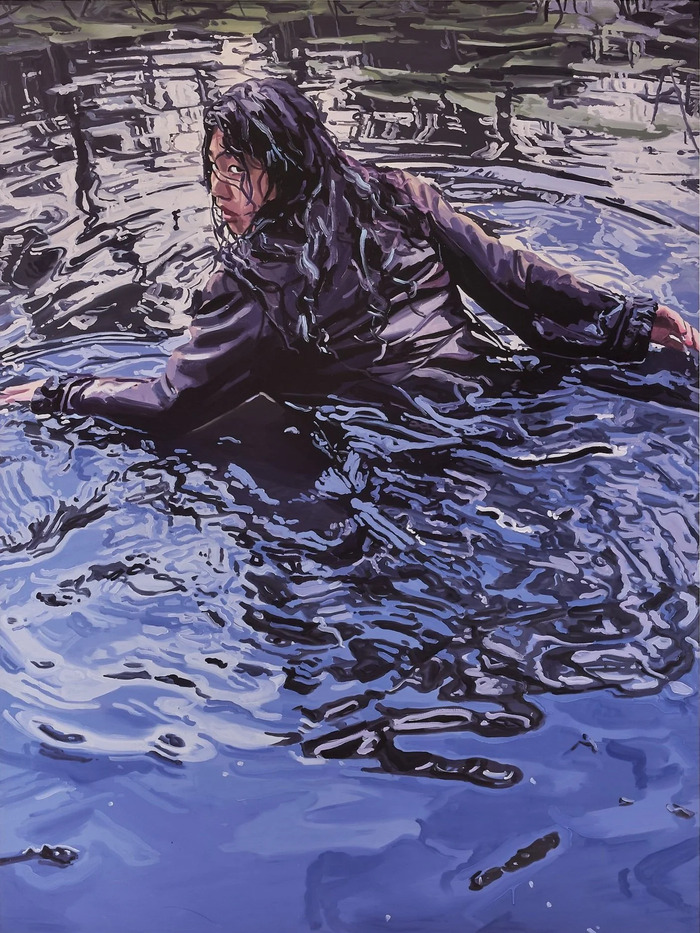
and gripping the zipper of long boots like the skin of a hunted prey, and a
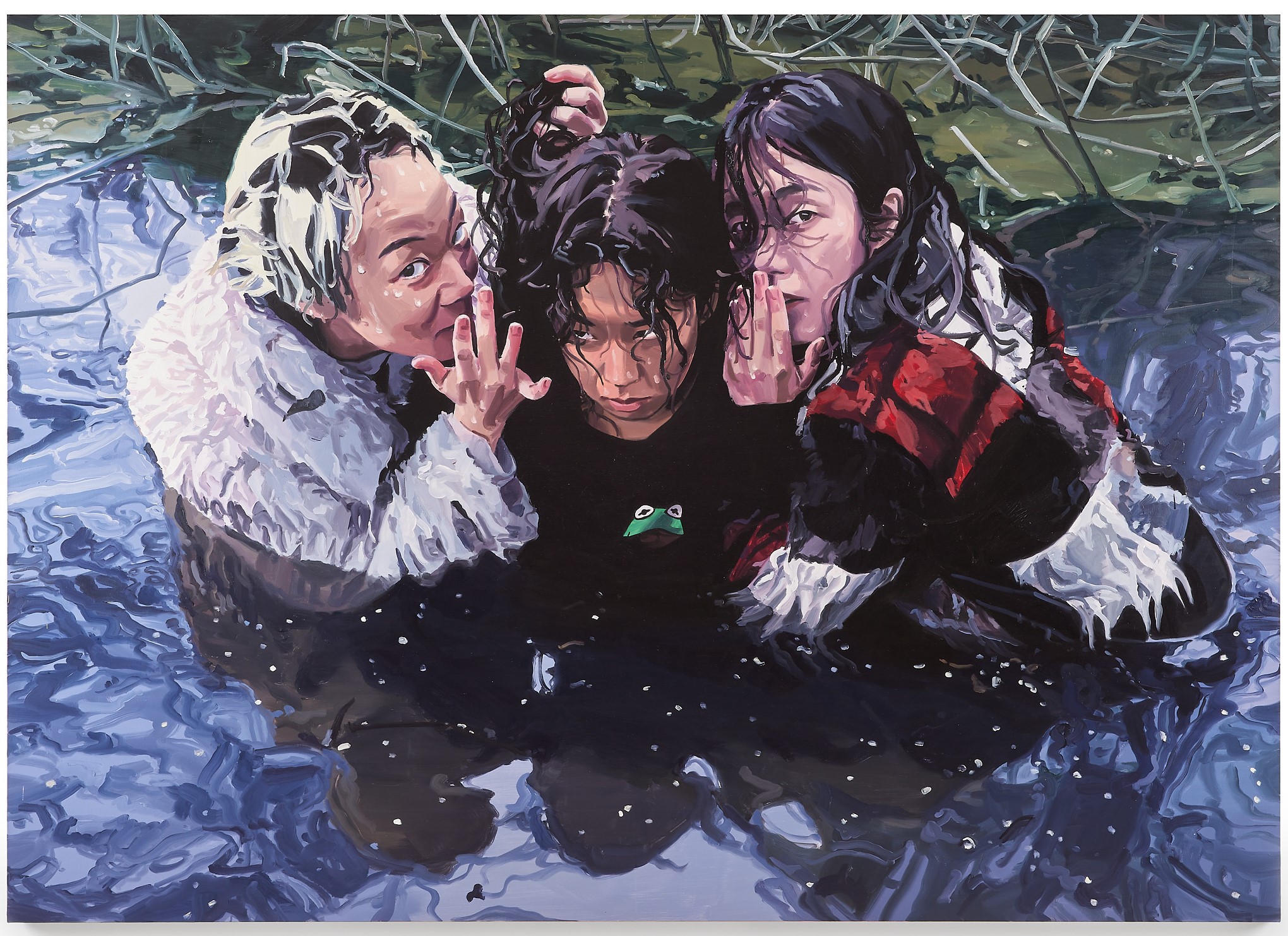
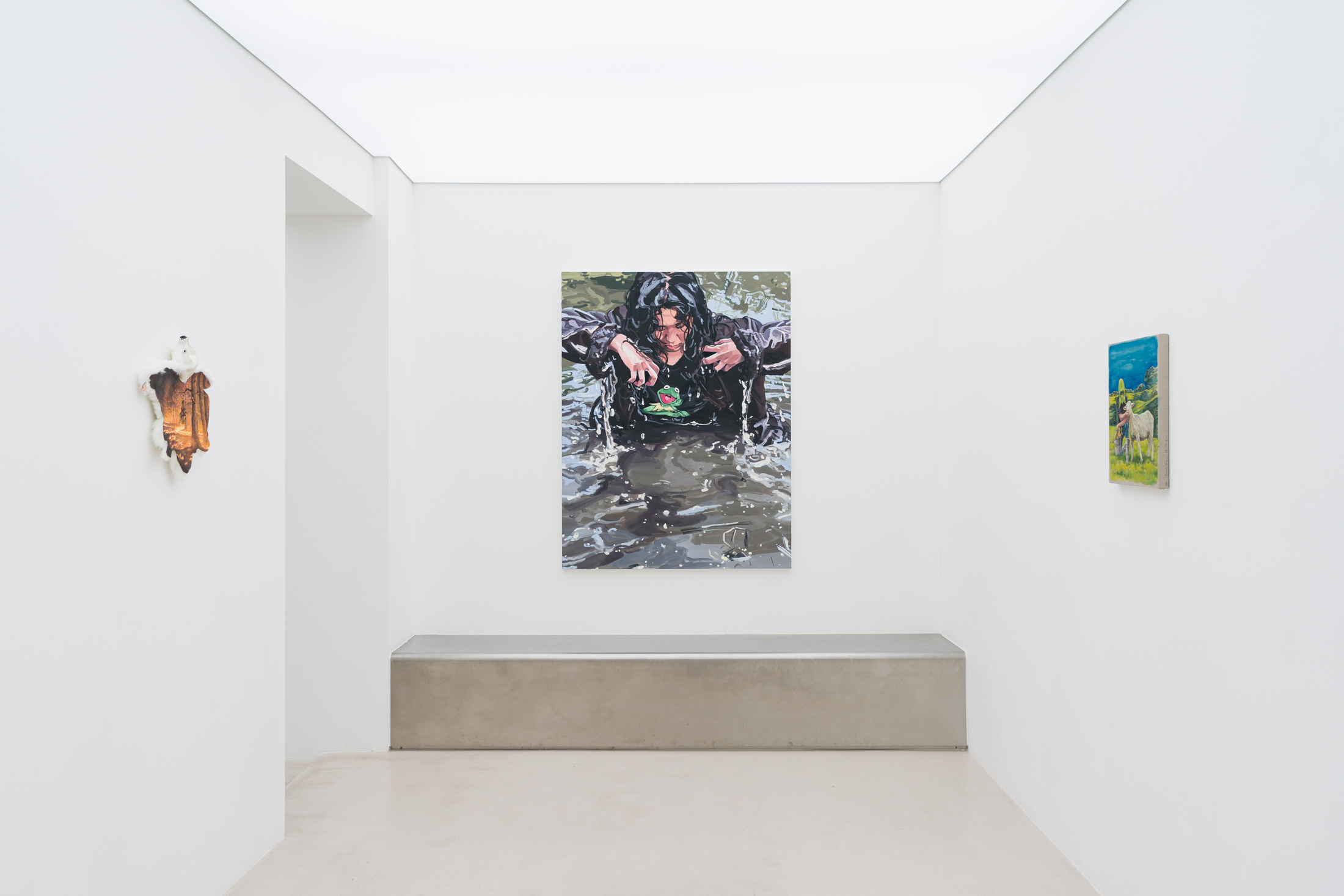
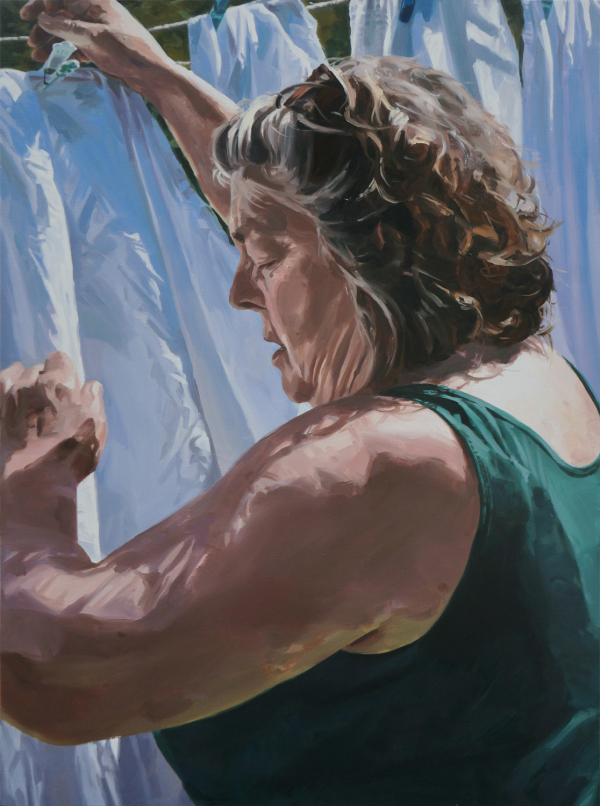
woman seemingly unfazed by her thoroughly wet and tangled hair, tightly
clutching a piece of clothing with both hands.
If we explore the darkness in
more universal terms, it can be described as melancholic, a serious atmosphere,
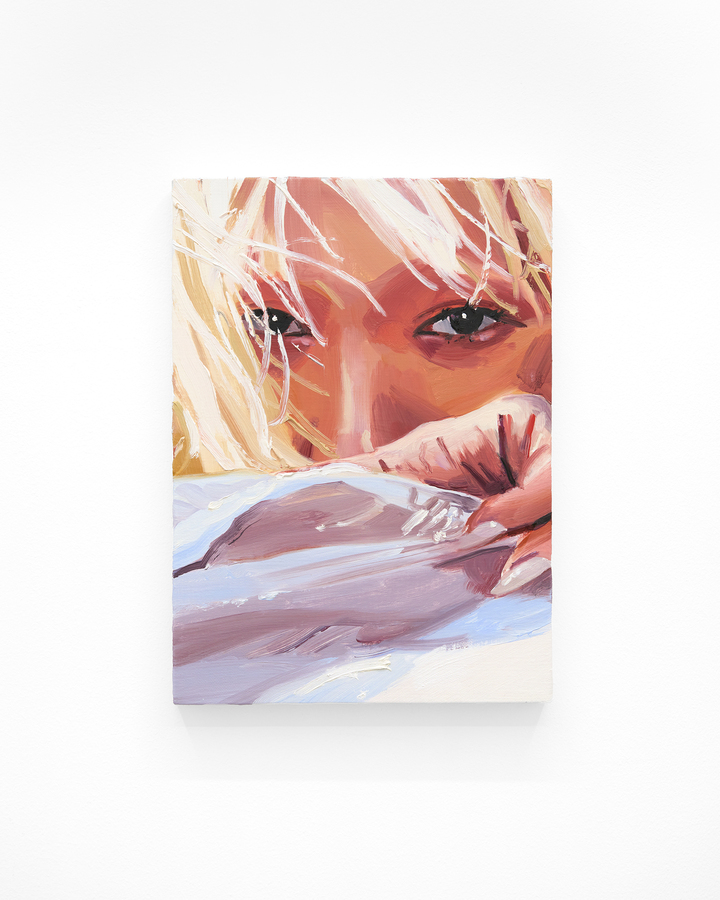
or a solemn and intense demeanor. In Yoon's depictions, the characters often
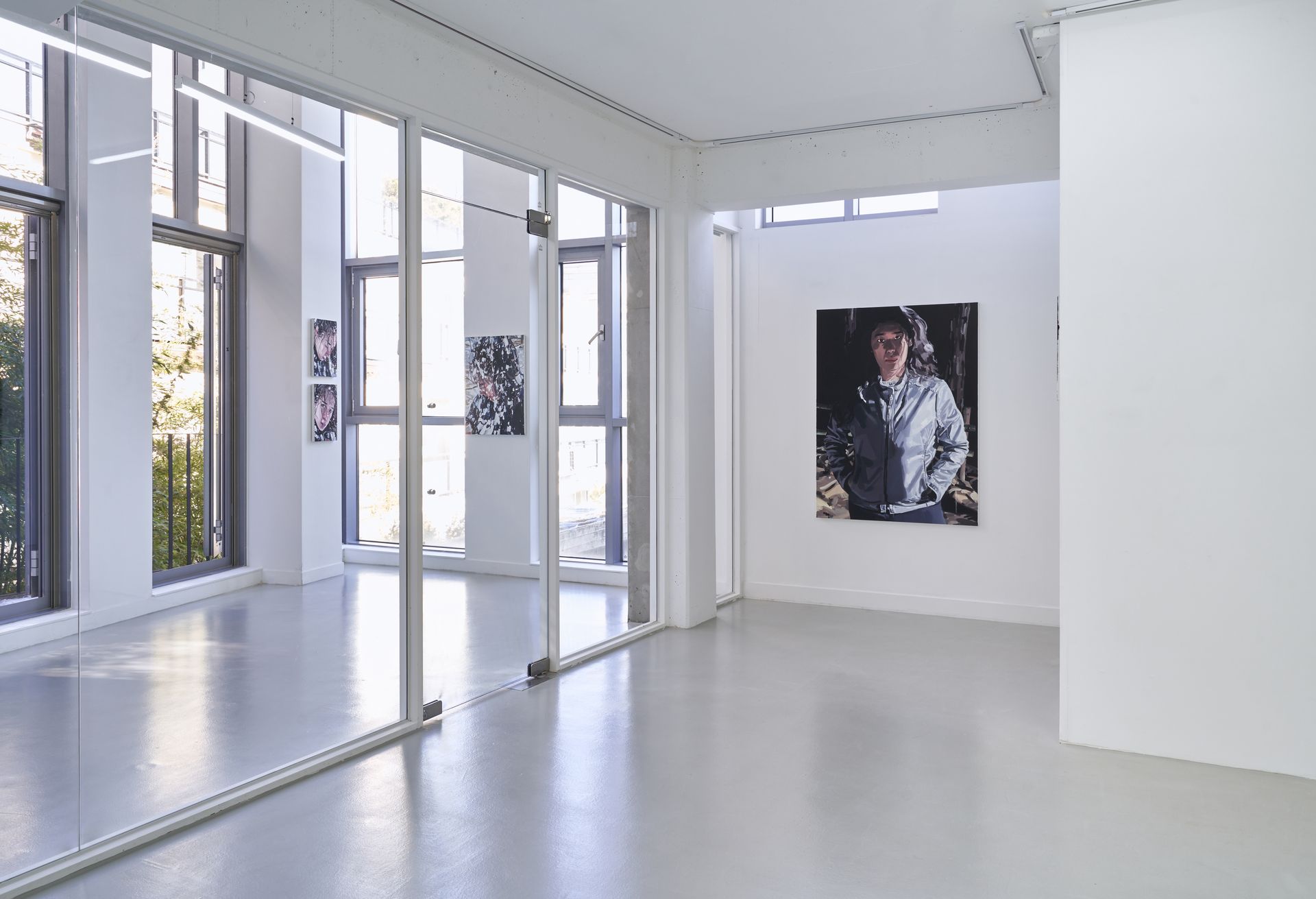
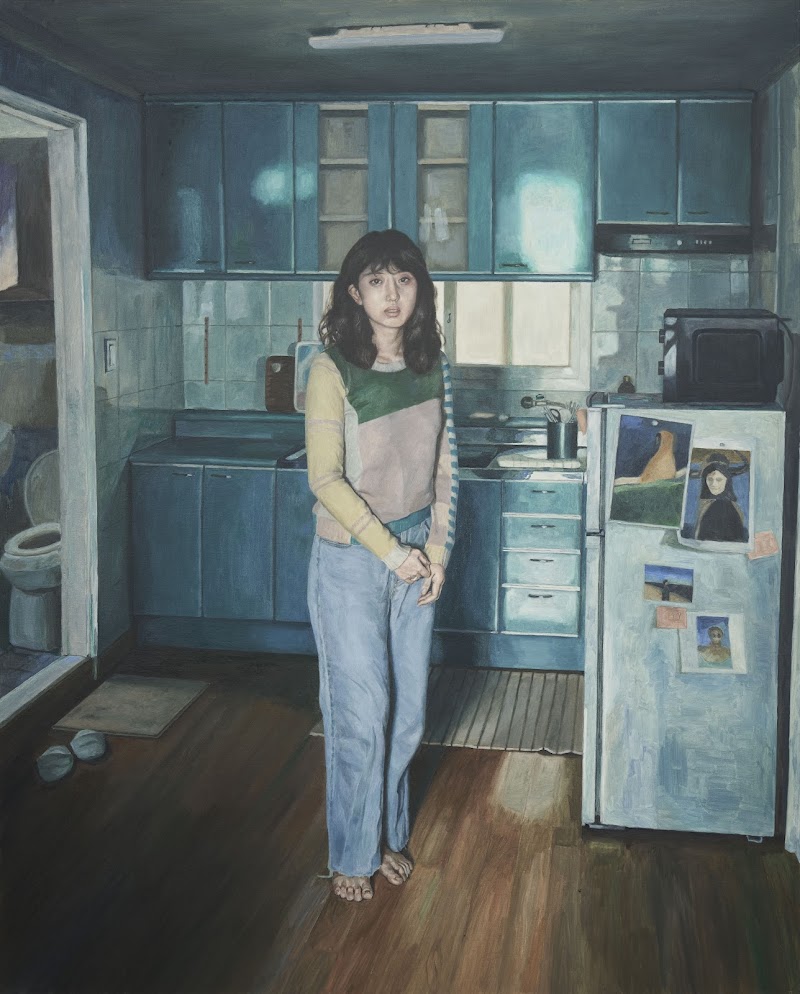
exist individually on a single picture plane. They frequently display a stark
contrast of light and shadow on their faces or maintain an expressionless
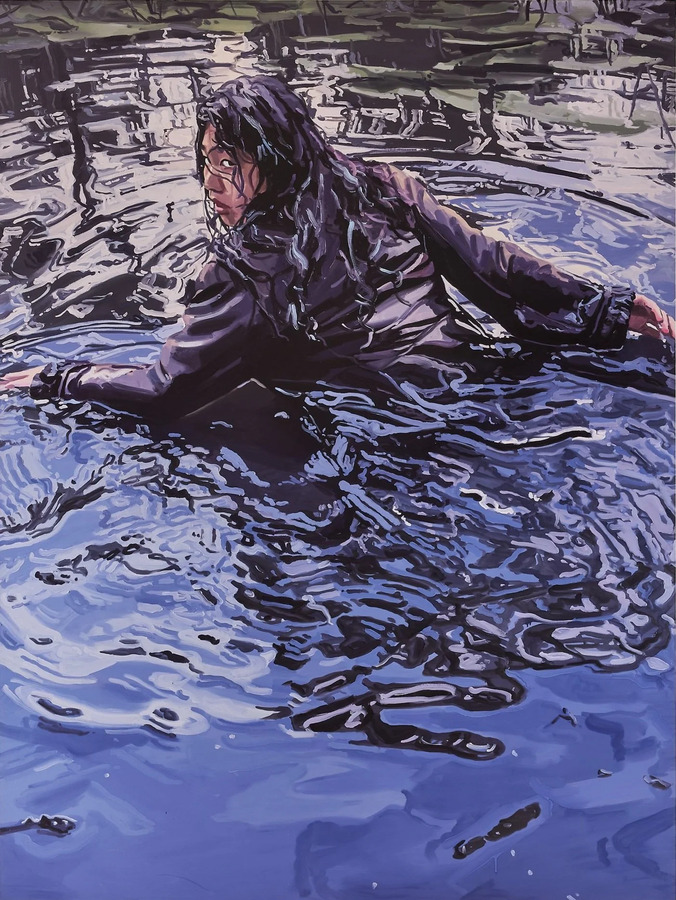
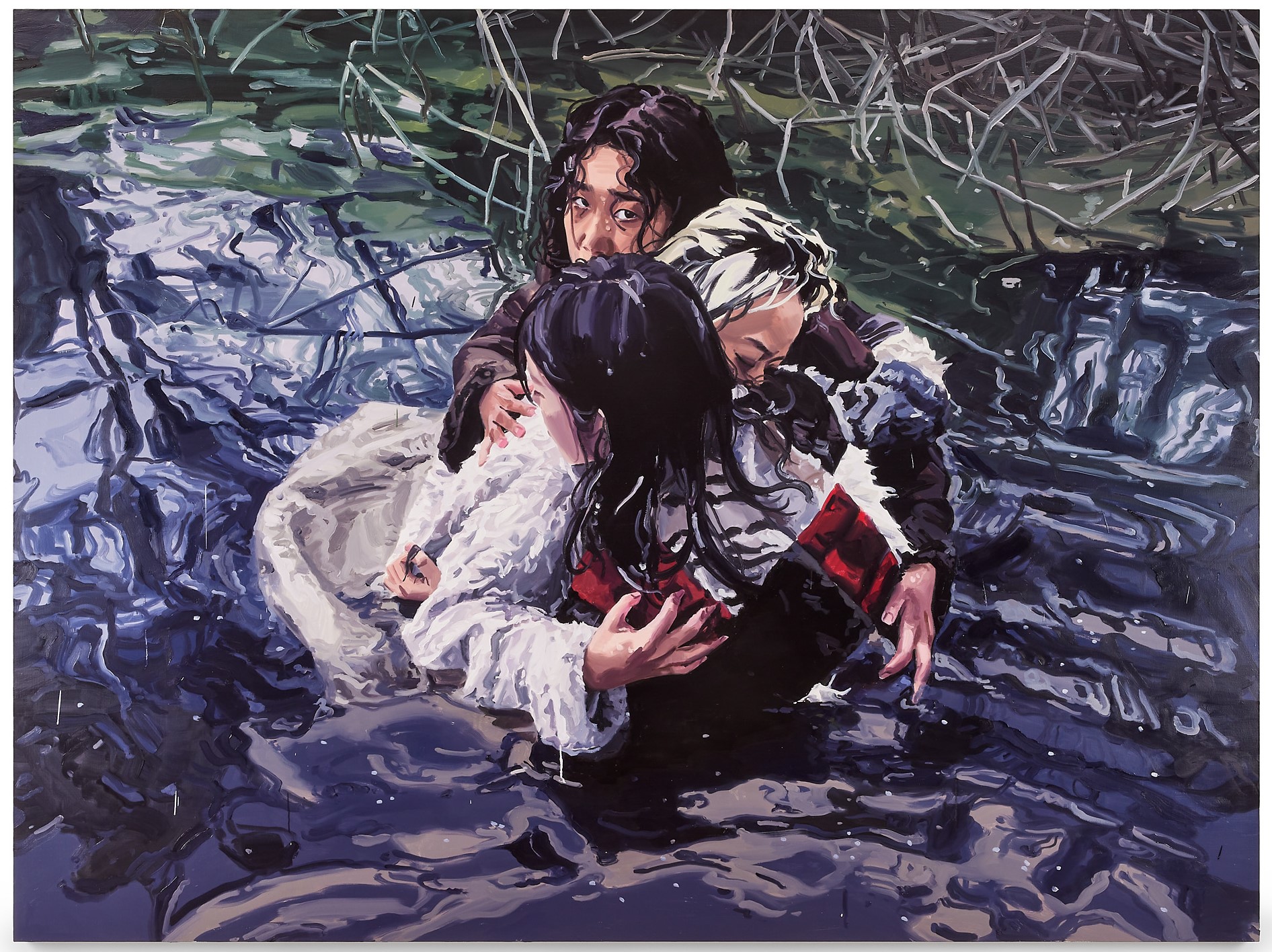
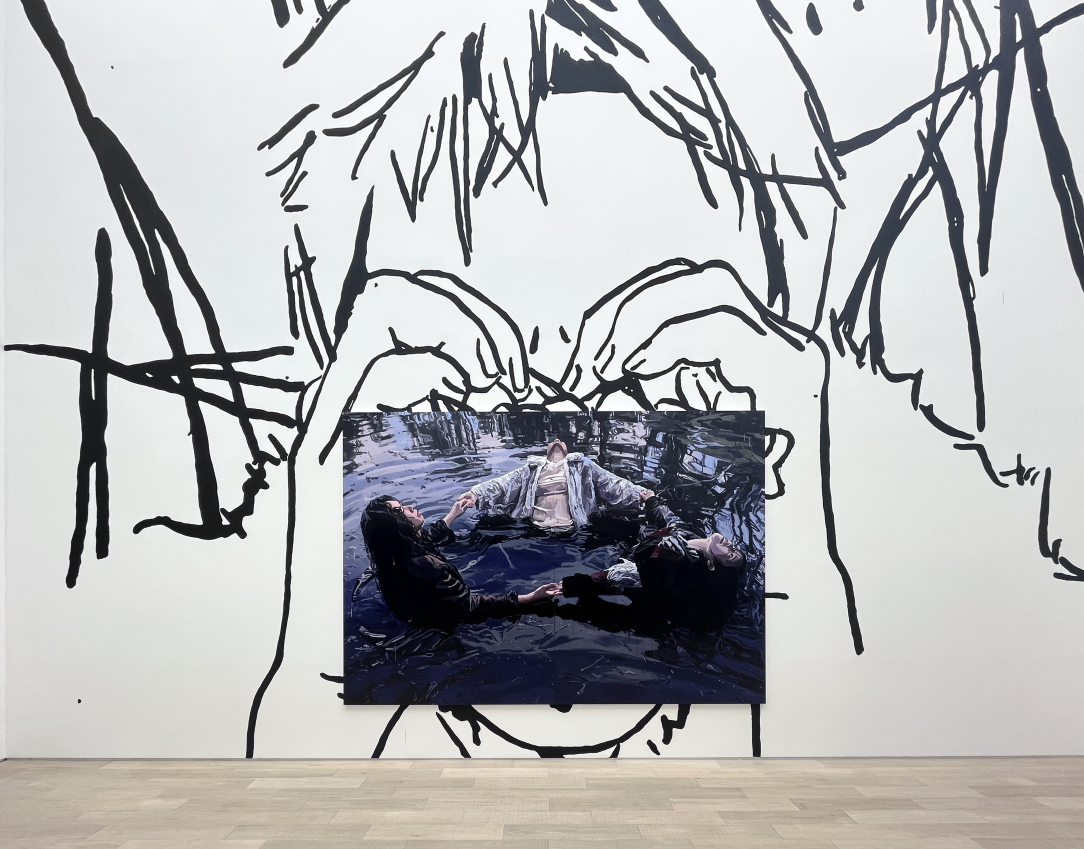
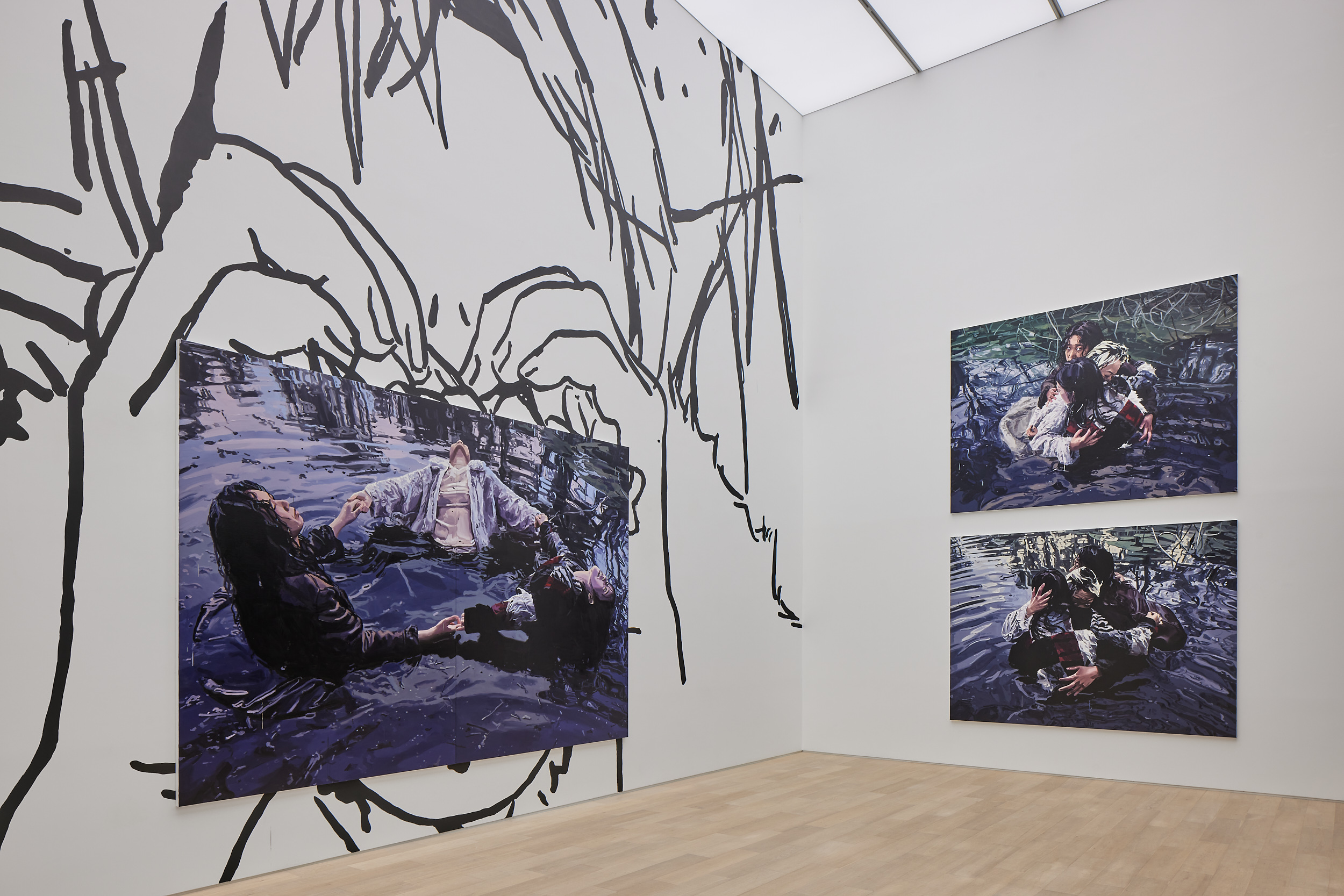
demeanor with lips firmly sealed. Guided by the artist's deliberate direction,
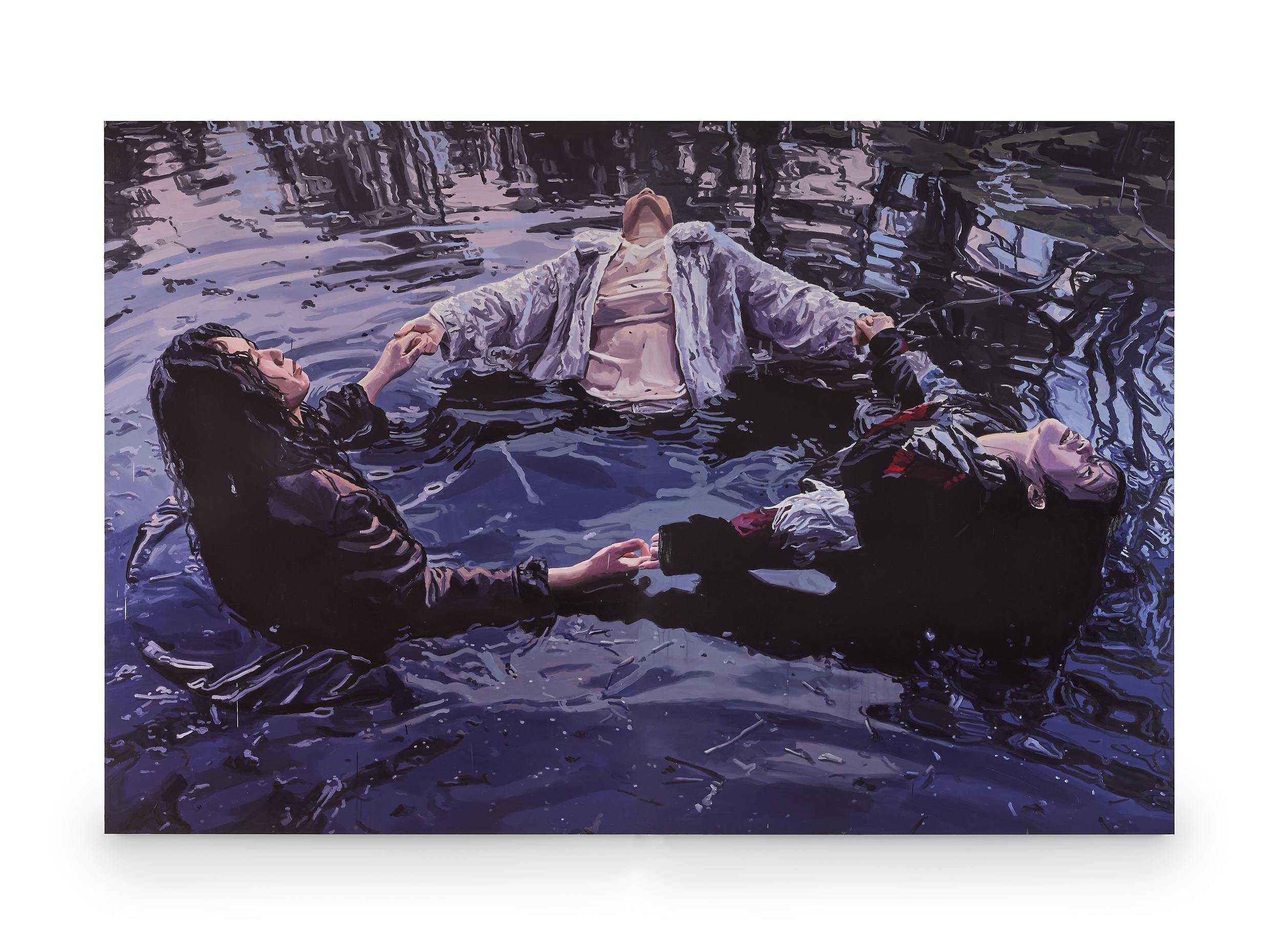
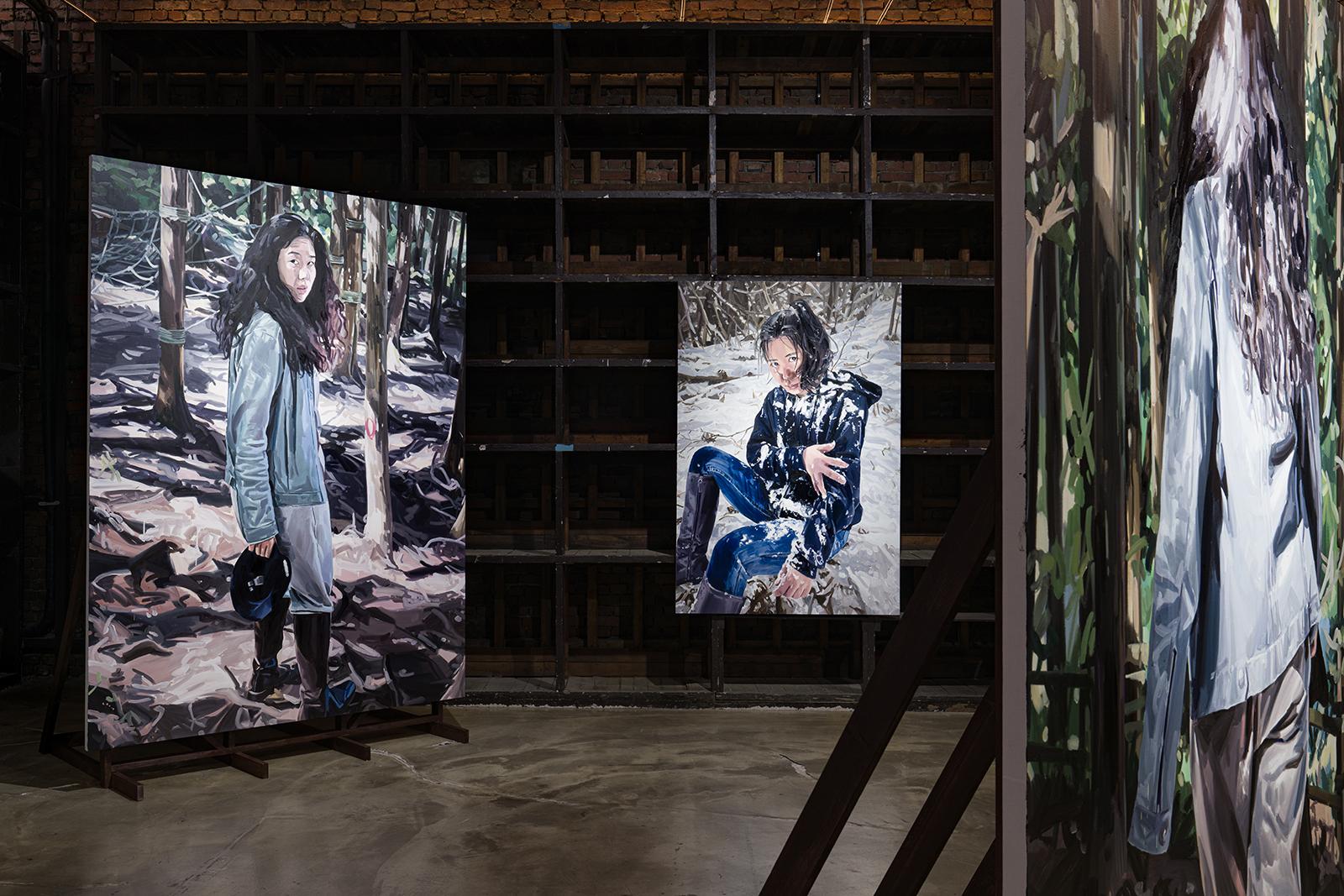
water or snow often serves as the backdrop, depicting figures in situations
where they are soaked by water or covered with snow. At times, blue and red
lighting is cast over the characters. Most of these stylistic choices
contribute to intensifying the previously mentioned atmosphere. Although the
artist's figures within the frame, shrouded in such darkness, may not inflict
harm on the viewer, encountering them face-to-face often leads observers to
moments where their attention is captivated—similar to unexpectedly locking
eyes with a stranger covered in tattoos at an unexpected place.
Similarly, Miryu Yoon's paintings
embody a quality comparable to tattoos etched onto the body. I am not delving
into the processes, forms, or expression methods of tattoos. Tattoos represent
a form of imagery, something the bearer engraves for personal viewing or to
showcase to others. They can be commonplace, yet, on the other hand, illegal in
certain cases and considered taboo by some individuals. The image chosen for a
tattoo can be carefully designed or chosen lightly based on mood. In a similar
context, Yoon's depicted figures seem to gaze beyond the canvas, giving the
impression that they are on the verge of setting ablaze or engaging in
shamanistic rituals. However, in reality, their actions lack a specific
purpose. They exude a nuance that something is about to happen, akin to a
tattoo frozen in that moment.
Miryu Yoon intentionally creates
dissonance through such figures, emphasizing her focus on painterly expression
while viewers attempt to interpret the narrative within the picture plane. This
results in a state of the painting where there is no definitive answer, and she
seems to relish a sense of emptiness. This tendency is evident in how she
selects the models for her paintings, amplifying their features through
clothing and backgrounds without consciously considering the relationships. In
reality, most of the characters she paints are individuals from her immediate
surroundings, such as her younger sister, friends, or colleagues. However, as
they are painted, contextual relationships with the artist and models vanish.
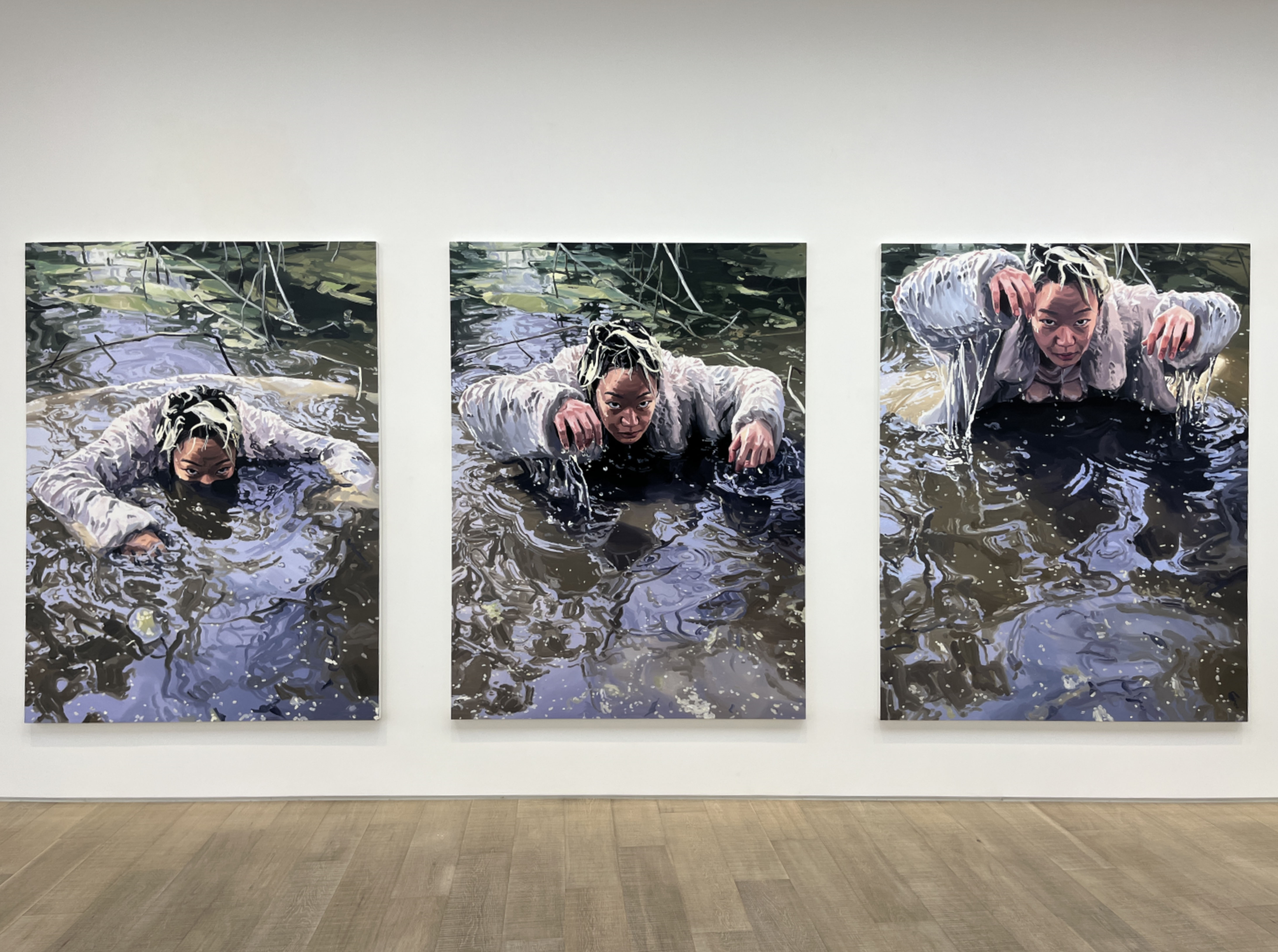
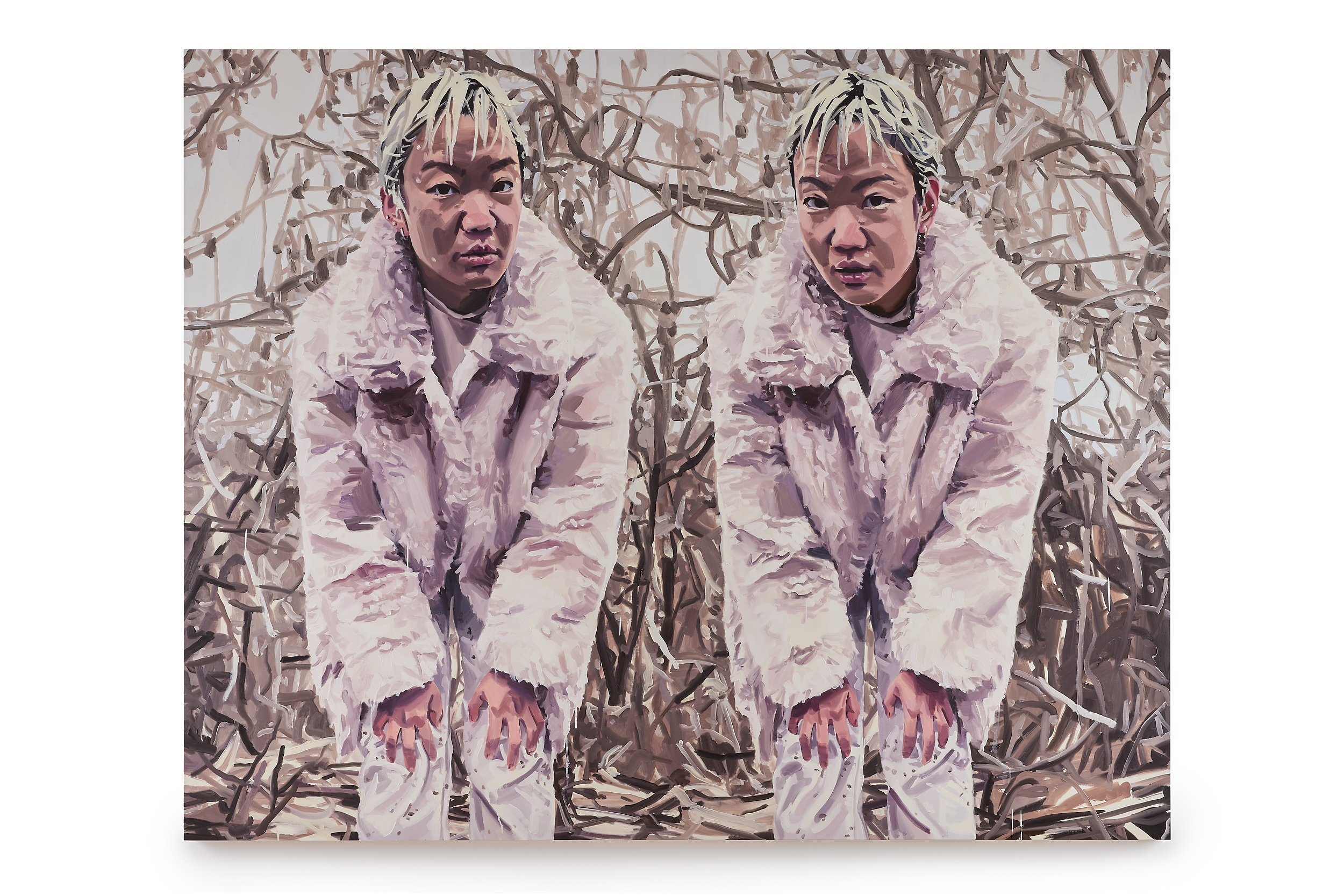
The repetition of the same individual across multiple canvases does not enhance
the personality or uniqueness of the depicted person; rather, it leads to a
diminishing effect. As mentioned earlier, Yoon chose individuals as the most
suitable subjects for painterly expression, not with the intention of
portraying someone's personality, philosophy, or profession.
However, there are undeniable
points of exception, especially when the portrayed individual possesses
uniqueness beyond being a means of expression. A noticeable distinction arises
when Yun depicts a male protagonist instead of a female, where the existing
context of the individual strongly influences the portrayal. For instance, the
male figure in the paintings of the 〈Studio〉(2021) series is the artist's
grandfather. Handling paintings in a room that appears to be a study, bending
and stretching his body in various ways, he cannot be simply viewed as an
ordinary elderly man. On the other hand, a central figure in the solo
exhibition 《B Hyeong B Yeom Gwi Yeom》(2022) is the artist Minseok Kim, with whom Yoon frequently
interacted at that time.1) They are specific individuals—grandfather and artist
Minseok Kim—and their actions or presence served as motifs for the paintings.
Consequently, the interpretation of the paintings naturally shifts."
Painting Direction
When Miryu Yoon focuses on
expressing painting through characters, what new aspects does she bring to the
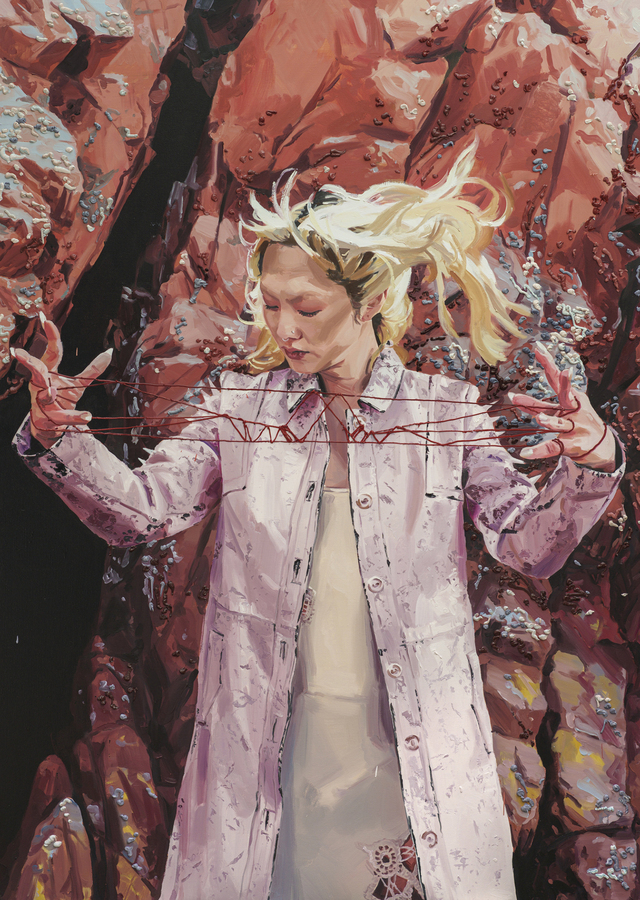
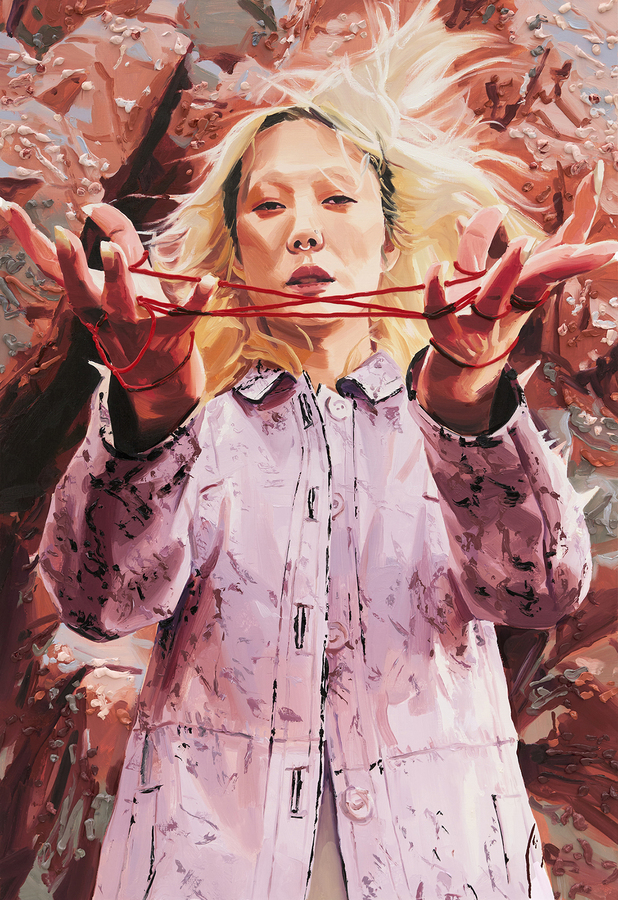
table? First and foremost, the artist directs attention to the attire of the
figures. Choosing Double Weave, referencing the dual weave of the judo uniform,
as the title of her solo exhibition, Yoon demonstrates a keen interest in the
texture, material, and appearance of clothing and shoes. Often, brand logos,
the material of boots, or the color of pants can disrupt or dominate the
balance of the picture plane. Nevertheless, the reason for consistently valuing
clothing seems to be closer to the manifestation of the painter's attitude,
pursuing painterly enjoyment, than a symbol to express the personality or
situation of the wearer. What is noteworthy is how the contemporary
fashionability of the clothing harmonizes the traditional elegance of
portraiture with conventional compositions and styles refreshingly.
On the other hand, Miryu Yoon's
paintings convey a sense of speed. Although most of her works are rendered
heavily on larger canvases, they often give the impression that the motion has
just come to a halt. The artist typically paints photographs she takes herself.
Upon examining her brushwork, you can observe that, instead of meticulously
detailing with a small brush, she often employs a relatively generous-sized
brush to layer multiple strokes or takes quick and short strokes. Particularly,
closely inspecting the expressions on the forehead, nose, and tip of the nose
of the figures, you may discern traces of the artist capturing impressions from
the subjects with minimal brushstrokes. While categorizing the swift
brushstrokes as a distinctive style unique to the artist may be challenging,
the resulting sense of speed in the images imparts an unsettling quality to the
figures, making them appear more precarious or imbued with a trembling
vitality.
Seeking new expressions in
painting today is perhaps one of the most challenging tasks. In this regard,
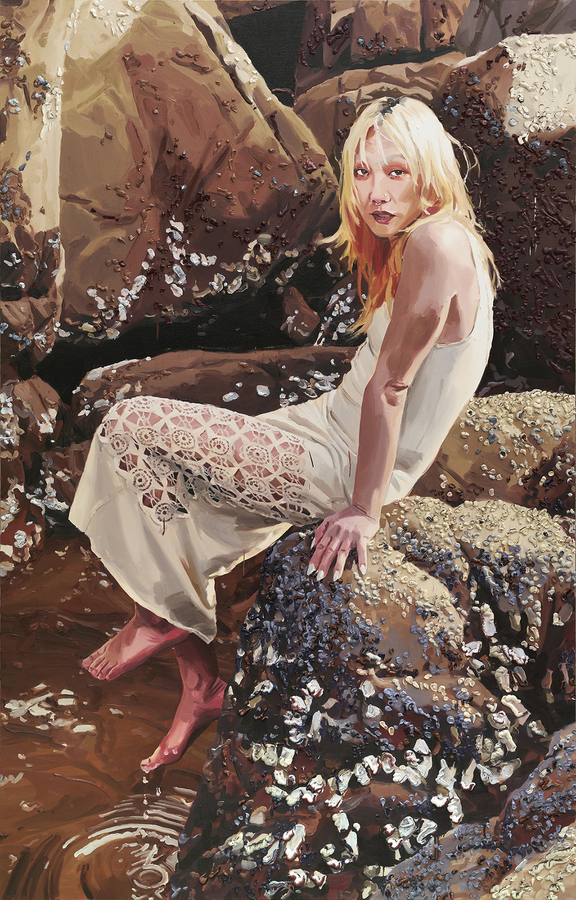
the artist is experimenting by incorporating the environment into figures. A
recent method she has been immersed in involves utilizing the changing light of
nature and various states of water. In her solo exhibition 《Pyromaniac》 in 2023, Yoon used the
snow-covered landscape of the nearby hill and the natural light that varied
with the seasons as the conditions for her work. Besides water and light, other
elements synergize well with the expressions she employs. For instance, the
works created during her brief stay in Ireland in 2020, shortly after her
graduate school graduation, demonstrated a shift in her artistic style when
confronted with unfamiliar sensory experiences. As she continues to concentrate
on the expression and form of painting, new conditions and attempts are likely
to become essential elements in enhancing the completeness of her artworks.
Miryu Yoon does not wait for an
image with inspiration for paintings to emerge; instead, she actively creates
it. The joy that the artist experiences in the act of painting and reproducing
scenes, along with the curiosity and intrigue of fascinating scenes transformed
into paintings, are conveyed to the viewers, compelling them to gaze at her
picture planes. In other words, she freely brings to life scenes she wants to
see, unbound by any set of methods or rules, and transforms them into states of
painting. Miryu Yoon's complex attitude, with a spontaneous and calculated
approach, can be likened to the characters she described in the artist's note
for the 《Pyromaniac》 exhibition:
a sorcerer leading someone into an illusion or a mysterious story, a stroller
leisurely wandering wherever the path leads, and a hunter pursuing a goal with
determination.2) You can likely discern the middle ground of the sorcerer,
hunter, and stroller—characters unlikely to meet—in both the figures Yoon
paints and at the tip of the brush she holds.