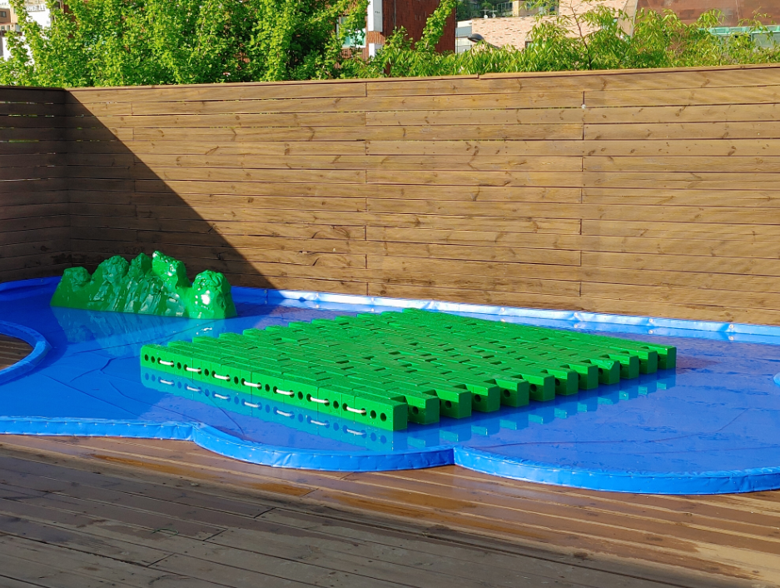
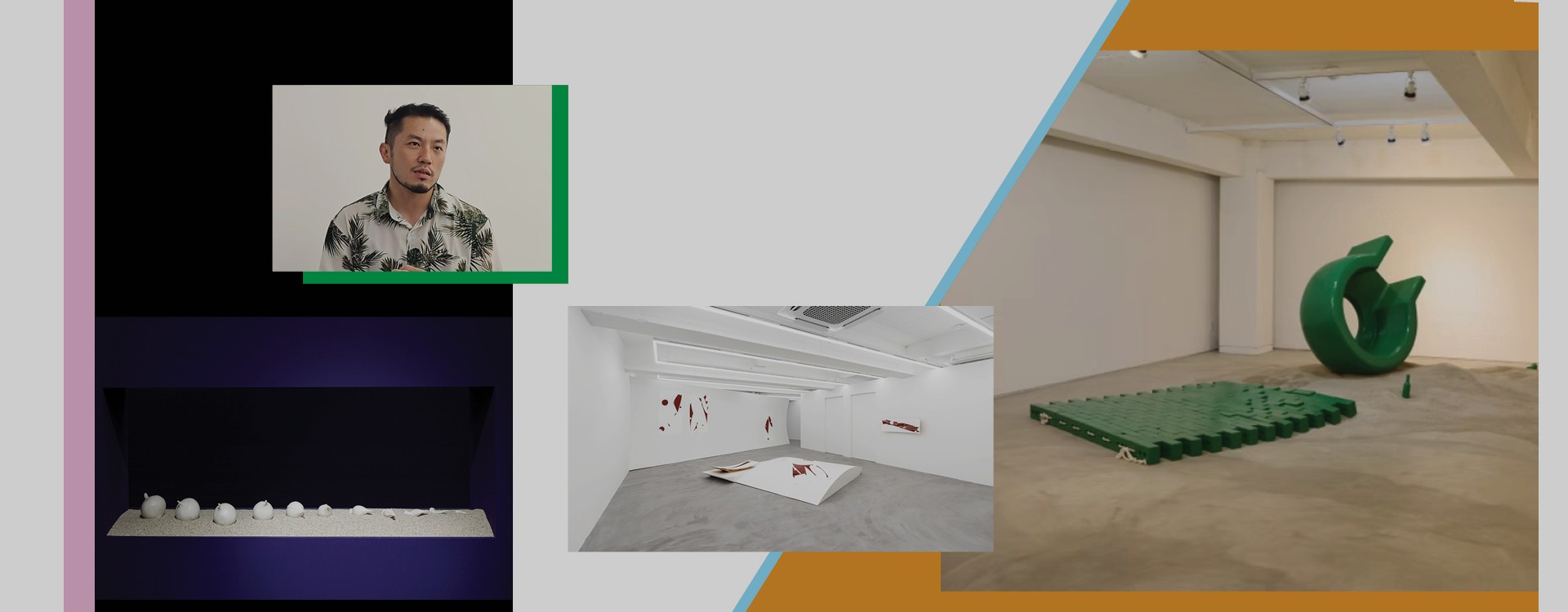
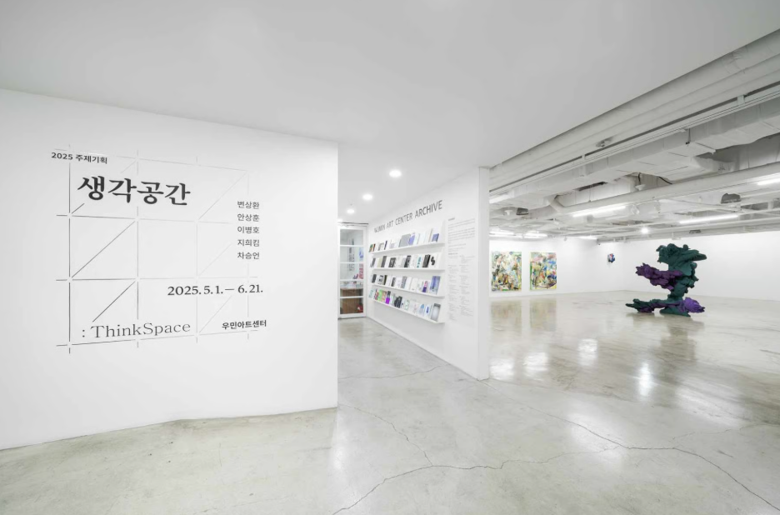
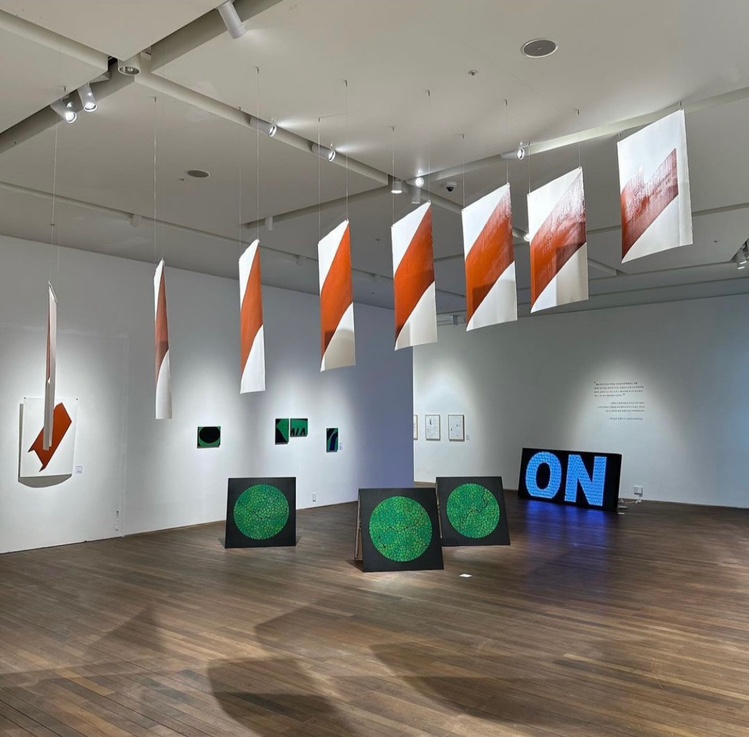
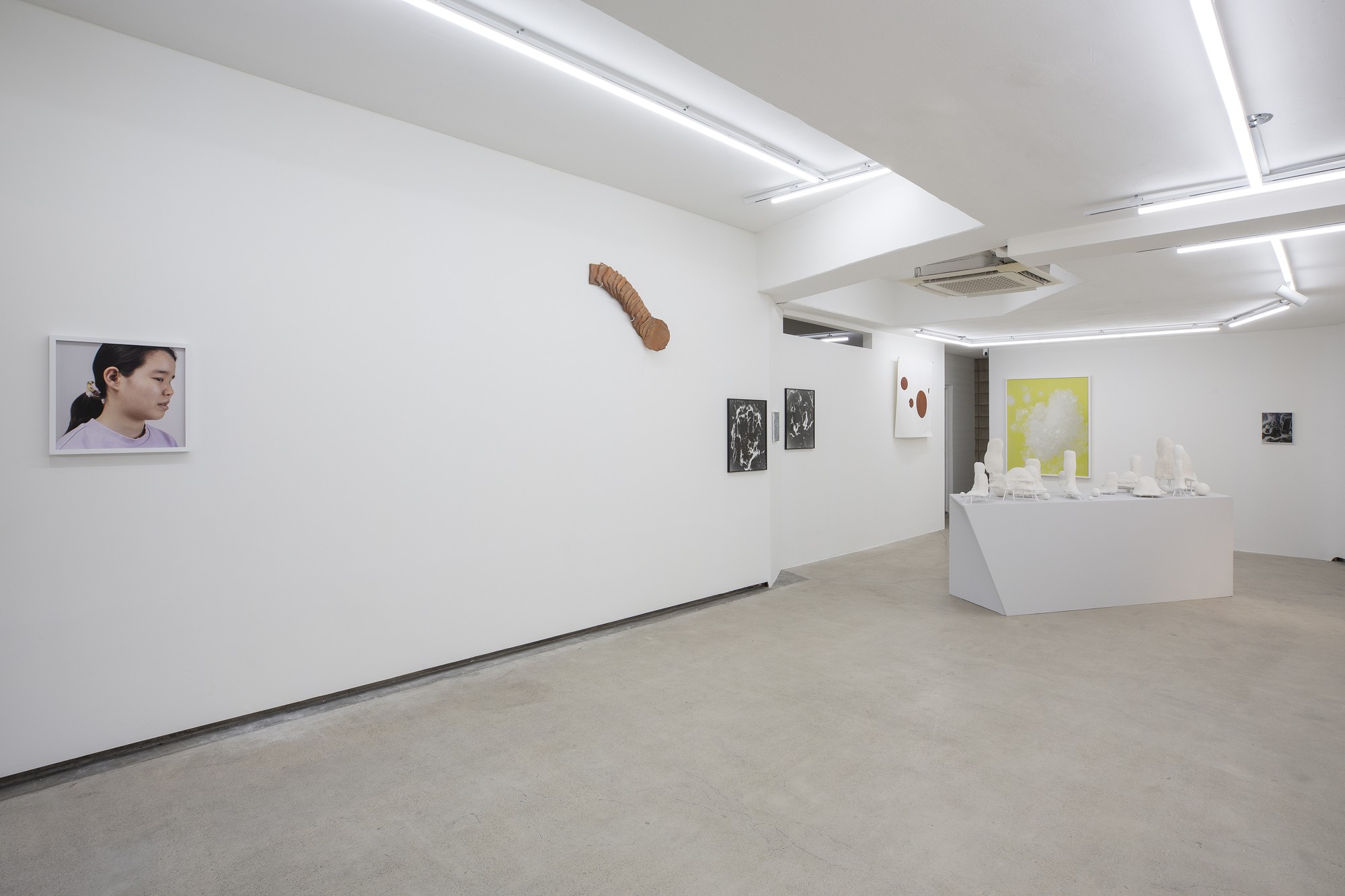
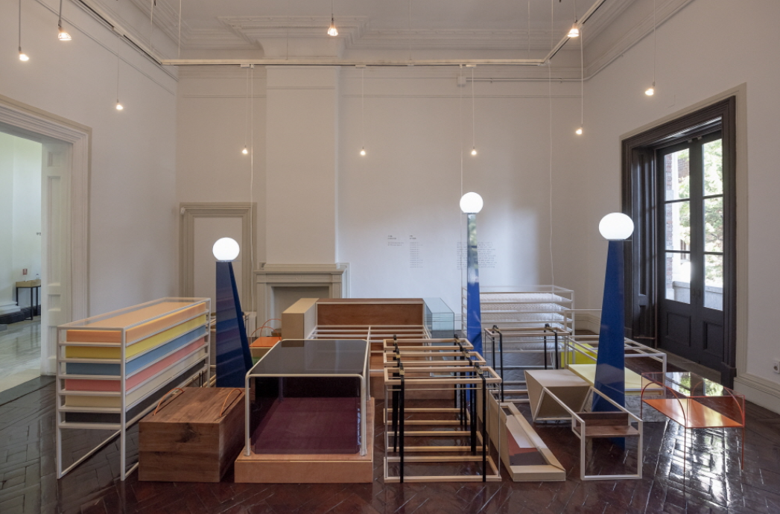
Installation view: left, 『Untitled』; right, 『Maxllife』 - K-ARTIST

Installation view: left, 『Untitled』; right, 『Maxllife』

2016
Floral foam, rooftop waterproofing paint
47 × 142 × 25 cm, 11 × 184 × 184.5 cm
About The Work

Byun Sanghwan explores contemporary urban landscapes through an analytical lens, drawing on his experience of accelerated time in the city of Seoul and translating his observations into sculptural works. In particular, he focuses on ordinary yet ambiguous scenes encountered within the urban environment, taking moments and objects that are easily overlooked in everyday life as points of departure for his practice.

Byun likens his working process to an act of “excavation,” in which forms already embedded within objects are unearthed, and has expanded this approach into three-dimensional forms. Much like an anthropologist studying the detailed records preserved in geological strata, he explores different corners of the city, collecting traces of seemingly insignificant landscapes and objects and breaking them down into smaller units. These collected elements are then reconstructed into new sculptural forms through poetic metaphor, paradox, and humor.

His practice also reveals an ongoing exploration of the conditions that distinguish and constitute different artistic forms. In sculpture, he examines weight, volume, and space; in painting, the material properties of the picture plane, canvas, and paint; and in printmaking, the processes of production and the multiplicity of images.

Alongside these formal inquiries, he considers the neutrality of the object and the themes of time and the body that run through these different forms. The questions that emerge at the boundaries between different forms serve as an important driving force behind his practice. Through this process, familiar objects and landscapes acquire new meanings within the realm of art, while everyday materials transformed into unfamiliar forms invite us to look anew at the city we inhabit and the lives lived within it.

Solo Exhibitions (Brief)

Byun has held solo exhibitions including 《Horizon, and the Curtain of Ellipses》 (Space So, Seoul, 2025), 《Penetrating Ball》 (NEW SPACE, Seoul, 2024), 《The Hand Is Quicker than the Eye》 (Space So, Seoul, 2022), and 《New, Twinkling Hairtail》 (SeMA Storage, Seoul, 2021).     

Group Exhibitions (Brief)

Byun has also participated in numerous group exhibitions, including 《ThinkSpace》 (Wumin Art Center, Cheongju, 2025), 《EDITION: Who Sets the NUMBER?》 (Space So, Seoul, 2024), 《The Journey Through Art Sociology Leads To Art Philosophy: Artists’ Anthology》 (Seoul National University Museum of Art, Seoul, 2023), 《Skin and Skeleton》 (Primary Practice, Seoul, 2023), 《Prints, Printmaking, Graphic Art》 (MMCA, Gwacheon, 2020), and 《萬Lab》 (Nam-Seoul Museum of Art, Seoul, 2018).

Residencies (Selected)

Byun Sanghwan participated in the Seoul Art Space Geumcheon Residency Program (2019) and the Kuandu Museum of Fine Arts Residency Program in Taipei (2019).

Collections (Selected)

Byun’s works are held in the collections of institutions, including the MMCA Art Bank.

Works of Art

Sensing Contemporary Urban Landscapes and Everyday Life

Originality & Identity

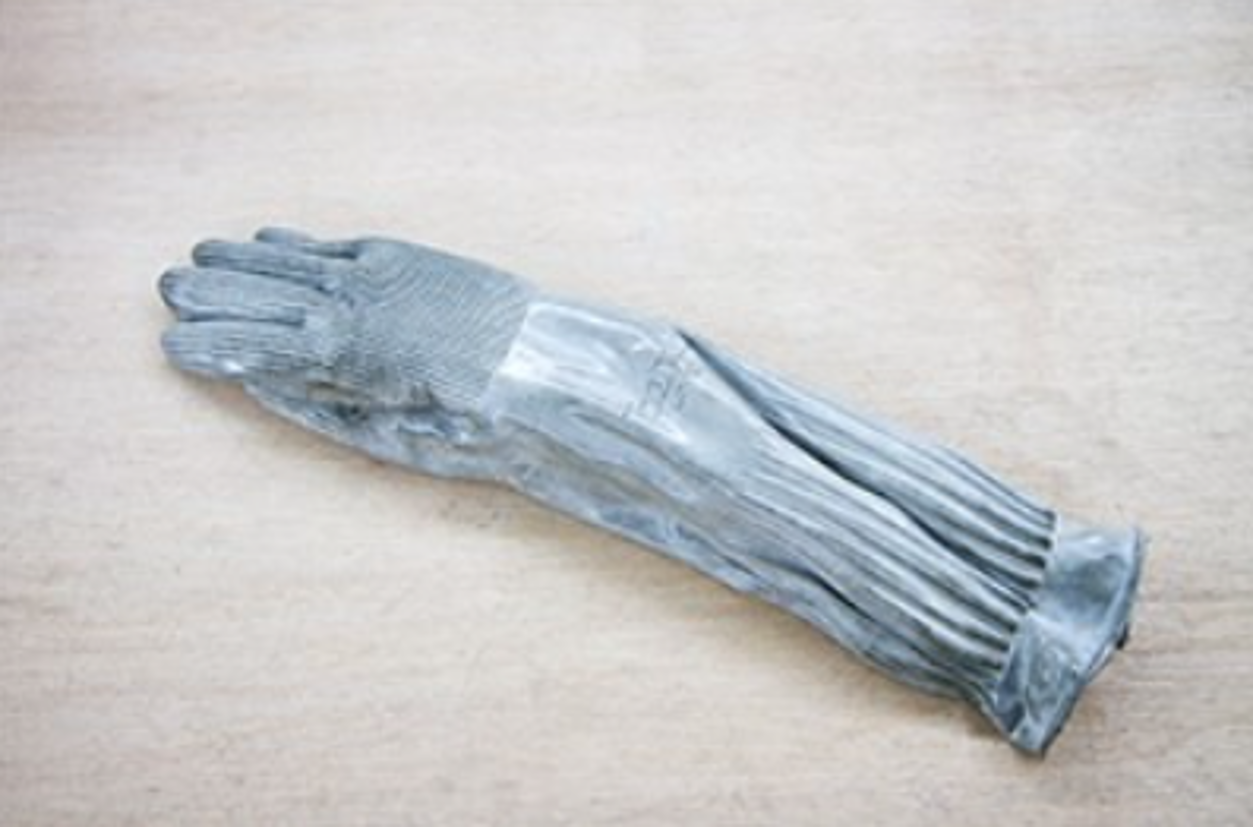
Byun Sanghwan’s practice invites a renewed look at the objects and landscapes that are easily overlooked in the city. His early work focused particularly on objects left behind by the everyday culture of the recent past. In Crocodile(2011), he solidified soft and easily deformable objects such as rubber gloves in cement, while elsewhere preserving the surfaces of old and discarded objects through frottage.

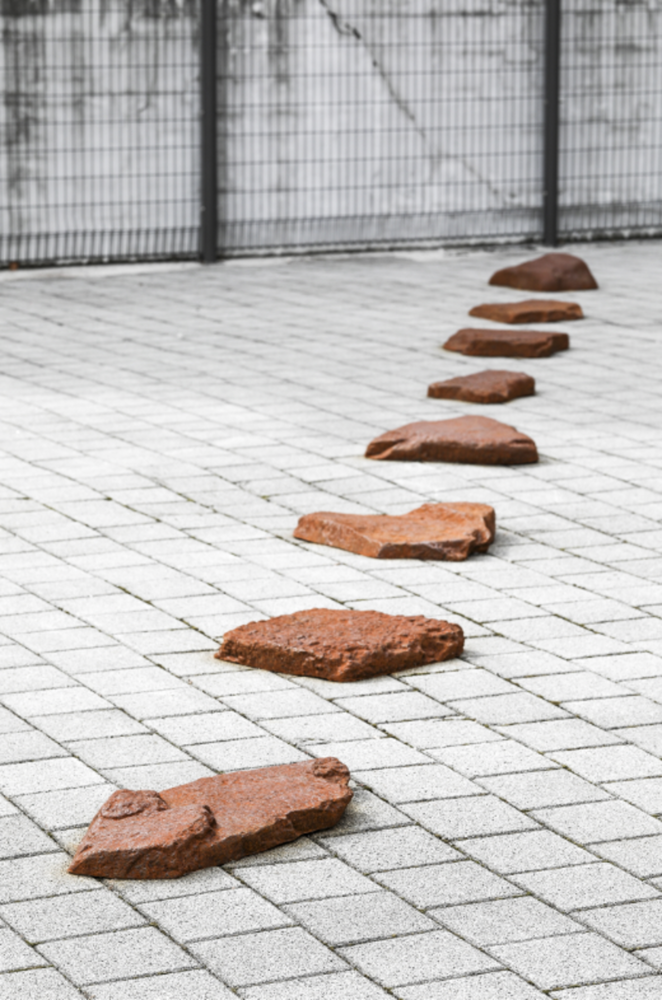
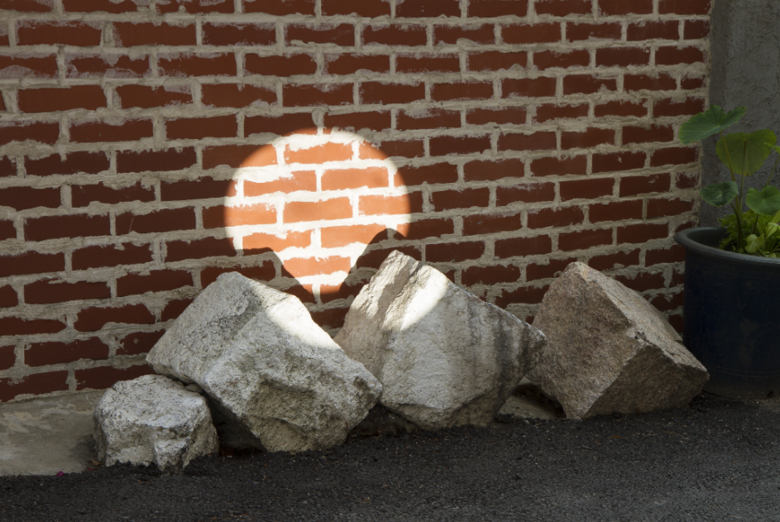
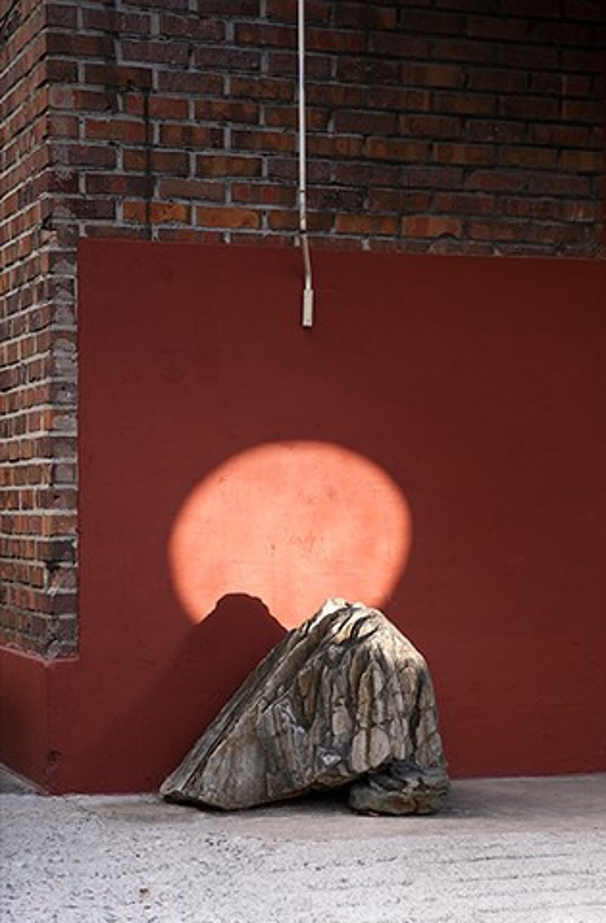
These approaches sought to fix traces of everyday life—things otherwise vulnerable to disappearance—into durable matter and images. Later, in the 'Stone'(2015) series, he approached abandoned stones in the alleys of Changsin-dong as if they were observers of history, illuminating them with natural light reflected by mirrors and photographing them.

He then used their actual locations as titles, as in Daesagwan-ro 30ga-gil 36(2015). At this stage, the city in Byun’s work is composed less of monumental skylines than of small things that have survived from another era into the present: mother-of-pearl furniture, rubber gloves, and stones lying in alleyways. Poised between familiarity and strangeness, these objects become clues to the everyday history and temporality of Korean cities beyond the realm of personal memory.
 
Around 《Pure, Solid Courage》(Space Willing N Dealing, 2016), his interest expanded from the memories carried by objects to the tensions between material properties and function. He covered water-absorbing floral foam with green waterproof paint and took as the exhibition’s point of departure his misreading of the Korean word yonggi—understanding “container” (容器) as “courage” (勇氣) in a phrase printed on a plastic washbasin.

Sculptures such as Courage(2016) and Maxlife(2016), drawn from familiar forms and phrases of everyday life, appear heavy while remaining light, and combine contradictory properties such as absorbing water while simultaneously repelling it. This loose narrative of flood, drifting, and landing continued in the subsequent 《Cool Peace, Calm Landing》(Studio MRGG, 2016) and related exhibitions.

From this point onward, Byun’s work moved beyond simply preserving disappearing things and began to question the conditions of objects and sculpture themselves by deliberately misaligning familiar functions and materials.
 
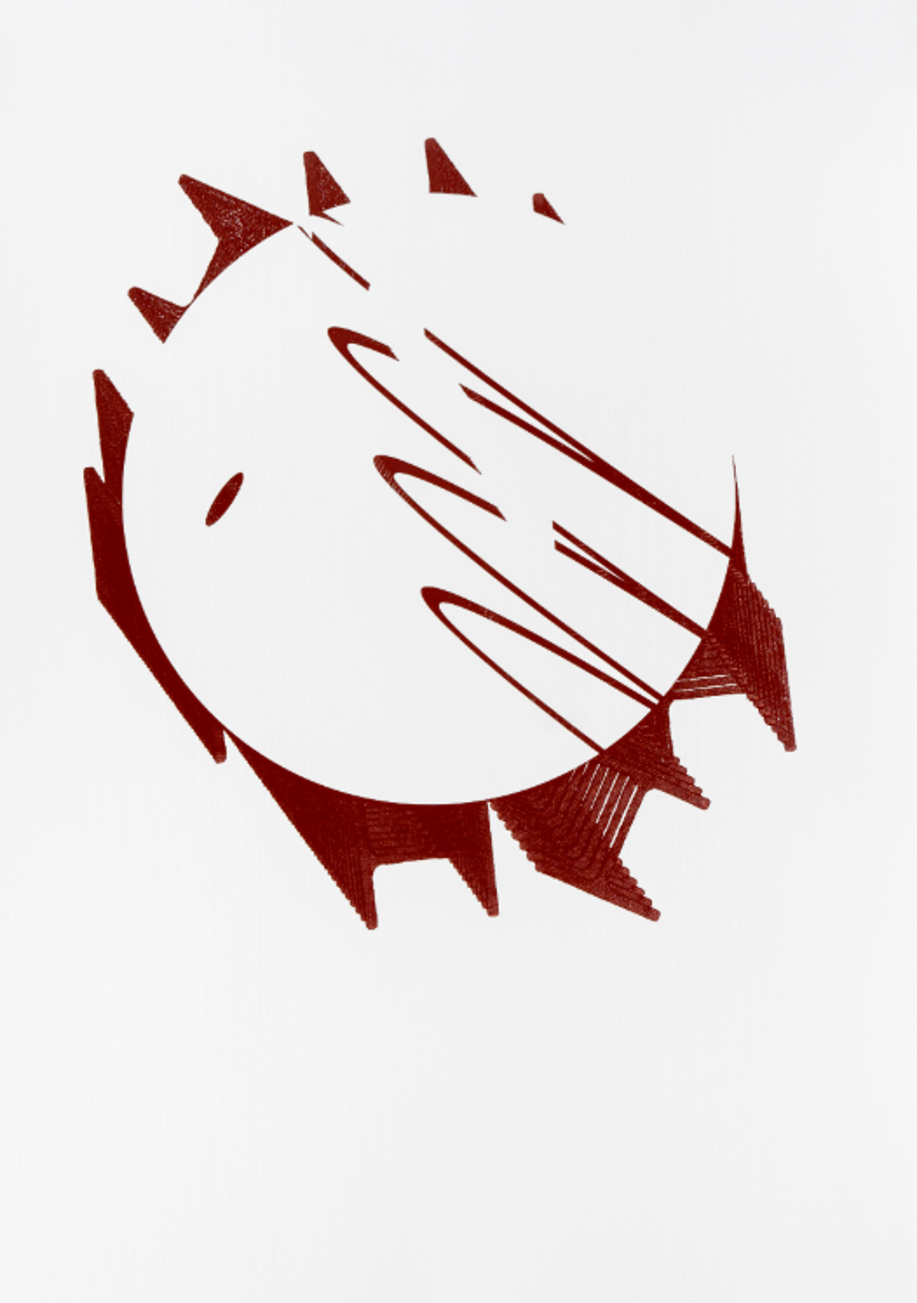
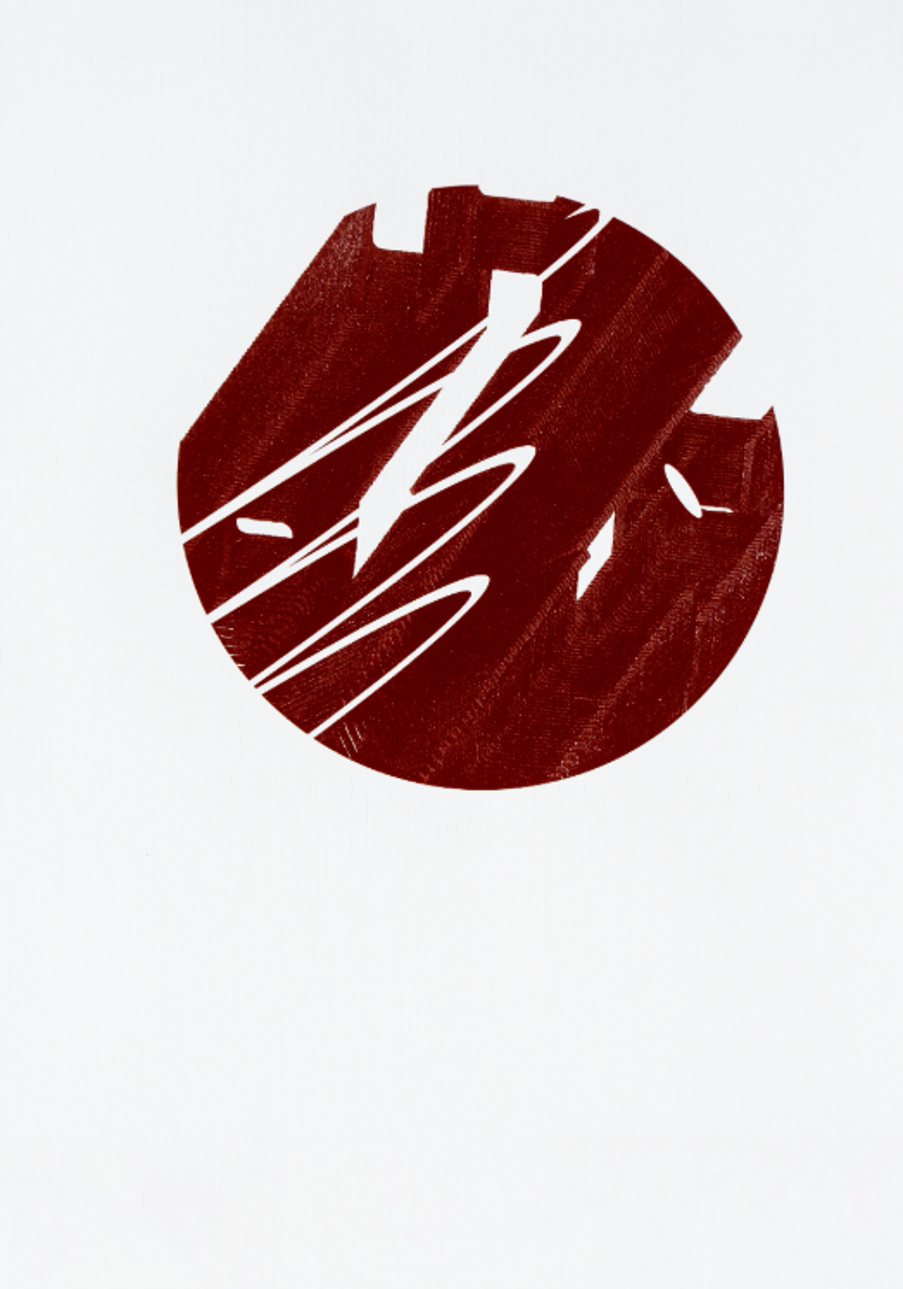
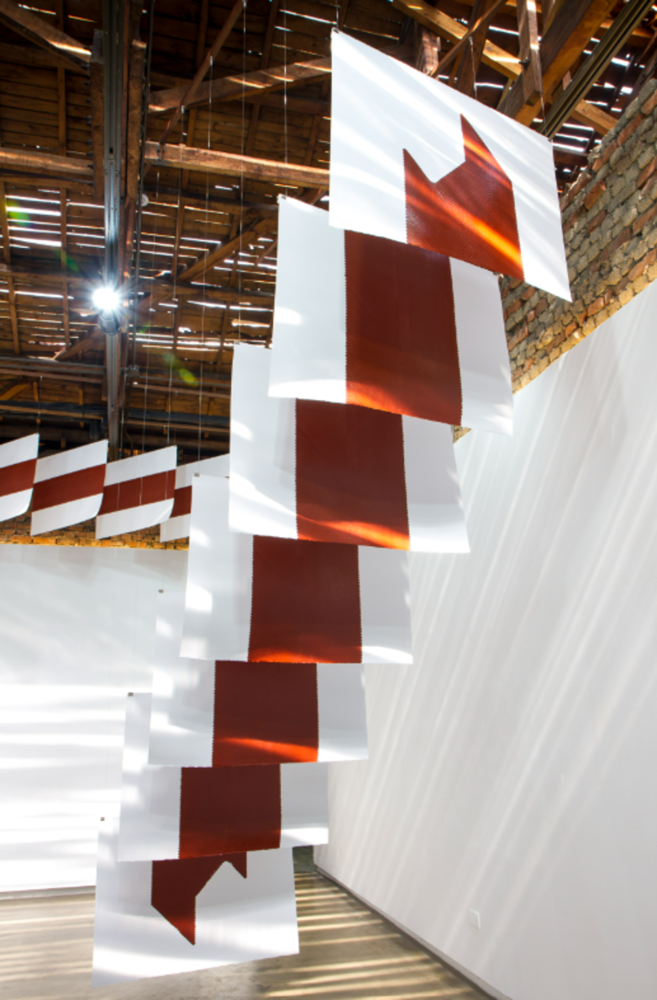
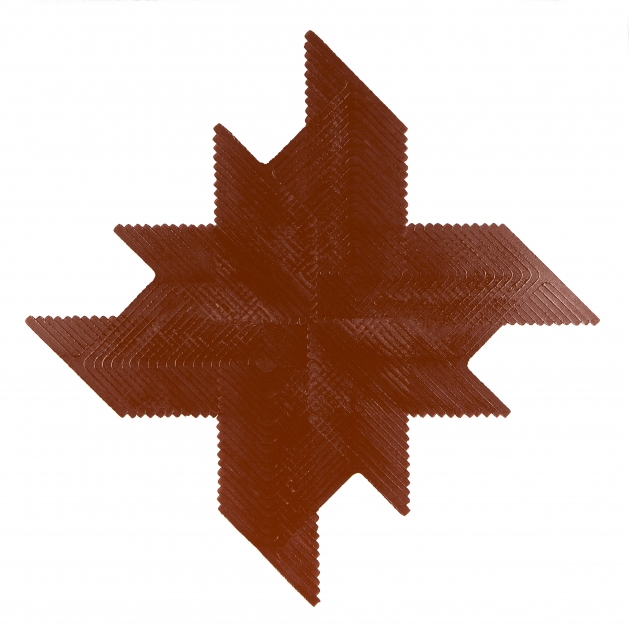
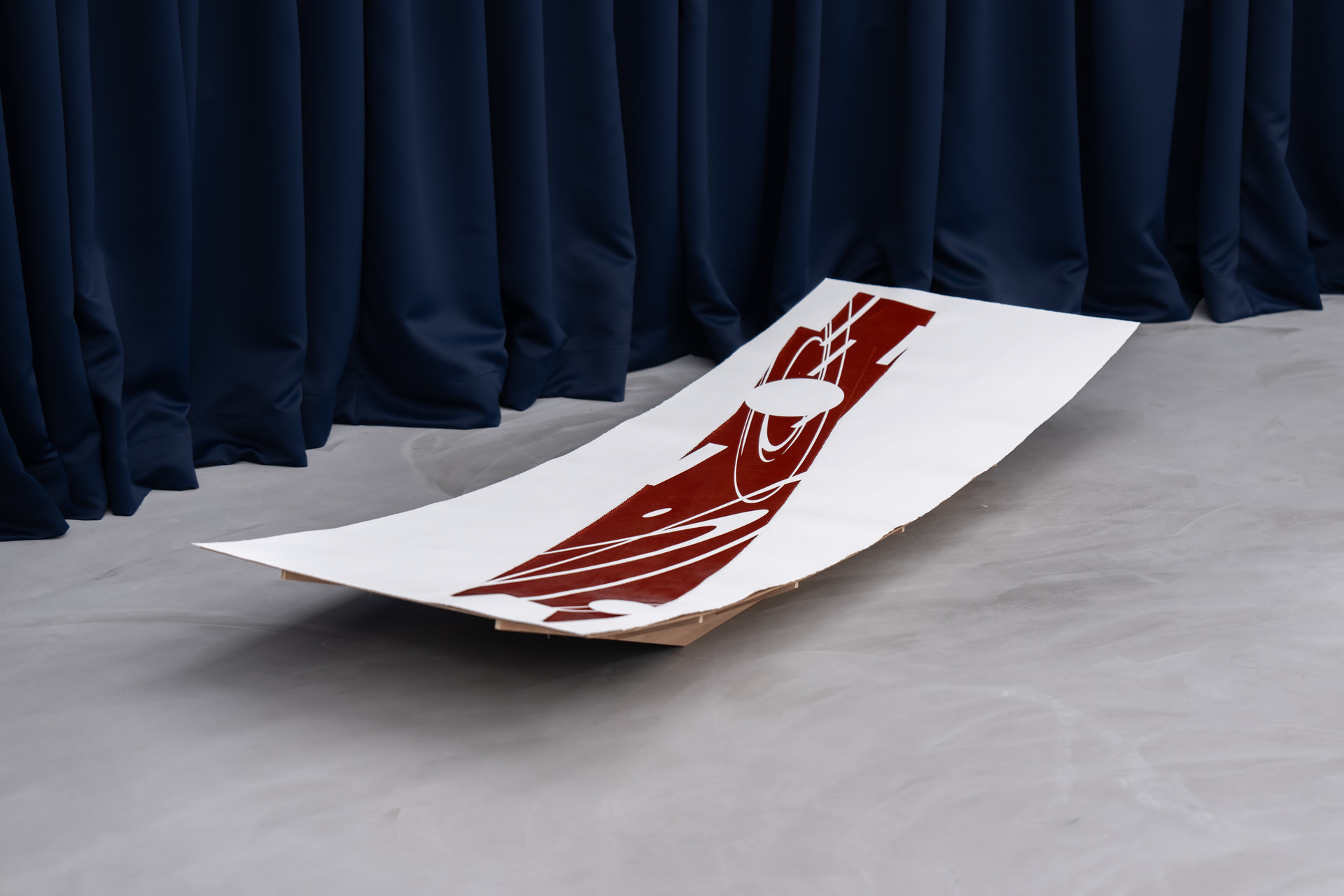
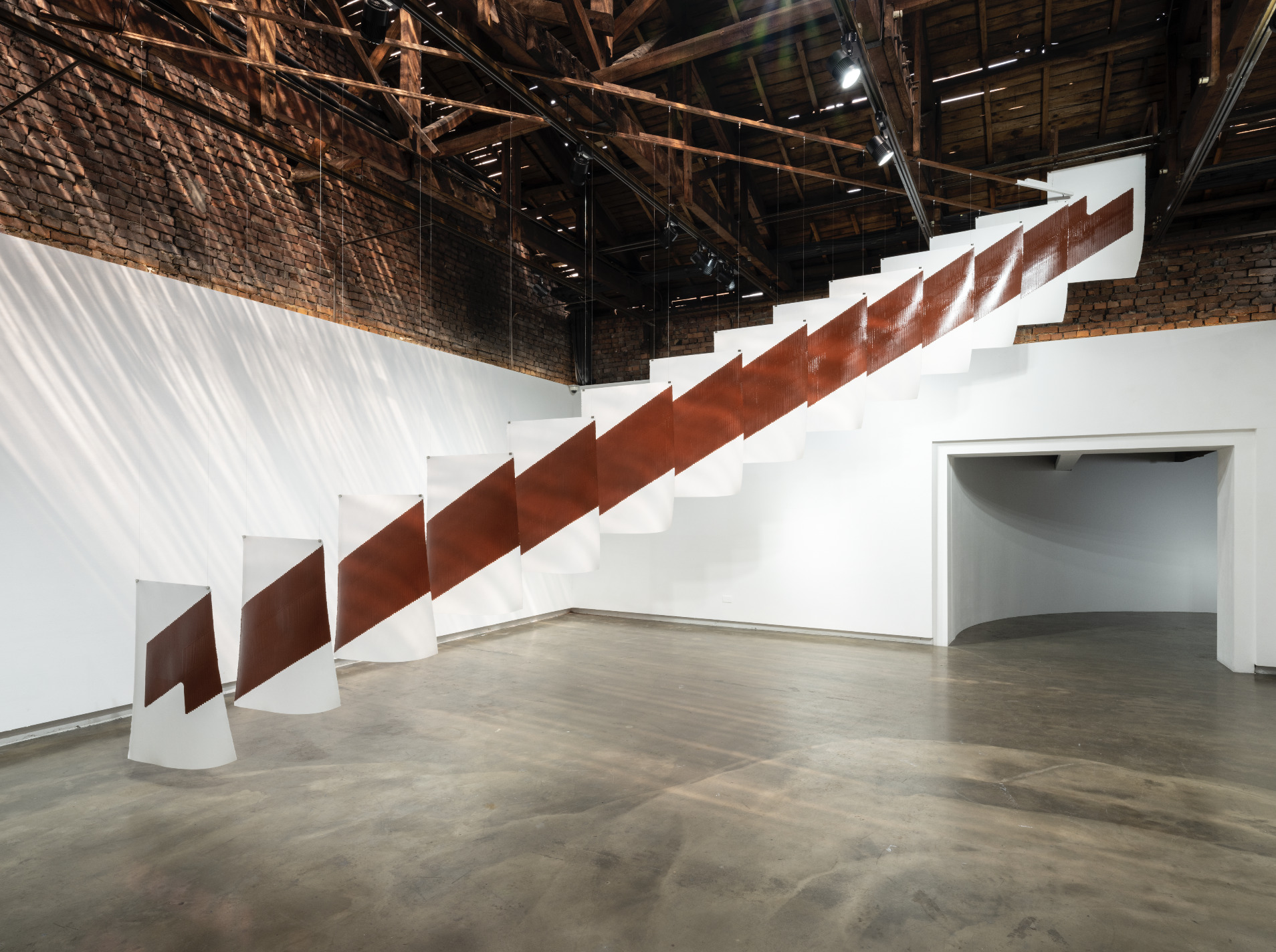
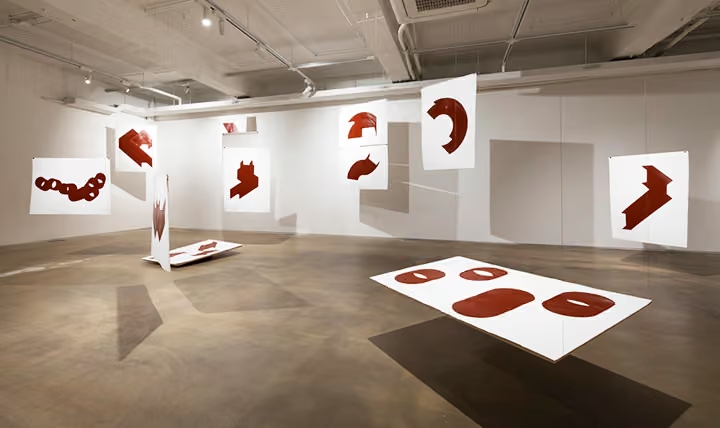
This concern shifted in the 'Live Rust'(2018–) series toward a direct connection between the structure of the city and the artist’s body. Initiated in 《gestures, exaltation, a short life》(Space So, 2018), the series reassigns industrial materials such as H-beams and I-beams, together with reddish-brown anti-rust paint, as printing plates and pigment.

Materials that physically support buildings become tools for generating images, while paint designed to prevent rust paradoxically produces the appearance of “rust.” Through this inversion, the material conditions of the city overlap with the act of making. The artist’s gaze, once directed toward observing the city, shifts here toward the bodily experience of lifting and pressing the very materials that constitute it.

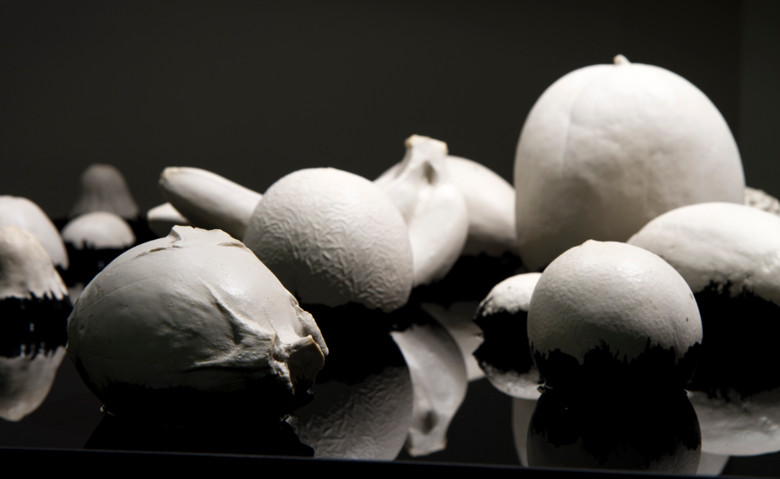
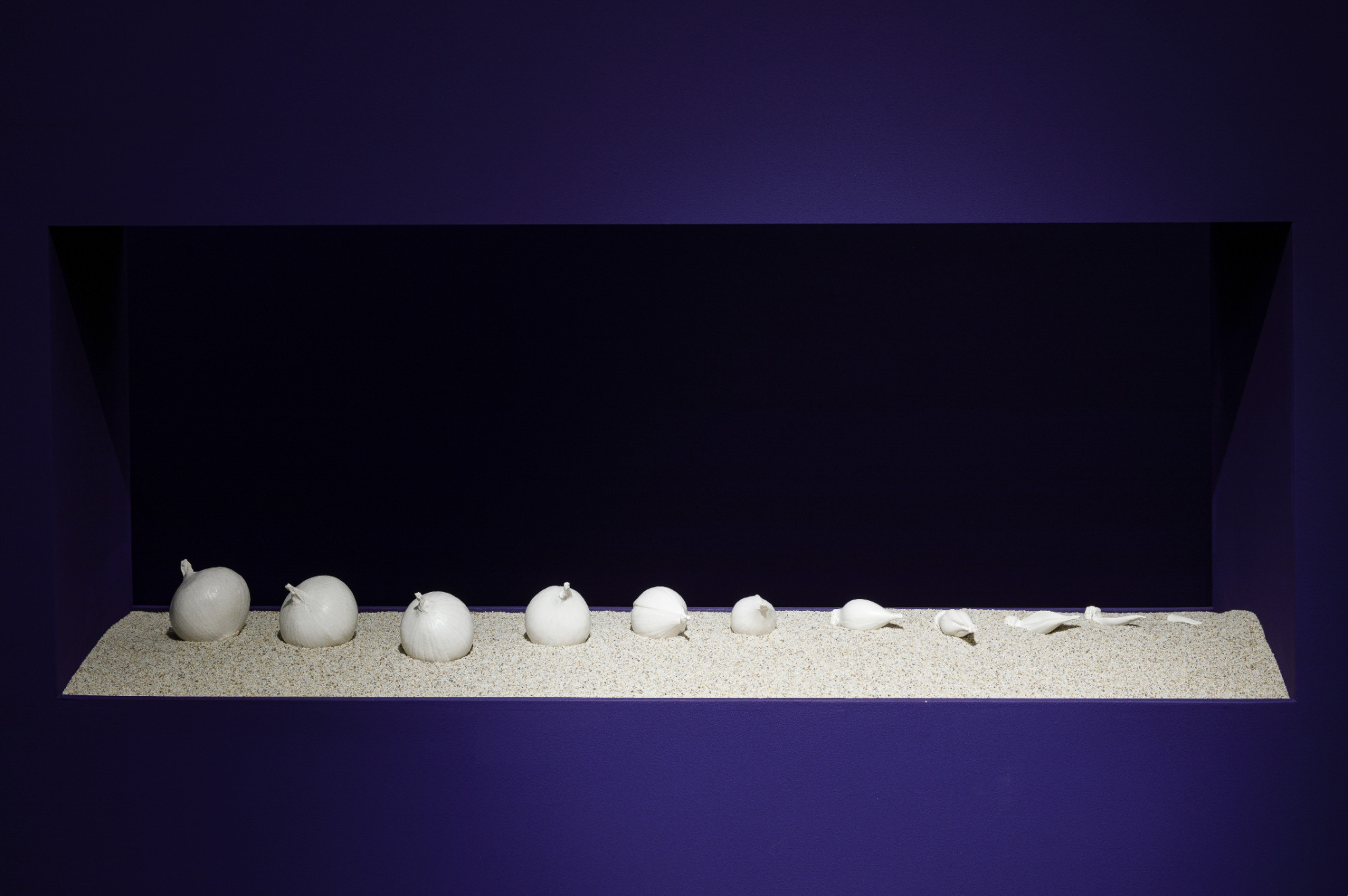
In 《New, Twinkling Hairtail》(SeMA Storage, 2021), the previously planar 'Live Rust' works expanded across three gallery rooms as a spatial installation, while 《The Hand Is Quicker than the Eye》(Space So, 2022) returned to questions of time and matter through plaster and metal casts of peppers, onions, and other natural forms that would otherwise disappear with the passing of seasons.
 
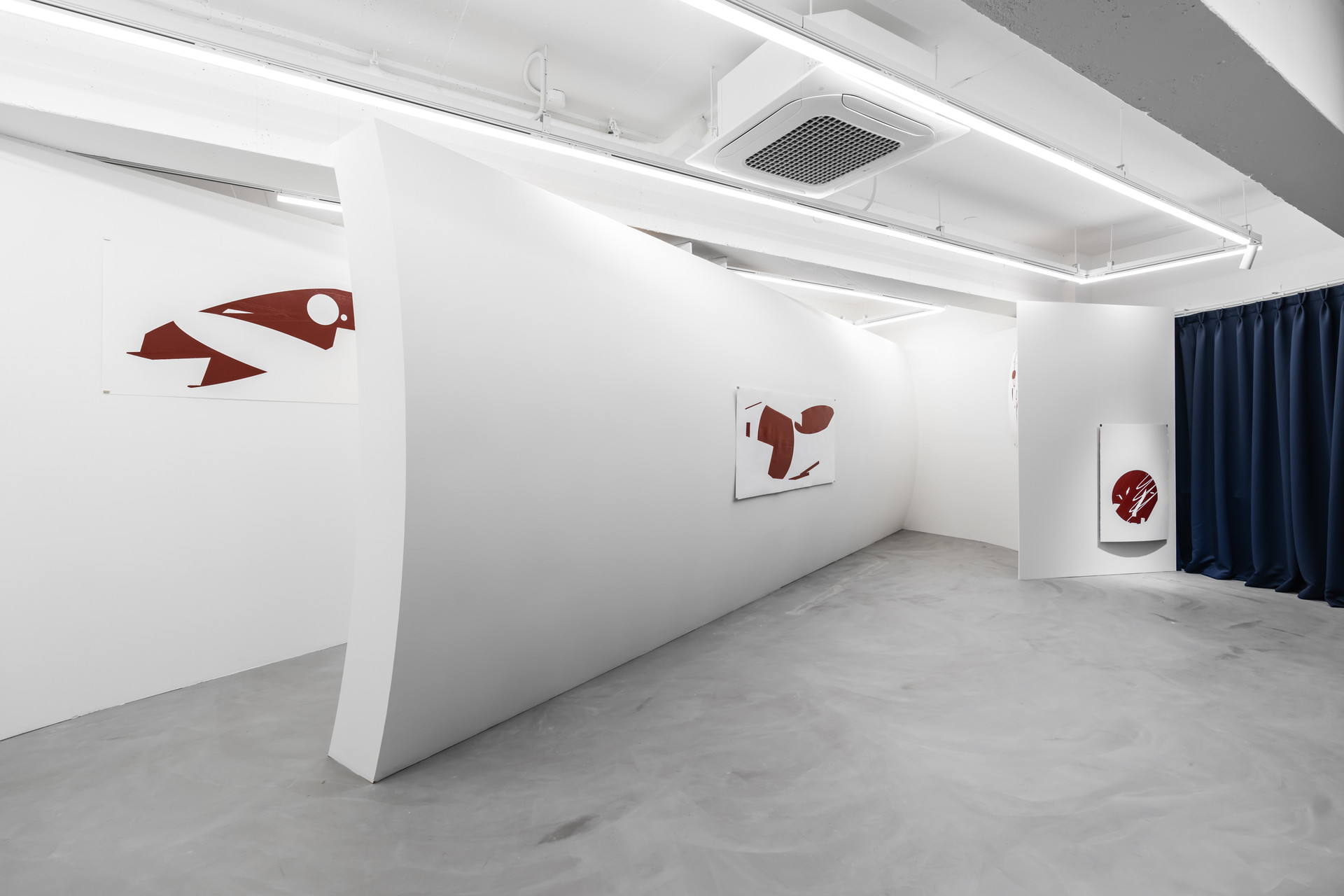
The recent 'Live Rust-Odyssey'(2025) series, presented in 《Horizon, and the Curtain of Ellipses》(Space So, 2025), extends this inquiry from the city toward an imagined space-time beyond the Earth. The artist posits two worlds resonating across a wormhole and constructs pairs of α and β images derived from the same trajectory, allowing a single act to unfold into different planes and voids.

Whereas the early works traced time through objects surviving from the recent past, the recent works begin from the trajectory left by the body upon matter and imagine time and space at a broader scale. Yet his underlying attitude remains consistent: beginning with overlooked urban scenes, dismantling and transforming them, and returning them in new forms.

In Byun’s practice, “landscape” ultimately refers not only to a visible scene, but to a broader environment encompassing accumulated time, the body that moves matter, the materials that constitute the city, and the relationships among them.

Style & Contents

Byun Sanghwan has moved across sculpture, photography, printmaking, and installation while experimenting with the physical conditions that constitute each medium. In his early work, he cast soft rubber gloves and food in cement, setting organic forms against heavy materials, while in the 'Stone' series he illuminated and photographed actual stones rather than moving or carving them.

Rather than simply reproducing an object, he examines which of its qualities—weight, texture, location, or duration—can be transferred into another medium. In this sense, “excavation” in his practice refers not only to discovering subject matter, but also to a method of drawing out latent formal possibilities from within an object.
 
In the 'Green'(2015–) series, this experimentation shifted toward the functions of materials themselves. By combining the lightness and absorbency of floral foam with the color and waterproofing function of rooftop urethane paint, he created a discrepancy between sculptures that appear solid and heavy and their actual material properties.

As in 《Pure, Solid Courage》, where sand was spread across the gallery floor and green objects and a raft were arranged to create an encompassing scene, Byun treated not only individual sculptures but also the surrounding environment as part of the work. The green used here was not an abstract chromatic choice, but the color of a functional coating commonly found on Korean rooftops. His sculpture therefore departs from conventional sculptural materials while actively engaging long-standing sculptural questions of volume, mass, surface, and spatial arrangement.
 
In 'Live Rust', the boundaries between sculpture, printmaking, and performance become increasingly blurred. Byun coats structural steel weighing around 20 kilograms with anti-rust paint, lifts it without the aid of a conventional press, and stamps it directly onto paper, repeatedly moving a combined weight of nearly 40 kilograms when the pressing bar is included.

Because he repeats the process roughly one hundred times for a single work, shifting the coordinates slightly with each impression, the geometric patterns on the surface are not predetermined images but records produced by weight, gravity, and repetitive bodily movement. In Live Rust(2019), the volume of structural steel is transformed into flat geometric form, yet the sculptor’s body and the material’s weight remain strongly embedded in the result.

By expanding these planes throughout the exhibition space in 《New, Twinkling Hairtail》, he further reframed printmaking as a spatial structure through which viewers physically move, rather than as an image simply hung on a wall.
 
During the 2020s, this sustained formal inquiry has continued alongside an ongoing sculptural practice. In 《The Hand Is Quicker than the Eye》, natural objects and foodstuffs were cast in plaster and metal, stripping away their original colors and scents to leave only mass and surface. In Equivalent Exchange_Isolated and Helpless, Byun molded inverted icicles formed near outdoor air-conditioning units in winter and mixed the melted water itself into plaster, incorporating the material substance of the original object into its new form.

More recently, the 'Live Rust-Odyssey' series addresses the multiplicity of printmaking in a different way through α and β images that split from the same printing process. In 《Horizon, and the Curtain of Ellipses》, curved structures fabricated by the artist and the layered exhibition space itself also function as part of the work. The mass of sculpture, the pressure and repetition of printmaking, the surface of painting, and the spatiality of installation intersect across his practice, yet all ultimately converge in the process of handling matter through the body and leaving traces of time.

Topography & Continuity

What distinguishes Byun Sanghwan’s practice is not simply his incorporation of everyday objects into art, but the way he transforms their original functions into new principles of production. Waterproof paint is not merely a found color but comes into conflict with the absorbency of floral foam; structural steel shifts from an architectural material that supports the city into an enormous piece of printing type; and anti-rust paint abandons its protective function to become pigment on a surface.

In this way, the social and functional contexts of objects are never separated from the formal questions of sculpture. Compared with many practices that employ industrial materials or appropriated everyday objects, Byun’s work is distinctive in allowing the functions and weight of those materials to determine the actual making process itself. As a result, even when the finished works appear geometric and refined, they retain a bodily process that approaches industrial labor.
 
The trajectory of his practice can therefore be understood less through changes in subject matter than through the development of this method of transformation. Early works preserved disappearing objects through cement casting and frottage, while later works recorded the time of place through urban stones and their addresses.

In the 'Green' series, contradictory material properties became the source of sculptural humor; in 'Live Rust', the weight of industrial materials and the artist’s labor became the very mechanism by which images were generated. Through 《New, Twinkling Hairtail》, printmaking expanded once again into sculptural and installation-based space, while in the recent 'Live Rust-Odyssey' series, images derived from a single physical act have become structures for imagining multiple times and spaces.

Through this development, Byun has expanded from an artist concerned with “objects found in the city” into one who persistently tests how objects, bodies, time, and space combine to produce form.
 
Another lasting characteristic of his work is the simultaneous presence of light humor and material heaviness. The linguistic misunderstanding surrounding “yonggi,” the floral-foam raft, rooftop waterproof paint, and the transformation of structural steel into giant printing type all begin with minor mistakes or discoveries in everyday life, yet their actual production demands considerable physical labor and technical adjustment.

This contrast allows Byun to address the city and industrial society without making the work overly solemn, while still retaining a strong awareness of the materials and labor that constitute everyday life. Even as his recent work introduces the imagination of outer space and wormholes, its point of departure remains highly concrete: steel, paint, gravity, and the body. Thus, even as the scale of the work expands from the city toward the cosmos, its underlying sensibility remains grounded in a world that can be lifted, pressed, and touched by hand.
 
Byun has participated in exhibitions at major Korean institutions including the National Museum of Modern and Contemporary Art, the Nam-Seoul Museum of Art, and the Seoul National University Museum of Art, and took part in residency programs at Seoul Art Space Geumcheon and the Kuandu Museum of Fine Arts in Taipei in 2019. His work is also held in the collection of the MMCA Art Bank.

Considering how his practice has developed from objects associated with the recent Korean past toward industrial materials, urban structures, bodily performance, and increasingly expansive imaginations of space-time, the potential for further development appears to lie less in the discovery of entirely new materials than in his ability to make familiar worlds operate according to different physical rules.

Because this approach can hold together both locally specific sensibilities and more universal experiences of matter, labor, and environment, his practice already possesses a structure that can be rearticulated across different cities and cultural contexts.

Works of Art

Sensing Contemporary Urban Landscapes and Everyday Life

Articles

Exhibitions

Activities