When we gather together, it's one pyeong - K-ARTIST

When we gather together, it's one pyeong

2024
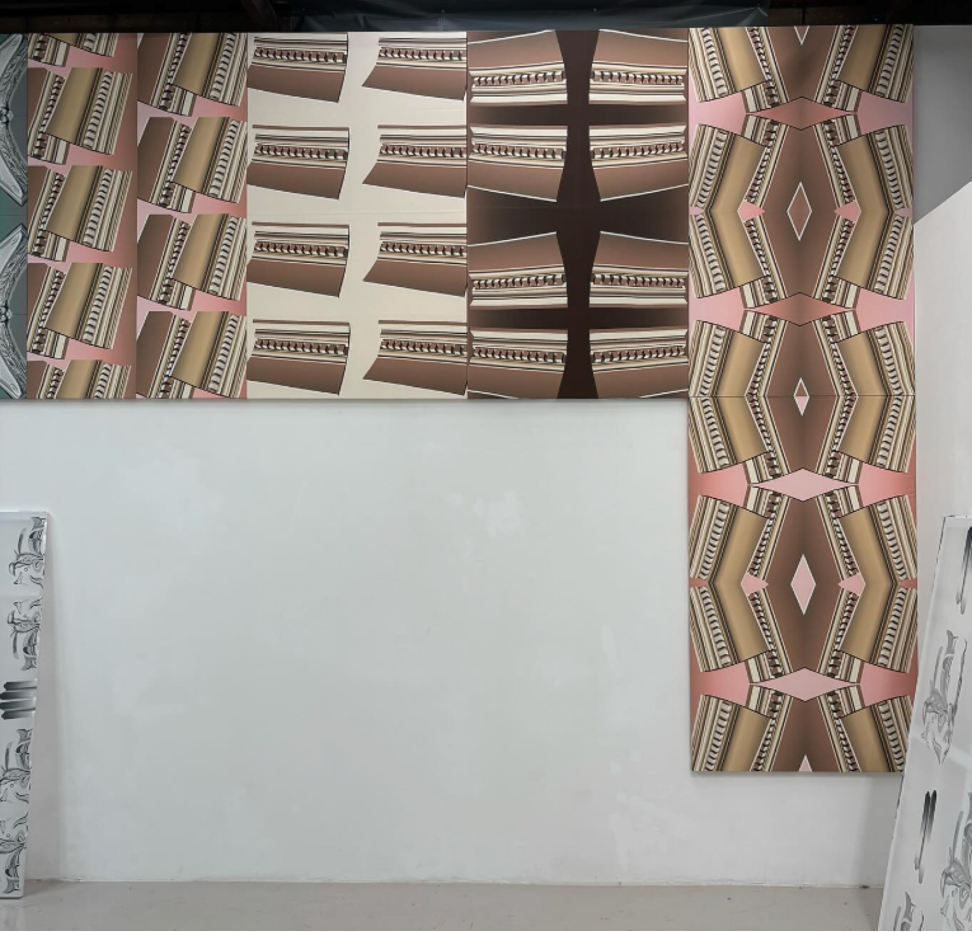
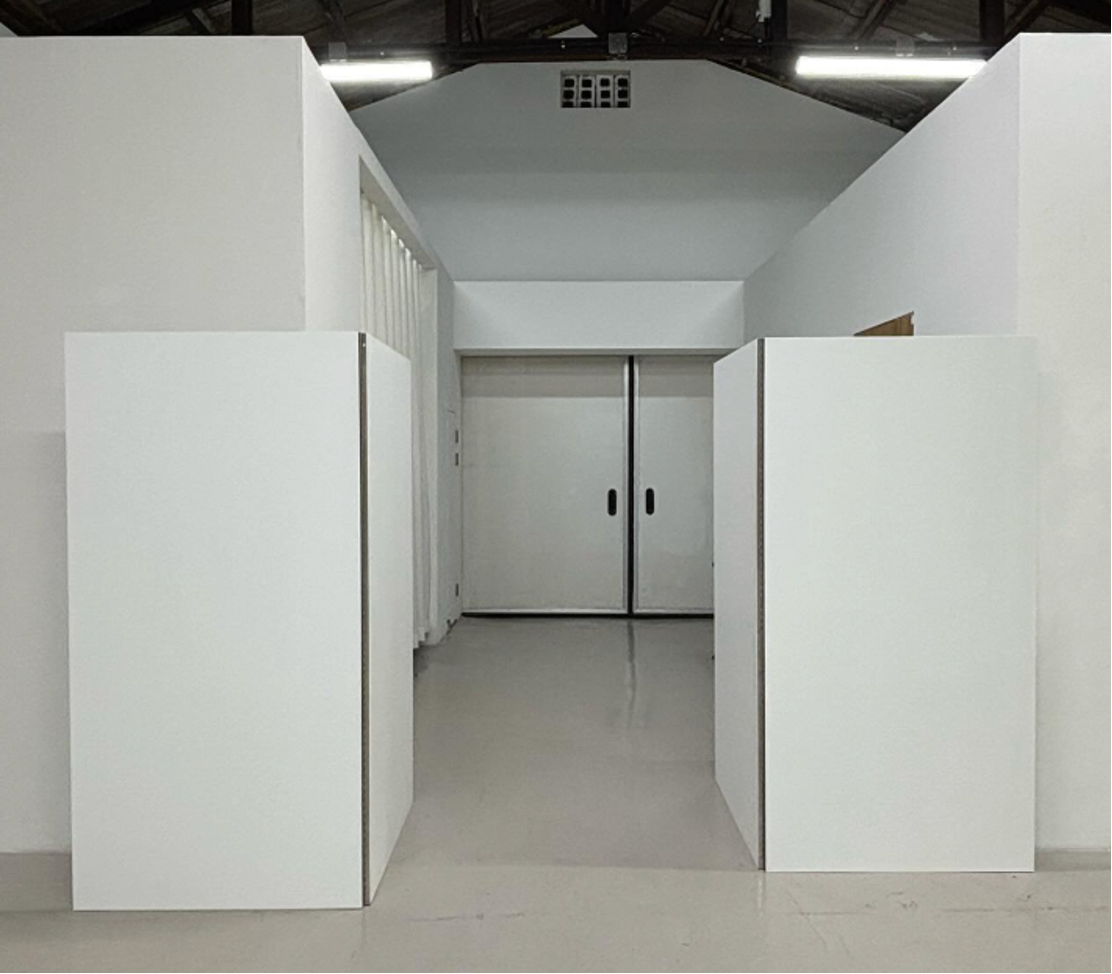
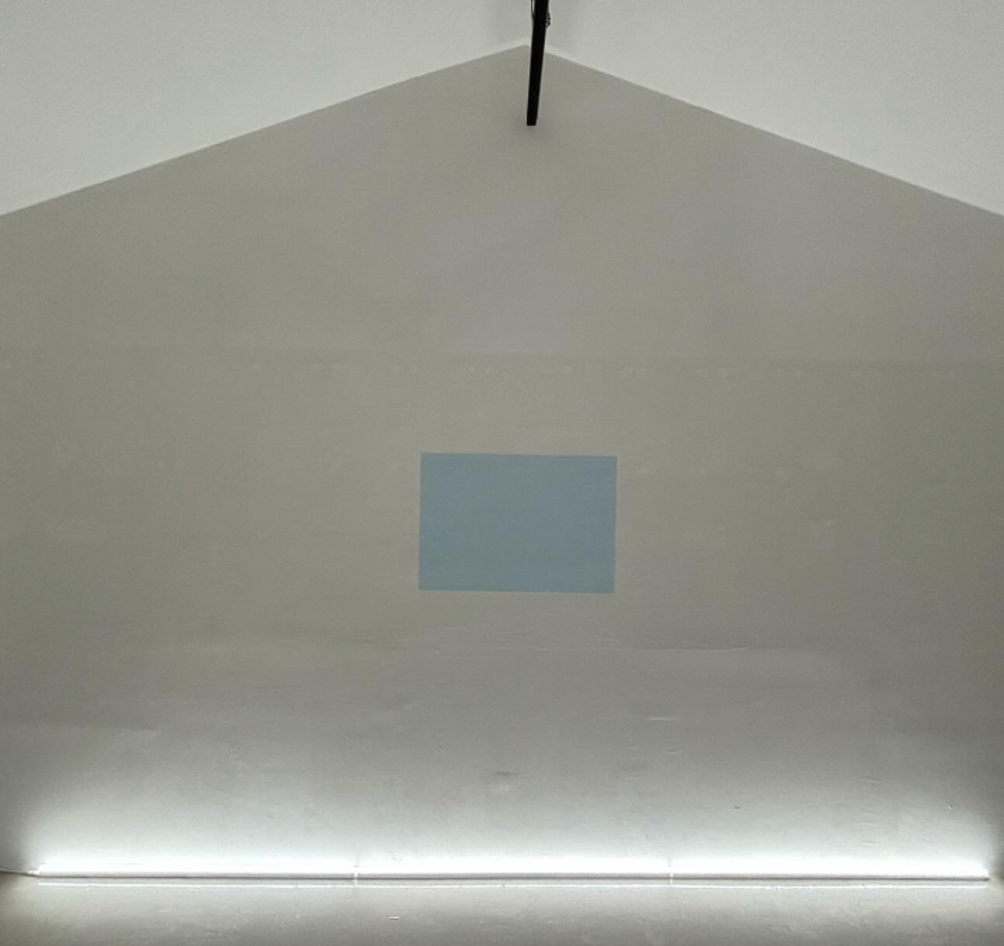
Structure: Painted wood and hinges, 90 x 90 x 40 cm, 90 x 90 x 70 cm, 90 x 90 x 180 cm, Total 6ea / Cushion: Digital painting, Digital printing on fabric, High elasticity sponge, 88 x 88 x 2 cm, 87 x 87 x 3 cm, 86 x 86 x 4 cm, 85 x 85 x 5 cm, 4ea
Dimension variable
About The Work

Eve Kwak has long examined the physical environments we inhabit and the relationships among the frames and structures that constitute them, two- and three-dimensional forms, architecture, and the body. Beginning with familiar structures and images encountered in everyday life—Korean apartments and collective housing, urban buildings, flyers and floor plans, windows and skies, calendars, clothing, moving, and DIY interiors—she explores how these elements organize our lives and shape our desires, beliefs, memories, and patterns of behavior.

For Kwak, architecture is not a fixed structure but an environment that is continually reconstructed through human movement and use, the accumulation of time, and the reproduction and consumption of images. She sketches the forms of buildings and spaces, translates them into painting, sculpture, books, printed matter, and installation, and then recombines them within the exhibition space to create provisional environments.

Particularly important to her practice is the process through which two-dimensional images are transformed into three-dimensional environments and then circulate back into photographs, data, books, and printed matter. Her works are therefore less like completed objects than spatial experiments in which two- and three-dimensional forms, images and spaces, and the actions of the artist and viewer continuously influence and transform one another.

In this way, Kwak observes a world constructed through the interplay of the material and immaterial, focusing on how environments and people change by shaping and reflecting one another. Rather than viewing architecture and the city as fixed backdrops, she approaches them as organic environments that change and evolve alongside human and natural life cycles and the passage of time.

By examining how familiar landscapes, objects, and images shape personal experiences, memories, associations, and beliefs, and by recording and visualizing these layers, she reveals a sensibility of landscape in which accumulated time and personal experience intersect.

Solo Exhibitions (Brief)

Kwak has held solo exhibitions including 《MoveMove》 (Hall 1, Seoul, 2024), 《Gray-White Hair》 (Artspace Hyeong, Seoul, 2017), 《Face to Face Construction-Architecture Project: Part》 (Taste House, Seoul, 2017), and 《All Flat Things Happen at the Same Time》 (Gallery Chosun, Inohjudan, Dimensions Variable; Seoul, 2017).

Group Exhibitions (Brief)

Kwak has also participated in numerous group exhibitions, including 《Referential》 (HITE Collection, Seoul, 2026), 《Tilting toward Ground》 (Incheon Art Platform, Incheon, 2025), 《Tread softly, because you tread on my dreams》 (Daejeon Museum of Art, Daejeon, 2025), 《RE: New-Bird-Jungle》 (Museum of Contemporary Art Busan, Busan, 2022–2023), 《Short Circuit》 (Taste House, Seoul, 2021), 《Sunset Valley Village》 (Art Sonje Center, Seoul, 2021), 《Piercer》 (SeMA Storage, Seoul, 2021), and 《Name》 (Museumhead, Seoul, 2020–2021).

Awards (Selected)

In 2019, Kwak received the Excellence Award at the SONGEUN Art Award.

Residencies (Selected)

Kwak has participated in residency programs including the SeMA Nanji Residency (2020), CAN Foundation Myeongnyundong Studio (2019), Incheon Art Platform (2017), and the MMCA Residency Goyang (2016).

Collections (Selected)

Kwak’s works are held in the collections of Incheon Art Bank and the Seoul Museum of Art.

Works of Art

Sensing Landscapes of Accumulated Time and Personal Experience

Originality & Identity

Eve Kwak has observed the physical environments we inhabit, as well as the relationships between the frames and boundaries that compose them, flatness and volume, architecture and the body. Her work begins from structures and images commonly encountered in daily life, such as Korean apartments and collective housing, urban buildings, flyers, floor plans, windows, skies, calendars, clothing, moving, and self-interior projects.

Rather than simply representing these subjects, the artist examines how they organize people’s lives and produce forms of desire, belief, memory, and behavior. For Kwak, architecture is not a fixed structure, but an environment that is continuously reconfigured through people’s movement and use, the accumulation of time, and the reproduction and consumption of images.
 
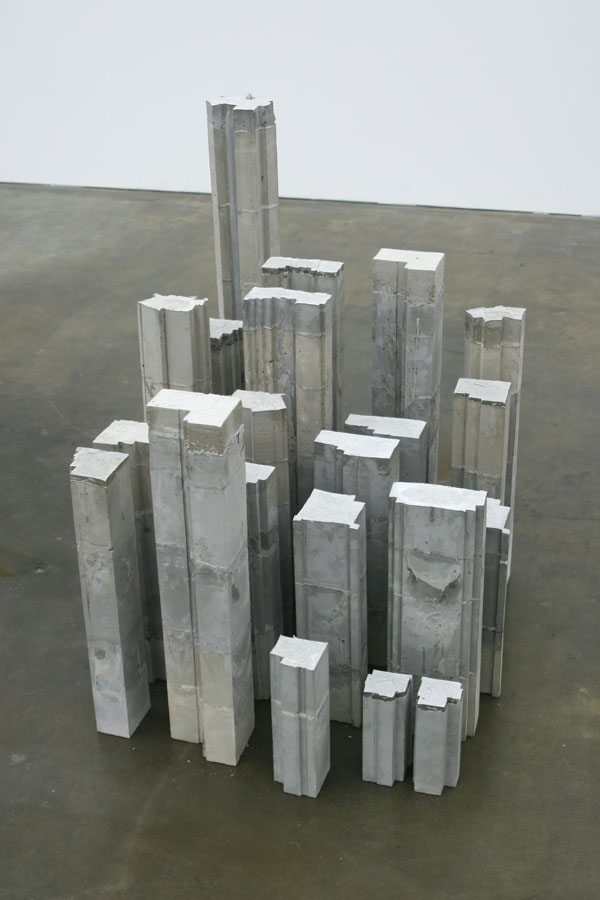
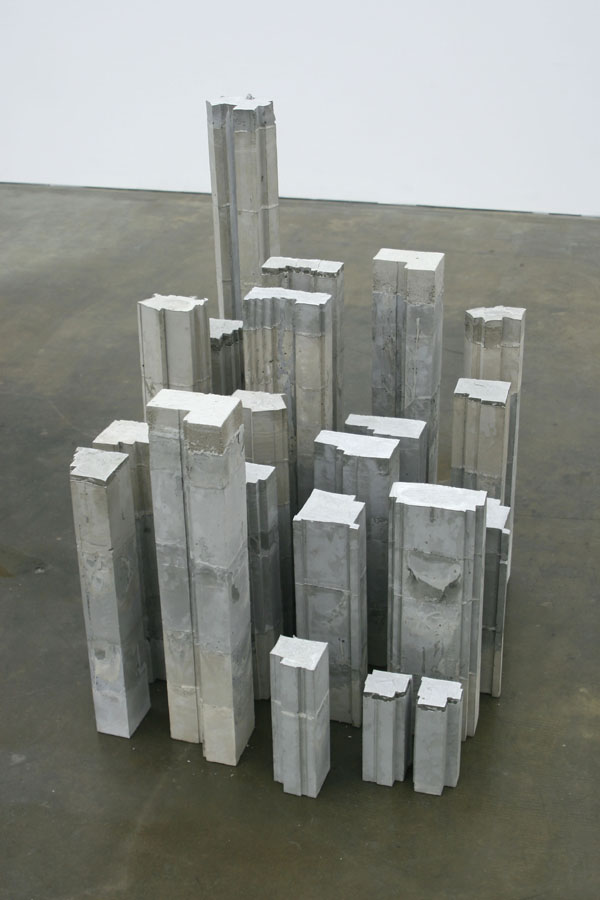
In her early work, Kwak approached apartment floor plans and residential desire as sculptural questions. The ‘Mountain in the Back, River Up Front’ series, begun in 2009, is a body of work in which the artist creates molds along the outer contours of famous-brand apartment floor plans and pours cement into them, transforming them into three-dimensional forms.

The series developed through works such as Mountain in the Back, River Up Front - Even If Broken(2010), Mountain in the Back, River Up Front - Support(2010), and Mountain in the Back, River Up Front - Upright(2010). The traditional concept of baesanimsu, an ideal site with a mountain behind and water in front, is translated in this work into the apartment of the contemporary city, revealing both the desire “to live well” and the common wish to live in a “good place.”

By erasing the internal structure of the floor plan and pouring cement only along the outer contour, the artist deals not with actual architecture, but with the form of housing people dream of and the psychology of the dense city.
 
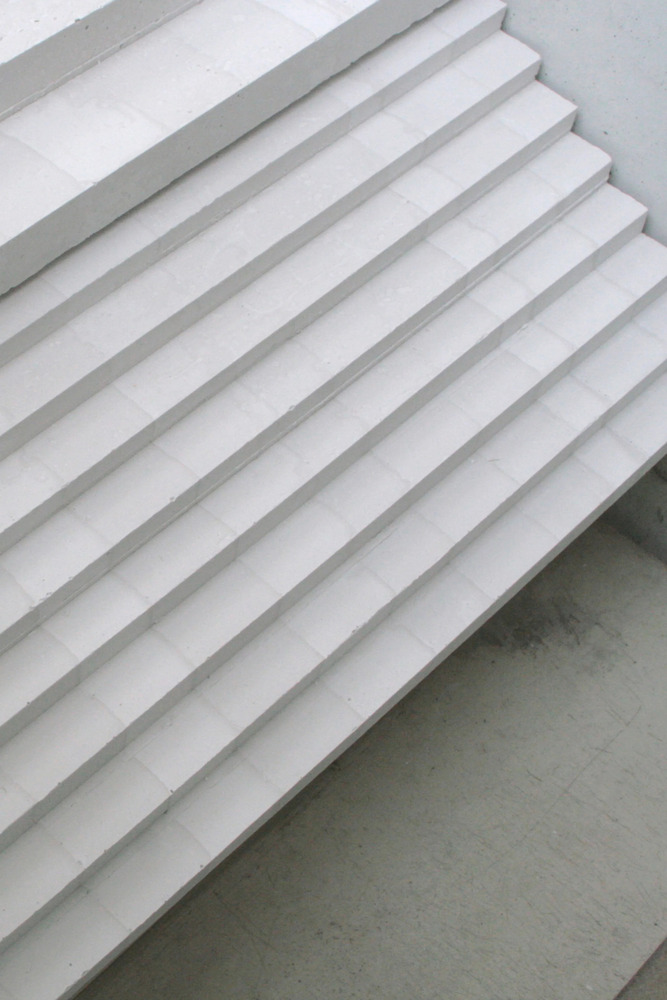
The 2015 solo exhibition 《All Flat Things Happen at the Same Time》(Gallery Chosun, Seoul, 2015) marks an important turning point in Kwak’s practice, where flat surfaces become three-dimensional and three-dimensional forms return again to flatness. Step(2015) is a sculpture that modifies the size and height of the gallery stairs and is completed as viewers step on and pass through it, while Face to Face(2015) uses printed matter like architectural material to create another variable space within the exhibition space.

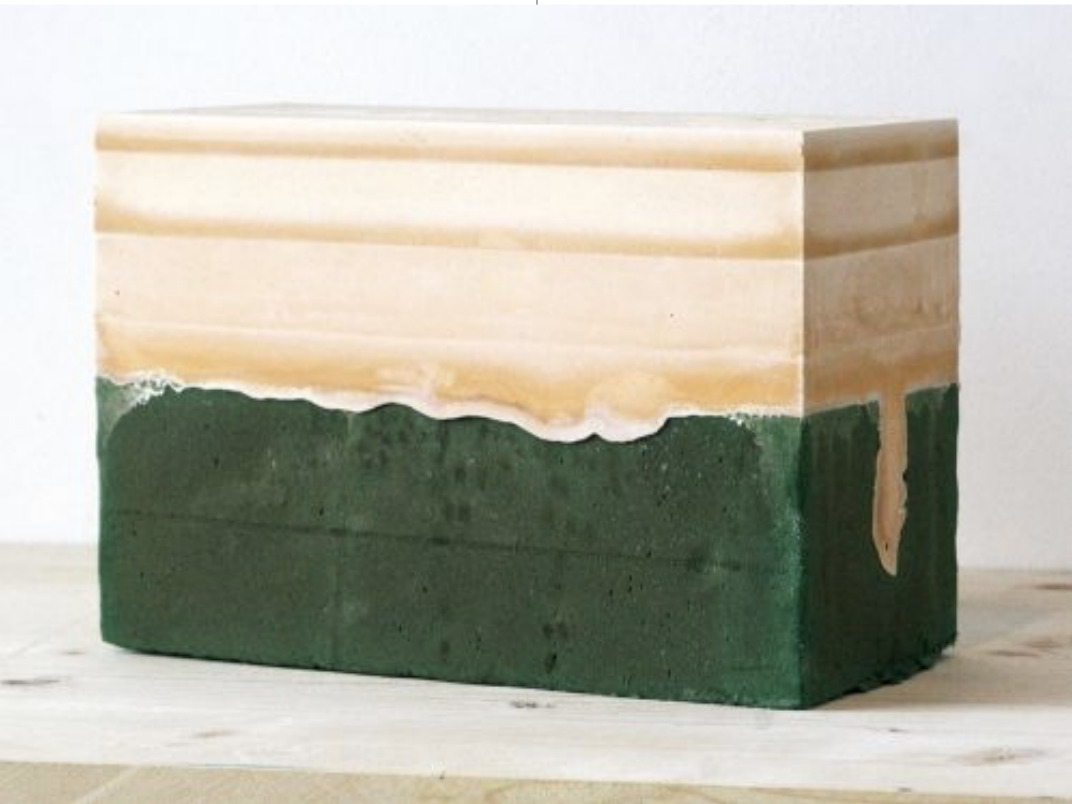
From this period onward, the artist moves beyond “looking at” architectural environments and begins to focus on how viewers’ bodies and movements transform space. As in Oasis #3(2010), where the artist did not restore the marks left by viewers pressing into floral foam but instead recorded them with plaster, space in her work is always transformed through contact with human action.
 
Kwak’s interests have since expanded from urban architecture to time, memory, the body, data, and ecological environments. 《Gray-White Hair》(Artspace Hyeong, Seoul, 2017) visualizes biological time and changes in spatial perception through calendars and painting, based on the artist’s own experience of gray-white hair and her father’s dementia.

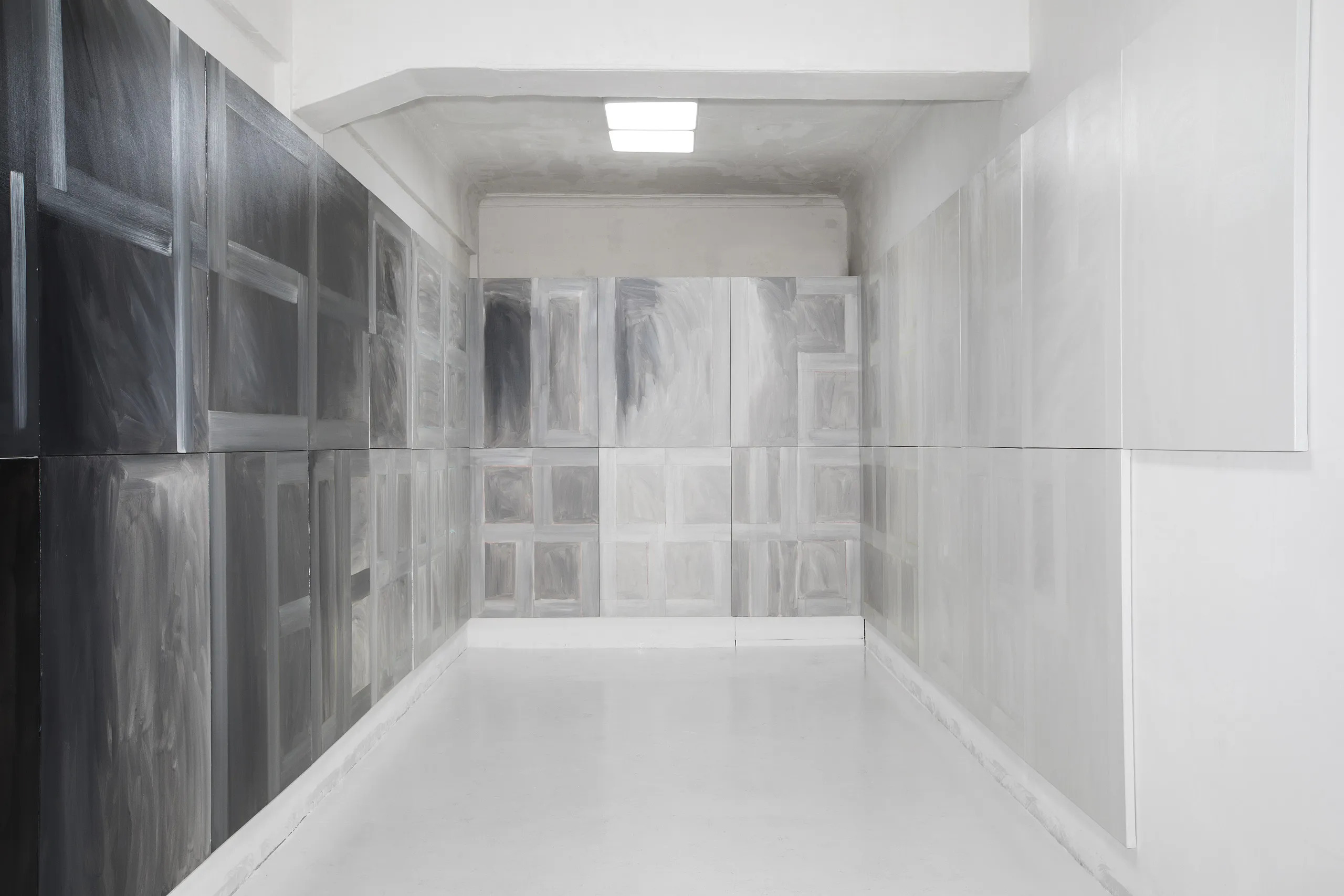
Days(2017) turns the numbers and positions of the calendar into a wall of painting, while Calendar(2017) presents 44 years and 6 months of time as a structure that can be held in the hand.

Since the 2020s, through works and exhibitions such as Cookie(2020), The Structure of Sky(2016), 《RE: New-Bird-Jungle》(Museum of Contemporary Art Busan, Busan, 2022), and 《MoveMove》(Hall 1, Seoul, 2024), Kwak has dealt with leftover materials, layers of the atmosphere, recycled plastic, and acts of moving and rearranging, exploring how the constructed nature of life is formed through relations between the material and immaterial.

Style & Contents

Eve Kwak moves freely between flatness and volume. She sketches the forms of buildings, translates them into painting, sculpture, books, printed matter, and installation, and then recombines them within the exhibition space to create a provisional space. The process through which two-dimensional images are transformed into three-dimensional environments, and then circulate again as photographs, data, books, or printed matter, is central to her practice.

For this reason, her works are closer to spatial experiments in which flat surfaces become volumes and continue to change according to viewers’ actions than to completed objects.
 
In the ‘Mountain in the Back, River Up Front’ series, this formal approach appears through the transformation of apartment floor plans into cement sculptures. The artist builds molds along the entire outer contour of a floor plan and pours cement into them, but instead of leaving the interior space empty, she fills it completely.

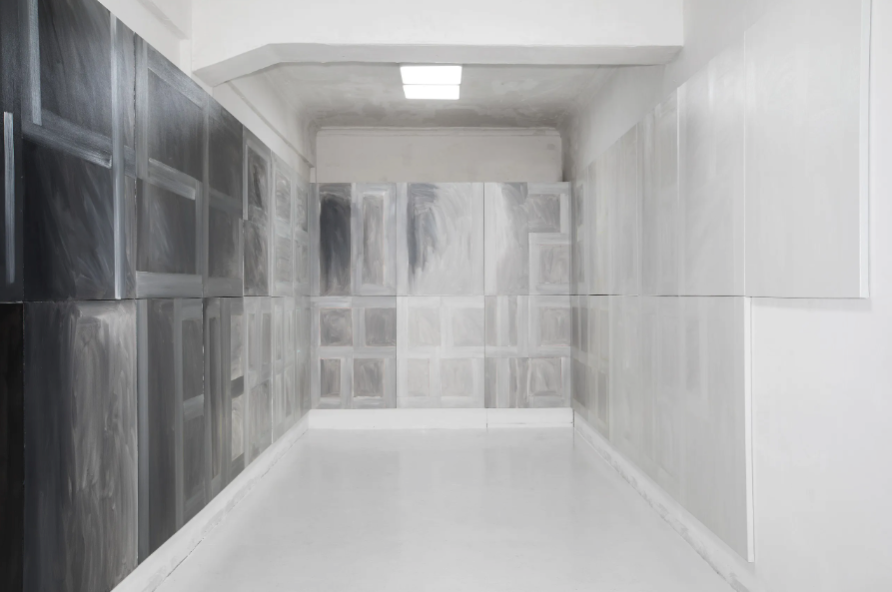
The interior structure, which is central to architecture, disappears, leaving only the outline and height as a solid mass. Cement is usually understood as a strong material, but in this work it is treated as fragile, easily broken, and capable of being reattached. In Mountain in the Back, River Up Front - Support, cement, cores, and walls form relationships of mutual support, creating a tense state in which it is difficult to distinguish what is supporting what.
 
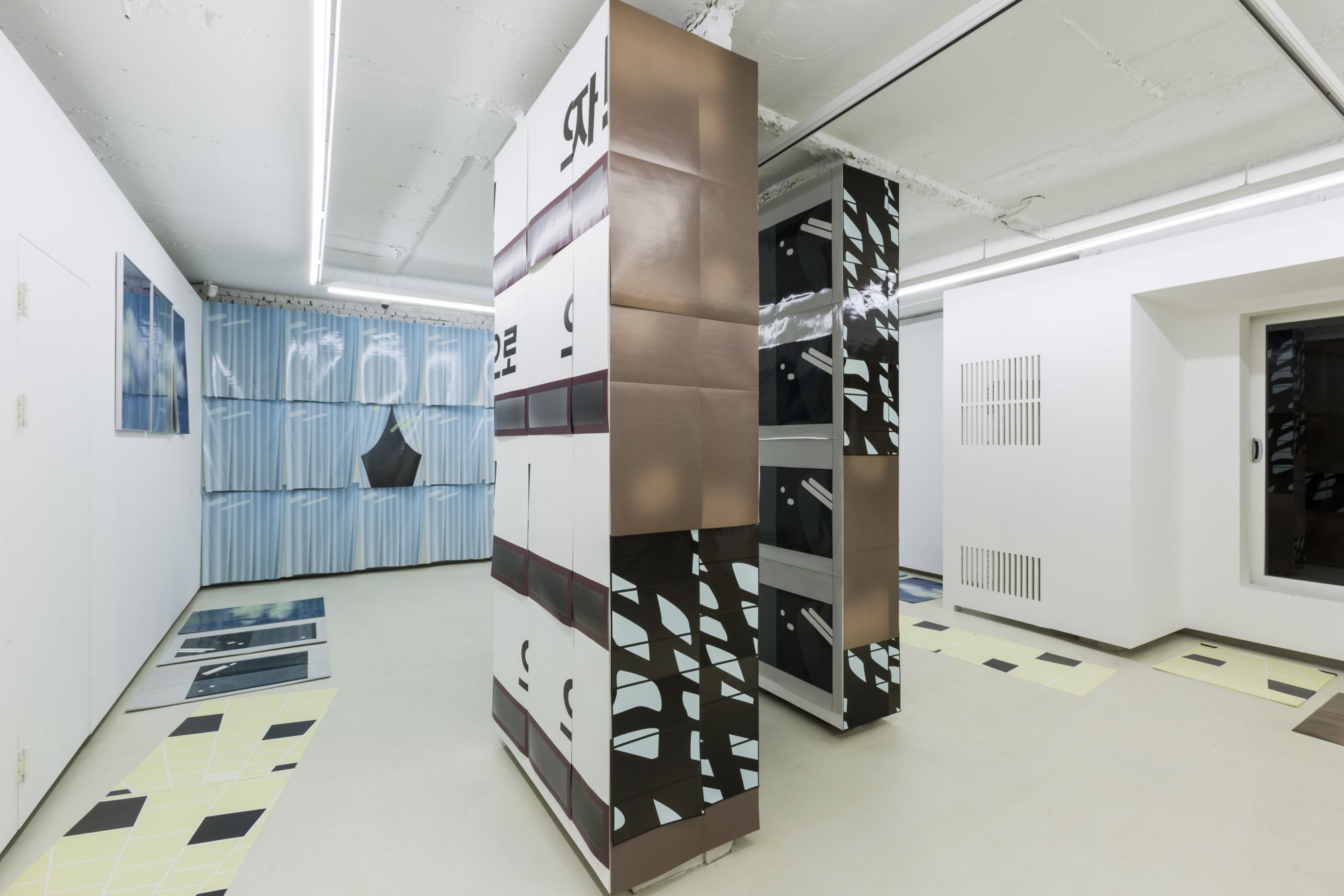
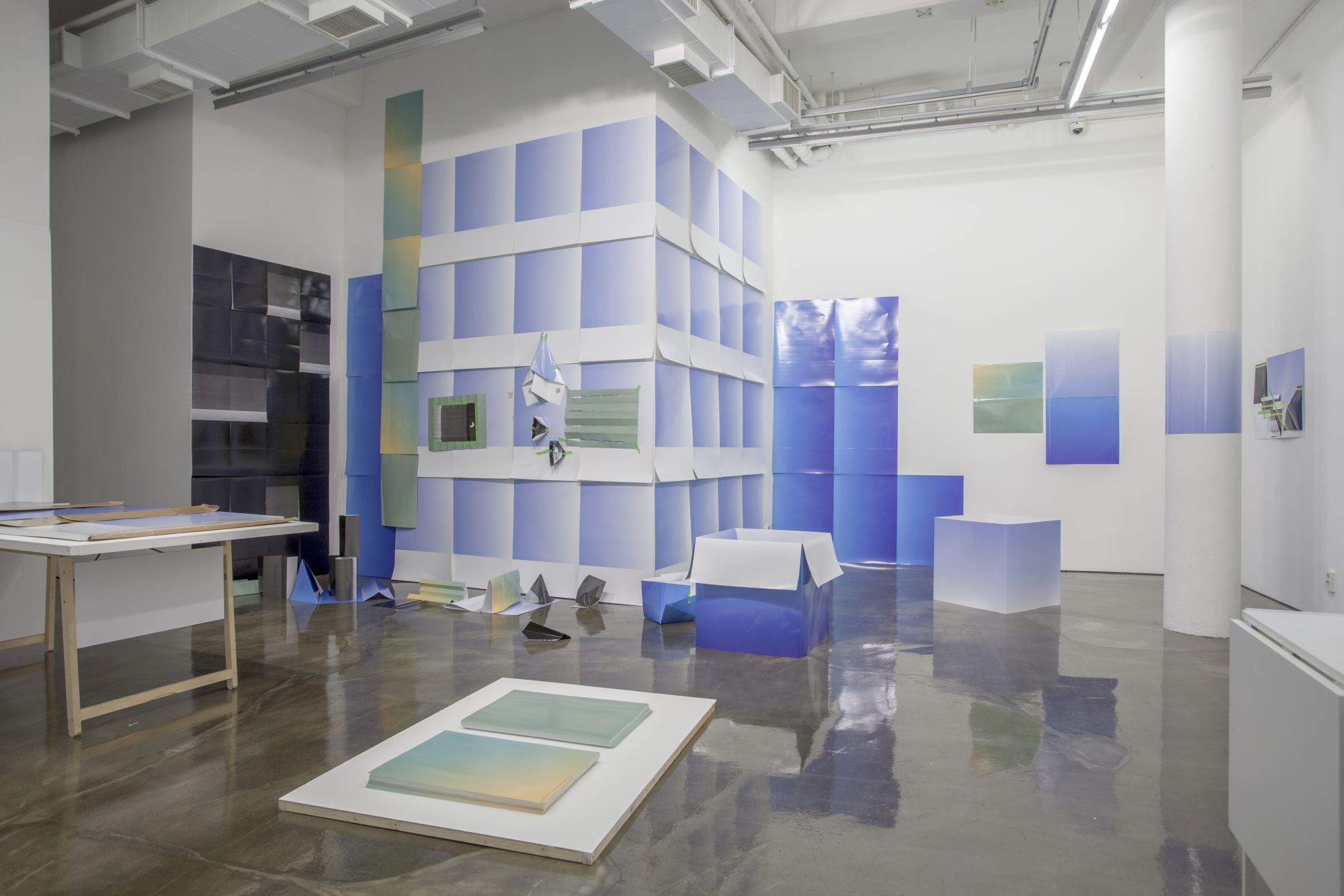
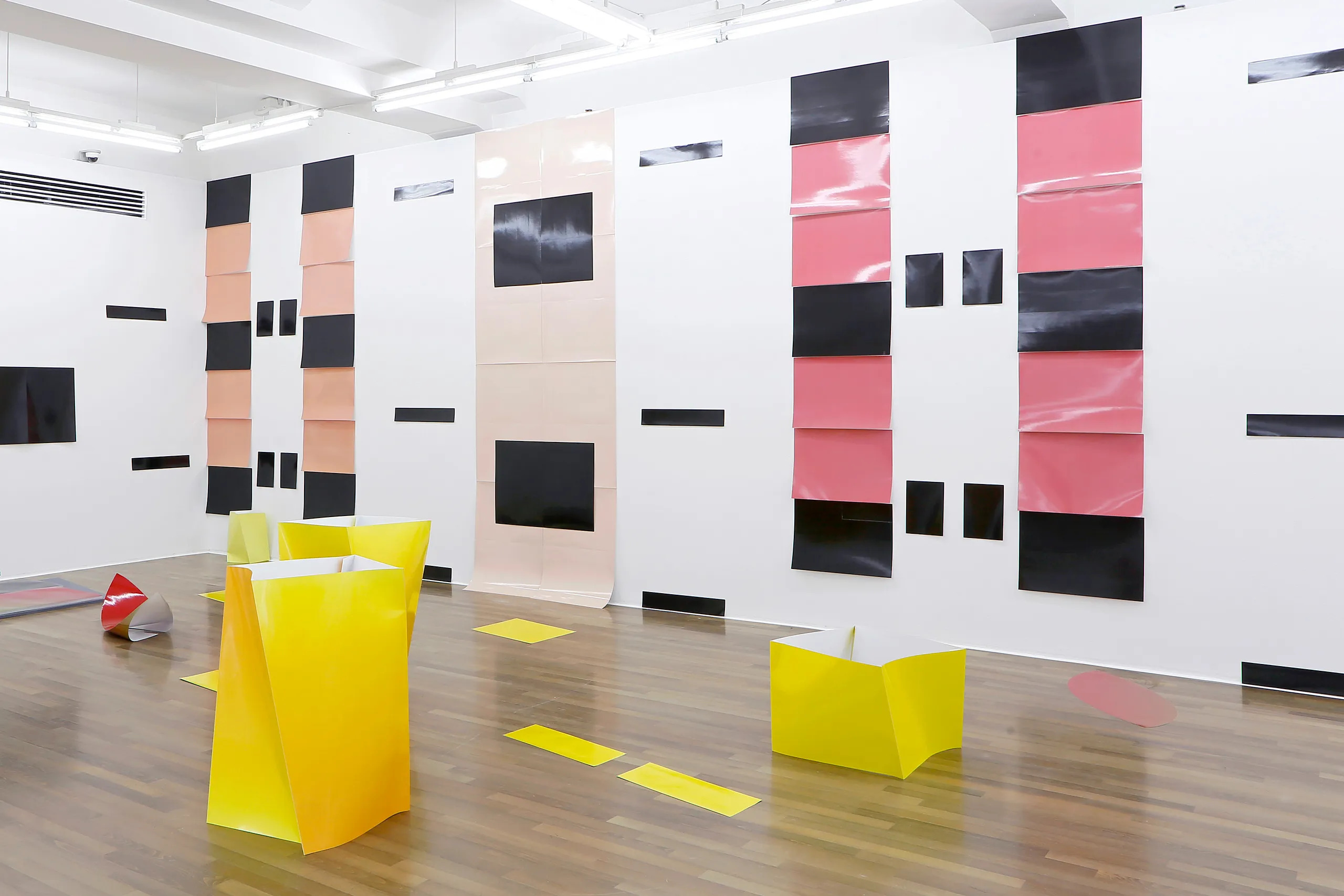
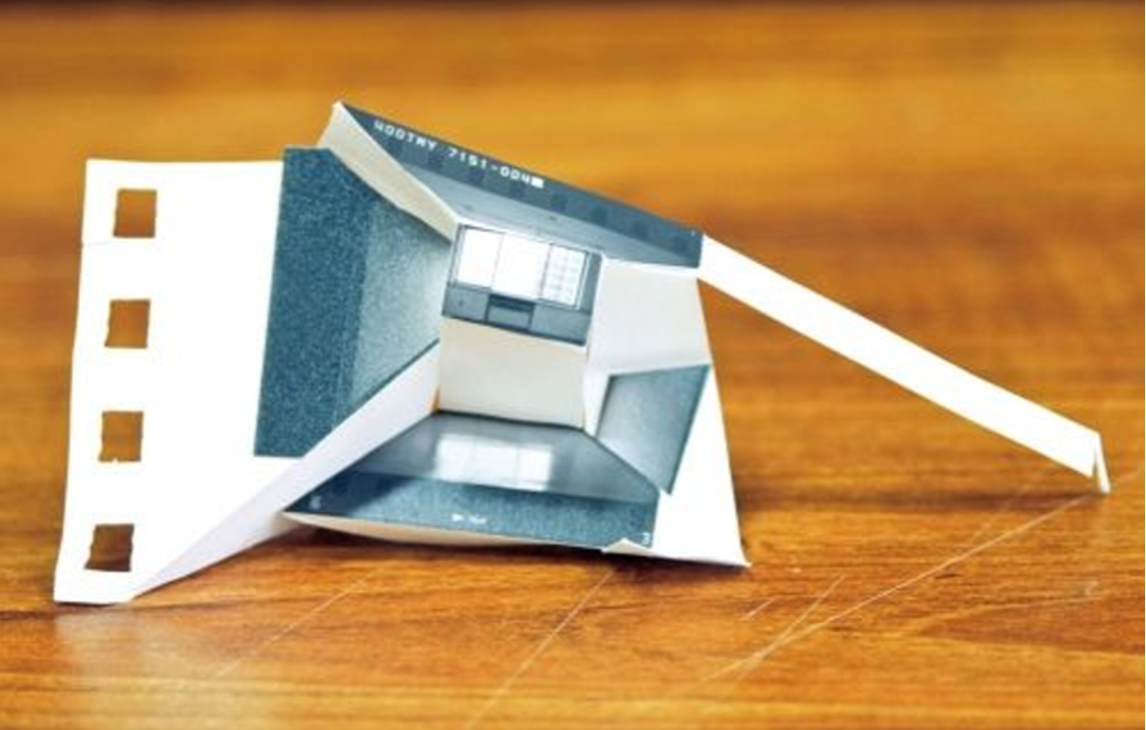
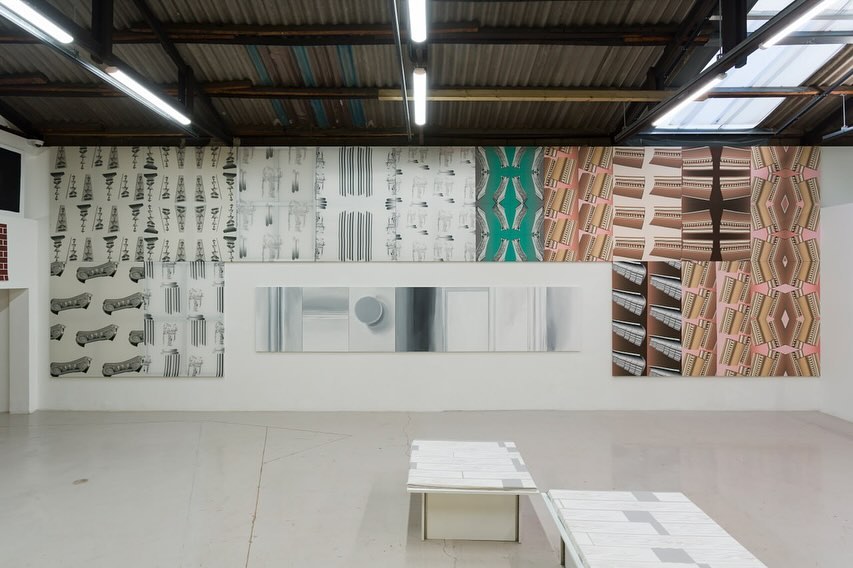
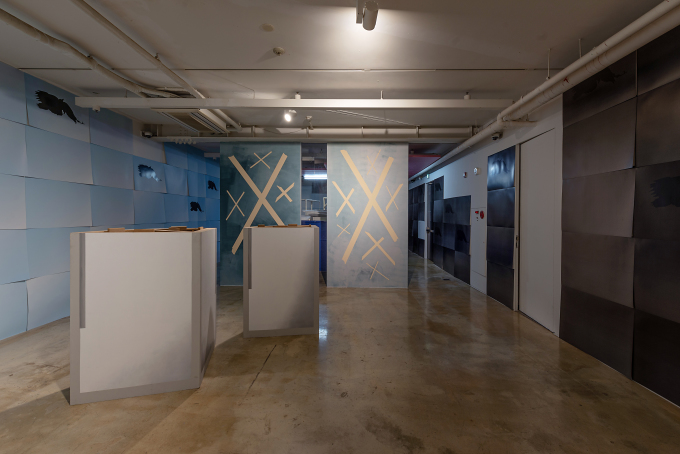
The ‘Face to Face’(2015~) series represents Kwak’s experiments between flatness and volume. The artist creates digital images of urban buildings’ windows, exterior walls, light, tree leaves, colors, and seasonal atmospheres using Photoshop or Illustrator, then mass-produces them as offset prints in A1, A2, and A3 sizes. In works such as Face to Face1(2015), Face to Face2.3.4(2015), and Face to Face Construction-Architecture Project: Part(2017), these prints become materials that compose the walls and floors of the exhibition space, like glass windows or bricks.

In 《Dosisido Si》(KT&G Sangsangmadang Daechi Artcube, Seoul, 2018), the colors, forms, time, and weather of the city are compressed into paper prints, and viewers fold or assemble them to create another space. Mass-produced flat images function like architectural materials, then become variable spaces again through viewers’ hands.
 
Kwak’s practice also extends into books, painting, video, and pavilions. 13 Different Things(2014) is a book based on floor-plan information from a specific apartment complex, with pages layered according to the number of units and designed to be detached along perforations. In 《All Flat Things Happen at the Same Time》, the process of tearing and transforming this book into sculpture was recorded on video. In 《Gray-White Hair》, Days and Calendar transform numbers of time and spatial arrangements into painting and printed matter.

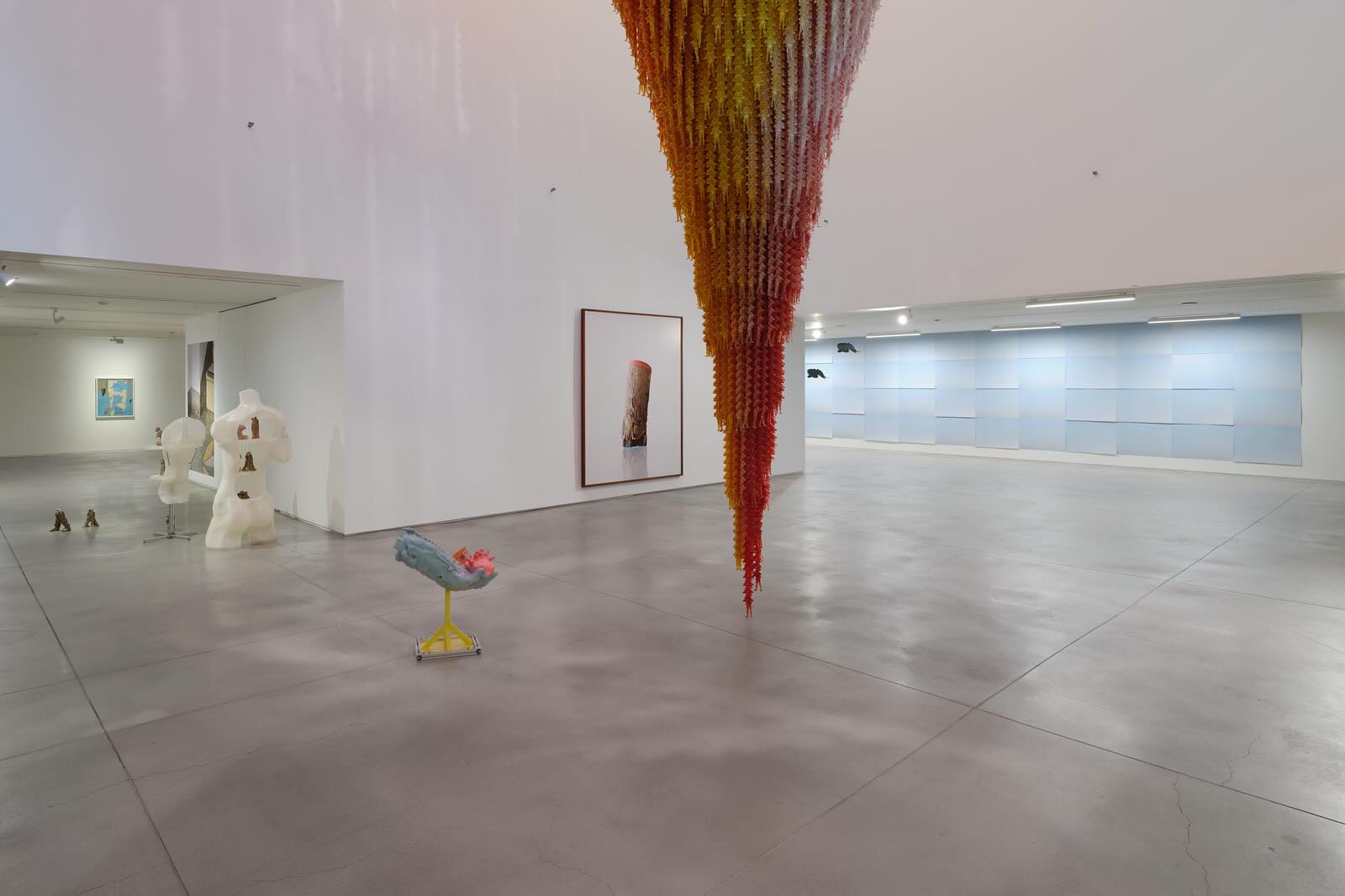
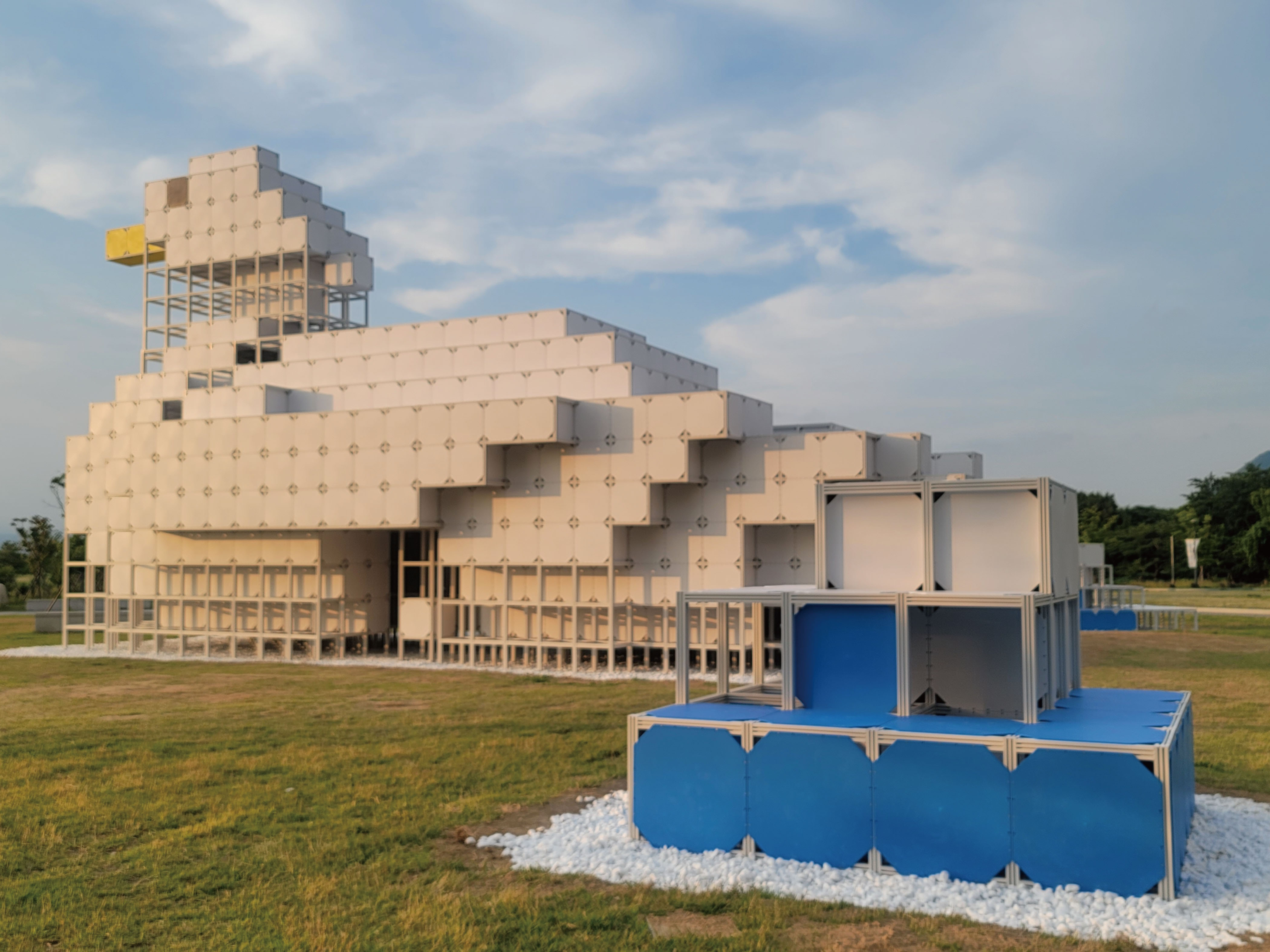
In 《RE: New-Bird-Jungle》, Kwak collaborated with designer Lee Woongyeol to assemble 15,000 modular units made from 27 tons of waste plastic, creating a large-scale pavilion whose form was inspired by the little egret of Eulsukdo. This work extends beyond the conversion between flatness and volume toward a recyclable structure that can be reassembled after the exhibition as practical objects such as chairs or tables.

Topography & Continuity

Eve Kwak’s distinctiveness lies in reading architecture not only as a large urban structure, but as an everyday “frame” where habits, memories, bodily postures, senses of time, consumption, and movement overlap. While many practices dealing with architecture or the city focus on representing urban landscapes or offering institutional critique, Kwak traces how architecture is produced as flat image, reproduced, folded, used, and turned back into volume.

In her work, apartment floor plans, curtain walls, paper prints, calendars, clothing, and pavilions are all systems and structures through which the body passes. By slightly twisting, folding, tearing, and rearranging these structures, the artist makes familiar spaces newly perceptible.
 
Tracing the development of her practice, Kwak began with early sculptures such as Mountain in the Back, River Up Front - Upright and Oasis #3, which dealt with architectural form and the material properties of objects. She then experimented more fully with the relationship between flat images and three-dimensional space, architectural materials and printed matter, viewer participation and the consumption of space through 《All Flat Things Happen at the Same Time》 and the ‘Face to Face’ series.

In 《Gray-White Hair》, she shifted her attention from urban architecture to biological time and the structure of memory, while Cookie addressed the memory of artistic labor and the future potential of leftover paint and materials. In 《MoveMove》, the act of moving becomes connected to artistic practice as a process of rearranging past objects, present space, and future usefulness.
 
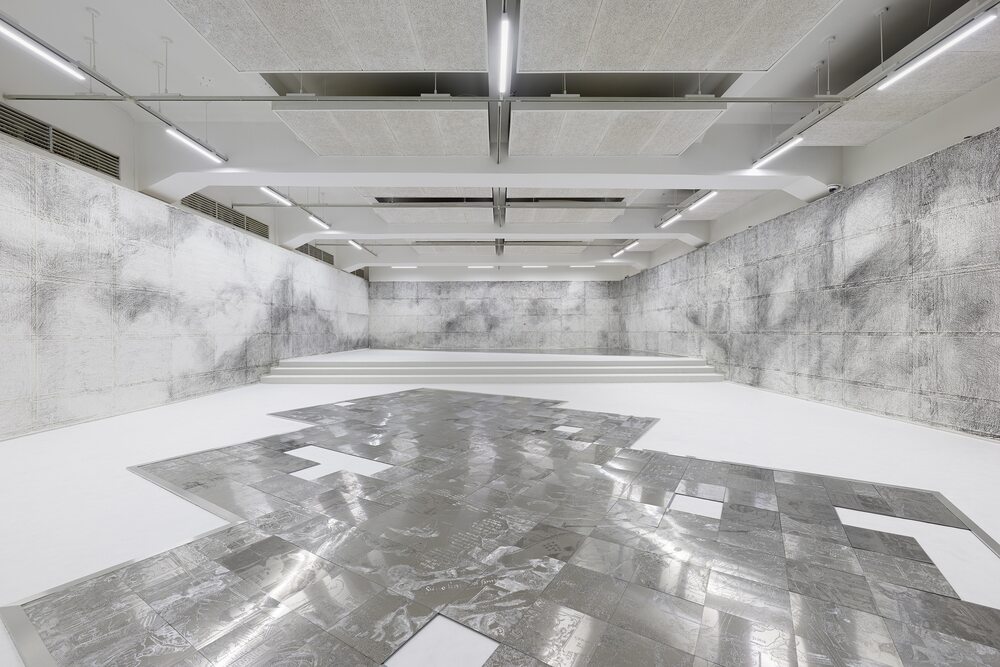
Kwak’s recent works and exhibition history show how her interest has expanded beyond physical architecture toward broader questions of environment, data, and ecological circulation. The Structure of Sky divides the atmosphere into 100 layers and expresses the changing density of air according to altitude through color gradation, allowing viewers to experience a structure of the sky that usually remains invisible.

In 《Tilting toward Ground》(Incheon Art Platform, Incheon, 2025), this work was installed in an elevator tower and gallery corridor, inviting viewers to sense the layers of the sky through bodily movement and shifting orientation.

《Referential》(HITE Collection, Seoul, 2026), an exhibition addressing the relationship between photography and sculpture, data and matter, also shows how Kwak’s practice can naturally connect to questions between image and material, reality and reproduction. Her work will likely continue to move between small structures of everyday life and large systems, material and immaterial, architecture and the body, data and sensation, guiding us toward another side of the spaces we inhabit.

Works of Art

Sensing Landscapes of Accumulated Time and Personal Experience

Articles

Exhibitions

Activities