Repossessed Vehicles, Sabuk-eup, Jeongseon-gun - K-ARTIST

Repossessed Vehicles, Sabuk-eup, Jeongseon-gun

2024
About The Work

Dongkyung Kwak captures, through the camera, the histories that have fallen outside the mainstream in the course of modernity, as well as the distorted desires that have emerged from those processes. Focusing on the binary conditions and marginalized figures produced by society, he seeks to position himself at the very center of these tensions, creating works that either narrow or widen the distance between opposing forces.

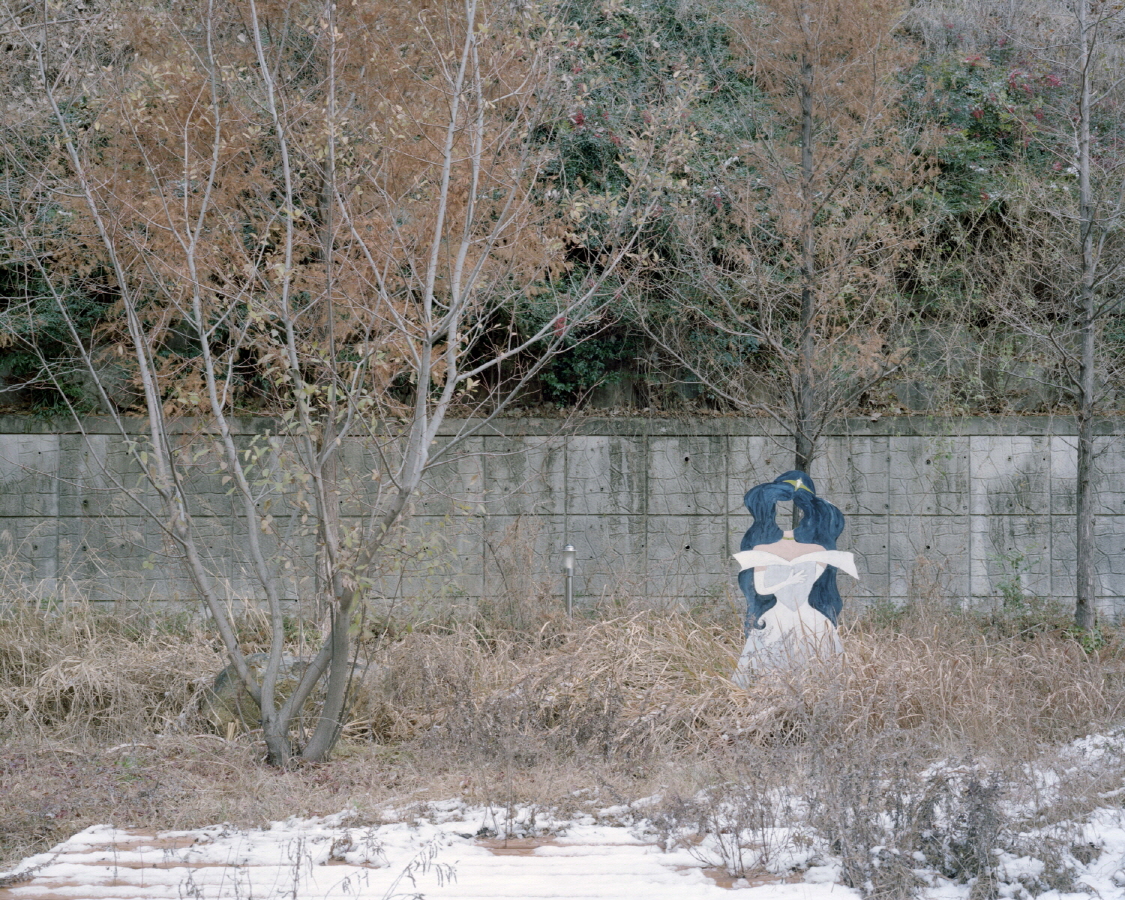
Dongkyung Kwak’s photographs deal with landscapes, but they do not attempt to show conventionally beautiful scenery or commemorative places.  He observes built environments and the residues they leave behind.

His photographs do not remain within a critique of development or the aesthetics of ruins; instead, they remove meaning from places that are already saturated with meaning, and look at how alienated or abandoned places continue to exist. Photography, in this sense, becomes a device for looking long at the surface left after a problem has passed. 

The artist minimizes his own intention and staging, maintains a measured distance from his subjects, and allows viewers to read meaning for themselves through the stillness and absence left within the image. Rather than focusing on the epicenter of monumental events, his photographs turn to the quiet structures that remain at their margins, prompting us to reflect on the paradoxes of reality—plainly visible, yet easily unseen. 

Solo Exhibitions (Brief)

Dongkyung Kwak has held solo exhibitions including 《Cherry Orange Plum》 (Caption Seoul, Seoul, 2024) and 《Tyltyl Mytyl》 (Plan B Project Space, Seoul, 2021).

Group Exhibitions (Brief)

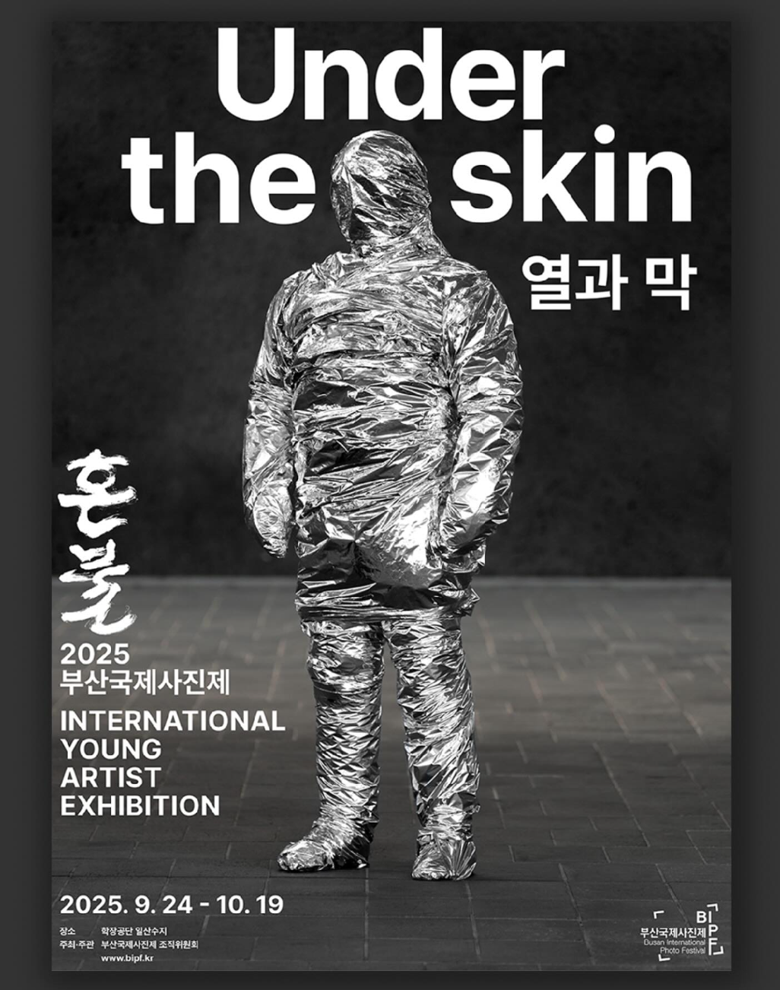
Kwak has also participated in numerous group exhibitions, including 《Under the Skin: Heat and Membrane》, the 2025 Busan International Photo Festival (Ilsansuji, Busan, 2025); DMA Camp 2025 《Fill in the Blanks》 (Daejeon Museum of Art, Daejeon, 2025); 《I guess that’s not the problem》 (Space Heem, Busan, 2023; Post Territory Ujeongguk, Seoul, 2022); and 《Toad House》 (New Space, Seoul, 2021).

Awards (Selected)

Kwak was selected as one of the participating photographers for ‘Photo of the Year 2024,’ an annual project organized by SisaIN.

Works of Art

Photography That Holds the Remainders of Meaning

Originality & Identity

Dongkyung Kwak has used the camera to trace places, events, and desires that have been pushed outside the mainstream as they pass through modernity and contemporaneity. His background in environmental engineering before studying photography forms an important foundation for his practice. His earlier experience dealing with the relationships among environment, human beings, and technology later developed into a way of looking at built environments, the contradictions that arise within them, and the residual landscapes left by development and decline.

He began from the pressure that photography should directly deliver a social message, but gradually turned his attention to “things without meaning, the remainders of meaning, and things that have been neutrally abandoned,” exploring the possibility that photographs might speak for themselves.

The work 510kilometer(2021), an important early axis of his practice, began during a period when the artist was asking what he should photograph. Kwak walked from Busan to Andong along the Nakdong River while the Four Major Rivers Project was in full swing, photographing the route and testing how the act of “cramming” social messages into photographs might function. After this work, however, his gaze shifted from clear statements or narratives toward the absences left behind in landscapes that remain unspoken.

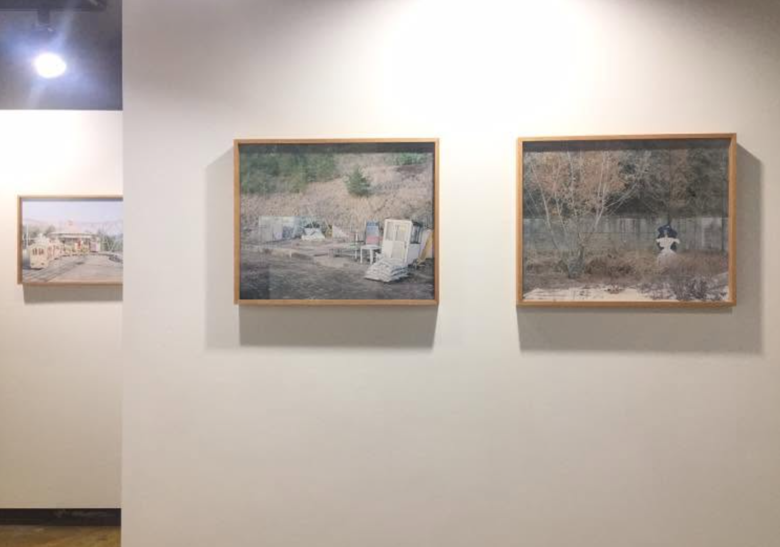
The 'Bezout theorem'(2021) series, which began in earnest in 2019, captures places left in the gap between development and decline, such as the railway apartments near Mindungsan Station, where trains rarely pass. The noise demanding redevelopment remains outside the frame, while the places and objects in the photographs lie quietly within their own time.

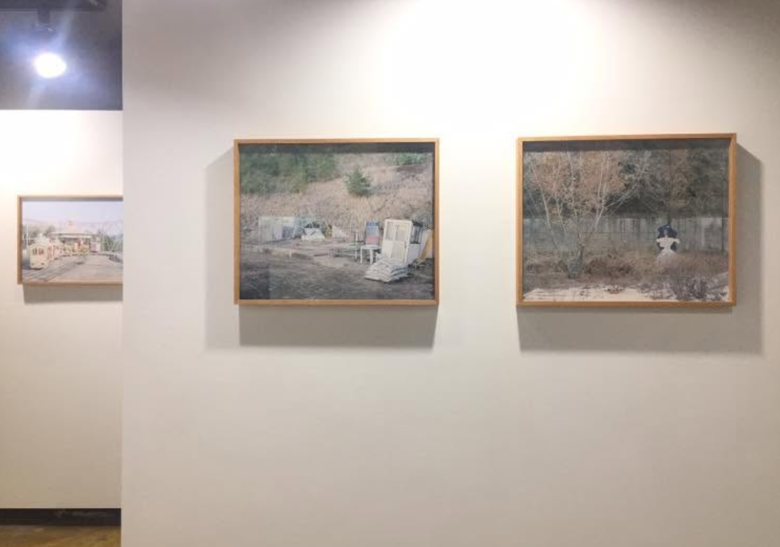
The solo exhibition 《Tyltyl Mytyl》(Plan B Project Space, 2021) was Kwak’s first solo exhibition, presenting more than ten years of work through categories including '510kilometer', the 'LAND Landscape'(2021) series, 'Bezout theorem', and the 'Exhalation'(2021) series. The exhibition title comes from Tyltyl and Mytyl, the siblings in Maurice Maeterlinck’s play The Blue Bird, and is connected to a sense of hope that exists close by yet is not easily found. 'LAND Landscape' begins from the artist’s childhood memories of begging his father to take him to an amusement park, but it does not lean into private nostalgia or retro sentiment.

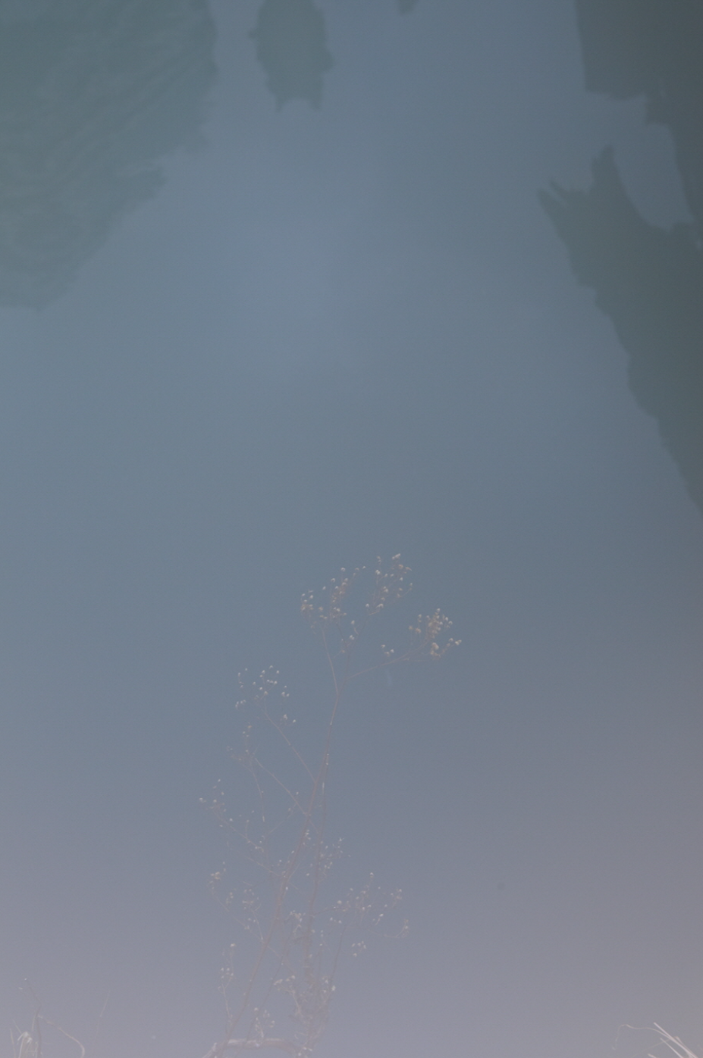
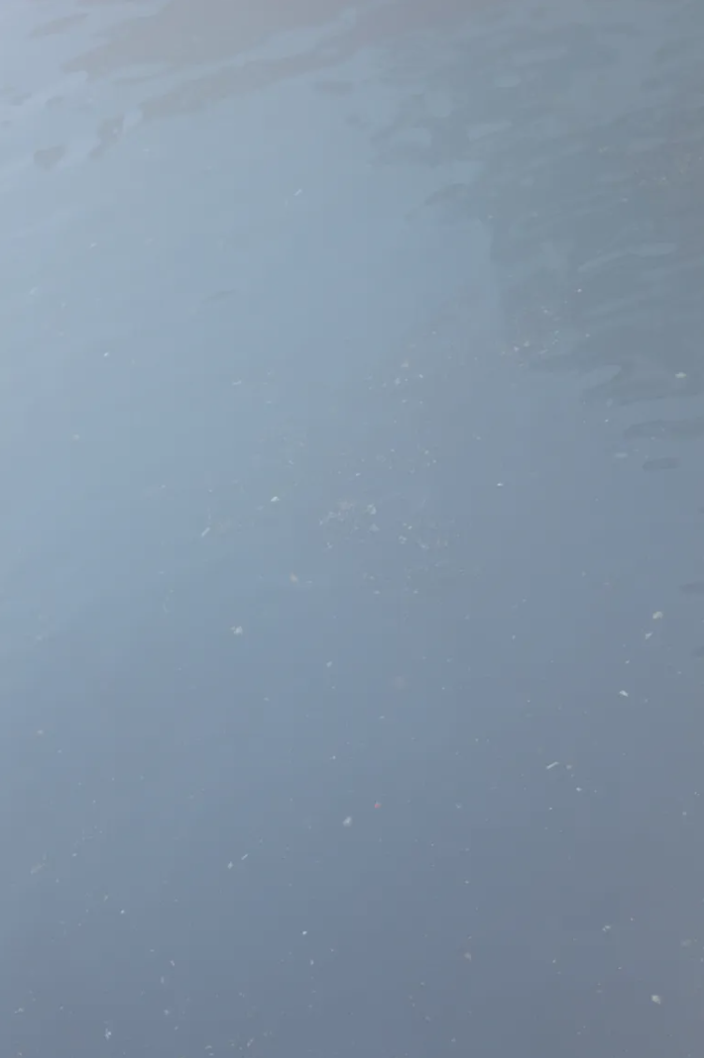
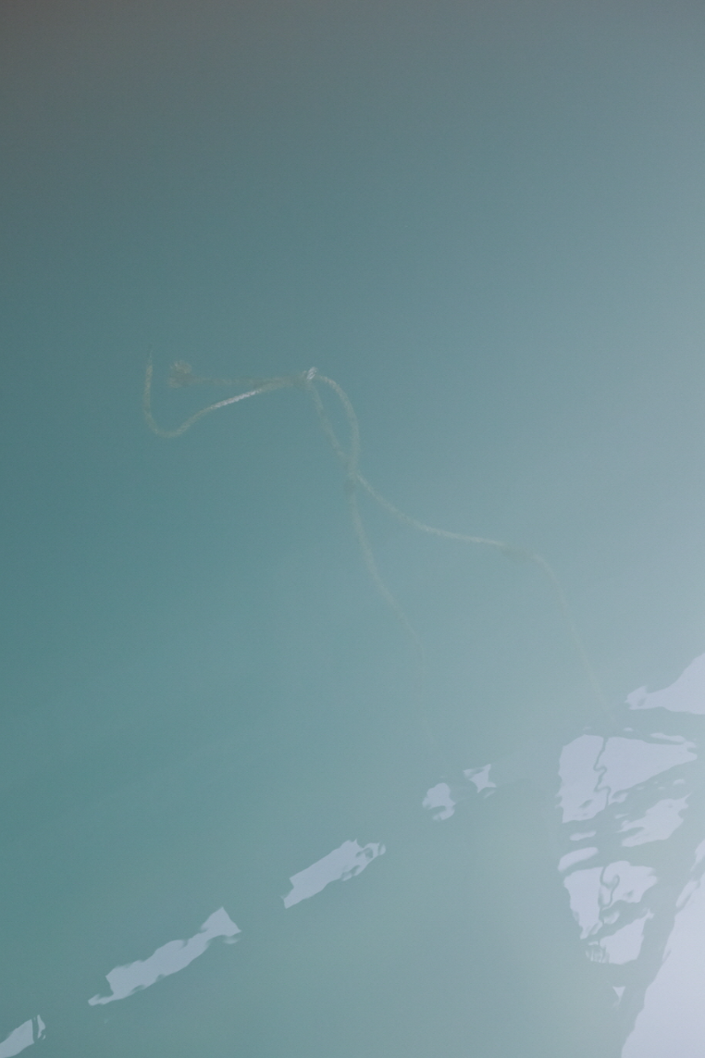
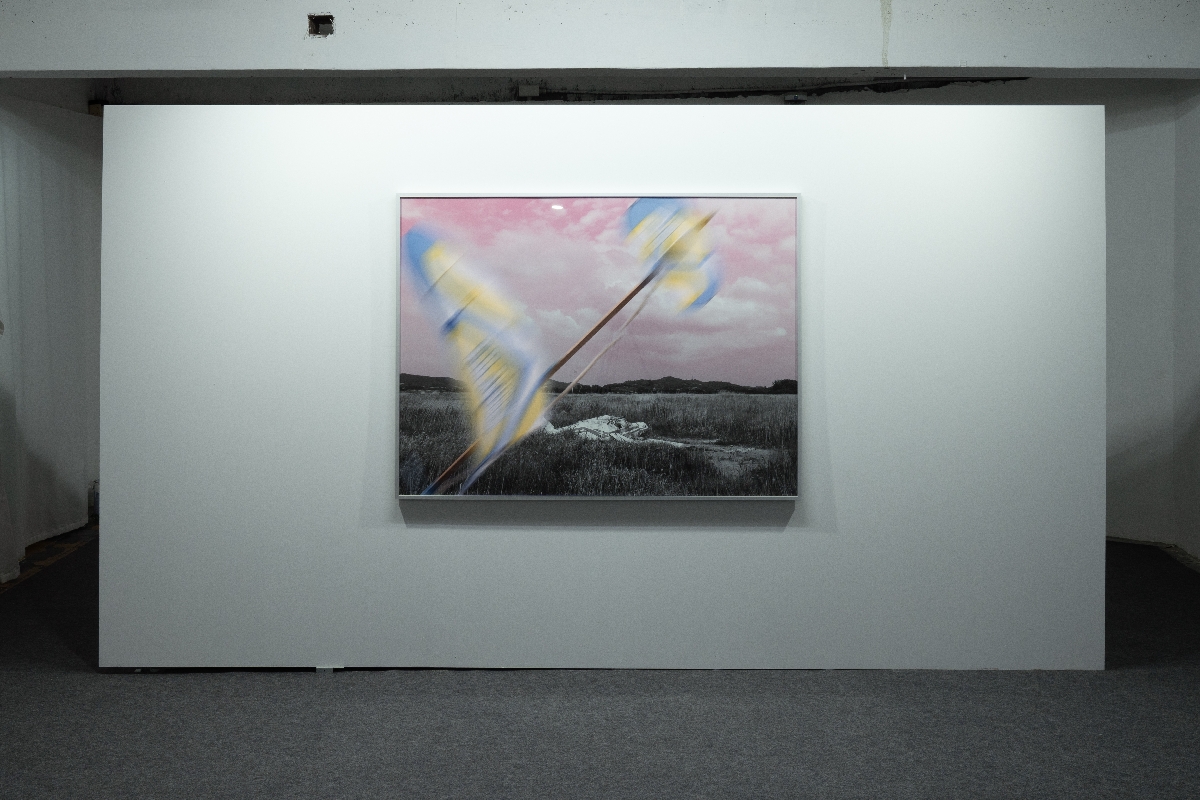
In works such as LAND Landscape #7(2021) and LAND Landscape #2(2021), the artist photographs declining amusement parks in cloudy weather and low saturation, showing them not as places of the past, but as places that remain within the flow of time. In the 'Exhalation' series, represented by Exhalation #1(2021), he breathes onto the lens and photographs the sea, looking at the calm surface of nature that has endured outside human history, rather than emphasizing historical narrative.

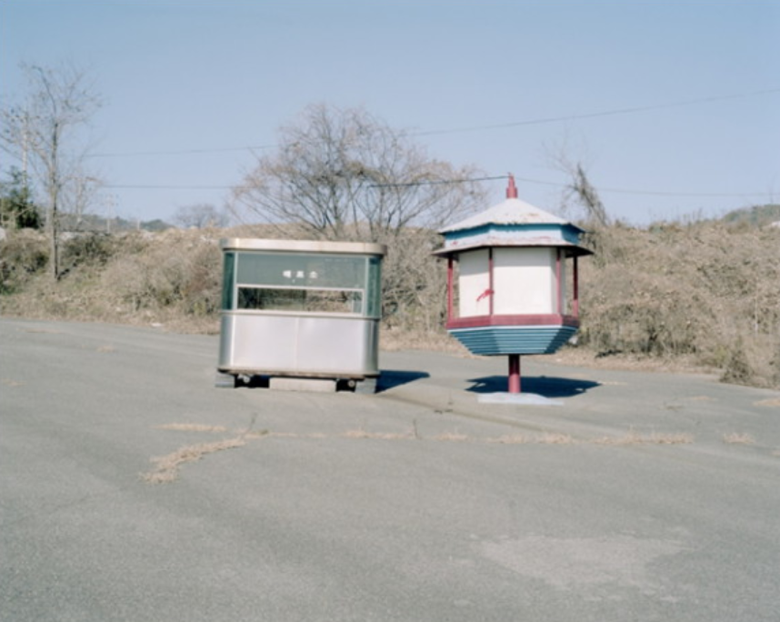
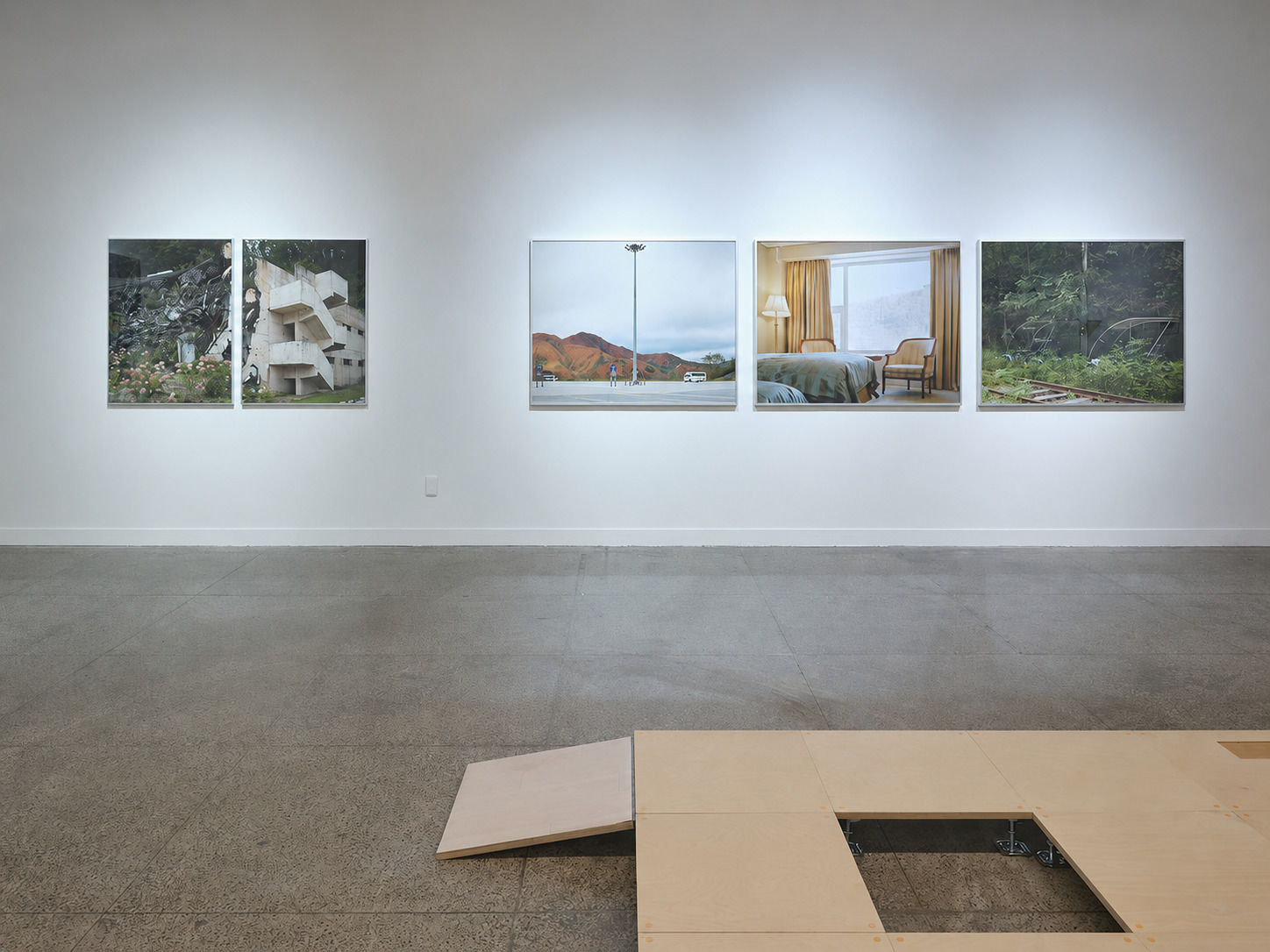
Kwak’s later work expands toward the new colonial spaces produced by industrial displacement and capitalism. The 'Slot'(2021–2024) series traces Kangwon Land and its surrounding area, built to revitalize former mining regions, through elements such as comp points, tourism development, gambling addiction, repossessed vehicles, and artificially constructed tourist sites.

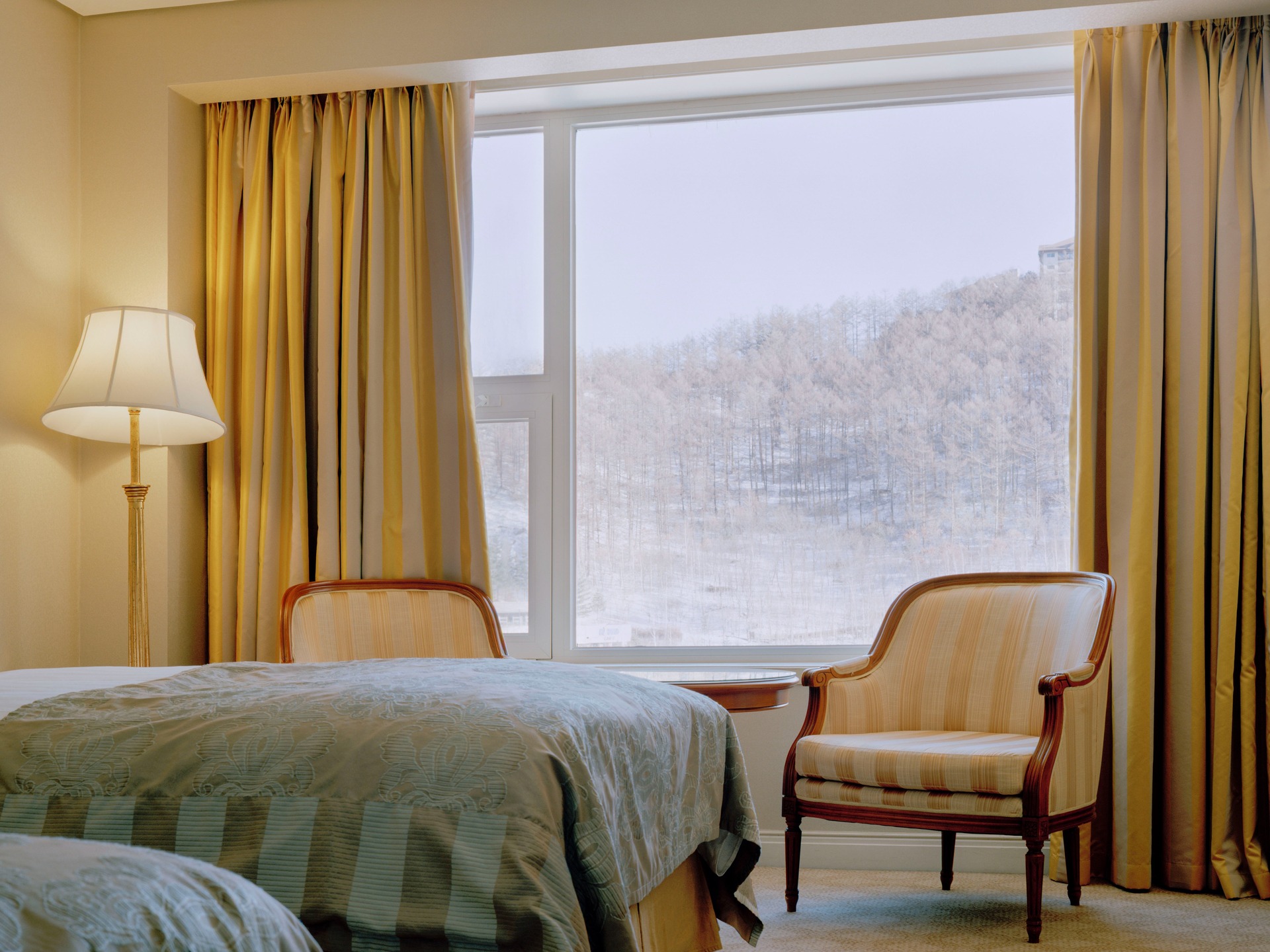
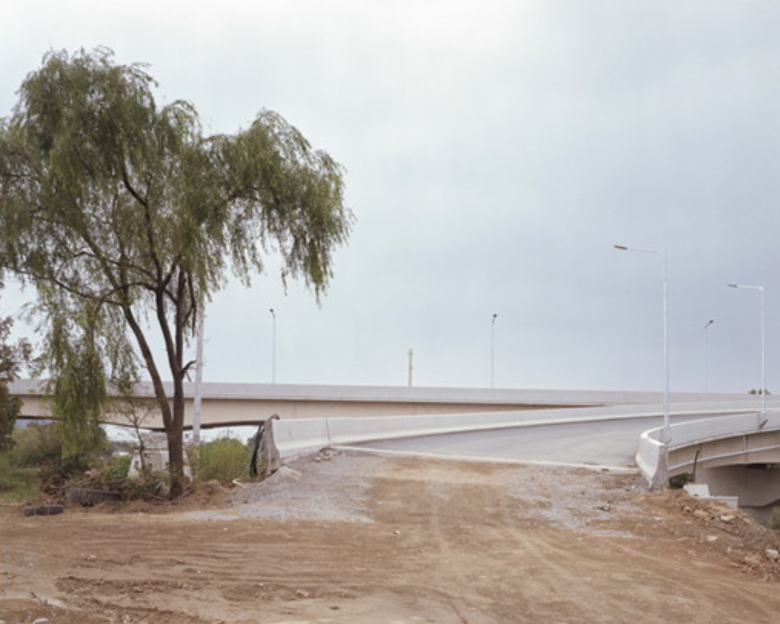
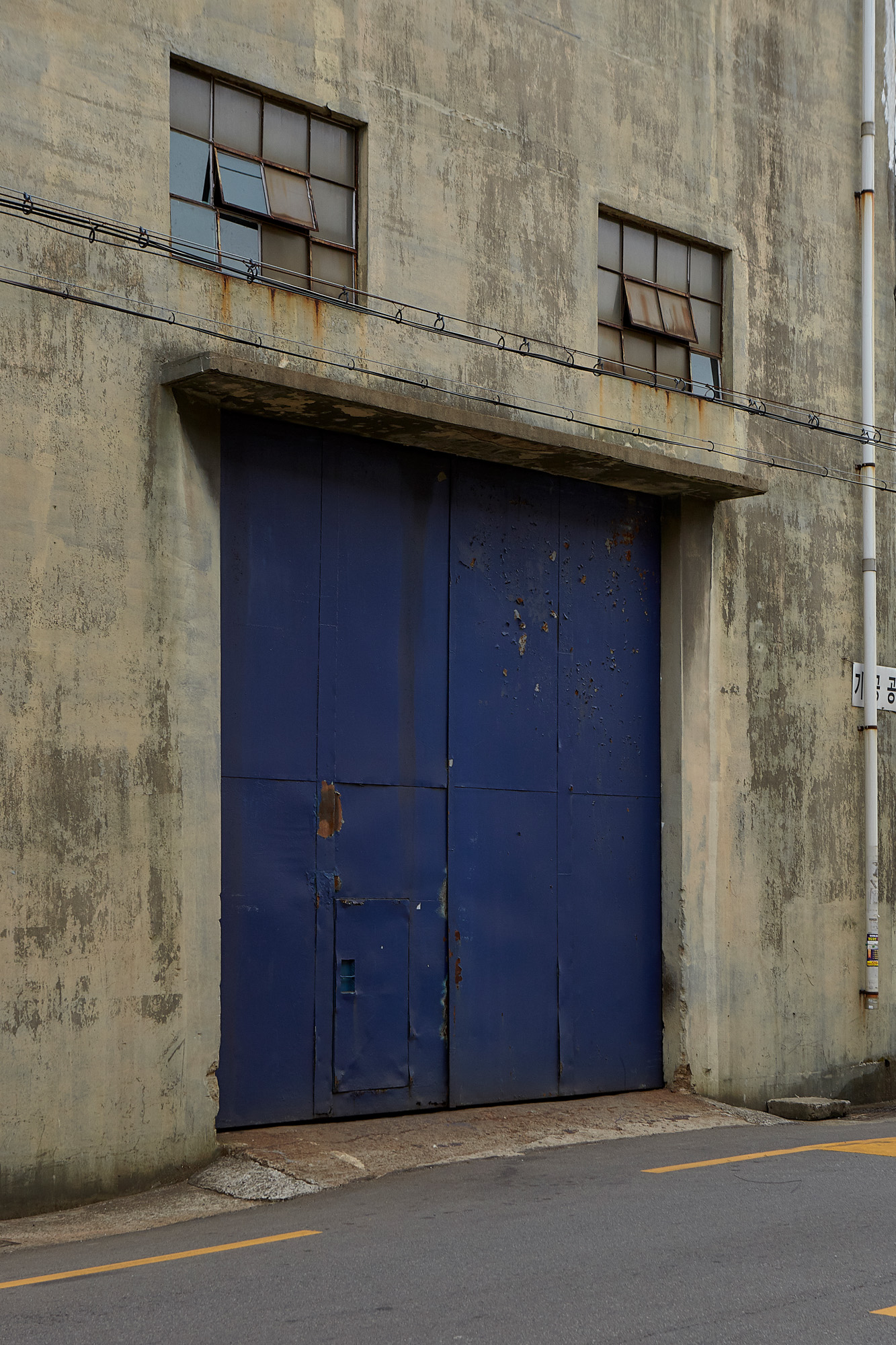
Landscapes in works such as High1 Grand Hotel, Main Tower, Standard Room, Sabuk-eup, Jeongseon-gun(2022) and Repossessed Vehicles, Sabuk-eup, Jeongseon-gun(2024) appear closer to quiet stillness than dramatic events, yet within them lie the industrial shift from coal to tourism, the desire for sudden wealth, and the failures of development. As the series was read within the question of blank spaces and microhistory in 《Fill in the Blanks》(Daejeon Museum of Art, 2025), Kwak’s photographs look at the structure of an era through small places caught between large histories.

Style & Contents

Dongkyung Kwak’s photographs deal with landscapes, but they do not attempt to show conventionally beautiful scenery or commemorative places. He removes temporality and symbolism as much as possible, and looks closely at things that are plain and continuous rather than spectacular.

Works such as Bezout theorem #5(2021) and Bezout theorem #3(2021), produced as pigment prints, and the single-channel video 510kilometer #1, filmed while walking along the Nakdong River on black-and-white film, all lean toward showing the state of a place rather than directly explaining a message. The artist minimizes his own intention and staging, maintains a measured distance from his subjects, and allows viewers to read meaning for themselves through the stillness and absence left within the image.

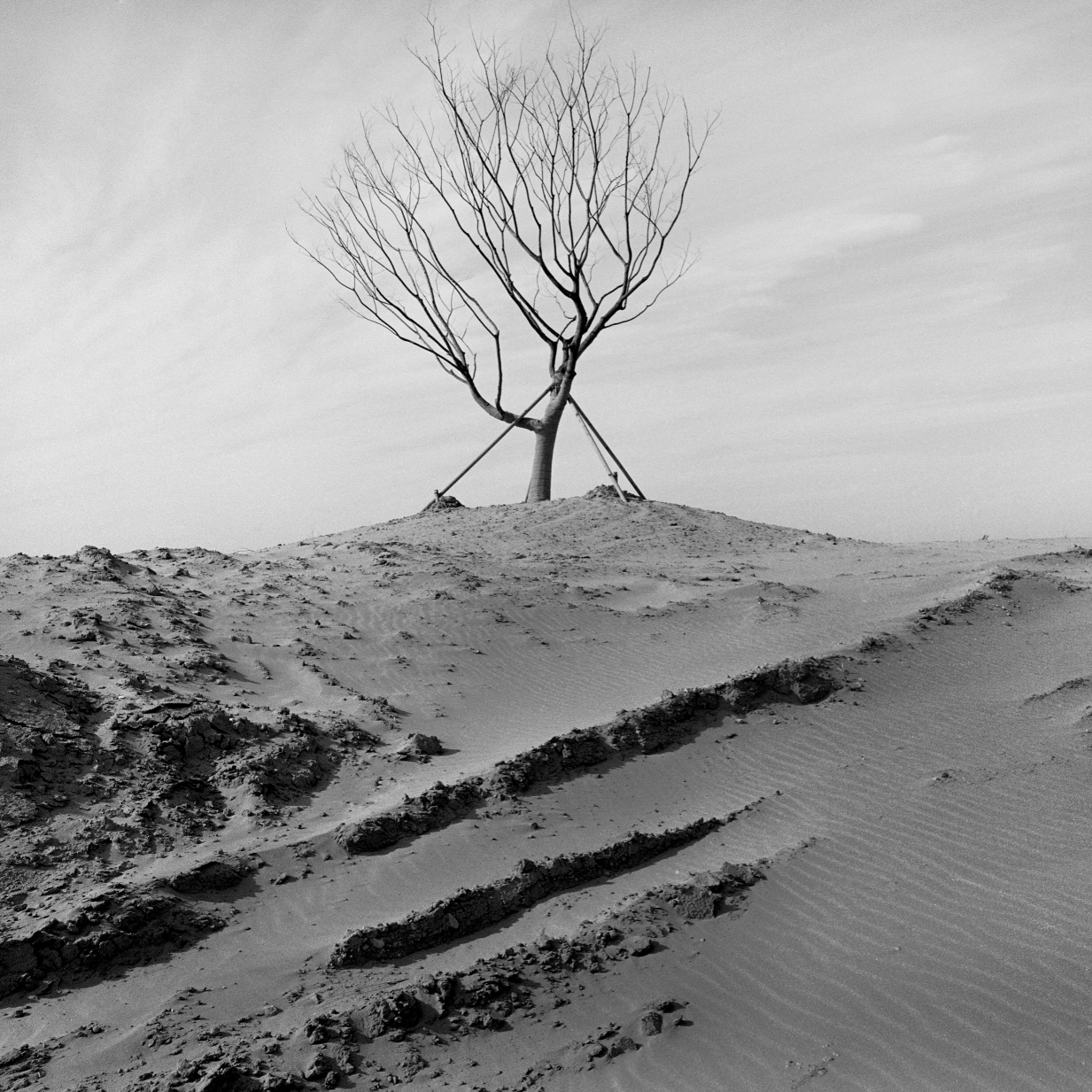
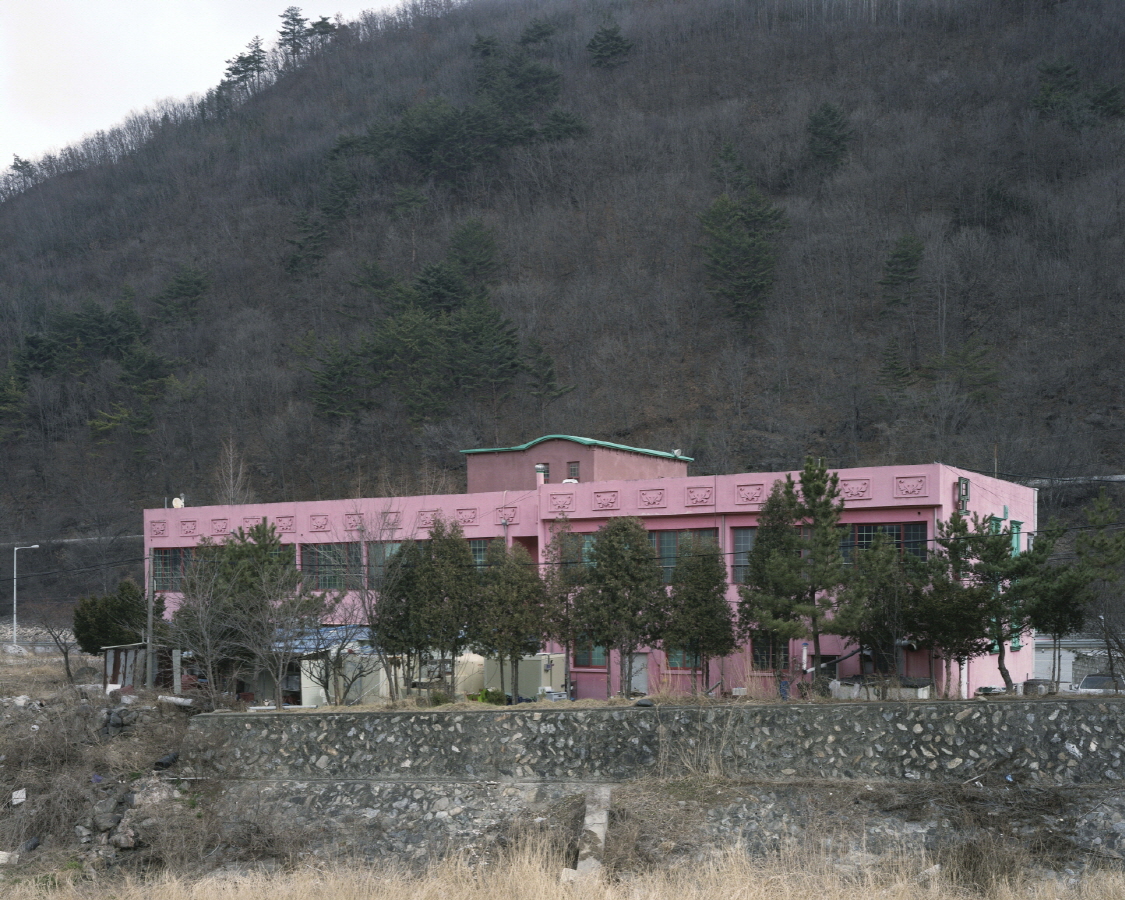
As its title suggests, the 'Bezout theorem' series looks not at the central value that explains the whole, but at the “remainder” left after calculation. Railway apartments, places waiting for development, abandoned structures, and trees growing beside them appear not as direct representations of social controversy or developmental desire, but as landscapes suspended between an industry that has passed and a future that has not yet arrived.

Here, photography operates less like the direct accusation of documentary and more like a low voice. Rather than saying what the problem is, it asks viewers to look at the forms and silences the problem has left behind.

In the 'LAND Landscape' series, Kwak photographs declining amusement parks by choosing cloudy or foggy days, lowering saturation, or adjusting colors through post-production. This process is not a device for heightening sentimental retrospection, but a way of making amusement parks appear not as places trapped in the past, but as landscapes slowly aging within the present.

The 'Exhalation' series, also presented in 《Tyltyl Mytyl》, blurs images of the sea through the simple physical intervention of breathing onto the lens, yet its effect is less decorative than it is a way of revealing the breath and distance involved in looking.

In the 'Slot' series, the form of the photograph shifts toward an even drier and more observational attitude. Kangwon Land hotel rooms, surrounding tourist facilities, abandoned or artificially constructed spaces, and repossessed vehicles all suggest the structure of a regional economy surrounding the casino industry, but the photographs do not exaggerate or dramatize these scenes.

This series also connects to the questions of the city, blank spaces, contemporary capitalism, and sensation discussed in the 2025 Busan International Photo Festival 《Under the Skin: Heat and Membrane》(Ilsansuji, Busan, 2025), DMA Camp 2025 《Fill in the Blanks》, and 《I guess that’s not the problem》(Space Heem, 2023). Kwak’s photographs calmly record the surface of place while allowing us to sense the movements of industry and the structure of desire flowing beneath it.

Topography & Continuity

Based on his transition from environmental engineering to photography, Dongkyung Kwak observes built environments and the residues they leave behind. His photographs do not remain within a critique of development or the aesthetics of ruins; instead, they remove meaning from places that are already saturated with meaning, and look at how alienated or abandoned places continue to exist. Photography, in this sense, becomes a device for looking long at the surface left after a problem has passed.

Across the series presented in 《Tyltyl Mytyl》, he appears cautious about excessive narrativization, even as he deals with private memory, social events, failures of regional development, and the surface of nature. In 'LAND Landscape', amusement parks are not fixed as symbols of lost childhood, and in 'Bezout theorem', abandoned buildings are not reduced merely to signs of the damage caused by development.

In the 'Slot' series, too, the landscapes around Kangwon Land do not directly dramatize the tragedy of the casino industry, but show the unnatural stillness produced as capital, tourism, and regional economy become entangled.

Kwak has explored the places and sensations that remain after social messages. Through the 'Exhalation' series, he shows how photography can operate without speaking, through the surface of nature older than historical narrative, while through the 'Slot' series, he brings the structure of industrial displacement and capitalism into specific regional scenes. Kwak was also selected as one of the participating photographers for ‘Photo of the Year 2024,’ an annual project organized by the media outlet SisaIN.

These experiences show the potential for his work to expand across regions and industries, private memory and public history, photography and video. His photographs will likely continue to look into the paradoxes of reality that are clear yet difficult to see, not through the center of major events, but through the quiet structures left around them.

Works of Art

Photography That Holds the Remainders of Meaning

Articles

Exhibitions

Activities