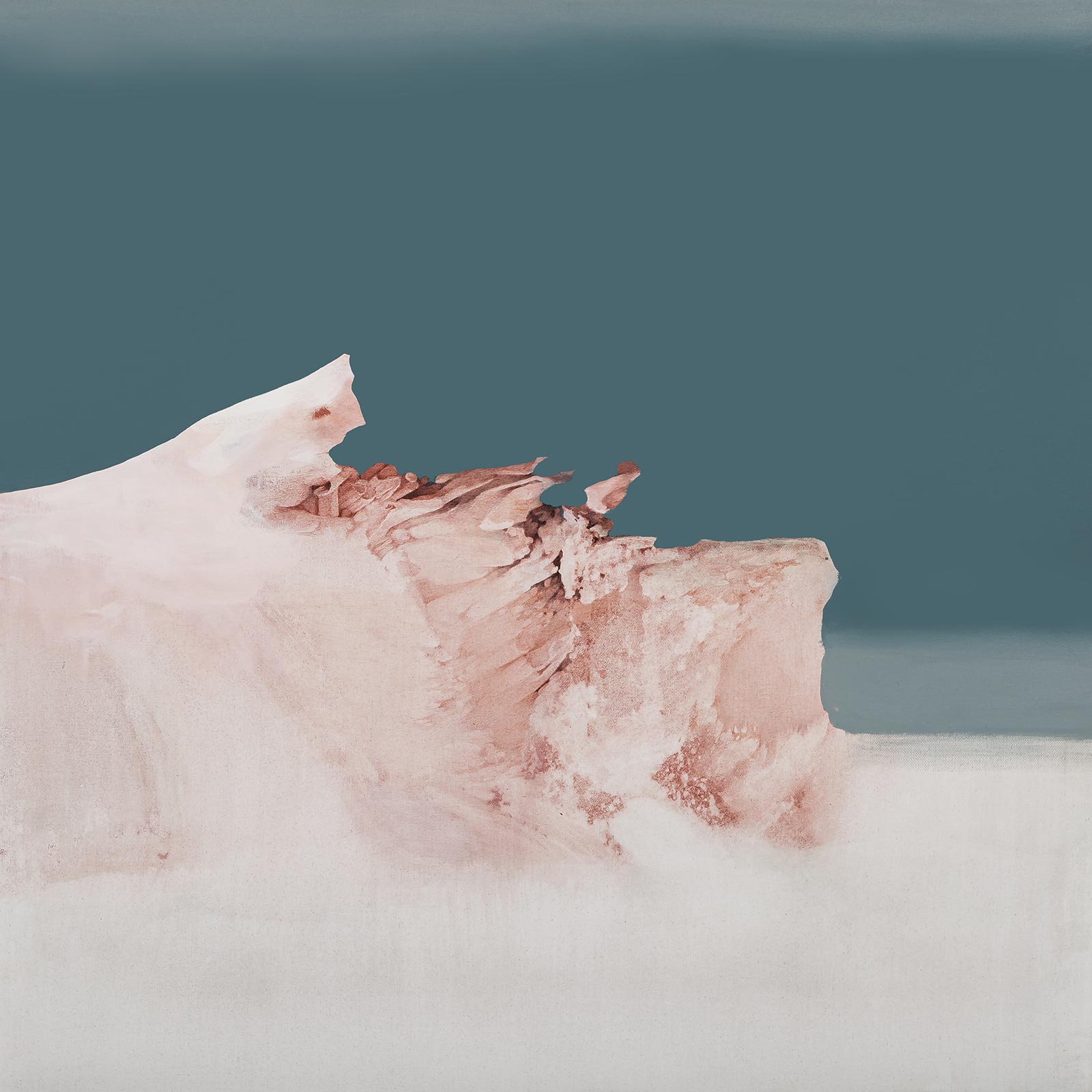
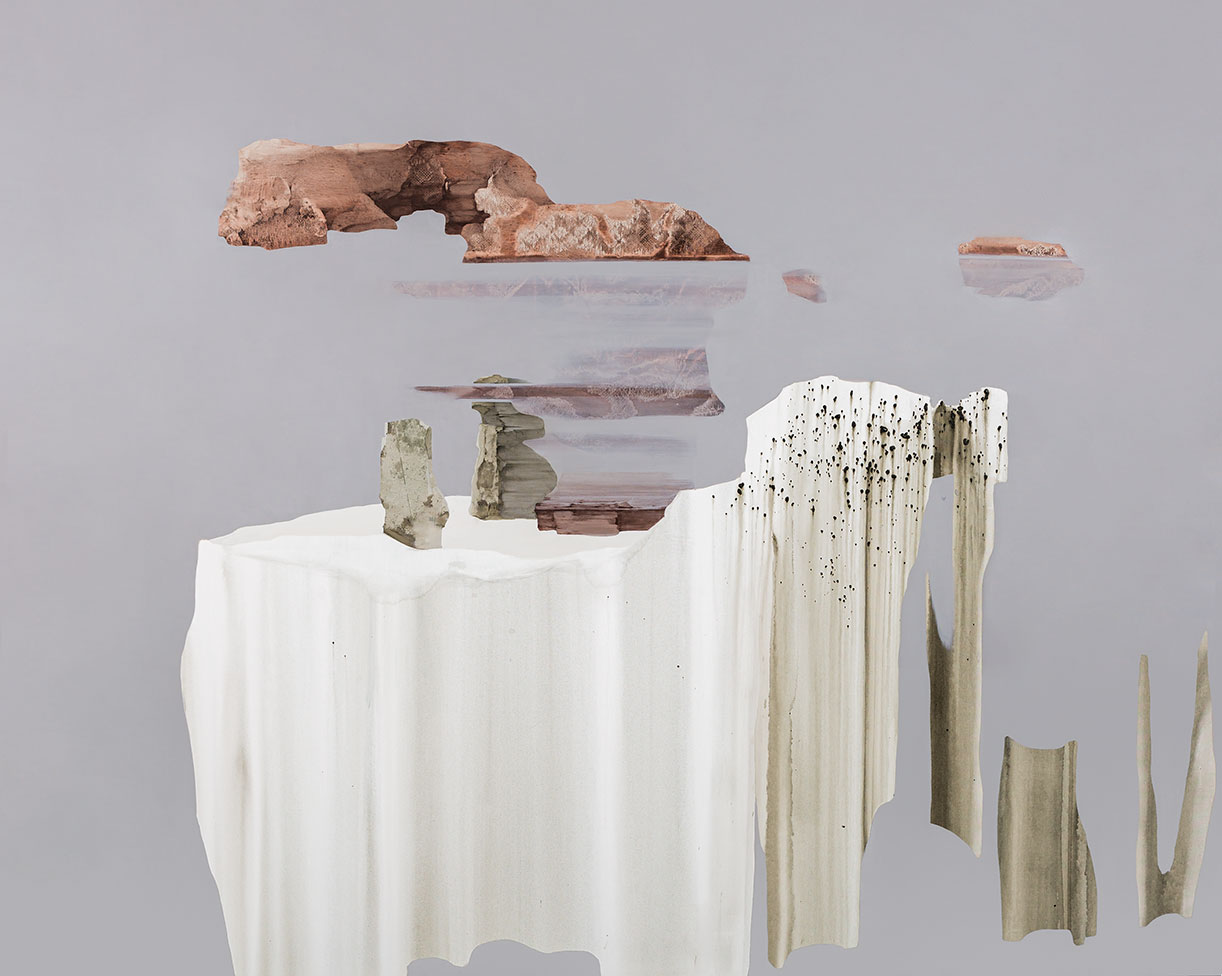
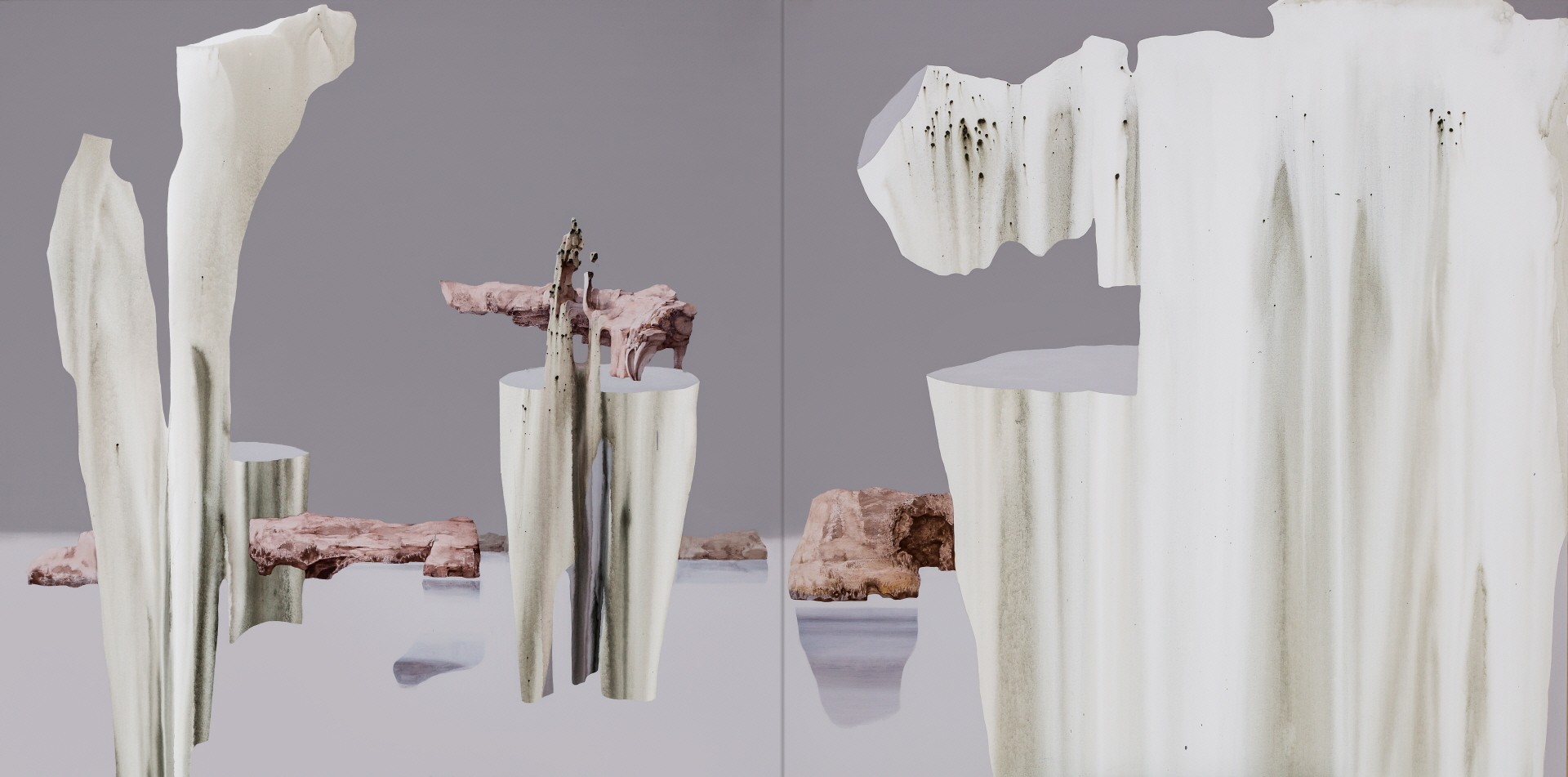
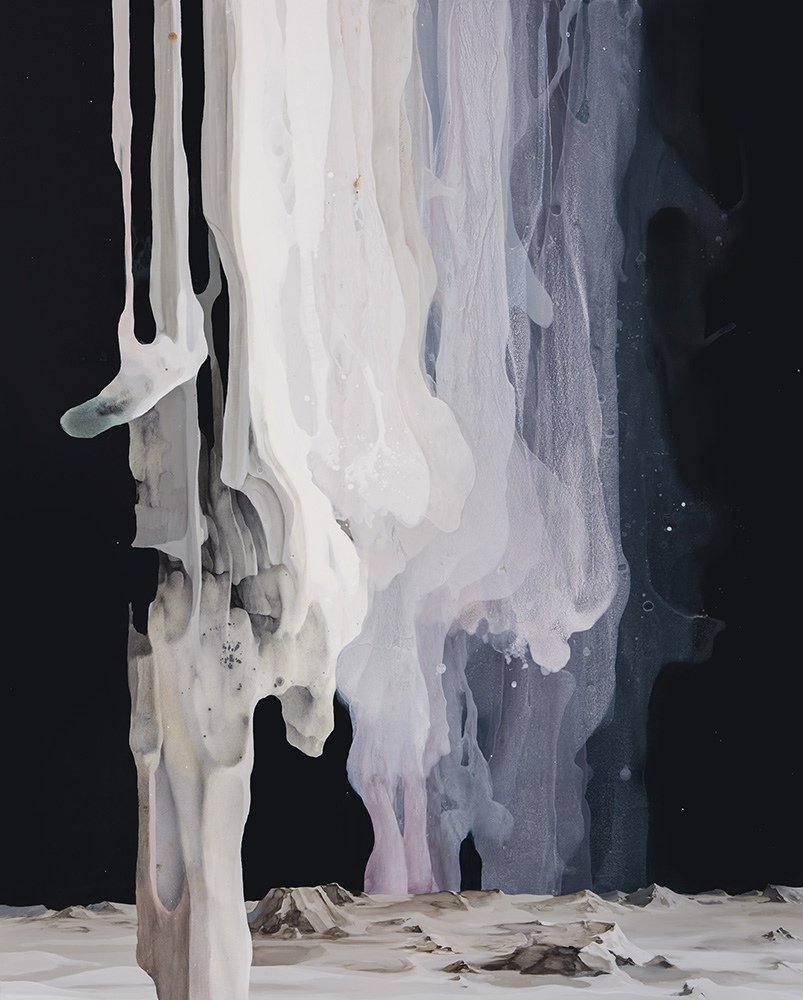
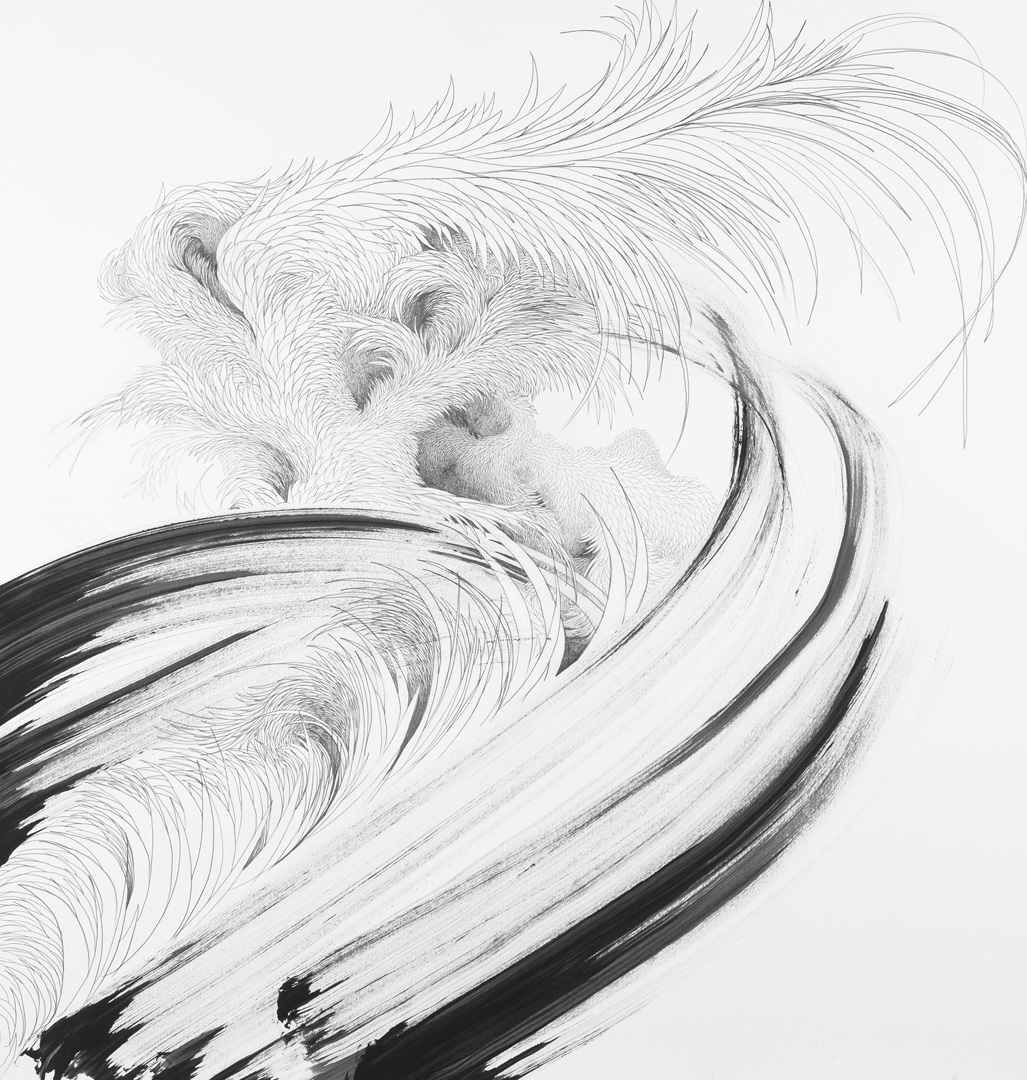
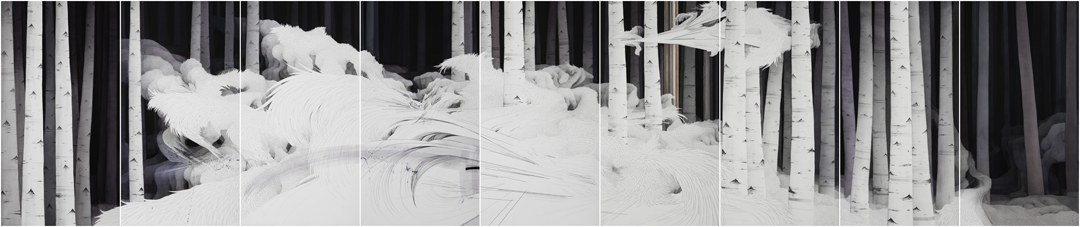
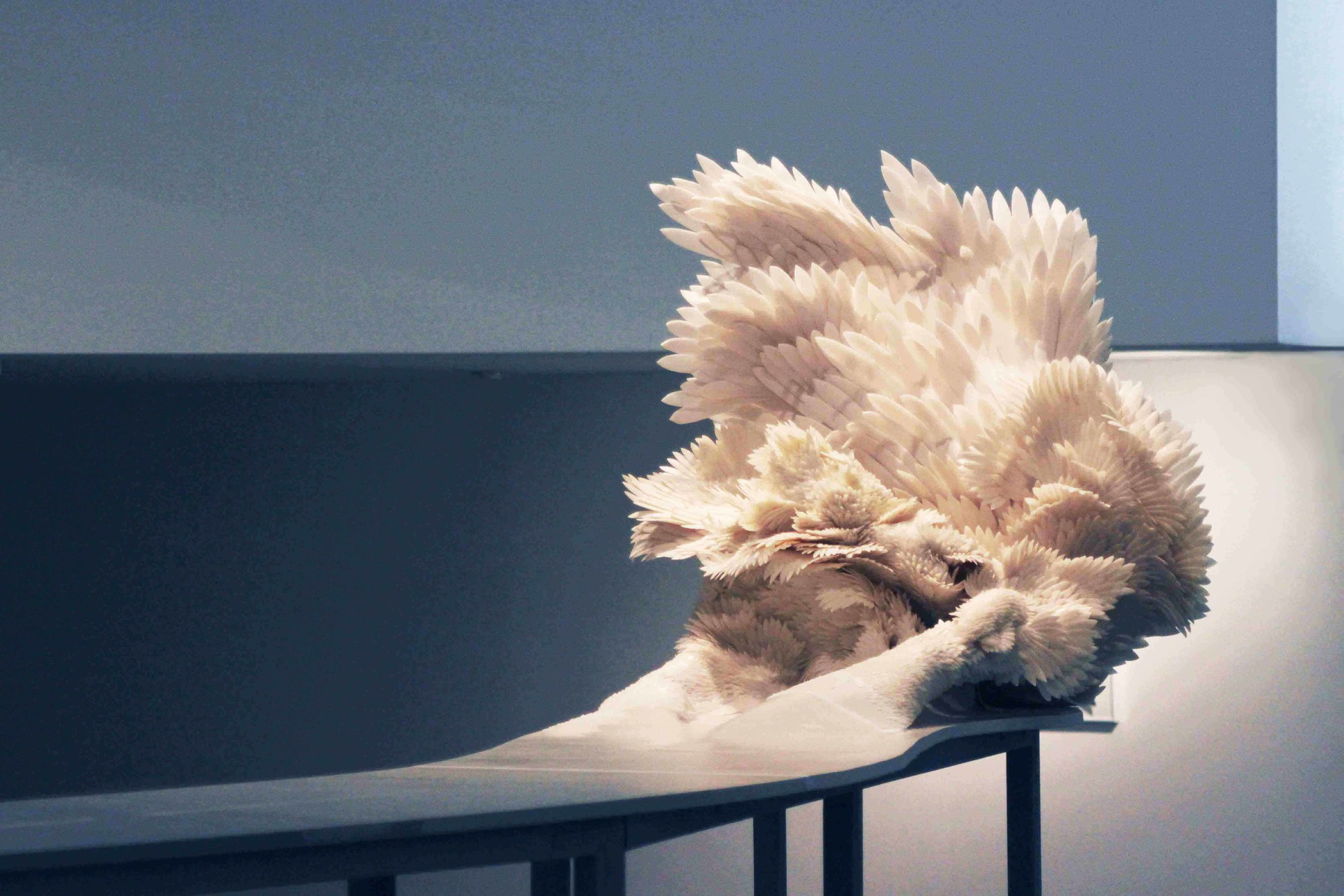
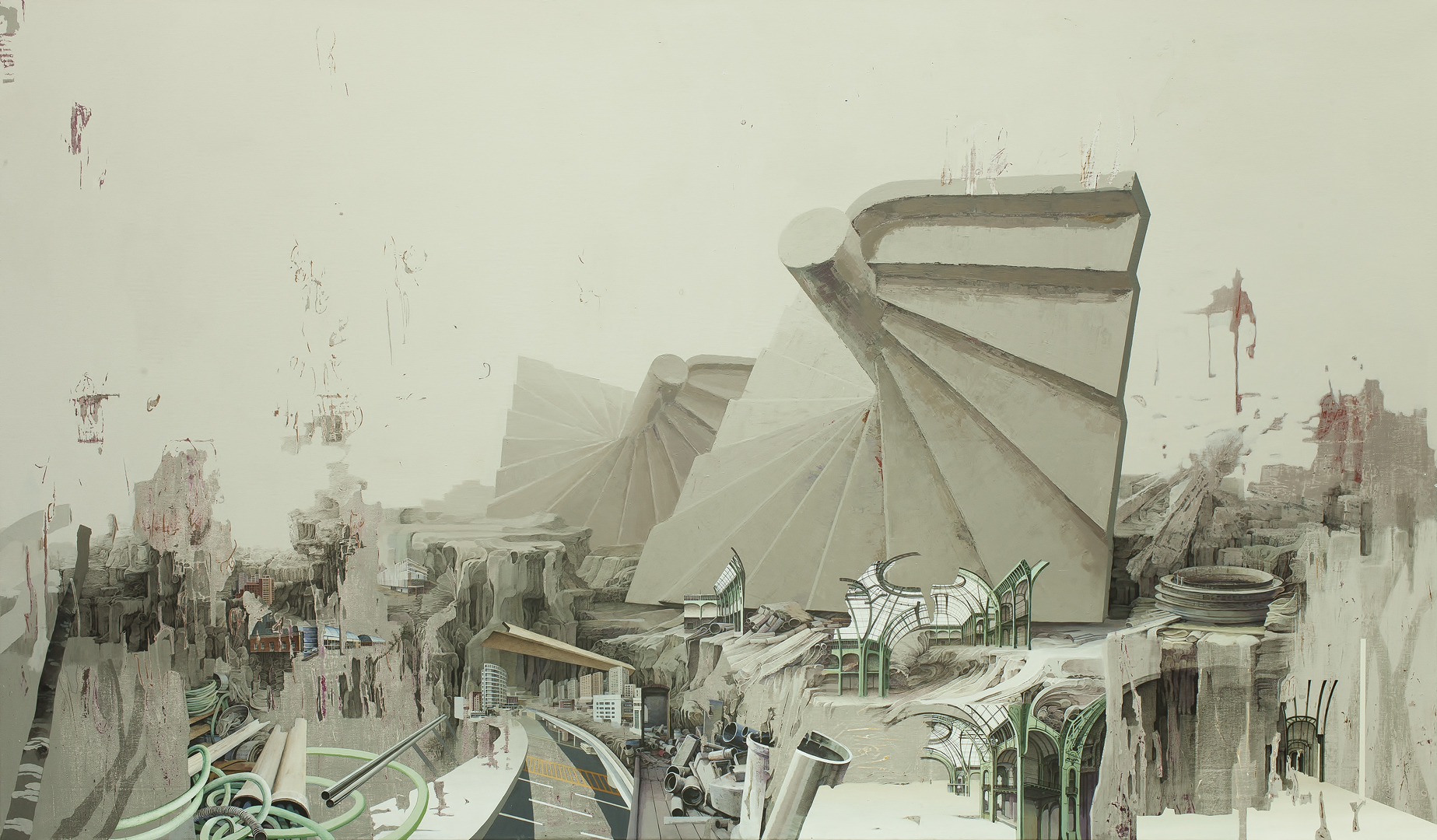
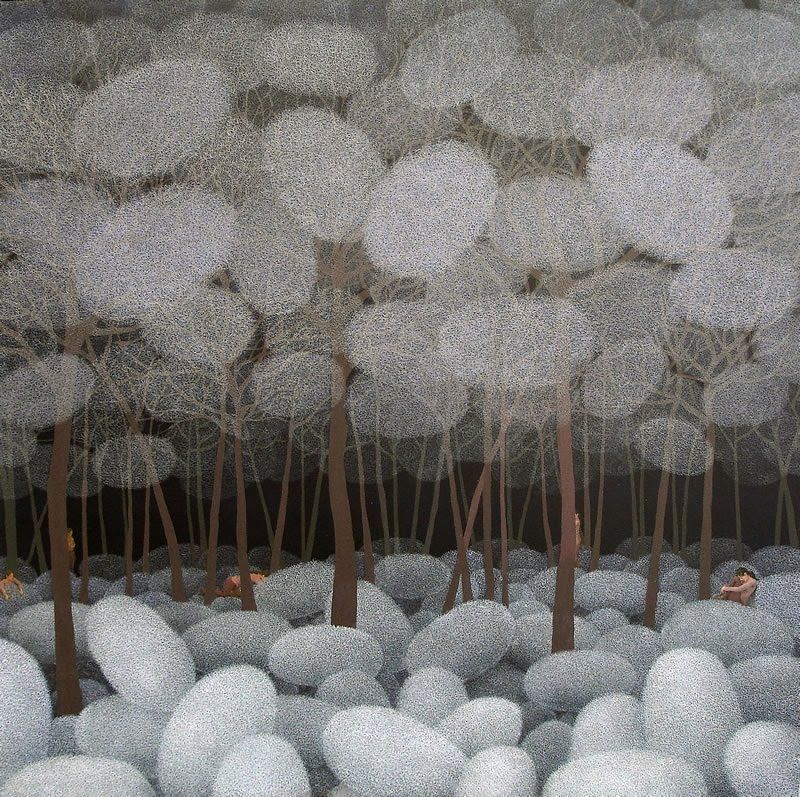
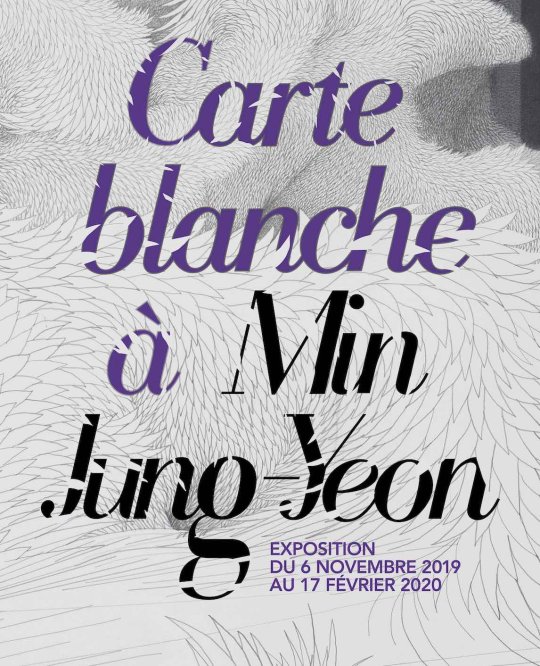
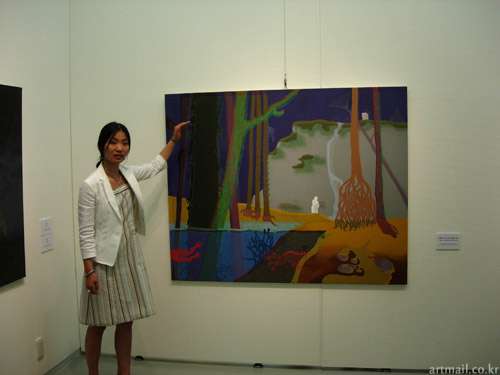
While painting and drawing form the core of Min Jungyeon’s practice, her recent work has expanded into installation and spatial interventions that extend the physical boundaries of painting. Rather than presenting images as self-contained scenes, she constructs complex environments in which multiple temporalities and spaces intersect.
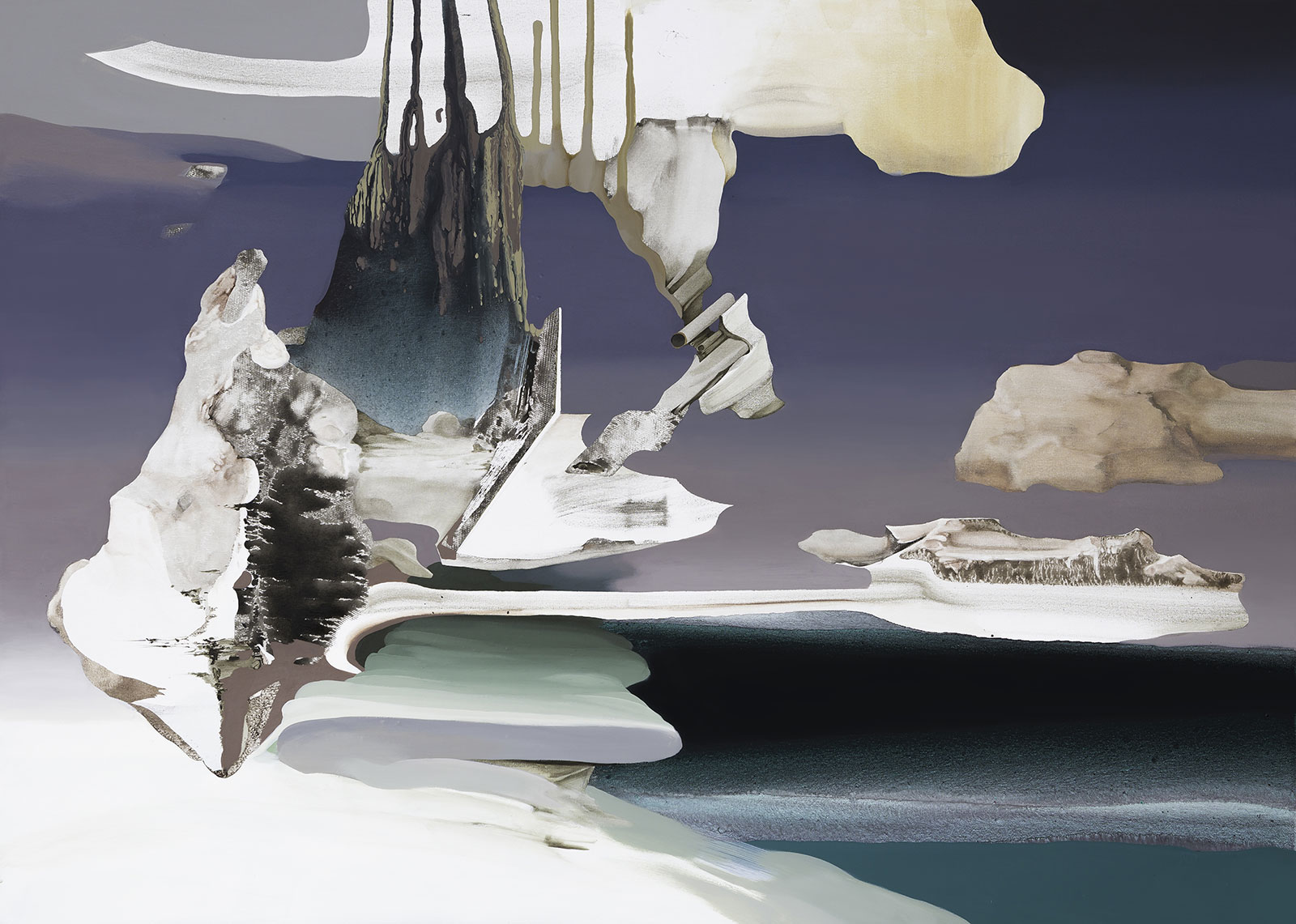
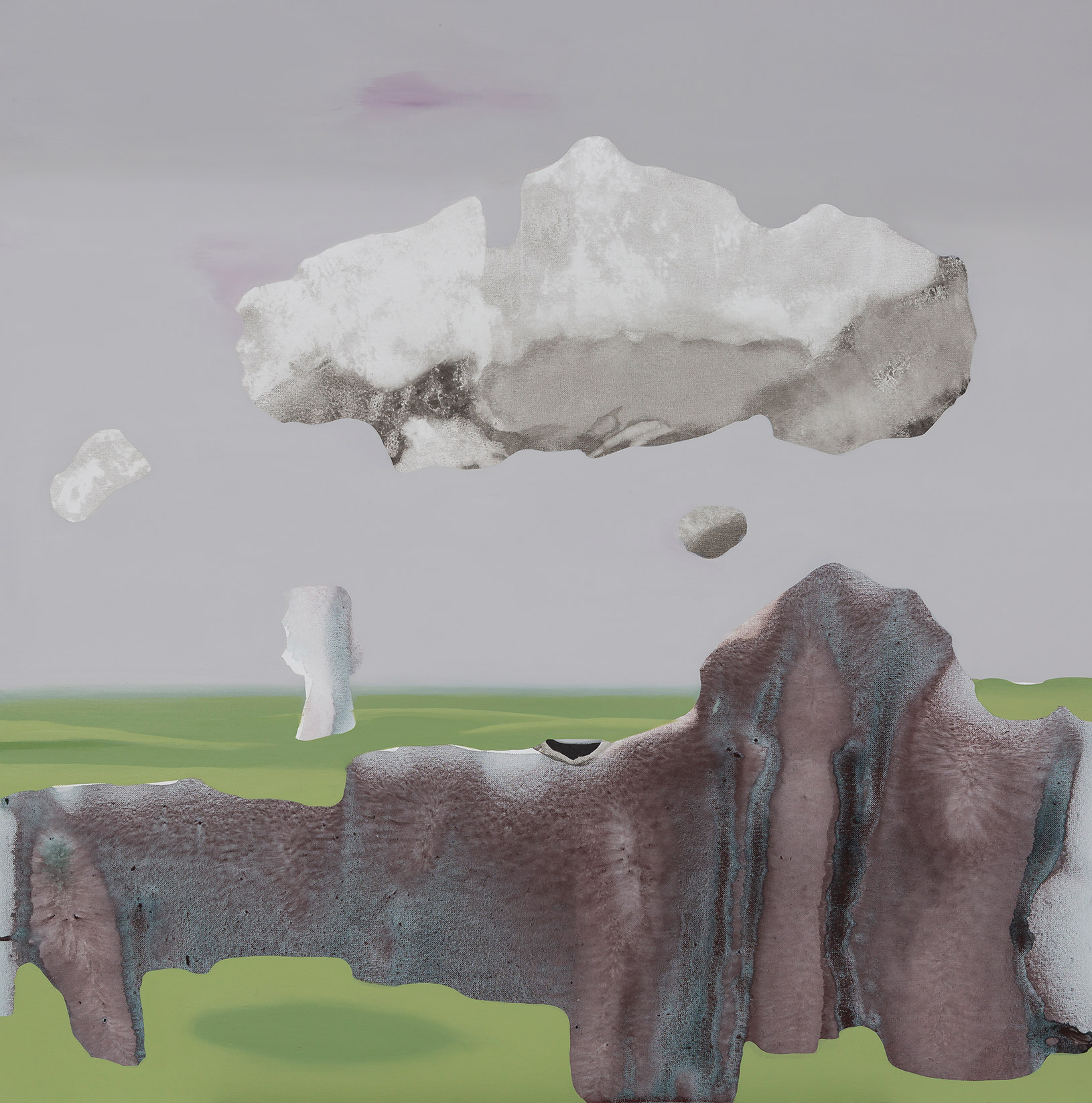
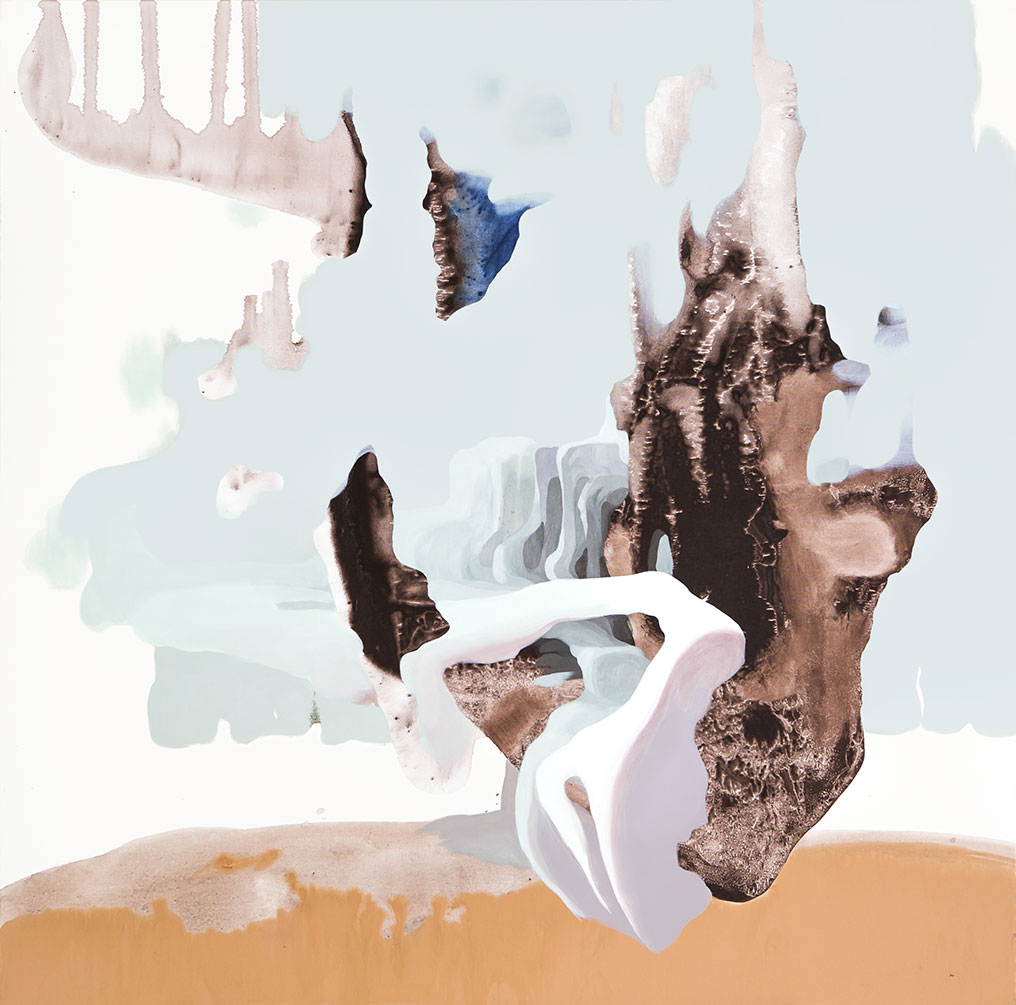
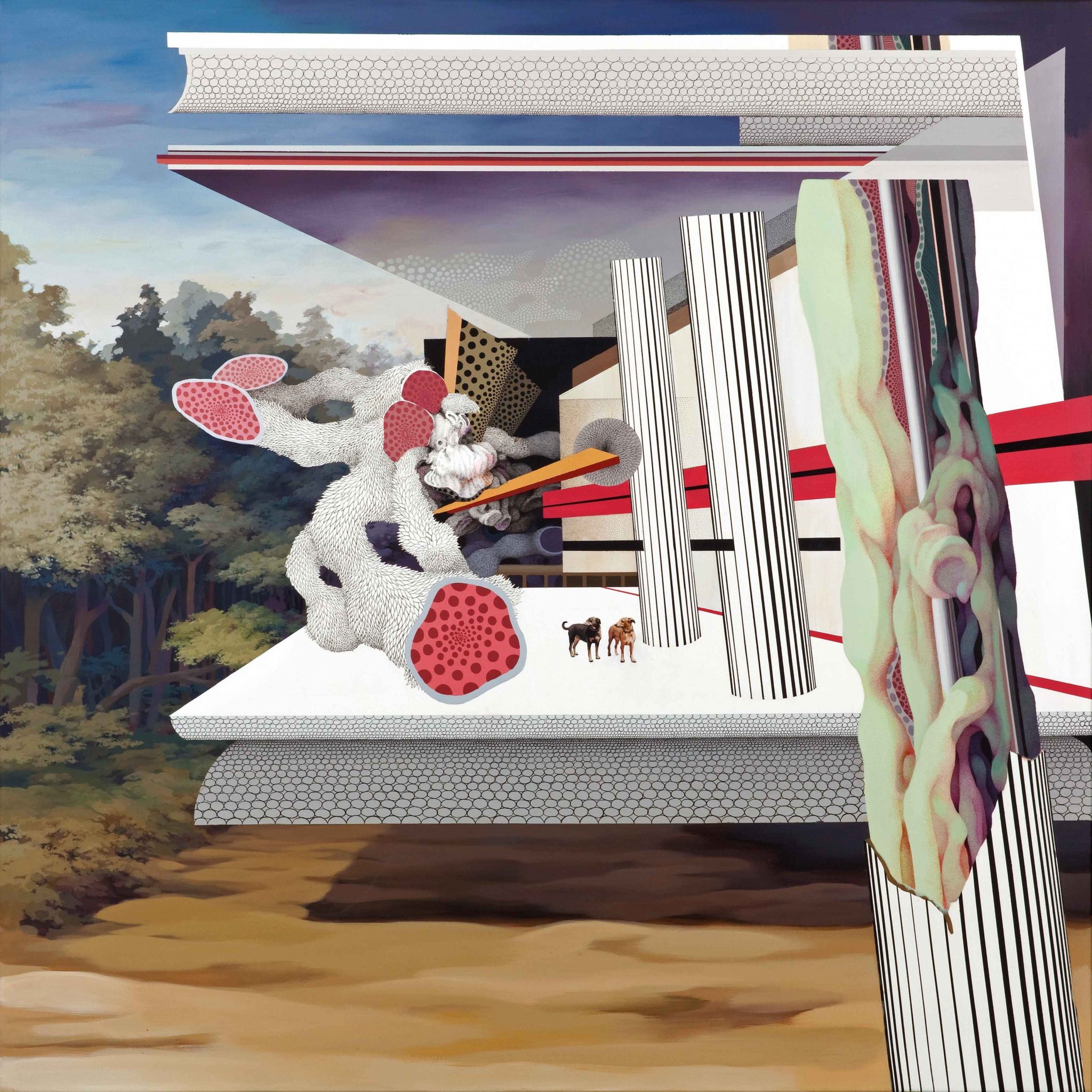
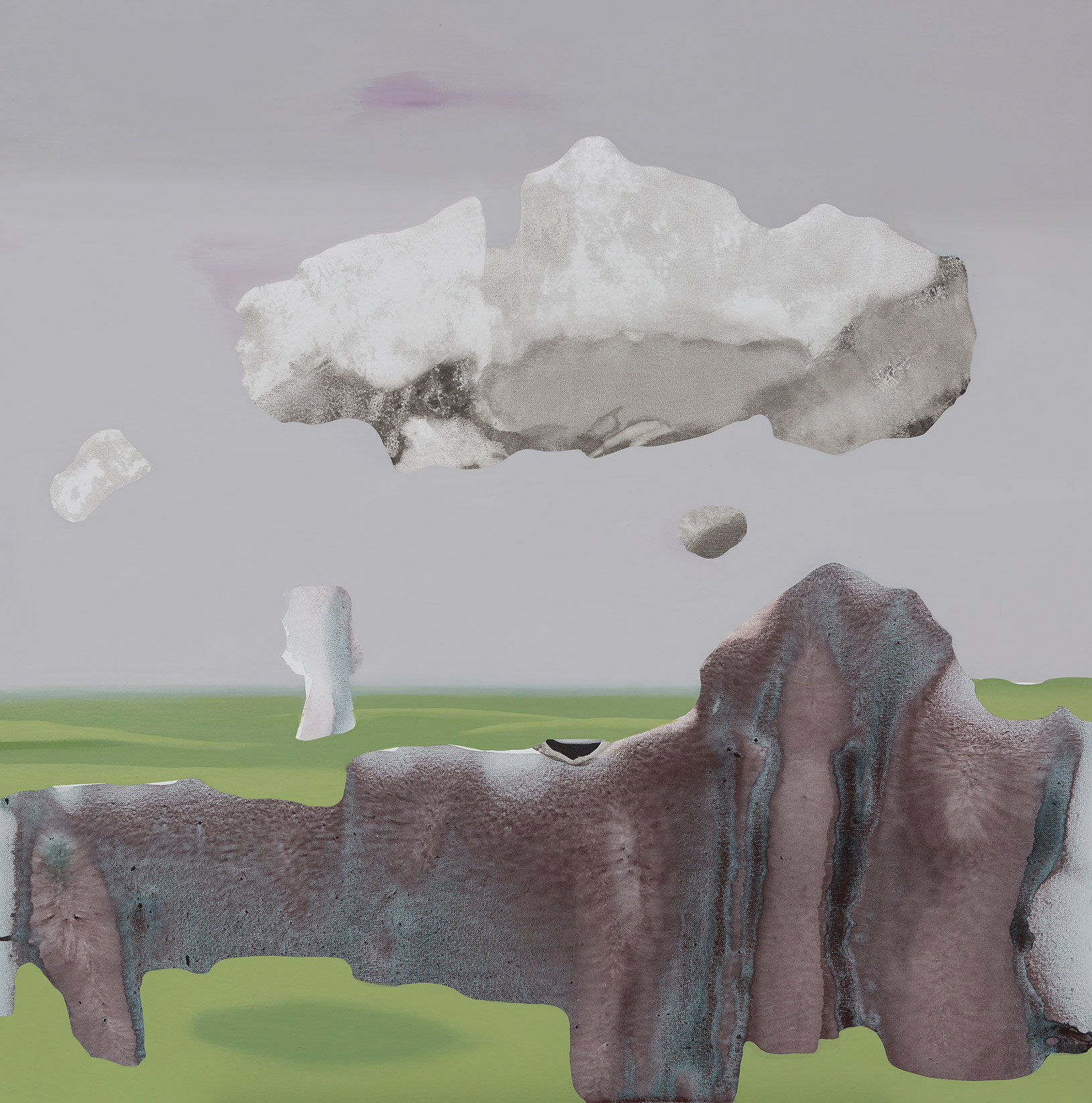
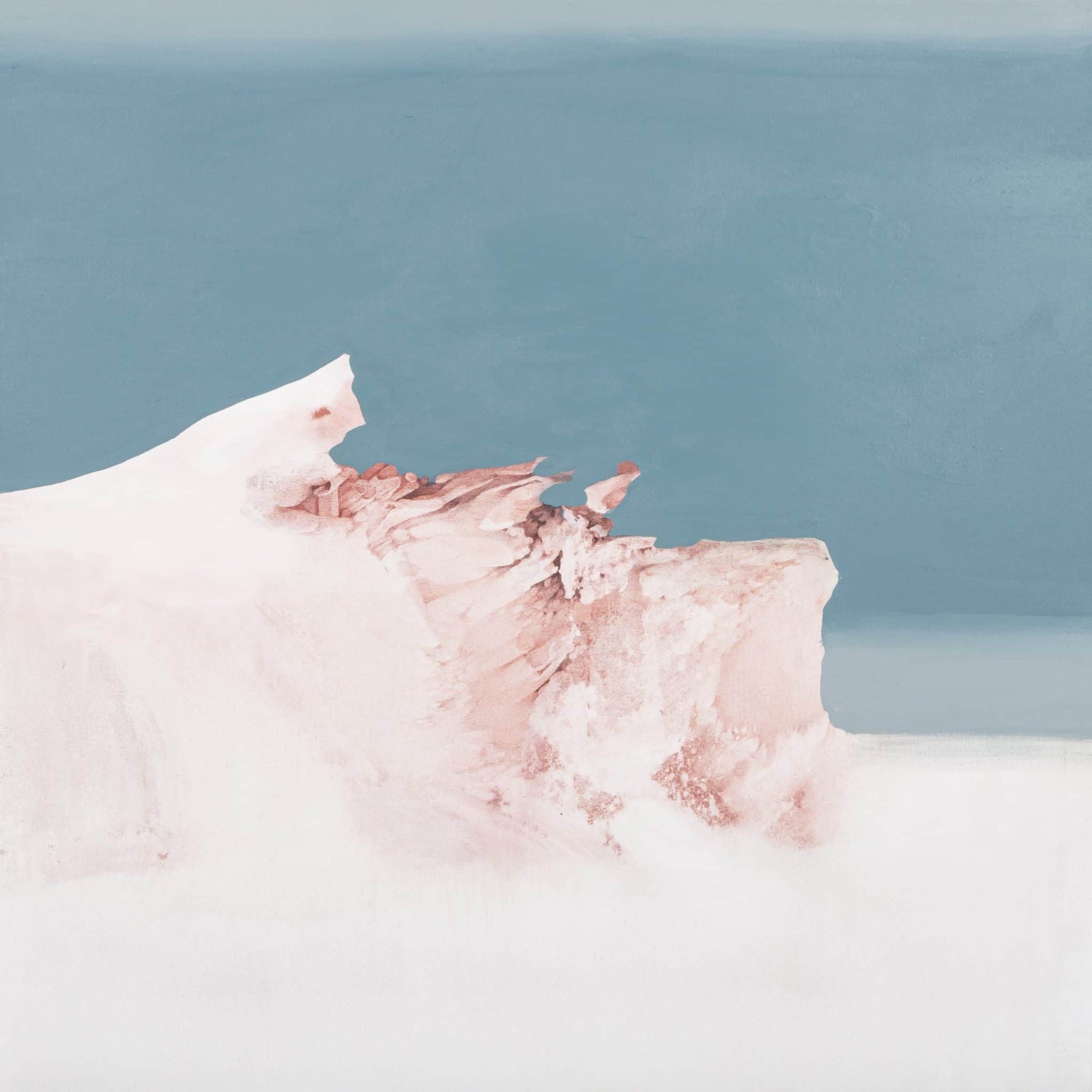
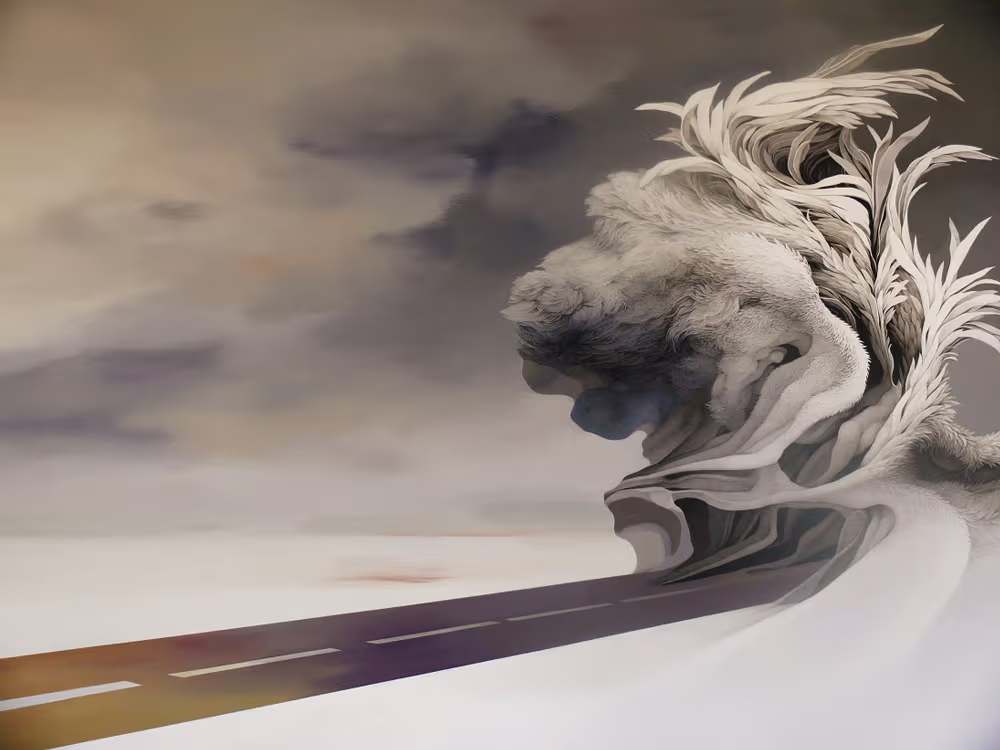
Within her compositions, landscapes, architectural elements, and organic forms coexist, while perspective and flatness, figuration and abstraction, narrative and non-narrative structures operate simultaneously. These layered compositions encourage viewers to move through the pictorial space, discovering shifting relationships rather than occupying a single fixed point of view.
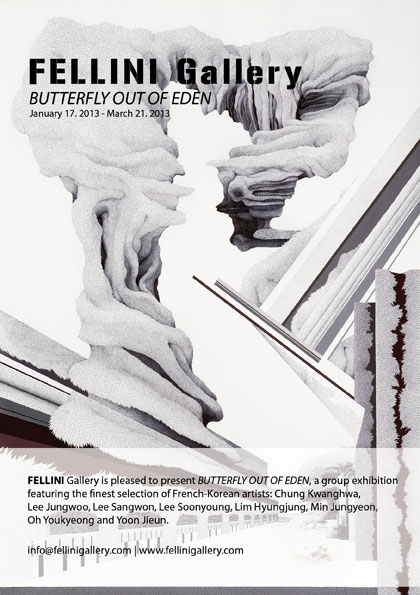
One of the defining characteristics of Min’s work is her distinctive visual vocabulary. Roots, stalactites, internal organs, fungal networks, clouds, and seed-like forms appear throughout her paintings, not as representations of identifiable objects but as hybridized entities that merge multiple references. These forms seem to grow, proliferate, and transform continuously, connecting organically with other elements within the composition.
In doing so, they blur conventional distinctions between living and non-living matter, nature and artifice, interior and exterior space. Viewers are often confronted with forms that feel simultaneously familiar and unclassifiable, producing a persistent tension between recognition and uncertainty.
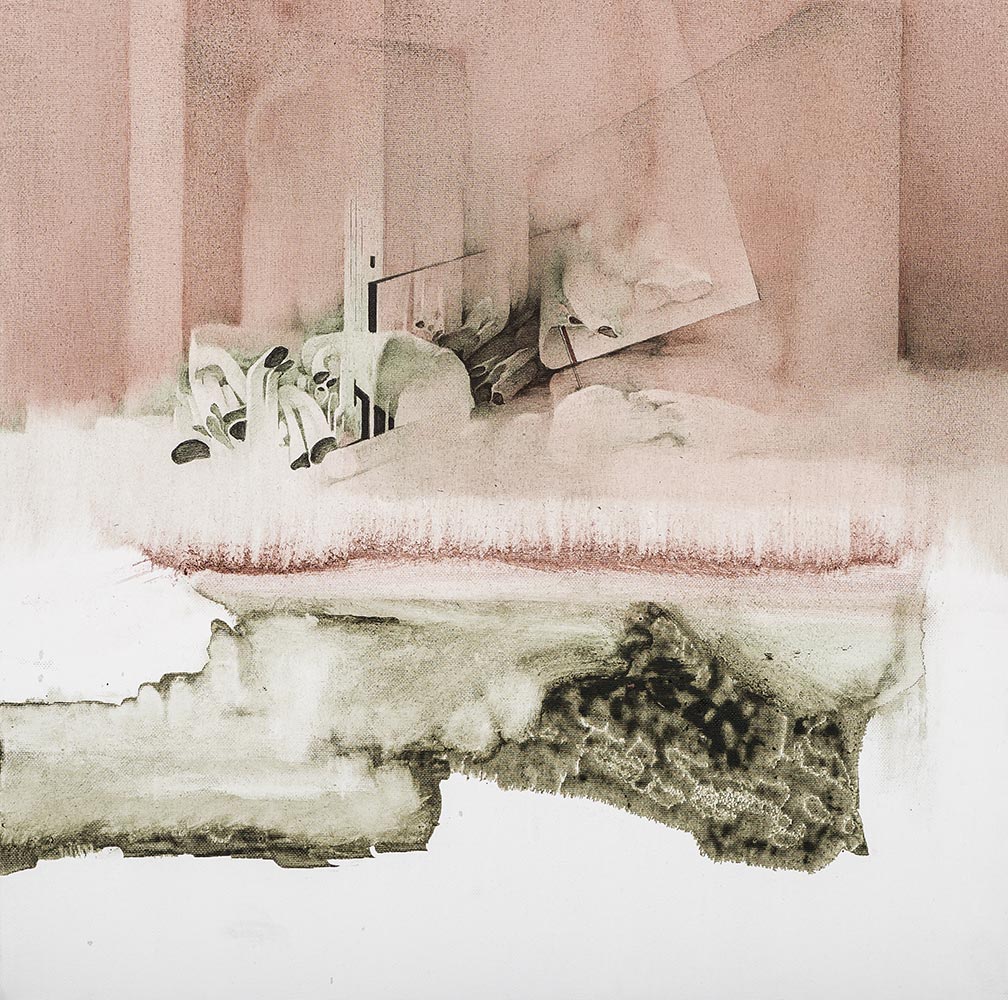
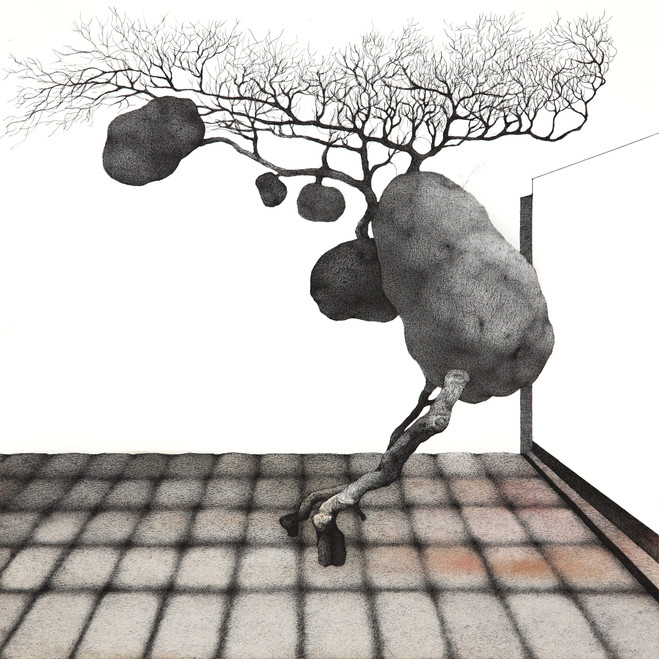
Min’s paintings emerge through highly meticulous and labor-intensive processes. Developed from her early experiments with repetitive mark-making, her dense accumulations of dots and lines embody the passage of time through the act of construction itself. Drawing, in particular, functions as a form of breathing for the artist.
Using Indian ink, pencil, and colored pencil, she builds intricate surfaces through the repetition of countless marks, generating a distinctive visual rhythm. Acrylic painting, by contrast, involves a more structured and deliberate approach, serving as a field in which she investigates relationships between color, form, and spatial organization. Although drawing and painting employ different methodologies, they operate in a complementary manner within her practice.
Despite the fantastical imagery that populates her work, Min’s paintings remain distinct from Surrealist attempts to visualize the unconscious. Her images emerge from imagination, but they are equally rooted in observation and lived experience.
The fantastical therefore exists not as an escape from reality but as another dimension embedded within it. Rather than imposing fixed narratives, Min maintains an open structure that allows viewers to construct their own meanings. Through this approach, painting becomes both a space of reflection and a site for expanded sensory experience.



.jpg)