Defrag - K-ARTIST

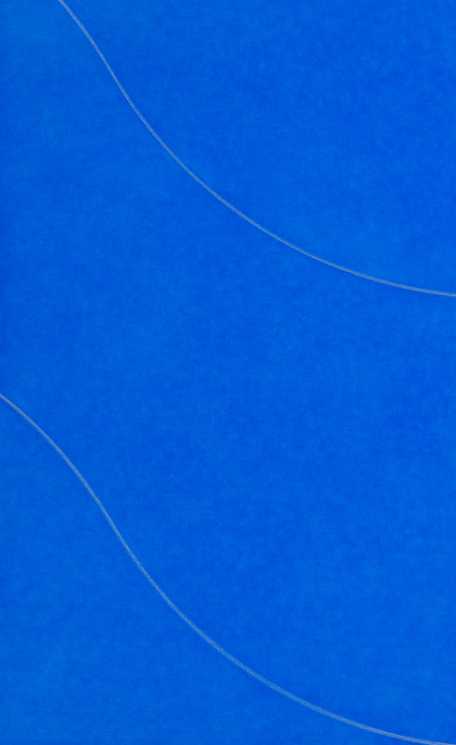
Defrag

2017
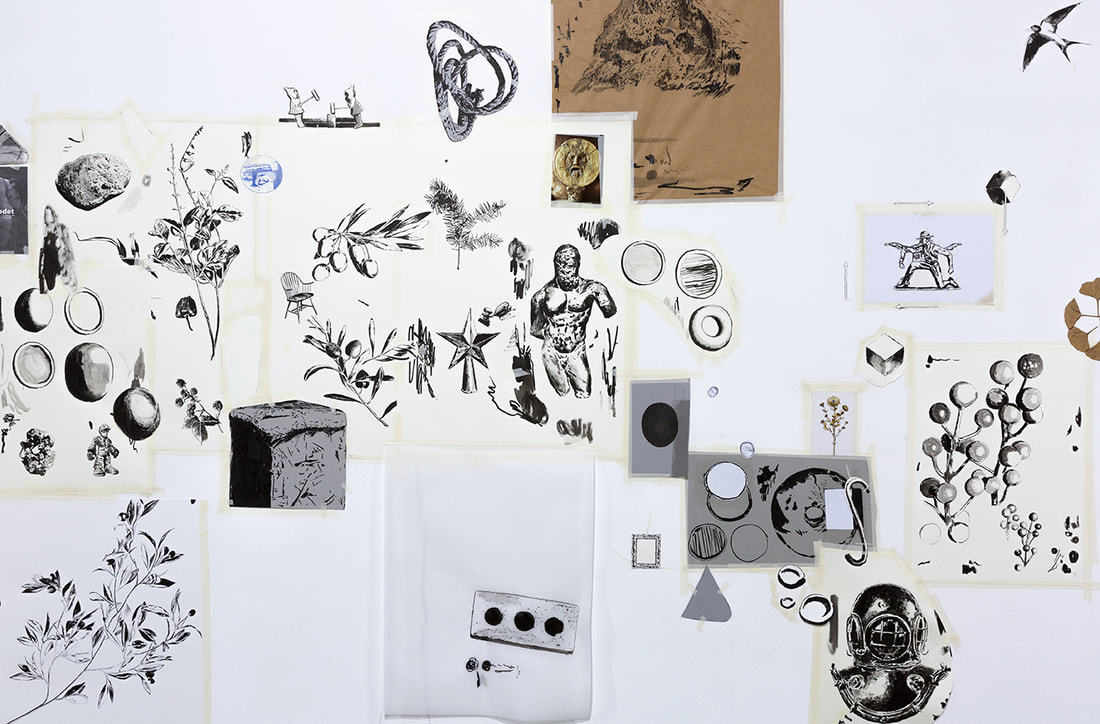
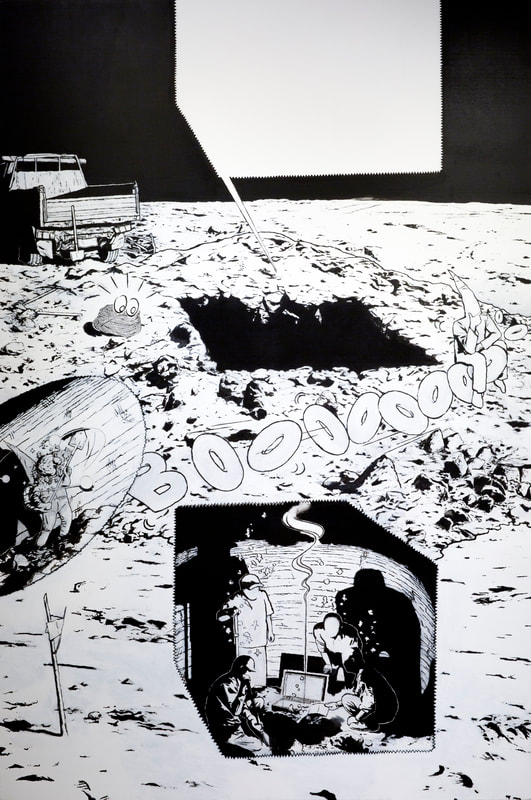
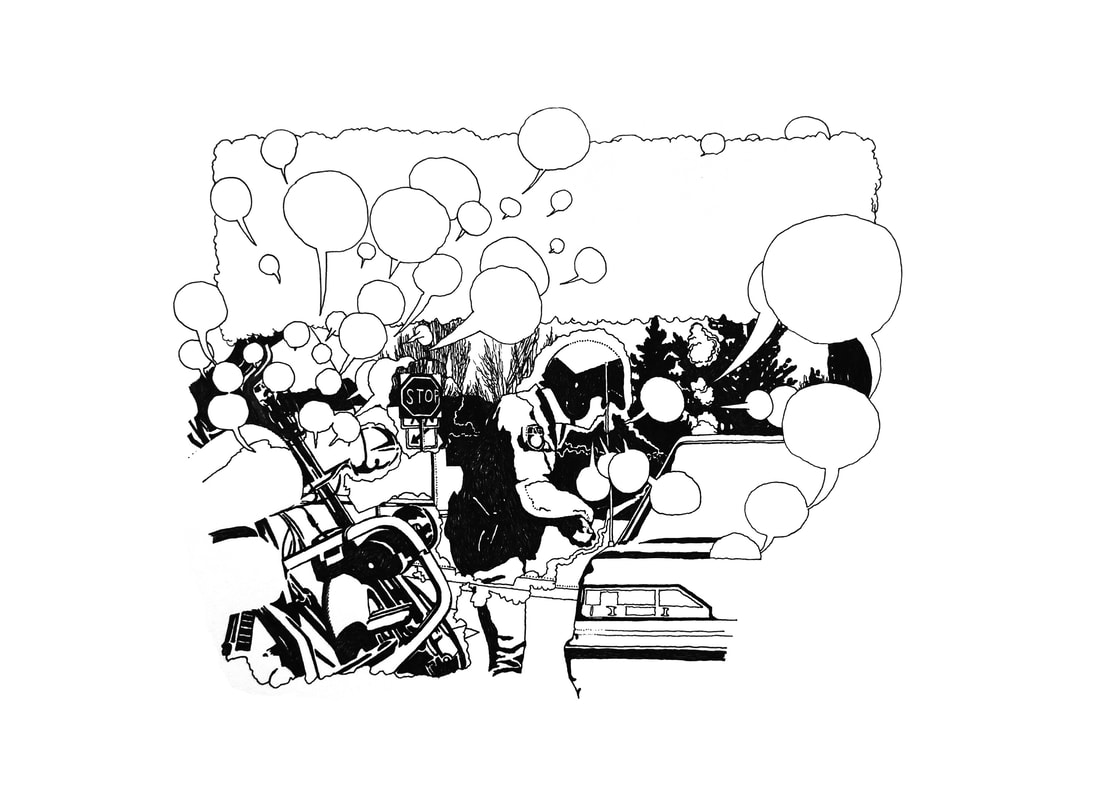
Drawing collage on wall
Dimensions variable
About The Work

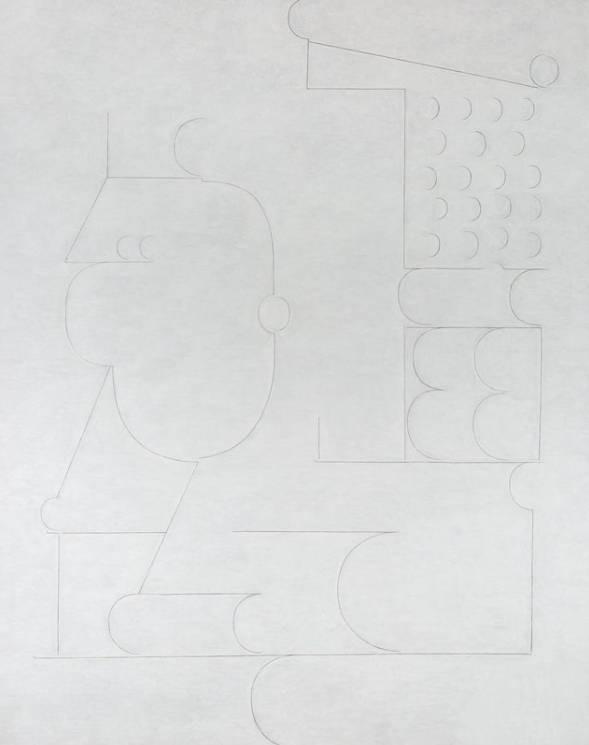
Woojung Hoh represents his own pure abstraction by consistently exploring infinite possibilities and moderate variations found in the most fundamental combination of lines and faces. He collects images of various objects that emerge with interest in events and thoughts in modern society and expresses the meaning and the hidden side of them in the form of paintings.

The main keyword that features Hoh’s work so far is the hidden side. He reveals the hidden side of something through a relationship that could not be accurately defined, such as light and shadow, foreground and background, and individuals and the whole.
 
Based on this keyword, Woojung Hoh has explored viewing subjects from both the inside and the outside, identifying and expressing blind spots, and examining how represented subjects reveal yet another hidden side in the presence of others.

He uses abstraction not as a completed formal language, but as a tool for experimenting with the relationship between existence and perception. While many abstract paintings develop around questions of color field, gesture, flatness, and materiality, Hoh asks how a single line can suggest a certain whole, what kinds of relationships are contained within seemingly empty space, and how we infer the parts that remain invisible. 

Through extreme simplicity, Woojung Hoh’s work reveals hidden dimensions beneath the surface, reproducing the organic and indeterminate relationships between foreground and background, individual and whole, while unsettling our conventional notions of visible “existence.” His surfaces, where the visible and invisible, subject and background, part and whole are repeatedly reversed, lead viewers to examine their own criteria of perception. 

Solo Exhibitions (Brief)

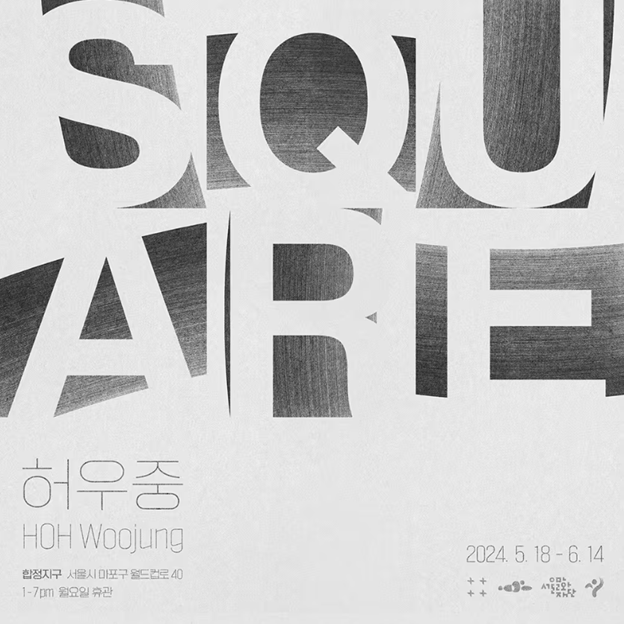
Woojung Hoh has held solo exhibitions including 《Square》 (Hapjungjigu, Seoul, 2024), 《Panorama》 (Daejeon Museum of Art Open Storage, Daejeon, 2024), 《Beyond the Line》 (Kumho Museum of Art, Seoul, 2022), 《Score over Score》 (Chapter II / Chapter II Yard, Seoul, 2021), and 《Shade Left Behind》 (SONGEUN Art Cube, Seoul, 2020).

Group Exhibitions (Brief)

Hoh has also participated in numerous group exhibitions, including 《The Codex of Returns》 (Chapter II, Seoul, 2025), 《Sense of Direction》 (Cheongju Museum of Art, Cheongju, 2023), 《Summer Love 2022》 (SONGEUN, Seoul, 2022), 《Indexing the Nature: From Near and Far Away》 (No.9 Cork Street, London, 2022), 《Rain Reading》 (DOOSAN Gallery, Seoul, 2021), 《Sharpness_Temperature of Art》 (Ilwoo Space, Seoul, 2020), and 《The Unstable Objects》 (Nam-Seoul Museum of Art, Seoul, 2019).

Residencies (Selected)

Hoh has been selected for residency programs including Seoul Art Space Geumcheon (2021), SeMA Nanji Residency (2020), and Chapter II (2019).

Collections (Selected)

Hoh’s works are held in the collections of the MMCA Art Bank, the Seoul Museum of Art, the Daejeon Museum of Art, and the Gyeonggi Museum of Modern Art, among others.

Works of Art

Painting as an Indeterminate Potentiality

Originality & Identity

Woojung Hoh’s work begins from a way of sensing the uncertainty of reality, and has gradually expanded toward an exploration of the relationships between “existence” and “non-existence,” foreground and background, and part and whole. In his early works, the artist dealt with emotions such as cynicism, distrust, anxiety, and fear that permeate society through drawing, painting, collage, and cartoon-like images.

The picture planes of this period begin from concrete events or objects, but rather than explaining them through direct narratives, they construct unstable situations by juxtaposing different objects and signs. Later, in Tower of Notion(2017) and the ‘Tower of Notion’ series, the artist began to more fully reveal a sense of balance and imbalance through structures reminiscent of seesaws or scales.

Here, balance is not a stable state, but closer to a state of tension barely maintained through invisible relationships between different objects and geometric forms.
 
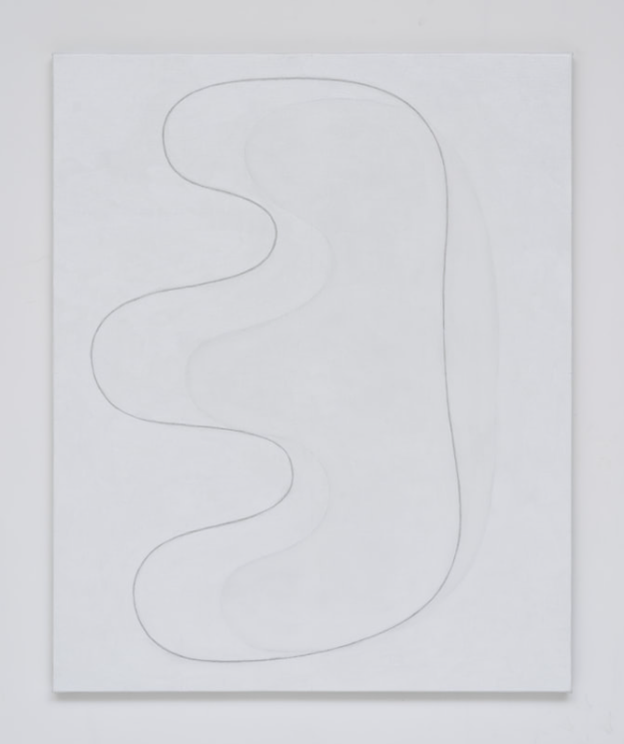
Around the time of his 2018 solo exhibition 《Spiritual Attitude》(Gallery Chosun, 2018), Hoh’s work moved toward a more restrained structure of abstraction. In Hard to See(2018) and Like My Scale and Your Scale Cannot Be the Same(2018), the concrete forms of objects gradually disappear, leaving lines, incomplete forms, and seemingly empty backgrounds on the picture plane.

The artist presents surfaces of possibility in which viewers can find balance in their own ways, asking what is visible and what is not, and what kinds of forms can be said to actually exist. In this process, the “hidden side” is not simply a concealed reverse side, but becomes a sensory and perceptual condition revealed through relationships that cannot be clearly divided, such as light and shadow, foreground and background, and individual and whole.
 
Around 2019, Hoh began to focus on the unfamiliarity created by the states of objects or combinations of conceptual words, treating anxiety and void as more abstract forms of uncertainty. In works such as Imagination Builds the House(2019), Air in a Tire(2019), A and B(2019), and Sasangsanggak 2(2019), heterogeneous lines, curves, and geometric forms restrain or bind one another within the picture plane, creating a precarious structure.

The solo exhibition 《Line, Curve, A Colorful Gesture》(Gallery Baton, 2019) shows a shift away from a space with a previous “center of gravity” toward a space in which lines and curves float without direction, gathering and dispersing as needed. This shows that the artist’s interest, which began from specific social emotions, has moved toward the infinite aspects and possibilities generated by uncertainty itself.
 
In his work after 2020, this question becomes more clearly an exploration of “existence.” In 《Shade Left Behind》(SONGEUN Art Cube, 2020), Hoh reverses the relationship between white empty space and background, subject and object, asking what viewers perceive first and what they understand as the background. In works such as Awakening From Far Away(2)(2020) and Air Stratum(1)(2020), lines and planes are not simply abstract elements, but devices that make viewers infer an invisible whole through visible cross sections.

Later, through 《Beyond the Line》(Kumho Museum of Art, 2022), 《Panorama》(Daejeon Museum of Art Open Storage, 2024), and 《Square》(Hapjungjigu, 2024), the artist explores how a single form or line does not remain only within the picture plane, but expands through space, support, and the viewer’s perception.

Style & Contents

Hoh’s formal language develops through the tension between drawing and painting, line and plane, oil paint and pencil. In the beginning, cartoon-like images, collage, and objects evoking social events appeared on the canvas, but over time concrete narratives were removed, and the minimal units of image—lines, curves, and geometric forms—became central.

This change is not simply a process of abstraction, but rather a process of experimenting with the perceptual conditions surrounding the object through fewer elements. The tree branches, pine cones, and geometric forms seen in Tower of Notion appear to be independent objects, yet at the same time, they determine one another’s weight and position within the picture plane, creating an unconventional balance. These motifs are gradually dismantled, leaving lines and curves on the surface as structures that suggest both a part of the object and the whole.
 
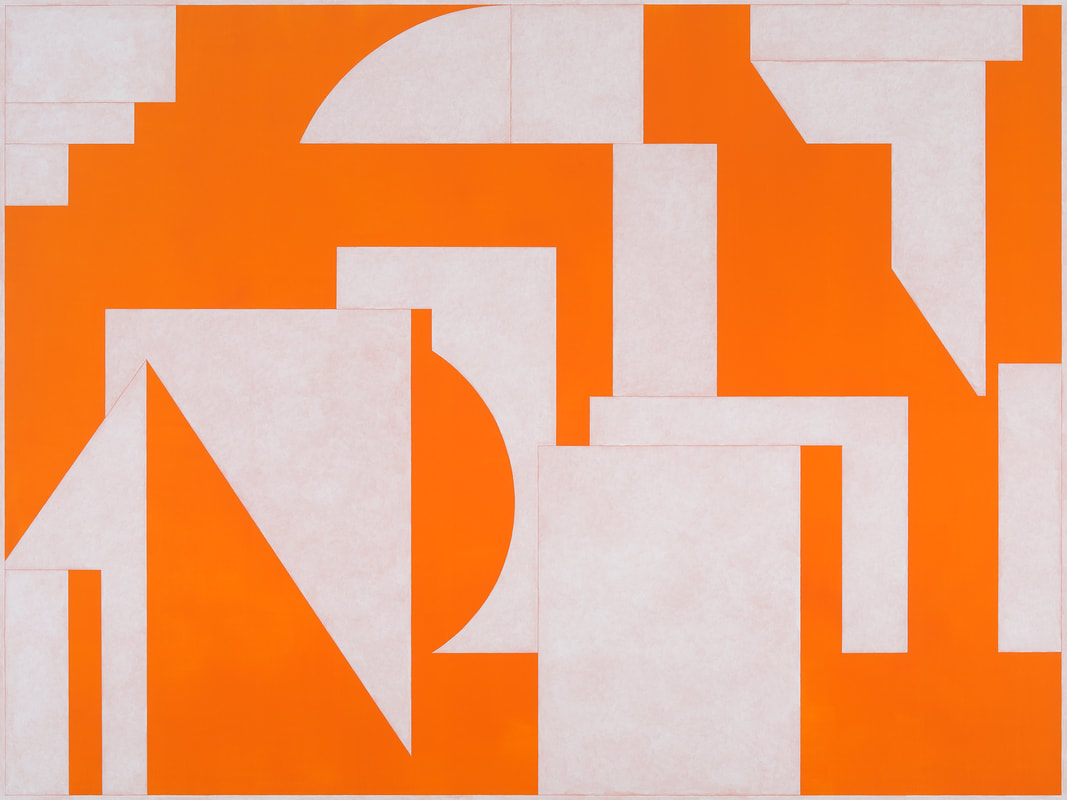
《Line, Curve, A Colorful Gesture》 marks an important turning point in which Hoh began to construct movement and tension on the picture plane solely through combinations of lines and curves. In Air in a Tire, the basic geometric form surrounding the edges of the canvas appears to hold back small semicircles and wavy lines, while the surface contains latent movement, as if it might soon rotate or spring outward.

In A and B and Sasangsanggak 2, lines and curves function not as simple contours, but as central elements that generate the color, temperature, and tension of the entire picture plane. Through thin lines drawn on a white ground, the artist creates chromatic resonance and spatial density, producing a surprisingly rich visual sensation within an achromatic surface.
 
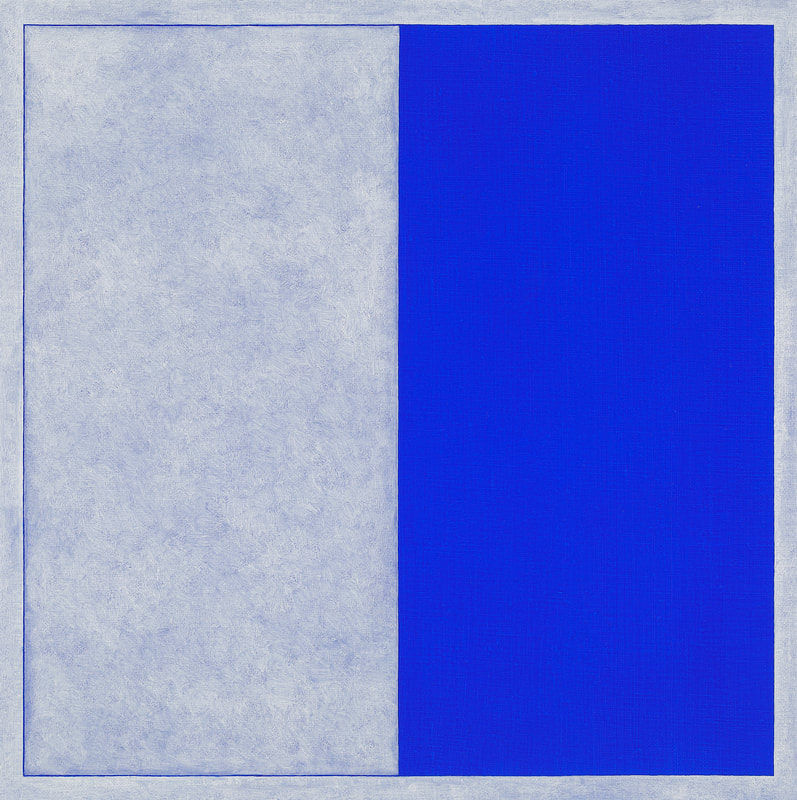
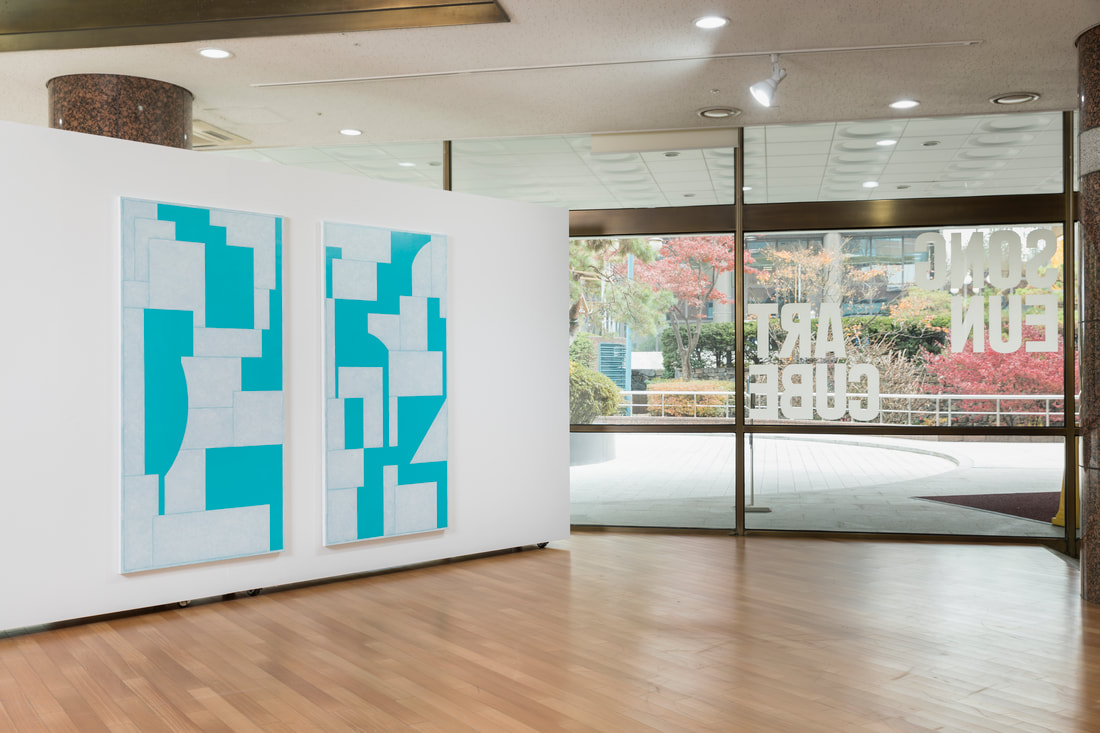
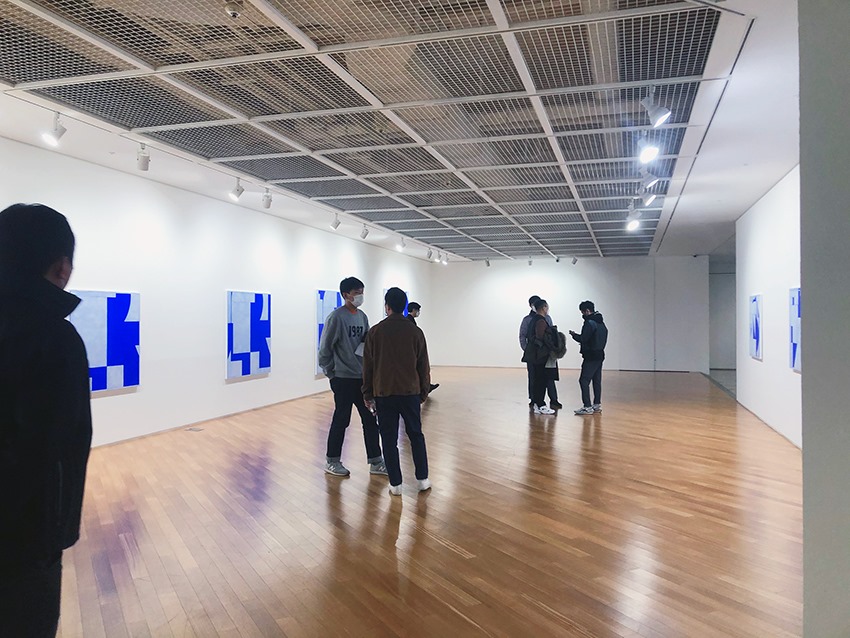
In 《Shade Left Behind》, primary colors and planes are combined with this structure of lines, making the relationship between subject and background more clearly problematized. The artist draws planned pencil lines on a canvas coated with a layer of paint, then fills the space with oil paint of another color without damaging those lines.

Here, the surface in which white planes are placed over a blue background unsettles the common idea that “white empty space” is a background. White no longer appears as empty space, but as a subject that has acquired existence, while the color field becomes both background and the condition for the geometric form’s existence.

The resulting surface leads viewers to imagine a concealed whole based on visible cross sections, revealing the incompleteness of perception rather than the certainty of existence.
 
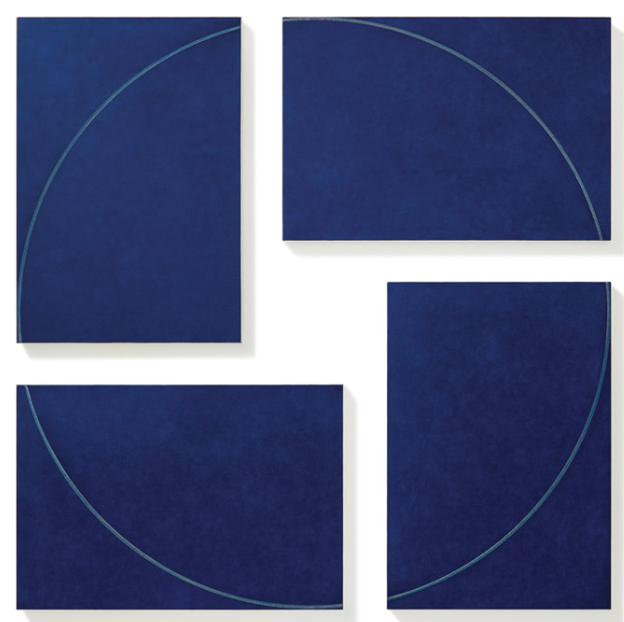
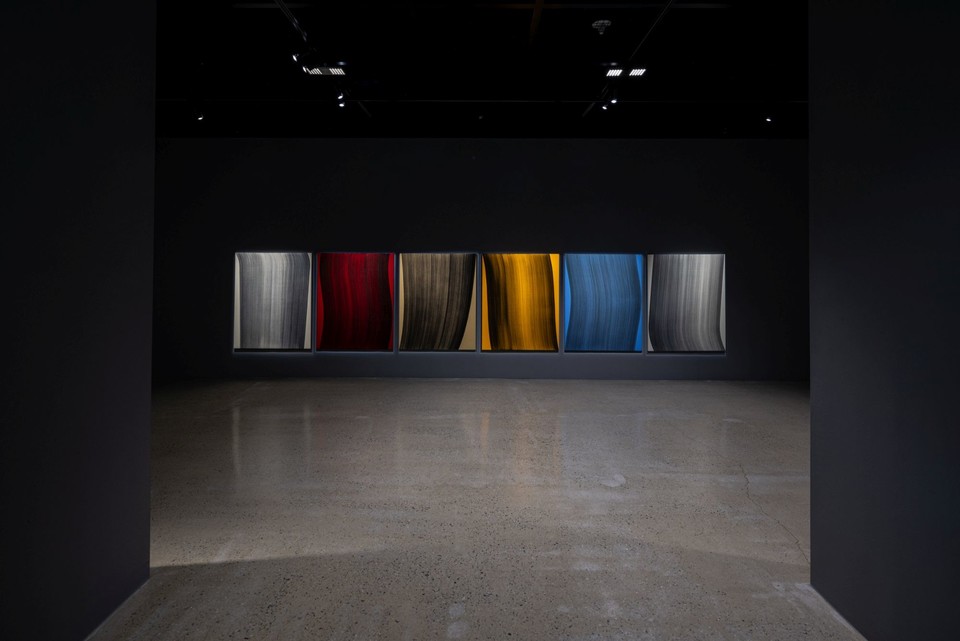
Since 2022, Hoh has begun to deal more actively with the relationship between painting and space. The ‘Curve’ series in 《Beyond the Line》(Kumho Museum of Art, 2022) consists of 30 works sharing a single pattern, organically arranged within the space, forming a structure in which each work is independent while also requiring the others.

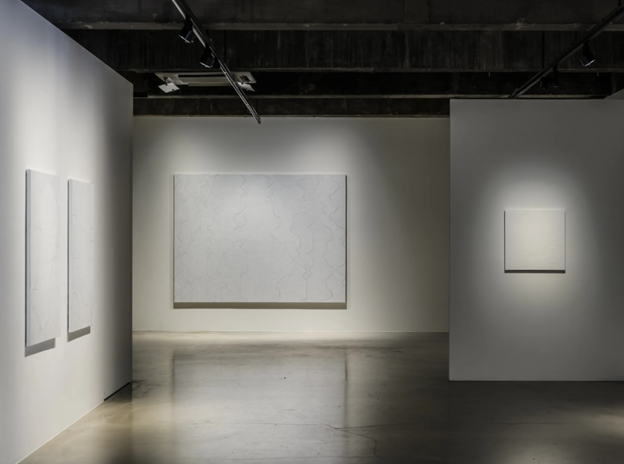
In the ‘Circle’ and ‘Curve’ series, the empty space between canvases is not a void, but an important element that invites viewers to imagine a hidden pattern. In 《Panorama》, Sasangsanggak(5), the ‘White Shade’(2020) series, the ‘L a y e r s’(2021) series, ‘Curve,’ ‘Circle,’ and the ‘Lines’(2024) series are presented together, showing how the relationships between line and plane, image and empty space, part and whole have changed over time.

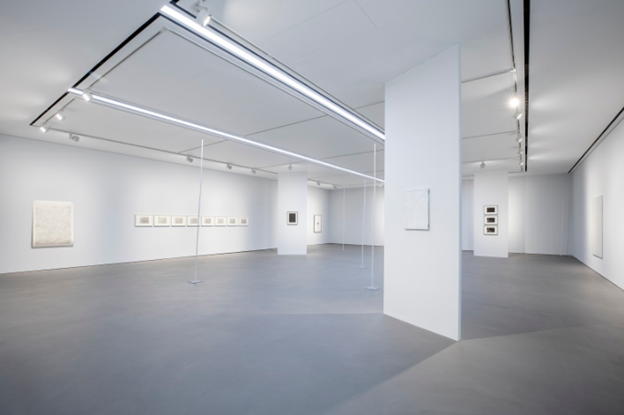
In 《Square》, through Rings(2024) and Rings 3(2024), the entire exhibition space operates as both support and constraint, while the mural, painting, leaflet, and movement of viewers are connected within a single structure.

Topography & Continuity

The core that continues throughout Hoh’s work is the question of how to see uncertain existence. He began from psychological states such as anxiety, void, and helplessness, but rather than fixing them as direct emotional expressions, he translated them into questions of line, curve, plane, frame, and empty space.

For this reason, his paintings may appear like cool geometric abstraction, but in fact, they are closer to works that sensuously deal with the uncertain states that contemporary individuals continue to face. His surfaces, where the visible and invisible, subject and background, part and whole are repeatedly reversed, lead viewers to examine their own criteria of perception.
 
Hoh’s originality lies in the fact that he uses abstraction not as a completed formal language, but as a tool for experimenting with the relationship between existence and perception. While many abstract paintings develop around questions of color field, gesture, flatness, and materiality, Hoh asks how a single line can suggest a certain whole, what kinds of relationships are contained within seemingly empty space, and how we infer the parts that remain invisible.

The trajectory from Imagination Builds the House to Air in a Tire, the color-field paintings of 《Shade Left Behind》, the ‘Curve’ series in 《Beyond the Line》, and Rings in 《Square》 begins with the way a single object achieves balance within the picture plane and expands into a structure that includes the space outside the canvas and the viewer’s imagination.
 
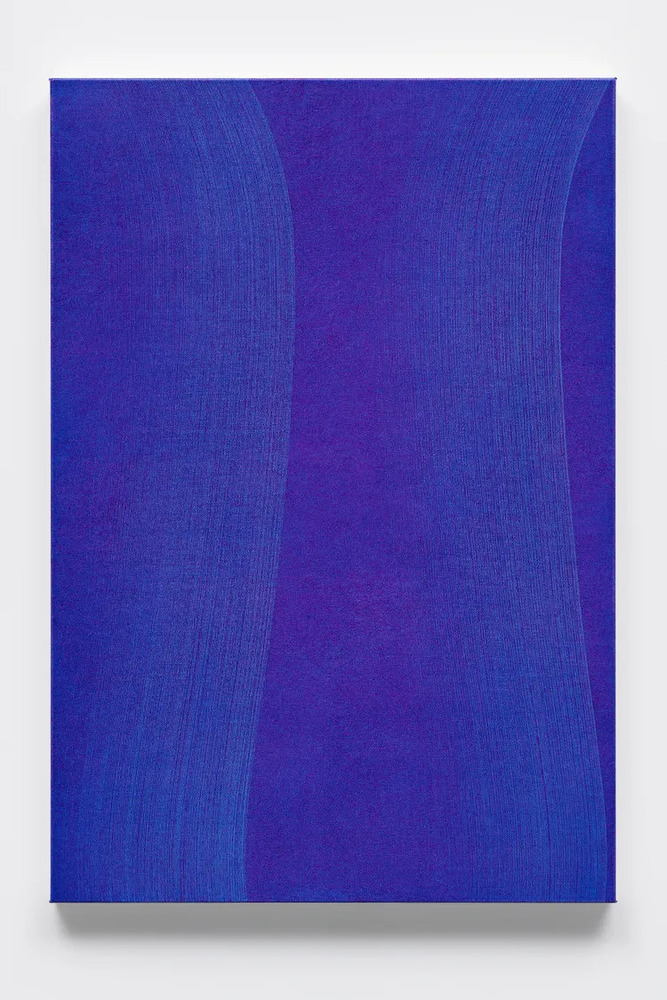
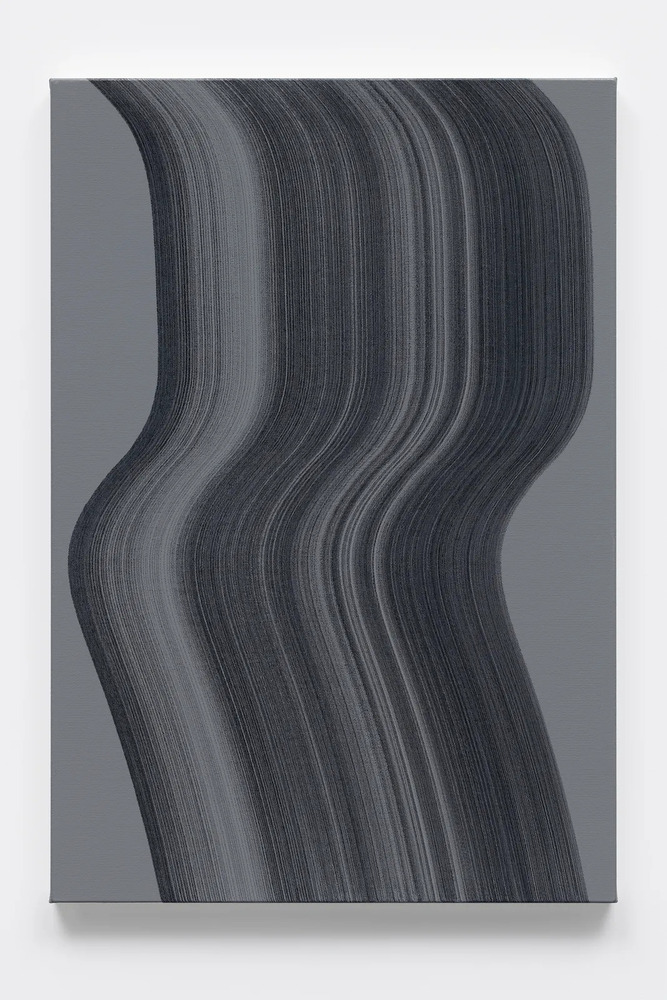
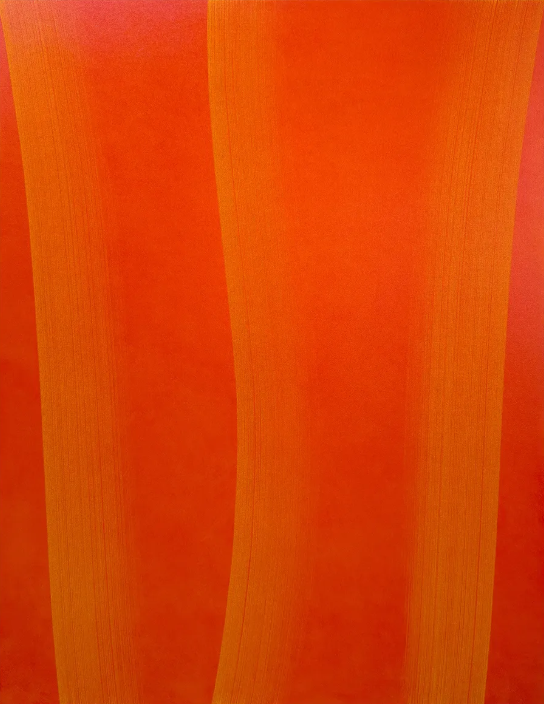
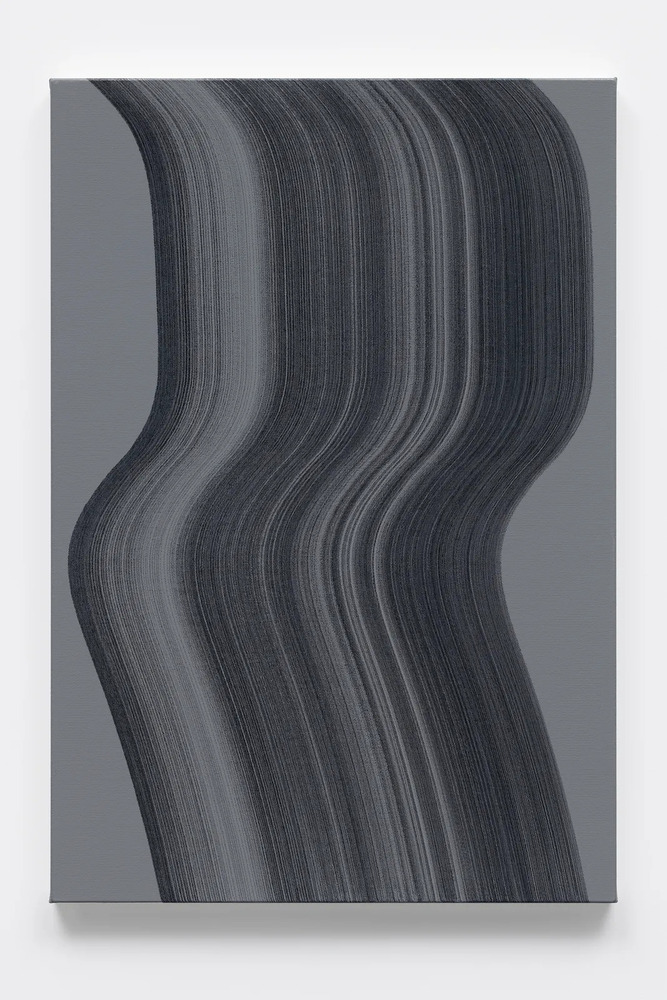
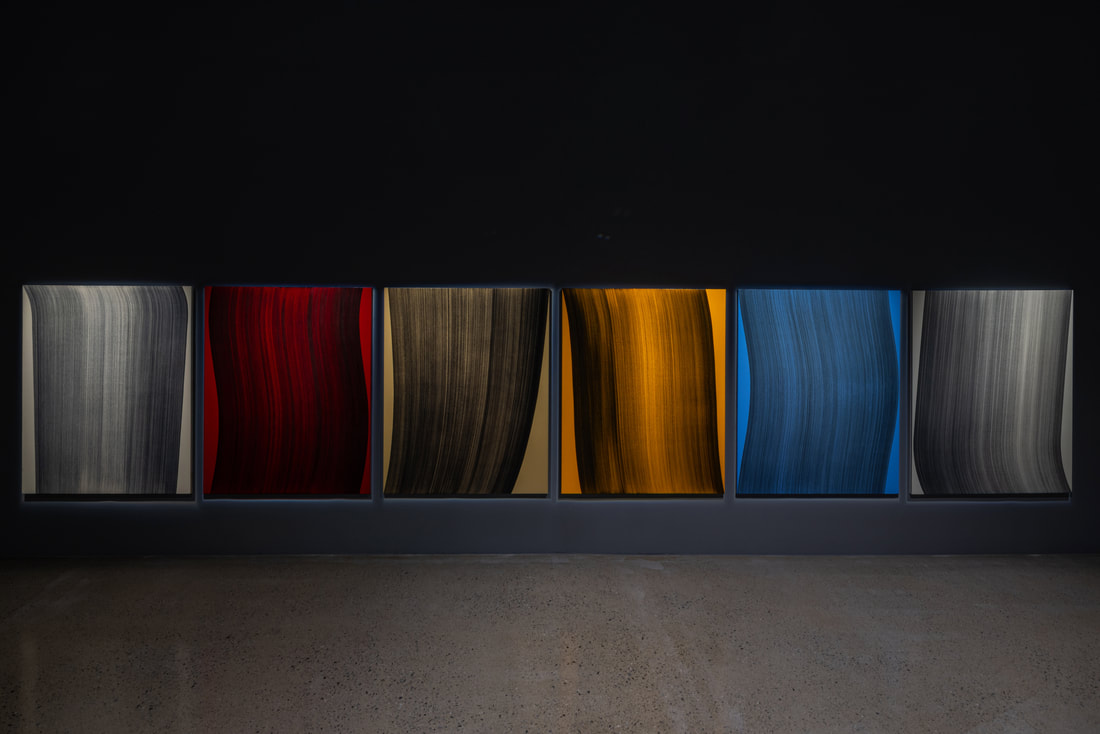
In his recent work, the artist no longer remains only within the internal completeness of the canvas. The ‘Lines’ series invites viewers to imagine infinite lines beyond the canvas through repetitive lines reminiscent of plant stems or brush marks, while the mural in 《Square》 takes the hexahedral space of the exhibition venue itself as a support for painting.

In this process, the artist moves beyond the labels of “white abstraction” or “pure abstraction” that have long been attached to his work, experimenting with more fluid conditions of painting that include line drawing, support, space, collaboration, and temporality.

As art critic Jo Hyunah points out, 《Square》 can be seen less as a completed abstract painting than as an exhibition that reveals the “drawn line” itself and the situation in which it is placed. This was also an attempt by Hoh not to repeat his existing refined surfaces, but to reopen the conditions through which his painting comes into being.

Works of Art

Painting as an Indeterminate Potentiality

Articles

Exhibitions

Activities