The Thousand Hands Sutra - K-ARTIST

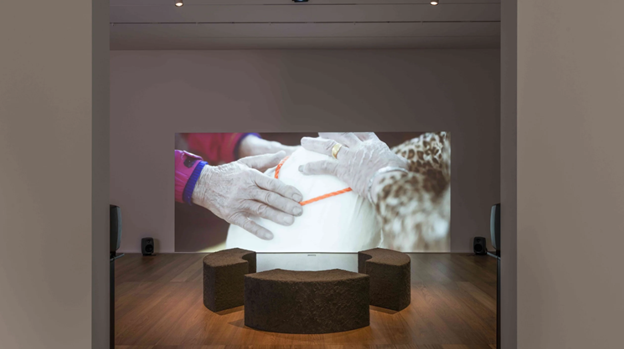
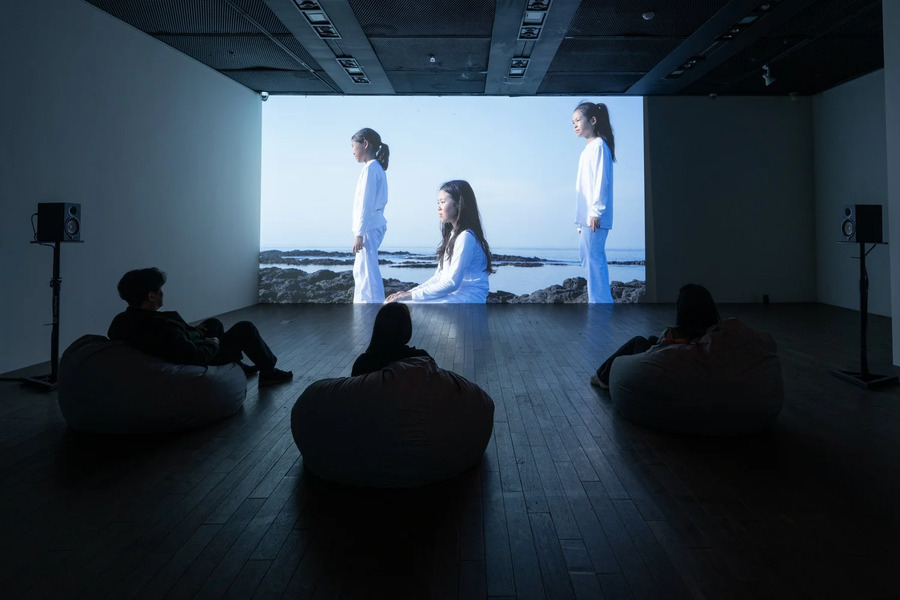
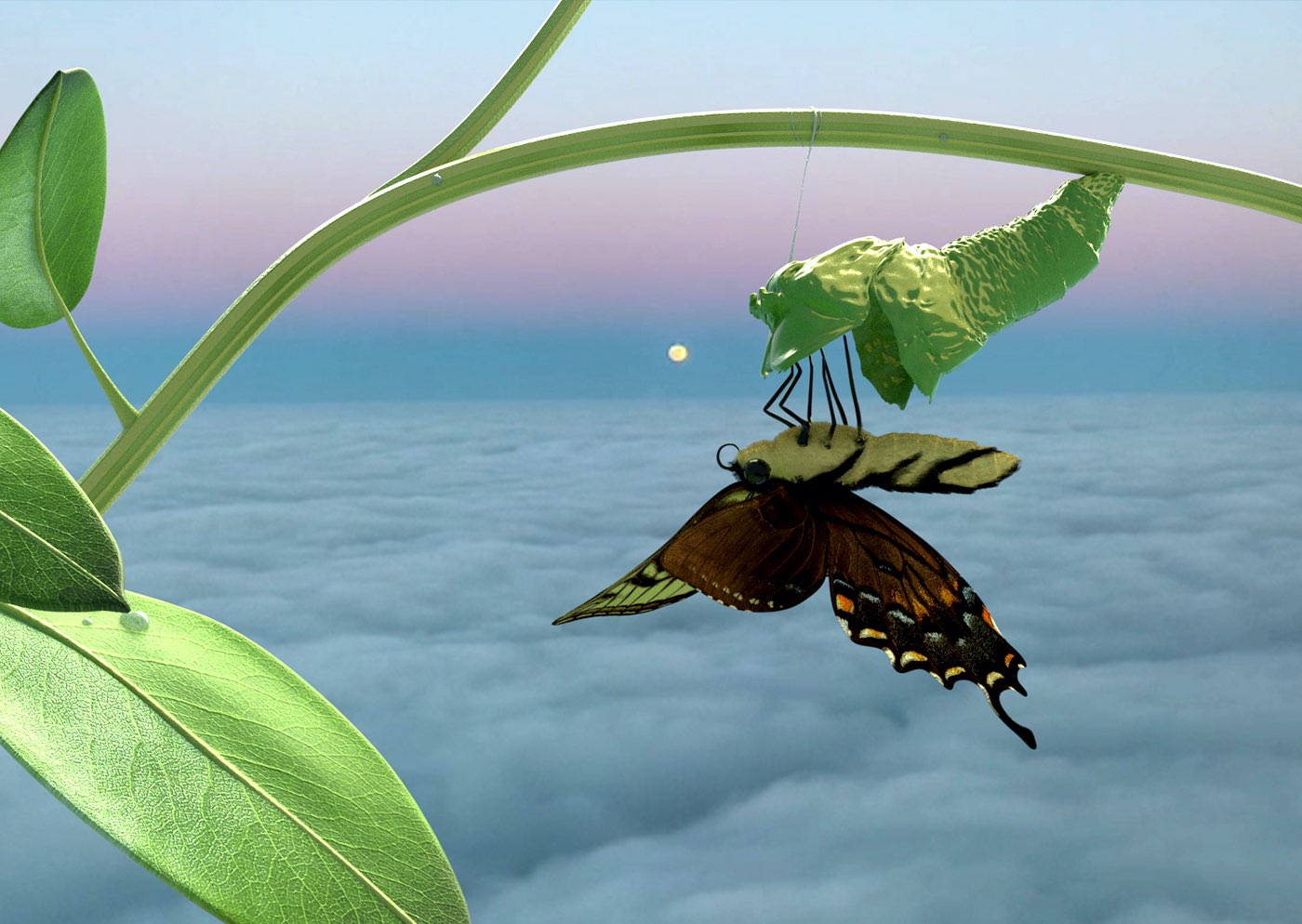
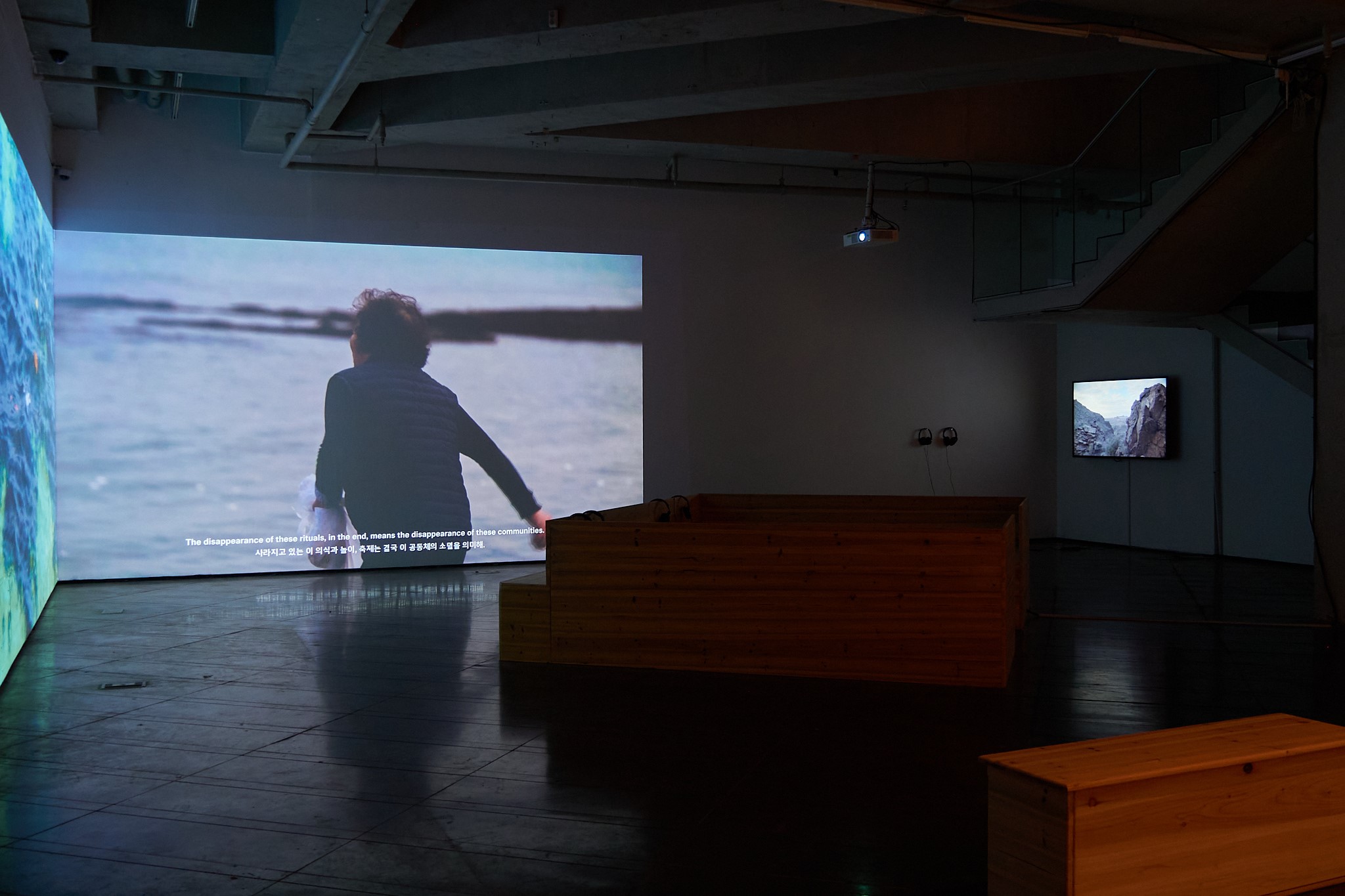
The Thousand Hands Sutra

2023
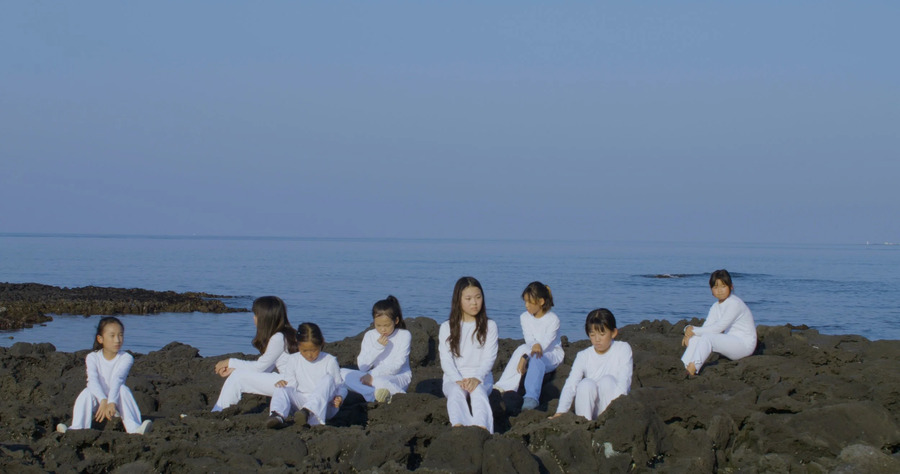
Single-channel video, sound
5min 30sec
About The Work

 Yo-E Ryou’s work explores how water and the body, women’s experiences, and the memories of disappearing communities are connected and transmitted. Rather than treating water simply as a natural element or symbol, the artist approaches it as a relational medium that connects body and environment, individual and community, past and present. 

In her work, water is both a place where memory is stored and carried, and a condition through which the body learns and senses again. This perspective is closely linked to hydrofeminist thought, leading to an understanding of humans not as independent individuals, but as beings connected to other forms of life through water.

Yo-E Ryou’s work deals with ecology, women, the body, and community, but it does not fix these concerns into theoretical slogans. While grounded in concepts such as hydrofeminism, ecofeminism, and women’s writing, the artist develops her work through actual relationships and processes of learning in life.

Her work functions as a sensory archive that embodies narratives of water and women beyond existing structures, while also operating as a site of relational exchange where sensations and memories from different times and spaces can be connected and shared. Within this space, viewers experience immersion and communication through the breath and rhythm of nature, reconsidering the interconnectedness that binds us all to water.

Solo Exhibitions (Brief)

Yo-E Ryou has held solo exhibitions including 《Breath Pause》 (Forever Gallery, Seoul, 2025), 《Why I Swim》 (Alternative Space LOOP, Seoul, 2023), and more.

Group Exhibitions (Brief)

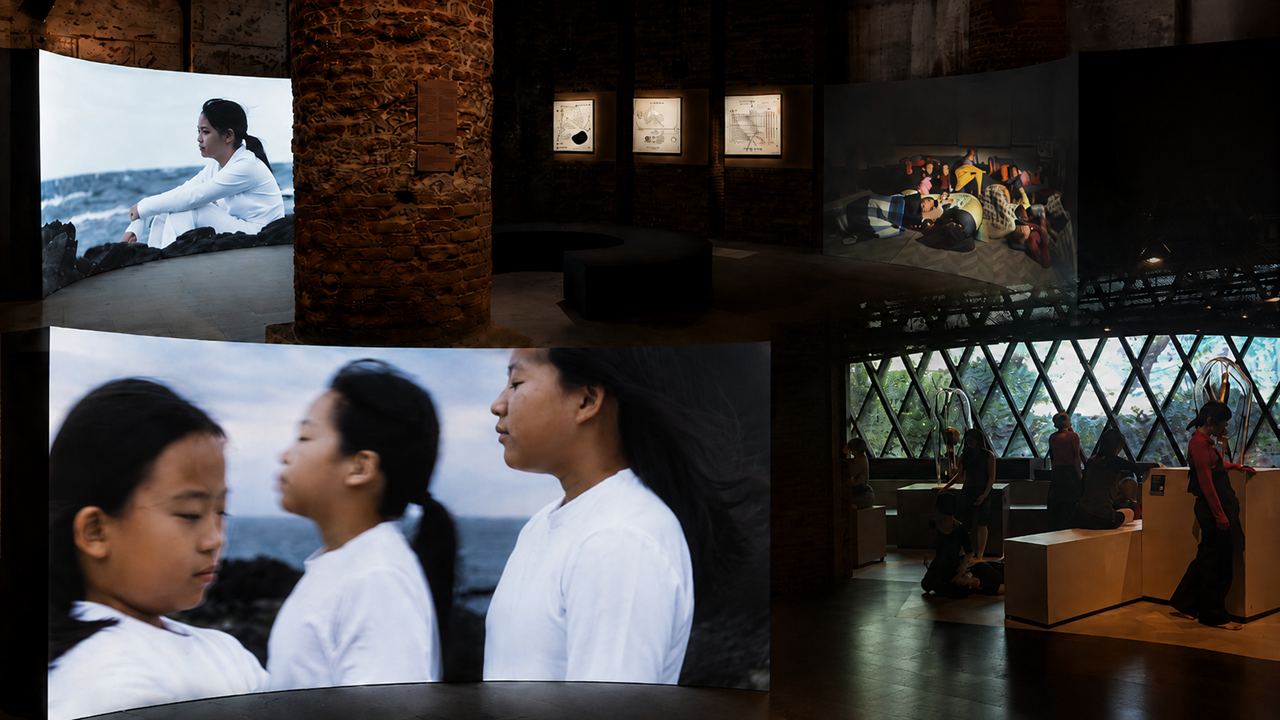
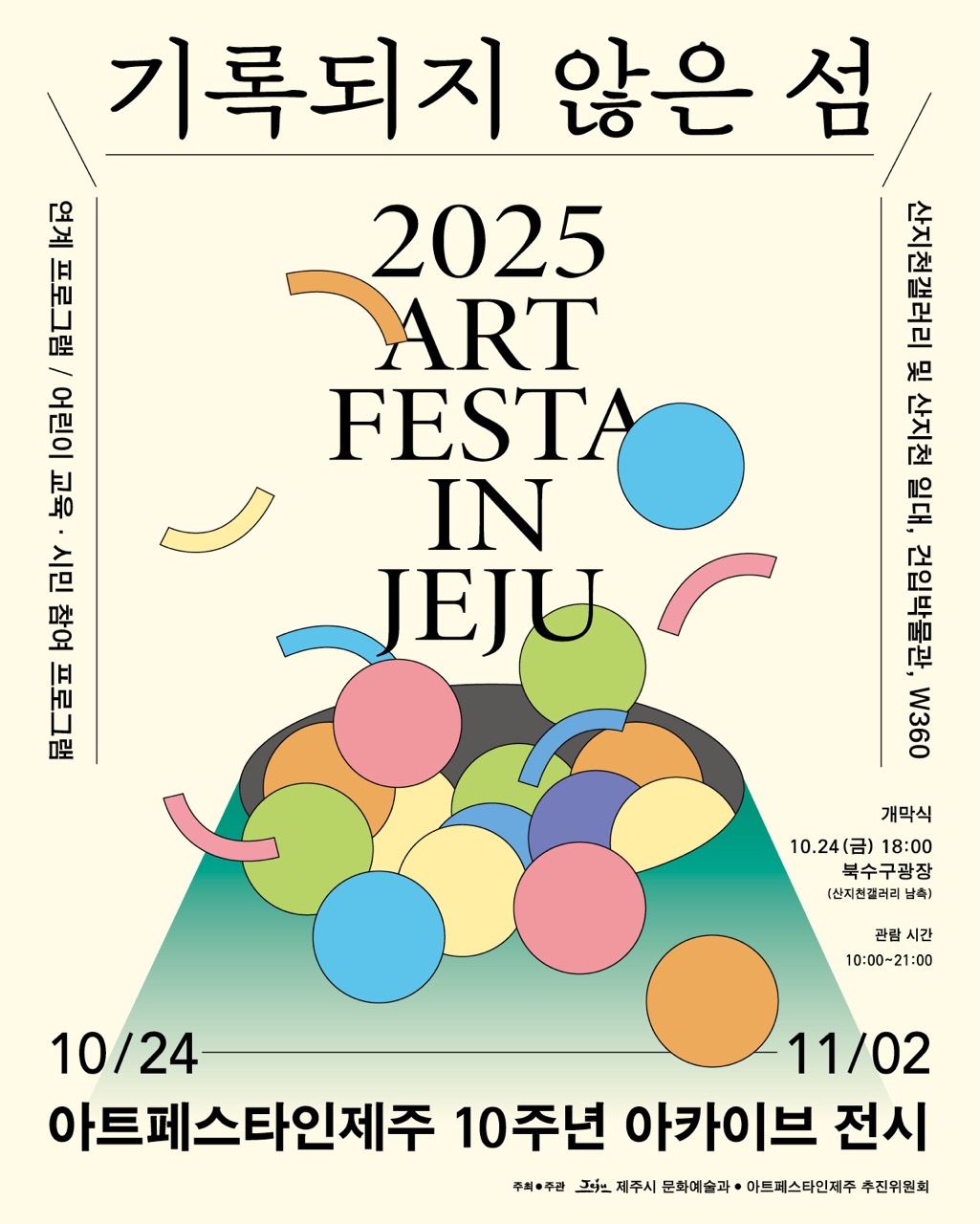
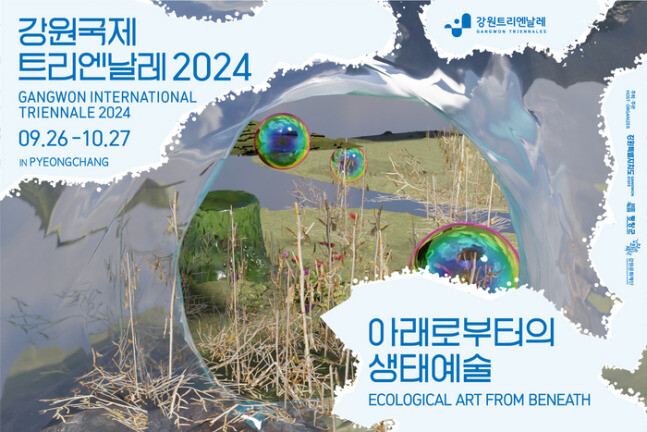
Ryou has also participated in numerous group exhibitions, including 《The 25th SONGEUN Art Award Exhibition》 (SONGEUN, Seoul, 2025-2026), 《Life on Earth: Art and Ecofeminism》 (West, The Hague, NL., 2025), 2025 ArtFesta in Jeju 《Unrecorded Island, Five Breaths》 (Sanjicheon Gallery, Jeju, 2025), 《Touchy-Feely》 (Alternative Space LOOP, Seoul, 2025), and Gangwon International Triennale 2024 《Ecological Art from Beneath: Learning from Ant Tunnels》 (Gangwon-do, 2024). And she is the only Korean artist invited to the main exhibition of the 61st Venice Biennale.

Works of Art

Reconfiguring the Relationship Between Body, Environment, and Memory Through Water

Originality & Identity

Yo-E Ryou’s work explores how water and the body, women’s experiences, and the memories of disappearing communities are connected and transmitted. Rather than treating water simply as a natural element or symbol, the artist approaches it as a relational medium that connects body and environment, individual and community, past and present. In her work, water is both a place where memory is stored and carried, and a condition through which the body learns and senses again. This perspective is closely linked to hydrofeminist thought, leading to an understanding of humans not as independent individuals, but as beings connected to other forms of life through water.
 
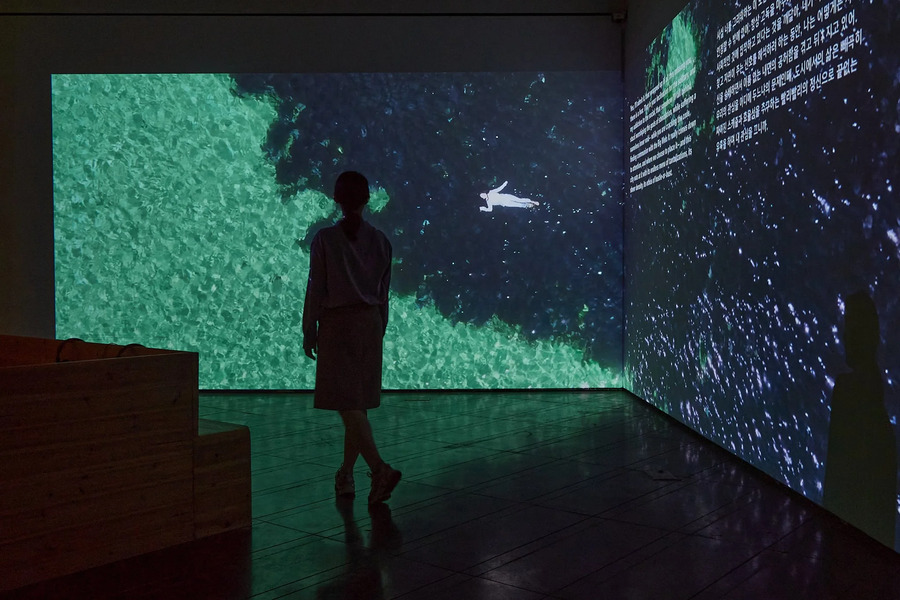
A key turning point in Yo-E’s practice was her move to Hado-ri, Jeju, in 2021 after experiencing the pandemic and burnout in New York. In the house where Ko Ihwa, a haenyeo, once lived, the artist founded the artistic research platform Unlearning Space, creating a space for education and care with local residents and visitors around the themes of “water, women, and Jeju.” This experience expanded beyond personal recovery into a process of learning the knowledge accumulated in the lives and bodies of haenyeo, as well as their ways of relating to the sea. Her solo exhibition 《Why I Swim》(Alternative Space LOOP, Seoul, 2023) begins from the artist’s experience of learning to swim in the sea for the first time in 30 years, and from her exchanges with neighboring haenyeo as she reconfigures her relationship with herself and the world.
 
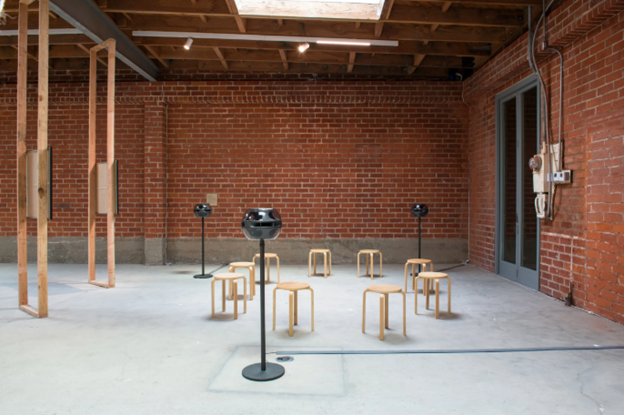
What the artist attends to is the unrecorded language of the body. Why I Swim(2023) unfolds the artist’s experience of learning to swim in the sea of Jeju in the form of a letter to a friend across the ocean. Here, swimming is not merely a physical skill, but a process of learning how to speak again after silence and burnout. Water Remembers(2023) is a four-channel sound work about Ko Ihwa, weaving together personal narratives remembered by neighboring haenyeo with the sounds of water. Stories of lives that have not been sufficiently preserved in official records are sensorially revived through the sounds of rain, waves, songs, and breath.
 
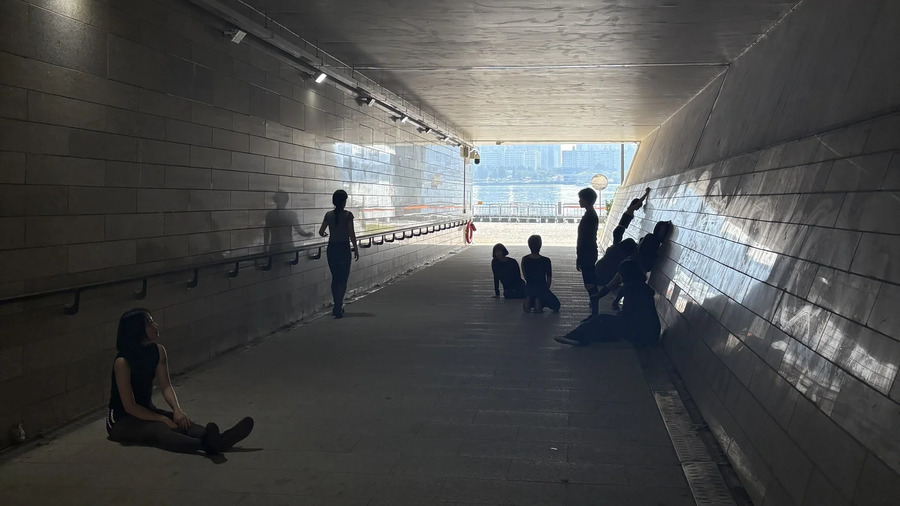
The recent ‘Breath Orchestra’(2024-) series, which includes Breath Orchestra Act 1-2(2024), Breath Orchestra Act 3(2025), Breath Orchestra Act 4(2025), and Breath Orchestra Act 5(2025), shows how Yo-E’s interest has expanded from water to breath, and from the body to the rhythms of community. The artist understands the process in which haenyeo prepare their breath before diving, endure the stillness underwater, and release “sumbisori” as they rise to the surface not as a mere physiological act, but as a language of life transmitted across generations. Breath becomes a sensory order that connects labor and rest, survival and care, the individual and the collective, and through it, the artist asks how knowledge that can only be understood through the body can be translated into an artistic language today.

Style & Contents

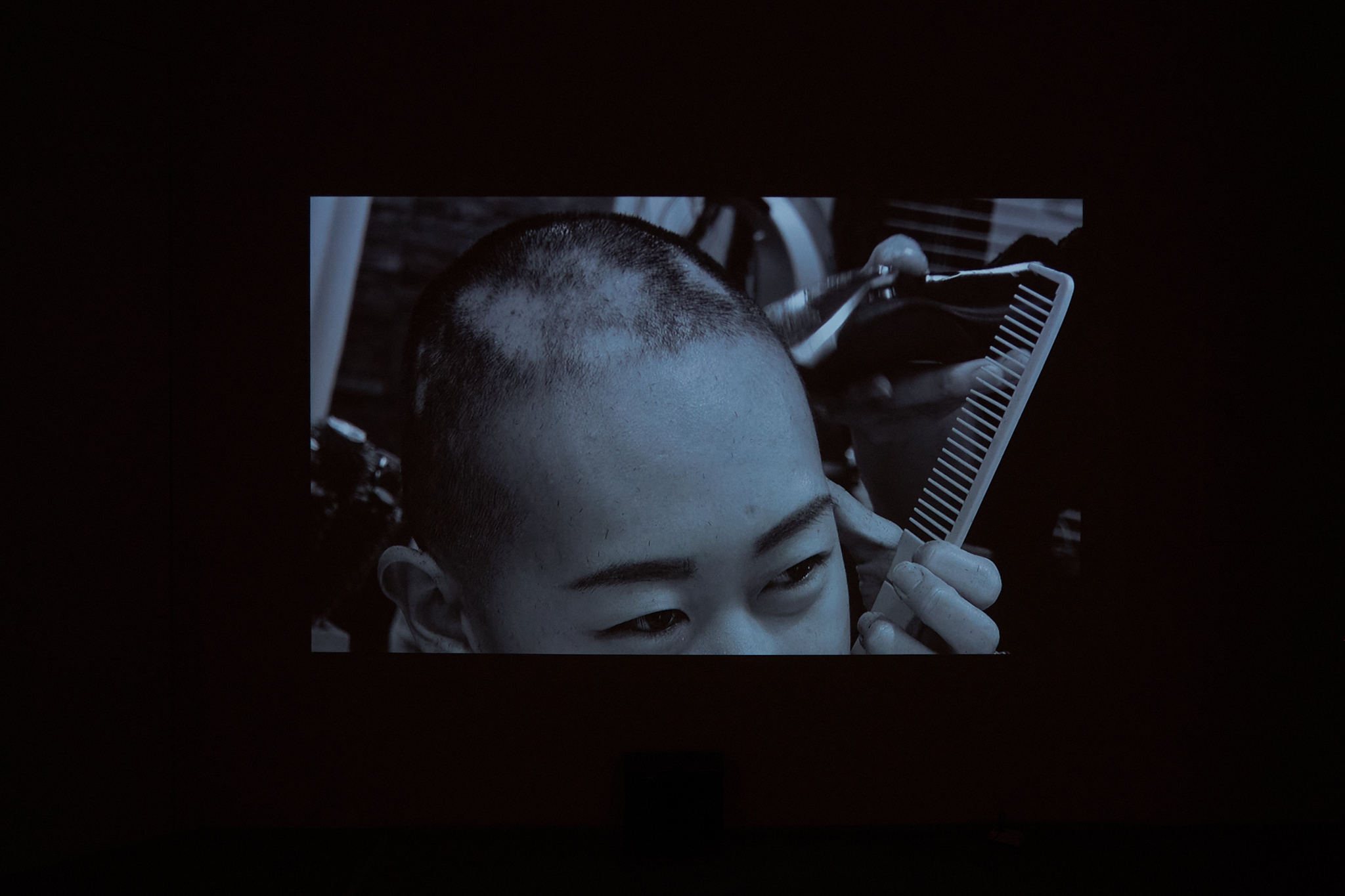
Yo-E Ryou works across video, sound installation, performance, drawing, workshops, and artist books. In her practice, medium is less a tool for producing a completed object than a method for sharing sensations and knowledge transmitted from body to body. Her early works Double Gaze(2018) and Auspicious Practice(2020) address the experience of a woman suffering from hair loss caused by a stress-induced autoimmune disease, exploring through video questions of bodily fatigue, social gaze, healing, and identity. In these works, the body becomes both a site where personal symptoms are revealed and a starting point for reexamining one’s position within family, society, culture, and the ecological environment.
 
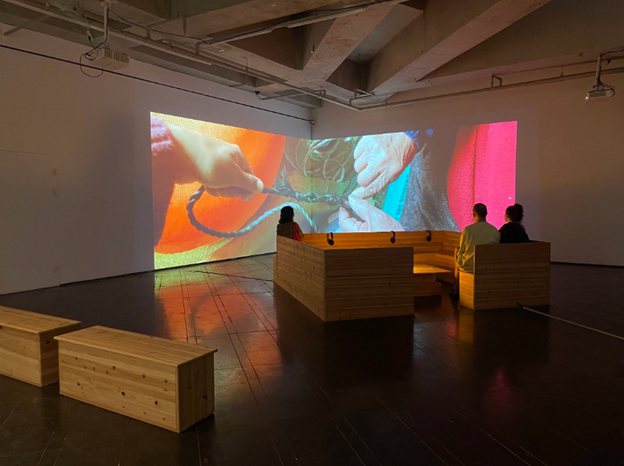
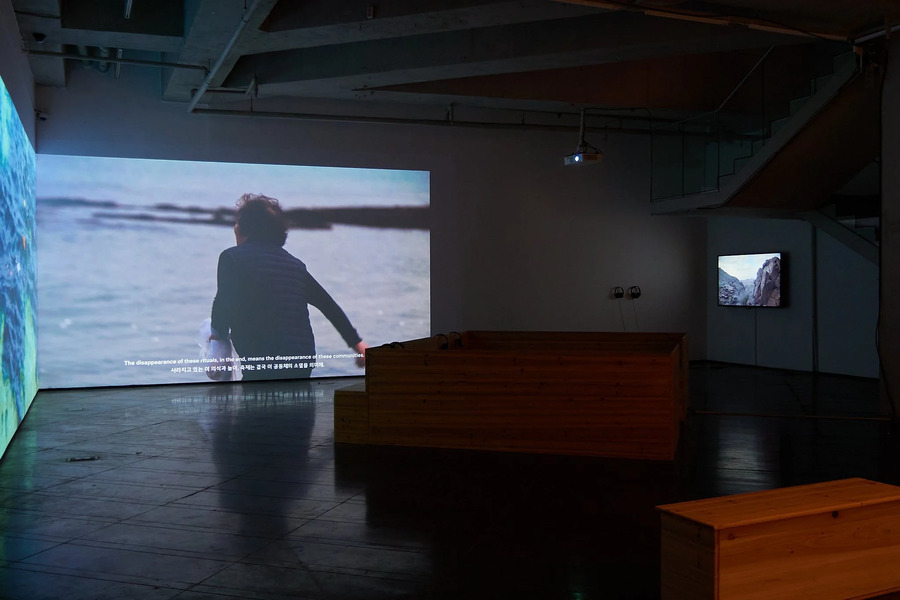
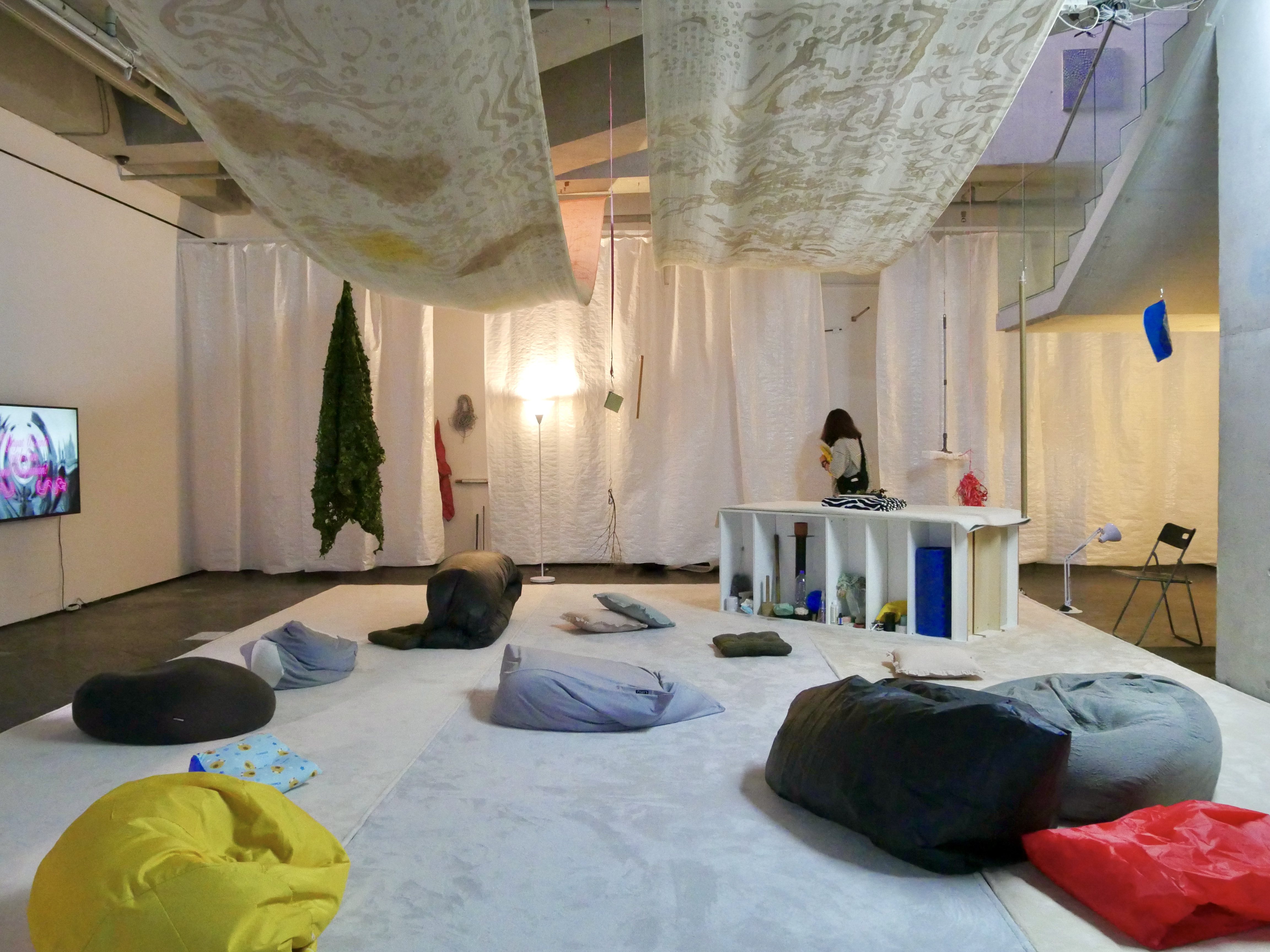
After 《Why I Swim》, Yo-E’s practice shifts toward a more relational and polyphonic form through her encounter with the sea of Jeju and the haenyeo community. Water Remembers layers the memories of Ko Ihwa and neighboring haenyeo through four-channel sound. The sound of a single drop of rain expands into waves and storms, the sound of a body plunging into water is followed by the voices of haenyeo, and individual memory opens into a communal soundscape. The installation Bulteok(2023) brings into the exhibition space the communal seaside place in Jeju where haenyeo change clothes, warm themselves, and exchange information. The work proposes another form of bulteok where viewers can reflect together on water, the body, women’s writing, and the possibility of solidarity.
 
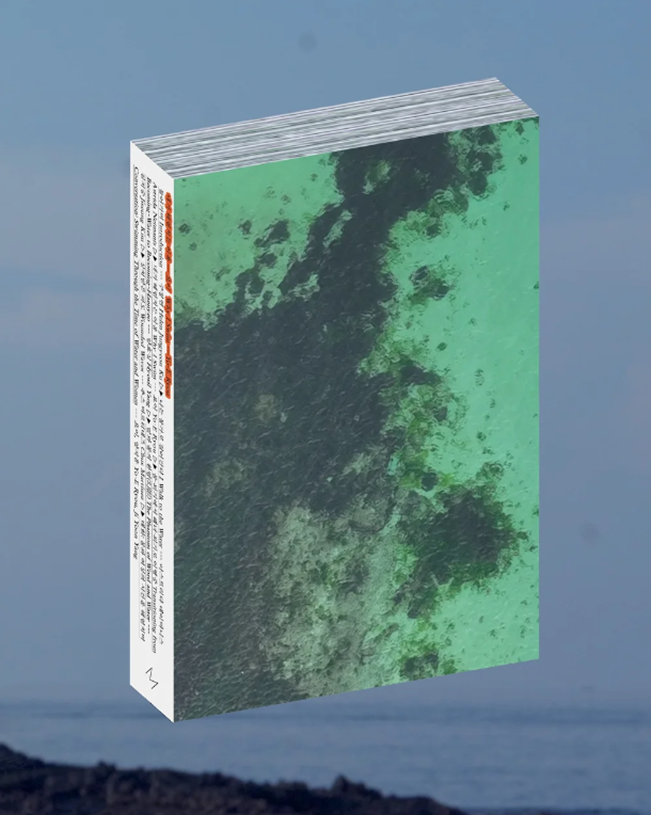
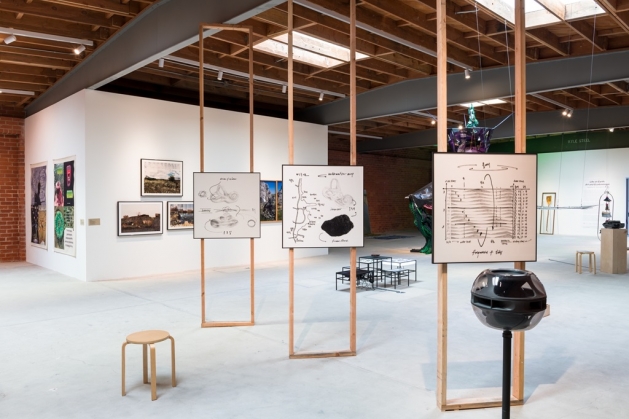
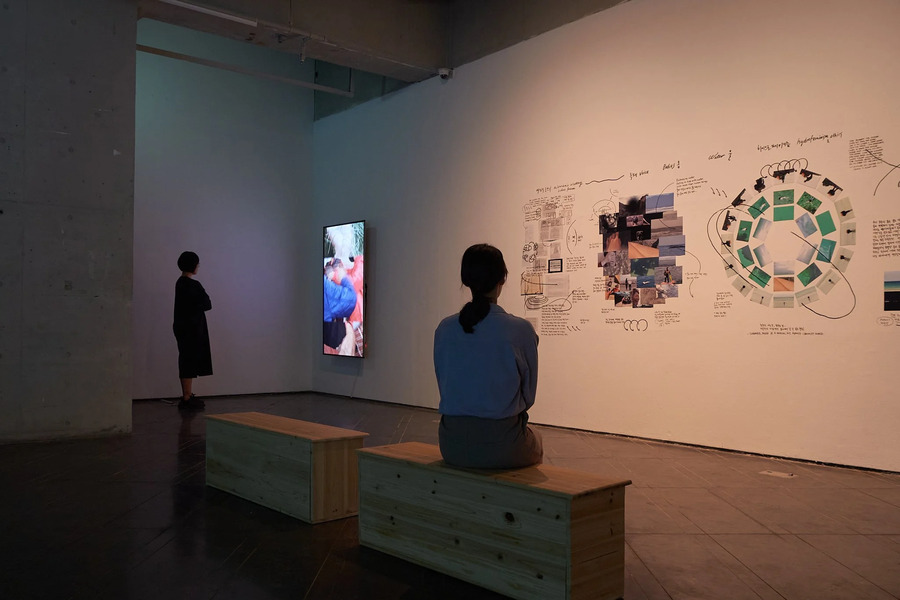
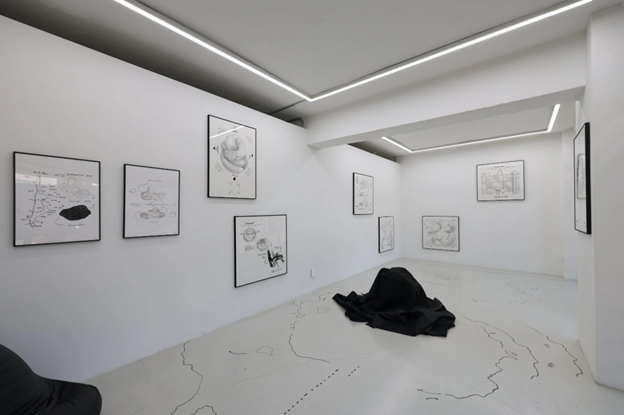
The 2025 solo exhibition 《Breath Pause》(Forever Gallery, Seoul, 2025) expands the sensation of water into the rhythm of breath. The exhibition is structured as a space for listening to, reading, and sensing the language of breath learned from the sea and haenyeo, through the artist book 『Yo-E Ryou: Why I Swim』, the research drawing series ‘Talking Water, Writing Body, 04-13’, the installation Water Current 1-2, and the performance Breath Orchestra Act 3. The artist juxtaposes reading, performance, drawing, and installation, showing how sensations learned underwater are translated again into sound, writing, gesture, and space. Here, the exhibition becomes not simply a site of viewing, but an experimental space that slowly narrows the distance between record and memory, body and speech.
 
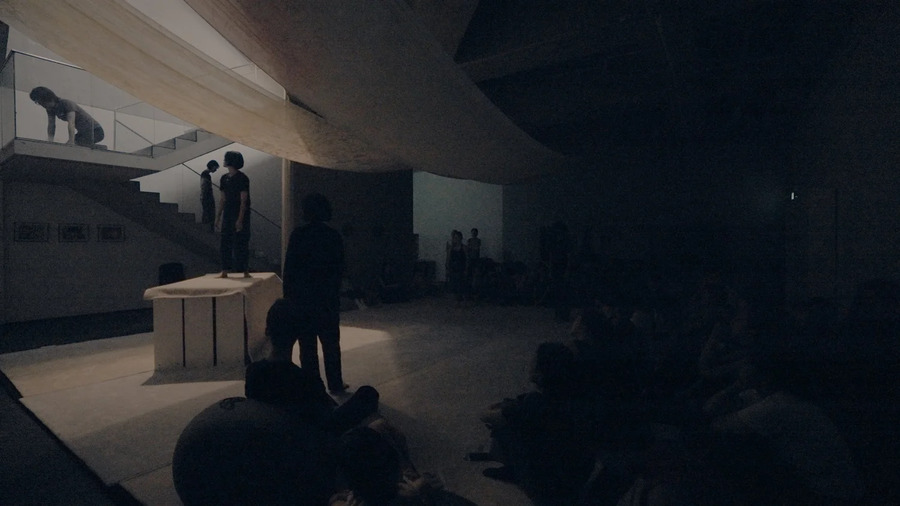
The ‘Breath Orchestra’ series and Ellipses II(2025) make this formal expansion even clearer. ‘Breath Orchestra’ treats breath as living knowledge, repeating workshops, rehearsals, collective listening, and performances based on the oral traditions and breathing techniques of haenyeo. Presented at 《The 25th SONGEUN Art Award Exhibition》(SONGEUN, Seoul, 2026), Ellipses II is a multimedia installation that records through video, sound, and image the sensations of the disappearing haenyeo community at the threshold between water and land. In this work, the ellipse and ellipsis symbolize not a completed circle or closed narrative, but a process of hesitation, repetition, and incomplete transmission. The act of making and handling tewak, the flotation devices used by haenyeo, becomes a way of recalling memories and sensations that cannot be fully contained in words, through tools that function as extensions and companions of the imperfect body.

Topography & Continuity

Yo-E Ryou’s work deals with ecology, women, the body, and community, but it does not fix these concerns into theoretical slogans. While grounded in concepts such as hydrofeminism, ecofeminism, and women’s writing, the artist develops her work through actual relationships and processes of learning in life. She studies water while entering the water, records haenyeo culture while learning from haenyeo, and speaks of community while creating sites of relation through Unlearning Space and workshops. In this way, Yo-E’s practice has a circular structure in which research, education, care, performance, and documentation are not separated from one another.
 
Where many ecological art practices that deal with similar subjects focus on environmental crisis or critiques of anthropocentrism, Yo-E brings these issues into the realm of bodily sensation and learning. In her work, the sea is not only an object to be preserved, but a place where the body learns language again. The haenyeo community is not only a symbol of a disappearing tradition, but a living network that transmits knowledge of breath, labor, care, and solidarity through the body. In this sense, Yo-E’s work has a distinct position in the way it addresses ecological concerns through sensory education and relational practice.
 
Looking at the trajectory of the artist’s practice, Double Gaze and Auspicious Practice begin with questions of bodily symptoms, identity, and social gaze, while 《Why I Swim》 moves toward a process in which the body learns and recovers again through water. Later, 《Breath Pause》 and the ‘Breath Orchestra’ series expand beyond personal recovery into a way of sharing communal memory through breath, sound, oral transmission, and performance. Ellipses II and 『Yo-E Ryou: Why I Swim』 carry this process into archive, publication, and multimedia installation, experimenting with how sensations that cannot be fully spoken can be recorded and shared.
 
Recently, Yo-E Ryou has participated in 《Life on Earth: Art and Ecofeminism》(West Den Haag, The Hague, 2025), 《The 25th SONGEUN Art Award Exhibition》, the ArtFesta in Jeju 10th Anniversary Archive Exhibition 《Unrecorded Island》(Sanjicheon Gallery, Jeju, 2025), and Gangwon International Triennale 2024 《Ecological Art from Beneath》(Gangwon-do, 2024). She has also been invited as the only Korean artist to participate in the main exhibition of the 61st Venice Biennale. These achievements show that Yo-E’s work, while beginning from the specific place of Jeju, is expanding into universal and international concerns around water and the body, women’s knowledge, and ecological interdependence.

Works of Art

Reconfiguring the Relationship Between Body, Environment, and Memory Through Water

Articles

Exhibitions

Activities