


River Landscape - K-ARTIST

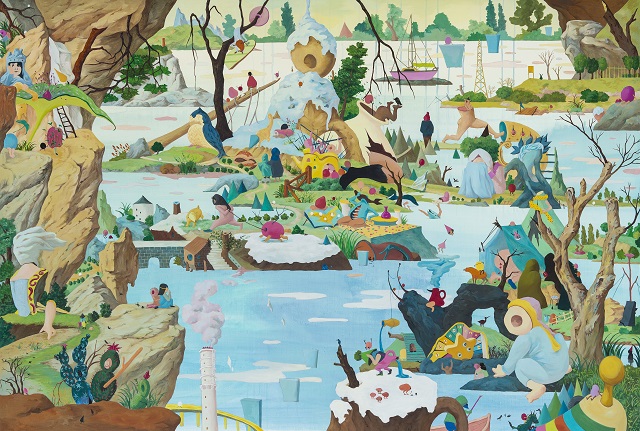
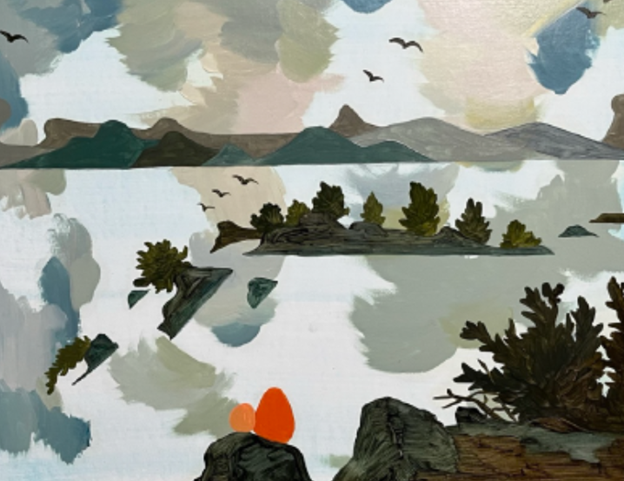
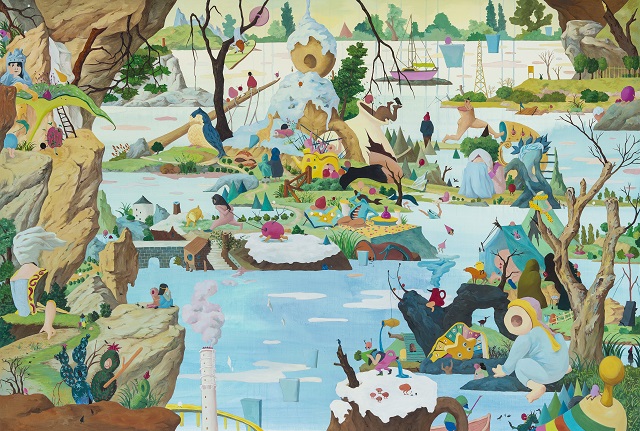
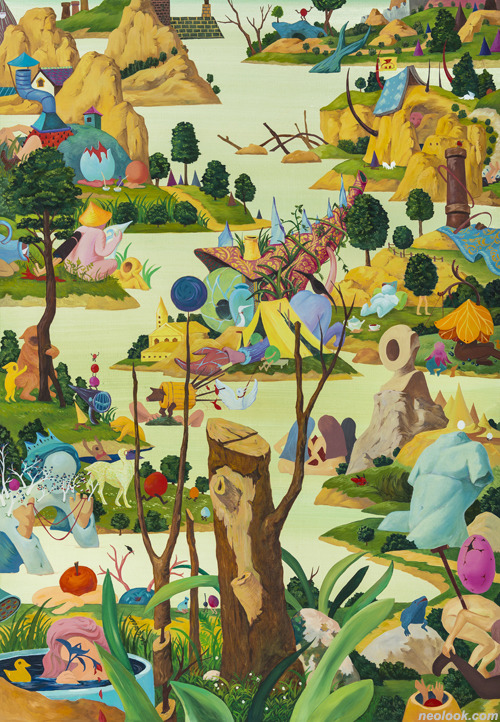
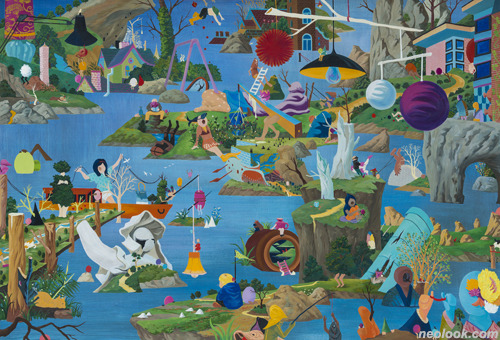
River Landscape

2016
Acrylic, oil on canvas 
130 x 164 cm
About The Work

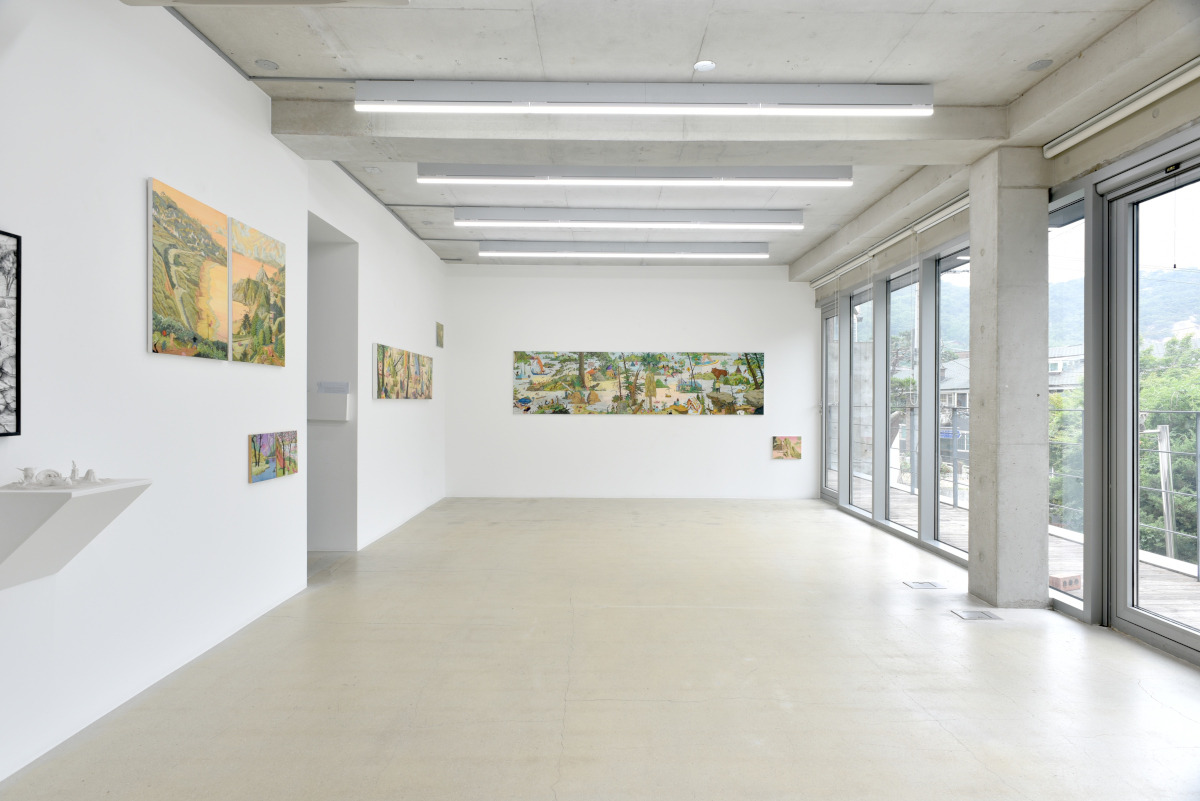
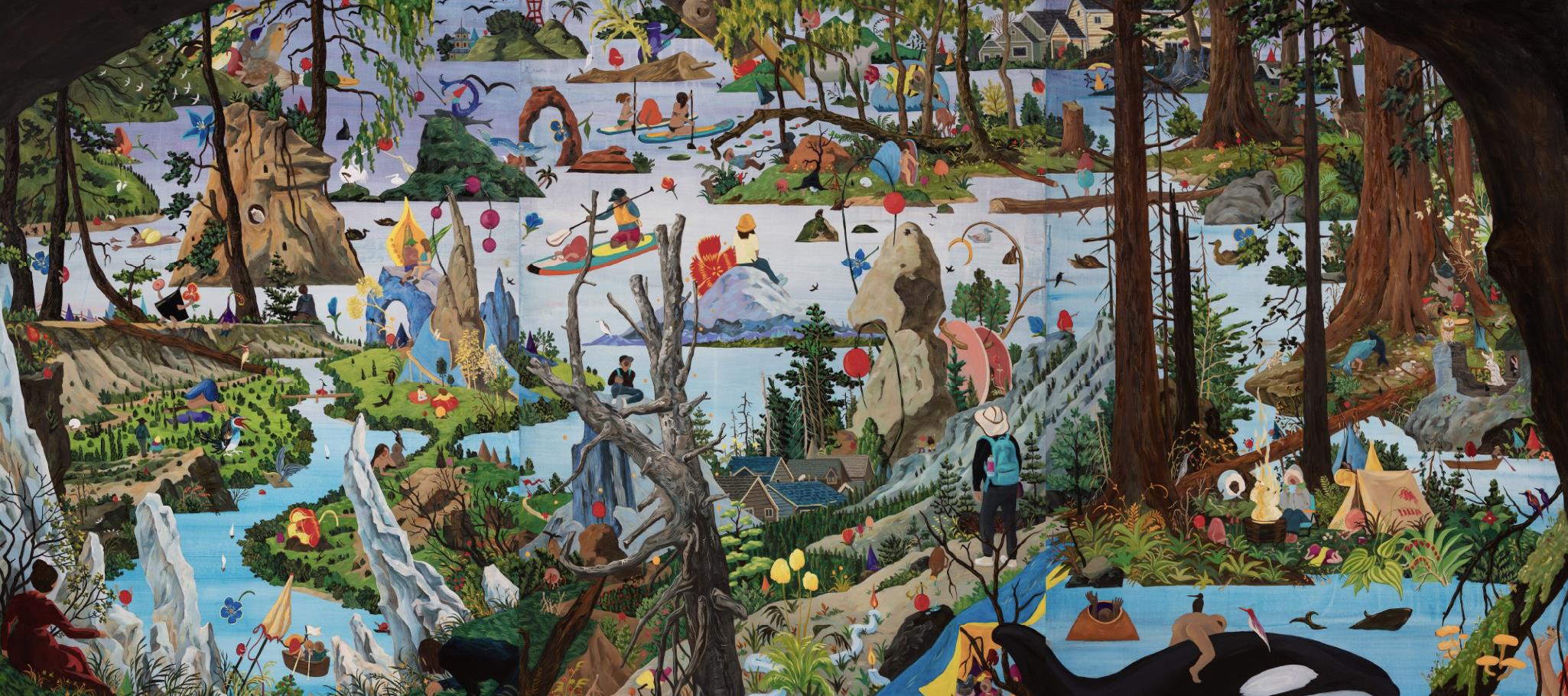
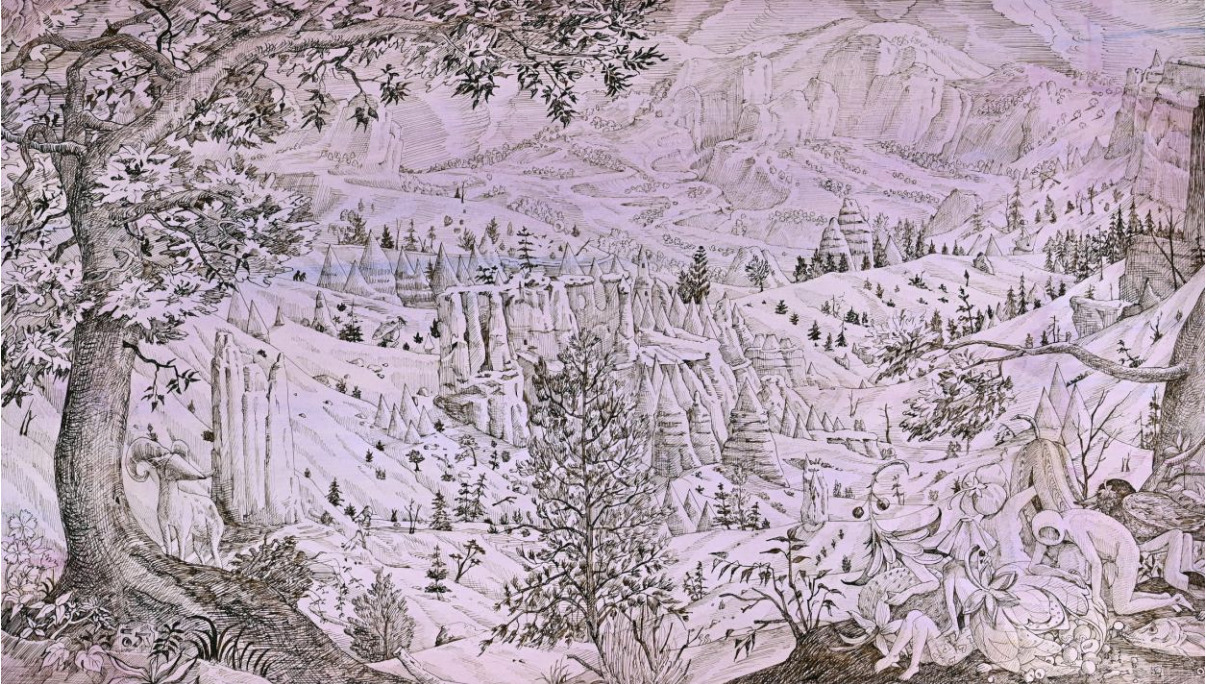
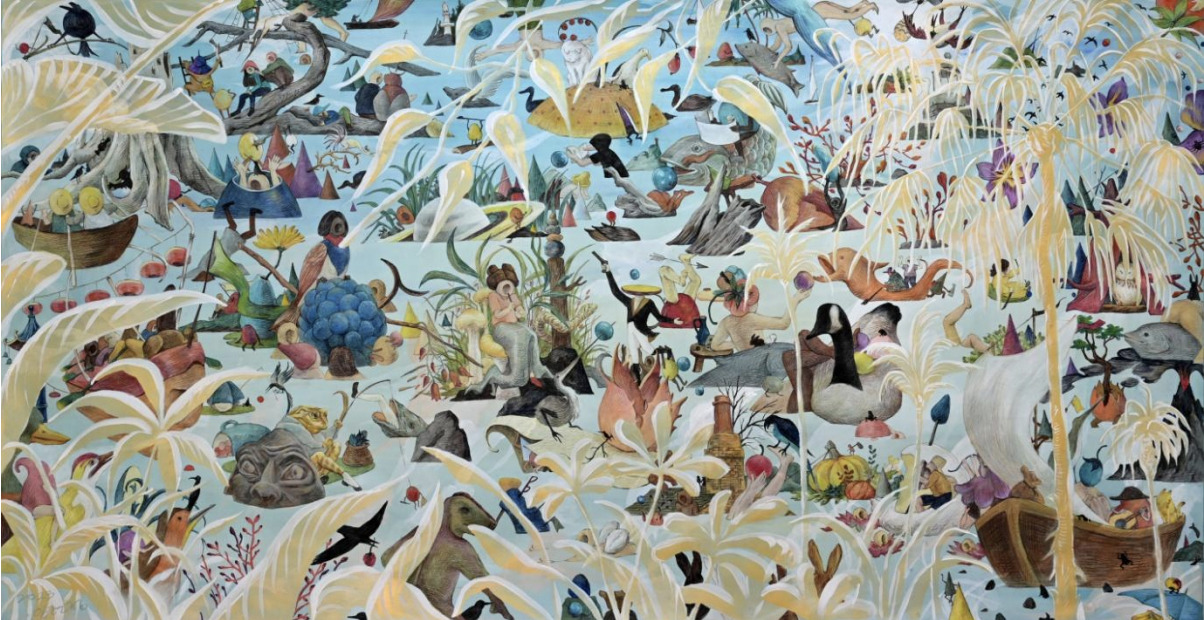
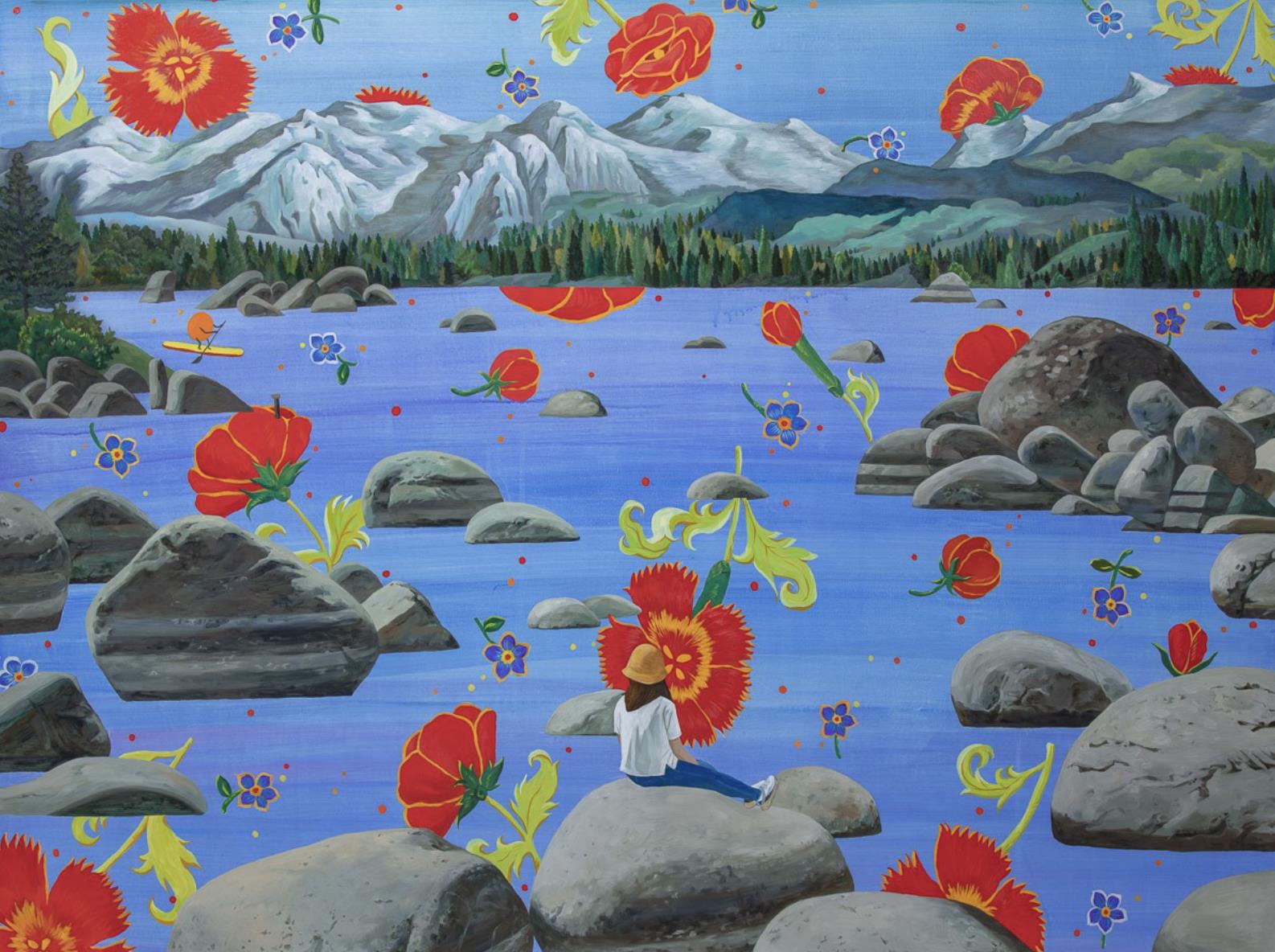
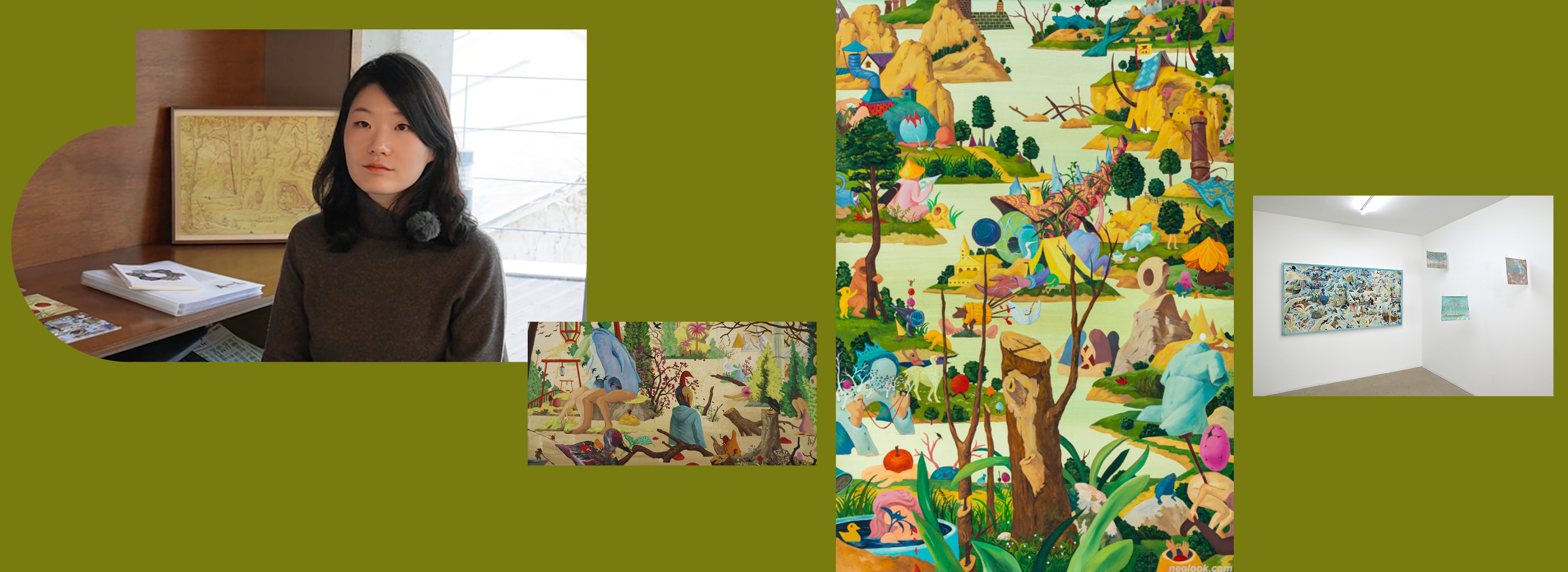
Hyunjeong Lim has continued her painterly exploration of ‘Mindscape,’ presenting fantastical and surreal perspectives that reflect the realities of lived experience. Her work is grounded in intuitive drawing, in which images are rendered spontaneously by the movement of the hand. The resulting compositions invite viewers to slowly observe the surface in its entirety, evoking a wide range of emotional responses.
 
Lim’s artistic world was profoundly shaped during her studies in London, where she encountered and was deeply influenced by drawings and paintings by Northern European masters such as Hieronymus Bosch, Pieter Bruegel, and Albrecht Dürer, whose works explore themes of imagination, dreams, and myth. She also draws upon Carl Jung’s theories of the collective unconscious and archetypes to articulate the realms of imagination and the unconscious.
 
By incorporating references from earlier art history that engage with imagination, fantasy, and the surreal into her own inner landscapes, Lim reinterprets emotions, memories, and imagined spaces—though not visibly present yet perceptible—as unreal and fairy-tale-like scenes.
 
The private inner images constructed within the open structure of her compositions invite individual interpretations and emotional responses from viewers, forming a flexible network of relationships. Her work suggests that although each person’s cultural background and inner landscape may be different and unfamiliar, they can nevertheless be meaningfully connected through the medium of painting.

Solo Exhibitions (Brief)

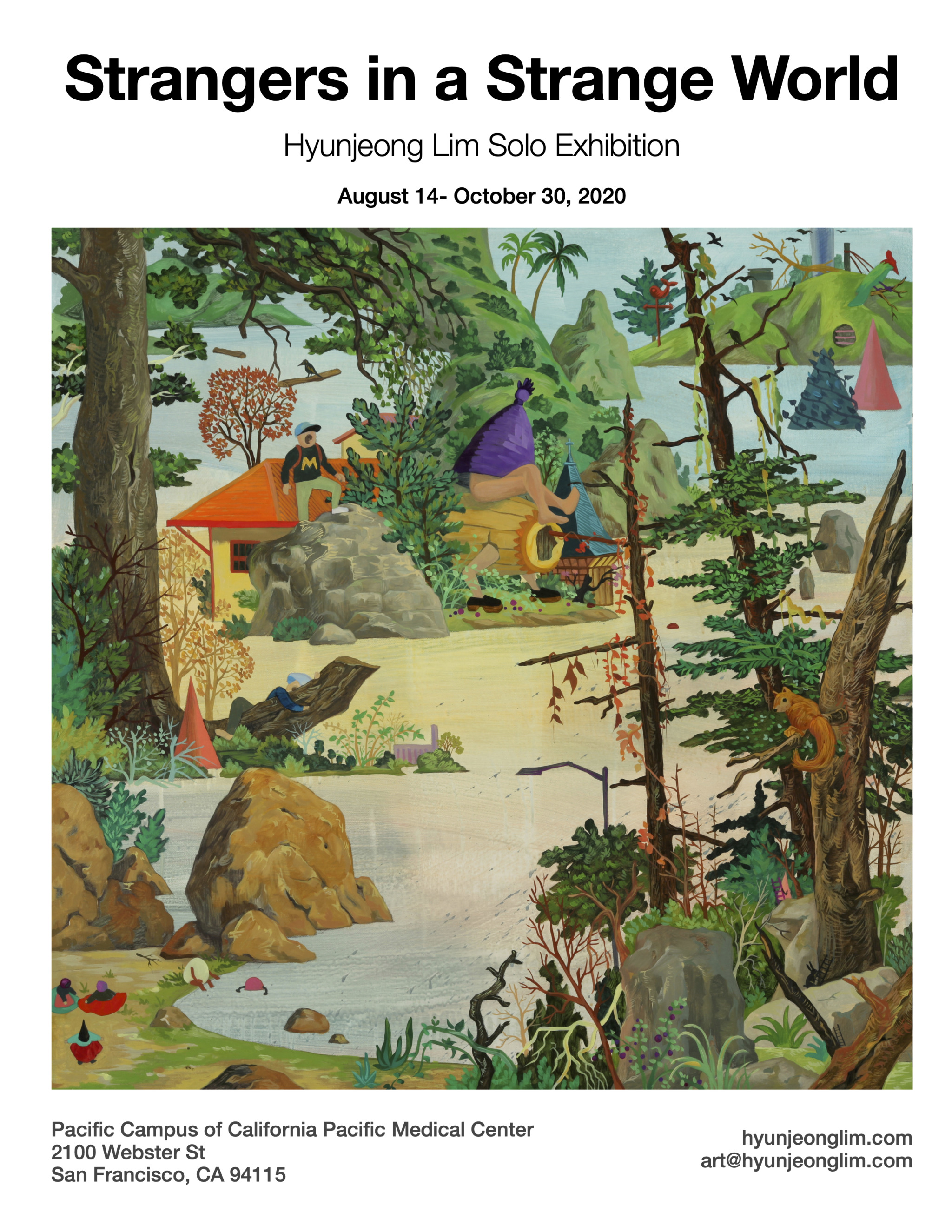
Hyunjeong Lim has held solo exhibitions including 《Archive of the Mind: Pacific Crossing》 (ATELIER AKI, Seoul, 2025), 《Trip West》 (Gallery 4Culture, Seattle, USA , 2025), 《Inspiration Point》 (A-Lounge Contemporary, Seoul, 2023), and 《Strangers in a Strange World》 (Pacific Campus of Pacific Medical Center, San Francisco, USA, 2020).

Group Exhibitions (Brief)

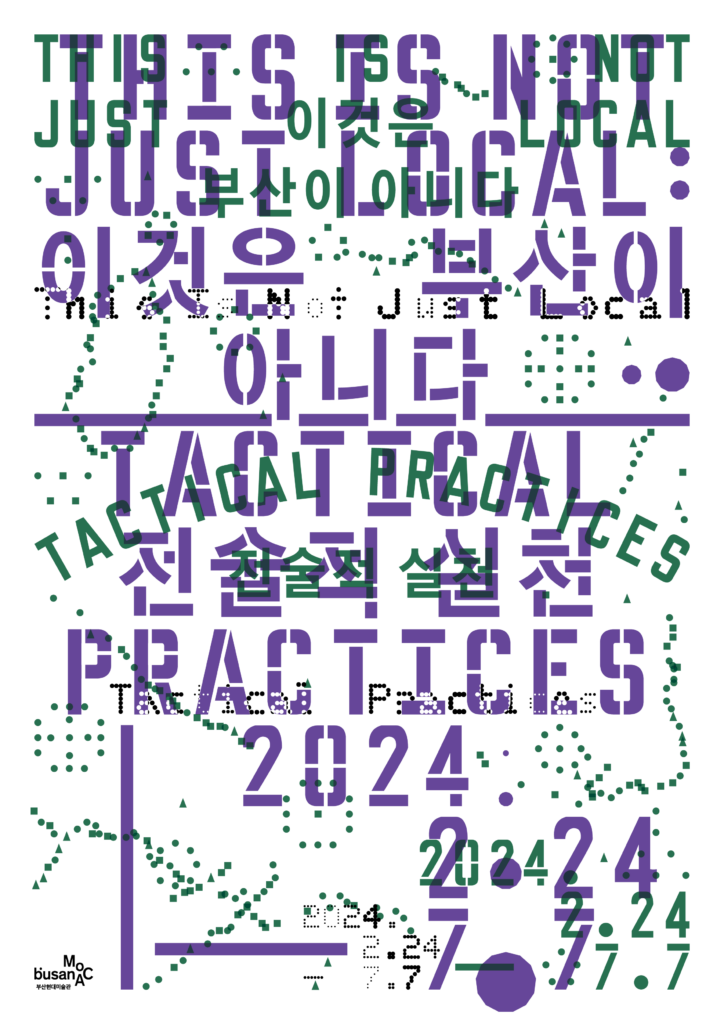
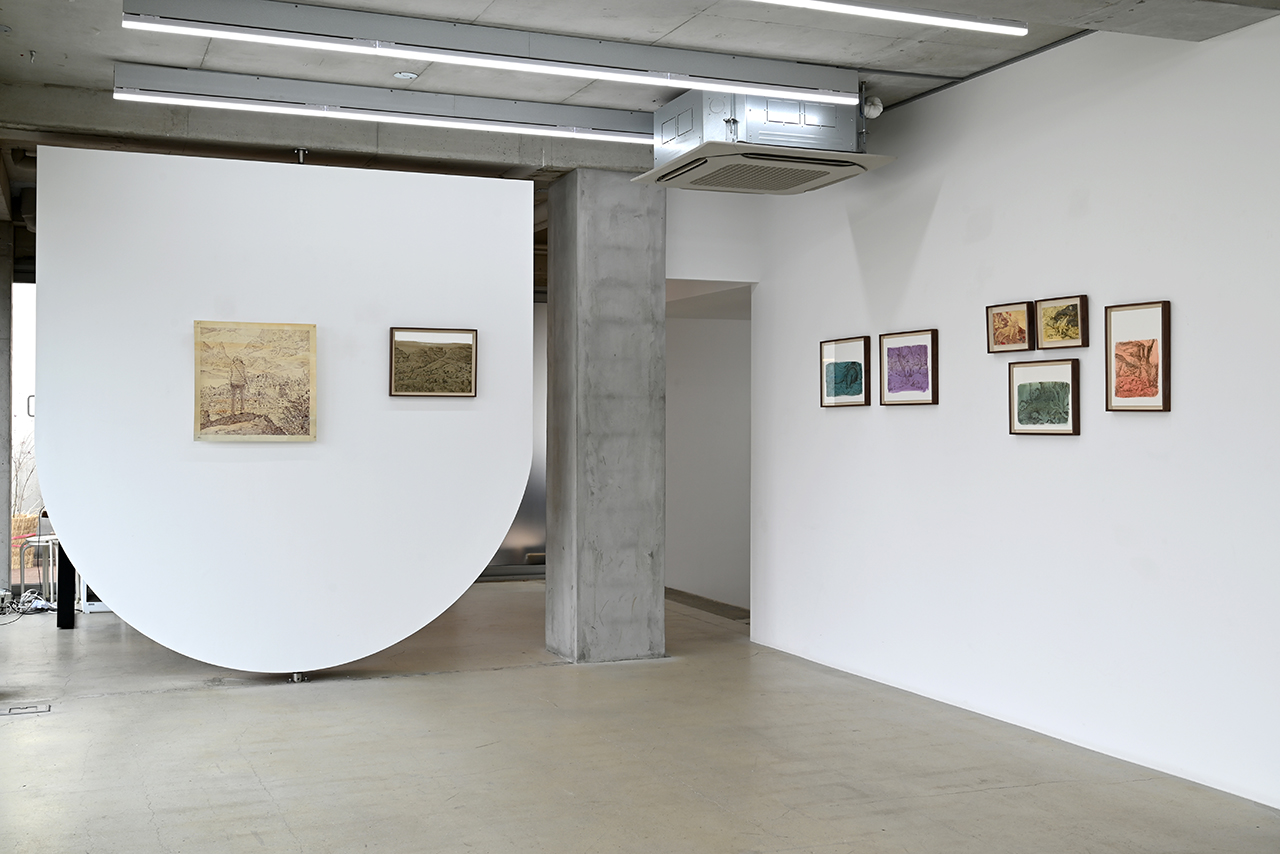
Lim has also participated in numerous group exhibitions, including 《This is not just local: Tactical Practices》 (Busan Museum of Contemporary Art, Busan, 2024), 《Landscape of the Mind》 (Korean Cultural Center Washington, D.C., Washington, D.C., 2023), 《Manwha-Kyung》 (A-Lounge Contemporary, Seoul, 2022), 《Edited Landscape》 (Gana Busan, Busan, 2022), 《The Show Windows》 (Coventry City of Culture Project, Coventry, UK, 2021), and 《NANJI 10th Review: Report and Recall》 (SeMA Storage, Seoul, 2017).

Awards (Selected)

Lim was selected as one of the artists for ‘OCI Young Creatives 2016’.

Residencies (Selected)

Lim has participated in the Seoul Museum of Art Nanji Residency (2016) and OCI Residency 1211 (2017).

Awards (Selected)

Lim’s works in the collections of the Busan Museum of Contemporary Art, the Seoul National University Museum of Art, the MMCA Art Bank, and the OCI Museum of Art.
Works of Art

The Painterly exploration of ‘Mindscape.’

Originality & Identity

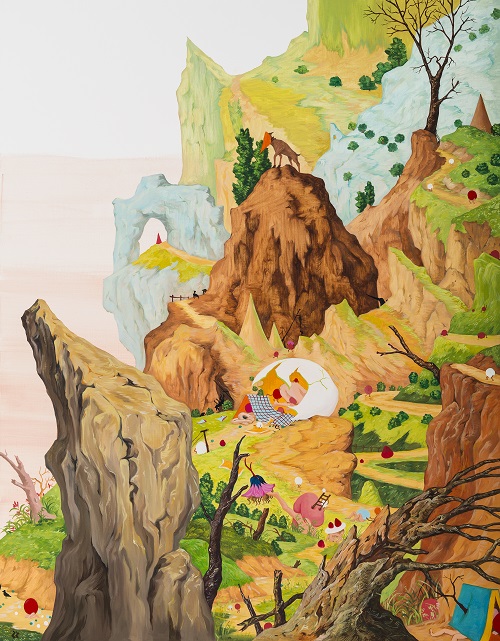
Hyunjung Lim constructs pictorial “inner landscapes” where lived experience, imagination, memory, and the unconscious intersect. Her work begins from personal experience, yet it does not unfold toward a single narrative; instead, it develops as an open structure in which sensations and memories intertwine. Early works such as Islands of the Mind(2016), Rocky Landscape(2016), River Landscape(2016), and Landscape with Eggs(2016) present canvases where various living beings and objects are arranged in a non-linear manner. Rather than organizing around a central storyline, these compositions reveal an inner terrain formed through the connections among fragments of memory, emotion, and experience.
 
This worldview is closely connected to the influence of Northern Renaissance painting that the artist encountered during her studies in London. The complex pictorial structures and imaginative worlds found in the works of masters such as Hieronymus Bosch, Pieter Bruegel, and Albrecht Dürer became important points of reference in her practice. At the same time, Carl Jung’s concepts of the collective unconscious and archetypes also informed her thinking, prompting her to explore the relationship between personal memory and universal imagery. These interests became clearly visible in the exhibition 《Islands of the Mind》(OCI Museum of Art, Seoul, 2016).
 
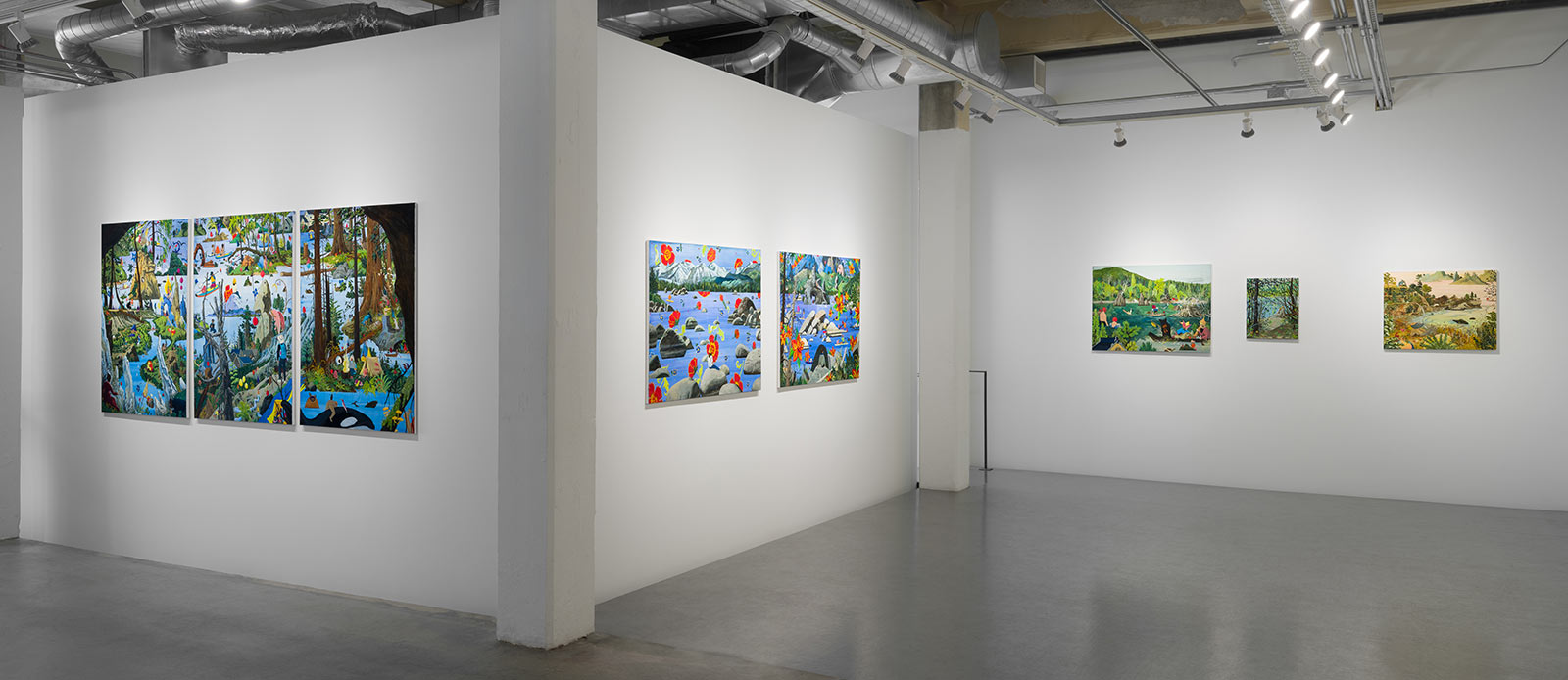
After the artist relocated to the United States, her work developed another conceptual layer. The natural landscapes of the American West and the experience of migration encouraged her to incorporate elements of real landscapes into her imagined environments. For example, Strangers in a Strange World(2018) depicts the emotions of living as a stranger in an unfamiliar environment through surreal scenes populated by human figures. The characters’ mismatched and incongruous actions metaphorically evoke the distance felt in unfamiliar social settings and the tensions embedded in contemporary human relationships.
 
In her recent work, these inner landscapes expand further through experiences of travel and movement. In 《Inspiration Point》(A-Lounge Contemporary, Seoul, 2023) and 《Archive of the Mind: Pacific Crossing》(Atelier Aki, Seoul, 2025), the accumulated experiences of traveling between the American West, Europe, and Korea are embedded within the pictorial space. Here, landscape functions not simply as a depiction of nature but as an inner record in which memory and sensation accumulate, reflecting the trajectory of a life shaped by movement.

Style & Contents

Lim’s practice begins with intuitive drawing. The artist first lays down a field of color on canvas or paper, then expands the image spontaneously from fragments of objects or landscapes that serve as starting points. This approach begins from what she calls a “point of inspiration” and gradually develops into increasingly complex compositions. The intricate structures seen in works such as Night WalkStrangers in a Strange World, and Bryce Point emerge from this process.
 
The motifs appearing in her paintings are heterogeneous in nature. Animals, human figures, plants, and everyday objects coexist within the same pictorial space, yet they do not form a fixed narrative structure. Instead, meaning arises through the relationships among these elements, encouraging viewers to move their gaze across the surface and discover new connections. This compositional strategy resembles the layered pictorial structures often found in Northern Renaissance painting.
 
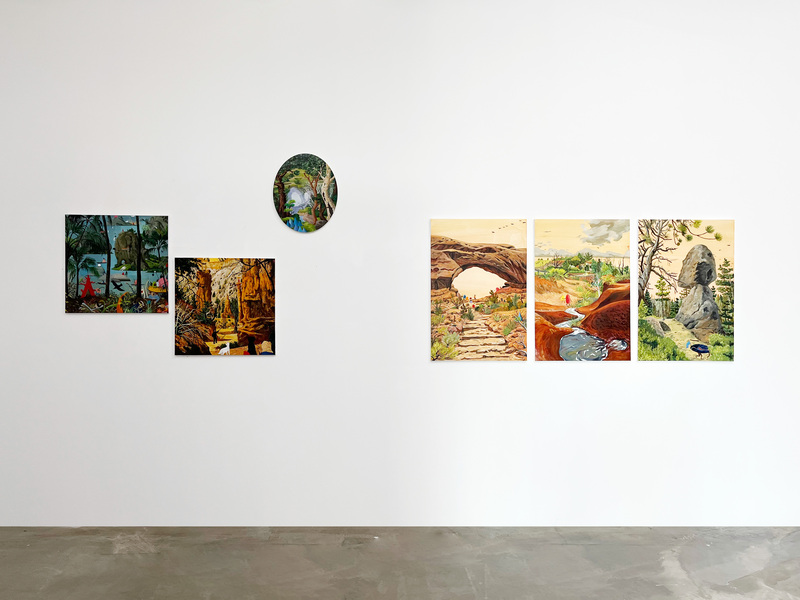
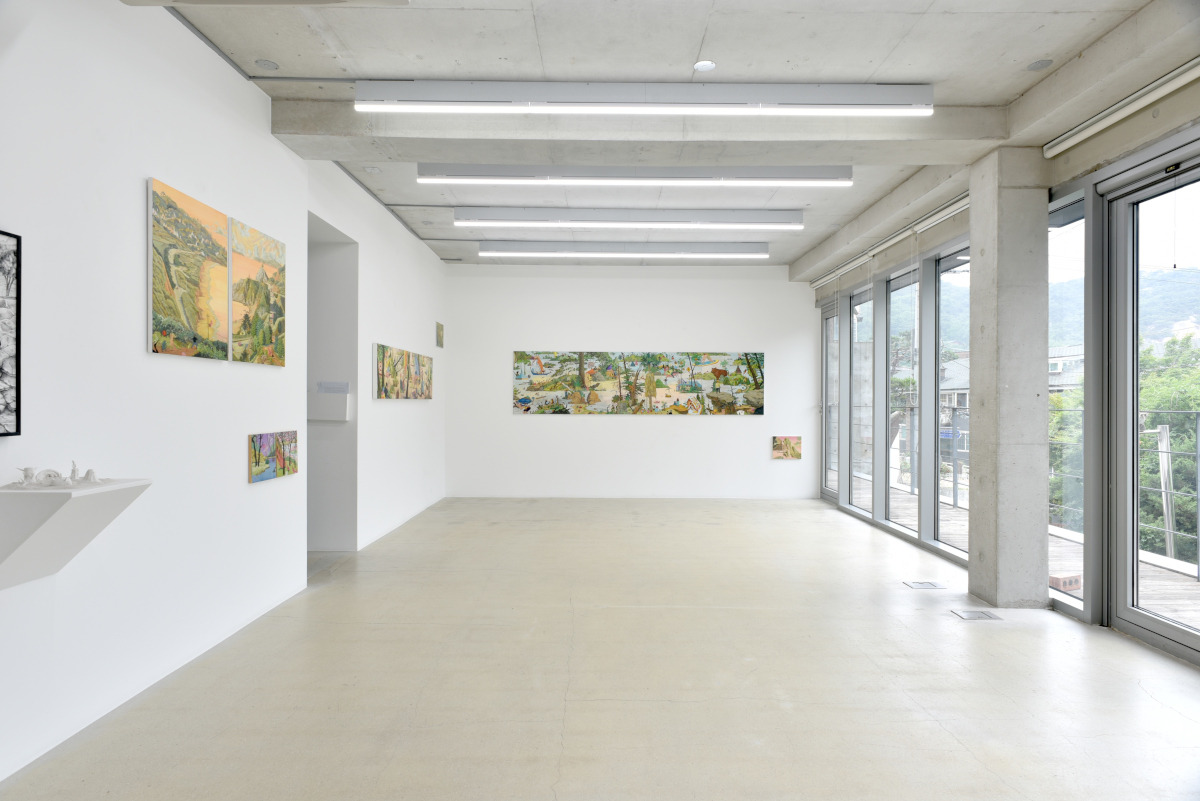
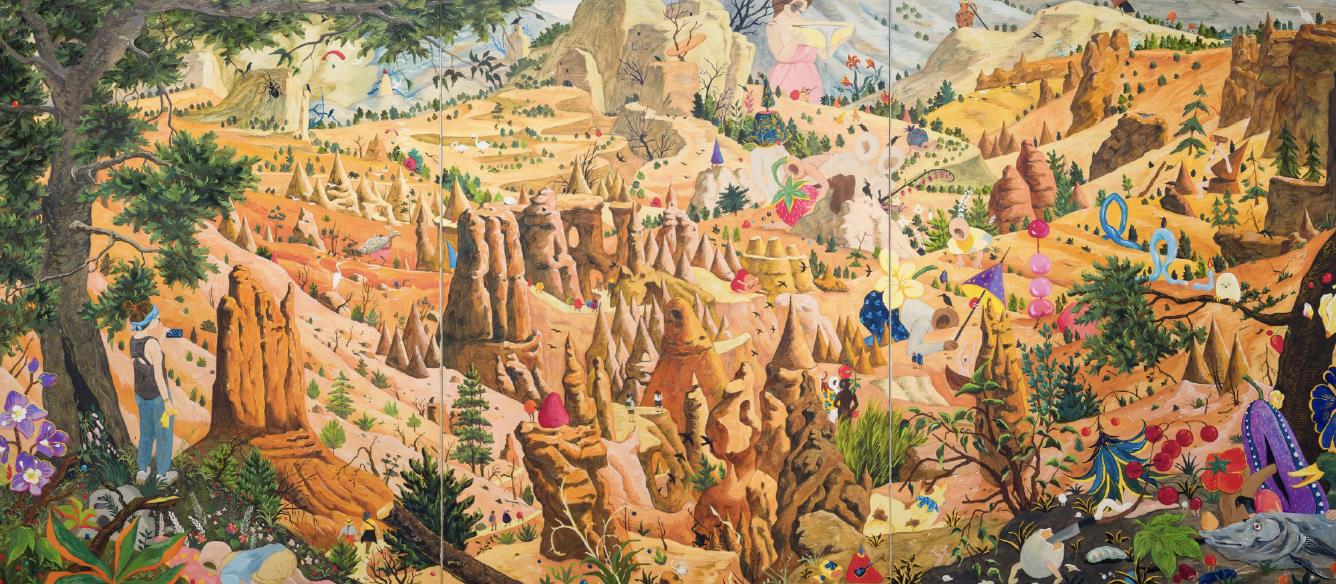
In her recent works, drawing has become increasingly central. In the exhibition 《Inspiration Point》, the presentation was composed entirely of drawings rather than acrylic paintings. Works such as Inspiration Point(2023) and Bryce Point(2023) depict the canyon landscapes and red rock formations of the American West, layered with imagined imagery. These drawings can be understood as visual records in which landscapes encountered during travel merge with inner memories.
 
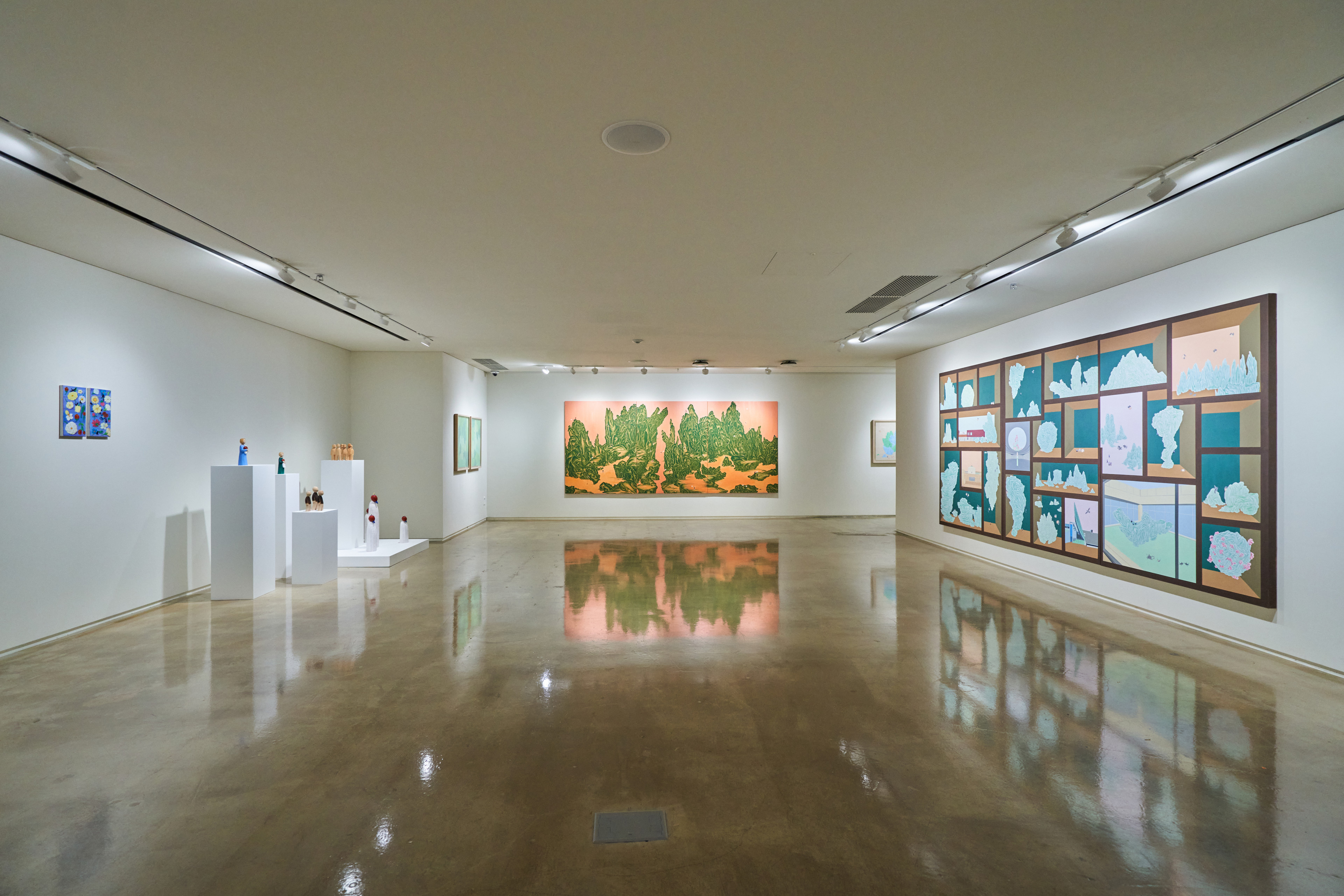
In her recent paintings, the scale of natural landscapes has become more pronounced. The large-scale painting Bryce Point(2024), presented in 《Archive of the Mind: Pacific Crossing》, combines the vast natural scenery of the American West with imaginative elements. In this work, references to Northern Renaissance painting intersect with the idealized landscape traditions of East Asian shanshui painting, allowing real and imagined landscapes to coexist within a single pictorial space.

Topography & Continuity

Lim’s work forms a distinctive pictorial territory where personal experience, imagination, and art historical references intersect. The complex structures of Northern Renaissance painting, the idealized worlds of East Asian landscape traditions, and the contemporary experience of mobility converge within a single image. In her practice, landscape functions not simply as a representation of nature but as a psychological space in which memory, emotion, and experience accumulate.
 
Although many contemporary painters explore fantastical imagery or surreal landscapes, Lim’s work stands out in the way it weaves together personal experience and art historical references. Her intuitive drawing process—expanding images through associations rather than predetermined compositions—privileges unconscious connections over planned structure. This method creates an organic flow across her body of work.
 
Her practice also demonstrates a gradual expansion shaped by travel and migration. What began as the “landscapes of the mind” developed in Korea has absorbed new imagery through the natural environments of the American West and the experience of relocation. Exhibitions such as 《Strangers in a Strange World》, 《Inspiration Point》, 《Trip West》(Gallery 4Culture, Seattle, 2025), and 《Archive of the Mind: Pacific Crossing》 illustrate this evolving trajectory.
 
In this way, Lim’s painting begins from personal memory and experience yet develops across diverse cultural landscapes and art historical traditions. The worlds within her canvases are structured as open fields of imagination rather than fixed narratives, allowing viewers to discover new meanings through their own experiences and perceptions. Within the rapidly changing context of contemporary art, her work suggests that painting can still function as a medium connecting individual experience with the sensibilities of others.

Works of Art

The Painterly exploration of ‘Mindscape.’

Articles

Exhibitions

Activities