Suture - K-ARTIST

Suture

2023
Performance
20min
About The Work

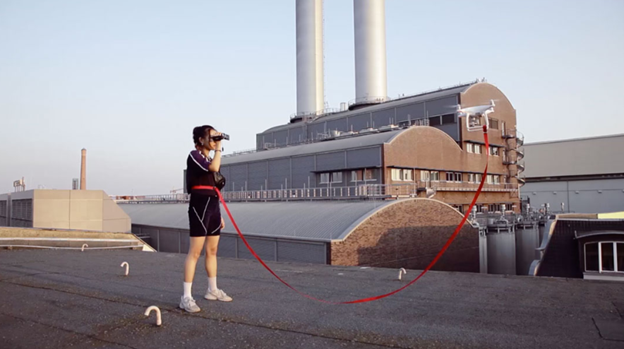
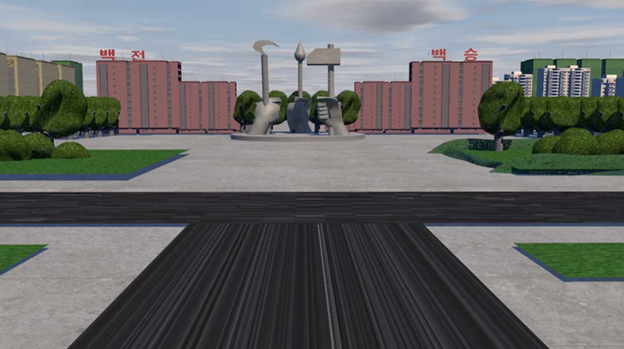
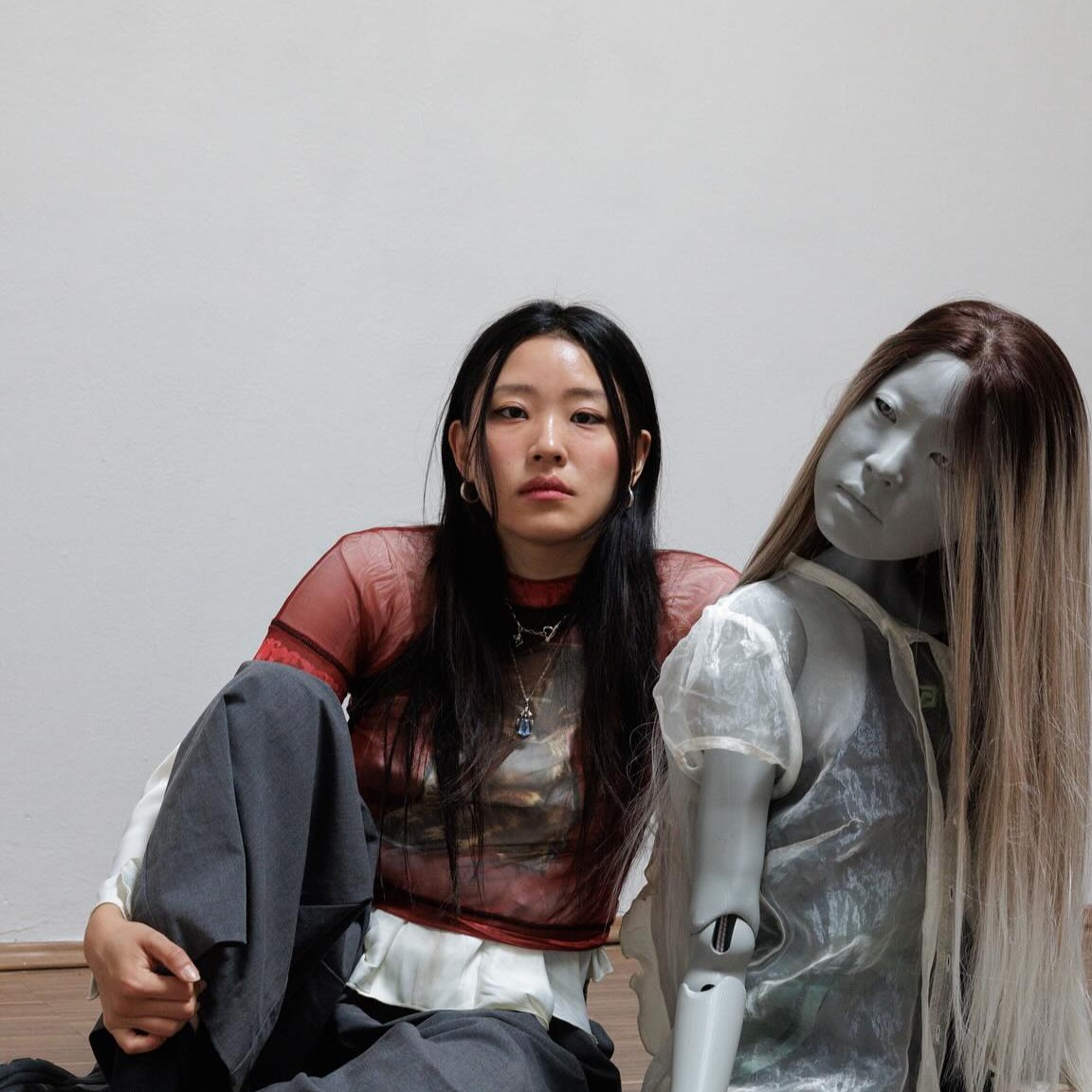
Eunju Hong views the process of technological evolution as a reflection of human desire, focusing on the fragility and violence inherent within it. Based on research into the history of technological development, the artist employs performance, experimental video, and installation to elevate the collisions between technology and emotion, matter and memory into a form of poetic tension, attentively examining the points where personal and social wounds overlap.
 
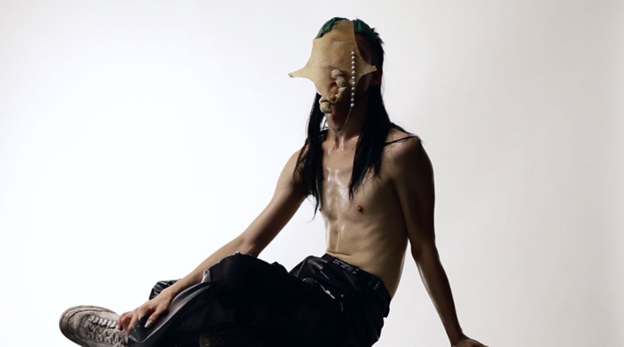
Medical technologies, optical devices, and automated nonhuman agents—systems created by humans “to improve life”—paradoxically expose the incompleteness of human existence. Eunju Hong empathizes with these technological mechanisms and the emotions of loss, oppression, and alienation they leave behind, reconfiguring them through embodied memory and trauma.
 
Eunju Hong’s practice—woven from fragmentary images and incomplete shards of emotion—asks us to reconsider the boundaries of “being human” not through logical comprehension, but through intuitive confrontation. By unfolding the collisions between technology and emotion, matter and memory as a form of poetic tension, her work brings to the surface multilayered networks of relations that lie beneath or are concealed within the present moment. In doing so, it prompts questions such as, “Where am I positioned?” or “What is it that I am seeing?”

Solo Exhibitions (Brief)

Hong has held solo exhibitions including 《Shadow Play》 (Faction, Seoul, 2025), 《She seemed devastated, when I was weeping with Joy: A story that ends from the beginning》 (Apartment of Art, Munich, Germany, 2025), 《Suture: Rewired》 (Arcade Seoul, Seoul, 2024), and 《Joy of the Worm》 (Diplomausstellung,AdBK Munich, Germany, 2023).

Group Exhibitions (Brief)

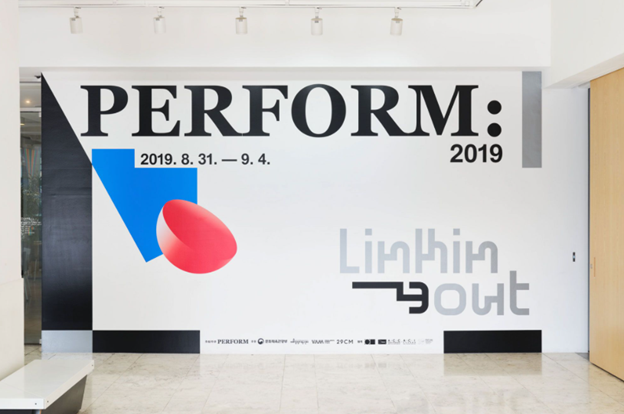
Hong has also participated in numerous group exhibitions, including 《Bayerischer Kunstförderpreis》 (Galerie der Künstler*innen, Munich, Germany, 2025), 《The 3rd Two》 (Galerie der Künstler*innen, Munich, Germany, 2024), 《Sterling Darling》 (Kunstarkaden, Munich, Germany, 2023), 《LASSITUDE》 (Goethe-Institut, Paris, 2022), 《The Postmodern Child》 (Busan Museum of Contemporary Art, Busan, 2022), and 《PERFORM 2019》 (Ilmin Museum of Art, Seoul; Asia Culture Center, Gwangju, 2019).

Awards (Selected)

Hong is the recipient of the ‘Media Art Prize’ from the Kunststiftung Ingvild und Stephan Goetzand the ‘Bayerischer Kunstförderpreis - Bildende Kunst (Bavarian arts and literary prize)’ awarded by the Bavarian State Ministry for Science and Art.

Residencies (Selected)

In 2024, Hong completed a residency at Taipei Artist Village.

Works of Art

The Boundaries of 'Being Human'

Originality & Identity

Eunju Hong’s practice begins with a view of the history of technological development as a reflection of human desire. Rather than accepting the dominant narrative that technology has been invented to improve life, she focuses on how fragility, violence, loss, and repression have accumulated alongside technological progress. This perspective leads her to approach technology not simply as a tool or an object of critique, but as a field in which human emotion, memory, and embodied experience are deeply entangled. Through her work, Hong elevates the points of collision between technology and emotion, matter and memory into states of poetic tension, persistently examining moments where personal wounds overlap with social ones.

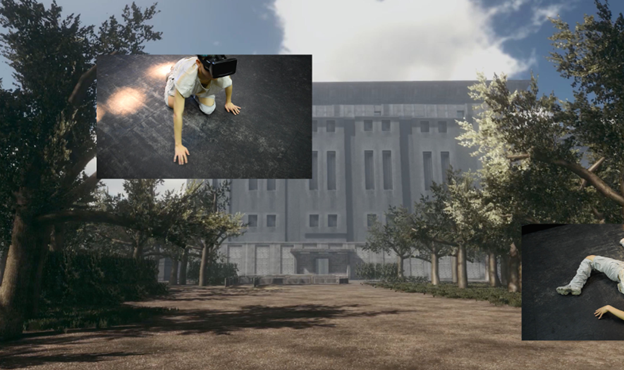
From early on, her interest has centered on how “the body” and “matter” are transformed and acquire meaning within technological contexts. High Fever(2023) reveals the vulnerability of human existence through the relationship between medical technology and the body, showing how technology paradoxically functions as a device that makes human incompleteness visible. This approach shifts attention away from technological outcomes toward the emotional residues and traumas produced in the process itself.

In her solo exhibition 《I want to mix my ashes with yours》(Gallery175, Seoul, 2022), Hong imagines a situation in which the boundaries between heterogeneous entities—humans, buildings, machines, and animals—collapse. Here, the concept of the body is expanded from a singular subject into a non-linear network of intertwined beings. The phrase “mixing ashes” is recontextualized beyond a metaphor for eternal love, instead pointing to contemporary conditions in which the boundaries between forms of existence become increasingly ambiguous.

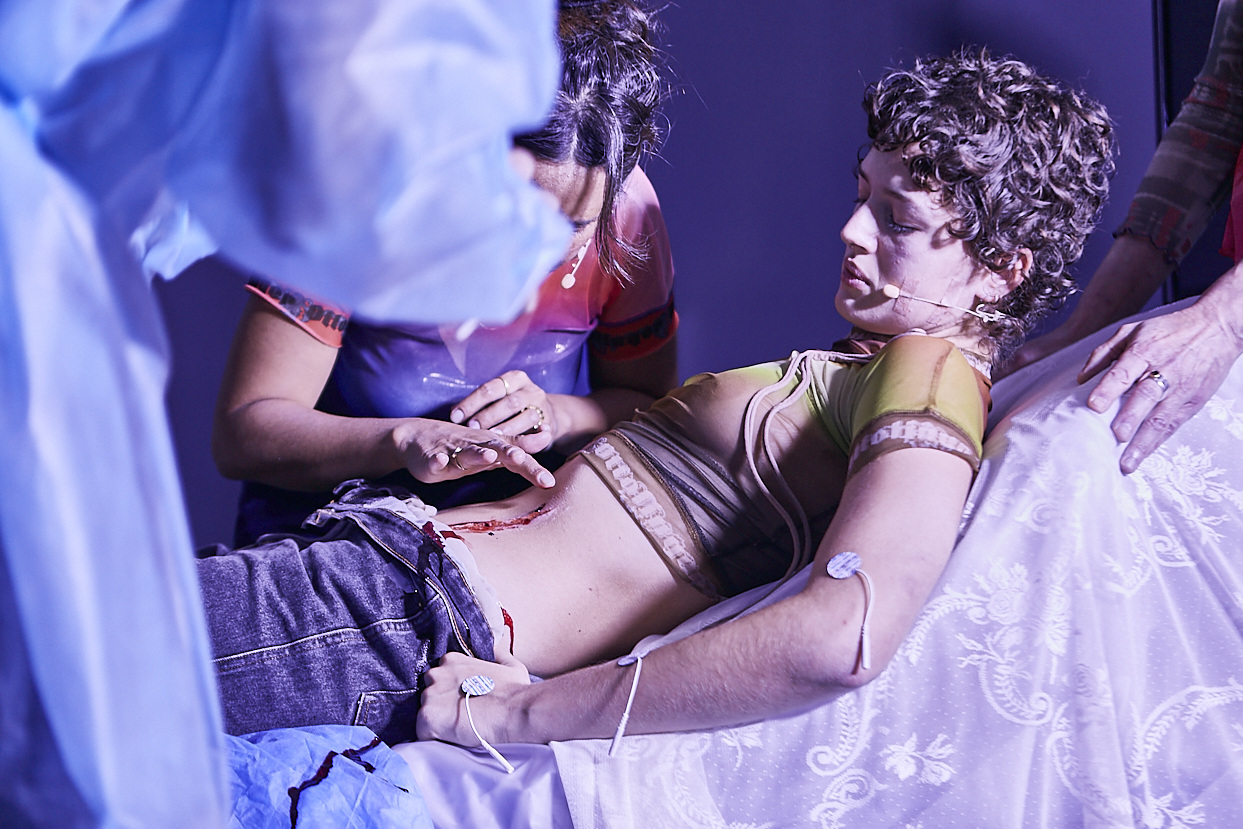
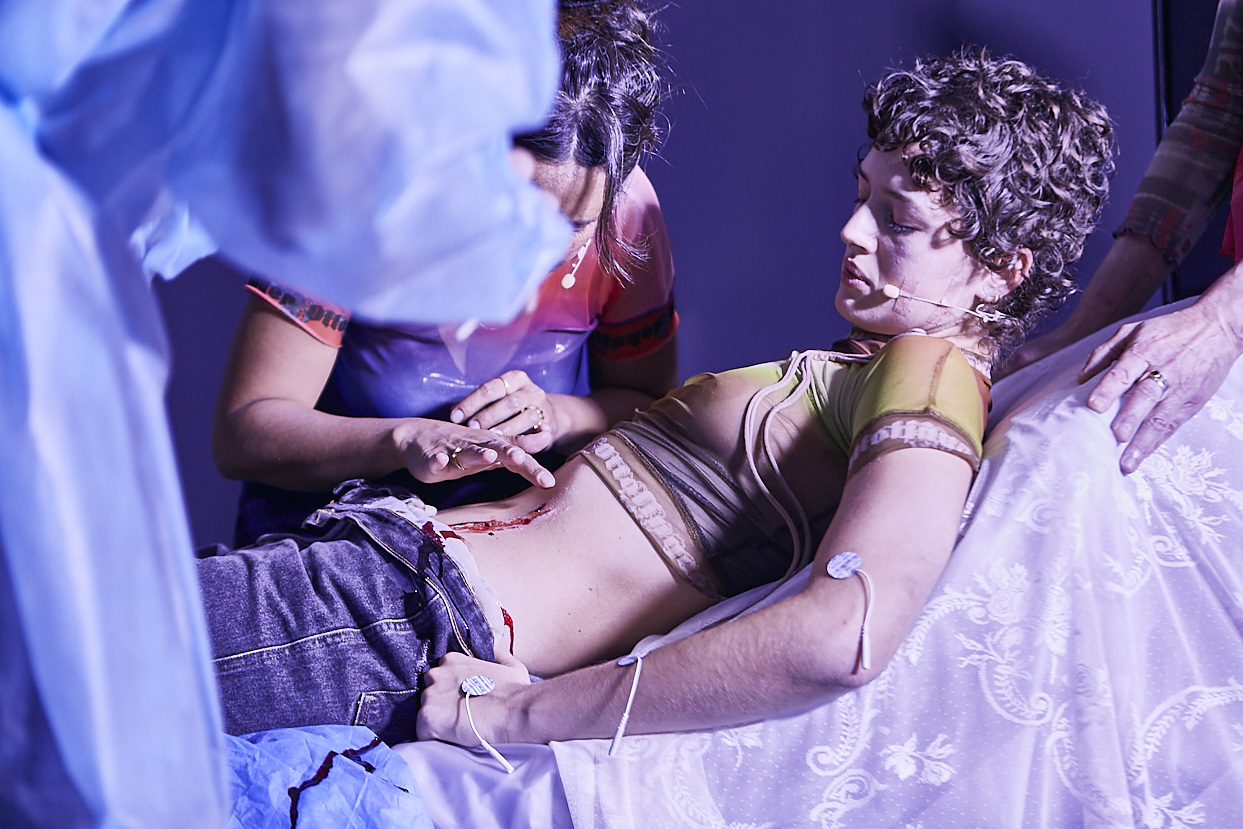
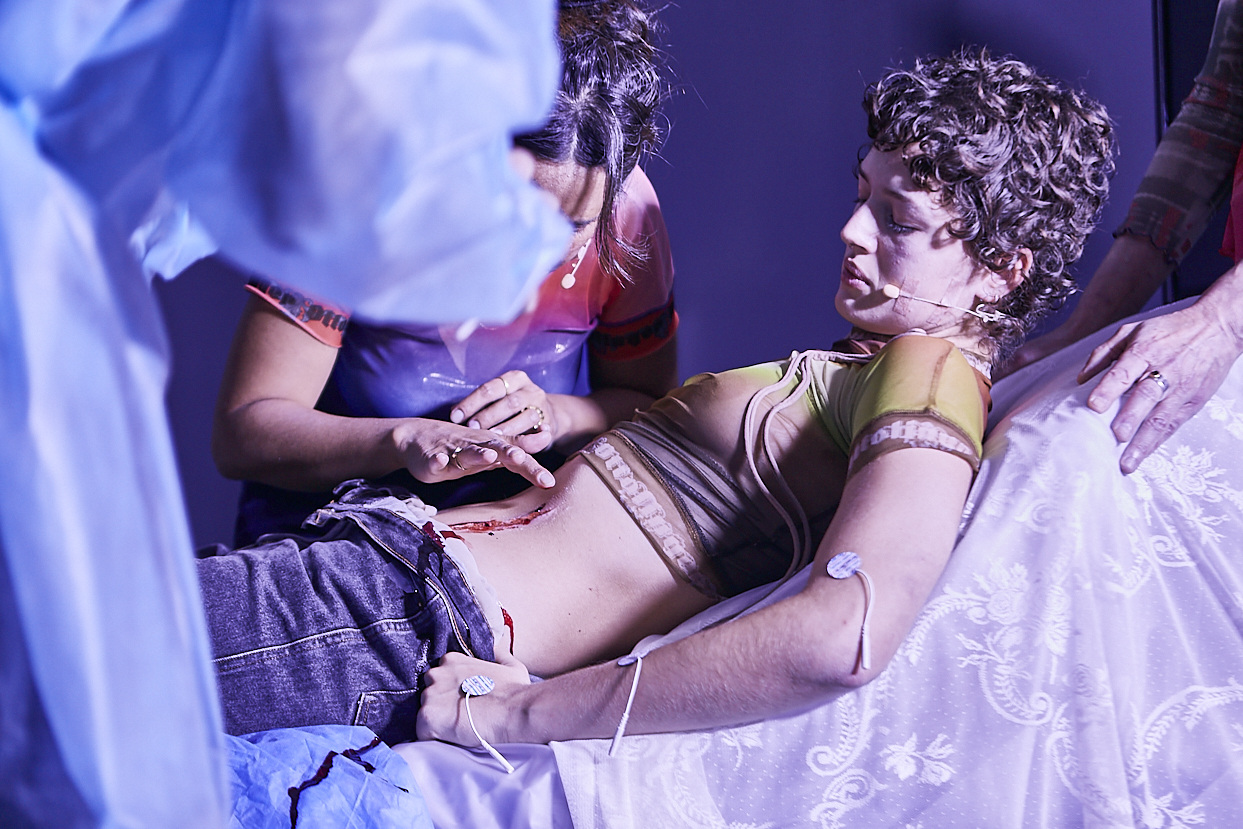
In her later works, Hong further expands her inquiry into issues of technology, power, and the gaze through the keywords of wound, suturing, manipulation, and representation. Suture(2023) and the solo exhibition 《Suture-rewired》(Arcade Seoul, Seoul, 2024) trace how wounds have historically been transformed into spectacle and subsequently concealed, beginning with the “operating theater” of Western medical history.

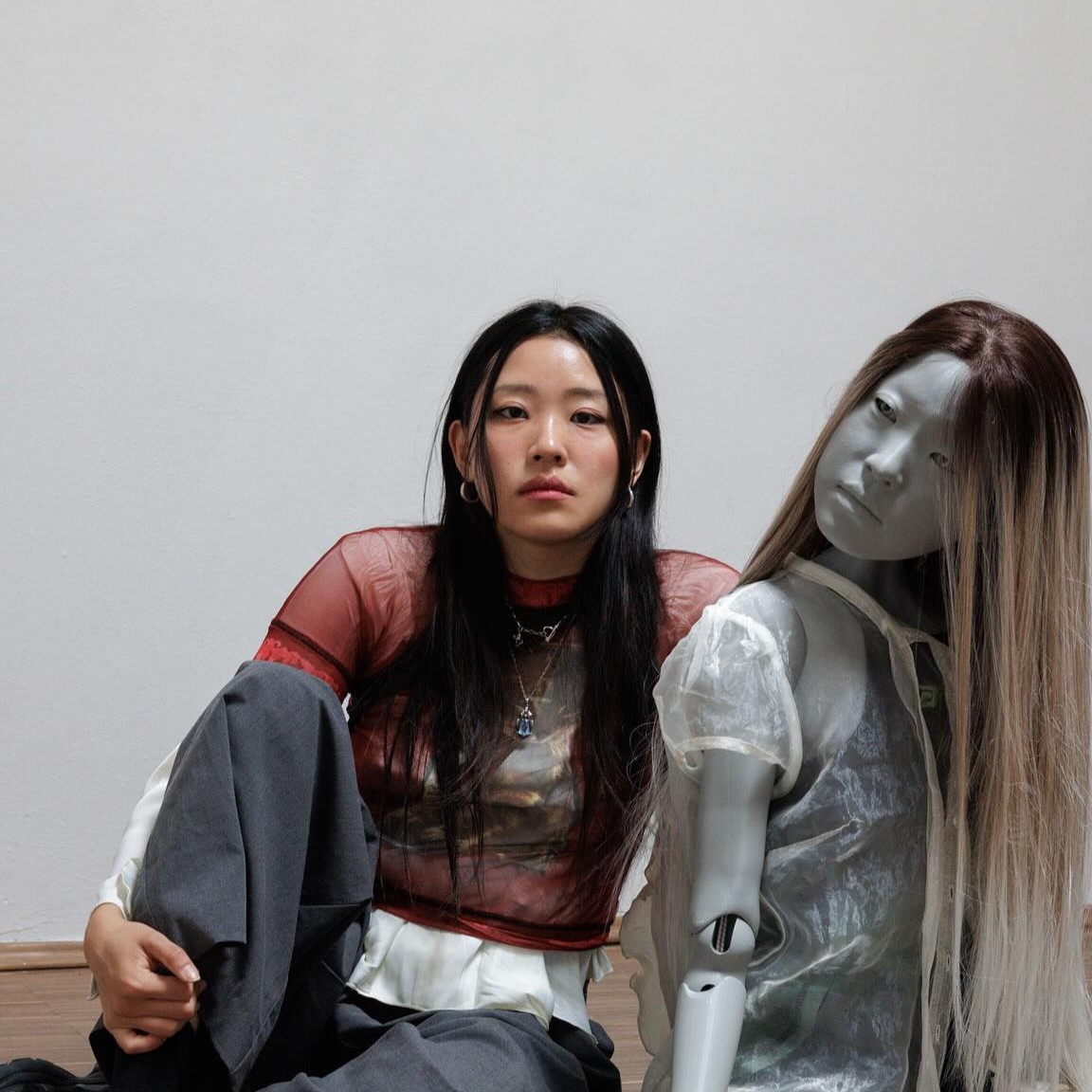
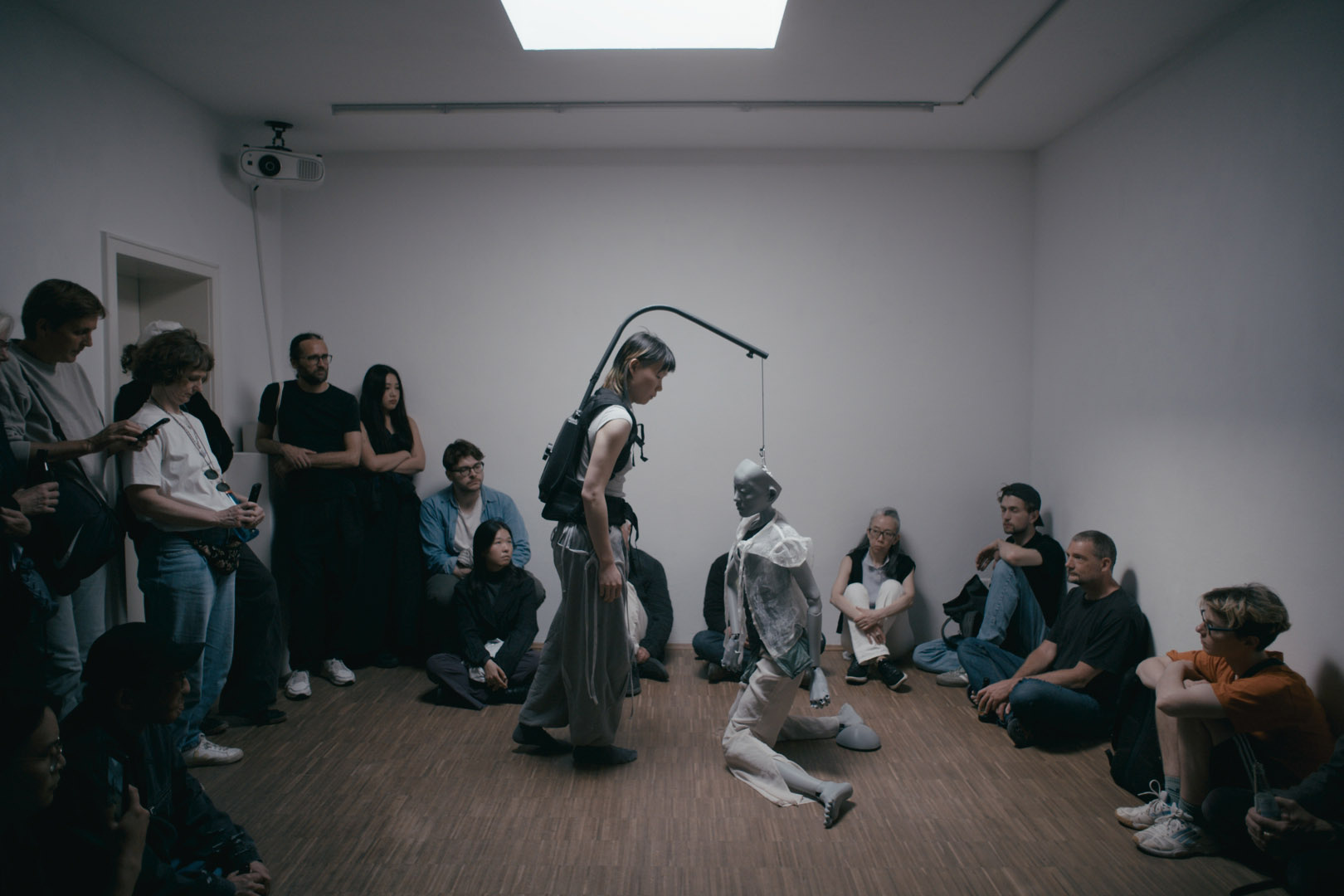
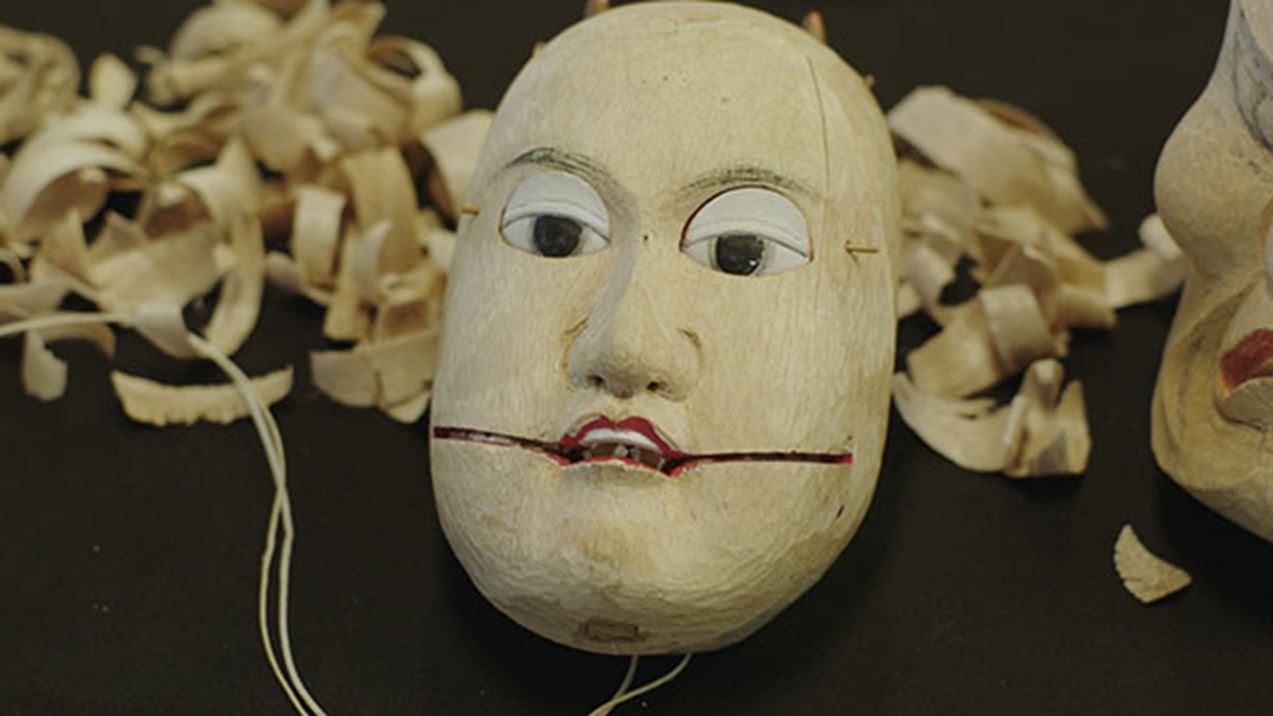
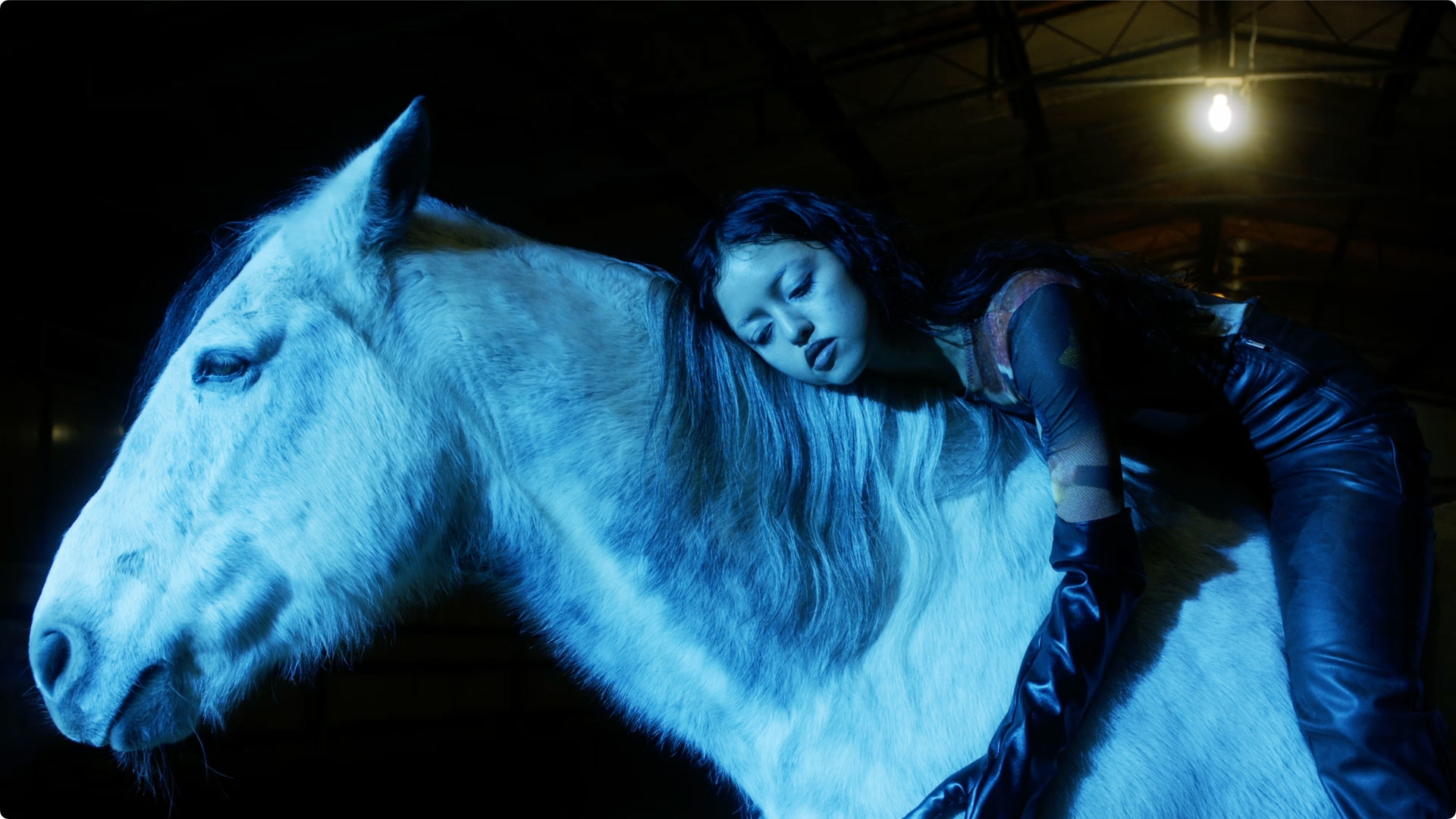
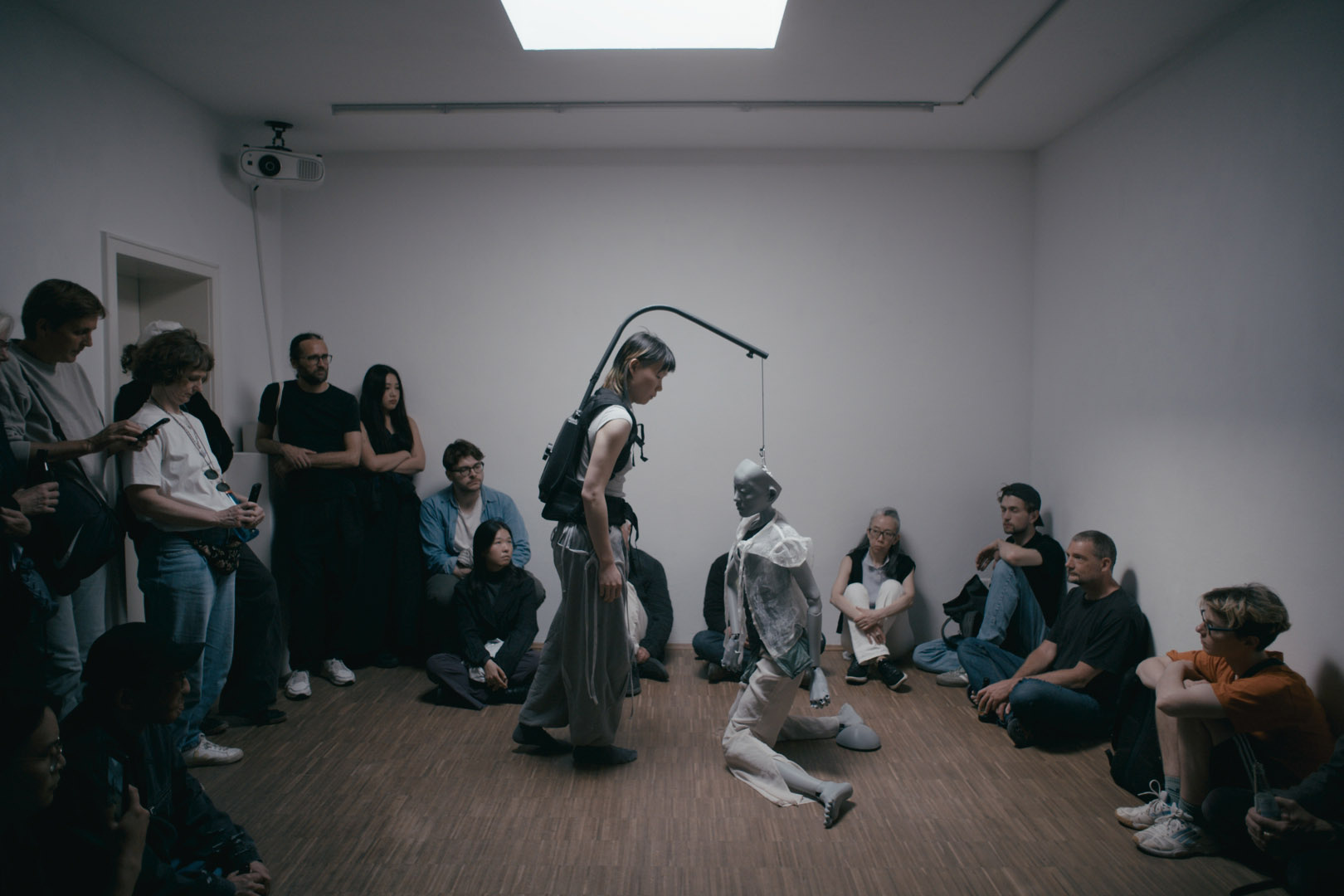
More recent works, including She seemed devastated, when I was weeping with Joy(2025) and the solo exhibition 《Shadow Play》(Faction, Seoul, 2025), draw on the contexts of puppetry and traditional theater to examine structures of emotional transmission between humans and nonhumans, performers and objects, continuing her investigation into the intersections of technology, the body, and memory.

Style & Contents

Eunju Hong’s practice unfolds primarily through performance, experimental video, and installation, characterized by research-based narrative structures and non-linear image composition. Rather than presenting a single, cohesive story, she juxtaposes fragmentary images and incomplete shards of emotion, encouraging viewers to confront situations intuitively. This strategy prioritizes embodied experience over explanatory accounts of technological history or institutional systems, allowing residual sensations and traces to be felt physically.

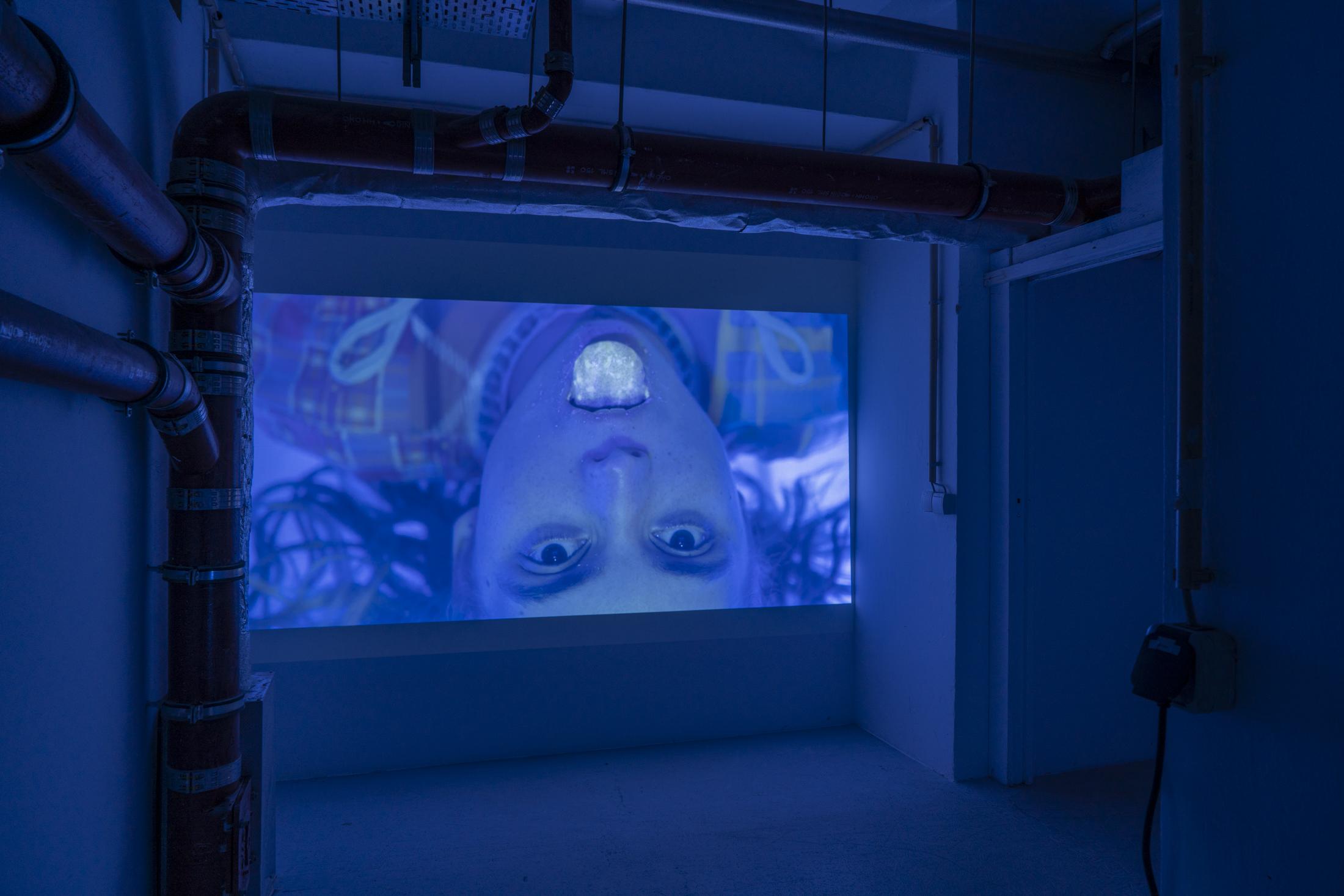
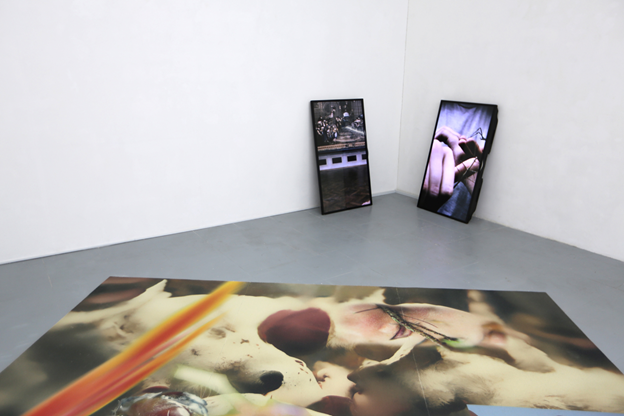
In 《I want to mix my ashes with yours》, video and installation merge into a stage-like environment composed of three-channel video, AI-generated images, sound, and objects. Human language, animal movement, and mechanical imagery imitate and collide with one another, while performers dancing with walking stick insects appear as beings that traverse the boundaries of species, gender, and modes of survival. The AI image collage placed on the floor reveals the collaborative process between the artist and artificial intelligence, visualizing both the limitations and the inherent irony of language-based image generation technologies.

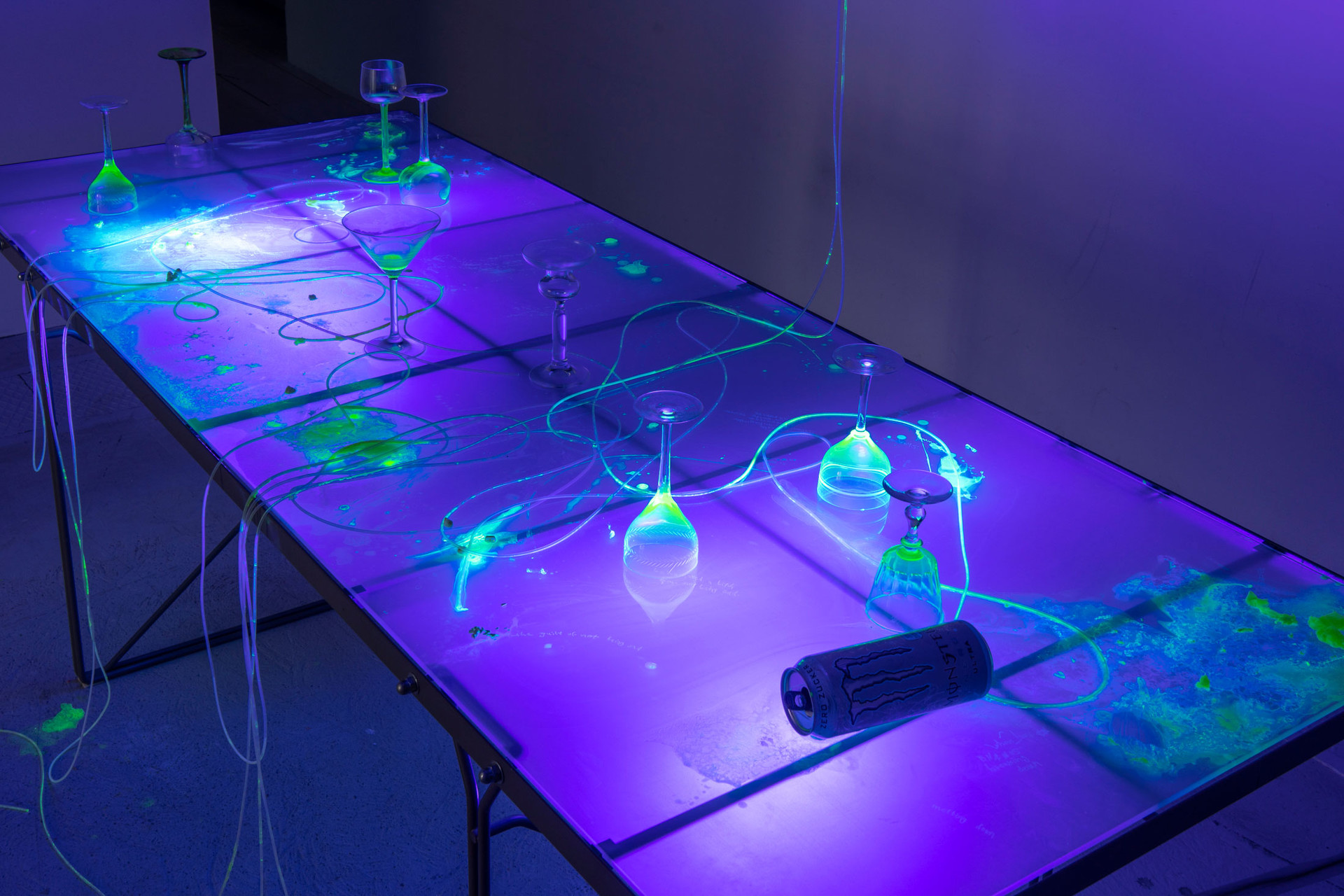
Annagreen(2023) addresses the relationship between technology and desire through the historical context of a specific material. Using uranium glass as its central medium, the work unfolds the desire for glittering objects, the concealed histories of war and the energy industry, and the memories embedded in matter through video and installation. Here, material functions not merely as substance, but as a repository of memory whose meaning shifts over time.

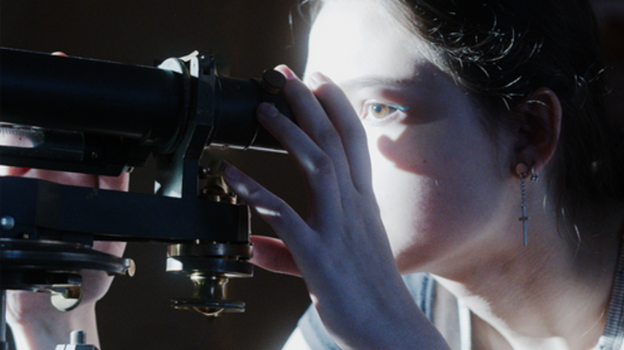
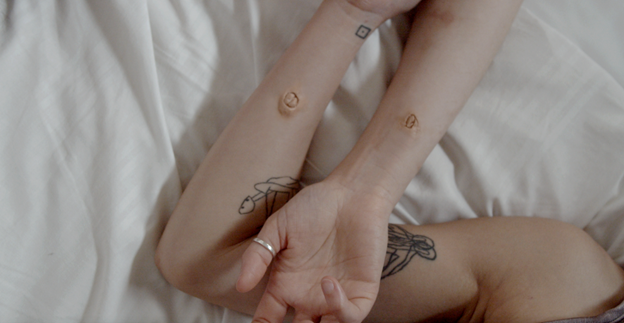
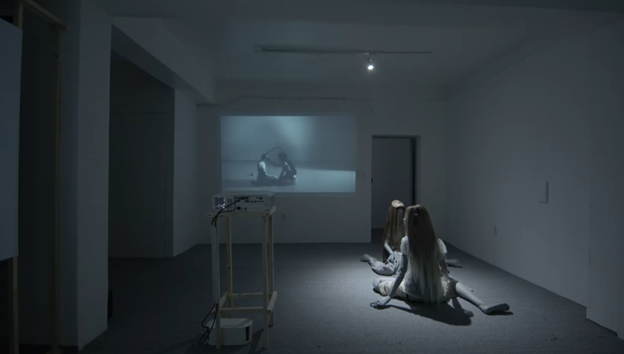
In the performance works Suture and Suture-rewired, the position of the audience is actively reconfigured. The reading of medical records, acts of self-suturing, and spatial compositions reminiscent of an operating theater position viewers as both witnesses and participants, exposing the structures of gaze and power surrounding wounds. In later works such as She seemed devastated, when I was weeping with Joy and 《Shadow Play》, theatrical devices combining puppets, video, sound, and performers are used to explore how emotions and memories are manipulated and transmitted, allowing Hong to move fluidly between exhibition space and theatrical structure.

Topography & Continuity

A core aspect that remains consistent throughout Eunju Hong’s practice is her approach to technology not as an abstract system external to humanity, but as a historical and embodied condition deeply infused with emotion and memory. Rather than focusing on the outcomes of technological progress, she attends to the wounds, traumas, and suppressed memories generated in its wake, rendering them visible through bodily forms such as performance and installation. This approach moves beyond the binary of technological critique versus technological affirmation, enabling technology to be reconsidered at the level of sensation and experience.

Over time, her work has expanded from personal bodily perception toward broader social and historical structures. Early explorations of the body and material developed into examinations of relational networks among heterogeneous beings, later crystallizing into inquiries into medical systems and power structures in Suture. More recently, her research into puppetry and traditional theater has led her toward investigations of how emotions are represented, mediated, and transmitted.

By combining performance, media, and research, Hong transforms the history of technology and questions of emotion into embodied experiences. Her method of bringing materials from disparate temporal contexts—medical history, the history of science and technology, and traditional theater—into contemporary exhibition spaces constructs sensory fields in which past and present, reality and unreality, overlap.

Looking ahead, her practice is likely to continue expanding through international research and performance, further unfolding multilayered relationships between technology and emotion, humans and nonhumans. By linking body and matter, memory and narrative, Eunju Hong’s work proposes a practice that rethinks the conditions of contemporary sensation within technological environments, signaling sustained expansion beyond Korea and onto a global stage.

Works of Art

The Boundaries of 'Being Human'

Articles

Exhibitions

Activities