

Deceleration Container - K-ARTIST

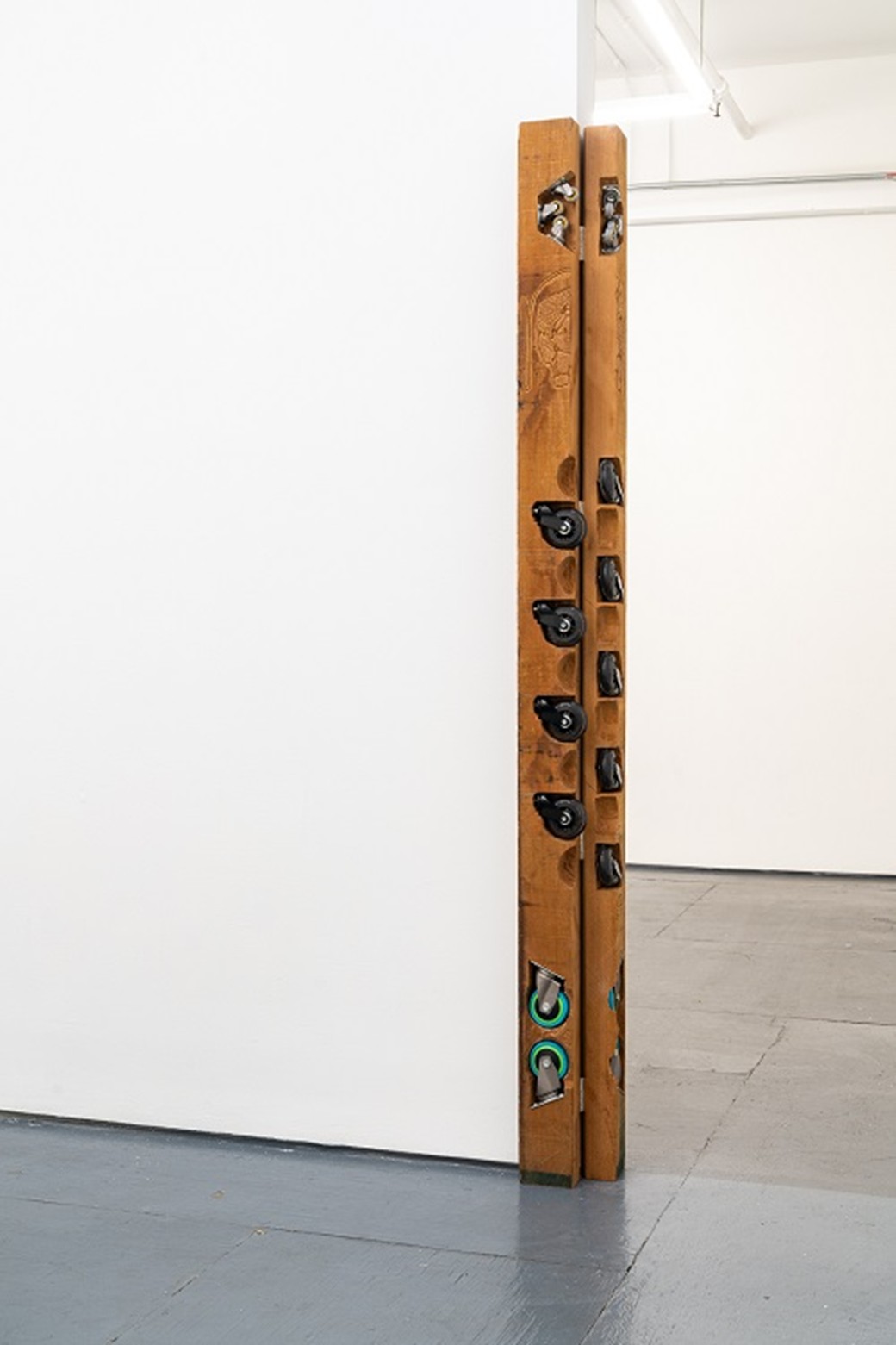
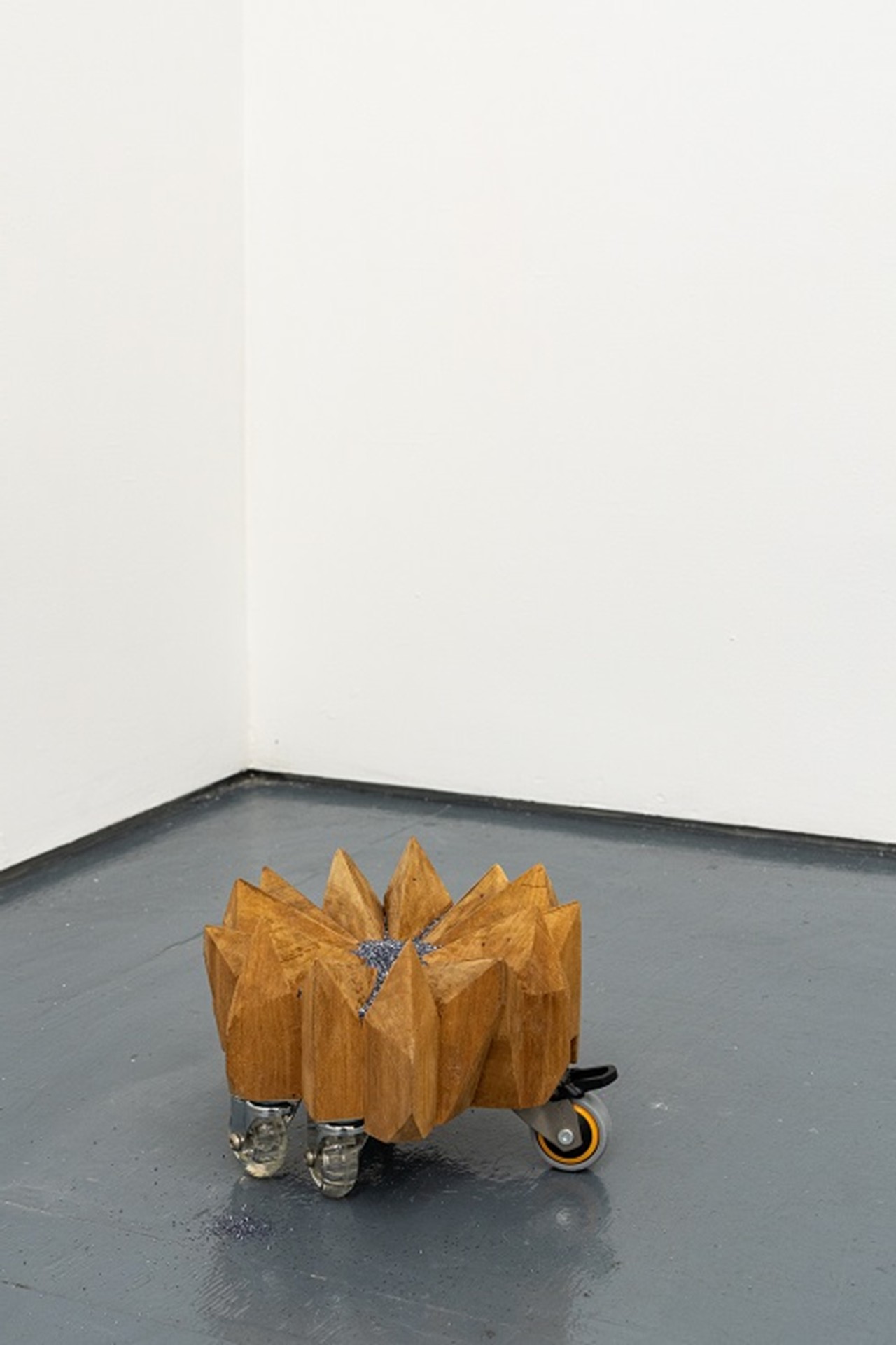
Deceleration Container

2020
Wood, wheels
17 × 187 × 17cm
About The Work

Eusung Lee has presented three-dimensional works that evoke a sense of bodily presence and spark narrative possibilities. In a world where the boundaries between the virtual and the real are increasingly blurred and rapidly digitized, Lee devotes herself to the richness of sculpture and physical space, as well as the tactile experience of materials shaped by hand.
 
Eusung Lee combines diverse yet disparate materials—such as wood, clay, metal, paper, readymade objects, textiles, and thread—in ways that make them collide and intermingle according to her own distinct approach, emphasizing the tactile qualities inherent in the act of making. While drawing from the lineage of classical sculpture, she simultaneously inserts an abrupt, contemporary sensibility, constructing a compelling and unexpected visual language.
 
Lee has approached elements that trigger the impulses of memory through the medium of sculpture, moving across past and present. She perceives the “body” as a signifier imprinted with individual experience, emotion, or sensation, using it as a conduit to evoke contemporary sensibilities and prompt reflection on our embodied existence within rapidly changing social systems.

Solo Exhibitions (Brief)

Lee has held solo exhibitions including 《Epitaphs》 (TSA NY, New York, USA, 2023), 《Cowboy》 (Artspace Boan3, Seoul, 2023), 《Jane》 (Weekend/2W, Seoul, 2019), and 《Floppy Hard Compact》 (Gallery175, Seoul, 2016).

Group Exhibitions (Brief)

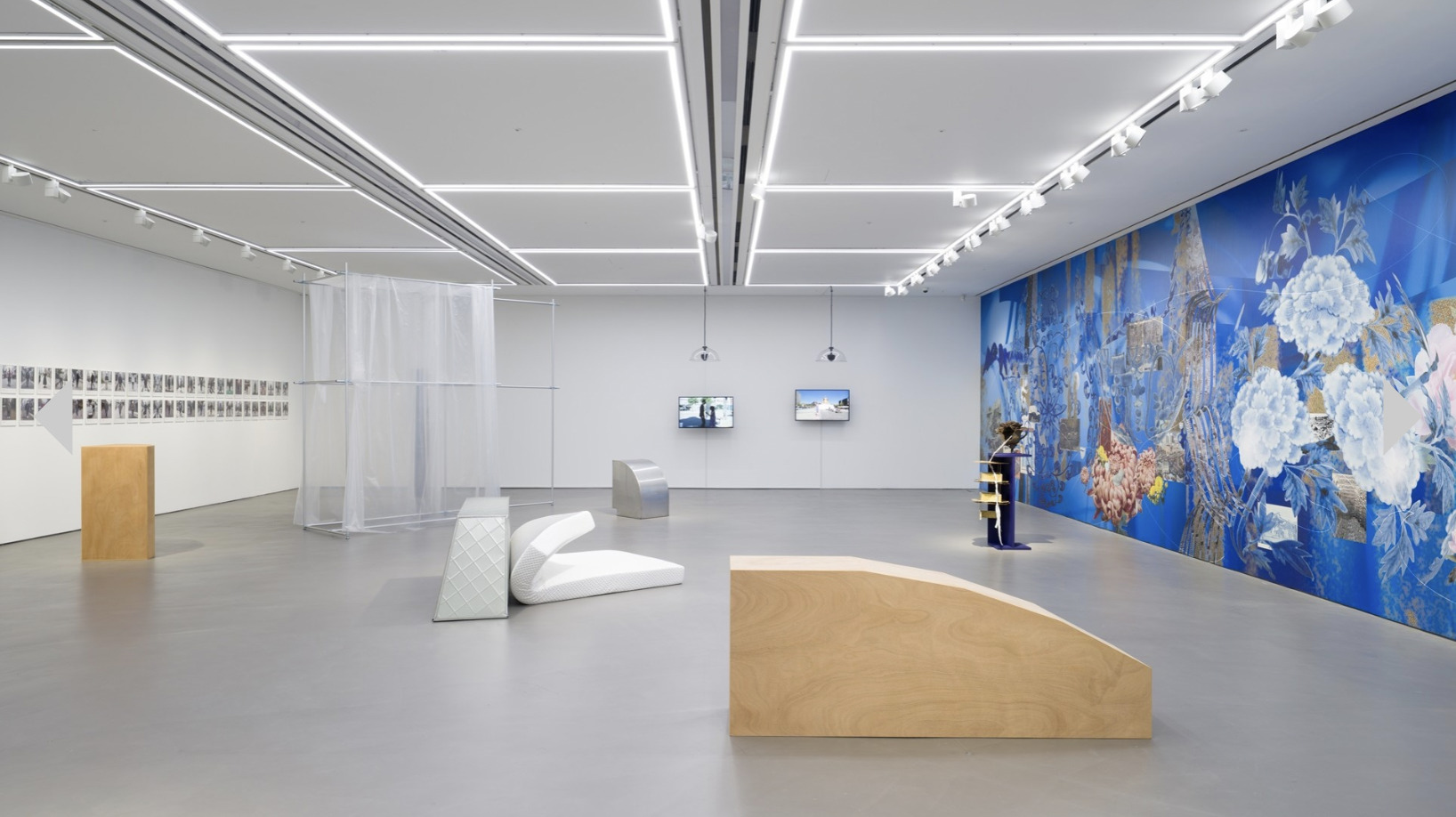
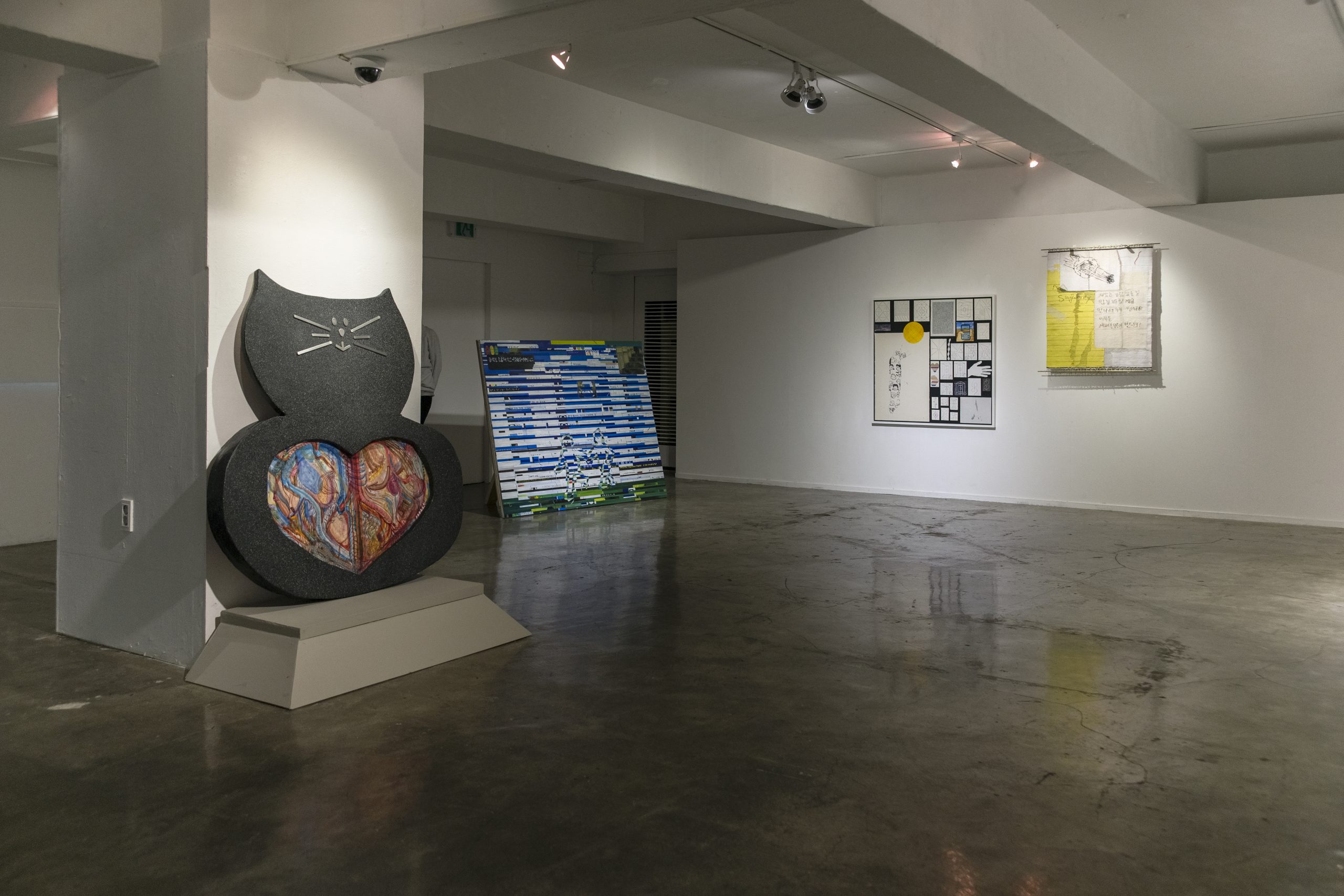
Lee has also participated in numerous group exhibitions, including 《Ringing Saga》 (DOOSAN Gallery, Seoul, 2025), 《Talking Heads》 (Seoul Museum of Art, Seoul, 2025), the 7th Changwon Sculpture Biennale 《Silent Apple》 (Changwon, 2024), 《Open-Hands》 (Gallery Hyundai x Commonwealth and Council, Seoul, 2024), 《Foreverism: Endless Horizons》 (Ilmin Museum of Art, Seoul, 2024), 《Sometimes it sticks to my body》 (WESS, Seoul, 2023), 《Memory of Rib》 (N/A, Seoul, 2022), 《Transposition》 (Art Sonje Center, Seoul, 2021), and more.

Awards (Selected)

Lee was selected as a SeMA Emerging Artist by the Seoul Museum of Art in 2023.

Residencies (Selected)

Eusung Lee participated as a resident artist at the Nanji Residency, Seoul Museum of Art in 2022.

Works of Art

The Tactile Experience of Materials Touched by Hand

Originality & Identity

The work of Eusung Lee begins with an attempt to transplant memory—a non-material entity—onto a physical surface. In her first solo exhibition 《Floppy Hard Compact》(175 Gallery, 2016), storage devices such as floppy disks and hard disks become metaphors for the way memory is accumulated. Here, “memory” is not the data stored by the device, but something re-enacted through the sculptural gesture of the artist’s own hands. She explores whether human life and sensorial experience can be transposed into sculpture and object, drawing narrative potential from the very act of contemplating memory.

In her solo exhibition 《Jane》(Weekend/2W, 2019), the theme expands into a more concrete bodily presence. Moving beyond the analysis of personal memory, the artist investigates how the life of a real person named “Jane” is appropriated as an image through the use of postcards, piercings, wildflowers, and American flags. Here, the body does not function merely as a subject, but as a device that calls forth relationships, narratives, and past histories.

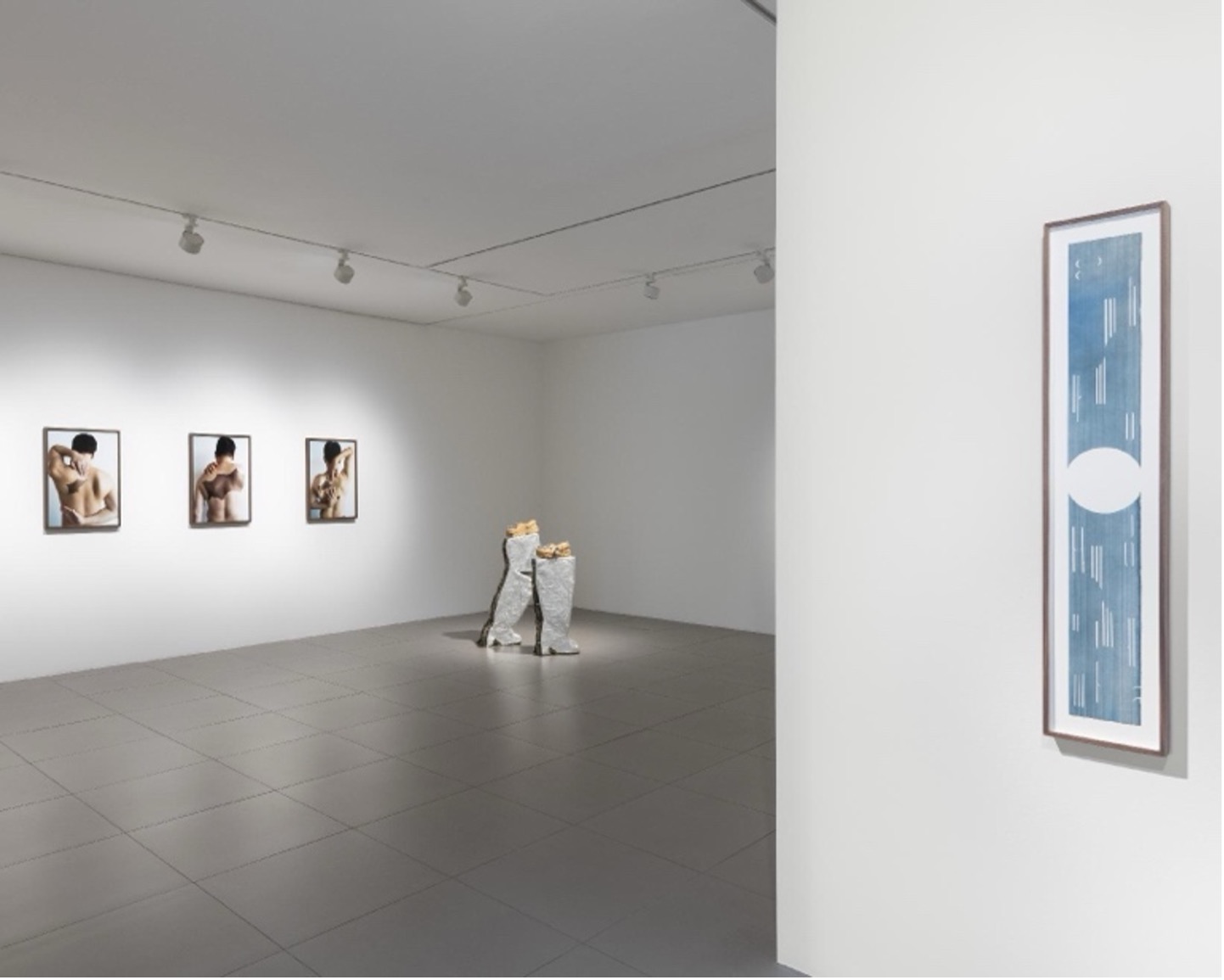
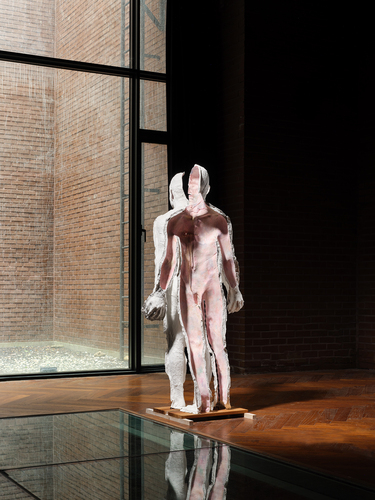
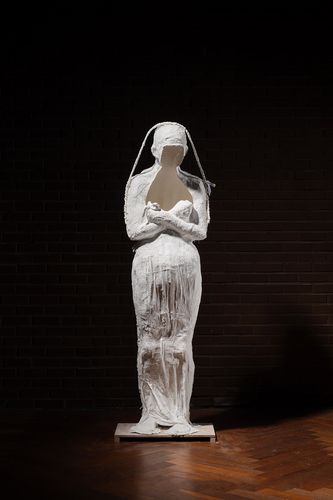
This trajectory undergoes a critical shift in 《Cowboy》(Art Space Boan, 2023). Through the act of casting and molding real bodies into shells, the artist reveals a perspective that regards the body as an object. The body is no longer a single identity-bearing flesh, but a shell formed through overlapping layers of relationships, traditions, death, religion, and cultural symbolism. Sculptures such as Valley(2023) and Bride(2023) deal with “the traces and absence left behind by the body.”

In the recent solo exhibition 《Epitaphs》(TSA NY, 2023) organized by Doosan Gallery in the United States, the theme becomes even more distilled. The artist views the body as an “epitaph”—a text written for the deceased—thereby materializing the premise that human existence continues through memory and trace even after disappearance. The body becomes a site where personal narratives and collective memory intersect. In this way, her work becomes increasingly concrete through the sequence of memory–person–body–shell of absence, and progresses in a direction that explores the trace of existence through the body.

Style & Contents

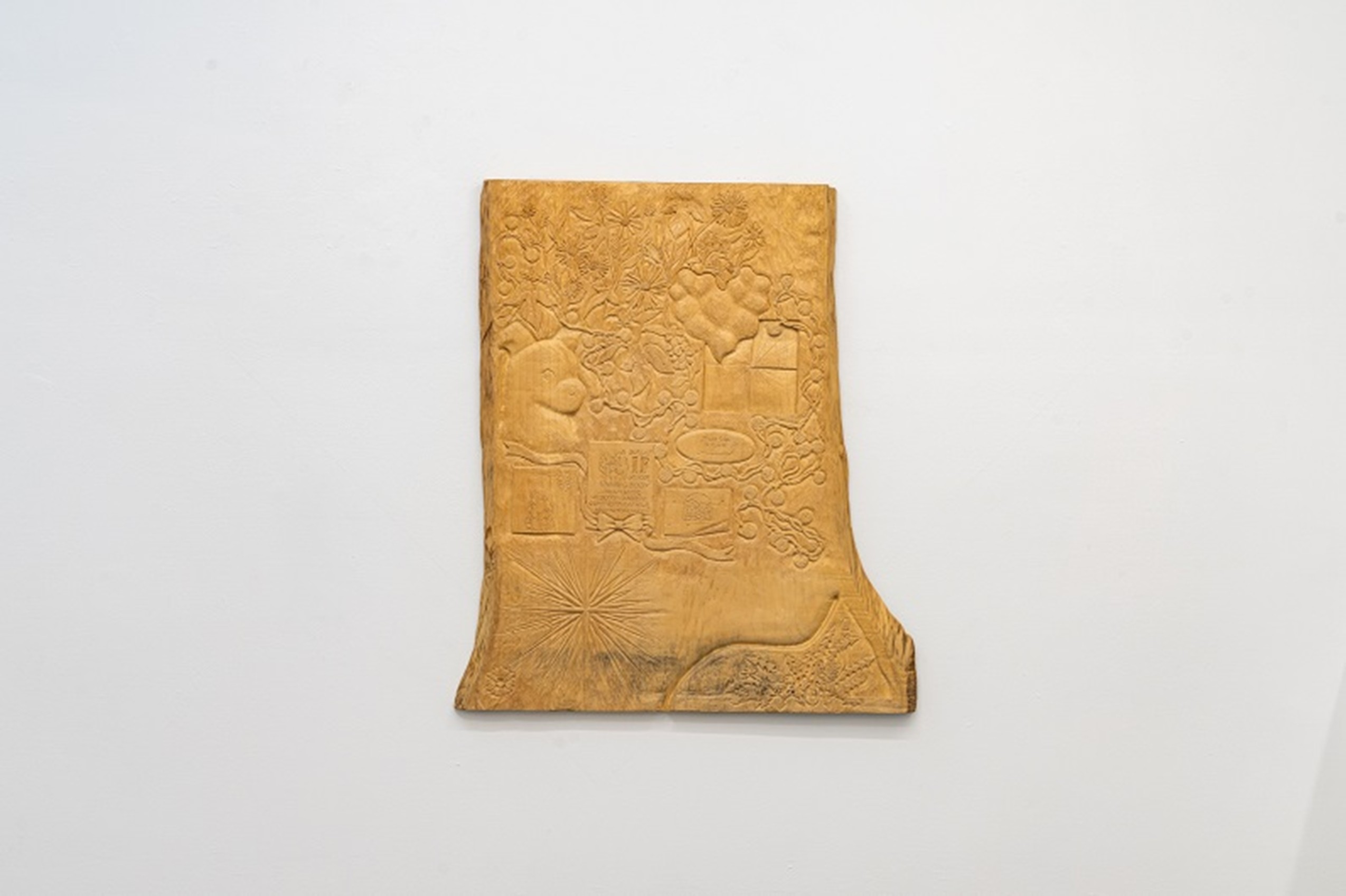
In the early 《Floppy Hard Compact》, Lee experiments with sculptural form by combining wooden sculpture with painterly elements. During this period, the focus is placed not on the diversity of materials, but on the methodological question of “how to give form to memory.” 《Jane》(2019) demonstrates a shift from painting to sculpture by adopting a relief-like format that combines canvas, panels, text, and objects. In these works, images, symbols, text, and ready-made objects are juxtaposed, forming the foundation for developing sculptural thinking.

After 2021, Lee’s practice begins to interface more directly with the body. Works such as Kouros(2021) and Trunk(2021) experiment with the treatment of the body as an object by combining wood, aluminum, fabric, and consumer products. From this point on, the artist repeatedly employs methods such as assembling, suturing, and cutting, approaching sculpture as a composite of fragmented bodies and objects.

In 《Cowboy》, plaster bandages emerge as a primary material. The process by which thin layers of bandage harden on the skin into a shell becomes a core sculptural act. Works such as ValleyBride, and Eggshell reveal visible bodily forms, and the trace, absence, and sutured surfaces of the body play a central structural role. This marks a shift toward assembling and disassembling the human body, adopting the act of “reconstructing the body to give it a new narrative” as a formal method.

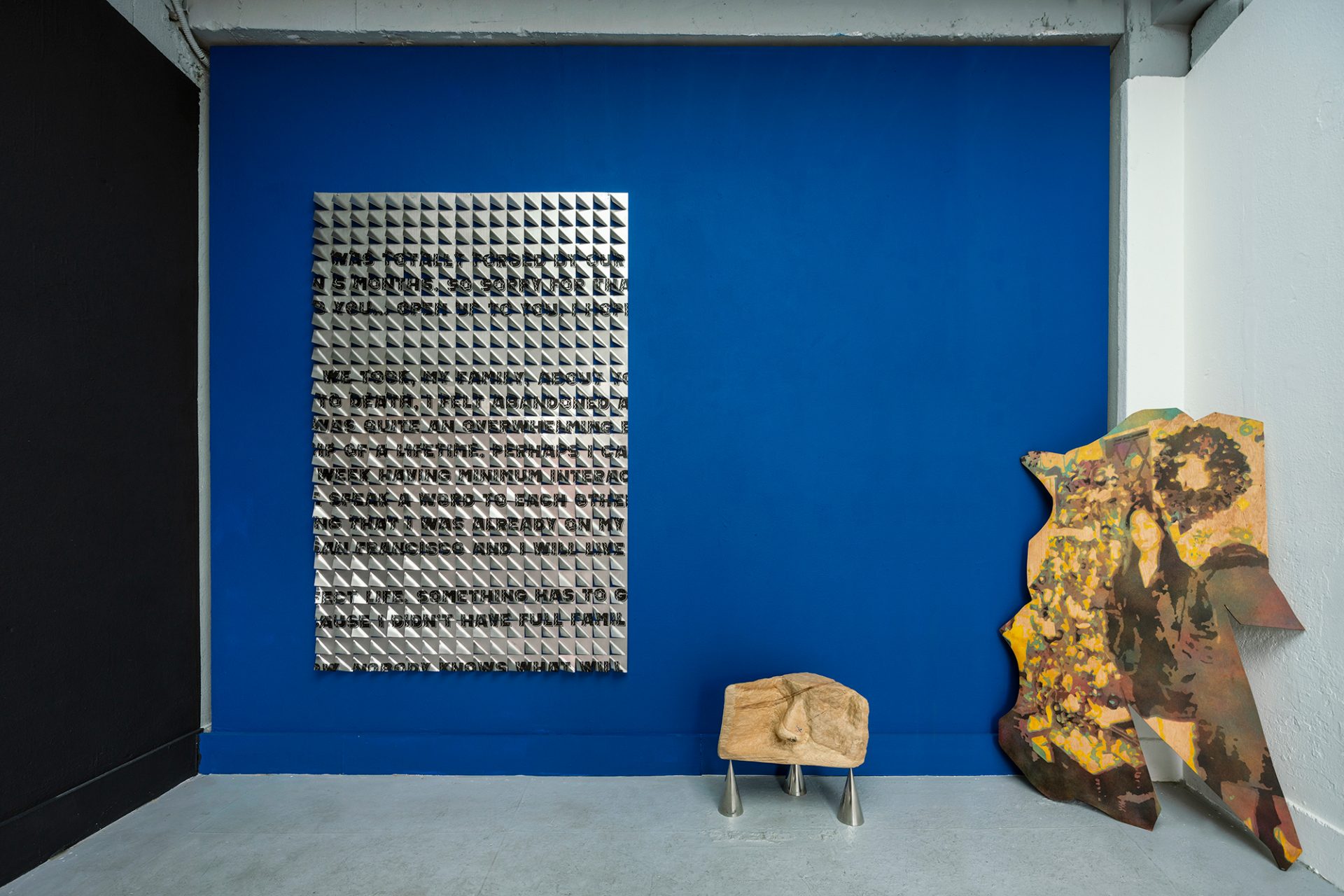
In 《Epitaphs》, surfaces collide with symbols, color, gloss, metal, thread, and wood, heightening the sensory quality of material. The theme of sculpture as an act of recording disappearing existence is constructed through material, texture, and tactile media. The formal development of the work unfolds from early experiments with relief, through casting and suturing methods that imprint and reconstruct the body, showing that her sculptural format consistently operates through both narrative and sensory structures.

Topography & Continuity

Eusung Lee’s work focuses on “a method of re-calling the immaterial through material.” The central themes of memory, image, body, and shell have been expanded under different material conditions, demonstrating a level of refined sensory experimentation rarely seen in contemporary Korean sculpture. Her approach—using the absence of the body, or the assemblage and disassembly of the body, to explore ontology—positions her in a unique place among sculptors in Korea.

Especially in recent works such as Eggshell and Woman Kettle(2024), as well as early works such as Pierce(2019), the perspective of treating the body as a shell remains consistent. The trajectory from 《Cowboy》 to 《Epitaphs》 illustrates how sculpture has developed into a structure that evokes the body’s trace and memory. By contemplating the body through the materiality of sculpture, Lee occupies a critical position in leading a narrative tendency in Korean sculpture that emphasizes bodily presence.

She also continues to experiment with materials. The combination of wood, metal, plaster bandages, fabric, aluminum, and ready-made objects enables further sculptural expansion. Through both international and domestic exhibitions—such as 《Epitaphs》 in New York at TSA, the group exhibition 《Open-Hands》(Gallery Hyundai, 2024), and 《Silent Apple》(Changwon Sculpture Biennale, 2024)—she continues to develop a sculptural language that extends across diverse contexts.

In the future, her practice is likely to expand further on the global stage through her ongoing interest in memory, representation, and collective narratives surrounding the body. Treating the body as an object, record, or storage of memory functions as a universal artistic language in contemporary art, and it is expected that she will continue to construct a broader sculptural horizon through the expansion of material, narrative, and space.

Works of Art

The Tactile Experience of Materials Touched by Hand

Exhibitions

Activities