The Beauty That Does Not Matter - K-ARTIST

The Beauty That Does Not Matter

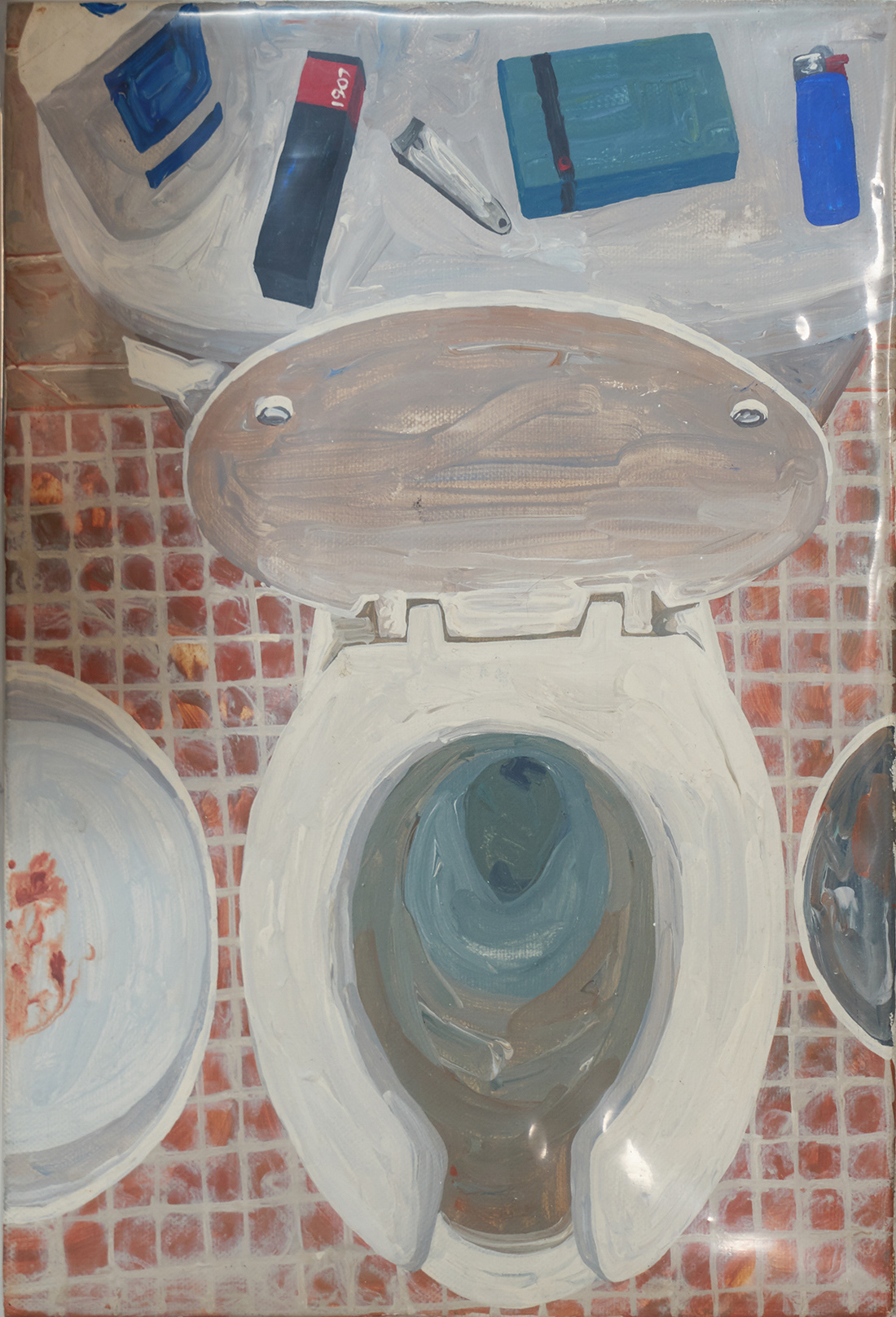
2024
Water-soluble oil paint and tempera on canvas
45.5 × 33.4 cm
About The Work

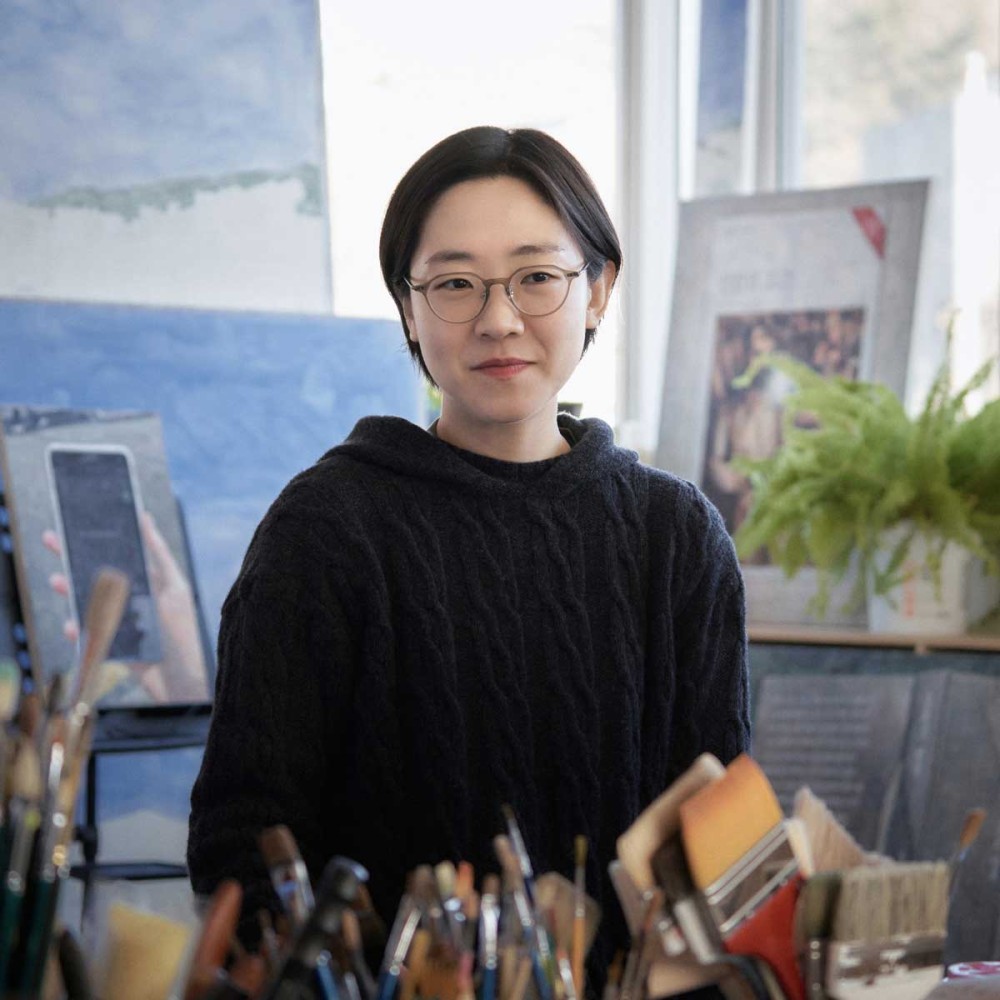
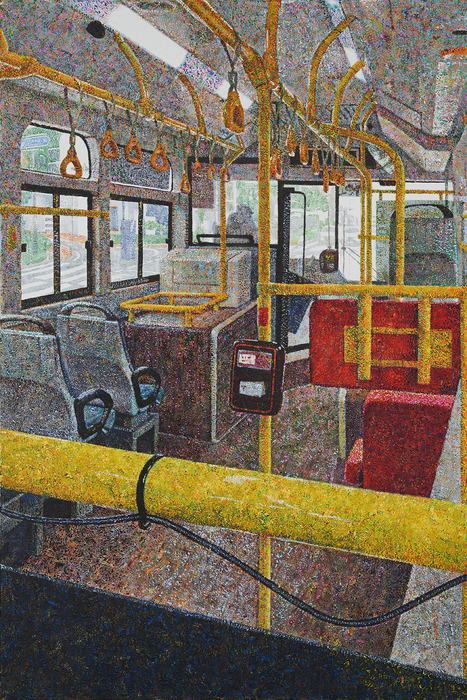
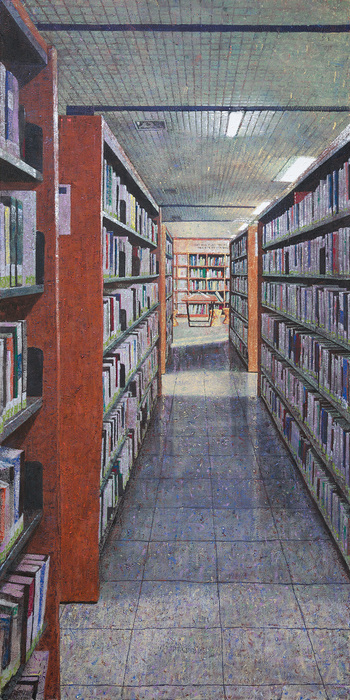
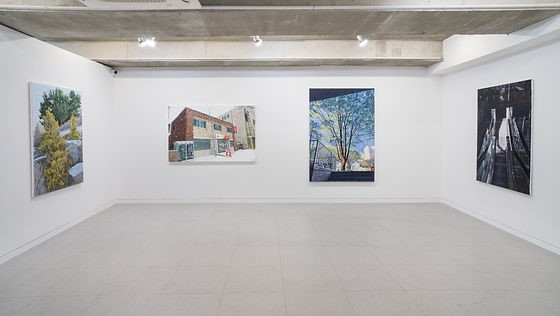
Hyewon Kim has continued a practice of photographing scenes she frequently encounters in her daily life and using these images as templates for her paintings. Her subjects include places such as library bookshelves, the bus she regularly rides, and the scenery outside a car window.
 
Through a process reminiscent of handcraft, the artist applies multiple layers of paint, revealing vivid and intricate strata of the world that were not apparent on the surface of these everyday photographic scenes.
 
Hyewon Kim understands and decomposes everyday images stored in a photo album into patterns and draws them through a labor-intensive reproduction process on a pictorial basis. So this artist's painting looks like a photograph at first glance, but when you get closer, it reveals the immediate nature of the painting and gives you a sense of the time the painting was painted.
 
Kim describes the “image” as an optical phenomenon of visual perception. Accordingly, she perceives the world not through the spatial structure of background and form, but through the particles of light and color. Through her handcrafted method of painting, she translates these fleeting impressions—composed of light and color—into material form upon the canvas.

Solo Exhibitions (Brief)

Hyewon Kim has held solo exhibitions including 《A Picturesque Tour》 (PCO, Seoul, 2025), 《Day and Night》 (Space Willing N Dealing, Seoul, 2023), and 《Thickness of Pictures》 (Hall1, Seoul, 2022).

Group Exhibitions (Brief)

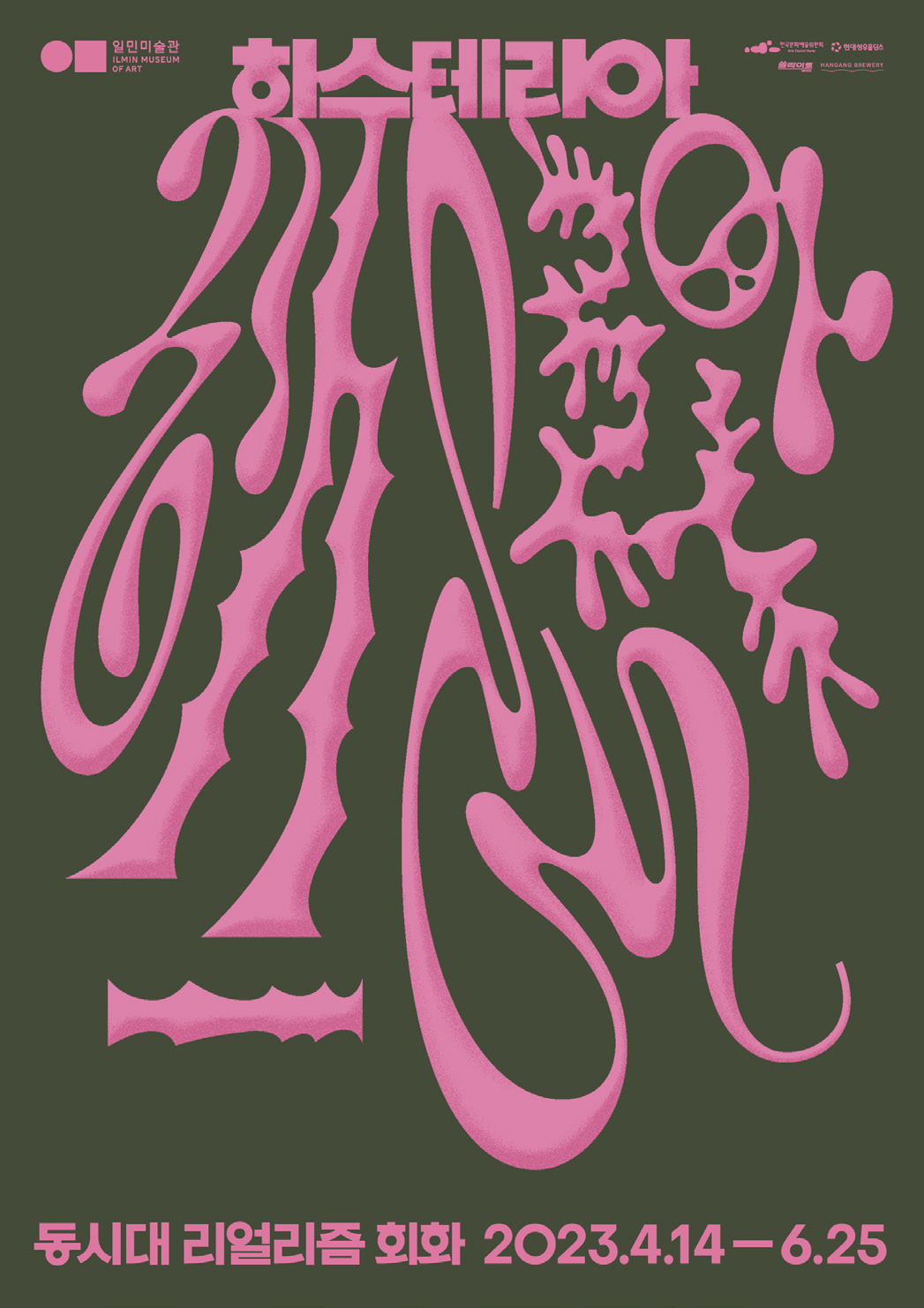
Kim has also participated in numerous group exhibitions, including 《Rainbow Shadow Chaser》 (Faction, Seoul, 2025), 《Perigee Winter Show 2024》 (Perigee Gallery, Seoul, 2024), 《Even the Erased Memories Leave a Rhythm》 (Woosuk Gallery, Seoul, 2023), 《Hysteria: Contemporary Realism Painting》 (Ilmin Museum of Art, Seoul, 2023), 《Monumental》 (Museumhead, Seoul, 2023), 《Unfamiliar Expedition》 (DrawingRoom, Seoul, 2021), and 《Manners of Representation: A Piece of Cake》 (ONE AND J. Gallery, Seoul, 2020).

Works of Art

Performative Painting

Originality & Identity

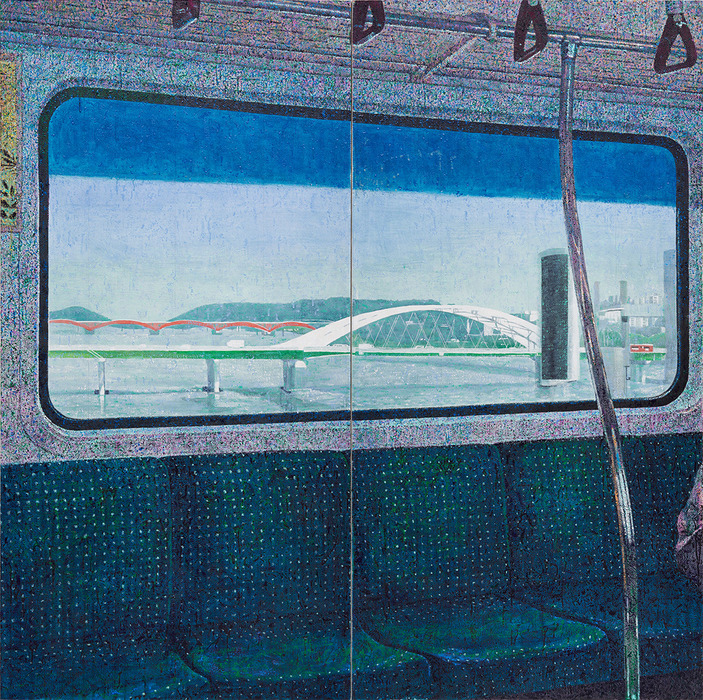
Hyewon Kim’s practice begins with photographing the everyday landscapes she repeatedly encounters and translating them into painting. Works such as Ginkgo Tree Soaring High(2020), Mapo Central Library(2021), and Inside The Subway Line 2 Train Crossing The Dangsancheolgyo (Rail Bridge) (2022) originate from her close observations of places she passes through and from re-examining scenes captured through the photographic lens. The artist questions how photography flattens the world into a kind of shallow “relief,” fixing depth, atmosphere, and temporal flow into a uniform surface. By restoring these omitted layers through painting, she reconfigures everyday spaces not as simple records but as complex environments shaped by memory and perception.

Her interest lies in reconstructing what exists beyond the visible surface. Kim recalls residual spaces that photographs cannot contain—backgrounds hidden behind foreground objects or peripheral details that fall outside the frame—and reassembles them like a design blueprint to form new sensory landscapes. Rather than straightforward representation, her work reveals how our perception of everyday life is constructed and what tends to be overlooked. In her first solo exhibition, 《Thickness of Pictures》(Hall1, 2022), she depicted familiar spaces such as subway and bus interiors with the human presence intentionally removed, creating a heightened spatial tension and a stronger sense of structure within this emptiness.

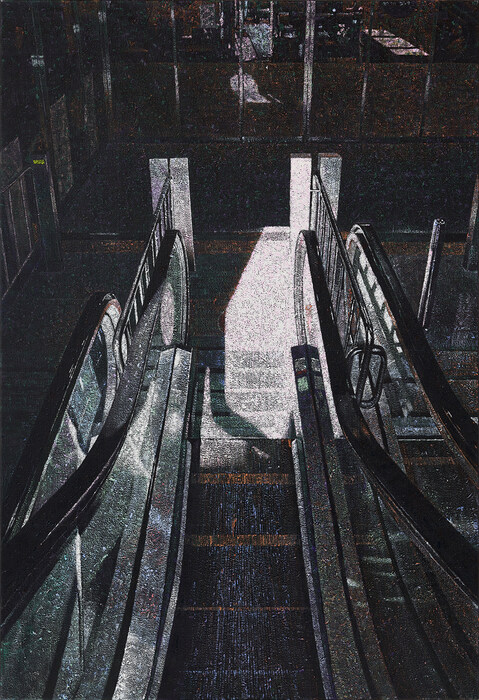
Her thematic focus later expanded from space to time. In her second solo exhibition, 《Day and Night》(Space Willing N Dealing, 2023), temporality—shifts in light, seasonal change, and the daily cycle—became central. Works such as Hongik University Station Escalator Exit1(2023) highlight subtle “temporal layers” that photography fails to capture: the color tone of a specific hour, the direction of light, and the air that fills a space. Her paintings capture moments in which particles of light and color are perceived before the identity of the depicted subject, suggesting that the world is composed not of stable “background–figure” structures but of shifting units of luminosity and hue.

In her recent solo exhibition 《A Picturesque Tour》(PCO, 2025), her conceptual direction moves even further—from everyday observation toward the history of images, the tradition of landscape painting, and the act of seeing itself. Works such as In the Forest(2025) and A Cat Under the Car(2025) invite viewers to reconsider what it means to “look at a landscape” by employing mediating devices such as smartphone reflections, panoramic viewpoints, and the historic “black mirror.” By placing contemporary smartphone vision alongside classical ways of viewing nature, Kim examines how habitual image consumption can be transformed back into painterly perception. Ultimately, she explores time, light, and memory embedded within daily scenes, making the mechanism by which images operate a central conceptual axis of her work.

Style & Contents

Kim’s formal language is grounded in a performative method of repeatedly layering paint. From her early works to the present, she has built painterly materiality using watercolor, gouache, acrylic medium, and more recently water-mixable oil paint and oil stick. In works such as Ginkgo Tree Soaring High, the surface consists of dozens or even hundreds of thin, accumulated brushstrokes. This repetitive process suppresses overt subjectivity while allowing clusters of color and particles of pigment to generate spatial depth absent in photography.

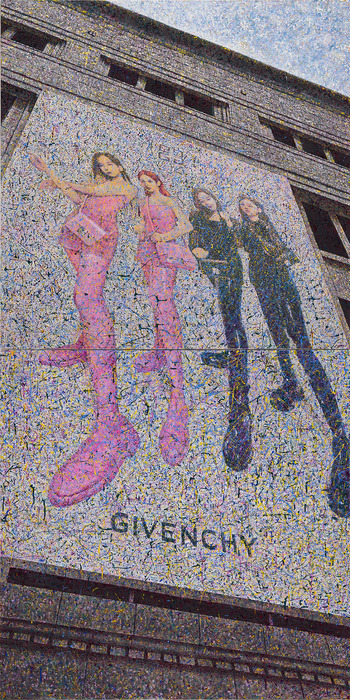
Her technique has consistently evolved in dialogue with photographic images. In works such as Myeongdong, Shinsegae Department Store Exterior Wall(2022), she addresses the broken or missing details that appear when a smartphone image is enlarged. She fills these gaps with painterly color and texture, substituting what lies beyond the resolution of the pixel with the movement of her hand. Here, the photograph becomes not a model for faithful reproduction but a design template through which painting recovers sensory information erased by the camera.

In her mid-career, her formal concerns shifted toward the expression of time. In 《Day and Night》, layers of paint mixed with gum arabic create irregular surface textures, and the thin layers built atop them evoke subtle atmospheric conditions of specific times of day. Most recently, her approach has evolved beyond the direct depiction of landscapes to a study of the conditions under which images are formed and the structures underlying painting itself.

In 《A Picturesque Tour》, she adopts a method of painting reflections of outdoor scenery as they appear on the unlit black screen of an iPad. By using this “reflected image”—a secondary, mediated perception—as the source of her paintings, she expands painting into a study of visual mediation. In works such as In the Forest, the combination of acrylic, water-mixable oil, and oil stick produces a denser, more physical surface, revealing broader scale, bolder chromatic range, and more dynamic painterly movement than before. This evolution demonstrates how Kim’s practice has gradually moved beyond reproducing scenes to interrogating the structural and perceptual conditions through which images come into being.

Topography & Continuity

Kim’s practice begins with “translating everyday landscapes into painterly strata.” Though she always starts from photography, she dismantles the photograph’s flatness and retrieves the buried layers of memory, time, and light through sustained painting labor. As a result, her works possess surfaces that “appear like photographs yet can only exist as painting,” establishing her distinctive identity. Her continuous understanding of the painted surface as a performative field is also a defining feature, positioning her within a rare lineage of “performative painting” in contemporary Korean art.

Her focus has expanded from spatial structure, to the expression of time, and most recently to the perceptual mechanisms through which images are formed. This evolution is not merely thematic; it reflects a sustained inquiry into how painting senses the world. Her practice increasingly directs itself toward the fundamental question: “How do we come to see an image?”

Kim combines painterly performativity with image criticism. Her approach differs from realism that records real locations, from photo-based painting that reproduces photographic detail, and from abstract painting concerned primarily with materiality. Her paintings consistently operate through “deconstruction and reconstruction of images,” functioning as visual experiments that refresh the way we perceive everyday life. This is why her work stands out in group exhibitions such as 《Monumental》(Museumhead, 2023) or 《Rainbow Shadow Chaser》(Faction, 2025), where she demonstrates how painting can unfold new sensory layers.

Works of Art

Performative Painting

Exhibitions

Activities