

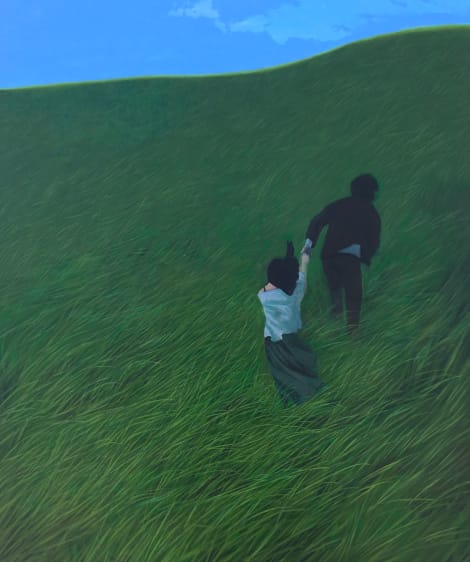
Compulsion - K-ARTIST

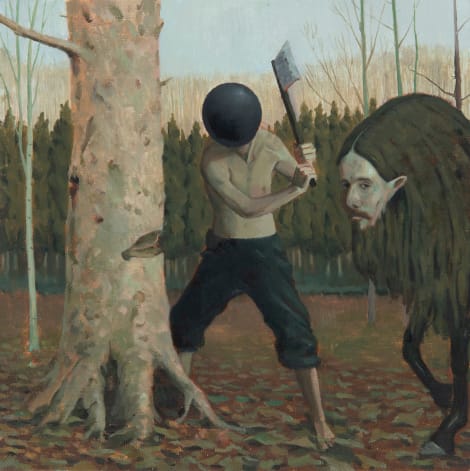
Compulsion

2023
Oil on canvas board
25 x 25 cm
About The Work

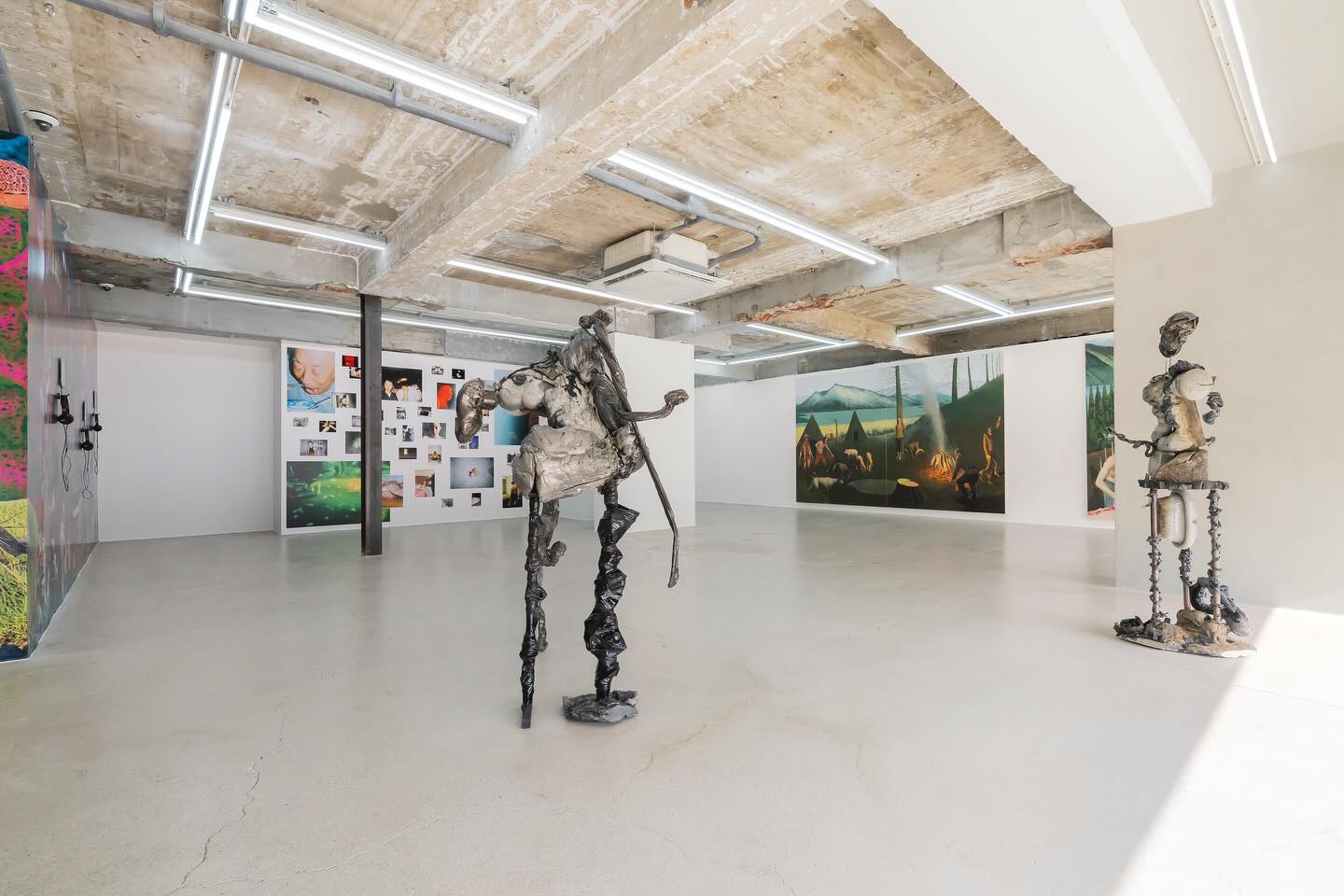
Kang Cheolgyu presents narrative paintings in which reality and fiction intersect, drawing from autobiographical experiences. He projects his inner conflicts onto specific subjects and situations, reconstructing them through a symbolic visual language. The fictional worlds he builds on canvas function as psychological landscapes—symbolic spaces that metaphorically reflect his own reality.
 
Kang Cheolgyu’s work is not merely an act of painting, but a process of documentation—one that transparently reflects the flow of his life and inner world. Although the fictional realms depicted on his canvases originate from deeply personal narratives, the emotions he visualizes—such as unspeakable existential anxiety—resonate on a universal level, touching the inner lives of those navigating contemporary society and evoking a profound sense of empathy.

Solo Exhibitions (Brief)

Kang’s major solo exhibitions include 《Projection Note》 (Kumho Museum of Art, Seoul, 2025), 《Perfect Body Perfect Soul》 (Gallery IN HQ, Seoul, 2024), 《Sinking Body》 (Chapter II, Seoul, 2022), 《Collection of Short Stories: Not to Die》 (M2 Project-room, Lee Ungno Museum, Daejeon, 2021), 《I Go to the Wood》 (Artist Residency TEMI, Daejeon, 2020), among others.

Group Exhibitions (Brief)

Kang has also participated in group exhibitions at Arario Gallery (Seoul, 2024), Doonamjae Art Center (Seoul, 2023), Gallery Baton (Seoul, 2022), Daejeon Museum of Art (Daejeon, 2021; 2018), Galley Gabi (Seoul, 2017), Gallery Gwang, Sejong Center (Seoul, 2015) and more.

Awards (Selected)

Kang was selected as the 22nd Kumho Young Artist in 2024.

Residencies (Selected)

Kang undertook the artist-in-residency program at the Artist Residency TEMI (Daejeon, Korea) in 2020 and the Studio White Block (Cheonan, Korea) in 2023.

Collections (Selected)

Kang’s works are in public collections in Korea such as Seoul Museum of Art, Government Art Bank National Museum of Modern and Contemporary Art, Daejeon Museum of Art. 
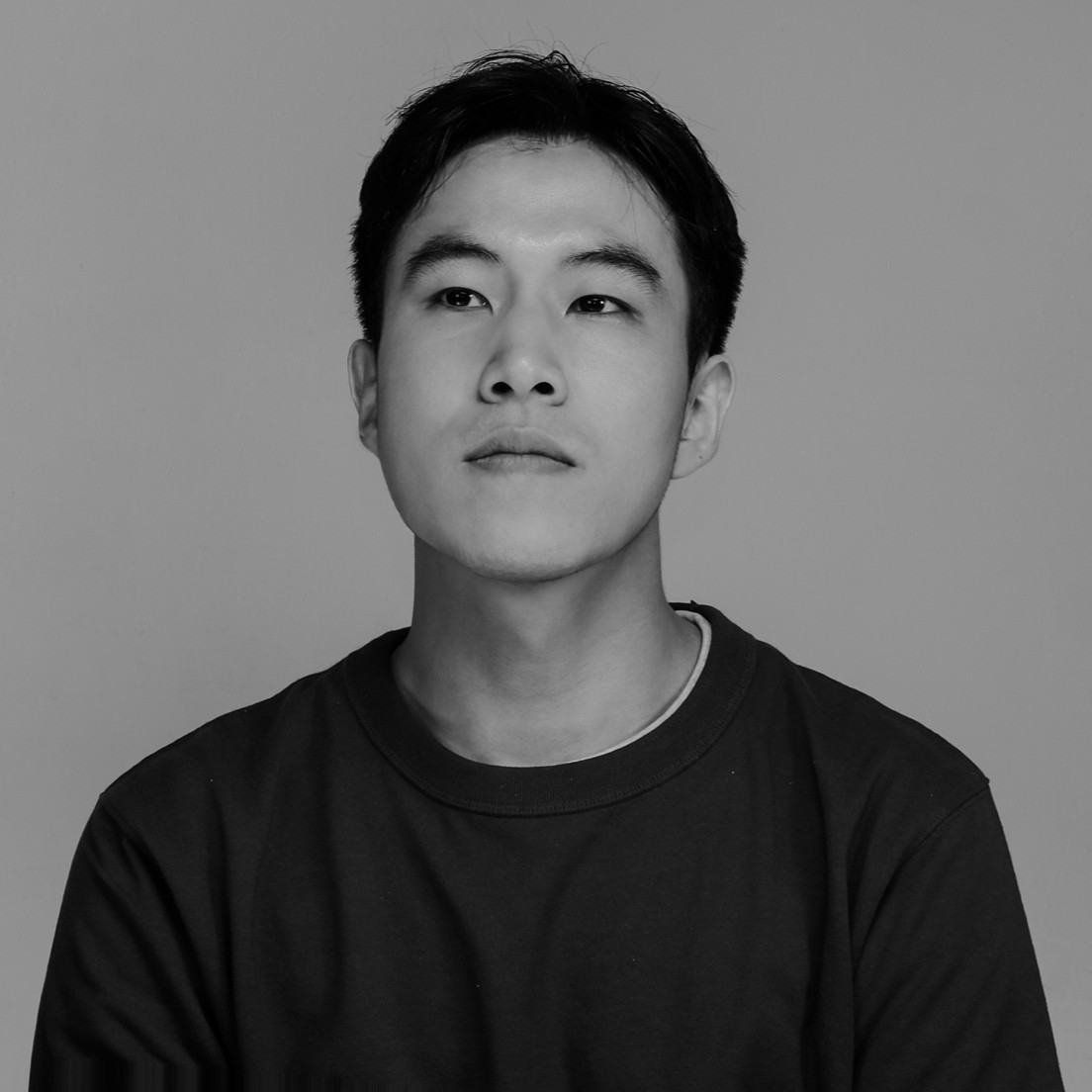
Works of Art

Surreal Landscapes Reflecting the Inner Psyche

Originality & Identity

Kang Cheolgyu begins his practice with the themes of internal anxiety, lack, and self-perception, composing psychological landscapes based on autobiographical experiences through symbolic visual language. In early works such as Fence (2019) and Camelia Flower (2019), childhood separation anxiety and identity confusion are depicted through desolate spaces and vanishing figures, metaphorically reflecting the artist’s psychological isolation. He uses painting as a tool of self-diagnosis by projecting his emotions and sensations outward.

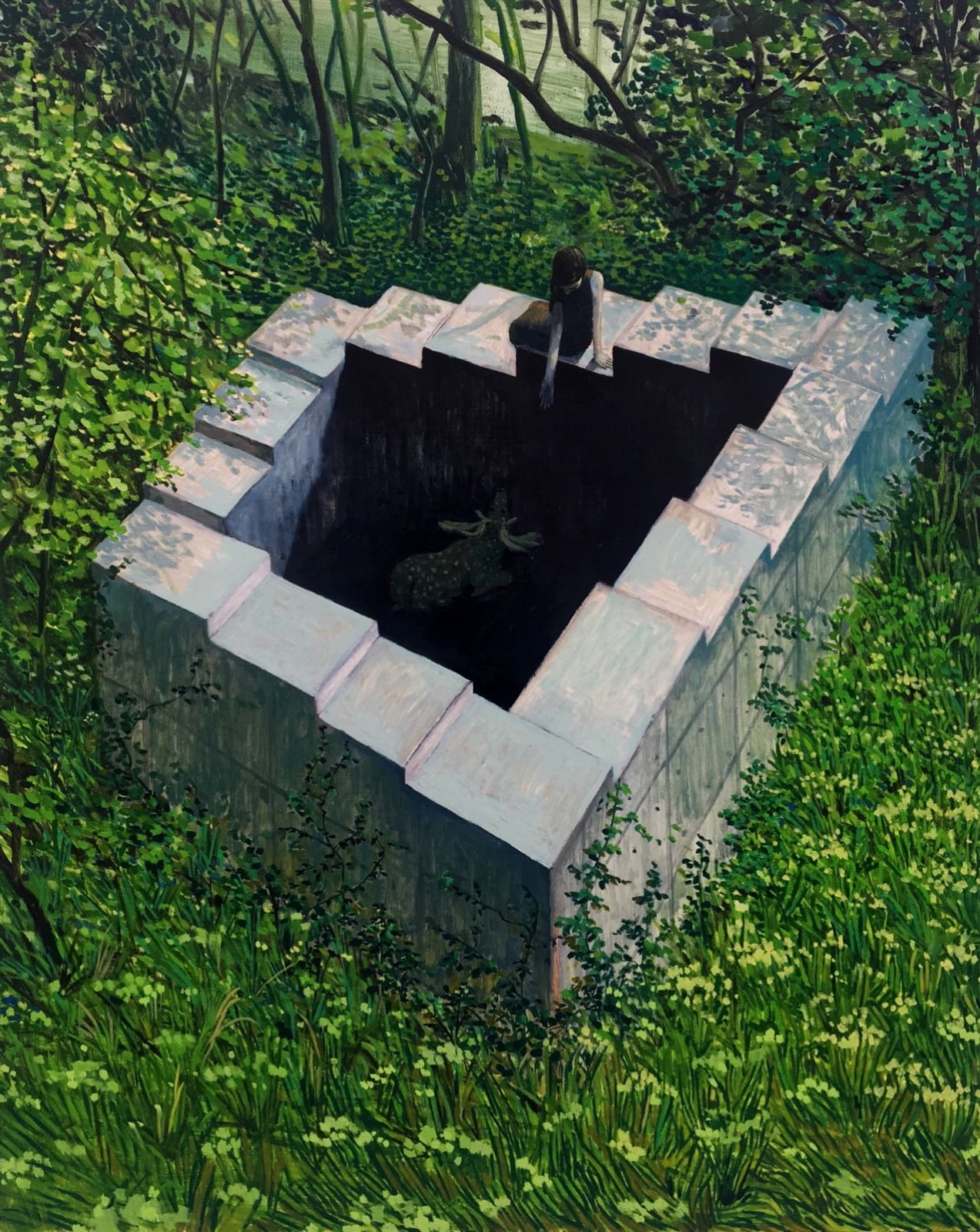
In the solo exhibition 《The Sinking Body》(Chapter II, 2022), water emerges as a central element representing emotional states, functioning as a visual device to explore human existence and the fluidity of emotions. The figures in these works confront psychological oppression, escapism, and vulnerability through their encounter with water, and these inner landscapes extend from the personal to the collective.

From 2023 onward, the artist shows a shift from a passive state to a more active and self-determined subjectivity. In works like Enemy (2023) and Obsession (2023), a black orb appears, functioning as a condensed form of anxiety, obsession, depression, and expectation. By visualizing the act of confronting or hunting this orb, Kang moves beyond emotional expression toward a representation of existential struggle.

In his most recent solo exhibition, 《Projection Log》(Kumho Museum of Art, 2025), the artist explores the ambivalent identity of modern individuals through the dual symbols of “stranger” and “predator.” The psychological terrain depicted here extends beyond the artist’s personal realm to embrace universal human conditions such as alienation, survival, desire, and self-awareness in contemporary society.

Style & Contents

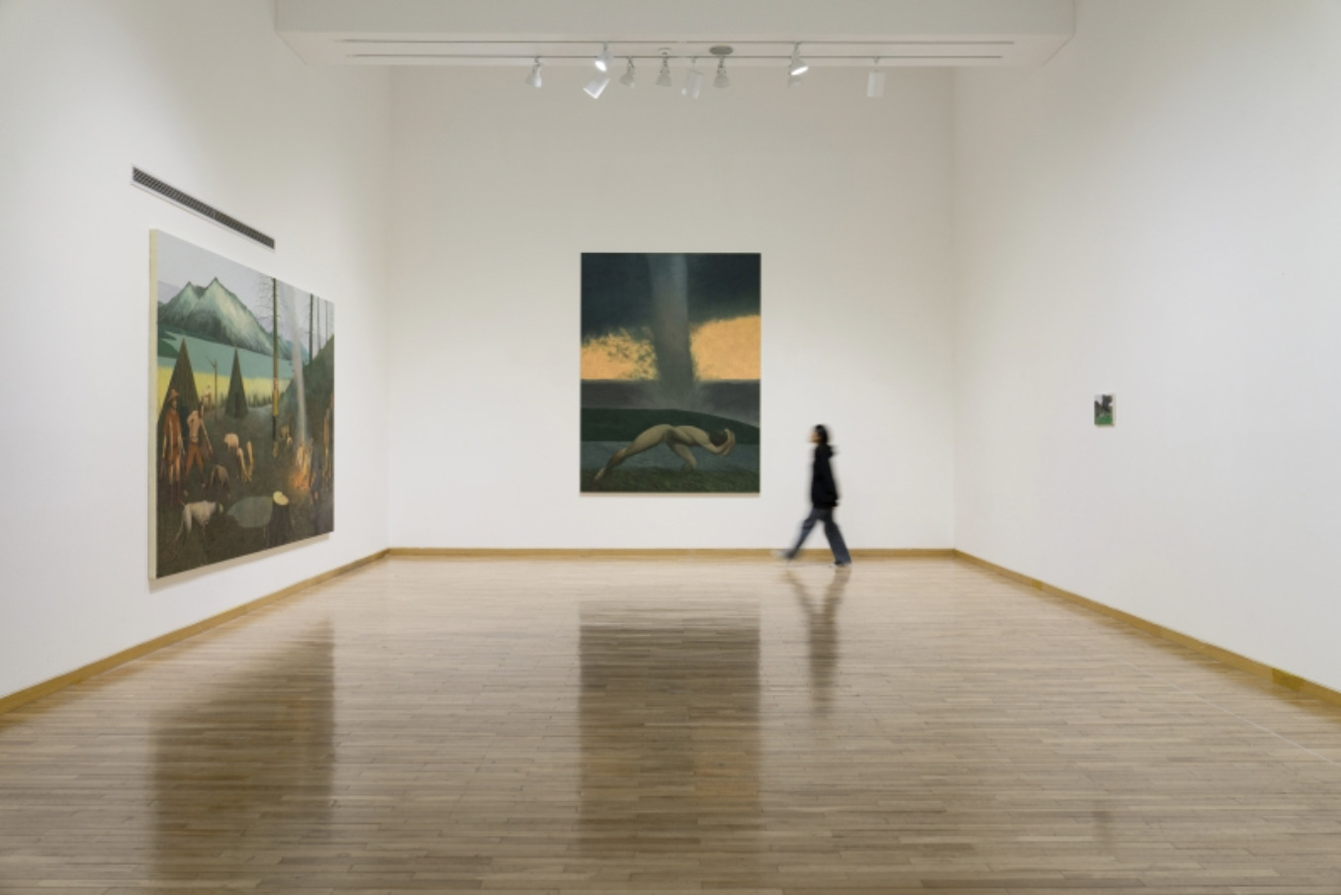
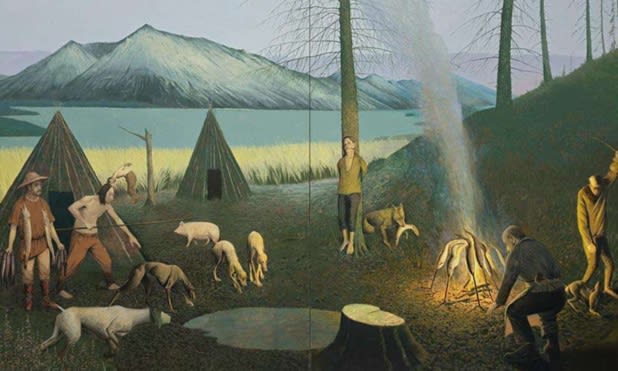
Working primarily with oil painting as a traditional medium, Kang Cheolgyu expands the compositional language of painting by incorporating theatrical, literary, and psychological structures. In his early works, compositions and images borrowed from classical paintings, literature, and film serve as metaphors for his psychological state, populated with symbolic elements such as nature, humans, and animals. A work like Looking at Kizuki’s Back (2019) exemplifies the translation of literary narrative into painting.

In The Sinking Body, visual elements and symbols are further systematized. In works such as Auditory Hallucination (2022) and Śīrṣāsana (2022), physical encounters with water are rendered in dramatic compositions. The nude figures in identical poses represent anonymous human forms rather than individual subjects. Composition, contrast, and background function as devices to heighten emotion and psychological tension, making the painting operate as a sensory narrative.

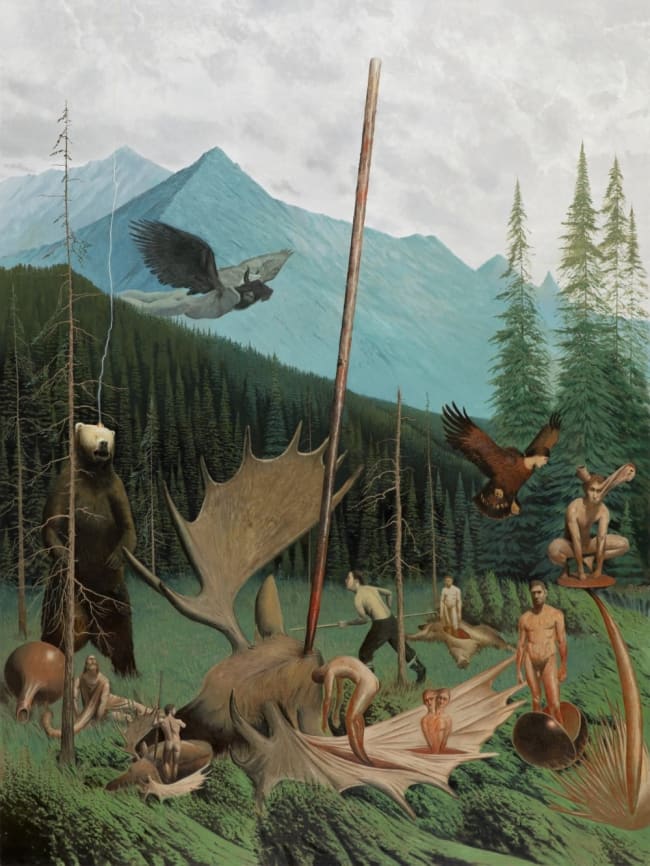
Later, Kang embraces irony and satire to address inner contradictions, vanity, and impulses. Works such as The Driven Goat and the Mermaid Fishing (2024) and Trophy No.3 (2024) visualize self-reflection and critique through surreal symbols like mermaids, goats, and hunting scenes. These compositions defy logical explanation; instead, their illogical and absurd nature deepens the psychological dimension.

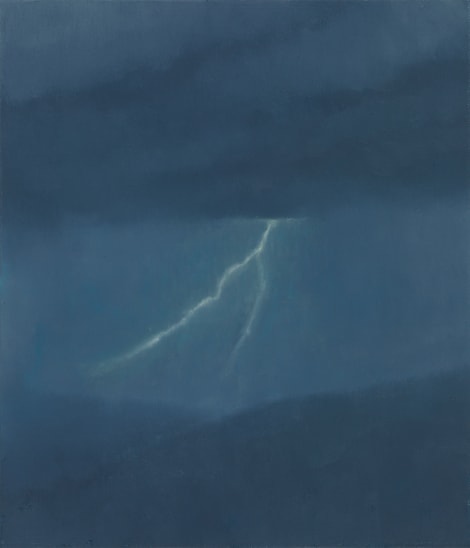
In recent works like Deus ex Machina (2025) and Lightning (2025), the artist introduces elements such as physical disasters, lightning, and tornadoes to symbolize inner turmoil and moments of awakening. Having moved through narratives of display and predation, his current work evolves toward a sculptural cautioning of existential precariousness.

Topography & Continuity

Kang Cheolgyu is a painter whose work functions as a form of installation, converting concepts of psychology, identity, and social existence into pictorial devices through the notion of “projection.” In the early phase of his practice, he explored symbolic landscapes and marginalized figures as metaphors for autobiographical emotion. Over time, these narratives have become more intricate and internalized in structure.

A consistent trait in Kang’s work is the combination of oil painting’s materiality with literary imagination and psychological analysis, woven into painterly space. Symbols such as “water,” “forest,” “animals,” and “hunting” appear repeatedly, each fulfilling different symbolic functions depending on the period. While in earlier works nature served as a metaphor for psychological objects, in more recent pieces the artist seeks to directly confront or control those objects—indicating a shift in internal attitude.

Within contemporary Korean art, Kang continues to independently experiment with psychological and narrative painting. He visualizes the tension between self and society, emotion and reason, instinct and ethics, creating paintings that resonate deeply without excessive theoretical overloading. This aligns with recent movements in contemporary art that re-evaluate the narrative and emotive power of painting.

Looking forward, Kang is poised to integrate mythologies, histories, and sociopolitical issues from diverse cultural contexts into his psychological narratives, broadening his scope on the global stage. With a unique painterly language that maps emotion visually, he is establishing himself as an artist who captures both universality and particularity in his work.

Works of Art

Surreal Landscapes Reflecting the Inner Psyche

Articles

Exhibitions

Activities