Jesse Chun (b. 1984) explores language and poetics through a range of media, including video, drawing, sculpture, and installation. Drawing on existing frameworks of historiography, translation, and colonial language systems, she disrupts and abstracts the structures of language to explore nonlinear meanings, temporalities, and the untranslatable.
 
Her work unfolds an infinite semiotics and cosmology of meaning, evoking poetic languages and moments that transcend the material and spiritual boundaries through which meaning is made in the world.


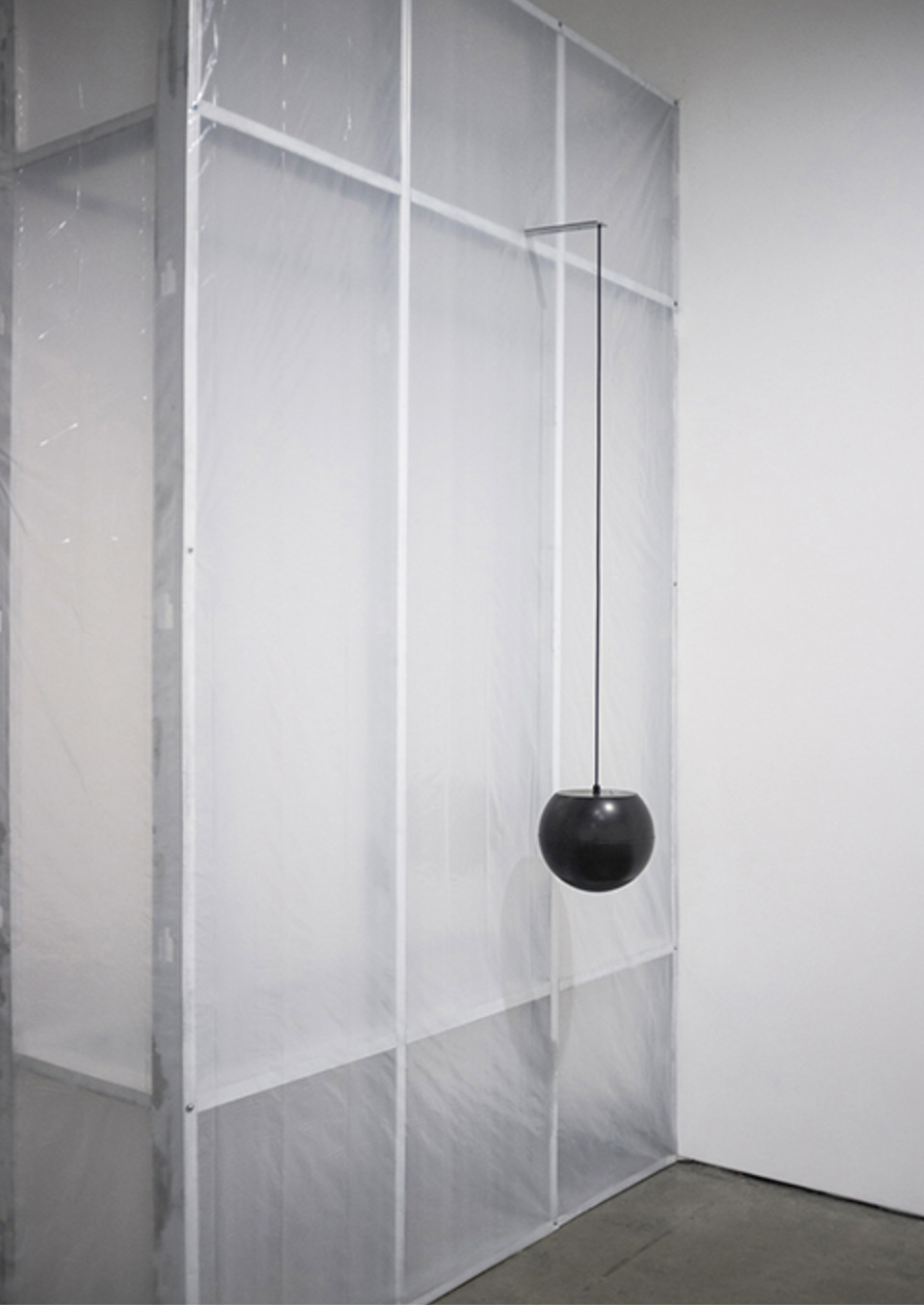
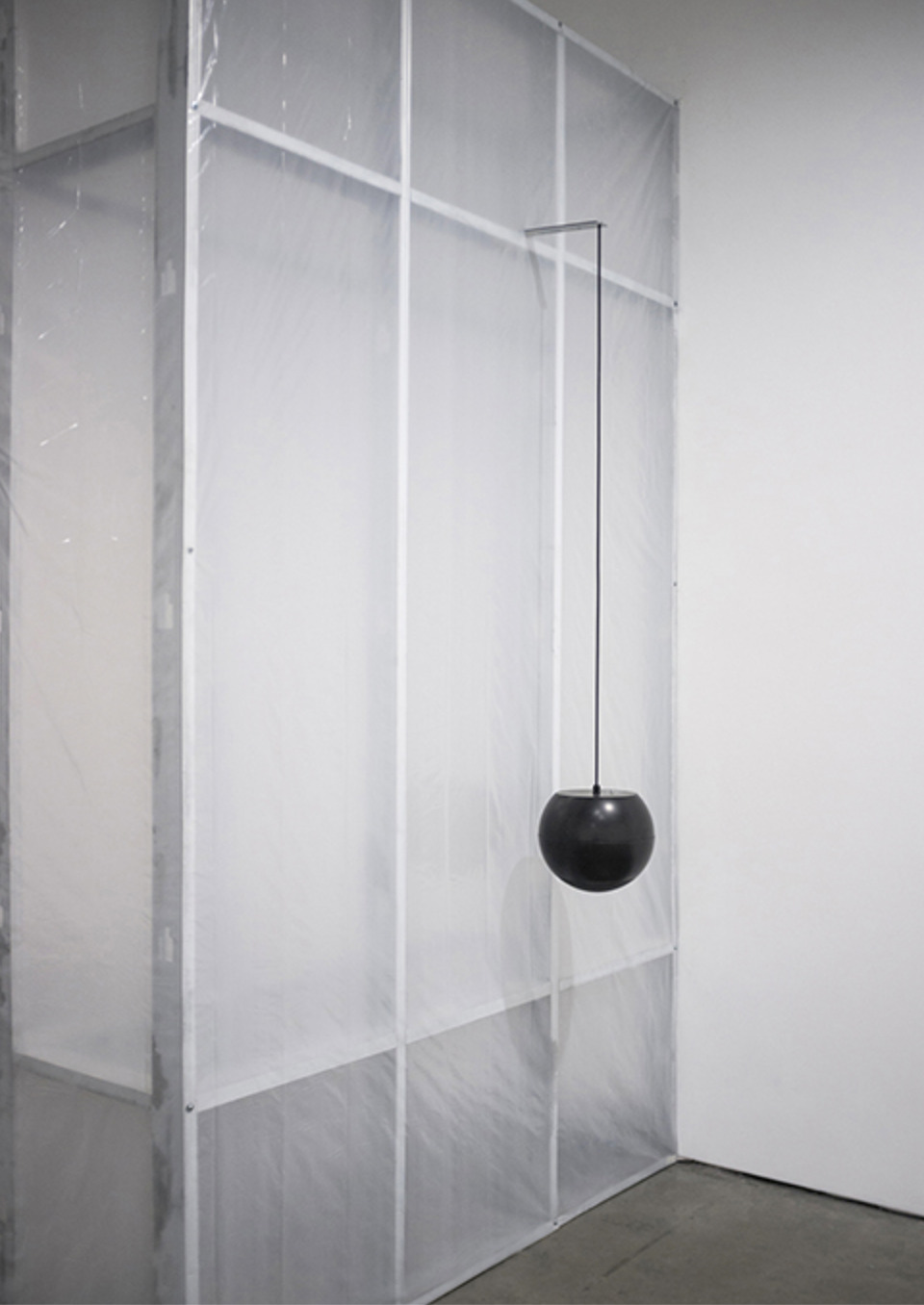
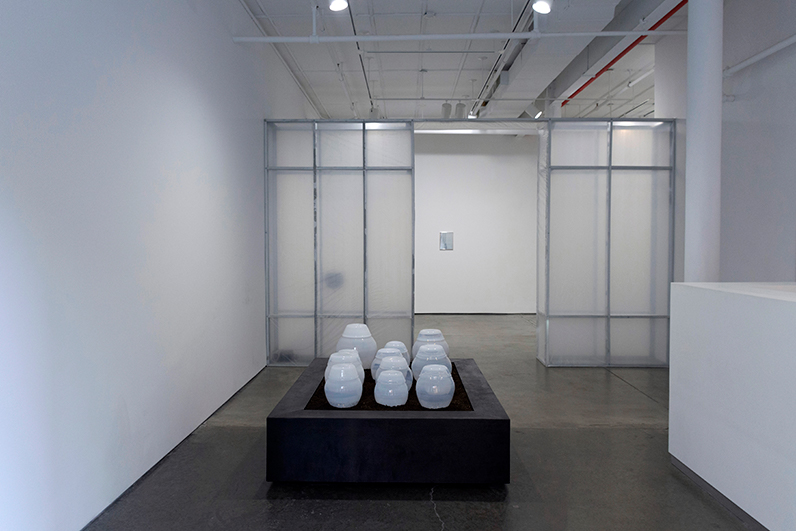
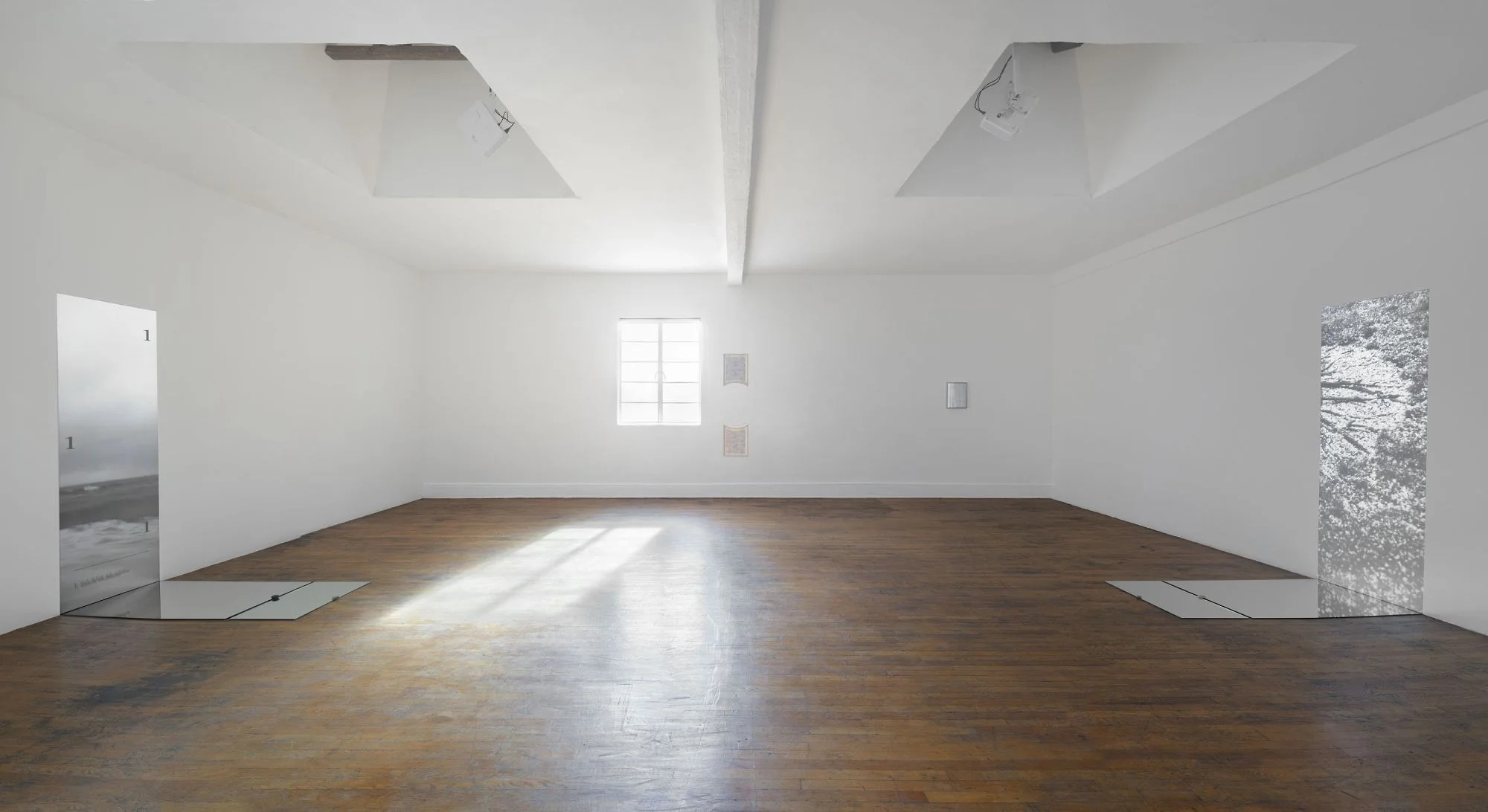
Jesse Chun, voiceless consonants, 2019, 2-minute sound, mal configured airport speaker, steel bracket, wire, amp. 11 × 12.5 × 12.5 inches, height dimensions variable. Installation view of 《stain begins to absorb the material spilled on》 (DOOSAN Gallery New York, 2020) © DOOSAN Gallery

Jesse Chun’s work with language is rooted in her autobiographical experiences. Born in Korea, she later lived in Hong Kong, Canada, and the United States, where she developed an interest in how non-English languages, including Indigenous languages and neologisms, and particularly non-Western narratives and histories, are marginalized and transformed.
 
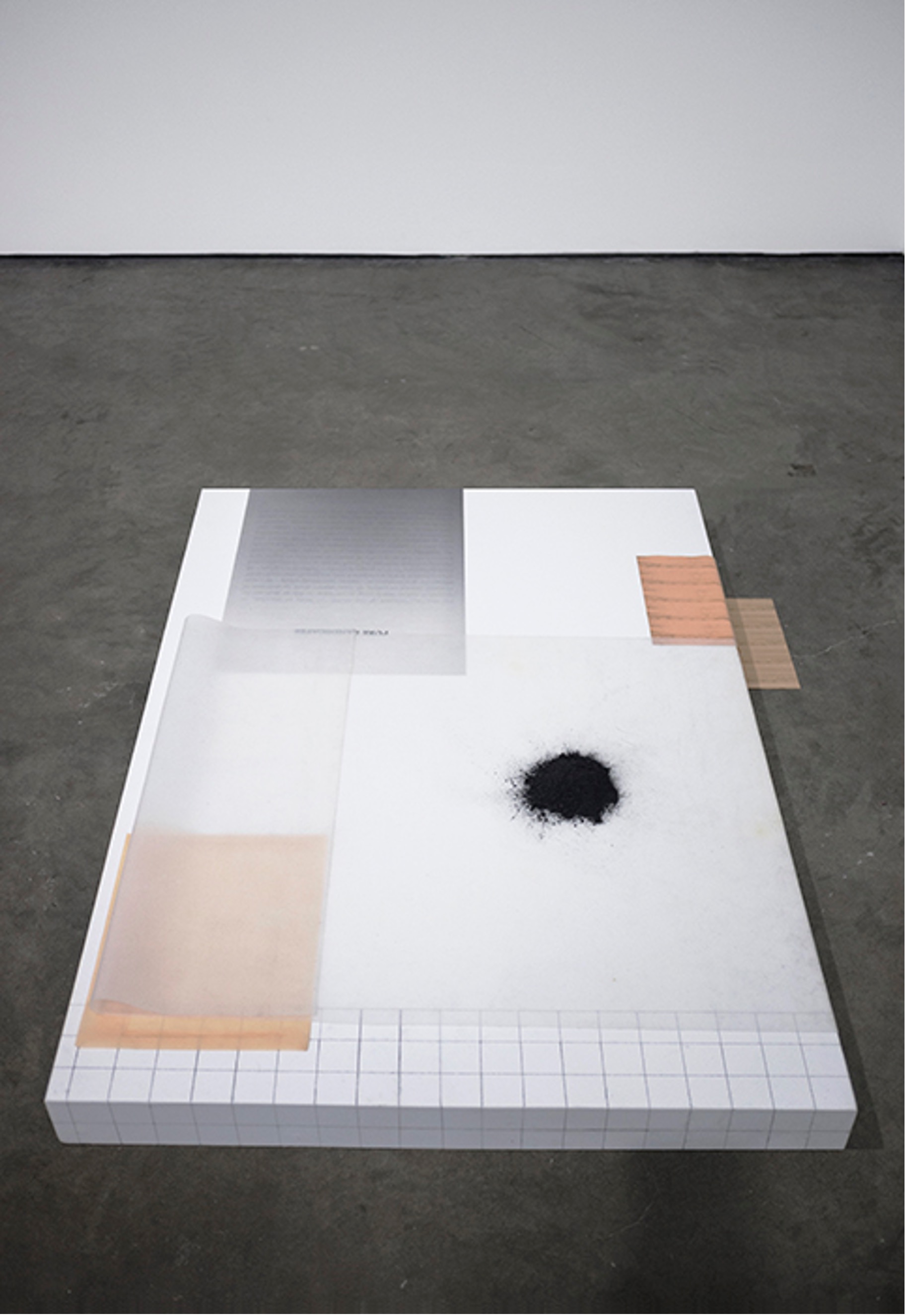
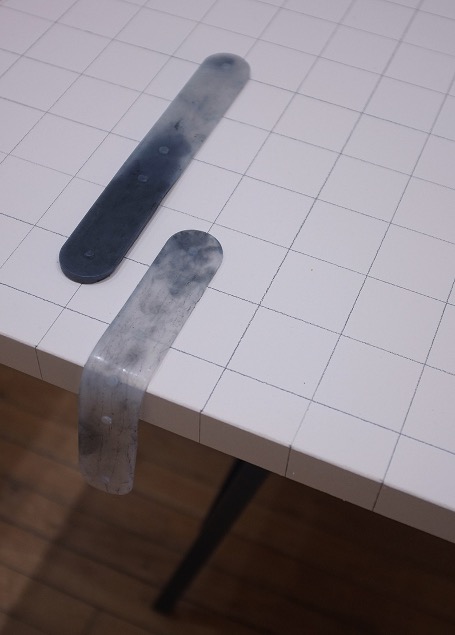
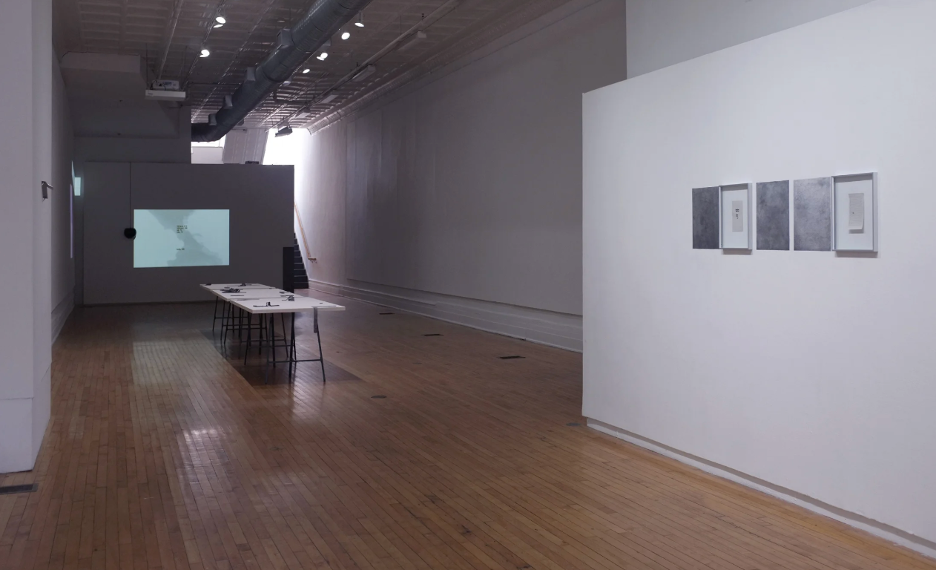
For instance, in the 2020 two-person exhibition 《stain begins to absorb the material spilled on》 at DOOSAN Gallery New York, Chun presented sculptural and sound installations that critically examined the bureaucratic and institutional frameworks governing language and reading.
 
Working with a range of found materials that render one readable as a subject—such as audio pronunciation tutorials for the world’s “common language”, English; watermarks for authenticating bureaucratic documents and certificates; and materiality of handwriting such as graphite, Chun actively mistranslates and re-authors the pre-existing devices of power, control, and meaning.
 
Through visual, sonic, and semiotic abstractions, she considers new poetics of legibility, interiority, and the untranslatable.


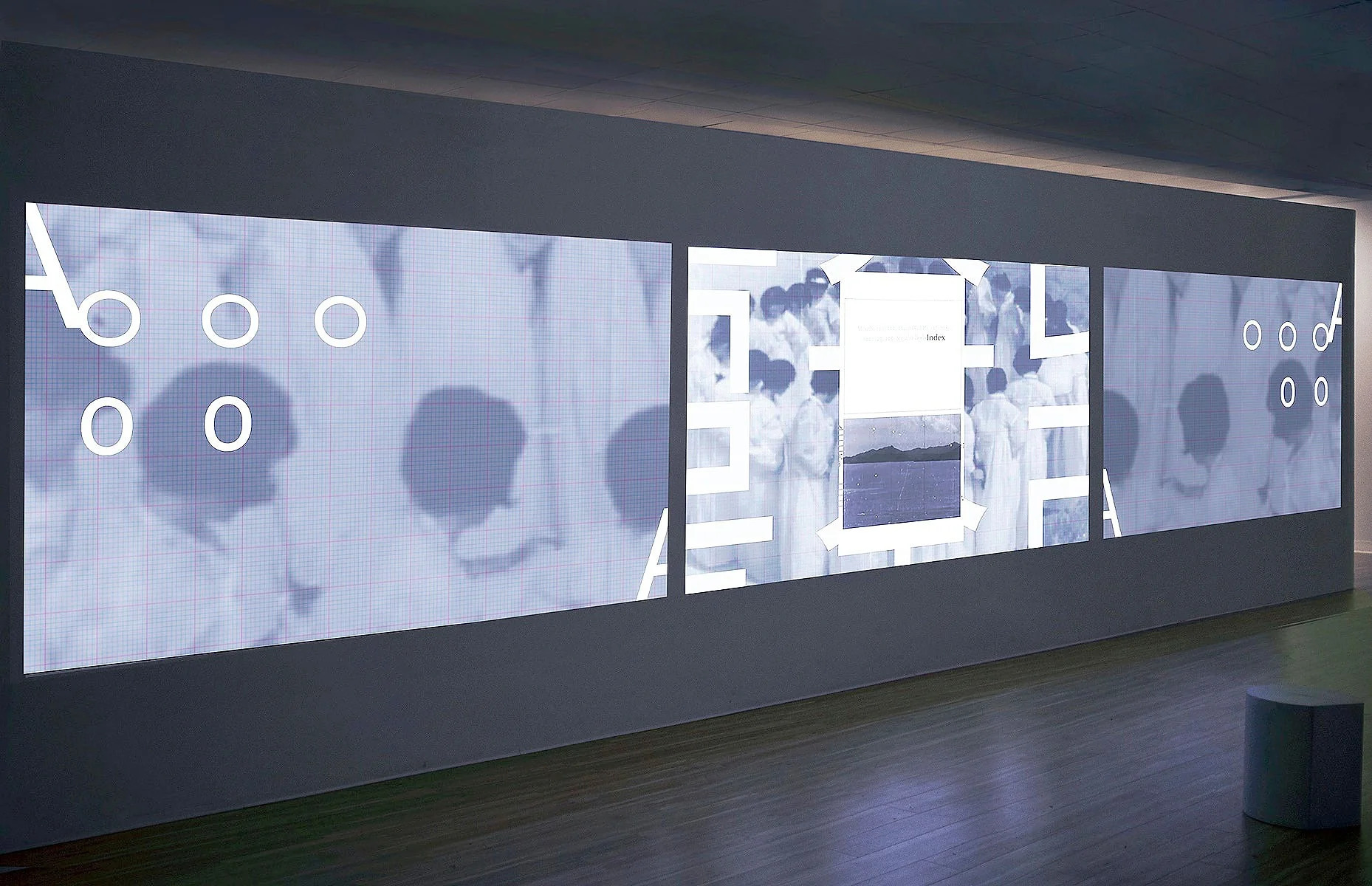
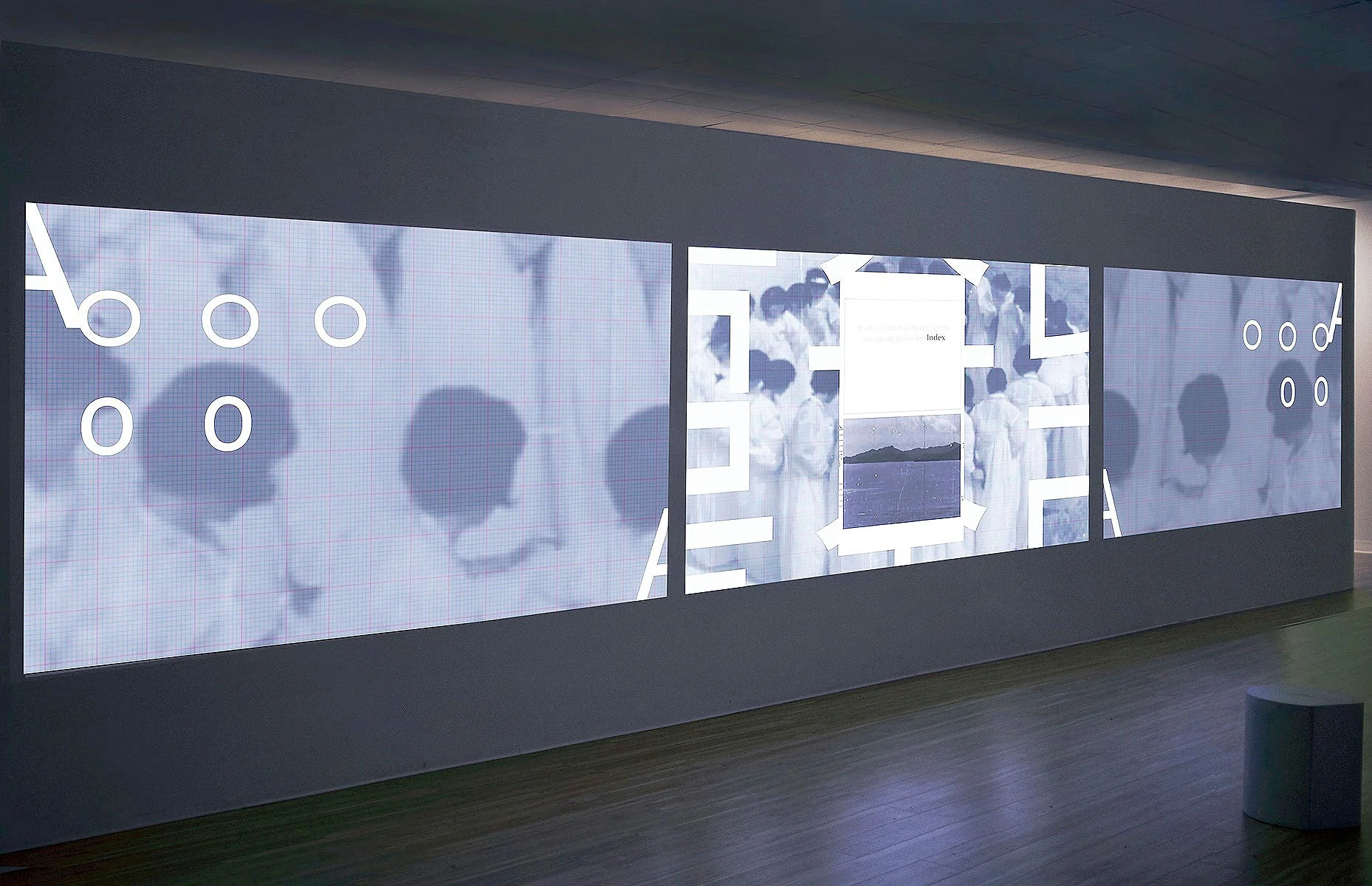
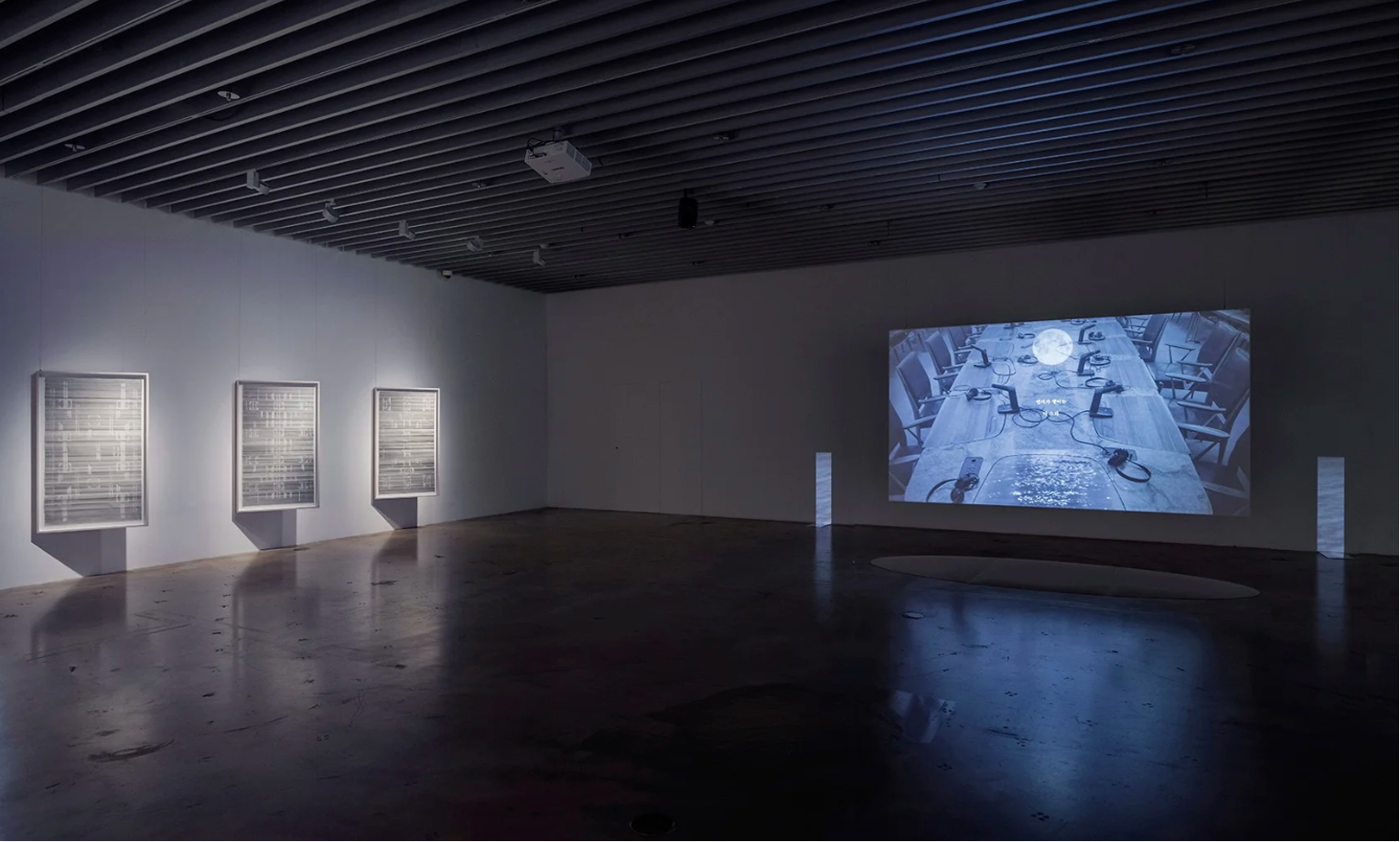
Jesse Chun, 술래 SULLAE, 2020, 3-channel video documentation, 6 minutes 25 seconds, voiced and voiceless consonants (English), hangeul (한글) and English text, images, precolonial korean women's moon dance, index pages from intonation books, white noise, word censor bleep, dimensions variable © Jesse Chun

Meanwhile, in the video work 술래 SULLAE (2020), Chun draws from her childhood cultural memory of ganggangsullae, using the Korean women’s moon dance as a decolonial metaphor and solace.
 
Chun also considers the way in which this dance was historically used as a means for women to
collectively unleash silenced anger. It provided relief through song, bellowing, yelling, and circling under the Moon.
 
In this video, the English language is fragmented into phonemes and voiceless and voiced consonants. The work focuses in different moments on the sonic, visual, and semiotic; undoing the English language, its embodied violence and dominance through abstraction and mistranslation—a process the artist describes as unlanguaging.


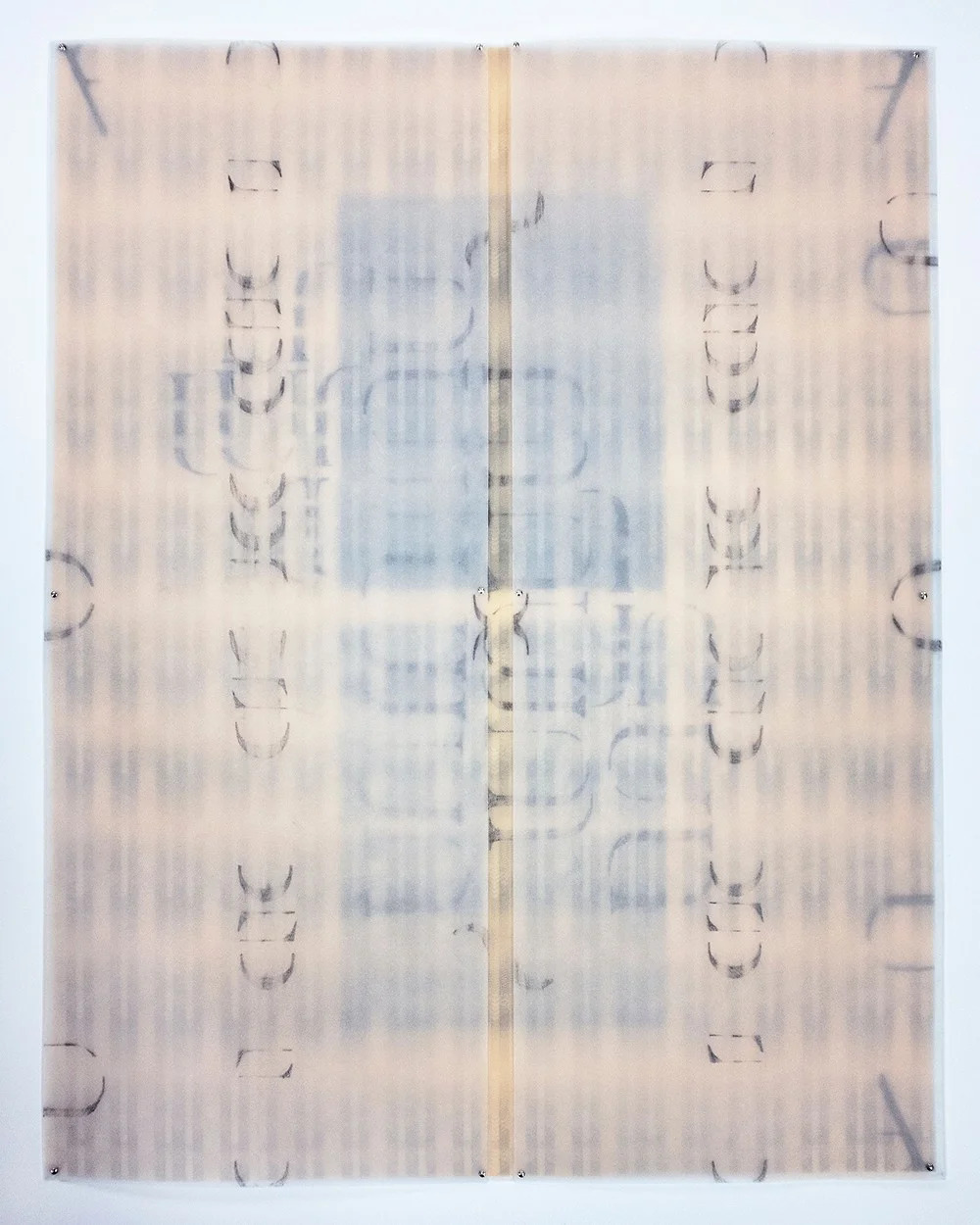
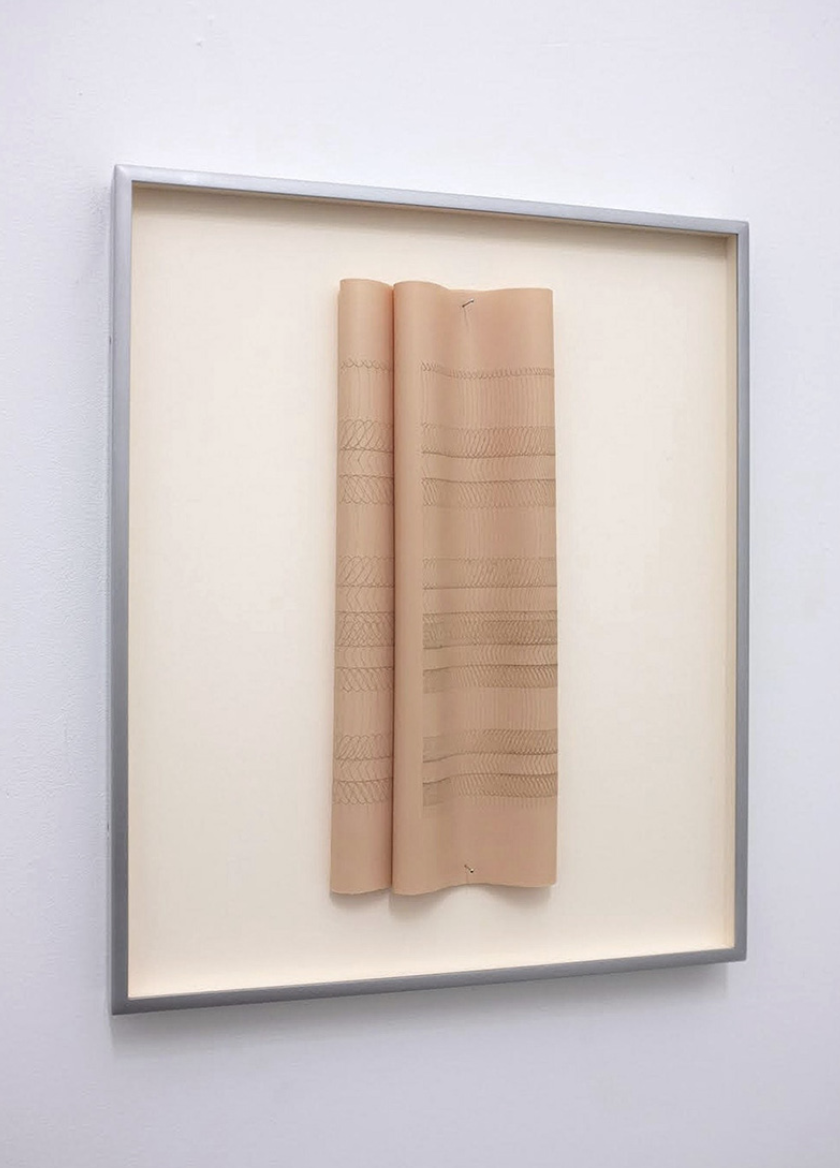
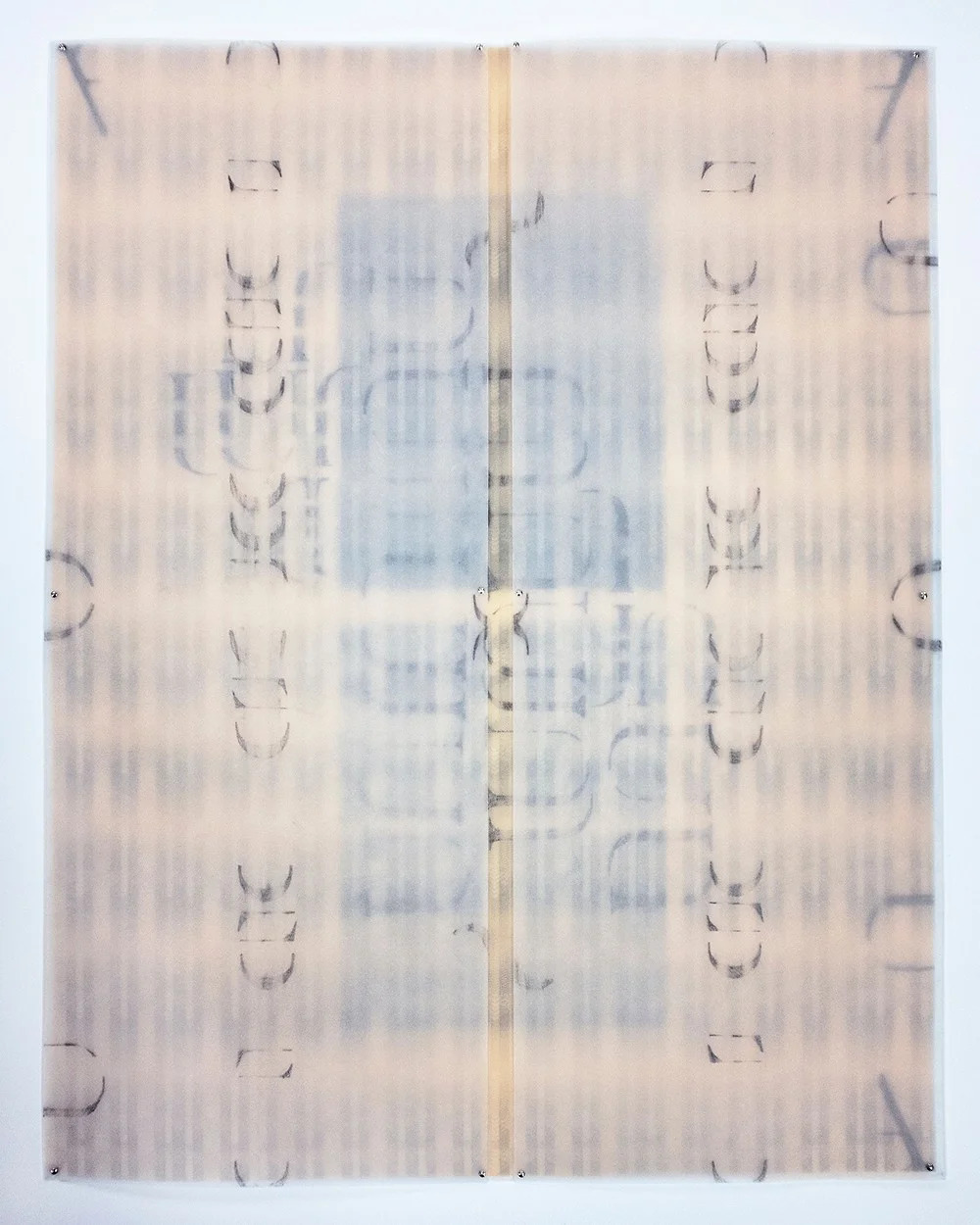
Jesse Chun, Score for unlanguaging no. 082721, 2021, Graphite, pigment, vellum paper, pins, roman alphabets, eraser. 33.02 × 26.67 cm © Jesse Chun

Jesse Chun’s deconstruction and abstraction of the meaning systems of English as a dominant language culminated in her drawing installation series ‘Score for Unlanguaging’ (2021–).
 
This work is Chun’s ongoing series of tactile drawings that are semi-“readable” and semi-abstract, taking shape amid disjointed symbols from the Roman alphabet that are subject to redactions—markings used to conceal sensitive information—which are then repeated, layered, and partially erased.
 
Using an alphabet stencil, Chun abstracts semiotic shapes and meanings in order to consider new textual trajectories and cosmologies. The score’s patterned paper is custom-made by Chun, who incorporates various bureaucratic watermarks into her own “score” of non-linear composition lines. In so doing, she imbues the score with nuanced and circular passages of language, meaning, and legibility.


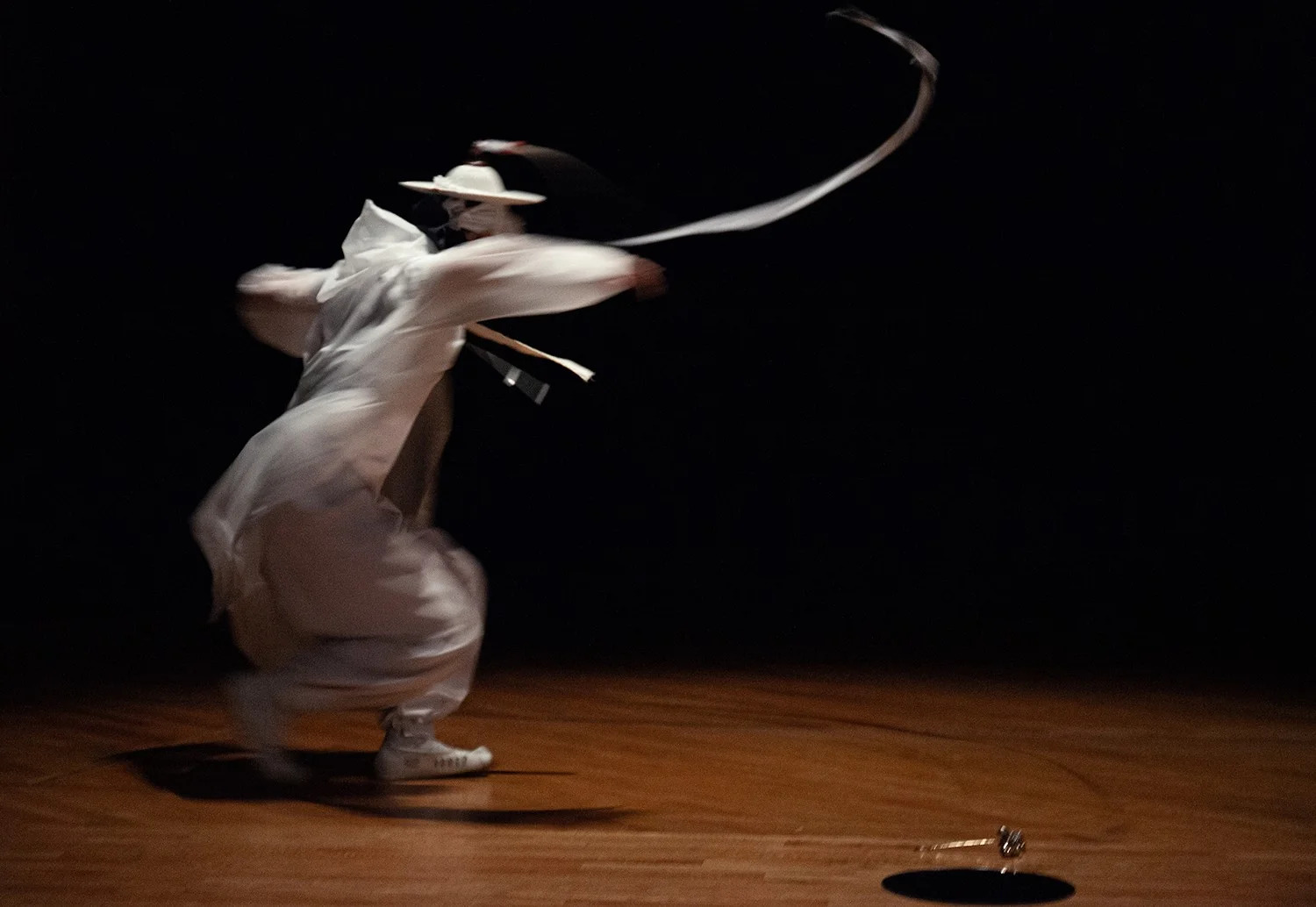
Jesse Chun, Score for unlanguaging (천지문 and Cosmos): Activation, 2024, Performance, collaboration with Yeonhee (Kim Hyangsooree, Ahn Yoohee). Exhibition view of 《Tongue of Rain》 (Art Sonje Center, 2024) © Jesse Chun

The process of “unlanguaging” that Chun proposes becomes more concrete as the project progresses further into the artist’s diasporic experience and the philosophy of oral traditions in Asia.
 
From a Korean perspective, traditional sounds are based on the rhythms of life that produce breaths such as speaking, singing, and telling stories. The scores are also activated through performance and collaborations with other artists, who are invited by Chun to “translate” them in their own interpretations
 
For instance, her drawing installation Score for Unlanguaging (천지문 and Cosmos, no. 042823) (2024), presented at Art Sonje Center in 2024, was expanded into a performance in collaboration with Korean folk performance artists Yeonhee (Kim Hyangsooree, Ahn Yoohee).
 
Choreographed by Yeonhee and Chun, the performance reinterpret Korean folk dance and sound to summon new embodied poems that encircle non-linear passages of meaning, time, and the untranslatable.


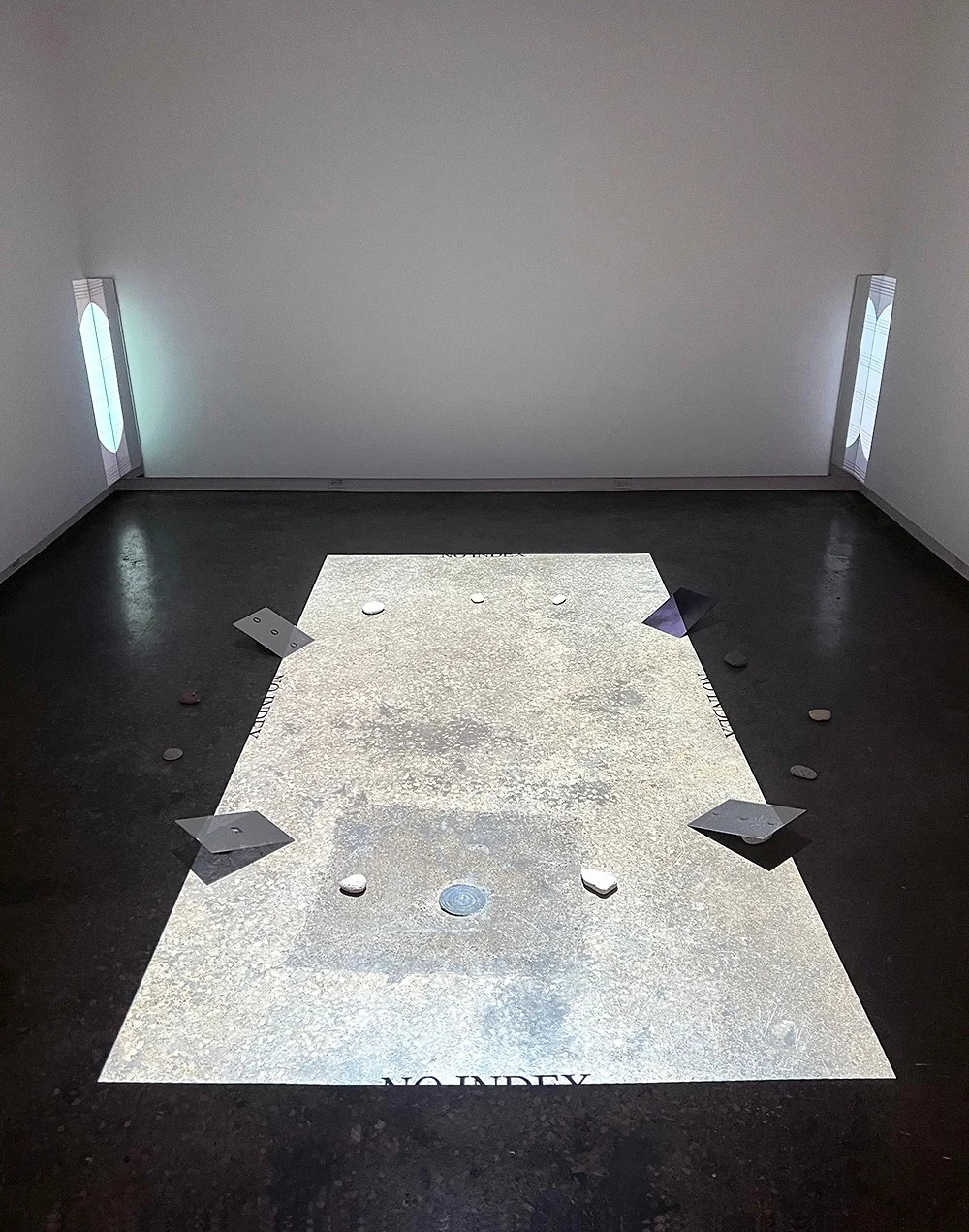
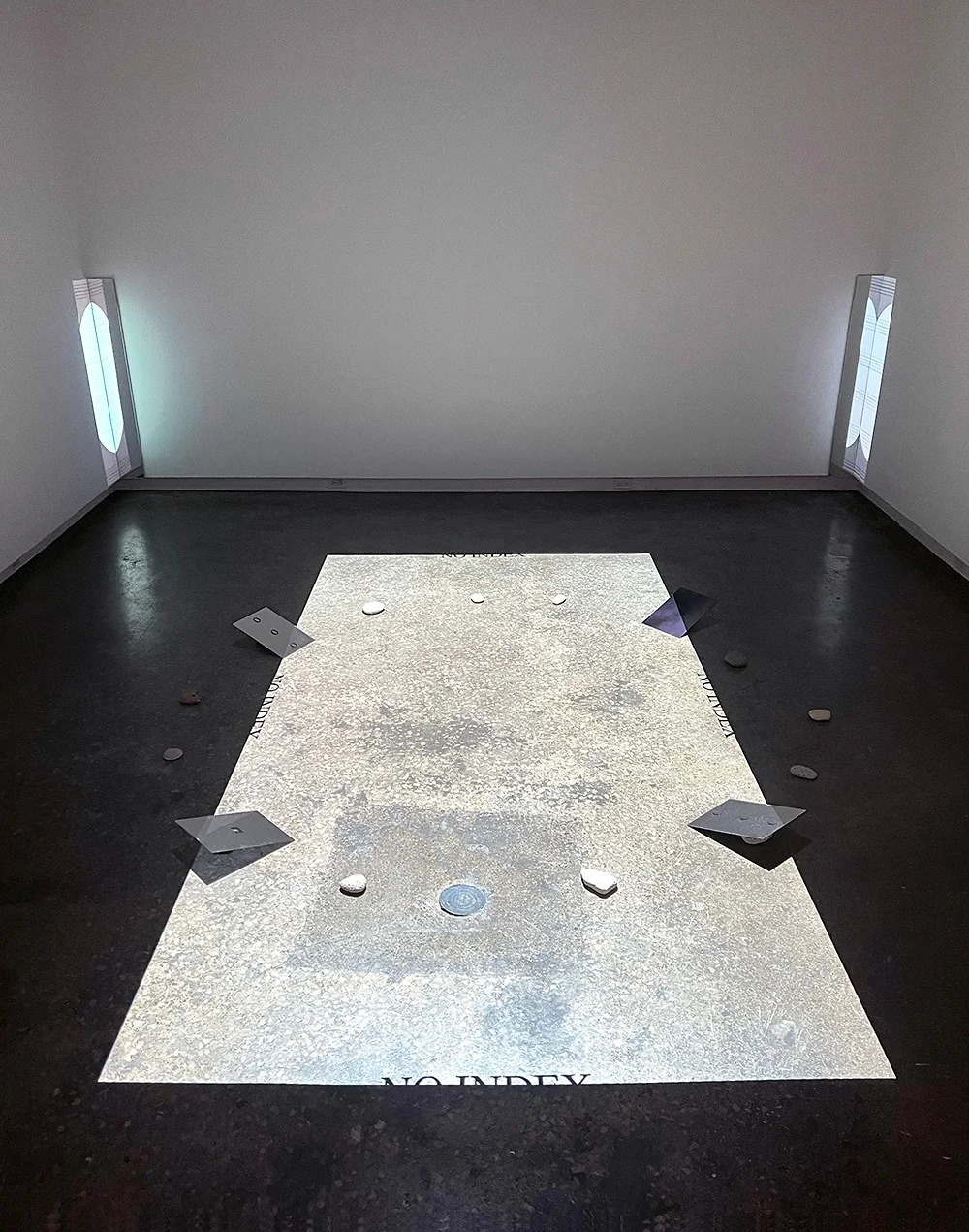
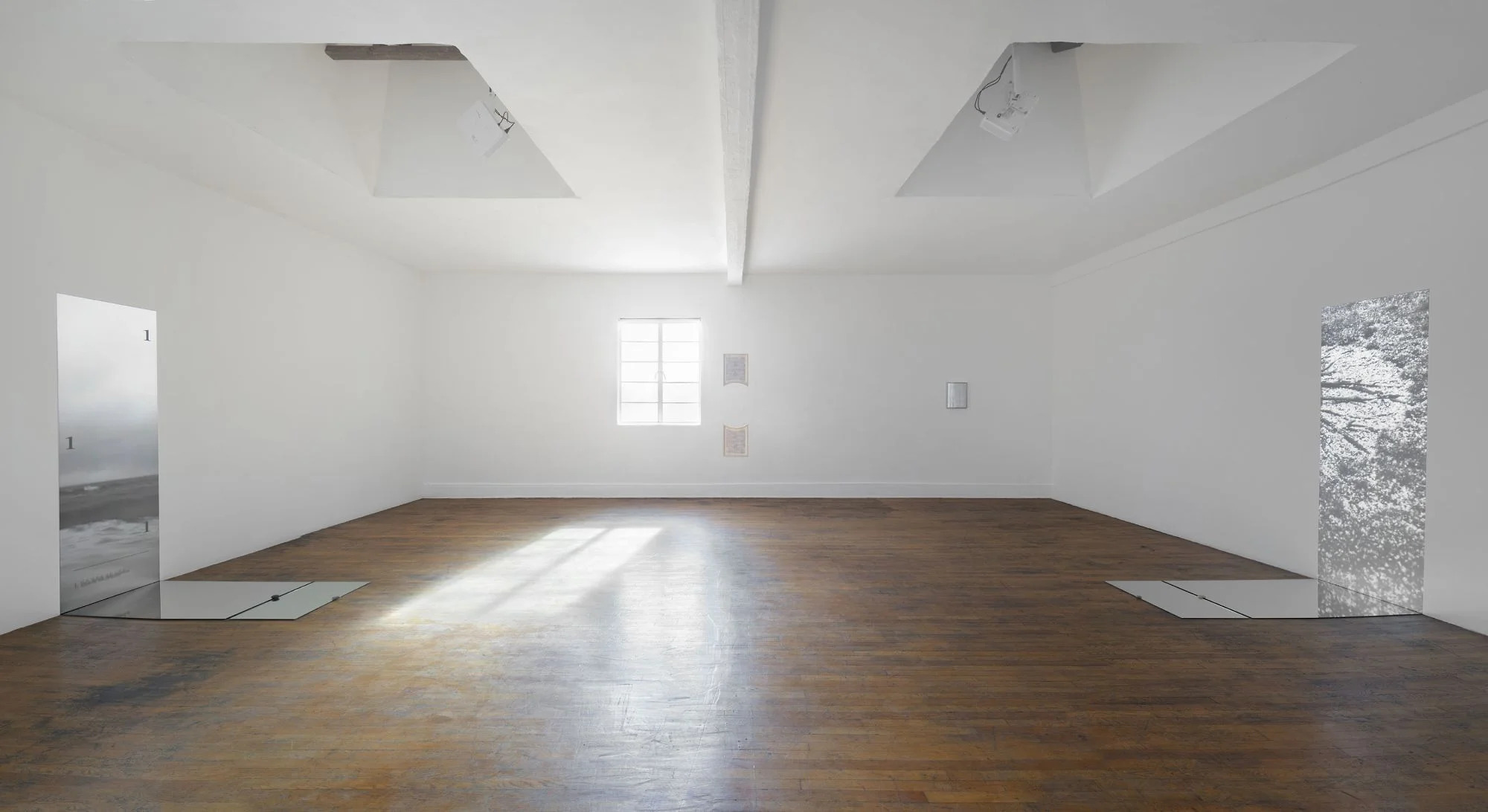
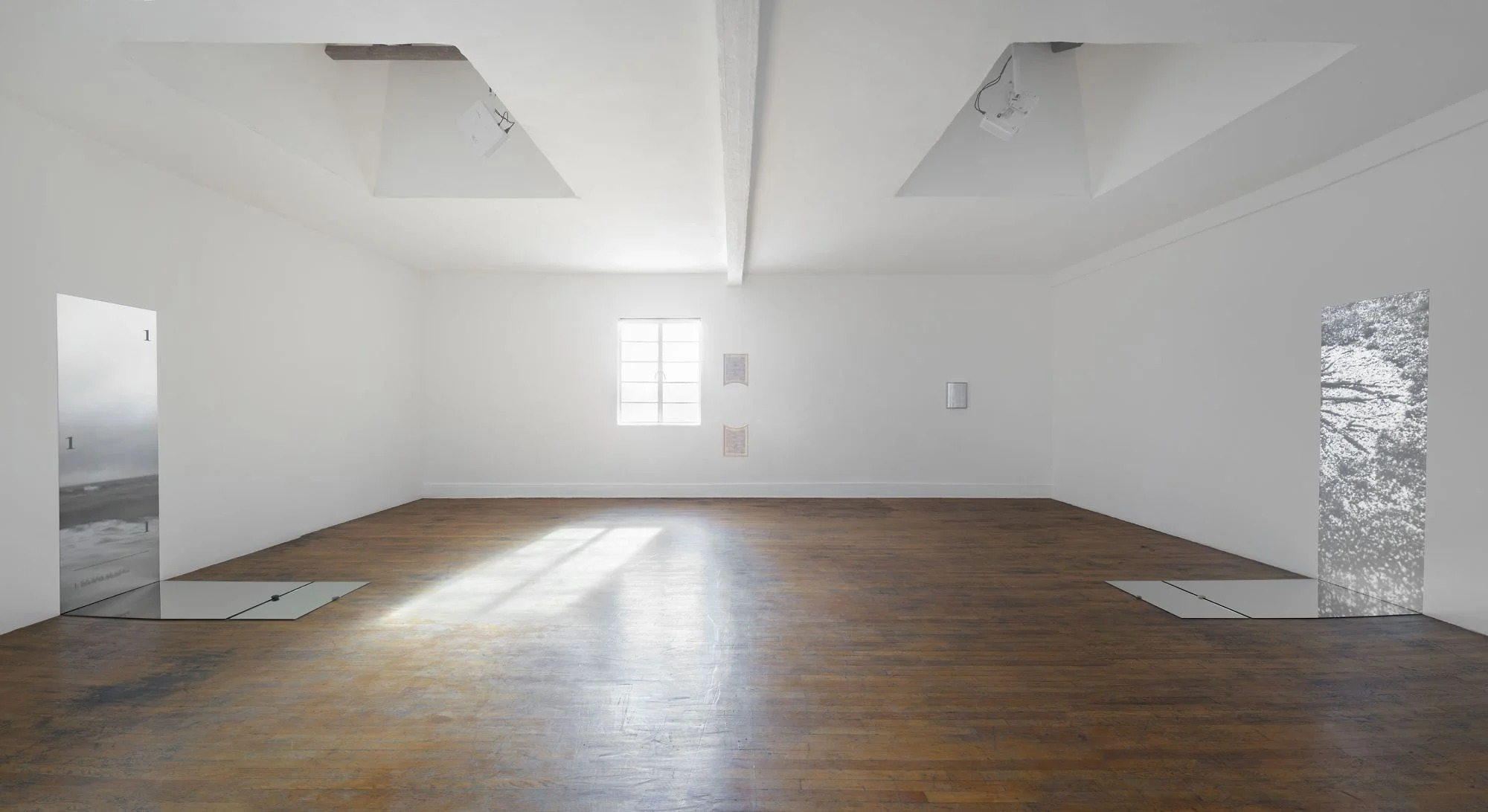
Jesse Chun, And verse(혼잣말의 언어 그리고 cosmos), 2022, Single-channel video installation, 4 UV printed acrylic panels, rocks, silence. 1 min 59 sec (video); Dimensions variable (installation) © Jesse Chun

Furthermore, in her video work And verse (혼잣말의 언어 그리고 cosmos) (2022), Chun fragments established systems of writing to present poetry in the form of nonlinear moving images. The work projects images of stones, fragments of index pages, and text on transparent acrylic panels onto the floor.
 
The projected moving images feature a pond, a score, and a cryptic set of documents that reflect the autonomy and inconsistency of languages and translations, as well as the circumnavigations of celestial bodies that repeatedly rise and fall. Clouds, smoke, annotations, and broken letters compose a vocabulary and grammar that collectively builds a new fractured poetics.


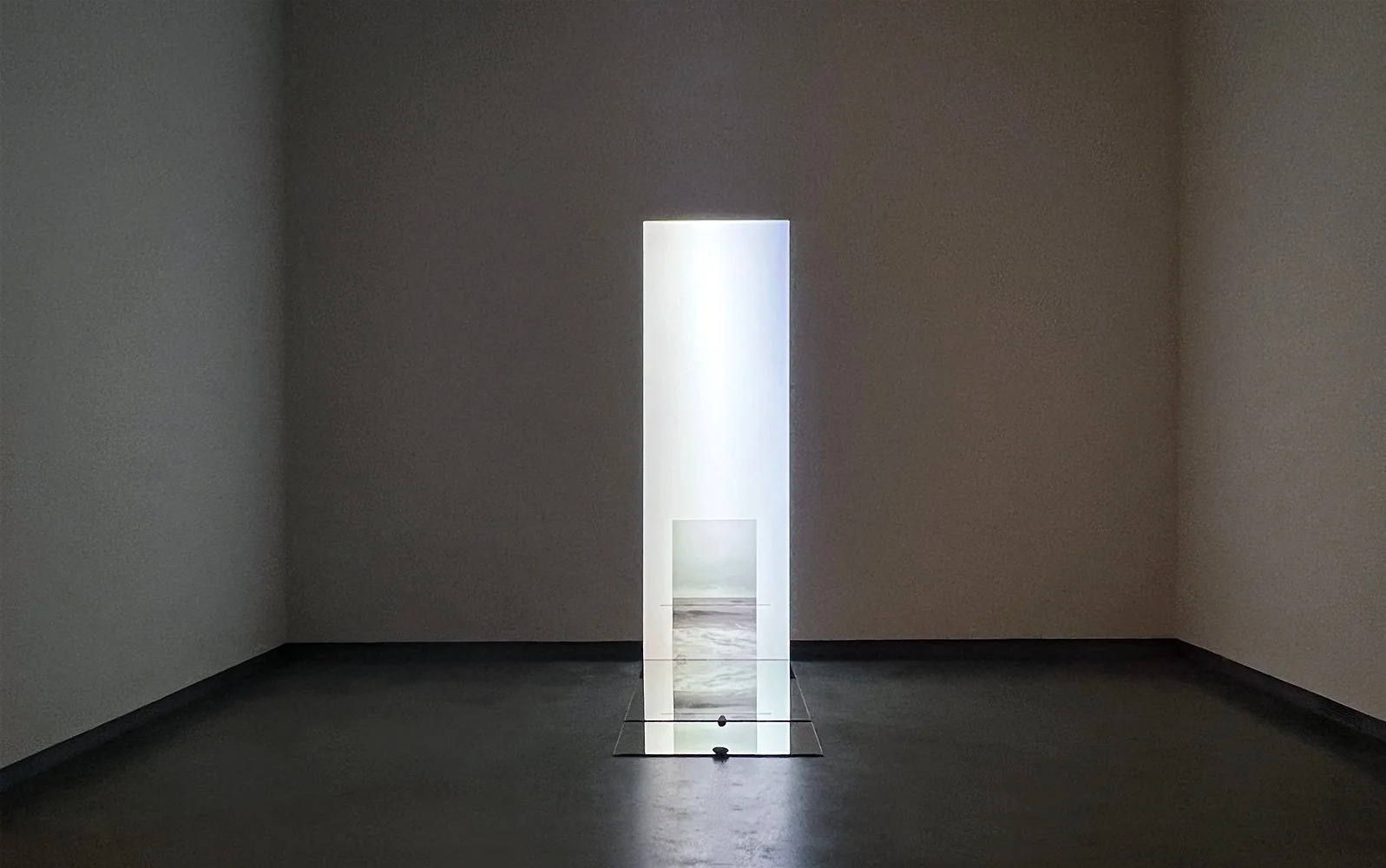
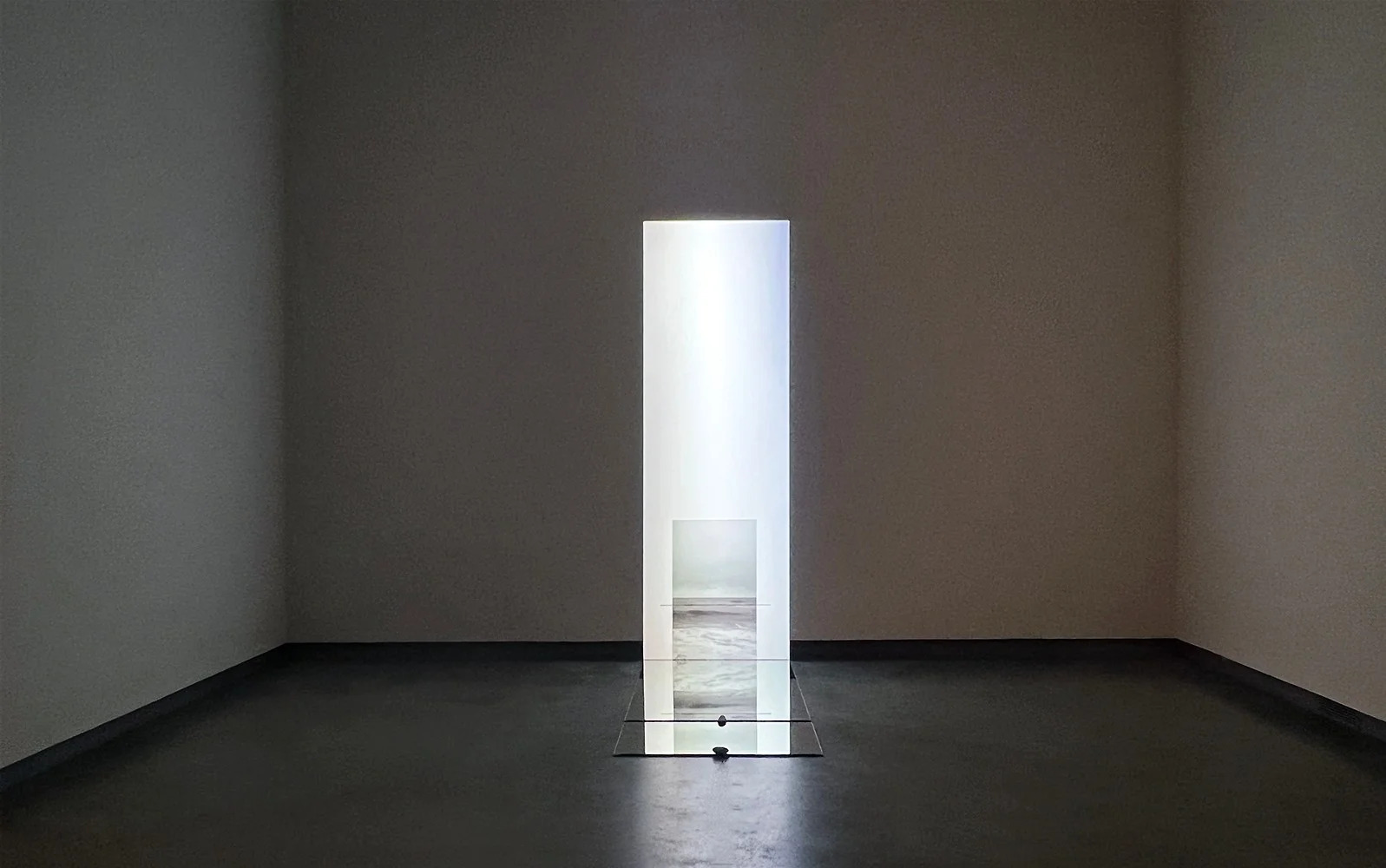
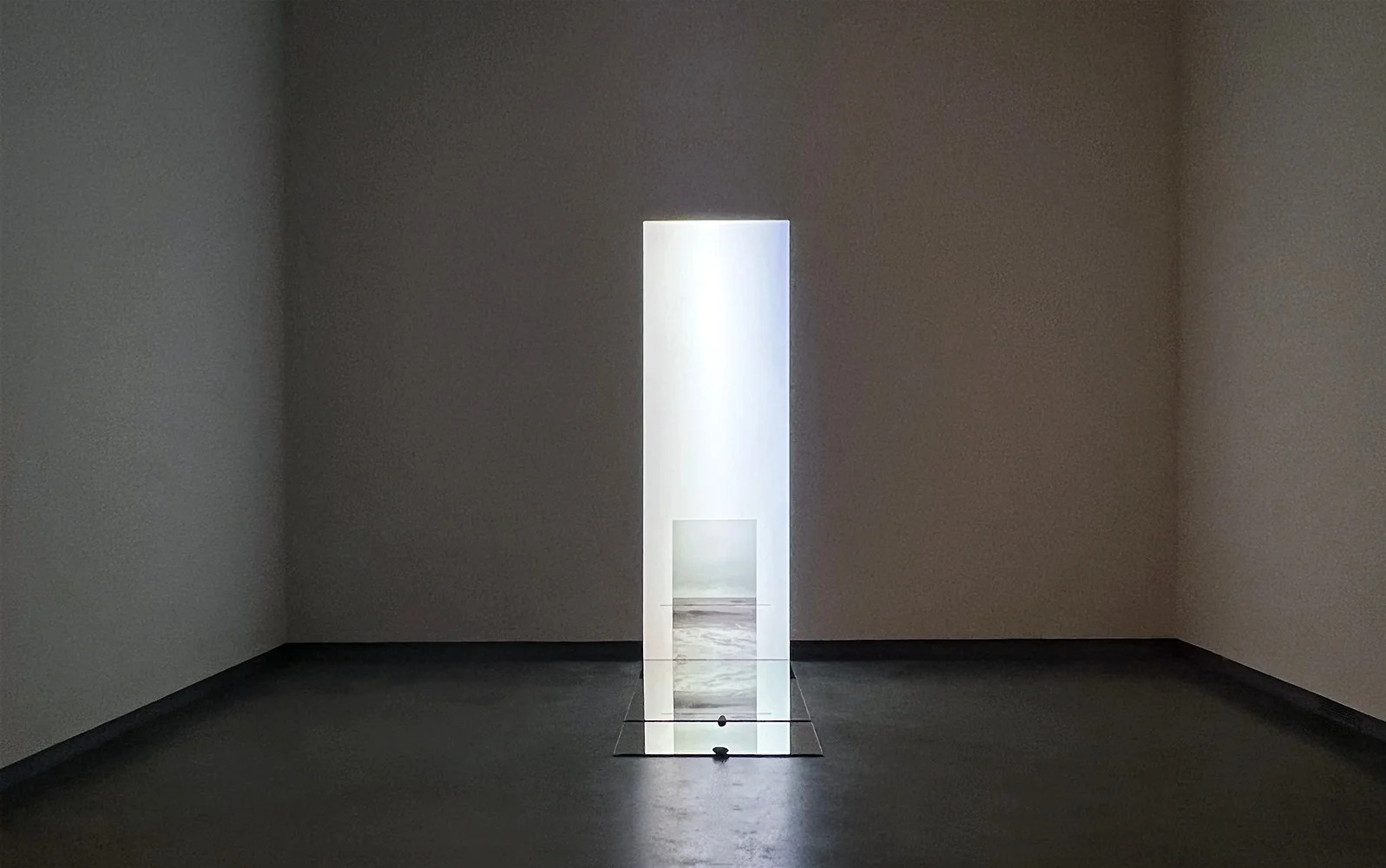
Jesse Chun, 시: sea (2565), 2022, Single-channel video (2min 24sec.), mirrors, rocks, silence. © Jesse Chun

Another moving-image poetry series, ‘시: sea’ (2022–), reflects Chun’s broader exploration of the “underside” of language. The works incorporate objects such as mirrors and rocks, along with research notes on mistranslation and various text-based visual materials that inform and activate her artistic practice.
 
“시,” meaning “poetry” in Korean, can be mistranslated as “sea” in English when pronounced phonetically. Engaging with mistranslation as an active poetic form, Chun’s moving images refuse clarity and linear narrative, instead offering abstract textual portals and spatial poems.


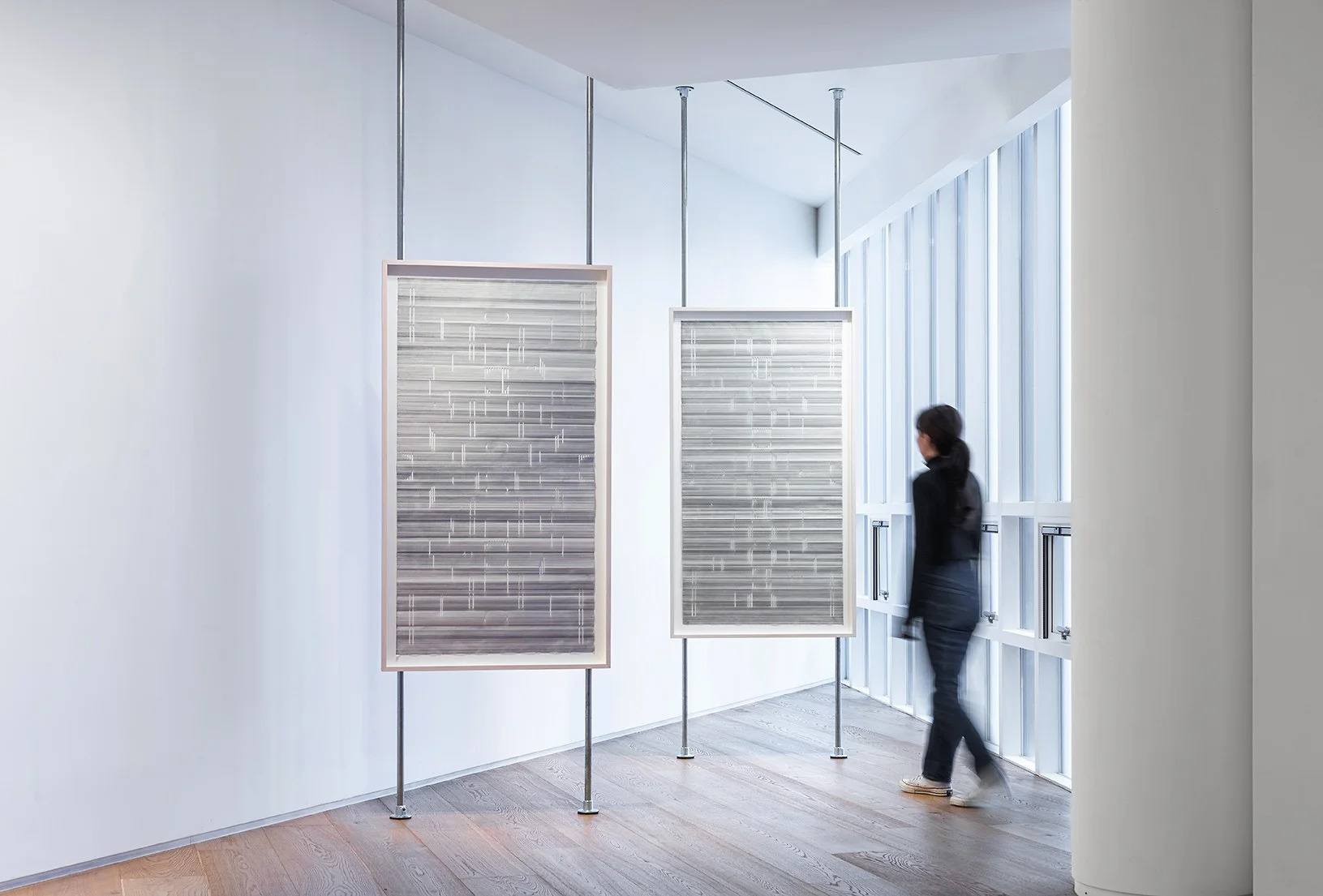
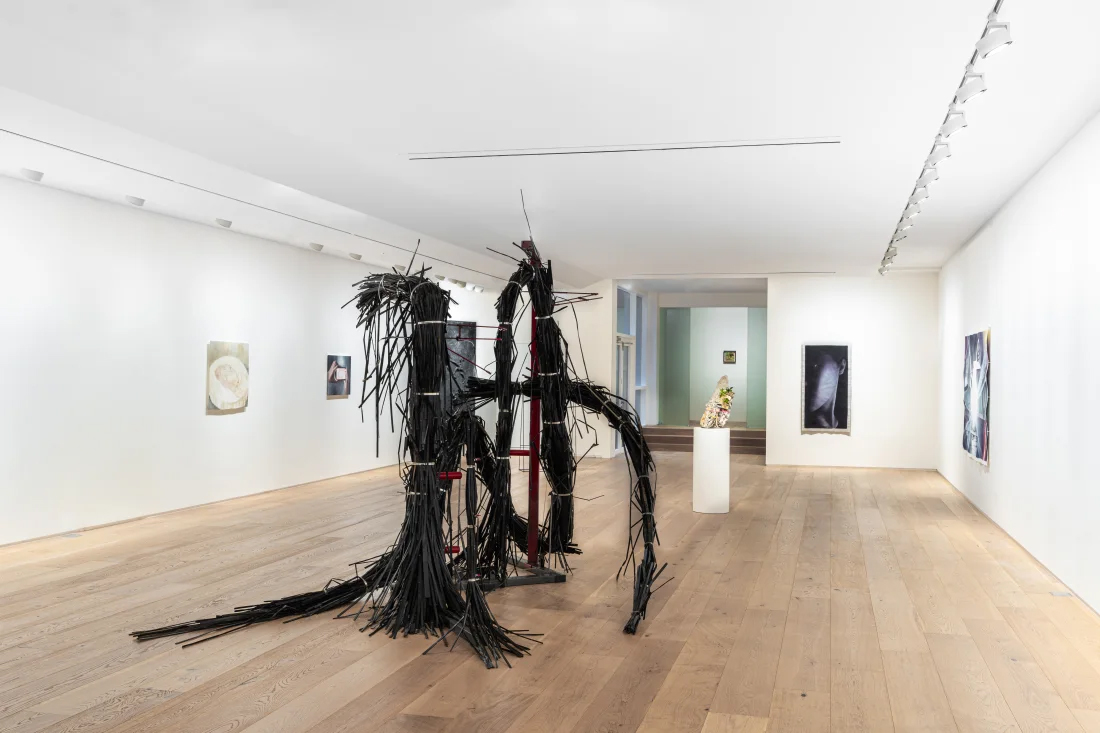
Jesse Chun, 시: concrete poem (no.111123), 시: concrete poem (no. 111323), 2023, Graphite on hand cut hanji, wood frame, steel poles. Installation view of 《Nostalgics on Realities》 (Thaddaeus Ropac, 2024) © Jesse Chun

Chun’s exploration of the boundaries between the readable and the unreadable also extends to her labor-intensive works with hanji (traditional Korean paper).
 
Jesse Chun’s ‘시: concrete poem’ (2023-) reinterprets the Korean shamanist tradition of paper cutting, created by dyeing hanji paper with ottchil lacquer followed by drawing repeated graphite lines and cutting them out.
 
This paper cutting technique was taught to Chun by a local Korean shaman, who uses it to make traditional talismans for protection, ceremony, and blessing as well as to communicate across time and place. Chun reinterprets this technique to create her own cryptography.


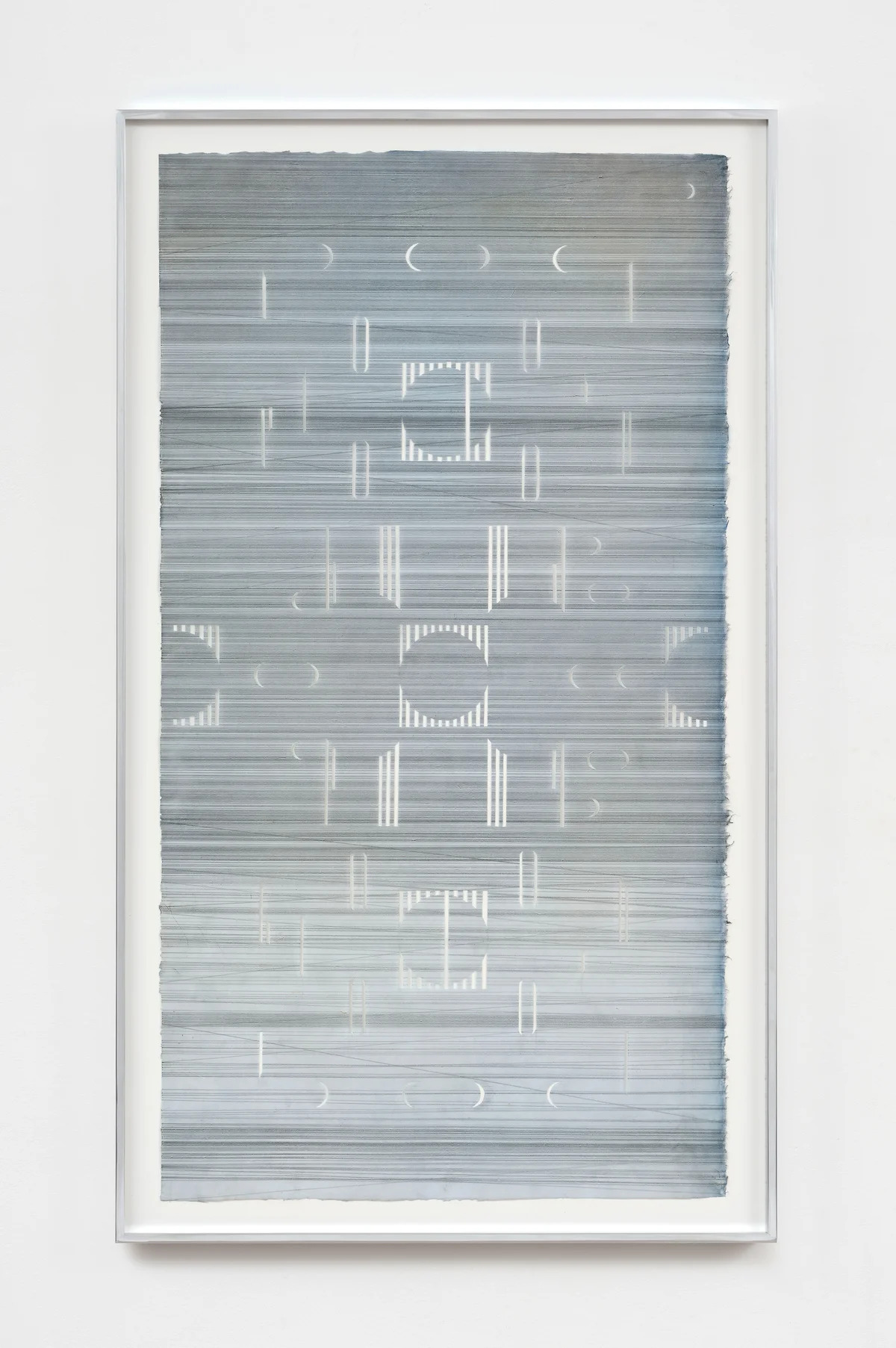
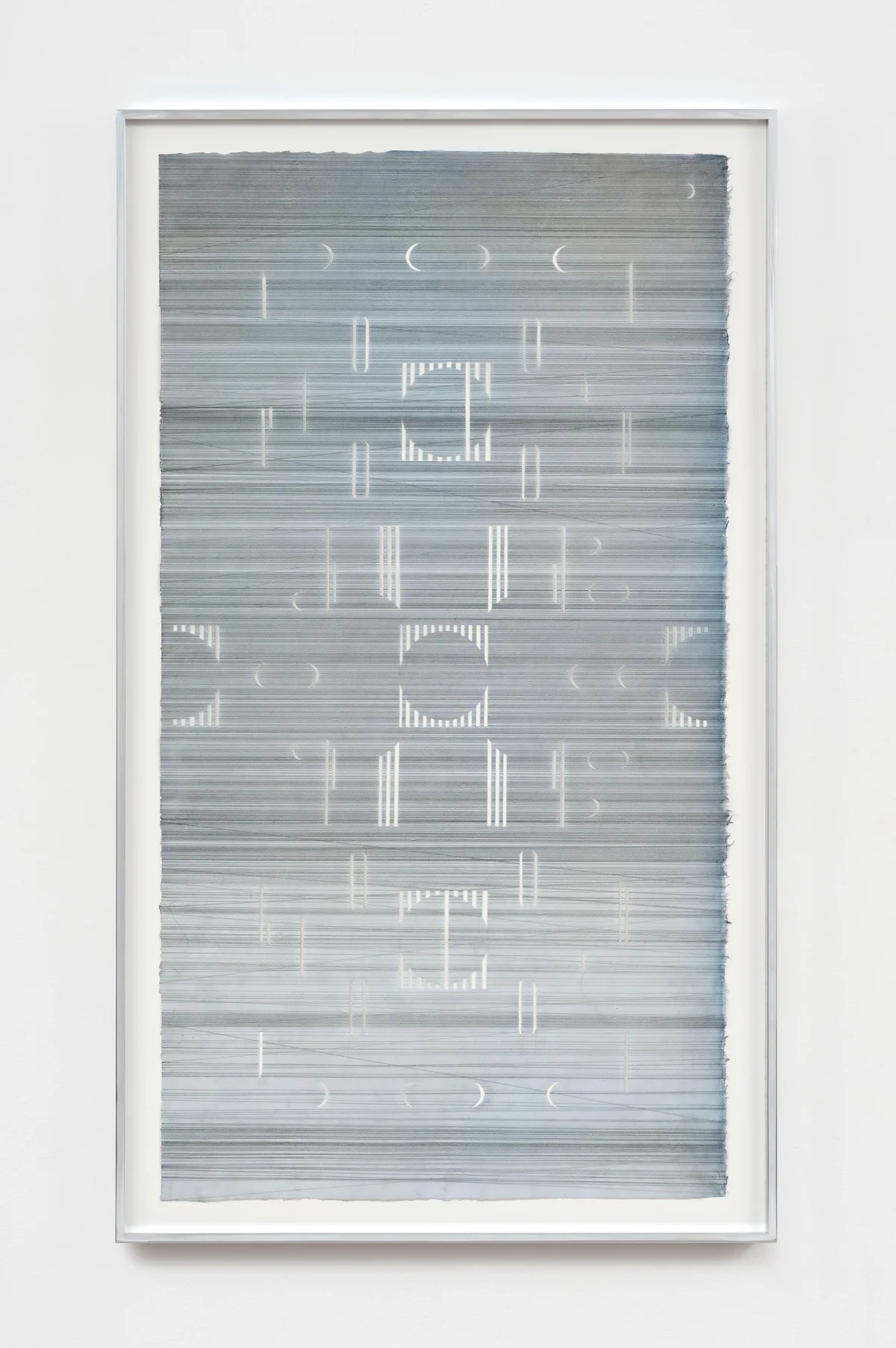
Jesse Chun, 시: concrete poem (no. 041924), 2024, Graphite on hand cut hanji, wood frame, 158.75 × 91.44 × 6.35 cm © Jesse Chun

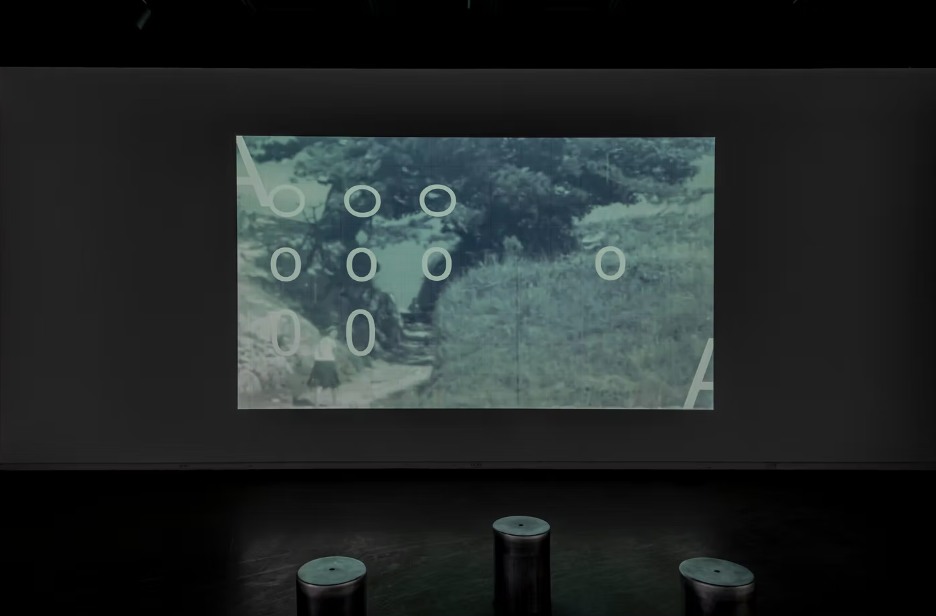
Chun’s language features abstracted shapes that are derived from Korean and English graphemes (such as O, ㅇ, I, L, ㅣ, ㅓ, ㅏ), and the untranslatable spaces in between. What results is an abstract pattern that illuminates through negative space and shadows as much as positive space, appearing both pictorial and linguistic like a newfound codex.
 
If the meticulous, hands-on process of working with delicate hanji imbues the work with a ritualistic element of “writing as practice” inspired by the artist’s own late grandmother, who was a Korean folk dancer and Buddhist monk, then the repeated circles point to graphemes of Korean (“ㅇ”) and English (“O”) to meditate on the structural conditions of language itself.
 
Situated somewhere between the legible and illegible, Chun’s concrete poems reflect on diasporic, existential, and cosmic conditions of language. In this way, as a talismanic portal, ‘시: concrete poem’ collapses time and space to commune with others beyond speech and articulation.


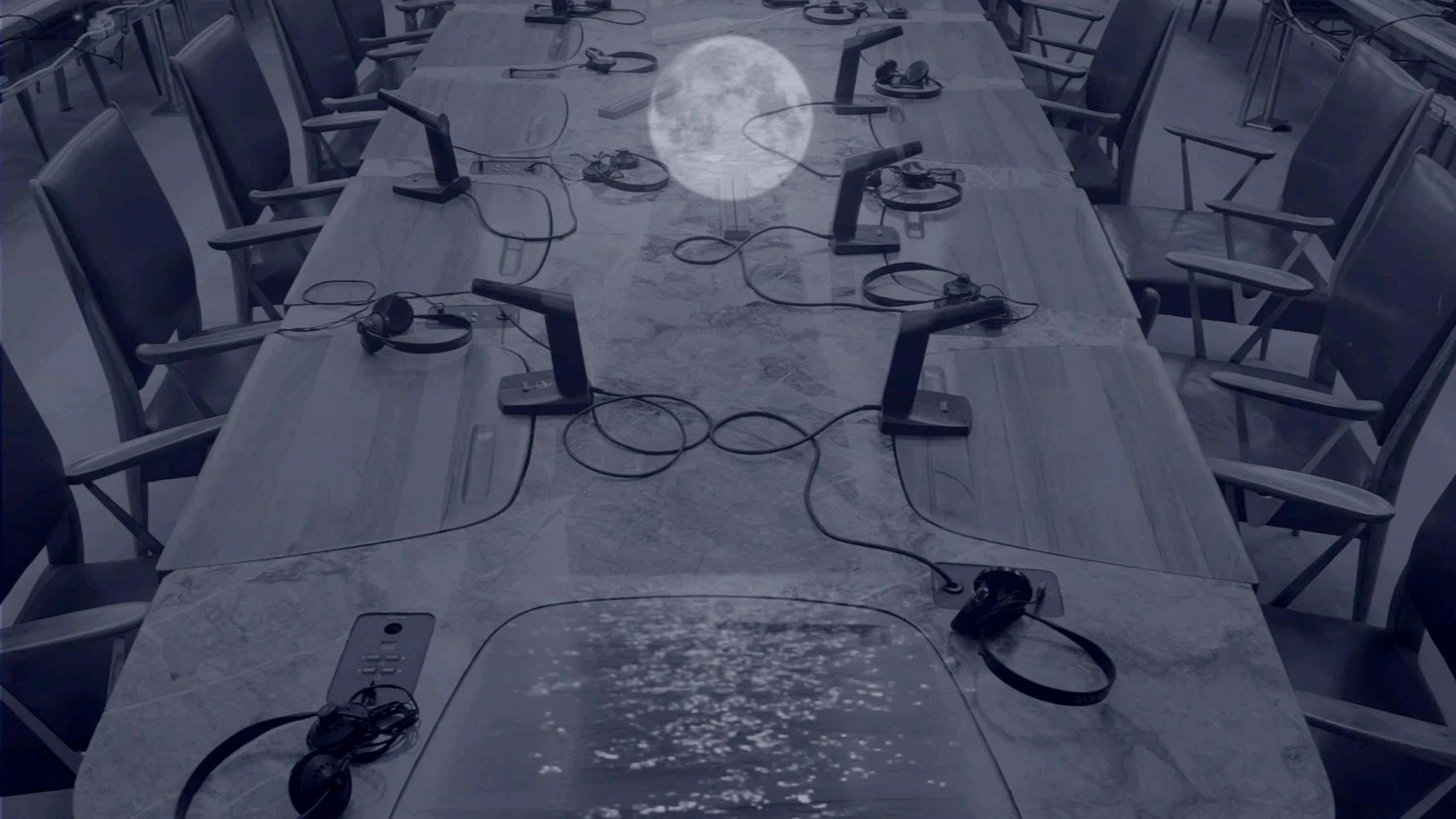
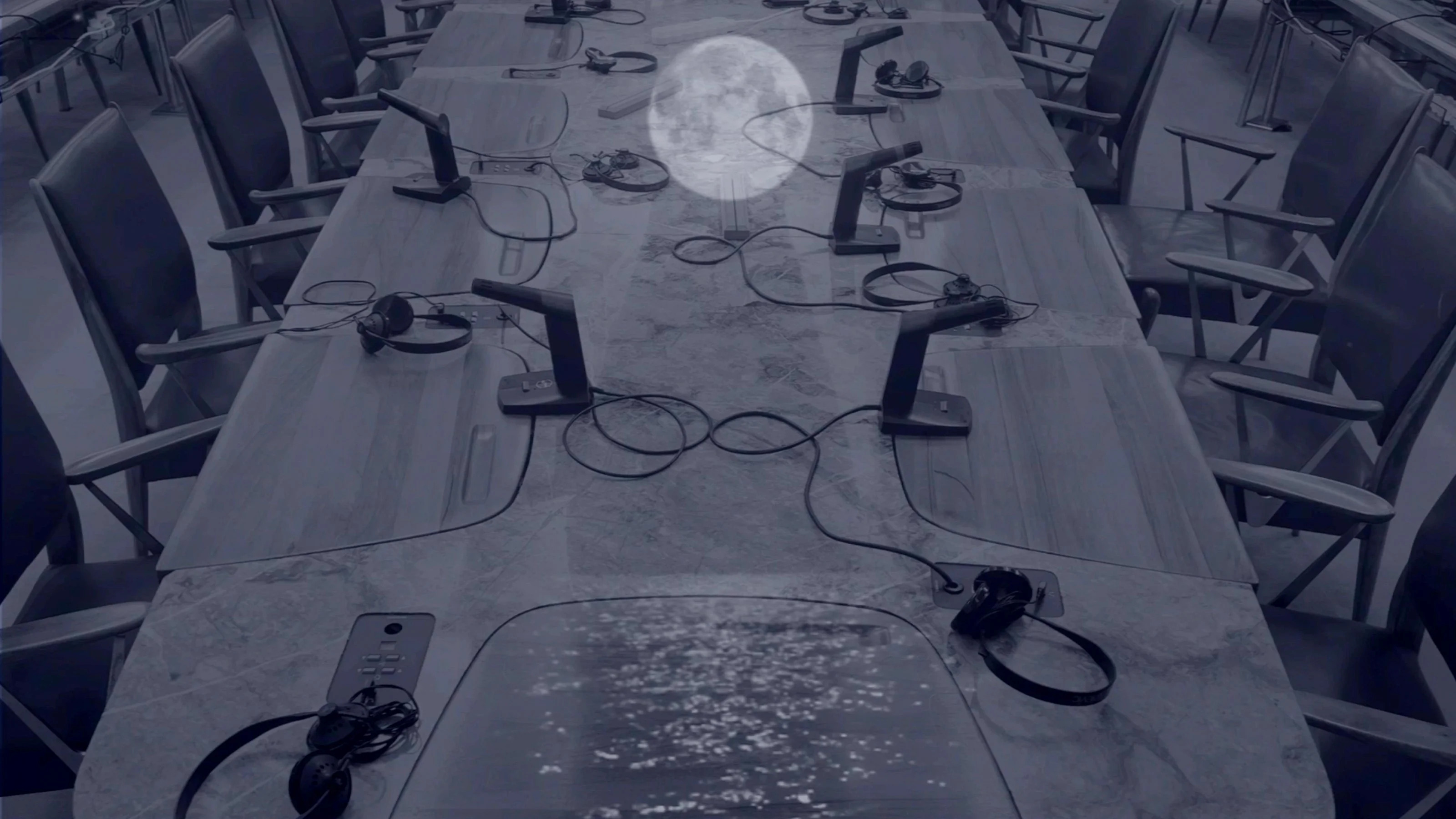
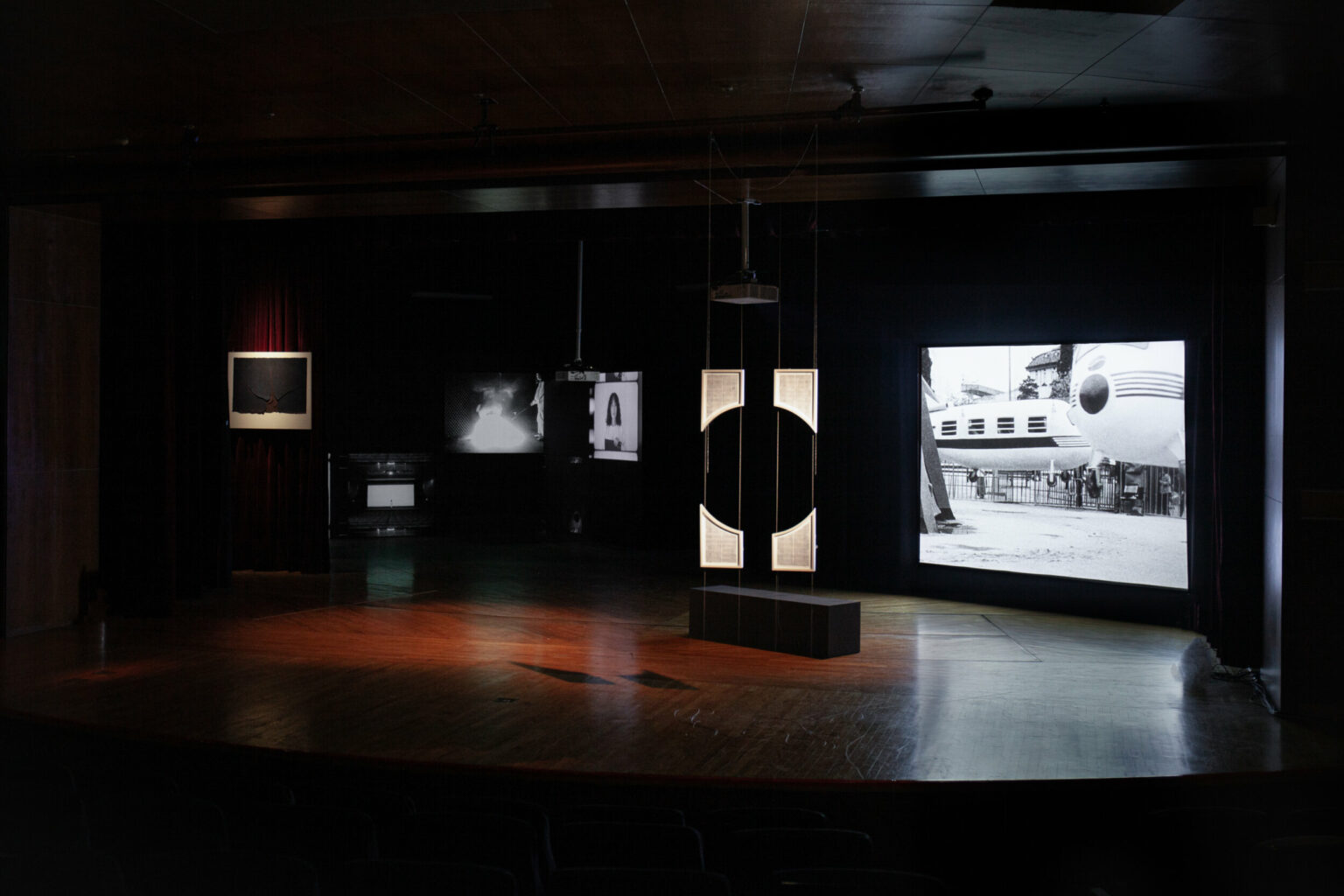
Jesse Chun, O dust, 2023, 3 channel video installation, 3 mirrors. 7 min 6 sec (video), with sound; Dimensions variable (installation) © Jesse Chun

Meanwhile, her video work O dust (2023) uncovers intimate reflections on language, heritage, and the intangible, while decentering the Eurocentric translation and historiography of cultural inheritance.
 
Filmed at the UNESCO headquarters in Paris (FR), O dust looks through the institutional apparatus of speech, such as the interpreter’s booths, machines, microphones, empty conference rooms, and the Intangible Cultural Heritage archives.
 
The non-linear film oscillates from moving image poetry, an imaginary multilingual folklore, to an abstract letter to Chun’s late grandmother, who was an un-historicized Korean folk dancer, and later a Buddhist monk.


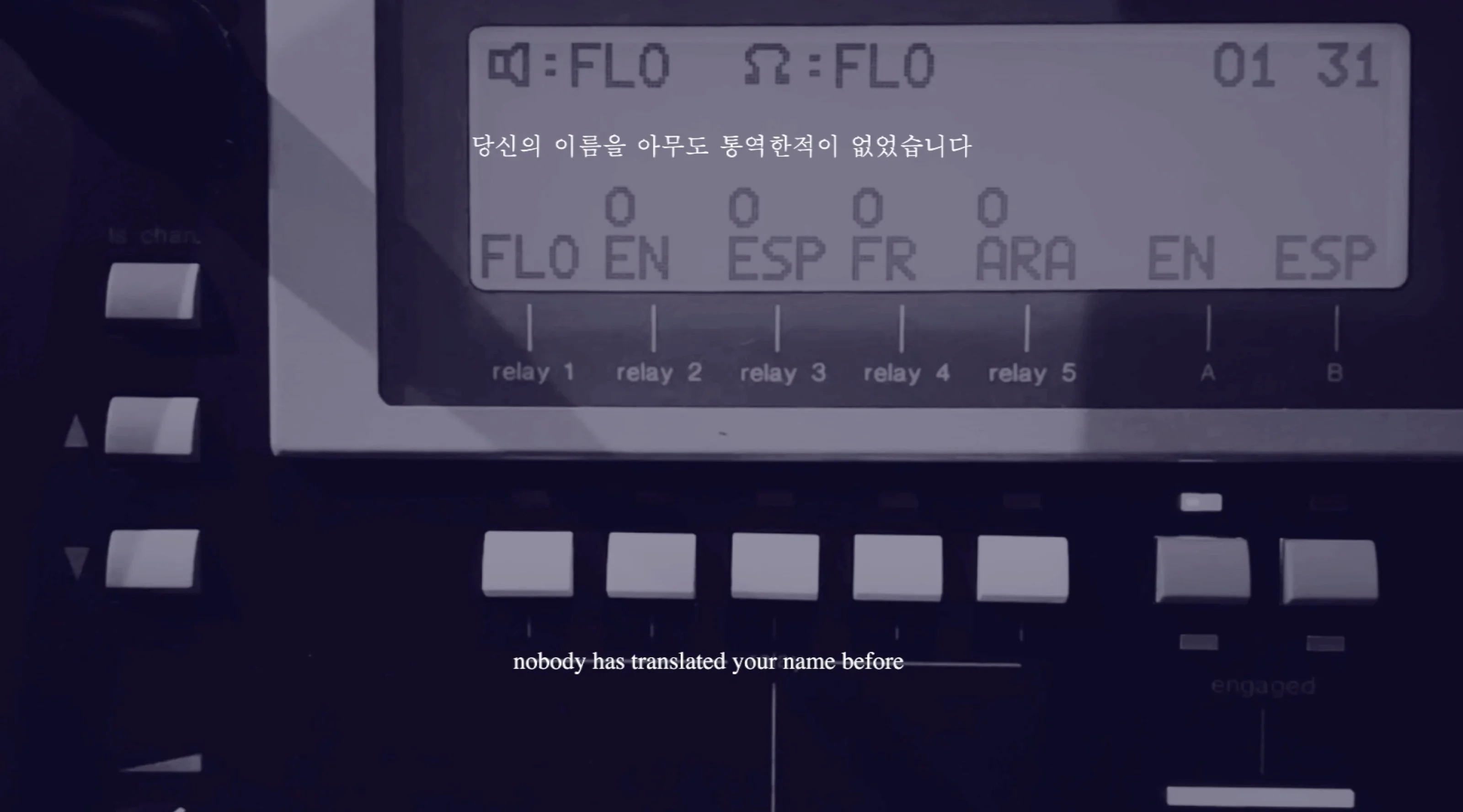
Jesse Chun, O dust, 2023, 3-channel video installation, 3 mirrors. 7 min 6 sec (video), with sound; Dimensions variable (installation) © Jesse Chun

Aurally narrated by a French translator from the UN and the artist herself, it speaks through layers of sonic, linguistic, and visual ruptures that evade the bureaucratic narrative.
 
Chun manipulates texts in three different languages, turning and overlapping them, so that they become difficult to read, and inserting indecipherable murmurs and hums to fracture the presumption of Eurocentric linguistic hierarchies and cultural hegemony, and insist on an imperative of the untranslatable.
 
O dust meditates on the afterlife of inherited lyrics; and what continues to get carried across tongues, place, and time.


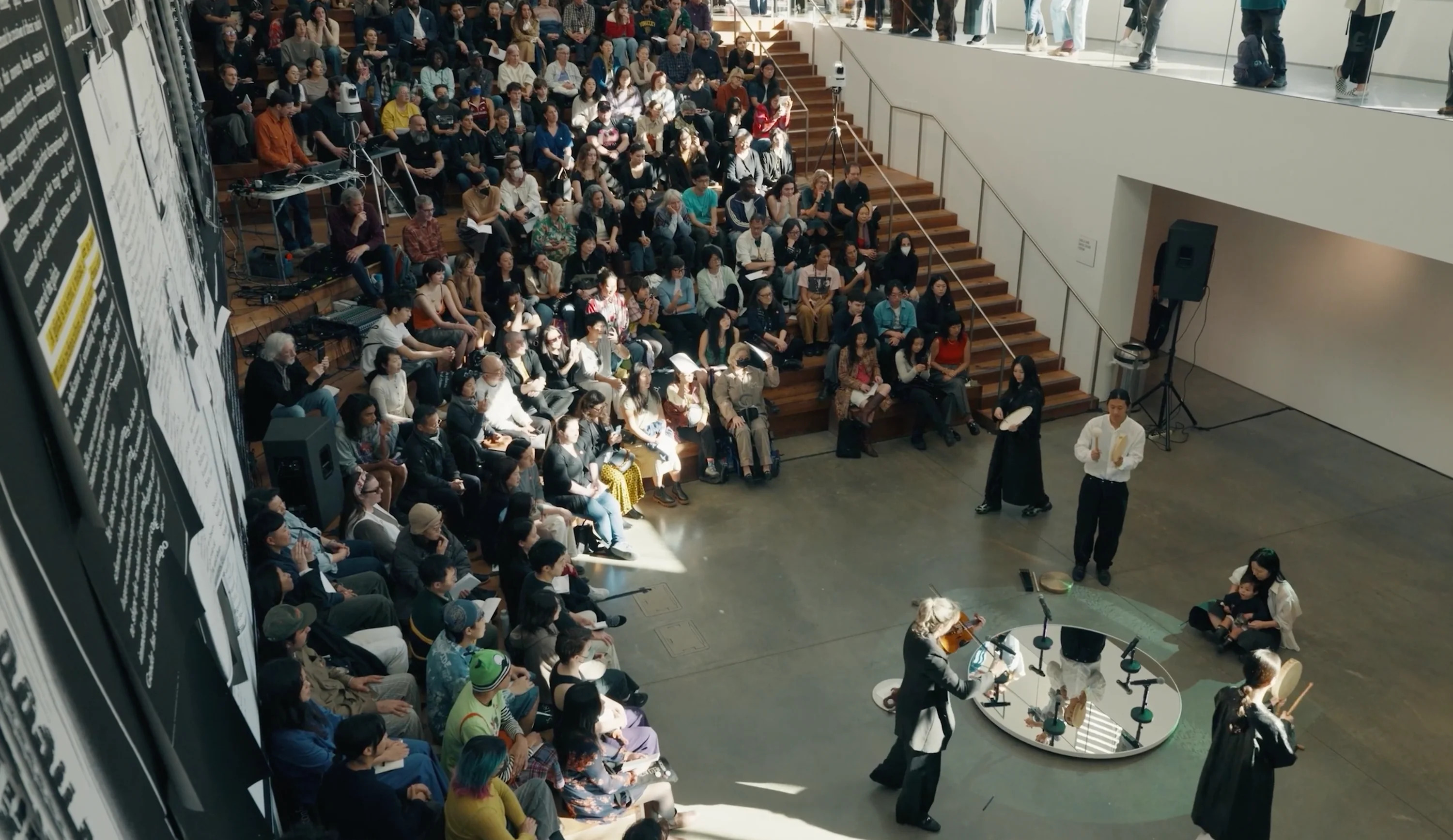
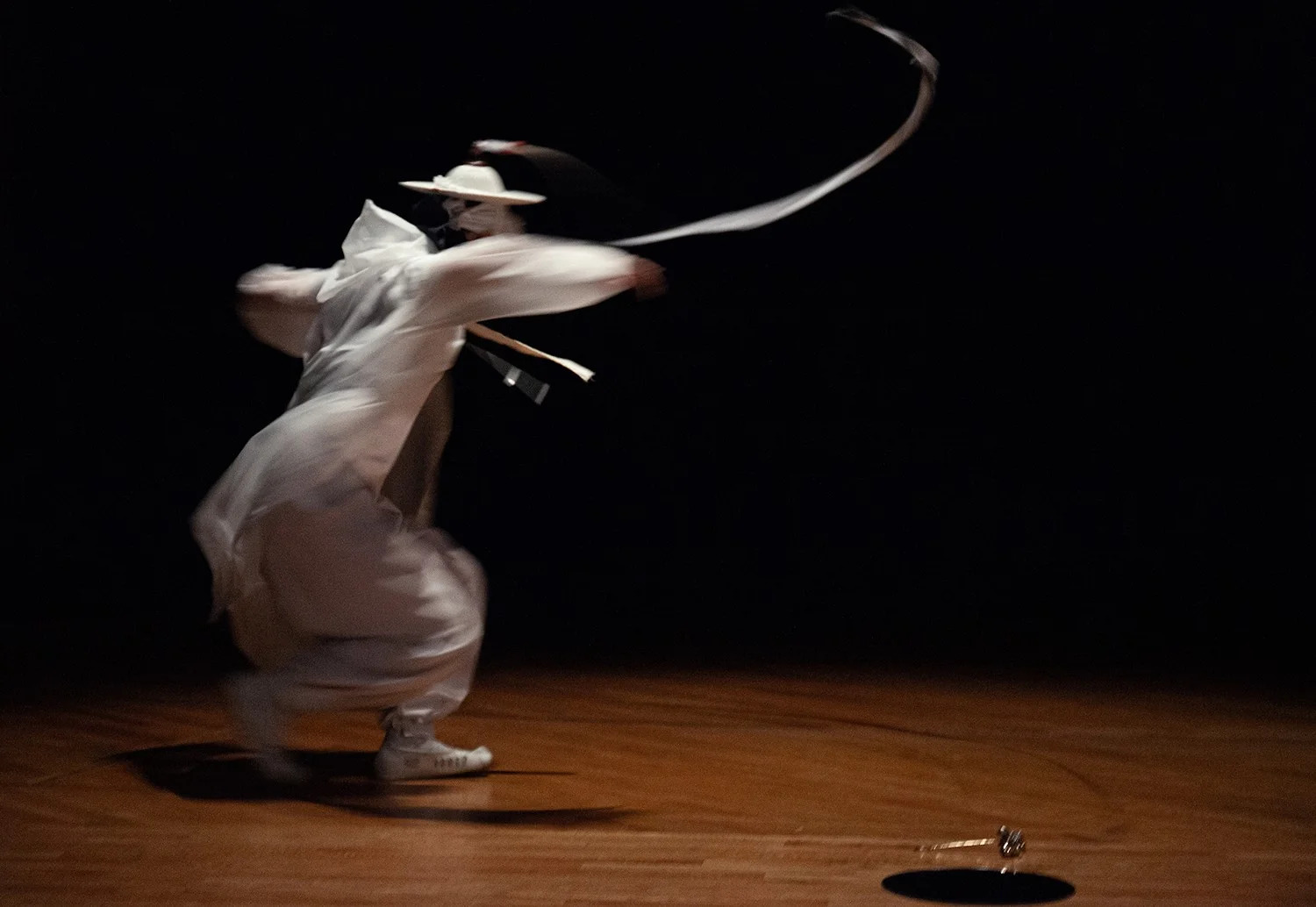
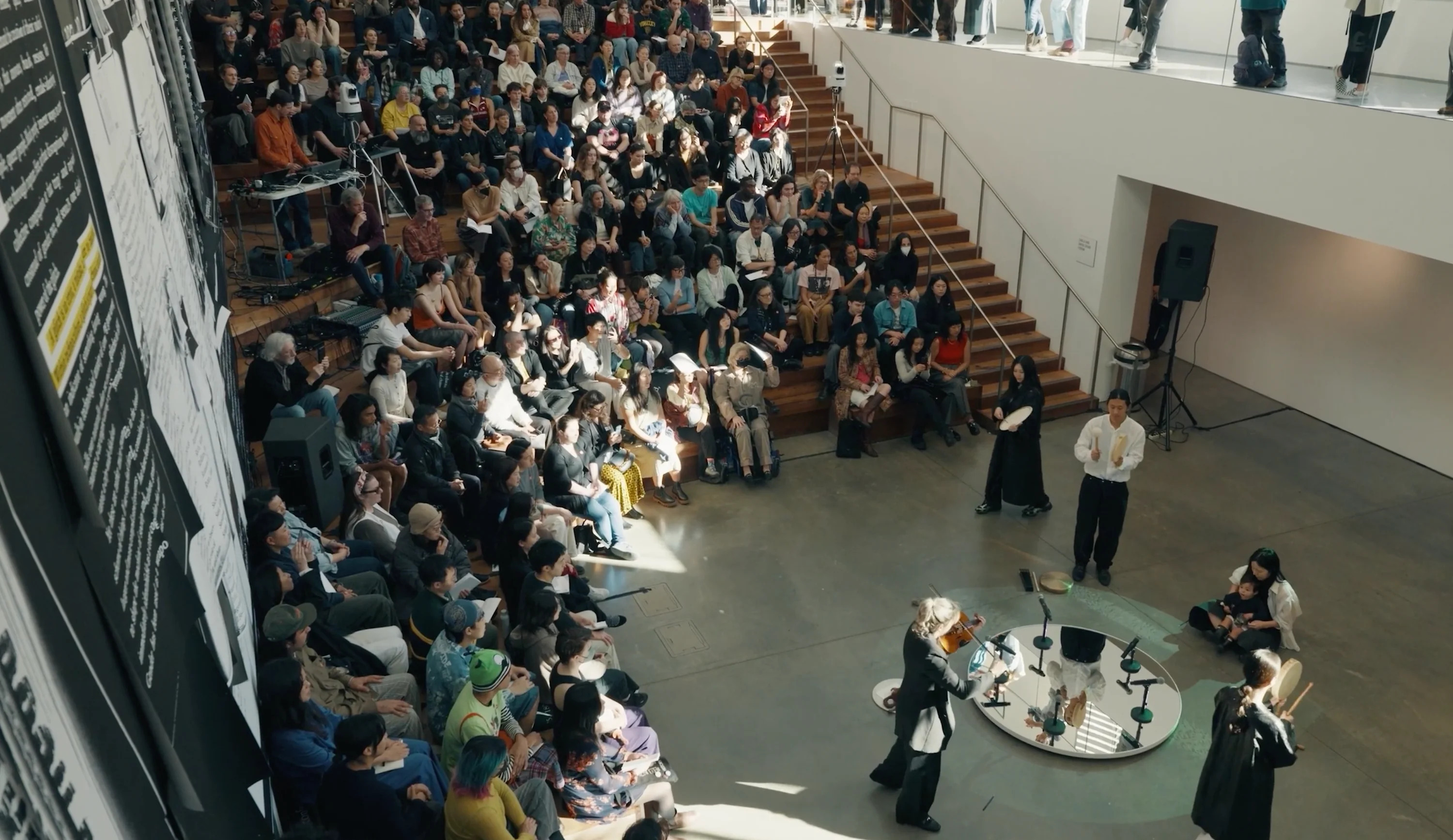
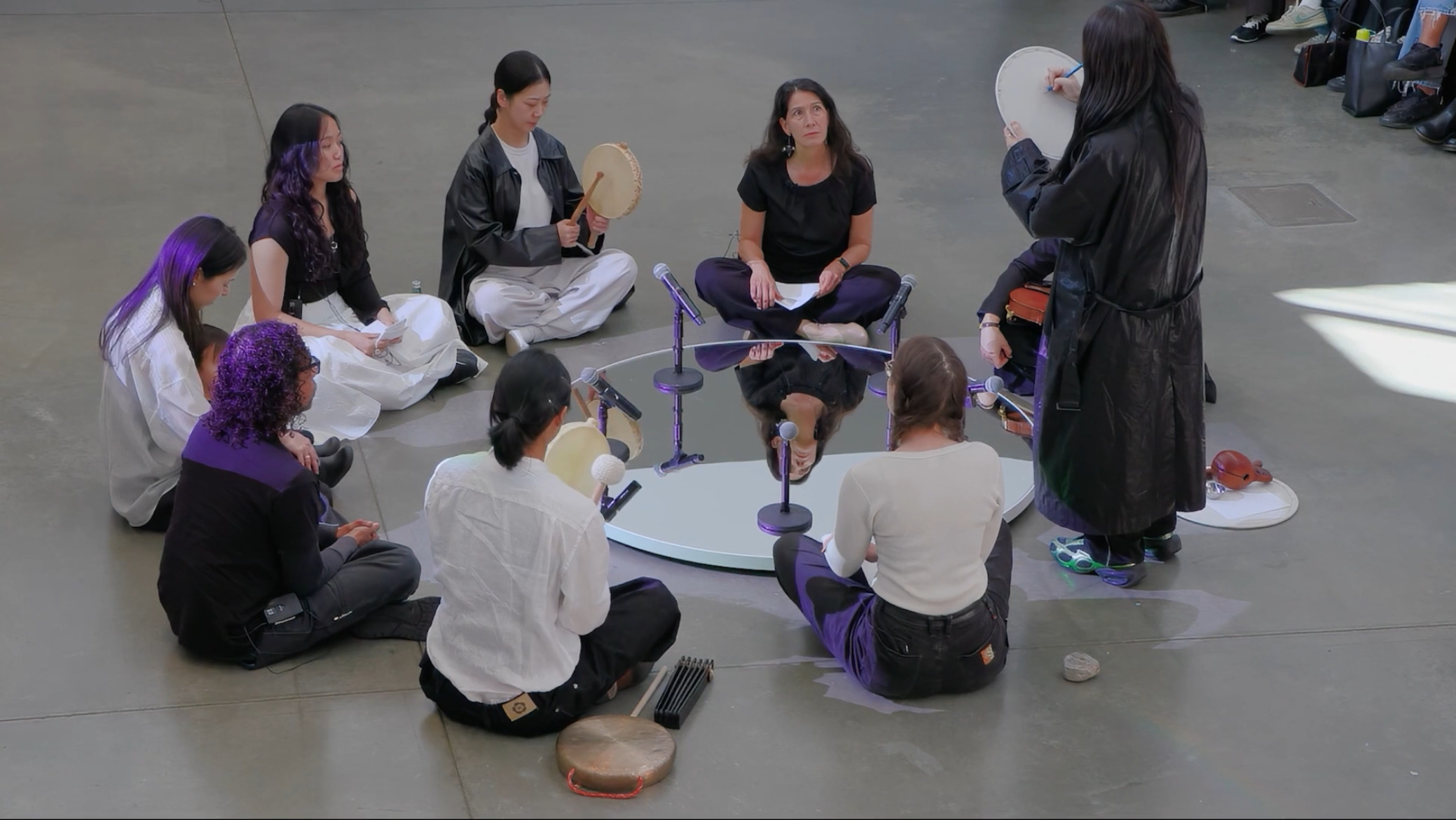
Jesse Chun, 시( )Nawi( )Fugue (an improvisation, an offering, a reading), 2026, Performance. ) © Jesse Chun

In 2026, Chun presented a performance work at 《Multiple Offerings》, a major retrospective of Theresa Hak Kyung Cha at the Berkeley Art Museum and Pacific Film Archive (BAMPFA), carrying forward the diasporic kinship and polyvocal ethos of Cha’s legacy.
 
Chun presented the inaugural activation of her new performance 시(  )nawi(  )fugue. A collective, improvisational reading (2026) of her drawing installation, 시: concrete poem, stanza (for all the uninherited and inherited time travelers that hum through the slivers) (2025), the performance invokes artistic matriarchs and cultivates spiritual kinship across generations through an engagement with sound, music, open translation, and spoken word.


Jesse Chun, 시( )Nawi( )Fugue (an improvisation, an offering, a reading), 2026, Performance. ) © Jesse Chun

Communing with the diasporic kinship and the polyvocal ethos of Theresa Hak Kyung Cha’s legacy, and drawing from the memories of Chun's late grandmother’s Korean folk dance and music practice, Chun reimagines “sinawi (시나위)”, a Korean folk and shamanic ritual music rooted in improvisation, and the polyphonic classical genre of the fugue.
 
In this way, 시( )Nawi( )Fugue (an improvisation, an offering, a reading) reimagines both forms in an interconnected act of speaking together across time and place.


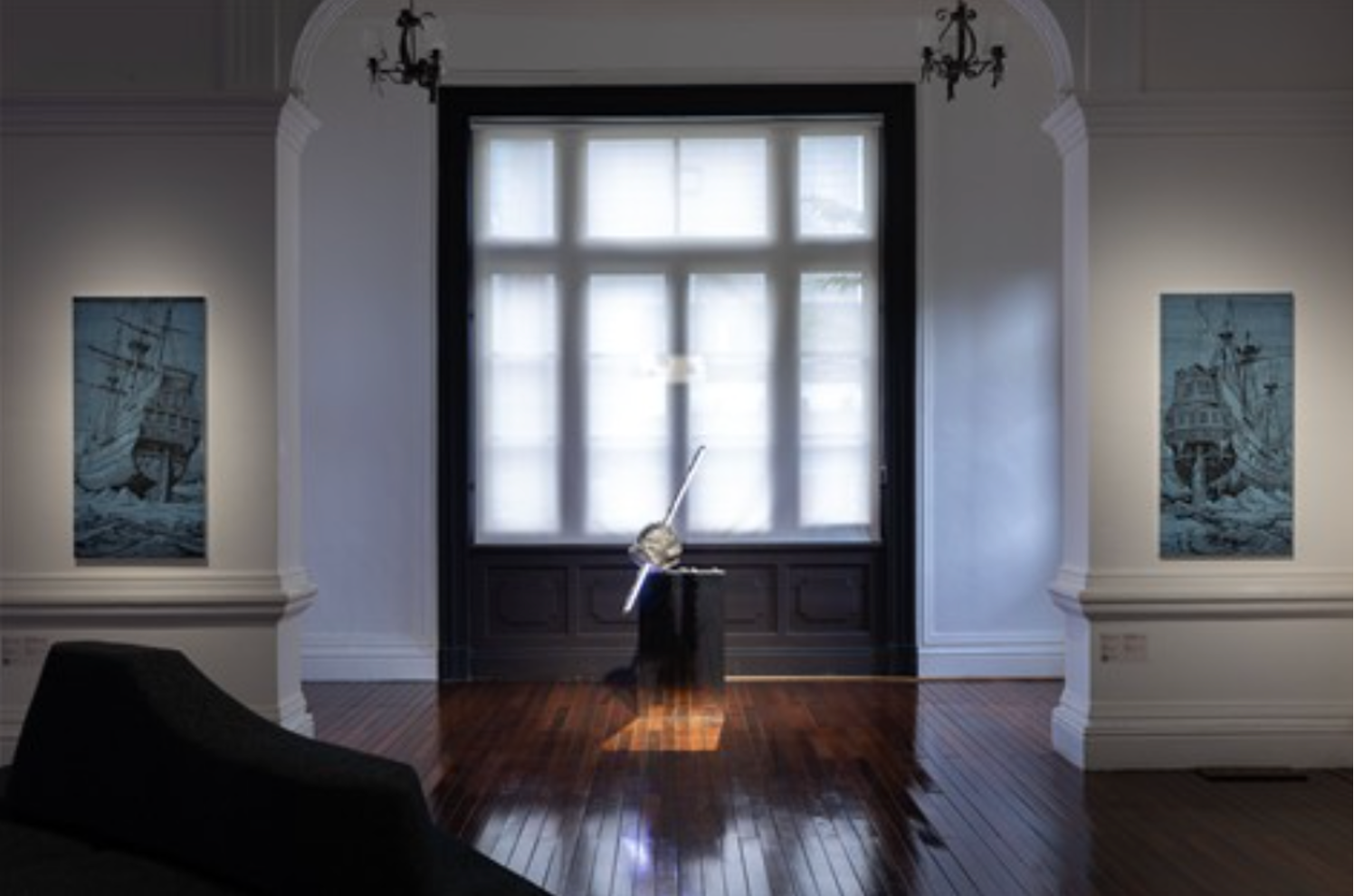
Installation view of 《밤, 낮, 달, 비, Speaking in Tongues》 (Commonwealth and Council, 2024) © Jesse Chun

Chun’s artistic practice brings to light the untranslatable interiority of the individual and the silent sounds of translation and migration, engaging with the sociopolitical contexts of language while also transcending them.

 
In particular, in works informed by her family history, Korean folk literature, and her birthplace of Korea, Chun reveals the “underside” of language, giving voice through abstract poetic language to moments that cannot be fully captured or translated by existing linguistic systems. These audiovisual abstractions disrupt social and semiotic structures, opening up possibilities for alternative forms of communication and solidarity.

“I came to make the limits of language a central theme in my art because, through my own life, I have experienced that no language can ever be translated perfectly. I was also drawn to ‘poetics,’ which holds multiple possibilities for language. (…) I continue to work by circling around three axes: language, meaning, and time.” (Jesse Chun, in an interview with Harper’s Bazaar Korea)


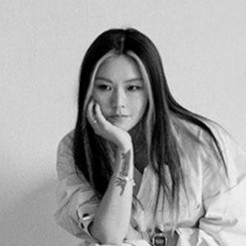
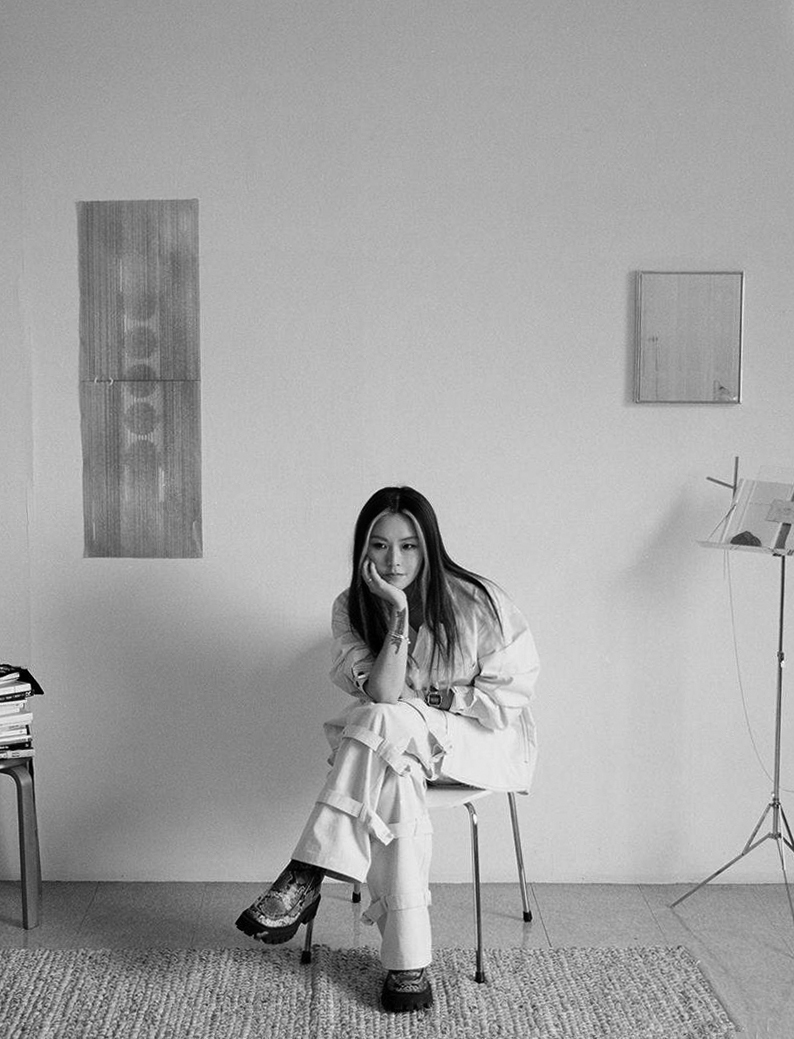
Artist Jesse Chun © Commonwealth and Council

Jesse Chun graduated from Parsons School of Design and received her master’s degree from the School of Visual Arts. She presented her first survey exhibition in Korea, 《시, language for new moons》 (Seoul Museum of History, 2023), as part of the 12th Seoul Mediacity Biennale. Her solo exhibitions also include 《밤, 낮, 달, 비, Speaking in Tongues》 (Commonwealth and Council, Los Angeles, 2024) and 《And verse (혼잣말의 언어 그리고 cosmos)》 (Gallery TPW + public billboards, Toronto, 2022).
 
Chun has also participated in numerous group exhibitions, including the 14th Seoul Mediacity Pre-Biennale 《Inheriting the Future》 (Nam-Seoul Museum of Art, Seoul, 2026); 《Speaking in Tongues》 (Institute of Contemporary Art, Los Angeles, 2026); 《Open Hands》 (Gallery Hyundai, Seoul, 2024); 《Tongue of Rain》 (Art Sonje Center, Seoul, 2024); and 《Nostalgics on Realities》 (Thaddaeus Ropac, Seoul, 2024).
 
In 2020, Chun was awarded the Joan Mitchell Foundation Painters & Sculptors Grant. Her works are held in the collections of major institutions, including the Seoul Museum of Art, the Museum of Modern Art Library in New York, the Smithsonian Institution in Washington, D.C., and the Metropolitan Museum of Art Library in New York.

References