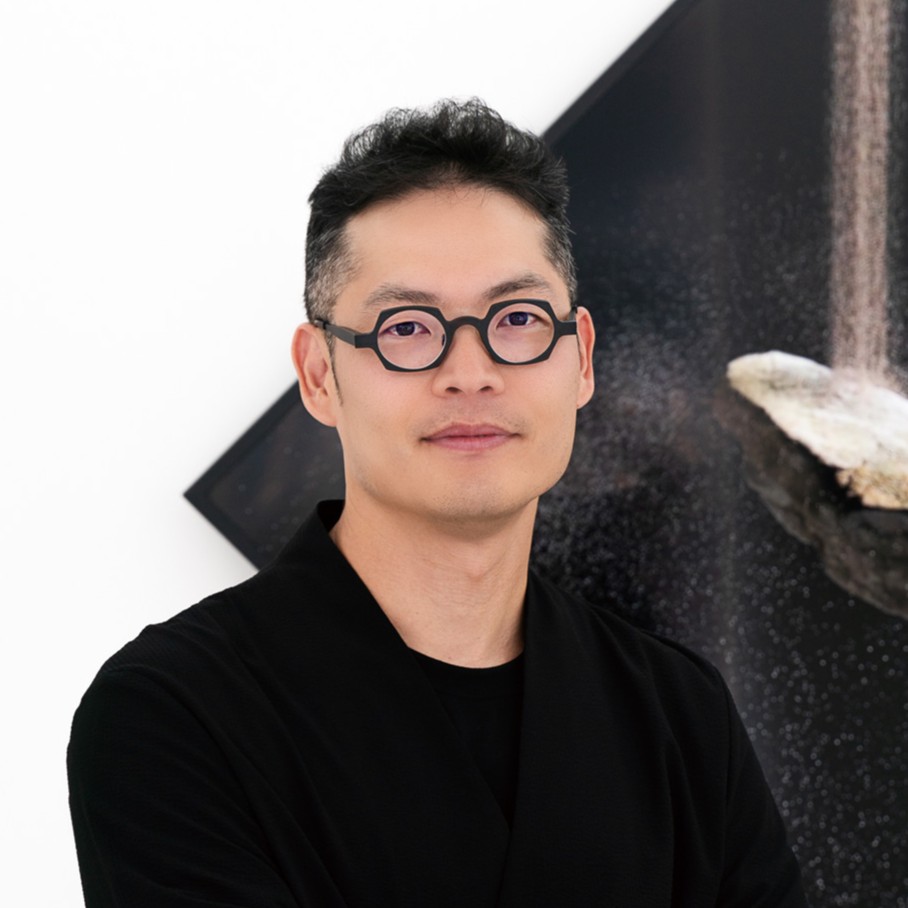
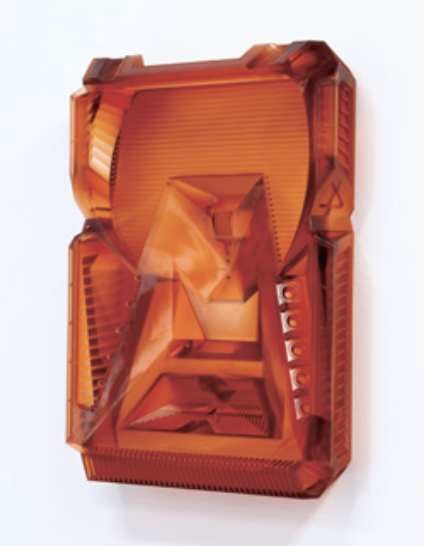
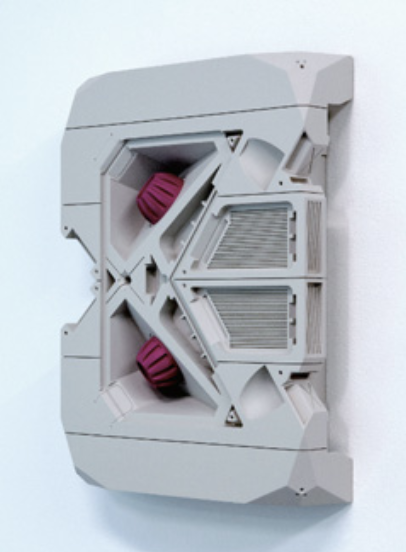
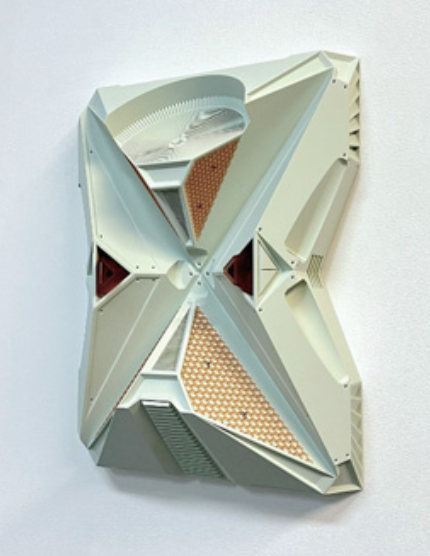
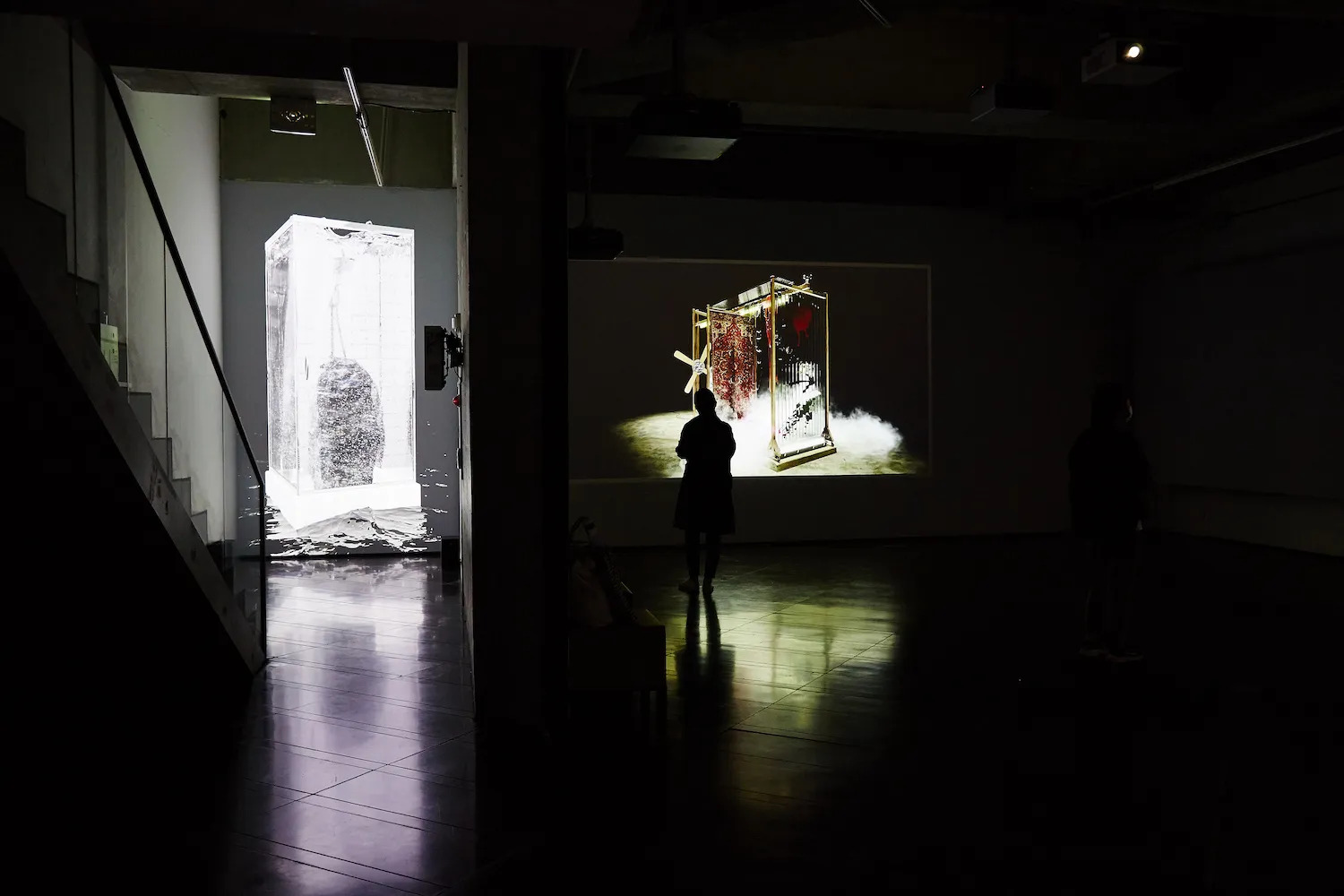
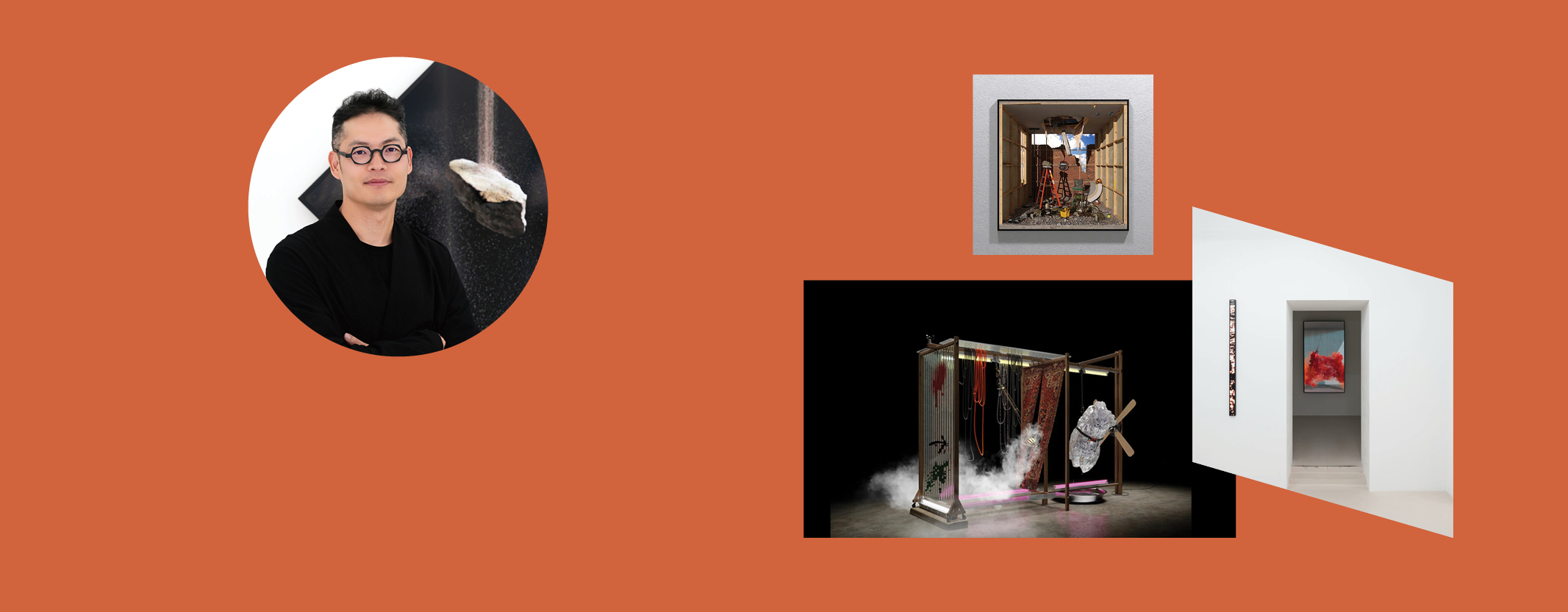
Jaehun Park (b. 1986) is a digital sculptor, animator, and simulator who primarily works with 3D simulations in virtual digital spaces. The sculptures he constructs within virtual spaces reveal social, economic, political, and cultural issues in the real world, prompting reflection on the impact of humanity’s endless desires on the Earth’s ecosystem.


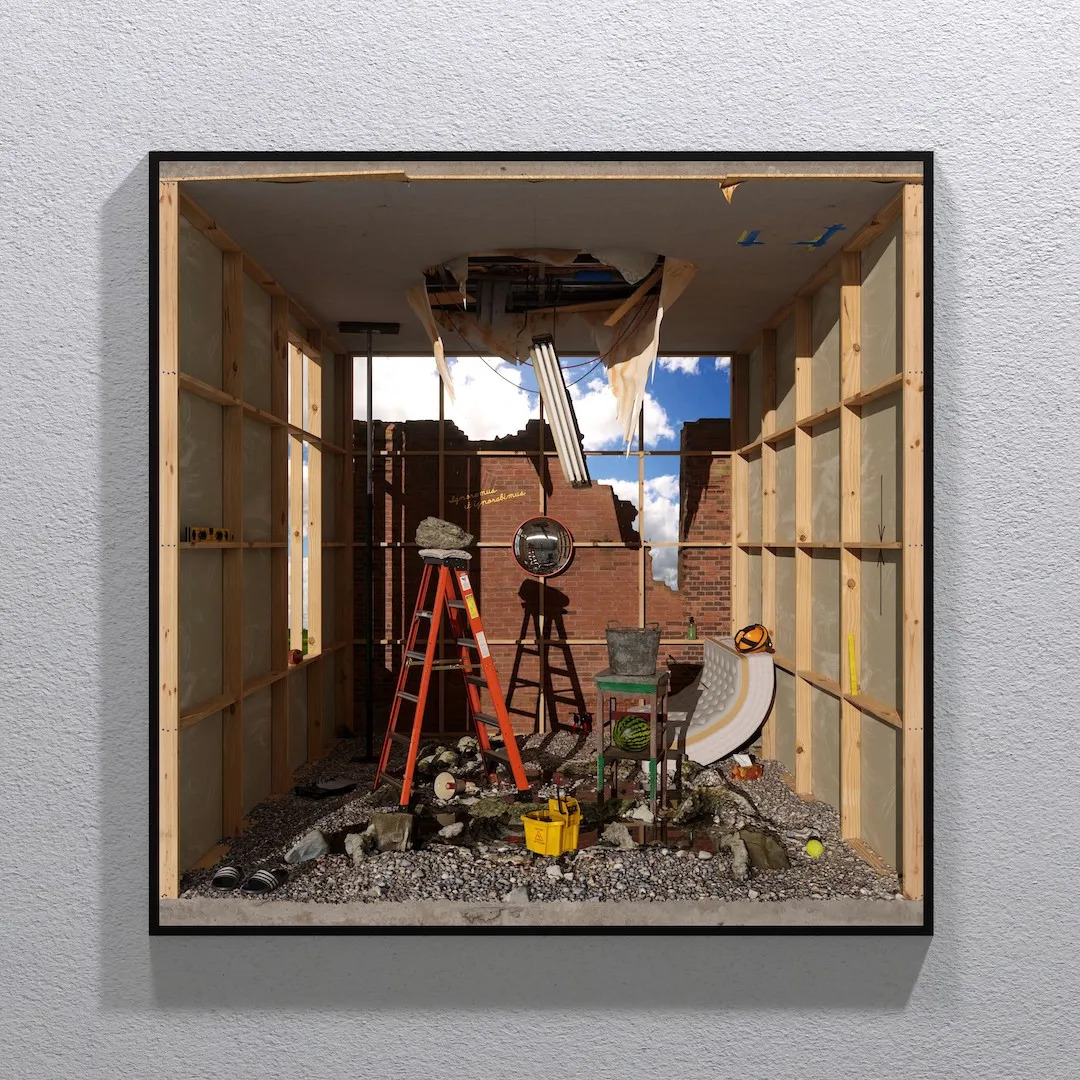
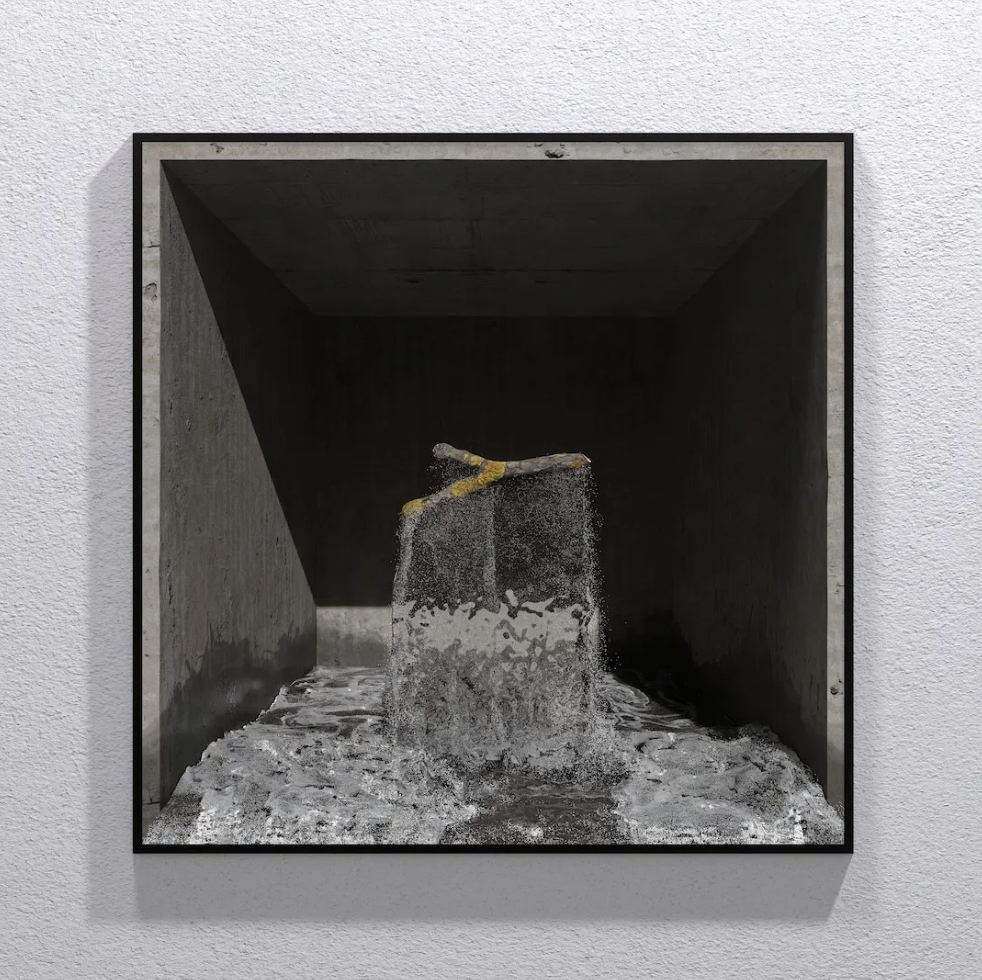
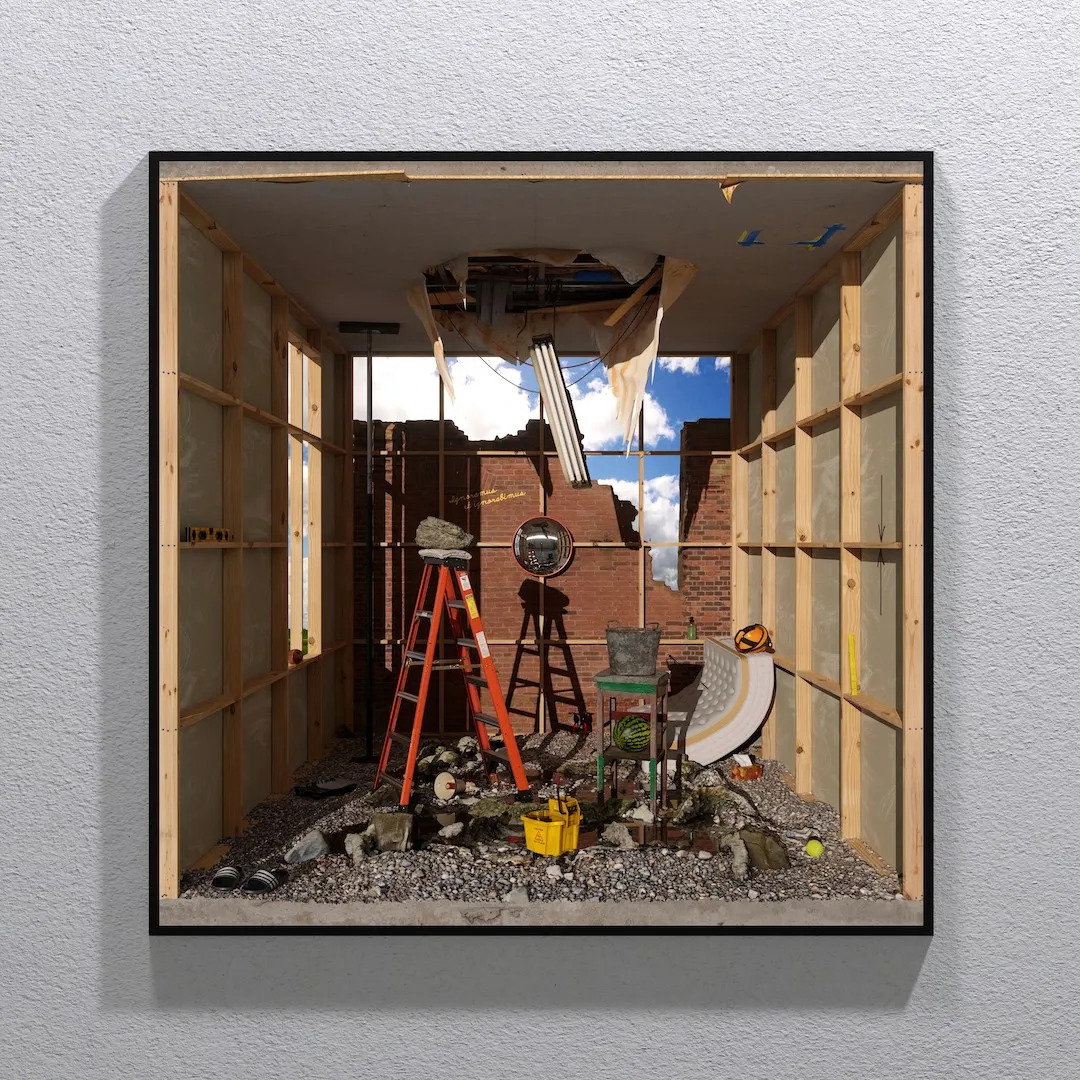
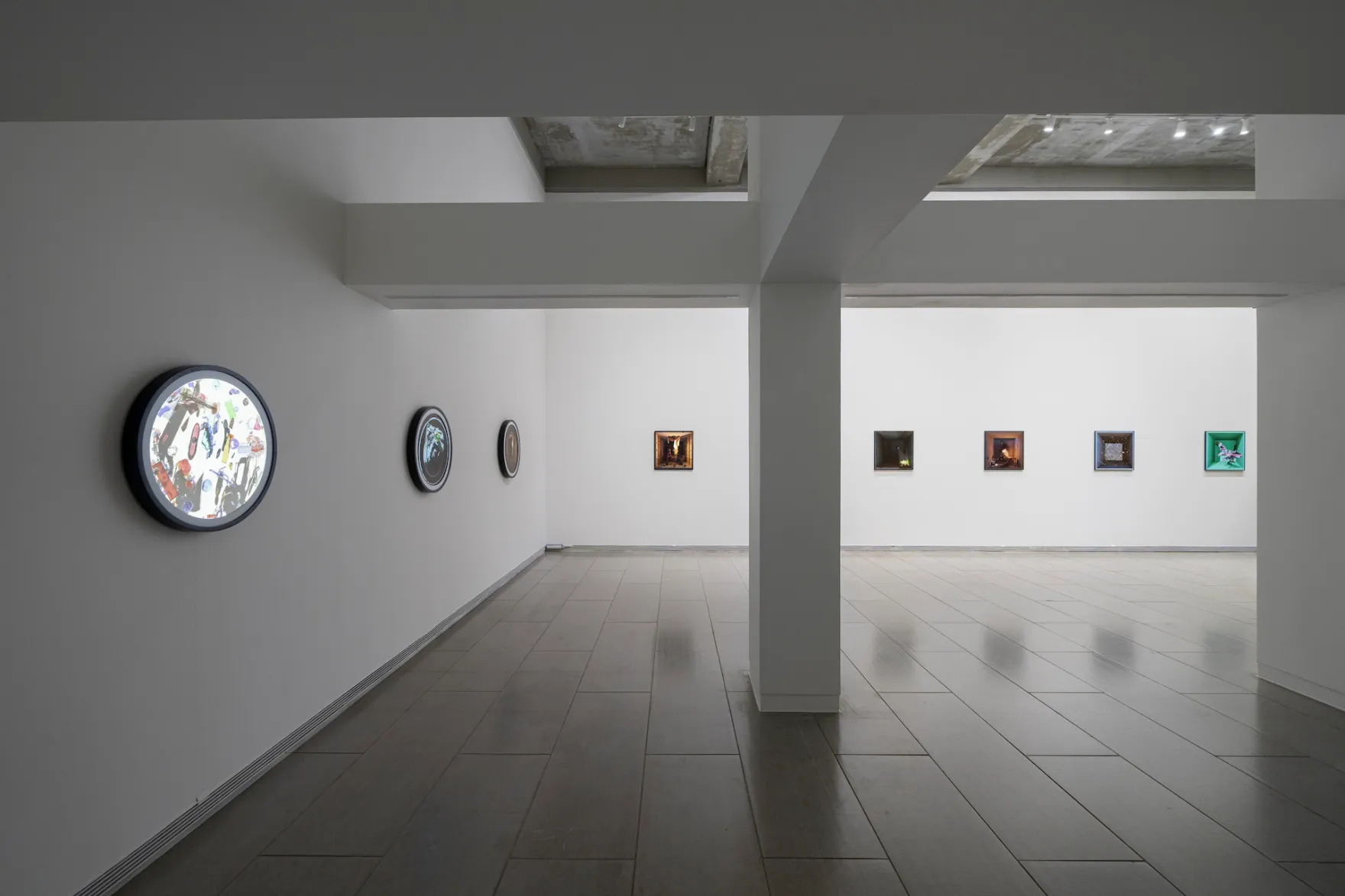
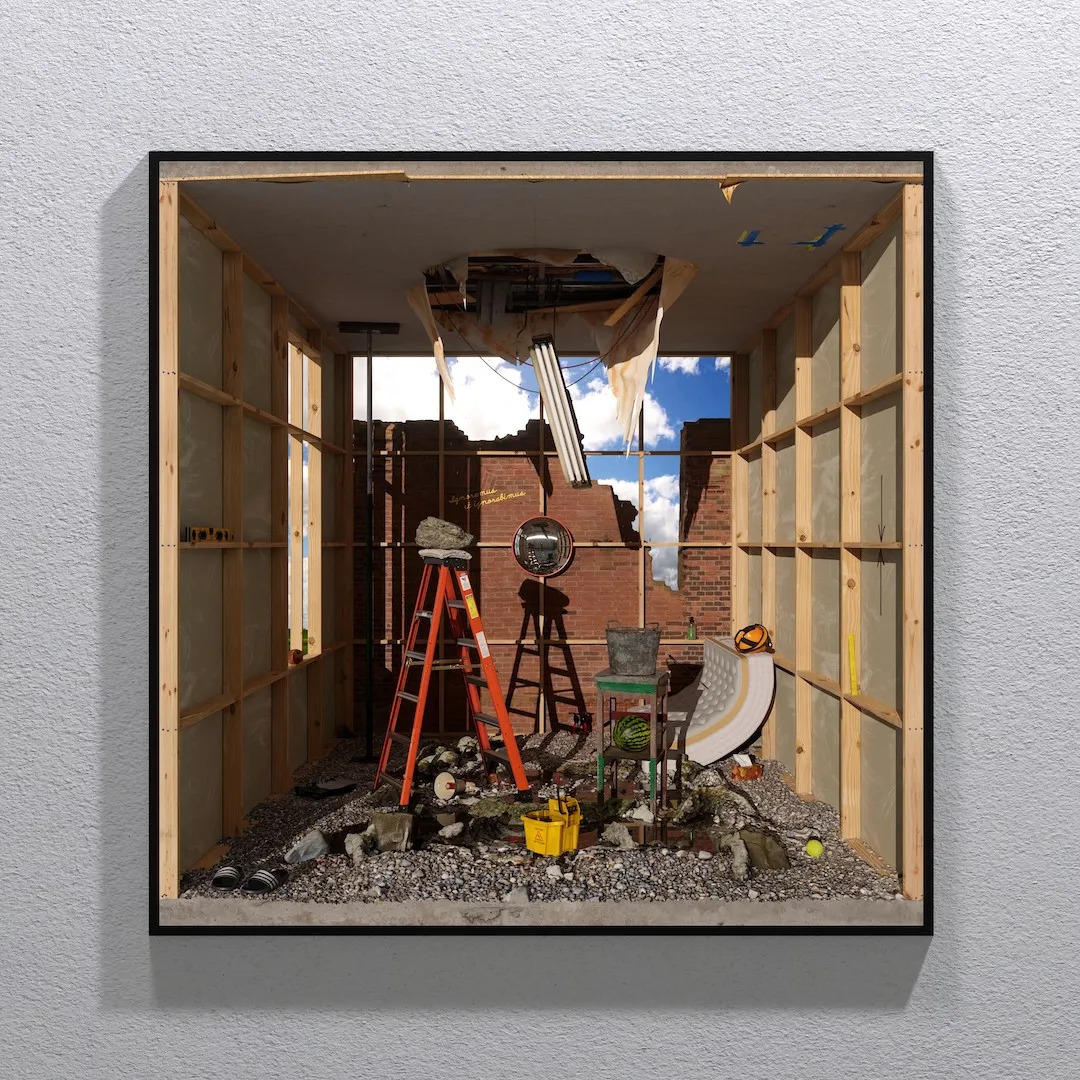
Jaehun Park, Omnishambles, 2023, 3D simulation video on LED display, 61x61x2cm, 2min 44sec. © Jaehun Park

Jaehun Park uses point clouds and photogrammetry to translate objects from the physical world into 3D simulations. Alongside creating 3D data of objects himself, he collects ready-made data produced by game developers, processes, disassembles, and recombines it, and places it within virtual digital spaces.
 
The sculptures constructed through this process create stages that could not exist under the structures and laws of the physical world. While evoking landscapes from the real world, these spaces combine forms that depart from familiar orders with an artificial sensibility, creating environments that feel uncanny and unfamiliar.


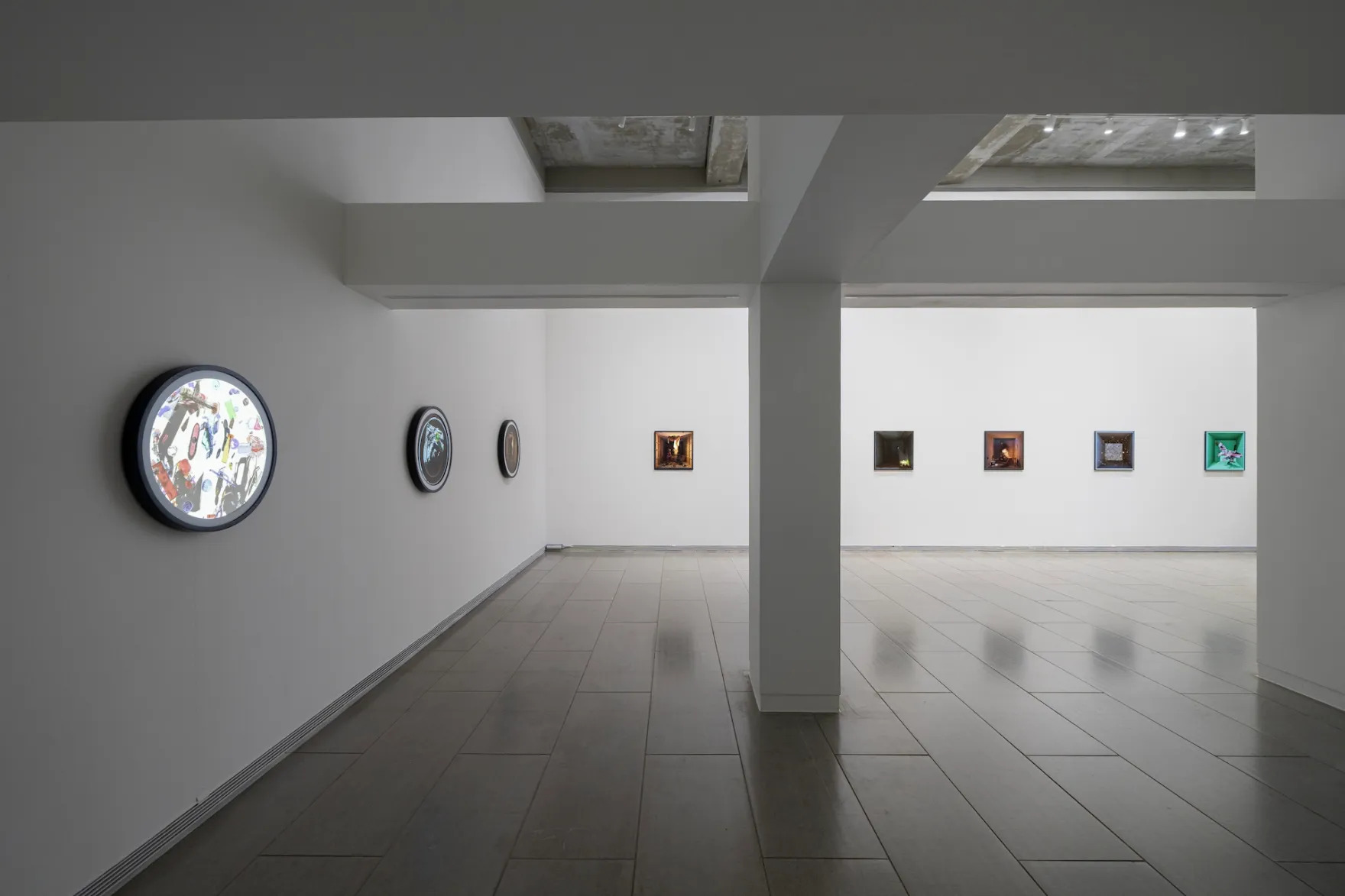
Installation view of 《Real-time Limbo》 (Alternative Space LOOP, 2021) © Alternative Space LOOP

Jaehun Park’s practice begins with research. Moving across history, science, civilization, anthropology, and literature, he researches the diverse objects and phenomena that constitute the world, from actual historical events and scientific hypotheses to mechanical devices and cultural representations.
 
In his 2021 solo exhibition 《Real-time Limbo》 at Alternative Space LOOP, the artist examined the strange phenomena of the contemporary world, where joy and despair intersect under global capitalism.
 
Park describes the contemporary reality in which disasters such as war, pandemics, and poverty occur alongside an intense drive toward consumption and the accumulation of capital as a “real-time limbo.” Comparing capitalism to religion, he connects humanity’s endless desires and the disasters they produce to images of hell and landscapes of the post-apocalyptic world.


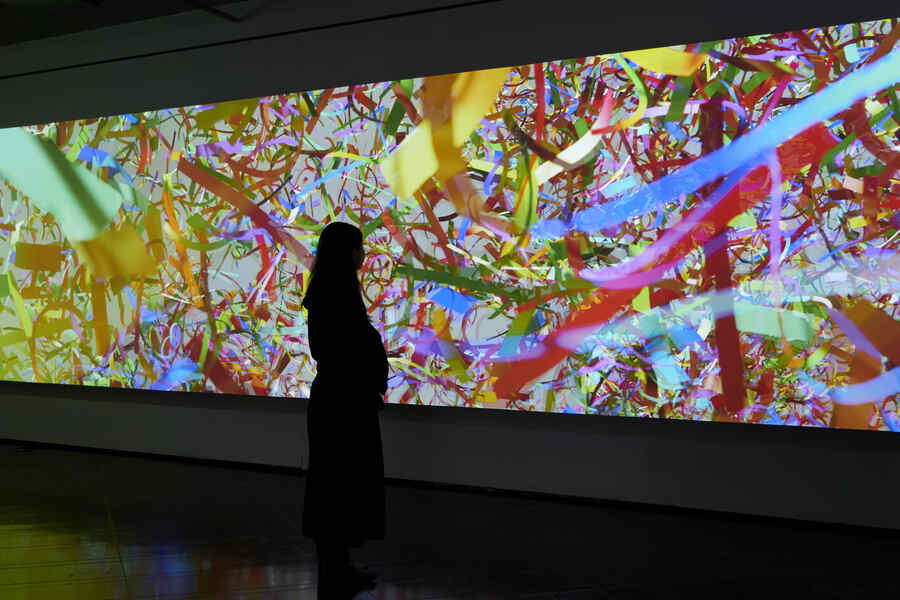
Jaehun Park, Event Horizon, 2021, 3D animation, 10min 47sec. Installation view of 《Real-time Limbo》 (Alternative Space LOOP, 2021) © Alternative Space LOOP

In certain religious traditions, purgatory is understood as an intermediate state between heaven and hell, inhabited by those who hope to purify themselves and prepare for heaven through fire. Park sees the “ticket” to heaven in a form of late-stage capitalism, where material goods and capital are valued above religion, as akin to a successful place in line for an opening run at a luxury store.
 
In this exhibition, Park assumed the role of a creator, using three-dimensional computer graphics to construct a virtual world. Humans do not appear in the world he creates; instead, it is populated solely by objects onto which human desires have been projected. Laden with human ideologies, these objects become entangled with one another, recording the world shaped by humanity.

Jaehun Park, Revolving Door, 2019, 3D animation, 4min 38sec. Installation view of 《Real-time Limbo》 (Alternative Space LOOP, 2021) © Alternative Space LOOP

This approach draws inspiration from the torture devices that torment humans and the distinctive grotesqueness depicted in Hieronymus Bosch’s paintings of hell. In the videos, objects have their functions inverted, presenting an uncanny and stark vision of human life in the absence of humans.
 
Park recreates manipulated realities within virtual digital spaces, revealing the unvarnished face of reality through the capitalist allegories embedded in ordinary objects. Objects associated with the opulence of capitalism are combined with supernatural phenomena to create desolate, hellish landscapes.


Jaehun Park, High Altar, 2020, 3D animation, 8min. © Alternative Space LOOP

For example, the 3D animation High Altar (2020) is based on a 3D model created by precisely measuring a display case in the cosmetics section on the first floor of a department store. By presenting the display apparatus strategically designed for sales alongside Renaissance-style “tranci” as a religious altar, the work exposes human vanity.
 
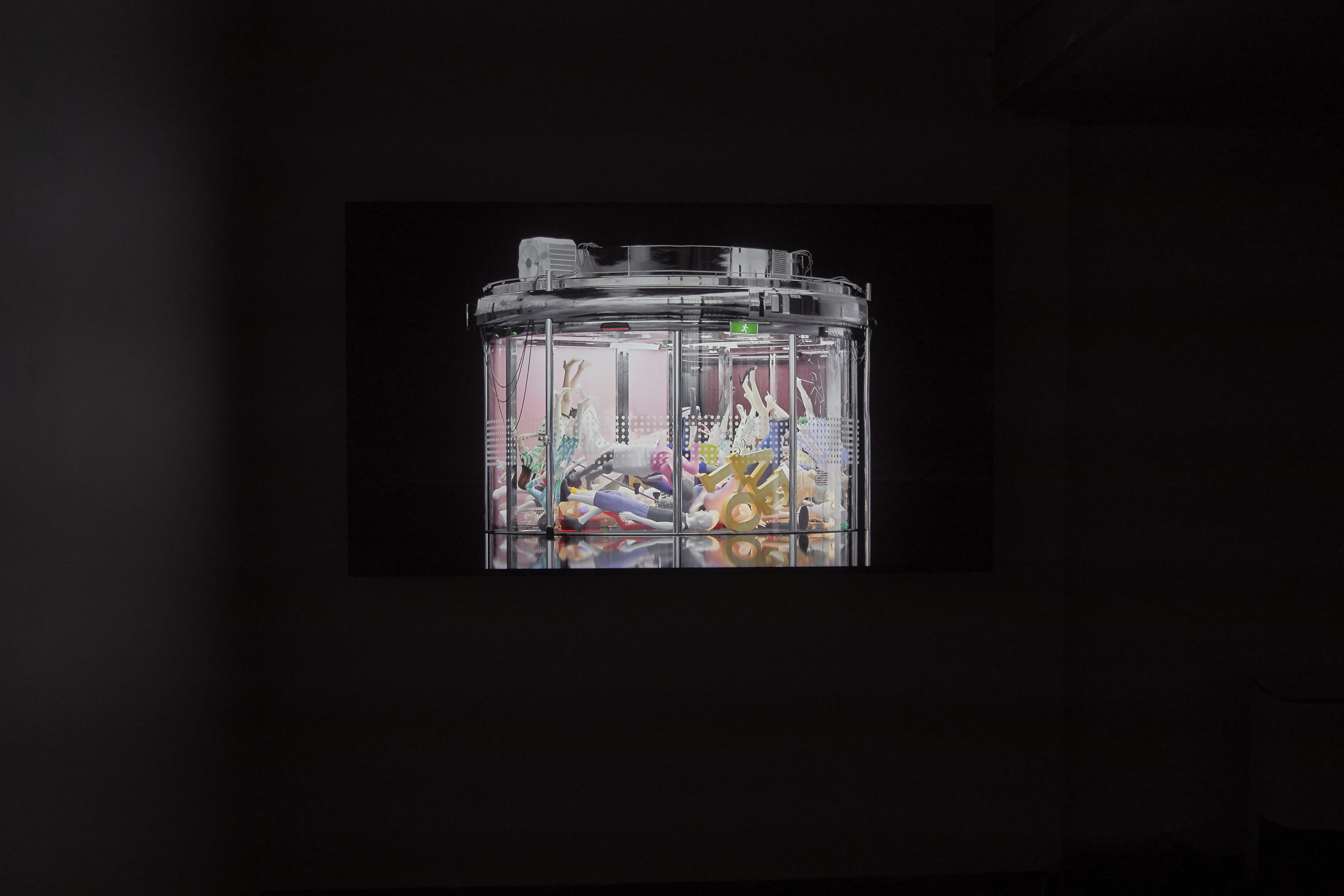
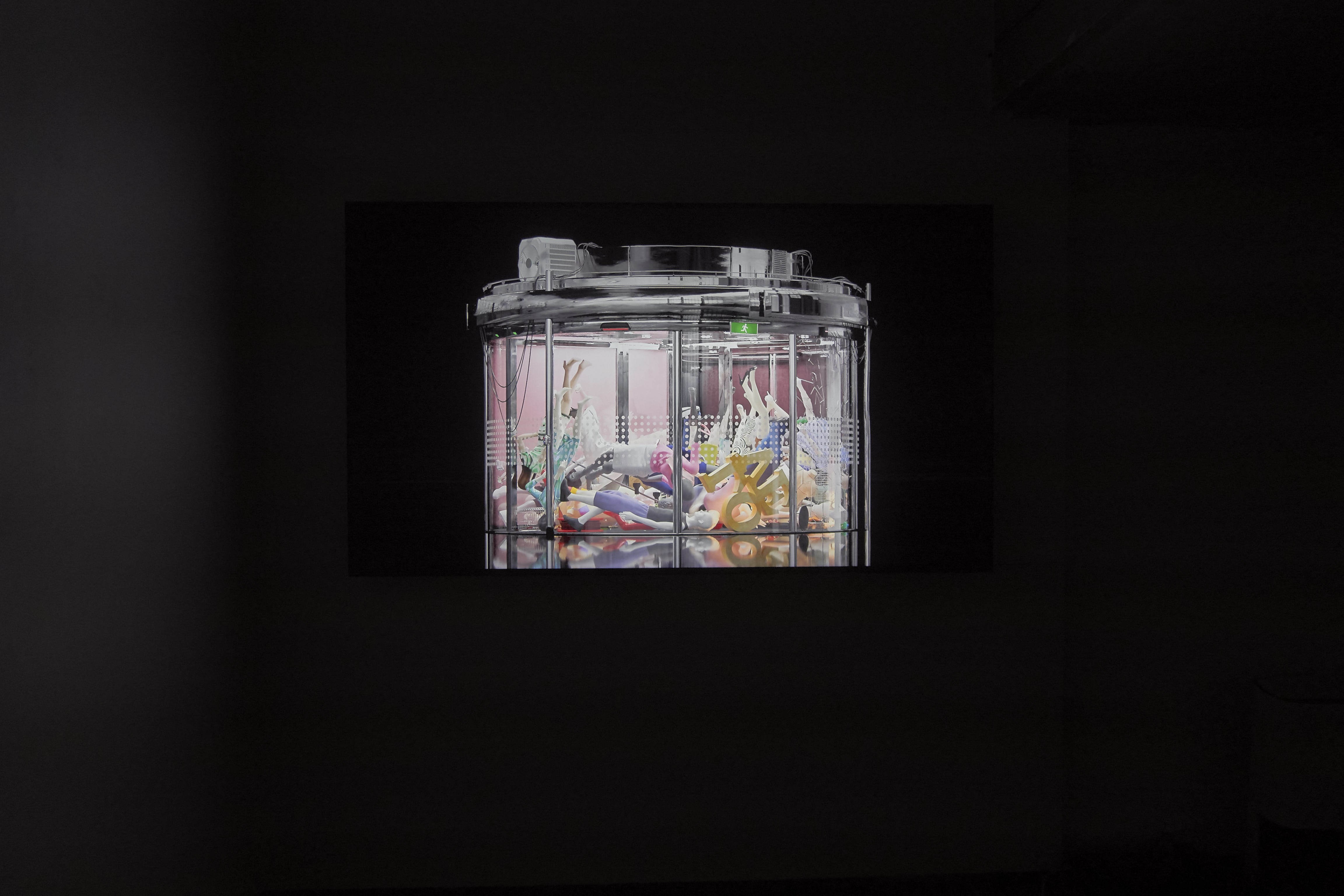
Revolving Door (2019) depicts mannequins trapped inside a spinning revolving door, repeatedly colliding with one another and tumbling to the ground. Based on a 3D model created by surveying the revolving door of De Bijenkorf department store in The Hague, the work simulates the movements of the plastic mannequins with physical accuracy, calculating factors such as the door’s movement, speed, and weight.
 
Revolving doors installed in shopping centers and department stores serve as the first threshold of entry into spaces of consumption. The mannequins trapped inside the continuously rotating doors become a metaphor for the endless desire and violence inherent in hypercapitalism.


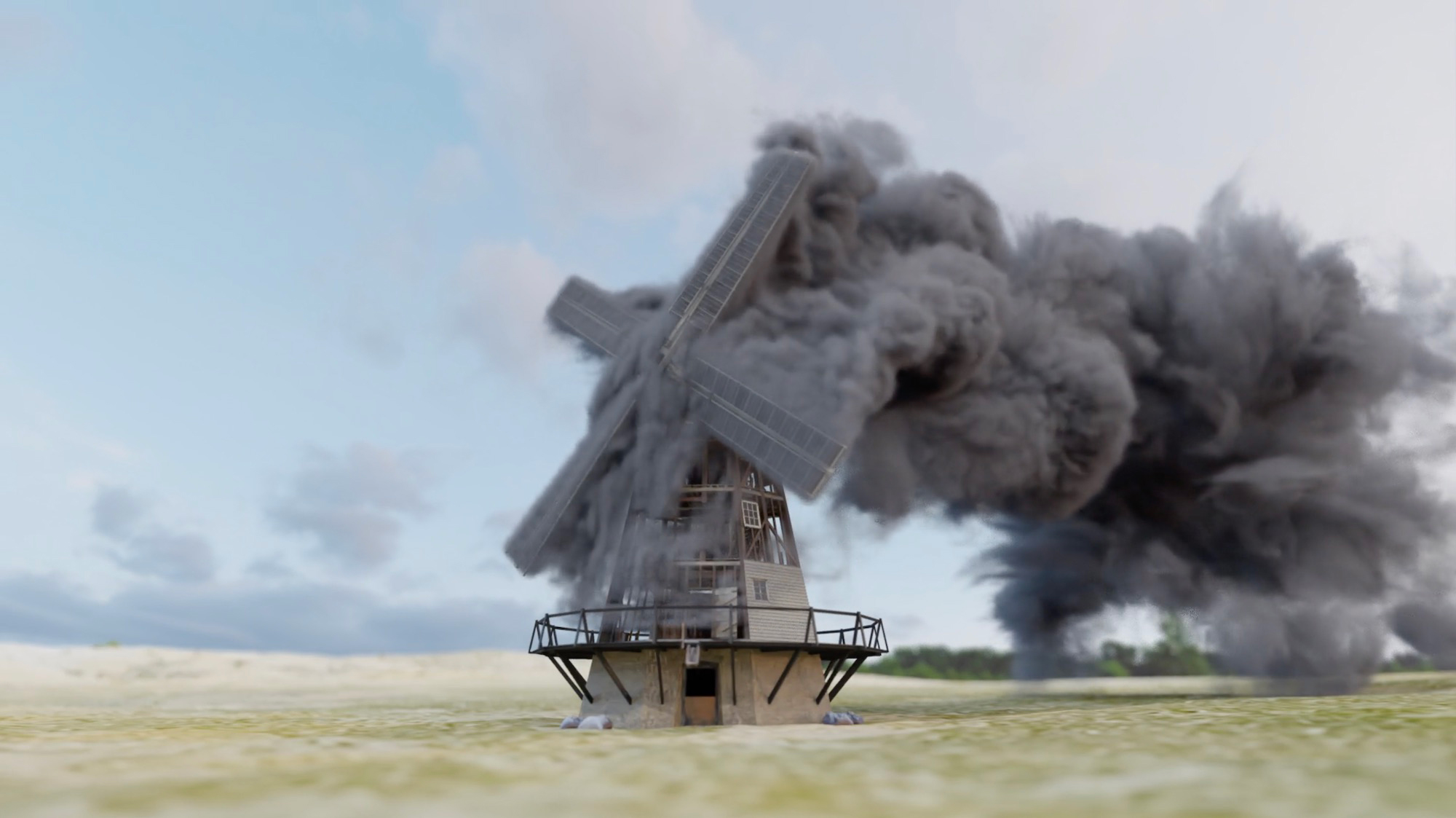
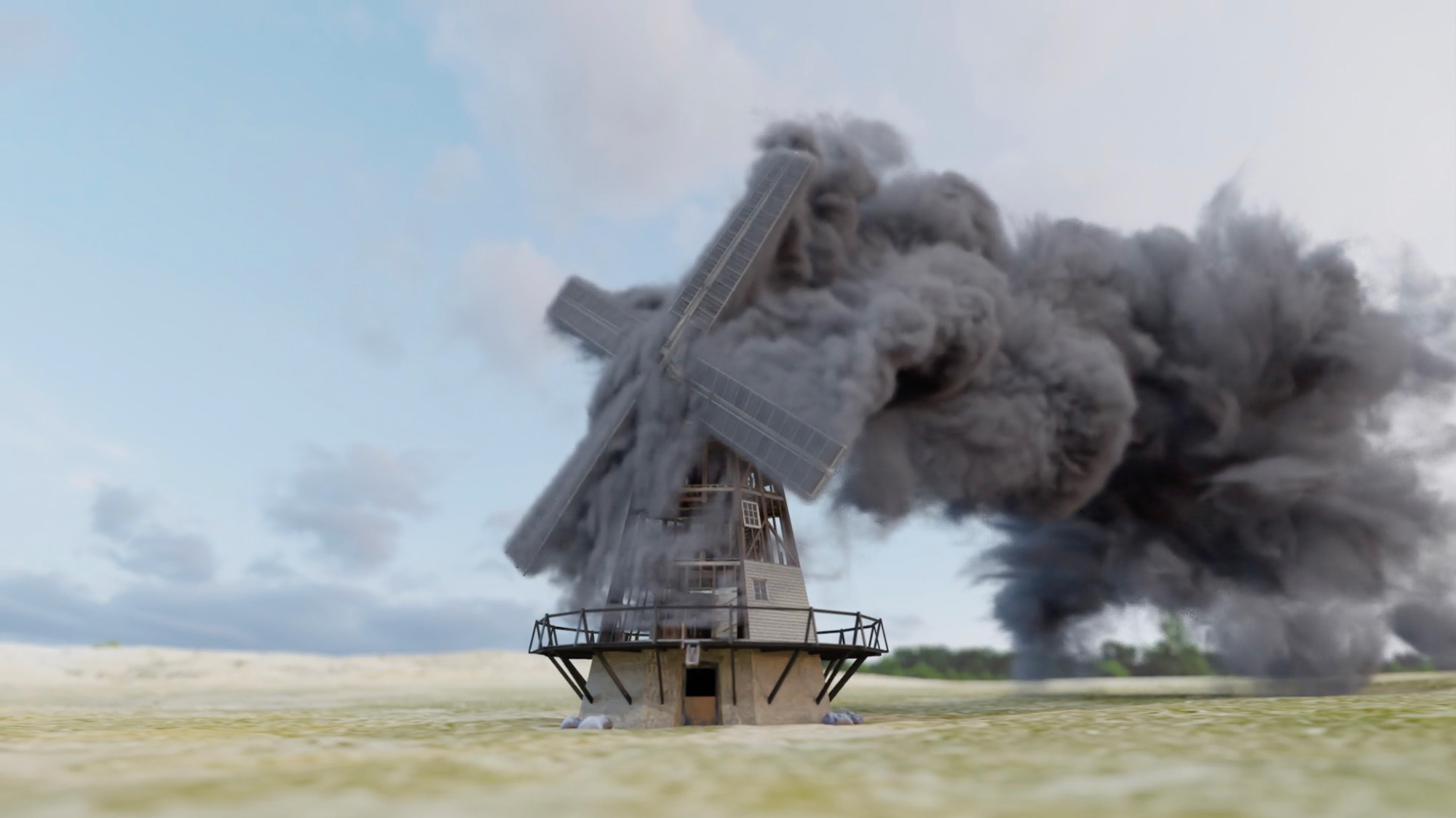
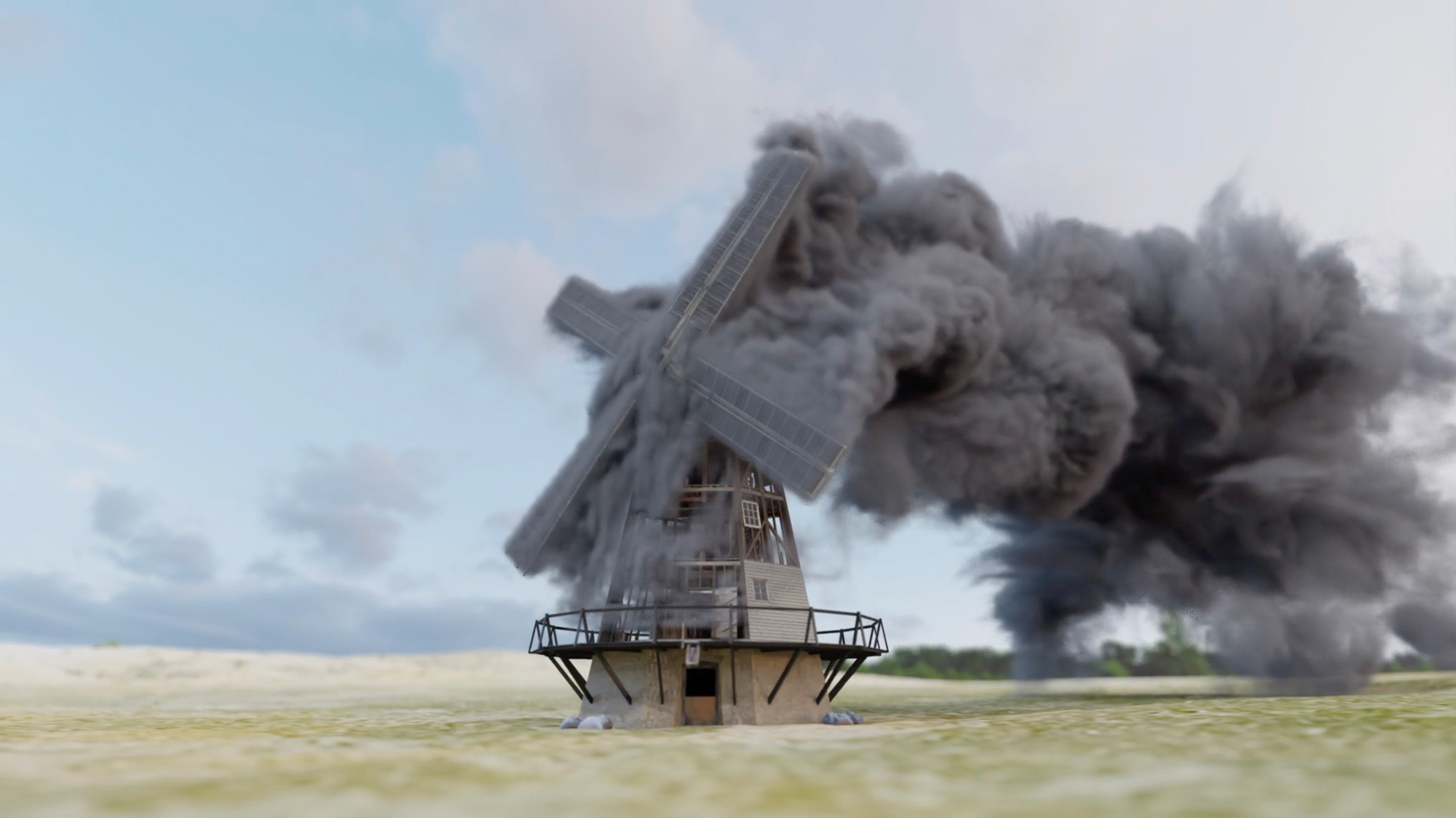
Jaehun Park, Overheated Windmill, 2020, 3D animation, loop © Jaehun Park

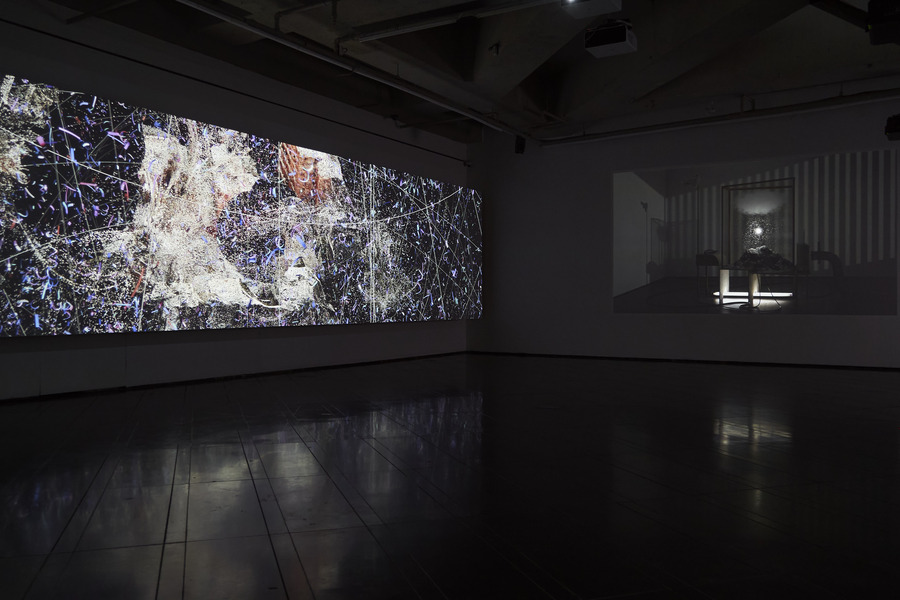
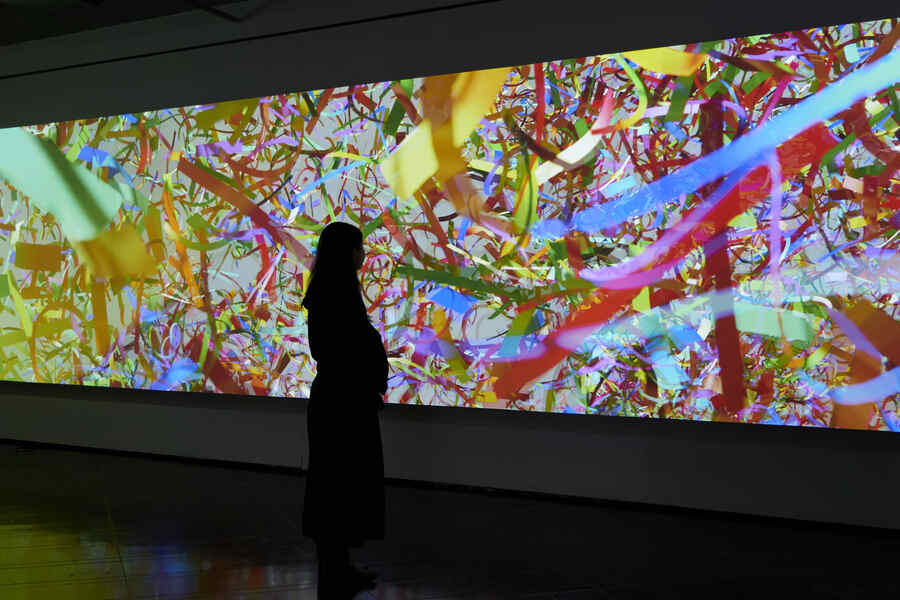
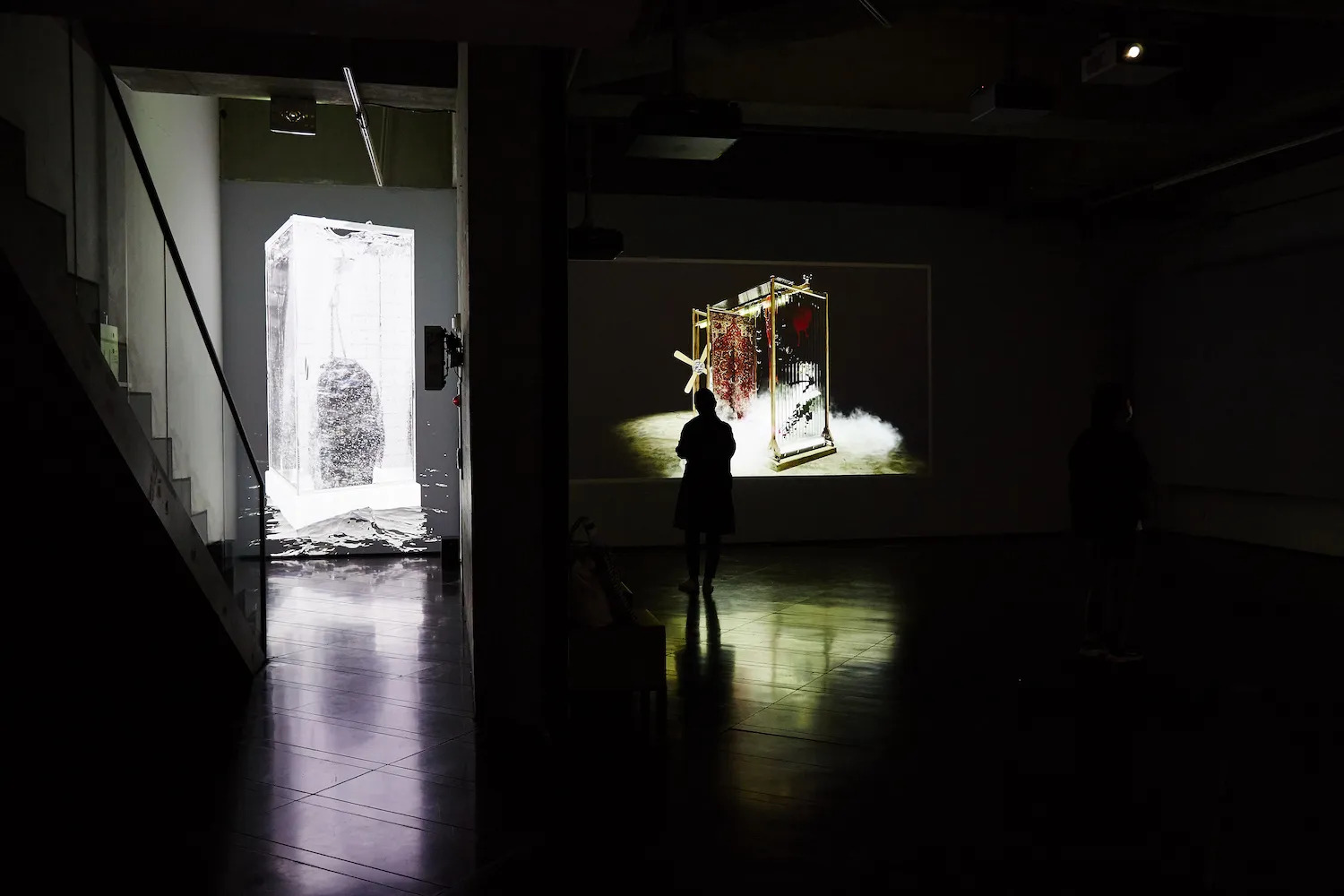
Meanwhile, the video installation Event Horizon (2021) digitally recreates images of sites across the Earth left in ruins by war and disaster. Comprising five sequences featuring the most primordial form of nature, stones; buildings in Syria and Palestine devastated by war; the Fukushima nuclear power plant; the Large Hadron Collider (LHC) at CERN; and confetti celebrating moments of joy, the video stages real sites of tragedy within virtual spaces.
 
Recreated using cutting-edge techniques such as photogrammetry and point clouds, these sites become unpredictable, imagined territories resembling an event horizon.
 
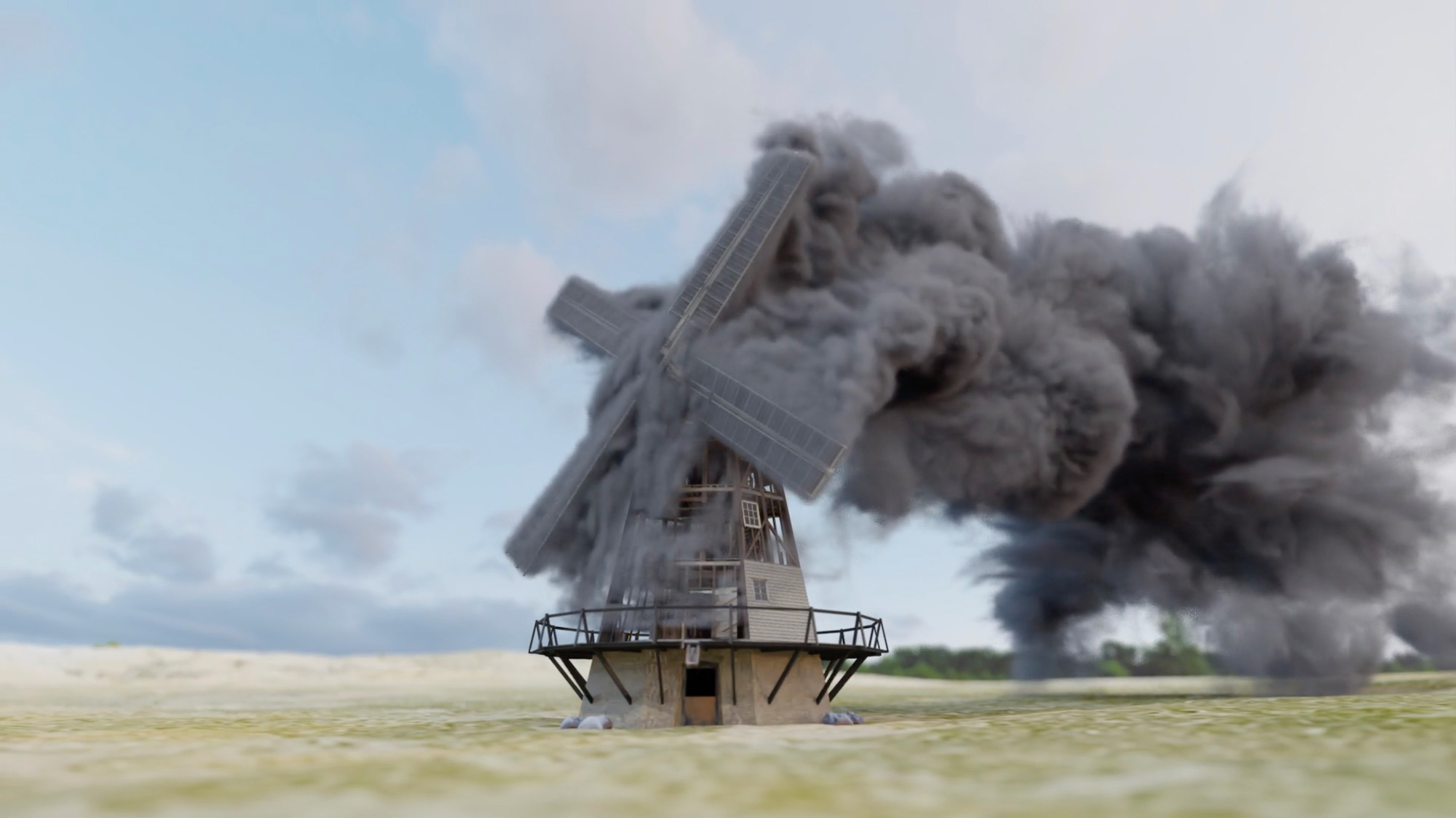
In the video Overheated Windmill (2020), a windmill keeps turning, soundlessly, despite having caught fire. Windmills are a representative symbol of the Netherlands, a beautiful cultural heritage that hides their original function and history as one of the foundations upon which the construction of colonies in other parts of the world by the Dutch rested in the country’s Age of Discovery. Park makes an analogy between windmills with their obscured historical contexts and overheated capitalism.


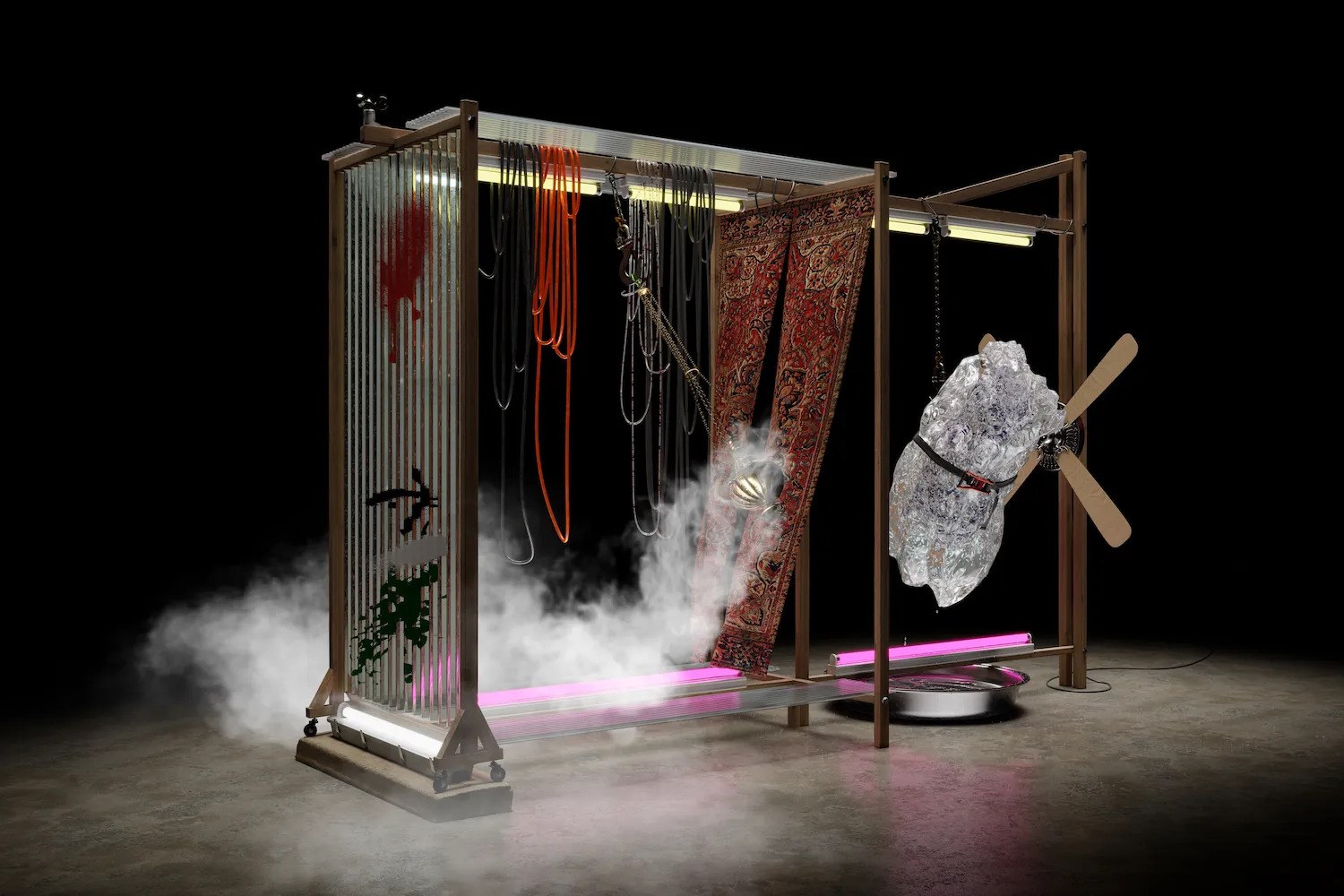
Jaehun Park, Ritual for the Night, 2021, 3D animation, 11min 15sec. © Jaehun Park

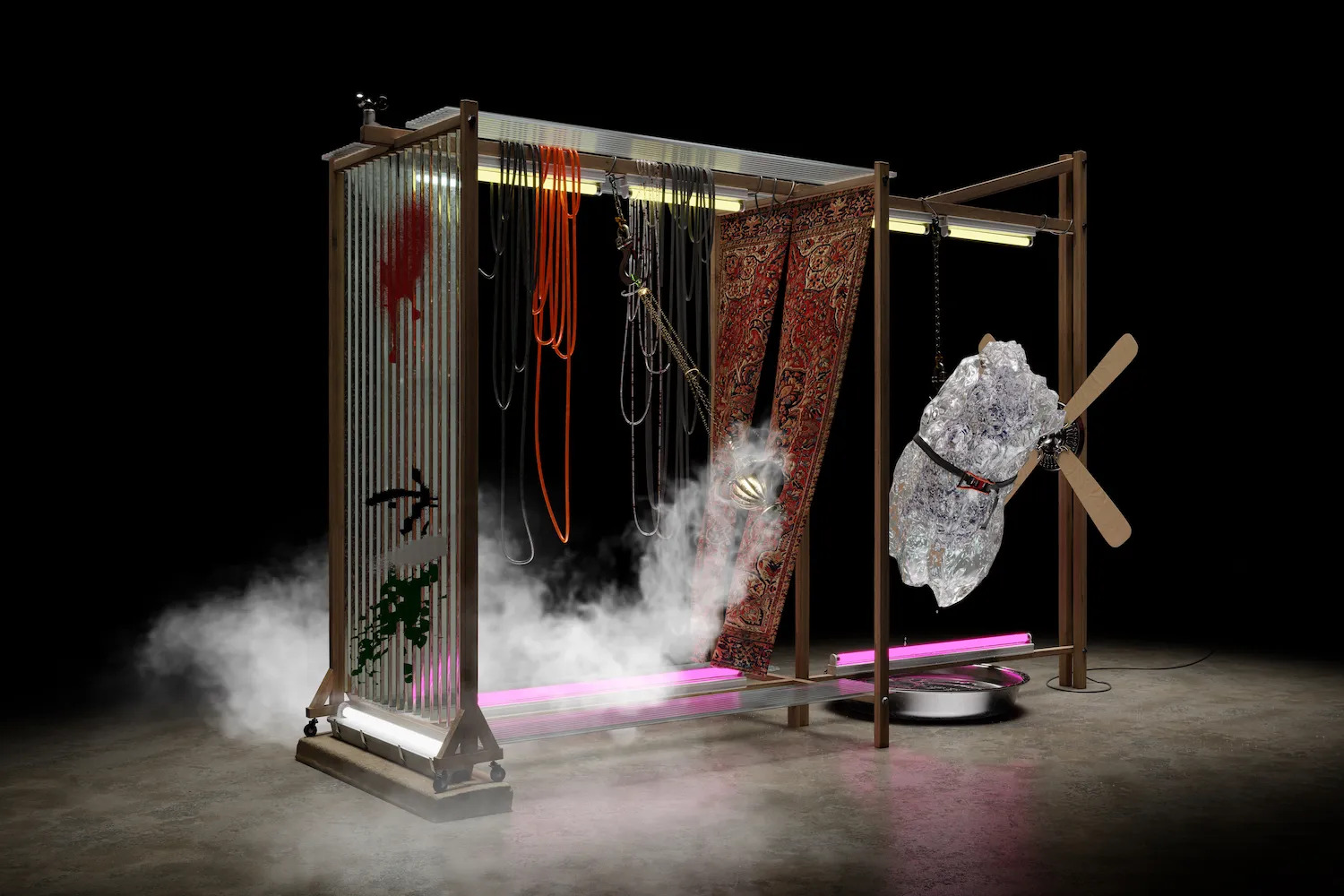
In Ritual for the Night (2021), we see a suspended censer, possibly a Catholic thurible, carpets from the Middle East, medical hoses, broadcast cables, and metal chains. A BBC report of an Israeli attack on Palestine is projected onto the surface of the shiny censer.
 
Meanwhile, On the Demarcation Line (2020) unfolds landscapes of the past and the near future, beginning with the scene of the leaders of North and South Korea facing each other on the demarcation line at Panmunjom.
 
Against the backdrop of the Korean Peninsula, divided by ideological conflict, various objects bearing traces of war and remnants of state violence rapidly pass by, like traces of collective trauma.


Installation view of 《Real-time Limbo》 (Alternative Space LOOP, 2021) © Jaehun Park

In his work, various objects replace humans, embodying the entirety of contemporary desire and clearly illustrating a structure where all orders are subordinated and reorganized under hyper-capitalism.
 
The artist generates a moment of capitalist joy by constructing a stage setting that combines objects into the crystallization of spectacle while juxtaposing it with an apocalyptic background destroyed by human desire, suggesting the destruction and tragedy caused by capitalism.


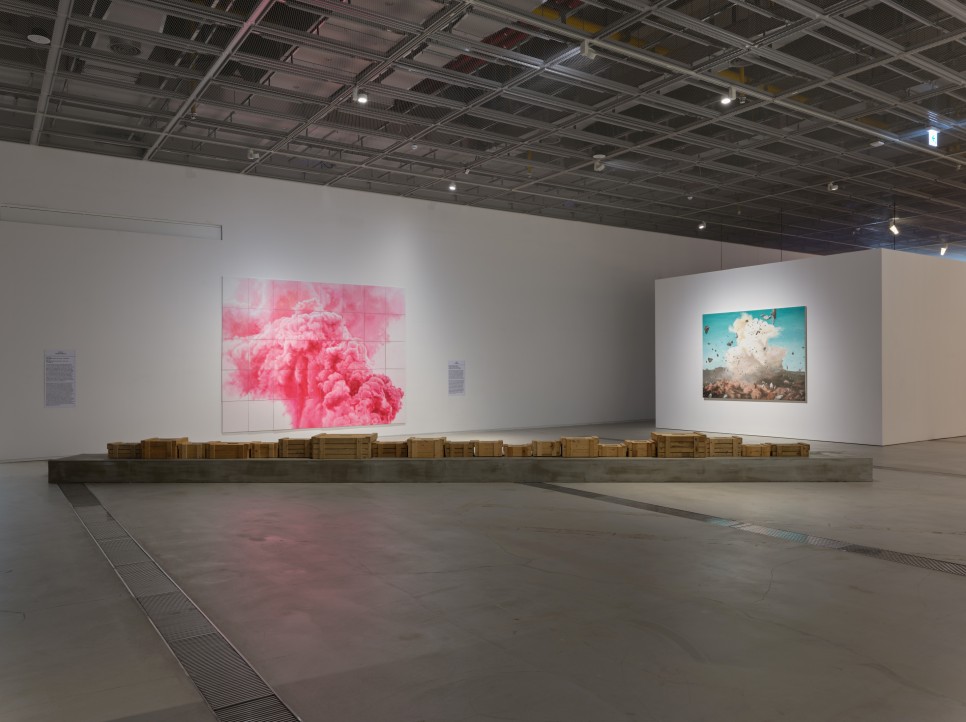
Installation view of 《Derivative Landscape》 (Sungkok Art Museum, 2023) © Jaehun Park

His 2023 solo exhibition 《Derivative Landscape》 at Sungkok Art Museum extended this line of inquiry, documenting the derivative landscapes produced by capitalism and asking where humanity’s desires are ultimately headed.
 
Various objects, such as Elon Musk's Starlink satellite, cargo containers symbolizing the logistical crisis, a gas pipeline connecting Russia and Germany exploded, a nuclear bomb, and the remains of the building collapsed due to the Russia-Ukraine war, appear in his works. A series of events affecting the world's society, economy, politics, culture, and the objects symbolizing them form a massive altar in the picture.
 
Rich symbols from art history also encompass it. The artist scatters iconic symbols and metaphors from Vanitas' still-life paintings throughout the work, creating a peculiar stage setting. The narrative spreading across the screen feels as if the contemporary world has been split in half, exposing a breathtaking cross-section of the ideology of capitalism.


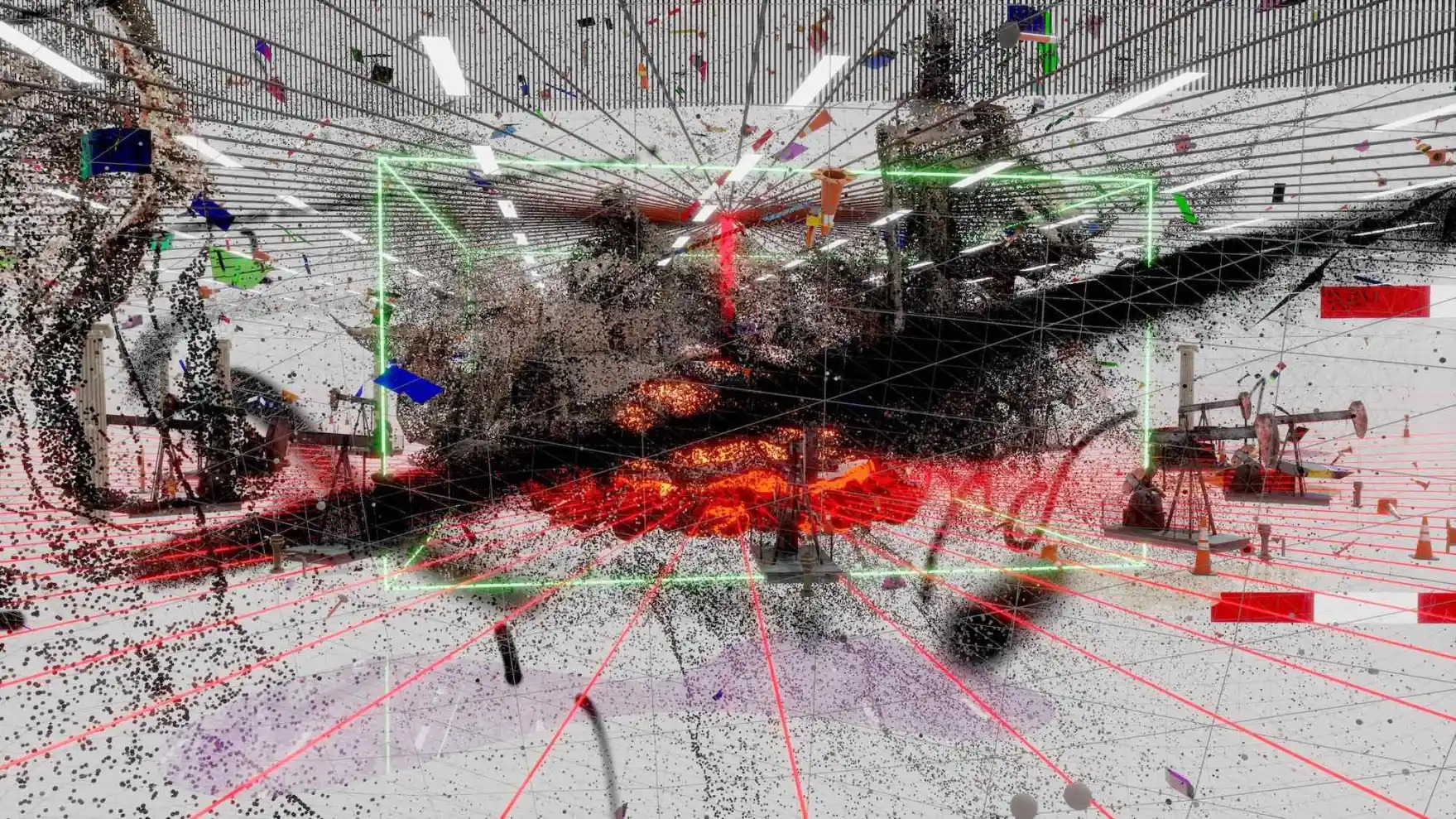
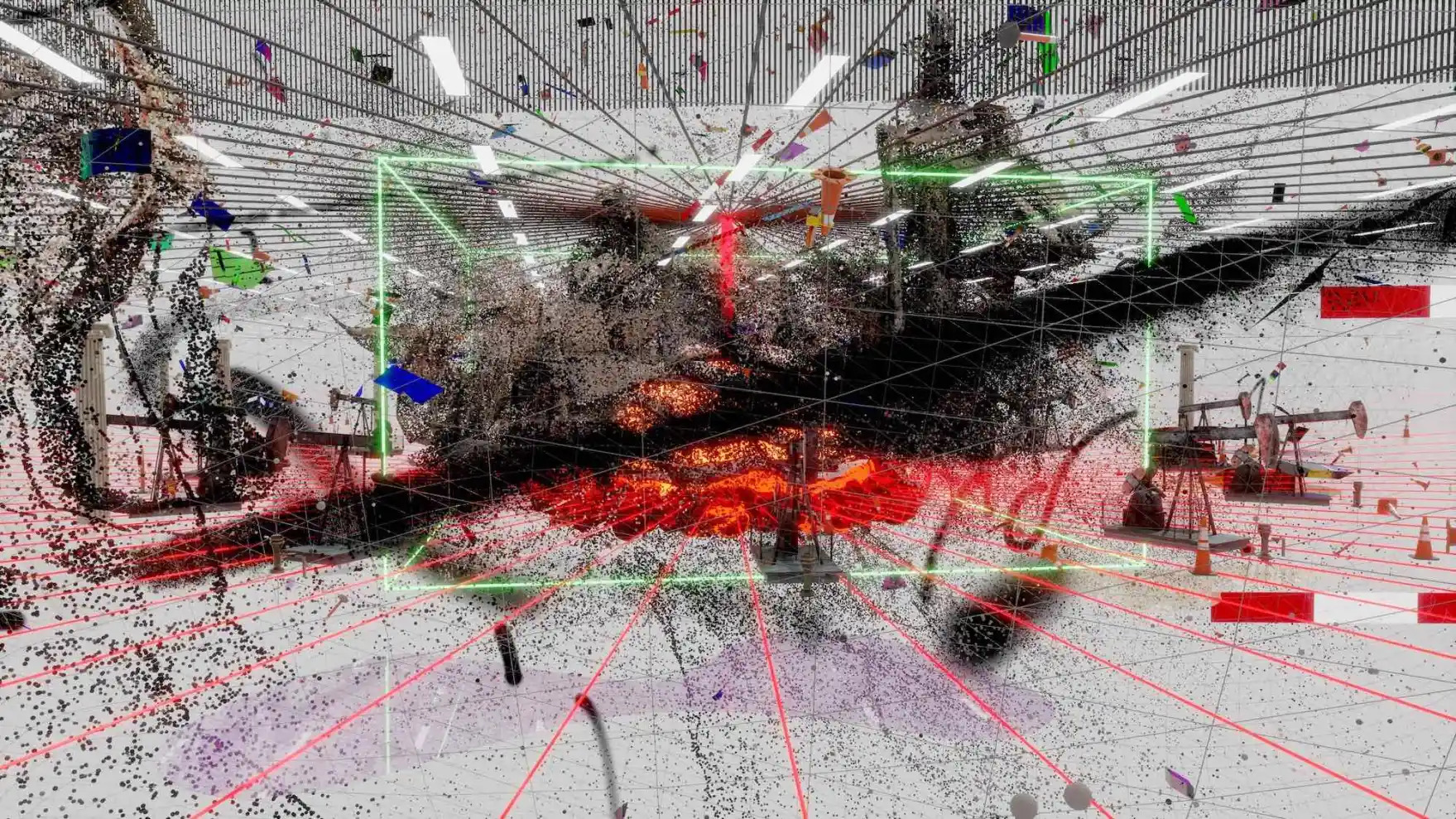
Jaehun Park, Highway Epigram, 2022, 3D simulation video, 6min 7sec. © Jaehun Park

For example, Highway Epigram (2022) is a video work that captures the present moment hurtling toward catastrophe like a car speeding down a highway, by recreating scenes of war and disaster within a virtual space. The work originated from 3D scan data of a building in Ukraine destroyed by a missile attack, which appears in the video as countless points.
 
Other objects appear throughout the work, including the Nord Stream gas pipeline destroyed during the Russia–Ukraine war, oil drums, oil pumps, and police protective equipment. These objects allude to the military and political risks confronting humanity today, as well as the uncontrollable problems arising under the capitalist system, including war, the energy crisis, and hyperinflation.
 
The artist compares the rapidly developing yet seemingly apocalyptic world of today to a highway. The video, in which the infrastructure of a highway floats in space, is set primarily against a white expanse punctuated by continuous explosions.
 
The screen enclosed by temple-like columns resembles an altar where a sacrificial ritual is taking place, while the increasingly bizarre distortions of the image toward the end serve as a metaphor for the present era, in which it has become difficult to see phenomena and truth with clarity.


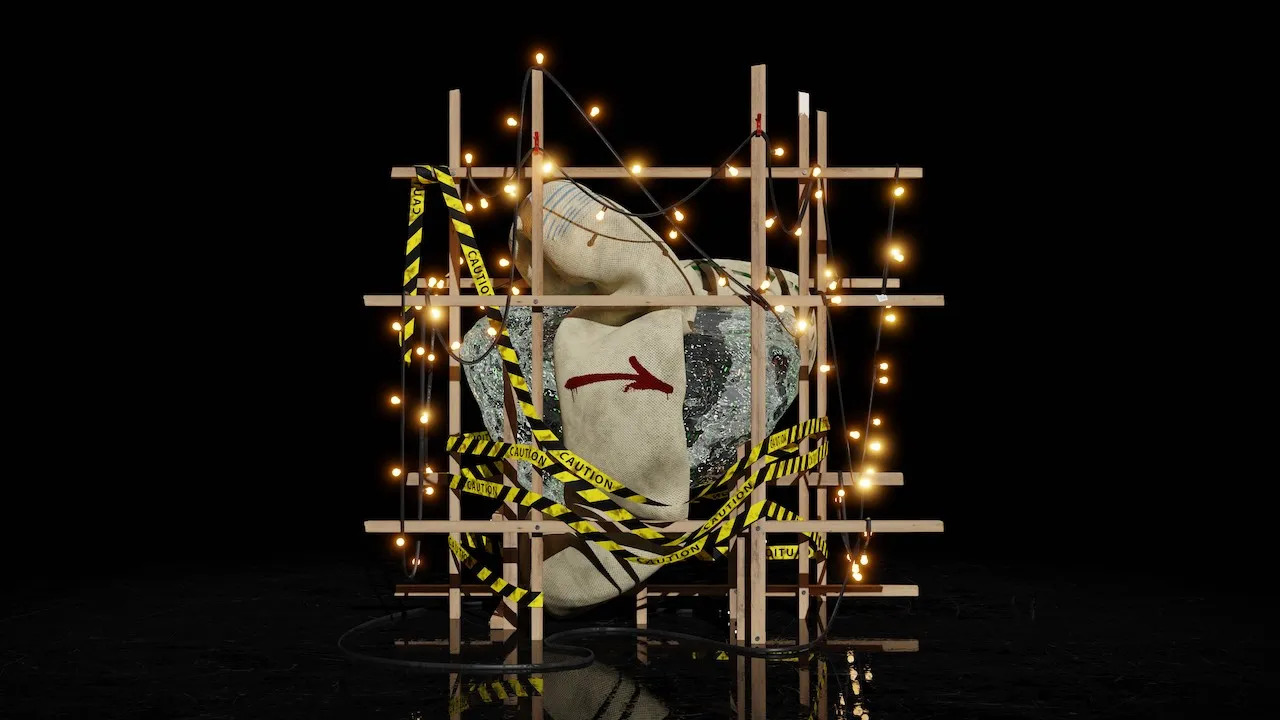
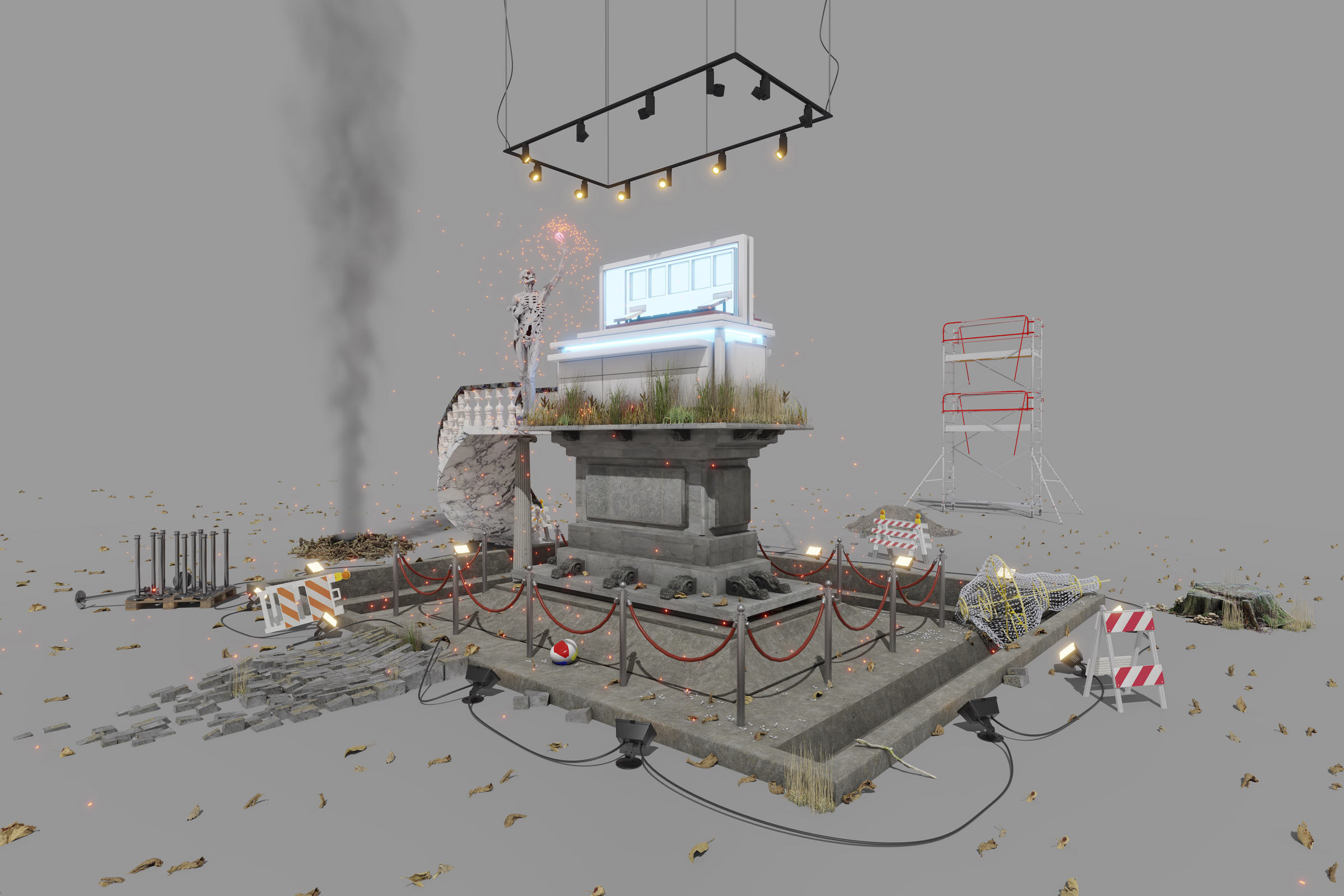
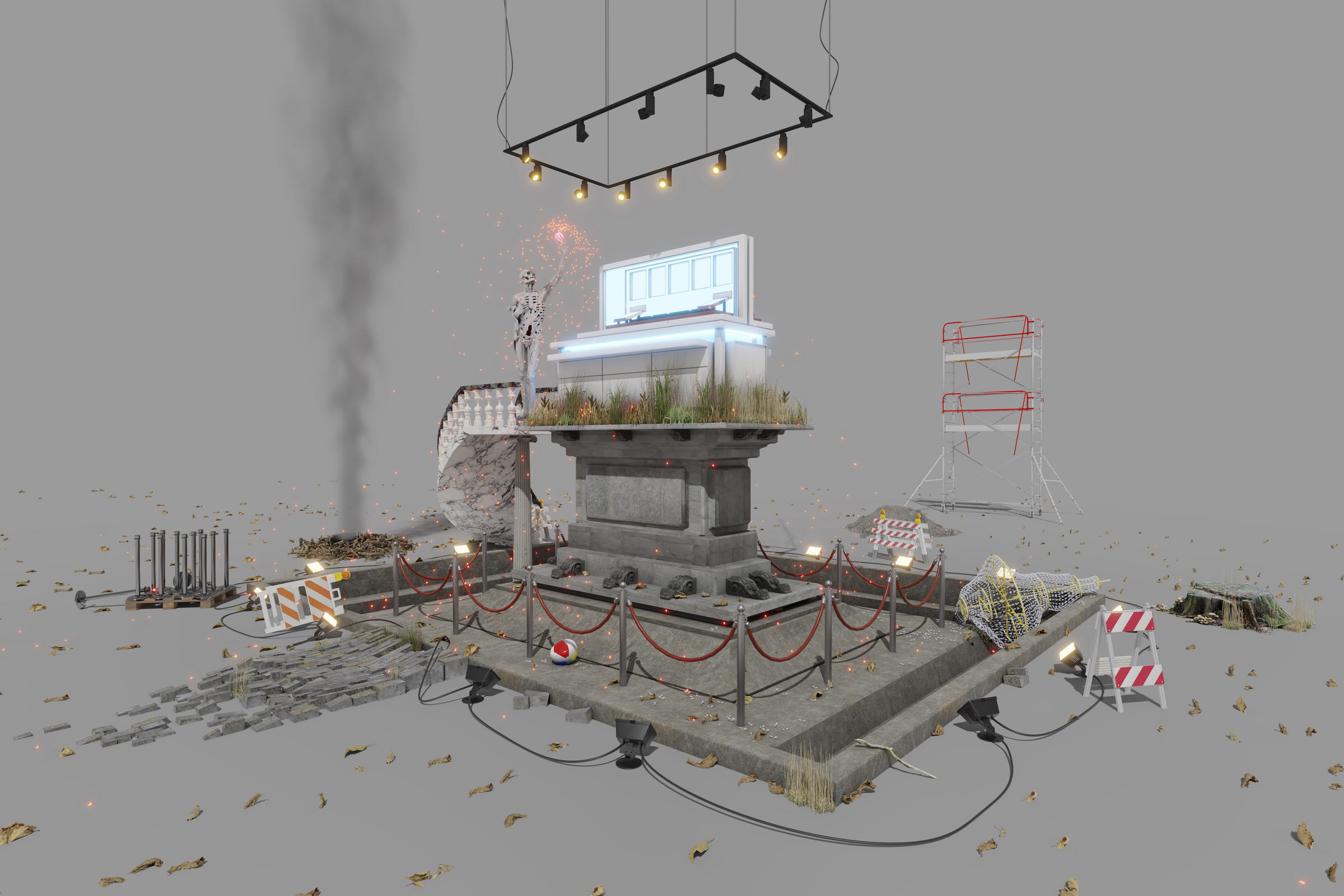
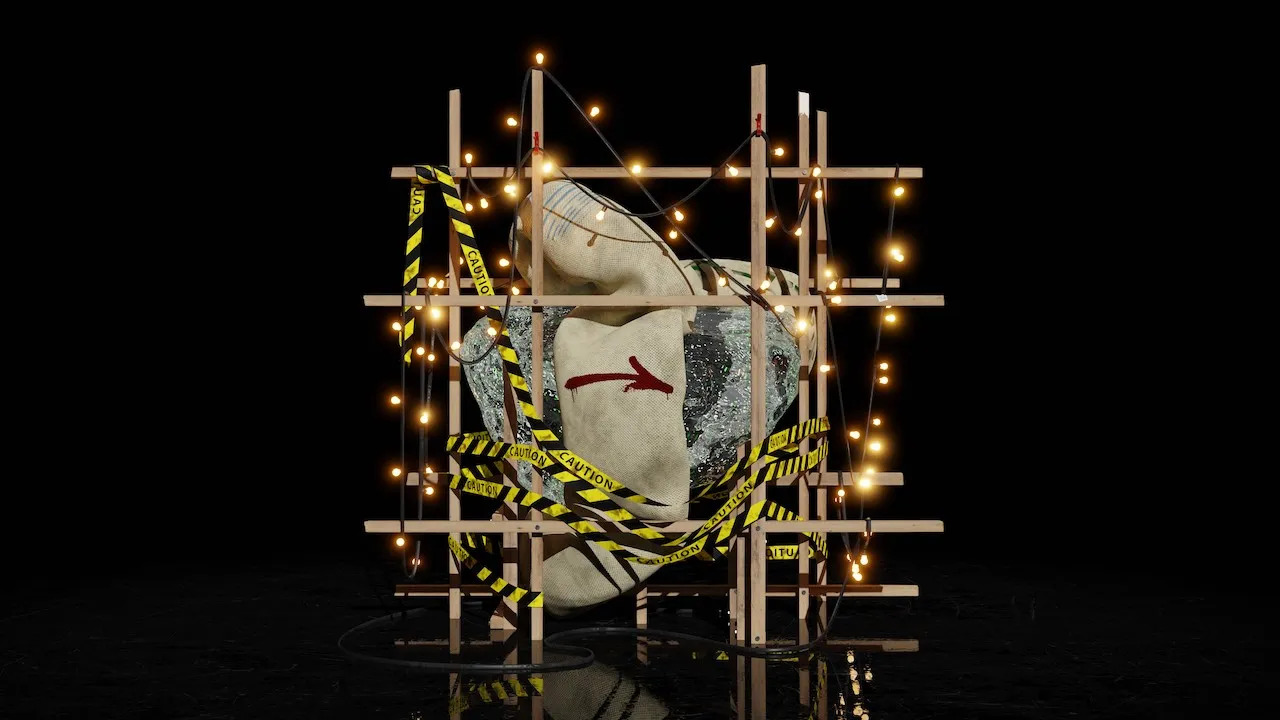
Jaehun Park, Ritual for the Iceberg, 2022, 3D simulation video, 6min 7sec. © Jaehun Park

Meanwhile, Ritual for the Iceberg (2022) is a video work that addresses global warming through the fictional premise of “the last remaining iceberg in the world.”
 
The work stems from the artist’s experience while traveling along Iceland’s Crystal Beach, where he encountered a poignant and desolate landscape: remnants of glaciers carried ashore by the waves stretched along kilometers of beach, glittering brilliantly as they met the sunlight and seawater.
 
Park obtained 3D scanning data from the iceberg before it melted, migrating it into a digital space and visualizing the movement of organic matter that would have been contained within it as white and green particles. Although the iceberg has melted away in reality, it survives eternally within the digital space as “the iceberg at the end of the world.”
 
In Ritual for the Iceberg, industrial building materials, restricted-access lines, and strings of small light bulbs surround the iceberg, as if attempting to protect the last one remaining. By likening humanity’s futile efforts to overcome disaster to a makeshift altar erected to protect the iceberg, the artist evokes both the poignancy of our inability to hold on to disappearing nature and the precarious future of the Earth.


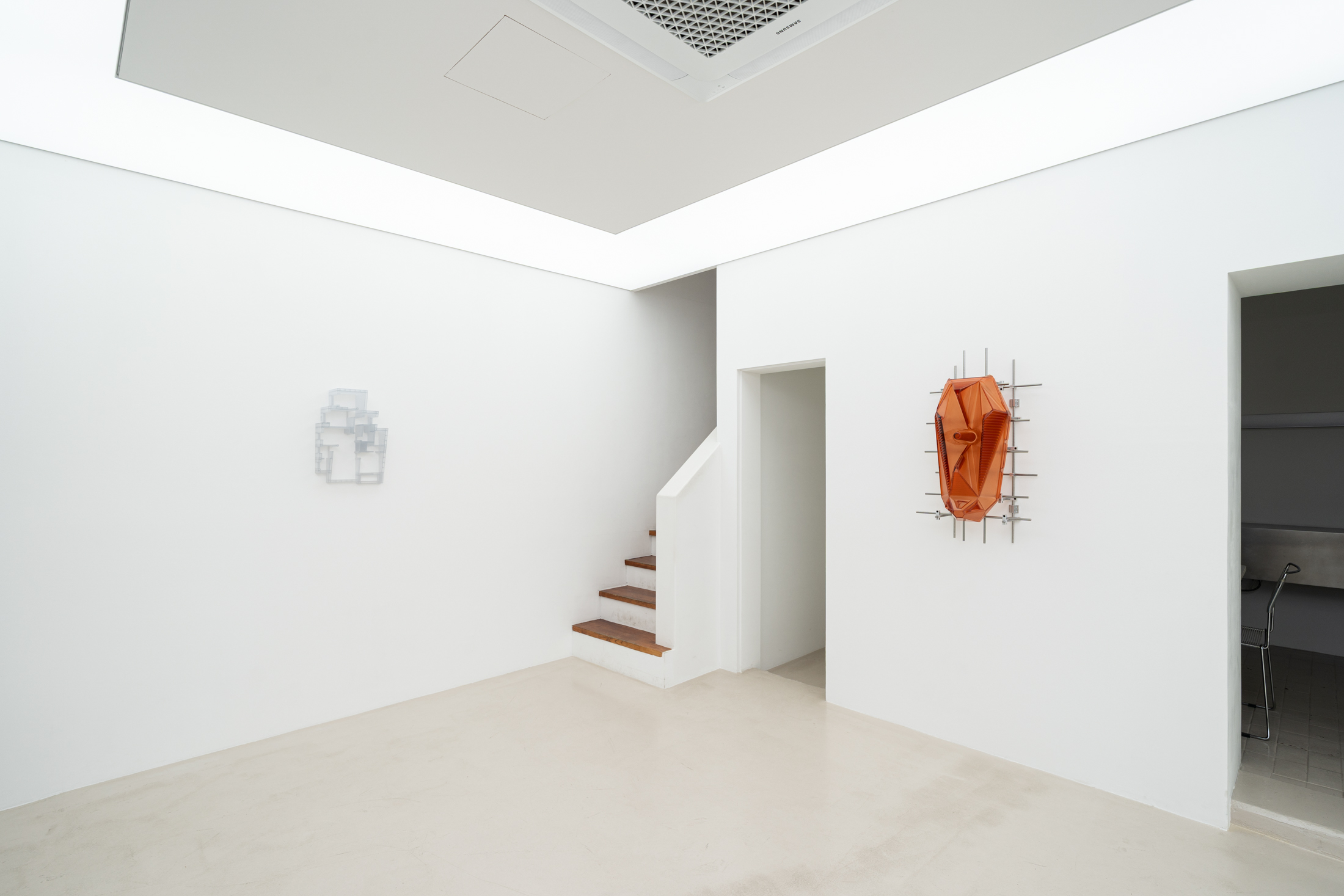
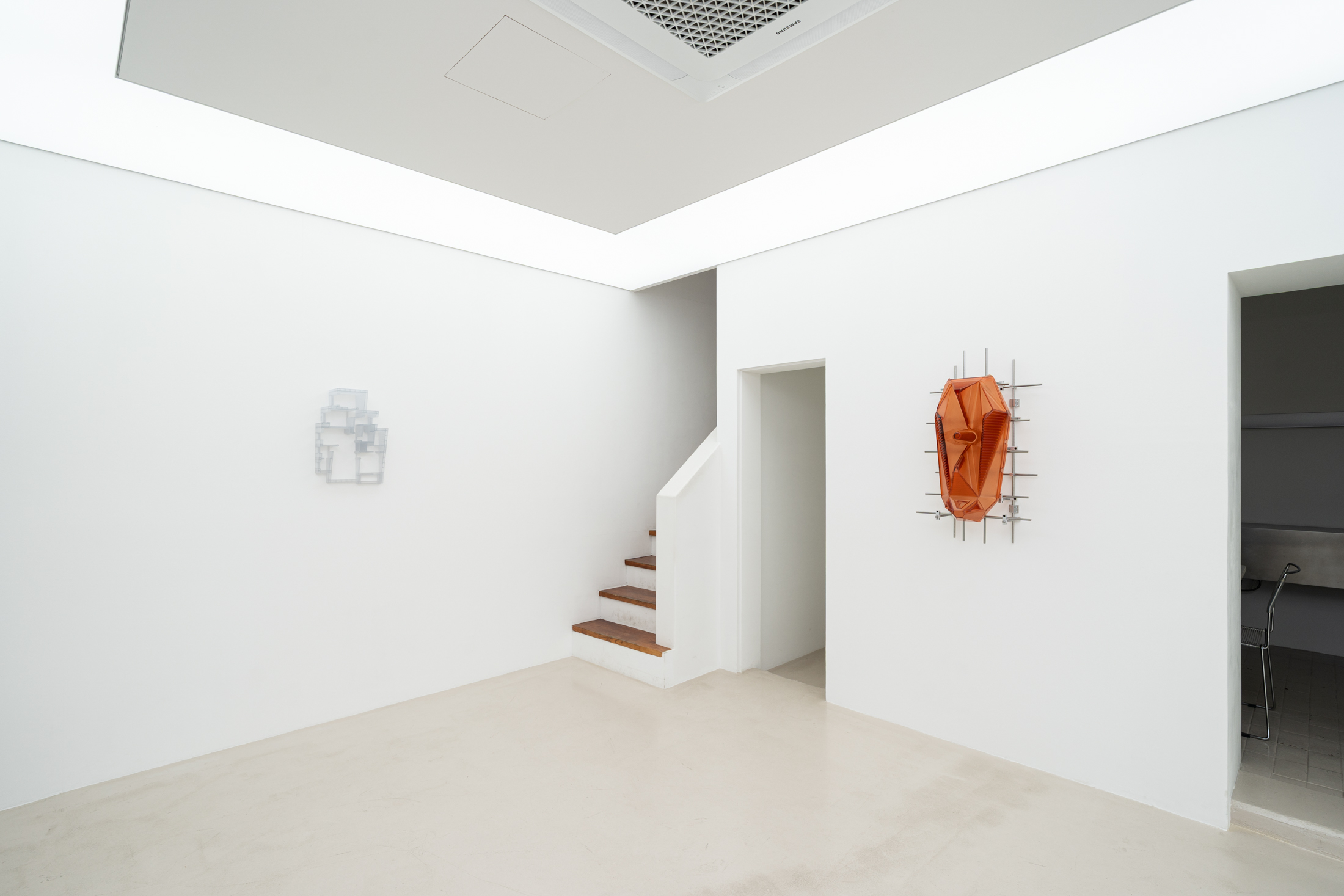
Installation view of 《POLYGON PILGRIMS》 (WWNN, 2026) © WWNN

Furthermore, in his recent exhibition 《POLYGON PILGRIMS》 (WWNN, 2026), Jaehun Park explored the contemporary subject moving through a new universe composed of point clouds, polygons, pixels, voxels, vectors, and coordinates, seeking to understand the condition of those who move forward without a sense of direction.
 
In Park’s practice, virtual spaces are made up of endlessly extending grids and coordinates, yet the polygons that constitute these spaces simultaneously divide interior from exterior, creating ruptures.
 
Thus, digital spaces that appear interconnected instead continuously produce fragmentation and alienation. The “pilgrims” moving through them are not so much lost beings as figures wandering through a world in which no clear destination or path has existed in the first place.


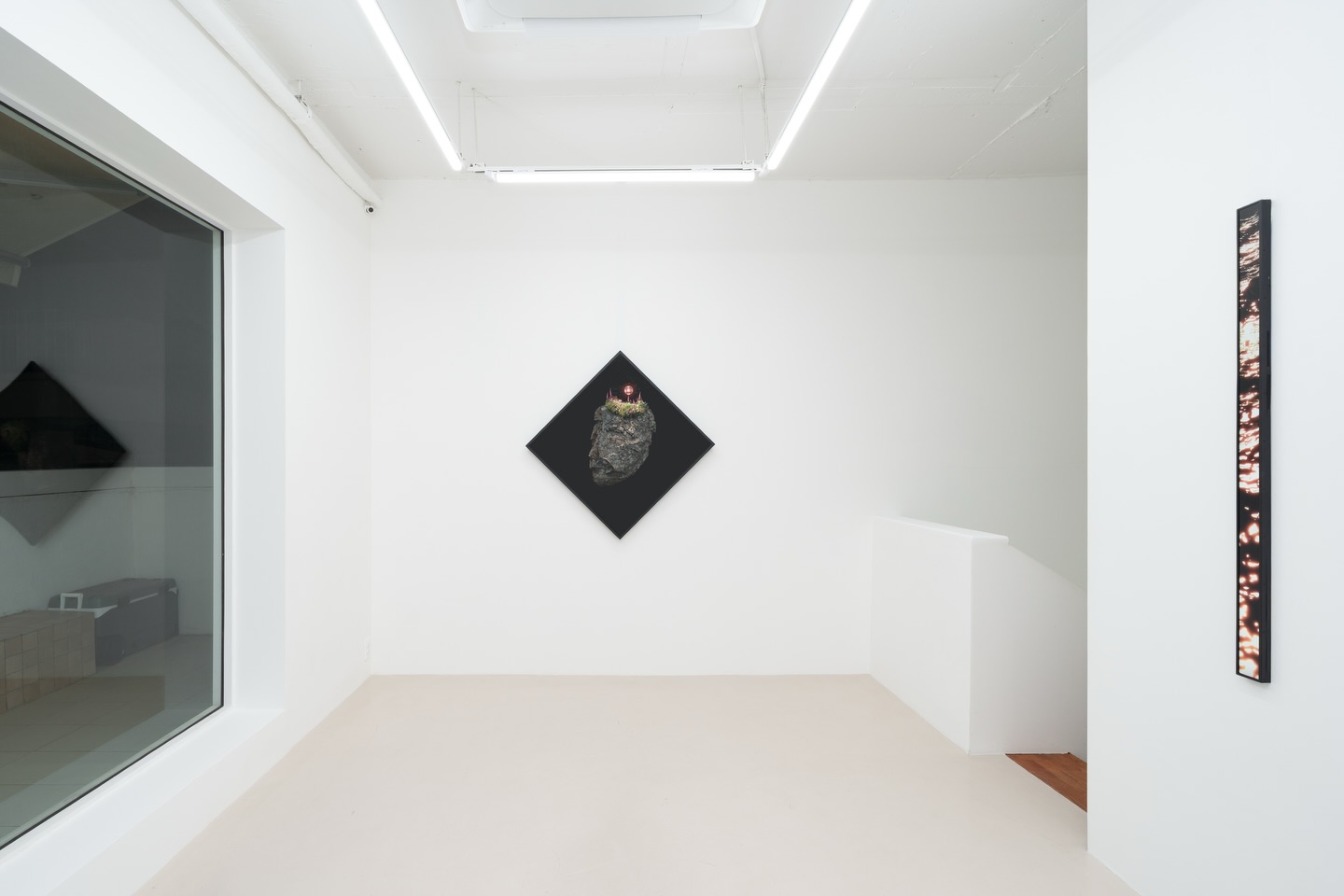
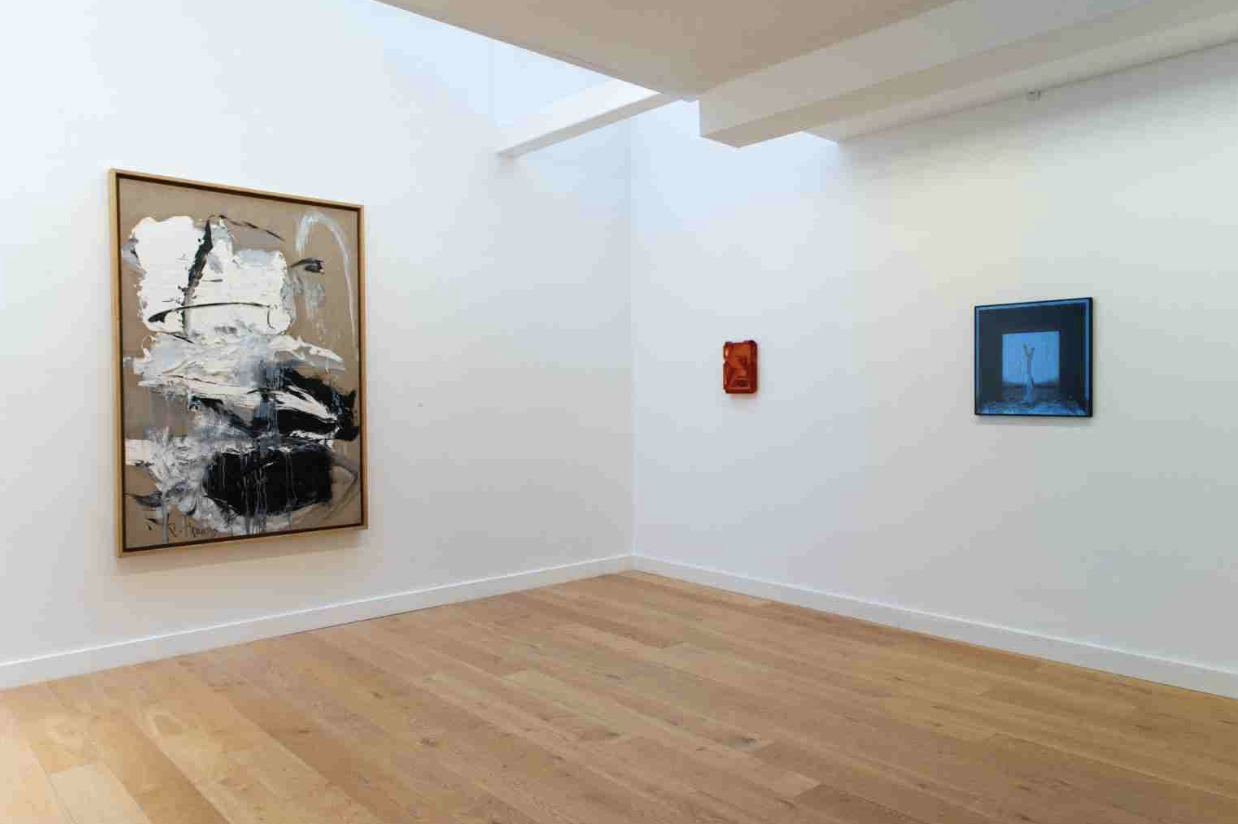
Installation view of 《POLYGON PILGRIMS》 (WWNN, 2026) © WWNN

At the center of the exhibition lies the origin of the absolute coordinate system. Theoretically always positioned at the center of space, yet inaccessible in reality, this point appears to serve as the goal toward which the pilgrims continually move.
 
Their movement, however, is less a process of progress toward a destination than one of perpetual movement and delay driven by desire. Through this, the artist reveals the endless repetition and state of incompletion inherent in movement through digital space and human desire.
 
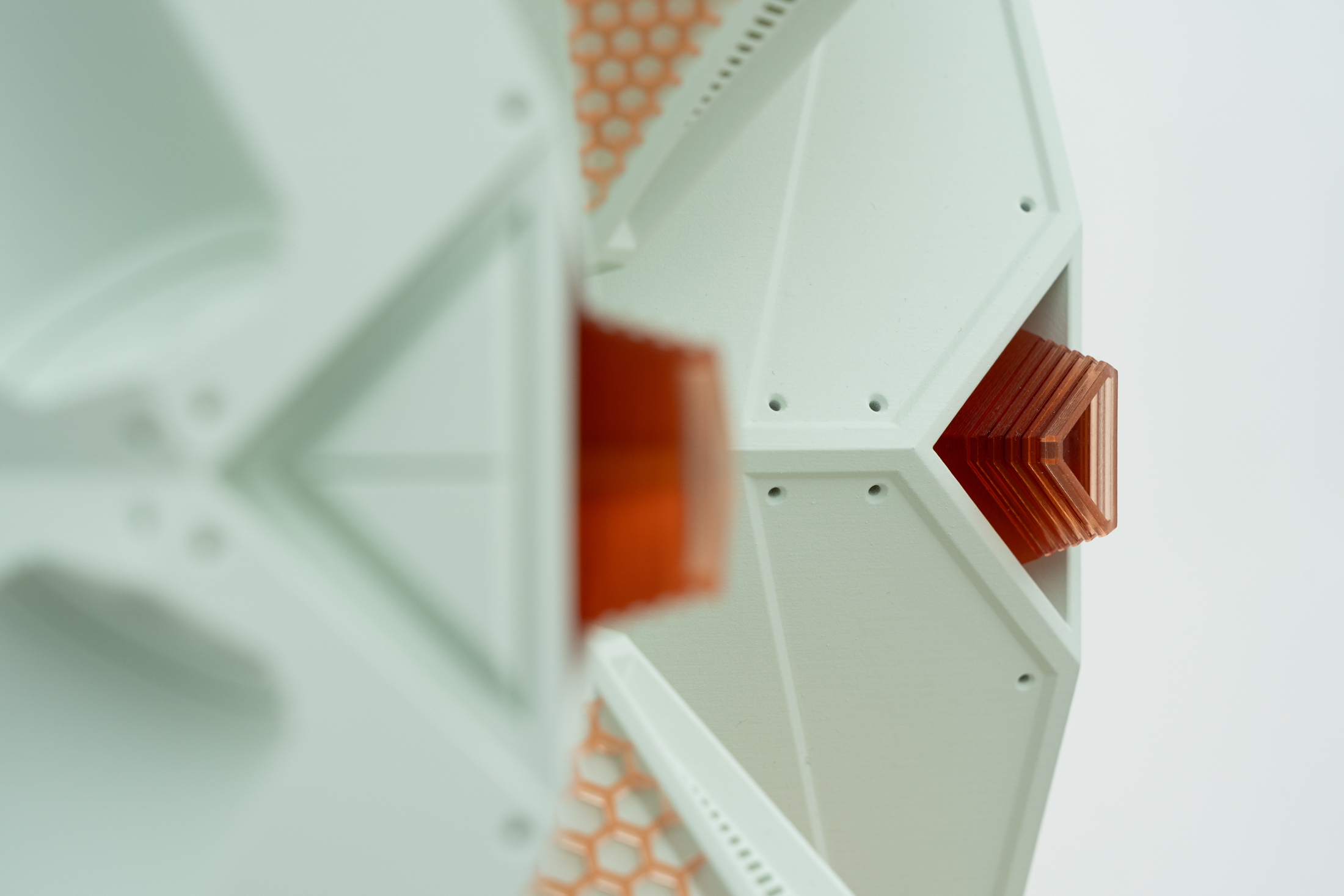
Within these virtual spaces, Park creates various sculptural forms, including pilgrims, architecture, and machines. Produced through interfaces and data, these forms do not remain fixed in completed states but repeatedly undergo processes of duplication and transformation, branching into new forms.


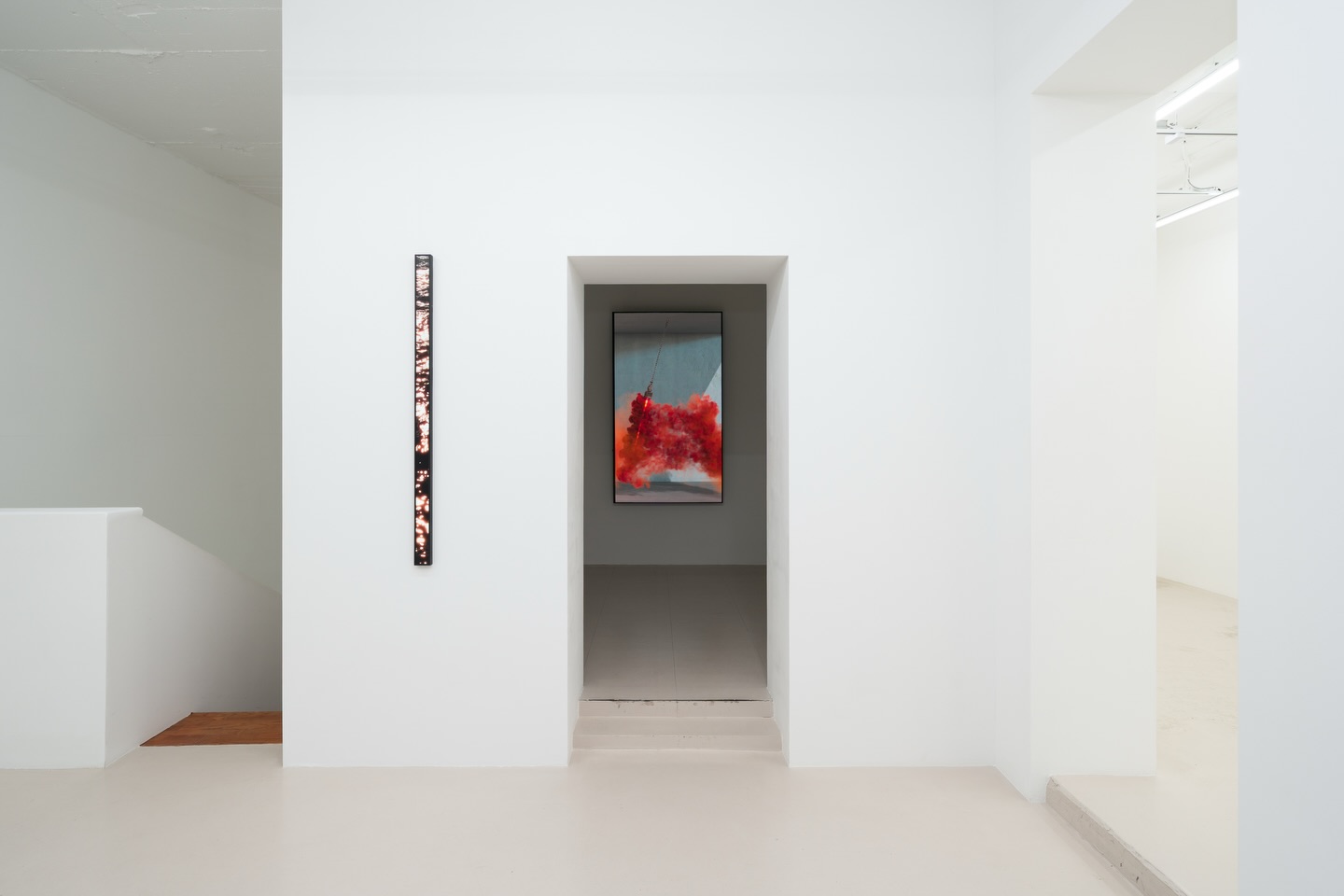
Installation view of 《POLYGON PILGRIMS》 (WWNN, 2026) © WWNN

The coordinate axes and directional devices placed in the exhibition space also appear to guide visitors through the space, but instead reveal that we are already situated in a world where we have lost our sense of direction and center. The space composed of corridors, doors, and light creates a sense of nonlinear time in which even the present moment cannot be clearly grasped.
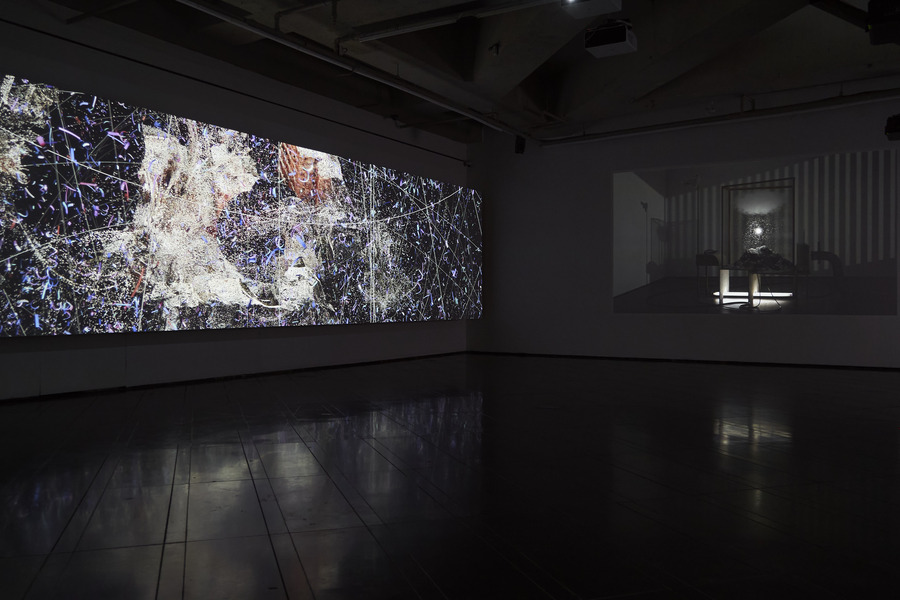
 
Ultimately, 《POLYGON PILGRIMS》 goes beyond using digital technology to recreate a virtual world, exploring instead the conditions of human existence within it.
 
The figure of the pilgrim, who continually moves toward an unreachable center yet never arrives at a destination, symbolizes the contemporary subject living in a state of perpetual movement and delay rather than completion or arrival. Through virtual spaces constructed from coordinates, data, and interfaces, Park reconsiders the very ways in which we perceive and exist in the world.


Installation view of 《POLYGON PILGRIMS》 (WWNN, 2026) © WWNN

In this way, the virtual world in Jaehun Park’s practice is no longer treated as a space that replaces reality, but as a mirror that simultaneously reflects a cross-section of reality and what lies beneath it.
 
Virtual physical phenomena precisely calculated according to mathematical algorithms combine with objects juxtaposed without causal logic, transforming everyday spaces into surreal landscapes.
 
The objects placed within these spaces function as religious and capitalist allegories, through which Park presents a kind of self-portrait reflecting human desires and the conditions of the present age.

“For me, objects are more than tools that simply perform a function; they are a system of signs and a language. I believe that objects are mirrors that reflect human beings. Most objects created by humans are proportionally related to the human body, and human destinies and cultural contexts are embedded within them. That is why I seek to generate new meanings by combining and recontextualizing objects.” (Jaehun Park, in an interview with Noblesse)


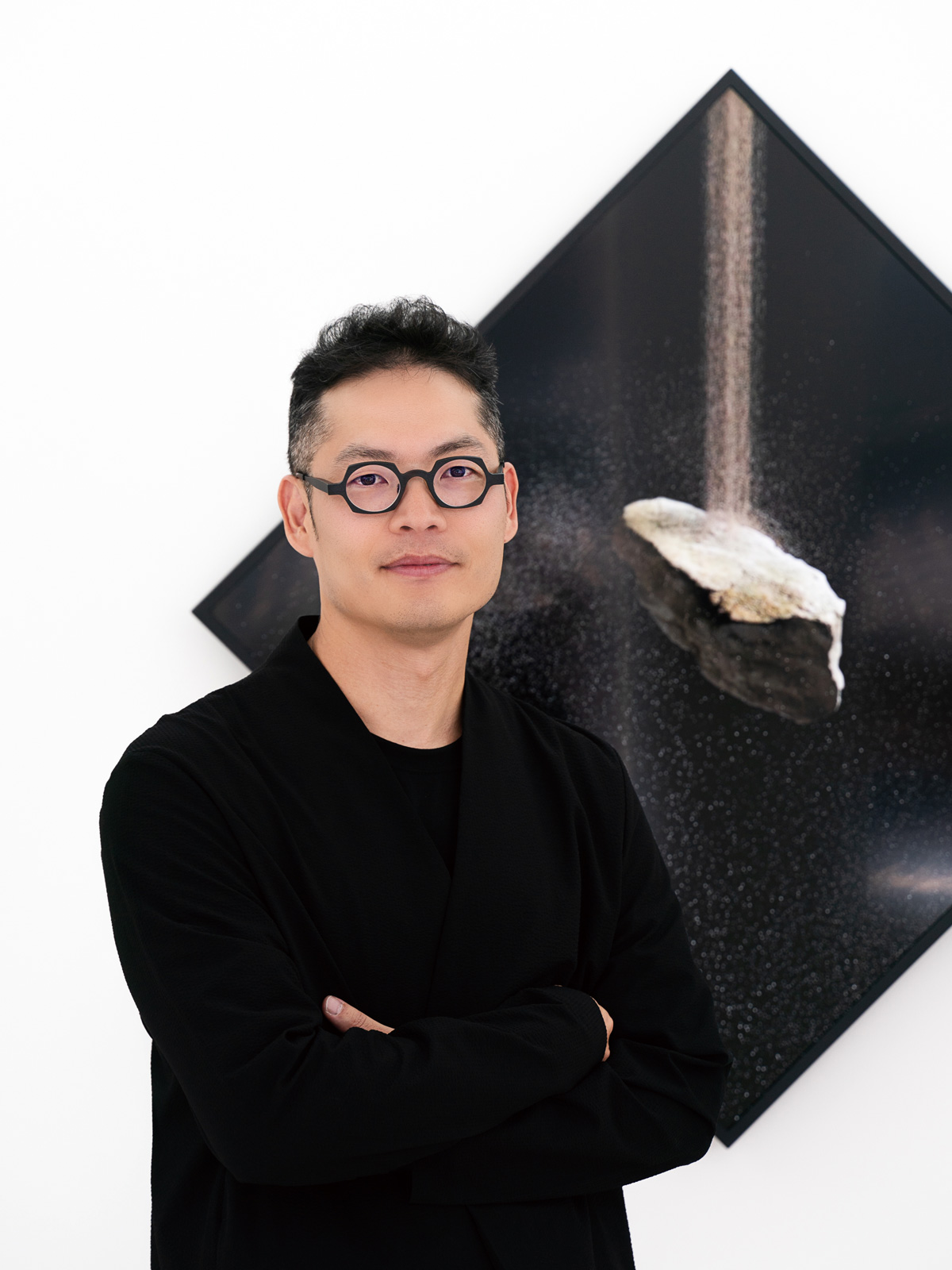
Artist Jaehun Park © Noblesse

Jaehun Park received his BFA and MFA in Western Painting from Seoul National University, followed by an MA in Artistic Research from the Royal Academy of Art, The Hague. His recent solo exhibitions include 《Overheated Windmill》 (Grote Kerk Alkmaar, Alkmaar, the Netherlands, 2026), 《POLYGON PILGRIMS》 (WWNN, Seoul, 2026), and 《Derivative Landscape》 (Sungkok Art Museum, Seoul, 2023).
 
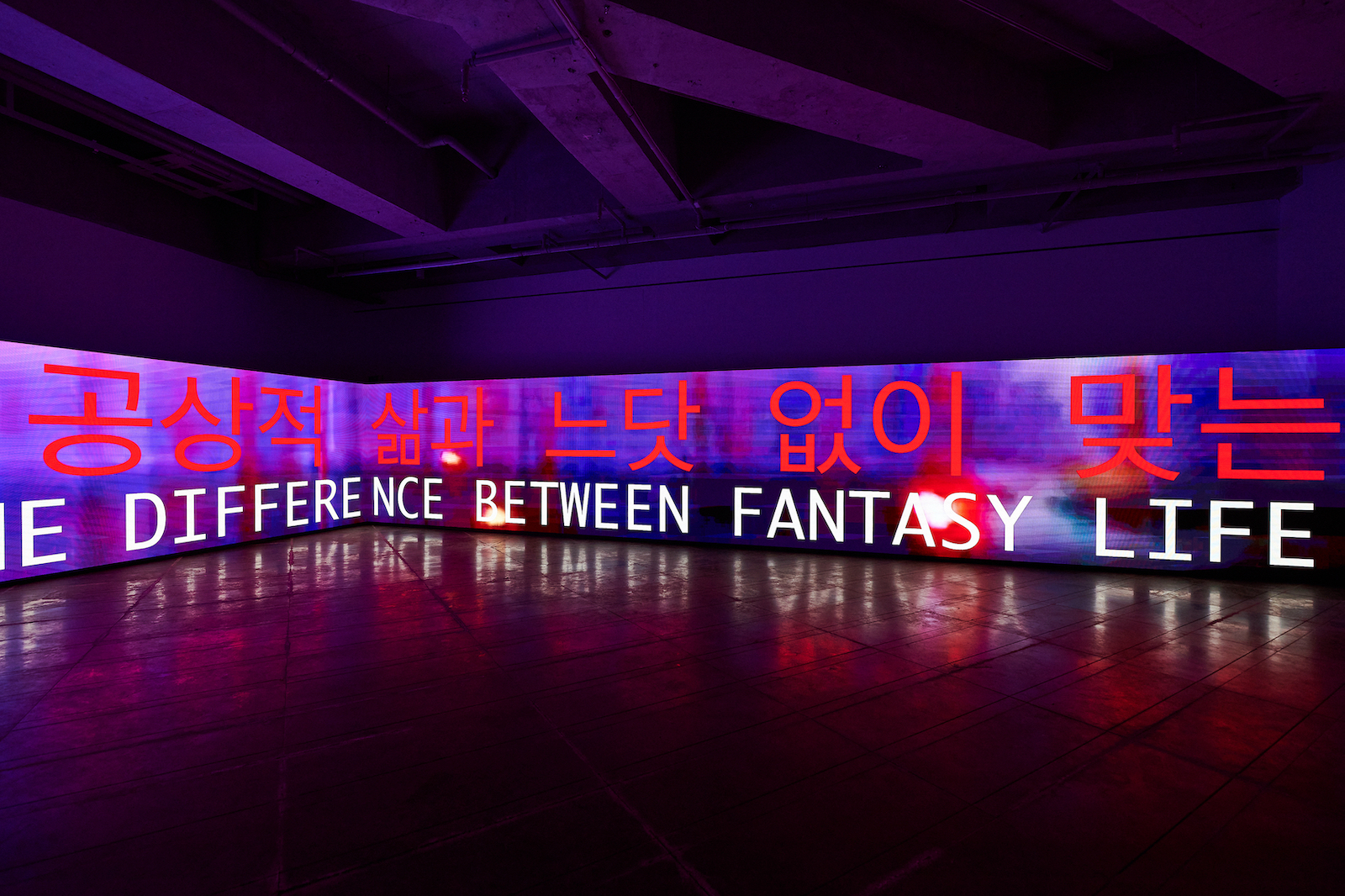
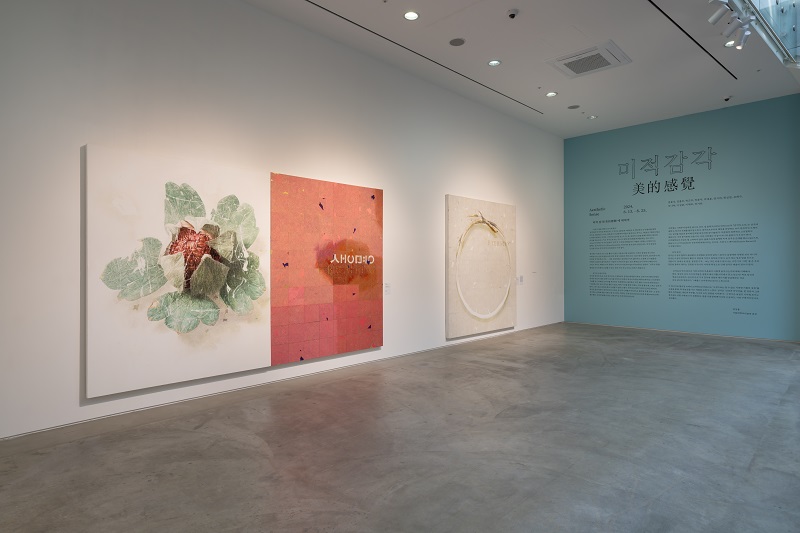
He has also participated in numerous group exhibitions, including 《Shifting Reality》 (Bradwolff & Partners, Amsterdam, 2025), 《Rolling Eyes : Proposals for Media Façade》 (Alternative Space LOOP, Seoul, 2024), 《Aesthetic Sense (美的感覺)》 (Seoul National University Museum of Art, Seoul, 2024), 2023 Beijing Biennale 《Earth Heat Flow: the Visitor Who Returns to Solar Time》 (Beijing, 2023), and 《Art and Peace: Let us begin again from zero o’clcok》 (Ulsan Art Museum, Ulsan, 2022).
 
Park’s works are held in numerous collections, including those of the Ministry of Foreign Affairs of the Netherlands, the Royal House of the Netherlands Collection, the Luc Tuymans & Carla Arocha Collection, Ulsan Art Museum, LG Display, and Hyundai Motor Group.

References