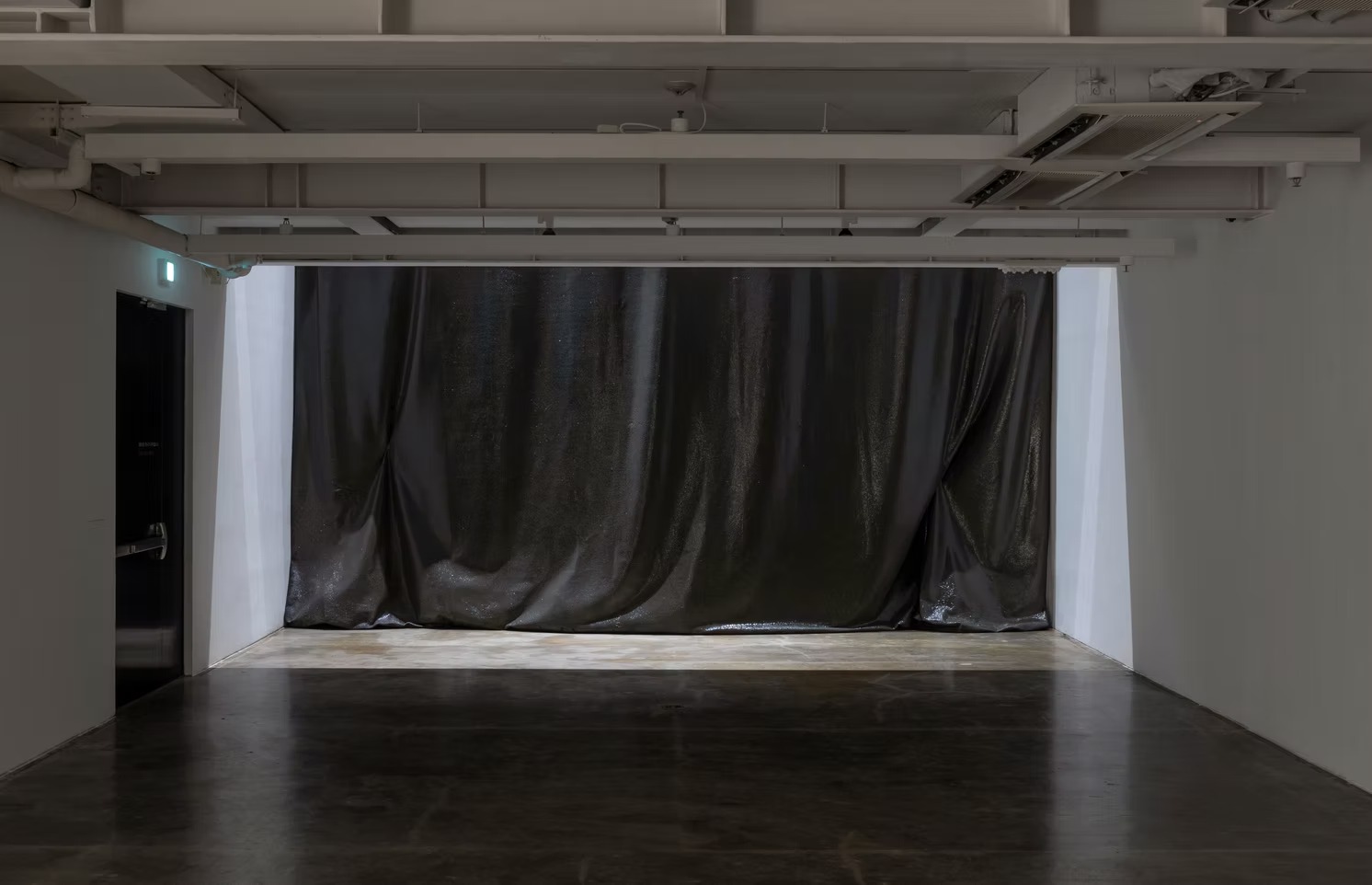
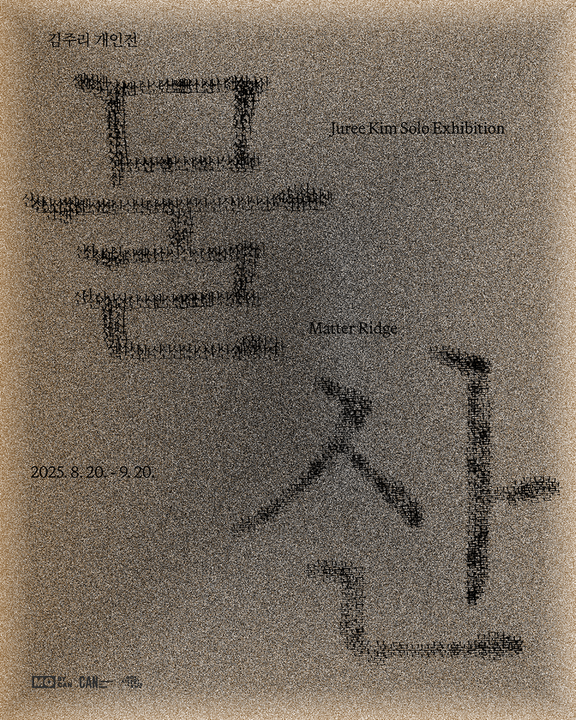
Poster image of 《Matter Ridge》 © MO BY CAN

I had a vague sense that I would one day write “again” about Juree Kim’s work. To state this in advance, this text is being written without having seen the completed work. This is not due to anyone’s laziness, trial and error, or lack of preparation.

Kim’s work has repeatedly chosen to collapse at its most perfect state, accepting that collapse as fate, method, and process. Rather than remaining fixed, the work has deliberately pursued a cyclical process of completion and disintegration. This text, written again, likewise layers and intersects an unknowable condition with what comes before and after: rising as it collapses, disappearing as it is made, yet never truly perishing.

The title of Juree Kim’s solo exhibition 《Matter Ridge》 seems to point relatively clearly toward the movement of creation and dissolution described above. Yet rather than sharply targeting a single meaning, it can be read more richly within a cyclical landscape, much like the artist’s work itself.

According to the artist, “mul” refers simultaneously to matter (物) and flowing water (水), while “san” refers both to a rising mountain (山) and to a state of growth or production (産). If the exhibition title were written vertically in Chinese characters and read from right to left, it could also be interpreted as “landscape” (山水) or “product” (産物).

Seemingly simple and direct at first glance, the title allows for multiple readings and in this sense resembles a cipher. The artist in fact inserts a symbol between “mul” and “san,” presenting the title as though encoding it. Although its precise intention remains uncertain—and I chose not to ask—it clearly situates the exhibition’s “mul” and “san” not as an inseparable whole, but within a certain distance and relationship.

In this way, the incomplete concept, material, and condition of “mulsan” also becomes “mulsan” (沕散): something that faintly and distantly disperses into disappearance.


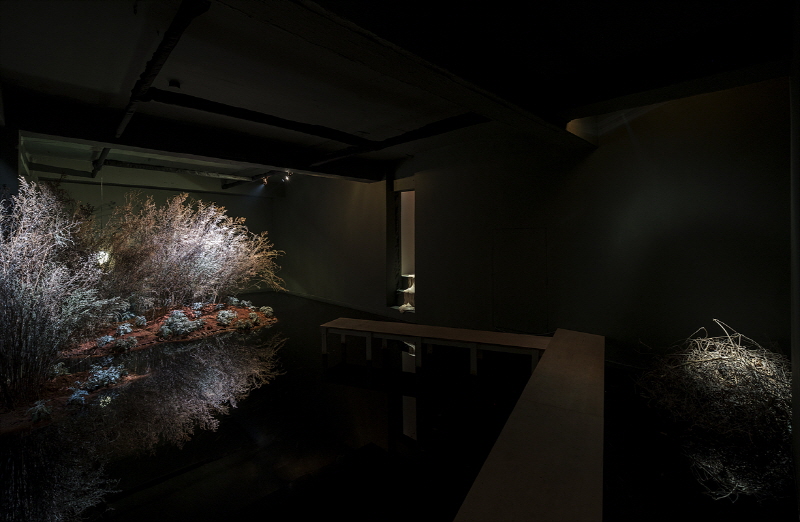
Installation view of 《Matter Ridge》 © MO BY CAN

The reason I insist on unpacking the Chinese characters in the artist’s title and adding thoughts and words to the symbol between them is that I want to guard against the lazy interpretation that her work simply stages compelling scenes with the primal material of earth. Perhaps it also comes from a desire to send earth and water circulating even farther.

The works made of earth, like the artist’s previous works, will no doubt appear quite impressive and evoke essential, primordial emotions. Yet it would be misleading to regard them as works that merely stage convincing scenes through highly abstracted matter and form, inviting us to linger and look without much thought. We must approach this sense of origin more actively and closely.

We need to examine what it passes through and where it is headed, what it shows and what it says, even if it fades away dimly into the distance. Otherwise, we cannot help but view too narrowly the aspects of death, memory, sedimentation, and transition that lie behind works resembling the remains of ancient ruins.

As noted above, the fundamental concepts, materials, and states in Juree Kim’s practice are situated within certain distances and relationships. This is why works completed and dissolved together with the highly specific events, spaces, and people of an exhibition and its site should not be perceived merely as a sculptor’s aesthetic aspiration or as abstracted matter; rather, we must attend to the contemporary relationships embedded within the material and its scenes of circulation.

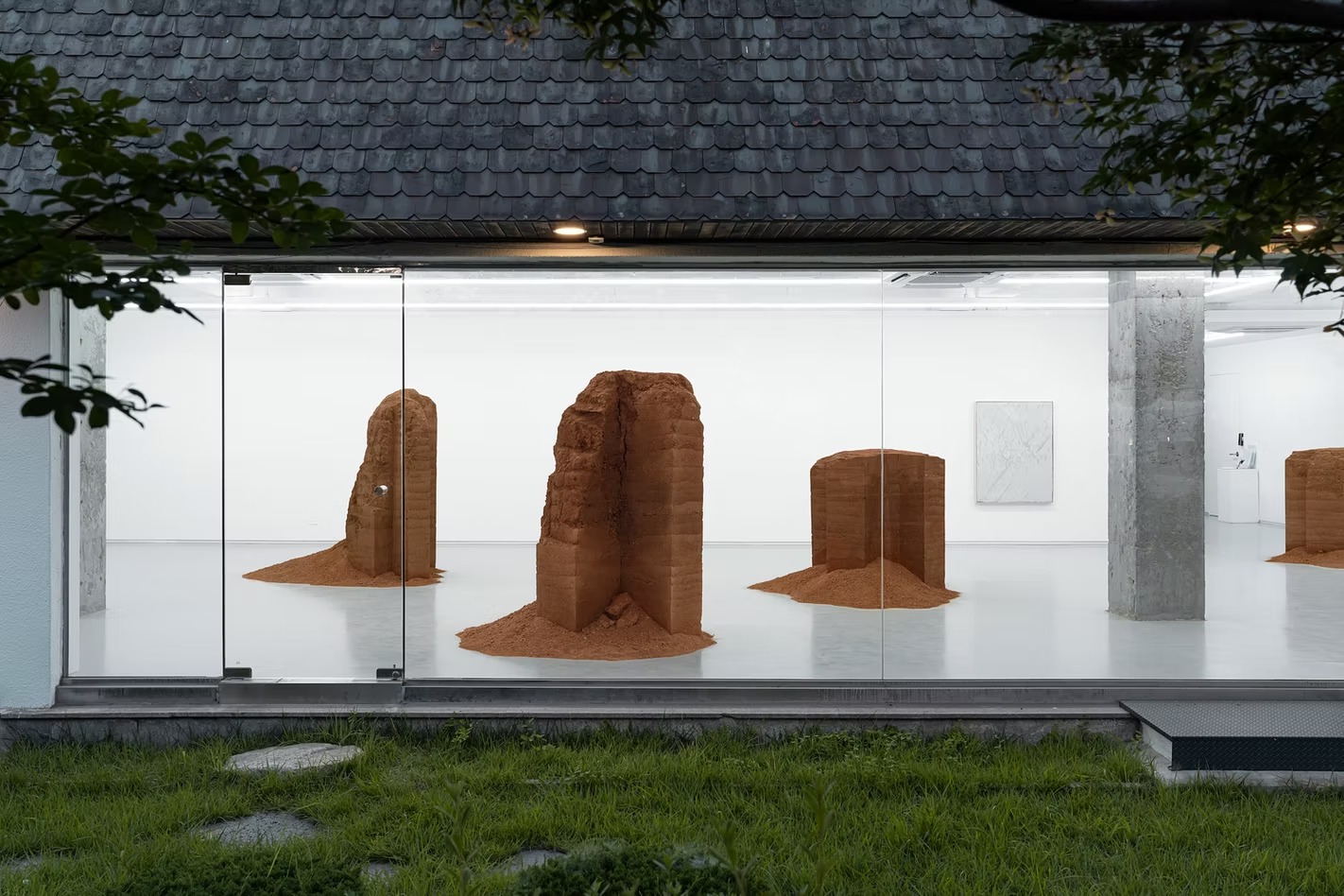
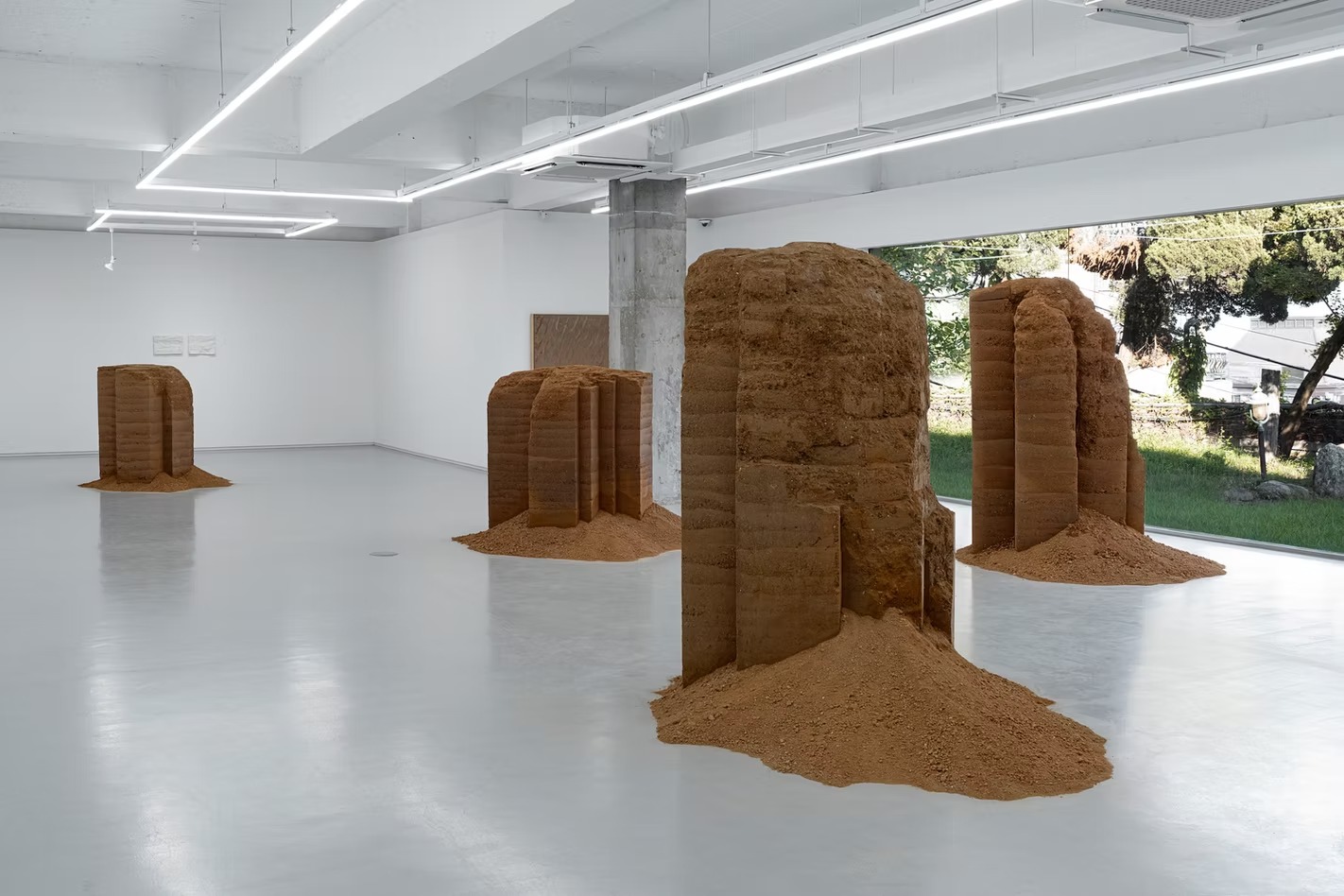
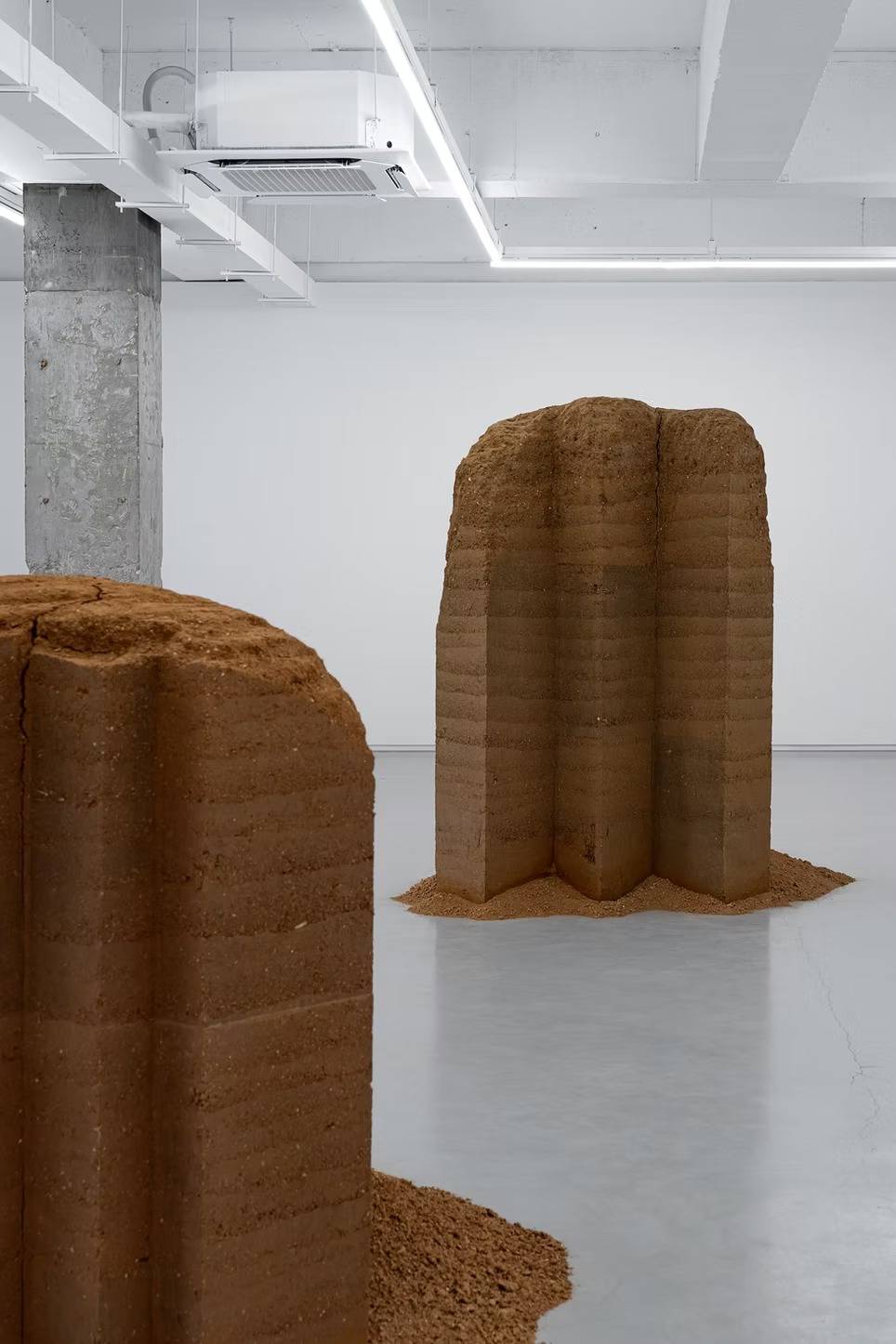
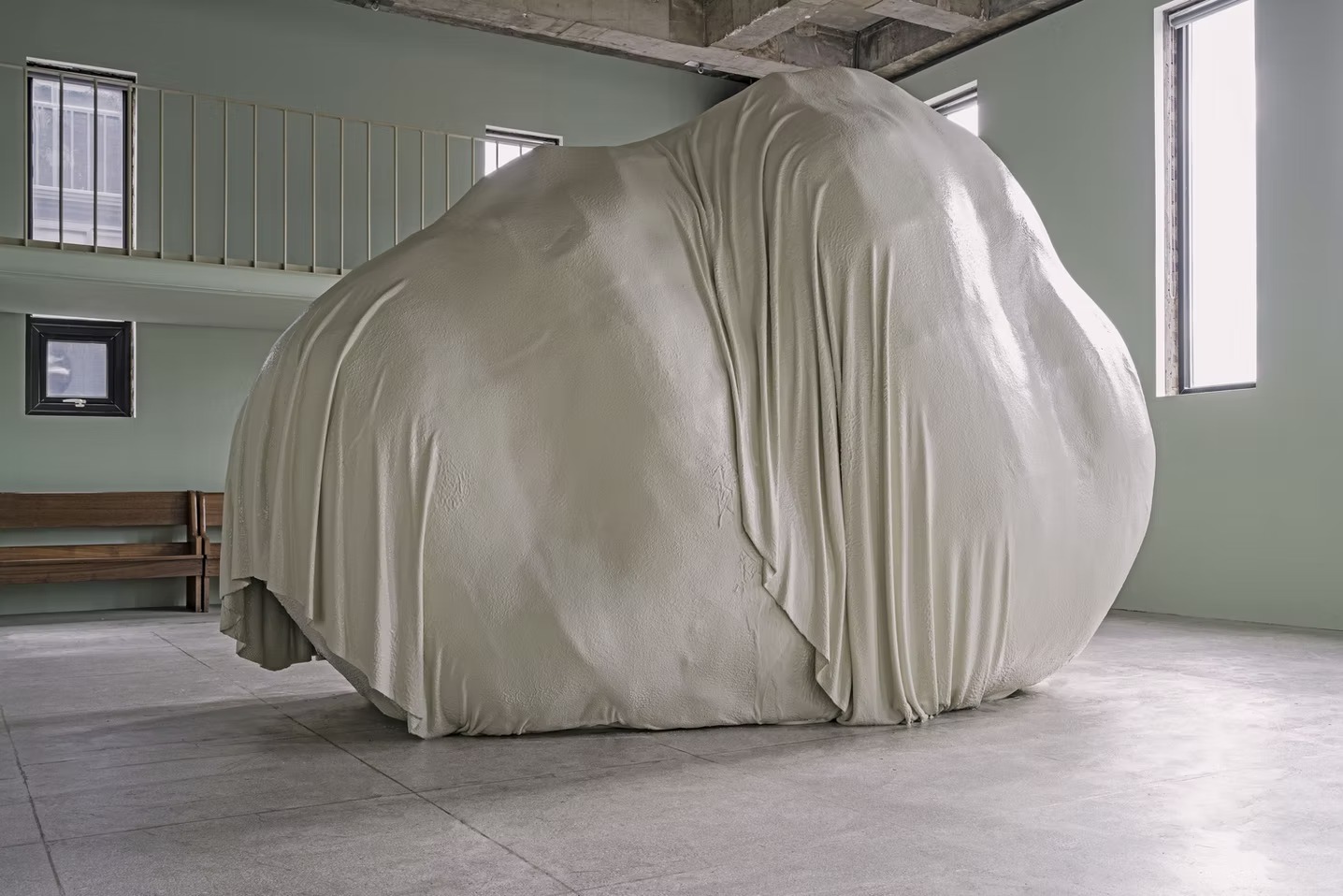
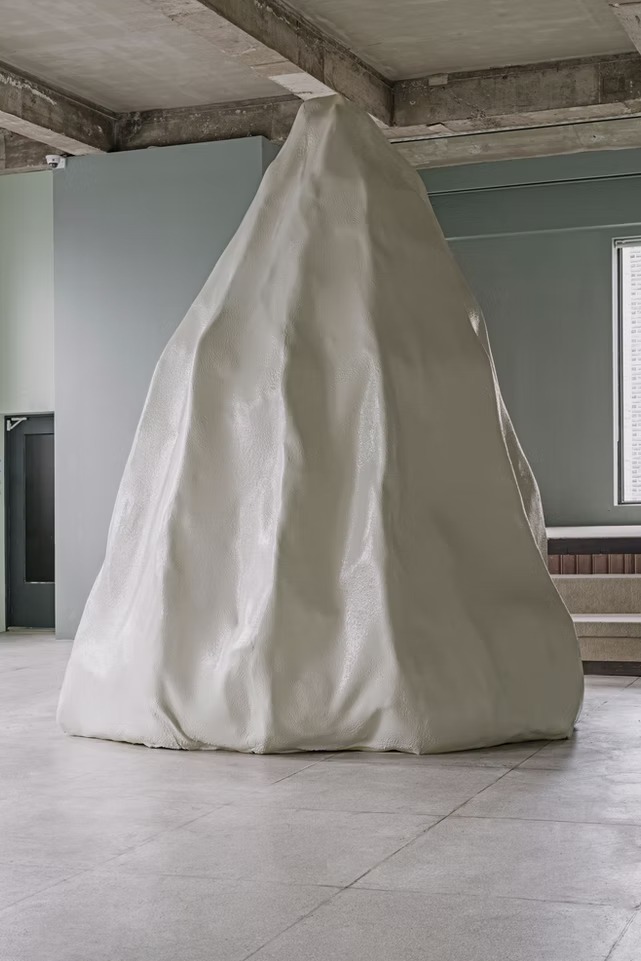
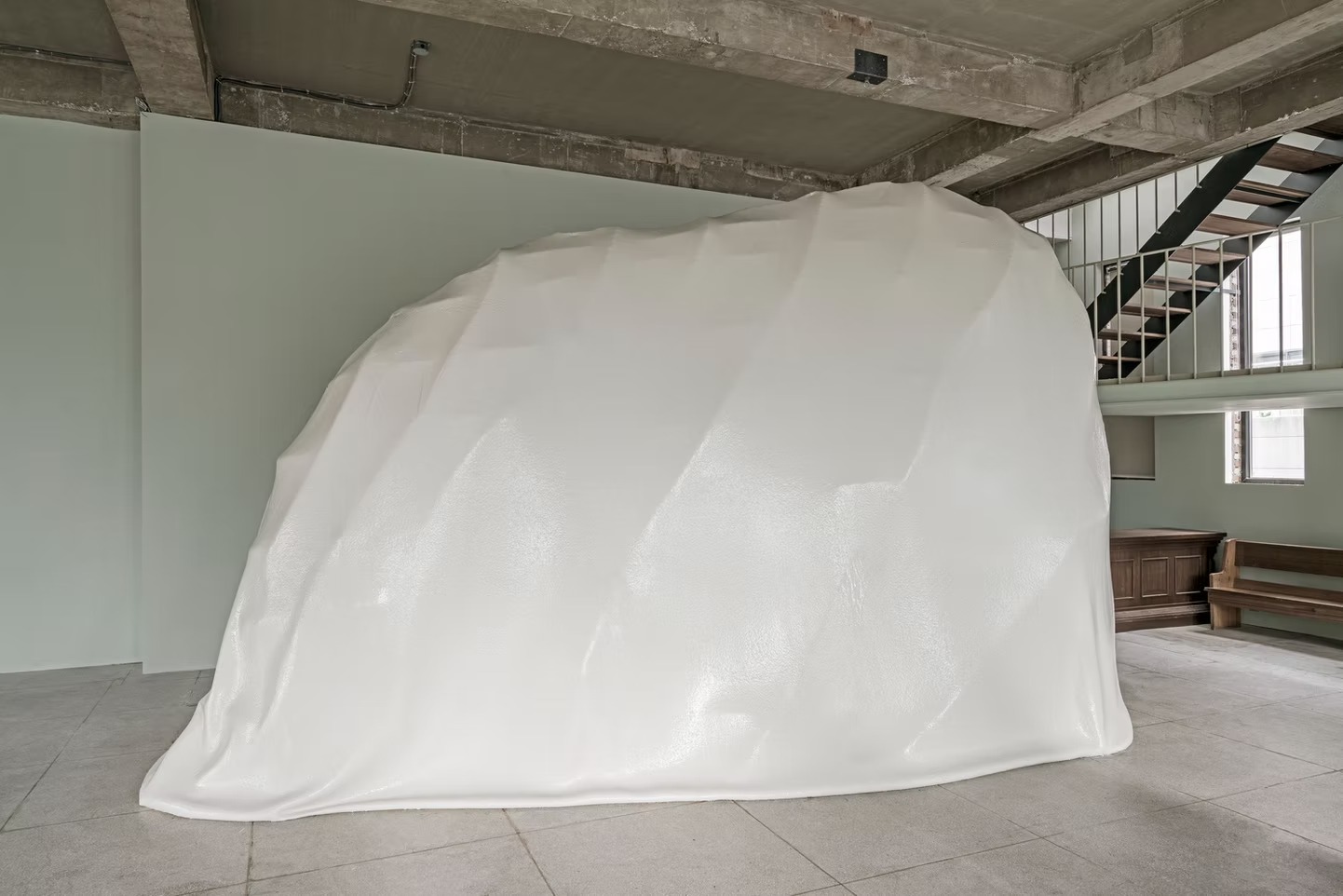
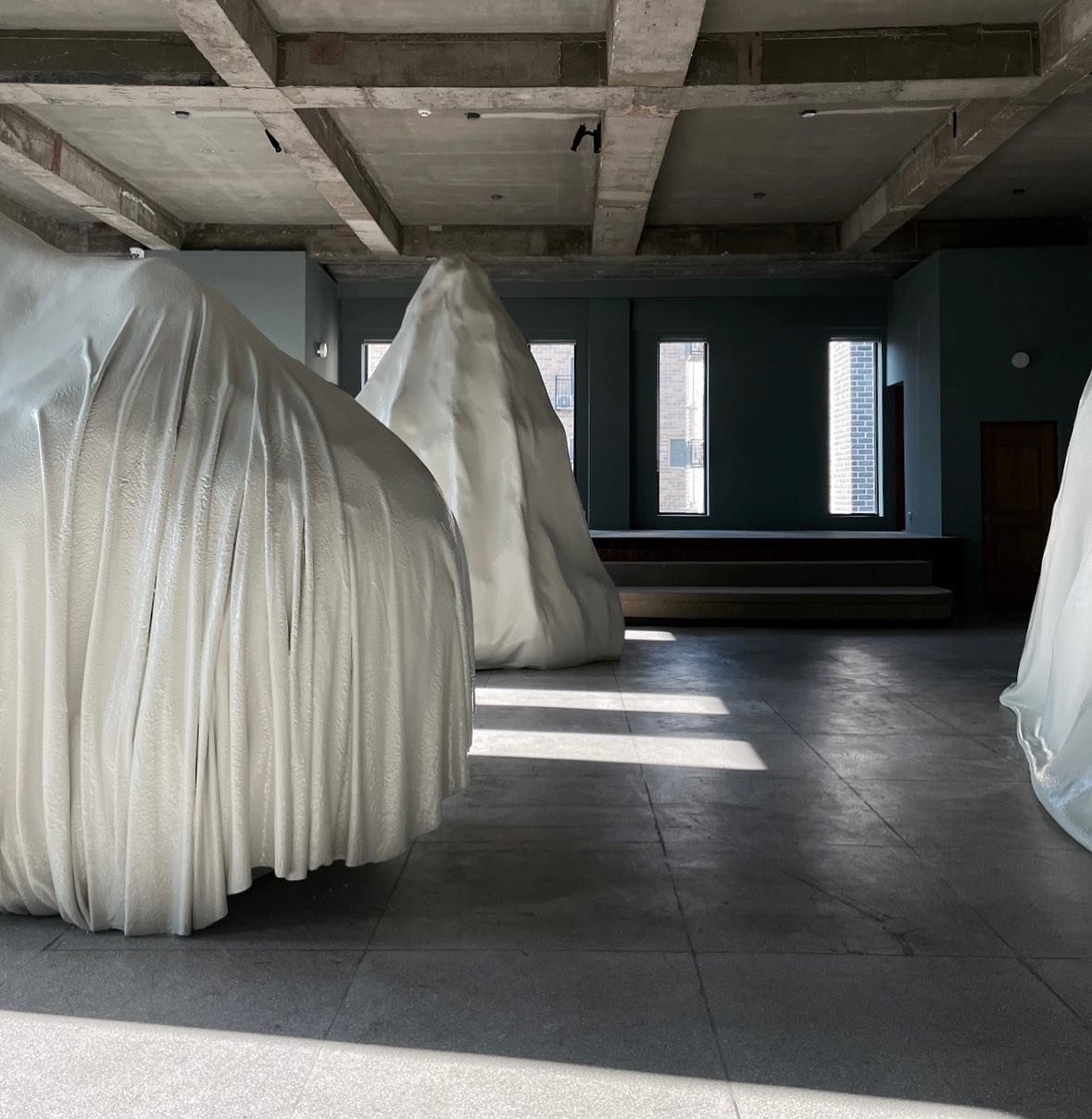
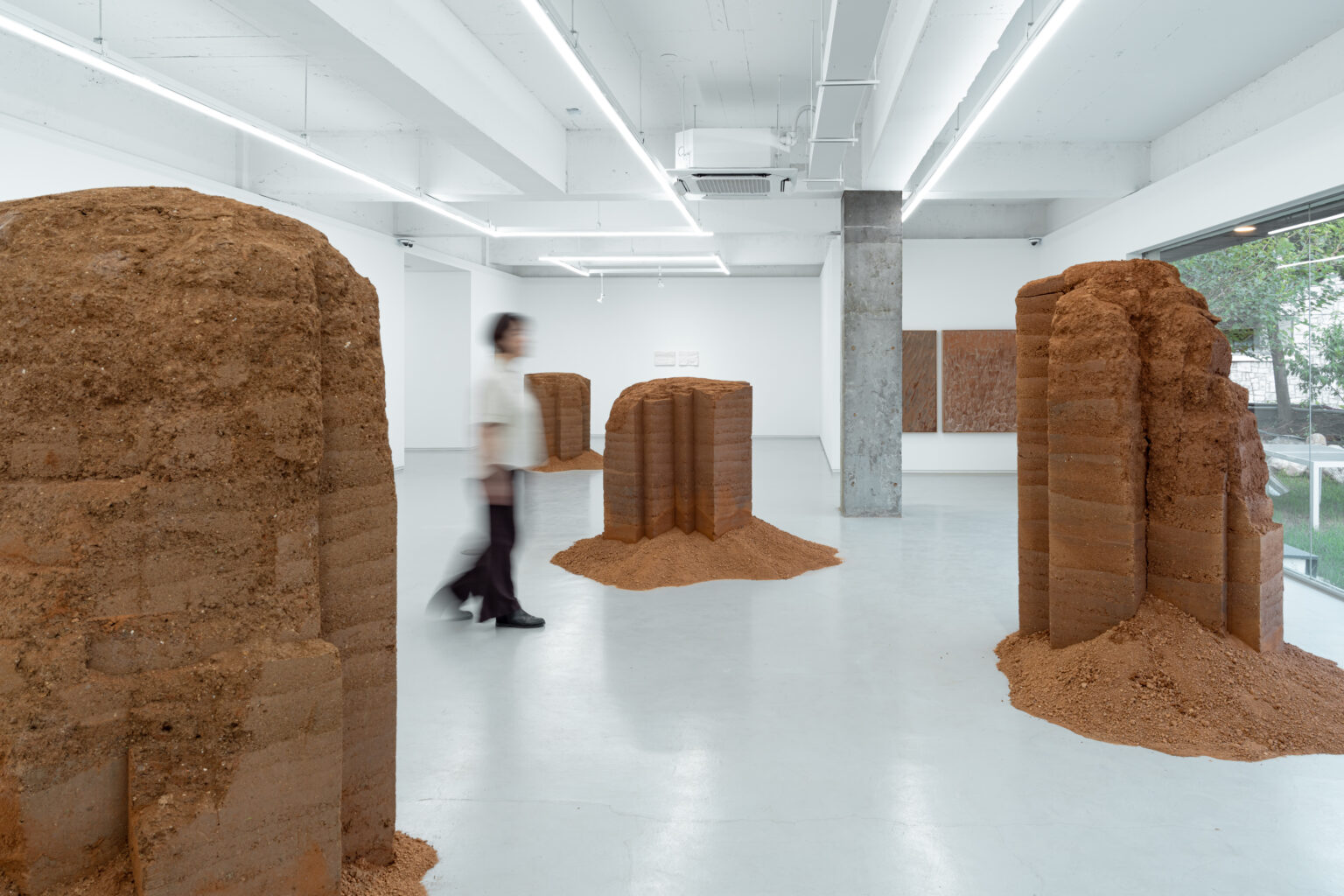
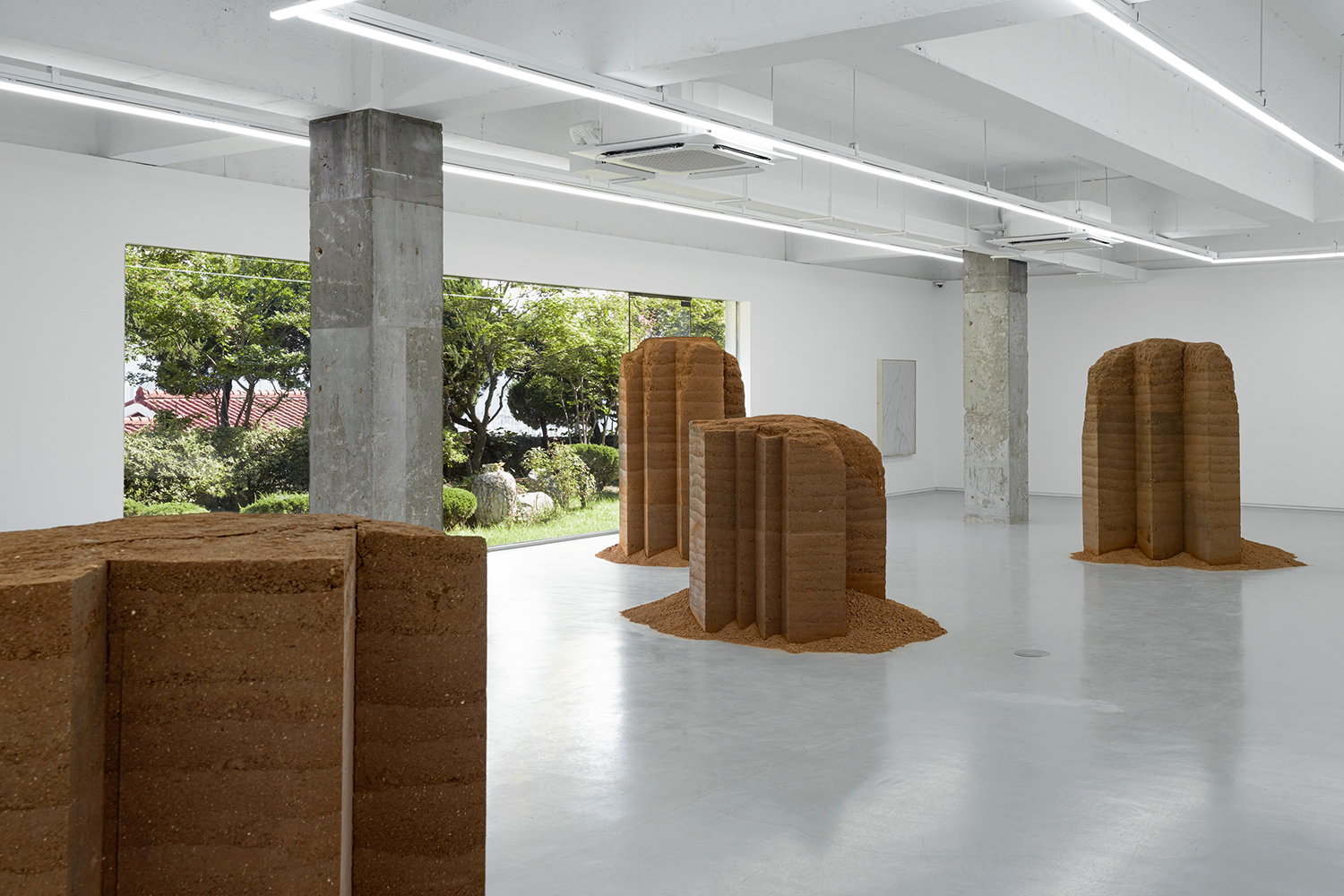
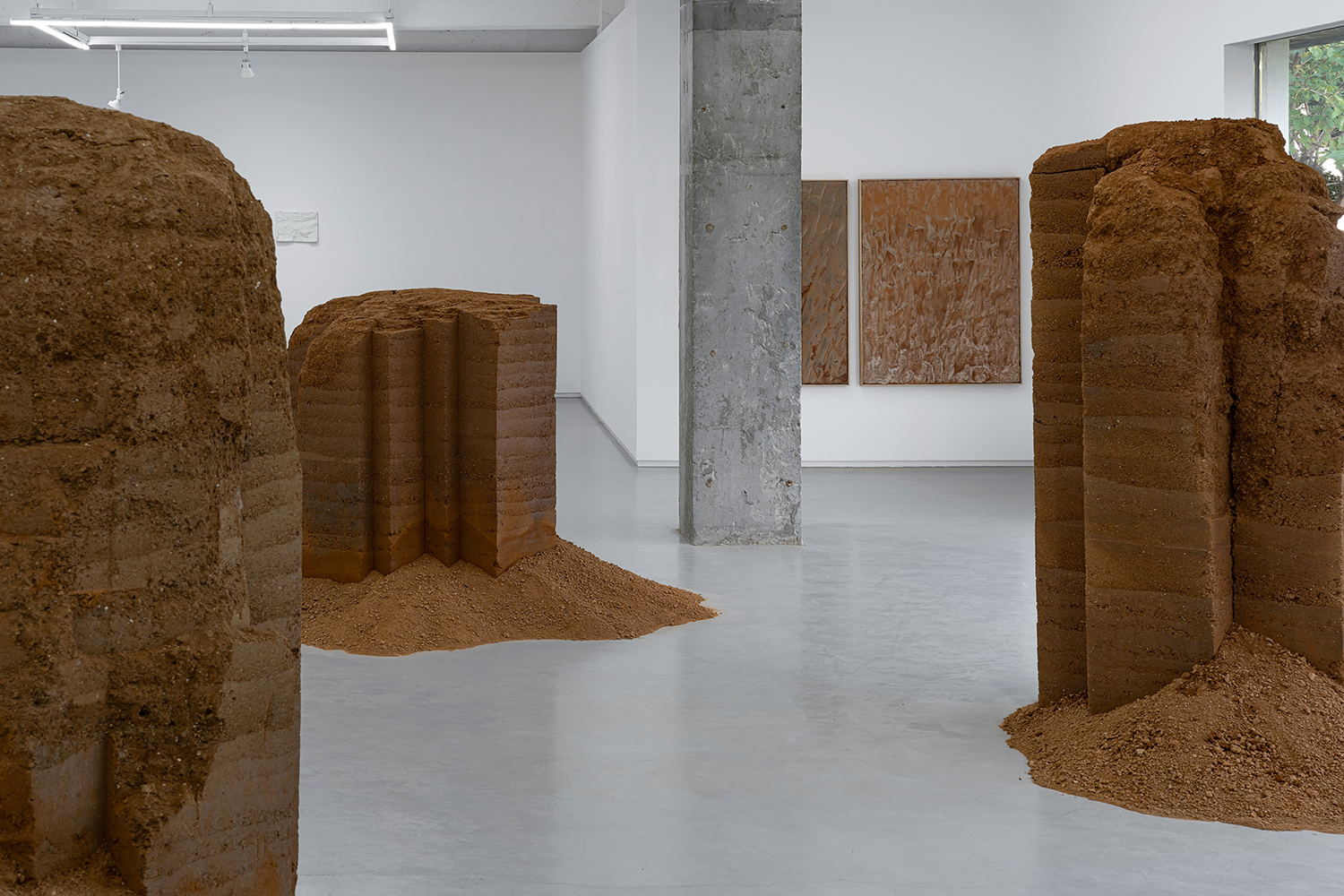
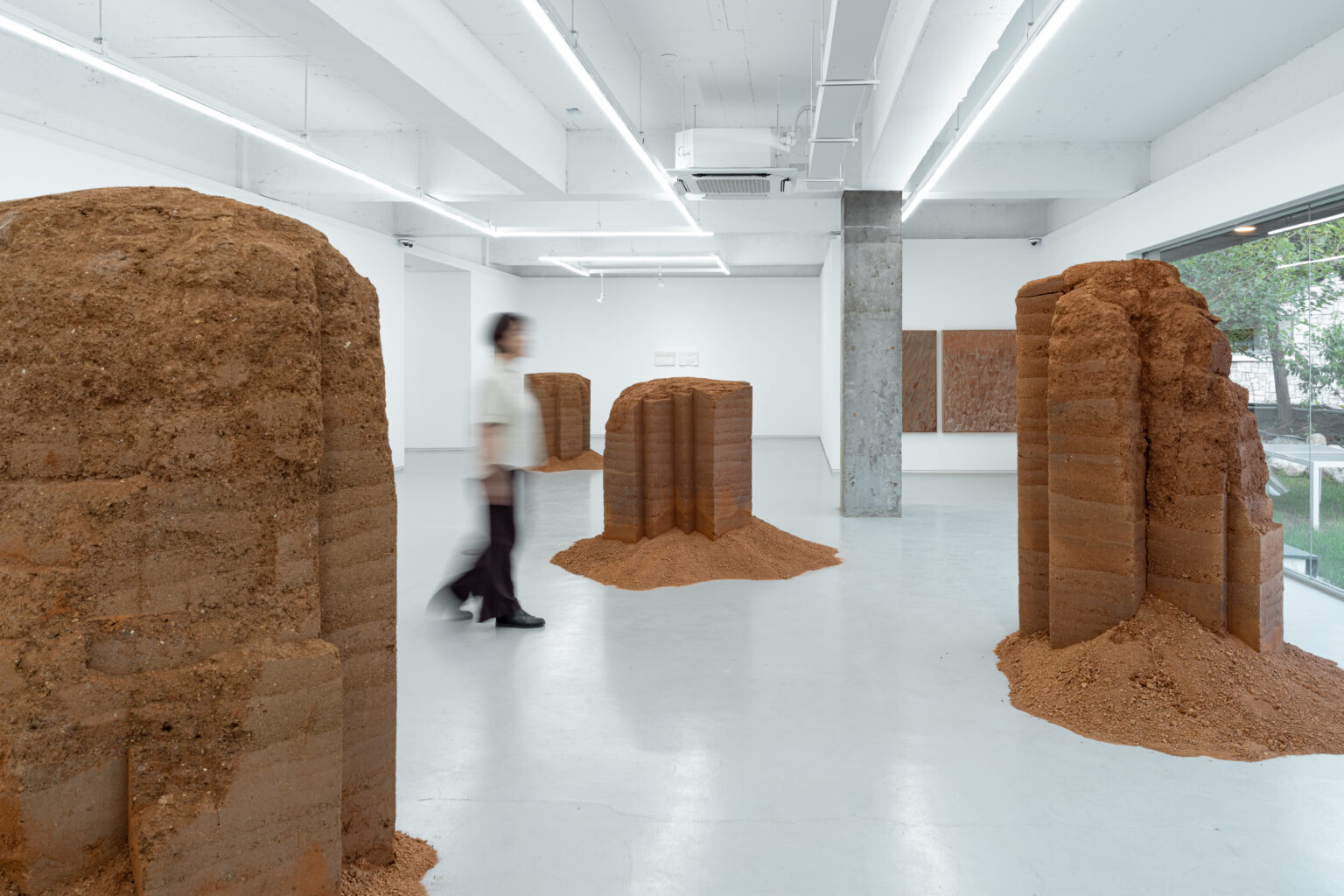
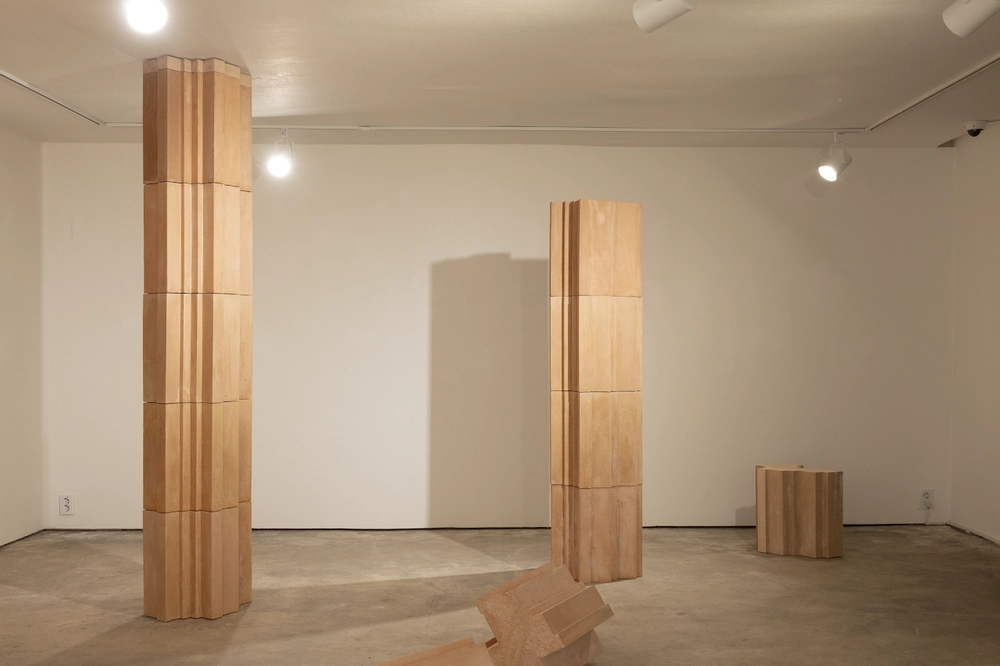
Upon entering the exhibition space, several “masses of earth” first come into view. Their condition is elemental and primordial in itself. Rising—or perhaps collapsing—like peaks, graves, or monuments, these masses occupy a considerable amount of space in the exhibition, both physically and conceptually.

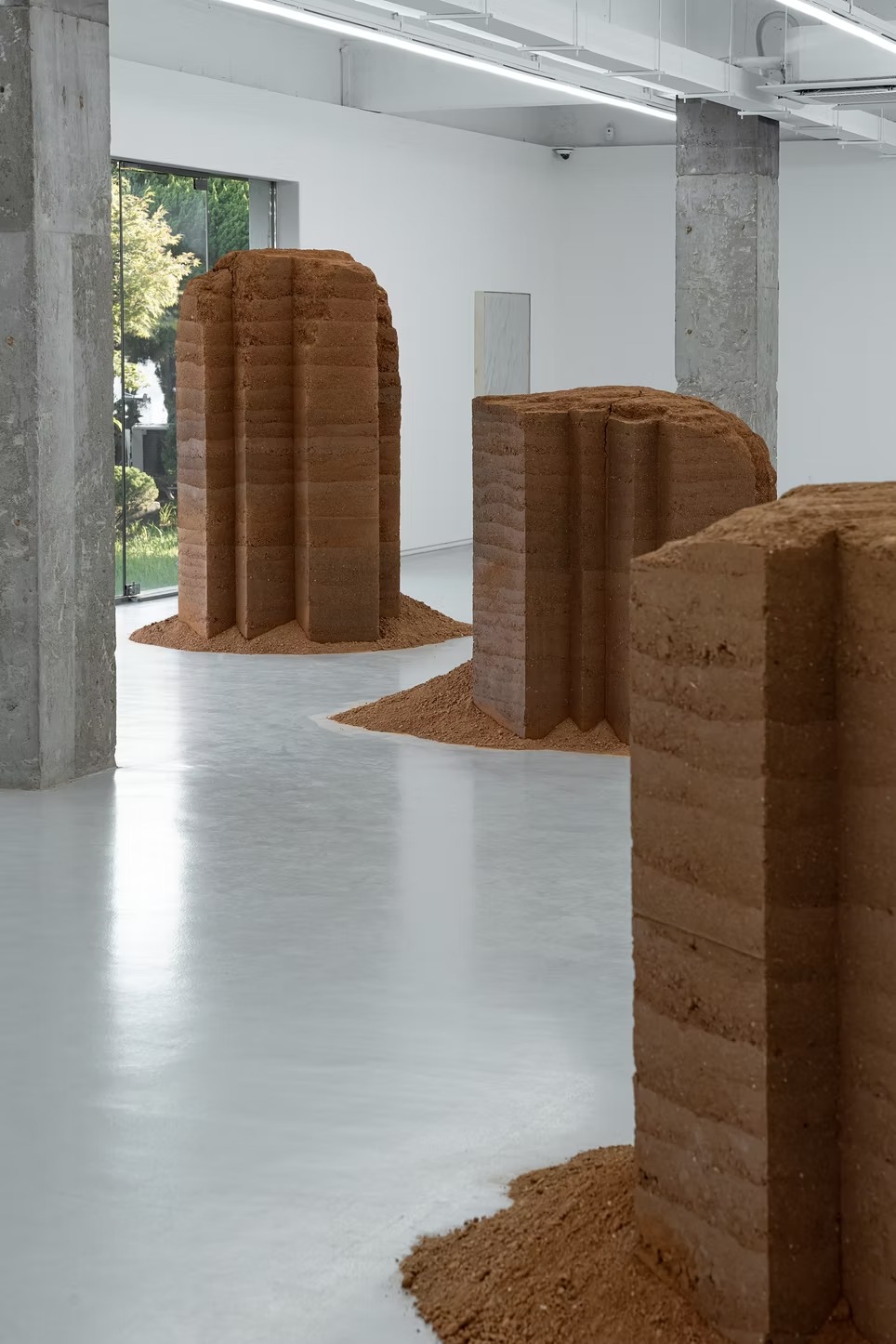
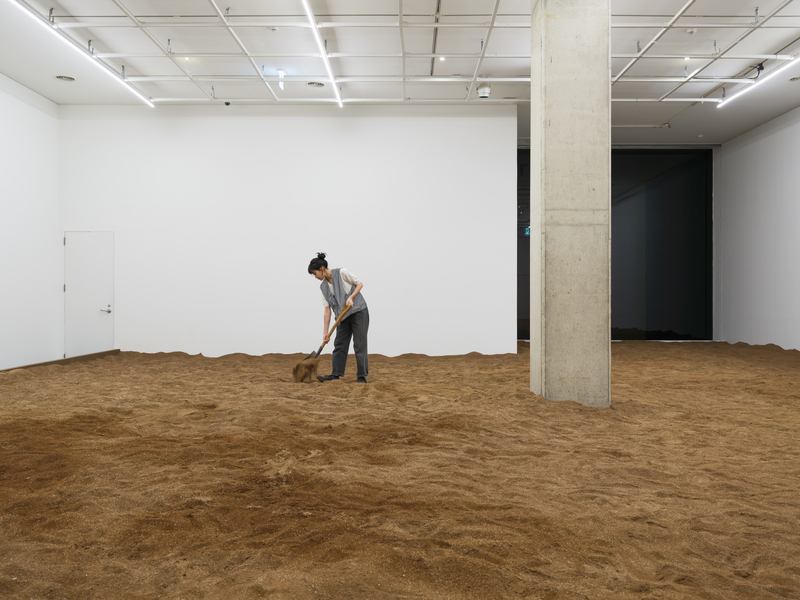
Within the simple, unadorned process of mixing earth with water, kneading it, and compacting it into firm forms are layered the materials, methods, and ideas that run throughout the artist’s practice. First, we might speak of “sedimentation and erosion.” The artist repeatedly pours kneaded earth into prefabricated molds and presses it forcefully from top to bottom to establish its shape.

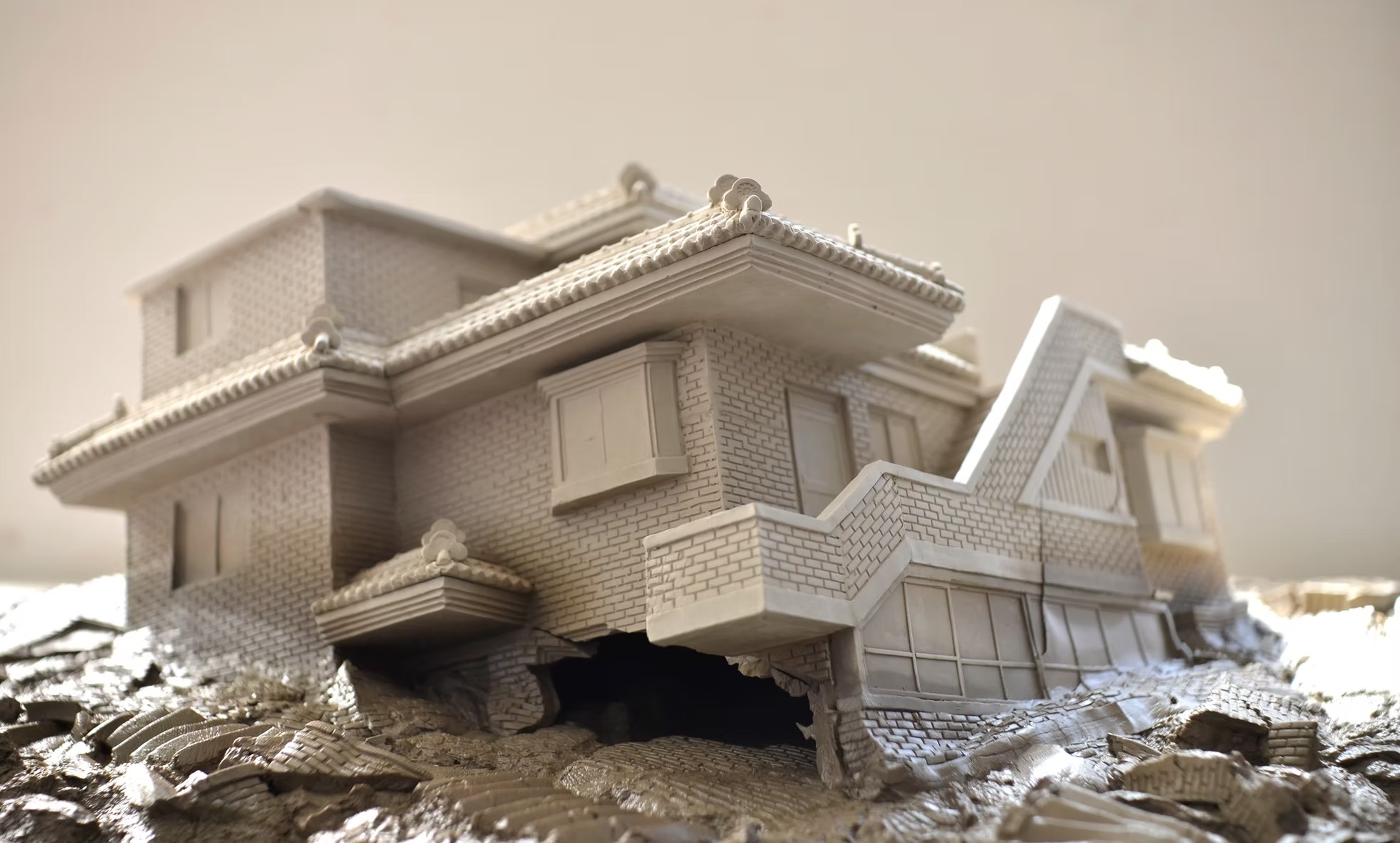
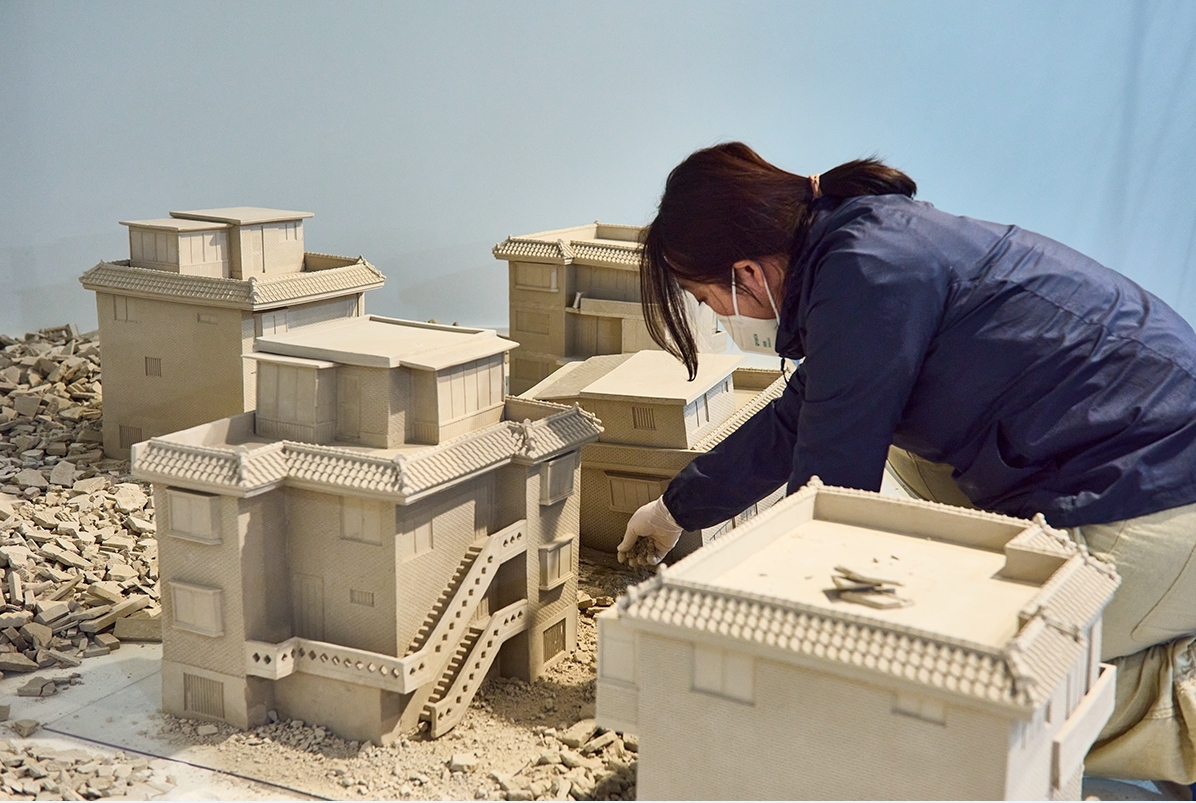
Each mass is formed by continually “building up” thin “strata” and, when necessary, “cutting away” parts of them. This process, which evokes a kind of sedimentation and erosion, also recalls earlier works using earth and water, including the 'Wet Matter' (2020–) and 'Hwigyeong_Evanescent Landscape' (2009–) series.

Certain to collapse once more and return to earth after the exhibition ends, the works overlap the momentary and the enduring, appearing as scenes that question the emergence and dissolution of existence as part of a cycle. By understanding earth, water, and the human body and labor as both indispensable conditions of life and ambivalent forces capable of nullifying everything, the works seem to embody the fundamental principles of the world and naturally provoke reflection on the elemental conditions of existence: creation and dissolution.

Some viewers may be swept up in this primordial intuition and recall that water and earth have accompanied humanity since its origins. They might think, for instance, of Prometheus shaping humans by mixing earth and water, or of Mesopotamian myths in which humans were created from a mixture of clay and divine blood. They may come to regard earth as the site of creation, transformation, and death—as something that activates the concreteness and vitality of life, gives sensation to the world, sediments and erodes existence, and thereby enables the cycle of life.


Installation view of 《Matter Ridge》 © MO BY CAN

How, then, might we set this reflection on origins—something that approaches us through an intense and undeniable intuition—into circulation once again? Can the processes of formation and collapse, erosion and sedimentation witnessed in the materials and methods of the work be expanded into a broader context, understood as primordial movements that never come to rest?

As in the artist’s recent exhibitions 《Earth's Treasure》 (Boan 1942, 2025), 《Pluto》 (Museumhead, 2024), and 《Seoul-Style》 (SPACE ÆFTER, 2024), the masses of earth in the exhibition are shaped using molds modeled after apartment floor plans. By compacting earth collected and acquired from various locations into cross-sectional forms of apartment buildings—symbols of urban development—the artist once again gives form and material presence to traces of disappearance, or to their forgetting.

This method connects not only to the recent 'Column' series (2024–) but also to her earliest works. In other words, the elemental and absolute qualities intuitively evoked by earth in her recent practice can be understood through the artist’s longstanding attempt to contain and mediate multilayered temporalities beyond immediate representation and visual or tactile perception.

Within the same context, we may recall the artist’s earlier works—such as the aforementioned 'Wet Matter' and 'Hwigyeong_Evanescent Landscape' series—once again and somewhat differently. Having witnessed the redevelopment of Hwigyeong-dong, Seoul, in the late 2000s, the artist researched actual buildings for the 'Hwigyeong_Evanescent Landscape' series, meticulously reconstructed them in earth, and then poured water over them immediately before the exhibition, presenting their collapse under the forces of water, earth, and gravity as a contemporary landscape.

Within this compressed time of gradual erosion and collapse, the works invited viewers to contemplate disappearing sites and traces of life through a dual condition and an implicit process of transition. This compressed temporality and specificity, together with the abstracted spaces of capitalism, still evoke today—and at an even greater speed—the excessive accumulation of construction and destruction, as well as the poverty produced by it.

Hwigyeong-dong, the subject of the work, continues to exist as an administrative district, yet its strata have been sedimented into physically and socially different textures through repeated processes of redevelopment, demolition, construction, and relocation. Its alleys and houses have disappeared, while the newly built apartment complexes have outlasted the cyclical temporality fashioned by the artist.

There, earth may have been transformed from memory or monument into little more than building material or a term in real estate. The same condition applies directly to the Hannam-dong area where the exhibition is being held, to the neighborhood in which this text is being written, to residences across Seoul—including those of visitors to the exhibition—and, further, to the global situation.

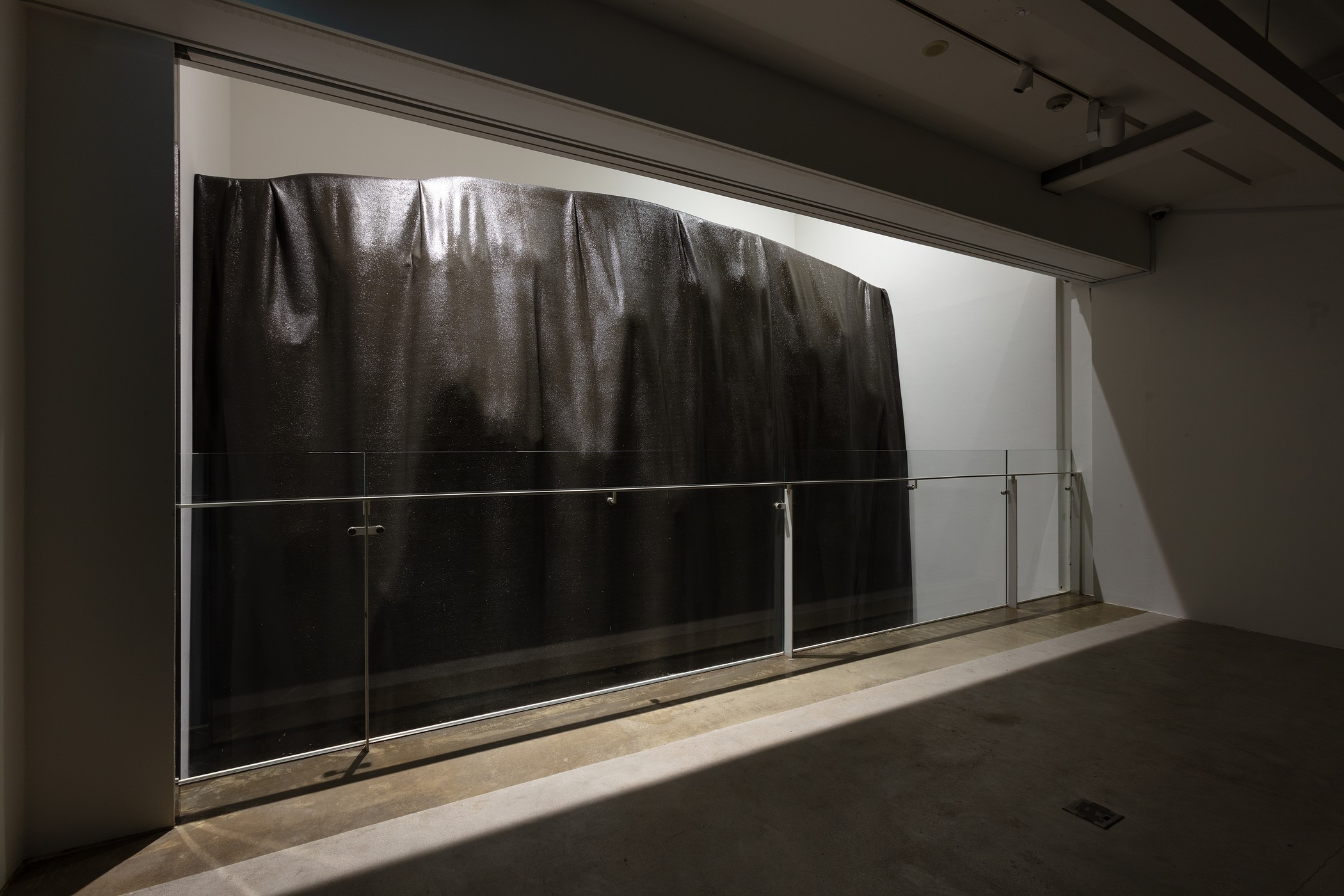
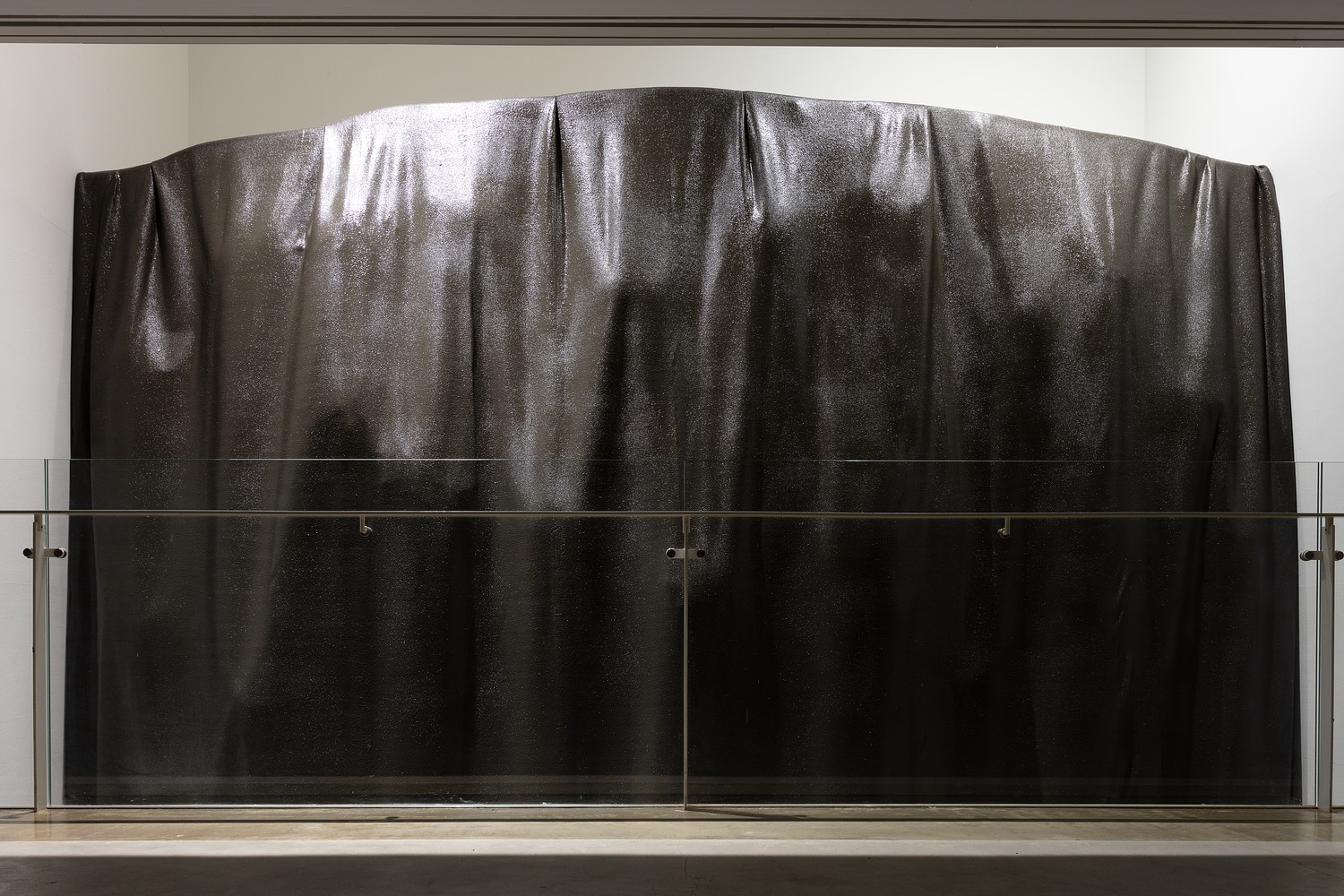
This may be why Matter Ridge 03 (2025), positioned before the window, and the multiplex houses and apartment complexes visible in the distance appear at once as a scene encapsulating the double-edged outcome of reality found in the artist’s earlier works and as a universal view embedded in everyone’s everyday life.


Installation view of 《Matter Ridge》 © MO BY CAN

In this way, the elemental and absolute qualities of Juree Kim’s recent work can be reconsidered through what followed her somewhat obsessive acts of representation: after the models and specificities of an era dissolved and disappeared in water, or through their sedimentation and erosion. The role once played by earth and water, which directly traversed scenes of urban development, is no longer confined to particular regions or events but now converges with the shared physiology of urban landscapes across the globe.

Might the detailed realism of her earlier works have been condensed and expanded once again into her recent practice, which passes through specific times and places to embody a more primordial temporality? As a result, might the exhibition landscape appear like a historical scene or an ancient origin—somber, yet profoundly universal? Here, earth evokes another meaning of sedimentation both within and beyond the work.

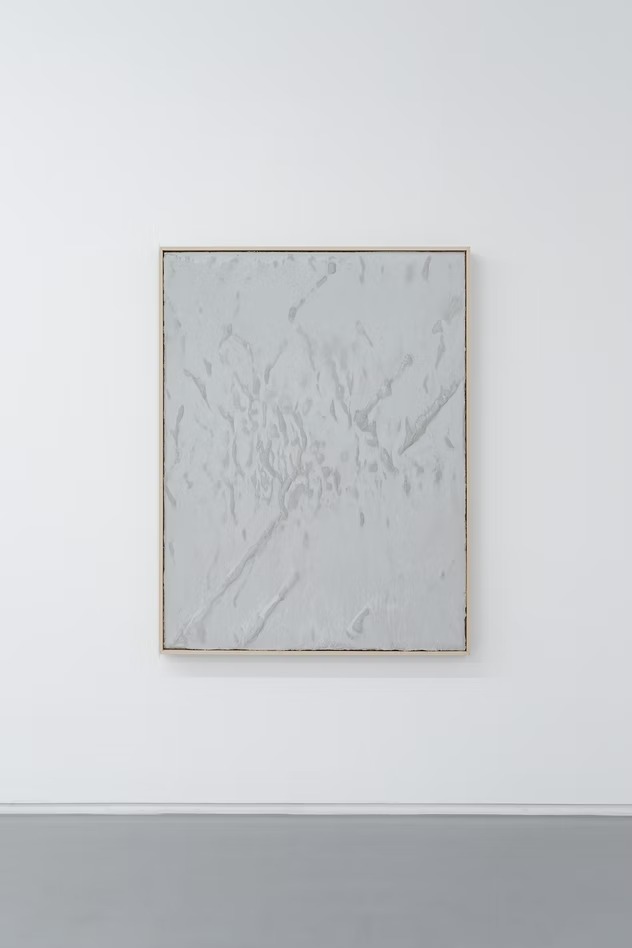
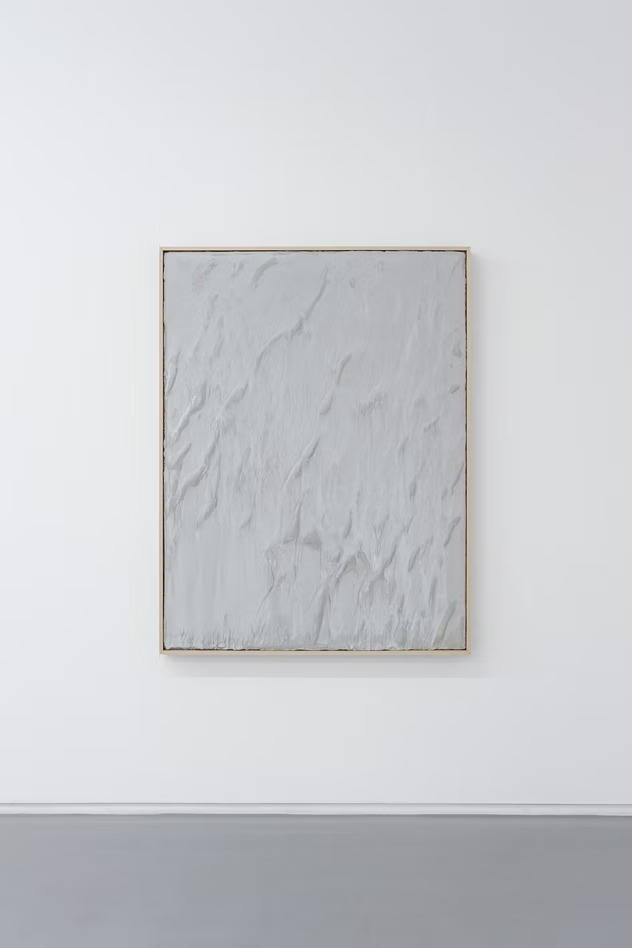
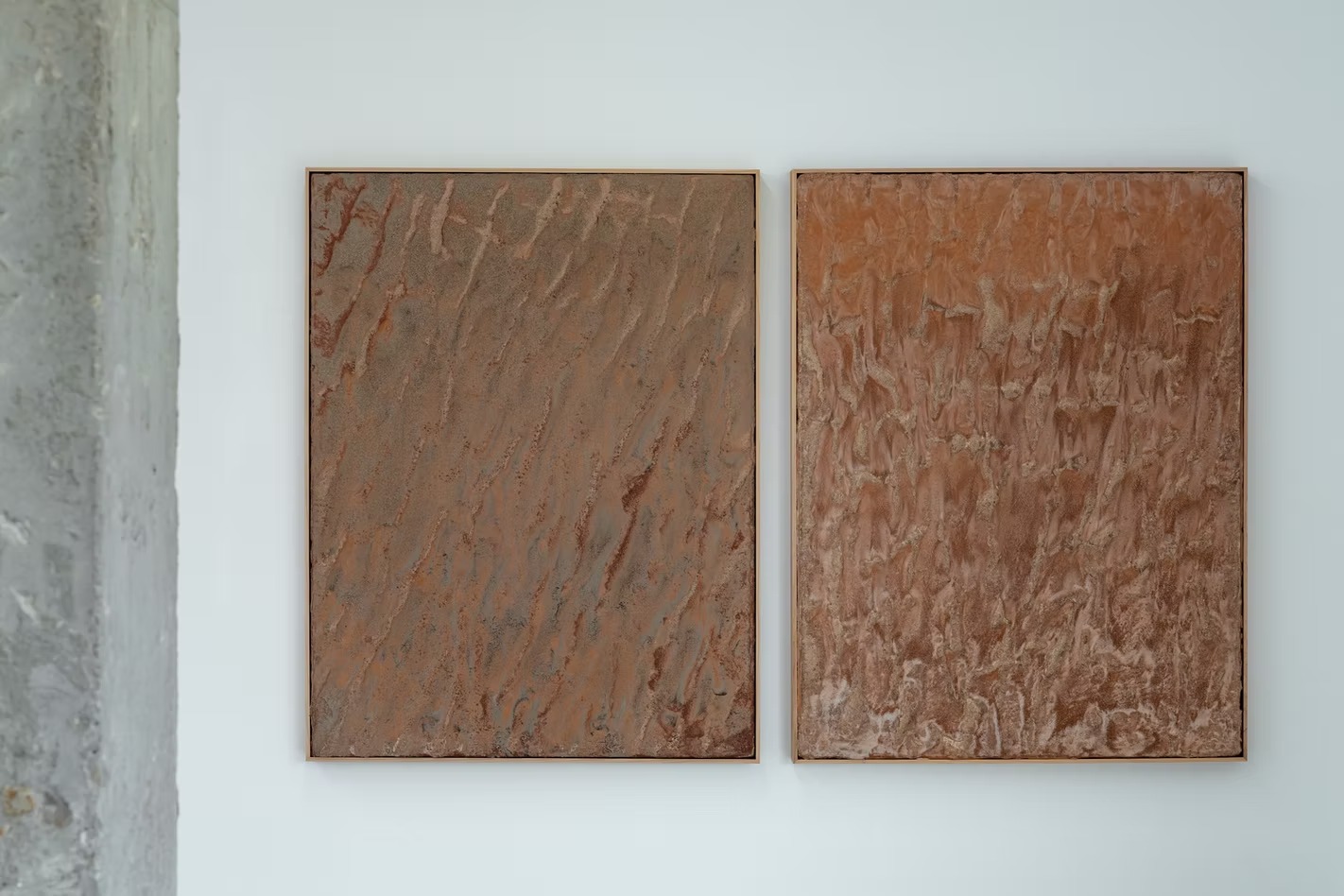
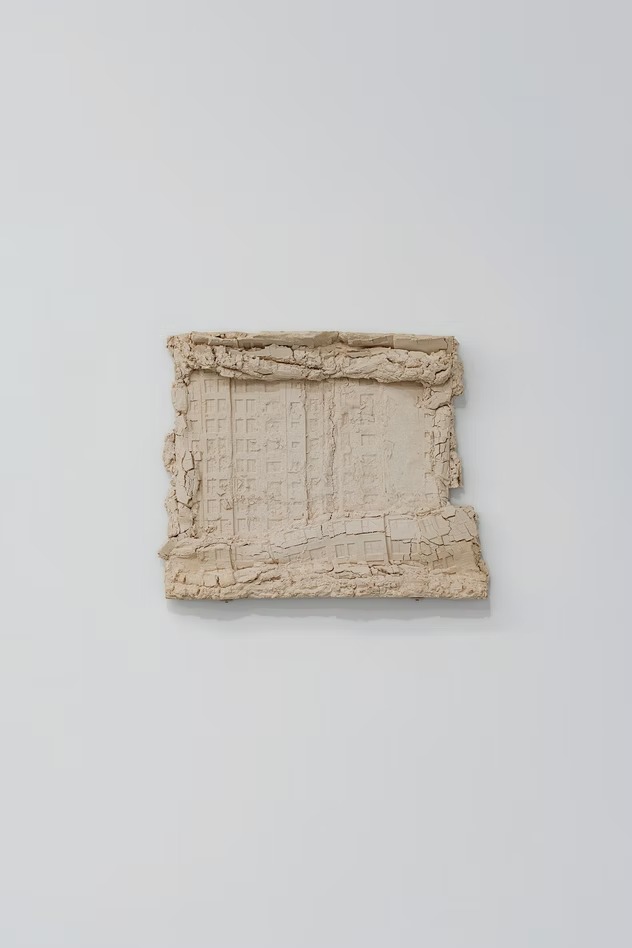
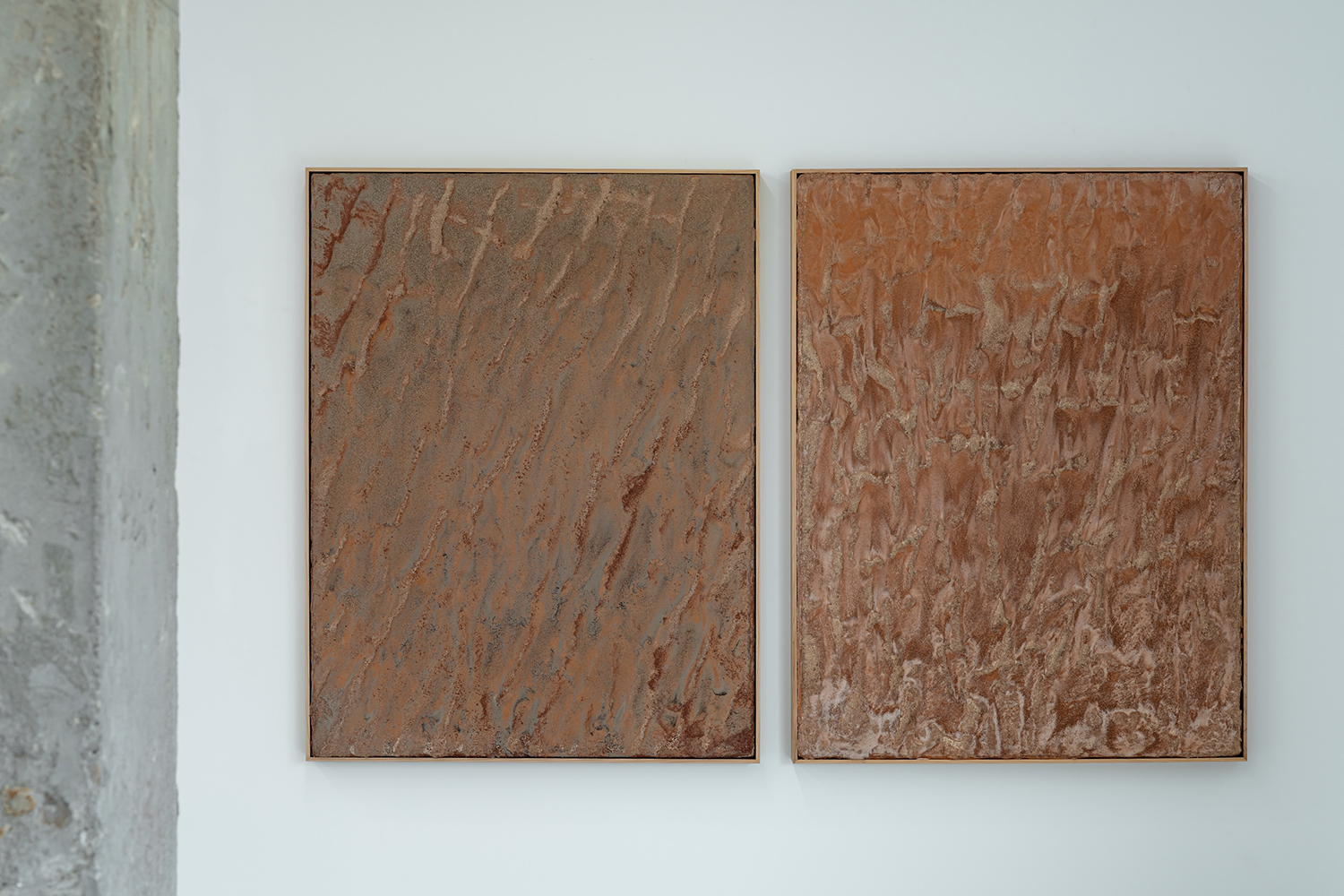
While calling to mind repeated scenes of development from afar, it also appears as an “earth/mass” formed not through momentary change or a simple decision, but through the accumulation of long durations, countless relationships, and actual events layered one upon another. The wall-mounted 'clay tablet: Seoul-style' (2025) and 'desert' (2025) series likewise reveal the intimate relationship between material and memory that runs throughout the artist’s practice.

The surfaces, where earth and water have solidified together, seem to embody scenes of natural dissolution through accumulated traces of time. At times, like cross-sections exposed by cutting through sedimentary strata, their surfaces bear fine cracks and marks where creation and dissolution intersect. Before them, viewers may encounter a certain absoluteness.

This is not the capture of a single moment or a realistic representation, but a scene in which disappearance and endurance, transformation and preservation interlock while condensing an extended span of time. Matter emerges as a cross-section formed by memories supporting one another, allowing us to sense an irreversible flow within an absolute point of encounter.

What if the relationship among water, earth, and time described above were extended beyond the general dimensions of place, material, the city, and society to encompass the contemporary media environment and cognition as a whole? We might ask how sensations of memory and time formed upon material foundations come into contact with other processes of accumulation and disappearance, transformation and preservation.

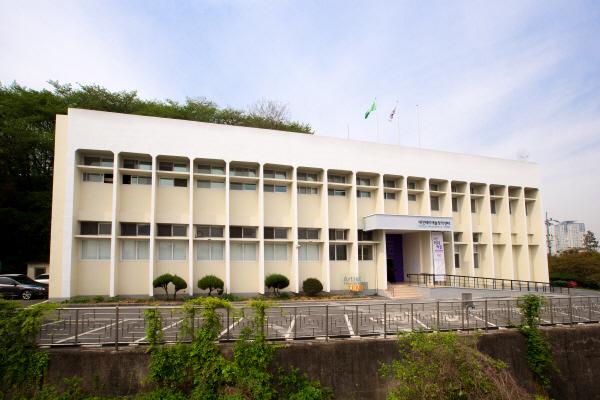
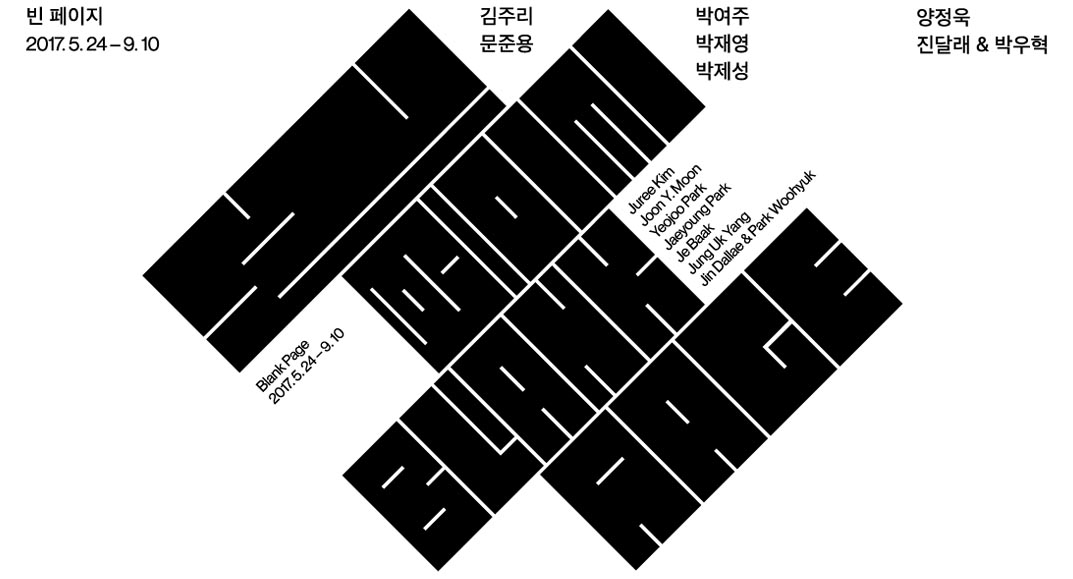
In this context, the “water and earth” in Juree Kim’s work operate as media that reorganize structures of sensation and perception, extending their field of action into the contemporary cognitive environment. In exhibitions such as 《Impermanence》 (Project Space SARUBIA, 2017) and 《Blank Page》 (Kumho Museum of Art, 2017), the artist expanded the landscapes of 'Hwigyeong_Evanescent Landscape', formed through the encounter of earth and water, into more abstract modes of thought.

In these works, various places, environments, sounds, objects, and media were invoked as substitutes for memory and time. Given the premise that the artist has continuously explored expanded forms of cognition through media, Kim’s interest in “sedimentation” can also be connected to the immaterial accumulation formed by digital images, networks, and data.

Her central motifs of “earth and water” thereby become metaphors for such media conditions and environments, rather than merely sculptural materials. Today, when YouTube, Shutterstock, and countless web platforms for accumulating images have literally become part of everyday life and nature, the sedimentation of memory can be considered from a different angle and horizon.

The houses, walls, and sloping roads seen in the artist’s earlier works now remain in YouTube clips and interviews, as well as in photographs uploaded to blogs. Perhaps it is not material traces but these digital media that “remember” vanished urban landscapes and allow us to “see” those earlier times; sedimentation may now operate not only beneath the ground but also within servers.

In other words, the sedimentary action of “earth” sensed in Juree Kim’s work does not necessarily evoke matter alone. It also calls into question virtual, reproducible deposits; visualized particles of memory that can be replayed and revisited; and networks and clouds measured in megabytes that encapsulate, preserve, and distribute time, place, and context.



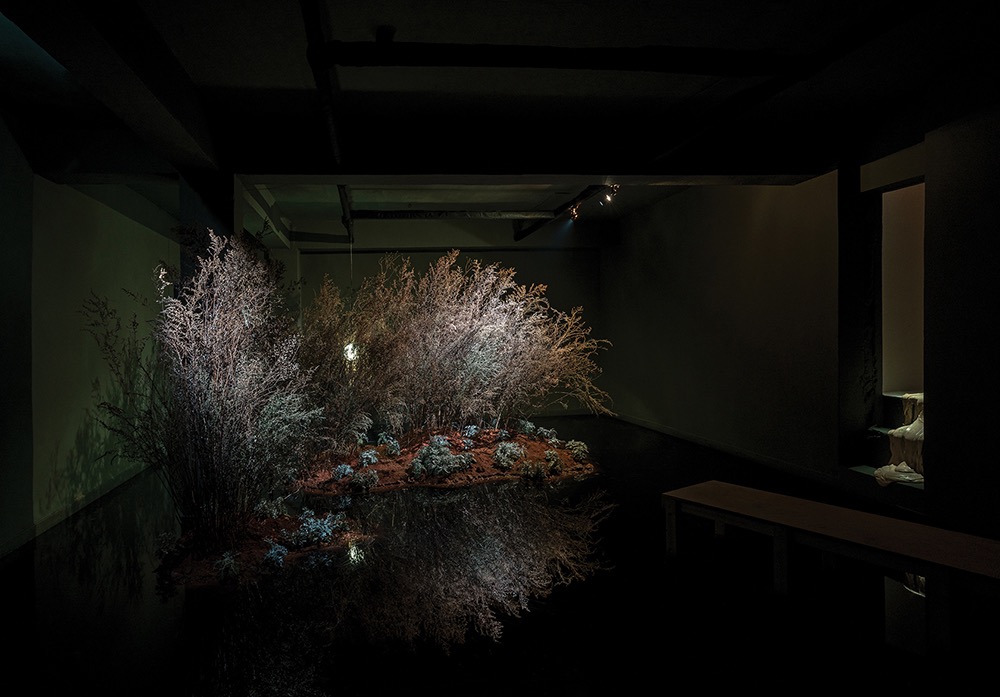
Installation view of 《Matter Ridge》 © MO BY CAN

The earth and water encountered in Juree Kim’s solo exhibition 《Matter Ridge》 should not be anchored solely in materiality or primordial intuition. Beyond excavated and collapsed debris, the silence that bears witness to nothing once it has been covered over, and fantasies that resist representation, there exists a singular material irreducible to anything else.

The exhibition’s “mulsan” functions as both symbol and evidence, prompting multifaceted reflection on the status, authority, and perception of matter. It serves as a symbolic metaphor that perpetuates the act of sedimentation and, at times, emerges as a latent presence within its various pathways, evoking signs of creation and dissolution.

Forming “sedimentary strata” as collective configurations of knowledge and experience and as accumulations of memory, it further implicates the cognition of inorganic contemporary media: an incorruptible death that ceaselessly stores traces while remaining insensible. The masses of earth encountered in the exhibition may thus be read as expansive forms in which bodies and gazes that have directly seen and touched matter, together with the concepts, philosophies, images, and media that have entered into direct and indirect relations with it, are deposited layer upon layer.

In this way, the earth and water of 《Matter Ridge》 remain as forms that testify to what cannot be spoken. The works in the exhibition become residual matter symbolizing the sensory intervals that no single medium can contain, or tombs for what has been erased. It is precisely this sensation that constructs the paradox of asking anew what the act of sedimentation originally meant.
Perhaps Juree Kim’s work stands upon the circulation of this paradox. The sequence of being made and disappearing, and of forming sediment through disappearance, faintly reveals that seemingly solid strata—the structures of their foundations and forms—remain plastic and mutable. This plasticity traverses the primordial intuition of matter, compelling us to reconsider today’s strata of memory, our sense of sedimentation and erosion, the status of matter, and the ways media operate.
Once again, the work is not a preserved remnant of the past, but a site where sensation, time, and the politics of memory intersect. As evidence of what has vanished and a scene still in the process of becoming, it confronts us as an active question: what should we remember today, and how should we allow it to sediment?

References