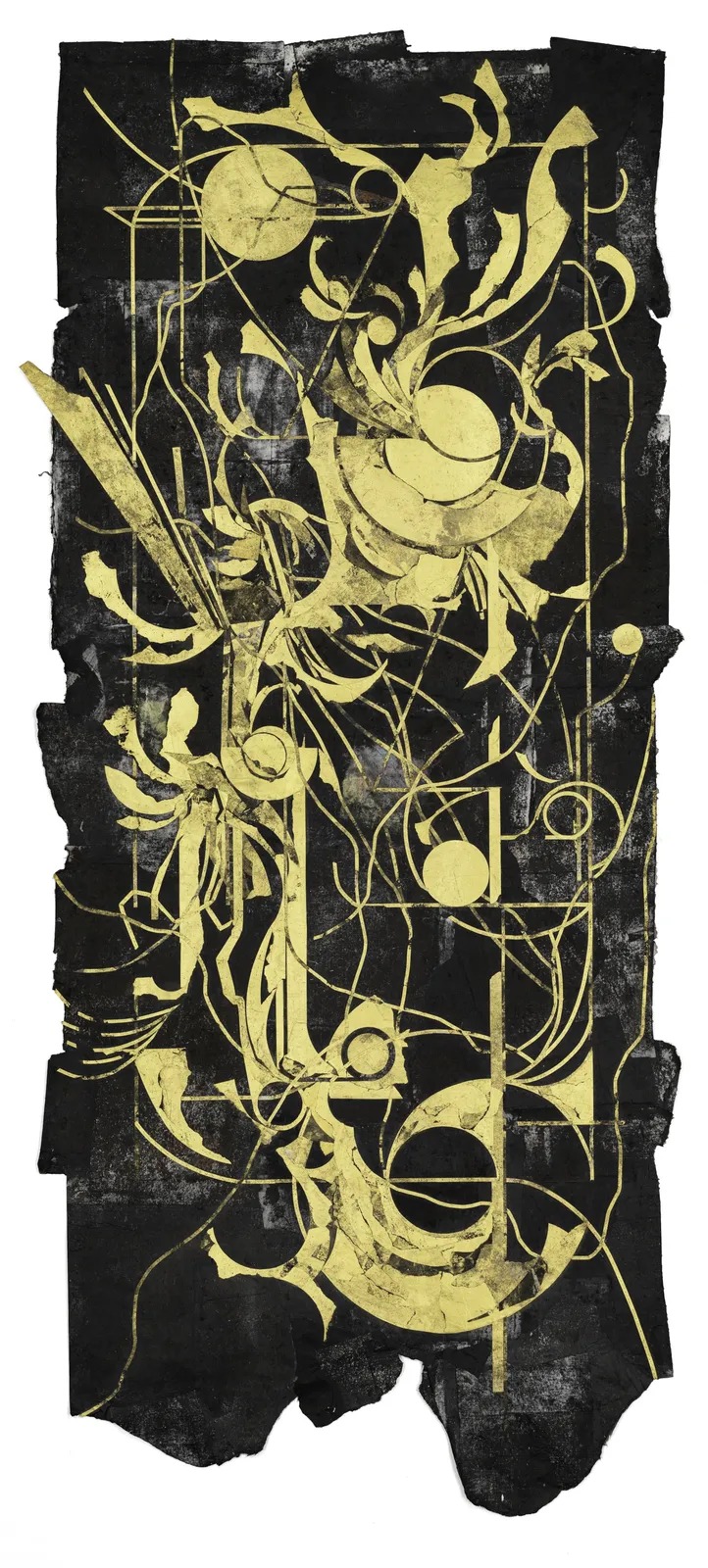
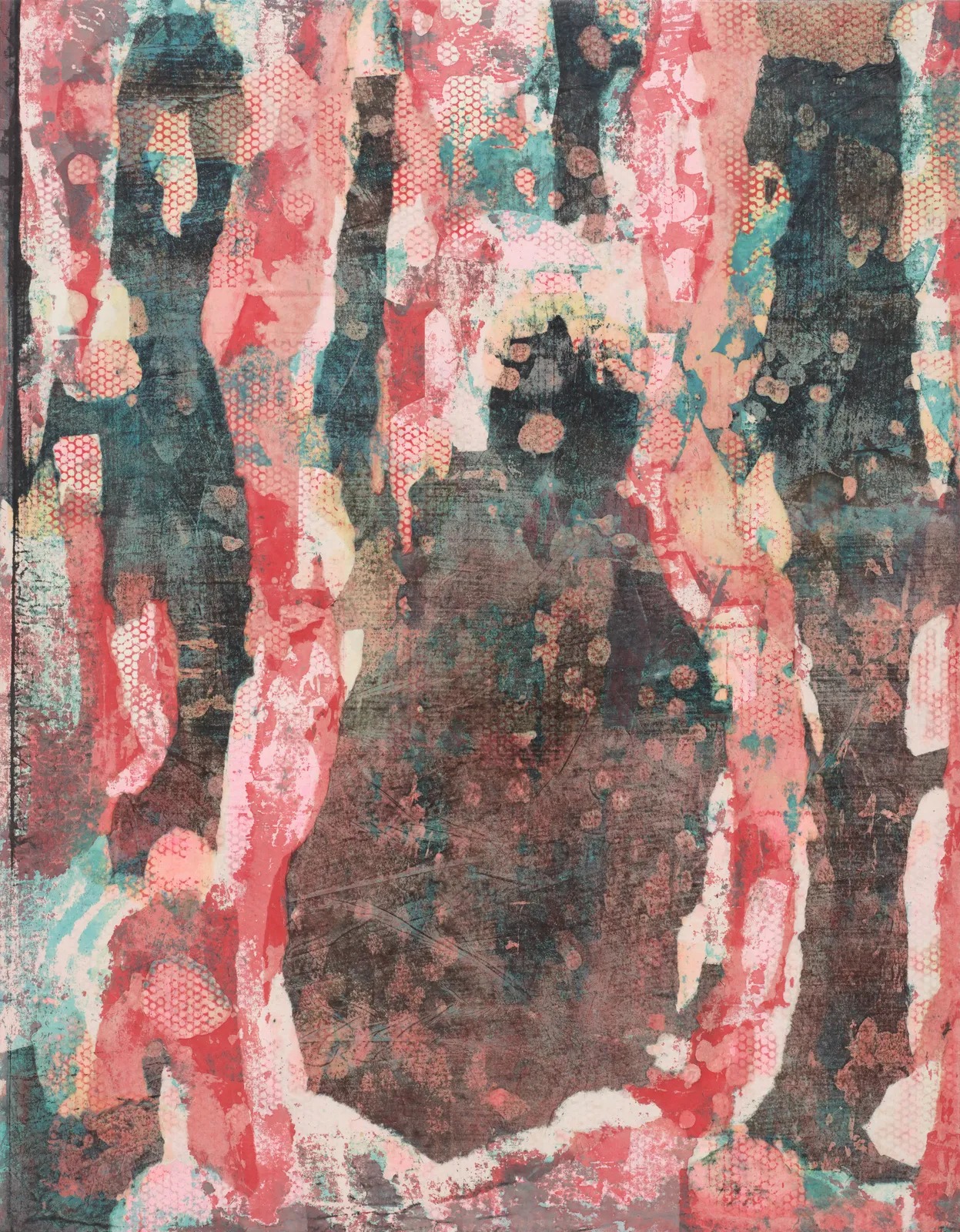
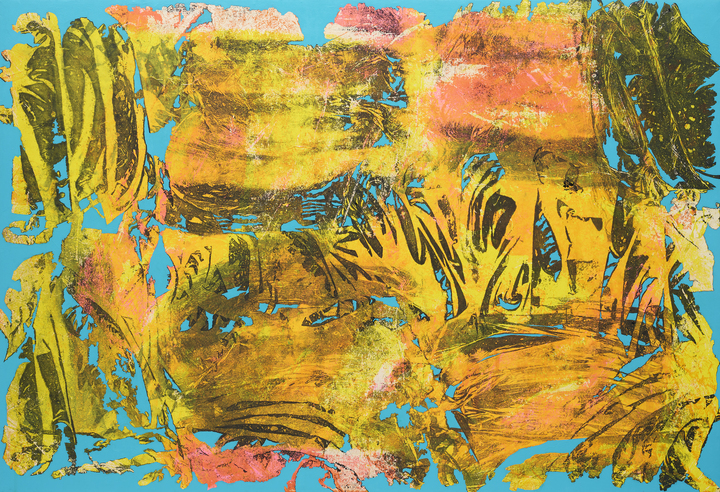
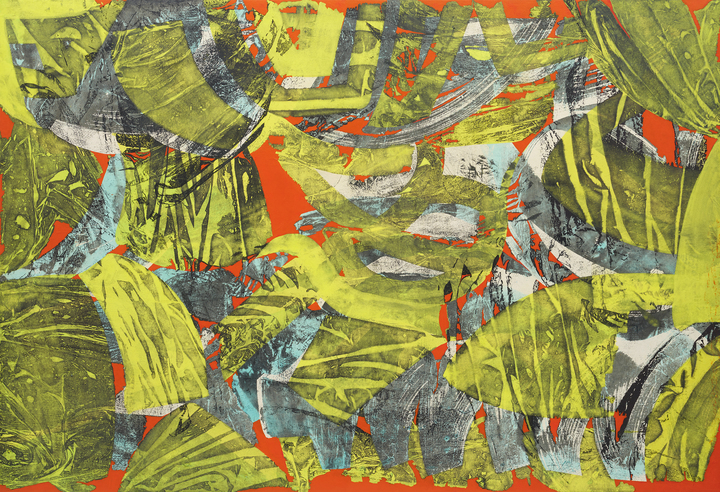
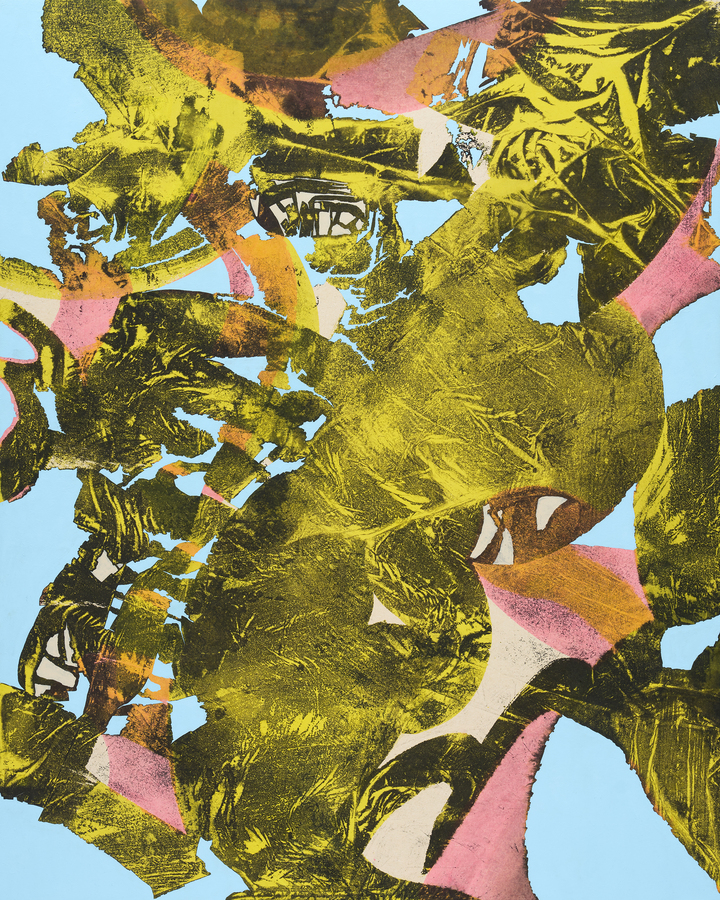
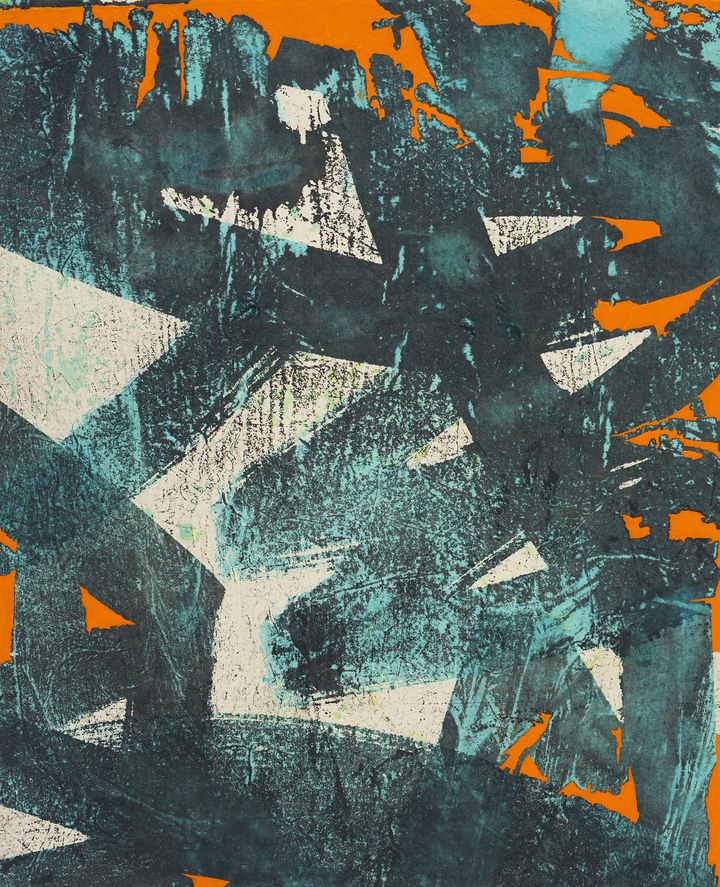
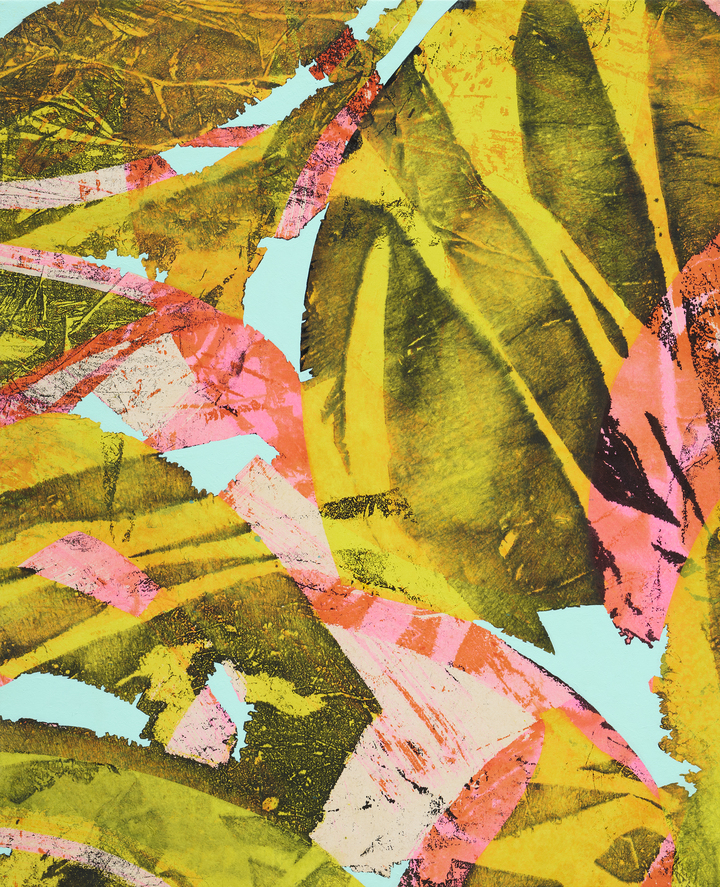
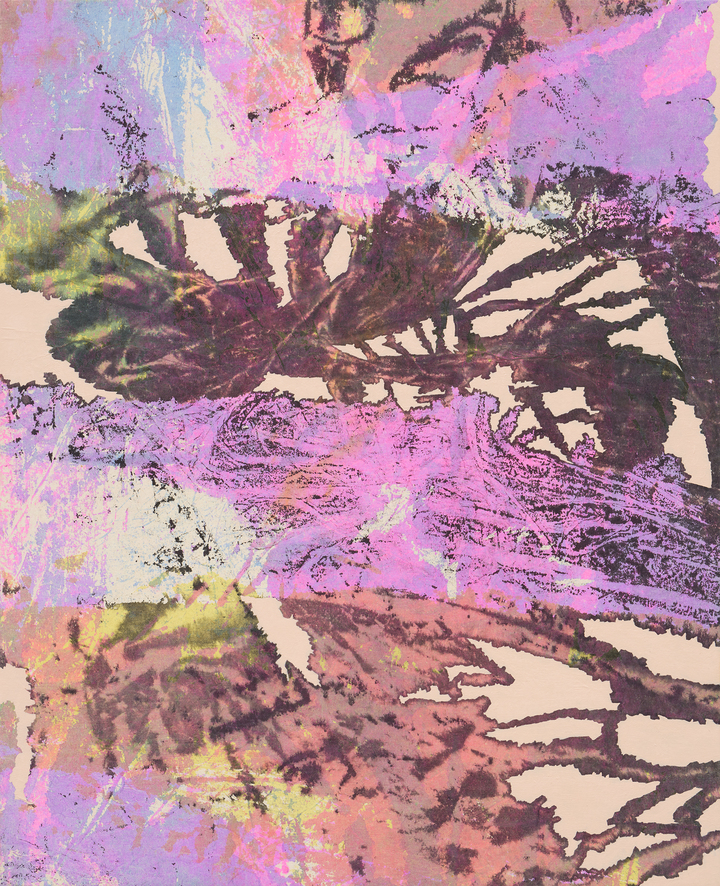
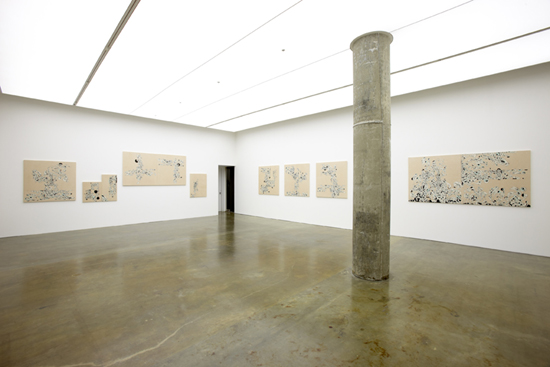
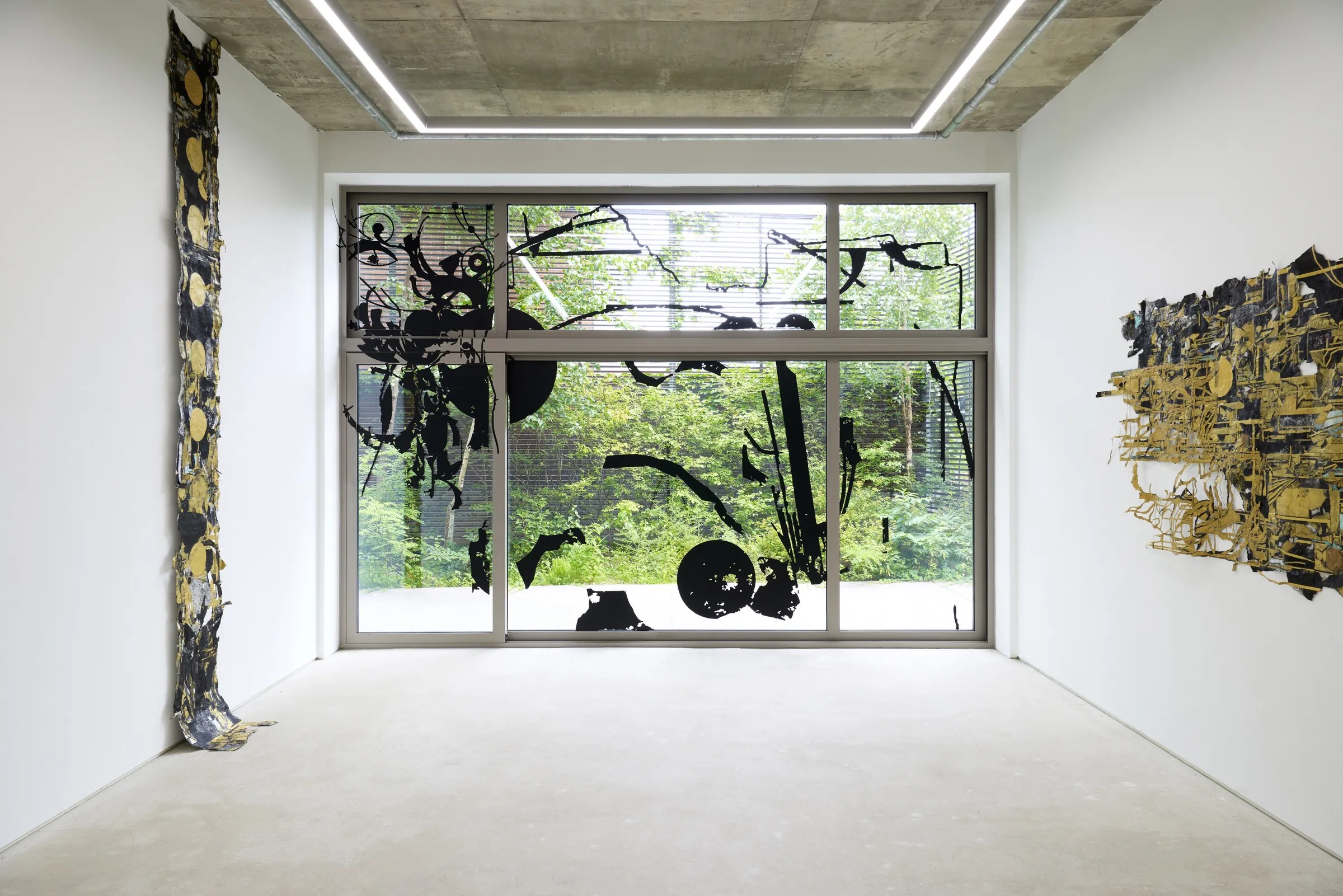
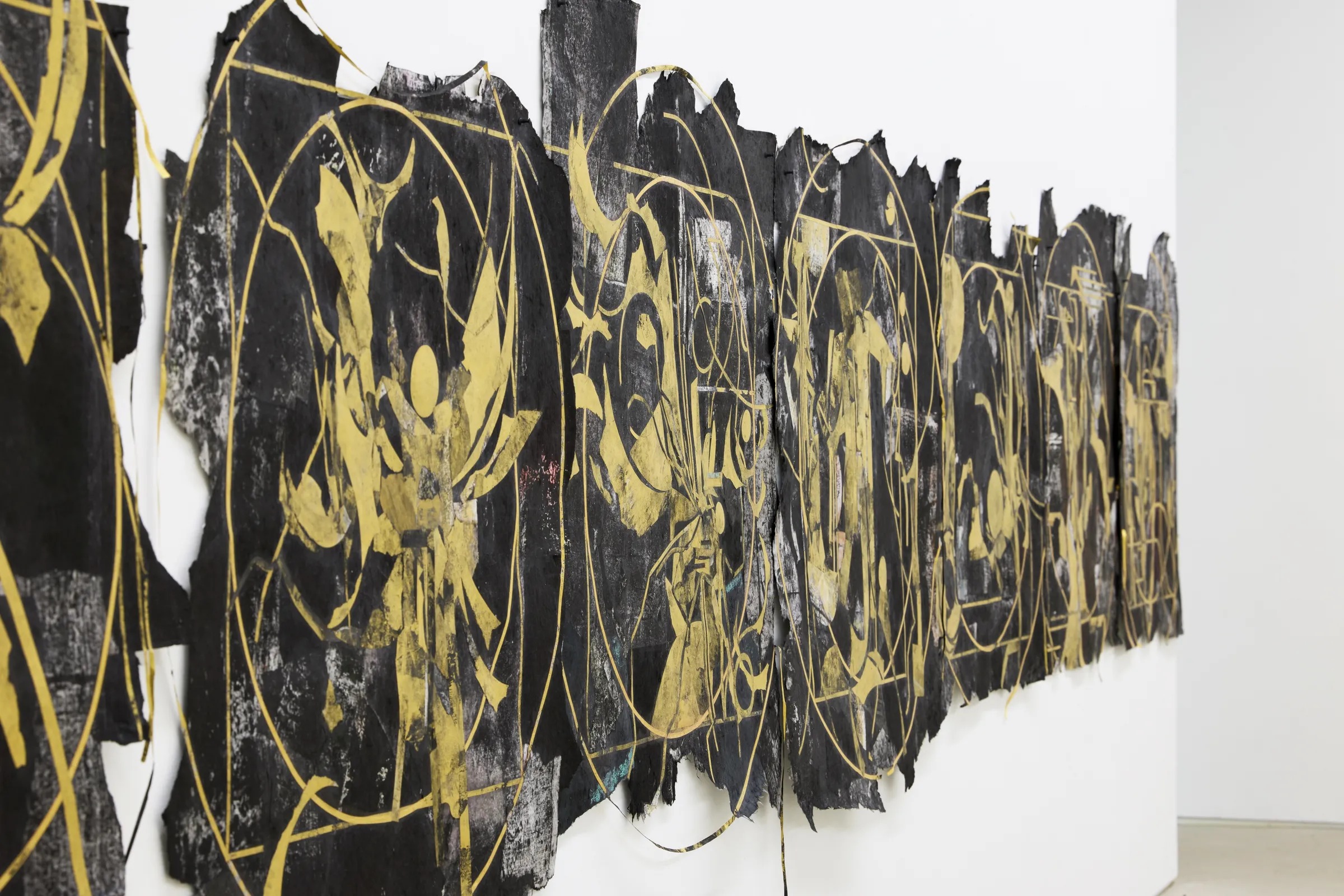
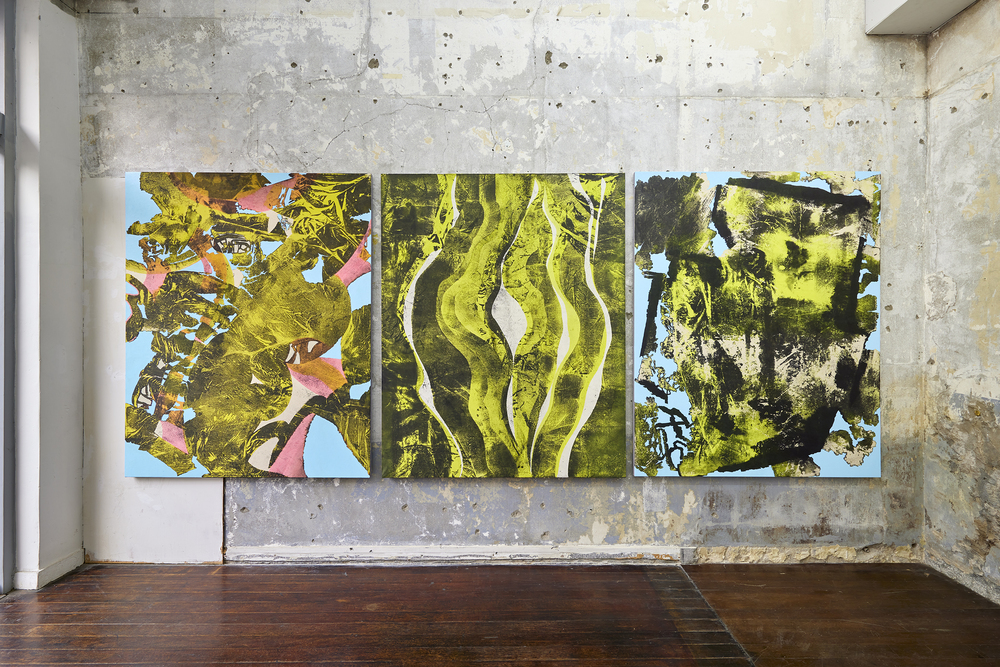
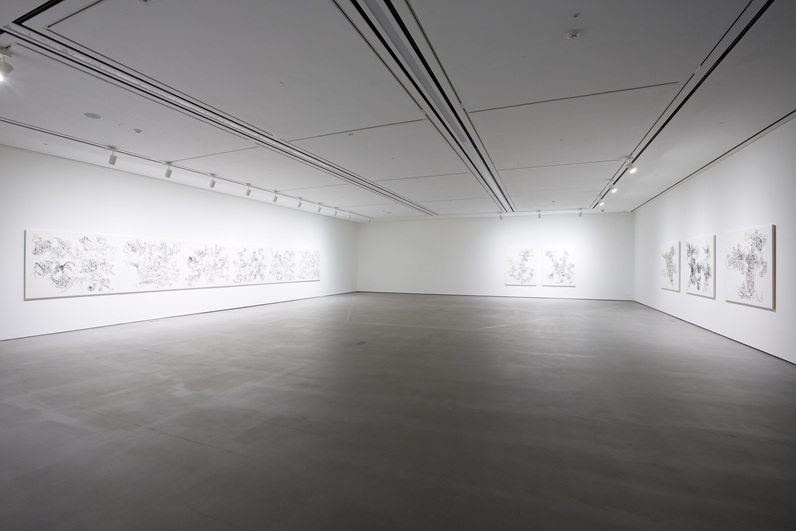
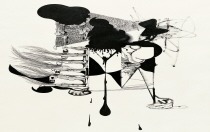
Unfenced 1-17 embodies the agricultural metaphor its title suggests. Just as nōji in the Korean title refers to land free from artificial control, the artist begins on an amorphous ground, setting only minimal parameters of 160×70cm and 70×70cm, constructing eight large-scale works and smaller square canvases.
However, as sloughed-off paper and suspended fragments from previous works move freely across the inside and outside of the frame building form, the initial boundary is neutralized and the canvas expands unpredictably. This process, where intention collides with chance and intervention repeats, evokes the uncertain fate of densely planted crops that must survive while fully exposed to the elements
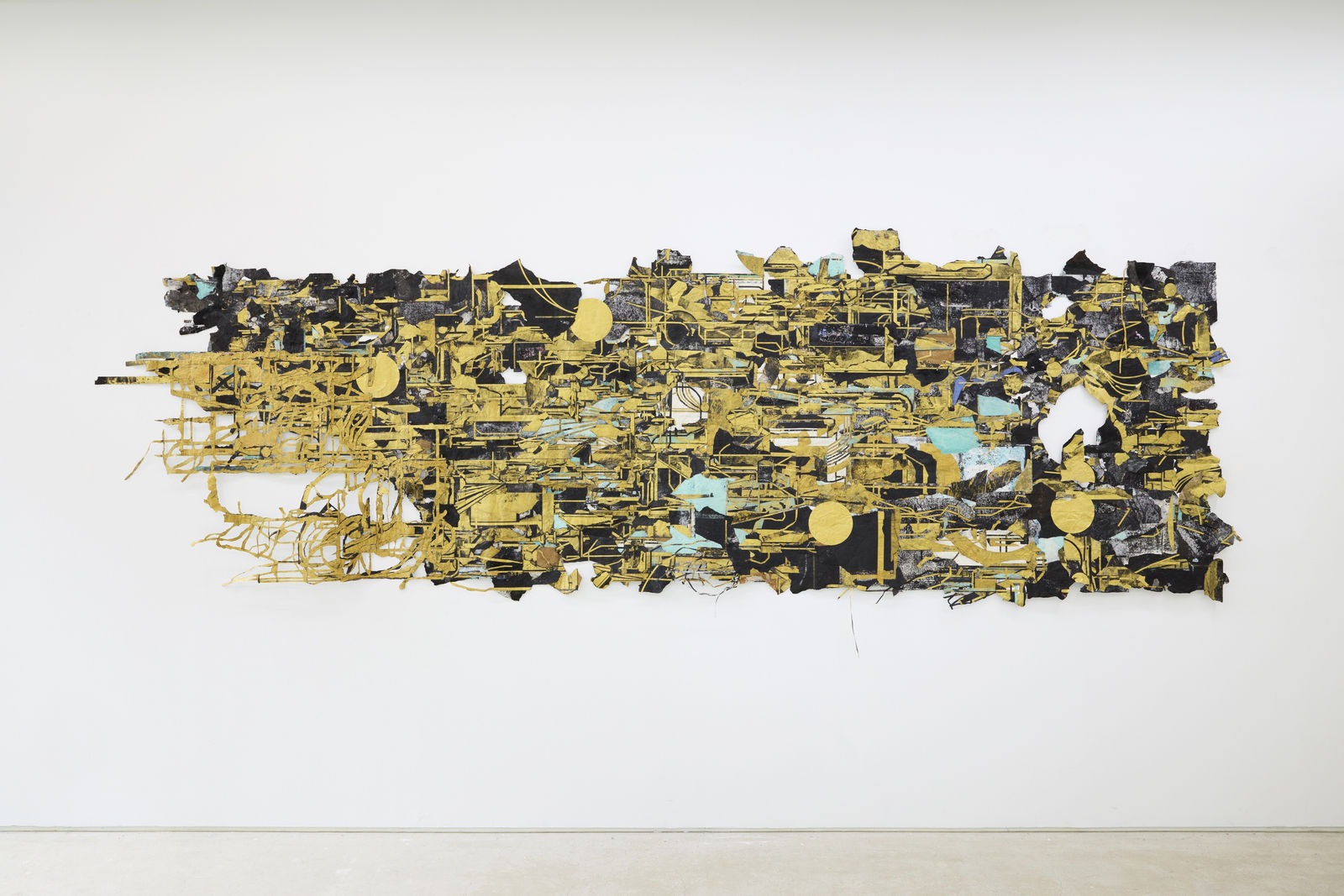
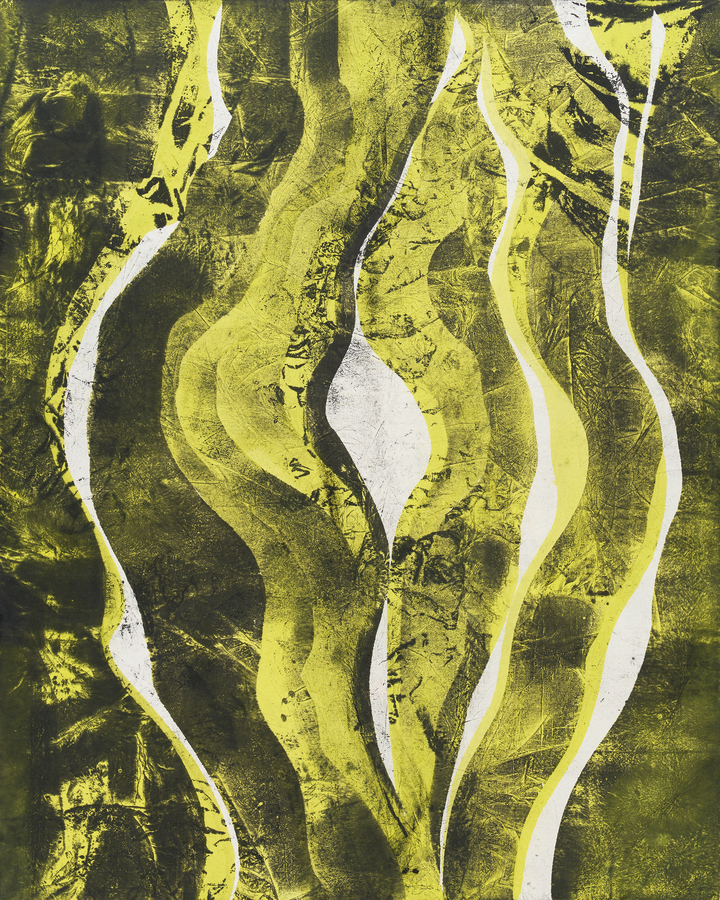
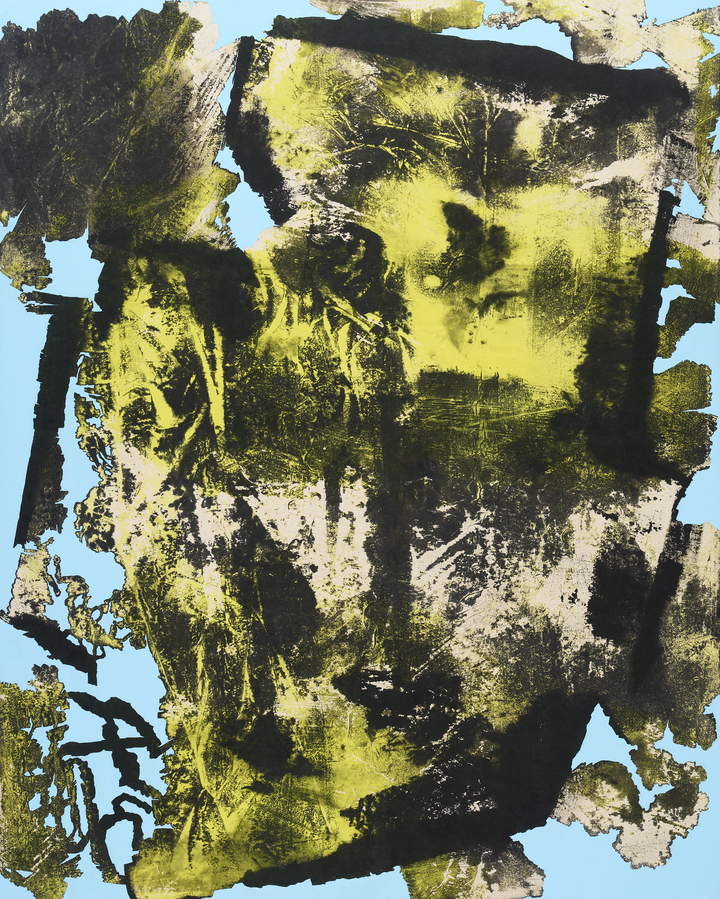
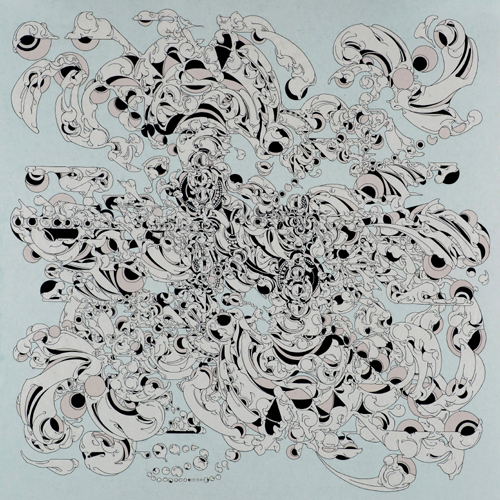
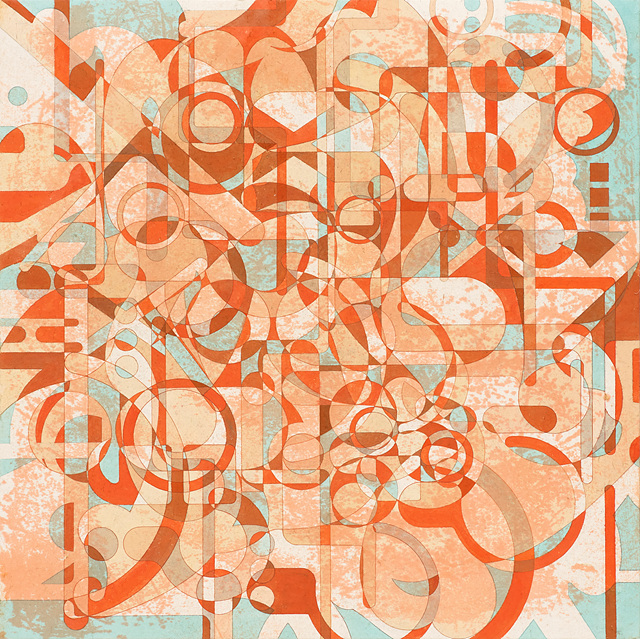
The title series, Genealogy of Traces, delves deepest into the artist’s concept of auto-genealogy. This work is a canvas of accumulation, built from the layered fragments of previous works, including Unfenced 1-17. While a traditional sebo documents linear, patrilineal succession, the artist subverts this concept. She undertakes the paradoxical act of generating a new lineage precisely through the absence of a conventional one.
Fragments of old works become fertile soil for new forms, while gilded shards suture the traces of rupture to create new connections. This logic of a self-circulating ecosystem continues in Self-Harvest, a title signifying the act of cultivating the next generation, recombining fragments collected from Unfenced, which serves as the mother plant.
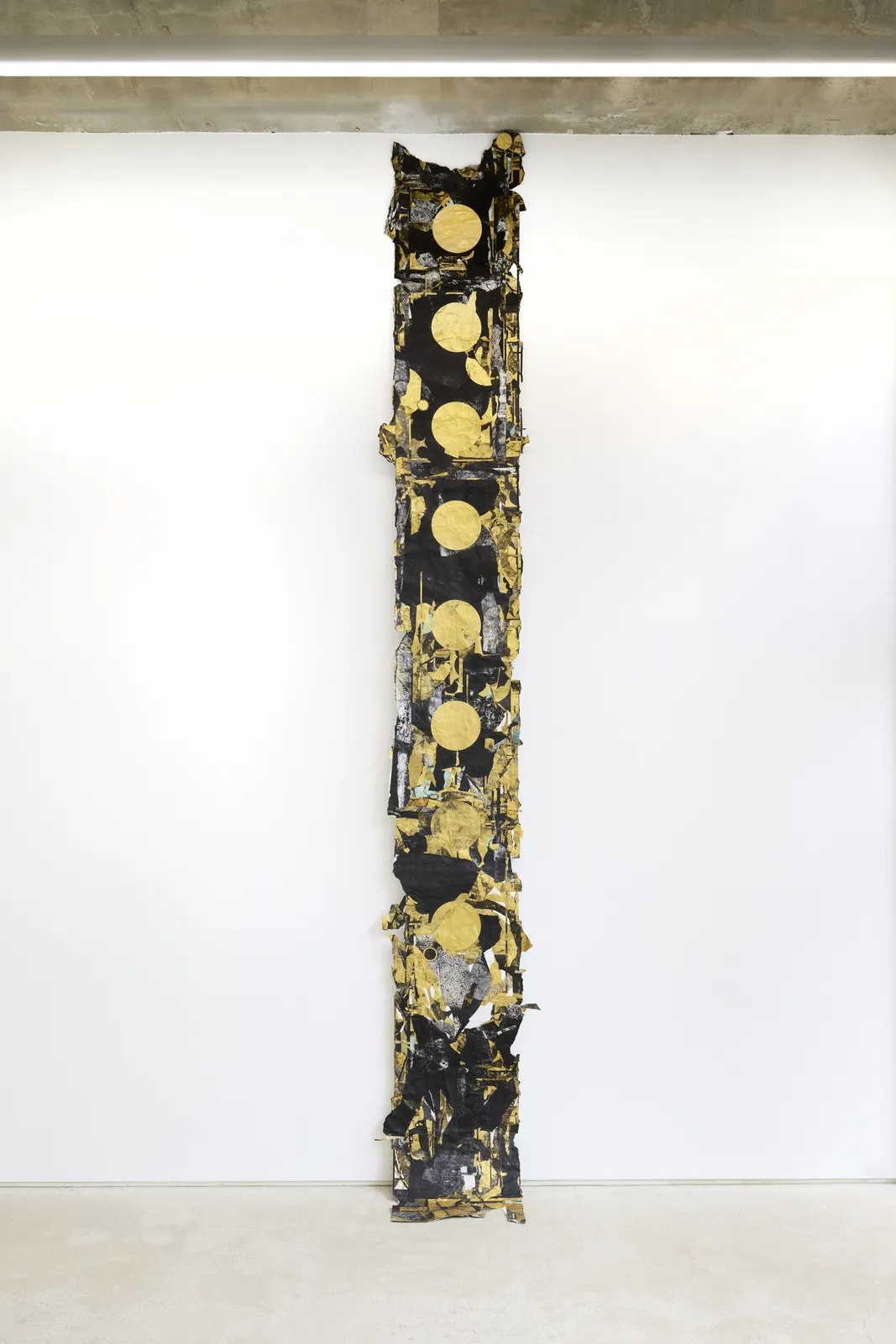
Meanwhile, Overripe Leaf, which hangs from the ceiling down to the floor, channels an overflow of time. The title alludes to the moment of transformation beyond maturity when a leaf becomes sustenance for the next life. Lee Sojung established a vertical length of four meters, repeatedly painting, detaching, and reattaching sections that had already passed.
In this process, the added papers generate endlessly new textures, appearing like an organism that never ceases to grow. The eight circular golden forms, stamped at regular intervals on the long paper, echo the eight-panel structure of Unfenced 1-17. They obscure the traces of a pre-existing story while simultaneously calling forth a new order built upon them. Through this, her painting is transformed not into an end, but into a preparatory stage for the next beginning.
Instead of restoring a narrative through fragments, Lee posits rupture and incompleteness as the very conditions of creation. The fragment is at once evidence of lack and fissure, and a revelation of the possibility for a multi-layered genealogy to germinate through that very gap. As the title Genealogy of Traces suggests, genealogy in her work ceases to be a diagram of hereditary succession and is reborn as a record rewritten with discarded remnants and the traces of failure.
The black paper, the golden shards, and the amorphous pieces are prepared for a new order as they pass through, flow over, are collected by, and carried over the rectangular frame. Within this overlapping structure of record and creation, rupture and connection, Lee Sojung’s painting affirms the incomplete, thereby posing new questions about the narrative conditions facing contemporary painting today.