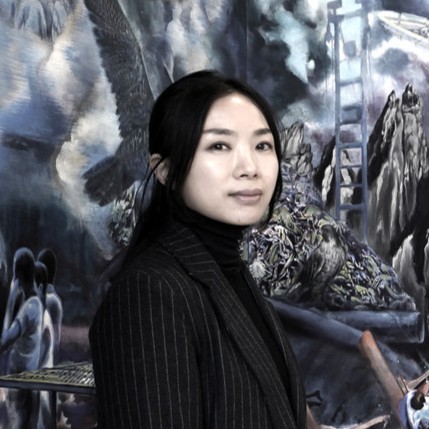
Naomi's
practice begins with a long-standing interest in things that vanish and are
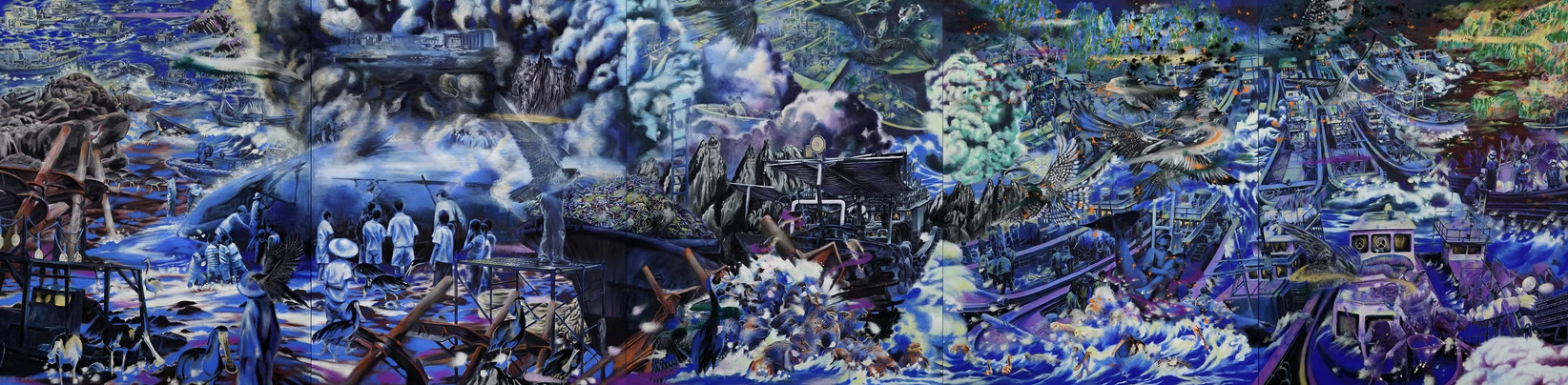
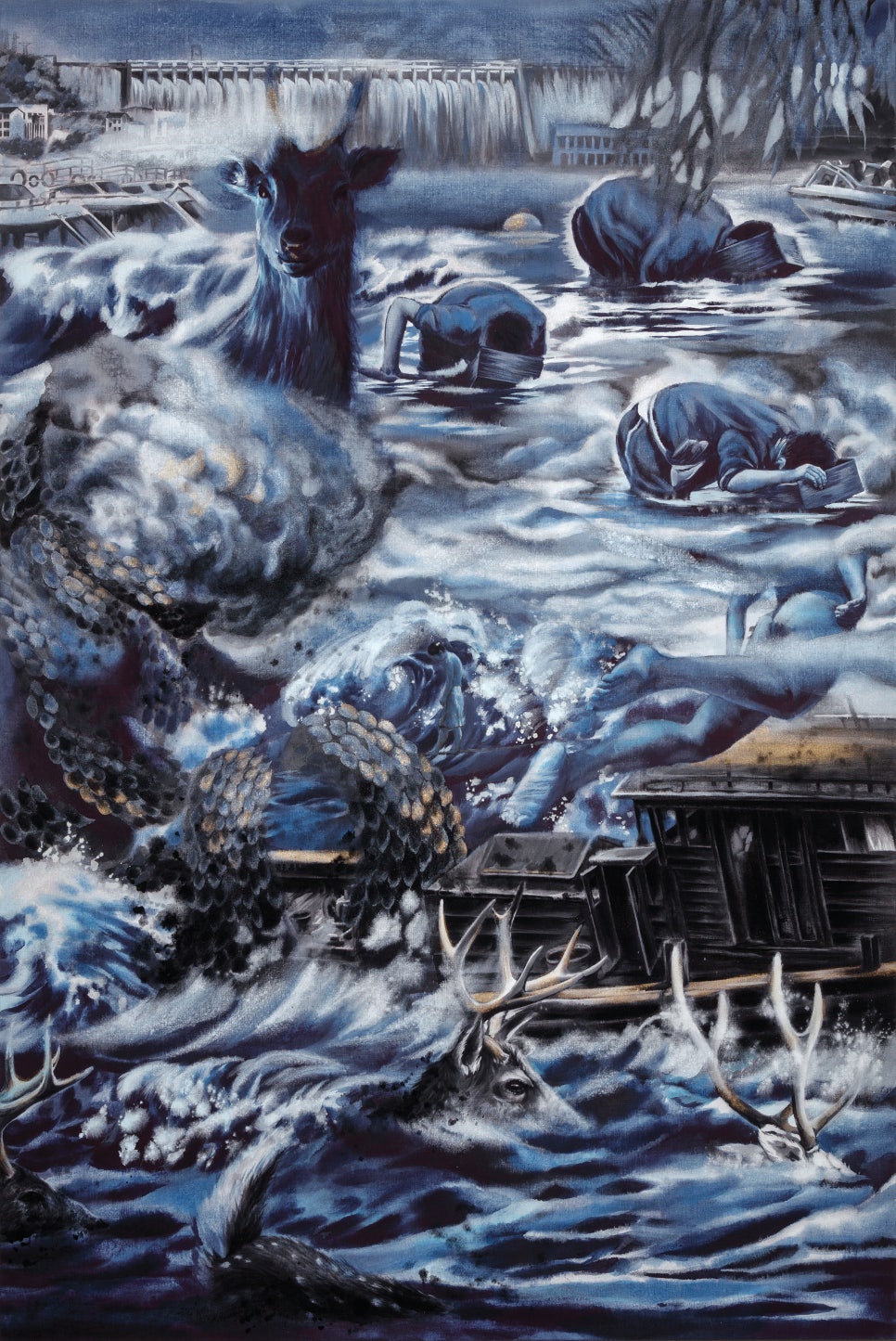
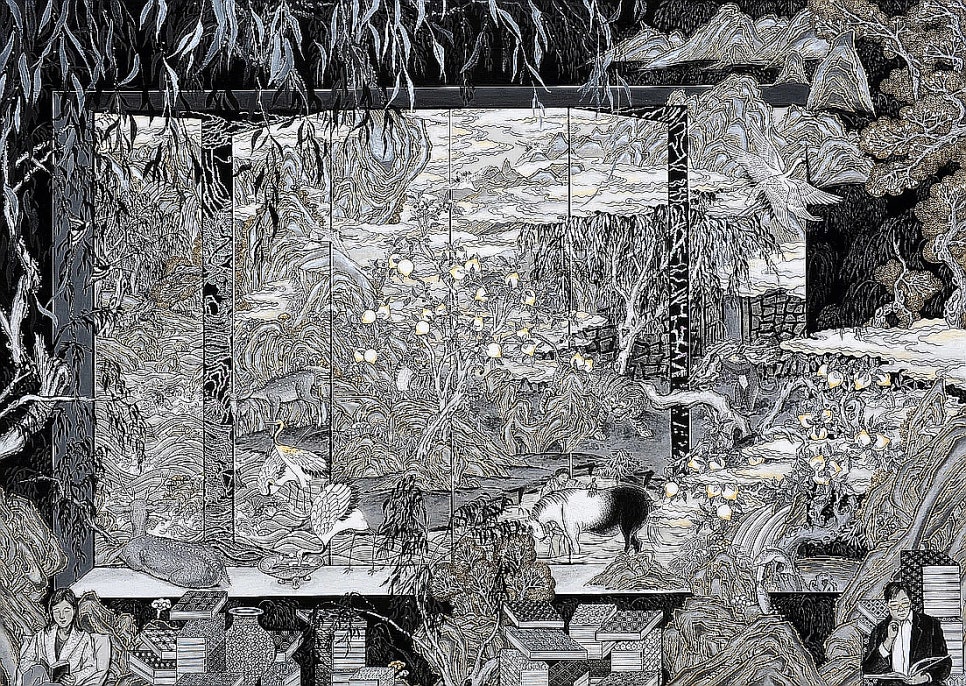
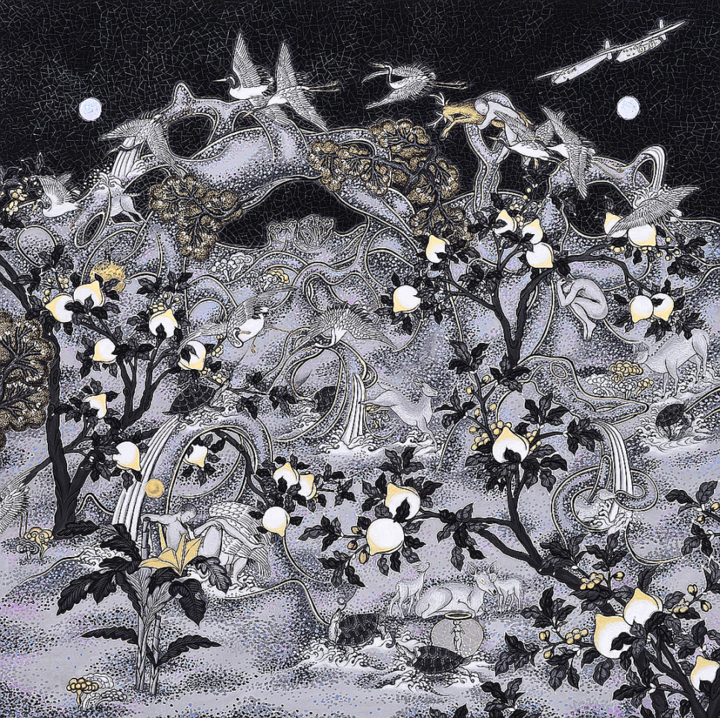
forgotten. From Waterspout(2014) onward, the artist filled
her compositions with signs and symbols, choosing to mark traumatic
contemporary events — such as the Sewol ferry disaster — with something as
small as a single ribbon woven into the image.
In this period, painting functioned
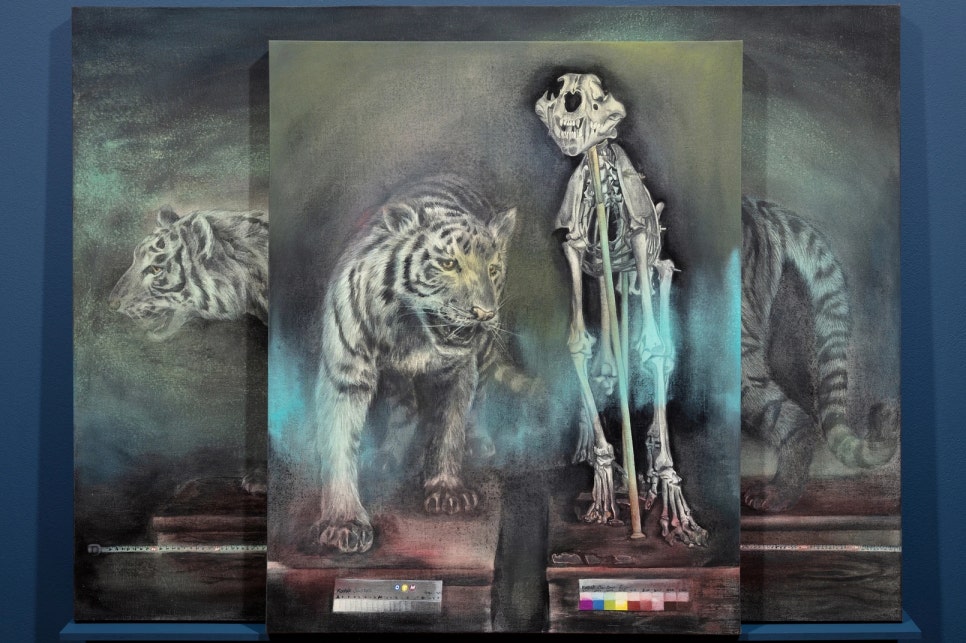
for the artist as a medium for recording events large and small, and the Korean
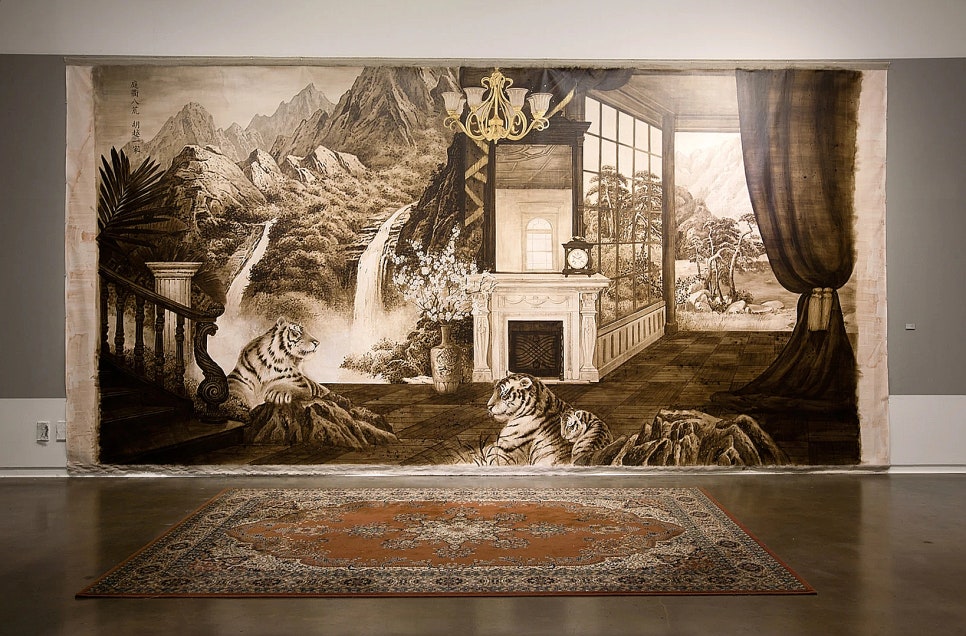
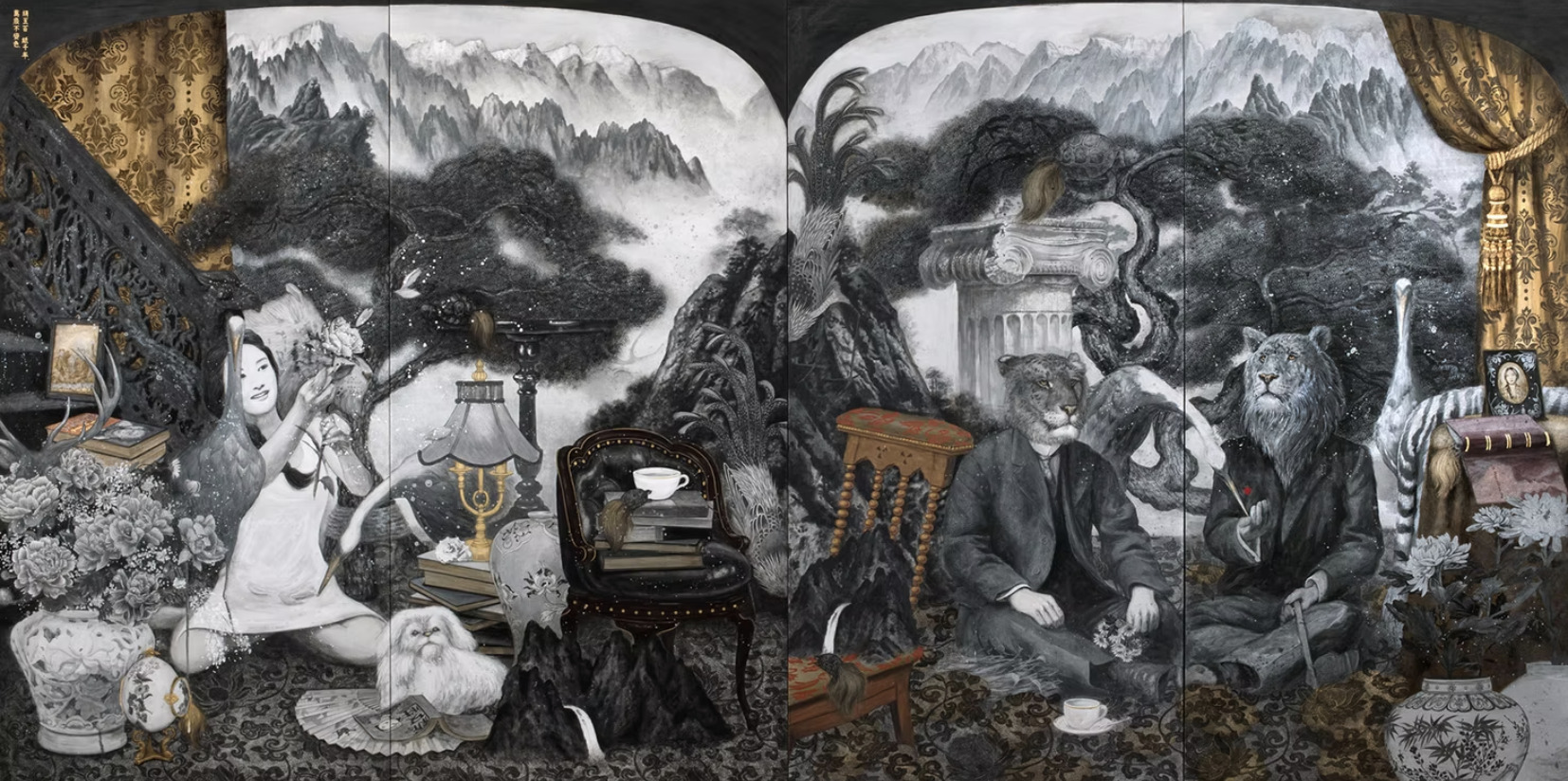
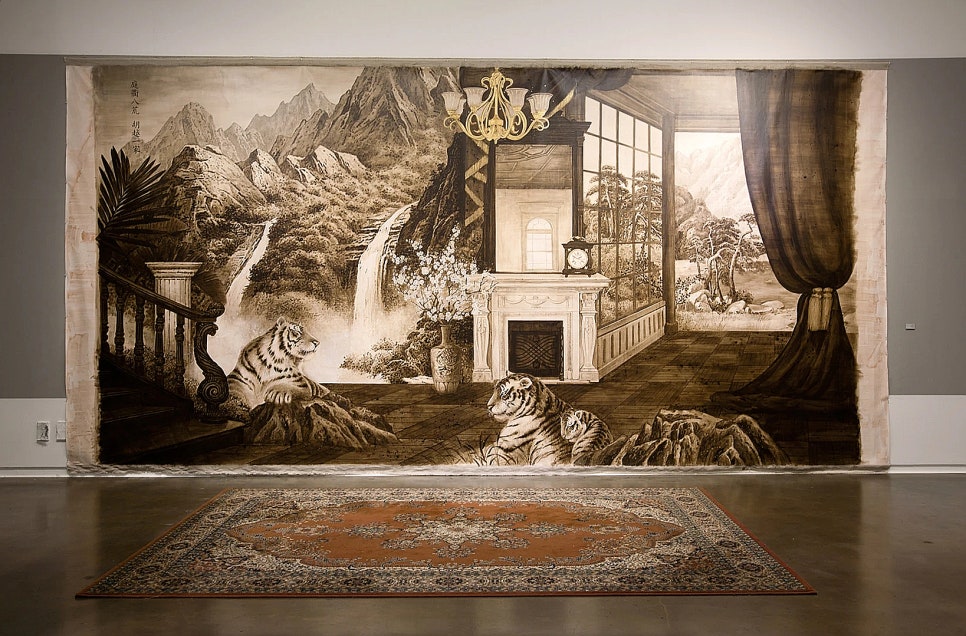
tiger, driven to extinction on the peninsula, recurs across works such as
Portrait of Liger and Tigon(2017) and Jeongho-gi (征虎記)(2019) as a kind of self-projection onto a vanished
being.
The
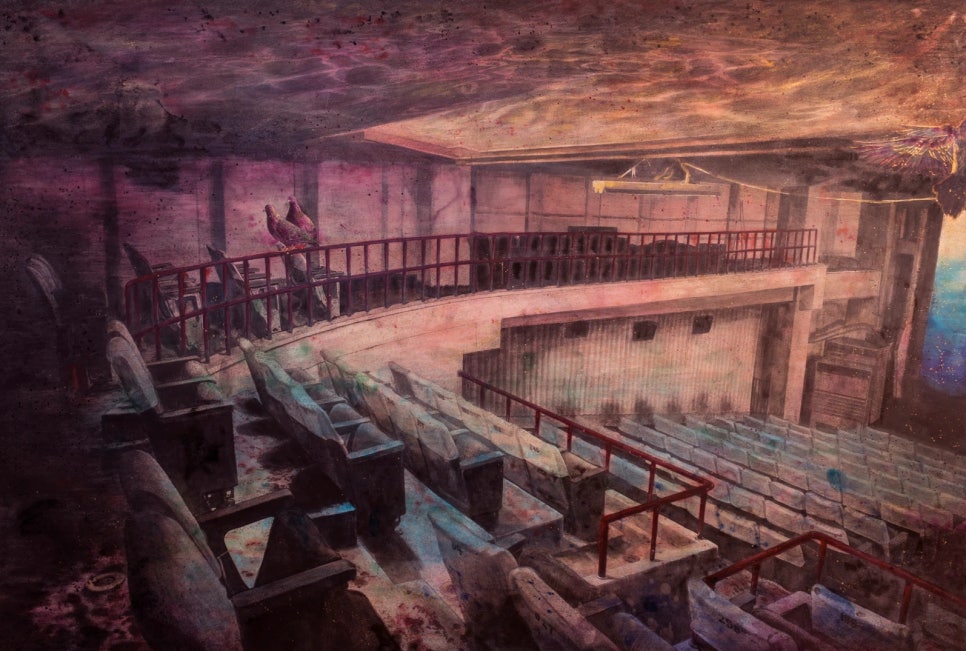
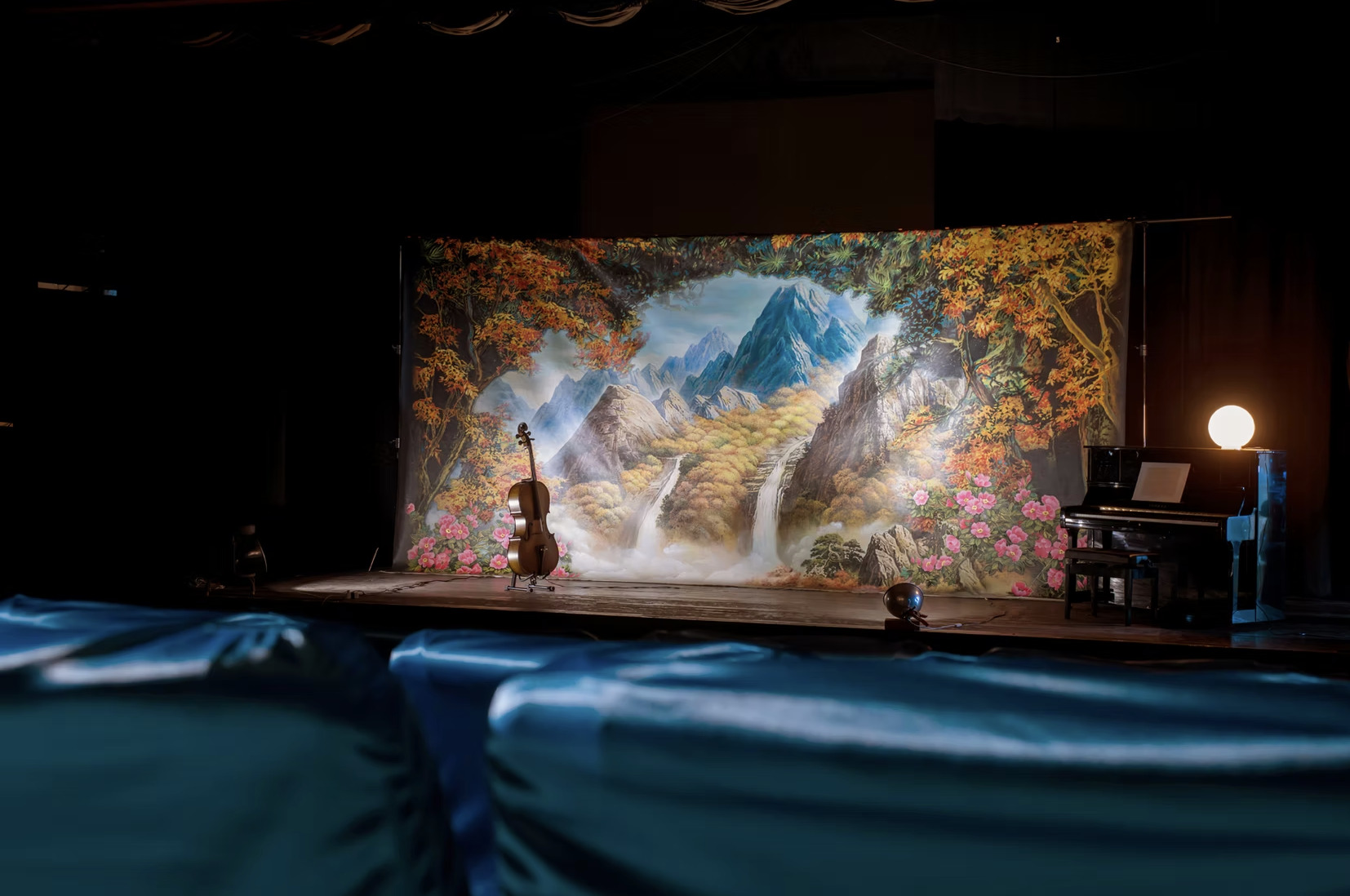
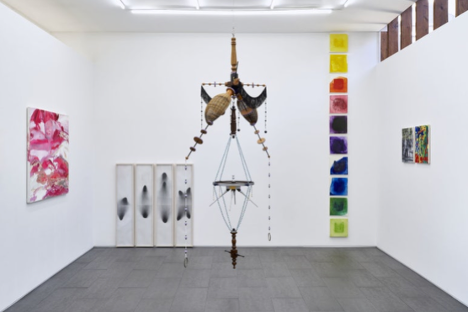
theater works begun around 2017 extended this concern into a sense of place.
Starting from the 1930s Diamond Mountain (Geumgangsan) sketches of scenographer
Won Woo-jeon, in 《Simultaneous
Screens》(Bada Theater/Mirim Theater, 2018) — staged in
a shuttered theater in Seoul's Cheonggyecheon and a reopened theater in Incheon
— Naomi reinterpreted the theater as a place suspended between reality and an
ideal world.
For the artist, the past here was not an object of escape but a
model for reflecting on present-day problems, an attitude that has continued to
run through her work since.
After
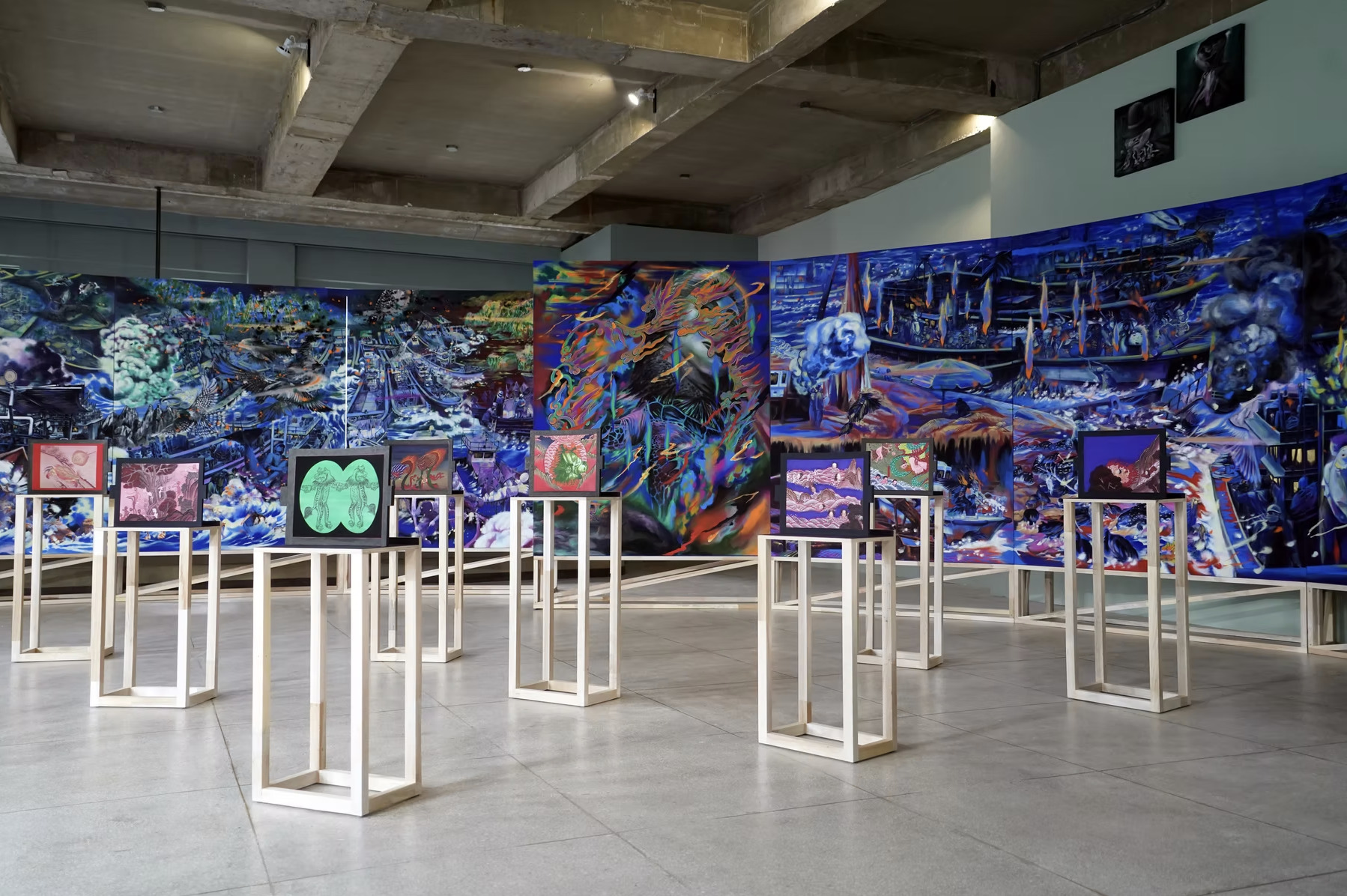
2019, Naomi's attention expanded from individual sites to the regional scale of
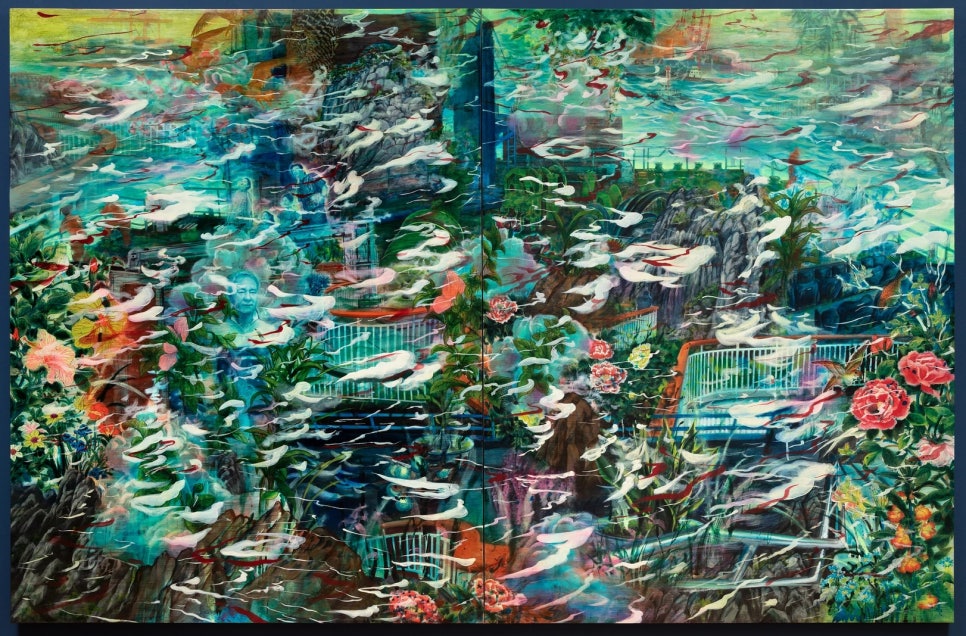
port cities. Grounded in a journey from Incheon to the Chinese port of Dandong,
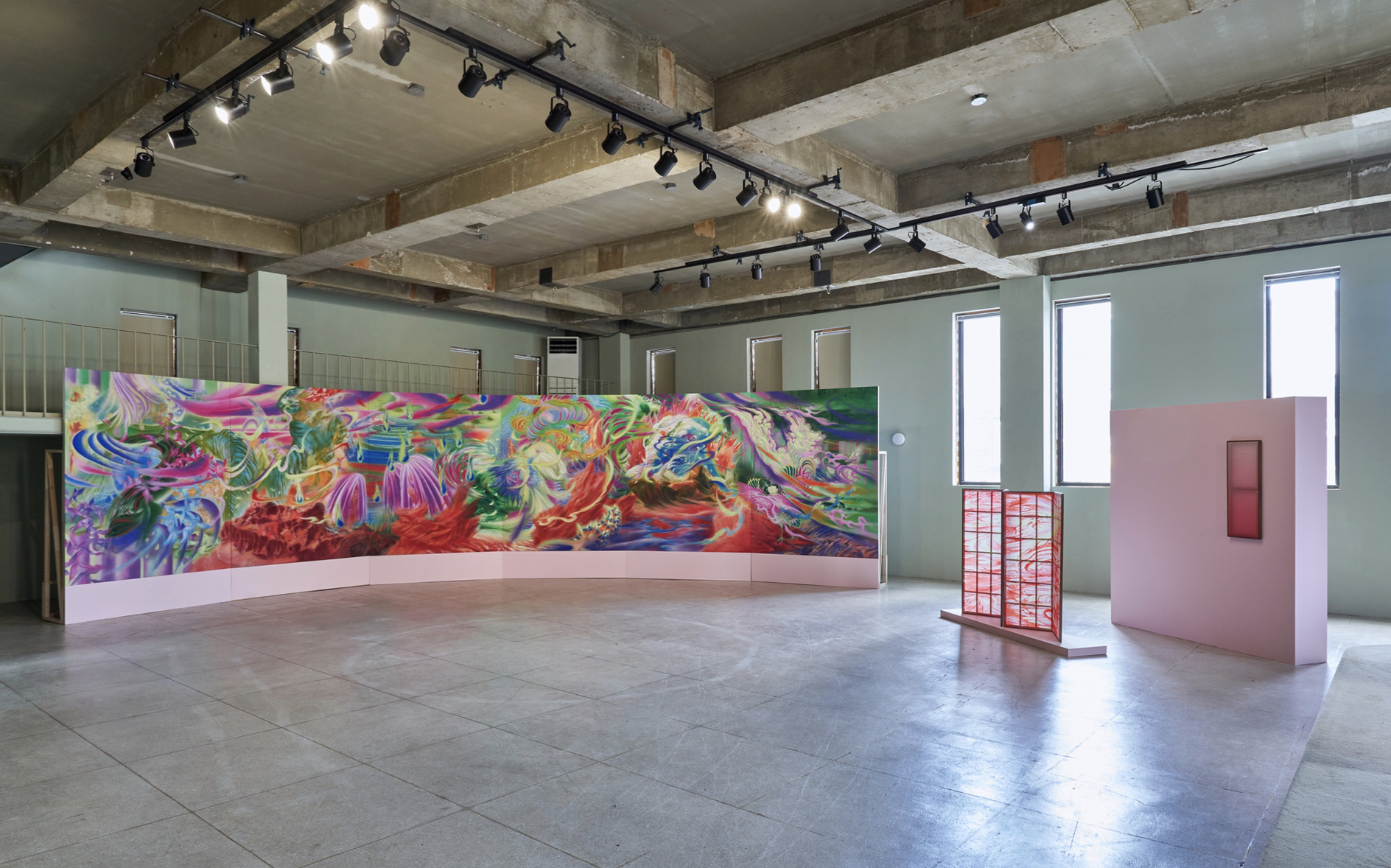
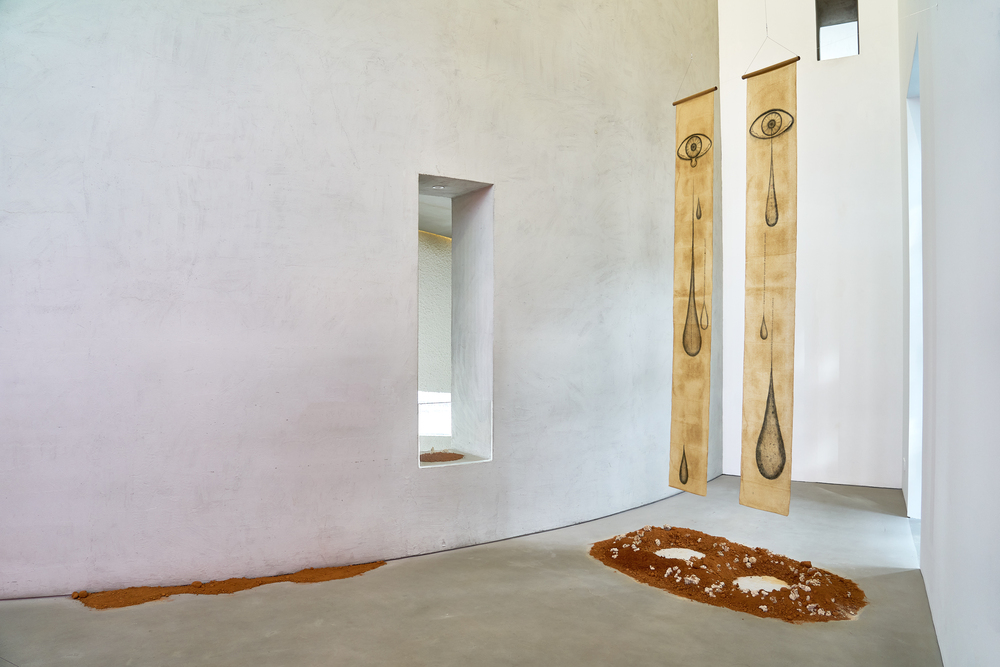
《Imaginary Gardens with Real Toads》(SONGEUN Art Cube, 2020) and the 'Liberation of Coastline'(2019–)
project trace a shared phenomenon — coastal reclamation and disappearance — by
comparing Korean and Chinese border regions.
Around this time, the artist also
began attending to narratives excluded from official history, such as
Korean-Chinese (Joseonjok) folktales and North Korean storybooks; a work such
as 《River of Shadows》(Post-Territory
Ujeongguk, 2021) shows this concern expanding into questions of ethnic minority
identity across national borders.
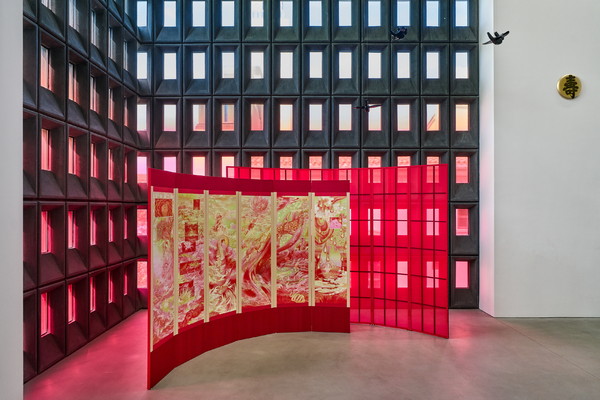
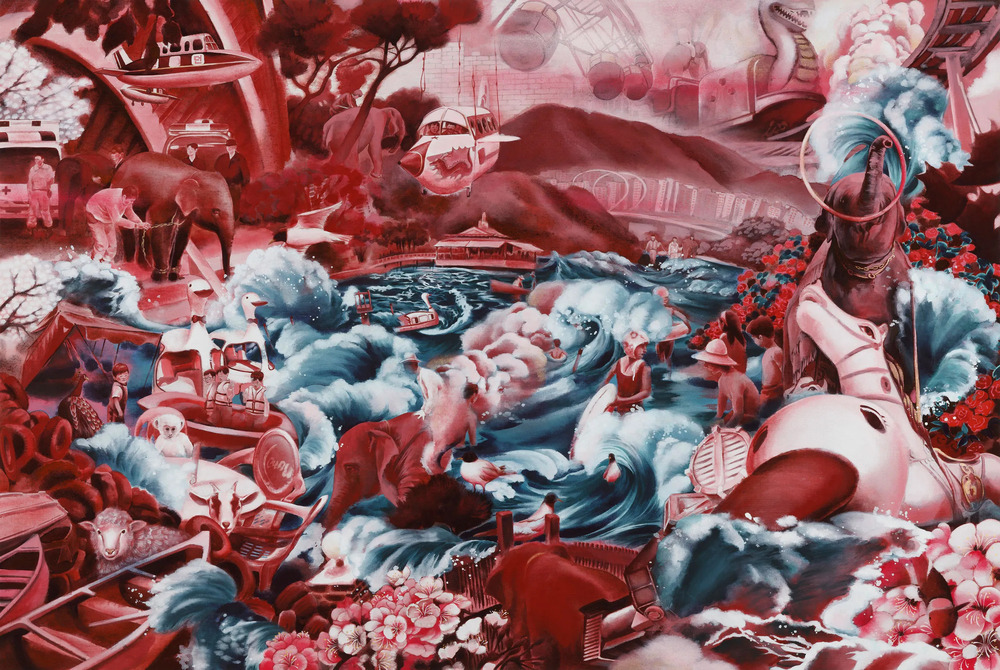
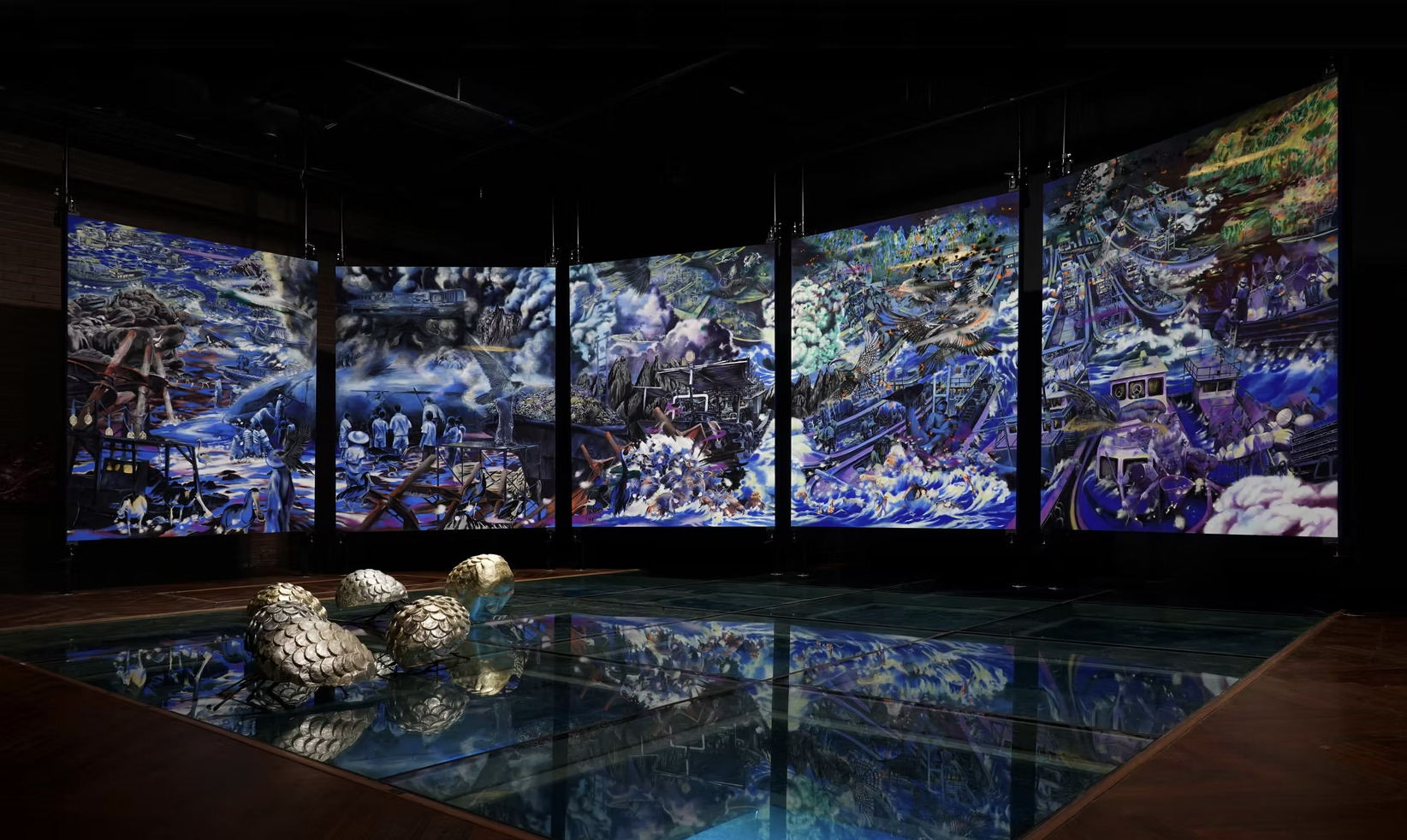
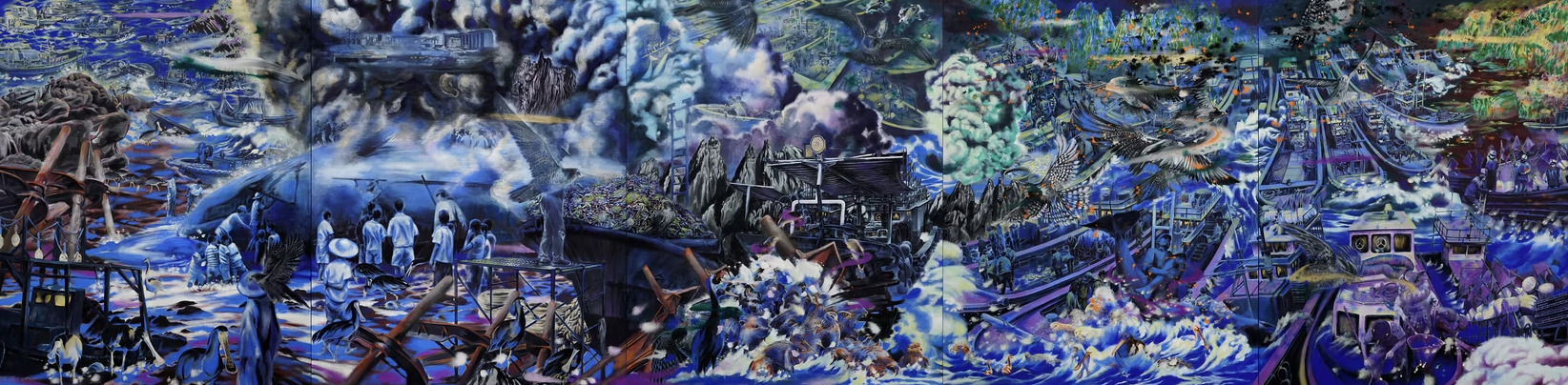
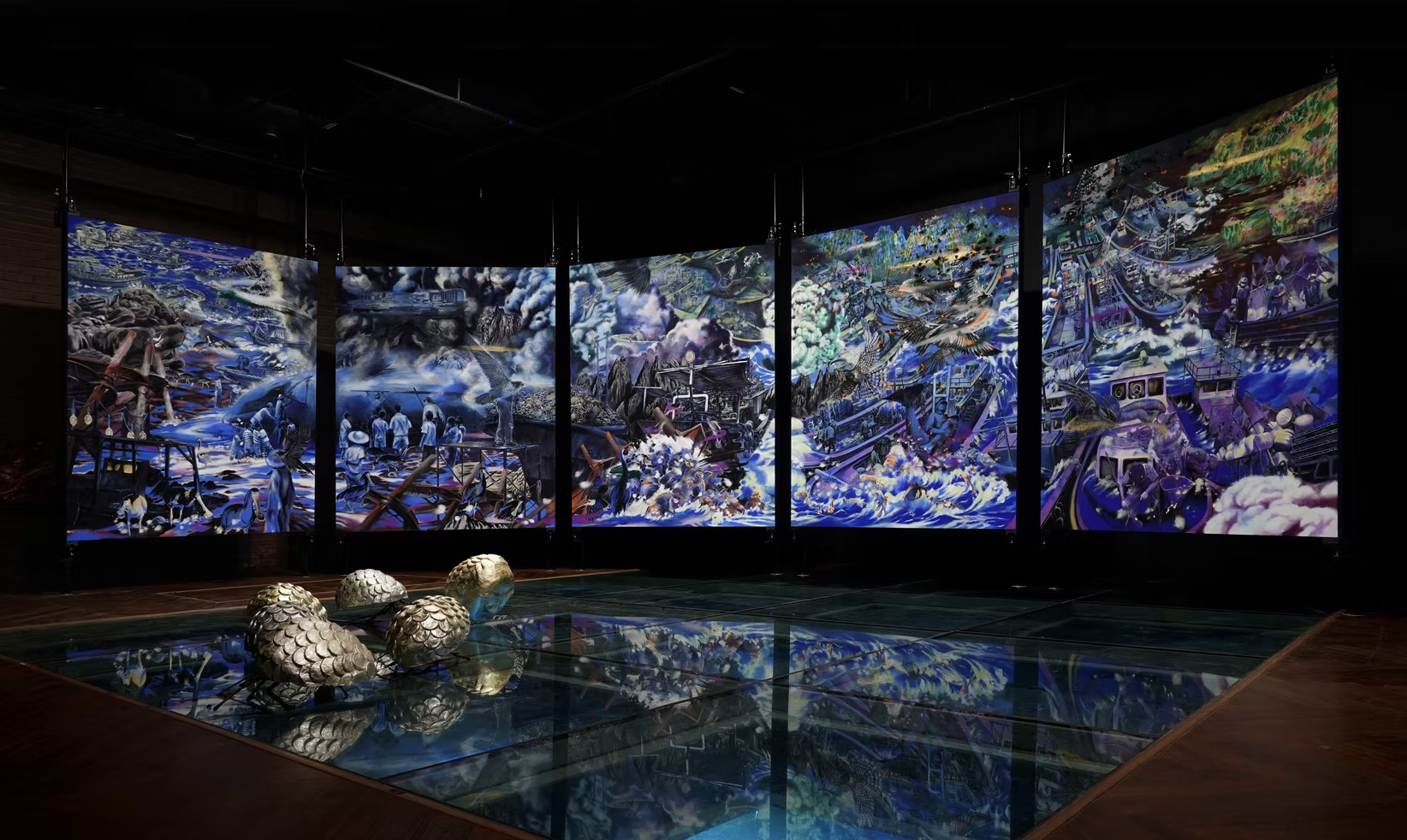
With 《波市_Lost village on the sea》(Artspace Boan 3,
2022), the artist's thematic focus shifts decisively toward sea deities and the
narratives of women and goddesses. In The God of the Sea, God Who
Crossed the Sea(2022), which weaves together a shaman painting of
General MacArthur worshipped as a sea god with the story of Ungnyeo from the
Dangun myth, now standing as a massive statue in China, Naomi captures
deification itself as a mirror reflecting the lack and desire of an era.
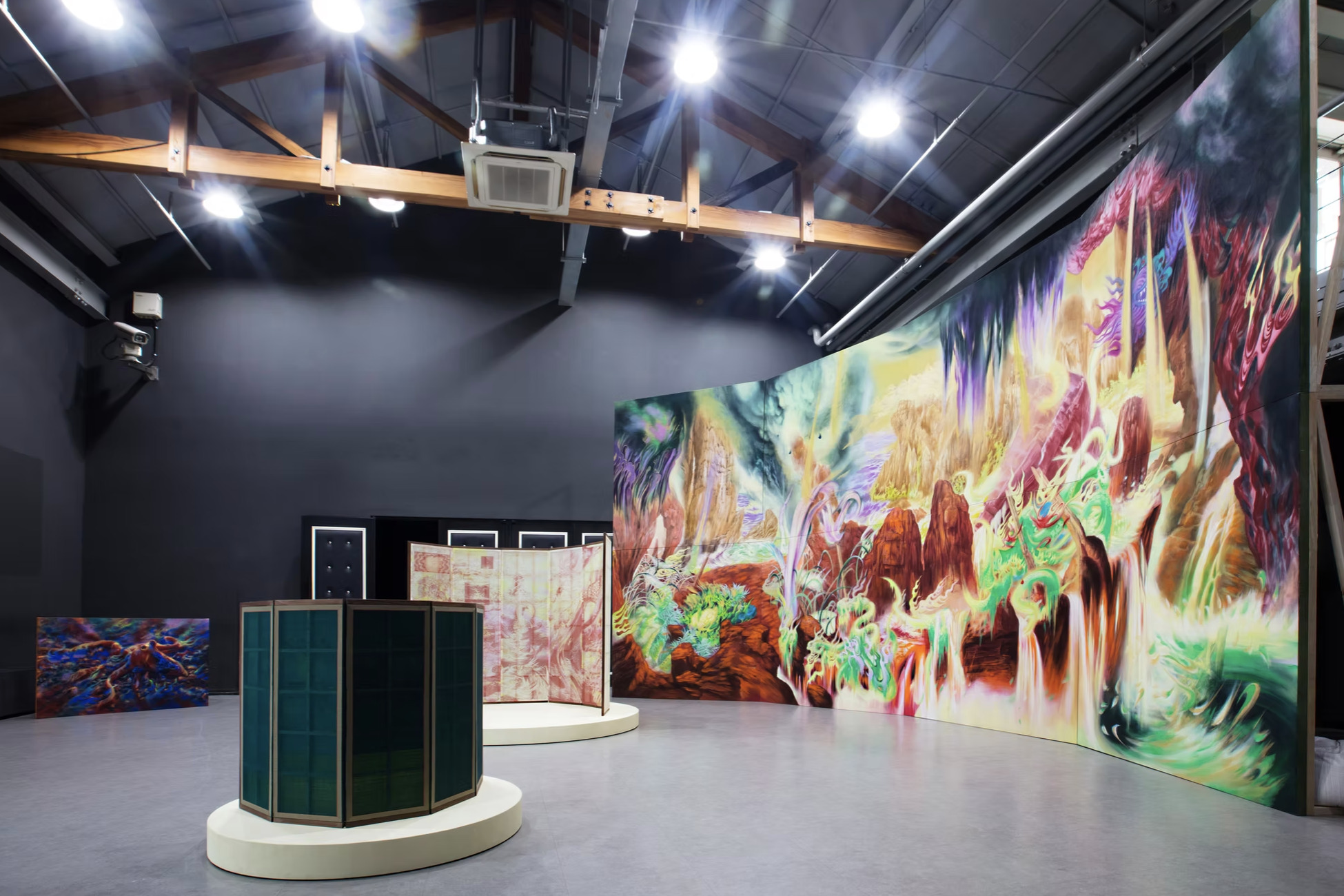
In
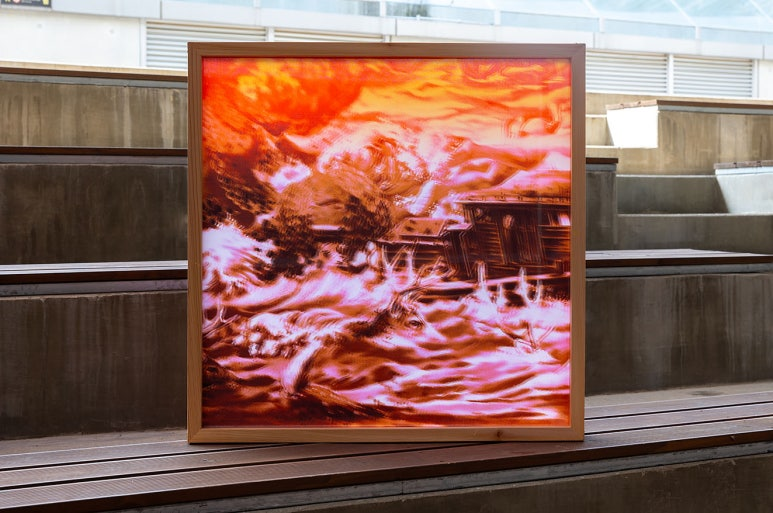
subsequent exhibitions — 《Floating Islands, Day for
Night》(TINC, 2023) and 《From
the Edge of the Yellow Sea》(Space Beam, 2024; Incheon
Art Platform/Buyeon, 2025) — the stories of women transmitted through the sea,
such as Mazu, Shim Cheong, Yeongdeung, and Lady Meng Jiang, move to the center
of the work, extending, as seen in her recent participation in 《As She Descends》(Aranya Art Center, 2025),
into a broader horizon of narratives about women across Asia.