KÖNIG
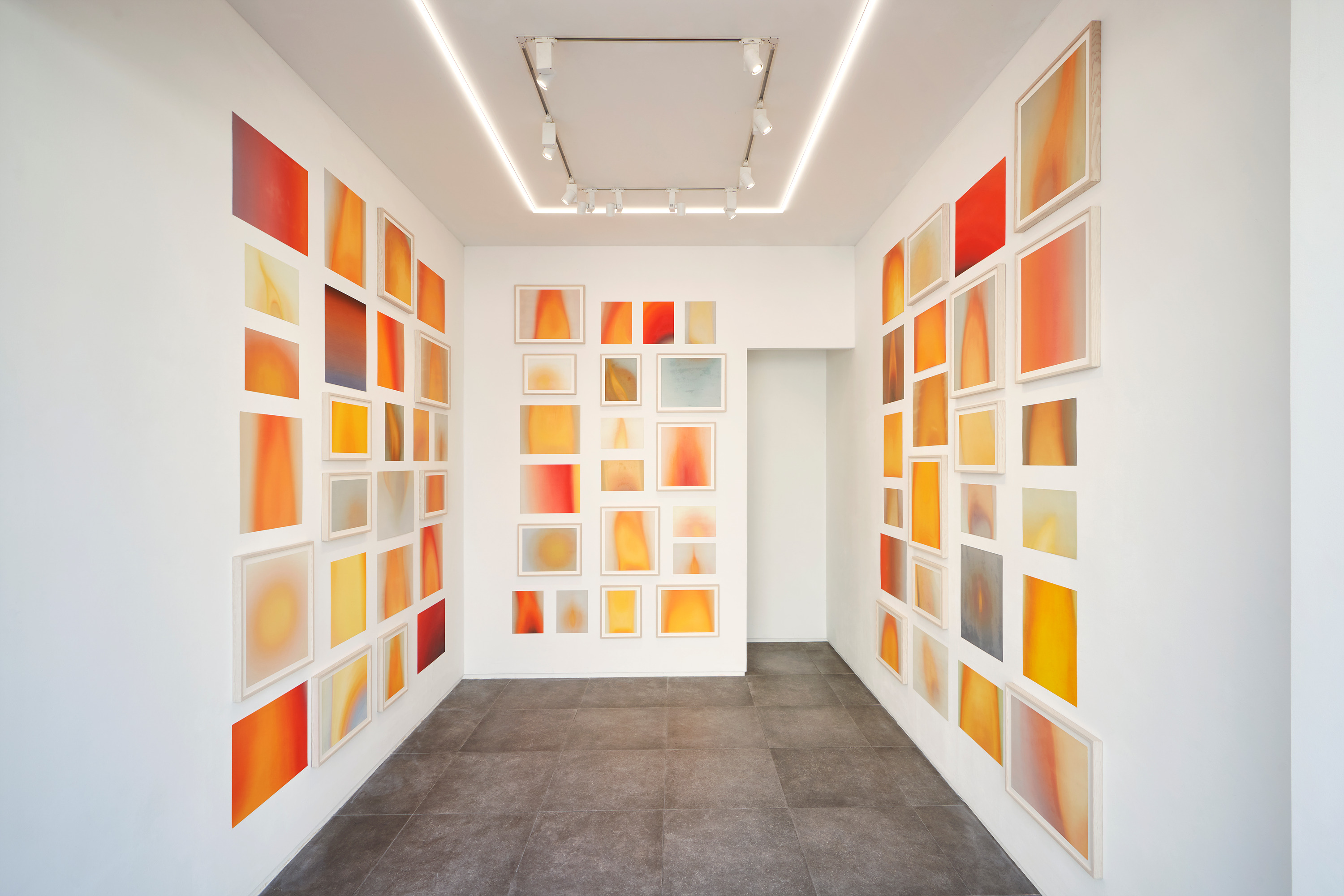
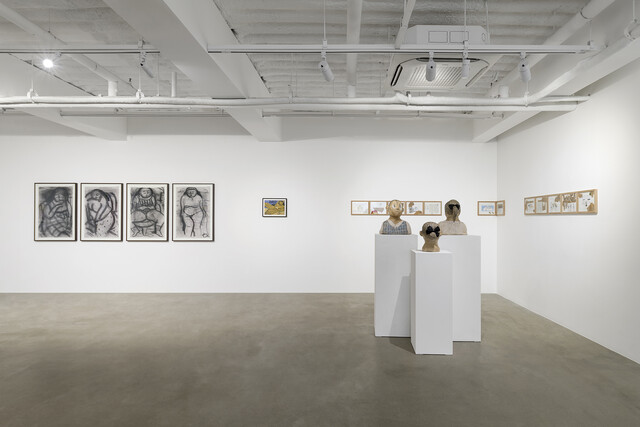
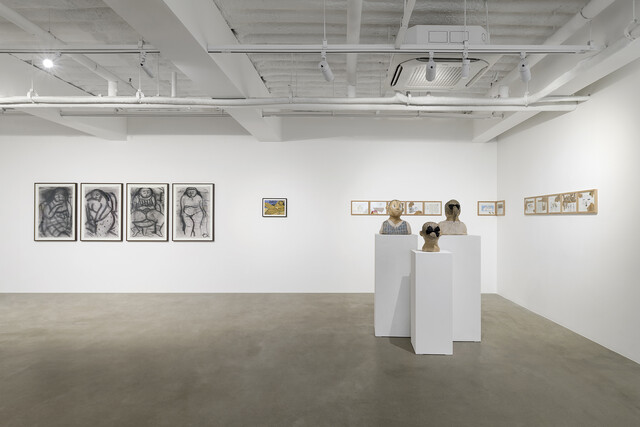
SEOUL is pleased to present a group exhibition, TRACES AND THREADS, which
brings together over 40 works from 12 female Asian artists, many of whom are
showing with the gallery for the first time. While media range from charcoal
and acrylic to canvas and paper, the unifying character of the works selected
is the breadth and diversity of contemporary forms of drawing. Specifically, as
the title of the show suggests, the quality of line within the framework of
compositional space is of particular importance.
According to British Social Anthropologist, Tim Ingold, “… lines come in two
principal kinds: traces and threads. Traces are formed on surfaces; threads are
strung through the air; in their dissolution, traces are converted into
threads.” Furthermore, Ingold contends that every line is the trace of a
delicate gesture of the hand that holds the brush, and therefore, two senses of
drawing emerge that are intimately related – as pulling threads and inscribing
with thread – both of which are integral to the theme of the exhibition.
Such
thinking about the various iterations of linear composition inspired not only
the title of this exhibition, but the descriptive language around the various
practices by Asian women artists that collect a group of works in which these
and other ideas around contemporary drawing are animated. The continued
relevance and centrality of tracing and threading takes many forms: the
gestural, raw tactility of Ayako Rokkaku’s hand-painting, the deployment of
actual thread in Chiharu Shiota’s intricate works on paper, and in Xiyao Wang’s
epic tableaux, where charcoal traces the artist’s body as she created her
arabesque marks.
Line is therefore both performative and compositional, inviting considerations
of the directness of its application, even as its realization in the artworks
on display varies immensely. Another quality of lines as both traces and
threads are its ability to cut through generational and cultural boundaries,
which might otherwise influence the context in which such works are displayed.
In Hadieh Shafie’s composition, the hand-written and printed Farsi text is
hidden within the folds of elaborate paper spirals.
Monica Kim Garza’s
audacious female figures emit fast-paced, gestural brushstrokes. With similar
traits, Shin Min’s collages and sculptures further showcase unattractive
portrayals of young laborers, unveiling the suffering endured by everyday
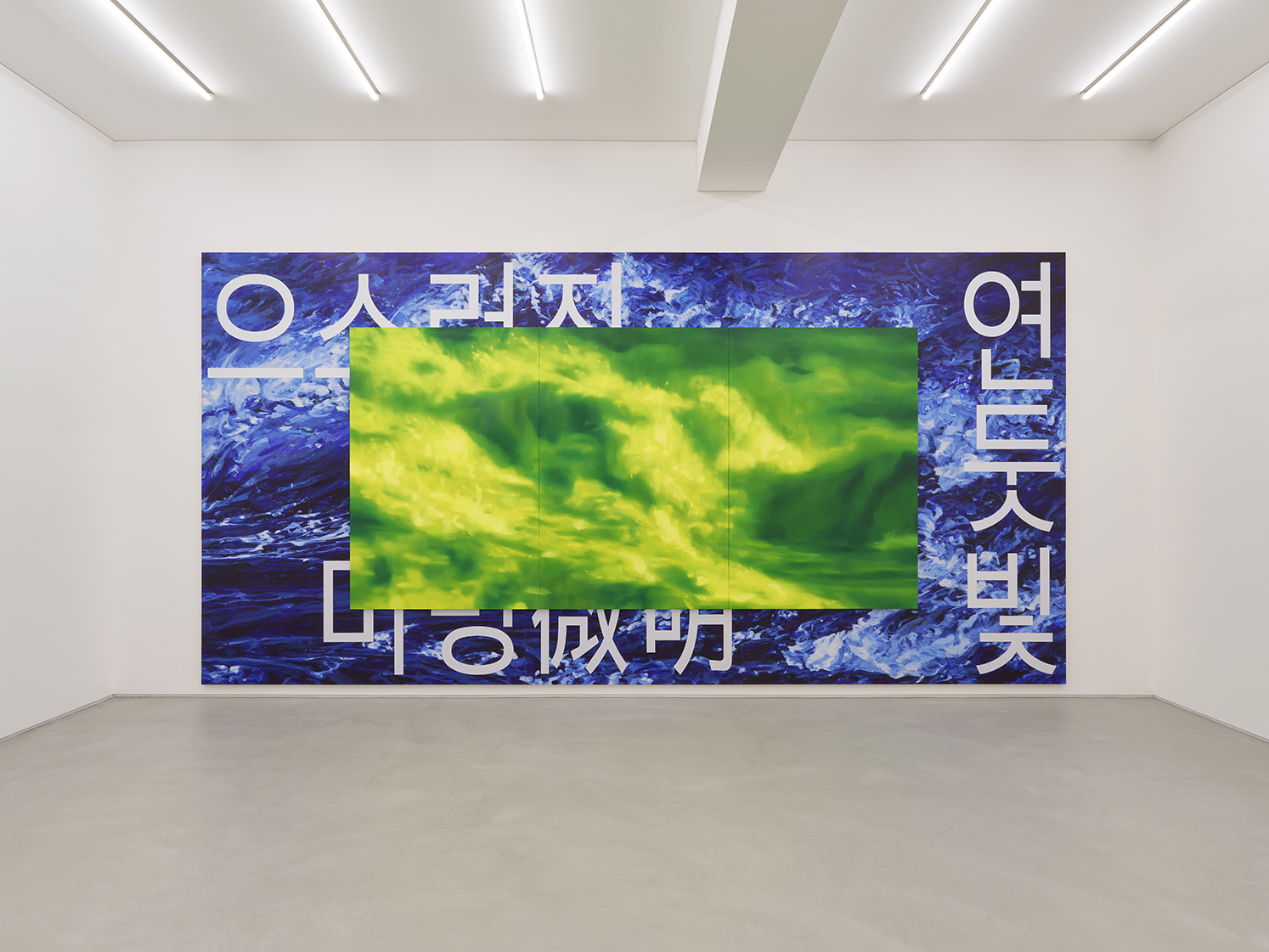
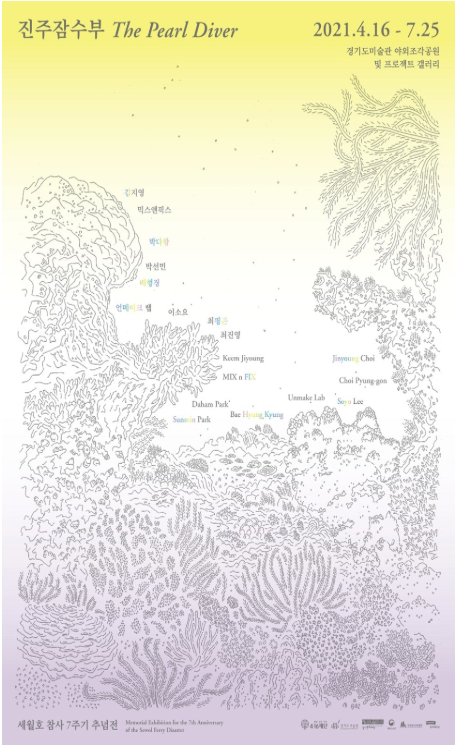
people. Keem Jiyoung’s layered oil-brushstrokes came together as a trace (or
connectivity) to the intimate narratives of individual lives with collective
resilience under the guise of tragedy.
Threading is both an act of bringing disparate elements together and a means of
foregrounding the fragility of connection, as seen in the delicate knitted maps
in Movana Chen’s contribution to the show, or the poetic paintings of Rina
Banerjee, fusing boundaries between East and West. Banerjee’s work summarizes
much in the theme of the exhibition, using line and collaged elements as both
additive and analytical modes of construction. Precarity extends into the
qualities of touch as well, in the impressions that make up Odonchimeg
Davaadorj’s intricate paper works.
Odonchimeg's method involves puncturing a
hole through the front and back surfaces of the paper, a technique that allows
her to connect dots, lines, and surfaces to represent the current plight of
younger generations as well as urgent ecological problems. Myung-Joo Kim’s
gouaches naturally reveal the formation of her tortured sculptures, where the
cruelty of romanticism is especially vivid in the populated faces in her
drawing. Wu Jiaru employs a method of automatic drawing in her paintings,
a technique that helps her “unlearn” by shutting off the conscious mind and
allowing her body to dictate her actions.
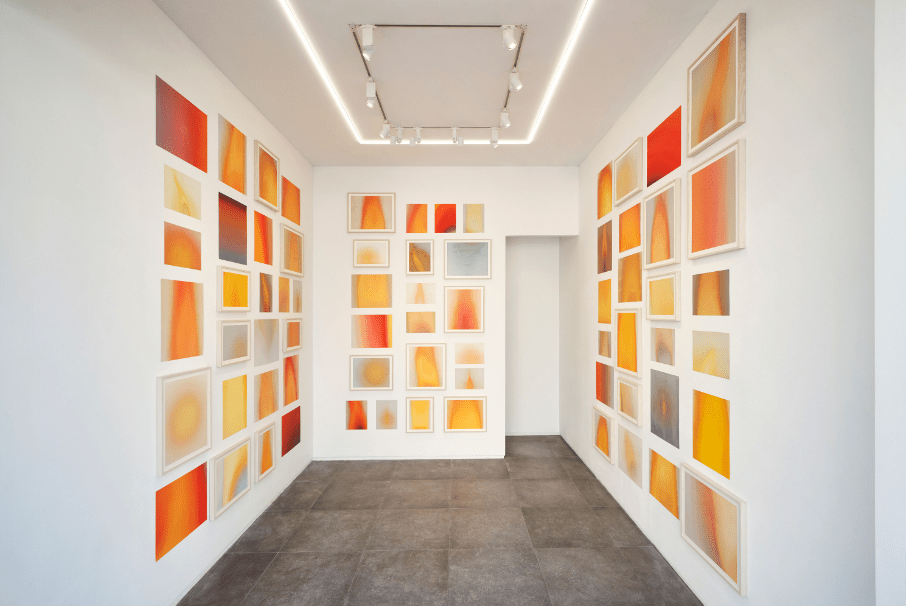
Seen together, the richness and diversity of line is matched only by the new
and wildly inventive practices that constitute drawing today, works on paper,
and all that lies between. The spaces of KÖNIG SEOUL provide a unique
environment for works of art such as these, which require careful attention,
much like the conditions under which these works were created.
Exhibited artists: Rina Banerjee, Movana Chen, Odonchimeg Davaadorj, Wu Jiaru,
Keem Jiyoung, Monica Kim Garza, Myung-Joo Kim, Ayako Rokkaku, Hadieh Shafie,
Min Shin, Chiharu Shiota, Xiyao Wang.