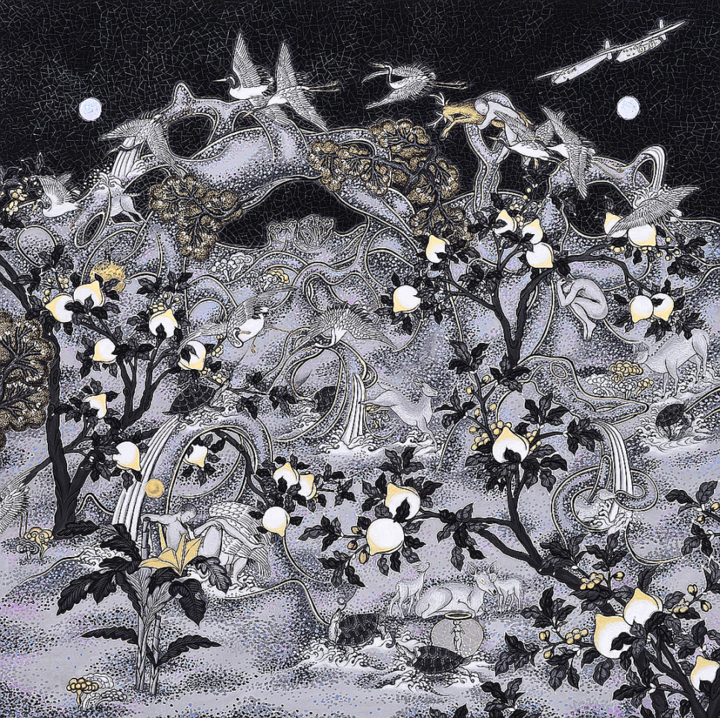
Naomi (Rhaomi; b. 1982) investigates the historical identity of specific places by juxtaposing past events with their present-day landscapes. Through comparative research spanning personal oral histories, archival documents, and local folklore, the artist examines how places acquire and transform their historical and cultural meanings.
 
Tracing the ways in which collected images are translated, reinterpreted, or disappear across different places, ideologies, and historical periods, Naomi transforms these fragments of records and memories into diorama-like painterly scenes, where multiple layers of time and narrative converge.


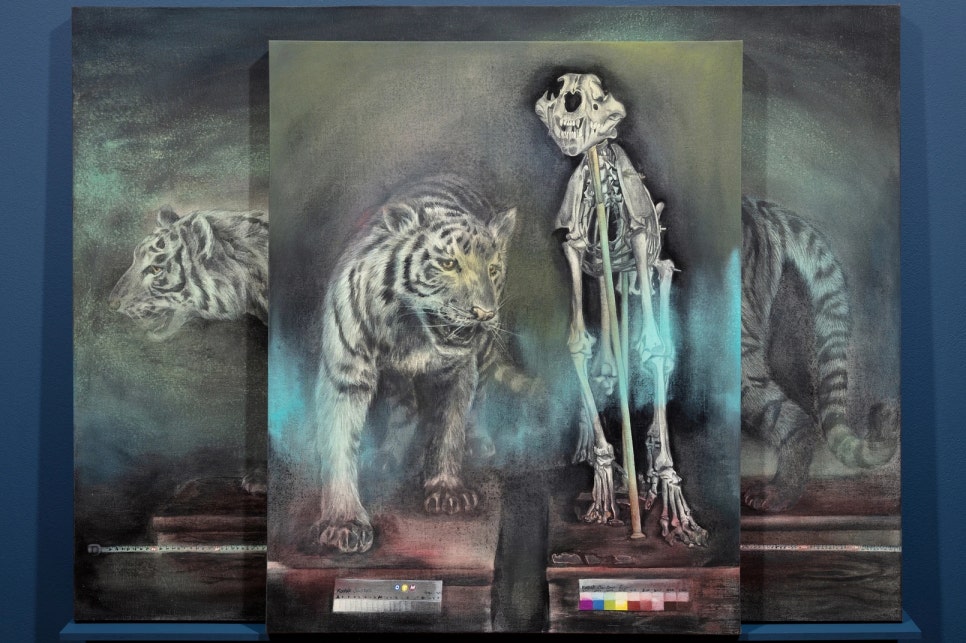
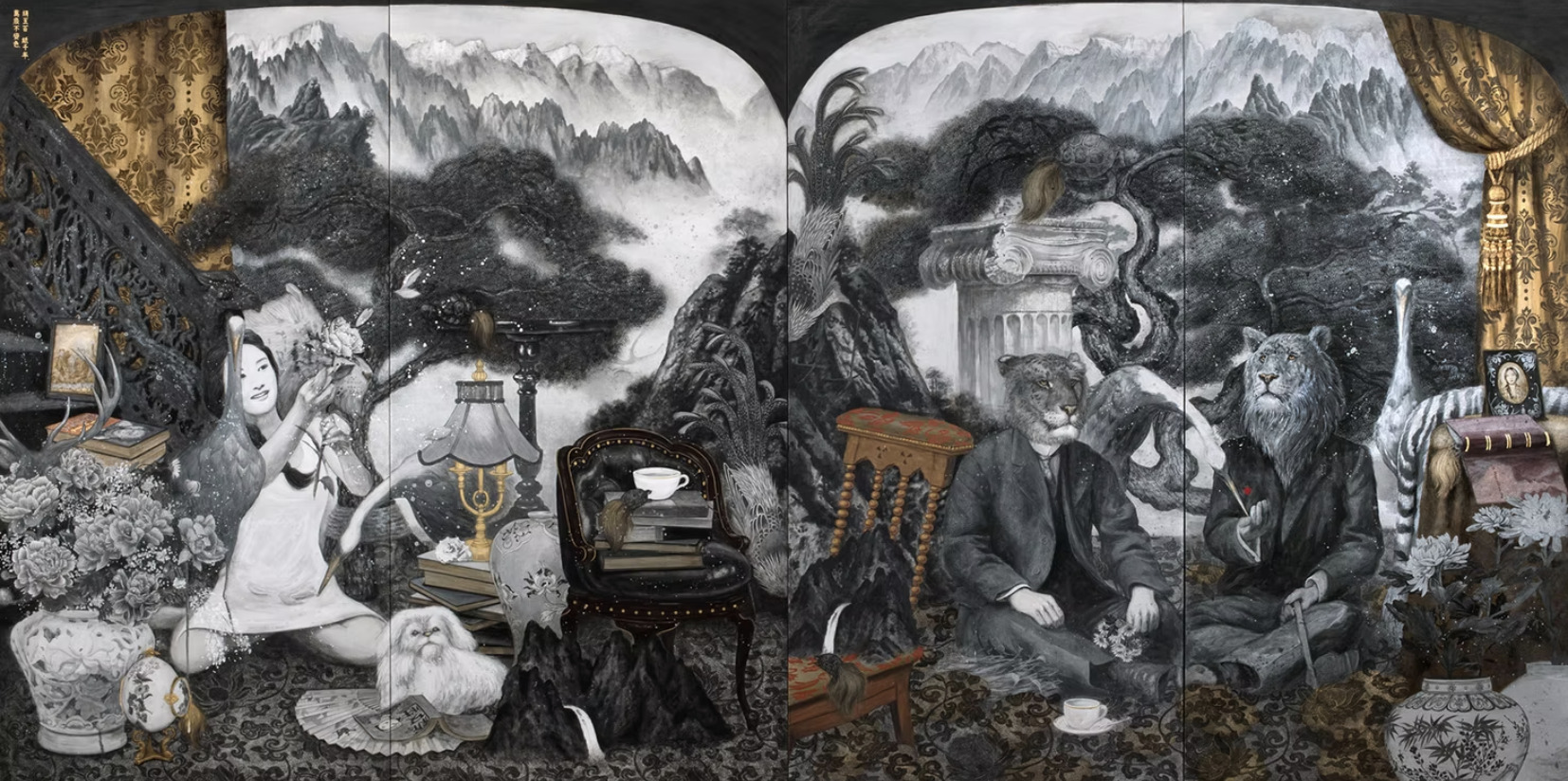
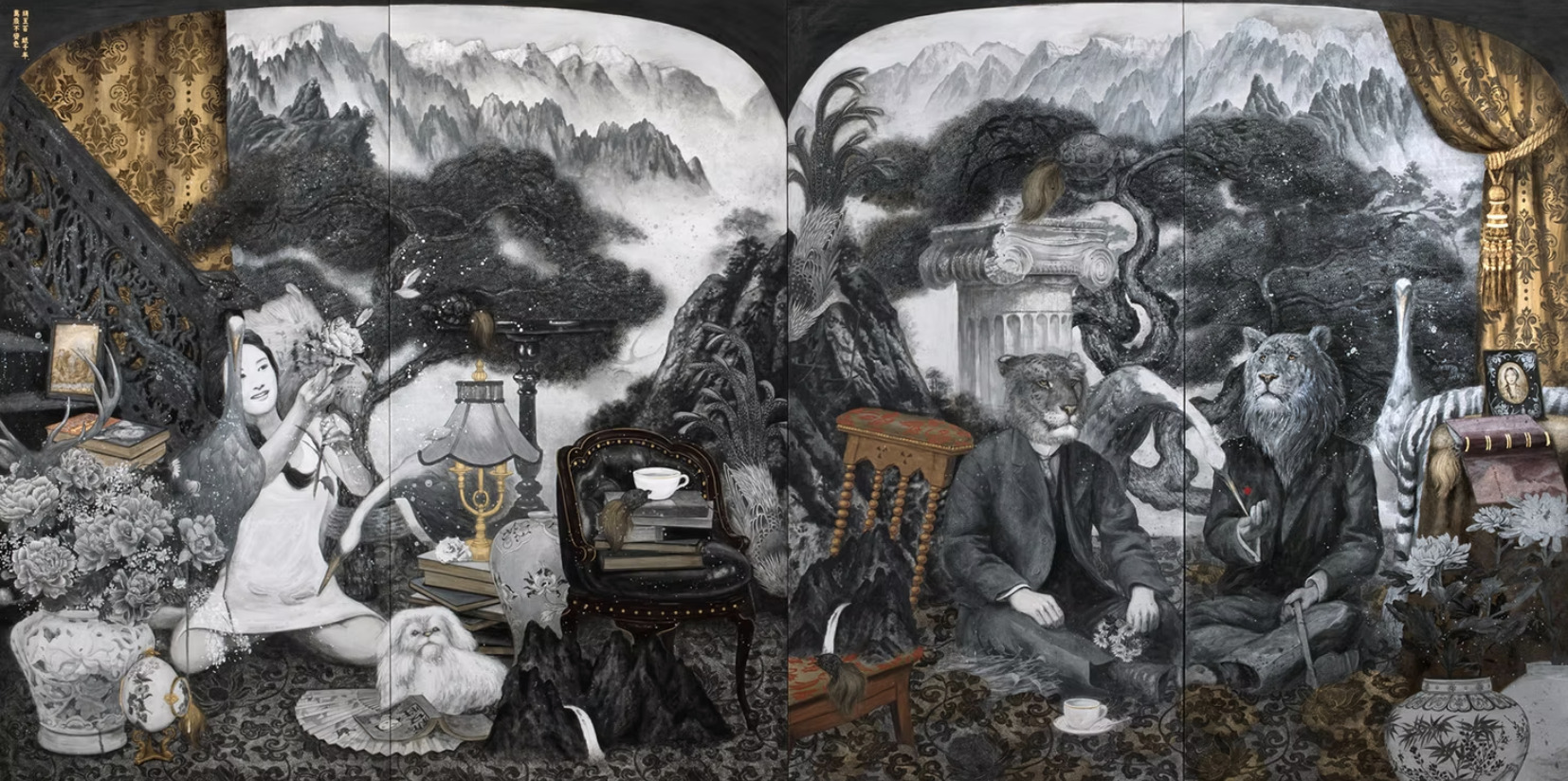
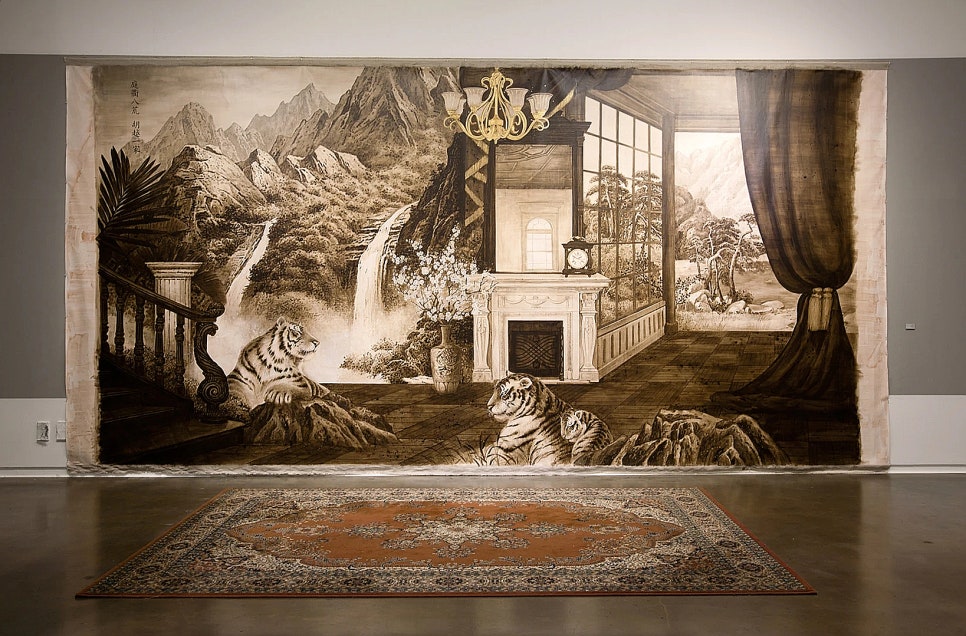
Naomi, Portrait of Liger and Tigon,, 2017, Powder pigmentation on korean paper, 180x360cm © Naomi

In her early practice, Naomi focused on paintings created as theatrical stage backdrops. This body of work grew out of her previous experience in film and stage design, where she analyzed characters and spaces and gathered a wide range of visual references to recreate scripted settings with a high degree of realism.
 
This experience subsequently developed into a distinctive artistic process centered on collecting and repurposing historical visual materials—including early modern photographs, magazines, Joseon-era paintings, and theater backdrops—which continue to serve as important source material in her practice.


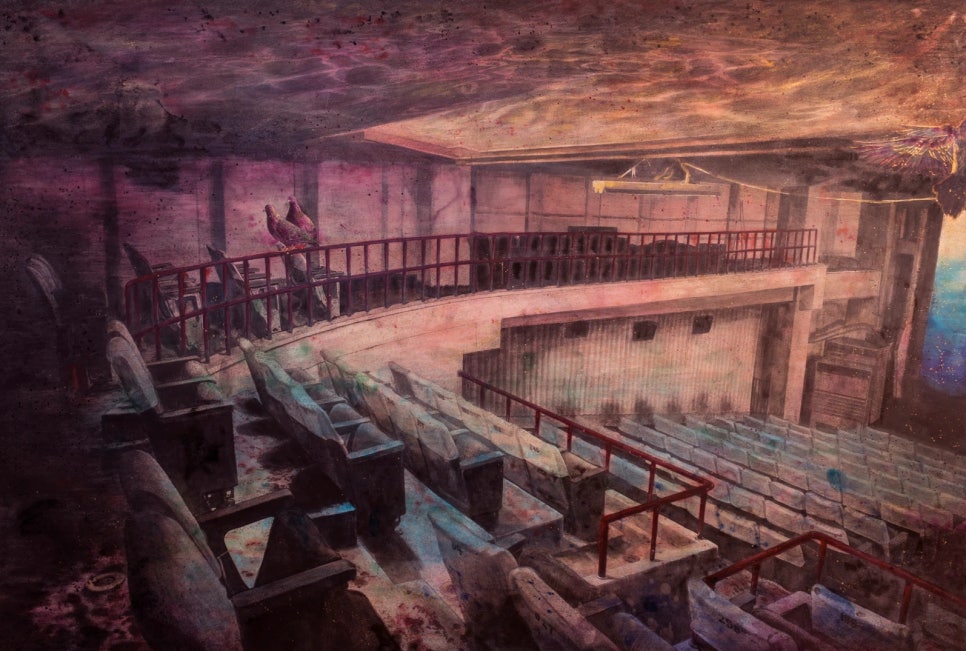
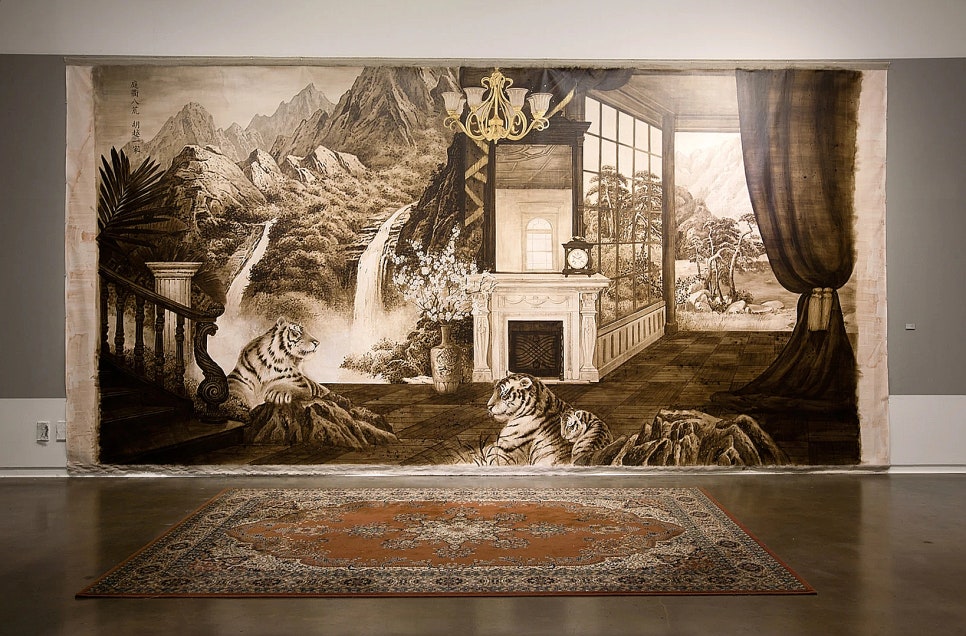
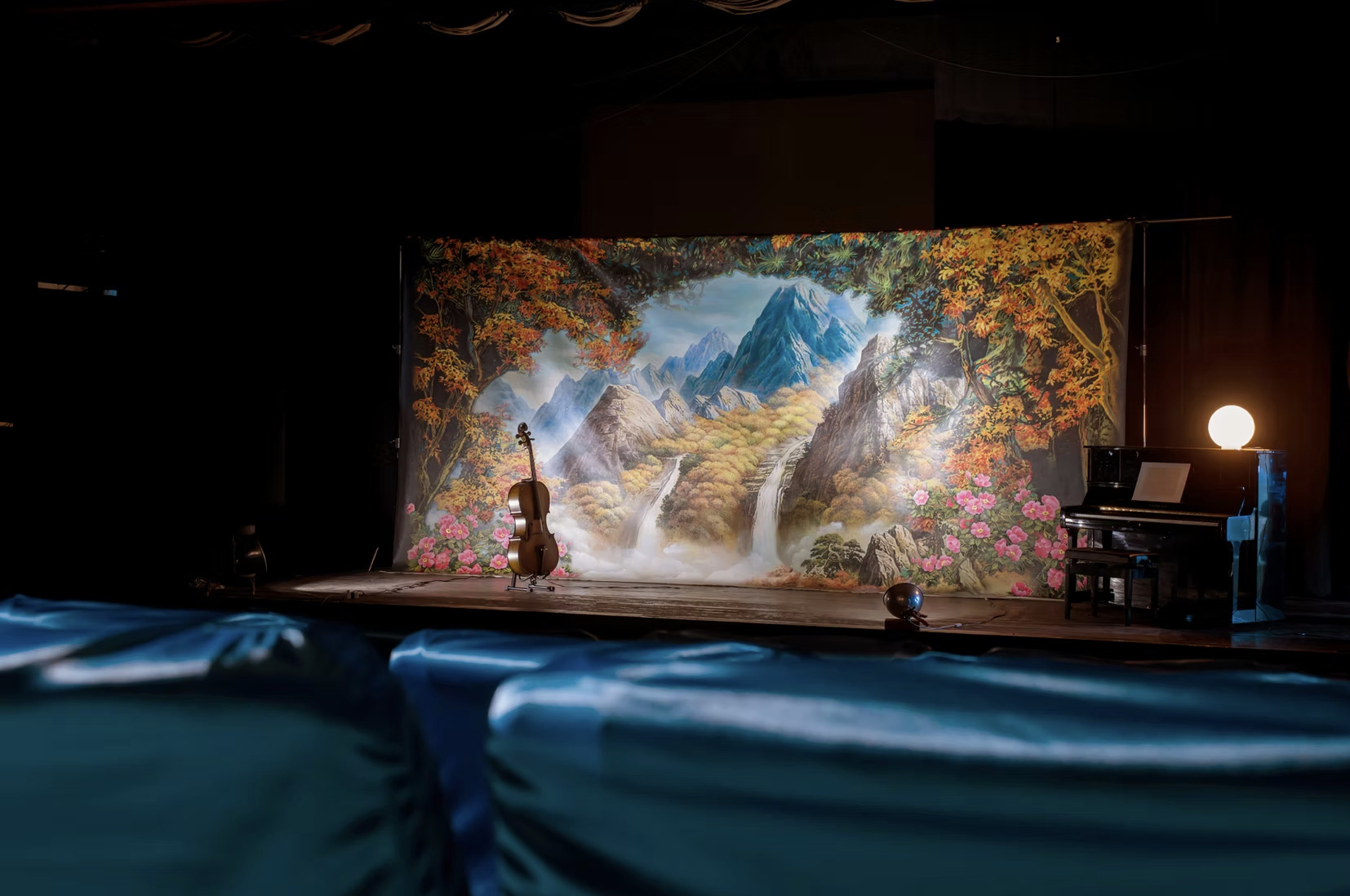
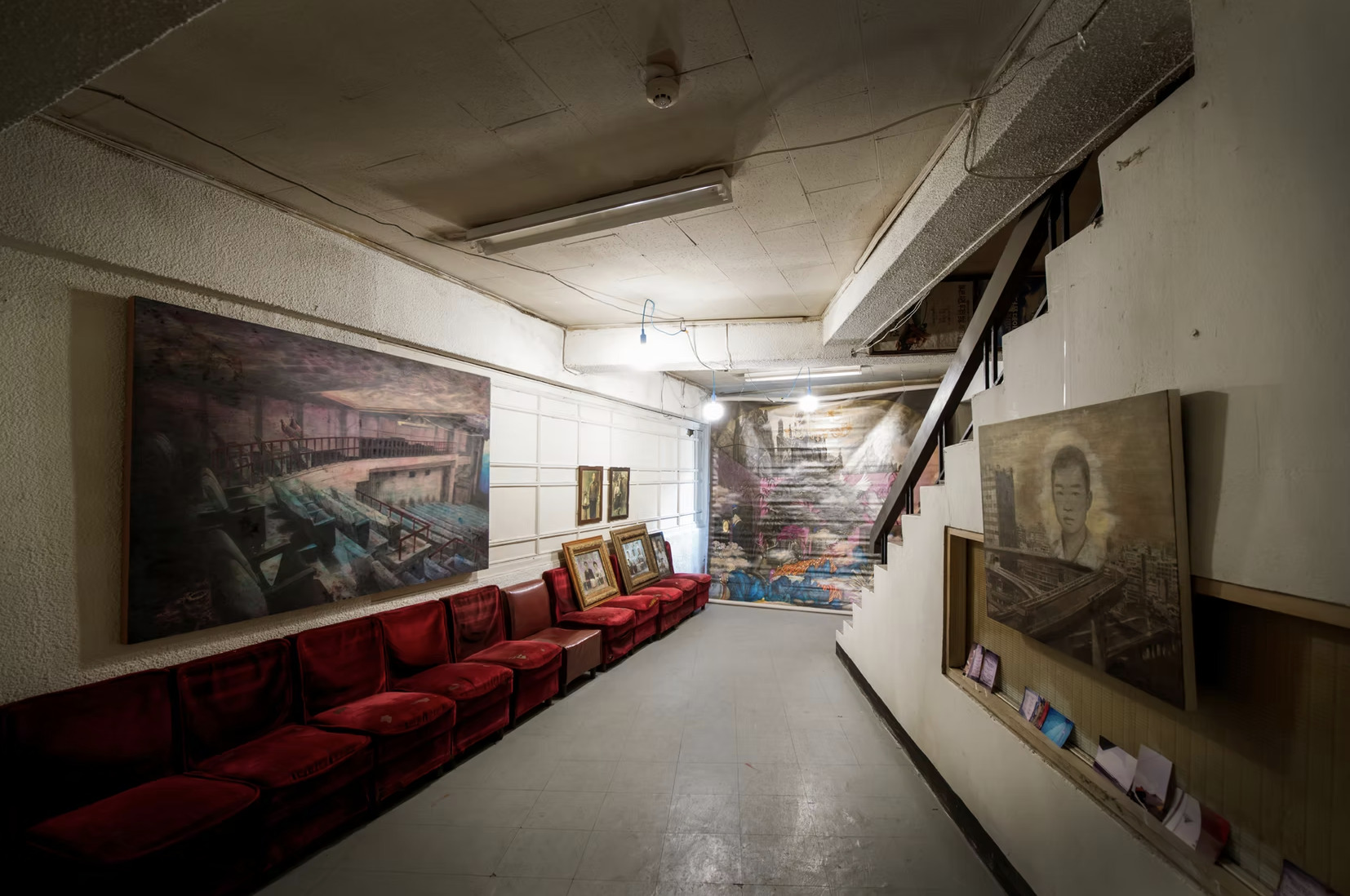
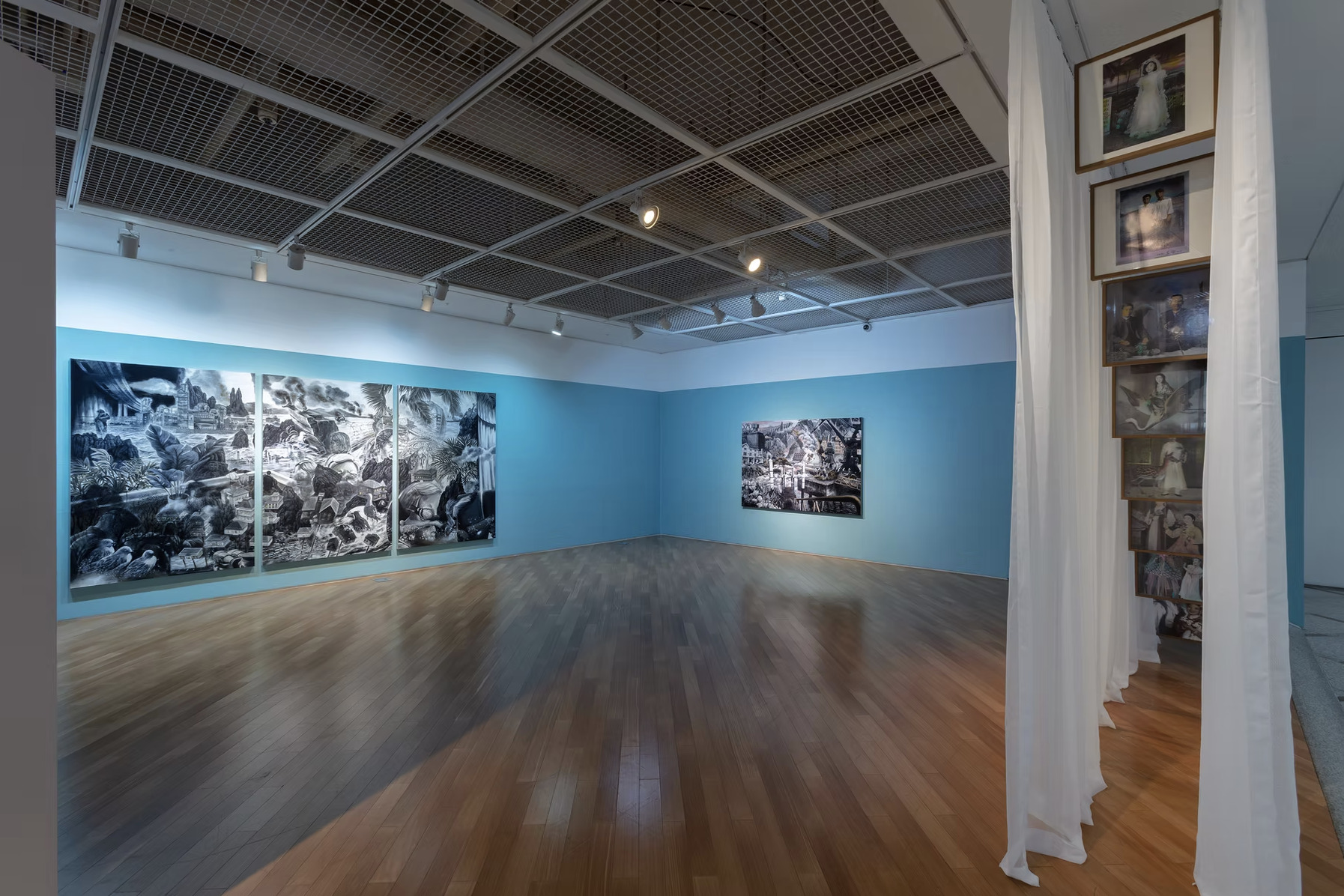
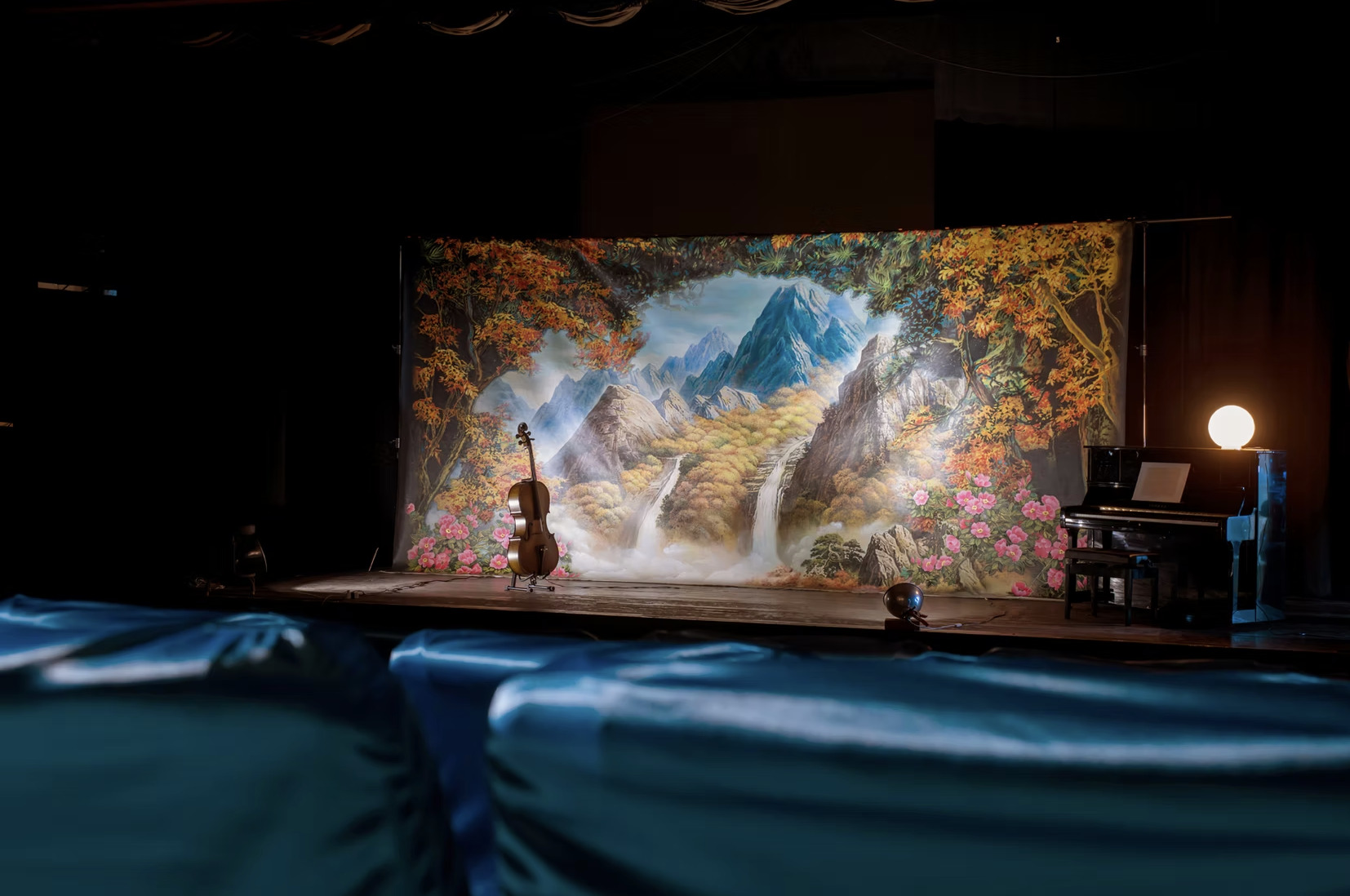
Installation view of 《Simultaneous screens》 (Bada Theater, 2018) © Naomi

For example, Naomi's 2018 solo exhibition 《Simultaneous Screens》 began with stage sketches by the scenographer Won Woo-jeon (1905–1970), who was active during the 1930s.
 
Drawing in particular on Won's sketches of Diamond Mountain (Mount Kumgang), Naomi explored the relationship between landscape painting as a theatrical backdrop, space as stage scenery, and the ways in which perspective and distance are constructed through stage design.
 
Tracing the historical traces embedded in the images she discovered in Won's sketches, the artist examined the enduring human longing to visit Diamond Mountain. She then reinterpreted these fragments of history by weaving them together with her own imagination, creating painterly scenes in which historical memory and personal fantasy intersect.


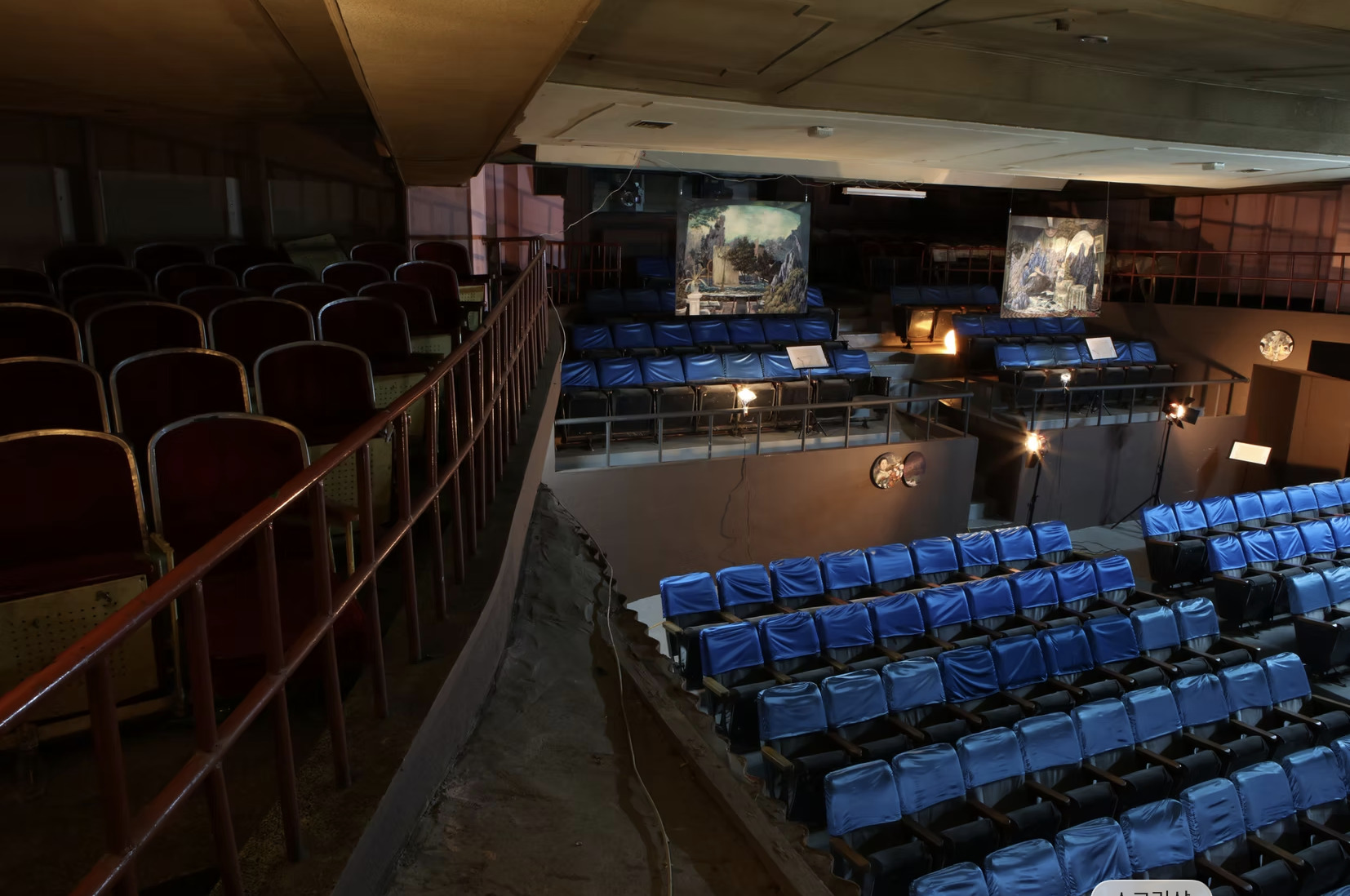
Installation view of 《Simultaneous screens》 (Bada Theater, 2018) © Naomi

Building on the idea of landscape painting as a theatrical backdrop and Diamond Mountain as a staged site, Naomi expanded her practice to explore not only collective memories associated with utopias and historic tourist destinations, but also deeply personal memories.
 
For the artist, the theater represents both an escape from everyday reality and a gateway to a fictional realm of imagination. She describes it as "a horizontal passage from the real world to an ideal world—a mythic place."
 
This concept was embodied in the exhibition's venues: the former Bada Theater along Cheonggyecheon and the Mirim Theater in Incheon. Once thriving cinemas, both buildings had long since closed and been repurposed for other uses.
 
By activating these sites with layered historical memories, Naomi transformed them into stages upon which human desire, aspiration, and idealized visions could once again unfold.


Installation view of 《Simultaneous screens》 (Bada Theater, 2018) © Naomi

At these sites, Naomi sought to bring into the present ideals that once existed but have since disappeared. Rather than offering an escape from reality through nostalgia, her work proposes the past as a conceptual model for reflecting on and addressing the challenges of the present.
 
In doing so, Naomi locates the possibility of an ideal not in the future, as conventional utopian visions often do, but in the past. Through this approach, she attempts to create a "simultaneous screens," allowing different temporalities to coexist within the same contemporary space.


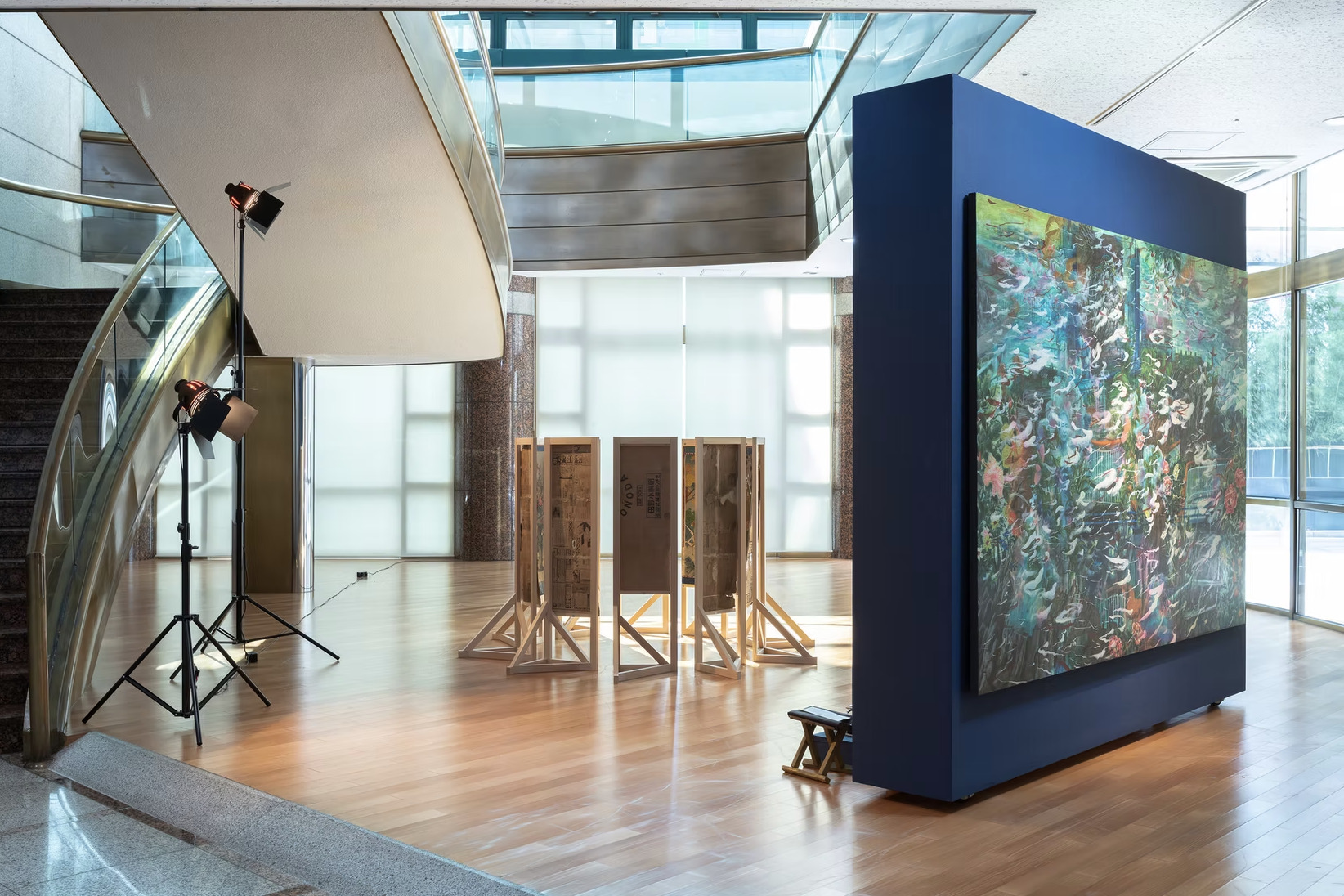
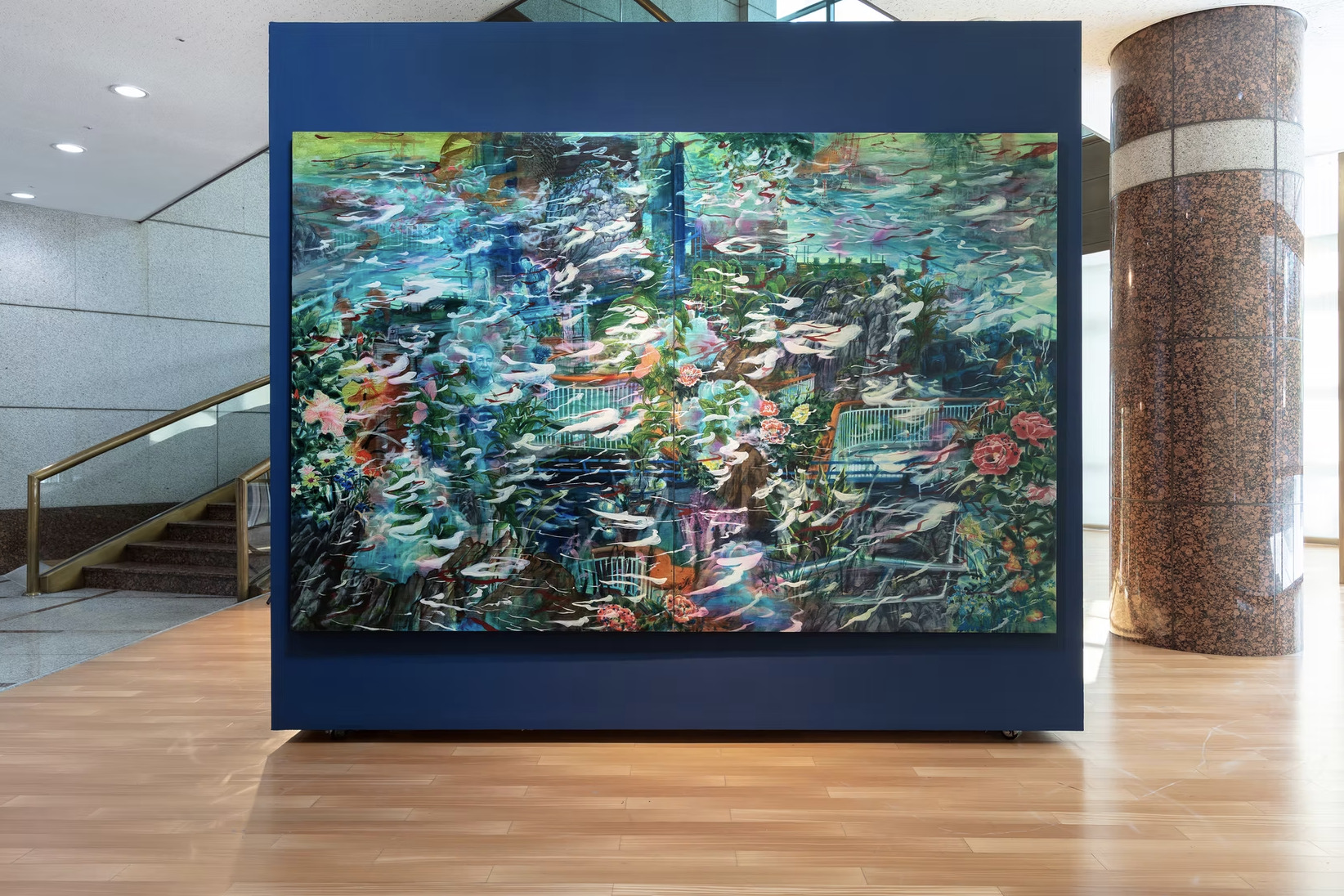
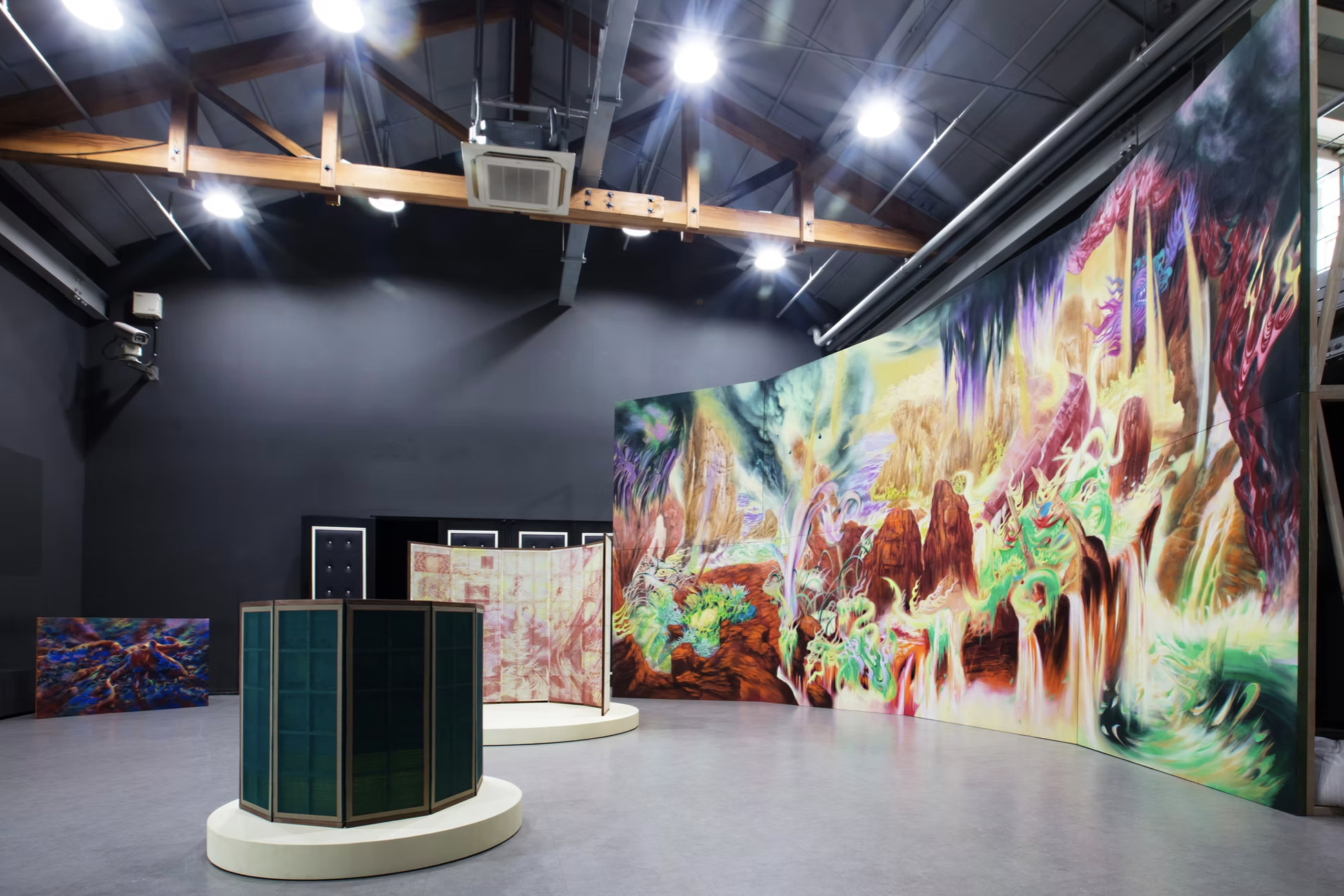
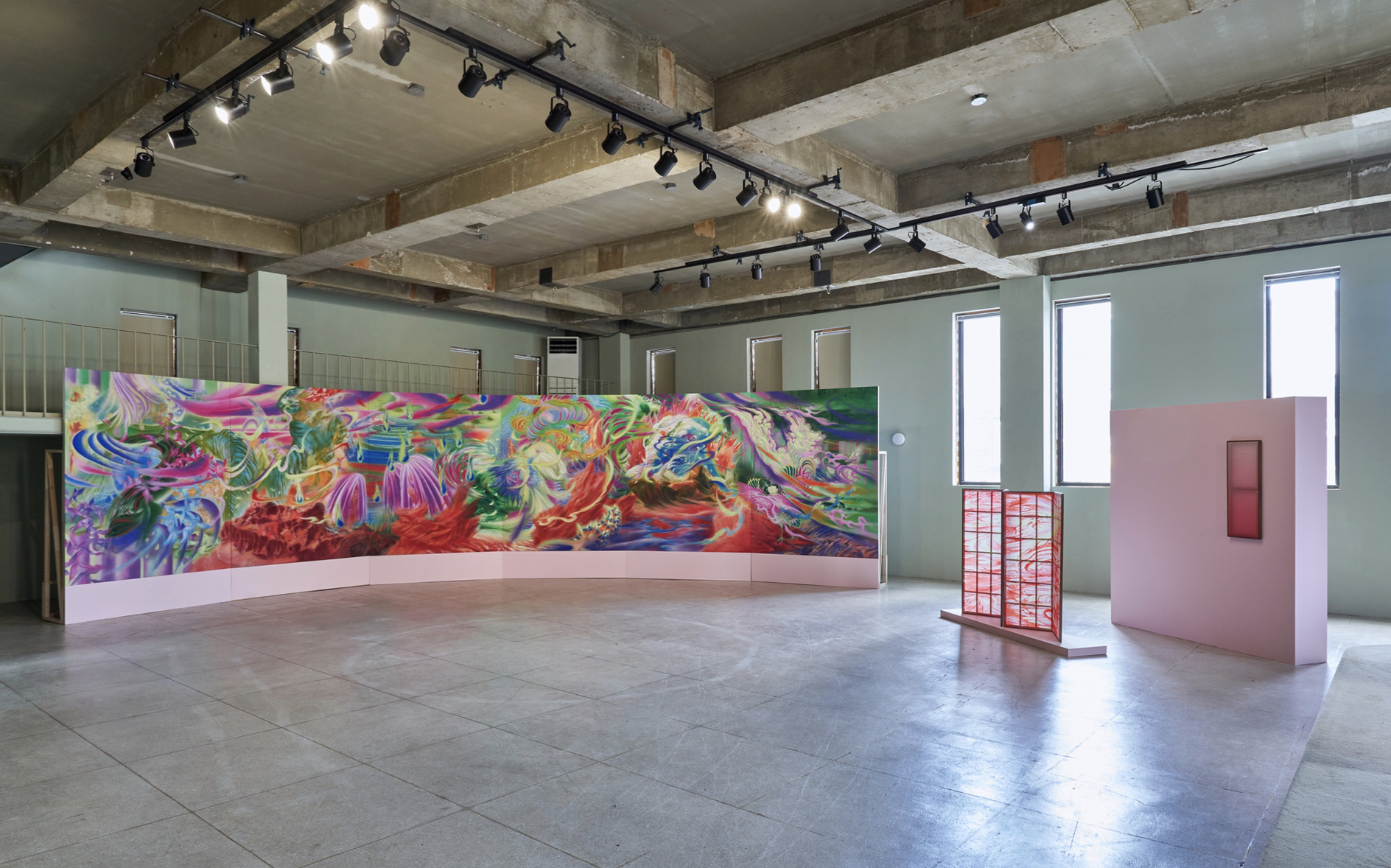
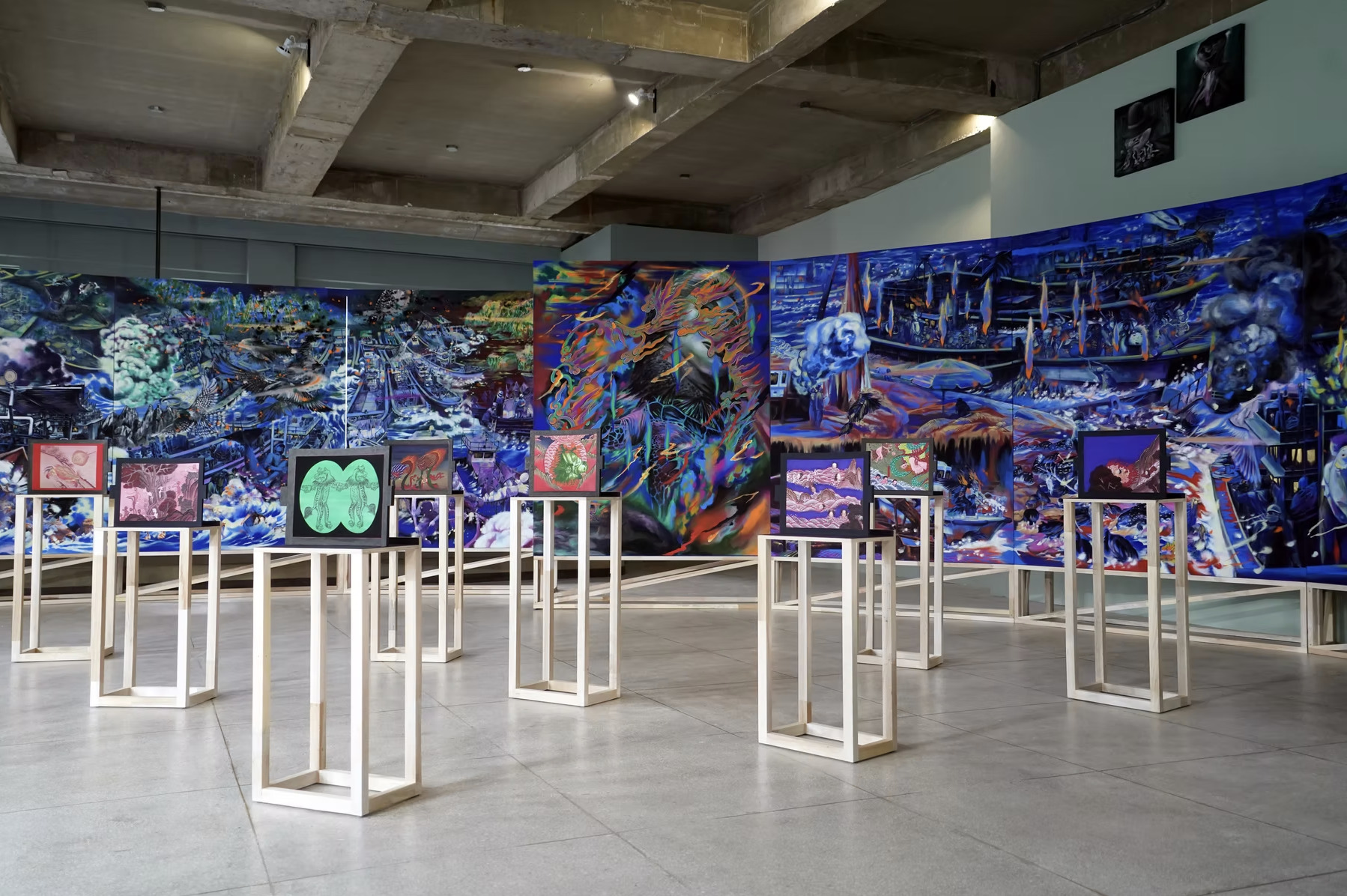
Installation view of 《Imaginary Gardens with Real Toads》 (SONGEUN Art Cube, 2020) © Naomi

Through this approach, Naomi has consistently sought to reconnect the past and the present by reexamining places, objects, and histories that remain embedded in collective memory yet have gradually lost their original significance over time.
 
This inquiry was further developed in her 2020 solo exhibition, 《Imaginary Gardens with Real Toads》, presented at SONGEUN Art Cube. Drawing on historical and cultural sources, Naomi collected events, narratives, and associated images surrounding specific places and objects, weaving these fragments into imagined narratives that blur the boundaries between historical fact and fiction, memory and imagination.


Installation view of 《Imaginary Gardens with Real Toads》 (SONGEUN Art Cube, 2020) © Naomi

In this exhibition, Naomi moved beyond her earlier works on theatrical backdrops to focus on the regional characteristics of a port city where multiple cultures coexist. Drawing on her long journey from Incheon Port to the Port of Dandong in China, she produced a series of works based on historically and culturally significant places and the stories of the people who remember them.
 
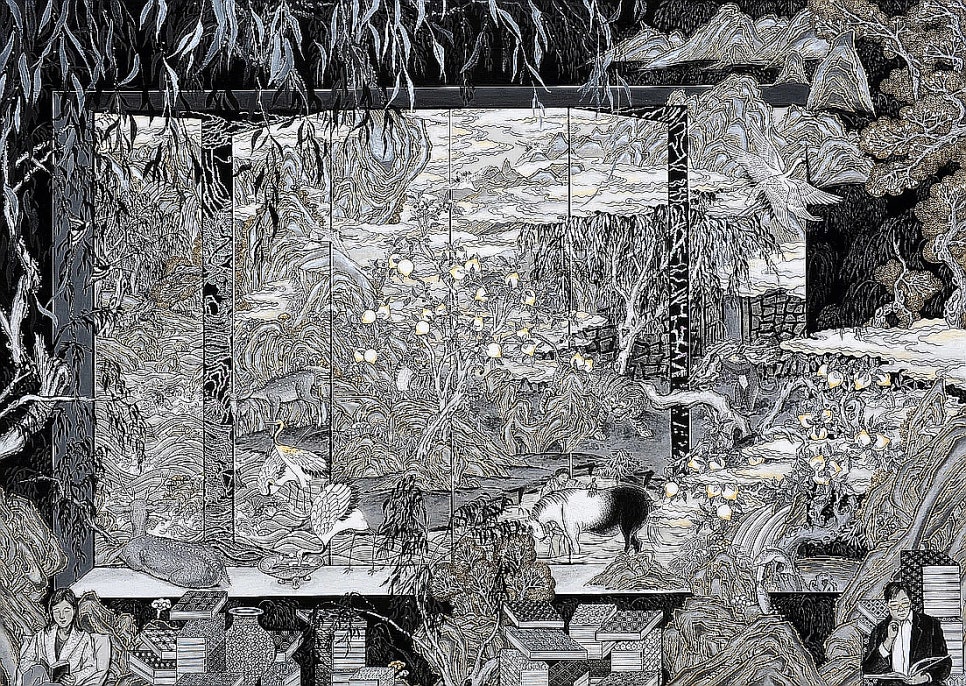
For instance, in Imaginary Gardens with Real Toads (2019) analogous to capturing the back of a departing ship, the artist spreads out at the same level; the actual events that occurred on the ship, objects inadvertently found in cities while travelling, and icons identified in buildings while adding the sceneries, the artist experienced herself here in order to better connect to the past and the present.


Installation view of 《Imaginary Gardens with Real Toads》 (SONGEUN Art Cube, 2020) © Naomi

By collecting printed folding screens in antique shops throughout the processes, (that were particularly intrigued by the back of folding screen grafted with Japanese newspapers and Joseon Onoda sacks of the 1930s), the artist traces back to the journey of the folding screen painting that could have voyaged across Japan, Seoul, Hamgyeong-namdo and Shineui-ju. Moreover, by allowing the collected folding screen images to remain in the artist’s time and space, she gives them a completely new meaning.
 
For instance, in Per te d'immenso giubilo-Geumsugangsan (2020), overlaps are Shineui-ju factories, modern architectural features, and symbolic monuments that are visible from Dandong in one screen, blending historical events and stories to reinvent themselves into one modern tale with a sense of realism and fantasy.


Installation view of 《Imaginary Gardens with Real Toads》 (SONGEUN Art Cube, 2020) © Naomi

In tracing the remnants of the past through collected historical materials and connecting them to the present, Naomi adopted the format of large-scale, diorama-like paintings. Their installation is not merely a formal presentation but a spatial device that transforms the viewer's immediate reality into another place.
 
Within these imagined gardens—where historical facts and conjectures drawn from archival sources, stories rooted in people's memories, and the artist's own imagination converge—viewers encounter the narratives Naomi constructs while adding their own interpretations and imaginative associations.


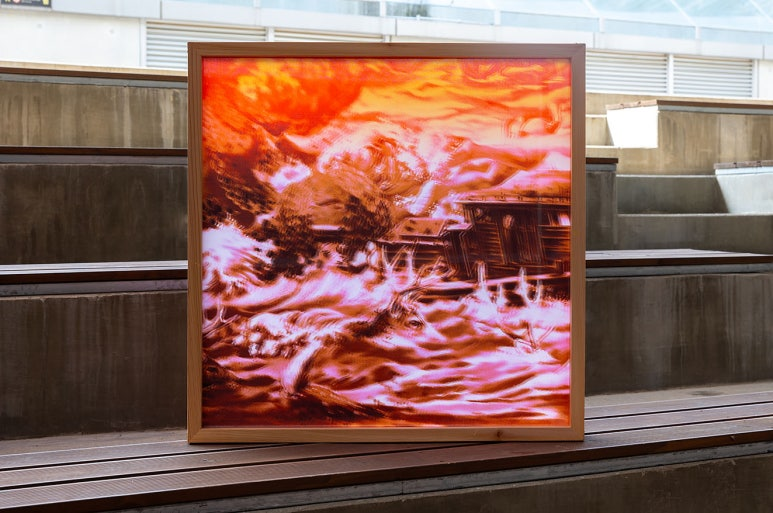
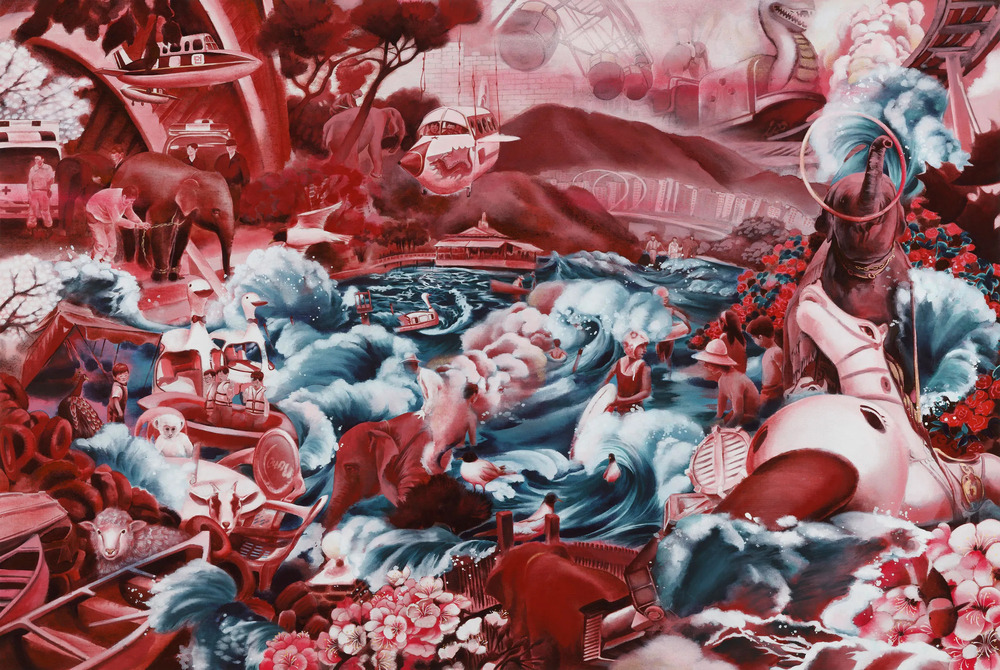
Naomi, how to walk an elephant,, 2020, Powder pigmentation on silk, 130x194cm © Naomi

Naomi subsequently expanded her ‘Liberation of coastline landscape’ (2019– ) project through exhibitions including 《Liberation of Coastline Landscape》 at the Lu Xun Academy of Art Museum (2021) and 《River of Shadows》 at Post Territory Ujeongguk (2021).
 
The project explores the changing landscapes of port cities—including the transformation of natural coastlines, the loss of coastal functions, and the reclamation of tidal flats—by examining intersecting perspectives from Chinese port cities that share the Yellow Sea, uncovering images that have either disappeared or continue to endure.


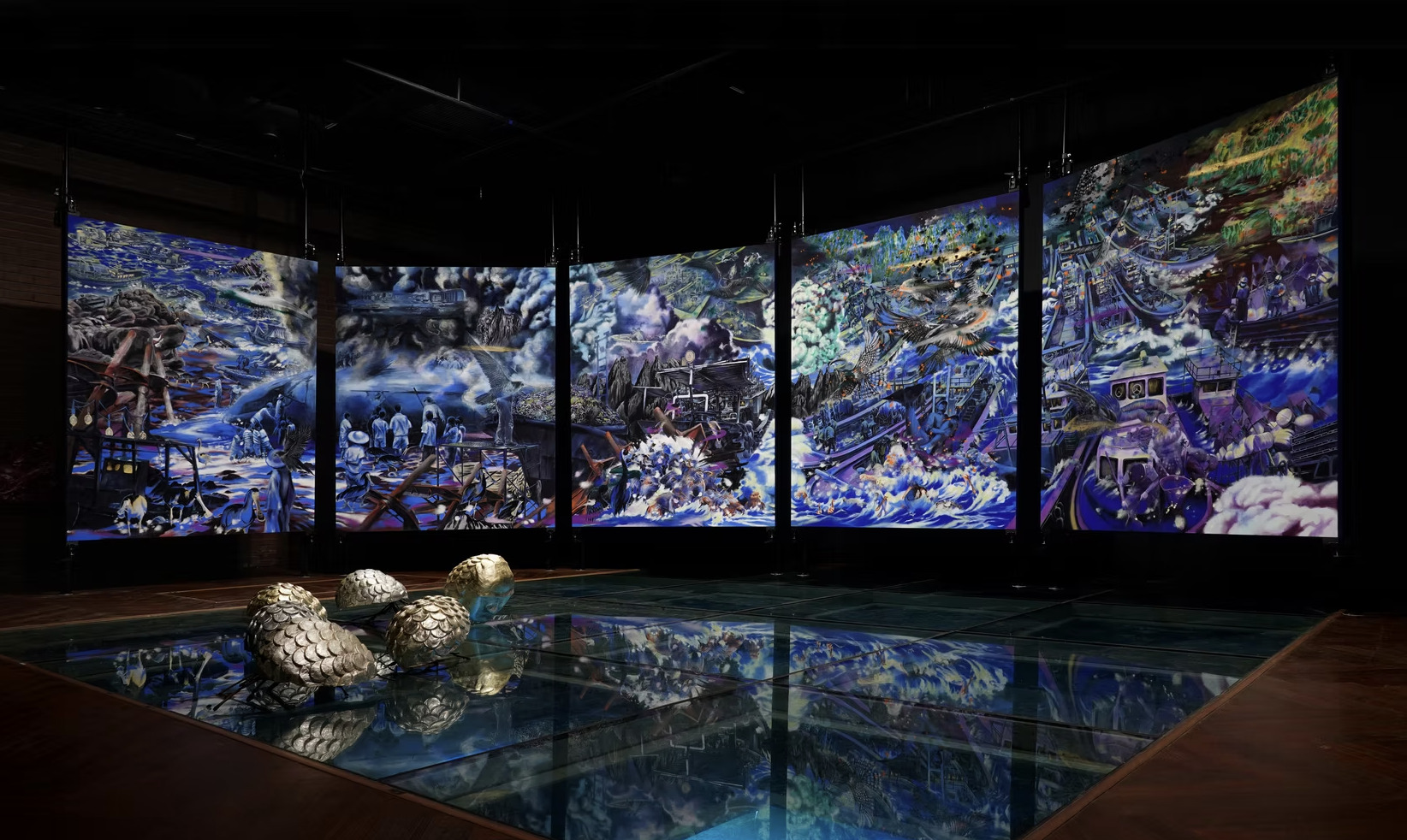
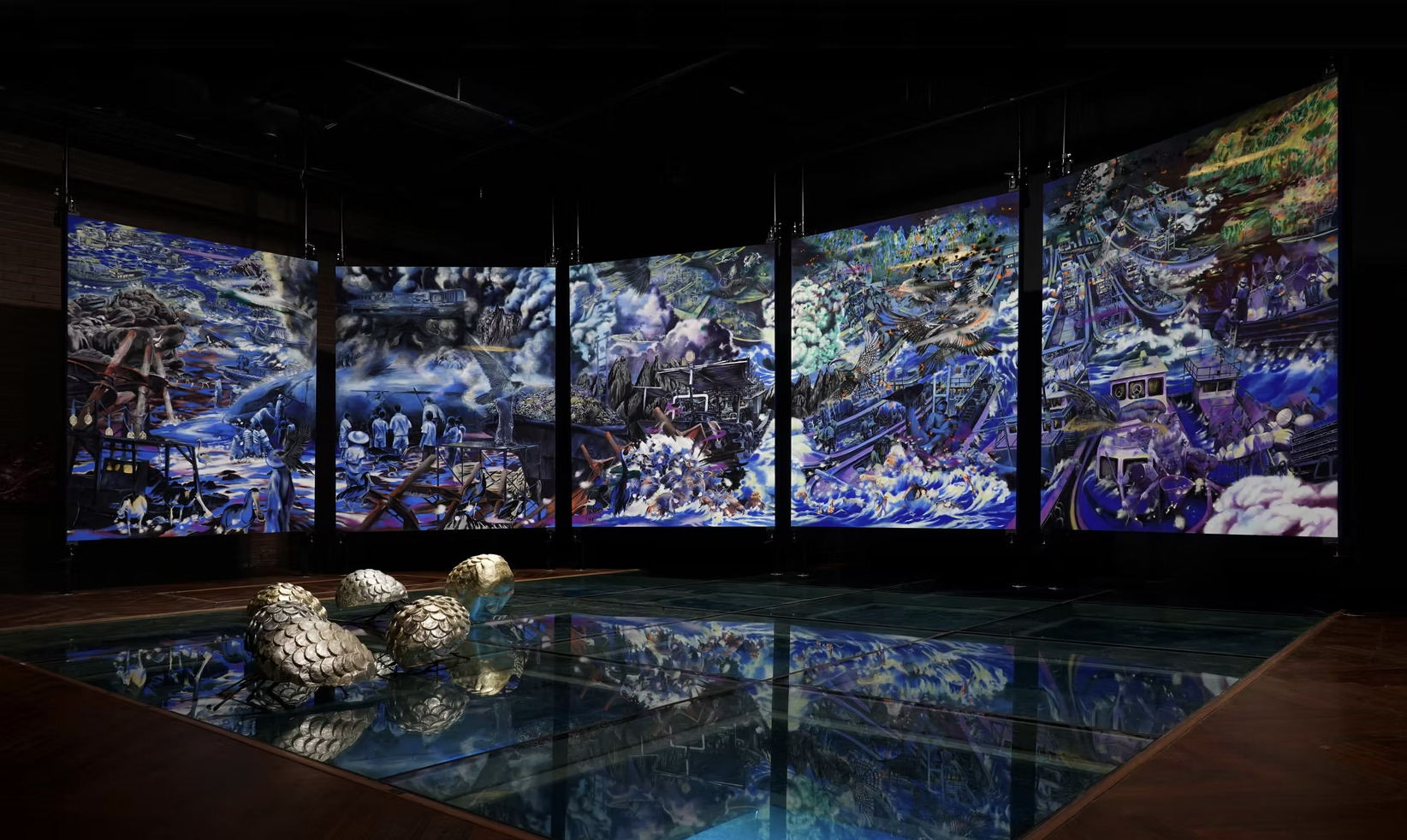
Installation view of 《파시波市 Lost village on the sea》 (Artspace Boan, 2022) © Naomi

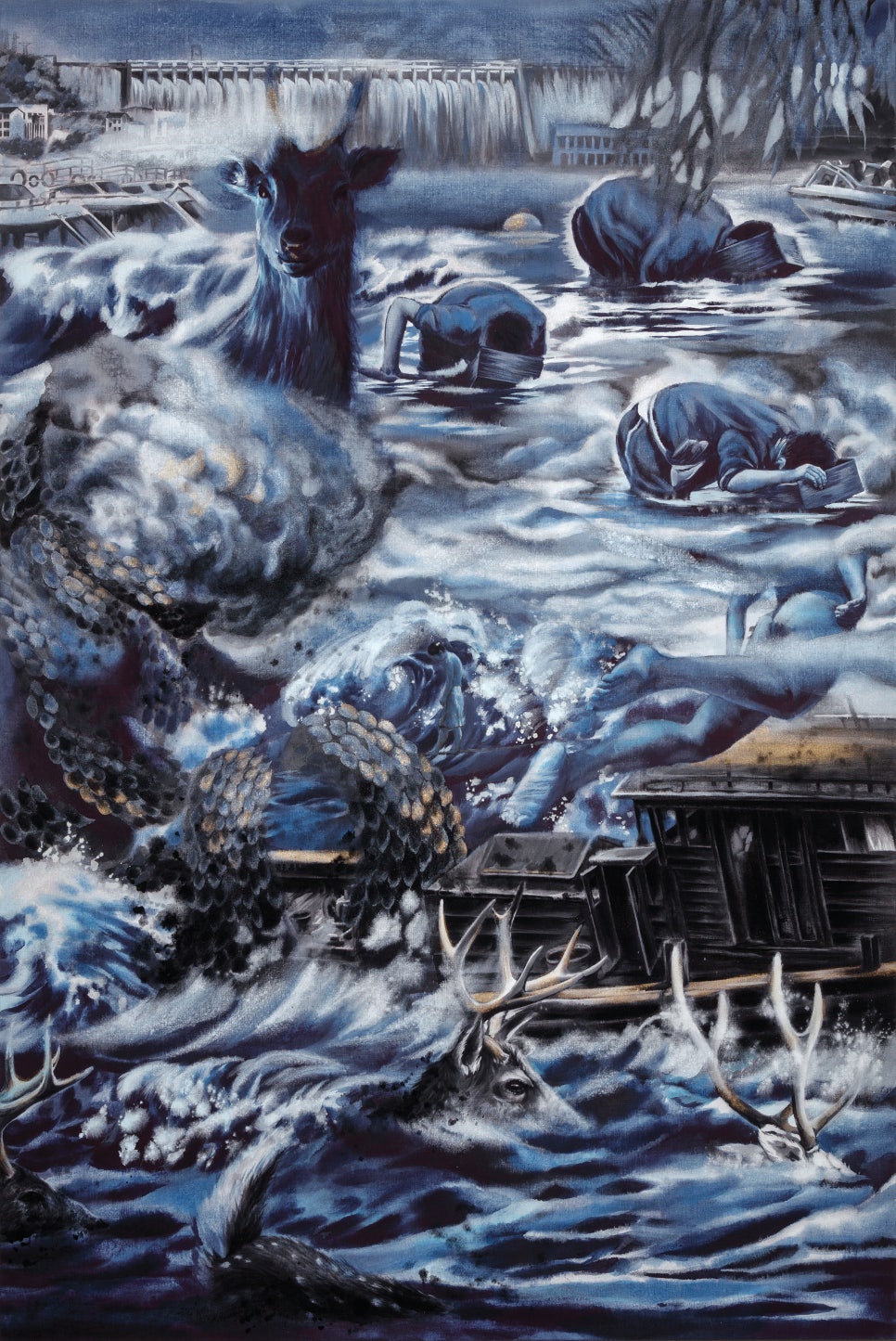
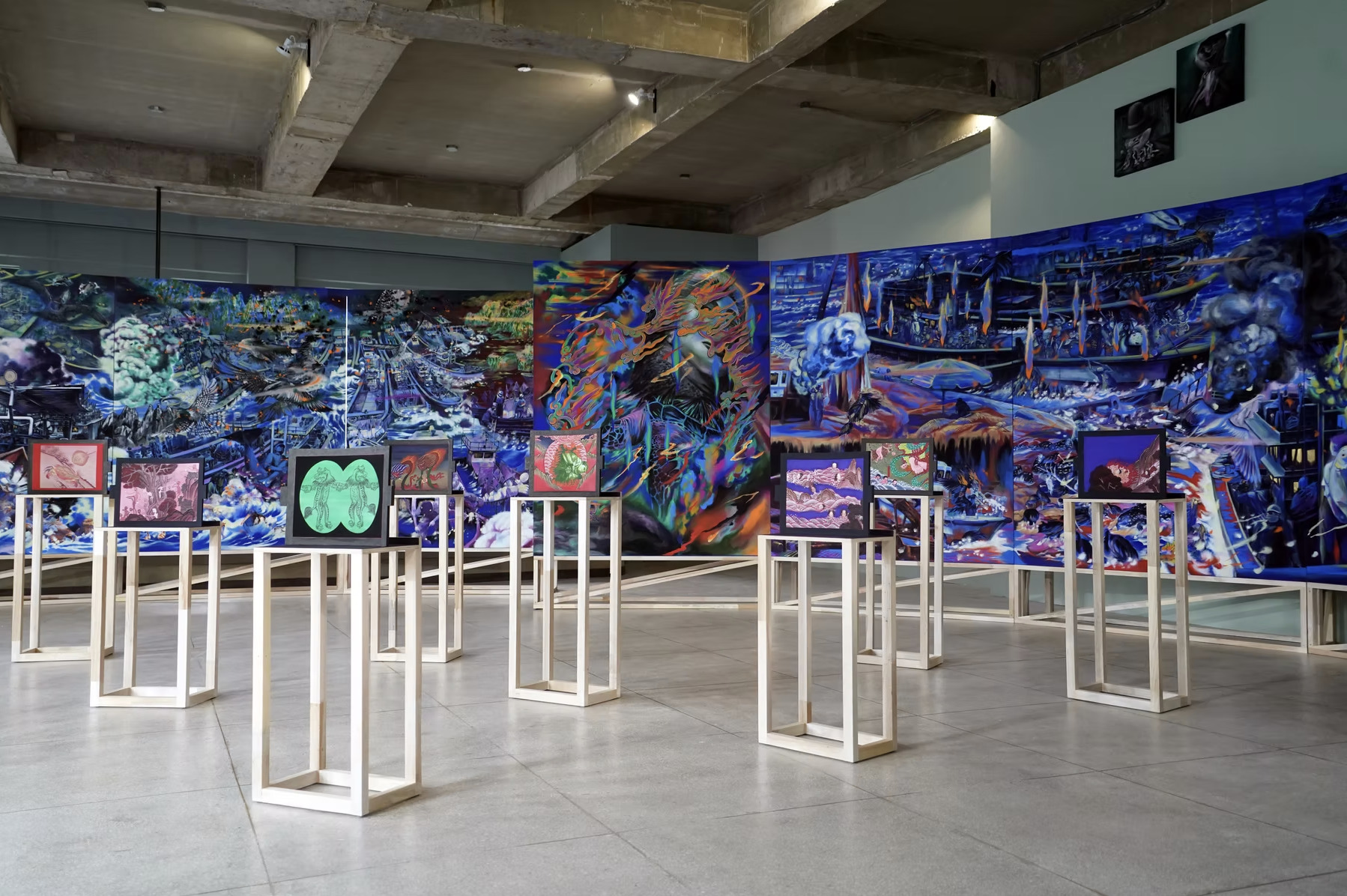
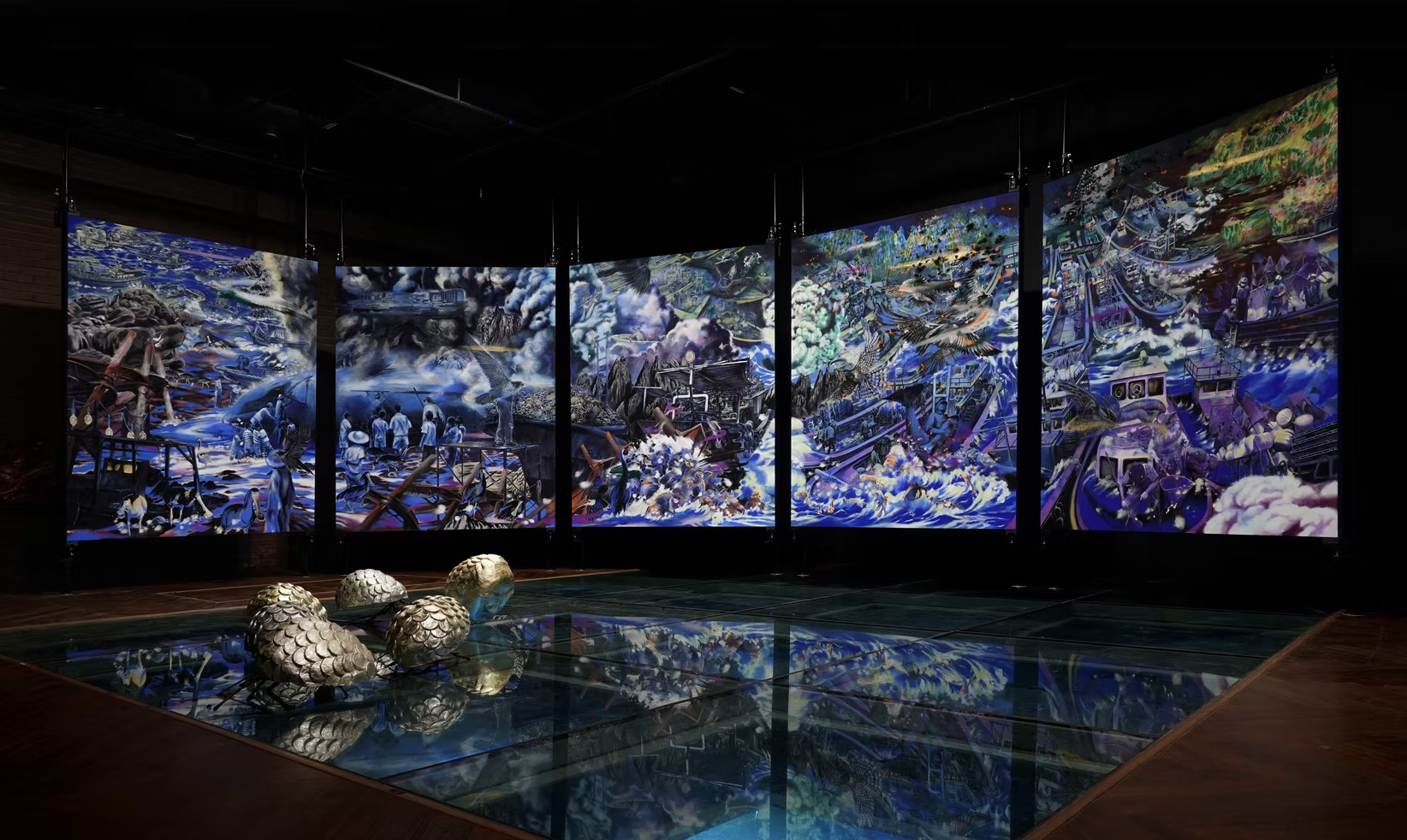
As part of this ongoing project, Naomi presented the solo exhibition 《파시波市_Lost village on the sea》 at Artspace Boan in 2022. The exhibition originated from her experience of witnessing a pasi (파시波市)—a floating fish market—while conducting research in Bukseong Port, Incheon, where land reclamation was underway.
 
Encountering a pasi firsthand, the artist observed that its defining characteristics were gradually fading. A pasi refers to a temporary offshore market formed by fishing boats that gathered to trade their catch as schools of fish migrated northward along ocean currents.
 
Historical photographs documenting the pasi of Yeonpyeong Island reveal a transient landscape that, because of its temporary and mobile nature, resembled a floating city appearing and disappearing upon the sea.

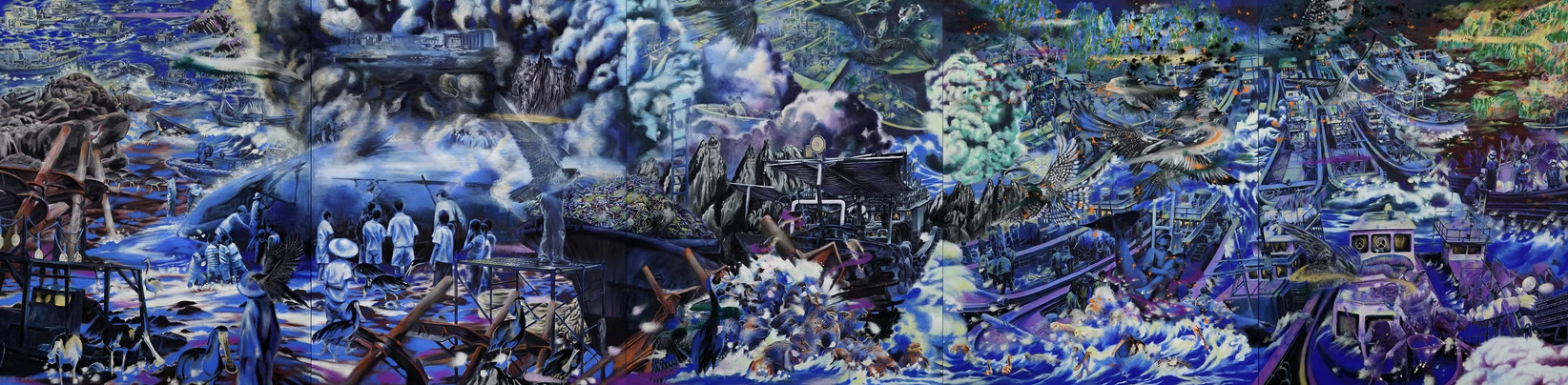
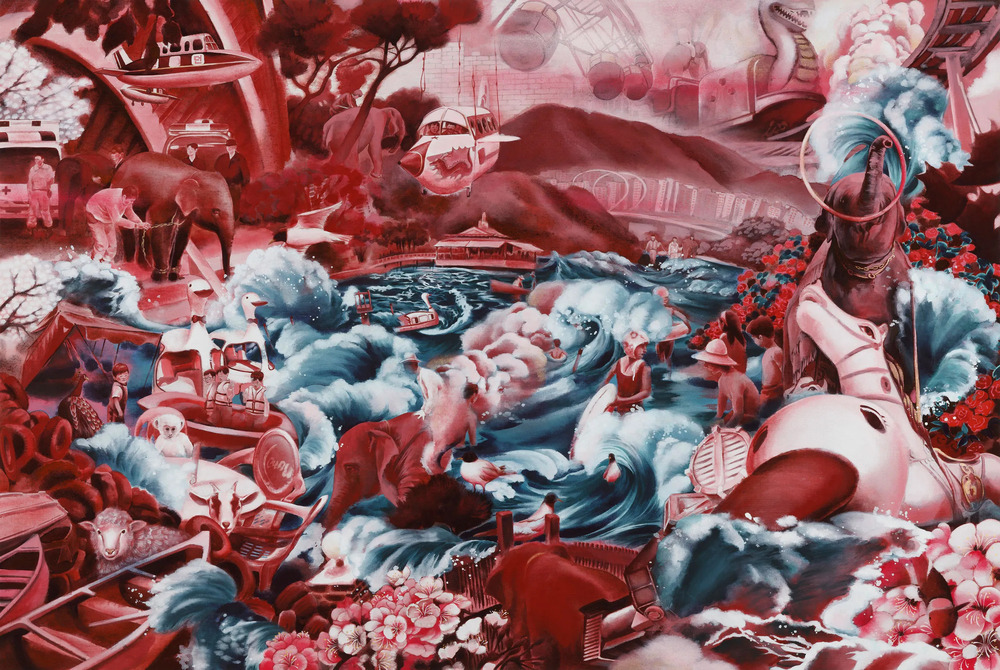
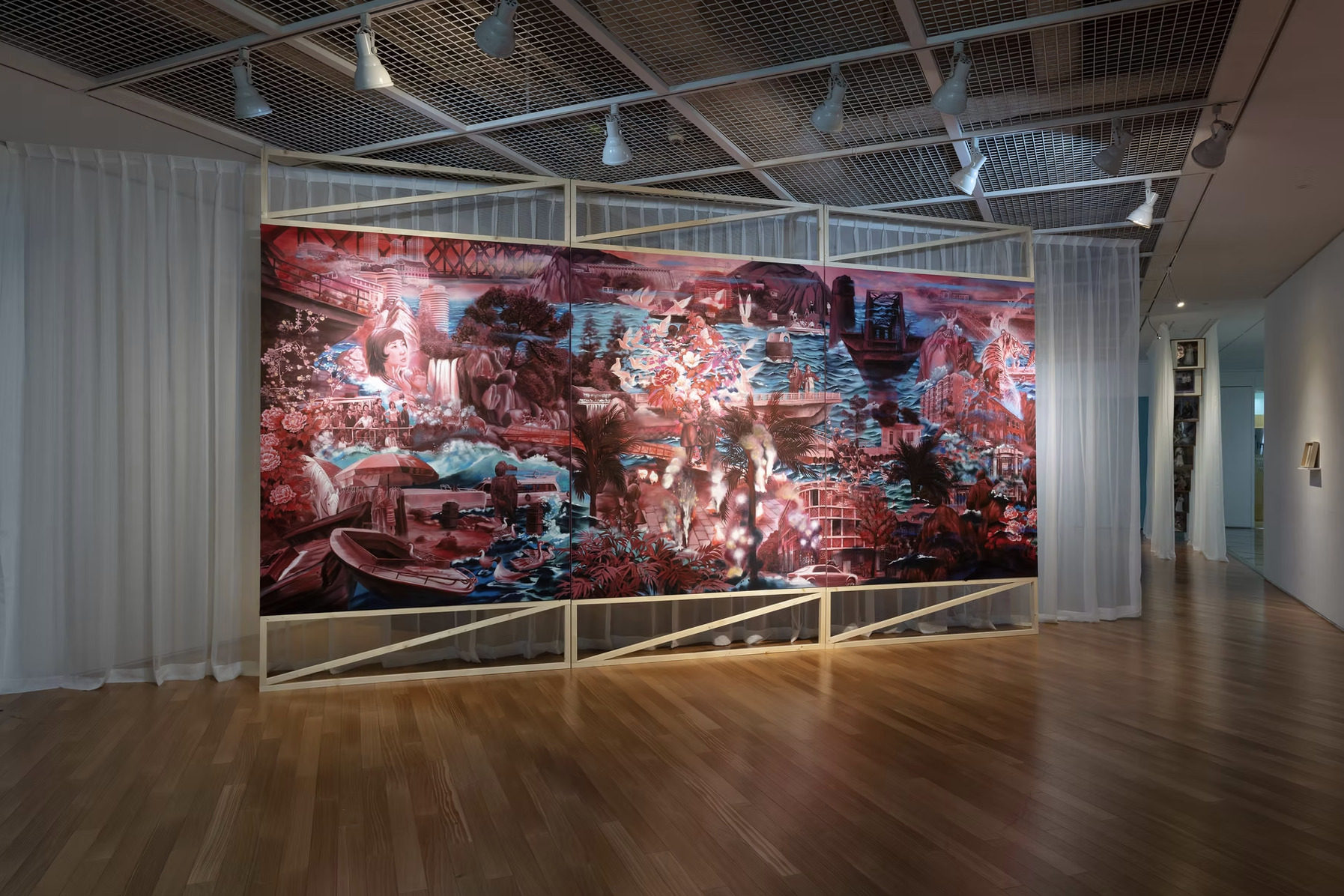
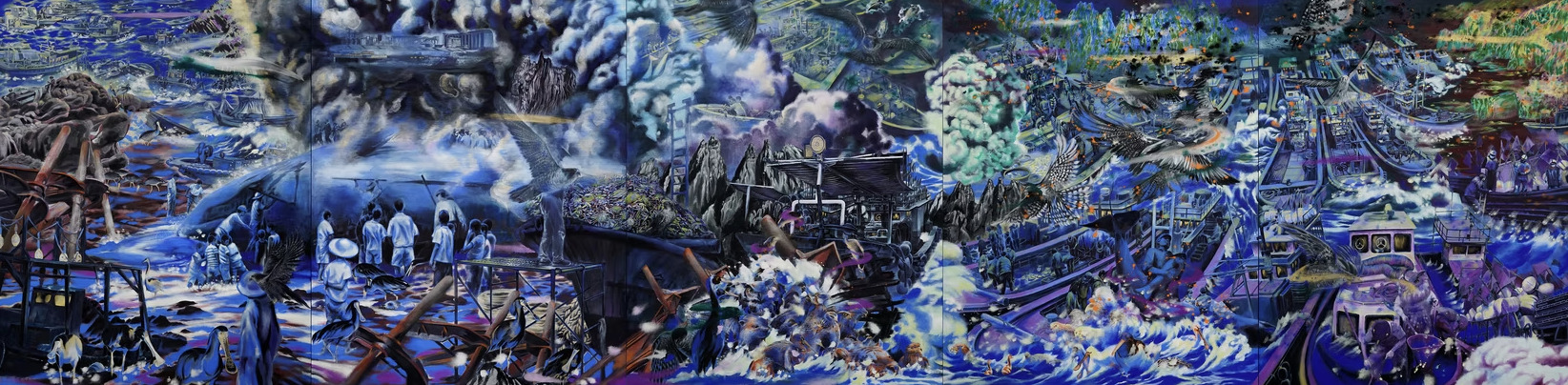
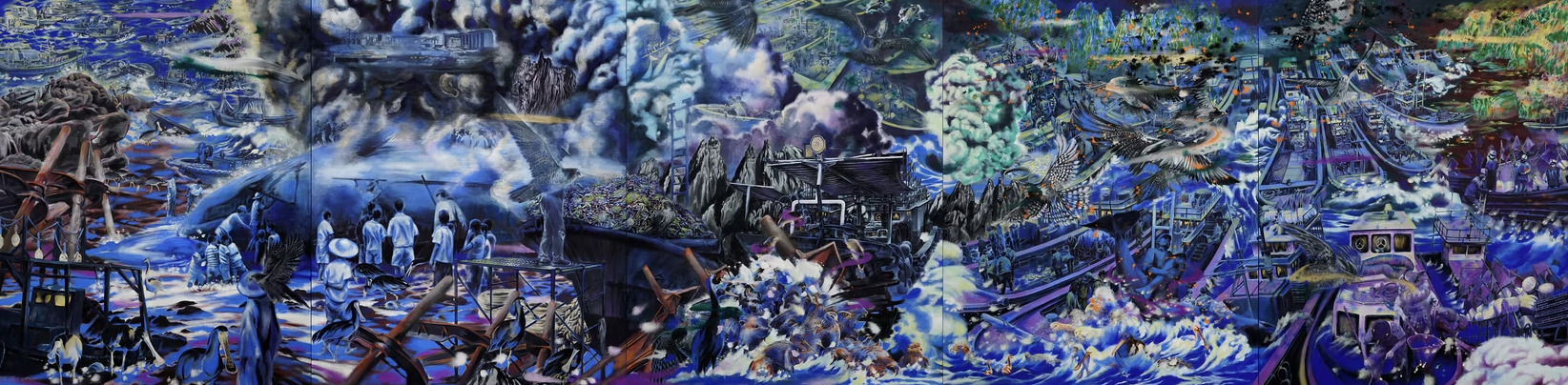
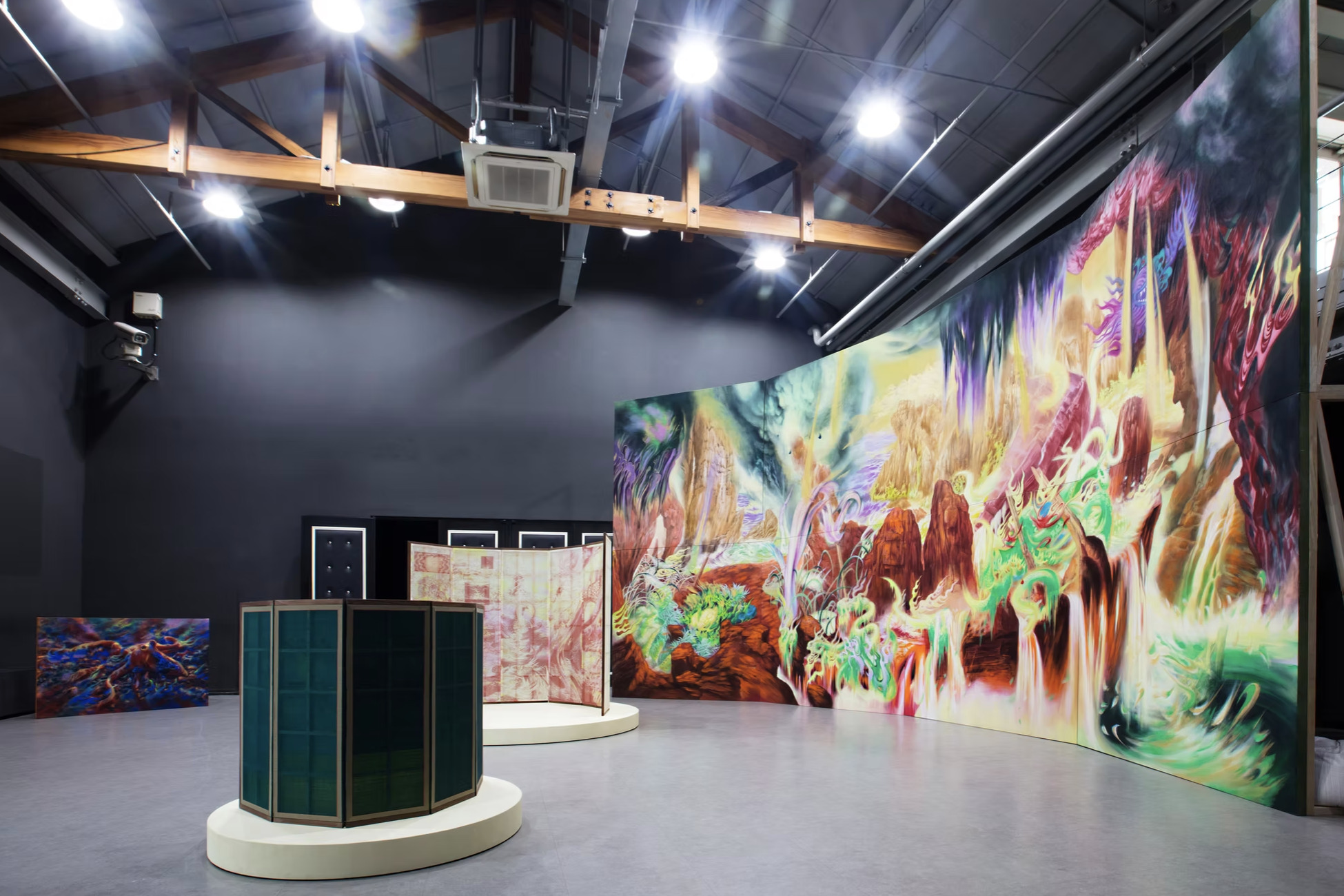
Naomi, 파시波市_Lost village on the sea, 2022, Pigment on canvas, 227x910cm (227×182cm 5pieces) © Naomi

Recalling these lingering images through historical photographs, Naomi developed the transient landscape into a diorama-like narrative in 파시波市_Lost village on the sea (2022).
 
In this work, the artist constructs painterly scenes that juxtapose vanished landscapes—such as a sea without a visible horizon where boats became land, and the whale hunting operations of the Oriental Whaling Company, established by the Japanese on Daecheong Island—with the present-day coastline, where only anchors remain after the boats have disappeared.
 
She also depicts the birds and fish that are vanishing as land reclamation and coastal development continue to disrupt the local ecosystem.


Installation view of 《Floating Islands, Day for Night》 (TINC, 2023) © Naomi

Through her subsequent exhibitions, Naomi has continued to expand the ‘Liberation of coastline landscape’ project by comparatively examining and visualizing in painting the past and present coastal landscapes of Korea and China, which share the Yellow Sea, from cultural, geographical, historical, and ecological perspectives.
 
Through the images she has collected from these maritime cities, the artist discovered that although these places are physically far apart, they have undergone remarkably similar transformations over time. As a result, their identities have become increasingly ambiguous, shaped by growing cultural hybridity in the present.


Installation view of 《From the Edge of the Yellow Sea》 (Incheon Art Platform, Buyeon, 2025) © Naomi

Through this body of work, Naomi has explored how historical events and the landscapes in which they unfolded can be recontextualized and restaged through the artist's own perspective.
 
In exhibitions such as 《Floating Islands, Day for Night》 (TINC, 2023) and 《From the Edge of the Yellow Sea》 (Space Beam, 2024; Incheon Art Platform/Buyeon, 2025), she expanded this inquiry by giving form not only to recorded history but also to the voices of landscapes that have gradually faded from view and lost their physical presence.
 
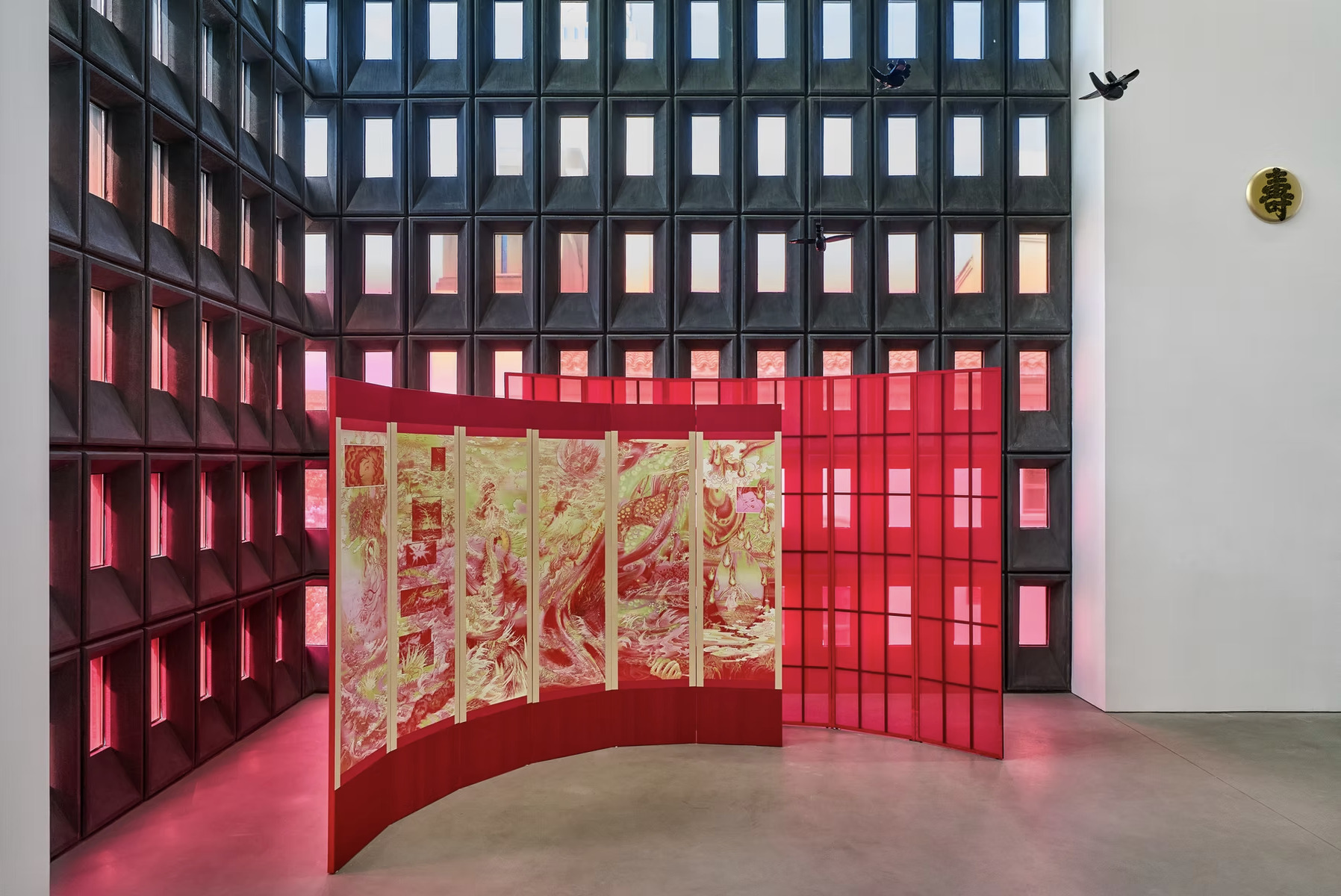
The artist turns her attention to sea deities and maritime beliefs, composing scenes in which festivals and wars, as well as the boundaries between the worlds of the living and the dead, coexist within a single pictorial space.
 
In her recent works in particular, she has focused on stories of women and goddesses—such as Mazu(媽祖) and Sim Cheong—that have been transmitted through the sea, creating vibrant and monumental scenes in which multiple temporalities and spaces intersect.


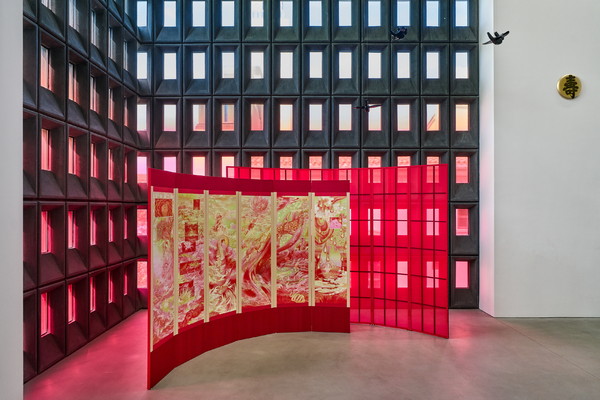
Naomi, Graceful Ghost, to My Mothers, 2025, Pigment and ink on silk, folding screen, 150x360cm (6 panels, each 150x45cm) © Naomi

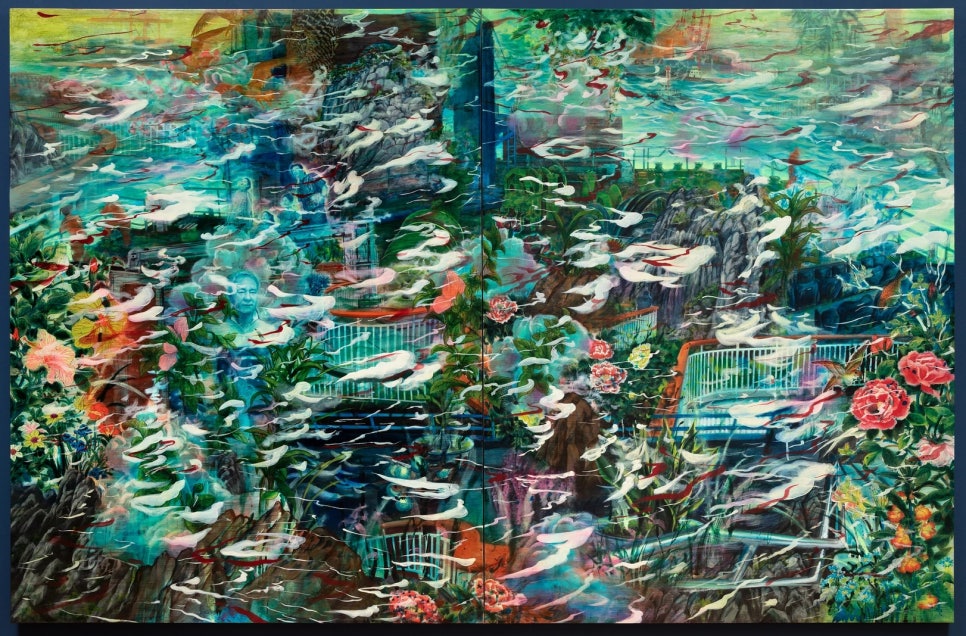
Through large-scale paintings, installations, photography, and video, Naomi visualizes multilayered narratives in which images of historical events along Korea's west coast (Yellow Sea) intertwine with present-day coastal landscapes of rugged rock formations and tidal flats, marine life, and representations of maritime myths and sea worship.
 
Layering the boundaries between past and present, life and death, and reality and imagination, her paintings transcend the conventional landscape genre to become expansive narrative stages mediated by the sea. By reinterpreting places shaped by specific historical contexts and the emotions once shared by the people who inhabited them from a contemporary perspective, Naomi evokes a sense of universal empathy.

"Because this history could disappear at any time, I hope we continue making the effort to listen to voices that have been marginalized." (Naomi, in an interview with Design Press)


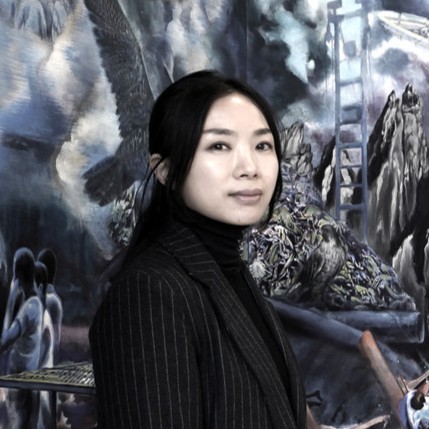
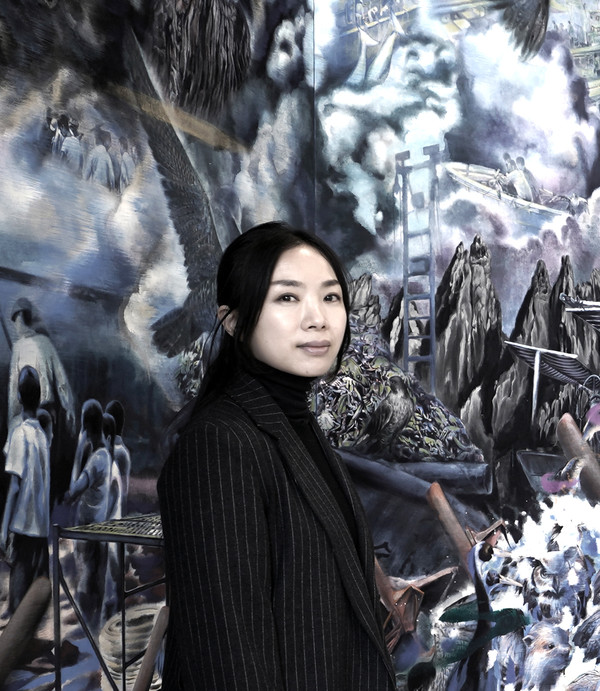
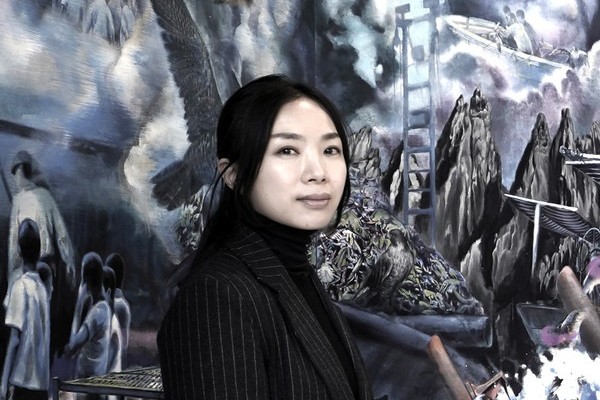
Artist Naomi © Incheon in

Naomi (Rhaomi) received a BFA in Painting from Chugye University for the Arts and an MFA in Fine Arts from Sungkyunkwan University. Recent solo exhibitions include 《From the Edge of the Yellow Sea》 (Incheon Art Platform/Buyeon, Incheon, 2025), 《From the Edge of the Yellow Sea》 (Space Beam, Incheon, 2024), and 《Floating Islands, Day for Night》 (TINC, Seoul, 2023).
 
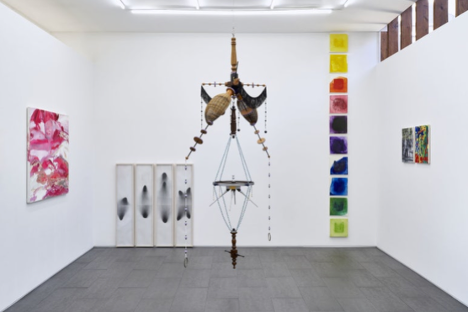
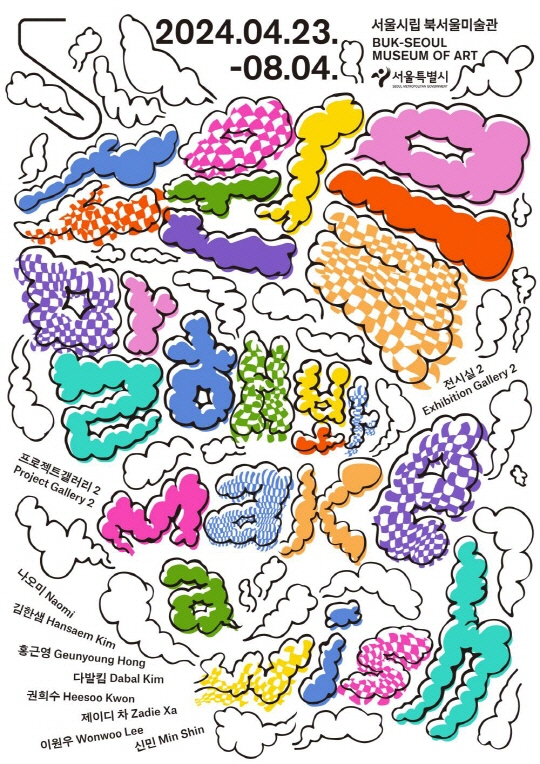
She has also participated in numerous group exhibitions, including 《Signs of Bukahyeondong 2026》 (Nook Gallery, Seoul, 2026), 《As She Descends》 (Aranya Art Center, Qinhuangdao, China, 2025), 《DMZ OPEN EXHIBITION: PASSAGE》 (Imjingak Pyeonghwa Nuri, Paju, 2024), 《Make a Wish》 (Buk-Seoul Museum of Art, Seoul, 2024), 《Korea in Color: A Legacy of Auspicious Images》 (San Diego Museum of Art, California, USA, 2023), and 《Summer Love》 (SONGEUN, Seoul, 2022).
 
Naomi was an artist-in-residence at the MMCA Residency Goyang (2026), the SeMA Nanji Residency (2022), and the OCI Museum of Art Residency (2017–2018). Her works are held in the collections of the Sigg Collection, the OCI Museum of Art, and the Korea University Museum.

References