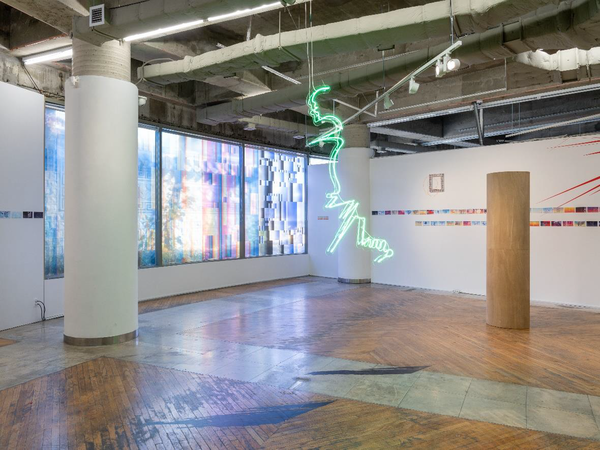
The key
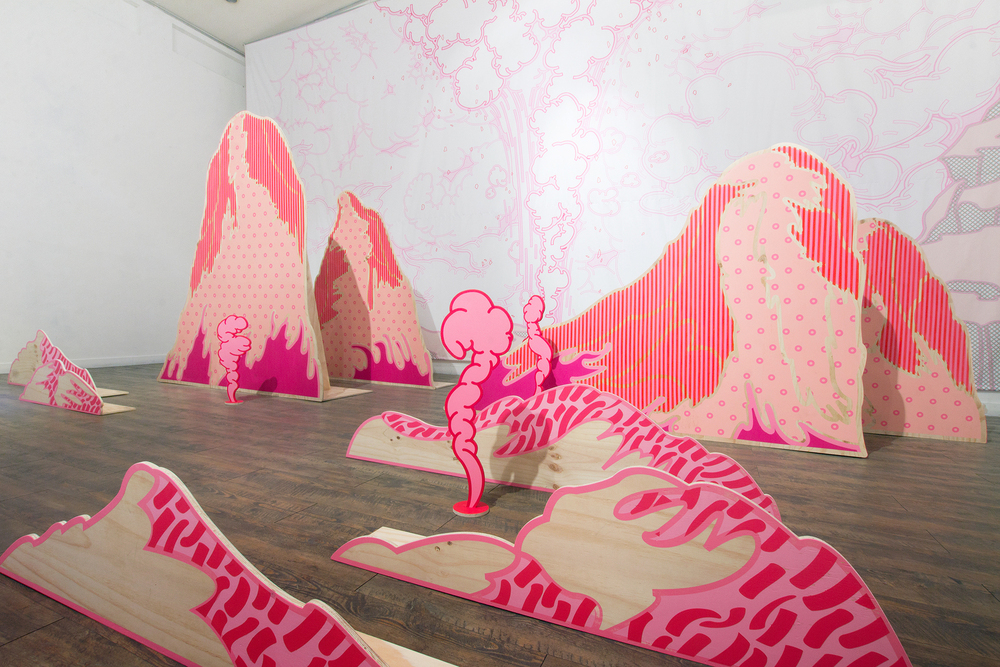
form that explains Lee Mijung’s work is what the artist calls “assembled
painting.” She does not limit painting to a flat surface hung on a wall, but
treats it as a surface that presents the world and as a device that occupies
space. Using birch plywood, canvas, acrylic, adhesive vinyl, rail devices, and
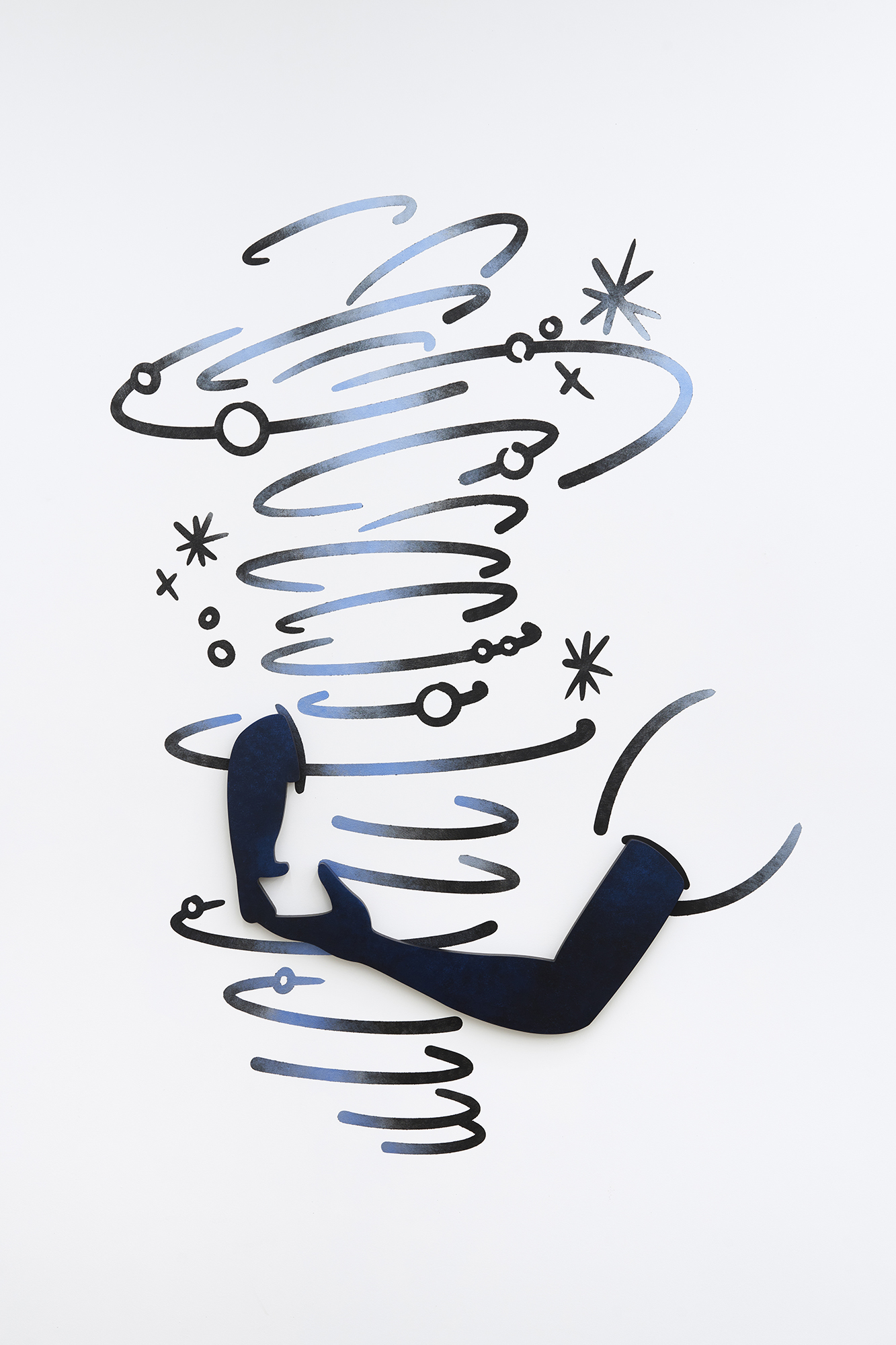
other materials, she cuts, attaches, erects, folds, and unfolds flat images,
moving between painting and sculpture, object and installation.
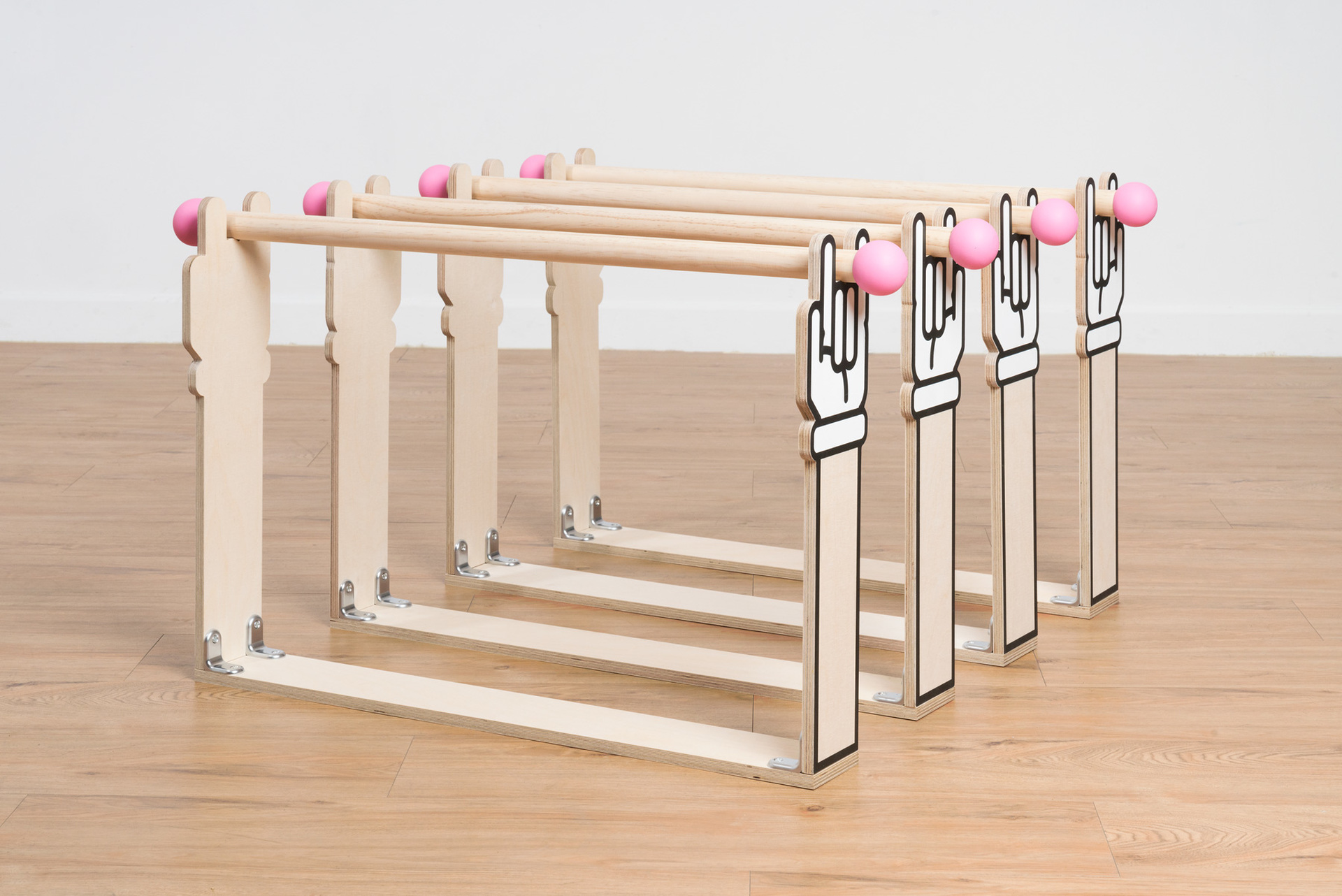
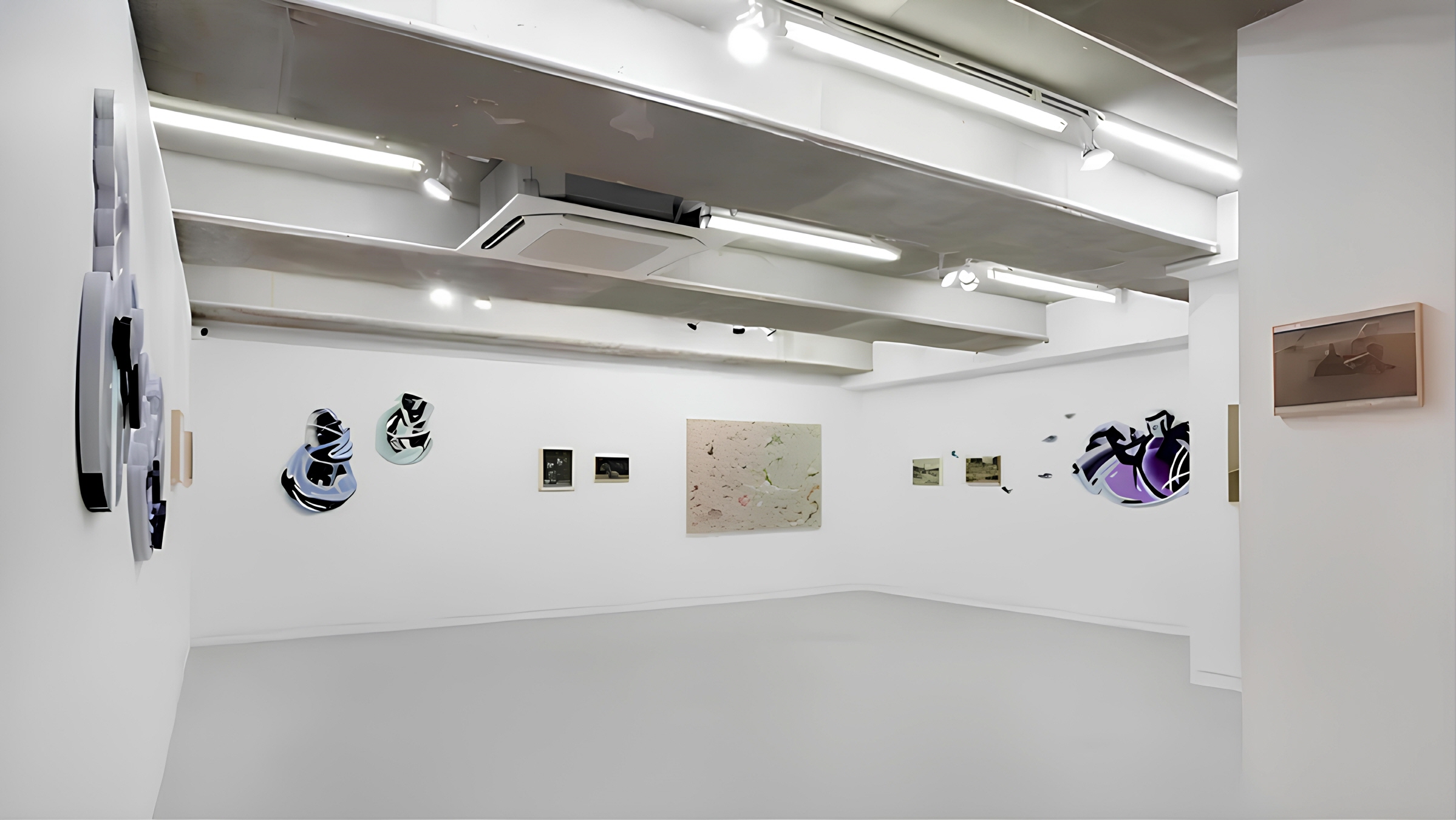
Works such
as Combined body ((effect))(2019), which juxtaposes
parts of the body with parts of DIY furniture, or Take the same
pose(2017), which three-dimensionally assembles boards
diagrammatizing the function of legs, show the foundation of this method.
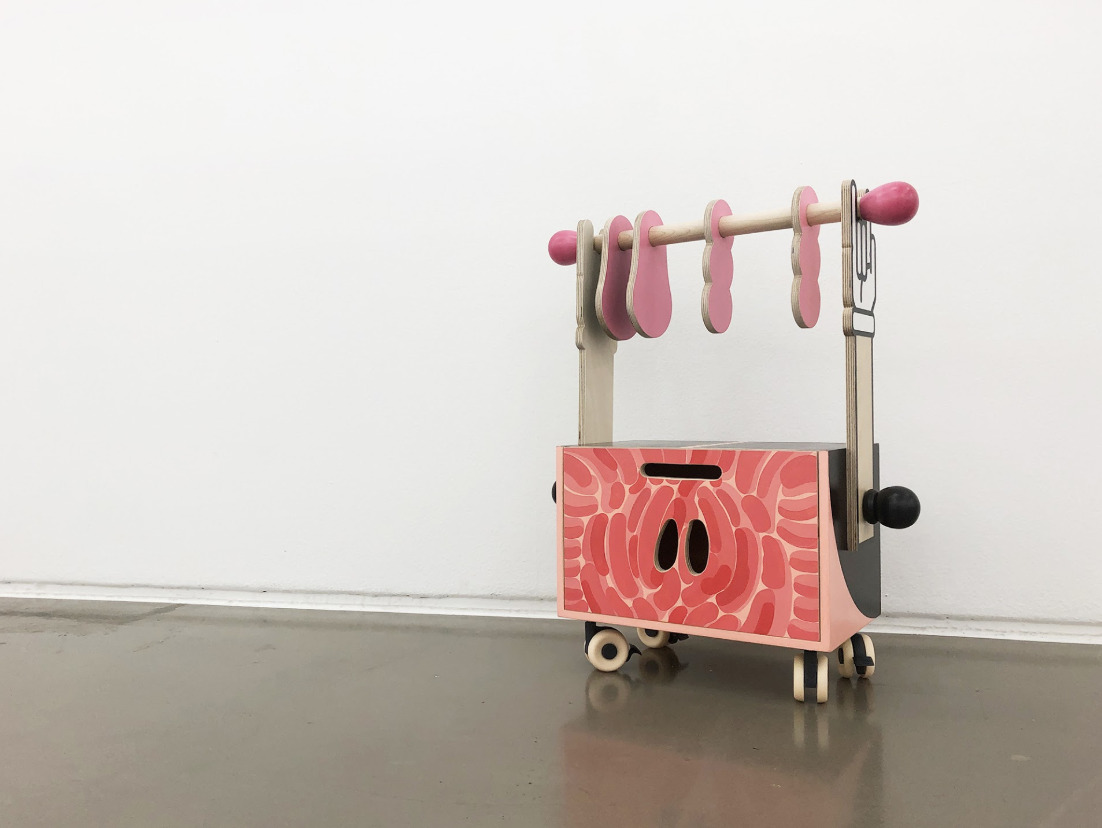
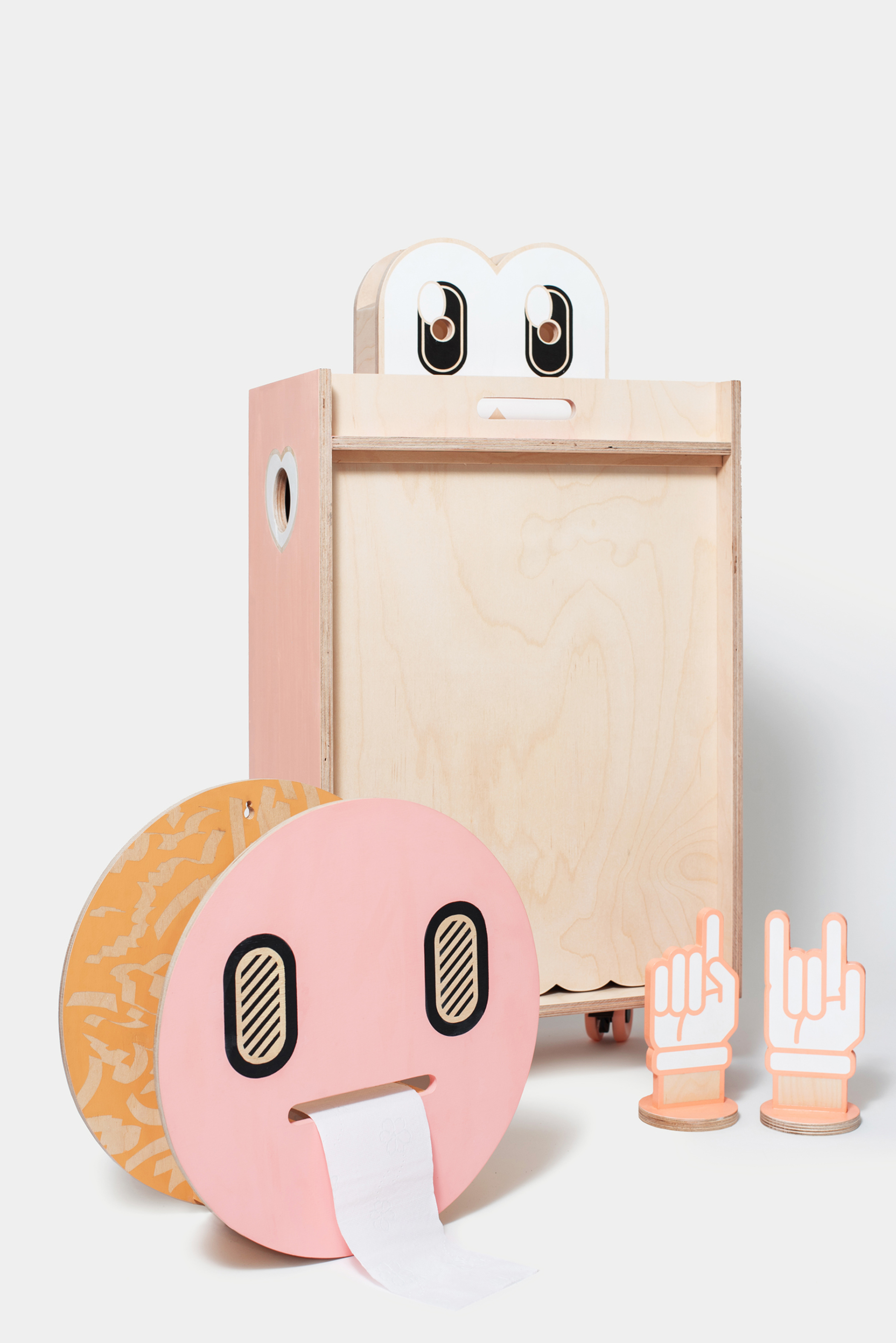
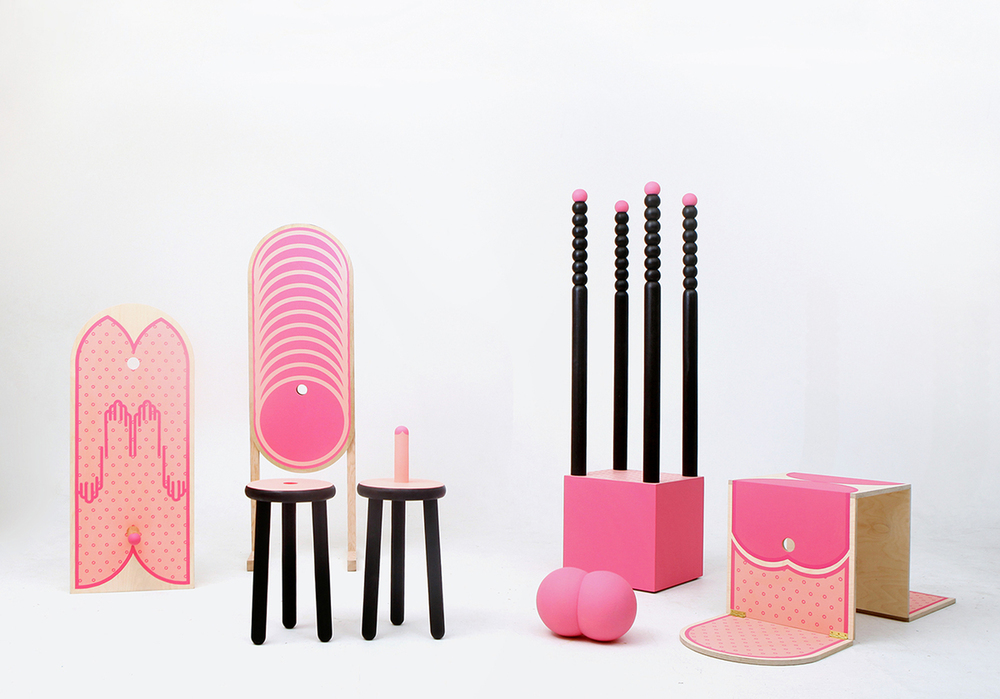
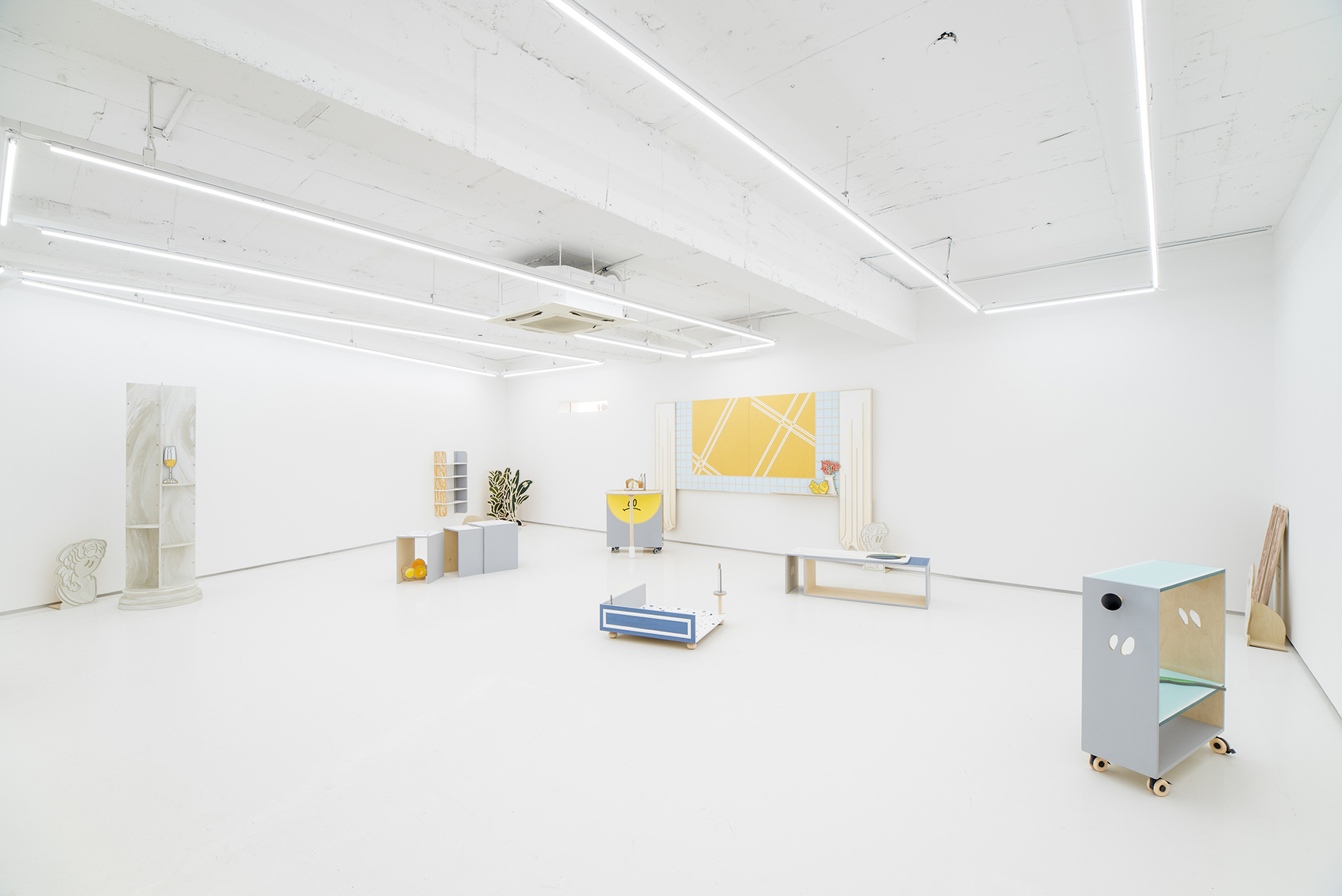
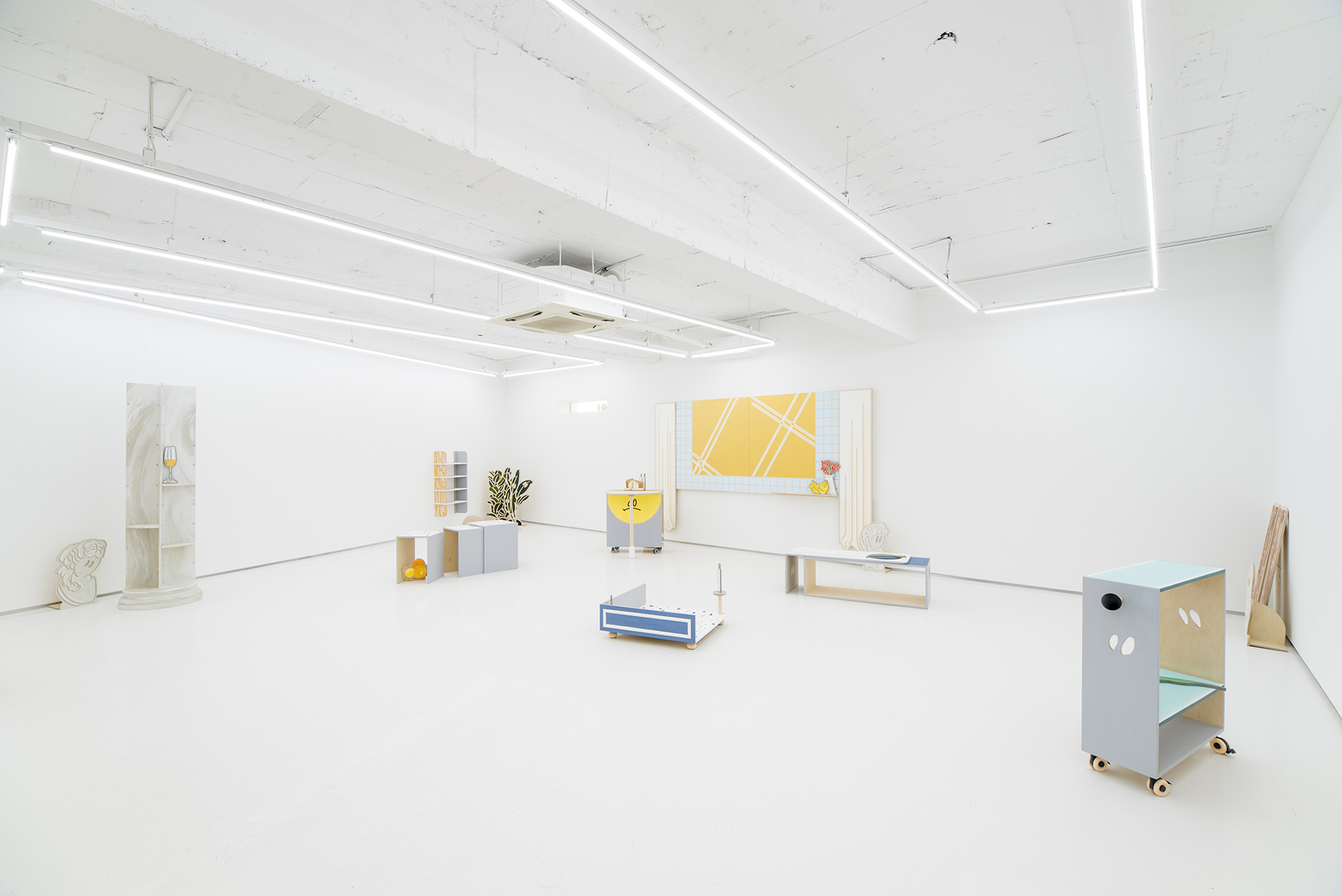
In 《The Gold Terrace》, the artist overlapped the
forms of the showroom and the exhibition space. Furniture-objects that look
like windows and curtains, folding tables, coffee tables, benches, and storage
cabinets appear like functional furniture, but in fact are closer to painterly
objects that imitate function.
Instead of brand labels, each object has holes
or facial images resembling the eyes of cartoon characters, making dead objects
appear like beings with a certain personality.
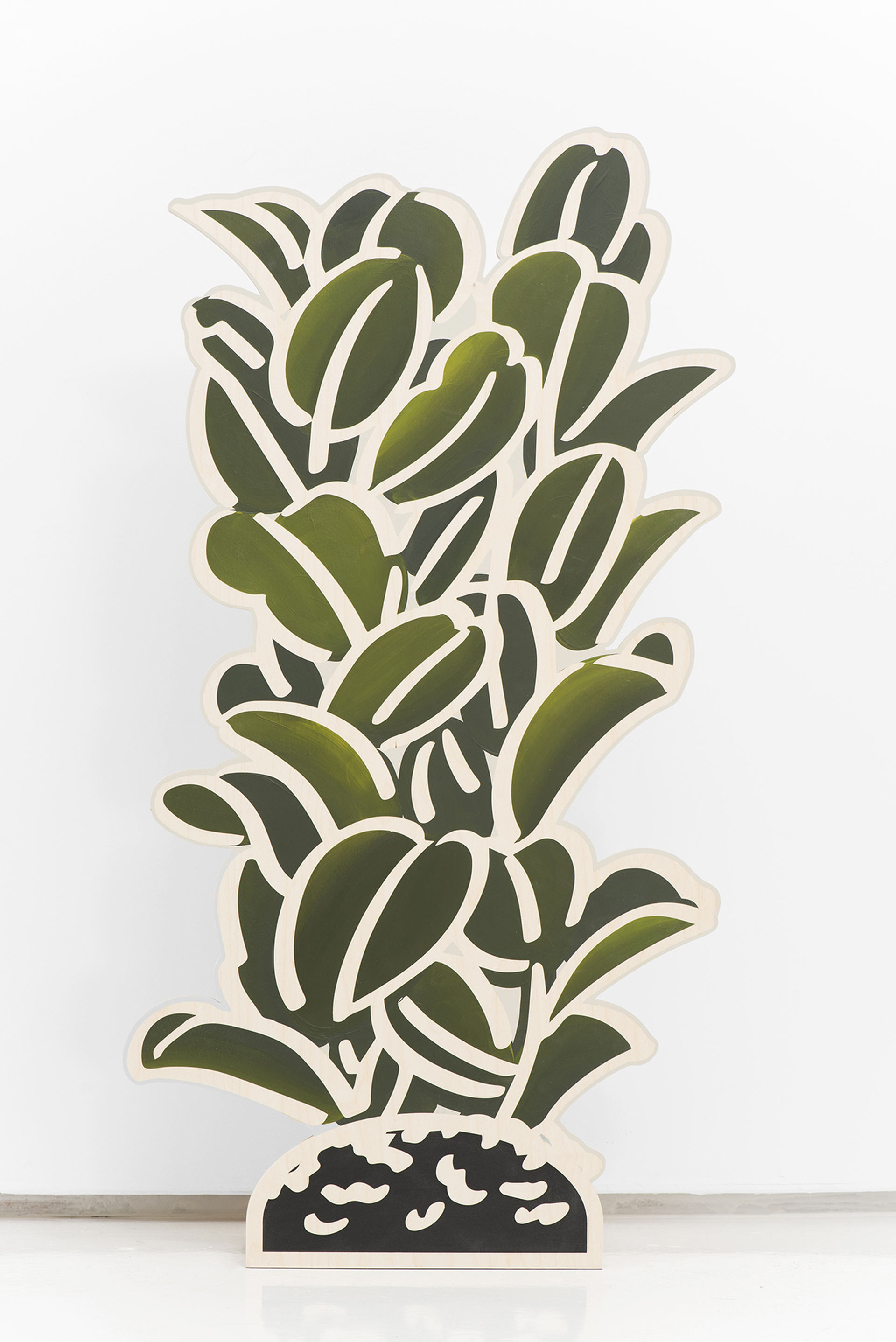
Flat props such as bananas,
cakes, tulips, vases, and monstera construct the scene of a showroom while
drawing viewers into a stage made of fake furniture. Here, the viewer is both
the person looking at the works and the final component that gives vitality to
the set created by the exhibition.
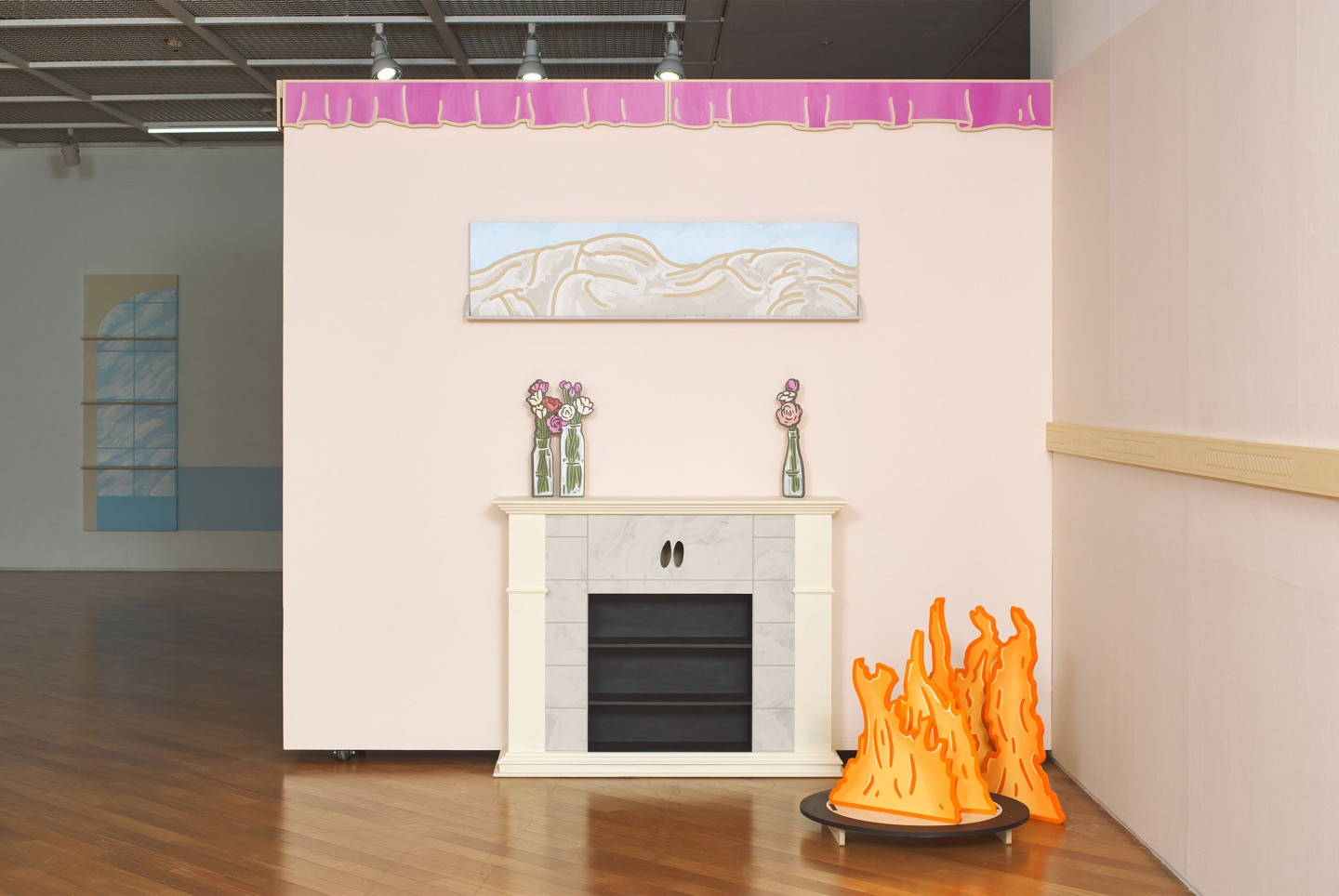
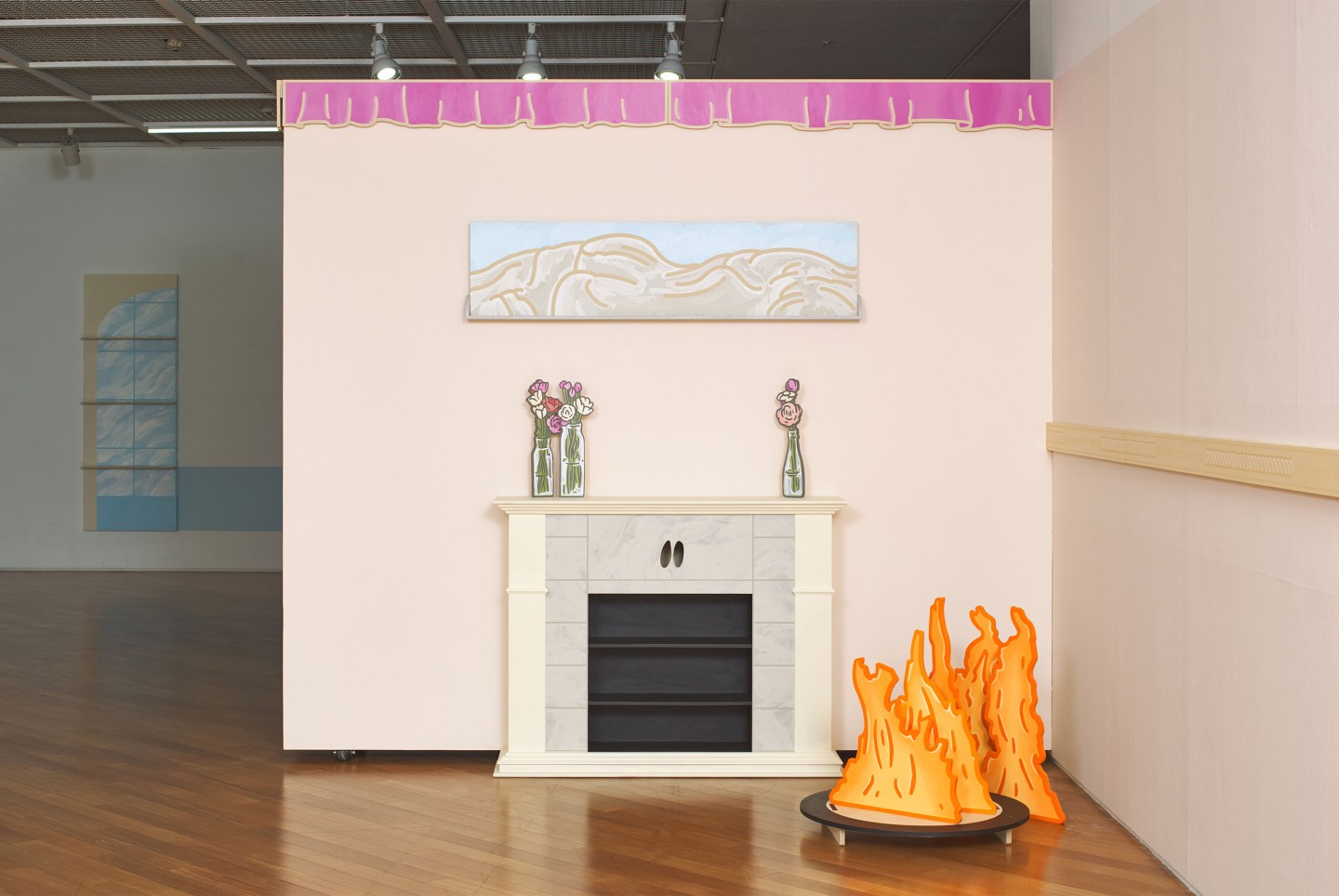
In 《Sandwich Times》, this showroom-like
exhibition method expands to the walls, floors, windows, and art walls of the
home. The artist brings in colors and patterns, decorative lines, and modular
furniture structures commonly seen in interior decoration, but rather than completing
them as actual interiors, she breaks them down again into pictorial
scenes.
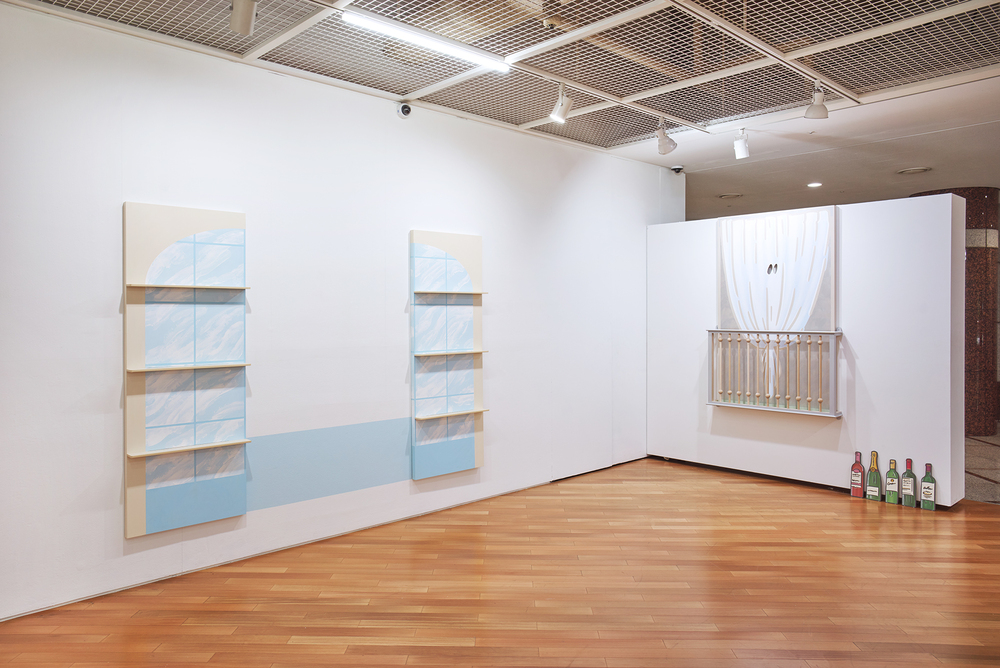
Wall system for concentration opens and
closes through a rail device, creating a different scene each time,
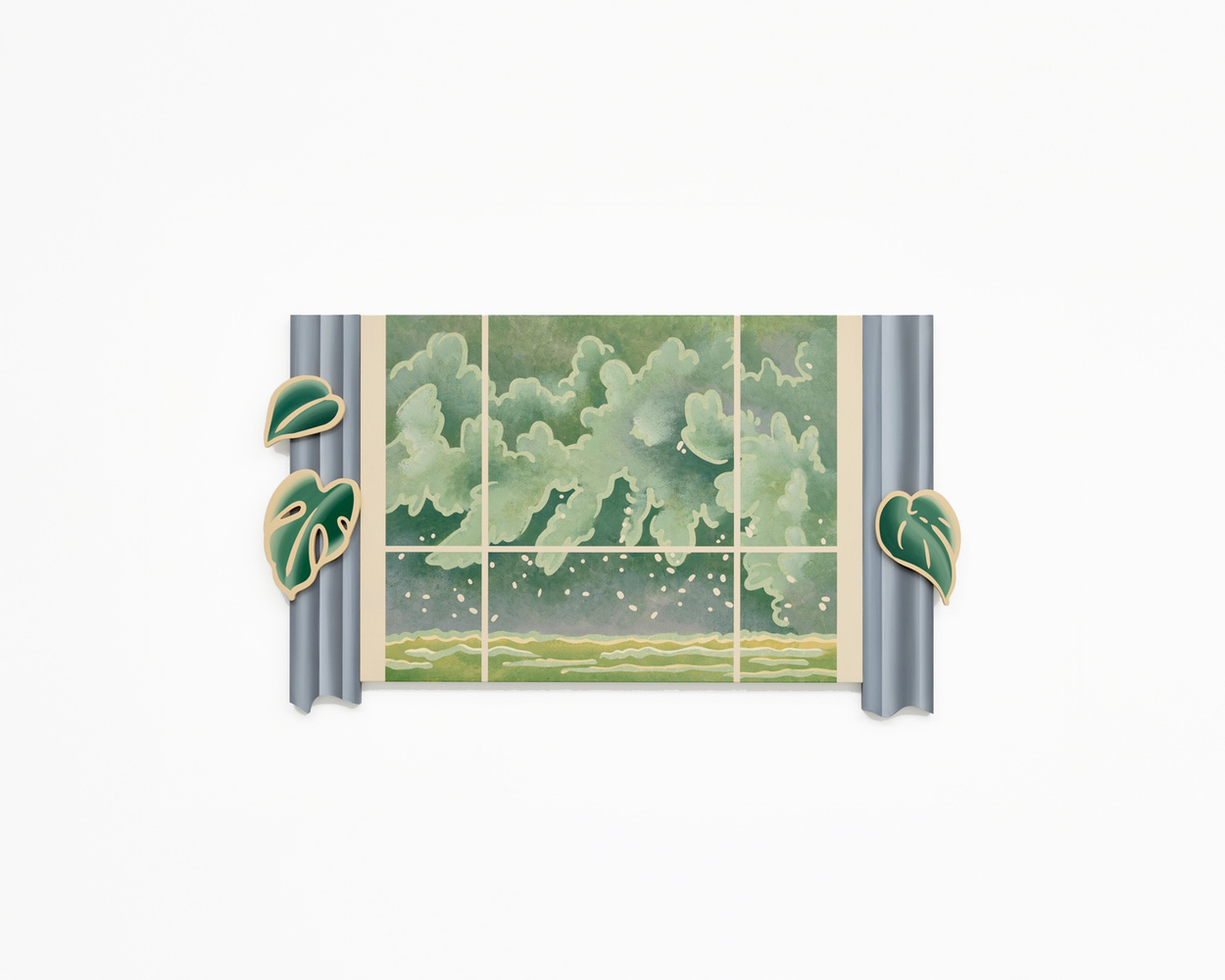
while Sky blue : layered landscape presents the
desire for a Han River view as an image in the form of a window. These works
ask what is perceived as painting, what kind of image art becomes when consumed
inside the home, and how the space of the home reveals individual desire and
social conditions.
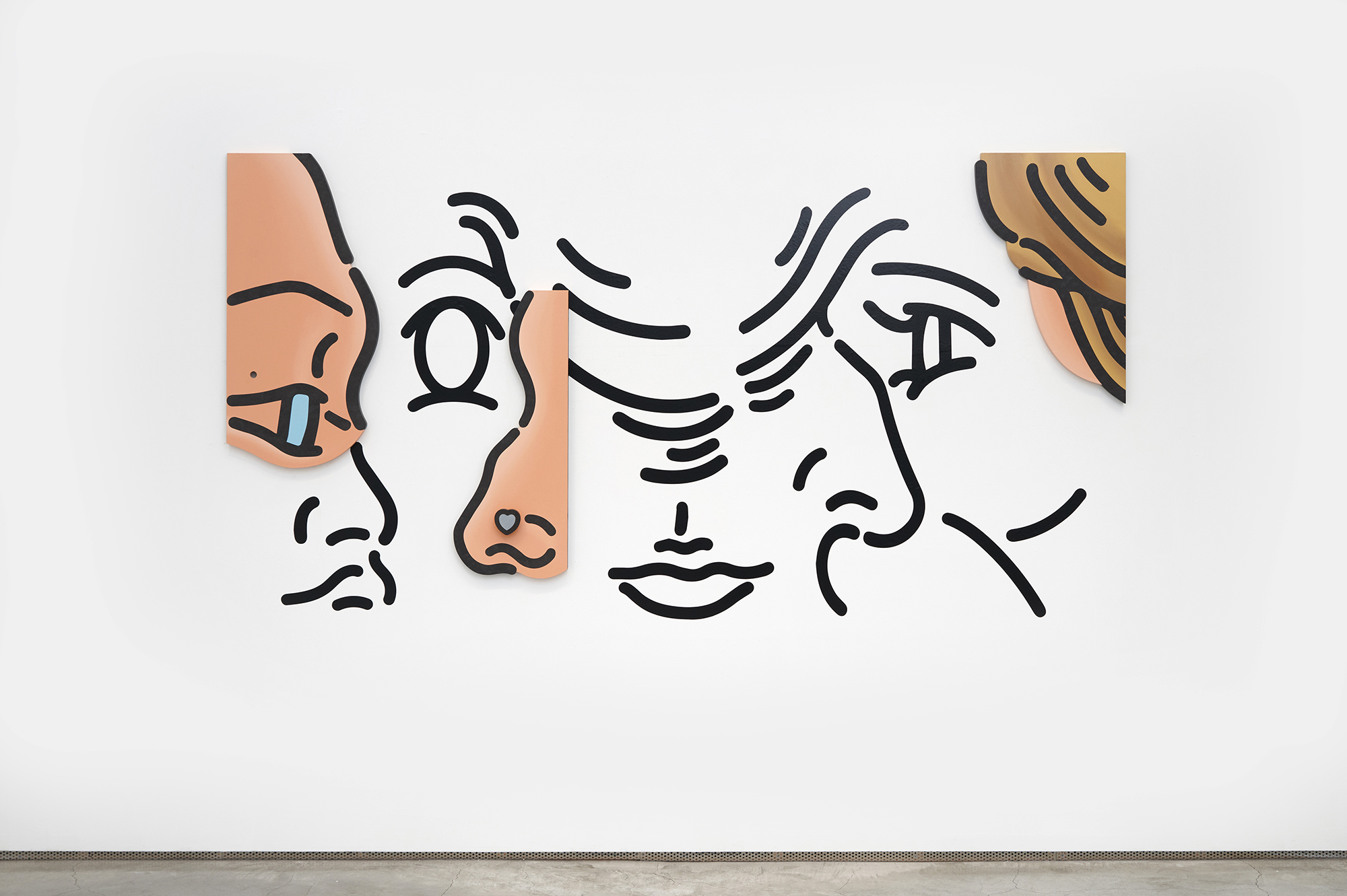
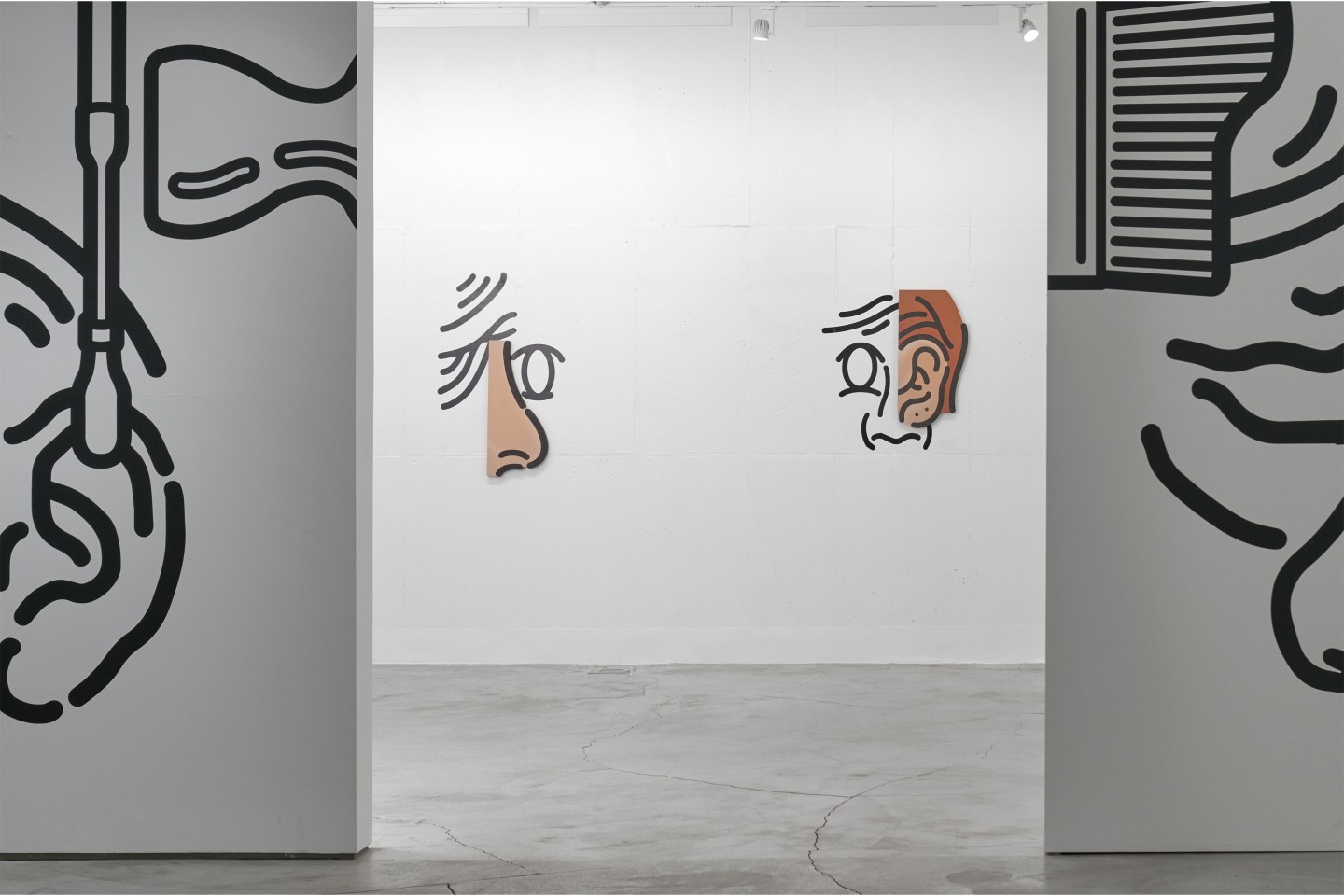
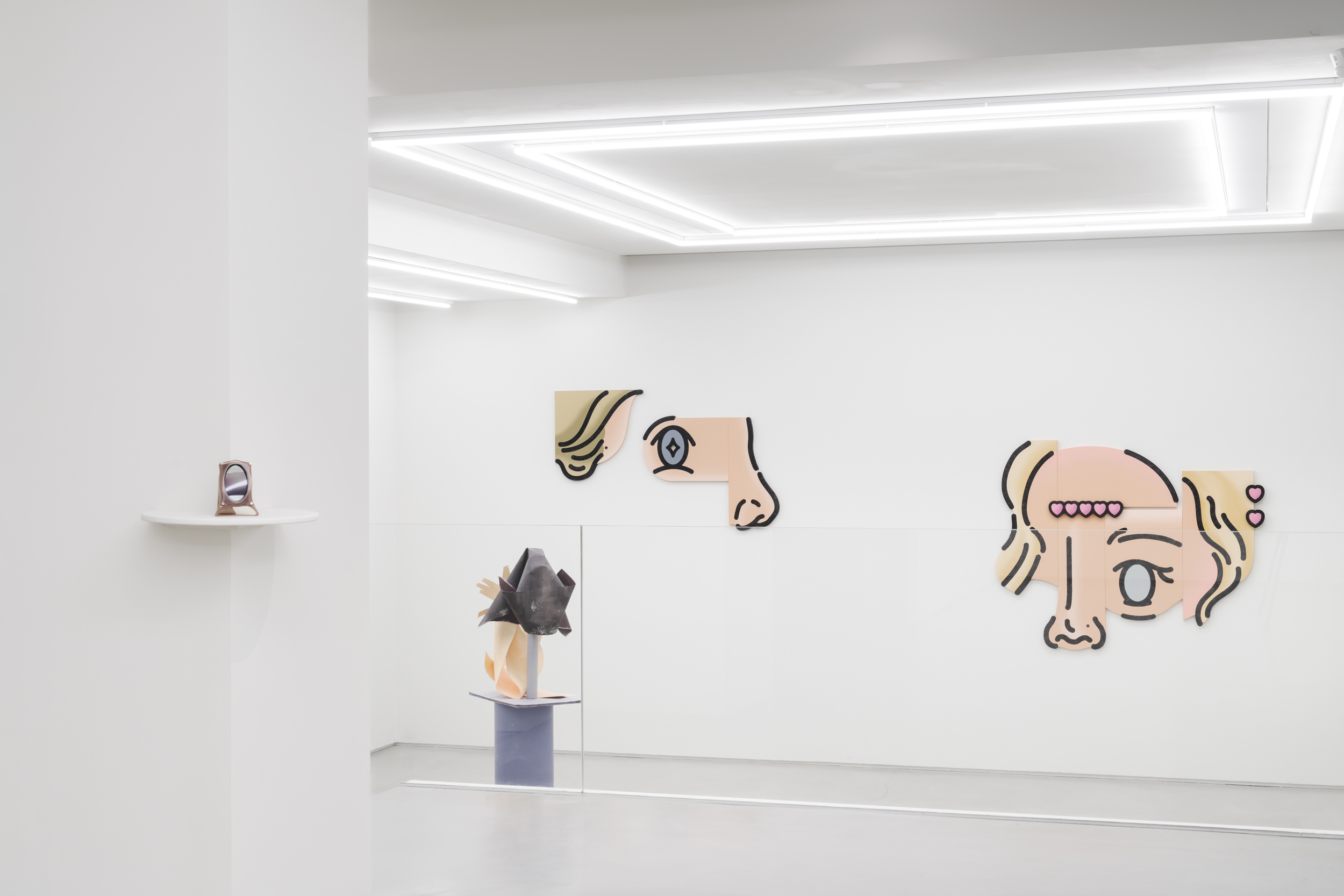
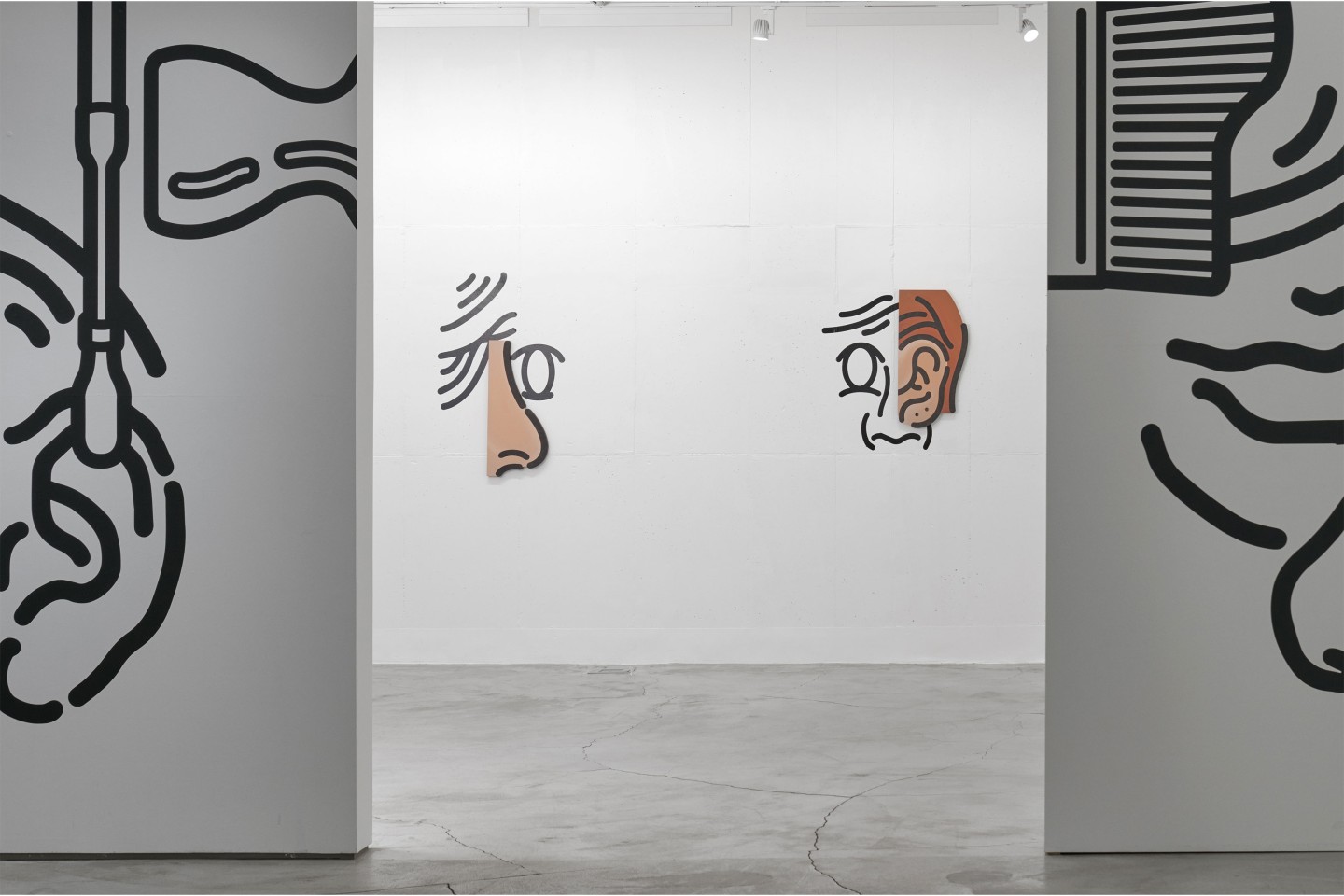
After 《SUITE》, Lee Mijung focuses on combining and
joining facial features based on vector drawing. In the ‘Striking feature(s)’
series, short, thick lines separate facial elements such as eyes, nose, mouth,
jaw, and hair like signs, while beauty tools such as makeup brushes, puffs, and
cotton swabs become mediators connecting one face to another.
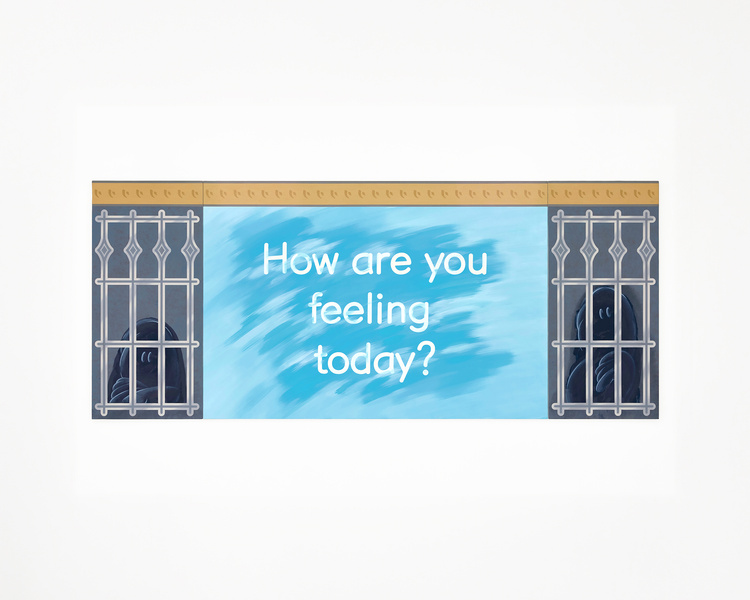
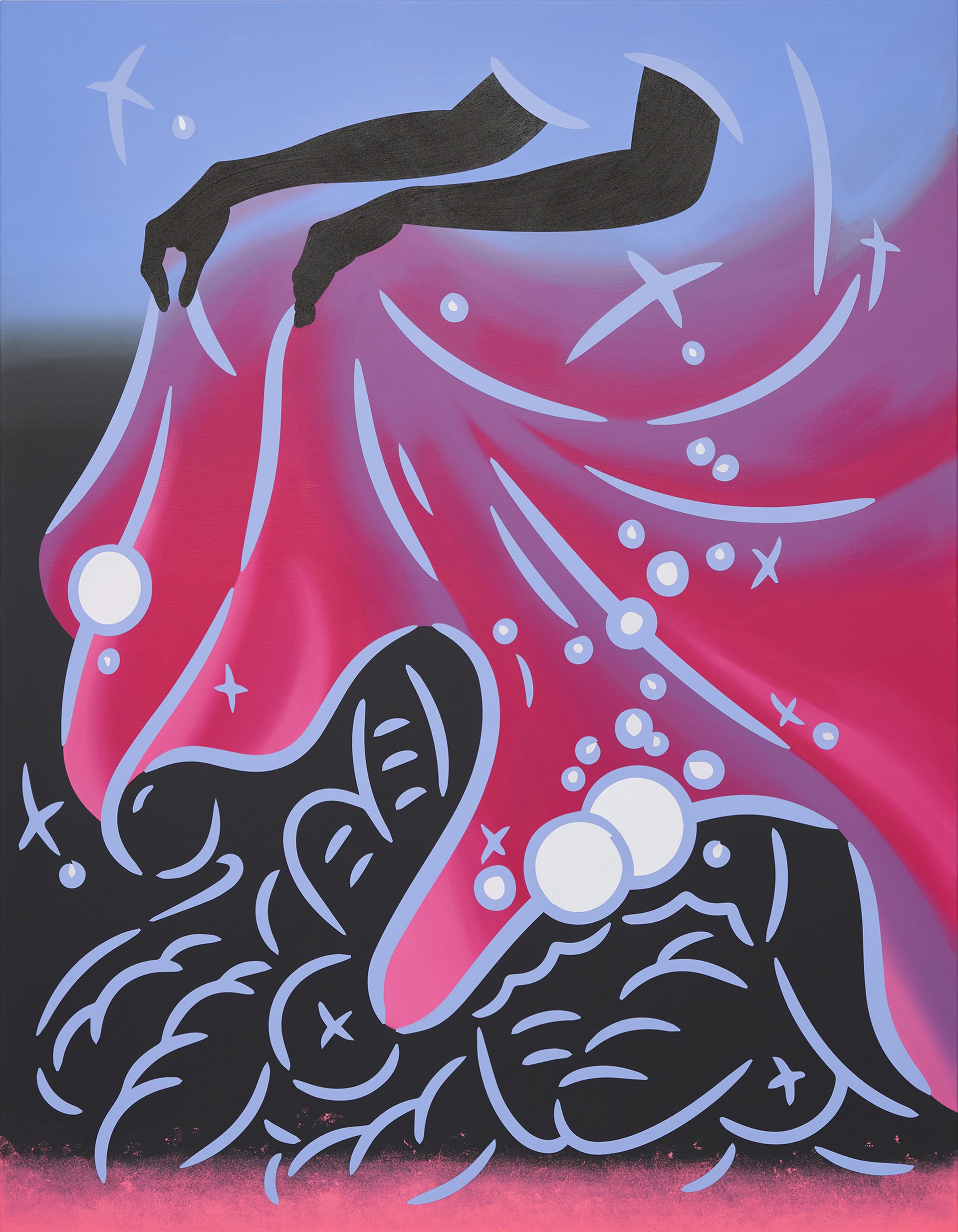
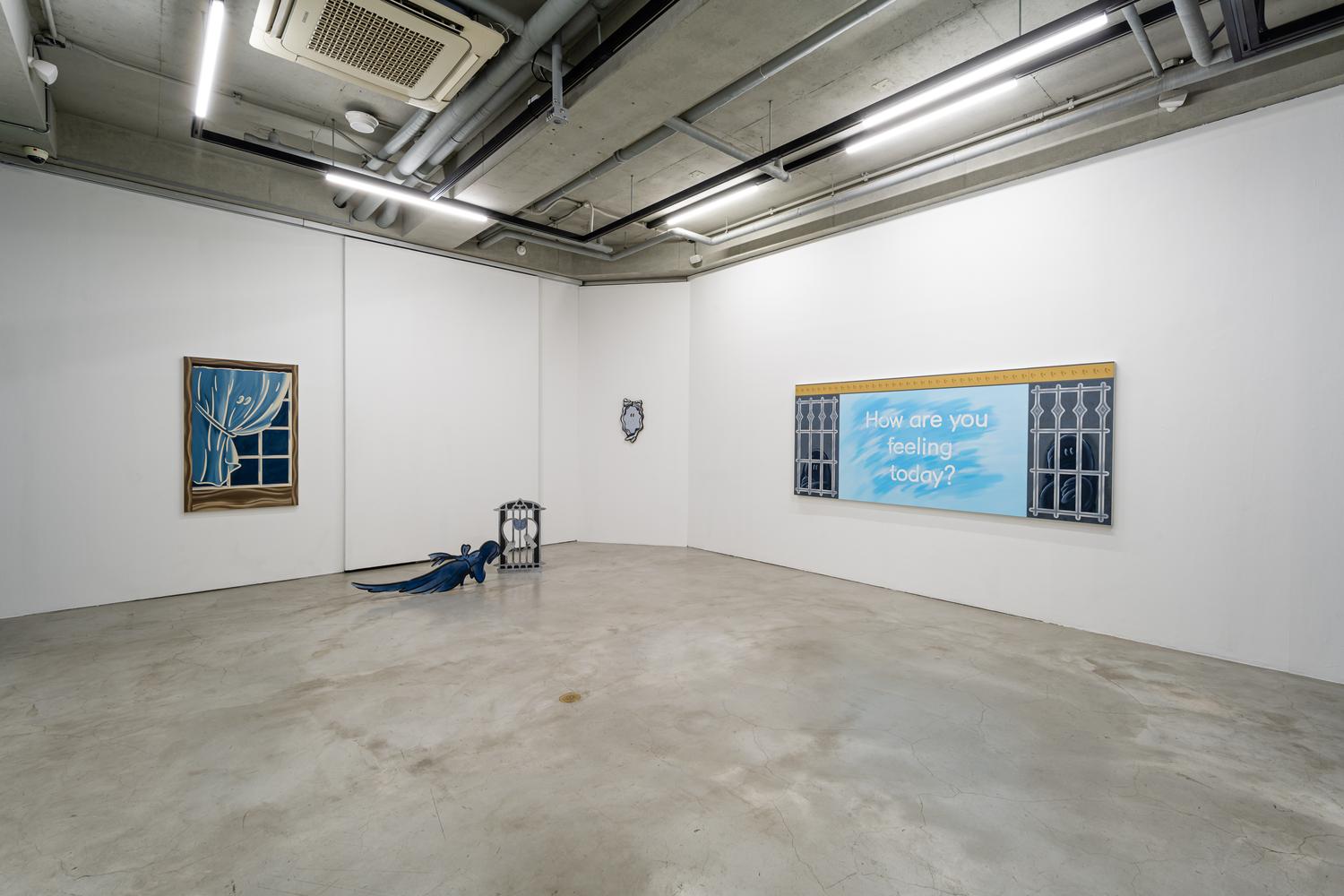
Later, in 《Whispers of the Unsettling》(Space Willing N
Dealing, 2024), she gives form to housework and “shadow labor” occurring inside
the home through black silhouettes and the effects of light, while her staged
spatial direction shifts toward a composition centered on figures and stories.
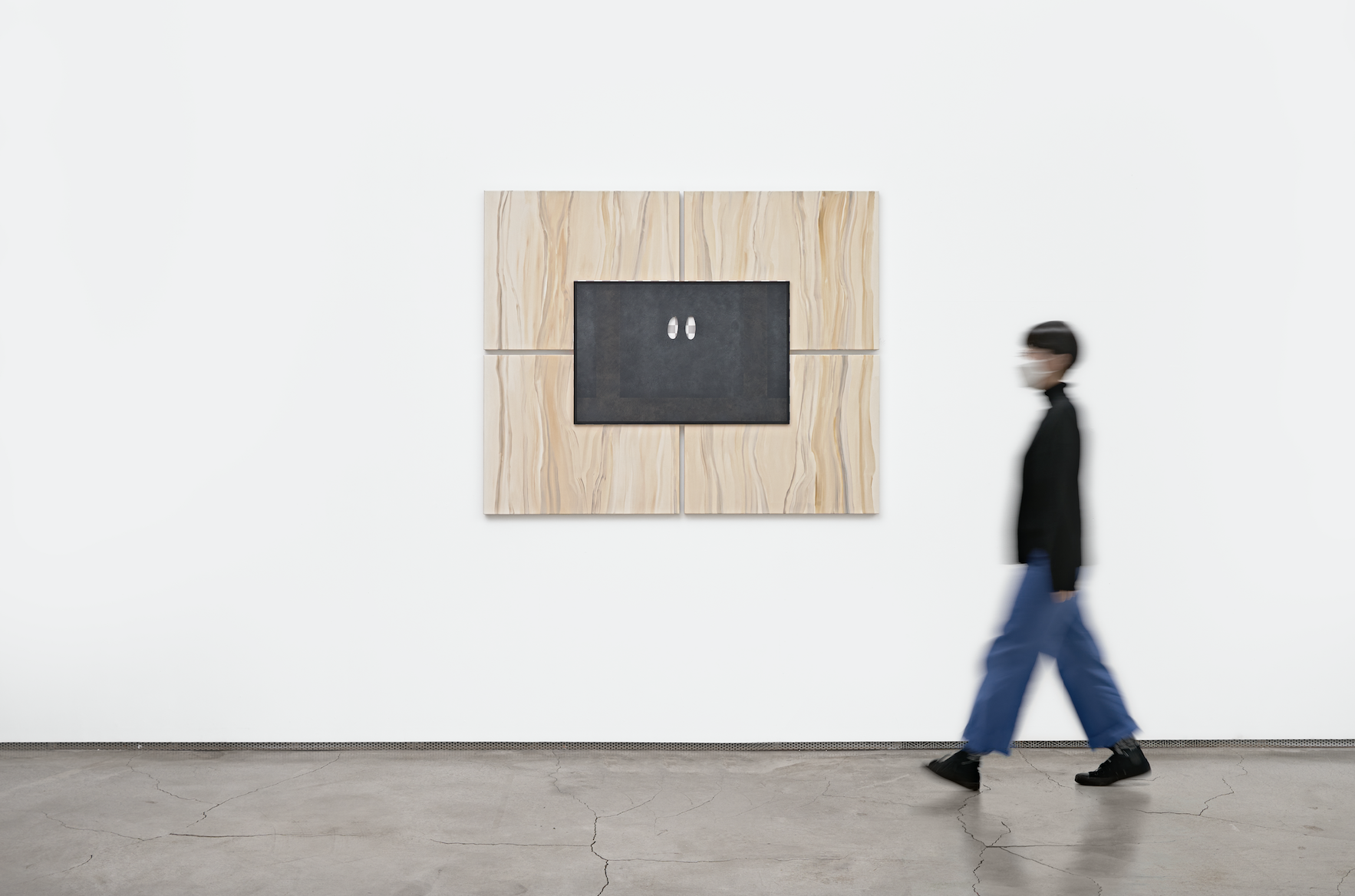
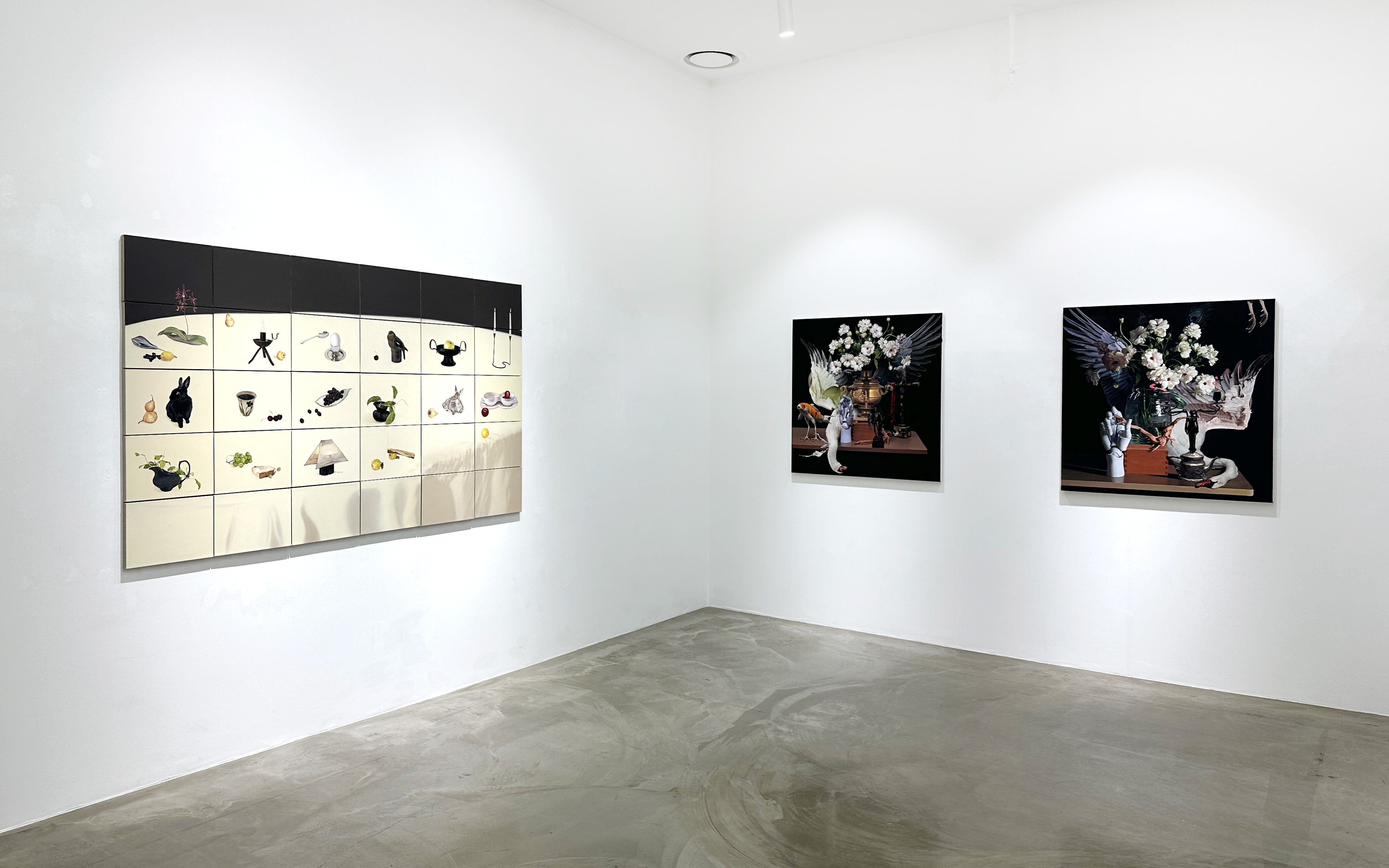
In 《Objects in Time》, windows
and frames function as structures of time surrounding objects, while different
rhythms of life are juxtaposed within a single image, as in a high table with a
glass of alcohol and a low table with snacks.
In this way, Lee Mijung’s images
have gradually expanded toward assembling the function of objects, the surface
of images, fragments of the body, traces of labor, and layers of time together.