Moon Sanghoon (b. 1987) is an artist and curator who has questioned what it is that oppresses and separates minorities within our society, as well as what kinds of boundaries remain uncrossed. Working across various media including performance and video, they have connected the voices of minorities with sensations of failure and the emotions surrounding things that are disappearing.


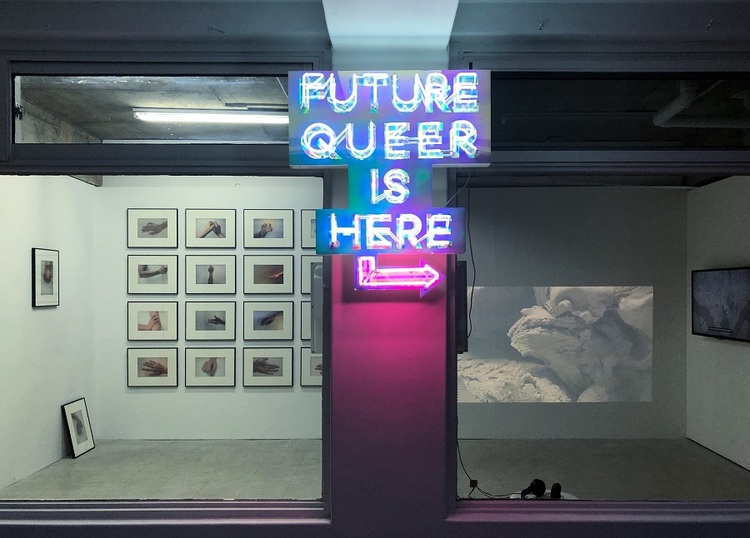
Installation view of 《We will always cross each other》 (Keep in Touch, 2019) © Keep in Touch

The work of Moon Sanghoon speaks to the absence of lesbian art within art history. For instance, Moon’s first solo exhibition, 《We Will Always Cross Each Other》 (2019), held at Keep in Touch, addressed women and minorities whose existence had been obscured within both art history and society, attempting to bring their presence into the context of art.


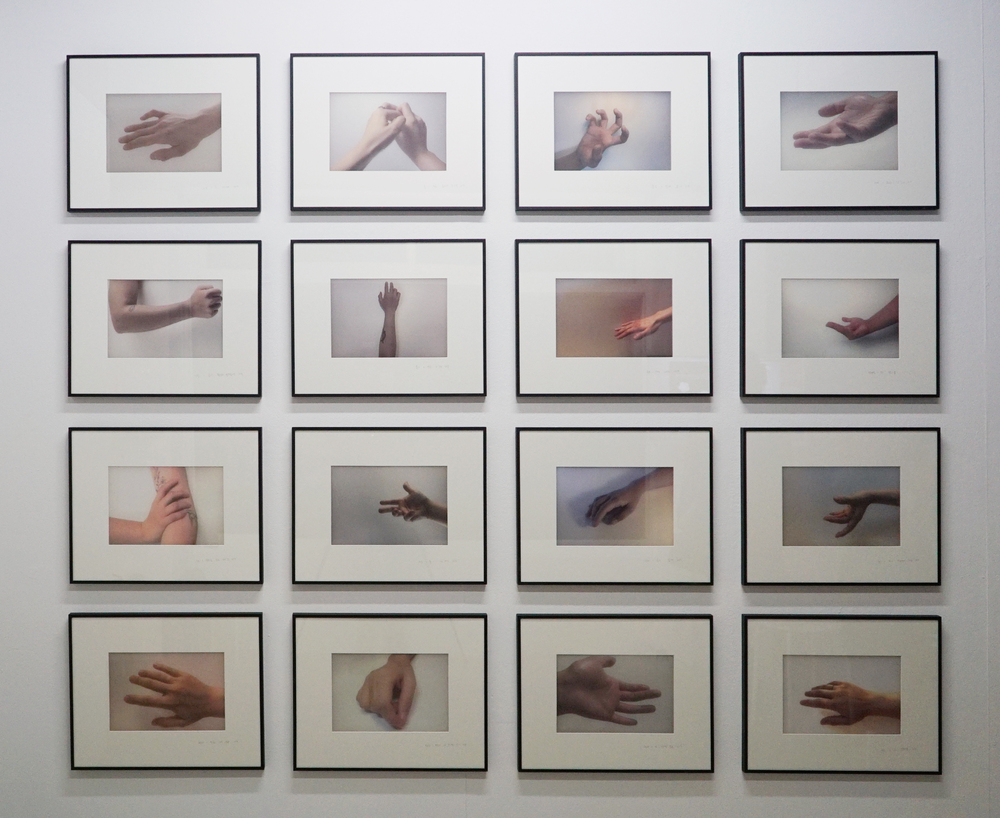
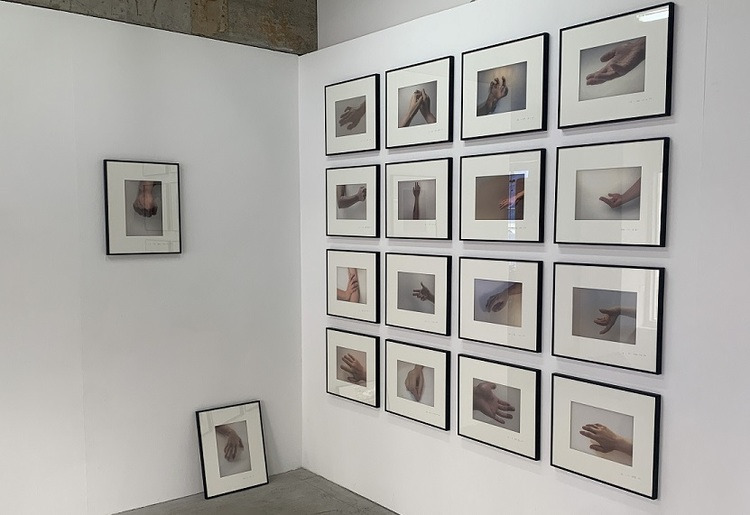
Moon Sanghoon, ‘Hand Genital’ Series, 2019, Collaboration with various photographers, Print on tracing paper. Installation view of 《We will always cross each other》 (Keep in Touch, 2019) © Ilda

Presented in the exhibition, the work ‘Hand Genital’ (2019) is a photographic series depicting the hands of romantic partners who identify as lesbians and engage in same-sex relationships. For the project, the artist recruited lesbian couples currently in relationships through online platforms and invited them to photograph each other’s hands within a temporary studio setting.
 
Resembling typological photography, the work initially appears to function as an archive cataloguing the forms of lesbian hands. However, through the English subtitle “Genital,” the artist reveals that the focus of the work lies in the significance of hands within lesbian relationships. In doing so, the project raises questions about genital-centered binary distinctions and boundaries.


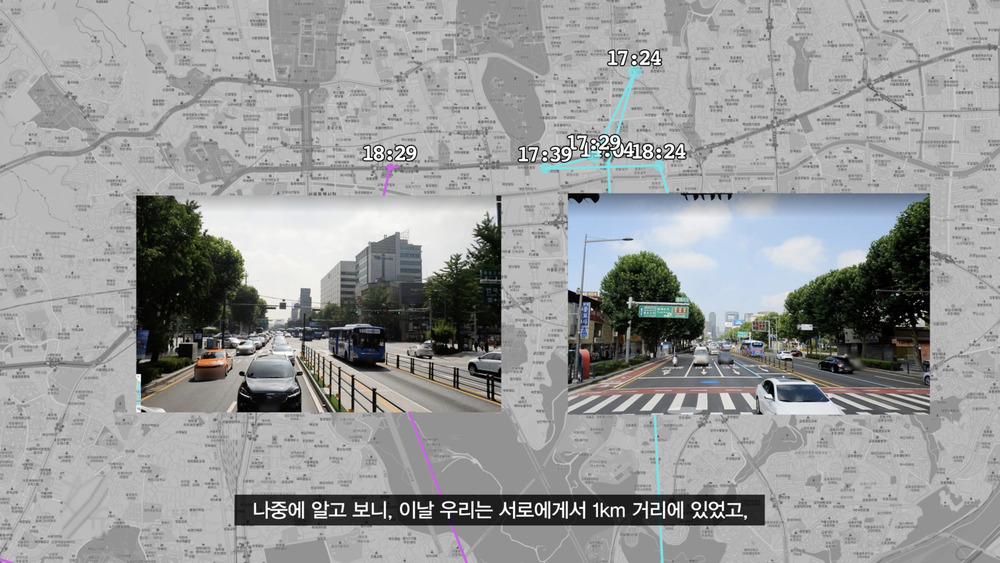
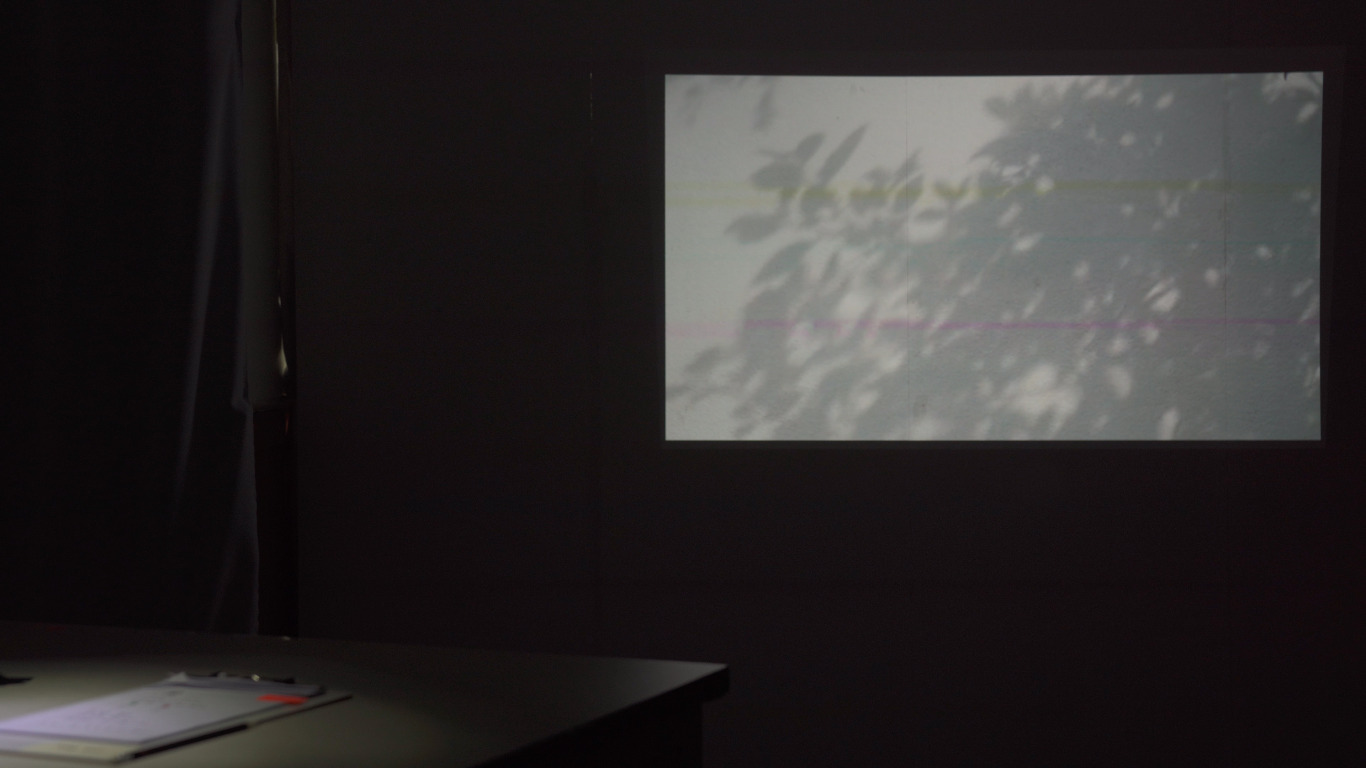
Moon Sanghoon, Hello, Strangers, 2018, Single-channel video, 5min 12sec. © Moon Sanghoon

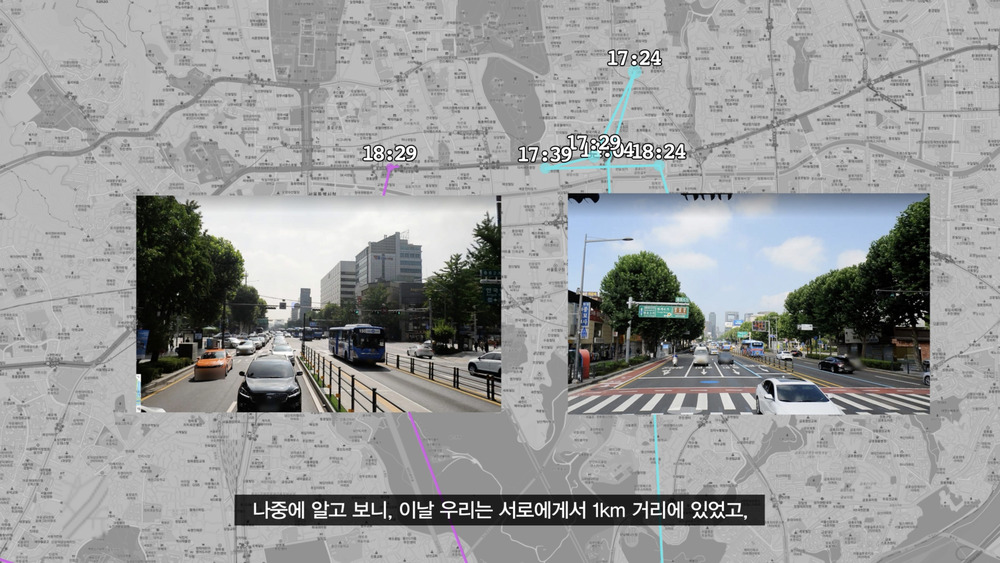
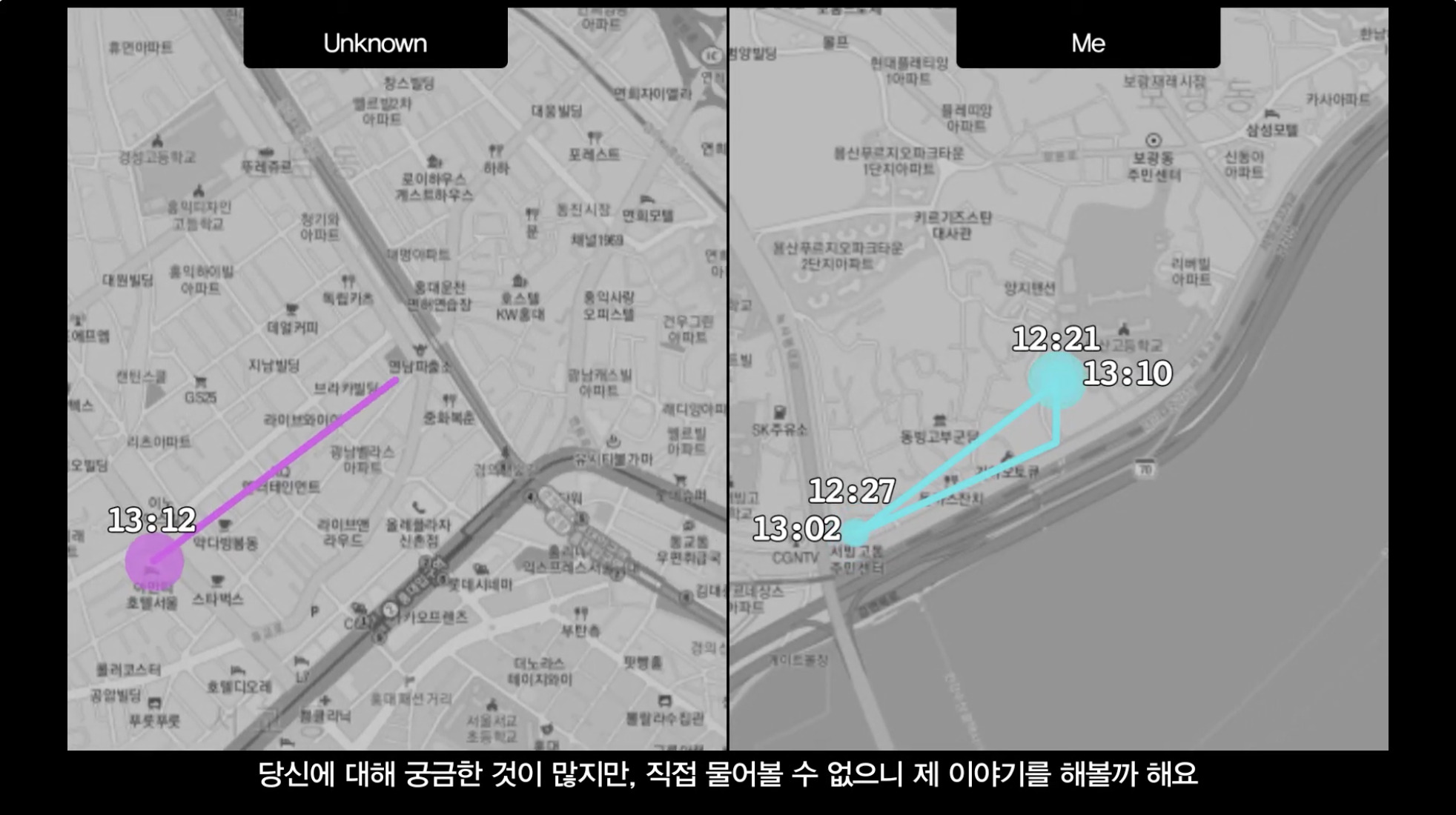
Meanwhile, another work featured in the exhibition, Hello, Strangers (2018), is a video piece that calls attention to the realities surrounding encounters between lesbians. Moon Sanghoon described their ideal type to someone they met through a community network, and that person then selected an acquaintance who matched the artist’s description and handed them a location tracker.
 
For one randomly selected week within a designated month, the tracking device recorded both the participant’s and the artist’s movements. After the month had passed, the location data could be accessed and compared, although personal information such as home addresses was removed by the participants themselves.
 
All of this information was presented in the form of a contract, revealing moments in which the participants unknowingly passed one another as strangers.


Moon Sanghoon, Hello, Strangers, 2018, Single-channel video, 5min 12sec. © Moon Sanghoon

By tracing encounters and moments of passing through geographical distance and data points, the work partially appropriates the ways users are identified within dating applications commonly used by lesbians. At the same time, it carries a certain sense of fantasy in that it depends on introductions through mutual acquaintances while also anticipating accidental encounters with strangers.
 
In response to this work, critic Nam Woong remarked that “a project that rather romantically imbues chance encounters with anonymous strangers with meaning ultimately leaves blank the question of how to account for the cold and indifferent networks of dating apps.”


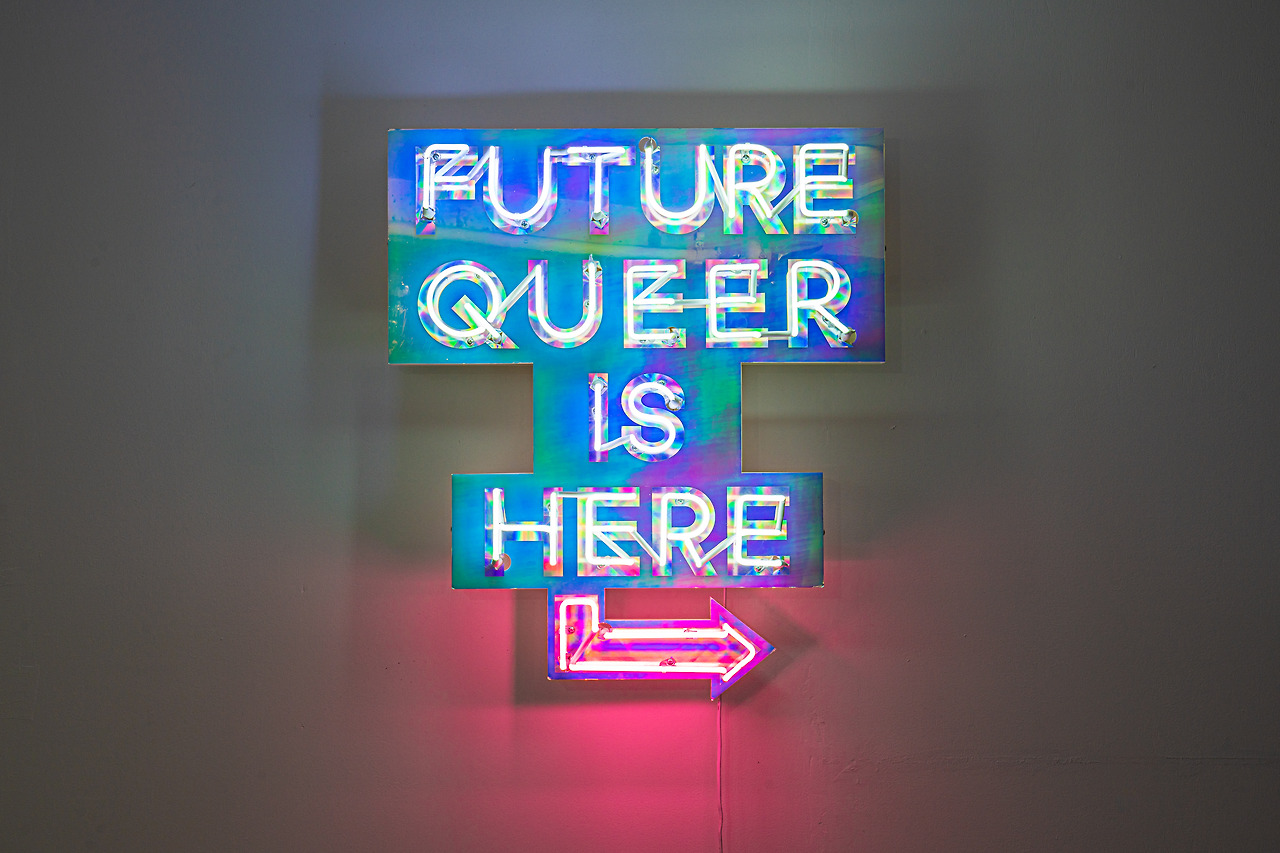
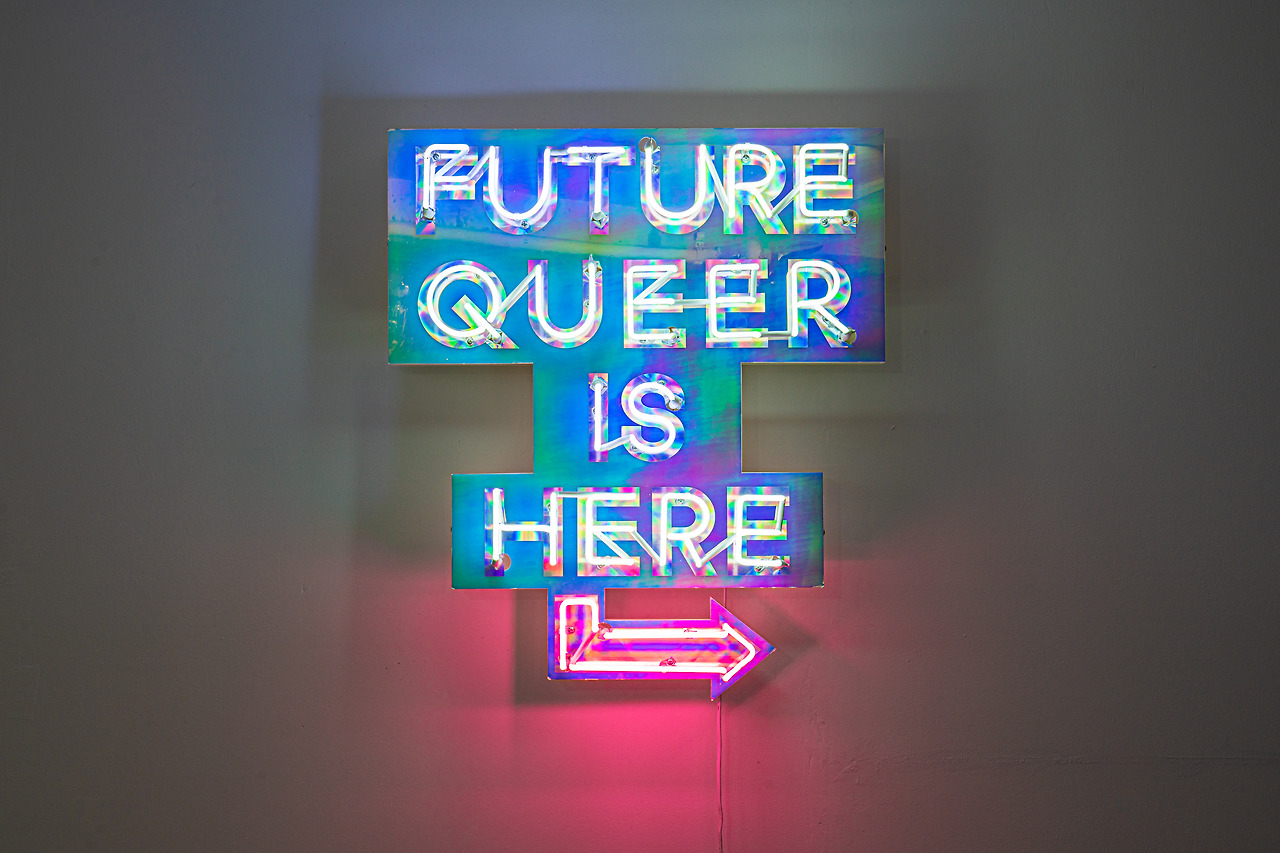
Moon Sanghoon, FUTURE QUEER IS HERE, 2019, Neon sign on acrylic, Photo Spot © Moon Sanghoon

The installation work FUTURE QUEER IS HERE (2019), structured in the form of an Instagram photo spot, invited viewers to take photographs beneath the phrase “The future queer is here.” Through this gesture, Moon Sanghoon simultaneously questions the consumption of queerness as image while allowing the work’s proposition to be validated through the circulation of those images across social media.
 
Living within a present shaped by futures that seem unable to reconcile, Moon poses the statement “In the future, you could be queer” as a question directed toward the boundaries between queerness and normalcy.


Installation view of 《Wish you were coming here》 (Yeon Rainbow x Ohson Doson, 2020) © Moon Sanghoon

In their second solo exhibition, 《Wish You Were Coming Here》 (2020), Moon Sanghoon brought anonymous voices circulating within actual lesbian communities into the exhibition space.
 
“Lesbian” is one of the most searched terms on the world’s largest pornography websites. Yet what are real lesbians actually doing, and what kinds of events unfold within lesbian communities? Do the voyeuristic fantasies imagined by outsiders truly take place there? Through this exhibition, the artist sought to express the culture of lesbian communities in a synesthetic manner.
 
On anonymous lesbian community message boards, posts continuously appear every day — recollections of unforgettable first loves at eighteen, stories about ideal types glimpsed in clubs, or messages longing for lovers who recently left.
 
Within these boards, undelivered letters accumulate endlessly, alongside the repeated act of checking whether a message might finally be meant for oneself. Moon describes this cycle as part of the everyday reality of lesbian communities.


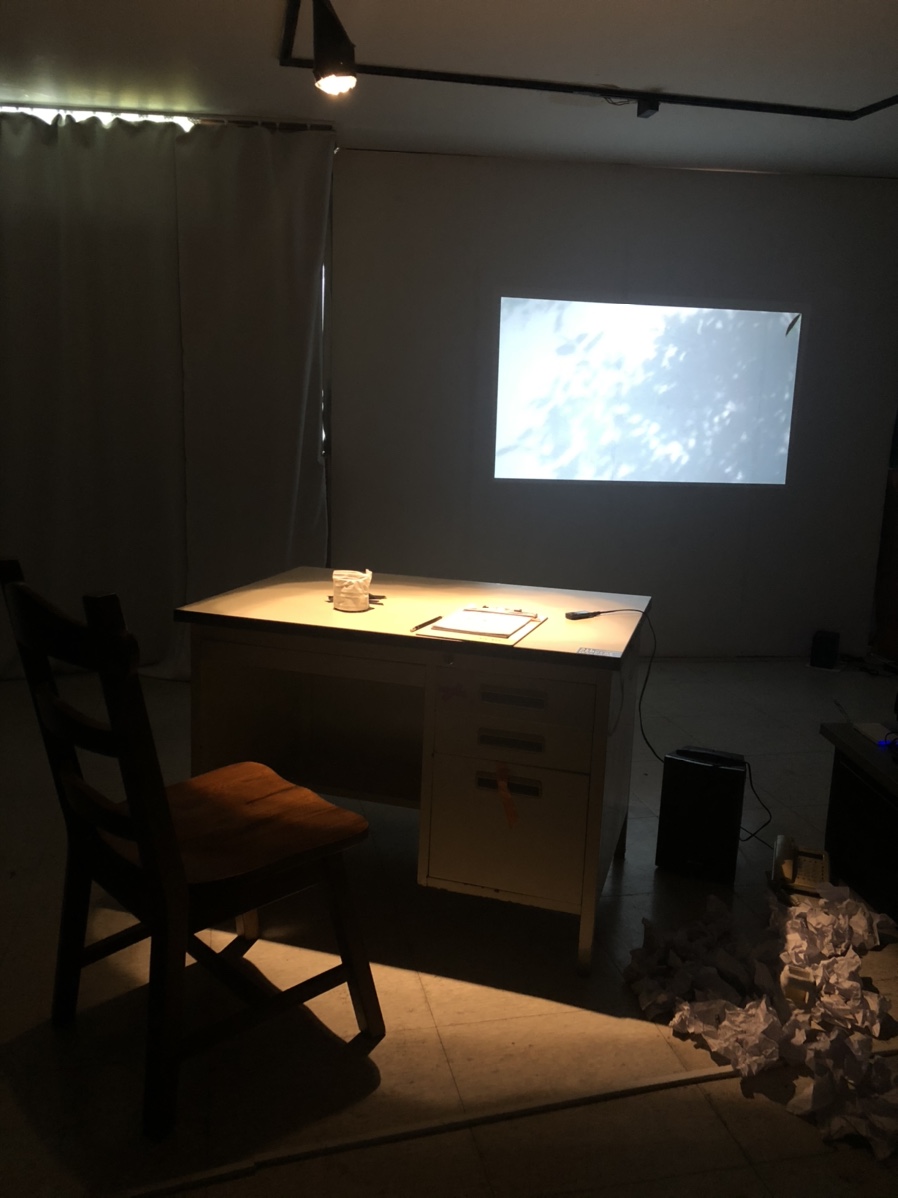
Installation view of 《Wish you were coming here》 (Yeon Rainbow x Ohson Doson, 2020) © Yeon Rainbow

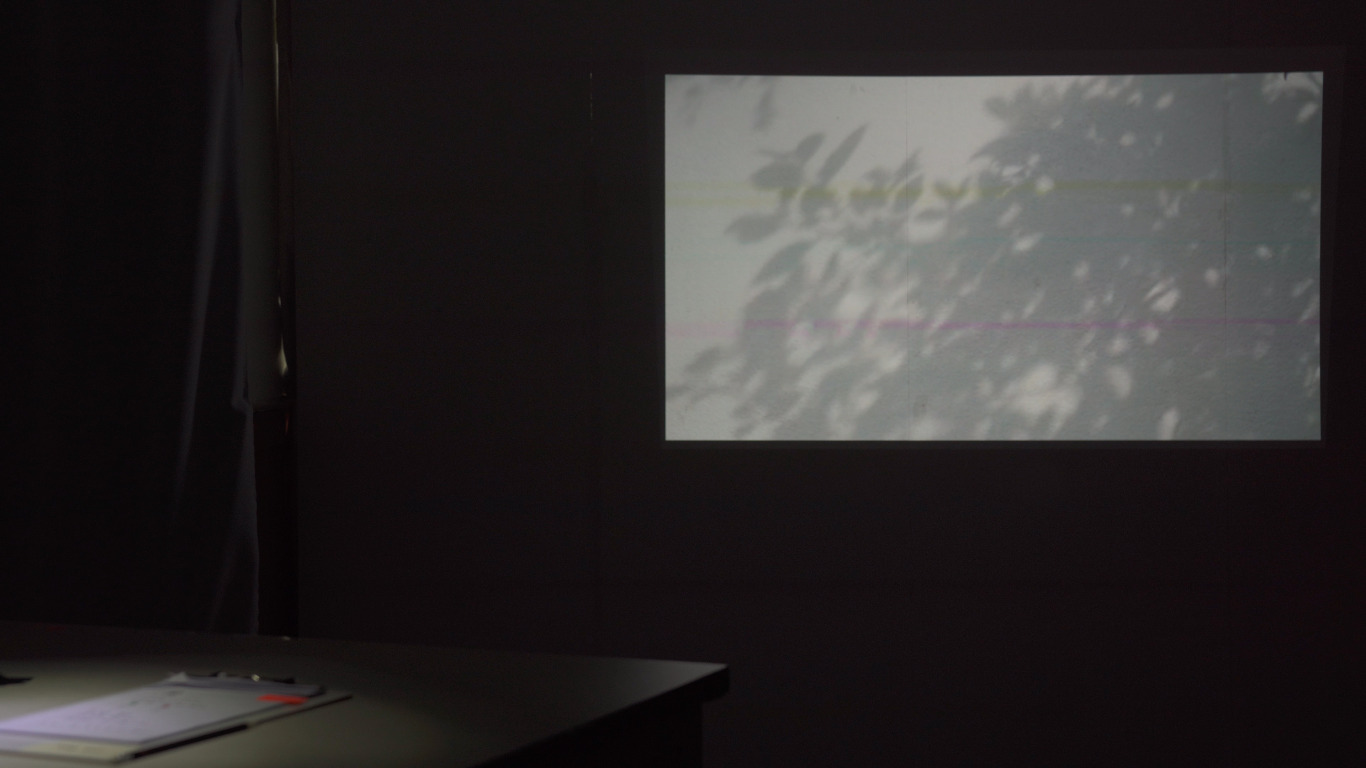
Moon Sanghoon brought these anonymous voices drifting through online spaces into the exhibition itself. The darkened exhibition space became a kind of private confessional, a place where words that had never been sent could finally be voiced.
 
On a device illuminated alone atop a table, only the recording function was activated. Beginning with the first note left by the artist, visitors’ messages gradually accumulated one after another. In this way, only individual voices and fragments of speech remained within the space.
 
Thus, the pornography that lesbians are often reduced to — lesbian sex, voyeuristic fantasies surrounding lesbians — was absent from this exhibition. Instead, what emerged were words of comfort exchanged between people within an invisible world.


Exhibition view of 《No Future》 (Space illi, 2021) © Moon Sanghoon

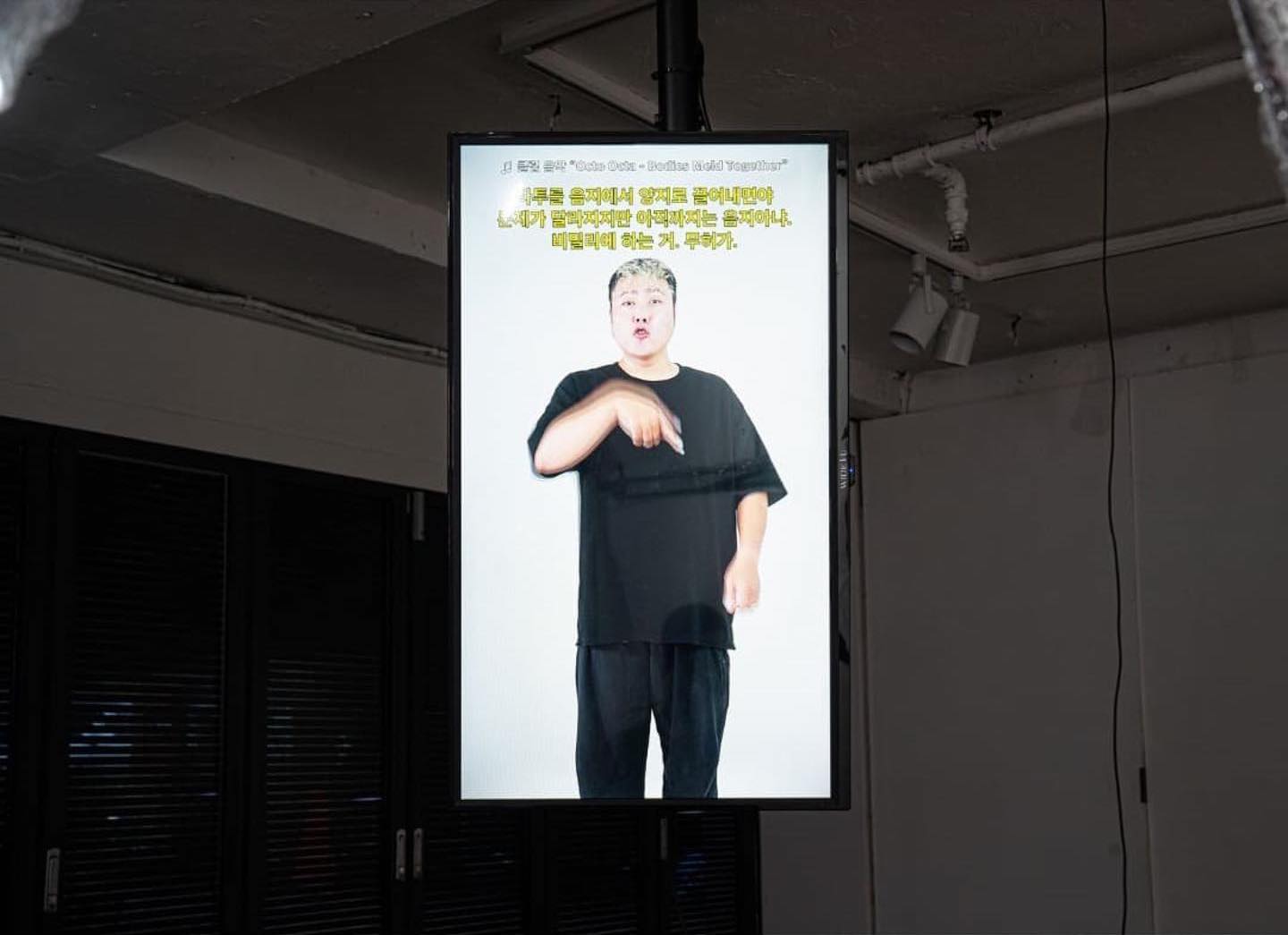
Meanwhile, in the 2021 solo exhibition 《No Future》, Moon Sanghoon presented works that questioned the boundaries between legality and illegality, normality and abnormality, the ordinary and the strange.
 
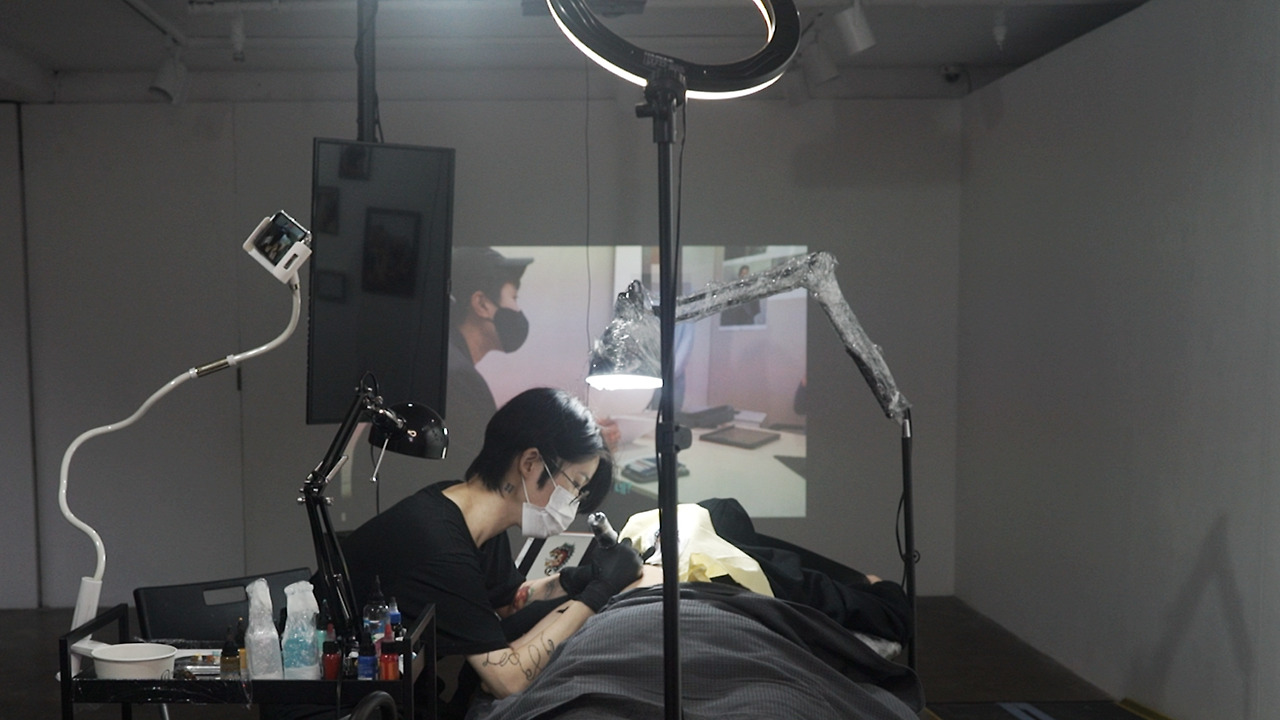
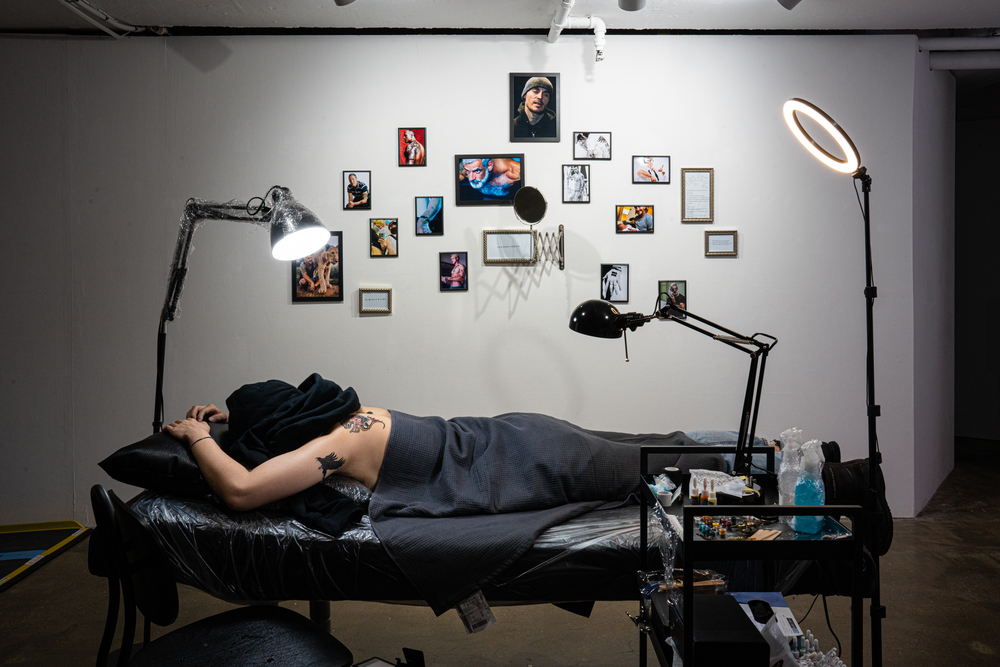
Within our society, there are those who establish such standards, those who struggle to meet them, and those who do not fit within them at all. Standing at these boundaries, Moon sought to physically embody the future they envision through their own body and practice.


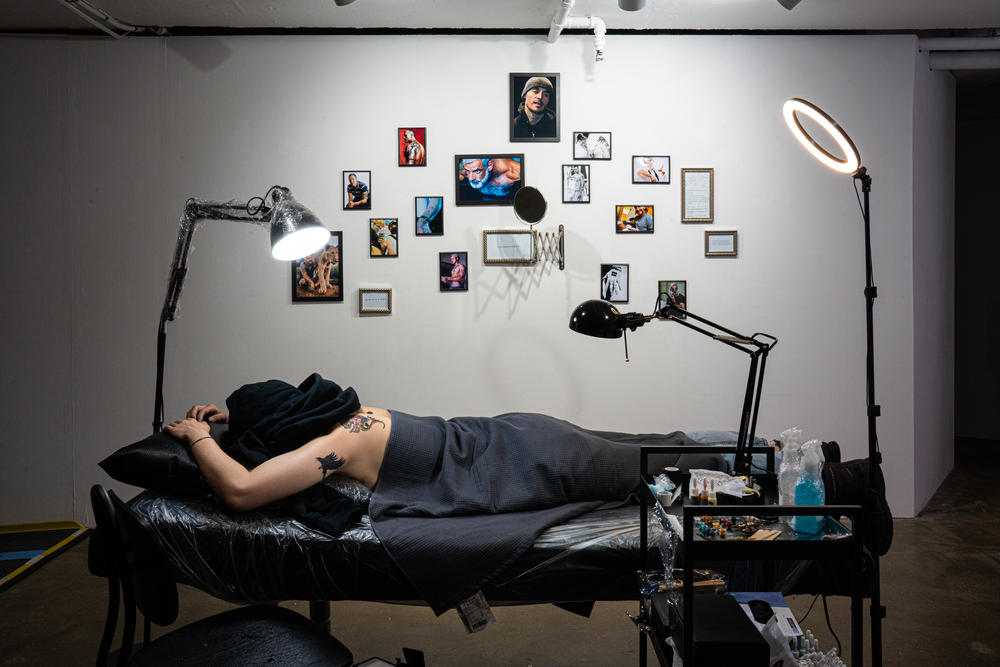
Installation view of 《No Future》 (Space illi, 2021) © Space illi 

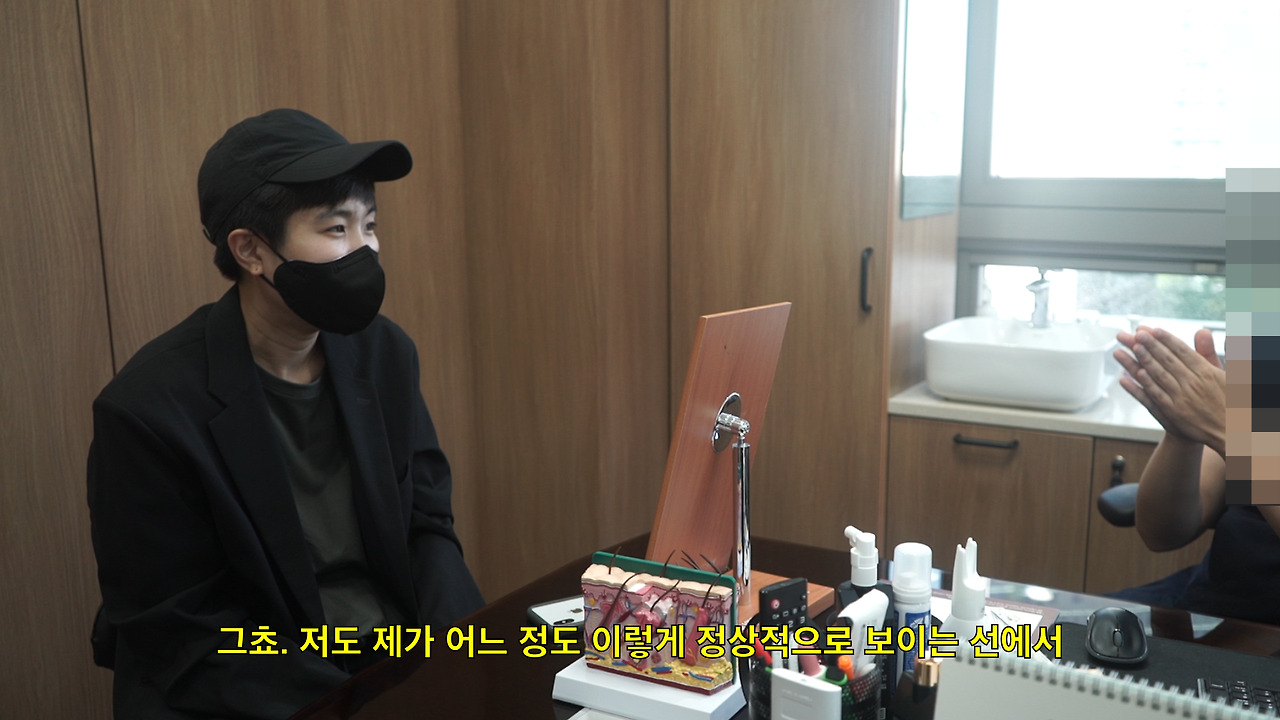
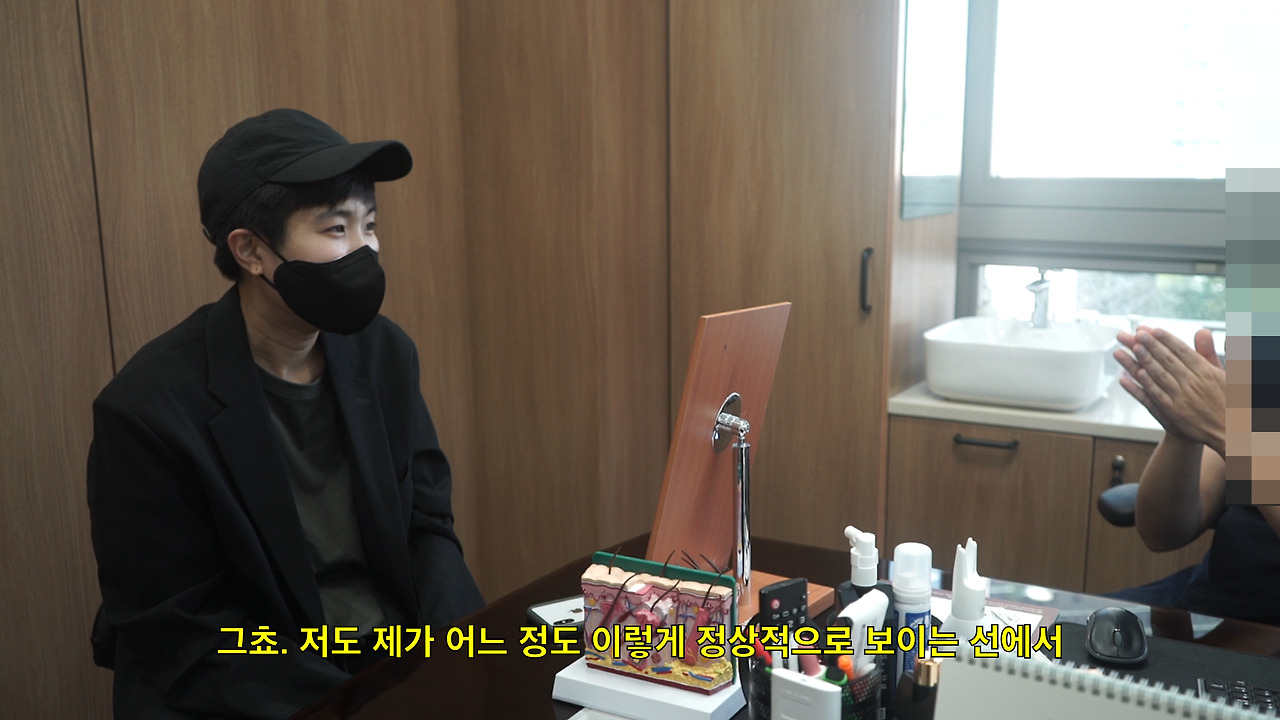
The project consisted largely of two parts. One involved the artist tattooing onto their body images of an idealized self they had long wished to resemble, while the other took the form of a pilot video documenting the process of consulting for a beard hair transplant. In the exhibition space, the artist’s mother’s nagging voice continuously filled the room, accompanied by a video translating her words into sign language.


Moon Sanghoon, No Future: Beards, 2021 © Moon Sanghoon

For Moon Sanghoon, who was assigned female at birth, the ideal self they longed to become existed ambiguously outside the binary framework of male and female. In their artist statement, Moon confesses, “I don’t really want to be a man, but there was only a man on the screen who had the masculinity I could get into.”
 
Having grown up this way, they later came to recognize “the harmfulness of those characters,” while also encountering non-male characters with masculinity appeared in the world, which in turn allowed them to imagine a more expanded self-image.


Exhibition view of 《No Future》 (Space illi, 2021) © Moon Sanghoon

Yet in this exhibition, Moon Sanghoon adopts the somewhat pessimistic declaration “No Future” as its title. Amid feelings of helplessness and depression arising from the gap between ideals and reality, the artist inscribes their own utopia onto their body, unfolding reflections on their future and the ideal world they long for.
 
By engraving this imagined ideal onto the skin — the very boundary of the body — Moon raises questions about their own identity standing between multiple social boundaries, as well as the uncertainty of the future itself.


Installation view of 《Lesbian!》 (Outhouse, 2019) © Moon Sanghoon

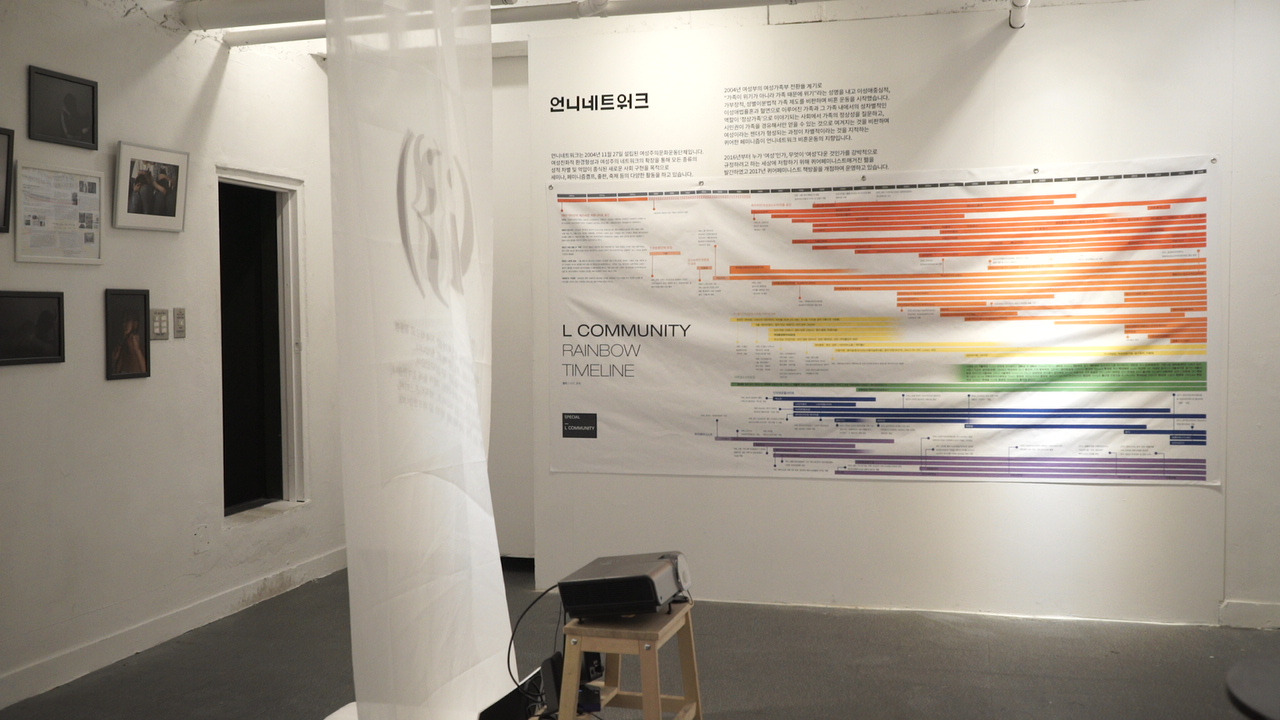
In this way, Moon Sanghoon connects the existence of minorities who have long been obscured to the contexts of both art and everyday life through their own body and autobiographical narratives. Beyond their artistic practice, Moon has also participated in organizing exhibitions, weaving together lesbian artists who had long remained obscured into a sense of community while expanding discourse surrounding women and minority art that has not been insufficiently addressed.
 
Their work compels us to reconsider the countless boundaries operating within contemporary society, allowing the stories of those who have been excluded and oppressed by such divisions to circulate more widely.
“What is the boundary between normal and abnormal, between the ordinary and the strange?” (Moon Sanghoon, Artist’s Note)


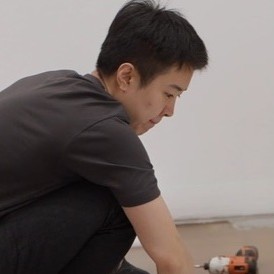
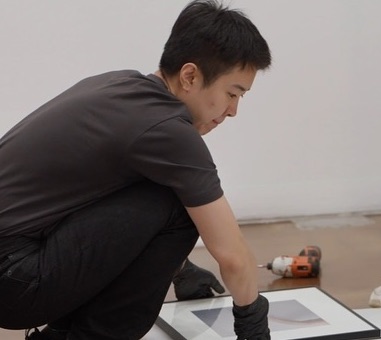
Artist Moon Sanghoon © Art Sonje Center

Moon Sanghoon works as both an artist and curator. Their solo exhibitions include 《No Future》 (Space illi, Seoul, 2021), 《Wish You Were Coming Here》 (Yeon Rainbow x Oson Doson, Suwon, 2020), and 《We Will Always Cross Each Other》 (Keep in Touch, Seoul, 2019). They have also curated exhibitions such as 《Failure Exhibition》 (Plan B Project Space, Seoul, 2020) and 《Lesbian!》 (Outhouse, Seoul, 2019).
 
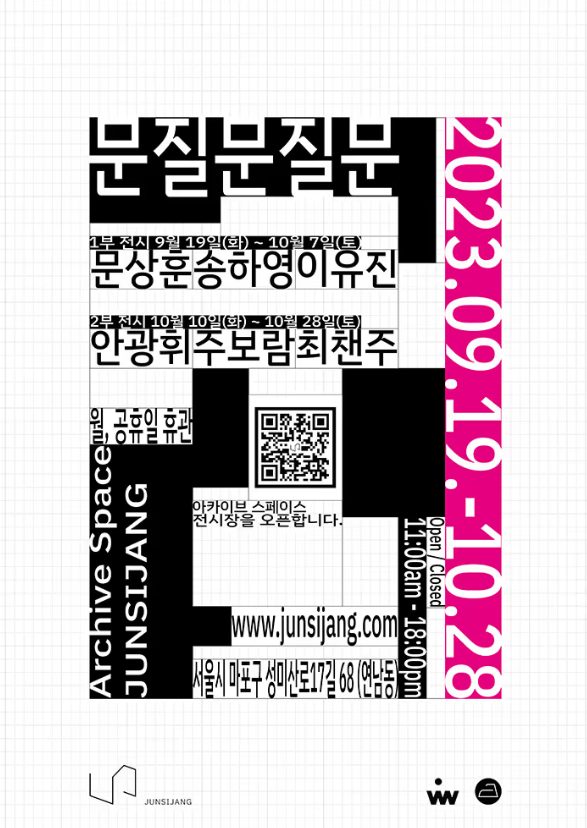
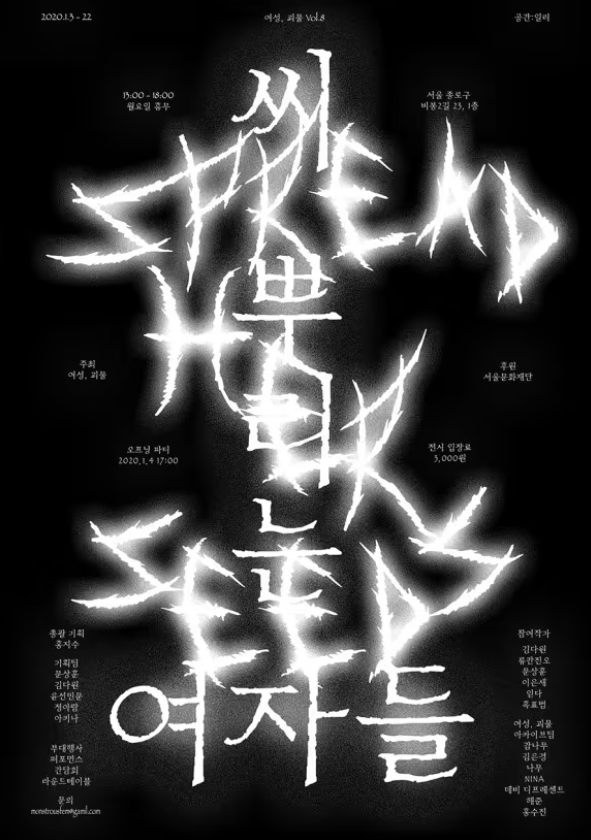
In addition, Moon has participated in numerous group exhibitions, including 《Spectrosynthesis Seoul》 (Art Sonje Center, Seoul, 2026), 《Into Other Rivers》 (Art Archives Seoul Museum of Art, Seoul, 2025), 《off-site 2: Eleven Episodes》 (Kukje Gallery and (Together)(Together), Seoul, 2025), 《Spread Her Seeds》 (Space illi, Seoul, 2020), and 《QueerArch》 (Hapjungjigu, Seoul, 2019).
 
Moon Sanghoon was also an artist-in-residence at the FABER Residency in Spain in 2018.

References