For a
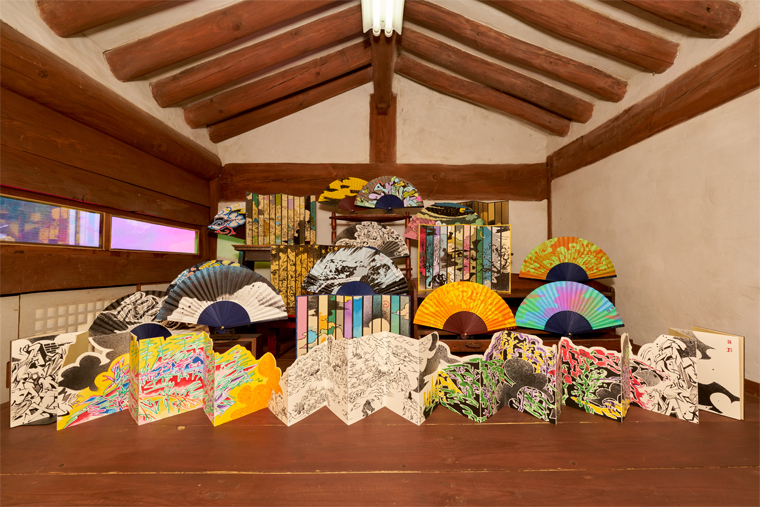
while, Son preferred to pre-set the number of pieces he wanted a work title to
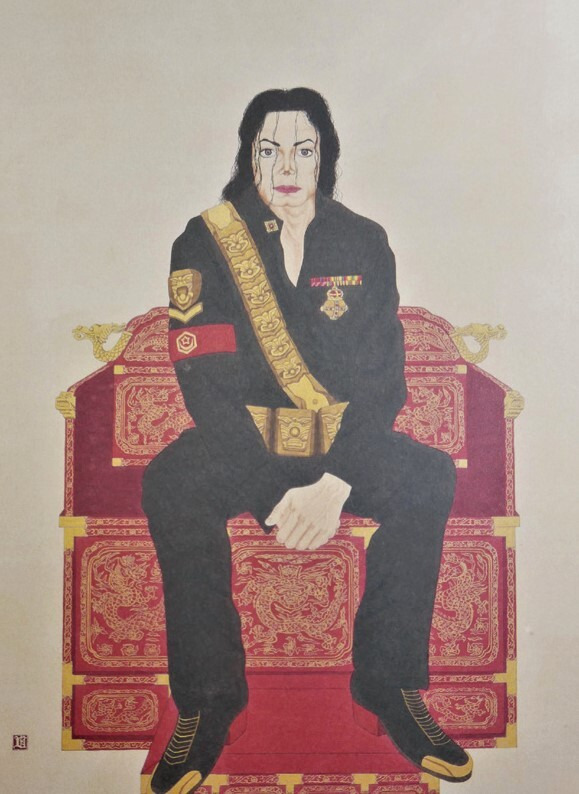
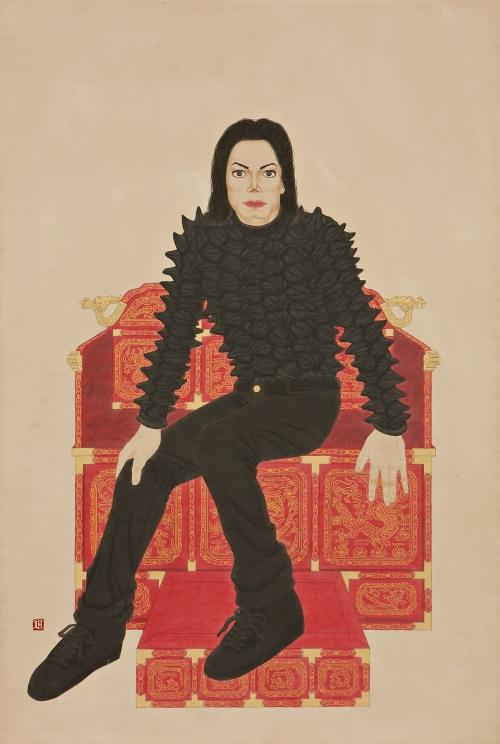
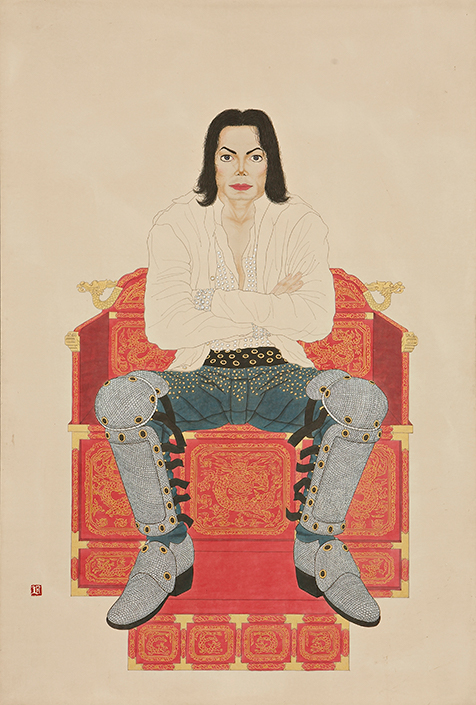
contain, as he did in the 40-portrait piece of Michael Jackson matching the
number of single albums released by the king of pop, and the room divider-style
landscape piece based on ten films that deal with the destruction of Manhattan,
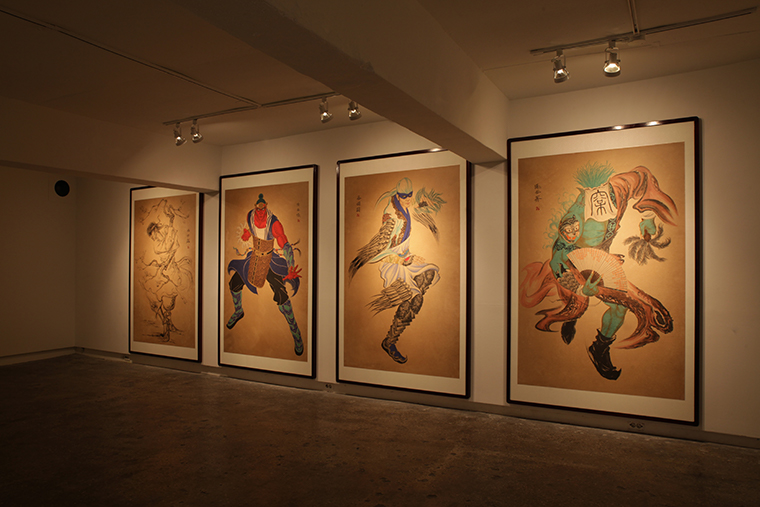
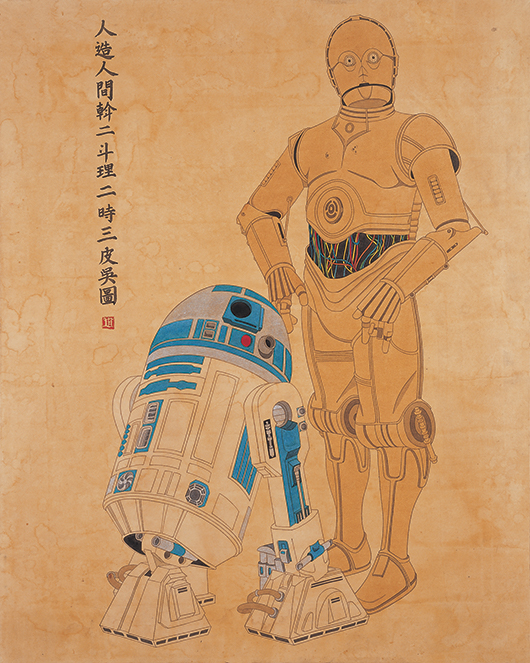
as well as the Six Chivalrous Fighters (2015) that is based
on the Six Principles of Xie He and so on.
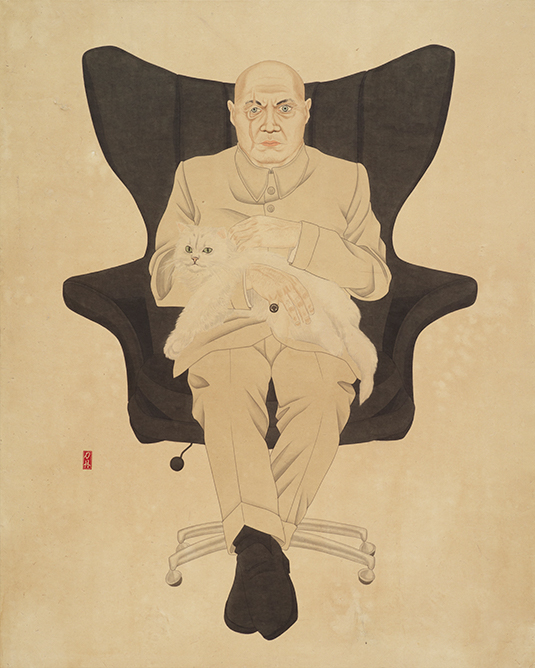
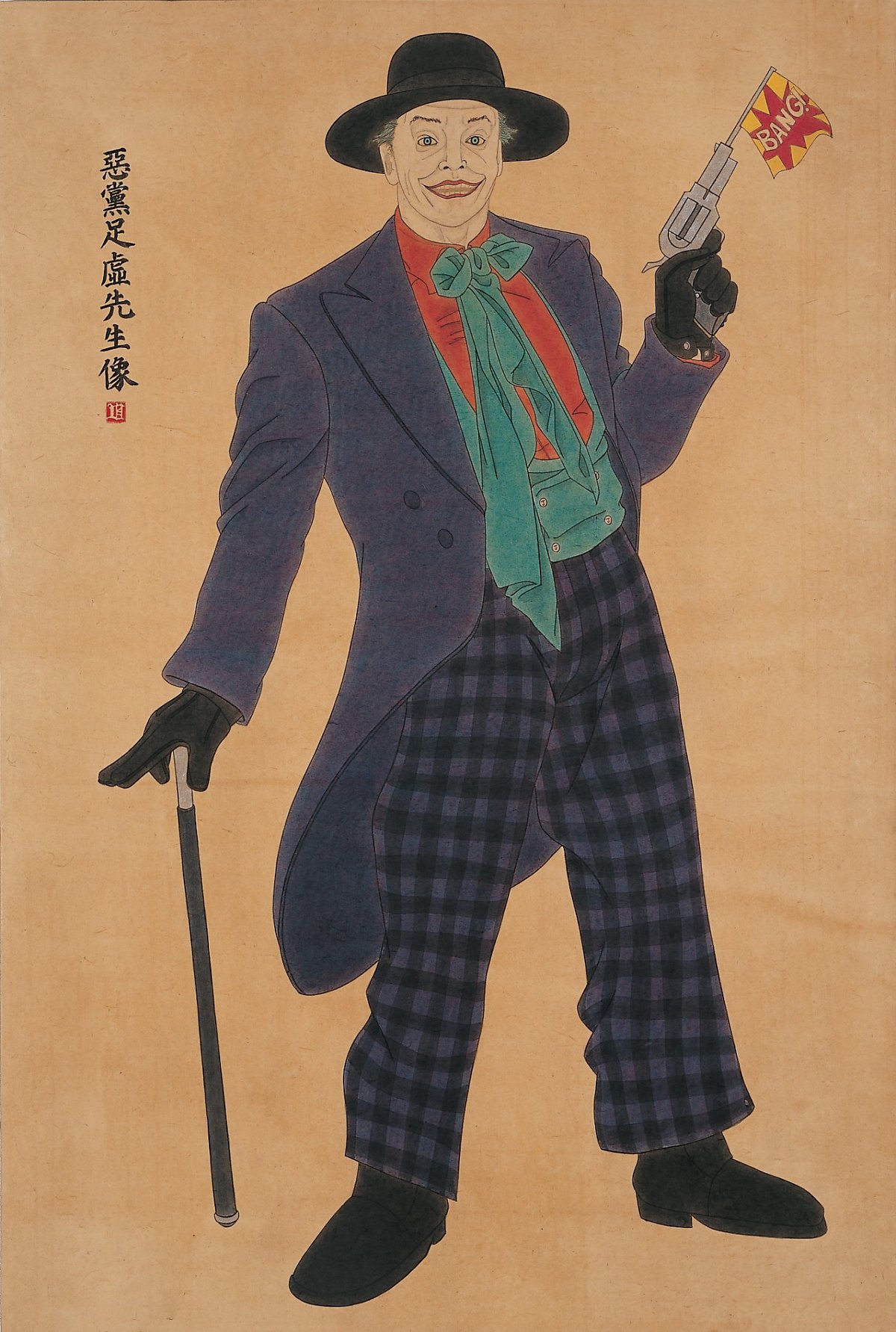
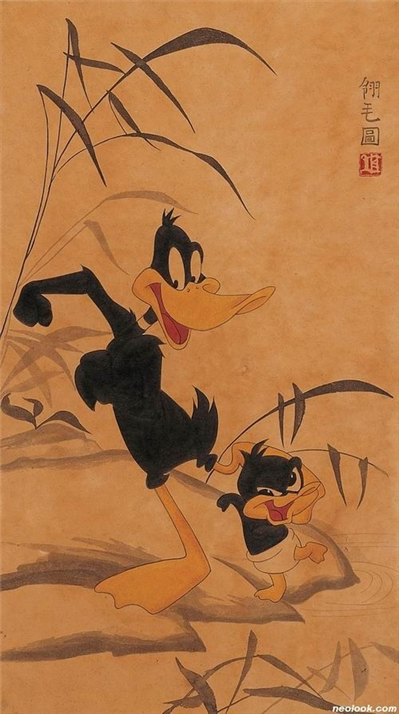
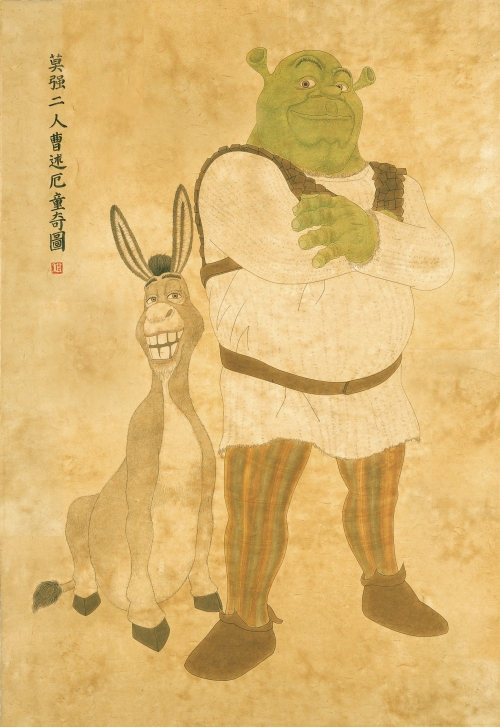
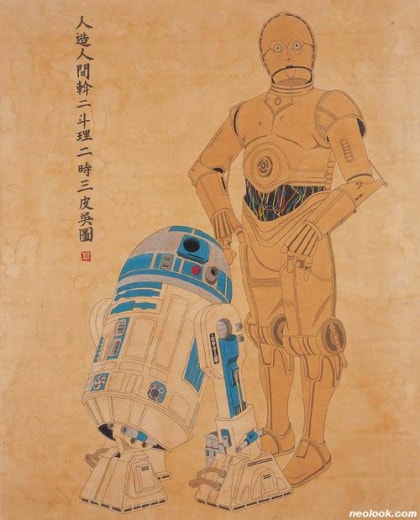
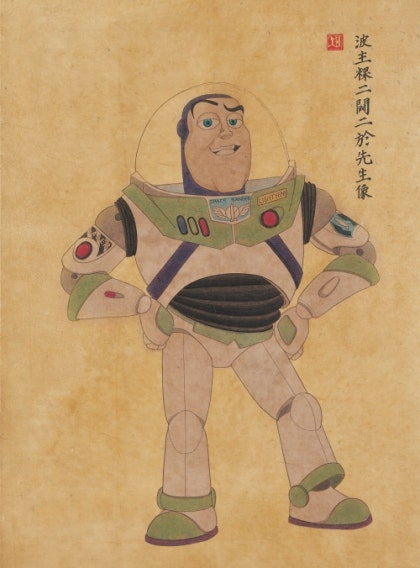
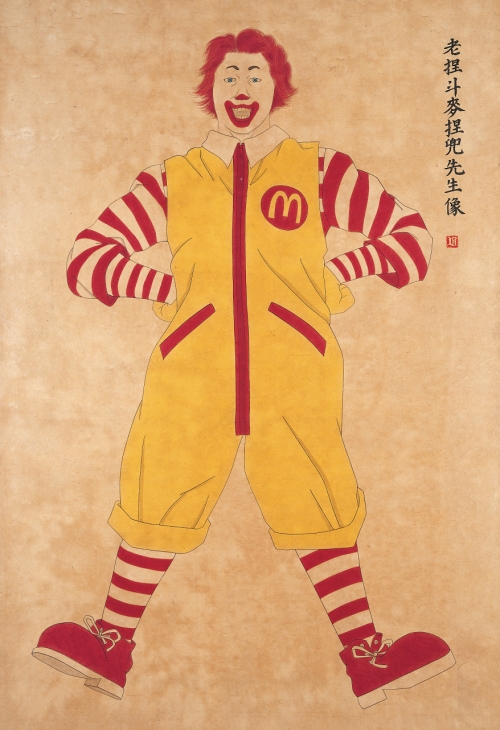
Taking a different approach, each
work of this exhibition has been produced with one piece leading to the
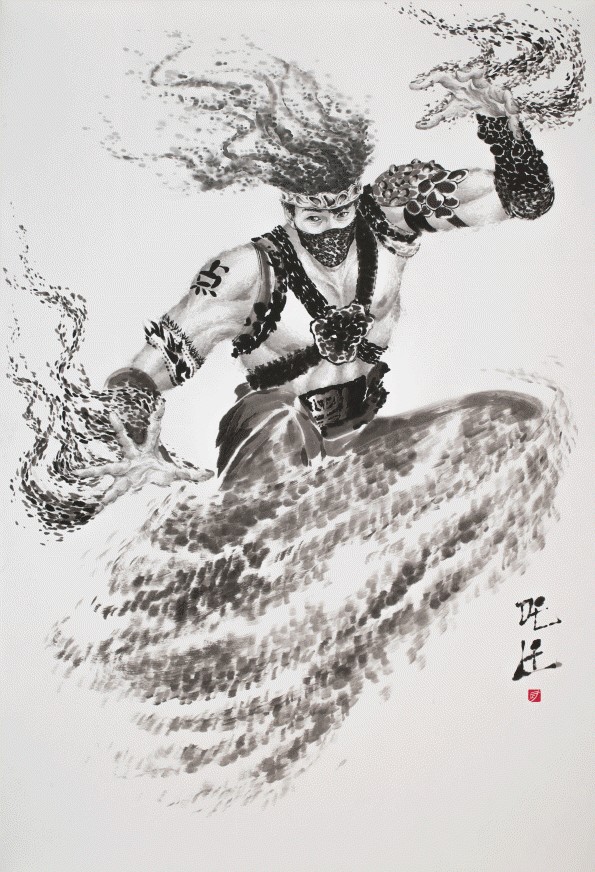
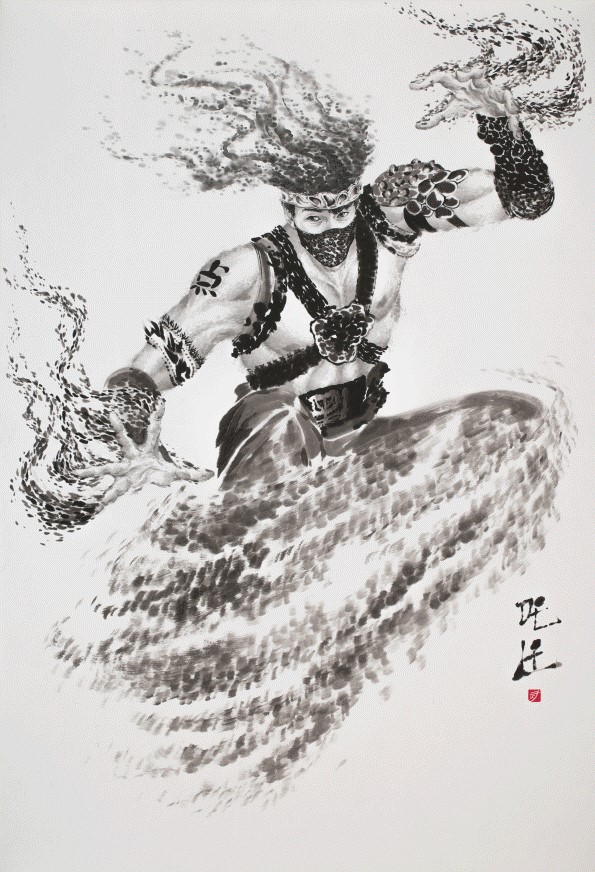
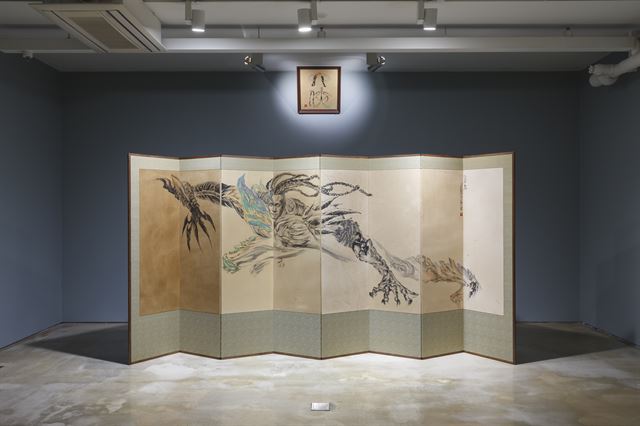
creation of the next. Leading the process is Inky Ink, a piece that takes the
dripping, seeping, and spreading materialistic qualities – those that leave the
artist rather unsettled - of “meuk” or inkstick, for what they are and portrays
them into a figure.
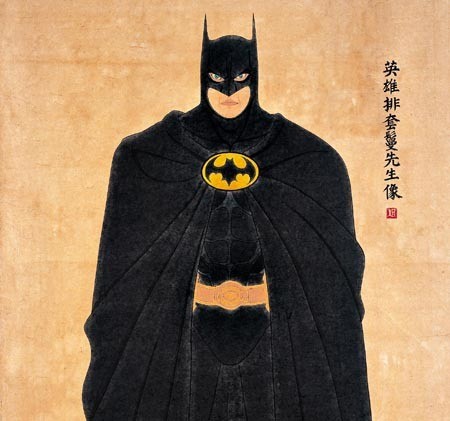
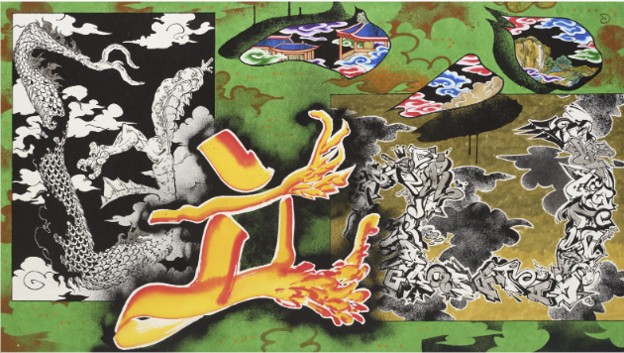
He takes various elements of East Asian painting and
interprets them into a figure’s personality traits, characteristics, or goes
even as or goes even as far as to regard them as the figure’s martial arts
skills or supernatural abilities, actively experimenting within a single
character. At the lowest section of the mezzanine level, Hide
Tide—a work employing techniques used to depict water, such as
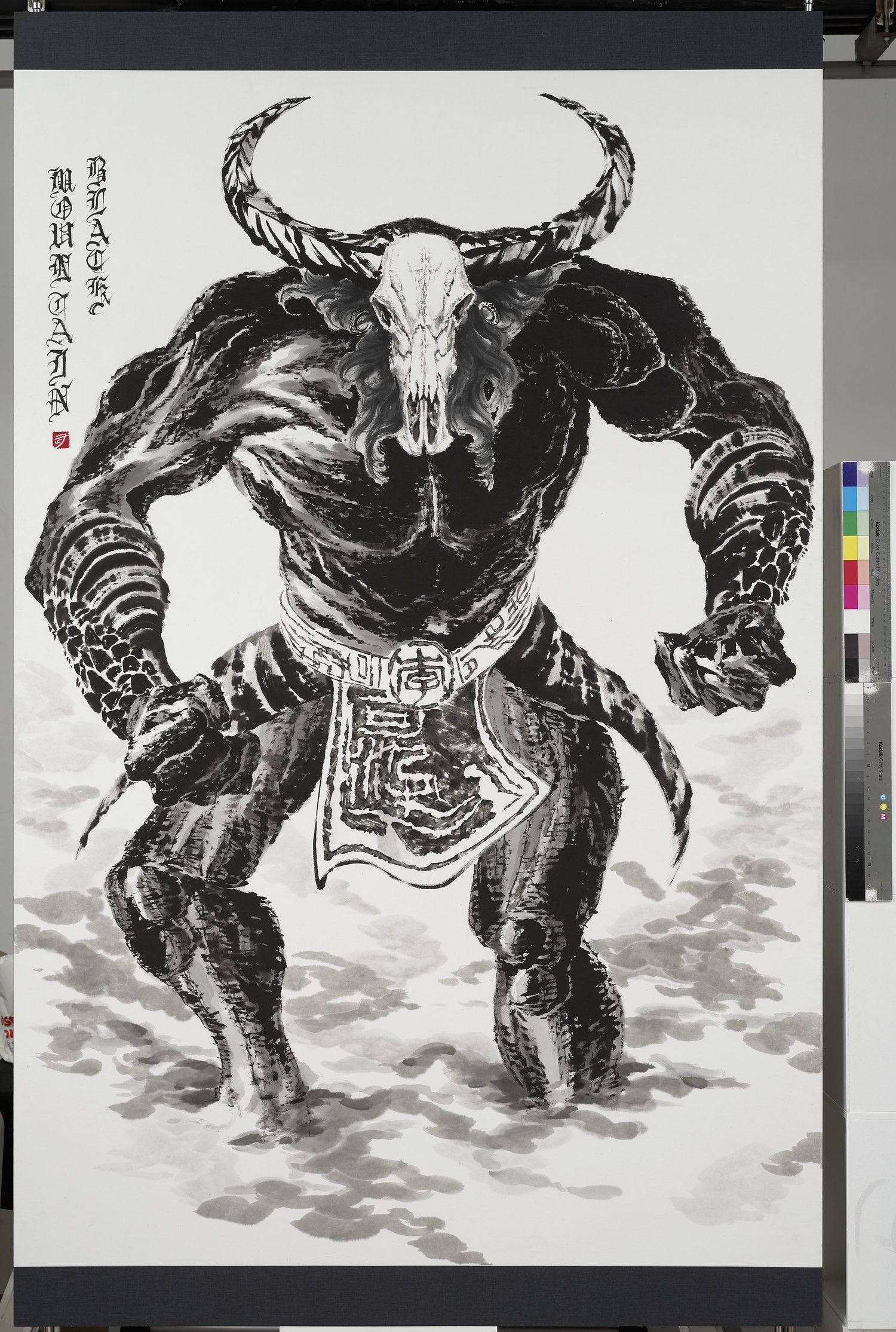
crashing waves or flowing valleys—anchors the space, alongside Black
Mountain, a black buffalo-human figure, and Wild
Shrimp, a shrimp-human figure.
The two works positioned on either
side reconstruct the distinctive brush methods and pictorial subjects
associated with master painters, unfolding them across the pictorial plane with
reference to Li Keran (1907–1989) and his teacher Qi Baishi (1860–1957), both
major figures in Chinese painting. Installed along the side of the mezzanine
are works such as Gray Mist, which employs techniques for
rendering fog or clouds, and Flat Flow, painted using a flat
brush rarely utilized in figure painting.
These works borrow the format of
figure painting while visualizing the transposition of landscape painting
techniques and tools. The Four Gentlemen—long regarded as a foundation of East
Asian painting—are also transformed into a single figure in Gracious
Four, which emphasizes their formal characteristics rather than their
symbolic meanings, and is positioned at the highest point of the mezzanine.
On the
second floor of the exhibition space, Linear Line and
Broken Splash face each other as mirrored works derived from
the same underdrawing. The former is a figure painting rendered entirely
through line, applying all eighteen classical line-drawing methods (Inmul
Sibpalmyo), while the latter is created primarily using pammuk (broken-ink
technique), which controls tonal variation by fragmenting ink, and balmuk
(splashed-ink technique), which dilutes ink heavily to eliminate outlines. The
rubbing technique (takbon) is also reinterpreted through the figure
Heelballer, using tools such as inksticks, ink grinders, and
plates that the artist employs in his own painting process.
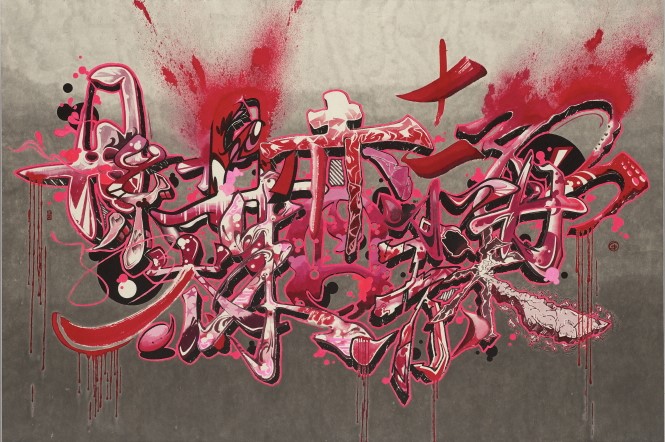
The
works installed at the entrance of the third floor reveal the artist’s ongoing
inquiry into the relationship between text and image—an interest he has
developed since his earlier munjado works—while also functioning as
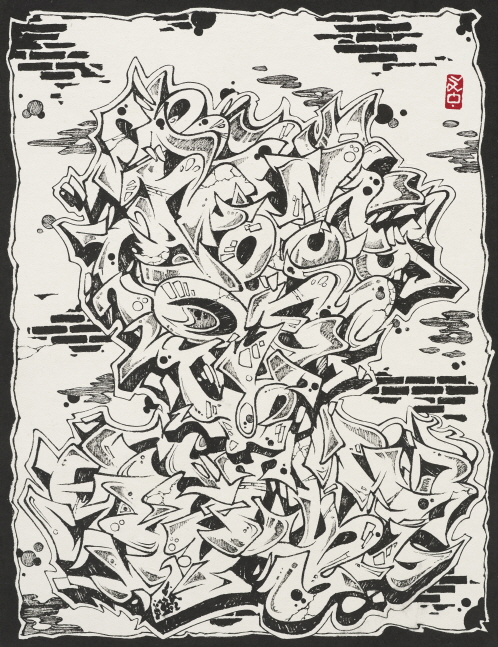
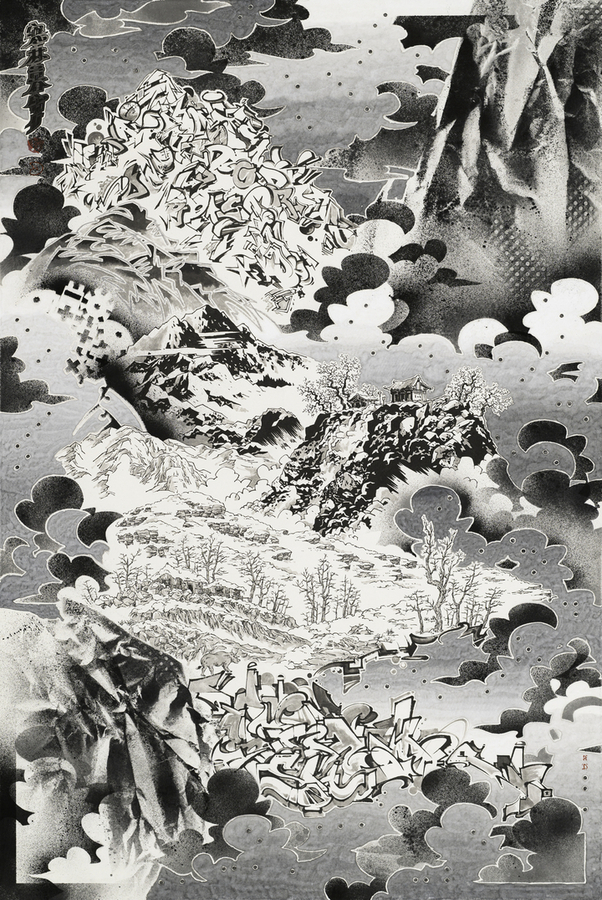
inscriptions (jebal) for this exhibition. The Origin,
created using a graffiti-like format, visualizes the theory that calligraphy
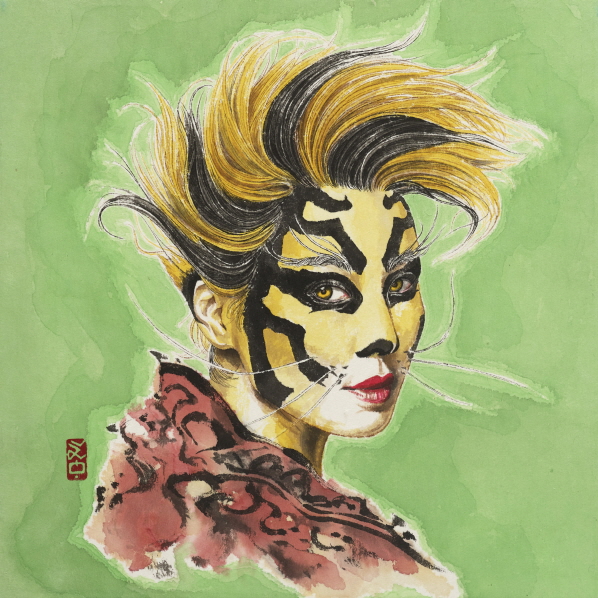
and painting share the same origin and essence; Lady
Composition captures the process by which characters become abstract
and then transforms them back into fully representational figure painting; and
One Stroke, alongside the artist’s investigation into the
importance of brushstrokes in East Asian painting, evokes Shitao’s theory of
the “single stroke.”
In Ideo G, the artist incorporates the
logographic nature of Chinese characters—inseparable from East Asian
painting—constructing a figure through characters corresponding to different
parts of the human body. All these works visualize his experiments with writing
and image. Shitao’s theory of the single stroke begins, almost like a martial
arts novel, with the phrase: “The primordial lawlessness is transformed into
law through a single stroke.” Here, the “single stroke” carries two meanings.
First, it refers to the moment when the artist places the first mark of ink on
the surface with a brush; second, in relation to literati painting theory, it
can be understood as the artist’s firmly held thematic consciousness or
methodology—akin to saui (expressing one’s ideas) or simhwa (painting distilled
from the mind).
In the inner gallery on the third floor, the artist’s
sketchbooks—used as drawing books in preparation for this exhibition—along with
selected pages, are presented in an archival format. These materials offer a
deeper insight into Son Donghyun’s working process and artistic world,
particularly his various approaches to interpreting and experimenting with
faces and hands.
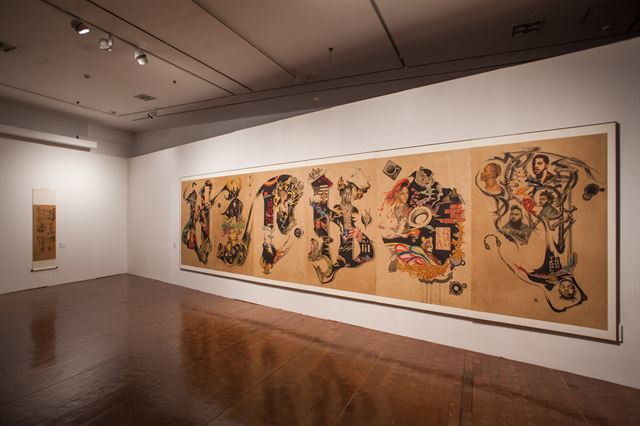
Entering
the final space of the exhibition, one encounters Master
Transmission, the largest work in the show, composed of six connected
panels. This piece is an expanded munjado version of The
Transmission (2015), originally the smallest work in the ‘Six
Chivalrous Fighters’ series presented at the 15th SongEun Art Award exhibition,
where it functioned as a kind of plaque. While in the earlier work the concept
of jeon-i-mosa (transmission through copying)—the idea of advancing tradition
through the replication of old paintings—was visualized through the characters
for the “Six Principles,” here it manifests simultaneously as figure painting
and munjado.
Beside it, Blackest Night employs a traditional
landscape technique in which the darkness of night is suggested through diluted
ink while the foreground mountains are rendered in darker tones. Against a
blackened background, the subject of the work—“the darkest night”—emerges in a
luminous form. Installed at the center of the exhibition space, The
Other Side utilizes different types of ink applied with varying
speeds and intensities; as the title suggests, the figure is painted on the
reverse side of the paper, allowing the ink to bleed through to the front.
Dot Dot visualizes the fundamental elements of
painting—point, line, and plane—by forming a figure from dots, the origin of
all form, while adopting the format of figure painting.
In the final section on
the fourth floor, works reinterpret various junbeop (texturing techniques) used
in landscape painting to express volume, mass, texture, and shading of
mountains and rocks, transforming them into figure painting. Ghost
Face Cloud combines undujun (cloud-head texture strokes), used to
depict eroded mountain forms, with gwimyeonjun (ghost-face texture strokes),
employed for rocky or earthen surfaces. High Fiber
incorporates pimajun (hemp-fiber strokes), characterized by tangled,
thread-like lines; hayeopjun (lotus-leaf strokes), often used for mountain
peaks; and haesaekjun, which features longer, more intricately intertwined
lines.
Axe Cut is a figure painting based on bubyeokjun
(axe-cut strokes), used to depict the sharp surfaces of cliffs and rugged
mountains; its name derives from its resemblance to marks made by an axe or
chisel, and the English term for the technique is used directly as the title.
Finally, Full Stop, a figure painting functioning as a seal
inscription (nakgwan)—the signature and stamp applied upon completion—serves as
the artist’s concluding mark on this exhibition and its works.
Although
Son Donghyun presents, on the surface, a series of figure paintings depicting
chivalrous figures demonstrating their own martial prowess, the process and
thematic structure of these works align more closely with landscape or literati
painting than with portraiture. Rather than emphasizing the traditional notion
of capturing both the physical likeness and inner spirit of a subject, these
works assign to figure painting the roles of landscape techniques, master
painters’ methods, inscriptions, and seals.
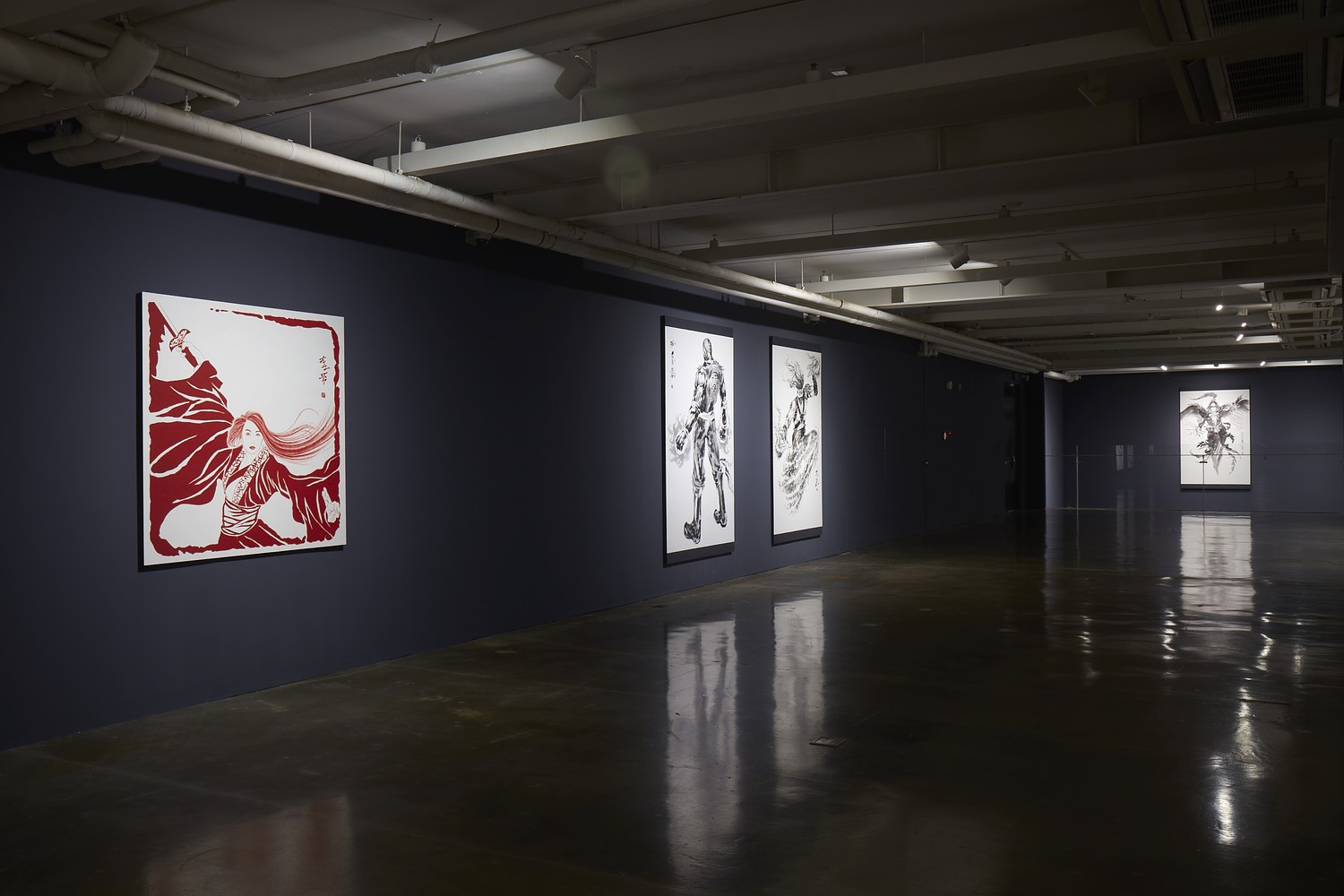
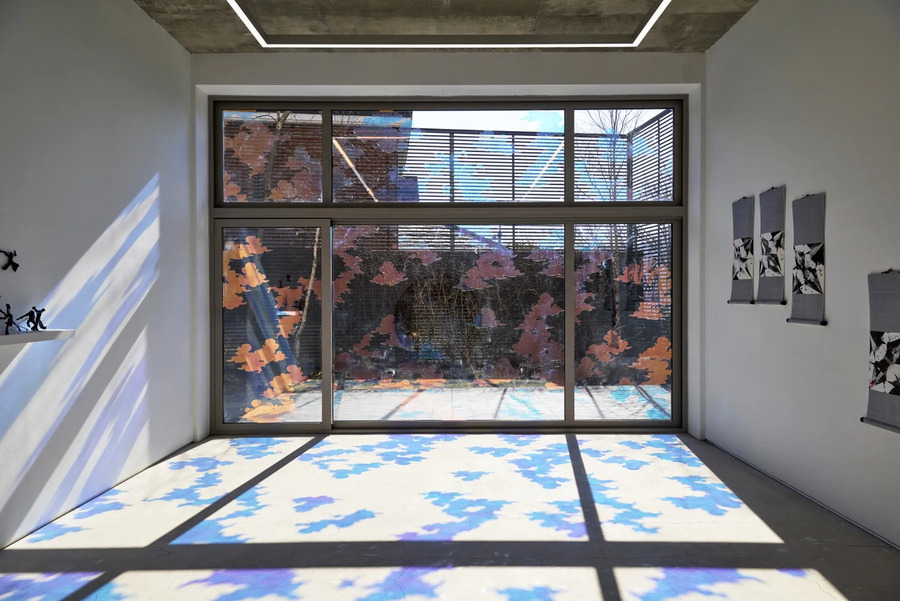
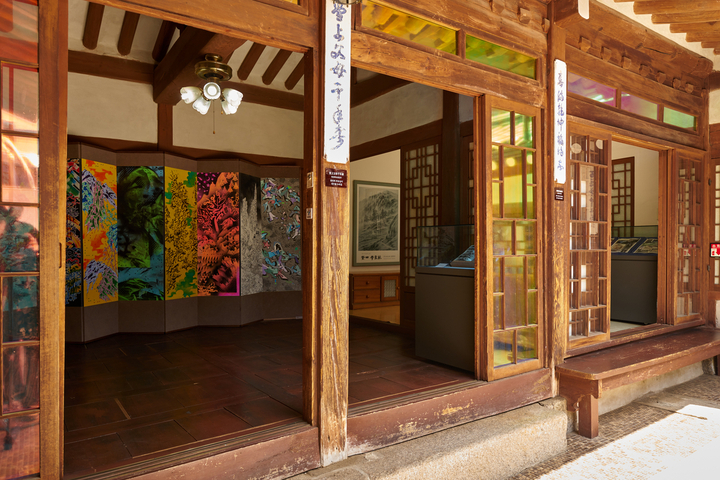
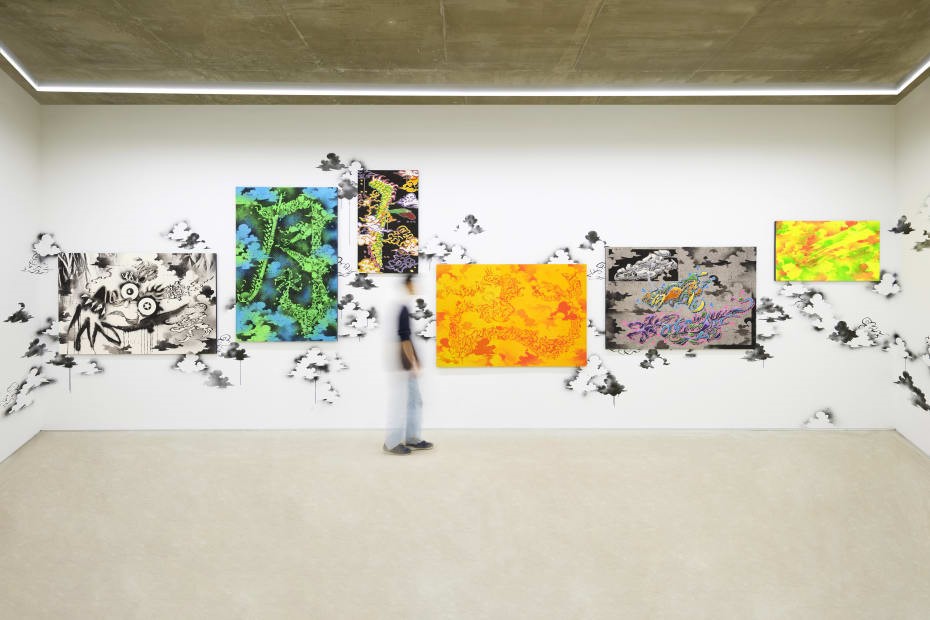
As they come together within the
exhibition space, the entire exhibition unfolds as if it were a single
landscape painting. The artist titles the exhibition 《Jasmine Dragon Phoenix
Pearl》, a Chinese tea made by rolling two types of tea
leaves into pearl-like shapes and aging them over several months.
Through this
exhibition, Son Donghyun summons the systems, themes, and elements of East
Asian painting—internalized and embodied through his own practice—into the
present moment, experimenting with and illuminating their possibilities.